

The DOI matches its Crossref record; 55 of the 55 references it cites were found in a registry or an index.
Social media use in healthcare: A systematic review of effects on patients and on their relationship with healthcare professionals
Open accessAbstract
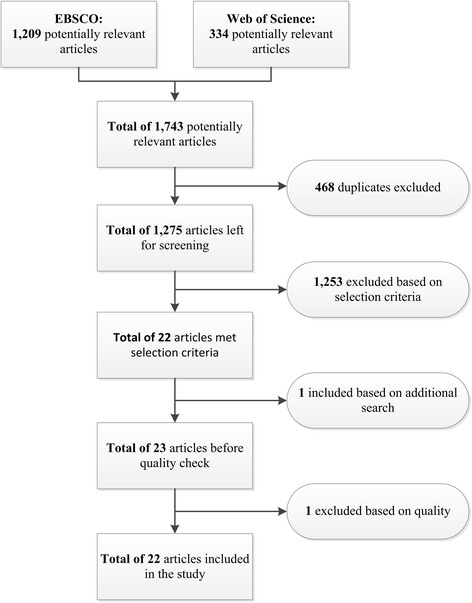
BACKGROUND: Since the emergence of social media in 2004, a growing percentage of patients use this technology for health related reasons. To reflect on the alleged beneficial and potentially harmful effects of social media use by patients, the aim of this paper is to provide an overview of the extant literature on the effects of social media use for health related reasons on patients and their relationship with healthcare professionals. METHODS: We conducted a systematic literature review on empirical research regarding the effects of social media use by patients for health related reasons. The papers we included met the following selection criteria: (1) published in a peer-reviewed journal, (2) written in English, (3) full text available to the researcher, (4) contain primary empirical data, (5) the users of social media are patients, (6) the effects of patients using social media are clearly stated, (7) satisfy established quality criteria. RESULTS: Initially, a total of 1,743 articles were identified from which 22 were included in the study. From these articles six categories of patients' use of social media were identified, namely: emotional, information, esteem, network support, social comparison and emotional expression. The types of use were found to lead to seven identified types of effects on patients, namely improved self-management and control, enhanced psychological well-being, and enhanced subjective well-being, diminished subjective well-being, addiction to social media, loss of privacy, and being targeted for promotion. Social media use by patients was found to affect the healthcare professional and patient relationship, by leading to more equal communication between the patient and healthcare professional, increased switching of doctors, harmonious relationships, and suboptimal interaction between the patient and healthcare professional. CONCLUSIONS: Our review provides insights into the emerging utilization of social media in healthcare. In particular, it identifies types of use by patients as well as the effects of such use, which may differ between patients and doctors. Accordingly, our results framework and propositions can serve to guide future research, and they also have practical implications for healthcare providers and policy makers.
Overview
The claims and statistics of this paper haven’t been checked yet.
Run the check — free, no account needed. It reads the open-access text and checks the sources it cites.
Integrity signals
Registry
Cites
Statistics
Figures
Verification
Claims the paper makes
The claims and statistics of this paper haven’t been checked yet.
Run the check — free, no account needed. It reads the open-access text and checks the sources it cites.
Claims other papers make about this one
Each is checked against this paper’s own text: does it say what the citing paper says it does?
The source backs part of the claim, not all of it — or backs it for a different population, condition or comparison.
In the citing paper
“Health promotion on social media also encouraged patients to seek medical attention more willingly [11].”
From Social Media Use Among Parents and Caregivers of Children With Rare Genetic Diseases: Scoping Review (2025) · cites this paper as [11]
Experimental — accuracy not yet measuredThe source backs part of the claim, not all of it — or backs it for a different population, condition or comparison.
In the citing paper
“Most patients discuss information they have found online with their health care provider”
From Social Media Use Among Parents and Caregivers of Children With Rare Genetic Diseases: Scoping Review (2025) · cites this paper as [11]
Experimental — accuracy not yet measuredThe source backs part of the claim, not all of it — or backs it for a different population, condition or comparison.
In the citing paper
“however, physicians often react negatively to discussions involving information sourced from social media [11-13].”
From Social Media Use Among Parents and Caregivers of Children With Rare Genetic Diseases: Scoping Review (2025) · cites this paper as [11]
Experimental — accuracy not yet measuredThe cited source says what the claim attributes to it.
In the citing paper
“Prior literature has highlighted both benefits and risks of social media in healthcare,4–13 but there remains limited understanding of how generational perspectives shape views of professionalism in healthcare social media use.”
From Evaluating perceptions of social media professionalism by healthcare workers (2026) · cites this paper as [5]
The cited source says what the claim attributes to it.
In the citing paper
“Social media use is also related to shorter relationships with health care providers, as online discussions prompted patients to seek specific providers [11].”
From Social Media Use Among Parents and Caregivers of Children With Rare Genetic Diseases: Scoping Review (2025) · cites this paper as [11]
The cited source says what the claim attributes to it.
In the citing paper
“social media empowers patients to be more informed and involved in their own care”
From Social Media Use Among Parents and Caregivers of Children With Rare Genetic Diseases: Scoping Review (2025) · cites this paper as [11]
The cited source says what the claim attributes to it.
In the citing paper
“allowing for improved communication with medical professionals [11,12].”
From Social Media Use Among Parents and Caregivers of Children With Rare Genetic Diseases: Scoping Review (2025) · cites this paper as [11]
The check wasn’t confident either way, so it gives no verdict — never disputed.
In the citing paper
“popularity of SM has also been embraced by health care professionals (HCPs) [5].”
From Dangers and Benefits of Social Media on E-Professionalism of Health Care Professionals: Scoping Review (2021) · cites this paper as [5]
Experimental — accuracy not yet measured
Self-check
Percentages, sums and reported differences re-computed from the paper’s own numbers.
The self-check needs the paper’s full text.
Citations
Cites
Preferred Reporting Items for Systematic Reviews and Meta-Analyses: the PRISMA statement
Moher, D., Liberati, A., Tetzlaff, J., Altman, D. G., & for the PRISMA Group (2009) · BMJ · doi:10.1136/bmj.b2535 · Cited by 83,823
Preferred reporting items for systematic reviews and meta-analyses: the PRISMA Statement.
(2009) · PubMed Central · Cited by 44,859
Users of the world, unite! The challenges and opportunities of Social Media
Kaplan, A. M., & Haenlein, M. (2010) · Business Horizons · doi:10.1016/j.bushor.2009.09.003 · Cited by 17,875 · cited 4×
“Among other uses, blogs can be used as personals diaries to express thoughts, feelings, and stories [9].”
BackgroundMethodInfluentialHappiness is everything, or is it? Explorations on the meaning of psychological well-being.
Ryff, C. D. (1989) · Journal of Personality and Social Psychology · doi:10.1037/0022-3514.57.6.1069 · Cited by 14,847 · cited 2×
“Moreover, “self-actualizers are described as having strong feelings of empathy and affection for all human beings and as being capable of greater love, deeper friendship, and more complete identification with others” [33].”
BackgroundPower, politics, and MIS implementation
Markus, M. L. (1983) · Communications of the ACM · doi:10.1145/358141.358148 · Cited by 2,224 · cited 1×
“According to the political variant of the interaction theory [49], “a product of the interaction of system”
BackgroundSocial capital, self-esteem, and use of online social network sites: A longitudinal analysis.
Steinfield, C., Ellison, N. B., & Lampe, C. (2008) · Journal of Applied Developmental Psychology · doi:10.1016/j.appdev.2008.07.002 · Cited by 1,919
Social Support Measurement and Intervention
(2000) · Oxford University Press eBooks · doi:10.1093/med:psych/9780195126709.001.0001 · Cited by 1,887 · cited 1×
“process of interaction in relationships which is intended to improve coping, esteem, belonging, and competence through actual or perceived exchanges of psychosocial resources” [19].”
BackgroundStandard Quality Assessment Criteria for Evaluating Primary Research Papers from a Variety of Fields
Kmet, L. M., Cook, L. S., & Lee, R. C. (2004) · University of Alberta Library · doi:10.7939/r37m04f16 · Cited by 1,682 · cited 3×
“The articles were assessed on their quality by using the standard quality assessment criteria as identified by [12].”
MethodInfluentialThe health-related functions of social support
Schaefer, C. A., Coyne, J. C., & Lazarus, R. S. (1981) · Journal of Behavioral Medicine · doi:10.1007/bf00846149 · Cited by 1,326 · cited 2×
“Social support is represented through five different categories and four of these categories were found to be common types of social media use by patients for health related purposes [18].”
BackgroundThe decision and the organization
MacDougall, C. D., & Wilson, H. (1965) · Marzani & Munsell eBooks · Cited by 1,149
Research works printed but not linked: 4
- Williams J. A new roadmap for healthcare business success. J Healthc Financ Manage Assoc. 2011;65(5):62–9.
- Mattson M, Hall JG. Health as communication nexus: A service-learning approach. Dubuque: Kendall Hunt; 2011.
- Sahoo FM, Mohapatra L. Psychological well-Being in professional groups. J Indian Acad Appl Psychol. 2009;35(2):211–7.
- Simon HA. Decision and organization. Amsterdam: North-Holland Publishing; 1972.
Cited by
Sorted by citations
Items 401–500 of 825
Supporting Personalized Health Care With Social Media Analytics: An Application to Hypothyroidism
Grani, G., Lenzi, A., & Velardi, P. (2021) · ACM Transactions on Computing for Healthcare · doi:10.1145/3468781 · Cited by 4
Evaluating the Presence of Hospitals on Social Media
Al-Hussainan, A. F., Jasem, Z. A., & Alhuwail, D. (2022) · International Journal of Healthcare Information Systems and Informatics · doi:10.4018/ijhisi.299954 · Cited by 4
“Many patients use social media as an empowerment tool for psychological and subjective wellbeing, and social support for illness and self-management and care (Hanson et al., 2014; Smailhodzic et al., 2016).”
BackgroundThe Impact of Social Media on Hospitals’ Branding Initiatives
Aguerrebere, P. M., Medina, E., & Pacanowski, T. G. (2022) · REVISTA ESPAÑOLA DE COMUNICACIÓN EN SALUD · doi:10.20318/recs.2022.6274 · Cited by 4
Sy, J. J., Mea, A., Reyes, J. C. B., & Baticulon, R. E. (2023) · Journal of Neurosurgery Pediatrics · doi:10.3171/2023.3.peds2333 · Cited by 4
Current landscape of social media use pertaining to glioblastoma by various stakeholders
Alvi, M. A., Elkaim, L. M., Levett, J. J., Pando, A., Roy, S., Samuel, N., Alotaibi, N. M., & Zadeh, G. M. (2023) · Neuro-Oncology Advances · doi:10.1093/noajnl/vdad039 · Cited by 4
INVESTIGATING THE ROLE OF TWITTER IN MANIPULATION OF PUBLIC OPINION
Huzaifa, M., Bajwa, A. J., & Majid, M. R. (2023) · Pakistan Journal of Social Research · doi:10.52567/pjsr.v5i02.1127 · Cited by 4
Health Promotion - Principles and Approaches
Garg, B. S. (2023) · IntechOpen eBooks · doi:10.5772/intechopen.107637 · Cited by 4
Ophthalmology residency programs on social media
Yakobashvili, D., Zhu, A., Aftab, O. M., Steidl, T., Mahajan, J., & Khouri, A. S. (2023) · International Ophthalmology · doi:10.1007/s10792-023-02883-z · Cited by 4
Chen, J., Creamer, G. G., Ning, Y., & Ben-Zvi, T. (2023) · Sustainability · doi:10.3390/su152215840 · Cited by 5
“Textual data such as tweets, surveys, and news become practicable auxiliary features in health-care forecasting and analysis [50–52].”
Background“Can Anyone Tell Me…”. Online Health Communities in Diabetes Self-Management in Poland and Italy
Ardissone, A., Leonowicz-Bukała, I., & Struck-Peregończyk, M. (2024) · Health Communication · doi:10.1080/10410236.2024.2348842 · Cited by 4
“In line with the U&G approach, one of the main reasons for patients’ use of OHCs (equal to “gratifications sought”) is their disappointment with healthcare professionals’ inability to meet their emotional and informational needs (Smailhodzic et al., 2016).”
Role of online health communities in patient compliance: a social support perspective
Tewari, S. P., Misra, R., Nagdev, K., & Sharma, H. (2024) · Journal of Systems and Information Technology · doi:10.1108/jsit-12-2023-0329 · Cited by 4
Lores, T. J., Lonie, M., Regis, N., Misajon, R., Kothe, E. J., & Mills, J. (2024) · International Journal of Medical Informatics · doi:10.1016/j.ijmedinf.2024.105773 · Cited by 4
Health communication 2.0 and social media: The case of obesity and bariatric surgery
Eddabali, I., & Yahia, I. B. (2020) · International Journal of Healthcare Management · doi:10.1080/20479700.2020.1860543 · Cited by 6
“[14] has found that social media has changed the relationship between doctors and”
BackgroundInfluentialAn, Y. (2021) · Journal of Gastroenterology and Hepatology · doi:10.1111/jgh.15458 · Cited by 4
Lam, Y., Seehra, J., Abela, S., & Cobourne, M. T. (2021) · Journal of Orthodontics · doi:10.1177/14653125211054859 · Cited by 4
“…can be easily propagated, which can be detrimental for patients, have a potentially negative effect on patient-healthcare professional relationships and lead to feelings of anxiety and worry for patients who may access distressing information (De Martino et al., 2017; Smailhodzic et al., 2016).”
Backgroundİnternet ve Sosyal Medya Kullanımı Gebe Kadınları Nasıl Etkiler?
Değirmenciler, B., Serçekuş, P., & Özkan, S. (2021) · Ordu Üniversitesi Hemşirelik Çalışmaları Dergisi · doi:10.38108/ouhcd.923961 · Cited by 18
Khan, M. I., Loh, J. M. I., Saleh, A., Quazi, A. M., & Talukder, M. (2021) · AJIS. Australasian journal of information systems/AJIS. Australian journal of information systems/Australian journal of information systems · doi:10.3127/ajis.v25i0.2625 · Cited by 6
“The current state of research regarding the adoption of social media in healthcare seems to lack insights from the perspectives of potential users, their perceptions, and behaviours (Smailhodzic et al., 2016).”
BackgroundBig Data in Healthcare Transformation: A Short Review
Ghaleb, E. A. A., Dominic, P. D. D., Muneer, A., & Almohammedi, A. A. (2022) · International Conference on Decision Aid Sciences and Applications (DASA) · doi:10.1109/dasa54658.2022.9764966 · Cited by 4
Quality and interaction levels of Instagram posts related to orthodontic #clearaligners
Müftüoğlu, Ö., & Cesur, E. (2023) · Journal of Stomatology · doi:10.5114/jos.2022.124311 · Cited by 4
Jung, H., Lee, J. W., & Lee, G. H. (2022) · Korean Medical Education Review · doi:10.17496/kmer.2022.24.2.103 · Cited by 4
Zhong, B., Xie, W., Kempton, S. D., Zhi, M., & Zhao, J. (2023) · Health Communication · doi:10.1080/10410236.2023.2250940 · Cited by 4
“Several broad affor-dances of social media have been identified, affecting psychological aspects of information seeking and processing (Bucher & Helmond, 2018; Smailhodzic et al., 2016).”
Wróblewski, M., Stankowska, J., & Kawiak‐Jawor, E. (2024) · The International Journal of Health Planning and Management · doi:10.1002/hpm.3801 · Cited by 4
Nicmanis, M., Holmes, J. M., Oxlad, M., & Chur-Hansen, A. (2024) · Journal of clinical psychology in medical settings · doi:10.1007/s10880-024-10024-6 · Cited by 3
“Additionally, social media has had an increasing role in patient decision-making (Patrick et al., 2022; Smailhodzic et al., 2016) and information from these sources may play a role in decreasing the anxiety of implantable cardioverter-defibrillator patients (Richards et al., 2016).”
Analysis of a NoSQL Graph DBMS for a Hospital Social Network
Celesti, A., Buzachis, A., Galletta, A., Fiumara, G., Fazio, M. C., & Villari, M. (2018) · IEEE Symposium on Computers and Communications (ISCC) · doi:10.1109/iscc.2018.8538469 · Cited by 4
“Studies on the effectiveness of social media data in healthcare communication involving both medical personnel and patients is proposed in [14], [15] and [16].”
BackgroundSylverken, A. A., Owusu‐Dabo, E., Kwarteng, A., Twumasi-Ankrah, S., Owusu, M., Adu-Amoah, L., Dumevi, R. M., Arthur, R. A., Addofoh, N., Dzata, F., et al. (2019) · AAS Open Research · doi:10.12688/aasopenres.12920.1 · Cited by 4
Wijaya, G., Zakaria, F., & Ida, R. (2022) · Nyimak Journal of Communication · doi:10.31000/nyimak.v6i2.5854 · Cited by 4
Heales, L., Gunasinghe, B., Melrose, E., Lorraway, J., & Obst, S. J. (2025) · Journal of Hand Therapy · doi:10.1016/j.jht.2025.02.016 · Cited by 3
Molinero‐Mourelle, P., Limones, Á., Mosaddad, S. A., González, M. A. R., Çakmak, G., & Roccuzzo, A. (2025) · Journal of Prosthetic Dentistry · doi:10.1016/j.prosdent.2025.06.027 · Cited by 3
An, M. H., Kim, M.-G., Kim, J., Chang, S., Lee, D. Y., & Park, R. W. (2025) · PLoS ONE · doi:10.1371/journal.pone.0318464 · Cited by 3
“Social media platforms have become valuable in acquiring public health perceptions beyond the clinic, [12,13] often used for sharing experiences, seeking advice, or sparking debates on health topics.”
Sayegh, C. S., Ong, E., Gebeyehu, S., Dews, A. A., Boyle, A., Marino, G., Morte, N., & Hsu, Z. (2025) · Journal of Adolescent Health · doi:10.1016/j.jadohealth.2025.04.008 · Cited by 3
Snyder, H. E., Horsthuis, K., Cerga, K., & Callen, D. J. A. (2025) · Epilepsy & Behavior · doi:10.1016/j.yebeh.2025.110711 · Cited by 3
Ayangunna, E., Shah, G. H., Kalu, K., Shankar, P., & Shah, B. (2024) · Informatics · doi:10.3390/informatics11020018 · Cited by 3
“…social media to be spurious and not as reliable as that coming from a healthcare professional and may view online communications as unreliable [37,38], this study showed that respondents who had chronic conditions were more likely to join a support group for people with similar conditions and…”
BackgroundManaging Pharmaceutical Promotion Mix in the Rise of Social Media
Chaudhuri, M., Hirunyawipada, T., & Pan, Y. (2024) · Psychology and Marketing · doi:10.1002/mar.22147 · Cited by 4
Chinn, S., Hasell, A., & Shao, A. (2024) · New Media & Society · doi:10.1177/14614448241293409 · Cited by 3
“…DYOR messages have reflected flattened views of expertise in anti-vaccine discourses, whose advocates assert that their own research, as well as intuition and maternal instinct, are as valuable for medical decision-making as their doctor’s recommendations (Carrion, 2018; Smailhodzic et al., 2016).”
Thaker, S., Chan, J. Y. H., Thaker, K. N., Takele, R. A., Newlands, A. F., Maxwell, K. L., Bhanji, Y., Kramer, M., & Scotland, K. B. (2024) · Pathogens · doi:10.3390/pathogens13121125 · Cited by 3
Khene, Z., Tachibana, I., Bhanvadia, R. R., Ausmann, H., Margulis, V., & Lotan, Y. (2024) · Bladder Cancer · doi:10.1177/23523735241304907 · Cited by 3
Chen, X., Deng, Y., Fu, C. J., Yang, X. M., & Gao, L. (2025) · BMC Pregnancy and Childbirth · doi:10.1186/s12884-025-07268-x · Cited by 6
“Social media has been used to improve communication between nurses and patients [51], promote Chinese urologists’ practices [52], and provide online consultations for patients [53].”
Neural Prediction of Patient Needs in an Ovarian Cancer Online Discussion Forum
Jang, H., Lee, Y. J., Carenini, G., Ng, R. T., Campbell, G. B., & Ho, K. (2019) · Lecture notes in computer science · doi:10.1007/978-3-030-18305-9_50 · Cited by 3
Turpen, T., Matthews, L. C., & Güney, S. (2019) · Patient Experience Journal · doi:10.35680/2372-0247.1276 · Cited by 3
Haun, M. W., Ihrig, A., Karschuck, P., Thomas, C., & Huber, J. C. (2020) · World Journal of Urology · doi:10.1007/s00345-020-03114-1 · Cited by 3
Engagement with Mhealth: Experiences of Young Women in Bangladesh
Choudhury, N. (2021) · Springer eBooks · doi:10.1007/978-3-030-87247-2_10 · Cited by 3
Use of social media in healthcare management
Kumar, V., Lachyan, A. S., Chakraborty, S., Akhter, M. D. S., & Khan, S. (2022) · International Journal of Health Sciences · doi:10.53730/ijhs.v6ns1.6594 · Cited by 5
Public and dental professionals' use of social media to discuss amelogenesis imperfecta
Henrick, V., Marks, S., Balmer, R. C., & Barber, S. (2022) · International Journal of Paediatric Dentistry · doi:10.1111/ipd.13015 · Cited by 3
Monuszko, K. A., Fish, L. J., Sparacio, D., Lizaso, C., Burn, K., Wickenheisser, N. E., Meyer, L. A., Reed, S. D., Davidson, B. A., & Havrilesky, L. J. (2022) · Gynecologic Oncology Reports · doi:10.1016/j.gore.2022.101050 · Cited by 3
“Please Don’t Put a Price on Our Lives”
Moran, G., & Mountford, N. (2021) · Oxford University Press eBooks · doi:10.1093/oso/9780198865223.003.0004 · Cited by 3
Walsh, L., Hyett, N., Hewson, D., Howley, J., Juniper, N., Li, C., MacLeod-Smith, B. J., Rodier, S., & Hill, S. (2022) · International Journal of Qualitative Methods · doi:10.1177/16094069221132173 · Cited by 3
“…information about hospitals and their services (Househ, 2013; Richter et al., 2014), peer-topeer contact (Gupta et al., 2020; Patel et al., 2015; Smailhodzic et al., 2016), service data gathering (Bornkessel et al., 2014; Gupta et al., 2020; Househ, 2013) and involving Creative Commons Non…”
BackgroundAboul‐Fettouh, N., Lee, K. P., Kash, N., Kroger, K., & Silapunt, S. (2023) · Cureus · doi:10.7759/cureus.33720 · Cited by 3
“There has been an increased interest in the role of social media, especially in healthcare [10,11].”
BackgroundAntidepressants: A content analysis of healthcare providers' tweets
Dong, Y., & Weir, N. (2023) · Exploratory Research in Clinical and Social Pharmacy · doi:10.1016/j.rcsop.2023.100232 · Cited by 3
Balogun, B. A., Manayath, D., & Viswanathan, P. K. (2023) · Elsevier eBooks · doi:10.1016/b978-0-443-15299-3.00009-9 · Cited by 3
bshabshe, A. A. A. A., Shuqayfah, N. I. A., Alahmari, F. S., Abdulmalik, A., Noreldin, N. M., Mousa, W. F., & Algarni, A. M. (2023) · Journal of Family Medicine and Primary Care · doi:10.4103/jfmpc.jfmpc_2462_22 · Cited by 3
“[19] Moreover, using social media to investigate different health‐related issues has been shown to be feasible.[20] The utility of social media, to our knowledge, by health care authorities to understand and improve COPD awareness remains untapped.”
BackgroundKoura, H., Al-Fraidi, A. A., & Alzemei, W. A. (2023) · Journal of Orthodontic Science · doi:10.4103/jos.jos_76_22 · Cited by 3
“The average knowledge score was 55 ± 17, and 60.2% of participants scored less than the sample average, while 39.8% scored more [Tables 2 and 3].”
InfluentialPatient learning choices in an online health infomediary
Yim, D., Khuntia, J., & Duan, W. (2024) · European Journal of Information Systems · doi:10.1080/0960085x.2024.2389803 · Cited by 3
“Similarly, as patients learn more in the health infomediary, the stigma and empathy associated with their disease and procedures may ease out or aggravate – research pointing to either way of this influence (X. Lin et al., 2016; Philippe et al., 2022; Smailhodzic et al., 2016).”
Mapping the AIDS Week Health Campaign on Social Media in China: A Mixed-Method Study
Sun, H., Zhang, R., Li, X., & Tang, K. (2024) · Health Communication · doi:10.1080/10410236.2024.2440538 · Cited by 3
“Social media has emerged as a primary tool for disseminating health information due to its accessibility and real-time interactivity, surpassing traditional media channels (Moorhead et al., 2013; Smailhodzic et al., 2016).”
Mukhamediyarov, M., & Bekaryssova, D. (2025) · Rheumatology International · doi:10.1007/s00296-025-05867-7 · Cited by 3
“Information support also plays a vital role in patient care and psychological well-being [ 5].”
YouTube® in Spanish as a source of information for patients with inflammatory bowel disease
Moreno, C. E. L., Múñoz, Ó., Fernández-Ávila, D. G., Correa, J. E. B., Ramírez, V. Y. L., & Varón, A. R. (2023) · Revista de Gastroenterología de México (English Edition) · doi:10.1016/j.rgmxen.2022.09.002 · Cited by 3
The influence of social media on the treatment and psychosocial of acne vulgaris patient
Sembiring, K. S., Jusuf, N. K., & Putra, I. B. (2023) · Bali Medical Journal · doi:10.15562/bmj.v12i2.4076 · Cited by 3
DiabSoft: A System for Diabetes Prevention, Monitoring, and Treatment
Cruz-Ramos, N. A., Alor‐Hernández, G., Sánchez-Cervantes, J. L., Paredes‐Valverde, M. A., & Salas‐Zárate, M. D. P. (2018) · Studies in computational intelligence · doi:10.1007/978-3-319-74002-7_7 · Cited by 3
Yhnell, E., Smith, H. A., Walker, K., & Whitehouse, C. L. (2019) · Research for All · doi:10.18546/rfa.03.1.02 · Cited by 3
“Recent years have seen increasing interest in calls for health-care professionals to focus on improving the patient experience and the engagement of patients in their own care (Chauhan et al., 2012; Househ, 2013; Smailhodzic et al., 2016), although little attention has been paid to understanding the impact and opportu…”
BackgroundImproving Health and Efficiency With Strategic Social Media Use in Health Organizations
Aydın, G. (2020) · Advances in medical diagnosis, treatment, and care (AMDTC) book series · doi:10.4018/978-1-7998-2329-2.ch012 · Cited by 3
Ngwainmbi, E. K. (2020) · Communication Society and Media · doi:10.22158/csm.v3n3p47 · Cited by 3
“…professional and patient relationship, by leading to regular communication between the patient and healthcare professional, increased switching of doctors, harmonious relationships, and suboptimal interaction between the patient and healthcare professional (Smailhodzic et al., 2016, p. 442).”
BackgroundSocial Networks and Their Role in Current Medicine: An Indispensable Tool for Doctors
Espino-Gaucín, I., Rodríguez, C. E. R., Ávila, J. R., Soto, J., Ruge, C. O. M., & Martínez-Wagner, R. (2020) · Journal of Biosciences and Medicines · doi:10.4236/jbm.2020.88002 · Cited by 3
“Health professionals must be very careful regarding interaction on social networks such as Twitter, Instagram, Facebook, or WhatsApp, where the mere sending of a request for interaction between doctor and patient can be misinterpreted and put the relationship at risk [53].”
BackgroundSocial media in health care: Exploring its use by health-care professionals in Greece
Katsas, I., Apostolakis, I., & Varlamis, I. (2021) · Informatics for Health and Social Care · doi:10.1080/17538157.2021.1906256 · Cited by 3
Online Reputation Management in Canadian Hospitals
Aguerrebere, P. M., Pacanowski, T. G., & Medina, E. (2021) · Zer - Revista de Estudios de Comunicación · doi:10.1387/zer.22667 · Cited by 3
Maarman, G. J. (2022) · African Journal of Thoracic and Critical Care Medicine · doi:10.7196/ajtccm.2022.v28i1.176 · Cited by 3
“First, by utilising the power of traditional or social media,[41]”
MethodNewspaper coverage of advance care planning during the COVID-19 pandemic: Content analysis
van der Smissen, D., van Leeuwen, M., Sudore, R. L., Koffman, J., Heyland, D. K., van der Heide, A., Rietjens, J. A. C., & Korfage, I. J. (2023) · Death Studies · doi:10.1080/07481187.2023.2180693 · Cited by 5
“Future research could explore the coverage of ACP in social media, an increasingly important source of information used by the public (Smailhodzic et al., 2016), to gain additional insight into the public discourse on ACP.”
Role of Social Media in Healthcare Domain: An Integrated Review
.M.Sridevi, M. J., & ArunKumar, B. R. (2017) · International Journal of Engineering Research and Applications · doi:10.9790/9622-0706014954 · Cited by 3
Communication between Parents and Autistic Children to Gain Social Support
Herna, H., Sarwoprasodjo, S., Hubies, A. V. S., & Puspitawati, H. (2020) · MIMBAR Jurnal Sosial dan Pembangunan · doi:10.29313/mimbar.v36i1.5463 · Cited by 3
“Research by Smailhodzic et al. (2016) stated that the relationship between professionals and members of a group in social media is equal.”
BackgroundGrant, C., Gephart, S. M., & Rattray, N. (2024) · Nursing for Women's Health · doi:10.1016/j.nwh.2024.02.006 · Cited by 2
Social support and audience engagement of lupus-related posts on social networking sites in China
Cheng, C., & Espanha, R. (2024) · Heliyon · doi:10.1016/j.heliyon.2024.e31754 · Cited by 2
“…knowledge and experiences of thousands of medical professionals to disseminate all sorts of lupus-related information that can help patients enrich their understanding of disease and build awareness of their health conditions, and also contribute to balancing the doctor-patient relationship [10].”
BackgroundTwitter-Sentiment Analysis of Moroccan Diabetic: A Comparison Study
Roudani, M., Karim, E. M., Elkari, B., Hammouni, A., Chellak, S., Baïzri, H., & Cheggour, M. (2024) · Lecture notes in networks and systems · doi:10.1007/978-3-031-74491-4_68 · Cited by 2
Hill, M., & Price, K. A. (2025) · Frontiers in Communication · doi:10.3389/fcomm.2025.1335253 · Cited by 2
Kramer, M., Medina‐Polo, J., Kumar, N., Mulgirigama, A., & Benkiran, A. (2025) · Journal of Medical Internet Research · doi:10.2196/58882 · Cited by 2
“This approach might also limit the potential for negative patient-HCP interactions driven by the acquisition of suboptimal information from non-HCPs on the web [36].”
ACL injury prevention content on TikTok : Untapped outreach potential for youth athletes
Haider, A. A., Bhat, S., Jalal, H., & Kuhn, A. W. (2025) · Knee Surgery Sports Traumatology Arthroscopy · doi:10.1002/ksa.70128 · Cited by 2
Smailhodžić, E., Boonstra, A., Langley, D., & Fabian, N. E. (2026) · European Journal of Information Systems · doi:10.1080/0960085x.2026.2616039 · Cited by 2
“This shift has encouraged more participatory health practices, where patients play an active role in seeking and sharing information (Eysenbach, 2008; Smailhodzic et al., 2016).”
Self-citationCimiano, P., Brazda, N., Härtung, M., Starke-Knäusel, C., Schmidt, A. L., Vuono, M. C. D., Tyagi, A. S., Gottowik, J., Rodriguez‐Esteban, R., Collins, B., et al. (2026) · Frontiers in Medicine · doi:10.3389/fmed.2025.1703923 · Cited by 2
Huang, R., Shen, Y., Zou, G., Zhou, J., Deng, X., Li, Q., & Chen, X. (2026) · JMIR Infodemiology · doi:10.2196/85397 · Cited by 2
Hippocrates’ Dream. What has Hippocratic Revolution Left in Modern Medicine
Gullace, G. (2019) · Journal of Cardiology & Cardiovascular Therapy · doi:10.19080/jocct.2019.13.555857 · Cited by 2
“The former may have beneficial and potentially harmful effects, which can affect the healthcare professional and patient relationship [66].”
BackgroundPakhdikian, S., & Woo, B. K. P. (2021) · JMIR Dermatology · doi:10.2196/29904 · Cited by 2
“Therefore, the approach of providing resources and citations is the transparency that many patients expect from their providers, which is a reputable way to build partnership with the online community [17,18].”
BackgroundOnline reputation management in Spanish cancer patients’ associations: a proposal model
Aguerrebere, P. M., Pacanowski, T. G., & Medina, E. (2022) · Revista Mediterránea de Comunicación · doi:10.14198/medcom.22240 · Cited by 2
#OrthoTwitter: Blending Information, Education, and Entertainment Online
Chellamuthu, G., Muthu, S., & Siddamanickam, S. (2022) · Journal of Bone and Joint Surgery · doi:10.2106/jbjs.21.01370 · Cited by 2
“Orthopaedic surgeons tend to have higher patient-satisfaction scores when they have a digital presence 18,19 , as it can enhance the patient-physician relationship 20 .”
BackgroundRole of Social Media in Health Professions Education
Brazil, V. A., Stokes-Parish, J. B., & Spurr, J. (2023) · Springer eBooks · doi:10.1007/978-981-15-3344-0_119 · Cited by 2
Fogel, J., & Ewen, A. (2023) · Delaware Journal of Public Health · doi:10.32481/djph.2023.06.023 · Cited by 2
Hamid, A. A., Tudor, C., & Assi, S. A. (2023) · Emerging Trends in Drugs Addictions and Health · doi:10.1016/j.etdah.2023.100139 · Cited by 2
Vithalbhai, V. S., Pravin, P., Bhupatkar, S. H., & Abdulkareem, A. M. (2024) · Journal of Information and Knowledge · doi:10.17821/srels/2024/v61i2/171256 · Cited by 2
Evaluation of YouTube Videos as a Source of Information about Dementia Care
Ataoğlu, E. E., & Çağlayan, H. Z. B. (2024) · Düzce Tıp Fakültesi Dergisi · doi:10.18678/dtfd.1496019 · Cited by 2
The impact of social media and online communities of practice in rheumatology
Seraphine, J. L., & Wells, A. F. (2024) · Exploration of Musculoskeletal Diseases · doi:10.37349/emd.2024.00072 · Cited by 2
Xiang, J., & Fu, S. (2024) · Library Hi Tech · doi:10.1108/lht-03-2024-0135 · Cited by 2
Yu, J. E., & Kim, J. (2024) · International Neurourology Journal · doi:10.5213/inj.2448396.198 · Cited by 2
Social media provides support and education for pregnant people when healthcare does not
Faro, E. Z., Santillan, D. A., Funk, M. L., Boeldt, K., & Santillan, M. K. O. (2024) · Frontiers in Global Women s Health · doi:10.3389/fgwh.2024.1410831 · Cited by 2
Combating online misinformation in clinical encounters
Loeb, S., Camacho, M. R., Nolasco, T. S., Byrne, N. K., Rivera, A., Barlow, L. J., Chan, J. M., Gomez, S. L., & Langford, A. T. (2025) · British Journal of Urology · doi:10.1111/bju.16734 · Cited by 2
“A systematic review on social media use in healthcare reported that it can help to provide more bilateral communication and harmonious relationships between doctors and patients but conversely can drive suboptimal interactions [1].”
Scarlat, M. M., & Hernigou, P. (2025) · International Orthopaedics · doi:10.1007/s00264-025-06554-9 · Cited by 2
“The traditional physician code “Not harm” collides with a landscape where norms are evolving, platforms are profit-driven, and digital interactions often remain ambiguous [18–20].”
The role of social media in patient decision-making in choosing dental bleaching treatments
Atabaki, A., & Duijster, D. (2025) · Community Dental Health · doi:10.1177/0265539x251361703 · Cited by 2
“This suggests that passive exposure may contribute to a gradual internalization of aesthetic ideals, which can shape attitudes and potentially in fl uence decisions for undergoing cosmetic procedures, such as dental bleaching (Smailhodzic et al., 2016).”
Schneider, D., Gluski, J. M., Brown, E. D. L., Mishra, A., Shah, H. A., Obeng-Gyasi, B., Sciubba, D. M., & Lo, S.-F. L. (2025) · Journal of Clinical Neuroscience · doi:10.1016/j.jocn.2025.111624 · Cited by 2
Digital Patient Engagement and Social Media
Sun, V. C.-Y. (2019) · Springer eBooks · doi:10.1007/978-3-030-31471-2_15 · Cited by 2
Using Social Media for Effective Health Care Service Delivery: Bibliometrics and Sociometry
Shrestha, S., Ferreira, J. B., & Galti, A. M. (2019) · Medical University · doi:10.2478/medu-2019-0005 · Cited by 2
A comprehensive analysis of #Enuresis conversation on Twitter
Yu, J., Balasubramanian, A., Gerber, J. A., & Seth, A. (2020) · Canadian Urological Association Journal · doi:10.5489/cuaj.6260 · Cited by 2
“Smailhodzic et al. found that social media encouraged equal communication between the patient and physician and increased the rapport of patient-physician relationships [20].”
BackgroundHealthcare Ethics and Professionalism in Social Media
Wolfe, S. M., Hu, S., Rundle, C. W., Weintraub, G. S., & Dellavalle, R. P. (2021) · Springer eBooks · doi:10.1007/978-3-030-56861-0_20 · Cited by 2
Enz, A., Schöffl, V., Simon, M., Back, D. A., Tischer, T., & Lutter, C. (2021) · Sportverletzung · Sportschaden · doi:10.1055/a-1386-6758 · Cited by 2
“Hosp Top 2018; 96: 9–17 [30] Smailhodzic E, Hooijsma W, Boonstra A et al.”
BackgroundComber, S., Wilson, L., Kelly, S., & McCay‐Peet, L. (2021) · Leadership in health services · doi:10.1108/lhs-06-2020-0040 · Cited by 3
Karâa, W. B. A., Alkhammash, E. H., Slimani, T., & Hadjouni, M. (2021) · Journal of Healthcare Engineering · doi:10.1155/2021/3400943 · Cited by 2
“…can provide help to healthcare, since ev-erybody with access to social media can post information about how to deal with certain health problems [26, 27]. use of data of Twitter, Instagram, and so forth has been exploited to investigate, track, and predict a range of health incidences and…”
BackgroundRetracted
Metadata
- Authors
- Smailhodzic, E., Hooijsma, W., Boonstra, A., & Langley, D. J.
- Affiliations
- University of Groningen (NL)
- Netherlands Organisation for Applied Scientific Research (NL)
- Venue
- BMC Health Services Research
- Published
- 2016-08-26
- Volume
- 16
- Issue
- 1
- Pages
- 442-442
- ISSN
- 1472-6963 (ISSN-L)
- PMC
- PMC5000484
- OpenAlex
- W2512433998
- Cited by
- 827
- References
- 55
- Citations by year
- 2026: 75 · 2025: 107 · 2024: 107 · 2023: 99 · 2022: 111 · 2021: 127 · 2020: 96 · 2019: 61 · 2018: 29 · 2017: 14
- FWCI
- 6.51
- Type
- journal article
- Language
- en
- Open access
- gold
- doi.org
- Licence
- cc-by
- Locations
- BMC Health Services Research (publishedVersion, cc-by)
- PubMed Central (publishedVersion, cc-by)
- PubMed (publishedVersion)
- Data Archiving and Networked Services (DANS) (acceptedVersion)
- TNO Repository (submittedVersion)
- University of Groningen research database (University of Groningen / Centre for Information Technology) (submittedVersion, cc-by)
- Repository hosted by TU Delft Library (TU Delft) (submittedVersion)
- Topics
- Social Sciences › Health › Social Media in Health Education
- Health Sciences › Health Professions › General Health Professions › Health Literacy and Information Accessibility
- Social Sciences › Sociology and Political Science › Impact of Technology on Adolescents
- Keywords
- social media use, patient self-management, psychological well-being, subjective well-being, social media addiction, privacy loss, social comparison, network support, patient-physician communication
- MeSH terms
- Female, Health Personnel, Humans, Male, Professional-Patient Relations, Self Care, Consumer Health Information, Social Media
About these checks
Registry, retraction, Cites and statistics results are computed, not judged, with one exception: a printed reference that no index lists is read once by a model before it counts as a citation error. Claims are extracted by a model and kept only when their quote appears verbatim in the text; each cited source is then checked, with a model’s help, for whether it says what the claim relies on. Those verdicts can be wrong — read the claim’s quote and the cited source before relying on one.
Statistics and arithmetic are recomputed, not judged.
Confidence bands are shown only for fields calibrated on our annotated test set. None is calibrated yet, so no band is shown.
What counts as a claim ›How we measure confidence ›How we check this ›
Are you an author, or do you see a problem with this page? Request a review
