

The DOI matches its Crossref record; 55 of the 55 references it cites were found in a registry or an index.
Social media use in healthcare: A systematic review of effects on patients and on their relationship with healthcare professionals
Open accessAbstract
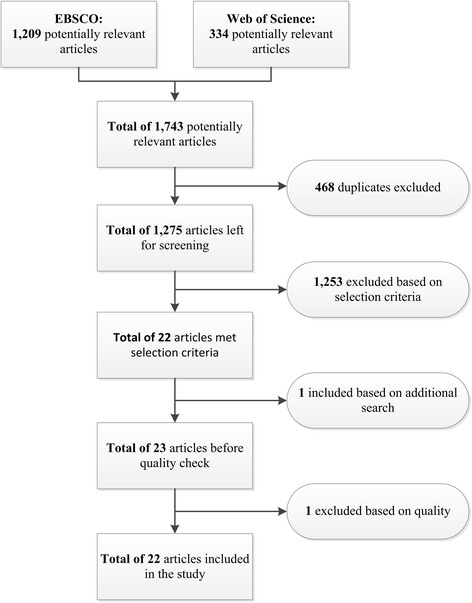
BACKGROUND: Since the emergence of social media in 2004, a growing percentage of patients use this technology for health related reasons. To reflect on the alleged beneficial and potentially harmful effects of social media use by patients, the aim of this paper is to provide an overview of the extant literature on the effects of social media use for health related reasons on patients and their relationship with healthcare professionals. METHODS: We conducted a systematic literature review on empirical research regarding the effects of social media use by patients for health related reasons. The papers we included met the following selection criteria: (1) published in a peer-reviewed journal, (2) written in English, (3) full text available to the researcher, (4) contain primary empirical data, (5) the users of social media are patients, (6) the effects of patients using social media are clearly stated, (7) satisfy established quality criteria. RESULTS: Initially, a total of 1,743 articles were identified from which 22 were included in the study. From these articles six categories of patients' use of social media were identified, namely: emotional, information, esteem, network support, social comparison and emotional expression. The types of use were found to lead to seven identified types of effects on patients, namely improved self-management and control, enhanced psychological well-being, and enhanced subjective well-being, diminished subjective well-being, addiction to social media, loss of privacy, and being targeted for promotion. Social media use by patients was found to affect the healthcare professional and patient relationship, by leading to more equal communication between the patient and healthcare professional, increased switching of doctors, harmonious relationships, and suboptimal interaction between the patient and healthcare professional. CONCLUSIONS: Our review provides insights into the emerging utilization of social media in healthcare. In particular, it identifies types of use by patients as well as the effects of such use, which may differ between patients and doctors. Accordingly, our results framework and propositions can serve to guide future research, and they also have practical implications for healthcare providers and policy makers.
Overview
The claims and statistics of this paper haven’t been checked yet.
Run the check — free, no account needed. It reads the open-access text and checks the sources it cites.
Integrity signals
Registry
Cites
Statistics
Figures
Verification
Claims the paper makes
The claims and statistics of this paper haven’t been checked yet.
Run the check — free, no account needed. It reads the open-access text and checks the sources it cites.
Claims other papers make about this one
Each is checked against this paper’s own text: does it say what the citing paper says it does?
The source backs part of the claim, not all of it — or backs it for a different population, condition or comparison.
In the citing paper
“Health promotion on social media also encouraged patients to seek medical attention more willingly [11].”
From Social Media Use Among Parents and Caregivers of Children With Rare Genetic Diseases: Scoping Review (2025) · cites this paper as [11]
Experimental — accuracy not yet measuredThe source backs part of the claim, not all of it — or backs it for a different population, condition or comparison.
In the citing paper
“Most patients discuss information they have found online with their health care provider”
From Social Media Use Among Parents and Caregivers of Children With Rare Genetic Diseases: Scoping Review (2025) · cites this paper as [11]
Experimental — accuracy not yet measuredThe source backs part of the claim, not all of it — or backs it for a different population, condition or comparison.
In the citing paper
“however, physicians often react negatively to discussions involving information sourced from social media [11-13].”
From Social Media Use Among Parents and Caregivers of Children With Rare Genetic Diseases: Scoping Review (2025) · cites this paper as [11]
Experimental — accuracy not yet measuredThe cited source says what the claim attributes to it.
In the citing paper
“Prior literature has highlighted both benefits and risks of social media in healthcare,4–13 but there remains limited understanding of how generational perspectives shape views of professionalism in healthcare social media use.”
From Evaluating perceptions of social media professionalism by healthcare workers (2026) · cites this paper as [5]
The cited source says what the claim attributes to it.
In the citing paper
“Social media use is also related to shorter relationships with health care providers, as online discussions prompted patients to seek specific providers [11].”
From Social Media Use Among Parents and Caregivers of Children With Rare Genetic Diseases: Scoping Review (2025) · cites this paper as [11]
The cited source says what the claim attributes to it.
In the citing paper
“social media empowers patients to be more informed and involved in their own care”
From Social Media Use Among Parents and Caregivers of Children With Rare Genetic Diseases: Scoping Review (2025) · cites this paper as [11]
The cited source says what the claim attributes to it.
In the citing paper
“allowing for improved communication with medical professionals [11,12].”
From Social Media Use Among Parents and Caregivers of Children With Rare Genetic Diseases: Scoping Review (2025) · cites this paper as [11]
The check wasn’t confident either way, so it gives no verdict — never disputed.
In the citing paper
“popularity of SM has also been embraced by health care professionals (HCPs) [5].”
From Dangers and Benefits of Social Media on E-Professionalism of Health Care Professionals: Scoping Review (2021) · cites this paper as [5]
Experimental — accuracy not yet measured
Self-check
Percentages, sums and reported differences re-computed from the paper’s own numbers.
The self-check needs the paper’s full text.
Citations
Cites
Preferred Reporting Items for Systematic Reviews and Meta-Analyses: the PRISMA statement
Moher, D., Liberati, A., Tetzlaff, J., Altman, D. G., & for the PRISMA Group (2009) · BMJ · doi:10.1136/bmj.b2535 · Cited by 83,823
Preferred reporting items for systematic reviews and meta-analyses: the PRISMA Statement.
(2009) · PubMed Central · Cited by 44,859
Users of the world, unite! The challenges and opportunities of Social Media
Kaplan, A. M., & Haenlein, M. (2010) · Business Horizons · doi:10.1016/j.bushor.2009.09.003 · Cited by 17,875 · cited 4×
“Among other uses, blogs can be used as personals diaries to express thoughts, feelings, and stories [9].”
BackgroundMethodInfluentialHappiness is everything, or is it? Explorations on the meaning of psychological well-being.
Ryff, C. D. (1989) · Journal of Personality and Social Psychology · doi:10.1037/0022-3514.57.6.1069 · Cited by 14,847 · cited 2×
“Moreover, “self-actualizers are described as having strong feelings of empathy and affection for all human beings and as being capable of greater love, deeper friendship, and more complete identification with others” [33].”
BackgroundPower, politics, and MIS implementation
Markus, M. L. (1983) · Communications of the ACM · doi:10.1145/358141.358148 · Cited by 2,224 · cited 1×
“According to the political variant of the interaction theory [49], “a product of the interaction of system”
BackgroundSocial capital, self-esteem, and use of online social network sites: A longitudinal analysis.
Steinfield, C., Ellison, N. B., & Lampe, C. (2008) · Journal of Applied Developmental Psychology · doi:10.1016/j.appdev.2008.07.002 · Cited by 1,919
Social Support Measurement and Intervention
(2000) · Oxford University Press eBooks · doi:10.1093/med:psych/9780195126709.001.0001 · Cited by 1,887 · cited 1×
“process of interaction in relationships which is intended to improve coping, esteem, belonging, and competence through actual or perceived exchanges of psychosocial resources” [19].”
BackgroundStandard Quality Assessment Criteria for Evaluating Primary Research Papers from a Variety of Fields
Kmet, L. M., Cook, L. S., & Lee, R. C. (2004) · University of Alberta Library · doi:10.7939/r37m04f16 · Cited by 1,682 · cited 3×
“The articles were assessed on their quality by using the standard quality assessment criteria as identified by [12].”
MethodInfluentialThe health-related functions of social support
Schaefer, C. A., Coyne, J. C., & Lazarus, R. S. (1981) · Journal of Behavioral Medicine · doi:10.1007/bf00846149 · Cited by 1,326 · cited 2×
“Social support is represented through five different categories and four of these categories were found to be common types of social media use by patients for health related purposes [18].”
BackgroundThe decision and the organization
MacDougall, C. D., & Wilson, H. (1965) · Marzani & Munsell eBooks · Cited by 1,149
Research works printed but not linked: 4
- Williams J. A new roadmap for healthcare business success. J Healthc Financ Manage Assoc. 2011;65(5):62–9.
- Mattson M, Hall JG. Health as communication nexus: A service-learning approach. Dubuque: Kendall Hunt; 2011.
- Sahoo FM, Mohapatra L. Psychological well-Being in professional groups. J Indian Acad Appl Psychol. 2009;35(2):211–7.
- Simon HA. Decision and organization. Amsterdam: North-Holland Publishing; 1972.
Cited by
Sorted by citations
Items 301–400 of 825
Social Media as an Opportunity for Public Health Interventions: The #Metoo Movement as an Exemplar
Bravo, R. G., Bravo, M. G., Lygidakis, C., & Vögele, C. (2019) · Journal of the International Society for Telemedicine and eHealth · doi:10.29086/jisfteh.7.e5 · Cited by 9
“Social media have also been used by patients mainly for social support, but also for emotional expression and social comparison, as shown in a recent systematic review.(3) Twitter is one of the most popular free social media”
BackgroundPaige, S. R., Salloum, R. G., Krieger, J. L. R., Williams, M. P., Xue, W., & Brumback, B. (2020) · Journal of Health Communication · doi:10.1080/10810730.2020.1836087 · Cited by 9
“The Internet has revolutionized how patients navigate and engage with the healthcare system (Li et al., 2014; Smailhodzic et al., 2016; Tan & Goonawardene, 2017).”
BackgroundEpilepsy on social media: An exploratory study of Arabic language content
Alsalem, G. M. (2021) · Epilepsy & Behavior · doi:10.1016/j.yebeh.2021.108089 · Cited by 9
George, N., de Long, R., Ahmed, R., Kacica, M. A., & Manganello, J. A. (2023) · Frontiers in Communication · doi:10.3389/fcomm.2023.1190689 · Cited by 8
de Assis, W. M., & Vilela, B. D. A. (2024) · International Journal of Pharmaceutical and Healthcare Marketing · doi:10.1108/ijphm-06-2023-0057 · Cited by 13
Shrestha, S., Varghese, S., Mehta, S., & Dev, S. (2025) · Frontiers in Pharmacology · doi:10.3389/fphar.2025.1529115 · Cited by 8
Wu, Q. (2025) · Patient Education and Counseling · doi:10.1016/j.pec.2025.109270 · Cited by 8
ChatGPT in urogynecology: Comparing large language model responses to human experts
Rotem, R., Simon, C., Rottenstreich, M., O’Reilly, B., Weintraub, A. Y., & O’Sullivan, O. E. (2025) · Acta Obstetricia Et Gynecologica Scandinavica · doi:10.1111/aogs.70085 · Cited by 10
“12 Simulating written exchanges allows for a structured comparison of content clarity, tone, and reassurance—qualities that are especially important in fields like Urogynecology where stigma and embarrassment may inhibit open dialogue.”
Sormunen, T., Westerbotn, M., Aanesen, A., Fossum, B., & Karlgren, K. (2021) · Women s Health · doi:10.1177/17455065211063280 · Cited by 8
“44 In line with previous research, 45 the bloggers reported that the mental strain of infertility can be almost insufferable.”
BackgroundPregnancy and working conditions in the hospital sector: a scoping review
Vasconcelos, S. W., Guedes, J. C., Dias, E. C., & Matias, A. (2023) · Revista Brasileira de Medicina do Trabalho · doi:10.47626/1679-4435-2023-947 · Cited by 8
Thalassemia Screening by Sentiment Analysis on Social Media Platform Twitter
Aqlan, W. M. M., Alı, G. A., Rajab, K. D., Rajab, A. D., Shaikh, A., Olayah, F. A., Alzaeemi, S. A., Tay, K. G., Omar, M. A., & Mangantig, E. (2023) · Computers, materials & continua/Computers, materials & continua (Print) · doi:10.32604/cmc.2023.039228 · Cited by 8
Changes in Care Provision During COVID-19 Impact Patient Well-Being
Wang, J. J., Levi, J. R., & Edwards, H. (2021) · Journal of Patient Experience · doi:10.1177/23743735211034068 · Cited by 8
“Interestingly, few participants indicated using social media and public forums such as Twitter, Facebook, and Reddit, while prior studies have supported the widespread use of social media within the patient population (10,11).”
BackgroundVerbal and Visual Framing of Responsibility for Type 1 Diabetes by Patient Influencers on Instagram
Wiedicke, A., Reifegerste, D., Temmann, L. J., & Scherr, S. (2022) · Social Media + Society · doi:10.1177/20563051221136114 · Cited by 9
“However, there are potential benefits, too, as social media enable users to share their personal health-related experiences, thoughts, and feelings with others and receive social support from them (Chen & Wang, 2021; Smailhodzic et al., 2016; Zhao & Zhang, 2017).”
Harter, C., Ness, M., Goldin, A., Lee, C., Merenda, C., Riberdy, A., Saha, A., Araojo, R., & Tarver, M. E. (2023) · JMIR Infodemiology · doi:10.2196/41672 · Cited by 8
“Future studies should incorporate other diseases and web-based platforms to gather a more comprehensive understanding [11,28,29].”
BackgroundCao, B., Zhao, P., Bien-Gund, C. H., Tang, W., Ong, J. J., Fitzpatrick, T., Tucker, J. D., & Luo, Z. (2018) · JMIR mhealth and uhealth · doi:10.2196/10531 · Cited by 8
“This finding suggests that Web-based consultations can supplement, but do not replace, in-person clinical encounters [39,40].”
BackgroundMapping the online social network of cancer bloggers
Baik, S. H., Klonoff, E. A., Barnes, L. E., Schiaffino, M. K., & Wells, K. J. (2019) · Journal of Health Psychology · doi:10.1177/1359105319888269 · Cited by 8
“Cancer blogs offer informational and emotional support to other individuals affected by cancer (Chiu and Hsieh, 2013; Chung and Kim, 2008; Kim, 2009; Smailhodzic et al., 2016) by providing a communication medium between the blogger and others who read/view the blog.”
BackgroundLi, W., Le, N., Lee, D. J., & Reuter, K. (2020) · Journal of the American Academy of Dermatology · doi:10.1016/j.jaad.2020.11.004 · Cited by 8
Scragg, B., Shaikh, S., Shires, G., Stein Hodgins, J., Mercer, C., Robinson, L., & Wray, J. (2017) · Radiography · doi:10.1016/j.radi.2017.04.004 · Cited by 7
Social Media Use Among Parents and Caregivers of Children With Rare Genetic Diseases: Scoping Review
Davis, C., Bogaert, L., Powell, J., & Low, K. (2025) · Journal of Medical Internet Research · doi:10.2196/77087 · Cited by 8
“Studies looking at the impact of social media on the relationship between patients and health care providers have shown that social media empowers patients to be more informed and involved in their own care, allowing for improved communication with medical professionals [11,12].”
InfluentialSchück, S., Loussikian, P., Mebarki, A., Malaab, J., Foulquié, P., Talmatkadi, M., & Kearney, M. (2024) · BMC Cancer · doi:10.1186/s12885-024-13092-x · Cited by 7
Zhang, W., Guo, F., Cheng, W., Evans, R., Kludacz-Alessandri, M., & Zhu, C. (2024) · Patient Education and Counseling · doi:10.1016/j.pec.2024.108577 · Cited by 7
Crowley, T., Tokwe, L., Weyers, L., Francis, R., & Petinger, C. (2024) · International Journal of Environmental Research and Public Health · doi:10.3390/ijerph22010002 · Cited by 8
“In a systematic review conducted by [45] on social media use in health, it was found that social media may increase patients’ autonomy regarding their care, as well as perceived support.”
The impact of FoMO and FoBO on YouTube summary video consumption: A social identity perspective
Park, I.-Y., & Kim, H.-M. (2025) · Telecommunications Policy · doi:10.1016/j.telpol.2025.102909 · Cited by 10
Song, M., Elson, J. S., Haas, C. S., Obasi, S. N., Sun, X., & Bastola, D. K. (2025) · Healthcare · doi:10.3390/healthcare13111238 · Cited by 7
“Social media may inform patients, making them more willing to discuss health issues with physicians [46].”
Johnston, E. J., & Semper, H. (2025) · Journal of Medical Internet Research · doi:10.2196/73532 · Cited by 7
“Social media sites can provide users with the opportunity to seek out advice and discuss treatments for stigmatized conditions in an anonymous way and can help create a supportive community of individuals with shared experiences [34].”
Firdos, S., Almulla, S. A., Aldossary, S., Hassan, S. A., & Aldhaif, L. (2023) · Cureus · doi:10.7759/cureus.48718 · Cited by 7
“As social media use continues to grow globally among the general population, healthcare professionals (HCPs) are likewise adopting these platforms [7].”
BackgroundIntroduction to Consumer Health Informatics and Digital Inclusion
Gibbons, M. C., & Shaikh, Y. (2019) · Springer eBooks · doi:10.1007/978-3-319-96906-0_2 · Cited by 7
The person at the centre of health systems: an introduction
Nolte, E., Merkur, S., & Anell, A. (2020) · Cambridge University Press eBooks · doi:10.1017/9781108855464.004 · Cited by 14
Manchaiah, V. K. C., Pyykkö, I. V., & Pyykkö, N. (2020) · The Journal of International Advanced Otology · doi:10.5152/iao.2020.7563 · Cited by 7
“DISCUSSION The use of the Internet and social media has grown exponentially over the last decade [1, 11].”
BackgroundAguerrebere, P. M., Pacanowski, T. G., & Medina, E. (2020) · El Profesional de la Informacion · doi:10.3145/epi.2020.nov.17 · Cited by 7
“Thanks to these platforms, patients can establish a more symmetrical relationship with health professionals, opening up a dialog in a more cordial way (Smailhodzic et al., 2016).”
BackgroundPharmacovigilance and the digital world in Italy: presentation of the results of a national survey
Stagi, L., Bocchi, I., Bianco, S. L., Sirizzotti, G., Bernardini, D., Calderazzo, V., Pirisino, G., Grisoni, I., & Romano, S. (2021) · Therapeutic Advances in Drug Safety · doi:10.1177/2042098620985991 · Cited by 7
Essentials of Neonatal-Perinatal Medicine fellowship: part 2 - clinical education and experience
Cicalese, E., Wraight, C. L., Falck, A. J., Izatt, S. D., Nair, J., ONTPD Fellowship Directors Writing Group, French, H. M., Reber, K. M., Bauserman, M., Good, M. L., et al. (2021) · Journal of Perinatology · doi:10.1038/s41372-021-01042-5 · Cited by 7
“Furthermore, increasing parental use of websites, mobile apps, and social media for health information and medical advice has altered the dynamics of the physicianpatient relationship and has helped highlight the importance of joint decision-making [29], further emphasizing the need for education on advanced communica…”
BackgroundHammoud, R., Laham, S., Kdouh, O., & Hamadeh, R. S. (2021) · The International Journal of Health Planning and Management · doi:10.1002/hpm.3347 · Cited by 7
A lexicon-based method for detecting eye diseases on microblogs
Sarsam, S. M., & Al‐Samarraie, H. (2021) · Applied Artificial Intelligence · doi:10.1080/08839514.2021.1993003 · Cited by 7
Kwan, Y. H., Phang, J. K., Woon, T. H., Liew, J. W., Dubreuil, M., Proft, F. N., Ramiro, S., Moltó, A., Navarro‐Compán, V., de Hooge, M., et al. (2023) · Journal of Medical Internet Research · doi:10.2196/39155 · Cited by 8
“Apart from information seeking, patients have also turned to social media for emotional and network support to better cope with the disease [24].”
Social media in ART—#power or #peril?
Quaas, A. M. (2020) · Journal of Assisted Reproduction and Genetics · doi:10.1007/s10815-020-01831-5 · Cited by 7
A similarity matrix based approach for building patient centric social networks
Bissoyi, S., & Patra, M. R. (2021) · International Journal of Information Technology · doi:10.1007/s41870-021-00692-0 · Cited by 7
Social Media and Global Health: Promise and Pitfalls
Kelil, T., Jaswal, S., & Matalon, S. A. (2022) · Radiographics · doi:10.1148/rg.220038 · Cited by 7
Unmet Needs Discussed on Reddit by Women with Premenstrual Dysphoric Disorder
Poladian, N., Maron, A., Ghazarian, T. C., Sweeny, Y. F., & Nelson, A. L. (2022) · Cyberpsychology Behavior and Social Networking · doi:10.1089/cyber.2022.0072 · Cited by 6
Adanan, A., Kamarudin, Y., Nor, N. A. M., Bahar, A. D., & Rahman, A. N. A. A. (2024) · Australasian Orthodontic Journal · doi:10.2478/aoj-2023-0034 · Cited by 6
Nair, R. A. S., Härtung, M., Heinisch, P., Jaskolski, J., Starke-Knäusel, C., Veríssimo, S., Schmidt, D. M., & Cimiano, P. (2025) · JMIR Medical Informatics · doi:10.2196/62909 · Cited by 6
“It has been indeed shown that sharing health-related experiences in online communities has an effect of empowerment on patients, increasing their subjective and psychological well-being, leading to increased self-management and control [1].”
Braverman, J., Ellis, D., Gavata-Steiger, S., Dhas, A. B., Muthu, R., & Ataher, Q. (2025) · Allergy and Asthma Proceedings · doi:10.2500/aap.2025.46.250028 · Cited by 6
Zhong, X., Ma, Y., & Yu, H. (2025) · Journal of Medical Internet Research · doi:10.2196/70676 · Cited by 9
“This theoretical innovation addresses the limitations of existing literature that analyzed single functions of social media (eg, health education or brand promotion) [5,52-55], providing a more comprehensive and systematic analytical framework for health communication research.”
Wang, X., & Leng, X. (2025) · Frontiers in Public Health · doi:10.3389/fpubh.2025.1649120 · Cited by 6
Walsh, L., Hyett, N., Howley, J., Juniper, N., Li, C., MacLeod-Smith, B. J., Rodier, S., & Hill, S. (2021) · International Journal of Health Policy and Management · doi:10.34172/ijhpm.2021.151 · Cited by 6
Framing Public Opinion on Physician-Patient Conflicts on Microblog: A Comparative Content Analysis
Gong, W., & Guo, Q. (2022) · Frontiers in Public Health · doi:10.3389/fpubh.2022.831638 · Cited by 6
“To investigate the differences in message frames used by opinion leaders from the health industry, general public, and media when expressing their opinions on physician–patient incidents, we framed the following research questions: RQ1: How are (1) conflict, (2) cooperation, (3) responsibility, (4) positive frames, (5…”
Background#Who: Investigation of Who Creates Laryngology Content Posted on Instagram
Rosario, K. L. D., Rao, S. J., Born, H. L., & Madden, L. L. (2022) · Journal of Voice · doi:10.1016/j.jvoice.2022.09.020 · Cited by 6
Walker, L., & Sillence, E. (2023) · Health Communication · doi:10.1080/10410236.2023.2204580 · Cited by 6
“We do know from the patients’ perspective that communication with HCPs is improved through the introduction of inter-net-based resources, and patients report increased knowledge and a sense of empowerment (Smailhodzic et al., 2016).”
BackgroundOlsacher, A., Bade, C., Ehlers, J. P., Freitag, B., & Fehring, L. (2023) · BMC Public Health · doi:10.1186/s12889-023-15736-2 · Cited by 6
“The power of social media for health communication Numerous studies highlight the importance of social media for sharing health information [21], not only regarding epidemic control and surveillance [22] but also to raise awareness about blood [23] and organ donations [24].”
BackgroundThe Use of Instagram Among Dental Patients in Saudi Arabia
Al‐Khalifa, K. S. (2024) · Acta Informatica Medica · doi:10.5455/aim.2024.32.54-60 · Cited by 6
Liew, I. E., Sharif, M. O., & Cunningham, S. J. (2024) · Journal of Orthodontics · doi:10.1177/14653125241264827 · Cited by 6
“High-quality information regarding the material risks and benefits of treatment helps patients to understand their role and the commitment for successful treatment better (Smailhodzic et al., 2016; Tang and Newcomb, 1998).”
Duong, A. H., Nguyen, T. D., Duong, G. H., & Tran, T. T. B. (2024) · International Journal of Information Technology · doi:10.1007/s41870-024-02182-5 · Cited by 7
“This finding aligns with previous research suggesting that social media presence reflects a clinic’s commitment to innovation, communication, and adaptability in the digital realm [43–45 , 86– 88 ].”
Review on the Role of Social Media for Dengue Prevention and Monitoring
Kannan, R., Soon, L.-K., & Govindasamy, M. A. P. (2019) · Applied Mechanics and Materials · doi:10.4028/www.scientific.net/amm.892.228 · Cited by 6
“This clearly states the positive sides of social media into healthcare industry [8].”
BackgroundUnified approach to retrospective event detection for event- based epidemic intelligence
Fisichella, M. (2021) · International Journal on Digital Libraries · doi:10.1007/s00799-021-00308-9 · Cited by 6
“Furthermore, much debate and polarization exist about the impact of social media on the health of patients that might be considered as a non-ideal source of data [38].”
BackgroundAssessment of the Sources of Information by Patients With Rheumatic Diseases
Germain, M. P. I., Ávila, P. A., Fara, N., Pretini, J., Gaona, M. E., Pissani, P., Saavedra, M. A., Aquino, V., Echazu, M. E., Laffont, M., et al. (2021) · JCR Journal of Clinical Rheumatology · doi:10.1097/rhu.0000000000001809 · Cited by 6
#Menopause: the menopause ontology project
Trieu, E., Davenport, A. P., Kingsberg, S. A., & Iglesia, C. B. (2022) · Menopause The Journal of The North American Menopause Society · doi:10.1097/gme.0000000000002012 · Cited by 6
Using Machine Learning to Study Flu Vaccines Opinions of Twitter Users
Celesti, A., Galletta, A., Celesti, F., Fazio, M. C., & Villari, M. (2019) · IEEE Symposium on Computers and Communications (ISCC) · doi:10.1109/iscc47284.2019.8969742 · Cited by 6
“Authors in [6], [7], [8], [9], [10] and [11], considering healthcare social media, analysed the effectiveness of data in communication that involve both patients and medical personnel.”
BackgroundEthics and social media networking in Lebanon: A double-edged conception to healthcare professionals
Daouk, S. E., Musa, A. A., & Abou-Mrad, F. (2020) · Cogent Medicine · doi:10.1080/2331205x.2020.1784621 · Cited by 7
Clercq, E. D., Rost, M., von der Weid, N., Ansari, M., & Elger, B. S. (2020) · International Journal of Adolescent Medicine and Health · doi:10.1515/ijamh-2020-0137 · Cited by 6
Role of Social Media in Hospital Branding
Nayal, P., & Pandey, N. (2020) · Advances in marketing, customer relationship management, and e-services book series · doi:10.4018/978-1-7998-3034-4.ch001 · Cited by 6
Vaagan, R. W., Torkkola, S., Sendra, A., Coma, J. F. I., & Lovari, A. (2021) · International journal of communication · Cited by 6
Building meaningful brands through social media
Aguerrebere, P. M., Pacanowski, T. G., & Medina, E. (2021) · UNIE Business Research · doi:10.48132/hdbr.342 · Cited by 6
Overview of Facebook Use by Hospitals in Italy: A Nationwide Survey during the COVID-19 Emergency
Schiavone, B., Vitale, A., Gallo, M., Russo, G., Ponticelli, D., & Borrelli, M. (2021) · International Journal of Environmental Research and Public Health · doi:10.3390/ijerph18147225 · Cited by 6
“Discussion Social networks are playing a leading role as tools for health promotion, highlighting the importance of adopting a healthy lifestyle [16], as well as in promoting a good relationship [17] between the doctor and the increasingly informed patient.”
BackgroundSocial media analytics and reachability evaluation - #Diabetes
Karmegam, D., & Mappillairaju, B. (2021) · Diabetes & Metabolic Syndrome Clinical Research & Reviews · doi:10.1016/j.dsx.2021.102359 · Cited by 6
Franklin, K., Engstrand, S., Thornton, J., & Connor, J. A. (2022) · Dimensions of Critical Care Nursing · doi:10.1097/dcc.0000000000000514 · Cited by 6
A Survey on Social-Physical Sensing.Preprint
Rashid, M. T., Wei, N., & Wang, D. (2021) · arXiv (Cornell University) · Cited by 6
Kim, H., & Cho, M. (2025) · Asian Nursing Research · doi:10.1016/j.anr.2025.01.007 · Cited by 5
Social Media and Stuttering: A Meta-Qualitative Synthesis of Representation and Impacts
Bidakhavidi, Z. L., Nesari, S., Hashemipanah, A., Hosseinpoor, N., Torfi, F., Banari, T., & Farmayeshi, M. R. G. (2025) · Perspectives of the ASHA Special Interest Groups · doi:10.1044/2025_persp-24-00222 · Cited by 4
Khaleel, S., Abbas, N., Niazi, D., Aljundi, H., Alrouh, R., Abugharbiyeh, Y., Hashim, M. S., Alameddine, M. S., & Naja, F. (2025) · BMC Public Health · doi:10.1186/s12889-025-22158-9 · Cited by 5
“Furthermore, the fact that anyone can share their opinions and advice on SM may expose users to health recommendations from individuals without proper training or credentials [14].”
Nanthanasit, A., Ppali, S., Farao, J., Tabbaa, L., Ang, C. S., Sukittanon, S., & Covaci, A. (2025) · Designing Interactive Systems Conference · doi:10.1145/3715336.3735802 · Cited by 6
“Facebook supports a broader discussion-based model, enabling users to share experiences, pose questions, and offer emotional support –important for countering caregiver isolation [91].”
InfluentialBai, X., Guo, F., & Chu, D. (2025) · JMIR Infodemiology · doi:10.2196/83900 · Cited by 5
Dynamics of Social Media Promotion of Prescription Drugs and Resulting Patient Belief Systems
Mukherjee, S. K., Kumar, J., Jha, A. K., & Pandey, J. R. (2021) · Advances in social networking and online communities book series · doi:10.4018/978-1-7998-7764-6.ch005 · Cited by 5
Bert, F., Moro, G. L., Giacomini, G., Minutiello, E., & Siliquini, R. (2023) · Health Promotion International · doi:10.1093/heapro/daad006 · Cited by 5
Investigational Therapies and Patients’ Autonomy
Papakonstantinou, T., & Kolettis, T. M. (2020) · Canadian Journal of Bioethics · doi:10.7202/1073786ar · Cited by 5
Al‐Shdayfat, N., Al‐Natour, A., Alhusban, R. Y., Yehia, D., Al-shanableh, N., Alsaraireh, A. M., & Alkhawaldeh, J. M. (2022) · The Open Public Health Journal · doi:10.2174/18749445-v15-e2201120 · Cited by 6
Emerging technologies adoption in healthcare: A SOHI model
Ofori, P. P., & Wang, W. (2022) · Information Development · doi:10.1177/02666669221113766 · Cited by 6
Walsh, L., Hyett, N., Juniper, N., Li, C., & Hill, S. (2022) · International Journal of Environmental Research and Public Health · doi:10.3390/ijerph192214851 · Cited by 5
“People use social media sites for a variety of health-related purposes, including searching for health information [4–7], finding support for their condition [5,7,8] and as an aid for self-management [7,8].”
BackgroundVIRTUAL INTERACTIONS OF FAMILIES OF CHILDREN WITH CANCER: POTENTIAL SPACE FOR NURSE’S ACTIONS
de Mattos, C. X., & Cabral, I. E. (2023) · Cogitare Enfermagem · doi:10.1590/ce.v28i0.89245 · Cited by 5
YouTube® en español como fuente de información para pacientes con enfermedad inflamatoria intestinal
Moreno, C. E. L., Múñoz, Ó., Fernández-Ávila, D. G., Correa, J. E. B., López-Ramírez, V., & Varón, A. R. (2023) · Revista de Gastroenterología de México · doi:10.1016/j.rgmx.2022.09.004 · Cited by 5
A Quality Analysis of Donor Nephrectomy-Related Information on YouTube; Education or Misinformation?
Wainstein, M. D., Talbot, B. A., Lang, J. J., Nkansah-Amankra, K., Cuffy, M. C., & Ekwenna, O. (2023) · Transplantation Proceedings · doi:10.1016/j.transproceed.2023.07.032 · Cited by 5
Kharbanda, O. P., Qureshi, T., Fatima, K., & Khandelwal, M. (2023) · Seminars in Orthodontics · doi:10.1053/j.sodo.2023.11.002 · Cited by 5
Efectos de las redes sociales en la salud mental durante la pandemia de COVID-19
Cambronero-Saiz, B., Gómez-Nieto, B., & Segarra‐Saavedra, J. (2023) · REVISTA ESPAÑOLA DE COMUNICACIÓN EN SALUD · doi:10.20318/recs.2023.7703 · Cited by 8
Irfan, B., Yasin, I., & Yaqoob, A. (2024) · Cureus · doi:10.7759/cureus.54247 · Cited by 5
“If patients derive their knowledge primarily from social media, the perception of prescribed treatments might be influenced more by popular opinion than scientific evidence [23].”
BackgroundMa, Y., Law, K., Hassan, L., Nenadić, G., & van der Veer, S. N. (2024) · JMIR Pediatrics and Parenting · doi:10.2196/56919 · Cited by 4
“…reviews and studies indicated HCP involvement in self-management could improve HCP-patient relationships and health care delivery more generally [8,50-52], our synthesis found more diverse patient attitudes, ranging from beliefs that HCP involvement would enable tailored support to worries about…”
BackgroundResultInfluentialOfori, P. P. (2024) · Ethiopian Journal of Health Sciences · doi:10.4314/ejhs.v34i1.6 · Cited by 5
“Patients have been utilizing social networking sites for health purposes since the early 2000s (21), and these platforms continue to be promising avenues for improving health, especially among historically underserved communities (22).”
BackgroundTwitter-sentiment analysis of Moroccan diabetic using Fuzzy C-means SMOTE and deep neural network
Roudani, M., Elkari, B., Moutaouakil, K. E., Ourabah, L., Hicham, B., & Chellak, S. (2024) · Mathematical Modeling and Computing · doi:10.23939/mmc2024.03.835 · Cited by 5
“Platforms like Facebook and Twitter have been extensively utilized for discussing health-related concerns and sharing thoughts globally [1, 2].”
BackgroundWang, Y., Liu, P., & Zhang, Q. (2024) · Disaster Medicine and Public Health Preparedness · doi:10.1017/dmp.2024.154 · Cited by 5
A Quantitative Analysis of Social Media to Determine Trends in Brain Tumor Care and Treatment
Bird, C. E., Kozin, E. D., Connors, S. W., LoBue, C., & Abdullah, K. G. (2020) · Cureus · doi:10.7759/cureus.11530 · Cited by 5
“Patients have increasingly adopted the use of social media for educational purposes as well as emotional support for their healthcare concerns [2-6].”
BackgroundThe role of virtual social networks in shaping people's attitudes toward COVID-19 in Iran
Jahanbakhsh, M., Bagherian, H., Tavakoli, N., Ehteshami, A., Sattari, M. A., Isfahani, S. S., & Jangi, M. (2021) · Journal of Education and Health Promotion · doi:10.4103/jehp.jehp_642_20 · Cited by 5
“In addition, at times, the status of a disease may be magnified unrealistically, creating increased fear and anxiety in patients and the public.[10]”
BackgroundSystemic lupus erythematosus on social networking sites: Friends or foes?
Dima, A., Abida, R., Sadovici-Bobeică, V., & Delcea, C. (2021) · Lupus · doi:10.1177/09612033211038053 · Cited by 5
“9,26 SNS exposure can also cause a delay in treatment or even a loss of treatment consistency due to repetitive switching of doctors.”
BackgroundInfluentialRavenscroft, J., Tracy, H. S. C., & Blaikie, A. J. (2021) · Frontiers in Communication · doi:10.3389/fcomm.2021.727230 · Cited by 5
“However we found that in contrast to the results of other similar research (Smailhodzic et al., 2016), that social media was one of the least frequent mechanism of referral to the website.”
ResultSilva, T. C., de Carvalho, A. G., Tholl, A. D., Rodríguez‐Borrego, M. A., López‐Soto, P. J., & Viegas, S. M. D. F. (2021) · Saúde em Debate · doi:10.1590/0103-1104202113117i · Cited by 5
Representation of Global Health Initiatives in Plastic Surgery Training
Naides, A. I., Kapadia, K., Salem, J., Dalena, M., Cohen, D., Ayyala, H. S., & Lee, E. S. (2022) · Annals of Plastic Surgery · doi:10.1097/sap.0000000000003089 · Cited by 5
“Medicine as a field is not spared from the effects of these capabilities, where social media utilization has permeated into spaces including patient interactivity and education.(2) However, social media also demonstrates a unique look into how various users choose to build their online presence.”
BackgroundCervical Myelopathy and Social Media: Mixed Methods Analysis
Elkaim, L. M., Levett, J. J., Niazi, F., Alvi, M. A., Shlobin, N. A., Linzey, J. R., Robertson, F. C., Bokhari, R. F. Y., Alotaibi, N. M., & Lasry, O. J. (2023) · Journal of Medical Internet Research · doi:10.2196/42097 · Cited by 5
“Social media can serve as an outlet, allowing patients to acquire or share information, seek or provide emotional support, discuss personal triumphs or failures, and mourn or express grief [14,27,28].”
Comparing the Discussion of Telehealth in Two Social Media Platforms: Social Listening Analysis
Shoults, C. C., Dawson, L. C., Hayes, C. J., & Eswaran, H. (2023) · Telemedicine Reports · doi:10.1089/tmr.2023.0008 · Cited by 4
“In the United States, 80% of internet users use the web to search for health information, and a large proportion of these users turn to social media for information.(10,11) Health care systems and researchers are tapping into social media as a big data tool for mining information and understanding patient perspectives…”
BackgroundEvaluation Tools to Appraise Social Media and Mobile Applications
Skiba, D. J. (2017) · Informatics · doi:10.3390/informatics4030032 · Cited by 5
Twitter’s impact in building reputed hospital brands in USA
Aguerrebere, P. M. (2020) · Observatorio (OBS*) · doi:10.15847/obsobs14420201531 · Cited by 5
“Thanks to health communication, public health professionals can improve their relationships with some social groups, especially elderly people, children and patients suffering from chronicle diseases (Smailhodzic et al., 2016).”
BackgroundTowards Providing Clinical Insights on Long Covid from Twitter Data
Bhambhoria, R. V., Saab, J., Uppal, S., Li, X. S., Yakimovich, A., Bhatti, J. A., Valdamudi, N. K., Moyano, D., Bales, M., Dolatabadi, E., et al. (2022) · Studies in computational intelligence · doi:10.1007/978-3-031-14771-5_19 · Cited by 5
Hariri, N. H., Alruwais, A. T., Sodagar, W. M., Allhaiby, N. M., Moglan, T. M., Kinkar, L. I., Alskhairi, R. F., Almekhlafi, F. A., Kalantan, A. M., Mohammed, R., et al. (2025) · Healthcare · doi:10.3390/healthcare13222870 · Cited by 5
“The Saudi context is comparable, with documented integration of social media into professional development and public-facing health communication [1,17].”
Gellerstedt, M., Melin, J., Johansson, V., & Angenete, E. (2021) · Patient Education and Counseling · doi:10.1016/j.pec.2021.07.006 · Cited by 4
Metadata
- Authors
- Smailhodzic, E., Hooijsma, W., Boonstra, A., & Langley, D. J.
- Affiliations
- University of Groningen (NL)
- Netherlands Organisation for Applied Scientific Research (NL)
- Venue
- BMC Health Services Research
- Published
- 2016-08-26
- Volume
- 16
- Issue
- 1
- Pages
- 442-442
- ISSN
- 1472-6963 (ISSN-L)
- PMC
- PMC5000484
- OpenAlex
- W2512433998
- Cited by
- 827
- References
- 55
- Citations by year
- 2026: 75 · 2025: 107 · 2024: 107 · 2023: 99 · 2022: 111 · 2021: 127 · 2020: 96 · 2019: 61 · 2018: 29 · 2017: 14
- FWCI
- 6.51
- Type
- journal article
- Language
- en
- Open access
- gold
- doi.org
- Licence
- cc-by
- Locations
- BMC Health Services Research (publishedVersion, cc-by)
- PubMed Central (publishedVersion, cc-by)
- PubMed (publishedVersion)
- Data Archiving and Networked Services (DANS) (acceptedVersion)
- TNO Repository (submittedVersion)
- University of Groningen research database (University of Groningen / Centre for Information Technology) (submittedVersion, cc-by)
- Repository hosted by TU Delft Library (TU Delft) (submittedVersion)
- Topics
- Social Sciences › Health › Social Media in Health Education
- Health Sciences › Health Professions › General Health Professions › Health Literacy and Information Accessibility
- Social Sciences › Sociology and Political Science › Impact of Technology on Adolescents
- Keywords
- social media use, patient self-management, psychological well-being, subjective well-being, social media addiction, privacy loss, social comparison, network support, patient-physician communication
- MeSH terms
- Female, Health Personnel, Humans, Male, Professional-Patient Relations, Self Care, Consumer Health Information, Social Media
About these checks
Registry, retraction, Cites and statistics results are computed, not judged, with one exception: a printed reference that no index lists is read once by a model before it counts as a citation error. Claims are extracted by a model and kept only when their quote appears verbatim in the text; each cited source is then checked, with a model’s help, for whether it says what the claim relies on. Those verdicts can be wrong — read the claim’s quote and the cited source before relying on one.
Statistics and arithmetic are recomputed, not judged.
Confidence bands are shown only for fields calibrated on our annotated test set. None is calibrated yet, so no band is shown.
What counts as a claim ›How we measure confidence ›How we check this ›
Are you an author, or do you see a problem with this page? Request a review
