

The DOI matches its Crossref record; 55 of the 55 references it cites were found in a registry or an index.
Social media use in healthcare: A systematic review of effects on patients and on their relationship with healthcare professionals
Open accessAbstract
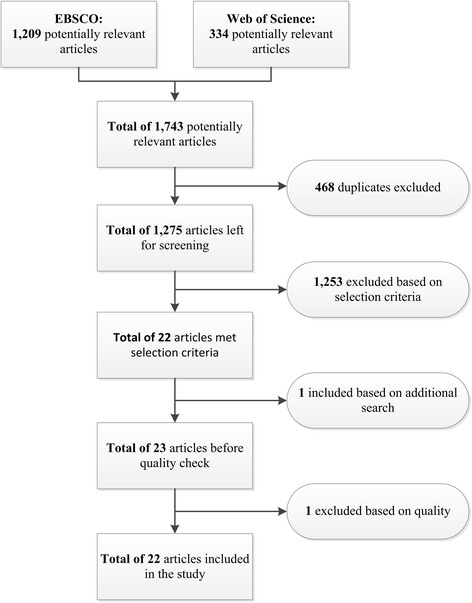
BACKGROUND: Since the emergence of social media in 2004, a growing percentage of patients use this technology for health related reasons. To reflect on the alleged beneficial and potentially harmful effects of social media use by patients, the aim of this paper is to provide an overview of the extant literature on the effects of social media use for health related reasons on patients and their relationship with healthcare professionals. METHODS: We conducted a systematic literature review on empirical research regarding the effects of social media use by patients for health related reasons. The papers we included met the following selection criteria: (1) published in a peer-reviewed journal, (2) written in English, (3) full text available to the researcher, (4) contain primary empirical data, (5) the users of social media are patients, (6) the effects of patients using social media are clearly stated, (7) satisfy established quality criteria. RESULTS: Initially, a total of 1,743 articles were identified from which 22 were included in the study. From these articles six categories of patients' use of social media were identified, namely: emotional, information, esteem, network support, social comparison and emotional expression. The types of use were found to lead to seven identified types of effects on patients, namely improved self-management and control, enhanced psychological well-being, and enhanced subjective well-being, diminished subjective well-being, addiction to social media, loss of privacy, and being targeted for promotion. Social media use by patients was found to affect the healthcare professional and patient relationship, by leading to more equal communication between the patient and healthcare professional, increased switching of doctors, harmonious relationships, and suboptimal interaction between the patient and healthcare professional. CONCLUSIONS: Our review provides insights into the emerging utilization of social media in healthcare. In particular, it identifies types of use by patients as well as the effects of such use, which may differ between patients and doctors. Accordingly, our results framework and propositions can serve to guide future research, and they also have practical implications for healthcare providers and policy makers.
Overview
The claims and statistics of this paper haven’t been checked yet.
Run the check — free, no account needed. It reads the open-access text and checks the sources it cites.
Integrity signals
Registry
Cites
Statistics
Figures
Verification
Claims the paper makes
The claims and statistics of this paper haven’t been checked yet.
Run the check — free, no account needed. It reads the open-access text and checks the sources it cites.
Claims other papers make about this one
Each is checked against this paper’s own text: does it say what the citing paper says it does?
The source backs part of the claim, not all of it — or backs it for a different population, condition or comparison.
In the citing paper
“Health promotion on social media also encouraged patients to seek medical attention more willingly [11].”
From Social Media Use Among Parents and Caregivers of Children With Rare Genetic Diseases: Scoping Review (2025) · cites this paper as [11]
Experimental — accuracy not yet measuredThe source backs part of the claim, not all of it — or backs it for a different population, condition or comparison.
In the citing paper
“Most patients discuss information they have found online with their health care provider”
From Social Media Use Among Parents and Caregivers of Children With Rare Genetic Diseases: Scoping Review (2025) · cites this paper as [11]
Experimental — accuracy not yet measuredThe source backs part of the claim, not all of it — or backs it for a different population, condition or comparison.
In the citing paper
“however, physicians often react negatively to discussions involving information sourced from social media [11-13].”
From Social Media Use Among Parents and Caregivers of Children With Rare Genetic Diseases: Scoping Review (2025) · cites this paper as [11]
Experimental — accuracy not yet measuredThe cited source says what the claim attributes to it.
In the citing paper
“Prior literature has highlighted both benefits and risks of social media in healthcare,4–13 but there remains limited understanding of how generational perspectives shape views of professionalism in healthcare social media use.”
From Evaluating perceptions of social media professionalism by healthcare workers (2026) · cites this paper as [5]
The cited source says what the claim attributes to it.
In the citing paper
“Social media use is also related to shorter relationships with health care providers, as online discussions prompted patients to seek specific providers [11].”
From Social Media Use Among Parents and Caregivers of Children With Rare Genetic Diseases: Scoping Review (2025) · cites this paper as [11]
The cited source says what the claim attributes to it.
In the citing paper
“social media empowers patients to be more informed and involved in their own care”
From Social Media Use Among Parents and Caregivers of Children With Rare Genetic Diseases: Scoping Review (2025) · cites this paper as [11]
The cited source says what the claim attributes to it.
In the citing paper
“allowing for improved communication with medical professionals [11,12].”
From Social Media Use Among Parents and Caregivers of Children With Rare Genetic Diseases: Scoping Review (2025) · cites this paper as [11]
The check wasn’t confident either way, so it gives no verdict — never disputed.
In the citing paper
“popularity of SM has also been embraced by health care professionals (HCPs) [5].”
From Dangers and Benefits of Social Media on E-Professionalism of Health Care Professionals: Scoping Review (2021) · cites this paper as [5]
Experimental — accuracy not yet measured
Self-check
Percentages, sums and reported differences re-computed from the paper’s own numbers.
The self-check needs the paper’s full text.
Citations
Cites
Preferred Reporting Items for Systematic Reviews and Meta-Analyses: the PRISMA statement
Moher, D., Liberati, A., Tetzlaff, J., Altman, D. G., & for the PRISMA Group (2009) · BMJ · doi:10.1136/bmj.b2535 · Cited by 83,823
Preferred reporting items for systematic reviews and meta-analyses: the PRISMA Statement.
(2009) · PubMed Central · Cited by 44,859
Users of the world, unite! The challenges and opportunities of Social Media
Kaplan, A. M., & Haenlein, M. (2010) · Business Horizons · doi:10.1016/j.bushor.2009.09.003 · Cited by 17,875 · cited 4×
“Among other uses, blogs can be used as personals diaries to express thoughts, feelings, and stories [9].”
BackgroundMethodInfluentialHappiness is everything, or is it? Explorations on the meaning of psychological well-being.
Ryff, C. D. (1989) · Journal of Personality and Social Psychology · doi:10.1037/0022-3514.57.6.1069 · Cited by 14,847 · cited 2×
“Moreover, “self-actualizers are described as having strong feelings of empathy and affection for all human beings and as being capable of greater love, deeper friendship, and more complete identification with others” [33].”
BackgroundPower, politics, and MIS implementation
Markus, M. L. (1983) · Communications of the ACM · doi:10.1145/358141.358148 · Cited by 2,224 · cited 1×
“According to the political variant of the interaction theory [49], “a product of the interaction of system”
BackgroundSocial capital, self-esteem, and use of online social network sites: A longitudinal analysis.
Steinfield, C., Ellison, N. B., & Lampe, C. (2008) · Journal of Applied Developmental Psychology · doi:10.1016/j.appdev.2008.07.002 · Cited by 1,919
Social Support Measurement and Intervention
(2000) · Oxford University Press eBooks · doi:10.1093/med:psych/9780195126709.001.0001 · Cited by 1,887 · cited 1×
“process of interaction in relationships which is intended to improve coping, esteem, belonging, and competence through actual or perceived exchanges of psychosocial resources” [19].”
BackgroundStandard Quality Assessment Criteria for Evaluating Primary Research Papers from a Variety of Fields
Kmet, L. M., Cook, L. S., & Lee, R. C. (2004) · University of Alberta Library · doi:10.7939/r37m04f16 · Cited by 1,682 · cited 3×
“The articles were assessed on their quality by using the standard quality assessment criteria as identified by [12].”
MethodInfluentialThe health-related functions of social support
Schaefer, C. A., Coyne, J. C., & Lazarus, R. S. (1981) · Journal of Behavioral Medicine · doi:10.1007/bf00846149 · Cited by 1,326 · cited 2×
“Social support is represented through five different categories and four of these categories were found to be common types of social media use by patients for health related purposes [18].”
BackgroundThe decision and the organization
MacDougall, C. D., & Wilson, H. (1965) · Marzani & Munsell eBooks · Cited by 1,149
Research works printed but not linked: 4
- Williams J. A new roadmap for healthcare business success. J Healthc Financ Manage Assoc. 2011;65(5):62–9.
- Mattson M, Hall JG. Health as communication nexus: A service-learning approach. Dubuque: Kendall Hunt; 2011.
- Sahoo FM, Mohapatra L. Psychological well-Being in professional groups. J Indian Acad Appl Psychol. 2009;35(2):211–7.
- Simon HA. Decision and organization. Amsterdam: North-Holland Publishing; 1972.
Cited by
Sorted by citations
Al-Dmour, H. H., Masa’deh, R. M. T., Salman, A. Z., Abuhashesh, M., & Al-Dmour, R. (2020) · Journal of Medical Internet Research · doi:10.2196/19996 · Cited by 407
“The content of the questionnaire (constructs and measures) was mainly selected and adopted from previous relevant studies [2,10,29,30,36-38] using a 5-point Likert scale ranging from strongly disagree (1) to strongly agree (5).”
BackgroundMethodEvaluating the Impact of Attempts to Correct Health Misinformation on Social Media: A Meta-Analysis
Walter, N., Brooks, J. J., Saucier, C. J., & Suresh, S. (2020) · Health Communication · doi:10.1080/10410236.2020.1794553 · Cited by 390
“At the same time that social media can facilitate support, complement offline information, and empower patients, the deluge of false and misleading information on these platforms constitutes a substantial threat to public health (Smailhodzic et al., 2016).”
BackgroundJiang, S., & Ngien, A. (2020) · Social Media + Society · doi:10.1177/2056305120912488 · Cited by 367
Giustini, D. M., Ali, S. M., Fraser, M., & Boulos, M. N. K. (2018) · Online Journal of Public Health Informatics · doi:10.5210/ojphi.v10i2.8270 · Cited by 271
“Use of Facebook and Twitter was viewed favourably and rarely associated with harmful effects in e-professionalism or social relationships [16,28,52].”
BackgroundMethodInfluentialImpact of COVID-19 on the digital divide: a rapid review
Litchfield, I. J., Shukla, D., & Greenfield, S. (2021) · BMJ Open · doi:10.1136/bmjopen-2021-053440 · Cited by 289
An intelligent framework using disruptive technologies for COVID-19 analysis
Abdel‐Basset, M., Chang, V. I. C., & Nabeeh, N. A. (2020) · Technological Forecasting and Social Change · doi:10.1016/j.techfore.2020.120431 · Cited by 275
Zhu, C., Xu, X., Zhang, W., Chen, J., & Evans, R. D. (2019) · International Journal of Environmental Research and Public Health · doi:10.3390/ijerph17010192 · Cited by 258
“On the contrary, other studies have focused on revealing the dark side of social media in healthcare; for example, examining how unverified content leads to the sharing of misleading information [18], patients becoming overconfident in their own medical decision making [19,20], and privacy violation [18,21].”
Vukušić Rukavina, T., Viskić, J., Machala Poplašen, L., Relić, D., Marelić, M., Jokic, D., & Sedak, K. (2021) · Journal of Medical Internet Research · doi:10.2196/25770 · Cited by 199
“As we are witnessing the evolution of SM use globally among the general population, popularity of SM has also been embraced by health care professionals (HCPs) [5].”
Social media can have an impact on how we manage and investigate the COVID-19 pandemic
Cuello‐García, C. A., Gaxiola, G. P., & van Amelsvoort, L. G. P. M. (2020) · Journal of Clinical Epidemiology · doi:10.1016/j.jclinepi.2020.06.028 · Cited by 198
“With the advent of these technologies, health-care professionals are nowadays able to communicate among each other and with different stakeholders across the wideranging fields of medicine [4].”
“The potential of social media in health promotion beyond creating awareness: an integrative review”
Ghahramani, A., de Courten, M., & Prokofieva, M. (2022) · BMC Public Health · doi:10.1186/s12889-022-14885-0 · Cited by 221
“Criterion (c) was informed by the preliminary research on the timing of the development of social media platforms, including the year of launch and development of critical mass of social media users active on the platform [21, 22].”
BackgroundHow patients’ use of social media impacts their interactions with healthcare professionals
Benetoli, A., Chen, T. F., & Aslani, P. (2018) · Patient Education and Counseling · doi:10.1016/j.pec.2017.08.015 · Cited by 185
Social media in health communication: A literature review of information quality
Afful-Dadzie, E., Afful‐Dadzie, A., & Egala, S. B. (2021) · Health Information Management Journal · doi:10.1177/1833358321992683 · Cited by 195
“…of social media such as social networking sites, blogs, content communities, collaborative projects, virtual game worlds and virtual social worlds have been created to idealise the engagement, immediacy and interactivity that Web 2.0 offers (Kaplan and Haenlein, 2010; Smailhodzic et al., 2016).”
BackgroundInfluentialHealthcare professionals’ acts of correcting health misinformation on social media
Bautista, J. R., Zhang, Y., & Gwizdka, J. (2021) · International Journal of Medical Informatics · doi:10.1016/j.ijmedinf.2021.104375 · Cited by 171
Liu, Q. B., Liu, X., & Guo, X. (2020) · MIS Quarterly · doi:10.25300/misq/2020/15102 · Cited by 153
Engagement in online health communities: Channel expansion and social exchanges
Mirzaei, T., & Esmaeilzadeh, P. (2020) · Information & Management · doi:10.1016/j.im.2020.103404 · Cited by 157
Health information on social media.
Marar, S. D., Al-Madaney, M. M., & Almousawi, F. H. (2019) · Saudi Medical Journal · doi:10.15537/smj.2019.12.24682 · Cited by 134
Chapman, E., Haby, M. M., Toma, T., de Bortoli, M. C., Illanes, E., Oliveros, M., & Barreto, J. O. M. (2020) · Implementation Science · doi:10.1186/s13012-020-0974-3 · Cited by 102
Nguyen, N. X., Tran, K., & Nguyen, T. A. (2021) · Patient Preference and Adherence · doi:10.2147/ppa.s333586 · Cited by 207
Langford, A. T., & Loeb, S. (2019) · Journal of Medical Internet Research · doi:10.2196/13512 · Cited by 124
“First, it should be acknowledged that social media has the potential to support patients in several important ways, including meeting their informational and emotional needs [67].”
Online Communities as a Driver for Patient Empowerment: Systematic Review
Johansson, V., Íslind, A. S., Lindroth, T., Angenete, E., & Gellerstedt, M. (2021) · Journal of Medical Internet Research · doi:10.2196/19910 · Cited by 121
“A review [3] found that previous studies have shown that patients use online communities because they experience or believe that health care professionals filter information; are unaware of the latest research; and lack the capability of showing empathy.”
InfluentialSocial Influence in the Uptake and Use of Electronic Cigarettes: A Systematic Review
Amin, S., Dunn, A. G., & Laranjo, L. (2019) · American Journal of Preventive Medicine · doi:10.1016/j.amepre.2019.08.023 · Cited by 125
Social media and its impact on health care
Patrick, M. D., Venkatesh, R. D., & Stukus, D. R. (2021) · Annals of Allergy Asthma & Immunology · doi:10.1016/j.anai.2021.09.014 · Cited by 115
Iftikhar, R., & Abaalkhail, B. (2017) · Journal of Medical Internet Research · doi:10.2196/jmir.5989 · Cited by 101
“Another study demonstrated that young male patients sought medical help less frequently and tended to avoid medical consultations [18].”
BackgroundSources of information used by women during pregnancy and the perceived quality
Vogels‐Broeke, M., Daemers, D. O. A., Budé, L. M., Vries, R. G. D., & Nieuwenhuijze, M. J. (2022) · BMC Pregnancy and Childbirth · doi:10.1186/s12884-022-04422-7 · Cited by 107
Healthcare practitioners’ views of social media as an educational resource
Pizzuti, A. G., Patel, K., McCreary, E. K., Heil, E. L., Bland, C. M., Chinaeke, E. E., Love, B. L., & Bookstaver, P. B. (2020) · PLoS ONE · doi:10.1371/journal.pone.0228372 · Cited by 90
Parental Perceptions of the Internet and Social Media as a Source of Pediatric Health Information
Bryan, M. A., Evans, Y. N., Morishita, C., Midamba, N. A., & Moreno, M. A. (2019) · Academic Pediatrics · doi:10.1016/j.acap.2019.09.009 · Cited by 91
Guraya, S. S., Guraya, S. Y., & Yusoff, M. S. B. (2021) · BMC Medical Education · doi:10.1186/s12909-021-02802-9 · Cited by 86
YouTube as a source of misinformation on COVID-19 vaccination: a systematic analysis
Li, H. O., Pastukhova, E., Brandts‐Longtin, O., Tan, M. G., & Kirchhof, M. G. (2022) · BMJ Global Health · doi:10.1136/bmjgh-2021-008334 · Cited by 84
Graf, I., Gerwing, H., Höfer, K. C., Ehlebracht, D., Christ, H., & Braumann, B. (2020) · American Journal of Orthodontics and Dentofacial Orthopedics · doi:10.1016/j.ajodo.2019.08.012 · Cited by 83
The influence of social media on acne treatment: A cross‐sectional survey
Yousaf, A., Hagen, R., Delaney, E., Davis, S. M., & Zinn, Z. A. (2020) · Pediatric Dermatology · doi:10.1111/pde.14091 · Cited by 81
Goldstein, M. H., Archary, M., Adong, J., Haberer, J. E., Kuhns, L. M., Kurth, A., Ronen, K., Lightfoot, M. A., Inwani, I. W., John-Stewart, G. C., et al. (2022) · AIDS and Behavior · doi:10.1007/s10461-022-03840-0 · Cited by 79
Chee, R. M., Capper, T. S., & Muurlink, O. T. (2023) · Midwifery · doi:10.1016/j.midw.2023.103623 · Cited by 81
Health Misinformation and the Power of Narrative Messaging in the Public Sphere
Caulfield, T., Marcon, A. R., Murdoch, B., Brown, J. M., Perrault, S. T., Jarry, J., Snyder, J., Anthony, S. J., Brooks, S. P., Master, Z., et al. (2019) · Canadian Journal of Bioethics · doi:10.7202/1060911ar · Cited by 82
“Much has been written about the growing influence of social media on public discourse, including in the context of health [12].”
BackgroundPatients’ Use of Social Media for Diabetes Self-Care: Systematic Review
Elnaggar, A., Park, V. T., Lee, S. J., Bender, M. S., Siegmund, L. A., & Park, L. G. (2020) · Journal of Medical Internet Research · doi:10.2196/14209 · Cited by 74
“A recent systematic review found supplementing usual health care services using social media platforms can satisfy patients’ social support needs with managing their CVD, which health providers cannot easily accommodate [36].”
BackgroundRanpariya, V. K., Chu, B. K., Fathy, R. A., & Lipoff, J. B. (2020) · Journal of the American Academy of Dermatology · doi:10.1016/j.jaad.2020.05.039 · Cited by 76
Laacke, S., Mueller, R., Schomerus, G., & Salloch, S. (2021) · The American Journal of Bioethics · doi:10.1080/15265161.2020.1863515 · Cited by 81
“2019), the effects on patients’ relationships with healthcare professionals (Smailhodzic et al. 2016; Torous and Hsin 2018) and the relationships between patients, participants, health”
BackgroundNiu, Z., Zhou, Q., Hu, P., & Wang, T. (2021) · Health Communication · doi:10.1080/10410236.2021.1880684 · Cited by 79
“Social media are widely used by clinicians (Von Muhlen & Ohno-Machado, 2012) and have been found to affect the relationship between healthcare providers and patients and lead to more equal communication between the patient and healthcare providers (Smailhodzic et al., 2016).”
BackgroundPerception of peer advice in online health communities: Access to lay expertise
Rueger, J., Dolfsma, W. A., & Aalbers, R. (2020) · Social Science & Medicine · doi:10.1016/j.socscimed.2020.113117 · Cited by 67
Impact of the Internet on Patient-Physician Communication
Langford, A. T., Roberts, T. R., Gupta, J., Orellana, K. T., & Loeb, S. (2019) · European Urology Focus · doi:10.1016/j.euf.2019.09.012 · Cited by 63
Benis, A., Khodos, A., Ran, S., Levner, E., & Ashkenazi, S. (2021) · Journal of Medical Internet Research · doi:10.2196/25977 · Cited by 62
“Additionally, the use of reminders, similar to those on SMS, should be generalized to social media by utilizing tailored advertisements [68,69].”
Angelis, G. D., Wells, G. A., Davies, B., KING, J. A. C., Shallwani, S. M., McEwan, J., Cavallo, S., & Brosseau, L. (2018) · Digital Health · doi:10.1177/2055207618771416 · Cited by 61
“Smailhodzic et al.(15) conducted a systematic review on empirical research regarding the effects of social media use by patients for health related reasons.”
BackgroundLiang, H., & Zhang, Q. (2021) · Journal of Cleaner Production · doi:10.1016/j.jclepro.2021.126682 · Cited by 60
The perceptions of social media users of digital detox apps considering personality traits
Nguyen, V. T. (2022) · Education and Information Technologies · doi:10.1007/s10639-022-11022-7 · Cited by 64
“1), such as emotional, informational, esteem-building, networking, social comparison, and self-expression (Beaunoyer et al., 2017; Smailhodzic et al., 2016; Schønning et al., 2020; Skogen et al., 2021).”
BackgroundWu, T., Deng, Z., Zhang, D. “., Buchanan, P. R., Zha, D., & Wang, R. (2018) · International Journal of Medical Informatics · doi:10.1016/j.ijmedinf.2018.04.009 · Cited by 60
Mendoza-Herrera, K., Valero‐Morales, I., Granados, M. E. O., Reyes‐Morales, H., Arce-Amaré, F., & Barquera, S. (2020) · Preventing Chronic Disease · doi:10.5888/pcd17.200047 · Cited by 59
“Twitter content analyses show a significant participation in discussions related to childhood obesity or strategies against alcohol overconsumption (14,15).”
Social media use by patients in health care: A scoping review
Gupta, P., Khan, A., & Kumar, A. (2020) · International Journal of Healthcare Management · doi:10.1080/20479700.2020.1860563 · Cited by 56
Auffret, M., Weiß, D., Stocchi, F., Vérin, M., & Jost, W. H. (2023) · Journal of Neural Transmission · doi:10.1007/s00702-023-02668-9 · Cited by 55
“Social media use also affects the relationship between patients and healthcare practitioners (Smailhodzic et al. 2016).”
The use of social media for professional purposes among dentists in Saudi Arabia
Al-Khalifa, K. S., Al-Swuailem, A. S., AlSheikh, R., Muazen, Y. Y., Al-Khunein, Y. A., Halawany, H., & Al-Abidi, K. S. (2021) · BMC Oral Health · doi:10.1186/s12903-021-01390-w · Cited by 55
Unintended Emotional Effects of Online Health Communities: A Text Mining-Supported Empirical Study
Zhou, J., Zhang, Q., Zhou, S., Li, X., & Zhang, X. (2019) · MIS Quarterly · doi:10.2139/ssrn.3394398 · Cited by 59
Einarsson, G. G., Zhao, J., LiPuma, J. J., Downey, D. G., Tunney, M. M., & Elborn, J. S. (2019) · ERJ Open Research · doi:10.1183/23120541.00128-2017 · Cited by 54
Patients' perspectives on COPD: findings from a social media listening study
Cook, N. S., Κostikas, Κ., Gruenberger, J.-B., Shah, B., Pathak, P., Kaur, V. P., Mudumby, A., Sharma, R. K., & Gutzwiller, F. S. (2019) · ERJ Open Research · doi:10.1183/23120541.00128-2018 · Cited by 52
Karasavva, V., Miller, C., Groves, N. B., Montiel, A. E., Canu, W. H., & Mikami, A. Y. (2025) · PLoS ONE · doi:10.1371/journal.pone.0319335 · Cited by 66
“Interestingly, people’s use of social media for information and support regarding physical health conditions is associated with more switching of doctors (“doctor shopping”) and suboptimal patient-provider interactions [32] – although the directionality of the effect is impossible to conclude.”
Patients With Cancer and Social Media: Harness Benefits, Avoid Drawbacks
Gentile, D., Markham, M. J., & Eaton, T. A. (2018) · Journal of Oncology Practice · doi:10.1200/jop.18.00367 · Cited by 53
Hillmann, H. A. K., Angelini, E., Karfoul, N., Feickert, S., Müller‐Leisse, J., & Duncker, D. (2023) · EP Europace · doi:10.1093/europace/euad369 · Cited by 55
“The off-label use for medical advice of such tools contains a potential risk of health misinformation and detrimental effects 19,20 as the accuracy of responses given by AI-based tools is not yet well examined.”
BackgroundIttefaq, M., & Iqbal, A. (2018) · Digital Health · doi:10.1177/2055207618789281 · Cited by 47
“8 Other scholars have suggested that the Government Digital Service model is being used in the transformation of the health sector by governments.”
BackgroundRole of empowerment and sense of community on online social health support group
Sharma, S., & Khadka, A. (2019) · Information Technology and People · doi:10.1108/itp-09-2018-0410 · Cited by 48
Social Media Adoption by Health Professionals: A TAM-Based Study
Khan, M. I., Saleh, A., & Quazi, A. M. (2021) · Informatics · doi:10.3390/informatics8010006 · Cited by 59
#Socialfood: Virtuous or vicious? A systematic review
Ventura, V., Cavaliere, A., & Iannò, B. (2021) · Trends in Food Science & Technology · doi:10.1016/j.tifs.2021.02.018 · Cited by 47
Virlée, J., van Riel, A. C. R., & Hammedi, W. (2020) · Journal of Services Marketing · doi:10.1108/jsm-02-2019-0057 · Cited by 52
Effect of Social Media on Patient’s Perception of Dental Aesthetics in Saudi Arabia
Baik, K. M., Anbar, G., Alshaikh, A. M., & Banjar, A. A. (2022) · International Journal of Dentistry · doi:10.1155/2022/4794497 · Cited by 44
“In fact, it is considered a useful tool for the dentist and the patient; even though the patients use SM in their personal lives, we still do not know enough about their attitudes and what they expect from its interactions [6].”
Ophthalmology and Social Media: An In-Depth Investigation of Ophthalmologic Content on Instagram
Huang, A. S., Abdullah, A. A. N., Chen, K., & Zhu, D. (2022) · Clinical ophthalmology · doi:10.2147/opth.s353417 · Cited by 44
“This is mainly seen as a positive change, as communication between patients and healthcare professionals on Instagram can allow for a more harmonious relationship through patient empowerment, equalized and reciprocal communication, and improved self-management, all of which can lead to better clinical decision-making.…”
BackgroundTsoy, D., Godinić, D., Tong, Q., Obrenovic, B., Khudaykulov, A., & Kurpayanidi, K. I. (2022) · Sustainability · doi:10.3390/su14127192 · Cited by 52
Physician Perspectives on Internet-Informed Patients: Systematic Review
Lu, Q., & Schulz, P. J. (2024) · Journal of Medical Internet Research · doi:10.2196/47620 · Cited by 45
“Several reviews have explored patients’ internet health information–seeking behavior and its impact on the physician-patient relationship [11,13,14,30,31].”
BackgroundRosa-Castillo, A., García-Pañella, O., Maestre-González, E., Pulpón-Segura, A. M., Novella, A. R., & Solà‐Pola, M. (2022) · Nurse Education Today · doi:10.1016/j.nedt.2022.105533 · Cited by 43
Social Media Use Among Young People in China: A Systematic Literature Review
Tang, L., Omar, S. Z., Bolong, J., & Zawawi, J. W. M. (2021) · SAGE Open · doi:10.1177/21582440211016421 · Cited by 60
“In the medical field, social media has been used to improve communication between nurses and patients (Mariano et al., 2018), promote Chinese urologists’ practices (Long et al., 2017), and provide online consultations for patients (Smailhodzic et al., 2016).”
BackgroundArtificial Intelligence–Enabled Analysis of Statin-Related Topics and Sentiments on Social Media
Somani, S. S., van Buchem, M. M., Sarraju, A., Hernandez‐Boussard, T., & Rodríguez, F. (2023) · JAMA Network Open · doi:10.1001/jamanetworkopen.2023.9747 · Cited by 45
Wu, T., Deng, Z., Feng, Z., Gaskin, D. J., Zhang, D. “., & Wang, R. (2018) · Journal of Medical Internet Research · doi:10.2196/jmir.9003 · Cited by 39
“Hence, the new communication approach, behaviors, and content affect the relationship between consumers and health professionals, which may influence consumers’health outcomes and well-being [9].”
BackgroundSocial Media Engagement and the Critical Care Medicine Community
Barnes, S. S., Kaul, V., & Kudchadkar, S. R. (2018) · Journal of Intensive Care Medicine · doi:10.1177/0885066618769599 · Cited by 40
Social Media, Quo Vadis? Prospective Development and Implications
Studen, L., & Tiberius, V. (2020) · Future Internet · doi:10.3390/fi12090146 · Cited by 43
“Social support and exchange among patients already plays a crucial role [89,90].”
BackgroundGarcia, M. B., Pilueta, N. U., & Jardiniano, M. F. (2019) · IEEE International Conference on Humanoid, Nanotechnology, Information Technology, Communication and Control, Environment, and Management (HNICEM) · doi:10.1109/hnicem48295.2019.9072724 · Cited by 40
“According to a systematic review [9], there is also an emerging utilization of social media in healthcare where doctors and patients alike are using such platforms for patient empowerment (patient-patient) and to a more equal communication (doctor-patient), to name a few.”
BackgroundRacial/Ethnic Disparities in Patient-Provider Communication and the Role of E-Health Use
Kim, H. S., Kim, H. J., & Juon, H. (2021) · Journal of Health Communication · doi:10.1080/10810730.2021.1919248 · Cited by 39
Walsh, L., Hyett, N., Juniper, N., Li, C., Rodier, S., & Hill, S. (2021) · Digital Health · doi:10.1177/2055207621996870 · Cited by 39
Preparing medical students for the e-patient
Masters, K. (2017) · Medical Teacher · doi:10.1080/0142159x.2017.1324142 · Cited by 37
“Skype), checking their doctors' digital footprints, rating their doctors, sharing their medical data with third parties, and (where possible) accessing their Electronic Medical Records (EMRs) (Murray et al. 2003; Robinson et al. 2004; Wicks et al. 2010; deBronkart 2011; Greene et al. 2011; Shrank et al. 2011; Law 2012…”
BackgroundTowne, J., Suliman, Y., Russell, K. A., Stuparich, M. A., Nahas, S., & Behbehani, S. (2021) · Journal of Minimally Invasive Gynecology · doi:10.1016/j.jmig.2021.02.005 · Cited by 39
Validity of Material Related to the Anterior Cruciate Ligament on TikTok
D’Ambrosi, R., & Hewett, T. E. (2024) · Orthopaedic Journal of Sports Medicine · doi:10.1177/23259671241228543 · Cited by 37
“16,21,23 A considerable impact has been made by the billions of posts, tweets, and video uploads that have come from this transformation in online data interchange on the majority, if not all, areas of human endeavor, including scientific education.”
BackgroundConsumer perceptions of using social media for health purposes: Benefits and drawbacks
Benetoli, A., Chen, T. F., & Aslani, P. (2018) · Health Informatics Journal · doi:10.1177/1460458218796664 · Cited by 37
What Are Diabetes Patients Versus Health Care Personnel Discussing on Social Media?
Årsand, E., Bradway, M., & Gabarrón, E. (2019) · Journal of Diabetes Science and Technology · doi:10.1177/1932296818821649 · Cited by 37
Döbrössy, B. M., Girasek, E., Susánszky, A., Koncz, Z., Győrffy, Z., & Bognár, V. K. (2020) · PLoS ONE · doi:10.1371/journal.pone.0231422 · Cited by 36
“[18] Increasing screening attendance is not only important on the level of the individual, but also on the system level as well.”
BackgroundThe Rise of the Expert Patient in Cancer: From Backseat Passenger to Co-navigator
Guzman, A. A., Freeman‐Daily, J., Fisch, M. J., Lou, E., Pennell, N. A., Painter, C., Sparacio, D., Lewis, M. A., Karmo, M., Anderson, P. F., et al. (2022) · JCO Oncology Practice · doi:10.1200/op.21.00763 · Cited by 36
Utengen, A., Rouholiman, D., Gamble, J. G., Grajales, F. J., III, Pradhan, N., Staley, A. C., Bernstein, L., Young, S. D., Clauson, K. A., & Chu, L. F. (2017) · Journal of Medical Internet Research · doi:10.2196/jmir.8049 · Cited by 35
“In a systematic review of the literature, Smailhodzic et al [16] identified studies that examined patient and provider use of social media and identified six uses of social media for health-related purposes: emotional support, esteem support, information support, network support, emotional expression, and social compa…”
BackgroundFacebook Facts: Breast Reconstruction Patient-Reported Outcomes Using Social Media
Tang, S. Y. Q., Israel, J. S., Poore, S. O., & Afifi, A. M. (2018) · Plastic & Reconstructive Surgery · doi:10.1097/prs.0000000000004275 · Cited by 35
Al-Dmour, H. H., Masa’deh, R. M. T., Salman, A. Z., Al-Dmour, R., & Abuhashesh, M. (2022) · SAGE Open · doi:10.1177/21582440221082125 · Cited by 38
“The questionnaire’s content was developed based on prior studies ( Al-Dmour, et al., 2020; Giustini et al., 2018; Laranjo, 2016; Laverack, 2017; Misra et al., 2018; Sharma & Yaday, 2017; Smailhodzic et al., 2016; Villar & Marsh, 2018) using—5-point Likert scale ranging from not important at all = 1 to very important =…”
MethodChow, E. P. F., Samra, R. S., Bradshaw, C. S., Chen, M. Y., Williamson, D. A., Towns, J. M., Maddaford, K., Mercury, F., & Fairley, C. K. (2023) · Sexual Health · doi:10.1071/sh23075 · Cited by 34
Fontaine, G., Maheu‐Cadotte, M., Lavallée, A., Mailhot, T., Rouleau, G., Bouix‐Picasso, J., & Bourbonnais, A. (2019) · JMIR Public Health and Surveillance · doi:10.2196/14447 · Cited by 38
“This is surprising considering that several reviews underline ethical issues surrounding the use of digital technology by health care professionals, such as boundary issues and potential conflicts of interests [4,43,44].”
Canty, M., Breitbart, S. C., Siegel, L., Fehlings, D. L., Milo‐Manson, G., Alotaibi, N. M., & Ibrahim, G. M. (2019) · Child s Nervous System · doi:10.1007/s00381-019-04197-x · Cited by 33
Using AI–ML to Augment the Capabilities of Social Media for Telehealth and Remote Patient Monitoring
Leung, R. (2023) · Healthcare · doi:10.3390/healthcare11121704 · Cited by 39
“Additionally, doctors can use social media to promote their services and connect with potential patients [9].”
BackgroundRamamoorthy, T., Kulothungan, V., & Mappillairaju, B. (2024) · Frontiers in Artificial Intelligence · doi:10.3389/frai.2024.1329185 · Cited by 32
The shadows know me: Exploring the dark side of social media in the healthcare field
Smaldone, F., Ippolito, A., & Ruberto, M. (2019) · European Management Journal · doi:10.1016/j.emj.2019.12.001 · Cited by 34
Bachmann, P. (2020) · International Journal of Environmental Research and Public Health · doi:10.3390/ijerph17124412 · Cited by 33
“The use and effectiveness of social media to support population of caregivers of persons with AD has been mentioned relatively frequently in the literature [47,49,50].”
BackgroundCOVID-19 and Vitamin D Misinformation on YouTube: Content Analysis
Quinn, E. K., Fenton, S., Ford-Sahibzada, C. A., Harper, A. S., Marcon, A. R., Caulfield, T., Fazel, S. S., & Peters, C. (2022) · JMIR Infodemiology · doi:10.2196/32452 · Cited by 32
“Evidence suggests that people use social media to access health information because it can supplement information provided by their health care providers and provide social supports [17].”
BackgroundSocial Media, Digital Health Literacy, and Digital Ethics in the Light of Health Equity
Rivera-Romero, O., Gabarrón, E., Miron‐Shatz, T., Petersen, C. C., & Denecke, K. (2022) · Yearbook of Medical Informatics · doi:10.1055/s-0042-1742503 · Cited by 35
“Since its emergence in 2004, social media is used by a growing percentage of individuals for health-related reasons [1].”
BackgroundPerception of social media behaviour among medical students, residents and medical specialists
Pronk, S. A., Gorter, S. L., Van Luijk, S. J., Barnhoorn, P. C., Binkhorst, B., & Van Mook, W. N. K. A. V. M. (2021) · Perspectives on Medical Education · doi:10.1007/s40037-021-00660-1 · Cited by 31
“For example, social media by which patients receive correct information about their condition, thus stimulating a more equal communication between patients and their healthcare professionals, can be used to improve self-management of patients [13].”
BackgroundKarni, L., Dalal, K., Memedi, M., Kalra, D., & Klein, G. O. (2020) · Journal of Medical Internet Research · doi:10.2196/17459 · Cited by 31
“The social media revolution has led to online patient communities and networks with empowering effects on patients through the exchange of information and group representation [2].”
Benefits, Challenges, and Social Impact of Health Care Providers’ Adoption of Social Media
Khan, M. I., & Loh, J. M. I. (2021) · Social Science Computer Review · doi:10.1177/08944393211025758 · Cited by 37
“Previous studies have noted the enhancement brought to patients and doctors in terms of health promotion, social support, health education, lifestyle advice, community engagement, networking, knowledge sharing, improved trust, and self-confidence among health care professionals and their patients (Eschenbrenner & Nah,…”
BackgroundBlended human-technology service realities in healthcare
Dodds, S., Russell‐Bennett, R., Chen, T., Oertzen, A.-S., Salvador‐Carulla, L., & Hung, Y. Y. (2022) · Journal of Service Theory and Practice · doi:10.1108/jstp-12-2020-0285 · Cited by 31
Misinformation About Orthopaedic Conditions on Social Media: Analysis of TikTok and Instagram
Kolade, O. O., Martinez, R., Awe, A., Dubin, J. M., Mehran, N., Mulcahey, M. K., & Tabaie, S. A. (2023) · Cureus · doi:10.7759/cureus.49946 · Cited by 30
“With the popularity and ease of access to social media, many people use it as a method of acquiring medical information [7,13,14].”
BackgroundBalikuddembe, J. K., & Reinhardt, J. D. (2019) · Physical Therapy · doi:10.1093/ptj/pzz162 · Cited by 30
Limb Prostheses: Industry 1.0 to 4.0: Perspectives on Technological Advances in Prosthetic Care
Raschke, S. U. (2022) · Frontiers in Rehabilitation Sciences · doi:10.3389/fresc.2022.854404 · Cited by 30
Status Quo of Professional–Patient Relations in the Internet Era: Bibliometric and Co-Word Analyses
Wang, Z., Deng, Z., & Wu, X. L. (2019) · International Journal of Environmental Research and Public Health · doi:10.3390/ijerph16071183 · Cited by 29
“After reading the abstracts of these review papers, we found that scholars in other geographical areas mainly focused on online health information seeking [37–41], social media use in healthcare [42], Internet-based interventions (IPIs) [43], online community [44,45], and e-health [46].”
BackgroundKjærulff, E. M., Andersen, T. H., Kingod, N., & Nexø, M. A. (2023) · Journal of Medical Internet Research · doi:10.2196/41156 · Cited by 29
“Although Smailhodzic et al [13] specifically investigated social media, other reviews have primarily focused on health information retrieved from websites.”
Influential
Metadata
- Authors
- Smailhodzic, E., Hooijsma, W., Boonstra, A., & Langley, D. J.
- Affiliations
- University of Groningen (NL)
- Netherlands Organisation for Applied Scientific Research (NL)
- Venue
- BMC Health Services Research
- Published
- 2016-08-26
- Volume
- 16
- Issue
- 1
- Pages
- 442-442
- ISSN
- 1472-6963 (ISSN-L)
- PMC
- PMC5000484
- OpenAlex
- W2512433998
- Cited by
- 827
- References
- 55
- Citations by year
- 2026: 75 · 2025: 107 · 2024: 107 · 2023: 99 · 2022: 111 · 2021: 127 · 2020: 96 · 2019: 61 · 2018: 29 · 2017: 14
- FWCI
- 6.51
- Type
- journal article
- Language
- en
- Open access
- gold
- doi.org
- Licence
- cc-by
- Locations
- BMC Health Services Research (publishedVersion, cc-by)
- PubMed Central (publishedVersion, cc-by)
- PubMed (publishedVersion)
- Data Archiving and Networked Services (DANS) (acceptedVersion)
- TNO Repository (submittedVersion)
- University of Groningen research database (University of Groningen / Centre for Information Technology) (submittedVersion, cc-by)
- Repository hosted by TU Delft Library (TU Delft) (submittedVersion)
- Topics
- Social Sciences › Health › Social Media in Health Education
- Health Sciences › Health Professions › General Health Professions › Health Literacy and Information Accessibility
- Social Sciences › Sociology and Political Science › Impact of Technology on Adolescents
- Keywords
- social media use, patient self-management, psychological well-being, subjective well-being, social media addiction, privacy loss, social comparison, network support, patient-physician communication
- MeSH terms
- Female, Health Personnel, Humans, Male, Professional-Patient Relations, Self Care, Consumer Health Information, Social Media
About these checks
Registry, retraction, Cites and statistics results are computed, not judged, with one exception: a printed reference that no index lists is read once by a model before it counts as a citation error. Claims are extracted by a model and kept only when their quote appears verbatim in the text; each cited source is then checked, with a model’s help, for whether it says what the claim relies on. Those verdicts can be wrong — read the claim’s quote and the cited source before relying on one.
Statistics and arithmetic are recomputed, not judged.
Confidence bands are shown only for fields calibrated on our annotated test set. None is calibrated yet, so no band is shown.
What counts as a claim ›How we measure confidence ›How we check this ›
Are you an author, or do you see a problem with this page? Request a review
