

The DOI matches its Crossref record; 55 of the 55 references it cites were found in a registry or an index.
Social media use in healthcare: A systematic review of effects on patients and on their relationship with healthcare professionals
Open accessAbstract
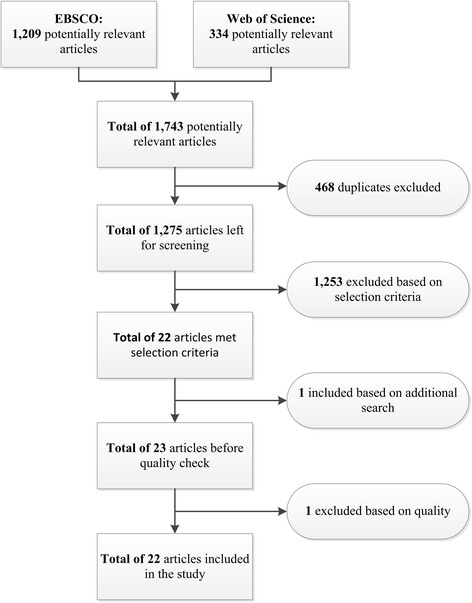
BACKGROUND: Since the emergence of social media in 2004, a growing percentage of patients use this technology for health related reasons. To reflect on the alleged beneficial and potentially harmful effects of social media use by patients, the aim of this paper is to provide an overview of the extant literature on the effects of social media use for health related reasons on patients and their relationship with healthcare professionals. METHODS: We conducted a systematic literature review on empirical research regarding the effects of social media use by patients for health related reasons. The papers we included met the following selection criteria: (1) published in a peer-reviewed journal, (2) written in English, (3) full text available to the researcher, (4) contain primary empirical data, (5) the users of social media are patients, (6) the effects of patients using social media are clearly stated, (7) satisfy established quality criteria. RESULTS: Initially, a total of 1,743 articles were identified from which 22 were included in the study. From these articles six categories of patients' use of social media were identified, namely: emotional, information, esteem, network support, social comparison and emotional expression. The types of use were found to lead to seven identified types of effects on patients, namely improved self-management and control, enhanced psychological well-being, and enhanced subjective well-being, diminished subjective well-being, addiction to social media, loss of privacy, and being targeted for promotion. Social media use by patients was found to affect the healthcare professional and patient relationship, by leading to more equal communication between the patient and healthcare professional, increased switching of doctors, harmonious relationships, and suboptimal interaction between the patient and healthcare professional. CONCLUSIONS: Our review provides insights into the emerging utilization of social media in healthcare. In particular, it identifies types of use by patients as well as the effects of such use, which may differ between patients and doctors. Accordingly, our results framework and propositions can serve to guide future research, and they also have practical implications for healthcare providers and policy makers.
Overview
The claims and statistics of this paper haven’t been checked yet.
Run the check — free, no account needed. It reads the open-access text and checks the sources it cites.
Integrity signals
Registry
Cites
Statistics
Figures
Verification
Claims the paper makes
The claims and statistics of this paper haven’t been checked yet.
Run the check — free, no account needed. It reads the open-access text and checks the sources it cites.
Claims other papers make about this one
Each is checked against this paper’s own text: does it say what the citing paper says it does?
The source backs part of the claim, not all of it — or backs it for a different population, condition or comparison.
In the citing paper
“Health promotion on social media also encouraged patients to seek medical attention more willingly [11].”
From Social Media Use Among Parents and Caregivers of Children With Rare Genetic Diseases: Scoping Review (2025) · cites this paper as [11]
Experimental — accuracy not yet measuredThe source backs part of the claim, not all of it — or backs it for a different population, condition or comparison.
In the citing paper
“Most patients discuss information they have found online with their health care provider”
From Social Media Use Among Parents and Caregivers of Children With Rare Genetic Diseases: Scoping Review (2025) · cites this paper as [11]
Experimental — accuracy not yet measuredThe source backs part of the claim, not all of it — or backs it for a different population, condition or comparison.
In the citing paper
“however, physicians often react negatively to discussions involving information sourced from social media [11-13].”
From Social Media Use Among Parents and Caregivers of Children With Rare Genetic Diseases: Scoping Review (2025) · cites this paper as [11]
Experimental — accuracy not yet measuredThe cited source says what the claim attributes to it.
In the citing paper
“Prior literature has highlighted both benefits and risks of social media in healthcare,4–13 but there remains limited understanding of how generational perspectives shape views of professionalism in healthcare social media use.”
From Evaluating perceptions of social media professionalism by healthcare workers (2026) · cites this paper as [5]
The cited source says what the claim attributes to it.
In the citing paper
“Social media use is also related to shorter relationships with health care providers, as online discussions prompted patients to seek specific providers [11].”
From Social Media Use Among Parents and Caregivers of Children With Rare Genetic Diseases: Scoping Review (2025) · cites this paper as [11]
The cited source says what the claim attributes to it.
In the citing paper
“social media empowers patients to be more informed and involved in their own care”
From Social Media Use Among Parents and Caregivers of Children With Rare Genetic Diseases: Scoping Review (2025) · cites this paper as [11]
The cited source says what the claim attributes to it.
In the citing paper
“allowing for improved communication with medical professionals [11,12].”
From Social Media Use Among Parents and Caregivers of Children With Rare Genetic Diseases: Scoping Review (2025) · cites this paper as [11]
The check wasn’t confident either way, so it gives no verdict — never disputed.
In the citing paper
“popularity of SM has also been embraced by health care professionals (HCPs) [5].”
From Dangers and Benefits of Social Media on E-Professionalism of Health Care Professionals: Scoping Review (2021) · cites this paper as [5]
Experimental — accuracy not yet measured
Self-check
Percentages, sums and reported differences re-computed from the paper’s own numbers.
The self-check needs the paper’s full text.
Citations
Cites
Preferred Reporting Items for Systematic Reviews and Meta-Analyses: the PRISMA statement
Moher, D., Liberati, A., Tetzlaff, J., Altman, D. G., & for the PRISMA Group (2009) · BMJ · doi:10.1136/bmj.b2535 · Cited by 83,823
Preferred reporting items for systematic reviews and meta-analyses: the PRISMA Statement.
(2009) · PubMed Central · Cited by 44,859
Users of the world, unite! The challenges and opportunities of Social Media
Kaplan, A. M., & Haenlein, M. (2010) · Business Horizons · doi:10.1016/j.bushor.2009.09.003 · Cited by 17,875 · cited 4×
“Among other uses, blogs can be used as personals diaries to express thoughts, feelings, and stories [9].”
BackgroundMethodInfluentialHappiness is everything, or is it? Explorations on the meaning of psychological well-being.
Ryff, C. D. (1989) · Journal of Personality and Social Psychology · doi:10.1037/0022-3514.57.6.1069 · Cited by 14,847 · cited 2×
“Moreover, “self-actualizers are described as having strong feelings of empathy and affection for all human beings and as being capable of greater love, deeper friendship, and more complete identification with others” [33].”
BackgroundPower, politics, and MIS implementation
Markus, M. L. (1983) · Communications of the ACM · doi:10.1145/358141.358148 · Cited by 2,224 · cited 1×
“According to the political variant of the interaction theory [49], “a product of the interaction of system”
BackgroundSocial capital, self-esteem, and use of online social network sites: A longitudinal analysis.
Steinfield, C., Ellison, N. B., & Lampe, C. (2008) · Journal of Applied Developmental Psychology · doi:10.1016/j.appdev.2008.07.002 · Cited by 1,919
Social Support Measurement and Intervention
(2000) · Oxford University Press eBooks · doi:10.1093/med:psych/9780195126709.001.0001 · Cited by 1,887 · cited 1×
“process of interaction in relationships which is intended to improve coping, esteem, belonging, and competence through actual or perceived exchanges of psychosocial resources” [19].”
BackgroundStandard Quality Assessment Criteria for Evaluating Primary Research Papers from a Variety of Fields
Kmet, L. M., Cook, L. S., & Lee, R. C. (2004) · University of Alberta Library · doi:10.7939/r37m04f16 · Cited by 1,682 · cited 3×
“The articles were assessed on their quality by using the standard quality assessment criteria as identified by [12].”
MethodInfluentialThe health-related functions of social support
Schaefer, C. A., Coyne, J. C., & Lazarus, R. S. (1981) · Journal of Behavioral Medicine · doi:10.1007/bf00846149 · Cited by 1,326 · cited 2×
“Social support is represented through five different categories and four of these categories were found to be common types of social media use by patients for health related purposes [18].”
BackgroundThe decision and the organization
MacDougall, C. D., & Wilson, H. (1965) · Marzani & Munsell eBooks · Cited by 1,149
Research works printed but not linked: 4
- Williams J. A new roadmap for healthcare business success. J Healthc Financ Manage Assoc. 2011;65(5):62–9.
- Mattson M, Hall JG. Health as communication nexus: A service-learning approach. Dubuque: Kendall Hunt; 2011.
- Sahoo FM, Mohapatra L. Psychological well-Being in professional groups. J Indian Acad Appl Psychol. 2009;35(2):211–7.
- Simon HA. Decision and organization. Amsterdam: North-Holland Publishing; 1972.
Cited by
Sorted by citations
Items 201–300 of 825
Social Media and Social Support: A Framework for Patient Satisfaction in Healthcare
Khan, M. I., Rahman, Z. U., Saleh, A., & Khan, S. U. Z. (2022) · Informatics · doi:10.3390/informatics9010022 · Cited by 21
“Consequently, social media is being utilised by healthcare providers to harness social support, thus improving health outcomes by meeting basic human needs for companionship, intimacy, a sense of belonging, and reassurance of one’s worth as a person [6].”
BackgroundInfluentialSocial Media Depictions of Cochlear Implants: An Instagram and TikTok Analysis
Rossi, N. A. A., Devarajan, K., Chokshi, S. N., Ochoa, V. J., Benavidez, M., Malaya, L. T., Ohlstein, J. F., Young, D. L., & McKinnon, B. J. (2022) · Otology & Neurotology · doi:10.1097/mao.0000000000003744 · Cited by 16
Yang, Y., Zhang, Y., & Xiang, A. (2023) · BMC Public Health · doi:10.1186/s12889-023-16151-3 · Cited by 16
“Smailhodzic et al. [22] found that the most common type of social media use by patients for health-related reasons is social support.”
BackgroundNguyen, M. P., Tariq, A., Hinchcliff, R., & Dunne, M. P. (2023) · BMC Health Services Research · doi:10.1186/s12913-023-09892-9 · Cited by 16
“…such as Facebook, Twitter, and YouTube, consumers increasingly go online to interact with their peers to share medical conditions and treatment experiences and to recommend health providers they think are best, and caution against services at which they had unsatisfactory experiences [18].”
BackgroundPimenta, I. D. S. F., Mata, Á. N. D. S., Braga, L. P., de Medeiros, G. C. B. S., de Azevedo, K. P. M., Bezerra, I. N. M., Segundo, V. H. D. O., Nunes, A. C. D. F., Santos, G. M., Grosseman, S., et al. (2020) · Medicine · doi:10.1097/md.0000000000023298 · Cited by 20
Aspect-Based Sentiment Analysis of Patient Feedback Using Large Language Models
Alkhnbashi, O. S., Nassr, R. M., & Hammoudeh, M. A. A. (2024) · Big Data and Cognitive Computing · doi:10.3390/bdcc8120167 · Cited by 22
Keikha, L., Shahraki-Mohammadi, A., & Nabiolahi, A. (2025) · BMC Public Health · doi:10.1186/s12889-025-25858-4 · Cited by 15
“On the other hand, social media can also facilitate support for health-related issues and empower patients, but the flood of misleading misinformation on social media is a major threat to public health [6].”
Tripathi, S. D., Parker, P. D., Prabhu, A. V., Thomas, K. O., & Rodriguez, A. (2022) · JMIR Cancer · doi:10.2196/35324 · Cited by 15
“The anonymity combined with virtual storytelling can foster a real therapeutic relationship for patients and caregivers, especially for those affected by life-changing disease processes such as brain tumors [13,14].”
BackgroundDeguilhem, A., Malaab, J., Talmatkadi, M., Renner, S., Foulquié, P., Fagherazzi, G., Loussikian, P., Marty, T., Mebarki, A., Texier, N., et al. (2022) · JMIR Infodemiology · doi:10.2196/39849 · Cited by 15
“Social media has also demonstrated an increasing presence in health care: a rising number of patients have turned to the internet for health-related reasons [10].”
BackgroundInsights from Social Media on the Patient Experience of Living With Rare Eosinophil-Driven Diseases
Strobel, M. J., Alves, D., Roufosse, F. E., Antoun, Z. E., Kwon, N., Baylis, L., & Wechsler, M. E. (2022) · Journal of Patient Experience · doi:10.1177/23743735221143953 · Cited by 15
Digital interventions in drama therapy offer a virtual playspace but also raise concern
Sajnani, N. L. (2020) · Drama Therapy Review · doi:10.1386/dtr_00012_2 · Cited by 15
Social Media in Minimally Invasive Gynecologic Surgery: What Is #Trending on Instagram?
Sinha, R., Shibata, R., Patel, A. J., & Sternchos, J. A. (2021) · Journal of Minimally Invasive Gynecology · doi:10.1016/j.jmig.2021.02.011 · Cited by 15
Szmuda, T., Ali, S., Kamieniecki, A., Ręcławowicz, D., Olofsson, H. K. L., & Słoniewski, P. (2021) · Neurologia i Neurochirurgia Polska · doi:10.5603/pjnns.a2021.0073 · Cited by 16
Social Media Use and Oral Health–Related Misconceptions in Saudi Arabia: Cross-Sectional Study
Hamdan, R. H. B., Alsadhan, S. A., Gazzaz, A. Z., & AlJameel, A. H. (2025) · JMIR Formative Research · doi:10.2196/70071 · Cited by 14
“Globally, social media platforms such as Facebook, Twitter, YouTube, and WhatsApp allow individuals to access and share information at a unique scale [3-5].”
A Strategic Imperative for Promoting Hospital Branding: Analysis of Outcome Indicators
Shieh, G.-J., Wu, S.-L., Tsai, C.-F., Chang, C., Chang, T.-H., Lui, P.-W., Yao, Y., & Sheu, W. H. (2019) · Interactive Journal of Medical Research · doi:10.2196/14546 · Cited by 14
“People share their experiences and social support in particular with their families and friends via social media [12-16].”
Day-to-Day Decision Making by Adolescents and Young Adults with Cancer
Pyke‐Grimm, K. A., Franck, L. S., Halpern‐Felsher, B. L., Goldsby, R. E., & Rehm, R. S. (2022) · Journal of Pediatric Hematology/Oncology Nursing · doi:10.1177/27527530211068718 · Cited by 15
“Participation in social media can empower patients to communicate with their HCP, asking questions and participating in decision making (Benetoli et al., 2018; Smailhodzic et al., 2016).”
BackgroundJiang, S., Ng, A. Y. K., & Ngien, A. (2022) · Journal of Health Communication · doi:10.1080/10810730.2022.2115591 · Cited by 14
Bruce, E., Shurong, Z., Amoah, J. O., Egala, S. B., & Frimpong, F. K. S. (2024) · Cogent Public Health · doi:10.1080/27707571.2023.2301127 · Cited by 18
Fu, L., Liu, C., Dong, Y., Ma, X., Cai, Q., Li, D., & Di, K. (2024) · Journal of Medical Internet Research · doi:10.2196/49688 · Cited by 15
“In addition, the internet’s web-based consultation and telemedicine have enhanced the accessibility of health care services for middle-aged and older adults [20,21].”
#celiacdisease: The Use of Instagram in Contending with Chronic Illness
Meleo-Erwin, Z. C., Basch, C. H., Fera, J., & Smith, B. (2020) · Journal of Consumer Health on the Internet · doi:10.1080/15398285.2019.1711004 · Cited by 14
“In that social media has been linked to increased patient empowerment and self-management (Smailhodzic et al. 2016), Instagram holds the potential for celiac disease health promotion efforts.”
Background#Mesh: Social Media and Its Influence on Perceptions in Hernia Repair
Fadaee, N., Huynh, D. T. K., & Towfigh, S. (2020) · The American Surgeon · doi:10.1177/0003134820964459 · Cited by 14
“which are not found in scientific publications or doctors’ offices.(20) As hernia surgeons, our patients come to us after exposure to social media and its negative sentiments against hernia mesh.”
Background#OculoplasticsandSocialMedia: a review of social media in oculoplastics and relevant subspecialties
Tingley, J. P., Allen, R. C., & Barmettler, A. (2021) · Orbit · doi:10.1080/01676830.2021.1930064 · Cited by 14
“Patients do not typically use social media to circumvent healthcare providers, but rather to support and inform one another.(16)”
BackgroundInfluentialFarmers’ Use of Social Media and its Implications for Agricultural Extension: Evidence from Thailand
Kanjina, S. (2021) · Asian Journal of Agriculture and Rural Development · doi:10.18488/journal.ajard.2021.114.302.310 · Cited by 14
Chérrez-Ojeda, I., Vera, C., Vanegas, E., Gallardo, J. C., Félix, M., Espinoza-Fuentes, F., Chedraui, P. A., Gavilanes, A. W. D., & Mata, V. L. (2020) · BMC Oral Health · doi:10.1186/s12903-020-01137-z · Cited by 15
Social media health interventions to improve diabetes mellitus patient outcome: a systematic review
Alfian, R., Athiyah, U., & Nita, Y. (2021) · Journal of Basic and Clinical Physiology and Pharmacology · doi:10.1515/jbcpp-2020-0501 · Cited by 17
Misinformation About the Human Gut Microbiome in YouTube Videos: Cross-sectional Study
Chidambaram, S., Maheswaran, Y., Chan, C., Hanna, L., Ashrafian, H., Markar, S. R., Sounderajah, V., Alverdy, J. C., & Darzi, A. W. (2022) · JMIR Formative Research · doi:10.2196/37546 · Cited by 13
“Over the past decade, governments, health organizations, and private sector companies have increasingly endorsed the use of social media platforms as a trusted means of disseminating information on health and wellness [1-3].”
BackgroundElkaim, L. M., Niazi, F., Levett, J. J., Bokhari, R. F. Y., Gorodetsky, C., Breitbart, S. C., Alotaibi, F., Alluhaybi, A. A., Weil, A. G., Fallah, A., et al. (2022) · Neurosurgical FOCUS · doi:10.3171/2022.7.focus22276 · Cited by 13
Impact of Social Media on Choosing Skin Care and Cosmetic Products Among Females in Saudi Arabia
Al-Amer, M. A., Alrashed, H., Abuageelah, B. M., Kinkar, L. I., Alwayel, Z. A., Alfaifi, M. H., Alfataih, M. T. B. A., Alzakry, L. M., Alruwaili, Z. M. N., & Alhumam, A. A. (2023) · Cureus · doi:10.7759/cureus.49922 · Cited by 21
Silverman, J. A., Chugh, A. A., Hollier, J. M., Martin, N., Raghu, V. K., Rosas‐Blum, E. D., van Tilburg, M. A. L., Venkataraman‐Rao, P., Venkatesh, R. D., & Lu, P. L. (2024) · Journal of Pediatric Gastroenterology and Nutrition · doi:10.1002/jpn3.12051 · Cited by 16
Artificial intelligence in dentistry: Assessing the informational quality of YouTube videos
Naik, S., Kheraif, A. A. A., & Vellappally, S. (2025) · PLoS ONE · doi:10.1371/journal.pone.0316635 · Cited by 13
Lenzi, A., Maranghi, M., Stilo, G., & Velardi, P. (2019) · Artificial Intelligence in Medicine · doi:10.1016/j.artmed.2019.101727 · Cited by 13
GELIAT INTERAKSI SOSIAL DOKTER MASA KINI MELALUI MEDIA SOSIAL INSTAGRAM
Sapoetri, A., & Pannindriya, S. T. (2019) · Bricolage Jurnal Magister Ilmu Komunikasi · doi:10.30813/bricolage.v5i2.1884 · Cited by 13
“Smailhodzic et al. (2016) menemukan bahwa penggunaan media sosial oleh pasien ditemukan mempengaruhi hubunganprofesional dan pasien kesehatan, dengan mengarah ke komunikasi yanglebih setara antara pasien dan profesional perawatan kesehatan, peningkatanperalihan dokter, hubungan harmonis, dan…”
BackgroundHarnessing the power of social media: how can it help in axial spondyloarthritis research?
Reuter, K., Danve, A. S., & Deodhar, A. A. (2019) · Current Opinion in Rheumatology · doi:10.1097/bor.0000000000000614 · Cited by 13
“However, the use of social media affects patients both positively and negatively [10,12,13].”
BackgroundBack pain, ankylosing spondylitis and social media usage; a descriptive analysis of current activity
Reilly, E., & Sengupta, R. (2020) · Rheumatology International · doi:10.1007/s00296-020-04600-w · Cited by 13
Walsh, L., Hyett, N., Howley, J., Juniper, N., Li, C., MacLeod-Smith, B. J., Rodier, S., & Hill, S. (2021) · BMC Health Services Research · doi:10.1186/s12913-021-06927-x · Cited by 13
“peer support [4, 5], and creating more equal relationships between providers and consumers [5].”
BackgroundLandeen, K. C., Smetak, M. R., Keah, N. M., Davis, S. J., Shastri, K. S., Patel, P. N., Stephan, S. J., & Yang, S. F. (2022) · Annals of Otology Rhinology & Laryngology · doi:10.1177/00034894221133746 · Cited by 12
Essack, S. Y., Bell, J. A., Burgoyne, D. S., Eljaaly, K., Tongrod, W., Markham, T., Shephard, A., & López-Pintor, E. (2023) · Antibiotics · doi:10.3390/antibiotics12060957 · Cited by 12
Statin Twitter: Human and Automated Bot Contributions, 2010 to 2022
Slavin, S. D., Berman, A. N., Beam, A. L., Návar, A. M., & Mittleman, M. A. (2024) · Journal of the American Heart Association · doi:10.1161/jaha.123.032678 · Cited by 12
“10,33 This study builds upon that foundational work by elucidating the sources and temporal trends of statin-related content, including the themes of statin skepticism and marketing, on one of the most influential social media platforms.”
Is YouTube a Sufficient and Reliable Source to Inform Patients About Cardiac Rehabilitation?
Karataş, L., Karasu, A. U., & Demirsoy, N. (2024) · Journal of Cardiopulmonary Rehabilitation and Prevention · doi:10.1097/hcr.0000000000000864 · Cited by 12
Raghunathan, R. S., Jacobs, A. R., Sant, V. R., King, L. J., Rothberger, G. D., Prescott, J. D., Allendorf, J., Seib, C. D., Patel, K. N., & Suh, I. (2024) · Surgery · doi:10.1016/j.surg.2024.06.075 · Cited by 11
Shankar, R., Xu, Q., & Bundele, A. (2025) · Journal of Medical Internet Research · doi:10.2196/70128 · Cited by 15
“In recent years, social media has emerged as a valuable platform for patients with chronic conditions to share their experiences, seek information and emotional support, and connect with others facing similar challenges [8].”
Agarwala, A., Kohli, P., & Virani, S. S. (2019) · Current Atherosclerosis Reports · doi:10.1007/s11883-019-0807-5 · Cited by 12
Exploring Popular Social Media Networks for Patients With Inflammatory Bowel Diseases
Goren, I., Sharvit, G., Godny, L., Fatal, S. E., Barkan, R., Hag, O., Ollech, J. E., Ziv-Baran, T., Leshno, M., Turner, D., et al. (2021) · Journal of Clinical Gastroenterology · doi:10.1097/mcg.0000000000001551 · Cited by 12
“5) Education 521 Elementary 7 (1) High school 158 (30) Above high school 45 (9)”
BackgroundSadore, A. A., Handiso, D. W., Ejajo, T., Mekango, D. E., & Moges, S. (2021) · Disaster Medicine and Public Health Preparedness · doi:10.1017/dmp.2021.184 · Cited by 12
Entrepreneurial doctors and consumerist patients: #plasticsurgery on Instagram
Joa, C. Y., & Park, S. (2021) · International Journal of Pharmaceutical and Healthcare Marketing · doi:10.1108/ijphm-01-2020-0002 · Cited by 12
User Behaviors and User-Generated Content in Chinese Online Health Communities: Comparative Study
Lei, Y., Xu, S., & Zhou, L. (2021) · Journal of Medical Internet Research · doi:10.2196/19183 · Cited by 12
“For example, Smailhodzic et al [17] conducted a literature review covering 22 articles, according to which, patients’ use of social media were classified into the following 6 categories: emotional, information, esteem, network support, social comparison, and emotional expression.”
BackgroundHall, K. A. E., Deusdad, B. A., Pozo, M. D. D., & Hernáez, Á. M. (2022) · International Journal of Environmental Research and Public Health · doi:10.3390/ijerph191710550 · Cited by 12
“Considerable previous research about social media has highlighted its negative effects, for instance, on learning [60,61], although some positive effects have also been found [62,63].”
BackgroundAbadah, M. S. K., Keikhosrokiani, P., & Zhao, X. (2022) · Advances in computational intelligence and robotics book series · doi:10.4018/978-1-6684-5624-8.ch008 · Cited by 12
COVID-19 Vaccination Rates and Vaccine Hesitancy Among Spanish-Speaking Free Clinic Patients
Scheiber, A., Prinster, T. B., Stecko, H., Wang, T. J., Scott, S., Shah, S. H., & Wyne, K. L. (2022) · Journal of Community Health · doi:10.1007/s10900-022-01150-z · Cited by 12
Role of Social Media Promotion of Prescription Drugs on Patient Belief-system and Behaviour
Mukherjee, S. K., Kumar, J., Jha, A. K., & Rani, J. (2019) · International Journal of e-Collaboration · doi:10.4018/ijec.2019040102 · Cited by 12
Greer, A. C., Stokes, C. W., Zijlstra‐Shaw, S., & Sandars, J. E. (2019) · BDJ · doi:10.1038/s41415-019-0937-8 · Cited by 12
The effect of social media on treatment options for acne vulgaris
Kaliyadan, F., Alsultan, H., & Alsaqer, H. (2020) · International Journal of Medicine in Developing Countries · doi:10.24911/ijmdc.51-1605689866 · Cited by 12
Pérez‐Pérez, M., Igrejas, G., Fdez‐Riverola, F., & Lourenço, A. M. G. (2021) · Artificial Intelligence in Medicine · doi:10.1016/j.artmed.2021.102131 · Cited by 12
Al-Qahtani, M. F., Alsaffar, A., Alshammasi, A., Alsanni, G., Alyousef, Z., & Alhussaini, M. (2018) · Saudi Journal for Health Sciences · doi:10.4103/sjhs.sjhs_36_18 · Cited by 12
Strategies and bottlenecks to tackle infodemic in public health: a scoping review
Gentili, A., Villani, L., Osti, T., Corona, V. F., Gris, A. V., Zaino, A., Bonacquisti, M., De Maio, L., Solimene, V., Gualano, M. R., et al. (2024) · Frontiers in Public Health · doi:10.3389/fpubh.2024.1438981 · Cited by 11
The Influence of Social Media on the Treatment of Acne in Saudi Arabia
Bahaj, R. K., Alsaggaf, Z. H., Abduljabbar, M., & Hariri, J. (2022) · Cureus · doi:10.7759/cureus.23169 · Cited by 11
“As a result, it is widely acknowledged that social media can affect an individual’s decision to seek medical treatment [9].”
BackgroundAn Analysis of Pediatric Ophthalmology Content on TikTok
Borkhetaria, R. K., Devireddy, N., Cannon, N. T., Soni, A., & Ely, A. L. (2023) · Journal of Pediatric Ophthalmology & Strabismus · doi:10.3928/01913913-20230627-01 · Cited by 11
Emirati Adolescents’ and Young Adults’ Usage of Social Media for Health Information
Barqawi, H. J., Samara, K. A., Chame, H. Q. A., Shyyab, I. M. Y. A., & Almaazmi, M. A. (2023) · Children · doi:10.3390/children10101636 · Cited by 11
“Patients use social media as a way to supplement rather than circumvent their doctors [11,25].”
BackgroundOnline Health Information Wants of Caregivers for Persons With Dementia in Social Media
Tang, A., Kwak, J., Xiao, L., Xie, B., Lahiri, S., Flynn, O., & Murugadass, A. (2023) · SAGE Open · doi:10.1177/21582440231205367 · Cited by 14
“Many caregivers may not be able to afford or make time to attend in-person support groups, and social media can provide a support group as well as an information source (Moorhead et al., 2013; Smailhodzic et al., 2016).”
BackgroundFrom TikTok Trends to Pandemic Essentials
Meriç, E., & Çakıcı, Z. (2023) · Advances in multimedia and interactive technologies book series · doi:10.4018/979-8-3693-0896-7.ch001 · Cited by 11
Wu, Q. J., Ngien, A., Jiang, S., & Dong, Y. (2024) · Computers in Human Behavior · doi:10.1016/j.chb.2024.108218 · Cited by 13
Kim, H. S., Pak, J., Chung, M., & Kim, Y. (2024) · Computers in Human Behavior · doi:10.1016/j.chb.2024.108226 · Cited by 12
da Silva, J. B., Driusso, P., Ferreira, E. A. G., & de Abreu, R. M. (2024) · Neurourology and Urodynamics · doi:10.1002/nau.25603 · Cited by 12
Factors Influencing Patient Selection of Urologists
Berger, G. K., Medairos, R., Regala, P., Jacobsohn, K. M., Langenstroer, P., See, W. A., & Johnson, S. C. (2019) · Urology · doi:10.1016/j.urology.2019.08.066 · Cited by 11
Hữu, S. N., Vu, G. T., Nguyen, L. H., Nguyen, C. T., Le, T. H. T., Tran, T. H., Tran, B. X., Latkin, C. A., Tam, W., Ho, C. S. H., et al. (2020) · JMIR Dermatology · doi:10.2196/13424 · Cited by 10
“Social media is well-recognized as a useful aid for health care providers to communicate and support patients [25-27].”
BackgroundAlzheimer Caregiving Problems According to ADLs: Evidence from Facebook Support Groups
Bachmann, P., & Hruška, J. (2022) · International Journal of Environmental Research and Public Health · doi:10.3390/ijerph19116423 · Cited by 11
“Caregiver Burden Caregiver burden has been defined as a “stress response elicited by negative selfappraisal of coping capacity and/or resources needed to meet demands of caregiving” [9] or as an outcome of the interaction between characteristics of the PAD and the caregiver, where both of them can act as determinants…”
BackgroundSocial Media Use in Hearing Loss, Tinnitus, and Vestibular Disorders: A Systematic Review
Ulep, A. J., Deshpande, A. K., Beukes, E. W., Placette, A., & Manchaiah, V. K. C. (2022) · American Journal of Audiology · doi:10.1044/2022_aja-21-00211 · Cited by 12
Social Media in Aesthetic Dermatology: Analysis of the Users Behind the Top Filler Posts
Richey, P. M., Hashemi, D. A., & Avram, M. M. (2022) · Dermatologic Surgery · doi:10.1097/dss.0000000000003628 · Cited by 11
“Since the emergence of social media in 2004, a growing percentage of patients use this technology for health-related reasons.(1) With the advent of COVID-19 and increases in telemedicine, the use of social media has also continued to increase.”
BackgroundThe Role of Social Media and Breast Cancer: How Does It Impact Patients?
Gandamihardja, T., Liyanage, S., Coutee, T., Peled, A. W., & Masannat, Y. (2023) · Breast Care · doi:10.1159/000530433 · Cited by 11
Narrative detection in online patient communities
Dirkson, A. R., Verberne, S., & Kraaij, W. (2019) · Leiden Repository (Leiden University) · Cited by 11
Saleh, J. S., & Dahiya, M. (2020) · Journal of Cutaneous Pathology · doi:10.1111/cup.13680 · Cited by 11
“This leads to an increase in the need for examining and identifying the trends of social media publications in healthcare.(2-4) Our study is the first bibliometric study to present a comprehensive analysis of global trends in social media publications in the fields of dermatopathology, dermatology, and pathology.”
BackgroundMedical Accuracy of Patient Discussions in Oculoplastic Surgery on Social Media
Schmuter, G., North, V. S., Kazim, M., & Tran, A. Q. (2022) · Ophthalmic Plastic and Reconstructive Surgery · doi:10.1097/iop.0000000000002257 · Cited by 10
“Current patient 48% (88) Physician 1% (3) Gender (n = 153) Female 87% (133) Male 13% (20) Age (years; n = 48) 18–29 65% (31) 30–39 23% (11) 40 + 13% (6) Commenting user identification (n = 541) Unspecified 41% (222)”
(2022) · American Journal of Research in Business and Social Sciences · doi:10.58314/787890 · Cited by 10
#implantology: A content analysis of the implant-related hashtags on Instagram
Ellakany, P., Aly, N. M., & Hassan, M. G. (2023) · Journal of Prosthetic Dentistry · doi:10.1016/j.prosdent.2023.10.013 · Cited by 10
Social media for palliative and end-of-life care research: a systematic review
Wang, Y., Koffman, J., Gao, W., Zhou, Y., Chukwusa, E., & Ćurčin, V. (2024) · BMJ Supportive & Palliative Care · doi:10.1136/spcare-2023-004579 · Cited by 12
The role of stigma in impeding implementation of harm reduction services in San Francisco
Akiba, C. F., Megerian, C. E., Chung, E. O., Morris, T., Wenger, L. D., Suen, L. W., Lambdin, B. H., & Kral, A. H. (2025) · SSM - Qualitative Research in Health · doi:10.1016/j.ssmqr.2025.100593 · Cited by 11
“Misinformation can be corrected through counter-messaging (Fox, 2011; Smailhodzic et al., 2016).”
McDonnell, T. C. R., Wincup, C., Rahman, A., & Giles, I. (2018) · Rheumatology Advances in Practice · doi:10.1093/rap/rky003 · Cited by 10
Lui, C., Wang, Z., Wang, N., Milinovich, G. J., Ding, H., Mengersen, K. L., Bambrick, H., & Hu, W. (2021) · Health Research Policy and Systems · doi:10.1186/s12961-021-00683-4 · Cited by 10
“With the proliferation of the Internet, social media has developed into a primary medium from which people seek or share health information and experiences, or search for support [2, 3].”
BackgroundRenner, S., Loussikian, P., Foulquié, P., Arnould, B., Marrel, A., Barbier, V., Mebarki, A., Schück, S., & Bharmal, M. F. (2022) · JMIR Cancer · doi:10.2196/37518 · Cited by 10
“Within these communities, patients and caregivers seek and share support, information, advice [15], and self-care [16].”
BackgroundEffectiveness of Social Media to Attract Customers for Start-up Business
Hilong, L. (2023) · International Journal of Management and Human Sciences · doi:10.31674/ijmhs.2023.v07i01.003 · Cited by 13
Karaferis, D. C., & Niakas, D. A. (2024) · Healthcare · doi:10.3390/healthcare12060658 · Cited by 10
“On the other hand, a disloyal patient may no longer use that hospital’s healthcare services and change healthcare providers or physicians [11,12].”
BackgroundGreer, M., Kamma, S. A., Tran, H., Etumuse, B. O., Shah, J. P., El-Abed, Y., Onyemachi, J., Hussain, N., Pittelkow, T. P., & D'Souza, R. S. (2024) · Journal of Pain Research · doi:10.2147/jpr.s459475 · Cited by 10
“13 However, the platform’s open nature and lack of strict regulation also give rise to several demerits, such as the rapid spread of misinformation, unsubstantiated claims, and potentially harmful advice.”
BackgroundO papel da comunicação: a utilização das redes sociais nos cuidados de saúde primários
Garcia, A., & Eiró-Gomes, M. (2020) · Comunicação e Sociedade · doi:10.17231/comsoc.0(2020).2747 · Cited by 10
Twitter Usage Using Common Reference to Tinnitus
Ni, J., Bellon-Harn, M. L., Zhang, J., Li, Y., & Manchaiah, V. K. C. (2020) · American Journal of Audiology · doi:10.1044/2020_aja-19-00055 · Cited by 10
Intensive WOM-behavior in the healthcare sector – the case of an Austrian hospital’s Facebook site
Martin, S., & Grüb, B. (2020) · International Review on Public and Nonprofit Marketing · doi:10.1007/s12208-020-00250-7 · Cited by 10
“Patients often use social media for healthrelated reasons (McCaughey et al. 2014; Korda and Itani 2013; Smailhodzic et al. 2016), such as “sharing of healthcare information e.g. health advise and tips, disease threat and prevention, treatment options, prescription and appointment with specialist”…”
BackgroundPark, H. G., Kim, Y., Huh, W. K., & Bae, S. (2020) · PubMed · Cited by 10
Patient Preferences and Perceptions Concerning Aesthetic Providers and Social Media
Murphrey, M. B., Dayan, S. H., Aguilera, S. B., & Fabi, S. G. (2023) · Aesthetic Surgery Journal · doi:10.1093/asj/sjad037 · Cited by 10
Li, W., Tang, L., Montayre, J., Harris, C. B., West, S., & Antoniou, M. (2023) · Journal of Medical Internet Research · doi:10.2196/49450 · Cited by 7
“In nursing, numerous studies have examined the use of social media by nurses for a variety of purposes [13], including delivering health care to patients [14,15], training nursing students [16], and dissemination of communications during conferences [17].”
BackgroundMyeoung, B. J., Park, J. H., Lee, B., Jeong, H. J., Kim, A., So, M. W., & Lee, S. (2024) · Rheumatology International · doi:10.1007/s00296-024-05634-0 · Cited by 9
“Additionally, the inability of healthcare professionals to meet patients’ emotional needs results in low satisfaction when patients receive medical information from healthcare professionals [ 17 ].”
InfluentialSocial media and internet use among orthopedic patients in Germany—a multicenter survey
Youssef, Y., Vu‐Han, T., Trauth, R., Osterhoff, G., Back, D. A., & Gehlen, T. (2025) · Frontiers in Digital Health · doi:10.3389/fdgth.2025.1486296 · Cited by 9
“SM use among patients may bring various bene fi ts, such as accessibility to health information, exchanging personal experiences, and emotional support (4 – 6).”
InfluentialDadgostar, P., Qin, Q., Cui, S., Ashcraft, L. E., & Nooraie, R. Y. (2025) · Journal of Medical Internet Research · doi:10.2196/57370 · Cited by 9
Quality of Information for Post-Prostatectomy Incontinence Treatments on YouTube
Bockelman, D., Huang, A. J., Khosla, L., Pak, S. Y., Bamberger, J. N., Weinstein, C., & Kabarriti, A. E. (2022) · Urology · doi:10.1016/j.urology.2022.09.042 · Cited by 9
Digital brand building and online reputation management in dermatology
Kream, E. J., & Jerdan, K. (2023) · Clinics in Dermatology · doi:10.1016/j.clindermatol.2023.06.006 · Cited by 9
La gestión de la reputación online de las marcas hospitalarias: una propuesta de modelo
Aguerrebere, P. M. (2017) · Zer - Revista de Estudios de Comunicación · doi:10.1387/zer.17908 · Cited by 9
Vasilica, C. M., Brettle, A., & Ormandy, P. (2019) · JMIR Formative Research · doi:10.2196/13207 · Cited by 9
“This model of information generation moves away from clinician-led information provision to patient-generated information in order to support patients’ needs and positively influence patient self-management [19].”
BackgroundCharacterising experiences with acute myeloid leukaemia using an Instagram content analysis
Parker, C., Zomer, E., Liew, D., & Ayton, D. (2021) · PLoS ONE · doi:10.1371/journal.pone.0250641 · Cited by 8
“Despite the popularity of Instagram, and the unique participant group it can reach, little health research has been undertaking using this platform [1].”
BackgroundInfluentialHaggstrom, D. A., & Carr, T. (2021) · JMIR Human Factors · doi:10.2196/16447 · Cited by 9
“Social media use by patients led to more equal communication between the patient and provider, but increased doctor-switching [36]; patient-provider relationships may also be more harmonious owing to the opportunity to release negative emotions on the internet, but others have found suboptimal interactions between the…”
BackgroundDISRUPTIVE INNOVATION IN HEALTHCARE: A REVIEW AND FUTURE RESEARCH AGENDAS
Ganguly, A., & Kumar, C. (2022) · International Journal of Innovation Management · doi:10.1142/s1363919622500025 · Cited by 11
Nesher, S. P., Luria, M., Shachar, E. K., Percik, R., Shoshany, O., & Wolf, I. (2022) · Current Opinion in Supportive and Palliative Care · doi:10.1097/spc.0000000000000595 · Cited by 9
“The lack of resources available to the patients and the ease of access to online forums may have compelled the AYA cancer population to reach conclusions regarding interactions and implications of therapy and SD from nonscientific evidence-based sources [26].”
BackgroundHow do others cope? Extracting coping strategies for adverse drug events from social media
Dirkson, A. R., Verberne, S., van Oortmerssen, G., Gelderblom, H. A. J., & Kraaij, W. (2022) · Journal of Biomedical Informatics · doi:10.1016/j.jbi.2022.104228 · Cited by 9
Metadata
- Authors
- Smailhodzic, E., Hooijsma, W., Boonstra, A., & Langley, D. J.
- Affiliations
- University of Groningen (NL)
- Netherlands Organisation for Applied Scientific Research (NL)
- Venue
- BMC Health Services Research
- Published
- 2016-08-26
- Volume
- 16
- Issue
- 1
- Pages
- 442-442
- ISSN
- 1472-6963 (ISSN-L)
- PMC
- PMC5000484
- OpenAlex
- W2512433998
- Cited by
- 827
- References
- 55
- Citations by year
- 2026: 75 · 2025: 107 · 2024: 107 · 2023: 99 · 2022: 111 · 2021: 127 · 2020: 96 · 2019: 61 · 2018: 29 · 2017: 14
- FWCI
- 6.51
- Type
- journal article
- Language
- en
- Open access
- gold
- doi.org
- Licence
- cc-by
- Locations
- BMC Health Services Research (publishedVersion, cc-by)
- PubMed Central (publishedVersion, cc-by)
- PubMed (publishedVersion)
- Data Archiving and Networked Services (DANS) (acceptedVersion)
- TNO Repository (submittedVersion)
- University of Groningen research database (University of Groningen / Centre for Information Technology) (submittedVersion, cc-by)
- Repository hosted by TU Delft Library (TU Delft) (submittedVersion)
- Topics
- Social Sciences › Health › Social Media in Health Education
- Health Sciences › Health Professions › General Health Professions › Health Literacy and Information Accessibility
- Social Sciences › Sociology and Political Science › Impact of Technology on Adolescents
- Keywords
- social media use, patient self-management, psychological well-being, subjective well-being, social media addiction, privacy loss, social comparison, network support, patient-physician communication
- MeSH terms
- Female, Health Personnel, Humans, Male, Professional-Patient Relations, Self Care, Consumer Health Information, Social Media
About these checks
Registry, retraction, Cites and statistics results are computed, not judged, with one exception: a printed reference that no index lists is read once by a model before it counts as a citation error. Claims are extracted by a model and kept only when their quote appears verbatim in the text; each cited source is then checked, with a model’s help, for whether it says what the claim relies on. Those verdicts can be wrong — read the claim’s quote and the cited source before relying on one.
Statistics and arithmetic are recomputed, not judged.
Confidence bands are shown only for fields calibrated on our annotated test set. None is calibrated yet, so no band is shown.
What counts as a claim ›How we measure confidence ›How we check this ›
Are you an author, or do you see a problem with this page? Request a review
