

Context matters in implementation science: a scoping review of determinant frameworks that describe contextual determinants for implementation outcomes
Open accessThe DOI matches its Crossref record; 110 of the 111 references it cites were found in a registry or an index.
Abstract
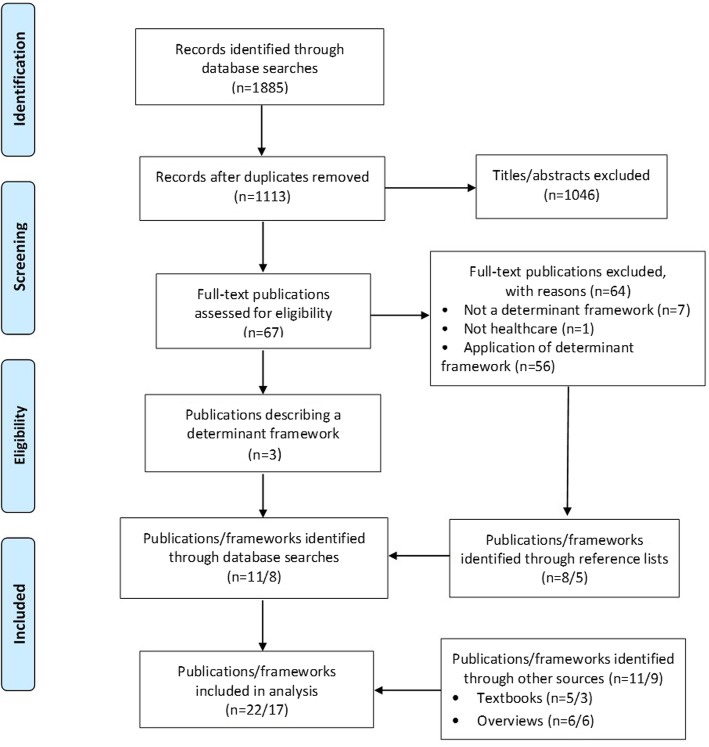
BACKGROUND: The relevance of context in implementation science is reflected in the numerous theories, frameworks, models and taxonomies that have been proposed to analyse determinants of implementation (in this paper referred to as determinant frameworks). This scoping review aimed to investigate and map how determinant frameworks used in implementation science were developed, what terms are used for contextual determinants for implementation, how the context is conceptualized, and which context dimensions that can be discerned. METHODS: A scoping review was conducted. MEDLINE and EMBASE were searched from inception to October 2017, and supplemented with implementation science text books and known published overviews. Publications in English that described a determinant framework (theory, model, taxonomy or checklist), of which context was one determinant, were eligible. Screening and inclusion were done in duplicate. Extracted data were analysed to address the study aims. A qualitative content analysis with an inductive approach was carried out concerning the development and core context dimensions of the frameworks. The review is reported according to the PRISMA guidelines. RESULTS: The database searches yielded a total of 1113 publications, of which 67 were considered potentially relevant based on the predetermined eligibility criteria, and retrieved in full text. Seventeen unique determinant frameworks were identified and included. Most were developed based on the literature and/or the developers' implementation experiences. Six of the frameworks explicitly referred to "context", but only four frameworks provided a specific definition of the concept. Instead, context was defined indirectly by description of various categories and sub-categories that together made up the context. Twelve context dimensions were identified, pertaining to different aggregation levels. The most widely addressed context dimensions were organizational support, financial resources, social relations and support, and leadership. CONCLUSIONS: The findings suggest variation with regard to how the frameworks were developed and considerable inconsistency in terms used for contextual determinants, how context is conceptualized, and which contextual determinants are accounted for in frameworks used in implementation science. Common context dimensions were identified, which can facilitate research that incorporates a theory of context, i.e. assumptions about how different dimensions may influence each other and affect implementation outcomes. A thoughtful application of the concept and a more consistent terminology would enhance transparency, simplify communication among researchers, and facilitate comparison across studies.
Overview
The claims and statistics of this paper haven’t been checked yet.
Free: it reads the open-access text and checks the first 5 claims that cite a source we can check. Create a free account to check every claim.
Integrity signals
Registry
Cites
Statistics
Figures
Verification
Claims the paper makes
The claims and statistics of this paper haven’t been checked yet.
Free: it reads the open-access text and checks the first 5 claims that cite a source we can check. Create a free account to check every claim.
Claims other papers make about this one
Each is checked against this paper’s own text: does it say what the citing paper says it does?
The source backs part of the claim, not all of it — or backs it for a different population, condition or comparison.
In the citing paper
“Understanding the end users, in this case, the students, is crucial and is known to facilitate successful implementation.23,24”
From Structured Development of Learning and Assessment Tasks to Prevent Generative AI Misuse and Enhance AI Literacy in the Faculty in Physiotherapy Education (2025) · cites this paper as [24]
Experimental — accuracy not yet measuredThe check wasn’t confident either way, so it gives no verdict — never disputed.
In the citing paper
“This call for hypothesis testing in implementation outcomes research has been echoed by a number of recent papers [21–24].”
From Ten years of implementation outcomes research: a scoping review (2023) · cites this paper as [23]
Experimental — accuracy not yet measured
Self-check
Percentages, sums and reported differences re-computed from the paper’s own numbers.
The self-check needs the paper’s full text.
Citations
Cites
Preferred Reporting Items for Systematic Reviews and Meta-Analyses: the PRISMA statement
Moher, D., Liberati, A., Tetzlaff, J., Altman, D. G., & for the PRISMA Group (2009) · BMJ · doi:10.1136/bmj.b2535 · Cited by 83,823
Preferred Reporting Items for Systematic Reviews and Meta-Analyses: The PRISMA Statement
Moher, D., Liberati, A., Tetzlaff, J., Altman, D. G., & The PRISMA Group (2009) · PLoS Medicine · doi:10.1371/journal.pmed.1000097 · Cited by 64,042 · cited 1×
“for Systematic Reviews and Meta-Analyses (PRISMA) guidelines [20].”
Preferred reporting items for systematic reviews and meta-analyses: the PRISMA Statement.
(2009) · PubMed Central · Cited by 44,859
Scoping studies: towards a methodological framework
Arksey, H., & O'Malley, L. (2005) · International Journal of Social Research Methodology · doi:10.1080/1364557032000119616 · Cited by 36,742
The Ecology of Human Development: Experiments by Nature and Design
Bronfenbrenner, U. (1979) · Harvard University Press eBooks · doi:10.4159/9780674028845 · Cited by 26,084
The qualitative content analysis process
Elo, S., & Kyngäs, H. (2008) · Journal of Advanced Nursing · doi:10.1111/j.1365-2648.2007.04569.x · Cited by 22,617
Wang, G., Ma, R., Qiao, G., Wada, K., Aizawa, Y., & Satoh, T. (2015) · Integrative Medicine International · doi:10.1159/000368408 · Cited by 18,657
Organizational culture and leadership
(1993) · Long Range Planning · doi:10.1016/0024-6301(93)90120-5 · Cited by 16,462
Damschroder, L. J., Aron, D. C., Keith, R. E., Kirsh, S. R., Alexander, J. A., & Lowery, J. C. (2009) · Implementation Science · doi:10.1186/1748-5908-4-50 · Cited by 14,496 · cited 11×
“, 2009 [15] Influences on implementation (outcomes) Based on analysis of the 19 theories, frameworks and models used in implementation science 5 categories (3 relate to contextual influences): • Intervention characteristics • Characteristics of individuals • Process • Inner setting • Outer setting Categories are refer…”
BackgroundMethodInfluentialThe ecology of human development : experiments by nature and design
Bronfenbrenner, U. (1979) · Cited by 12,580
Research works printed but not linked: 7
- Rycroft-Malone J Bucknall T Models and frameworks for implementing evidence-based practice: linking evidence to action 2010 Oxford Wiley-Blackwell
- Rainbird K Sanson-Fisher R Buchan H Identifying barriers to evidence uptake 2006 Melbourne National Institute of Clinical Studies
- World Health Organization (WHO) Identifying and addressing barriers to implementing policy options. In: SURE guides for preparing and using evidence-based policy briefs 2011
- Övretveit J The leaders’ role in quality and safety improvement: a review of the research and guidance 2005 Karolinska Institute Stockholm
- Weick KE The social psychology of organising 1969 Reading, MA Addison-Wesley
- Cappelli P Sherer PD The missing role of context in OB: the need for a meso-level approach Res Organ Behav 1991 13 55 110
- Jordan A Carlile O Stack A Approaches to learning – a guide for teachers 2008 New York Open University Press 1 251
Cited by
Items 201–300 of 1,000
Ruzafa‐Martínez, M., Fernández‐Salazar, S., Leal‐Costa, C., & Ramos‐Morcillo, A. J. (2024) · Journal of Nursing Management · doi:10.1155/2024/7246547 · Cited by 18
“In addition, including additional determinants of the model that were not analyzed in this study, such as the type of evidence and the end users, and to evaluate the impact of these factors in the #EvidencerMUSEBP would provide further insights.”
Tibane, C. C., Mafa-Theledi, O. N., Masebe, T., & Peter, M. (2024) · International Journal of Learning Teaching and Educational Research · doi:10.26803/ijlter.23.7.8 · Cited by 20
Interventions to optimise preoperative fasting in paediatrics: a scoping review
Dulay, E., Griffin, B. R., Brannigan, J., McBride, C. A., Hudson, A., & Ullman, A. J. (2024) · British Journal of Anaesthesia · doi:10.1016/j.bja.2024.08.010 · Cited by 16
Langendorf, L. N., & Khalid, M. S. (2025) · Computers in Human Behavior Reports · doi:10.1016/j.chbr.2025.100604 · Cited by 21
Bodley, T. F., Rassos, J., Mansoor, W., Bell, C. M., & Detsky, M. E. (2020) · ATS Scholar · doi:10.34197/ats-scholar.2019-0023oc · Cited by 18
“The userdesigned approach takes into consideration the importance of institutional context in quality improvement initiatives (16).”
BackgroundDietary Policies and Programs: Moving Beyond Efficacy and Into “Real-World” Settings
Yi, S. S., Lee, M. S. L., Russo, R. G., Li, Y., Trinh‐Shevrin, C., & Kwon, S. C. (2021) · Health Equity · doi:10.1089/heq.2020.0050 · Cited by 17
“, influences on managers, change agents, opinion leaders, and program champions) have also been identified as common implementation factors.(23) Implementation-related factors are cited as important within the realm of dietary policy and programs at all levels from community to goverment,(31) in particular because a f…”
BackgroundHook, K., Ametaj, A., Cheng, Y., Serba, E. G., Henderson, D. C., Hanlon, C., & Ng, L. C. (2021) · Psychotherapy · doi:10.1037/pst0000364 · Cited by 18
“For this study, context is considered to be the setting in which the psychotherapy intervention will be implemented in the future (i.e., the primary care clinic), in addition to the broader cultural environment (Kitson et al., 1998; Nilsen & Bernhardsson, 2019).”
BackgroundImplementation Science: Increasing the Public Health Impact of Audiology Research
Studts, C. R. (2022) · American Journal of Audiology · doi:10.1044/2022_aja-21-00205 · Cited by 17
“…science frameworks incorporating contextual factors (e.g., CFIR, EPIS, and PRISM) are particularly useful in identifying, prioritizing, and assessing multilevel determinants of implementation (Aarons et al., 2011; Damschroder et al., 2009; Feldstein & Glasgow, 2008; Nilsen & Bernhardsson, 2019).”
Backgroundvan Scherpenseel, M. C., Velde, S. J. T., Veenhof, C., Emmelot‐Vonk, M. H., & Barten, D. (2023) · Frontiers in Health Services · doi:10.3389/frhs.2023.1138517 · Cited by 19
“Moreover, the CFIR is based on, among others, elements of the PRISM framework, both drawing on theories of behavior change and improvement science (18, 37), resulting in similar context dimensions across both frameworks (13) and allowing to transfer from PRISM to CFIR.”
BackgroundMethodInfluentialQualitative research at the crossroads of open science and big data: Ethical considerations
Stegenga, S. M., Steltenpohl, C. N., Lustick, H. A., Meyer, M. S., Renbarger, R., Reyes, L. S., & Lee, L. E. (2023) · Social and Personality Psychology Compass · doi:10.1111/spc3.12912 · Cited by 22
Wandersman, A., Cook, B. S., Clark, K. B., Flaspohler, P. D., Watson, A., & Lamont, A. E. (2024) · Evaluation & the Health Professions · doi:10.1177/01632787241299820 · Cited by 18
“They do not specify the mechanisms of change; they are typically more like checklists of factors that in fl uence implementation outcomes (Nilsen & Bernhardsson, 2019).”
Teo, K. W., Hu, Y., Chew, K. T., Pek, W. Y., Chua, H. C., Matchar, D. B., & Ng, Y. F. (2023) · Frontiers in Health Services · doi:10.3389/frhs.2023.1157038 · Cited by 15
Farquharson, K., Cabbage, K. L., Reed, A. C., & Moody, M. A. (2023) · Language Speech and Hearing Services in Schools · doi:10.1044/2023_lshss-22-00176 · Cited by 15
School mental health care coordination practices: A mixed methods study
Nygaard, M. A., Ormiston, H. E., Renshaw, T. L., Carlock, K., & Komer, J. (2023) · Children and Youth Services Review · doi:10.1016/j.childyouth.2023.107426 · Cited by 17
Kwan, B. M., Luke, D. A., Adsul, P., Koorts, H., Morrato, E. H., & Glasgow, R. E. (2023) · Oxford University Press eBooks · doi:10.1093/oso/9780197660690.003.0027 · Cited by 19
Gustafsson, C., & Dannapfel, P. (2024) · Disability and Rehabilitation Assistive Technology · doi:10.1080/17483107.2024.2352130 · Cited by 19
“Several similar concepts are in use when referring to context (e.g., environmental factors and inner and outer setting) [25].”
InfluentialKrishnamoorthy, S., Mathieu, S. L., Armstrong, G. T., Ross, V. L., Francis, J., Reifels, L., & Kõlves, K. (2024) · Archives of Suicide Research · doi:10.1080/13811118.2024.2368127 · Cited by 16
“A scoping review has identified 17 unique frameworks in implementation science that address contextual determinants (Nilsen & Bernhardsson, 2019).”
Broderick, K., Vaidyanathan, A., Ponticiello, M. N., Hooda, M., Kulkarni, V., Chalem, A., Chebrolu, P., Onawale, A., Baumann, A. A., Mathad, J. S., et al. (2024) · Implementation Science · doi:10.1186/s13012-024-01407-2 · Cited by 16
Moving forward: closing the gap between research and practice for young people with BPD
Baltzersen, Å.-L. (2020) · Current Opinion in Psychology · doi:10.1016/j.copsyc.2020.08.008 · Cited by 15
Riordan, F., Curran, G. M., Pallin, N., Albers, B., Clack, L., Morrissey, E., Curran, G. M., Lewis, C. C., Powell, B. J., Presseau, J., et al. (2022) · HRB Open Research · doi:10.12688/hrbopenres.13507.1 · Cited by 16
Kelly, L. P., Twohig, C., Woods, C. B., Łuszczyńska, A., Murrin, C. M., Lien, N., Meshkovska, B., Kamphuis, C. B. M., Poelman, M. P., Terragani, L., et al. (2022) · European Journal of Public Health · doi:10.1093/eurpub/ckac147 · Cited by 15
Ahrens, W., Brenner, H., Flechtner‐Mors, M., Harrington, J. M., Hebestreit, A., Kamphuis, C. B. M., Kelly, L. P., Laxy, M., Łuszczyńska, A., Mazzocchi, M., et al. (2022) · European Journal of Public Health · doi:10.1093/eurpub/ckac148 · Cited by 16
Strid, E. N., Wallin, L., & Nilsagård, Y. E. (2023) · BMC Family Practice · doi:10.1186/s12875-023-02079-5 · Cited by 18
“Implementing evidence-based interventions and guidelines often requires a change in clinical practice, where the context in which the change occurs plays an important role [18, 21, 22].”
BackgroundBrakema, E. A., van der Kleij, R., Poot, C. C., An, P. L., Anastasaki, M., Crone, M. R., Le, H. H. T. C., Kirenga, B., Lionis, C. D., Mademilov, M., et al. (2021) · The Lancet Global Health · doi:10.1016/s2214-109x(21)00456-3 · Cited by 15
Bernhardsson, S., Boman, C., Lundqvist, S., Arvidsson, D., Börjesson, M., Larsson, M. E. H., Lundh, H., Melin, K., Nilsén, P., & Lauruschkus, K. (2022) · Pilot and Feasibility Studies · doi:10.1186/s40814-022-01075-3 · Cited by 20
“They exist at several levels, including patient level, organisational level, and the wider environment/society [27].”
BackgroundSelf-citationEllis, S. D., Thompson, J. A., Boyd, S. S., Roberts, A. W., Charlton, M. E., Brooks, J. V., Birken, S. A., Wulff-Burchfield, E. M., Amponsah, J. K., Harrington, S. P., et al. (2022) · The Journal of Rural Health · doi:10.1111/jrh.12663 · Cited by 14
Engström, M. S., Johansson, U., Leksell, J. K., Linder, E., & Eeg‐Olofsson, K. (2022) · JMIR Diabetes · doi:10.2196/34561 · Cited by 14
Stout, N. L., Harrington, S., Perry, A. M., Alappattu, M. J., Pfab, V., Stewart, B., & Manes, M. R. (2023) · Journal of Cancer Survivorship · doi:10.1007/s11764-023-01374-5 · Cited by 16
“Determinants are defined as factors that influenced implementation outcomes and are characterized as barriers and facilitators [15].”
InfluentialBarton, H. J., Maru, A., Leaf, M. A., Hekman, D. J., Wiegmann, D. A., Shah, M. N., & Patterson, B. W. (2024) · JMIR Human Factors · doi:10.2196/52592 · Cited by 16
“While implementation science frameworks consider a variety of contextual factors [14-16] and some methods exist for assessing and identifying them [17,18], there is a gap in methods for rapidly identifying contextual factors immediately postimplementation—when it may be easiest to respond to and…”
Roseen, E. J., Joyce, C. T., Winbush, S., Pavco‐Luttschwager, N., Morone, N. E., Saper, R. B., Bartels, S. J., Patel, K. V., Keysor, J. J., Bean, J. F., et al. (2024) · PM&R · doi:10.1002/pmrj.13183 · Cited by 17
“14,15 We are aware of one study that used CFIR to analyze data from weekly team meetings and provider surveys to identify barriers and facilitators to a combined yoga and acupuncture intervention in community health centers.”
Cruden, G., Powell, B. J., Frerichs, L., Lanier, P., Brown, C. H., Saldana, L., & Lich, K. H. (2024) · Implementation Science Communications · doi:10.1186/s43058-024-00660-2 · Cited by 16
Moore, S. K., Saunders, E. C., Hichborn, E. G., McLeman, B. M., Meier, A., Young, R., Nesin, N., Farkas, S., Hamilton, L., Marsch, L. A., et al. (2021) · Substance Abuse · doi:10.1080/08897077.2020.1827125 · Cited by 14
Narh-Bana, S., Kawonga, M., Chirwa, E. D., Ibisomi, L., Bonsu, F. A., & Chirwa, T. F. (2021) · PLoS ONE · doi:10.1371/journal.pone.0257486 · Cited by 16
Teeling, S. P., Davies, C., Barnard, M., O’Connor, L., Coffey, A., Lambert, V., McNamara, M. S., Tuohy, D., Frawley, T., Redmond, C., et al. (2021) · International Journal of Environmental Research and Public Health · doi:10.3390/ijerph182211932 · Cited by 16
Kwan, B. M., Hamer, M. K., Bailey, A., Cebuhar, K., Conry, C. M., & Smith, P. C. (2022) · Journal of General Internal Medicine · doi:10.1007/s11606-021-07246-x · Cited by 14
“The field of implementation science offers methods and frameworks to guide the selection, evaluation, and reporting of implementation across contexts.(25) Implementation science has also been noted as particularly useful for informing primary care practice change.”
MethodIerano, C., Rajkhowa, A., Gotterson, F., Marshall, C. L., Peel, T. N., Ayton, D., & Thursky, K. (2022) · International Journal of Nursing Studies · doi:10.1016/j.ijnurstu.2022.104186 · Cited by 14
Mathisen, T. S., Eilertsen, G., Ormstad, H., & Falkenberg, H. K. (2022) · BMC Health Services Research · doi:10.1186/s12913-022-07732-w · Cited by 16
Program Barriers and Facilitators in Virtual Cancer Exercise Implementation: A Qualitative Analysis
Gorzelitz, J., Bouji, N., & Stout, N. L. (2022) · Translational Journal of the American College of Sports Medicine · doi:10.1249/tjx.0000000000000199 · Cited by 16
“Although many theoretical frameworks exist to support the context assessment (25), an individualized approach is warranted and should include assessment of the internal and external setting thatwill influence the program, an understanding of stakeholder networks and their level of knowledge and support for the program…”
BackgroundPerceptual differences in nursing implementation leadership and climate: a cross-sectional study
Shuman, C. J., Ehrhart, M. G., Veliz, P. T., & Titler, M. G. (2023) · Implementation Science Communications · doi:10.1186/s43058-023-00392-9 · Cited by 21
Nelson, L. A., Williamson, S., Nigg, A., & Martínez, W. (2020) · Current Diabetes Reports · doi:10.1007/s11892-020-01356-2 · Cited by 15
Clinical Nudge Impact on Herpes Zoster Vaccine Series Completion in Pharmacies
Gatwood, J. D., Brookhart, A. L., Kinney, O., Hagemann, T. M., Chiu, C., Ramachandran, S., & Hohmeier, K. C. (2022) · American Journal of Preventive Medicine · doi:10.1016/j.amepre.2022.04.018 · Cited by 14
Terminology for Dissemination and Implementation Research
Rabin, B. A., Viglione, C., & Brownson, R. C. (2023) · Oxford University Press eBooks · doi:10.1093/oso/9780197660690.003.0002 · Cited by 18
Piat, M., Wainwright, M., Cherkas, D., LeBlanc, S., Sofouli, E., Rivest, M.-P., Albert, H., Casey, R., O’Rourke, J. J., & Labonté, L. (2021) · Implementation Science Communications · doi:10.1186/s43058-021-00206-w · Cited by 16
“Noting that the outer setting can include everything from community-level to national-level contextual factors, the scoping review by Nilsen and Bernhardsson [31] categorized contextual factors into micro, meso, and macro levels.”
BackgroundInfluentialSterrett, K., Tafolla, M., Gulsrud, A. C., Paparella, T., & Kasari, C. L. (2022) · Journal of Autism and Developmental Disorders · doi:10.1007/s10803-022-05616-w · Cited by 15
Lin, F. F., Craswell, A., Murray, L., Brailsford, J., Cook, K., Anagi, S., Muir, R., Garrett, P., Pusapati, R., Carlini, J., et al. (2023) · Intensive and Critical Care Nursing · doi:10.1016/j.iccn.2023.103440 · Cited by 13
Gillam, J., Evans, C., Aworinde, J., Ellis-Smith, C. I., Ross, J., & Davies, N. (2023) · Digital Health · doi:10.1177/20552076231211118 · Cited by 14
“37 This becomes increasingly complex in the case of care homes: as demonstrated here, much variation exists even within the care home setting.”
BackgroundSmith, M. Y., Gaglio, B., & Anatchkova, M. (2024) · Health Research Policy and Systems · doi:10.1186/s12961-024-01102-0 · Cited by 13
“Context was also frequently assessed via one or more domains [48].”
BackgroundHuybrechts, I., Declercq, A., Verté, E., Raeymaeckers, P., Anthierens, S., Remmen, R., Verté, E., Sirimsi, M. M., Bogaert, P. V., Loof, H. D., et al. (2024) · Implementation Science · doi:10.1186/s13012-024-01360-0 · Cited by 15
“Most implementation frameworks and models do not define context as such, but describe categories or elements of context, without capturing it as a whole [2, 3].”
BackgroundRamirez, M. M., Fillipo, R., Allen, K. D., Nelson, A. E., Skalla, L. A., Drake, C. D., & Horn, M. E. (2024) · Arthritis Care & Research · doi:10.1002/acr.25353 · Cited by 14
“39 Variability in context dimensions such as environmental factors and inner and outer settings can represent barriers and/or facilitators of adherence to CPGs. 3,40,41 Context factors such as resources and cost barriers have been reported to be a determinant of implementation capability.”
Baron, D., Leslie, H. H., Mabetha, D., Becker, N., Kahn, K., & Lippman, S. A. (2024) · Social Science & Medicine · doi:10.1016/j.socscimed.2024.117370 · Cited by 13
Harnessing Implementation Science in Clinical Psychology: Past, Present, and Future
Beidas, R. S., Boyd, M. R., Casline, E. P., Scott, K., Patel, Z. S., Mills, C., Mustanski, B. S., Schriger, S. H., Williams, F. S., Waller, C., et al. (2025) · Annual Review of Clinical Psychology · doi:10.1146/annurev-clinpsy-081423-021727 · Cited by 14
“Implementation determinants are contextual factors at multiple levels that can have a hindering effect (known as a barrier) or an enabling effect (known as a facilitator) on implementation and client outcomes (Nilsen & Bernhardsson 2019).”
McGrath, A., Murphy, N. M., & Richardson, N. (2021) · BMC Public Health · doi:10.1186/s12889-021-10823-8 · Cited by 16
“Recognising the context in which SFL is implemented as a constellation of active intervening variables rather than simply a backdrop for implementation is therefore important to better identify and address implementation challenges [60, 61].”
BackgroundAn Ethnographic study of unhealthy alcohol use in a Danish Emergency Department
Sivertsen, D. M., Becker, U., Andersen, O., & Kirk, J. W. (2021) · Addiction Science & Clinical Practice · doi:10.1186/s13722-021-00269-z · Cited by 15
A translational research framework for nurse practitioners
Ryder, M., & Jacob, E. R. (2021) · Journal of Nursing Management · doi:10.1111/jonm.13496 · Cited by 17
“Accounting for the influence of context is imperative to explain why certain implementation outcomes are successful in different situations, and failure to address this limits the generalizability and replicability of the findings (Nilsen & Bernhardsson, 2019).”
BackgroundBrunner, J., Farmer, M. M., Bean‐Mayberry, B., Coffinier, C., Than, C. T., Hamilton, A. B., & Finley, E. P. (2022) · Frontiers in Health Services · doi:10.3389/frhs.2022.946802 · Cited by 13
“As Nilsen and Bernhardsson have written, “Accounting for the influence of context is necessary to explain how or why certain implementation outcomes are achieved, and failure to do so may limit the generalizability of study findings to different settings or circumstances” (9).”
BackgroundNursing leaders' perspectives on research in specialist health services: A descriptive study
Jensen, K. T., Hougaard, P. F., & Knutstad, U. (2022) · Nursing Open · doi:10.1002/nop2.1495 · Cited by 13
“Email: karitj@oslomet.no K E Y W O R D S nursing leaders, qualitative research, research culture, specialist health services There is also an increased attention being paid to which processes are necessary to implement research in practice (Gifford et al., 2018; Nilsen & Bernhardsson, 2019).”
BackgroundDias, E., Walker, T. J., Craig, D. W., Gibson, R. W., Szeszulski, J., Brandt, H. M., Johnson, H., Lamont, A. E., Wandersman, A. H., & Fernández, M. E. (2023) · Journal of Community Psychology · doi:10.1002/jcop.23041 · Cited by 13
“Finally, determinant frameworks are used to specify determinants or barriers and facilitators to implementation (Nilsen, 2015; Nilsen & Bernhardsson, 2019).”
MethodAdaptation in Dissemination and Implementation Science
Baumann, A. A., Stirman, S. W., & Cabassa, L. J. (2023) · Oxford University Press eBooks · doi:10.1093/oso/9780197660690.003.0008 · Cited by 14
Job satisfaction of midwives working in a labor ward: A repeat measure mixed-methods study
Grylka‐Baeschlin, S., Aeberli, R., Guenthard-Uhl, B., Kaeppeli, B. M., Leutenegger, V., Volken, T., & Pehlke‐Milde, J. (2022) · European Journal of Midwifery · doi:10.18332/ejm/145494 · Cited by 13
Coumoundouros, C., Farrand, P. A., Sanderman, R., von Essén, L., & Woodford, J. (2024) · BMC Nephrology · doi:10.1186/s12882-023-03444-3 · Cited by 18
“Understanding caregivers’ experiences of support, such as sources of support and areas where support needs are currently unmet, can provide important information about the wider context in which care-givers provide care [27].”
BackgroundJensen‐Doss, A., Casline, E. P., Woodard, G. S., Phillips, D. A., Lane, E., Palafu, T., Waye, C., Ramirez, V., Cheron, D. M., & Okamura, K. H. (2024) · Administration and Policy in Mental Health and Mental Health Services Research · doi:10.1007/s10488-024-01354-6 · Cited by 13
“Implementation determinants are contextual factors that have an enabling or hindering influ - ence on whether an evidence-based practice is used, and several implementation science frameworks exist to support characterization of these factors (Nilsen & Bernhardsson, 2019 ).”
Aphasia and acute care: a qualitative study of healthcare provider perspectives
Simmons‐Mackie, N. N., Kagan, A., Chan, M. T., Shumway, E., & Dorze, G. L. (2024) · Aphasiology · doi:10.1080/02687038.2024.2392900 · Cited by 12
“This approach was in line with expert opinion indicating that implementation of practice change always requires tailoring a project to the particular context (e.g., Nilsen & Bernhardsson, 2019).”
Moloney, M., Taggart, L., Hennessy, T., & Doody, O. (2024) · Journal of Advanced Nursing · doi:10.1111/jan.16566 · Cited by 12
“This offers an explanation as to why evidence-based interventions (such as reasonable adjustments) can generate different outcomes in different circumstances, and thus not always transferable to other settings (Pawson and Tilley 1997; Nilsen and Bernhardsson 2019).”
Fisher, G., Smith, C. L., Pagano, L., Spanos, S., Zurynski, Y. A., & Braithwaite, J. (2025) · The Lancet Planetary Health · doi:10.1016/s2542-5196(25)00056-7 · Cited by 12
Nilsen, P. (2026) · Implementation Science Communications · doi:10.1186/s43058-026-00901-6 · Cited by 18
“Seemingly minor barriers can interact synergistically to create substantial obstacles [4, 14].”
InfluentialSelf-citationNeziraj, M., Andersson, M., Hellman, P., Axelsson, M., & Kumlien, C. (2021) · International Journal of Nursing Studies Advances · doi:10.1016/j.ijnsa.2021.100056 · Cited by 13
“The macro level, on the other hand, concerns the wider environment, including policies, guidelines, evidence, regulations and legislation (Nilsen & Bernhardsson, 2019).”
BackgroundRenshaw, T. L., & Phan, M. L. (2023) · Mindfulness · doi:10.1007/s12671-023-02068-w · Cited by 12
Escoffery, C., Sekar, S., Allen, C. G., Madrigal, L., Haardöerfer, R., & Mertens, A. C. (2023) · Translational Behavioral Medicine · doi:10.1093/tbm/ibac115 · Cited by 13
Calcaterra, S. L., Lockhart, S., Natvig, C. L., & Mikulich, S. K. (2023) · Journal of Hospital Medicine · doi:10.1002/jhm.13193 · Cited by 12
Butscher, F., Ellinger, J., Singer, M., & Mall, C. (2024) · Implementation Science Communications · doi:10.1186/s43058-024-00548-1 · Cited by 15
“It is possible that the interventions and their context [72] included in this review were too diverse to find patterns or differences between them.”
BackgroundBuchanan, G. J. R., Filiatreau, L. M., & Moore, J. E. (2024) · Implementation Science Communications · doi:10.1186/s43058-024-00572-1 · Cited by 15
“Additional work is needed to establish clear evidence about what is and is not working on a broad scale and in what contexts [42, 47].”
BackgroundBrakema, E. A., van Gemert, F. A., Williams, S., Sooronbaev, T., Emilov, B., Mademilov, M., Tabyshova, A. K., An, P. L., Quỳnh, N. N., Le, H. H. T. C., et al. (2020) · npj Primary Care Respiratory Medicine · doi:10.1038/s41533-020-00201-z · Cited by 12
Engeltjes, B., Rosman, A. N., Scheele, F., Vis, C., & Wouters, E. (2022) · JMIR Formative Research · doi:10.2196/33709 · Cited by 13
“In implementation science, attention is paid to the context of implementation [12].”
BackgroundMethodInfluentialBrady, R. E., Lyons, K. D., Stevens, C. J., Godzik, C. M., Smith, A. J., Bagley, P. J., Vitale, E. J., & Bernstein, S. L. (2024) · Frontiers in Health Services · doi:10.3389/frhs.2024.1326777 · Cited by 15
Reducing Iatrogenic Blood Losses in Premature Infants
Sharma, M., Bowman, E., Zheng, F., Spencer, H. J., Shukri, S.-A., Gates, K., Williams, M., Peeples, S. E., Hall, R. W., Schootman, M., et al. (2024) · PEDIATRICS · doi:10.1542/peds.2024-065921 · Cited by 11
Mendis, S., & Graham, I. M. (2024) · Frontiers in Cardiovascular Medicine · doi:10.3389/fcvm.2024.1380809 · Cited by 13
Ehlert, M., Adloff, M., & Souvignier, E. (2025) · Education Inquiry · doi:10.1080/20004508.2025.2454083 · Cited by 11
Swisher, E. M., Harris, H. M., Knerr, S. A., Theoryn, T. N., Norquist, B. M., Brant, J. M., Shirts, B. H., Beers, F., Cameron, D., Dusic, E. J., et al. (2025) · JAMA Network Open · doi:10.1001/jamanetworkopen.2025.0185 · Cited by 12
Sala, D. C. P., Tanaka, O. Y., Luz, R. A., Balsanelli, A. P., Venâncio, S. I., Louvison, M. C. P., & Baumann, A. A. (2025) · BMC Public Health · doi:10.1186/s12889-025-22889-9 · Cited by 16
“We conducted a deductive analysis, coding the determinants (barriers and facilitators) mapped by the review using a theoretical instrument from implementation science [17, 18].”
Tenney, L., Huebschmann, A. G., Brown, C. E., Schwatka, N. V., & Newman, L. S. (2022) · International Journal of Environmental Research and Public Health · doi:10.3390/ijerph19031372 · Cited by 11
“To address these calls for empirical data to inform how we scale out TWH with attention to the organizational context of businesses, D&I theories, models, and frameworks are foundational [18].”
BackgroundNation, A., Pukallus, M., Stormon, N., Foley, M., & Lalloo, R. (2022) · Health Promotion Journal of Australia · doi:10.1002/hpja.678 · Cited by 11
Claessens, D., Vervloet, M., Boudewijns, E. A., Keijsers, L. C. E. M., Slok, A. H. M., van Schayck, O. C. P., & van Dijk, L. (2023) · BMJ Open · doi:10.1136/bmjopen-2022-068603 · Cited by 12
Thompson, C. A., Daffu-O’Reilly, A., Willis, T. A., Gordon, A. L., Noakes, C. J., Khaliq, K. A., Farrin, A. J., Kemp, A. H., Hall, T., Bojke, C., et al. (2023) · Implementation Science Communications · doi:10.1186/s43058-023-00533-0 · Cited by 11
“The context in which CONTACT happened was crucial [43, 44].”
BackgroundMiddleton, J. W., Arora, M., Sinnott, K. A., Bourke, J., McCormick, M., O’Leary, D., Weber, G., Lembke, T., & Craig, A. R. (2024) · Topics in Spinal Cord Injury Rehabilitation · doi:10.46292/sci23-00042 · Cited by 11
Collins, V. K., Corbin, C. M., Locke, J. J., Cook, C. R., Ehrhart, M. G., Hatch, K., & Lyon, A. R. (2024) · School Mental Health · doi:10.1007/s12310-024-09635-z · Cited by 12
“Implementation determinants are the contextual factors that act as barriers to or facilitators of high-quality EBP implementation (Nilsen & Bernhardsson, 2019).”
Firth, C. L., Stephens, Z. P., Cantinotti, M. A., Fuller, D., Kestens, Y., & Winters, M. (2020) · Social Science & Medicine · doi:10.1016/j.socscimed.2020.113383 · Cited by 11
Voss, H., Francke, A. L., & de Veer, A. J. E. (2020) · Disability and health journal · doi:10.1016/j.dhjo.2020.101049 · Cited by 11
Gorgon, E. J. R., Maka, K., Kam, A. C., Nisbet, G., Sullivan, J., Regan, G., Pourkazemi, F., Lin, J., Mohamed, M., & Leaver, A. M. (2022) · Health Expectations · doi:10.1111/hex.13419 · Cited by 11
“This is important because implementation outcomes vary across settings and jurisdictions, and are therefore context‐dependent.(15,16) For example, a primary care model based on prognostic stratification of back pain (STarT Back) demonstrated positive outcomes in the United Kingdom,(17,18) but did not improve healthcar…”
BackgroundCzosnek, L., Rosenbaum, S., Rankin, N. M., Zopf, E. M., Cormie, P., Herbert, B., & Richards, J. A. (2022) · Early Intervention in Psychiatry · doi:10.1111/eip.13324 · Cited by 11
“Context typically captures the unique circumstances that influence implementation efforts at a given site (Damschroder et al., 2009; Nilsen & Bernhardsson, 2019).”
BackgroundVerhey, R., Chitiyo, C., Mboweni, S. N., Turner, J., Murombo, G., Healey, A., Chibanda, D., Wagenaar, B. H., & Araya, R. (2022) · BMC Health Services Research · doi:10.1186/s12913-022-08767-9 · Cited by 12
“Context can be understood as all aspects that are not the intervention [28] and contextual determinants such as clinic level characteristics have been found to have an influence on clinical outcomes [29].”
BackgroundAnastasaki, M., van Bree, E. M., Brakema, E. A., Tsiligianni, I., Sifaki-Pistolla, D. I., Chatzea, V., Crone, M. R., Karelis, A., van der Kleij, R., Poot, C. C., et al. (2022) · Frontiers in Public Health · doi:10.3389/fpubh.2022.812700 · Cited by 10
Uberoi, D., Ojo, T., Sriharan, A., & Lau, L. L. (2023) · Global Health Research and Policy · doi:10.1186/s41256-023-00284-4 · Cited by 12
“In other words, the field looks beyond traditional clinical research, to understand and conceptualize context as a determinant of implementation outcomes [28].”
BackgroundImplementing the Eat, Sleep, Console Model of Care: A Scoping Review
Gallant, S. M., DeCoste, K. L., Norris, N., McConnell, E., Al-Rassi, J., Churchill, M., Higgins, A., Rothfus, M. A., Mann, C., Benoit, B., et al. (2025) · Hospital Pediatrics · doi:10.1542/hpeds.2024-008078 · Cited by 11
Larsson, I., Svedberg, P., Nygren, J., & Petersson, L. (2025) · Scandinavian Journal of Public Health · doi:10.1177/14034948241307112 · Cited by 12
“More knowledge is needed on the value of AI applications from healthcare leaders’ perceptions and understanding of healthcare leaders’ roles as gatekeepers and facilitators of successful implementation [24].”
Fagerström, M., Löf, M., Müssener, U., & Thomas, K. (2023) · Digital Health · doi:10.1177/20552076231181476 · Cited by 10
“12 Systematic reviews 13,14 have iden-ti fi ed determinants for implementation on multiple levels of healthcare organizations, that all in fl uence the extent to which healthcare professionals use mHealth in practice.”
BackgroundHuybrechts, I., Declercq, A., Verté, E., Boeckxstaens, P., Raeymaeckers, P., & Anthierens, S. (2023) · Social Science & Medicine · doi:10.1016/j.socscimed.2023.116048 · Cited by 11
Oesch, S., Verweij, L., Clack, L., Finch, T. L., Riguzzi, M., & Naef, R. (2023) · BMJ Open · doi:10.1136/bmjopen-2023-074142 · Cited by 13
GamiDOC: The Importance of Designing Gamification in a Proper Way
Bassanelli, S., Bucchiarone, A., & Gini, F. (2024) · IEEE Transactions on Games · doi:10.1109/tg.2024.3364061 · Cited by 13
“Hence, context can be seen as the cause of variations in outcomes across different studies [66].”
Burgess, L., Theobald, K. A., Kynoch, K., & Keogh, S. J. (2024) · Pain Management Nursing · doi:10.1016/j.pmn.2024.03.010 · Cited by 10
Berg, K. E. C., Lundgren, J. S., & Bernhardsson, S. (2024) · Scandinavian Journal of Psychology · doi:10.1111/sjop.13045 · Cited by 11
Self-citation
Metadata
- Authors
- Nilsen, P., & Bernhardsson, S.
- Affiliations
- Region Västra Götaland (SE)
- Corresponding author
- Bernhardsson, Susanne
- Venue
- BMC Health Services Research
- Published
- 2019-03-25
- Volume
- 19
- Issue
- 1
- Pages
- 189-189
- ISSN
- 1472-6963 (ISSN-L)
- PMC
- PMC6432749
- OpenAlex
- W2941268450
- Semantic Scholar
- 5761696aebadd7dde4d180778d844b700aefb54f
- Cited by
- 1,014
- References
- 111
- Citations by year
- 2026: 142 · 2025: 129 · 2024: 217 · 2023: 176 · 2022: 150 · 2021: 121 · 2020: 65 · 2019: 10
- FWCI
- 15.85
- Type
- journal article
- Language
- en
- Open access
- gold
- doi.org
- Licence
- cc-by
- creativecommons.org/licenses/by/4.0/ (tdm)
- Locations
- BMC Health Services Research (publishedVersion, cc-by)
- Europe PMC (PubMed Central) (publishedVersion, other-oa)
- PubMed Central (publishedVersion, cc-by)
- PubMed (publishedVersion)
- KTH Publication Database DiVA (KTH Royal Institute of Technology) (submittedVersion, other-oa)
- DOAJ (DOAJ: Directory of Open Access Journals) (submittedVersion, cc-by-sa)
- NORA - Norwegian Open Research Archives (submittedVersion, cc-by)
- Topics
- Health Sciences › Health Professions › General Health Professions › Health Policy Implementation Science
- Health Sciences › Health Professions › General Health Professions › Health Sciences Research and Education
- Health Sciences › Medicine › Public Health, Environmental and Occupational Health › Clinical practice guidelines implementation
- Keywords
- implementation context, contextual factors, implementation outcomes, organizational support, leadership, financial resources, interpersonal relationships, terminology consistency
- MeSH terms
- Implementation Science, Leadership, Evidence-Based Practice
About these checks
Registry, retraction, Cites and statistics results are computed, not judged, with one exception: a printed reference that no index lists is read once by a model before it counts as a citation error. Claims are extracted by a model and kept only when their quote appears verbatim in the text; each cited source is then checked, with a model’s help, for whether it says what the claim relies on. Those verdicts can be wrong — read the claim’s quote and the cited source before relying on one.
Statistics and arithmetic are recomputed, not judged.
Confidence bands are shown only for fields calibrated on our annotated test set. None is calibrated yet, so no band is shown.
What counts as a claim ›How we measure confidence ›How we check this ›
Are you an author, or do you see a problem with this page? Request a review
Data sources
Bibliographic data: Semantic Scholar, OpenAlex, Crossref.
Contains information from the Semantic Scholar Academic Graph Datasets, made available under the ODC Attribution License (ODC-BY 1.0).
Semantic Scholar’s data is described in: Kinney, R., et al. (2023). The Semantic Scholar Open Data Platform. arXiv:2301.10140.
