

Context matters in implementation science: a scoping review of determinant frameworks that describe contextual determinants for implementation outcomes
Open accessThe DOI matches its Crossref record; 110 of the 111 references it cites were found in a registry or an index.
Abstract
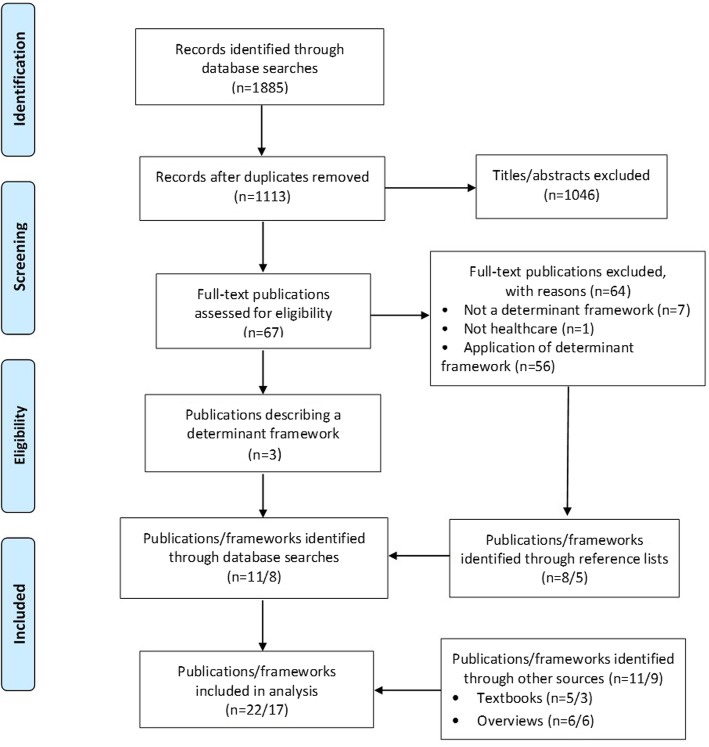
BACKGROUND: The relevance of context in implementation science is reflected in the numerous theories, frameworks, models and taxonomies that have been proposed to analyse determinants of implementation (in this paper referred to as determinant frameworks). This scoping review aimed to investigate and map how determinant frameworks used in implementation science were developed, what terms are used for contextual determinants for implementation, how the context is conceptualized, and which context dimensions that can be discerned. METHODS: A scoping review was conducted. MEDLINE and EMBASE were searched from inception to October 2017, and supplemented with implementation science text books and known published overviews. Publications in English that described a determinant framework (theory, model, taxonomy or checklist), of which context was one determinant, were eligible. Screening and inclusion were done in duplicate. Extracted data were analysed to address the study aims. A qualitative content analysis with an inductive approach was carried out concerning the development and core context dimensions of the frameworks. The review is reported according to the PRISMA guidelines. RESULTS: The database searches yielded a total of 1113 publications, of which 67 were considered potentially relevant based on the predetermined eligibility criteria, and retrieved in full text. Seventeen unique determinant frameworks were identified and included. Most were developed based on the literature and/or the developers' implementation experiences. Six of the frameworks explicitly referred to "context", but only four frameworks provided a specific definition of the concept. Instead, context was defined indirectly by description of various categories and sub-categories that together made up the context. Twelve context dimensions were identified, pertaining to different aggregation levels. The most widely addressed context dimensions were organizational support, financial resources, social relations and support, and leadership. CONCLUSIONS: The findings suggest variation with regard to how the frameworks were developed and considerable inconsistency in terms used for contextual determinants, how context is conceptualized, and which contextual determinants are accounted for in frameworks used in implementation science. Common context dimensions were identified, which can facilitate research that incorporates a theory of context, i.e. assumptions about how different dimensions may influence each other and affect implementation outcomes. A thoughtful application of the concept and a more consistent terminology would enhance transparency, simplify communication among researchers, and facilitate comparison across studies.
Overview
The claims and statistics of this paper haven’t been checked yet.
Free: it reads the open-access text and checks the first 5 claims that cite a source we can check. Create a free account to check every claim.
Integrity signals
Registry
Cites
Statistics
Figures
Verification
Claims the paper makes
The claims and statistics of this paper haven’t been checked yet.
Free: it reads the open-access text and checks the first 5 claims that cite a source we can check. Create a free account to check every claim.
Claims other papers make about this one
Each is checked against this paper’s own text: does it say what the citing paper says it does?
The source backs part of the claim, not all of it — or backs it for a different population, condition or comparison.
In the citing paper
“Understanding the end users, in this case, the students, is crucial and is known to facilitate successful implementation.23,24”
From Structured Development of Learning and Assessment Tasks to Prevent Generative AI Misuse and Enhance AI Literacy in the Faculty in Physiotherapy Education (2025) · cites this paper as [24]
Experimental — accuracy not yet measuredThe check wasn’t confident either way, so it gives no verdict — never disputed.
In the citing paper
“This call for hypothesis testing in implementation outcomes research has been echoed by a number of recent papers [21–24].”
From Ten years of implementation outcomes research: a scoping review (2023) · cites this paper as [23]
Experimental — accuracy not yet measured
Self-check
Percentages, sums and reported differences re-computed from the paper’s own numbers.
The self-check needs the paper’s full text.
Citations
Cites
Preferred Reporting Items for Systematic Reviews and Meta-Analyses: the PRISMA statement
Moher, D., Liberati, A., Tetzlaff, J., Altman, D. G., & for the PRISMA Group (2009) · BMJ · doi:10.1136/bmj.b2535 · Cited by 83,823
Preferred Reporting Items for Systematic Reviews and Meta-Analyses: The PRISMA Statement
Moher, D., Liberati, A., Tetzlaff, J., Altman, D. G., & The PRISMA Group (2009) · PLoS Medicine · doi:10.1371/journal.pmed.1000097 · Cited by 64,042 · cited 1×
“for Systematic Reviews and Meta-Analyses (PRISMA) guidelines [20].”
Preferred reporting items for systematic reviews and meta-analyses: the PRISMA Statement.
(2009) · PubMed Central · Cited by 44,859
Scoping studies: towards a methodological framework
Arksey, H., & O'Malley, L. (2005) · International Journal of Social Research Methodology · doi:10.1080/1364557032000119616 · Cited by 36,742
The Ecology of Human Development: Experiments by Nature and Design
Bronfenbrenner, U. (1979) · Harvard University Press eBooks · doi:10.4159/9780674028845 · Cited by 26,084
The qualitative content analysis process
Elo, S., & Kyngäs, H. (2008) · Journal of Advanced Nursing · doi:10.1111/j.1365-2648.2007.04569.x · Cited by 22,617
Wang, G., Ma, R., Qiao, G., Wada, K., Aizawa, Y., & Satoh, T. (2015) · Integrative Medicine International · doi:10.1159/000368408 · Cited by 18,657
Organizational culture and leadership
(1993) · Long Range Planning · doi:10.1016/0024-6301(93)90120-5 · Cited by 16,462
Damschroder, L. J., Aron, D. C., Keith, R. E., Kirsh, S. R., Alexander, J. A., & Lowery, J. C. (2009) · Implementation Science · doi:10.1186/1748-5908-4-50 · Cited by 14,496 · cited 11×
“, 2009 [15] Influences on implementation (outcomes) Based on analysis of the 19 theories, frameworks and models used in implementation science 5 categories (3 relate to contextual influences): • Intervention characteristics • Characteristics of individuals • Process • Inner setting • Outer setting Categories are refer…”
BackgroundMethodInfluentialThe ecology of human development : experiments by nature and design
Bronfenbrenner, U. (1979) · Cited by 12,580
Research works printed but not linked: 7
- Rycroft-Malone J Bucknall T Models and frameworks for implementing evidence-based practice: linking evidence to action 2010 Oxford Wiley-Blackwell
- Rainbird K Sanson-Fisher R Buchan H Identifying barriers to evidence uptake 2006 Melbourne National Institute of Clinical Studies
- World Health Organization (WHO) Identifying and addressing barriers to implementing policy options. In: SURE guides for preparing and using evidence-based policy briefs 2011
- Övretveit J The leaders’ role in quality and safety improvement: a review of the research and guidance 2005 Karolinska Institute Stockholm
- Weick KE The social psychology of organising 1969 Reading, MA Addison-Wesley
- Cappelli P Sherer PD The missing role of context in OB: the need for a meso-level approach Res Organ Behav 1991 13 55 110
- Jordan A Carlile O Stack A Approaches to learning – a guide for teachers 2008 New York Open University Press 1 251
Cited by
Items 401–500 of 1,000
Petro-Petro, J., Arango-Paternina, C. M., Villada, F. A. P., Villada, J. F. R., & Brownson, R. C. (2024) · BMC Public Health · doi:10.1186/s12889-024-18615-6 · Cited by 6
Fjordkvist, E., Nyman, M. H., Winberg, M., Joelsson‐Alm, E., & Eldh, A. C. (2024) · BMC Health Services Research · doi:10.1186/s12913-024-11353-w · Cited by 9
“Context includes dimensions representing essential conditions for implementation as well as functions that drive the implementation towards its goal [19].”
BackgroundLiang, Z., King, J. C., Nagle, C., Pain, T., & Mallett, A. J. (2024) · International Journal of Environmental Research and Public Health · doi:10.3390/ijerph21080994 · Cited by 6
“Mounting evidence has proven how context can play a key influencing role in the selection of interventions and intervention outcomes [35–37].”
Backgroundde Souza, A. C. M., Cruzes, D. S., Jaccheri, L., & Dahl-Jørgensen, T. C. (2025) · Information and Software Technology · doi:10.1016/j.infsof.2025.107755 · Cited by 8
Implementation Science Across Lifestyle Medicine Interventions
Adsul, P., Perez, L. G., Oh, A., & Chambers, D. (2020) · Springer eBooks · doi:10.1007/978-3-030-48088-2_4 · Cited by 7
Lehto, R., Vepsäläinen, H., Lehtimäki, A.-V., Lehto, E., Leppänen, M. H., Skaffari, E., Abdollahi, A. M., Roos, E., Erkkola, M., & Ray, C. (2022) · BMC Public Health · doi:10.1186/s12889-022-14639-y · Cited by 8
The Patient Safety Adoption Framework: A Practical Framework to Bridge the Know-Do Gap
Moyal‐Smith, R., Margo, J. N., Maloney, F. L., Boulanger, J., Lautner, P., Folcarelli, P. H., & Benjamin, E. M. (2023) · Journal of Patient Safety · doi:10.1097/pts.0000000000001118 · Cited by 6
“Finally, context is included in many determinant frameworks, but none of these have a context assessment woven into the domains.(26)Wemapped questions from a context assessment survey to each domain, which makes up the readiness checklist.”
BackgroundHickey, G., McGilloway, S., Leckey, Y., Bywater, T. J., & Donnelly, M. (2023) · Evaluation · doi:10.1177/13563890231165814 · Cited by 6
Neziraj, M., Axelsson, M., Kumlien, C., Hellman, P., & Andersson, M. (2023) · BMJ Open · doi:10.1136/bmjopen-2023-072453 · Cited by 6
“The aim of this study was to describe the development of a codesigned complex intervention intended to prevent pressure ulcers, malnutrition, poor oral health and falls among older persons in nursing homes.”
BackgroundWoods-Hill, C. Z., Koontz, D. W., Colantuoni, E., Xiao, S., Xie, A., Miller, M. R., Milstone, A. M., & Bright STAR Authorship Group (2023) · Archives of Pediatrics and Adolescent Medicine · doi:10.1001/jamapediatrics.2023.3229 · Cited by 6
Nicoll, A., Roulstone, S., Williams, B., & Maxwell, M. (2023) · International Journal of Language & Communication Disorders · doi:10.1111/1460-6984.12979 · Cited by 8
“Interestingly, Nilsen and Bernhardsson (2019) identified two relevant gaps in how implementation science frames ‘context’.”
BackgroundCastiglione, S. A., Fréchette, J., & Agnihotram, V. R. (2023) · SAGE Open Nursing · doi:10.1177/23779608231216161 · Cited by 8
“While in scholarship and practice fi elds, the importance of leadership in the change process has long been accepted, research to illuminate how leadership in fl uences context and implementation outcomes (e.g., moderators) is emerging (Meza et al., 2021; Nilsen & Bernhardsson, 2019).”
BackgroundMcElroy, L. M., Mohottige, D., Cooper, A. L., Sanoff, S., Davis, L. A., Collins, B. H., Gordon, E. J., Wang, V., & Boulware, L. E. (2024) · Transplantation Proceedings · doi:10.1016/j.transproceed.2023.12.003 · Cited by 6
Drozd, F., Sandtrø, H. P., Leksbø, T. S., Haga, S. M., Jacobsen, H., & Størksen, H. T. (2024) · BMC Health Services Research · doi:10.1186/s12913-024-10632-w · Cited by 6
“However, selecting implementation strategies is challenging for several reasons; it requires careful consideration of contextual variations [24, 26]; despite there being around 170 implementation theories and models [27], most have a limited evidence-base due to being underutilized [28]; and, there…”
BackgroundFlyger, J., Larsen, C. V. L., Jensen, E., Niclasen, B. V.-L., & Nielsen, A. S. (2024) · Frontiers in Health Services · doi:10.3389/frhs.2024.1219787 · Cited by 7
Health Dissemination and Implementation Within Schools
Lee, R. M., Eisman, A. B., & Gortmaker, S. L. (2023) · Oxford University Press eBooks · doi:10.1093/oso/9780197660690.003.0022 · Cited by 7
Schneider, H. M., & Mianda, S. (2024) · International Journal of Health Policy and Management · doi:10.34172/ijhpm.2024.7948 · Cited by 6
Kakumanu, S., Szefler, S. J., Pappalardo, A. A., Sales, A. E., Baptist, A. P., Stern, J., & Nyenhuis, S. M. (2024) · Journal of Allergy and Clinical Immunology · doi:10.1016/j.jaci.2024.07.016 · Cited by 6
Perineal massage and warm compresses–Implementation study of a complex intervention in health
Rodrigues, S., Silva, P., Esperança, M., & Escuriet, R. (2024) · Midwifery · doi:10.1016/j.midw.2024.104208 · Cited by 6
Okere, A. N., Pinto, A. R., & Suther, S. G. (2025) · Antibiotics · doi:10.3390/antibiotics14030263 · Cited by 6
“Our focus was on both the outer and inner setting components of CFIR—these components describe factors at the external and organizational levels [6,7].”
Studts, C. R., Jacobs, J. A., Bush, M. L., Lowman, J., Creel, L., & Westgate, P. M. (2022) · American Journal of Speech-Language Pathology · doi:10.1044/2022_ajslp-21-00186 · Cited by 6
“The potential for implementation of any evidencebased intervention is determined by multilevel contextual factors influencing whether, how, why, where, and by whom an intervention is adopted and delivered (Nilsen & Bernhardsson, 2019).”
BackgroundIJntema, R. F., Barten, D., Duits, H. B., Tjemkes, B. V., & Veenhof, C. (2022) · BMC Health Services Research · doi:10.1186/s12913-022-08383-7 · Cited by 6
“The business model and healthcare management literature lack comprehensive insights into business model designs related to PTPHO-centred outcomes, while accounting for managed competition contract [6, 36, 37, 47, 48].”
BackgroundMajjouti, K., Küppers, L., Thielmann, A., Redaèlli, M., Vitinius, F., Funke, C., van der Arend, I., Pilic, L., Heßbrügge, M., Stock, S., et al. (2022) · BMC Family Practice · doi:10.1186/s12875-022-01827-3 · Cited by 6
“Provider referral to PSPs is a crucial step in patients’ participation; both provider referral as well as organisational climate and support towards new programmes are important determinants at the “meso”-level of implementation [13].”
BackgroundVelloza, J., Roche, S. D., Concepcion, T. L., & Ortblad, K. F. (2022) · Current Opinion in HIV and AIDS · doi:10.1097/coh.0000000000000768 · Cited by 6
MCH Leadership Training Program: An Innovative Application of an Implementation Science Framework
Vamos, C. A., Salinas‐Miranda, A., Daley, E. M., Kirby, R. S., Liller, K. D., Marshall, J. T., Sappenfield, W. M., Wilson, R. E., & Petersen, D. J. (2023) · Maternal and Child Health Journal · doi:10.1007/s10995-023-03607-6 · Cited by 6
“Context and setting are important in implementation science and affect the implementation success of the current program, and the generalizability and transferability of findings and lessons learned to other programs and settings (Nilsen & Bernhardsson, 2019).”
BackgroundKelly, H. T., Smith, J. J., Verdonschot, A., Kennedy, S. G., Scott, J. J., McKay, H. A., Nathan, N., Sutherland, R., Morgan, P. J., Salmon, J., et al. (2023) · BMJ Open · doi:10.1136/bmjopen-2023-075488 · Cited by 8
Brien, M., Coutinho, F., Krishna, D., van der Haar, L., de Laat, J., Srinivasan, S. R., & Venkatachalapathy, N. (2023) · Frontiers in Public Health · doi:10.3389/fpubh.2023.1165034 · Cited by 9
Krause, R., Gwyther, L., & Olivier, J. (2024) · Palliative Care and Social Practice · doi:10.1177/26323524231219510 · Cited by 8
Matuluko, A., MacDonald, J., Ness, V., & Currie, K. (2020) · JAC-Antimicrobial Resistance · doi:10.1093/jacamr/dlaa065 · Cited by 8
Fairman, C. M., Harrington, S., Schumpp, A., Brooks, A. M., Jones, M. J., Kim, J. S., & Kennedy, M. A. (2024) · BMC Health Services Research · doi:10.1186/s12913-024-11797-0 · Cited by 5
“As such, preliminary work to explore the context for implementation is an important first step to inform the development of a sustainable implementation strategy [17].”
BackgroundUnveiling the Context for Implementing Evidence‐Based Practice in Spanish Nursing
Fernández‐Domínguez, J. C., Sesé, A., de Pedro‐Gómez, J. E., Morales‐Asencio, J. M., & Jiménez, R. (2024) · Journal of Advanced Nursing · doi:10.1111/jan.16604 · Cited by 8
Lukersmith, S., Woods, C., Sarma, H., de Miquel, C., & Salvador‐Carulla, L. (2025) · Public Health · doi:10.1016/j.puhe.2024.12.056 · Cited by 5
Chen, S., Banks, L. M., Carew, M. T., Kipchumba, E. K., Davey, C., Sulaiman, M., & Kuper, H. (2025) · BMC Medicine · doi:10.1186/s12916-025-04100-3 · Cited by 6
“The varying effects across domains also point to the crucial role of contextual factors, aligning with Nilsen et al.’s (2019) emphasis on context-specific approaches [27].”
Granberg, A., Lundqvist, L., Duberg, A., & Matérne, M. (2025) · BMC Health Services Research · doi:10.1186/s12913-025-12808-4 · Cited by 8
“However, it is crucial to consider contextual factors [65] when examining enablers and barriers, as they can significantly impact ORC regarding the implementation of interventions in disability health-care.”
Finley, E. P., Hamilton, A. B., Canelo, I. A., Jackson, L., Lesser, R., Oberman, R. S., Yosef, J., Chrystal, J. G., Fletcher, E. H., Bean‐Mayberry, B., et al. (2025) · BMC Health Services Research · doi:10.1186/s12913-025-12871-x · Cited by 5
“…between contextual conditions, or “features of the circumstances in which an intervention is implemented…that may produce variation in outcomes” [31], and adaptations that emerge over the course of implementation, typically in an effort to improve the fit between intervention and setting [32, 33].”
Wiggins, K. T., Hall, T. L., Jortberg, B. T., Dickinson, W. P., Dickinson, L. M., Parascando, J. A., Fernald, D. H., Sobczak, C., Oser, S. M., & Oser, T. K. (2025) · BMC Family Practice · doi:10.1186/s12875-025-02903-0 · Cited by 7
“Addressing practice context, practice-specific barriers, and perceived resources for change, such as numbers of staff and key practice members, is an important element of intervention tailoring [46, 47] impactful implementation [48–50].”
Wollney, E. N., Sims, S. M., Ricks‐Santi, L. J., Eddy, E., Wiesman, D., & Fisher, C. L. (2025) · BMC Public Health · doi:10.1186/s12889-025-23488-4 · Cited by 5
“Not considering the unique values and concerns of the community ultimately inhibits the potential efficacy of the implemented intervention as well as the potential evidence it could hold for other populations [29].”
Proactive planning for contextual fit: the role of the implementation premortem
Wippold, G. M., Garcia, K. A., Domlyn, A. M., Wong, D. R., & Fernández, M. E. (2025) · Implementation Science Communications · doi:10.1186/s43058-025-00768-z · Cited by 6
“Contextual factors are often responsible for variations in outcomes between studies [7].”
Santomauro, I., Bassi, E., Busca, E., Basso, I., Ambrosi, E., Stedile, M., Durante, Á., & Molin, A. D. (2025) · BMC Nursing · doi:10.1186/s12912-025-03890-4 · Cited by 5
“The conceptual structure employed was drawn from the scoping review by Nilsen and Bernhardsson [31], in which the dimensions characterizing implementation processes are organized into four distinct levels, including micro, meso, and macro levels, as well as a multiple level capturing cross-cutting…”
Leland, N. E., Prusynski, R. A., Shore, A., Amaravadi, H., Mroz, T. M., & Saliba, D. (2025) · Journal of the American Medical Directors Association · doi:10.1016/j.jamda.2025.106019 · Cited by 6
Understanding implementation science in medical radiation sciences
Manning, F., Hancock, A., Meertens, R. M., & Ede, J. (2025) · Radiography · doi:10.1016/j.radi.2025.103288 · Cited by 6
Huong, V. T. L., Hamers, R. L., Limato, R., Limmathurotsakul, D., Karkey, A., Ashley, E. D., Anderson, D. J., Patel, P., Patel, T. S., Lessa, F. C., et al. (2022) · BMJ Open · doi:10.1136/bmjopen-2022-061286 · Cited by 5
Jensen, M. P., Krølner, R. F., Jørgensen, M. B., Bast, L. S., & Andersen, S. (2023) · Global Implementation Research and Applications · doi:10.1007/s43477-023-00084-5 · Cited by 6
“…is known to be greatly influenced by factors related to the context in which they occur (Craig et al., 2018; Durlak & DuPre, 2008; Gaber et al., 2022; Minary et al., 2018; Nilsen & Bernhardsson, 2019; Waller et al., 2017), we expect that implementation varies between the included school settings.”
BackgroundLeijon, M. E., Algotson, A., Bernhardsson, S., Ekholm, D., Ersberg, L., Höök, M. J., Klüft, C., Müssener, U., Garas, E. S., & Nilsén, P. (2024) · Frontiers in Public Health · doi:10.3389/fpubh.2024.1299099 · Cited by 5
Self-citationOhlsen, J. T., Søfteland, E., Akselsen, P. E., Aßmus, J., Harthug, S., Lein, T. E., Sevdalis, N., Wæhle, H. V., Øvretveit, J., & Hartveit, M. (2024) · BMJ Quality & Safety · doi:10.1136/bmjqs-2024-017185 · Cited by 7
Zamantakis, A., Zapata, J. P., Greenawalt, I., Knapp, A. A., Benbow, N., & Mustanski, B. S. (2024) · AIDS and Behavior · doi:10.1007/s10461-024-04525-6 · Cited by 5
“These CBOs mentioned creating an internal system to consistently monitor implementation, which was used to continuously contributions and distinguishing them from those directly involved in implementing the innovation [31 ].”
Graham, E. L., Amador-Fernández, N., Benrimoj, S. I., Martínez‐Martínez, F., Llinares, R. P., Sánchez-Tormo, J., Baixauli-Fernández, V. J., Colomer-Molina, V., Hoyos, E. P., Gastelurrutia, M. Á., et al. (2025) · Research in Social and Administrative Pharmacy · doi:10.1016/j.sapharm.2025.02.002 · Cited by 5
Krishnamoorthy, S., Armstrong, G., Ross, V. L., Mathieu, S. L., & Kõlves, K. (2025) · The International Journal of Health Planning and Management · doi:10.1002/hpm.3911 · Cited by 6
“Examining the influence of contextual determinants on implementation aids in understanding the conditions under which evidence generalises to other settings or populations [20] and may help tailor strategies in accordance with needs of the setting [21].”
van der Laag, P. J., Dorhout, B. G., Veenhof, C., Barten, D., & Schoonhoven, L. (2025) · Global Implementation Research and Applications · doi:10.1007/s43477-025-00162-w · Cited by 5
“However, it is known that implementation of EBIs is complex due to different determinants that influence the implementation and uptake of EBIs (Nilsen & Bernhardsson, 2019 ).”
Guy, A. A., Nishar, S., Alavi, S., Morales, A., Vanjani, R., & Soske, J. (2025) · Progress in community health partnerships · doi:10.1353/cpr.2025.a956604 · Cited by 5
Implementation Science for Managers and Healthcare Organizations Responding to Emergencies
Øvretveit, J., & Ohrling, M. (2021) · Global Implementation Research and Applications · doi:10.1007/s43477-021-00025-0 · Cited by 6
Calnan, S., & McHugh, S. (2023) · Evidence & Policy · doi:10.1332/174426421x16917571241005 · Cited by 5
Jolliffe, L. J., Andrew, N. E., Srikanth, V. K., Beare, R. J., Noeske, K. E., & Snowdon, D. A. (2023) · Disability and Rehabilitation · doi:10.1080/09638288.2023.2258334 · Cited by 5
Coordination of family’s care in an evidence-based nurse home visiting program
Williams, V. N., Franco, C. Y., Lopez, C., Allison, M. A., Olds, D. L., & Tung, G. J. (2023) · Journal of Interprofessional Care · doi:10.1080/13561820.2023.2266452 · Cited by 5
“In assessing community-based interventions like NFP, it is important to account for the influence of context to explain how or why certain implementation outcomes like effective coordination are achieved (Nilsen & Bernhardsson, 2019).”
BackgroundPrice, M. A., Barnett, M. L., Cerezo, A., Broder‐Fingert, S., & Matsuno, E. G. (2023) · Children and Youth Services Review · doi:10.1016/j.childyouth.2023.107356 · Cited by 5
Process and Implementation Elements of Measurement Feedback Systems: A Systematic Review
Rognstad, K., Engell, T., Fjermestad, K. W., Wentzel‐Larsen, T., & Kjøbli, J. (2023) · Administration and Policy in Mental Health and Mental Health Services Research · doi:10.1007/s10488-023-01325-3 · Cited by 7
Boman, C., Bernhardsson, S., Lundqvist, S., Melin, K., & Lauruschkus, K. (2024) · Frontiers in Health Services · doi:10.3389/frhs.2024.1306461 · Cited by 6
Self-citationAshcroft, R., Menear, M., Dahrouge, S., Silveira, J., Emode, M., Booton, J., Bahniwal, R., Sheffield, P., & McKenzie, K. J. (2024) · PLoS ONE · doi:10.1371/journal.pone.0301796 · Cited by 5
Co-design knowledge mobilization tools for universal accessibility in municipalities
Corcuff, M., Lamontagne, M., Routhier, F., & Morales, E. (2024) · Frontiers in Rehabilitation Sciences · doi:10.3389/fresc.2024.1331728 · Cited by 6
“Contextual understanding is pivotal in implementation science, as it elucidated what works and why (36).”
BackgroundMethodDissemination and Implementation Science
Morrato, E. H., & Smith, M. Y. (2020) · Springer eBooks · doi:10.1007/978-981-15-3013-5_13 · Cited by 6
Learning from Each Other: A Multisite Collaborative to Reduce Electrolyte Testing
Coe, M. E., Gruhler, H., Schefft, M., Williford, D. E., Burger, B., Crain, E. E., Mihalek, A. J., Santos, M. M., Cotter, J. M., Trowbridge, G., et al. (2020) · Pediatric Quality and Safety · doi:10.1097/pq9.0000000000000351 · Cited by 5
Sperber, N. R., Bruening, R., Dadolf, J., Miller, K. E. M., Henius, J., Kabat, M., Perez, J., & Houtven, C. H. V. (2020) · Journal of Health Services Research & Policy · doi:10.1177/1355819620983371 · Cited by 5
“Future work could apply implementation science frameworks to specify general determinants important for implementing clinical eligibility assessments and evaluate effects on both implementers and recipients.(34)”
MethodEngell, T., Varsi, C., Graverholt, B., & Egeland, K. M. (2021) · Global Implementation Research and Applications · doi:10.1007/s43477-021-00027-y · Cited by 5
Pelt, A. E. V., & Beidas, R. S. (2021) · International Journal of Health Policy and Management · doi:10.34172/ijhpm.2021.173 · Cited by 5
McKay, V., Vogel, M. T., Combs, T., Brossart, L., Endrizal, A., Andersen, S., Poor, T. J., Mahoney, M. R., & Luke, D. A. (2022) · Substance Abuse Treatment Prevention and Policy · doi:10.1186/s13011-022-00450-w · Cited by 5
“Limitations As a tenet of implementation science, context should be taken into consideration when planning dissemination and implementation efforts, and a one-size-fits-all approach is likely to only be minimally effective [40, 41].”
BackgroundJuskevicius, L. F., Luz, R. A., Félix, A. M. D. S., Timmons, S., & Padoveze, M. C. (2022) · American Journal of Infection Control · doi:10.1016/j.ajic.2022.09.029 · Cited by 5
Lindbäck, Y., Valeskog, K., Schröder, K., & Sonesson, S. (2025) · Journal of Medical Education and Curricular Development · doi:10.1177/23821205251378794 · Cited by 4
Sowan, A. K., & Chinman, M. (2024) · JMIR Research Protocols · doi:10.2196/54213 · Cited by 4
“The need for a theoretical basis for knowledge implementation and uptake has been well supported in the literature [40].”
Backes, C., Godot, C., Gujer, C. Y., Obegi, N., Perez, A., Gervaix, A., & Schneider, M. P. (2025) · Digital Health · doi:10.1177/20552076241313164 · Cited by 5
Merrill, K. G., Dougherty, A., Battalio, S. L., Hartstein, M. L., Silva, A., Moskowitz, D., Pablo, M. G. D., Margellos-Anast, H., Baumann, A. A., Navalpakkam, P., et al. (2025) · Translational Behavioral Medicine · doi:10.1093/tbm/ibaf017 · Cited by 4
Ganakas, E., Salmon, J., Ma, J., Lamb, K. E., Barnett, L. M., Bauman, A. E., Telford, A., Ridgers, N. D., Timperio, A. F., & Koorts, H. (2025) · International Journal of Behavioral Nutrition and Physical Activity · doi:10.1186/s12966-025-01810-y · Cited by 4
“In implementation science there have been explicit calls for more research exploring how macro-level contextual factors influence implementation outcomes [32, 34].”
Selove, R., Combs, T., Heckman, C. J., Neil‐Sztramko, S., Scheuermann, T. S., Ginossar, T., Leng, J. C. F., Walker, P. D., Sidani, J. E., & Salloum, R. G. (2025) · Nicotine & Tobacco Research · doi:10.1093/ntr/ntaf155 · Cited by 4
Schuler, C., Ntow, G. E., Berner, R., Oo, S. T. N., & Pfister, R. E. (2025) · Global Health Action · doi:10.1080/16549716.2025.2567714 · Cited by 5
“As much as in-country or government funding is necessary, research relies heavily on outside donors and continues to be inconsistently funded (81).”
Reeves, M. J., Dugdale, J. H., Iga, J., Gregson, W. A., & Roberts, S. J. (2026) · Football Studies · doi:10.1016/j.footst.2026.100049 · Cited by 4
Oilcloth sessions as an implementation strategy: a qualitative study in Denmark
Kirk, J. W., Stefánsdóttir, N. Þ., Powell, B. J., Lindstroem, M. B., Andersen, O., Tjørnhøj‐Thomsen, T., & Nilsén, P. (2022) · BMC Medical Education · doi:10.1186/s12909-022-03635-w · Cited by 4
Ishii, K., Takemura, Y., & Kida, R. (2024) · Journal of Health Organization and Management · doi:10.1108/jhom-04-2023-0096 · Cited by 4
Cunningham, A., Golden, D. D. L. H., Pink, M., Truszkowska, E., Byrne, T., Murphy, C., Strahann, A., Doyle, C., Kasemiire, A., & Frawley, T. (2024) · Journal of Advanced Nursing · doi:10.1111/jan.16498 · Cited by 6
Hunter, K. F., Butler, J. I., Shrestha, S., Jones, C. A., Wagg, A., Millar, N., Carr, F., & Dahlke, S. (2025) · PLoS ONE · doi:10.1371/journal.pone.0324953 · Cited by 4
“…underscored that, in acute care settings, a wide array of micro, meso and macro factors (e.g., patient attitudes, organizational culture/climates, financial resources, leadership) [13] shape healthcare professionals’ perceptions around the feasibility of implementing new approaches to care [25].”
Cooper, H. L. F., Hall, K. S., Escoffery, C., Livingston, M. D., Sales, J. M., Mullany, A., Rice, W. S., Ibragimov, U., Kegler, M. C., Sterk, C. E., et al. (2025) · Social Science & Medicine · doi:10.1016/j.socscimed.2025.118344 · Cited by 4
Sanuade, O. A., Carroll, A. J., Watson, R., Ye, J., Hill, J. L., Chipman, J., Wilson, F. A., King, A. J., Kho, A., Fiol, G. D., et al. (2025) · International Journal of Behavioral Nutrition and Physical Activity · doi:10.1186/s12966-025-01794-9 · Cited by 6
“…implementation need adaptation to local contexts to be effective and sustainable in the U.S. Understanding contextual determinants (i.e., barriers and facilitators) and implementation strategies is crucial for the successful adaptation, adoption and sustainability of EBIs like COMBI-SR [16, 17].”
Applications of Human‐Centered Design to Food Is Medicine Interventions: The THRIVE Pilot Trial
Adeleye, K. K., McDaniel, K., Iribe, I., Assani‐Uva, A., Dugbartey, J. A., Sinyan, A., Bhattarai, B., DeMarco, S., Tomiwa, T., Olusola-Bello, M. A., et al. (2025) · Journal of the American Heart Association · doi:10.1161/jaha.125.041846 · Cited by 6
“12 For Food Is Medicine programs, implementation science helps identify barriers and facilitators that affect program delivery across various health care contexts and populations, thereby addressing the gap between what is known to work and what is implemented in practice.”
Changing Health-Related Behaviors 3: Lessons from Implementation Science
Hall, A. M., Richmond, H., Mahoney, K., & Matthews, J. J. (2021) · Methods in molecular biology · doi:10.1007/978-1-0716-1138-8_31 · Cited by 6
McCormack, B. G., Cable, C., Cantrell, J., Bunce, A., Douglas, J., Fitzpatrick, J., Forsyth, N., Gallacher, J., Grant, J., Griffin, L., et al. (2021) · International Practice Development Journal · doi:10.19043/ipdj.111.002 · Cited by 4
Smit, L. C., de Wit, N. J., Nieuwenhuizen, M. L., Schuurmans, M. J., & Bleijenberg, N. (2021) · BMC Geriatrics · doi:10.1186/s12877-021-02539-6 · Cited by 4
“The organizational environment is part of this setting, also referred as organizational support, which includes the organization of work, staff workload and staff training [15, 17, 20, 21].”
BackgroundRycroft‐Malone, J., Rogers, L., & Burton, C. R. (2022) · International Journal of Health Policy and Management · doi:10.34172/ijhpm.2022.6900 · Cited by 5
Attitudes of Clinicians and Patient Safety Culture Before and After the ARRIVE Trial
VanGompel, E. W., Carlock, F., Singh, L., Keer, E., Brown, J. P., & Low, L. K. (2023) · Journal of Obstetric, Gynecologic & Neonatal Nursing · doi:10.1016/j.jogn.2022.12.007 · Cited by 4
Wong, R., & Kitto, S. C. (2023) · Journal of Continuing Education in the Health Professions · doi:10.1097/ceh.0000000000000543 · Cited by 6
“6,7 A recent scoping review of KT frameworks 22 identi fi ed only three frameworks that provide a speci fi c de fi nition of the concept of context: the Theoretical Domains Framework (TDF), 45,46 the Consolidated Framework for Implementation Research, 47,48 and the Promoting Action on Research…”
BackgroundMethodLeveraging the humanity of randomized controlled trials for actionability
Wong‐Parodi, G., Domingue, S. J., Harrison, T., Herbert, N., Maillard, L., & Lemos, M. C. (2024) · Cell Reports Sustainability · doi:10.1016/j.crsus.2024.100076 · Cited by 7
Shattuck, D. G., Willging, C. E., Peterson, J. C., & Ramos, M. M. (2024) · Implementation Research and Practice · doi:10.1177/26334895241249417 · Cited by 6
“Outer contexts exert a demonstrable in fl uence on facilitators and barriers in the inner context (Escoffery et al., 2023; Nilsen & Bernhardsson, 2019), either through direct overt action or more subtle connections.”
BackgroundDigital Visions and Troublesome Realities in Health and Social Care Coordination in Norway
Huby, G. Ø. (2024) · Nordisk välfärdsforskning | Nordic Welfare Research · doi:10.18261/nwr.9.2.4 · Cited by 4
Harkko, J., Nordquist, H., & Kouvonen, A. M. (2024) · Social Policy and Administration · doi:10.1111/spol.13056 · Cited by 5
Golsäter, M., & Andersson, A. (2024) · Health Expectations · doi:10.1111/hex.70078 · Cited by 4
Dubbeldeman, E. M., van der Kleij, R., Sprenger, M., Aslam, A. S., Jong, J. C. K., & Crone, M. R. (2024) · Children and Youth Services Review · doi:10.1016/j.childyouth.2024.108110 · Cited by 5
Weerasuriya, R., Elias, J., Martyn, M. M., O’Haire, S., Gaff, C., Smith, K. M., Desai, J., & Taylor, N. J. (2025) · Public Health Genomics · doi:10.1159/000544946 · Cited by 4
“Systematically identifying implementation determinants enables researchers to develop evidence-informed strategies to support clinicians navigating new technologies within a complex area of care [45].”
Choy-Brown, M., Hamovitch, E., Bornheimer, L. A., Acri, M. C., & McKay, M. M. (2020) · Children and Youth Services Review · doi:10.1016/j.childyouth.2020.104774 · Cited by 4
Action research improved general prerequisites for evidence-based practice
Bjurling‐Sjöberg, P., Pöder, U., Jansson, I., Wadensten, B., & Nordgren, L. (2021) · Heliyon · doi:10.1016/j.heliyon.2021.e06814 · Cited by 7
Breuer, J. (2021) · Logos Verlag Berlin eBooks · doi:10.30819/5293 · Cited by 10
Narh-Bana, S., Chirwa, T. F., Chirwa, E. D., Bonsu, F. A., Ibisomi, L., & Kawonga, M. (2021) · BMC Health Services Research · doi:10.1186/s12913-021-07121-9 · Cited by 4
“This corroborates our findings that, the Forest zone has the highest median number of PLHIV attending the HIV clinics per month [55, 56].”
ResultPractice change in community health centers: A qualitative study of leadership attributes
Tektiridis, J. H., Heredia, N. I., Morgan, R. O., Mikhail, O. I., Risendal, B., Kegler, M. C., & Fernández, M. E. (2022) · Frontiers in Health Services · doi:10.3389/frhs.2022.934688 · Cited by 4
Eshun‐Wilson, I., Ford, N. P., Mody, A., Beres, L. K., Schwartz, S., Baral, S., & Geng, E. (2023) · PLoS Medicine · doi:10.1371/journal.pmed.1004168 · Cited by 5
“considerations—including characterization of implementation strategies, implementation outcomes, hypothesized mechanisms of action, and context—should be incorporated more broadly in HIV implementation research study methods and dissemination efforts [12,13,55,56].”
Background
Metadata
- Authors
- Nilsen, P., & Bernhardsson, S.
- Affiliations
- Region Västra Götaland (SE)
- Corresponding author
- Bernhardsson, Susanne
- Venue
- BMC Health Services Research
- Published
- 2019-03-25
- Volume
- 19
- Issue
- 1
- Pages
- 189-189
- ISSN
- 1472-6963 (ISSN-L)
- PMC
- PMC6432749
- OpenAlex
- W2941268450
- Semantic Scholar
- 5761696aebadd7dde4d180778d844b700aefb54f
- Cited by
- 1,014
- References
- 111
- Citations by year
- 2026: 142 · 2025: 129 · 2024: 217 · 2023: 176 · 2022: 150 · 2021: 121 · 2020: 65 · 2019: 10
- FWCI
- 15.85
- Type
- journal article
- Language
- en
- Open access
- gold
- doi.org
- Licence
- cc-by
- creativecommons.org/licenses/by/4.0/ (tdm)
- Locations
- BMC Health Services Research (publishedVersion, cc-by)
- Europe PMC (PubMed Central) (publishedVersion, other-oa)
- PubMed Central (publishedVersion, cc-by)
- PubMed (publishedVersion)
- KTH Publication Database DiVA (KTH Royal Institute of Technology) (submittedVersion, other-oa)
- DOAJ (DOAJ: Directory of Open Access Journals) (submittedVersion, cc-by-sa)
- NORA - Norwegian Open Research Archives (submittedVersion, cc-by)
- Topics
- Health Sciences › Health Professions › General Health Professions › Health Policy Implementation Science
- Health Sciences › Health Professions › General Health Professions › Health Sciences Research and Education
- Health Sciences › Medicine › Public Health, Environmental and Occupational Health › Clinical practice guidelines implementation
- Keywords
- implementation context, contextual factors, implementation outcomes, organizational support, leadership, financial resources, interpersonal relationships, terminology consistency
- MeSH terms
- Implementation Science, Leadership, Evidence-Based Practice
About these checks
Registry, retraction, Cites and statistics results are computed, not judged, with one exception: a printed reference that no index lists is read once by a model before it counts as a citation error. Claims are extracted by a model and kept only when their quote appears verbatim in the text; each cited source is then checked, with a model’s help, for whether it says what the claim relies on. Those verdicts can be wrong — read the claim’s quote and the cited source before relying on one.
Statistics and arithmetic are recomputed, not judged.
Confidence bands are shown only for fields calibrated on our annotated test set. None is calibrated yet, so no band is shown.
What counts as a claim ›How we measure confidence ›How we check this ›
Are you an author, or do you see a problem with this page? Request a review
Data sources
Bibliographic data: Semantic Scholar, OpenAlex, Crossref.
Contains information from the Semantic Scholar Academic Graph Datasets, made available under the ODC Attribution License (ODC-BY 1.0).
Semantic Scholar’s data is described in: Kinney, R., et al. (2023). The Semantic Scholar Open Data Platform. arXiv:2301.10140.
