

Context matters in implementation science: a scoping review of determinant frameworks that describe contextual determinants for implementation outcomes
Open accessThe DOI matches its Crossref record; 110 of the 111 references it cites were found in a registry or an index.
Abstract
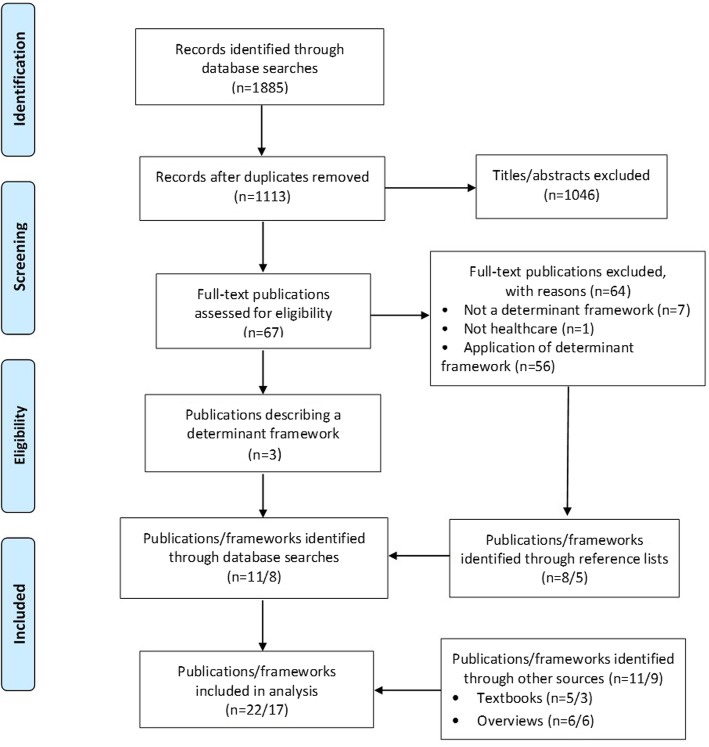
BACKGROUND: The relevance of context in implementation science is reflected in the numerous theories, frameworks, models and taxonomies that have been proposed to analyse determinants of implementation (in this paper referred to as determinant frameworks). This scoping review aimed to investigate and map how determinant frameworks used in implementation science were developed, what terms are used for contextual determinants for implementation, how the context is conceptualized, and which context dimensions that can be discerned. METHODS: A scoping review was conducted. MEDLINE and EMBASE were searched from inception to October 2017, and supplemented with implementation science text books and known published overviews. Publications in English that described a determinant framework (theory, model, taxonomy or checklist), of which context was one determinant, were eligible. Screening and inclusion were done in duplicate. Extracted data were analysed to address the study aims. A qualitative content analysis with an inductive approach was carried out concerning the development and core context dimensions of the frameworks. The review is reported according to the PRISMA guidelines. RESULTS: The database searches yielded a total of 1113 publications, of which 67 were considered potentially relevant based on the predetermined eligibility criteria, and retrieved in full text. Seventeen unique determinant frameworks were identified and included. Most were developed based on the literature and/or the developers' implementation experiences. Six of the frameworks explicitly referred to "context", but only four frameworks provided a specific definition of the concept. Instead, context was defined indirectly by description of various categories and sub-categories that together made up the context. Twelve context dimensions were identified, pertaining to different aggregation levels. The most widely addressed context dimensions were organizational support, financial resources, social relations and support, and leadership. CONCLUSIONS: The findings suggest variation with regard to how the frameworks were developed and considerable inconsistency in terms used for contextual determinants, how context is conceptualized, and which contextual determinants are accounted for in frameworks used in implementation science. Common context dimensions were identified, which can facilitate research that incorporates a theory of context, i.e. assumptions about how different dimensions may influence each other and affect implementation outcomes. A thoughtful application of the concept and a more consistent terminology would enhance transparency, simplify communication among researchers, and facilitate comparison across studies.
Overview
The claims and statistics of this paper haven’t been checked yet.
Free: it reads the open-access text and checks the first 5 claims that cite a source we can check. Create a free account to check every claim.
Integrity signals
Registry
Cites
Statistics
Figures
Verification
Claims the paper makes
The claims and statistics of this paper haven’t been checked yet.
Free: it reads the open-access text and checks the first 5 claims that cite a source we can check. Create a free account to check every claim.
Claims other papers make about this one
Each is checked against this paper’s own text: does it say what the citing paper says it does?
The source backs part of the claim, not all of it — or backs it for a different population, condition or comparison.
In the citing paper
“Understanding the end users, in this case, the students, is crucial and is known to facilitate successful implementation.23,24”
From Structured Development of Learning and Assessment Tasks to Prevent Generative AI Misuse and Enhance AI Literacy in the Faculty in Physiotherapy Education (2025) · cites this paper as [24]
Experimental — accuracy not yet measuredThe check wasn’t confident either way, so it gives no verdict — never disputed.
In the citing paper
“This call for hypothesis testing in implementation outcomes research has been echoed by a number of recent papers [21–24].”
From Ten years of implementation outcomes research: a scoping review (2023) · cites this paper as [23]
Experimental — accuracy not yet measured
Self-check
Percentages, sums and reported differences re-computed from the paper’s own numbers.
The self-check needs the paper’s full text.
Citations
Cites
Preferred Reporting Items for Systematic Reviews and Meta-Analyses: the PRISMA statement
Moher, D., Liberati, A., Tetzlaff, J., Altman, D. G., & for the PRISMA Group (2009) · BMJ · doi:10.1136/bmj.b2535 · Cited by 83,823
Preferred Reporting Items for Systematic Reviews and Meta-Analyses: The PRISMA Statement
Moher, D., Liberati, A., Tetzlaff, J., Altman, D. G., & The PRISMA Group (2009) · PLoS Medicine · doi:10.1371/journal.pmed.1000097 · Cited by 64,042 · cited 1×
“for Systematic Reviews and Meta-Analyses (PRISMA) guidelines [20].”
Preferred reporting items for systematic reviews and meta-analyses: the PRISMA Statement.
(2009) · PubMed Central · Cited by 44,859
Scoping studies: towards a methodological framework
Arksey, H., & O'Malley, L. (2005) · International Journal of Social Research Methodology · doi:10.1080/1364557032000119616 · Cited by 36,742
The Ecology of Human Development: Experiments by Nature and Design
Bronfenbrenner, U. (1979) · Harvard University Press eBooks · doi:10.4159/9780674028845 · Cited by 26,084
The qualitative content analysis process
Elo, S., & Kyngäs, H. (2008) · Journal of Advanced Nursing · doi:10.1111/j.1365-2648.2007.04569.x · Cited by 22,617
Wang, G., Ma, R., Qiao, G., Wada, K., Aizawa, Y., & Satoh, T. (2015) · Integrative Medicine International · doi:10.1159/000368408 · Cited by 18,657
Organizational culture and leadership
(1993) · Long Range Planning · doi:10.1016/0024-6301(93)90120-5 · Cited by 16,462
Damschroder, L. J., Aron, D. C., Keith, R. E., Kirsh, S. R., Alexander, J. A., & Lowery, J. C. (2009) · Implementation Science · doi:10.1186/1748-5908-4-50 · Cited by 14,496 · cited 11×
“, 2009 [15] Influences on implementation (outcomes) Based on analysis of the 19 theories, frameworks and models used in implementation science 5 categories (3 relate to contextual influences): • Intervention characteristics • Characteristics of individuals • Process • Inner setting • Outer setting Categories are refer…”
BackgroundMethodInfluentialThe ecology of human development : experiments by nature and design
Bronfenbrenner, U. (1979) · Cited by 12,580
Research works printed but not linked: 7
- Rycroft-Malone J Bucknall T Models and frameworks for implementing evidence-based practice: linking evidence to action 2010 Oxford Wiley-Blackwell
- Rainbird K Sanson-Fisher R Buchan H Identifying barriers to evidence uptake 2006 Melbourne National Institute of Clinical Studies
- World Health Organization (WHO) Identifying and addressing barriers to implementing policy options. In: SURE guides for preparing and using evidence-based policy briefs 2011
- Övretveit J The leaders’ role in quality and safety improvement: a review of the research and guidance 2005 Karolinska Institute Stockholm
- Weick KE The social psychology of organising 1969 Reading, MA Addison-Wesley
- Cappelli P Sherer PD The missing role of context in OB: the need for a meso-level approach Res Organ Behav 1991 13 55 110
- Jordan A Carlile O Stack A Approaches to learning – a guide for teachers 2008 New York Open University Press 1 251
Cited by
Items 301–400 of 1,000
Yang, F., Ho, K. Y., Lam, K. K. W., Liu, Q., Mao, T., Wen, Y., Li, L., Yang, X., Xiao, N., Gao, Y., et al. (2024) · BMC Nursing · doi:10.1186/s12912-024-02242-y · Cited by 11
“…best-evidence practice with clinical experience, ensuring that implementation is a confluence of optimal evidence and consideration of patient’s unique situation, medical requirements, resource accessibility, environmental conditions, collaborative dynamics, and potential hindrances [17, 18].”
BackgroundFisher, L., Glasgow, R. E., & Huebschmann, A. G. (2021) · Diabetes Technology & Therapeutics · doi:10.1089/dia.2020.0383 · Cited by 10
“To aid in this decision-making process, we address two goals in this report: first, to summarize and integrate the major findings of the eHealth literature based on currently available systematic and narrative reviews; and second, based on the review, to provide practical guidelines to assist clinicians and health sys…”
MethodHandling Corona Virus Pandemic in the Indonesian Political Context: A Grounded Theory Study
Primahendra, R., Sumbogo, T. A., Lensun, R. A., & Purwanto, A. J. (2020) · European Journal of Molecular & Clinical Medicine · Cited by 10
Strid, E. N., Wallin, L., & Nilsagård, Y. E. (2022) · JMIR Research Protocols · doi:10.2196/37634 · Cited by 10
“the context in which the change takes place, plays an important role [17,24-26].”
BackgroundIncreasing Treatment Rates for Hepatitis C in Primary Care
Stewart, A. M., Craig-Neil, A., Hodwitz, K., Wang, R., Cheng, D., Arbess, G., Jeon, C., Juandó‐Prats, C., & Kiran, T. (2023) · The Journal of the American Board of Family Medicine · doi:10.3122/jabfm.2022.220427r1 · Cited by 10
“After best practices in program evaluation 9 and implementation science, 10,11 we focused on aspects of both the intervention and the context that may have in fl uenced outcomes.”
MethodDuffy, D. J., Richards, D., Earley, C., & Timulák, L. (2023) · Frontiers in Digital Health · doi:10.3389/fdgth.2023.1139125 · Cited by 10
Kokole, D., Jané‐Llopis, E., Mercken, L. A. G., Piazza, M., Bustamante, I. V., Rey, G. N., Medina, P., Pérez‐Gómez, A., Mejía‐Trujillo, J., O'Donnell, A. J., et al. (2021) · Substance Abuse · doi:10.1080/08897077.2021.1903658 · Cited by 11
Whittal, A., Ehringfeld, I., Steinhoff, P., & Herber, O. R. (2021) · Health Education & Behavior · doi:10.1177/10901981211043116 · Cited by 10
“Research seeking to implement interventions should involve key stakeholders and understand the context for the intervention (Nilsen & Bernhardsson, 2019).”
Background[The painful ulno-carpal joint. Diagnosis and therapy].
Williams, C. S., & Jupiter, J. B. (1993) · PubMed · Cited by 14
Ingemann, C., Jensen, E., Olesen, I., Tjørnhøj‐Thomsen, T., Kvernmo, S. E., & Larsen, C. V. L. (2022) · BMC Pregnancy and Childbirth · doi:10.1186/s12884-022-05170-4 · Cited by 10
“Interview guide The interview guide was developed by CI based on topics and questions relating to: i) child-rearing and parenthood in MANU [12]; ii) topics discussed with the reference group and with the author team based on their fields of experience and implementation science [22, 23]; and iii) an explorative pilot…”
BackgroundMethodMcLoughlin, G. M., Calvert, H. G., & Turner, L. R. (2023) · International Journal of Environmental Research and Public Health · doi:10.3390/ijerph20043646 · Cited by 9
A policy implementation study of earmarked taxes for mental health services: study protocol
Purtle, J., Stadnick, N. A., Wynecoop, M., Bruns, E. J., Crane, M. E., & Aarons, G. A. (2023) · Implementation Science Communications · doi:10.1186/s43058-023-00408-4 · Cited by 12
“This measure is conceptualized as an indicator of the sociopolitical context in which policy implementation occurs [98, 99].”
BackgroundBalbale, S. N., Schäfer, W. L. A., Davis, T. L., Blake, S., Close, S., Sullivan, G. A., Reiter, A. J., Hu, A., Smith, C. J., Wilberding, M., et al. (2023) · Implementation Science Communications · doi:10.1186/s43058-023-00463-x · Cited by 10
“The contexts in which they are implemented can also be complicated, involving multiple interactions within and across stakeholder groups, clinical settings, and care delivery systems [1].”
BackgroundOstermeier, E., Burke, S. M., Gilliland, J., & Tucker, P. (2023) · BMC Public Health · doi:10.1186/s12889-023-16465-2 · Cited by 10
“Unlike service (e.g., efficiency and equity) and client outcomes (e.g., health behaviours and satisfaction), implementation outcomes consist of the actions used to implement new programs and practices, such as fidelity, acceptability, costs, and sustainability [22].”
BackgroundEisman, A. B., Whitman, J., Palinkas, L. A., Fridline, J., Harvey, C., Kilbourne, A. M., & Hutton, D. W. (2023) · Implementation Science Communications · doi:10.1186/s43058-023-00511-6 · Cited by 10
“Resources to support implementation strategy deployment can be viewed as “enabling” in that they are foundational to successful intervention implementation [75].”
BackgroundPrendeville, P., Bourke, M., & Kinsella, W. (2023) · SAGE Open · doi:10.1177/21582440231192187 · Cited by 10
“Data was gathered from literature in education, curriculum design, and EE contexts, as context is recognized as a significant factor in the outcome of how an intervention is implemented (Koutsouris & Norwich, 2018; Nilsen & Bernhardsson, 2019).”
MethodFohlin, L., Allodi, M. W., Sedem, M., & Karlberg, M. (2023) · Scandinavian Journal of Educational Research · doi:10.1080/00313831.2023.2287437 · Cited by 9
“When implementing evidence-based behavior support there is a need to explore the cultural and contextual conditions that hinder and enable long-term change (Nilsen & Bernhardsson, 2019; Ogden & Fixsen, 2014).”
Mody, A., Filiatreau, L. M., Goss, C. W., Powell, B. J., & Geng, E. (2023) · Implementation Science Communications · doi:10.1186/s43058-023-00536-x · Cited by 9
“…has been increasing recognition in implementation science that the impact of both implementation strategies and EBIs will vary across the different contexts in which they are implemented and understanding how and why this occurs is critical for the next phase of this rapidly evolving field [1–7].”
BackgroundBecqué, Y. N., Rietjens, J. A. C., van der Heide, A., & Witkamp, E. (2024) · Journal of Advanced Nursing · doi:10.1111/jan.16261 · Cited by 10
“This is in line with other studies (Nilsen & Bernhardsson, 2019 ).”
Vandervelde, S., de Casterlé, B. D., Vlaeyen, E., Flamaing, J., Valy, S., Belaen, G., & Milisen, K. (2025) · BMC Public Health · doi:10.1186/s12889-025-21561-6 · Cited by 11
Perez, L. G., Merle, J. L., Smith, J. D., Dopp, A. R., & Huebschmann, A. G. (2025) · BMC Health Services Research · doi:10.1186/s12913-025-12537-8 · Cited by 9
“Several implementation science theories, models and frameworks (hereafter, termed “frameworks” for shorthand) focus on contextual enablers and/or barriers to implementation success, such as characteristics of the EBI and individuals involved as well as local resources and needs [9].”
Corral‐Partearroyo, C., Sánchez‐Viñas, A., Peñarrubia‐María, M. T., Gil‐Girbau, M., Aznar‐Lou, I., Palma-Vásquez, C., Gallardo‐Gonzalez, C., Olmos-Palenzuela, M. D. C., & Rubio-Valera, M. (2025) · BMJ Quality & Safety · doi:10.1136/bmjqs-2024-018403 · Cited by 10
“…implementation and intervention active mechanisms are presented in line with the ecological model and distinguish among microlevel (patient), mesolevel (organisation and culture) and macrolevel (wider environment) 41 43 (see online supplemental file 3 table 8 for details on main themes identified).”
Adherence management in transplantation
Geest, S. D., Ribaut, J., Denhaerynck, K., & Dobbels, F. (2020) · Elsevier eBooks · doi:10.1016/b978-0-12-817080-9.00019-1 · Cited by 18
Stout, N. L., Utzman, R. R., Hazard-Jenkins, H. W., Burkart, M., & Swisher, A. K. (2022) · Journal of Cancer Survivorship · doi:10.1007/s11764-022-01304-x · Cited by 9
Talla, P. K., Robillard, C., Ahmed, S., Guindon, A., Houtekier, C., & Thomas, A. (2023) · BMC Health Services Research · doi:10.1186/s12913-023-09027-0 · Cited by 10
“readiness for change, organizational research culture, organizational climate and culture, readiness, time availability, financial resources [56]) is frequently reported as a key enabler in the KT literature [8, 54, 56, 58, 68].”
BackgroundTyack, Z. F. (2023) · Frontiers in Pediatrics · doi:10.3389/fped.2023.1128642 · Cited by 10
Swaithes, L., Campbell, L., Anthierens, S., Skrybant, M., Schiphof, D., French, H., de Wit, M. P. T., Blackburn, S. J., & Dziedzic, K. (2023) · European Journal of General Practice · doi:10.1080/13814788.2023.2243037 · Cited by 9
“Context is a broad concept that concerns ‘ weaving together ’ of evidence-based practice (e.g. an innovation) with a team, department or organisation [19].”
BackgroundImplementing medication adherence interventions in four Dutch living labs; context matters
Hogervorst, S., Vervloet, M., Janssen, R., Koster, E. S., Adriaanse, M. C., Bekker, C. L., van den Bemt, B. J. F., Bouvy, M. L., Heerdink, E. R., Hugtenburg, J. G., et al. (2023) · BMC Health Services Research · doi:10.1186/s12913-023-10018-4 · Cited by 10
“To successfully implement a complex intervention into routine care, assessing context is an important step widely recognized in dissemination and implementation science [21–23].”
MethodBhuiya, A. R., Sutherland, J., Boateng, R., Bain, T., Skidmore, B., Perrier, L., Makarski, J., Munce, S., Lewis, I., Graham, I. D., et al. (2023) · Journal of Clinical Epidemiology · doi:10.1016/j.jclinepi.2023.10.021 · Cited by 13
Ogrin, R., Rushford, M.-A., Fallon, J., Mannix, R., Quinn, B., & Lewis, A. (2024) · PLoS ONE · doi:10.1371/journal.pone.0302572 · Cited by 9
“Undertaking upscaling in larger and more complex organisations would require understanding the local context and identifying barriers and enablers and developing strategies to address and support them, respectively; context matters [31].”
Ingemann, C., Kuhn, R. L., Kvernmo, S. E., Tjørnhøj‐Thomsen, T., & Larsen, C. V. L. (2021) · International Journal of Circumpolar Health · doi:10.1080/22423982.2021.1938443 · Cited by 9
“approaches, which guided data collection and analysis: the Complex adaptive systems perspective by Plsek and Greenhalgh [25], Nilsen and Bernhardsson [26] review on the contextual determinants in implementation science, and the two non-contextual categories (intervention characteristics and characteristics of individu…”
BackgroundMethodInfluentialBeattie, M., Morrison, C., MacGilleEathain, R., Gray, N., & Anderson, J. M. (2020) · BMJ Open Quality · doi:10.1136/bmjoq-2020-001035 · Cited by 9
Functions and Forms Framework: a Methodology for Mechanistic Deconstruction and Adaptation?
Harrison, M. S. (2021) · Journal of General Internal Medicine · doi:10.1007/s11606-020-06533-3 · Cited by 9
“For our example, we propose to use the Nilsen contextual determinants framework and the Movsisyan adaptation framework.(7,8) We have also completed our own hypothetical functions and forms frameworks for MTUTH and the setting where we wish to adapt the success of MTUTH based on preliminary data, in order to test these…”
MethodBaynes, C. D., Steyn, P. S., Soi, C., Dinis, A., Tembe, S., Mehrtash, H., Narasimhan, M., Kiarie, J. N., & Sherr, K. (2022) · Frontiers in Global Women s Health · doi:10.3389/fgwh.2022.1038297 · Cited by 10
Kruger, M., Liu, J., Graver, H., Manasse, S. M., & Velkoff, E. A. (2025) · Journal of Eating Disorders · doi:10.1186/s40337-025-01329-4 · Cited by 9
“Specifically, implementation science frameworks, such as Designing for Dissemination and Sustainability (D4DS) and others (see [67, 68]) aim to facilitate the fit between an intervention and the “real-world” context in which it is intended to be carried through [69, 70].”
Community-Based Efforts to Reduce Violence: A Scoping Review on the Implementation of Cure Violence
Solomon, S. R., Roman, C. G., Davey-Rothwell, M. A., Abaya, R., Webster, D. W., & Frattorolli, S. (2025) · INQUIRY The Journal of Health Care Organization Provision and Financing · doi:10.1177/00469580251360956 · Cited by 9
“13 IS encompasses research that evaluates the process of implementing evidence-based interventions, 14,15 as well as hybrid designs that examine both the effectiveness of a promising intervention and its implementation.”
Feasibility of Implementing Disability Inclusive Evidence-Based Health Promotion
Herman, C., Eisenberg, Y., Vanderbom, K. A., Tempio, D., Gardner, J. D., & Rimmer, J. H. (2022) · Journal of Public Health Management and Practice · doi:10.1097/phh.0000000000001671 · Cited by 9
“Implementation research has become increasingly useful in establishing crucial steps in the implementation process(30) and can help identify contextual factors that affect program implementation.(31) A key lesson from implementation research is that implementers of EBPs must systematically adapt to unique contexts, su…”
BackgroundHigashi, R. T., Kruse, G. R., Richards, J. A., Sood, A., Chen, P. M., Quirk, L., Kramer, J., Tiro, J. A., Tuzzio, L., Haas, J. S., et al. (2023) · International Journal of Qualitative Methods · doi:10.1177/16094069231157345 · Cited by 8
“…methodology in implementation science, (National Cancer Institute, 2018) where assessing the role of context is key to responding to organizational challenges and shaping implementation strategies across multiple healthcare systems (Harrison & Grantham, 2018; Nilsen & Bernhardsson, 2019).”
Byrne, D., Cahill, L. S., Barr, C., & George, S. (2023) · British Journal of Occupational Therapy · doi:10.1177/03080226231184994 · Cited by 8
“This indicates a need to investigate implementation strategies for standardised approaches to sensory assessment specifically in the context of the acute setting, as context is critical for implementation success (Nilsen and Bernhardsson, 2019).”
BackgroundDesai, A., O’Neal, L., Reinis, K., Brown, C. L., Stefanowicz, M., Kuang, A., Agrawal, D., Bhavnani, D., & Mercer, T. (2023) · Implementation Science Communications · doi:10.1186/s43058-023-00484-6 · Cited by 8
“1 PRISM implementation science framework adapted to the Erase Hep C study the RE-AIM framework, one of the most used, which we plan to use in the second phase of our study [16, 17].”
MethodGelin, M., Gesar, B., Källberg, A.-S., Ehrenberg, A., & Gustavsson, C. (2023) · BMC Health Services Research · doi:10.1186/s12913-023-10300-5 · Cited by 10
“Contextual determinants such as mutual agreement about the purpose, as well as the management and staff’s skills are important intervention components, which confirms the findings of our study [41, 42].”
ResultBourke, J., Sinnott, K. A., Arora, M., Craig, A. R., & Middleton, J. W. (2024) · BMC Health Services Research · doi:10.1186/s12913-024-10847-x · Cited by 9
“Enabling the successful implementation of evidence-based innovations such as the SCI-HMT is inevitably influenced by contextual factors: those dynamic and diverse array of forces within real-world settings working for or against implementation efforts [6].”
BackgroundGranberg, A., Lundqvist, L., Duberg, A., & Matérne, M. (2024) · Frontiers in Rehabilitation Sciences · doi:10.3389/fresc.2024.1294990 · Cited by 9
A Narrative Review of NICU Implementation of Evidence-Based Early Relational Health Interventions
Darilek, U., Finley, E. P., & McGrath, J. M. (2024) · Advances in Neonatal Care · doi:10.1097/anc.0000000000001151 · Cited by 9
Tetteh, E., Effah, W., Fuentes, L. D. L., Steger-May, K., Goss, C. W., Dowdy, D. W., Huffman, M. D., Williams, M. J., Tutse-Tonwe, V., Bansal, G. P., et al. (2024) · Implementation Science Communications · doi:10.1186/s43058-024-00599-4 · Cited by 8
“An inability to measure contextual factors limits generalizability of implementation strategies to different settings [27].”
BackgroundEllis, J., Vassilev, I., James, E., & Rogers, A. E. (2020) · Implementation Science Communications · doi:10.1186/s43058-020-00087-5 · Cited by 9
“As such, the nature of contexts has been a focus for frameworks designed to guide and understand how interventions are implemented [5, 6].”
BackgroundShelley, D., Cleland, C. M., Nguyen, T., VanDevanter, N., Siman, N., Minh, H. V., & Nguyen, N. T. (2020) · Nicotine & Tobacco Research · doi:10.1093/ntr/ntab189 · Cited by 8
Tran, K. L., Webster, F., Ivers, N. M., Laupacis, A., & Dhalla, I. A. (2021) · Canadian Family Physician · doi:10.46747/cfp.6710759 · Cited by 9
McGrath, A., Richardson, N., & Murphy, N. M. (2022) · Frontiers in Health Services · doi:10.3389/frhs.2022.940031 · Cited by 9
Mithi, B., Bula, A. K., Kapanda, L., Ngwalangwa, F., & Sambala, E. Z. (2023) · BMC Health Services Research · doi:10.1186/s12913-023-10009-5 · Cited by 8
Robertson, S. T., Rosbergen, I. C. M., Brauer, S., Grimley, R., & Burton‐Jones, A. (2023) · BMC Health Services Research · doi:10.1186/s12913-023-10314-z · Cited by 9
“Context can refer to the physical environment in which practice takes place such as the setting or geographical characteristics [13, 14], or more dynamic, social and organizational factors such as individual perceptions, organizational culture, leadership or political influences [11, 15].”
BackgroundRivard, M., Jacques, C., Hérault, É., Mello, C., Abouzeid, N., Saulnier, G., & Boulé, M. (2024) · Evaluation and Program Planning · doi:10.1016/j.evalprogplan.2024.102431 · Cited by 8
Gaias, L. M., Duong, M. T., Corbin, C. M., Cook, C. R., Deveau, M., Kyoyetera, P., & Wood, O. (2024) · Psychology in the Schools · doi:10.1002/pits.23251 · Cited by 9
Koh, W. Q., Toomey, E. C., & Casey, D. (2021) · International Journal of Qualitative Methods · doi:10.1177/16094069211047059 · Cited by 9
Eide, T. B., Øyane, N., & Høye, S. (2022) · BMJ Open Quality · doi:10.1136/bmjoq-2022-001880 · Cited by 8
Subramanian, L., Elam, M. E., Jurczak, A., Paquette, E., & Henrich, N. J. (2021) · The Joint Commission Journal on Quality and Patient Safety · doi:10.1016/j.jcjq.2021.08.007 · Cited by 9
A Positive Distress Screen…Now What? An Updated Call for Integrated Psychosocial Care
Tsao, P. A., Fann, J. R., Nevedal, A., Bloor, L. E., Krein, S. L., & Caram, M. E. V. (2023) · Journal of Clinical Oncology · doi:10.1200/jco.22.02719 · Cited by 9
The Use of Feedback in Mental Health Services: Expanding Horizons on Reach and Implementation
Connors, E. H., Janse, P. D., de Jong, K., & Bickman, L. (2024) · Administration and Policy in Mental Health and Mental Health Services Research · doi:10.1007/s10488-024-01426-7 · Cited by 8
“Implementation science methods have long regarded the identification of multi-level contextual factors, in the form of barriers and facilitators (i.e., determinants), as the first step to selecting or designing implementation solutions for any novel practice (Nilsen & Bernhardsson, 2019).”
Ametaj, A. A., Wilner Tirpak, J., Cassiello-Robbins, C., Snow, R., Rassaby, M. M., Beer, K., & Sauer-Zavala, S. (2021) · Administration and Policy in Mental Health and Mental Health Services Research · doi:10.1007/s10488-020-01101-7 · Cited by 7
Merle, J. L., Sloss, E. A., Sanuade, O. A., Lengnick‐Hall, R., Meza, R. D., Golden, C. A., Simmons, R. G., Velazquez, A. I., Hill, J. L., Estabrooks, P. A., et al. (2024) · Frontiers in Health Services · doi:10.3389/frhs.2024.1490764 · Cited by 11
Spence, T., Gibbs, J., Wong, G., Howarth, A., Copas, A. J., Crundwell, D., Jackson, L., Mercer, C. H., Mohammed, H. P., Apea, V., et al. (2025) · Journal of Medical Internet Research · doi:10.2196/72812 · Cited by 7
“As others have noted (eg, Nilsen and Bernhardsson [32]) it was not meaningful to apply CFIR’s distinction between inner and outer setting to our CSAs, given that OPSS was sometimes integrated with clinic services and sometimes separate Factors identified and described at inner and outer setting…”
Bracci, E. L., Collyer, S., Oster, C., Lynch, E., Olasunkanmi‐Alimi, T., Bulto, L. N., & Harvey, G. (2025) · Implementation Science · doi:10.1186/s13012-025-01468-x · Cited by 8
“CFIR is classified as a determinant framework with five domains (encompassing 39 sub-domains) that influence implementation, namely: Innovation Characteristics, Outer Setting, Inner Setting, Characteristics of Individuals, and Process [28].”
Lamont, S., Murray, A., Tetik, E., Yeo, J., & Blair, B. (2023) · Journal of Clinical Nursing · doi:10.1111/jocn.16610 · Cited by 7
Simwinga, M., Gwanu, L., Hensen, B., Sigande, L., Mainga, M., Phiri, T., Mwanza, E., Kabumbu, M., Mulubwa, C., Mwenge, L., et al. (2024) · BMC Infectious Diseases · doi:10.1186/s12879-024-09168-5 · Cited by 8
“Contextual factors, including strong leadership [24, 25], buy-in from target community and stakeholders, and simplicity of the intervention [24], are important when implementing and scaling-up interventions, including HIVST interventions.”
BackgroundRiguzzi, M., Thaqi, Q., Lorch, A., Blum, D., Peng‐Keller, S., & Naef, R. (2024) · European Journal of Oncology Nursing · doi:10.1016/j.ejon.2024.102555 · Cited by 7
Saab, M. M., McCarthy, M. J., Davoren, M. P., Shiely, F., Harrington, J. M., Shorter, G. W., Murphy, D., O’Mahony, B., Cooke, E., Murphy, A., et al. (2024) · PLoS ONE · doi:10.1371/journal.pone.0307426 · Cited by 7
“This complements Nilsen and Bernhardsson’s [54] scoping review where authors found that the most extensively cited context dimensions included “organizational support, financial resources, social relations and support, and leadership” (p. 1).”
BackgroundDNVF Memorandum – Ziele und Methoden bewegungsbezogener Versorgungsforschung
Gabrys, L., Schaller, A., Peters, S., Barzel, A., Berrisch-Rahmel, S., Dreinhöfer, K., Eckert, K. G., Göhner, W., Geidl, W., Krupp, S., et al. (2024) · Das Gesundheitswesen · doi:10.1055/a-2340-1669 · Cited by 9
Veldhuizen, J., Wijngaarden, F. V., Mikkers, M. C., Schuurmans, M. J., & Bleijenberg, N. (2024) · Journal of Clinical Nursing · doi:10.1111/jocn.17407 · Cited by 7
“Nilsen and Bernhardsson ( 2019 ) highlight that successful implementation requires a deep understanding of the context.”
Charmant, W. M., Snoeker, B. A. M., van Hout, H. P. J., Geleijn, E., van der Velde, N., Veenhof, C., & Nanayakkara, P. W. B. (2024) · BMC Emergency Medicine · doi:10.1186/s12873-024-01085-9 · Cited by 7
“Organisational support, financial resources, social relations and support, and leadership are common context dimensions that could differ [51].”
BackgroundÅrestedt, L., Uhlin, F., & Eldh, A. C. (2024) · BMC Health Services Research · doi:10.1186/s12913-024-11990-1 · Cited by 7
Fox, K., Passey, D., Kang, E., Zeigen, L., Kenzie, E. S., Austin, J. D., Meadows, R. J., Fernández, M. E., & Jolles, M. P. (2025) · BMJ Open · doi:10.1136/bmjopen-2024-091088 · Cited by 8
Claessens, D., Boudewijns, E. A., Vervloet, M., Keijsers, L. C. E. M., Slok, A. H. M., van Schayck, O. C. P., & van Dijk, L. (2025) · BMJ Open · doi:10.1136/bmjopen-2024-087197 · Cited by 7
“10 As the study was performed prior to the updated framework, we applied the 2009 version and reflected on potential changes in the discussion section.”
Theory of Change of Caregiver Coaching for an Early Parent-Mediated Autism Intervention
Frost, K. M., & Ingersoll, B. R. (2025) · Journal of Autism and Developmental Disorders · doi:10.1007/s10803-025-06767-2 · Cited by 7
Locally adapted guidelines: a scoping review
Pieper, D., Pachanov, A., Bahns, C., Prill, R., Kopkow, C., Shehu, E., Adaptation Working Group-Guidelines International Network, Song, Y., Amer, Y. S., Stein, A. T., et al. (2025) · Systematic Reviews · doi:10.1186/s13643-025-02808-0 · Cited by 7
“This is surprising for two major reasons: Firstly, the importance of the local context or contextualization has been repeatedly emphasized over the last couple of years [39, 40].”
McCoy, K., Mantell, J. E., Deiss, R., Liu, A., Bauman, L. J., Bonner, C. P., Vinson, J., & Buchbinder, S. (2025) · JAIDS Journal of Acquired Immune Deficiency Syndromes · doi:10.1097/qai.0000000000003626 · Cited by 7
“25,26 27 – 31 More recently, demand-generation strategies have emphasized outcomes that prioritize health equity.”
Garneau, H. C., Cheng, H. L., Kim, J. P., Magid, M. A., Chin-Purcell, L., & McGovern, M. P. (2025) · Implementation Science Communications · doi:10.1186/s43058-025-00726-9 · Cited by 9
“Contextual factors, such as leadership culture, policies, and financing, can influence the process and outcomes of implementation efforts [6].”
Mutumba-Nakalembe, M. J., & Janes, C. R. (2025) · Reproduction and Fertility · doi:10.1530/raf-24-0063 · Cited by 8
Hartveit, M., Hovlid, E., Øvretveit, J., Aßmus, J., Bond, G. R., Joa, I., Heiervang, K. S., Stensrud, B., Høifødt, T. S., Biringer, E., et al. (2022) · BMC Health Services Research · doi:10.1186/s12913-022-08168-y · Cited by 8
Hyde, A. M., Johnson, E., Luig, T., Schroeder, D., Carbonneau, M., Campbell-Scherer, D. L., & Tandon, P. (2023) · BMC Health Services Research · doi:10.1186/s12913-023-09632-z · Cited by 7
“Implementing innovations like order sets is entangled with contextual factors like organizational resources, culture, communication networks, organizational policies, leadership and physical environment [29, 30].”
BackgroundQuinn, J. M., Quinn, M., Lieu, B., Bohnert, J., Halamek, L. P., Profit, J., Fuerch, J. H., Chitkara, R., Yamada, N. K., Gould, J., et al. (2023) · Advances in Neonatal Care · doi:10.1097/anc.0000000000001085 · Cited by 8
Factors Shaping the Implementation of Strategies to Prevent Acute Kidney Injury: A Qualitative Study
Carpenter-Song, E. A., Stabler, M. E., Aschbrenner, K. A., Zubkoff, L., Cox, K. C., Matheny, M. E., & Brown, J. R. (2023) · Qualitative Health Research · doi:10.1177/10497323231209651 · Cited by 7
“As numerous other studies have demonstrated (Nilsen et al., 2019), contextual factors actively shape implementation and are not a mere “ backdrop ” for implementation (Damschroeder et al., 2009, p. 3).”
BackgroundFritz, J., Wågert, P. V. H., Gusdal, A. K., Johansson‐Pajala, R., & Eklund, C. (2024) · JMIR Aging · doi:10.2196/43999 · Cited by 11
“Nilsen and Bernhardsson [36] highlighted contextual factors as determinants at the micro (interaction between the professional and patient), meso (the organization), and macro (influences from the wide environment) levels.”
BackgroundParticipatory Approaches in Dissemination and Implementation Science
Ramanadhan, S., Davis, M. M., Donaldson, T., Miller, E., & Minkler, M. (2023) · Oxford University Press eBooks · doi:10.1093/oso/9780197660690.003.0010 · Cited by 13
How context links to best practice use in long-term care homes: a mixed methods study
Duan, Y., Wang, J., Lanham, H. J., Berta, W. B., Chamberlain, S. A., Hoben, M., Choroschun, K., Iaconi, A., Song, Y., Perez, J. S., et al. (2024) · Implementation Science Communications · doi:10.1186/s43058-024-00600-0 · Cited by 7
“These elements include organizational support, financial resources, social relationships and support, leadership, as well as organizational culture and climate [8].”
BackgroundKennedy, B., Curtis, K. A., Kourouche, S., Casey, L., Hughes, D., Chapman, V., & Fry, M. (2024) · Australasian Emergency Care · doi:10.1016/j.auec.2024.08.002 · Cited by 7
Municipalities’ strategies to implement universal accessibility measures: A scoping review
Corcuff, M., Ruiz-Rodrigo, A., Mwaka, C. R., Routhier, F., Battalova, A., & Lamontagne, M. (2024) · Canadian Journal of Urban Research · doi:10.36939/cjur/vol32no2/art408 · Cited by 7
Stewart, J. M., Salas-Brooks, J., & Kelly, B. (2019) · JAIDS Journal of Acquired Immune Deficiency Syndromes · doi:10.1097/qai.0000000000002221 · Cited by 7
Translating Evidence Into Practice Through Knowledge Implementation
Campione, E., Wampler-Kuhn, M., & Fisher, M. I. (2021) · Rehabilitation Oncology · doi:10.1097/01.reo.0000000000000242 · Cited by 8
Context and Complexity in Telemedicine Evaluation: Work Domain Analysis in a Surgical Setting
Aminoff, H., & Meijer, S. (2021) · JMIR Perioperative Medicine · doi:10.2196/26580 · Cited by 8
“While context is considered to be a major concern for outcomes of complex interventions, the term remains “a slippery notion” [33], which is inconsistently defined and conceptualized [30,31,34].”
Barranco, L., Freire, K. E., & Payne, G. H. (2021) · Health Promotion Practice · doi:10.1177/15248399211028156 · Cited by 8
“…contextual factors that affect health agencies’ implementation was the genesis of the VPP and what others have pointed to as an often-overlooked component of bridging research and practice (Brownson, Fielding, & Green, 2018; Hanson et al., 2012; May et al., 2016; Nilsen & Bernhardsson, 2019).”
Buchanan, G. J. R., Ballard, J., Fatiha, N., Song, S., & Solheim, C. A. (2022) · Families Systems & Health · doi:10.1037/fsh0000662 · Cited by 7
Nordin, H., Rørtveit, K., Mathisen, G. E., Joa, I., Johannessen, J. O., Ruud, T., & Hartveit, M. (2022) · Journal of Health Organization and Management · doi:10.1108/jhom-08-2021-0286 · Cited by 7
Brewer, S. E., Reedy, J., Maestas, D., DeCamp, L. R., Begum, A., Brtnikova, M., Cicutto, L. C., Szefler, S. J., & Huebschmann, A. G. (2023) · Ethnicity & Disease · doi:10.18865/ed.decipher.35 · Cited by 9
Kokole, D., Mercken, L. A. G., Jané‐Llopis, E., Rey, G. N., Arroyo, M., Medina, P., Pérez‐Gómez, A., Mejía‐Trujillo, J., Piazza, M., Bustamante, I. V., et al. (2021) · Primary Health Care Research & Development · doi:10.1017/s1463423620000675 · Cited by 8
Aminoff, H., Meijer, S., Arnelo, U., & Groth, K. (2021) · JMIR Formative Research · doi:10.2196/26505 · Cited by 8
Sharafkhani, M., Geary, Ú., Kennedy, C., Browne, M., Codd, M., O’Dea, A., Shields, D., Hennessy, A., McDonagh, L., O’Hara, S., et al. (2025) · Theoretical and Applied Ergonomics · doi:10.3390/tae1010005 · Cited by 6
“…what happens when an evidence-based practice, such as an NCG in relation to handover, is ‘woven together’ with a team, department, or organisation is important to address the implementation challenges in healthcare and to explain how or why certain implementation outcomes are achieved [67].”
Fanning, N., Liang, S., Landers, A., Brown, H. J., Rother, C., Taylor, N. J., Fu, F., & Morrow, A. (2025) · Clinical Nutrition · doi:10.1016/j.clnu.2025.106546 · Cited by 7
Miksić, N. G., Krajnc, Z., Novak, I., Fokter, S. K., Naranđa, J., Moličnik, L., & Moličnik, A. (2026) · Journal of Clinical Medicine · doi:10.3390/jcm15103718 · Cited by 7
Moon, S., Hogden, A., Eljiz, K., & Siddiqui, N. (2023) · Healthcare · doi:10.3390/healthcare11152175 · Cited by 8
“Previous studies have shown that the organizational context determines the implementation outcome [23,66].”
BackgroundRomney, W. M., Wormley, M. E., Veneri, D., Oberlander, A., Catizone, V., & Grevelding, P. (2023) · Quality of Life Research · doi:10.1007/s11136-023-03550-7 · Cited by 6
Metadata
- Authors
- Nilsen, P., & Bernhardsson, S.
- Affiliations
- Region Västra Götaland (SE)
- Corresponding author
- Bernhardsson, Susanne
- Venue
- BMC Health Services Research
- Published
- 2019-03-25
- Volume
- 19
- Issue
- 1
- Pages
- 189-189
- ISSN
- 1472-6963 (ISSN-L)
- PMC
- PMC6432749
- OpenAlex
- W2941268450
- Semantic Scholar
- 5761696aebadd7dde4d180778d844b700aefb54f
- Cited by
- 1,014
- References
- 111
- Citations by year
- 2026: 142 · 2025: 129 · 2024: 217 · 2023: 176 · 2022: 150 · 2021: 121 · 2020: 65 · 2019: 10
- FWCI
- 15.85
- Type
- journal article
- Language
- en
- Open access
- gold
- doi.org
- Licence
- cc-by
- creativecommons.org/licenses/by/4.0/ (tdm)
- Locations
- BMC Health Services Research (publishedVersion, cc-by)
- Europe PMC (PubMed Central) (publishedVersion, other-oa)
- PubMed Central (publishedVersion, cc-by)
- PubMed (publishedVersion)
- KTH Publication Database DiVA (KTH Royal Institute of Technology) (submittedVersion, other-oa)
- DOAJ (DOAJ: Directory of Open Access Journals) (submittedVersion, cc-by-sa)
- NORA - Norwegian Open Research Archives (submittedVersion, cc-by)
- Topics
- Health Sciences › Health Professions › General Health Professions › Health Policy Implementation Science
- Health Sciences › Health Professions › General Health Professions › Health Sciences Research and Education
- Health Sciences › Medicine › Public Health, Environmental and Occupational Health › Clinical practice guidelines implementation
- Keywords
- implementation context, contextual factors, implementation outcomes, organizational support, leadership, financial resources, interpersonal relationships, terminology consistency
- MeSH terms
- Implementation Science, Leadership, Evidence-Based Practice
About these checks
Registry, retraction, Cites and statistics results are computed, not judged, with one exception: a printed reference that no index lists is read once by a model before it counts as a citation error. Claims are extracted by a model and kept only when their quote appears verbatim in the text; each cited source is then checked, with a model’s help, for whether it says what the claim relies on. Those verdicts can be wrong — read the claim’s quote and the cited source before relying on one.
Statistics and arithmetic are recomputed, not judged.
Confidence bands are shown only for fields calibrated on our annotated test set. None is calibrated yet, so no band is shown.
What counts as a claim ›How we measure confidence ›How we check this ›
Are you an author, or do you see a problem with this page? Request a review
Data sources
Bibliographic data: Semantic Scholar, OpenAlex, Crossref.
Contains information from the Semantic Scholar Academic Graph Datasets, made available under the ODC Attribution License (ODC-BY 1.0).
Semantic Scholar’s data is described in: Kinney, R., et al. (2023). The Semantic Scholar Open Data Platform. arXiv:2301.10140.
