

Reagent and laboratory contamination can critically impact sequence-based microbiome analyses
Open accessPublished version of a preprint
The DOI matches its Crossref record; 76 of the 76 references it cites were found in a registry or an index.
Abstract
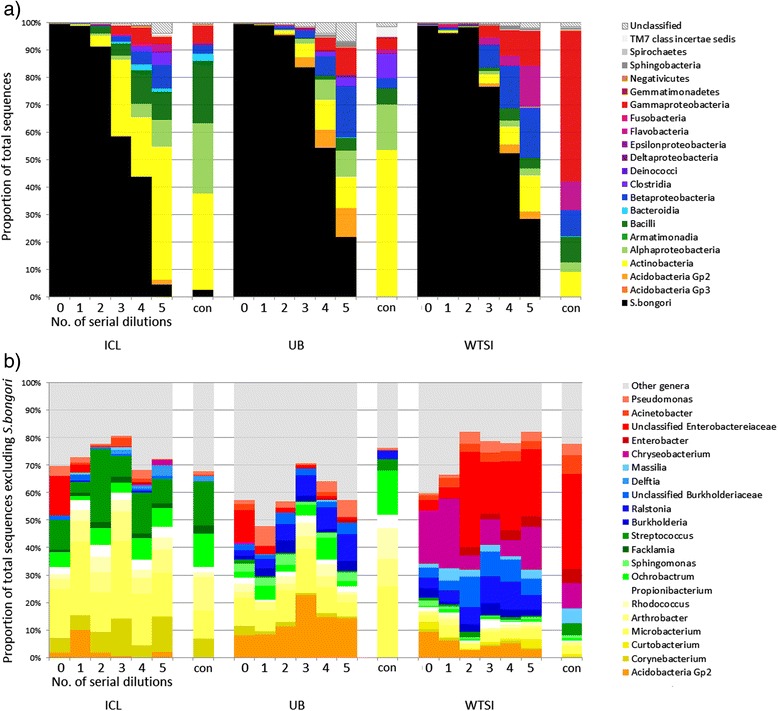
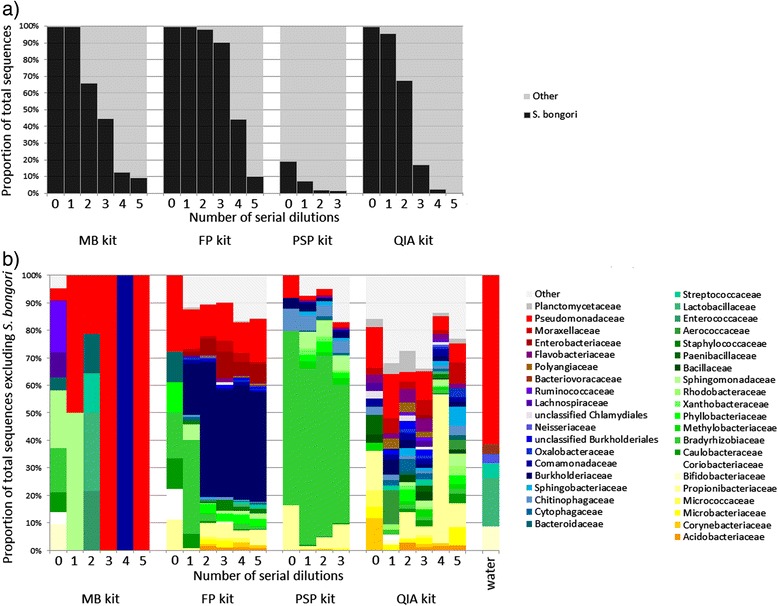
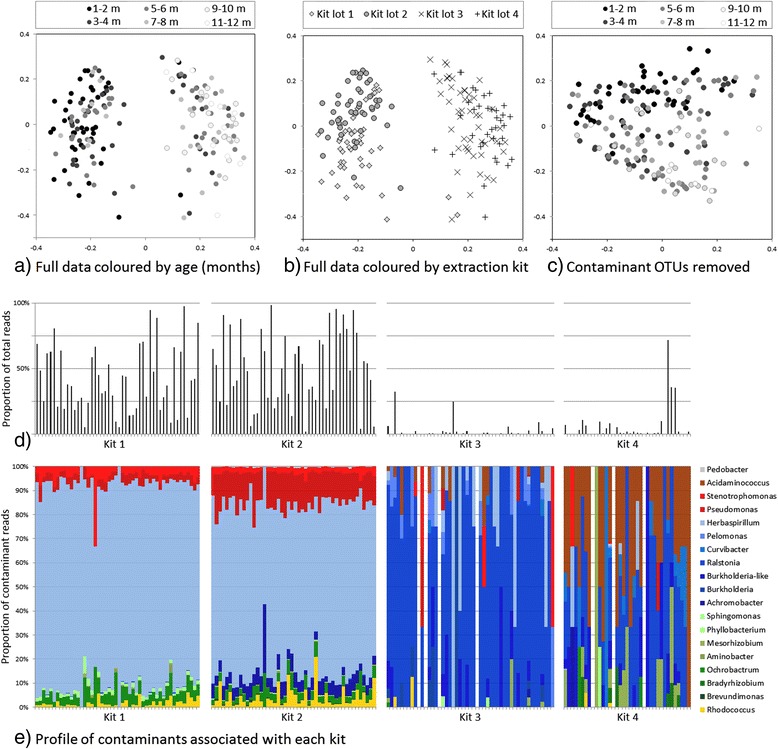
BACKGROUND: The study of microbial communities has been revolutionised in recent years by the widespread adoption of culture independent analytical techniques such as 16S rRNA gene sequencing and metagenomics. One potential confounder of these sequence-based approaches is the presence of contamination in DNA extraction kits and other laboratory reagents. RESULTS: In this study we demonstrate that contaminating DNA is ubiquitous in commonly used DNA extraction kits and other laboratory reagents, varies greatly in composition between different kits and kit batches, and that this contamination critically impacts results obtained from samples containing a low microbial biomass. Contamination impacts both PCR-based 16S rRNA gene surveys and shotgun metagenomics. We provide an extensive list of potential contaminating genera, and guidelines on how to mitigate the effects of contamination. CONCLUSIONS: These results suggest that caution should be advised when applying sequence-based techniques to the study of microbiota present in low biomass environments. Concurrent sequencing of negative control samples is strongly advised.
Overview
The claims and statistics of this paper haven’t been checked yet.
Free: it reads the open-access text and checks the first 5 claims that cite a source we can check. Create a free account to check every claim.
Integrity signals
Registry
Cites
Statistics
Figures
Verification
Claims the paper makes
The claims and statistics of this paper haven’t been checked yet.
Free: it reads the open-access text and checks the first 5 claims that cite a source we can check. Create a free account to check every claim.
Claims other papers make about this one
Each is checked against this paper’s own text: does it say what the citing paper says it does?
The source backs part of the claim, not all of it — or backs it for a different population, condition or comparison.
In the citing paper
“Because the tumor microbiome has a relatively low biomass, contamination of the tumor samples with bacteria or bacterial DNA can be problematic (30, 31).”
From The human tumor microbiome is composed of tumor type–specific intracellular bacteria (2020) · cites this paper as [30]
Experimental — accuracy not yet measuredThe source backs part of the claim, not all of it — or backs it for a different population, condition or comparison.
In the citing paper
“Salter and colleagues14 described such a list (n=94 genera) for DNA extraction kits in metagenomic experiments, including from QiaAmp kits that used the same silica membrane-based DNA purification as those employed in TCGA blood extractions, obtained across four years of “negative blank” sequencing and three high-throughput sequencing centers.”
From RETRACTED ARTICLE: Microbiome analyses of blood and tissues suggest cancer diagnostic approach (2020) · cites this paper as [14]
Experimental — accuracy not yet measuredThe source backs part of the claim, not all of it — or backs it for a different population, condition or comparison.
In the citing paper
“Although the issue of contamination is a common theme in microbiome analyses, 20 amplification cycles and cell-rich starting materials such as oral samples are predicted to be minimally affected [43].”
From Citizen science charts two major “stomatotypes” in the oral microbiome of adolescents and reveals links with habits and drinking water composition (2018) · cites this paper as [43]
Experimental — accuracy not yet measuredThe cited source says what the claim attributes to it.
In the citing paper
“External contaminants were identified and removed using sample analyte concentrations for all TCGA samples (n=17,625), as recently described in the literature16,38, and by using a “blacklist” of microbes identified from reagents in sequencing kits similar to those used in TCGA14.”
From RETRACTED ARTICLE: Microbiome analyses of blood and tissues suggest cancer diagnostic approach (2020) · cites this paper as [14]
The cited source says what the claim attributes to it.
In the citing paper
“Once bacterial DNA has been extracted, the quantity can be so low that contamination from environmental DNA invalidates the results154,155.”
From The microbiota of the respiratory tract: gatekeeper to respiratory health (2017) · cites this paper as [154]
4 more claims about this paper
Create a free account to see every claim other papers make about this one.
Self-check
Percentages, sums and reported differences re-computed from the paper’s own numbers.
The self-check needs the paper’s full text.
Citations
Cites
Trimmomatic: a flexible trimmer for Illumina sequence data
Bolger, A. M., Lohse, M., & Usadel, B. (2014) · Bioinformatics · doi:10.1093/bioinformatics/btu170 · Cited by 65,548 · cited 2×
“Bolger AM, Lohse M, Usadel B: Trimmomatic: a flexible trimmer for Illumina sequence data.”
MethodSchloss, P. D., Westcott, S. L., Ryabin, T., Hall, J. R., Hartmann, M., Hollister, E. B., Lesniewski, R. A., Oakley, B. B., Parks, D. H., Robinson, C. J., et al. (2009) · Applied and Environmental Microbiology · doi:10.1128/aem.01541-09 · Cited by 19,549 · cited 1×
“For the 16S rRNA gene profiling, data were processed using mothur [67].”
MethodLane, D. (1991) · Medical Entomology and Zoology · Cited by 11,719
Nucleic acid techniques in bacterial systematics
Stackebrandt, E. S., & Goodfellow, M. (1991) · Wiley eBooks · Cited by 9,460
Klindworth, A., Pruesse, E., Schweer, T., Peplies, J., Quast, C., Horn, M., & Glöckner, F. O. (2013) · Nucleic Acids Research · doi:10.1093/nar/gks808 · Cited by 8,850 · cited 1×
“Primers used were: S-D-Bact-0564-a-S- 15, 5′AYTGGGYDTAAAGNG and S-D-Bact-0785-b-A-18, 5TACNVGGGTATCTAATCC [65] generating a 253 bp amplicon.”
MethodKozich, J. J., Westcott, S. L., Baxter, N. T., Highlander, S. K., & Schloss, P. D. (2013) · Applied and Environmental Microbiology · doi:10.1128/aem.01043-13 · Cited by 7,112 · cited 3×
“For the nasopharyngeal microbiota study, the data were processed, cleaned and analysed using the mothur Schloss SOP [73] and randomly subsampled to 200 sequence reads per sample.”
MethodInfluentialReducing the Effects of PCR Amplification and Sequencing Artifacts on 16S rRNA-Based Studies
Schloss, P. D., Gevers, D., & Westcott, S. L. (2011) · PLoS ONE · doi:10.1371/journal.pone.0027310 · Cited by 2,112 · cited 2×
“For the nasopharyngeal microbiota study, the data were processed, cleaned and analysed using the mothur Schloss SOP [73] and randomly subsampled to 200 sequence reads per sample.”
MethodInfluentialDetermination of microbial diversity in environmental samples: pitfalls of PCR-based rRNA analysis
v. Wintzingerode, F. (1997) · FEMS Microbiology Reviews · doi:10.1016/s0168-6445(97)00057-0 · Cited by 2,063 · cited 1×
“sequencing technology, read length and depth and bioinformatics analysis techniques [1,2].”
MethodBayesian community-wide culture-independent microbial source tracking
Knights, D., Kuczynski, J., Charlson, E. S., Zaneveld, J., Mozer, M. C., Collman, R. G., Bushman, F. D., Knight, R., & Kelley, S. T. (2011) · Nature Methods · doi:10.1038/nmeth.1650 · Cited by 1,856
Removing Noise From Pyrosequenced Amplicons
Quince, C., Lanzen, A., Davenport, R. J., & Turnbaugh, P. J. (2011) · BMC Bioinformatics · doi:10.1186/1471-2105-12-38 · Cited by 1,592 · cited 2×
“5 percentile value, and chimera checking, which was performed with Perseus [69] instead of UCHIME.”
MethodInfluential
Cited by
Items 101–200 of 1,013
The prenatal gut microbiome: are we colonized with bacteria in utero ?
Walker, R. W., Clemente, J. C., Peter, I., & Loos, R. J. F. (2017) · Pediatric Obesity · doi:10.1111/ijpo.12217 · Cited by 293
Chakaroun, R., Massier, L., & Kovacs, P. (2020) · Nutrients · doi:10.3390/nu12041082 · Cited by 289
Microbiota of the indoor environment: a meta-analysis
Adams, R. I., Bateman, A. C., Bik, H. M., & Meadow, J. F. (2015) · Microbiome · doi:10.1186/s40168-015-0108-3 · Cited by 286
“This is increasingly recognized as a necessary component for low-biomass, high-throughput sequencing studies [41].”
BackgroundInfluentialChronic Meningitis Investigated via Metagenomic Next-Generation Sequencing
Wilson, M. R., O’Donovan, B. D., Gelfand, J. M., Sample, H. A., Chow, F. C., Betjemann, J. P., Shah, M. P., Richie, M. B., Gorman, M. P., Hajj-Ali, R. A., et al. (2018) · JAMA Neurology · doi:10.1001/jamaneurol.2018.0463 · Cited by 303
Toward Accurate and Quantitative Comparative Metagenomics
Nayfach, S., & Pollard, K. S. (2016) · Cell · doi:10.1016/j.cell.2016.08.007 · Cited by 292
“Variable amounts of DNA from the host (Ames et al., 2015), reagents (Tanner et al., 1998), and post-sampling environment (Salter et al., 2014) will be sequenced along with microbial DNA and can strongly influ-ence coverage and quantification of microbiota, especially in low biomass body sites and…”
BackgroundAllali, I., Arnold, J. W., Roach, J., Cadenas, M. B., Butz, N., Hassan, H. M., Koci, M., Ballou, A., Mendoza, M., Ali, R., et al. (2017) · BMC Microbiology · doi:10.1186/s12866-017-1101-8 · Cited by 298
“This is an important issue when analyzing low biomass samples, especially considering that DNA contamination of reagents and laboratory-grade water has been clearly demonstrated [65].”
BackgroundReintroducing mothur: 10 Years Later
Schloss, P. D. (2020) · Applied and Environmental Microbiology · doi:10.1128/aem.02343-19 · Cited by 285
Boers, S. A., Jansen, R., & Hays, J. P. (2019) · European Journal of Clinical Microbiology & Infectious Diseases · doi:10.1007/s10096-019-03520-3 · Cited by 283
Mayhew, D., Devos, N., Lambert, C., Brown, J. R., Clarke, S. C., Kim, V. L., Magid-Slav, M., Miller, B. E., Ostridge, K. K., Patel, R., et al. (2018) · Thorax · doi:10.1136/thoraxjnl-2017-210408 · Cited by 285
“32 While massively parallel 16S rRNA gene sequencing is a powerful tool in surveying bacterial populations, using a single hypervariable region for PCR limited the resolution of our bacterial analysis to the genus level.”
BackgroundWampach, L., Heintz-Buschart, A., Fritz, J. V., Ramiro-Garcia, J., Habier, J., Herold, M., Narayanasamy, S., Kaysen, A., Hogan, A. H., Bindl, L., et al. (2018) · Nature Communications · doi:10.1038/s41467-018-07631-x · Cited by 292
Schloss, P. D. (2018) · mBio · doi:10.1128/mbio.00525-18 · Cited by 280
Tyler, K. L. (2018) · New England Journal of Medicine · doi:10.1056/nejmra1708714 · Cited by 275
A faecal microbiota signature with high specificity for pancreatic cancer
Kartal, E., Schmidt, T. S. B., Molina-Montes, E., Rodríguez-Perales, S., Wirbel, J., Maistrenko, O. M., Akanni, W. A., Alashkar Alhamwe, B., Alves, R. J., Carrato, A., et al. (2022) · Gut · doi:10.1136/gutjnl-2021-324755 · Cited by 290
At the Root: Defining and Halting Progression of Early Chronic Obstructive Pulmonary Disease
Martinez, F. J., Han, M. K., Allinson, J. P., Barr, R. G., Boucher, R. C., Calverley, P. M. A., Celli, B. R., Christenson, S. A., Crystal, R. G., Fagerås, M., et al. (2018) · American Journal of Respiratory and Critical Care Medicine · doi:10.1164/rccm.201710-2028pp · Cited by 282
Evolutionary and Ecological Consequences of Gut Microbial Communities
Moran, N. A., Ochman, H., & Hammer, T. J. (2019) · Annual Review of Ecology, Evolution, and Systematics · doi:10.1146/annurev-ecolsys-110617-062453 · Cited by 275
“Contamination with DNA from reagents, human skin or other sources has also been a problem in some studies, especially for low biomass samples (Eisenhofer et al. 2019; Salter et al. 2014; Weiss et al. 2014).”
BackgroundMetagenomics-enabled microbial surveillance
Ko, K. K. K., Chng, K. R., & Nagarajan, N. (2022) · Nature Microbiology · doi:10.1038/s41564-022-01089-w · Cited by 279
McKnight, D. T., Huerlimann, R., Bower, D. S., Schwarzkopf, L., Alford, R. A., & Zenger, K. R. (2019) · Environmental DNA · doi:10.1002/edn3.11 · Cited by 266
“To address these issues, strategies such as using a single kit for all extractions or randomizing sam‐ ples across kits and PCR runs have been recommended (Salter et al., 2014; Weiss et al., 2014).”
BackgroundMethodInfluentialLack of detection of a human placenta microbiome in samples from preterm and term deliveries
Leiby, J. S., McCormick, K., Sherrill-Mix, S., Clarke, E. L., Kessler, L. R., Taylor, L. J., Hofstaedter, C. E., Roche, A. M., Mattei, L. M., Bittinger, K., et al. (2018) · Microbiome · doi:10.1186/s40168-018-0575-4 · Cited by 271
Castro-Nallar, E., Bendall, M. L., Pérez-Losada, M., Sabuncyan, S., Severance, E. G., Dickerson, F. B., Schroeder, J. R., Yolken, R. H., & Crandall, K. A. (2015) · PeerJ · doi:10.7717/peerj.1140 · Cited by 268
“, 2014) and in microbiome studies in particular (Lusk, 2014; Salter et al., 2014; Weiss et al., 2014) have been recently brought into attention as an alarming problem.”
BackgroundInheritance and Establishment of Gut Microbiota in Chickens
Ding, J., Dai, R., Yang, L., He, C., Xu, K., Liu, S., Zhao, W., Xiao, L., Luo, L., Zhang, Y., et al. (2017) · Frontiers in Microbiology · doi:10.3389/fmicb.2017.01967 · Cited by 269
“Also, there is possible that the microbes were from the environment, chemical reagent, or the process of sample collection (Salter et al., 2014).”
BackgroundVan Nevel, S., Koetzsch, S., Proctor, C. R., Besmer, M. D., Prest, E. I., Vrouwenvelder, J. S., Knezev, A., Boon, N., & Hammes, F. (2017) · Water Research · doi:10.1016/j.watres.2017.01.065 · Cited by 256
Wampach, L., Heintz-Buschart, A., Hogan, A., Muller, E. E. L., Narayanasamy, S., Laczny, C. C., Hugerth, L. W., Bindl, L., Bottu, J., Andersson, A. F., et al. (2017) · Frontiers in Microbiology · doi:10.3389/fmicb.2017.00738 · Cited by 270
“In order to exclude any biases by low-yield samples (Salter et al., 2014; Jervis-Bardy et al., 2015), a control fecal sample from a single healthy female adult individual was collected and preserved under the same conditions as described.”
MethodLung function and microbiota diversity in cystic fibrosis
Cuthbertson, L., Walker, A. W., Oliver, A. E., Rogers, G. B., Rivett, D. W., Hampton, T. H., Ashare, A., Elborn, J. S., De Soyza, A., Carroll, M. P., et al. (2020) · Microbiome · doi:10.1186/s40168-020-00810-3 · Cited by 251
Self-citationHigh‐Throughput Metagenomics for Identification of Pathogens in the Clinical Settings
Li, N., Cai, Q., Miao, Q., Song, Z., Fang, Y., & Hu, B. (2021) · Small Methods · doi:10.1002/smtd.202000792 · Cited by 255
Theis, K. R., Romero, R., Winters, A. D., Greenberg, J. M., Gomez-Lopez, N., Alhousseini, A., Bieda, J., Maymon, E., Pacora, P., Fettweis, J. M., et al. (2019) · American Journal of Obstetrics and Gynecology · doi:10.1016/j.ajog.2018.10.018 · Cited by 258
Host Response to the Lung Microbiome in Chronic Obstructive Pulmonary Disease
Sze, M. A., Dimitriu, P. A., Suzuki, M., McDonough, J. E., Campbell, J. D., Brothers, J. F., Erb-Downward, J. R., Huffnagle, G. B., Hayashi, S., Elliott, W. M., et al. (2015) · American Journal of Respiratory and Critical Care Medicine · doi:10.1164/rccm.201502-0223oc · Cited by 254
“A study by Salter and colleagues (33) has highlighted the fact that sample contamination is an important source of error in the analysis of sparse yet relatively diverse microbiomes, such as the lung.”
BackgroundLaboratory contamination over time during low‐biomass sample analysis
Weyrich, L. S., Farrer, A. G., Eisenhofer, R., Arriola, L. A., Young, J., Selway, C. A., Handsley‐Davis, M., Adler, C. J., Breen, J., & Cooper, A. (2019) · Molecular Ecology Resources · doi:10.1111/1755-0998.13011 · Cited by 252
Kohl, K. D., Brun, A., Magallanes, M., Brinkerhoff, J., Laspiur, A., Acosta, J. C., Caviedes‐Vidal, E., & Bordenstein, S. R. (2017) · Molecular Ecology · doi:10.1111/mec.13921 · Cited by 250
“…at 20 °C. Due to the extremely small size of faecal samples from offspring lizards, and the issues that small biomass samples can bring to interpreting microbial inventories (Salter et al. 2014), we pooled faecal samples over the first 3 weeks of life for all lizards within each group of siblings.”
BackgroundMethodInfluentialIdentification of Prosthetic Joint Infection Pathogens Using a Shotgun Metagenomics Approach
Thoendel, M. J., Jeraldo, P. R., Greenwood-Quaintance, K. E., Yao, J. Z., Chia, N., Hanssen, A. D., Abdel, M. P., & Patel, R. (2018) · Clinical Infectious Diseases · doi:10.1093/cid/ciy303 · Cited by 253
“This is further complicated by the common contaminants (eg, Acinetobacter, Streptococcus, Cutibacterium, and Staphylococcus species) also being among common causes of PJI [11, 13].”
BackgroundProspects and challenges of implementing DNA metabarcoding for high-throughput insect surveillance
Piper, A. M., Batovska, J., Cogan, N. O. I., Weiss, J., Cunningham, J. P., Rodoni, B. C., & Blacket, M. J. (2019) · GigaScience · doi:10.1093/gigascience/giz092 · Cited by 242
“…filter based on the read counts within negative and/or positive control libraries [35, 229], although choice of an appropriate threshold can be complicated by read depth differences between samples and preferential amplification of contaminants in low-biomass no-template control samples [175, 230].”
Does the Urinary Microbiome Play a Role in Urgency Urinary Incontinence and Its Severity?
Karstens, L., Asquith, M., Davin, S., Stauffer, P., Fair, D., Gregory, W. T., Rosenbaum, J. T., McWeeney, S. K., & Nardos, R. (2016) · Frontiers in Cellular and Infection Microbiology · doi:10.3389/fcimb.2016.00078 · Cited by 253
“This sample was sequenced, but had a low number of reads (∼57,000 reads), and was predominantly composed of a known contaminant (Deinococcus-Thermus; Salter et al., 2014).”
BackgroundIssues and current standards of controls in microbiome research
Hornung, B. V. H., Zwittink, R. D., & Kuijper, E. J. (2019) · FEMS Microbiology Ecology · doi:10.1093/femsec/fiz045 · Cited by 248
“It has become apparent that various DNA extraction kits contain their own unique microbiome, which may be indistinguishable from the real microbiome (e.g. often discussed (Bhatt et al. 2013) and mentioned in (Salter et al. 2014), as well as multiple examples in (de Goffau et al. 2018)).”
BackgroundDickson, R. P., Erb-Downward, J. R., Falkowski, N. R., Hunter, E. M., Ashley, S. L., & Huffnagle, G. B. (2018) · American Journal of Respiratory and Critical Care Medicine · doi:10.1164/rccm.201711-2180oc · Cited by 248
Paucibacterial Microbiome and Resident DNA Virome of the Healthy Conjunctiva
Doan, T., Akileswaran, L., Andersen, D., Johnson, B., Ko, N., Shrestha, A., Shestopalov, V., Lee, C. S., Lee, A. Y., & Van Gelder, R. N. (2016) · Investigative Opthalmology & Visual Science · doi:10.1167/iovs.16-19803 · Cited by 246
“Production of DNA-free reagents is challenging, and false-positive amplifications are common.(26,27) Quantitative PCR of the bacterial load in the conjunctiva showed that there is approximately 1 bacterium for every 20 human conjunctival epithelial cells collected on conjunctival swab.”
BackgroundLaboratory contamination over time during low‐biomass sample analysis
(2018) · doi:10.1101/460212 · Cited by 252
A microbial perspective of human developmental biology
Charbonneau, M. R., Blanton, L. V., DiGiulio, D. B., Relman, D. A., Lebrilla, C. B., Mills, D. A., & Gordon, J. I. (2016) · Nature · doi:10.1038/nature18845 · Cited by 250
Review article: the human intestinal virome in health and disease
Carding, S. R., Davis, N., & Hoyles, L. (2017) · Alimentary Pharmacology & Therapeutics · doi:10.1111/apt.14280 · Cited by 247
“Few studies of the human virome have considered the effects of contaminants in reagents and nucleic acid extraction kits on viral metagenomes (Table S1), though these are being increasingly recognised in prokaryote-focused studies.(26,69,70) Nucleases, proteases and polymerases used in studies are produced in protein…”
BackgroundEnrichment of beneficial bacteria in the skin microbiota of bats persisting with white-nose syndrome
Lemieux-Labonté, V., Simard, A., Willis, C. K. R., & Lapointe, F.-J. (2017) · Microbiome · doi:10.1186/s40168-017-0334-y · Cited by 246
Temporal Stability and Composition of the Ocular Surface Microbiome
Ozkan, J., Nielsen, S., Diez-Vives, C., Coroneo, M., Thomas, T., & Willcox, M. (2017) · Scientific Reports · doi:10.1038/s41598-017-10494-9 · Cited by 242
The microbiome in respiratory medicine: current challenges and future perspectives
Faner, R., Sibila, O., Agustí, A., Bernasconi, E., Chalmers, J. D., Huffnagle, G. B., Manichanh, C., Molyneaux, P. L., Paredes, R., Pérez Brocal, V., et al. (2017) · European Respiratory Journal · doi:10.1183/13993003.02086-2016 · Cited by 247
From Vineyard Soil to Wine Fermentation: Microbiome Approximations to Explain the “terroir” Concept
Belda, I., Zarraonaindia, I., Perisin, M., Palacios, A., & Acedo, A. (2017) · Frontiers in Microbiology · doi:10.3389/fmicb.2017.00821 · Cited by 218
“In these cases, the low amount of starting material may be effectively swamped by the contaminating DNA and generate misleading results (Salter et al., 2014).”
BackgroundPerron, G. G., Whyte, L., Turnbaugh, P. J., Goordial, J., Hanage, W. P., Dantas, G., & Desai, M. M. (2015) · PLOS ONE · doi:10.1371/journal.pone.0069533 · Cited by 229
“coli strain MegaX DH10B (Invitrogen) to screen for the possibility of exogenous antibiotic resistance gene contamination during genome extraction or library constructions [41,42].”
BackgroundIdentifying biases and their potential solutions in human microbiome studies
Nearing, J. T., Comeau, A. M., & Langille, M. G. I. (2021) · Microbiome · doi:10.1186/s40168-021-01059-0 · Cited by 240
“These studies have revealed that while lab reagents are DNase free, they are often not DNA free [61].”
BackgroundChecinska, A., Probst, A. J., Vaishampayan, P., White, J. R., Kumar, D., Stepanov, V. G., Fox, G. E., Nilsson, H. R., Pierson, D. L., Perry, J., et al. (2015) · Microbiome · doi:10.1186/s40168-015-0116-3 · Cited by 236
“The NGS technology resulting in information on millions of base pairs might have included genetic information from dead cells including contaminant DNA associated with the sample processing reagents [30, 31].”
BackgroundDiagnosis of Sepsis with Cell-free DNA by Next-Generation Sequencing Technology in ICU Patients
Long, Y., Zhang, Y., Gong, Y., Sun, R., Su, L., Lin, X., Shen, A., Zhou, J., Caiji, Z., Wang, X., et al. (2016) · Archives of Medical Research · doi:10.1016/j.arcmed.2016.08.004 · Cited by 236
“(23) demonstrated that contaminating DNA is ubiquitous in commonly used DNA extraction kits and other laboratory reagents.”
BackgroundType 2 diabetes influences bacterial tissue compartmentalisation in human obesity
Anhê, F. F., Jensen, B. A. H., Varin, T. V., Servant, F., Van Blerk, S., Richard, D., Marceau, S., Surette, M., Biertho, L., Lelouvier, B., et al. (2020) · Nature Metabolism · doi:10.1038/s42255-020-0178-9 · Cited by 227
Analysis of soil microbial communities based on amplicon sequencing of marker genes
Schöler, A., Jacquiod, S., Vestergaard, G., Schulz, S., & Schloter, M. (2017) · Biology and Fertility of Soils · doi:10.1007/s00374-017-1205-1 · Cited by 229
Winand, R., Bogaerts, B., Hoffman, S., Lefevre, L., Delvoye, M., Van Braekel, J., Fu, Q., Roosens, N. H., De Keersmaecker, S. C., & Vanneste, K. (2019) · International Journal of Molecular Sciences · doi:10.3390/ijms21010298 · Cited by 218
“This is a known contaminant found in laboratory reagents [66], suggesting the potential existence of ONT workflow contaminants that currently are not well-documented due to the novelty of the technology.”
BackgroundA pan-cancer analysis of the microbiome in metastatic cancer
Battaglia, T. W., Mimpen, I. L., Traets, J. J. H., van Hoeck, A., Zeverijn, L. J., Geurts, B. S., de Wit, G. F., Noë, M., Hofland, I., Vos, J. L., et al. (2024) · Cell · doi:10.1016/j.cell.2024.03.021 · Cited by 218
Performing Skin Microbiome Research: A Method to the Madness
Kong, H. H., Andersson, B., Clavel, T., Common, J. E., Jackson, S. A., Olson, N. D., Segre, J. A., & Traidl-Hoffmann, C. (2017) · Journal of Investigative Dermatology · doi:10.1016/j.jid.2016.10.033 · Cited by 227
“, 2010), controls and contamination sources (Salter et al., 2014), sequencing biases (Meisel et al.”
BackgroundInfluentialAutomation in the Life Science Research Laboratory
Holland, I., & Davies, J. A. (2020) · Frontiers in Bioengineering and Biotechnology · doi:10.3389/fbioe.2020.571777 · Cited by 200
“Finally, there are those laboratory protocols that are susceptible to contamination that can arise from either from the researchers themselves (Salter et al., 2014) or through increased exposure to environmental contaminants due to ponderous manual handling operations (Greub et al.”
BackgroundFrom Benchtop to Desktop: Important Considerations when Designing Amplicon Sequencing Workflows
Murray, D. C., Coghlan, M. L., & Bunce, M. (2015) · PLOS ONE · doi:10.1371/journal.pone.0124671 · Cited by 224
Changes in the Eye Microbiota Associated with Contact Lens Wearing
Shin, H., Price, K., Albert, L., Dodick, J., Park, L., & Dominguez-Bello, M. G. (2016) · mBio · doi:10.1128/mbio.00198-16 · Cited by 226
“To rule out and control for possible reagent contamination, reagents for DNA extraction and for PCR amplification were also sequenced as controls (30).”
The intratumor mycobiome promotes lung cancer progression via myeloid-derived suppressor cells
Liu, N.-N., Yi, C.-X., Wei, L.-Q., Zhou, J.-A., Jiang, T., Hu, C.-C., Wang, L., Wang, Y.-Y., Zou, Y., Zhao, Y.-K., et al. (2023) · Cancer Cell · doi:10.1016/j.ccell.2023.08.012 · Cited by 223
The composition of the perinatal intestinal microbiota in cattle
Alipour, M. J., Jalanka, J., Pessa-Morikawa, T., Kokkonen, T., Satokari, R., Hynönen, U., Iivanainen, A., & Niku, M. (2018) · Scientific Reports · doi:10.1038/s41598-018-28733-y · Cited by 216
Enrichment of oral microbiota in early cystic precursors to invasive pancreatic cancer
Gaiser, R. A., Halimi, A., Alkharaan, H., Lu, L., Davanian, H., Healy, K., Hugerth, L. W., Ateeb, Z., Valente, R., Fernández Moro, C., et al. (2019) · Gut · doi:10.1136/gutjnl-2018-317458 · Cited by 227
Body size determines soil community assembly in a tropical forest
Zinger, L., Taberlet, P., Schimann, H., Bonin, A., Boyer, F., De Barba, M., Gaucher, P., Gielly, L., Giguet‐Covex, C., Iribar, A., et al. (2019) · Molecular Ecology · doi:10.1111/mec.14919 · Cited by 219
Gray, J., Oehrle, K., Worthen, G., Alenghat, T., Whitsett, J., & Deshmukh, H. (2017) · Science Translational Medicine · doi:10.1126/scitranslmed.aaf9412 · Cited by 215
“The reagents used for DNA extraction, PCR, and sequencing reaction are a common source of contamination in microbiome sequencing studies (87).”
Analyses of Intestinal Microbiota: Culture versus Sequencing: Figure 1
Hiergeist, A., Gläsner, J., Reischl, U., & Gessner, A. (2015) · ILAR Journal · doi:10.1093/ilar/ilv017 · Cited by 213
“considerable burden for both 16S rRNA gene sequencing and WMS surveys (Salter et al. 2014).”
BackgroundEmerging role of bacterial extracellular vesicles in cancer
Chronopoulos, A., & Kalluri, R. (2020) · Oncogene · doi:10.1038/s41388-020-01509-3 · Cited by 213
Maternal Microbiota, Early Life Colonization and Breast Milk Drive Immune Development in the Newborn
Kalbermatter, C., Fernandez Trigo, N., Christensen, S., & Ganal-Vonarburg, S. C. (2021) · Frontiers in Immunology · doi:10.3389/fimmu.2021.683022 · Cited by 211
“Over time, it became more and more obvious that contamination issues (66, 67) and the Test-Kit’s own “microbiome”, the so-called “kitome” (68), represent big challenges in the search for a microbiota inhabiting the placenta.”
BackgroundAn integrated tumor, immune and microbiome atlas of colon cancer
Roelands, J., Kuppen, P. J. K., Ahmed, E. I., Mall, R., Masoodi, T., Singh, P., Monaco, G., Raynaud, C., de Miranda, N. F. C. C., Ferraro, L., et al. (2023) · Nature Medicine · doi:10.1038/s41591-023-02324-5 · Cited by 213
Complementary seminovaginal microbiome in couples
Mändar, R., Punab, M., Borovkova, N., Lapp, E., Kiiker, R., Korrovits, P., Metspalu, A., Krjutškov, K., Nõlvak, H., Preem, J.-K., et al. (2015) · Research in Microbiology · doi:10.1016/j.resmic.2015.03.009 · Cited by 221
Einarsson, G. G., Comer, D. M., McIlreavey, L., Parkhill, J., Ennis, M., Tunney, M. M., & Elborn, J. S. (2016) · Thorax · doi:10.1136/thoraxjnl-2015-207235 · Cited by 213
“Categorical variables, such as gender and inhaled steroid usage, were compared using the Pearson ’ s χ 2 test with Yates ’ continuity correction.”
MethodSelf-citationThe lung microbiota in early rheumatoid arthritis and autoimmunity
Scher, J. U., Joshua, V., Artacho, A., Abdollahi-Roodsaz, S., Öckinger, J., Kullberg, S., Sköld, M., Eklund, A., Grunewald, J., Clemente, J. C., et al. (2016) · Microbiome · doi:10.1186/s40168-016-0206-x · Cited by 208
“This controls may also be of relevance for microbiome studies with low biomass samples [36, 37].”
Microbial survival strategies in ancient permafrost: insights from metagenomics
Mackelprang, R., Burkert, A., Haw, M., Mahendrarajah, T., Conaway, C. H., Douglas, T. A., & Waldrop, M. P. (2017) · The ISME Journal · doi:10.1038/ismej.2017.93 · Cited by 208
“Contaminates commonly found in DNA extraction and amplification kits were also removed from further analysis (Salter et al., 2014) (Supplementary Methods).”
Gottschick, C., Deng, Z.-L., Vital, M., Masur, C., Abels, C., Pieper, D. H., & Wagner-Döbler, I. (2017) · Microbiome · doi:10.1186/s40168-017-0305-3 · Cited by 215
“Sequencing depth and DNA concentration after extraction of those samples with high Chitinophagaceae abundance were analysed due to the risk of it being a contaminant [29].”
BackgroundThe lung microbiome in health and disease
Moffatt, M. F., & Cookson, W. O. (2017) · Clinical Medicine · doi:10.7861/clinmedicine.17-6-525 · Cited by 204
Self-citationGraf, E. H., Simmon, K. E., Tardif, K. D., Hymas, W., Flygare, S., Eilbeck, K., Yandell, M., & Schlaberg, R. (2016) · Journal of Clinical Microbiology · doi:10.1128/jcm.03060-15 · Cited by 204
“Contamination from reagents employed during extraction, library preparation, and sequencing has been previously described (27).”
MethodThe microbiome in prostate inflammation and prostate cancer
Porter, C. M., Shrestha, E., Peiffer, L. B., & Sfanos, K. S. (2018) · Prostate Cancer and Prostatic Diseases · doi:10.1038/s41391-018-0041-1 · Cited by 207
Drinking water microbiology — from measurement to management
Proctor, C. R., & Hammes, F. (2015) · Current Opinion in Biotechnology · doi:10.1016/j.copbio.2014.12.014 · Cited by 199
Oral and nasal microbiota in Parkinson's disease
Pereira, P. A. B., Aho, V. T. E., Paulin, L., Pekkonen, E., Auvinen, P., & Scheperjans, F. (2017) · Parkinsonism & Related Disorders · doi:10.1016/j.parkreldis.2017.02.026 · Cited by 204
“Similar phenomena related to contamination and the amount of template DNA in PCR have been reported previously [30].”
BackgroundIdentification and evaluation of the microbiome in the female and male reproductive tracts
Koedooder, R., Mackens, S., Budding, A., Fares, D., Blockeel, C., Laven, J., & Schoenmakers, S. (2019) · Human Reproduction Update · doi:10.1093/humupd/dmy048 · Cited by 204
Effects of Rare Microbiome Taxa Filtering on Statistical Analysis
Cao, Q., Sun, X., Rajesh, K., Chalasani, N., Gelow, K., Katz, B., Shah, V. H., Sanyal, A. J., & Smirnova, E. (2021) · Frontiers in Microbiology · doi:10.3389/fmicb.2020.607325 · Cited by 198
“Davis et al. (2018) addressed this problem by introducing the R package decontam that identifies contaminants by: (1) inversely correlating taxa frequencies with sample DNA concentration and (2) using the prevalence of sequenced negative controls (Salter et al., 2014).”
BackgroundMethodInfluentialParsons, B. N., Ijaz, U. Z., D’Amore, R., Burkitt, M. D., Eccles, R., Lenzi, L., Duckworth, C. A., Moore, A. R., Tiszlavicz, L., Varro, A., et al. (2017) · PLOS Pathogens · doi:10.1371/journal.ppat.1006653 · Cited by 210
Kyono, K., Hashimoto, T., Nagai, Y., & Sakuraba, Y. (2018) · Reproductive Medicine and Biology · doi:10.1002/rmb2.12105 · Cited by 202
Next-Generation Sequencing for Infectious Disease Diagnosis and Management
Lefterova, M. I., Suarez, C. J., Banaei, N., & Pinsky, B. A. (2015) · The Journal of Molecular Diagnostics · doi:10.1016/j.jmoldx.2015.07.004 · Cited by 207
Library preparation for next generation sequencing: A review of automation strategies
Hess, J. F., Kohl, T. A., Kotrová, M., Rönsch, K., Paprotka, T., Mohr, V., Hutzenlaub, T., Brüggemann, M., Zengerle, R., Niemann, S., et al. (2020) · Biotechnology Advances · doi:10.1016/j.biotechadv.2020.107537 · Cited by 196
Hatzenpichler, R., Connon, S. A., Goudeau, D., Malmstrom, R. R., Woyke, T., & Orphan, V. J. (2016) · Proceedings of the National Academy of Sciences · doi:10.1073/pnas.1603757113 · Cited by 202
“Known contaminants in PCR reagents as determined by the analysis of negative and positive controls run with each MiSeq set were also removed (95).”
Resilience of the oral microbiome
Wade, W. G. (2021) · Periodontology 2000 · doi:10.1111/prd.12365 · Cited by 205
Zhao, L., Rosario, K., Breitbart, M., & Duffy, S. (2019) · Advances in Virus Research · doi:10.1016/bs.aivir.2018.10.001 · Cited by 202
Towards the biogeography of prokaryotic genes
Coelho, L. P., Alves, R., del Río, Á. R., Myers, P. N., Cantalapiedra, C. P., Giner-Lamia, J., Schmidt, T. S., Mende, D. R., Orakov, A., Letunic, I., et al. (2022) · Nature · doi:10.1038/s41586-021-04233-4 · Cited by 215
The lung microbiome: progress and promise
Whiteside, S. A., McGinniss, J. E., & Collman, R. G. (2021) · Journal of Clinical Investigation · doi:10.1172/jci150473 · Cited by 183
“A point of some controversy is whether taxa suspected as contaminants should be removed before analysis (8, 45).”
BackgroundGood, M., Sodhi, C. P., Yamaguchi, Y., Jia, H., Lu, P., Fulton, W. B., Martin, L. Y., Prindle, T., Nino, D. F., Zhou, Q., et al. (2016) · British Journal of Nutrition · doi:10.1017/s0007114516002944 · Cited by 191
Fetal meconium does not have a detectable microbiota before birth
Kennedy, K. M., Gerlach, M. J., Adam, T., Heimesaat, M. M., Rossi, L., Surette, M. G., Sloboda, D. M., & Braun, T. (2021) · Nature Microbiology · doi:10.1038/s41564-021-00904-0 · Cited by 188
The genomic landscape of 2,023 colorectal cancers
Cornish, A. J., Gruber, A. J., Kinnersley, B., Chubb, D., Frangou, A., Caravagna, G., Noyvert, B., Lakatos, E., Wood, H. M., Thorn, S., et al. (2024) · Nature · doi:10.1038/s41586-024-07747-9 · Cited by 180
“To mitigate the effects of species with mixed biological and contaminant components 130 , downstream steps were adjusted for NHS Hospital Trust where possible (see below) as the processing laboratory was a plausible source of contamination.”
The seminal microbiome in health and disease
Altmäe, S., Franasiak, J. M., & Mändar, R. (2019) · Nature Reviews Urology · doi:10.1038/s41585-019-0250-y · Cited by 195
Diversity and dynamism of IgA−microbiota interactions
Huus, K. E., Petersen, C., & Finlay, B. B. (2021) · Nature Reviews Immunology · doi:10.1038/s41577-021-00506-1 · Cited by 198
Methods in Lung Microbiome Research
Carney, S. M., Clemente, J. C., Cox, M. J., Dickson, R. P., Huang, Y. J., Kitsios, G. D., Kloepfer, K. M., Leung, J. M., LeVan, T. D., Molyneaux, P. L., et al. (2020) · American Journal of Respiratory Cell and Molecular Biology · doi:10.1165/rcmb.2019-0273tr · Cited by 184
“control for the high risk of contamination due to low biomass in samples (25), which was discussed in more detail previously”
BackgroundSelf-citationMolina, N., Sola-Leyva, A., Saez-Lara, M., Plaza-Diaz, J., Tubić-Pavlović, A., Romero, B., Clavero, A., Mozas-Moreno, J., Fontes, J., & Altmäe, S. (2020) · Biomolecules · doi:10.3390/biom10040593 · Cited by 187
“High risk of contamination: laboratory and reagent contamination can critically impact sequence-based microbiome analyses [81–84]; negative controls consisting of blanks are recommended [81,82,85,86].”
BackgroundKesy, K., Oberbeckmann, S., Kreikemeyer, B., & Labrenz, M. (2019) · Frontiers in Microbiology · doi:10.3389/fmicb.2019.01665 · Cited by 184
“Blank extractions were carried out after each extraction kit package had been used, to account for possible contamination during the extraction process (Salter et al., 2014).”
MethodGweon, H. S., Bowes, M. J., Moorhouse, H. L., Oliver, A. E., Bailey, M. J., Acreman, M. C., & Read, D. S. (2021) · Environmental Microbiology · doi:10.1111/1462-2920.15337 · Cited by 196
“Polymerase chain reaction (PCR) negative controls consisting of extraction and PCR blanks were also processed to remove likely potential contaminants in subsequent data processing (Salter et al., 2014).”
Lluch, J., Servant, F., Païssé, S., Valle, C., Valière, S., Kuchly, C., Vilchez, G., Donnadieu, C., Courtney, M., Burcelin, R., et al. (2015) · PLOS ONE · doi:10.1371/journal.pone.0142334 · Cited by 190
16S rRNA Amplicon Sequencing for Epidemiological Surveys of Bacteria in Wildlife
Galan, M., Razzauti, M., Bard, E., Bernard, M., Brouat, C., Charbonnel, N., Dehne-Garcia, A., Loiseau, A., Tatard, C., Tamisier, L., et al. (2016) · mSystems · doi:10.1128/msystems.00032-16 · Cited by 185
“The inclusion of negative controls of PCR and DNA extraction in studies based on massive sequencing of 16S rRNA amplicons had long been overlooked until a report published by Salter in 2014 (23) demonstrated the high pollution of laboratory reagents by bacterial DNA.”
InfluentialLi, P.-E., Lo, C.-C., Anderson, J. J., Davenport, K. W., Bishop-Lilly, K. A., Xu, Y., Ahmed, S., Feng, S., Mokashi, V. P., & Chain, P. S. G. (2017) · Nucleic Acids Research · doi:10.1093/nar/gkw1027 · Cited by 194
“It is unknown whether these bacterial organisms were actually present within the patient or alternatively their nucleic acids were introduced via laboratory reagents (51) or were sample carryover from a prior sequencing run.”
BackgroundDoes the endometrial cavity have a molecular microbial signature?
Winters, A. D., Romero, R., Gervasi, M. T., Gomez-Lopez, N., Tran, M. R., Garcia-Flores, V., Pacora, P., Jung, E., Hassan, S. S., Hsu, C.-D., et al. (2019) · Scientific Reports · doi:10.1038/s41598-019-46173-0 · Cited by 188
Hansen, R., Scott, K. P., Khan, S., Martin, J. C., Berry, S. H., Stevenson, M., Okpapi, A., Munro, M. J., & Hold, G. L. (2015) · PLOS ONE · doi:10.1371/journal.pone.0133320 · Cited by 183
“Additionally, any DNAbased analysis of samples containing low levels of bacteria has to be carefully assessed for the possibility of contamination during processing confounding the results [8].”
Early-life disruption of amphibian microbiota decreases later-life resistance to parasites
Knutie, S. A., Wilkinson, C. L., Kohl, K. D., & Rohr, J. R. (2017) · Nature Communications · doi:10.1038/s41467-017-00119-0 · Cited by 191
Scientific Utopia III: Crowdsourcing Science
Uhlmann, E. L., Ebersole, C. R., Chartier, C. R., Errington, T. M., Kidwell, M. C., Lai, C. K., McCarthy, R. J., Riegelman, A., Silberzahn, R., & Nosek, B. A. (2019) · Perspectives on Psychological Science · doi:10.1177/1745691619850561 · Cited by 174
“…scientists and small teams is already known to be prone to error (Bakker & Wicherts, 2011; Berle & Starcevic, 2007; Garcia-Berthou & Alcaraz, 2004; Salter et al., 2014; Westra et al., 2011), and the quality-quantity trade-off that can accompany scaling up is potentially offset by the numerous…”
BackgroundJervis-Bardy, J., Leong, L. E. X., Marri, S., Smith, R. J., Choo, J. M., Smith-Vaughan, H. C., Nosworthy, E., Morris, P. S., O’Leary, S., Rogers, G. B., et al. (2015) · Microbiome · doi:10.1186/s40168-015-0083-8 · Cited by 192
“Such a spurious signal can substantially distort community profiles from samples with low bacterial load [4-6].”
BackgroundInfluential
Metadata
- Authors
- Salter, S. J., Cox, M. J., Turek, E. M., Calus, S. T., Cookson, W. O., Moffatt, M. F., Turner, P., Parkhill, J., Loman, N. J., & Walker, A. W.
- Affiliations
- Wellcome Sanger Institute (GB)
- Imperial College London (GB)
- University of Birmingham (GB)
- Mahidol University (TH)
- University of Aberdeen (GB)
- Corresponding author
- Salter, Susannah J
- Walker, Alan W
- ORCID
- Venue
- BMC Biology
- Published
- 2014-11-12
- Volume
- 12
- Issue
- 1
- Pages
- 87-87
- ISSN
- 1741-7007 (ISSN-L)
- PMC
- PMC4228153
- OpenAlex
- W2170486072
- Cited by
- 3,463
- References
- 76
- Citations by year
- 2026: 351 · 2025: 261 · 2024: 265 · 2023: 292 · 2022: 299 · 2021: 394 · 2020: 357 · 2019: 351 · 2018: 319 · 2017: 251 · 2016: 211 · 2015: 98 · 2014: 10
- FWCI
- 77.85
- Type
- journal article
- Language
- en
- Open access
- gold
- doi.org
- Locations
- BMC Biology (publishedVersion, cc-by)
- bioRxiv (Cold Spring Harbor Laboratory) (acceptedVersion, cc-by)
- Europe PMC (PubMed Central) (publishedVersion, cc-by)
- PubMed Central (publishedVersion, cc-by)
- PubMed (publishedVersion)
- Aberdeen University Research Archive (Aberdeen University) (submittedVersion)
- University of Birmingham Research Portal (University of Birmingham) (submittedVersion, cc-by)
- University of Birmingham Research Portal (University of Birmingham) (submittedVersion, other-oa)
- Spiral (Imperial College London) (submittedVersion, cc-by)
- Apollo (University of Cambridge) (submittedVersion, cc-by)
- Apollo (cc-by)
- Greater South Information System
- Funders
- Wellcome Trust (097117, 083735, 083735/Z/07/Z, grant number 098051, 098051, 096964/Z/11/Z, 083735/Z/07)
- Rural and Environment Science and Analytical Services Division
- Scottish Government
- National Institute for Health and Care Research
- University of Aberdeen
- Medical Research Council (098051, MR/J014370/1, MR/L015080/1)
- Topics
- Life Sciences › Biochemistry, Genetics and Molecular Biology › Molecular Biology › Genomics and Phylogenetic Studies
- Life Sciences › Biochemistry, Genetics and Molecular Biology › Molecular Biology › Gut microbiota and health
- Physical Sciences › Environmental Science › Ecology › Microbial Community Ecology and Physiology
- Keywords
- laboratory contamination, reagent contamination, DNA extraction kits, microbiome analysis, 16S rRNA gene sequencing, shotgun metagenomics, contamination reduction
- MeSH terms
- Indicators and Reagents, Laboratories, RNA, Ribosomal, 16S, Salmonella, Polymerase Chain Reaction, Sequence Analysis, DNA, Metagenomics, DNA Contamination, Microbiota
About these checks
Registry, retraction, Cites and statistics results are computed, not judged, with one exception: a printed reference that no index lists is read once by a model before it counts as a citation error. Claims are extracted by a model and kept only when their quote appears verbatim in the text; each cited source is then checked, with a model’s help, for whether it says what the claim relies on. Those verdicts can be wrong — read the claim’s quote and the cited source before relying on one.
Statistics and arithmetic are recomputed, not judged.
Confidence bands are shown only for fields calibrated on our annotated test set. None is calibrated yet, so no band is shown.
What counts as a claim ›How we measure confidence ›How we check this ›
Are you an author, or do you see a problem with this page? Request a review
Data sources
Bibliographic data: Semantic Scholar, OpenAlex, Crossref.
Contains information from the Semantic Scholar Academic Graph Datasets, made available under the ODC Attribution License (ODC-BY 1.0).
Semantic Scholar’s data is described in: Kinney, R., et al. (2023). The Semantic Scholar Open Data Platform. arXiv:2301.10140.
