

Immune related adverse events associated with anti-CTLA-4 antibodies: systematic review and meta-analysis
Open accessThe DOI matches its Crossref record; 142 of the 142 references it cites were found in a registry or an index.
Abstract
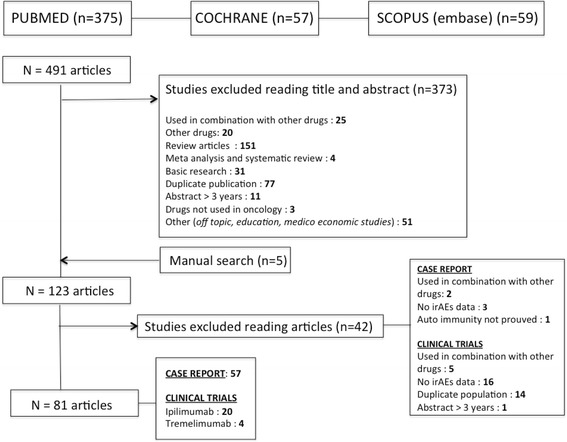
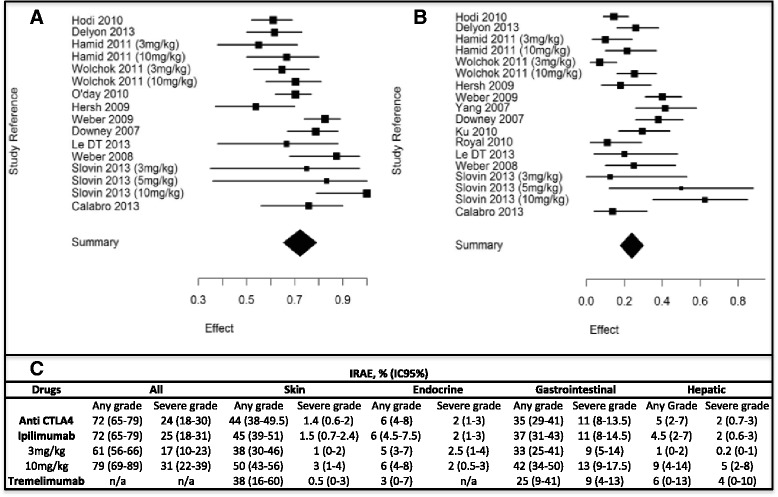
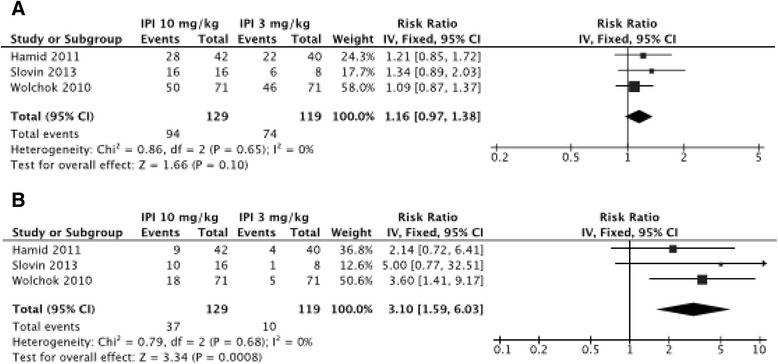
BACKGROUND: Targeting CTLA-4 is a recent strategic approach in cancer control: blocking CTLA-4 enhances an antitumor immunity by promoting T-cell activation and cytotoxic T-lymphocyte proliferation. This induction of a tolerance break against the tumor may be responsible for immune-related adverse events (irAEs). Our objective was to assess the incidence and nature of irAEs in oncologic patients receiving anti-CTLA-4 antibodies (ipilimumab and tremelimumab). METHODS: A systematic search of literature up to February 2014 was performed in MEDLINE, EMBASE, and Cochrane databases to identify relevant articles. Paired reviewers independently selected articles for inclusion and extracted data. Pooled incidence was calculated using R(©), package meta. RESULTS: Overall, 81 articles were included in the study, with a total of 1265 patients from 22 clinical trials included in the meta-analysis. Described irAEs consisted of skin lesions (rash, pruritus, and vitiligo), colitis, and less frequently hepatitis, hypophysitis, thyroiditis, and some rare events such as sarcoidosis, uveitis, Guillain-Barré syndrome, immune-mediated cytopenia and polymyalgia rheumatic/Horton. The overall incidence of all-grade irAEs was 72 % (95 % CI, 65-79 %). The overall incidence of high-grade irAEs was 24 % (95 % CI, 18-30 %). The risk of developing irAEs was dependent of dosage, with incidence of all-grade irAEs being evaluated to 61 % (95 % CI, 56-66 %) for ipilimumab 3 mg/kg and 79 % (95 % CI, 69-89 %) for ipilimumab 10 mg/kg. Death due to irAEs occurred in 0.86 % of patients. The median time of onset of irAEs was about 10 weeks (IQR, 6-12) after the onset of treatment, corresponding with the first three cycles but varied according to the organ system involved. Such immune activation could also be indicative for tumor-specific T-cell activation and irAE occurrence was associated with clinical response to CTLA-4 blocking in 60 % of patients. CONCLUSION: The price of potential long-term survival to metastatic tumors is an atypical immune toxicity, reflecting the mechanism of action of anti-CTLA-4 antibodies. A better knowledge of these irAEs and its management in a multidisciplinary approach will help to reduce morbidity and therapy interruptions.
Overview
The claims and statistics of this paper haven’t been checked yet.
Free: it reads the open-access text and checks the first 5 claims that cite a source we can check. Create a free account to check every claim.
Integrity signals
Registry
Cites
Statistics
Figures
Verification
Claims the paper makes
The claims and statistics of this paper haven’t been checked yet.
Free: it reads the open-access text and checks the first 5 claims that cite a source we can check. Create a free account to check every claim.
Claims other papers make about this one
Each is checked against this paper’s own text: does it say what the citing paper says it does?
The source backs part of the claim, not all of it — or backs it for a different population, condition or comparison.
In the citing paper
“ICI-associated colitis is routinely treated with immunosuppressive therapy, including corticosteroids and/or agents targeting tumor necrosis factor alpha (TNF-alpha), all of which have significant side effects.”
From Fecal microbiota transplantation for refractory immune checkpoint inhibitor-associated colitis (2018) · cites this paper as [5]
Experimental — accuracy not yet measuredThe source backs part of the claim, not all of it — or backs it for a different population, condition or comparison.
In the citing paper
“Neurologic immune-related adverse events from immune checkpoint inhibitors include autonomic neuropathy and can present with severe GI dysmotility (Bertrand et al., 2015).”
From Autonomic nervous system and gastrointestinal manifestations with an emphasis on gastric dysfunction (2026) · cites this paper as Bertrand et al., 2015
Experimental — accuracy not yet measured
Self-check
Percentages, sums and reported differences re-computed from the paper’s own numbers.
The self-check needs the paper’s full text.
Citations
Cites
The Cochrane Collaboration's tool for assessing risk of bias in randomised trials
Higgins, J. P. T., Altman, D. G., Gotzsche, P. C., Juni, P., Moher, D., Oxman, A. D., Savovic, J., Schulz, K. F., Weeks, L., Sterne, J. A. C., et al. (2011) · BMJ · doi:10.1136/bmj.d5928 · Cited by 33,817
PD-1 and PD-L1 Immune Checkpoint Blockade to Treat Breast Cancer
Hartkopf, A. D., Taran, F.-A., Wallwiener, M., Walter, C. B., Krämer, B., Grischke, E.-M., & Brucker, S. Y. (2016) · Breast Care · doi:10.1159/000453569 · Cited by 30,845
Dermyshi, E., Wang, Y., Yan, C., Hong, W., Qiu, G., Gong, X., & Zhang, T. (2017) · Neonatology · doi:10.1159/000454668 · Cited by 24,451
Adverse Renal Effects of Immune Checkpoint Inhibitors: A Narrative Review
Wanchoo, R., Karam, S., Uppal, N. N., Barta, V. S., Deray, G., Devoe, C., Launay-Vacher, V., Jhaveri, K. D., & on behalf of Cancer and Kidney International Network Workgroup on Immune Checkpoint Inhibitors (2017) · American Journal of Nephrology · doi:10.1159/000455014 · Cited by 15,256
Improved Survival with Ipilimumab in Patients with Metastatic Melanoma
Hodi, F. S., O'Day, S. J., McDermott, D. F., Weber, R. W., Sosman, J. A., Haanen, J. B., Gonzalez, R., Robert, C., Schadendorf, D., Hassel, J. C., et al. (2010) · New England Journal of Medicine · doi:10.1056/nejmoa1003466 · Cited by 15,155 · cited 4×
“[7], an irAE was defined as an adverse event that was associated with exposure to the study drug and that was consistent with an immune phenomenon.”
BackgroundInfluentialThe blockade of immune checkpoints in cancer immunotherapy
Pardoll, D. M. (2012) · Nature Reviews Cancer · doi:10.1038/nrc3239 · Cited by 13,838 · cited 1×
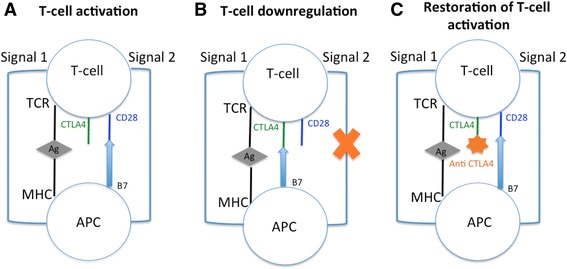
“Thus, blockades of immune checkpoints with antagonists of inhibitory pathways have been developed and anti-CTLA-4 antibodies are precursors in this domain [3] (Mechanism of action: anti CTLA-4 antibodies in Fig.”
BackgroundIpilimumab plus Dacarbazine for Previously Untreated Metastatic Melanoma
Robert, C., Thomas, L., Bondarenko, I., O'Day, S., Weber, J., Garbe, C., Lebbe, C., Baurain, J.-F., Testori, A., Grob, J.-J., et al. (2011) · New England Journal of Medicine · doi:10.1056/nejmoa1104621 · Cited by 4,496 · cited 1×
“Thus, a fully humanized anti-CTLA-4 monoclonal antibody immunoglobulin (Ig) G1 isotype (ipilimumab) was approved by the Food and Drug Administration (FDA) in 2011 at a dosage of 3 mg/kg every 3 weeks for four cycles in advanced melanoma, with evidence of improved survival [7, 8].”
BackgroundGenetic Basis for Clinical Response to CTLA-4 Blockade in Melanoma
Snyder, A., Makarov, V., Merghoub, T., Yuan, J., Zaretsky, J. M., Desrichard, A., Walsh, L. A., Postow, M. A., Wong, P., Ho, T. S., et al. (2014) · New England Journal of Medicine · doi:10.1056/nejmoa1406498 · Cited by 4,286 · cited 1×
“[119] also defined a genetic basis for benefit from CTLA-4 blockade in melanoma by whole-exome sequencing on tumors and matched blood samples.”
BackgroundTivol, E. A., Borriello, F., Schweitzer, A. N., Lynch, W. P., Bluestone, J. A., & Sharpe, A. H. (1995) · Immunity · doi:10.1016/1074-7613(95)90125-6 · Cited by 2,914 · cited 1×
“This role is supported by the lethal lympho-proliferation and autoimmunity in CTLA-4 knockout mice [5].”
BackgroundFitzgerald, M., Hayward, I. P., Thomas, A. C., Campbell, J. H., & CAMPBELL, G. R. (1995) · Cited by 2,552
Research works printed but not linked: 1
- Salenave J Chanson P Young J Hypophysite lymphocytaire. Endocrinologie-Nutrition, 10-023-D-10 2007 Paris Elsevier Masson SAS
Cited by
Items 401–500 of 750
A case of autoimmune enteropathy with CTLA4 haploinsufficiency
Miyazaki, H., Hoshi, N., Kohashi, M., Tokunaga, E., Ku, Y., Takenaka, H., Ooi, M., Yamamoto, N., Uemura, S., Nishimura, N., et al. (2021) · Intestinal Research · doi:10.5217/ir.2020.00041 · Cited by 13
The role of intestinal flora on tumor immunotherapy: recent progress and treatment implications
Zhou, Y., Liu, X., Gao, W., Luo, X., Lv, J., Wang, Y., & Liu, D. (2023) · Heliyon · doi:10.1016/j.heliyon.2023.e23919 · Cited by 13
“Additionally, anti-PD-L1 antibodies are less toxic than PD-1 antibodies [169,170].”
BackgroundRheumatic diseases associated with immune checkpoint inhibitors in cancer immunotherapy
Ohnuma, K., Hatano, R., Dang, N. H., & Morimoto, C. (2018) · Modern Rheumatology · doi:10.1080/14397595.2018.1532559 · Cited by 13
Endocrine Adverse Events Related with Immune Checkpoint Inhibitors: An Update for Clinicians
Deligiorgi, M. V., Panayiotidis, M. I., & Trafalis, D. T. (2020) · Immunotherapy · doi:10.2217/imt-2019-0132 · Cited by 13
Immune checkpoint inhibitor myocarditis: a systematic case study
Kushnareva, E. A., & Моисеева, О. М. (2020) · Russian Journal of Cardiology · doi:10.15829/1560-4071-2020-3910 · Cited by 13
Hypophysitis related to immune checkpoint inhibitors: An intriguing adverse event with many faces
Deligiorgi, M. V., Liapi, C. A., & Trafalis, D. T. (2021) · Expert Opinion on Biological Therapy · doi:10.1080/14712598.2021.1869211 · Cited by 13
“In fact, the systematic review and the meta-analysis of Bertrand et al indicated the ir hypophysitis as the most common endocrine irAE associated with anti-CTLA-4 mAbs [41].”
BackgroundImmunotherapy: The Wave of the Future in Bladder Cancer?
Petrylak, D. P. (2017) · Clinical Genitourinary Cancer · doi:10.1016/j.clgc.2017.05.025 · Cited by 13
“PD-1 and PD-L1 blockers seem to be associated with lower rates of irAEs compared with antieCTLA-4 agents.(28,29) A potential”
Larrainzar-Coghen, T., Rodríguez-Pardo, D., Barba, P., Rodríguez, V., Roig, G., Ferrer, C., Ruíz-Camps, I., & Almirante, B. (2018) · European Journal of Clinical Microbiology & Infectious Diseases · doi:10.1007/s10096-018-3341-4 · Cited by 12
Gut Microbiota and Immune Checkpoint Inhibitors-Based Immunotherapy
Tian, M., Zhang, S., Tseng, Y., Shen, X., Dong, L., & Xue, R. (2021) · Anti-Cancer Agents in Medicinal Chemistry · doi:10.2174/1871520621666210706110713 · Cited by 12
Insights into anti-tumor immunity via the polyomavirus shared across human Merkel cell carcinomas
Jani, S., Church, C. D., & Nghiem, P. (2023) · Frontiers in Immunology · doi:10.3389/fimmu.2023.1172913 · Cited by 12
Mishra, R., Sukhbaatar, A., Mori, S., & Kodama, T. (2023) · Journal of Experimental & Clinical Cancer Research · doi:10.1186/s13046-023-02645-w · Cited by 12
Amode, R., Baroudjian, B., Kowal, A., Jebali, M., Allayous, C., Bagot, M., Madjlessi, N., Roux, J., Viguier, M. A., Basset‐Séguin, N., et al. (2016) · Melanoma Research · doi:10.1097/cmr.0000000000000313 · Cited by 12
Aggarwal, S. (2019) · Indian Journal of Cancer · doi:10.4103/ijc.ijc_448_19 · Cited by 12
“All-grade, any causality imAEs varied from 61% (at 3 mg/kg) to 79% at (10 mg/kg).[25] The rate of grade 3-4 drug-related serious imAEs increased from 5% to 18% when the dose was increased from 3 to 10 mg/kg; the rate was 0% at 0.”
BackgroundStensland, Z. C., Coleman, B. M., Rihanek, M., Baxter, R. M., Gottlieb, P. A., Hsieh, E. W. Y., Sarapura, V. D., Simmons, K. M., Cambier, J. C., & Smith, M. J. (2021) · iScience · doi:10.1016/j.isci.2021.103626 · Cited by 12
“Secondary AITD is an immune-related Adverse Event (irAE) commonly seen following treatment with immune-checkpoint antibodies, such as anti-PD-1/PD-L1 and anti-CTLA4 (Villadolid and Amin, 2015; Abdel-Wahab et al., 2016; Bertrand et al., 2015).”
BackgroundInfluentialMarek, J., Hanesch, L., Krabbe, T., Khawanky, N. E., Heidegger, S. M., & Altomonte, J. (2023) · Molecular Therapy — Oncolytics · doi:10.1016/j.omto.2023.08.001 · Cited by 13
The kaleidoscope of autoimmunity – From genes to microbiome
Shoenfeld, Y., Ehrenfeld, M., & Perry, O. (2018) · Clinical Immunology · doi:10.1016/j.clim.2018.12.003 · Cited by 12
Chmiel, P., Rychcik-Pazyrska, P., & Stec, R. (2023) · Cancers · doi:10.3390/cancers15215232 · Cited by 11
A primer on recent developments in cancer immunotherapy, with a focus on neoantigen vaccines
Tokuyasu, T. A., & Huang, J. (2018) · Journal of Cancer Metastasis and Treatment · doi:10.20517/2394-4722.2017.52 · Cited by 12
Atezolizumab-induced Autoimmune Diabetes in a Patient with Metastatic Breast Cancer: A Case Report
Clontz, R., Dang, D., Hieger, M. A., & Becker, B. A. (2021) · Clinical Practice and Cases in Emergency Medicine · doi:10.5811/cpcem.2021.2.51508 · Cited by 11
Recent advances in immune checkpoint inhibitors for non-small lung cancer treatment
Altaf, R., Jadoon, S. S., Muhammad, S. A., Ilyas, U., & Duan, Y. (2022) · Frontiers in Oncology · doi:10.3389/fonc.2022.1014156 · Cited by 11
Li, L., Liu, H.-T., Teng, Y., Deng, Z., Zhang, G.-L., Su, J., Ma, L., & Zhong, J. (2022) · Expert Opinion on Investigational Drugs · doi:10.1080/13543784.2022.2151891 · Cited by 12
“With CTLA-4 inhibitors, the overall incidence of treatment-related AEs fluctuates according to the dose and is higher at 72% for all grades and 24% for grade 3 or higher [122].”
BackgroundShek, D., Gloss, B., Lai, J., Ma, L., Zhang, H. E., Carlino, M. S., Mahajan, H., Nagrial, A. M., Gao, B., Read, S. A., et al. (2023) · Methods and Protocols · doi:10.3390/mps6020035 · Cited by 11
“ICIs have already shifted treatment guidelines for various solid malignancies [6–8], although their tremendous efficacy has been challenged by a high incidence of immune-related adverse events (irAEs) which can affect up to 70% and 30% of patients treated with anti-CTLA-4 (Ipilimumab) [9]”
BackgroundJun, J., Lee, S.-R., Lee, J. Y., Choi, M. J., Noh, J. Y., Cheong, H. J., Kim, W. J., & Song, J. Y. (2019) · Medicine · doi:10.1097/md.0000000000016158 · Cited by 11
Villani, A. (2023) · Immunological Reviews · doi:10.1111/imr.13270 · Cited by 10
Zhang, M., Li, J., Yan, K., Zhou, H., Mei, S., Wang, B., Li, D., Du, X., Liu, M., Zhang, P., et al. (2025) · Proceedings of the National Academy of Sciences · doi:10.1073/pnas.2422731122 · Cited by 10
Ridolfi, L., Rosa, F. D., Petracci, E., Gentili, G., Nanni, O., Farolfi, A., Casadei, C., Rossi, A., Gentili, N., & Guidoboni, M. (2018) · Medical Hypotheses · doi:10.1016/j.mehy.2018.07.030 · Cited by 10
Hachisu, Y., Koga, Y., Kasama, S., Kaira, K., Uno, S., Yatomi, M., Aoki‐Saito, H., Tsurumaki, H., Jingu, A., Sunaga, N., et al. (2022) · Medicina · doi:10.3390/medicina58060768 · Cited by 10
Olszewska, P., Pazdrak, B., & Kruzel, M. L. (2022) · Biomedicines · doi:10.3390/biomedicines10102429 · Cited by 10
Effectiveness of immunological agents in non‐small cell lung cancer
Rekulapelli, A., Flausino, L. E., Iyer, G., & Balkrishnan, R. (2022) · Cancer Reports · doi:10.1002/cnr2.1739 · Cited by 10
“Some of the adverse conditions can be so life-threatening that discontinuing the treatment, taking corticosteroids for a long period of time to counter these effects or at times undergoing an anti-tumor necrosis factor therapy becomes necessary.(54,56)”
BackgroundTeijeira, L., Kareaga, M. M., Moreno, A., Echebarria, I. D. E., Ibáñez, B., Arrazubi, V., de Corcuera, I. D., Elejalde, I., Campillo-Calatayud, A., & Les, Í. (2023) · Cancers · doi:10.3390/cancers16010151 · Cited by 10
“An association between Although irAEs in our series were less severe, the cumulative irAE incidence was 41.6%, similar to rates previously reported [19,20]. several authors, including Diehl et al., who proposed a cut-off value of 2.0 K/ µ L as predictor of grade 2 or higher irAEs [4,6,25,26].”
ResultInfluentialUnderstanding Response to Immunotherapy Using Standard of Care and Experimental Imaging Approaches
Flavell, R. R., Evans, M. J., Villanueva-Meyer, J. E., & Yom, S. S. (2020) · International Journal of Radiation Oncology*Biology*Physics · doi:10.1016/j.ijrobp.2020.06.025 · Cited by 10
Hypothalamic–Pituitary Autoimmunity in Patients Treated with Anti-PD-1 and Anti-PD-L1 Antibodies
Bellastella, G., Carbone, C., Scappaticcio, L., Cirillo, P., Troiani, T., Morgillo, F., Vietri, M. T., Corte, C. M. D., Falco, V. D., Napolitano, S., et al. (2021) · Cancers · doi:10.3390/cancers13164036 · Cited by 10
Yu, S. S., Dorff, T. B., Ballas, L., Sadeghi, S., Skinner, E. C., & Quinn, D. I. (2017) · PubMed · Cited by 10
Pomerantz, M., Lichtenstein, D. A., Niesvizky-Kogan, I., Sohal, R. J., Leibovitch, J. N., & Basnet, A. (2019) · Journal of Immunotherapy · doi:10.1097/cji.0000000000000285 · Cited by 10
Ipilimumab-Induced Enterocolitis: A Systematic Review and Meta-Analysis
Witges, K., Shafer, L. A., Zarychanski, R., Abou-Setta, A. M., Rabbani, R., Dingwall, O., & Bernstein, C. N. (2020) · Drug Safety · doi:10.1007/s40264-020-00979-4 · Cited by 10
Comorbidity and frailty assessment in renal cell carcinoma patients
Courcier, J., TAILLE, A. D. L., Lassau, N., & Ingels, A. (2021) · World Journal of Urology · doi:10.1007/s00345-021-03632-6 · Cited by 10
Zhu, J., Wu, J., Li, G., Li, J., Yin, L., He, Z., Su, C., Zhao, W., Wu, Q., Chen, Z., et al. (2017) · Expert Opinion on Drug Safety · doi:10.1080/14740338.2017.1297420 · Cited by 10
Hayashi, H., Sawada, K., Hasebe, T., Nakajima, S., Sawada, J., Takiyama, Y., Takiyama, Y., Okumura, T., & Fujiya, M. (2022) · Internal Medicine · doi:10.2169/internalmedicine.9393-22 · Cited by 9
Yasuda, Y., Fujiwara, R., Oguchi, T., Komai, Y., Numao, N., Yamamoto, S., Oki, R., Urasaki, T., TAKAHASHI, S., Yonese, J., et al. (2023) · Cancer Diagnosis & Prognosis · doi:10.21873/cdp.10219 · Cited by 9
Hu, Q., Wang, S., Ma, L., Sun, Z., Li, H., Deng, S., & Zhou, J. (2023) · Journal of Cellular and Molecular Medicine · doi:10.1111/jcmm.17895 · Cited by 9
Development of a peptide-based tumor-activated checkpoint inhibitor for cancer immunotherapy
Zhao, Z., Fetse, J., Mamani, U., Guo, Y., Li, Y., Patel, P., Liu, Y., Lin, C., Li, Y., Mustafa, B., et al. (2024) · Acta Biomaterialia · doi:10.1016/j.actbio.2024.12.051 · Cited by 9
Multi-faceted inhibition of dendritic cell function by CD4+Foxp3+ regulatory T cells
Seitz, C., Liu, S., Klocke, K., Joly, A.-L., Czarnewski, P., Tibbitt, C. A., Parigi, S. M., Westerberg, L. S., Coquet, J. M., Villablanca, E. J., et al. (2019) · Journal of Autoimmunity · doi:10.1016/j.jaut.2018.12.002 · Cited by 9
Szekanecz, É., & Szekanecz, Z. (2019) · Orvosi Hetilap · doi:10.1556/650.2019.31392 · Cited by 9
“Általánosságban a CTLA4-gátlók mellett súlyosabb toxicitás figyelhető meg, de azt nem sikerült még tisztázni, hogy miért különbözik e rizikó vonatkozásában a CTLA4- és a PD1/PDL1 gátlók szervspecificitása [8, 14, 15, 23].”
Ferguson, R., Chat, V., Morales, L. J., Simpson, D., Monson, K. R., Cohen, E., Zusin, S., Madonna, G., Capone, M., Simeone, E., et al. (2023) · European Journal of Cancer · doi:10.1016/j.ejca.2023.05.011 · Cited by 9
Is the Genetic Background of Co-Stimulatory CD28/CTLA-4 Pathway the Risk Factor for Prostate Cancer?
Karabon, L., Tupikowski, K., Tomkiewicz, A., Partyka, A., Pawlak, E., Wojciechowski, A., Kołodziej, A., Dembowski, J., Zdrojowy, R., & Frydecka, I. (2017) · Pathology & Oncology Research · doi:10.1007/s12253-016-0180-4 · Cited by 9
Vitiligo-like lesions occurring in patients receiving anti-programmed cell death-1 therapies
Dousset, L., Boniface, K., & Sénéschal, J. (2019) · Giornale Italiano di Dermatologia e Venereologia · doi:10.23736/s0392-0488.18.06254-5 · Cited by 9
Shah, M., Jizzini, M., Majzoub, I. E., Qdaisat, A. Z., Reyes‐Gibby, C. C., & Yeung, S. J. (2019) · Journal of Immunotherapy and Precision Oncology · doi:10.4103/jipo.jipo_11_19 · Cited by 9
Menon, T., & Afzali, A. (2019) · Current Treatment Options in Gastroenterology · doi:10.1007/s11938-019-00263-0 · Cited by 9
Meriggi, F. A., & Graffeo, M. (2021) · Cancers · doi:10.3390/cancers13030584 · Cited by 9
Leveraging the Treg-intrinsic CTLA4–PKCη signaling pathway for cancer immunotherapy
Liu, H., Pedros, C., Kong, K., Canonigo-Balancio, A. J., Xue, W., & Altman, A. (2021) · Journal for ImmunoTherapy of Cancer · doi:10.1136/jitc-2021-002792 · Cited by 9
Aya, F., Gaba, L., Victoria, I., Fernández-Martínez, A., Ruíz-Esquide, V., Pineda, E., Tosca, M., Viladot, M., Pereira, V., Malvehy, J., et al. (2016) · ESMO Open · doi:10.1136/esmoopen-2015-000032 · Cited by 9
“As a result of its mechanism of action and subsequent activation of the immune system, ipilimumab is associated with immune-related adverse events (irAEs), being dermatitis and colitis the most frequently reported.(1) Clinical trials with ipilimumab and other immune-checkpoint inhibitors have excluded patients with un…”
BackgroundFahmy, O., Khairul‐Asri, M. G., Stenzl, A., & Gakis, G. (2016) · Medical Hypotheses · doi:10.1016/j.mehy.2016.04.037 · Cited by 9
“The incidence of dermatological complications and diarrhea was the most recorded irAE in all cohorts subjected to anti-CTLA-4 treatment regardless of the type of cancer [14,15].”
BackgroundDing, X., Chen, P., Li, Y., Liu, J., Song, Y., Cai, B., Xiang, M., Zhang, J., Wang, Z., & Wang, L. (2020) · Macromolecular Bioscience · doi:10.1002/mabi.202000098 · Cited by 9
Germline Genetics in Immuno-oncology: From Genome-Wide to Targeted Biomarker Strategies
Kirchhoff, T., & Ferguson, R. (2019) · Methods in molecular biology · doi:10.1007/978-1-4939-9773-2_4 · Cited by 9
Drugs, Inflammation, and the Eye
Cunningham, E. T., London, N. J. S., Moorthy, R. S., Garg, S. J., & Zierhut, M. (2016) · Ocular Immunology and Inflammation · doi:10.3109/09273948.2016.1160683 · Cited by 9
“Cases of sarcoidosis, Guillain–Barré syndrome, and uveitis were also identified, but were described in the meta-analysis as rare.(8) Uveitis has also been reported following treatment with immune checkpoint inhibitors directed against PD-1, including both pembrolizumab(19,20) and nivolumab.”
BackgroundA phase IB study of ipilimumab with peginterferon alfa-2b in patients with unresectable melanoma.
Kudchadkar, R. R., Gibney, G. T., Weber, J. S., Chen, A., Smith, K., & Merek, S. (2013) · Journal of Clinical Oncology · doi:10.1200/jco.2013.31.15_suppl.9079 · Cited by 9
Changes in tumor and cardiac metabolism upon immune checkpoint
Leven, A., Wagner, N., Nienaber, S., Messiha, D., Tasdogan, A., & Ugurel, S. (2024) · Basic Research in Cardiology · doi:10.1007/s00395-024-01092-8 · Cited by 8
“The organs most commonly affected by irAEs are the skin, intestines, liver, endocrine organs, and lungs [9, 40, 57, 146, 178].”
Isaacs, D. J., Kathuria‐Prakash, N., Hilder, R., Lechner, M. G., & Drakaki, A. (2024) · Current Cancer Reports · doi:10.25082/ccr.2023.01.004 · Cited by 8
Li, T., Gao, S., Dong, D., Chen, Y., & Li, S. (2025) · Critical Reviews in Oncology/Hematology · doi:10.1016/j.critrevonc.2025.104905 · Cited by 8
Jacqueline, C. M., Bonnefoy, N., Charrière, G. M., Thomas, F., & Roche, B. (2018) · OncoImmunology · doi:10.1080/2162402x.2018.1466019 · Cited by 8
“However, complete response has rarely been observed(34) and immune-related adverse events, related to tolerance break and consequent auto-immunity, happen at high frequency.(35)”
BackgroundSevere Diarrhea in the Setting of Immune Checkpoint Inhibitors
Kuo, J., Davis, A. D., Rodríguez, E. A., Vela, M. F., Heigh, R. I., Salomao, M. A., & Gurudu, S. (2018) · Case Reports in Gastroenterology · doi:10.1159/000493183 · Cited by 8
Shah, M., Rajha, E., Dinardo, C. D., Muckey, E., Wierda, W. G., & Yeung, S. J. (2019) · Annals of Emergency Medicine · doi:10.1016/j.annemergmed.2019.07.015 · Cited by 8
Kwon, H., Roh, E., Ahn, C. H., Kim, H. K., Ku, C. R., Jung, K. Y., Lee, J. H., Kim, E. H., Suh, S., Hong, S., et al. (2022) · Endocrinology and Metabolism · doi:10.3803/enm.2022.1627 · Cited by 8
“The incidence of hypophysitis was higher in patients receiving an anti-CTLA-4 inhibitor than in those receiving antiPD-1/anti-PD-L1 antibodies [1,23,24], which may be related to the pituitary expression of CTLA-4 [25].”
BackgroundGermline mechanisms of immunotherapy toxicities in the era of genome‐wide association studies
Gusev, A. (2023) · Immunological Reviews · doi:10.1111/imr.13253 · Cited by 8
Tanaka, F., Kogue, R., Maeda, M., Umino, M., Nakai, Y., Takeshita, A., & Sakuma, H. (2017) · Radiology Case Reports · doi:10.1016/j.radcr.2017.11.007 · Cited by 8
New Immunotherapies in Oncology Treatment and Their Side Effect Profiles
Sriratana, P., & Norton, J. A. (2018) · The Journal of the American Board of Family Medicine · doi:10.3122/jabfm.2018.04.170387 · Cited by 8
“However, a retrospective study with ipilimumab demonstrates a slightly higher incidence of severe, immune-mediated side effects for those with a pre-existing autoimmune disorder than in the general population, at 33% versus 25% of immune-mediated side effects.(26,27) In addition, 38% of patients with a preexisting aut…”
BackgroundMolecular and immune targets for Merkel cell carcinoma therapy and prevention
Cohen, L., & Tsai, K. Y. (2019) · Molecular Carcinogenesis · doi:10.1002/mc.23042 · Cited by 8
Patel, R. J., Liu, M. A., Amaraneni, A., & Sindhu, S. K. (2017) · BMJ Case Reports · doi:10.1136/bcr-2017-221318 · Cited by 8
Macroangiopathy is a positive predictive factor for response to immunotherapy
Deike‐Hofmann, K., Gutzweiler, L., Reuter, J., Paech, D., Hassel, J. C., Sedlaczek, O., Radbruch, A., Schlemmer, H., & Bäumer, P. (2019) · Scientific Reports · doi:10.1038/s41598-019-46189-6 · Cited by 8
Pharmacokinetics and Pharmacodynamics of Immunotherapy
Lam, L. H., Lin, S., & Sun, J. (2017) · Current cancer research · doi:10.1007/978-3-319-63757-0_2 · Cited by 8
Abdel‐Wahab, N., Safa, H., Abudayyeh, A., Johnson, D. H., Trinh, V. A., Zobniw, C. M., Lin, H. Y., Wong, M. K., Abdelrahim, M., Gaber, A. O., et al. (2019) · Journal for ImmunoTherapy of Cancer · doi:10.1186/s40425-019-0639-4 · Cited by 8
Rashid, H., Acharya, S., Muhammad, H., & Aziz, M. A. (2025) · 3 Biotech · doi:10.1007/s13205-025-04362-x · Cited by 7
“…Wolchok 2018; Kato et al. 2019; Jacobs et al. 2015) Anti-Cytotoxic T-lymphocyte associated protein 4 (Anti-CTLA-4) treatment for melanoma has shown promising results in 20% patients, but its clinical application is limited due to adverse immune reactions (Hodi et al. 2010; Bertrand et al. 2015).”
Thanarajasingam, U., & Abdel‐Wahab, N. (2020) · Rheumatic Disease Clinics of North America · doi:10.1016/j.rdc.2020.04.003 · Cited by 7
Pourbagheri‐Sigaroodi, A., Momeny, M., Rezaei, N., Fallah, F., & Bashash, D. (2024) · Cell Biochemistry and Function · doi:10.1002/cbf.4098 · Cited by 7
“229,230 The harmful toxicities could be exacerbated when it comes to the combination regimens.”
Novel Cancer Therapeutics: Perioperative Implications and Challenges
Gutiérrez, C., Rajendram, P., & Idowu, O. (2024) · Anesthesia & Analgesia · doi:10.1213/ane.0000000000007210 · Cited by 7
Iyalomhe, O., & Farwell, M. D. (2021) · Radiologic Clinics of North America · doi:10.1016/j.rcl.2021.05.010 · Cited by 7
Rheumatological Adverse Events of Cancer Therapy with Immune Checkpoint Inhibitors
Cano-Cruz, L. G., Barrera‐Vargas, A., Mateos-Soria, A., Soto‐Pérez‐de‐Celis, E., & Merayo‐Chalico, J. (2021) · Archives of Medical Research · doi:10.1016/j.arcmed.2021.09.004 · Cited by 7
Immunotherapy toxicities: An SGO clinical practice statement
O'Cearbhaill, R. E., Clark, L. H., Eskander, R. N., Gaillard, S. L., Moroney, J. W., Pereira, E. B., & Pothuri, B. (2022) · Gynecologic Oncology · doi:10.1016/j.ygyno.2022.05.003 · Cited by 7
Pei, W.-G., Chen, W.-Z., Wu, Y., Tan, S., & Jie, Z. (2023) · World Journal of Gastrointestinal Oncology · doi:10.4251/wjgo.v15.i2.352 · Cited by 8
Xu, Y., Wen, N., Haddad, R. I., Sonis, S. T., & Villa, A. (2023) · The Oncologist · doi:10.1093/oncolo/oyad279 · Cited by 7
Brazel, D., Kazakova, V., Fay, M., Bollin, K. B., Mittal, K., Reynolds, K. L., & Tsang, M. (2025) · American Society of Clinical Oncology Educational Book · doi:10.1200/edbk-25-473080 · Cited by 8
Pathologie der Nebenwirkungen von Immune-Checkpoint-Inhibitoren
Koelzer, V. H., Glatz, K., Bubendorf, L., Weber, A., Gaspert, A., Cathomas, G., Lugli, A., Zippelius, A., Kempf, W., & Mertz, K. D. (2017) · Der Pathologe · doi:10.1007/s00292-017-0281-1 · Cited by 7
Baker’s yeast induces apoptotic effects and histopathological changes on skin tumors in mice
Elwakkad, A., Ghoneum, M. H., El-Sawi, M. R., Mohamed, S. I., el Din, A. A. G., Pan, D., & Elqattan, G. M. (2018) · Cogent Medicine · doi:10.1080/2331205x.2018.1437673 · Cited by 7
Small Cell Lung Cancer with Sarcoidosis in Spontaneous Remission: A Case Report
Sasaki, Y., Koga, Y., Kasahara, N., Hachisu, Y., Murata, K., Tsurumaki, H., Yatomi, M., Tsukagoshi, Y., Sawada, Y., Sakurai, R., et al. (2018) · Journal of Nippon Medical School · doi:10.1272/jnms.jnms.2018_85-47 · Cited by 7
Management of Immunotherapy Adverse Events in Oncological Patients: Anti-CTLA-4, Anti-PD-1/PD-L1
Brigida, M., Perricelli, A., Sposato, F., Spadafora, M. G., Pomillo, A., & Milito, S. (2020) · Reviews on Recent Clinical Trials · doi:10.2174/1574887115666200622161418 · Cited by 7
Treatment of Brain Metastases: The Synergy of Radiotherapy and Immune Checkpoint Inhibitors
Matsui, J. K., Perlow, H. K., Raj, R. K., Nalin, A. P., Lehrer, E. J., Kotecha, R. R., Trifiletti, D. M., McClelland, S., Kendra, K. L., Williams, N. O., et al. (2022) · Biomedicines · doi:10.3390/biomedicines10092211 · Cited by 7
“Previous reports noted that patients receiving ipilimumab or anti-PD-1/PD-L1 monotherapies experienced immune-related adverse events rates of 72% and 66%, respectively [77,78].”
ResultWakamatsu, K., Itô, A., Tamura, Y., Hida, T., Kamiya, T., Torigoe, T., Honda, H., Ito, S., & Jimbow, K. (2022) · Cancers · doi:10.3390/cancers14225588 · Cited by 7
Mesko, S. M., Konecny, G. E., Tumeh, P. C., & Kamrava, M. R. (2016) · BJR|case reports · doi:10.1259/bjrcr.20160002 · Cited by 7
“DISCUSSION Cutaneous reactions with ipilimumab monotherapy represent the most common treatment-related side effect and have been well documented throughout the literature to affect as many as 75% of treated patients.(7,8) It is most often described as an erythematous, oedematous rash with or without pruritus.”
BackgroundFirst Report of Parkinsonism Associated With Indoximod, an Immune-Modulating Agent
Floyd, M., Osta, B. E. E., & Tang, S. (2017) · Journal of Global Oncology · doi:10.1200/jgo.2016.007492 · Cited by 7
“A unique aspect of the toxicity profiles of immune checkpoint inhibitors (ICIs) is their tendency to trigger immune-related toxicities.(1) Indoximod, an indoleamine 2,3-dioxygenase inhibitor, is a novel agent that upregulates effector T cells, which allows the host immune system to recognize and destroy tumor cells.”
BackgroundHu, D., Liu, Z., Chen, S., Huang, Y., Zeng, W., Wei, W., Zhang, C., Zhou, L., Chen, D., Wu, Y., et al. (2022) · Frontiers in Oncology · doi:10.3389/fonc.2022.738298 · Cited by 7
Management of autoimmune and viral hepatitis in immunotherapy: a narrative review
Kuo, L., Kuwelker, S., & Tsai, E. (2023) · Annals of Palliative Medicine · doi:10.21037/apm-23-250 · Cited by 6
Ibáñez-Juliá, M.-J., Bataller, L., Murgui, F. C., Them, L. N., Alentorn, A., Torres-Martínez, A., Mazón, M., & Sarrió, R. G. (2025) · Journal of Neuro-Oncology · doi:10.1007/s11060-025-05091-0 · Cited by 6
“Some studies report a higher incidence of immune-related adverse effects (irAEs) with anti–CTLA-4 agents compared to PD-1/PD-L1 antibodies [13, 14] and the incidence and severity of irAEs are further increased when ICIs are used in combination [15 ].”
Wei, W., Ding, Y., He, J., & Wu, J. (2020) · Translational Cancer Research · doi:10.21037/tcr-19-2872 · Cited by 6
“Presumably as a result of immune over-stimulation in certain parts of the human body, ICIs are known to cause specific adverse effects, such as hypothyroidism, immune related pneumonitis and immune related myositis (4-7).”
BackgroundMa, Y., Yu, J., Ma, X., Li, Q., Su, Q., & Cao, B. (2023) · Asia-Pacific Journal of Clinical Oncology · doi:10.1111/ajco.13961 · Cited by 6
Soma, K., Nishida, T., Osugi, N., Morimura, O., Adachi, S., Fujii, Y., Sugimoto, A., Mukai, K., Nakamatsu, D., Matsumoto, K., et al. (2021) · Clinical Journal of Gastroenterology · doi:10.1007/s12328-021-01542-z · Cited by 6
“1 3 although it can occur immediately after the first infusion [16].”
Mechanism and Management of Checkpoint Inhibitor-Related Toxicities in Genitourinary Cancers
Li, H., Sahu, K. K., & Maughan, B. L. (2022) · Cancers · doi:10.3390/cancers14102460 · Cited by 6
“studied a total of 1265 patients receiving anti-CTLA-4 antibodies from 22 clinical trials and reported an all-grade irAEs incidence of 72%, and high-grade irAEs observed in 24% of patients [105].”
BackgroundXu, T. (2022) · Oxidative Medicine and Cellular Longevity · doi:10.1155/2022/7302883 · Cited by 6
“Due to the complexity of the cancer microenvironment and the inherent defects of the drug, which include poor responsiveness and easy drug resistance, its therapeutic e ff ect has been seriously compromised [48].”
Risk factors for cardiovascular adverse events from immune checkpoint inhibitors
Luo, L., Liu, Y., Lu, J., Zhang, Y., Fan, G., Tang, X., & Guo, W. (2023) · Frontiers in Oncology · doi:10.3389/fonc.2023.1104888 · Cited by 6
Amylidi, A.-L., Gogadis, A., Yerolatsite, M., Zarkavelis, G., Torounidou, N., Keramisanou, V., Kampletsas, E. O., & Mauri, D. (2023) · Current Oncology · doi:10.3390/curroncol30120766 · Cited by 6
Evaluation of arthralgias in adult oncology patients receiving immune checkpoint inhibitors
Lee, J., Graham, A., & Sion, A. M. (2019) · Journal of Oncology Pharmacy Practice · doi:10.1177/1078155218822707 · Cited by 6
Metadata
- Authors
- Bertrand, A., Kostine, M., Barnetche, T., Truchetet, M.-E., & Schaeverbeke, T.
- Affiliations
- Centre Hospitalier Universitaire de Bordeaux (FR)
- Centre National de la Recherche Scientifique (FR)
- Université de Bordeaux (FR)
- Corresponding author
- Bertrand, Anne
- Venue
- BMC Medicine
- Published
- 2015-09-04
- Volume
- 13
- Issue
- 1
- Pages
- 211-211
- ISSN
- 1741-7015 (ISSN-L)
- PMC
- PMC4559965
- OpenAlex
- W1914776013
- Cited by
- 704
- References
- 142
- Citations by year
- 2026: 25 · 2025: 33 · 2024: 48 · 2023: 65 · 2022: 65 · 2021: 72 · 2020: 95 · 2019: 99 · 2018: 75 · 2017: 76 · 2016: 48 · 2015: 1
- FWCI
- 7.15
- Type
- journal article
- Language
- en
- Open access
- gold
- doi.org
- Licence
- Locations
- BMC Medicine (publishedVersion, cc-by)
- Europe PMC (PubMed Central) (publishedVersion, cc-by)
- PubMed Central (publishedVersion, cc-by)
- PubMed (publishedVersion)
- Topics
- Health Sciences › Medicine › Oncology › Cancer Immunotherapy and Biomarkers
- Life Sciences › Immunology and Microbiology › Immunology › Immunotherapy and Immune Responses
- Life Sciences › Pharmacology, Toxicology and Pharmaceutics › Toxicology › Pharmacovigilance and Adverse Drug Reactions
- Keywords
- CTLA-4 blockade, ipilimumab, tremelimumab, immune checkpoint inhibitors, immunotoxicity, rash, colitis, hepatitis, hypophysitis, thyroiditis, dose-dependent toxicity, adverse event incidence, time to onset of adverse events, treatment response, cancer immunotherapy, metastatic cancer, vitiligo
- MeSH terms
- Ipilimumab, Antibodies, Monoclonal, Antineoplastic Agents, Humans, Immunologic Factors, Immunotherapy, Neoplasms, CTLA-4 Antigen, Antibodies, Monoclonal, Humanized
About these checks
Registry, retraction, Cites and statistics results are computed, not judged, with one exception: a printed reference that no index lists is read once by a model before it counts as a citation error. Claims are extracted by a model and kept only when their quote appears verbatim in the text; each cited source is then checked, with a model’s help, for whether it says what the claim relies on. Those verdicts can be wrong — read the claim’s quote and the cited source before relying on one.
Statistics and arithmetic are recomputed, not judged.
Confidence bands are shown only for fields calibrated on our annotated test set. None is calibrated yet, so no band is shown.
What counts as a claim ›How we measure confidence ›How we check this ›
Are you an author, or do you see a problem with this page? Request a review
Data sources
Bibliographic data: Semantic Scholar, OpenAlex, Crossref.
Contains information from the Semantic Scholar Academic Graph Datasets, made available under the ODC Attribution License (ODC-BY 1.0).
Semantic Scholar’s data is described in: Kinney, R., et al. (2023). The Semantic Scholar Open Data Platform. arXiv:2301.10140.
