

Immune related adverse events associated with anti-CTLA-4 antibodies: systematic review and meta-analysis
Open accessThe DOI matches its Crossref record; 142 of the 142 references it cites were found in a registry or an index.
Abstract
BACKGROUND: Targeting CTLA-4 is a recent strategic approach in cancer control: blocking CTLA-4 enhances an antitumor immunity by promoting T-cell activation and cytotoxic T-lymphocyte proliferation. This induction of a tolerance break against the tumor may be responsible for immune-related adverse events (irAEs). Our objective was to assess the incidence and nature of irAEs in oncologic patients receiving anti-CTLA-4 antibodies (ipilimumab and tremelimumab). METHODS: A systematic search of literature up to February 2014 was performed in MEDLINE, EMBASE, and Cochrane databases to identify relevant articles. Paired reviewers independently selected articles for inclusion and extracted data. Pooled incidence was calculated using R(©), package meta. RESULTS: Overall, 81 articles were included in the study, with a total of 1265 patients from 22 clinical trials included in the meta-analysis. Described irAEs consisted of skin lesions (rash, pruritus, and vitiligo), colitis, and less frequently hepatitis, hypophysitis, thyroiditis, and some rare events such as sarcoidosis, uveitis, Guillain-Barré syndrome, immune-mediated cytopenia and polymyalgia rheumatic/Horton. The overall incidence of all-grade irAEs was 72 % (95 % CI, 65-79 %). The overall incidence of high-grade irAEs was 24 % (95 % CI, 18-30 %). The risk of developing irAEs was dependent of dosage, with incidence of all-grade irAEs being evaluated to 61 % (95 % CI, 56-66 %) for ipilimumab 3 mg/kg and 79 % (95 % CI, 69-89 %) for ipilimumab 10 mg/kg. Death due to irAEs occurred in 0.86 % of patients. The median time of onset of irAEs was about 10 weeks (IQR, 6-12) after the onset of treatment, corresponding with the first three cycles but varied according to the organ system involved. Such immune activation could also be indicative for tumor-specific T-cell activation and irAE occurrence was associated with clinical response to CTLA-4 blocking in 60 % of patients. CONCLUSION: The price of potential long-term survival to metastatic tumors is an atypical immune toxicity, reflecting the mechanism of action of anti-CTLA-4 antibodies. A better knowledge of these irAEs and its management in a multidisciplinary approach will help to reduce morbidity and therapy interruptions.
Overview
The claims and statistics of this paper haven’t been checked yet.
Free: it reads the open-access text and checks the first 5 claims that cite a source we can check. Create a free account to check every claim.
Integrity signals
Registry
Cites
Statistics
Figures
Verification
Claims the paper makes
The claims and statistics of this paper haven’t been checked yet.
Free: it reads the open-access text and checks the first 5 claims that cite a source we can check. Create a free account to check every claim.
Claims other papers make about this one
Each is checked against this paper’s own text: does it say what the citing paper says it does?
The source backs part of the claim, not all of it — or backs it for a different population, condition or comparison.
In the citing paper
“ICI-associated colitis is routinely treated with immunosuppressive therapy, including corticosteroids and/or agents targeting tumor necrosis factor alpha (TNF-alpha), all of which have significant side effects.”
From Fecal microbiota transplantation for refractory immune checkpoint inhibitor-associated colitis (2018) · cites this paper as [5]
Experimental — accuracy not yet measuredThe source backs part of the claim, not all of it — or backs it for a different population, condition or comparison.
In the citing paper
“Neurologic immune-related adverse events from immune checkpoint inhibitors include autonomic neuropathy and can present with severe GI dysmotility (Bertrand et al., 2015).”
From Autonomic nervous system and gastrointestinal manifestations with an emphasis on gastric dysfunction (2026) · cites this paper as Bertrand et al., 2015
Experimental — accuracy not yet measured
Self-check
Percentages, sums and reported differences re-computed from the paper’s own numbers.
The self-check needs the paper’s full text.
Citations
Cites
The Cochrane Collaboration's tool for assessing risk of bias in randomised trials
Higgins, J. P. T., Altman, D. G., Gotzsche, P. C., Juni, P., Moher, D., Oxman, A. D., Savovic, J., Schulz, K. F., Weeks, L., Sterne, J. A. C., et al. (2011) · BMJ · doi:10.1136/bmj.d5928 · Cited by 33,817
PD-1 and PD-L1 Immune Checkpoint Blockade to Treat Breast Cancer
Hartkopf, A. D., Taran, F.-A., Wallwiener, M., Walter, C. B., Krämer, B., Grischke, E.-M., & Brucker, S. Y. (2016) · Breast Care · doi:10.1159/000453569 · Cited by 30,845
Dermyshi, E., Wang, Y., Yan, C., Hong, W., Qiu, G., Gong, X., & Zhang, T. (2017) · Neonatology · doi:10.1159/000454668 · Cited by 24,451
Adverse Renal Effects of Immune Checkpoint Inhibitors: A Narrative Review
Wanchoo, R., Karam, S., Uppal, N. N., Barta, V. S., Deray, G., Devoe, C., Launay-Vacher, V., Jhaveri, K. D., & on behalf of Cancer and Kidney International Network Workgroup on Immune Checkpoint Inhibitors (2017) · American Journal of Nephrology · doi:10.1159/000455014 · Cited by 15,256
Improved Survival with Ipilimumab in Patients with Metastatic Melanoma
Hodi, F. S., O'Day, S. J., McDermott, D. F., Weber, R. W., Sosman, J. A., Haanen, J. B., Gonzalez, R., Robert, C., Schadendorf, D., Hassel, J. C., et al. (2010) · New England Journal of Medicine · doi:10.1056/nejmoa1003466 · Cited by 15,155 · cited 4×
“[7], an irAE was defined as an adverse event that was associated with exposure to the study drug and that was consistent with an immune phenomenon.”
BackgroundInfluentialThe blockade of immune checkpoints in cancer immunotherapy
Pardoll, D. M. (2012) · Nature Reviews Cancer · doi:10.1038/nrc3239 · Cited by 13,838 · cited 1×
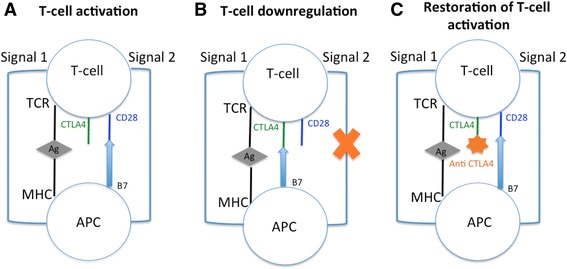
“Thus, blockades of immune checkpoints with antagonists of inhibitory pathways have been developed and anti-CTLA-4 antibodies are precursors in this domain [3] (Mechanism of action: anti CTLA-4 antibodies in Fig.”
BackgroundIpilimumab plus Dacarbazine for Previously Untreated Metastatic Melanoma
Robert, C., Thomas, L., Bondarenko, I., O'Day, S., Weber, J., Garbe, C., Lebbe, C., Baurain, J.-F., Testori, A., Grob, J.-J., et al. (2011) · New England Journal of Medicine · doi:10.1056/nejmoa1104621 · Cited by 4,496 · cited 1×
“Thus, a fully humanized anti-CTLA-4 monoclonal antibody immunoglobulin (Ig) G1 isotype (ipilimumab) was approved by the Food and Drug Administration (FDA) in 2011 at a dosage of 3 mg/kg every 3 weeks for four cycles in advanced melanoma, with evidence of improved survival [7, 8].”
BackgroundGenetic Basis for Clinical Response to CTLA-4 Blockade in Melanoma
Snyder, A., Makarov, V., Merghoub, T., Yuan, J., Zaretsky, J. M., Desrichard, A., Walsh, L. A., Postow, M. A., Wong, P., Ho, T. S., et al. (2014) · New England Journal of Medicine · doi:10.1056/nejmoa1406498 · Cited by 4,286 · cited 1×
“[119] also defined a genetic basis for benefit from CTLA-4 blockade in melanoma by whole-exome sequencing on tumors and matched blood samples.”
BackgroundTivol, E. A., Borriello, F., Schweitzer, A. N., Lynch, W. P., Bluestone, J. A., & Sharpe, A. H. (1995) · Immunity · doi:10.1016/1074-7613(95)90125-6 · Cited by 2,914 · cited 1×
“This role is supported by the lethal lympho-proliferation and autoimmunity in CTLA-4 knockout mice [5].”
BackgroundFitzgerald, M., Hayward, I. P., Thomas, A. C., Campbell, J. H., & CAMPBELL, G. R. (1995) · Cited by 2,552
Research works printed but not linked: 1
- Salenave J Chanson P Young J Hypophysite lymphocytaire. Endocrinologie-Nutrition, 10-023-D-10 2007 Paris Elsevier Masson SAS
Cited by
Items 601–700 of 750
Pilipenko, I., Stenberg, K., Puranen, J., Toropainen, E., Määttä, I., Jeltsch, M., Jauhiainen, S., Nieminen, T., Laakkonen, J. P., Ylä-Herttuala, S., et al. (2026) · Acta Biomaterialia · doi:10.1016/j.actbio.2026.06.061 · Cited by 1
Management and Supportive Care of Patients Undergoing Immunotherapy
Rapoport, B. L., & Eeden, R. I. V. (2017) · InTech eBooks · doi:10.5772/67372 · Cited by 1
“The incidence of grade 3 or 4 adverse events is higher with CTLA-4 blockers, and PD-1 inhibitors appear to have better tolerability [2, 3, 10].”
BackgroundInfluentialSide effects and management in immunotherapy based on immune checkpoint inhibitors
Li, W., Li, L.-C., & Huo, J.-G. (2020) · World Chinese Journal of Digestology · doi:10.11569/wcjd.v28.i16.755 · Cited by 1
Shijubou, N., Sumi, T., Kamada, K., Yamada, Y., Nakata, H., Mori, Y., & Chiba, H. (2021) · Haigan · doi:10.2482/haigan.61.24 · Cited by 1
Bakács, T., Kristóf, K., Mehrishi, J. N., Szabados, T., Kerepesi, C., Regoes, E., & Tusnady, G. (2017) · Internal Medicine Review · doi:10.18103/imr.v3i4.408 · Cited by 1
Management of Immune-Related Adverse Events from Immune Checkpoint Inhibitor Therapy
Kottschade, L. A. (2018) · Springer eBooks · doi:10.1007/978-3-319-70622-1_9 · Cited by 1
Immune-Related Adverse Toxicities and Clinical Management
Kirchberger, M. C., & Heinzerling, L. (2018) · Springer eBooks · doi:10.1007/978-3-319-78310-9_36 · Cited by 1
Swanner, J. L., Meisen, W. H., McCormack, R., Lewis, C. T., Hong, B., & Kaur, B. (2019) · Resistance to targeted anti-cancer therapeutics · doi:10.1007/978-3-030-21477-7_3 · Cited by 1
THE RELATIONSHIP BETWEEN OF CANCERS AND RHEUMATIC DISEASES
Колтакова, А. Д. (2020) · Rheumatology Science and Practice · doi:10.14412/1995-4484-2020-198-206 · Cited by 1
64-Year-Old Man With Altered Mental Status
Schmidt, T. J., Subat, Y. W., & de Moraes, A. G. (2020) · Mayo Clinic Proceedings · doi:10.1016/j.mayocp.2019.12.034 · Cited by 1
Bukovsky, A. (2021) · PubMed · doi:10.14670/hh-18-261 · Cited by 1
Prospects of Cell Immobilization in Cancer Research and Immunotherapy
Komeri, R., Syama, H. P., Preethi, G. U., Unnikrishnan, B. S., Shiji, R., Archana, M. G., Mohan, D., Tripathi, A., & Sreelekha, T. T. (2020) · Gels horizons: from science to smart materials · doi:10.1007/978-981-15-7998-1_4 · Cited by 1
Shallis, R. M., Bewersdorf, J. P., Swoboda, D. M., Wei, W., Gowda, L., Prébet, T., Halene, S., Pillai, M. M., Parker, T. L., Neparidze, N., et al. (2021) · Clinical Lymphoma Myeloma & Leukemia · doi:10.1016/j.clml.2021.01.003 · Cited by 1
Ipilimumab in Melanoma: An Evergreen Drug
Spagnolo, F., Tanda, E. T., & Mandalà, M. (2021) · Springer eBooks · doi:10.1007/978-3-030-64009-5_10 · Cited by 1
Sciascia, S., Hudson, M., Fritzler, M. J., Satoh, M., & Mähler, M. (2021) · Elsevier eBooks · doi:10.1016/b978-0-12-820239-5.00011-5 · Cited by 1
Toxicities of Novel Antineoplastic Therapies
Rajha, E., & Yeung, S. J. (2021) · Springer eBooks · doi:10.1007/978-3-030-67123-5_53 · Cited by 2
Proteomic biomarker technology for cancer immunotherapy
Fankhauser, R. G., DePatie, N., Berryman, R., Lucero, O. M., & Kulkarni, R. P. (2021) · Elsevier eBooks · doi:10.1016/b978-0-323-90949-5.00007-3 · Cited by 1
Орлова, Р. В., Zhukova, N. V., Malkova, A. M., & Shoenfeld, Y. (2022) · Cancer Treatment and Research Communications · doi:10.1016/j.ctarc.2022.100529 · Cited by 1
Differential diagnosis of pituitary enlargement
Štěchovská, K., Tůma, T., Masopust, V., & Kosák, M. (2022) · Vnitřní lékařství · doi:10.36290/vnl.2022.008 · Cited by 1
Liver Cancer - Genesis, Progression and Metastasis
Feitelson, M. A., & Arzumanyan, A. L. (2022) · IntechOpen eBooks · doi:10.5772/intechopen.100845 · Cited by 1
Alexander, E. S., & Erinjeri, J. P. (2023) · Springer eBooks · doi:10.1007/978-3-030-51192-0_73-1 · Cited by 1
Immunotherapy in oral cancer: Review
Papaioannou, D., Petsali, S., Ndreou, A., Akritidou, F., Zisis, V., Kavvadas, D., Poulopoulos, A. K., Karachrysafi, S., & Andreadis, D. (2023) · Balkan Journal of Dental Medicine · doi:10.5937/bjdm2303123p · Cited by 1
“The most frequent side effects are dermatologic toxicities 67 .”
BackgroundPrimary Immune Regulatory Disorders
Chandrakasan, S., Uzel, G., Lucas, C. L., & Snow, A. L. (2024) · Wiley eBooks · doi:10.1002/9781683674023.ch68 · Cited by 1
Tremelimumab for the treatment of hepatocellular carcinoma
Sogbe, M., Sangro, P., de la Torre‐Aláez, M., & Sangro, B. (2025) · Expert Opinion on Biological Therapy · doi:10.1080/14712598.2025.2550711 · Cited by 1
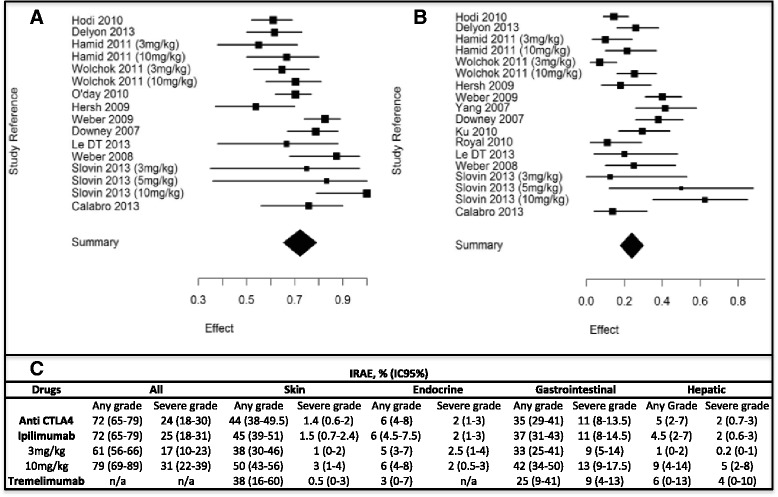
“In a large meta-analysis of patients with different solid tumors (excluding HCC) treated with anti-CTLA-4 agents, the most frequent adverse events (AEs) involved the skin and the gastrointestinal tract (occurring in 44% and 35% of patients, respectively [50].”
Butt, L. (2017) · Otago University Research Archive (University of Otago) · Cited by 1
Szabados, T., Kerepesi, C., & Bakács, T. (2015) · arXiv (Cornell University) · doi:10.48550/arxiv.1507.00950 · Cited by 1
Molina, G. E. (2020) · Digital Access to Scholarship at Harvard (DASH) (Harvard University) · Cited by 1
Selnø, A. T. H. (2021) · Kent Academic Repository (University of Kent) · doi:10.22024/unikent/01.02.90836 · Cited by 1
Ziani, L. (2017) · theses.fr (ABES) · doi:10.70675/a0f25460zb6f0z4657z9194zefca731af42c · Cited by 1
Autonomic nervous system and gastrointestinal manifestations with an emphasis on gastric dysfunction
Shouman, K., Camilleri, M., & Singer, W. (2026) · Autonomic Neuroscience · doi:10.1016/j.autneu.2026.103474
Bustos, B. D. U., & Estrada, R. B. (2016) · Piel · doi:10.1016/j.piel.2016.04.015
Design of immune-modulating polymeric microparticles in view of cell-derived cancer vaccination
Lybaert, L. (2017) · Ghent University Academic Bibliography (Ghent University)
Un cas de polyarthrite survenue sous pembrolizumab
Salmon, J., Lambrecht, I., Brochot, P., & Grange, F. (2017) · Revue du Rhumatisme · doi:10.1016/j.rhum.2017.07.015
Therapie der immunvermittelten paraneoplastischen neurologischen Erkrankungen
Ayzenberg, I., Gold, R., & Kleiter, I. (2017) · Aktuelle Neurologie · doi:10.1055/s-0043-112741
“[118] Bertrand A, Kostine M, Barnetche T et al.”
BackgroundPredictors of Response to Immune Checkpoint Blockade
Andrews, M. C., & Wargo, J. A. (2017) · Springer eBooks · doi:10.1007/978-3-319-62431-0_31
Complications rhumatologiques de l’immunothérapie anticancéreuse
Schaeverbeke, T., & Kostine, M. (2017) · Revue du Rhumatisme · doi:10.1016/s1169-8330(17)30327-7
Self-citationAutologous graft-versus-host disease with combined immune checkpoint blockade
Kofler, L., Dréno, B., & Röcken, M. (2018) · European Journal of Cancer · doi:10.1016/j.ejca.2018.05.016
Bukovský, A., & Mr, C. (2018) · Journal of Gynecology Research · doi:10.15744/2454-3284.4.102
“Adverse events included inflammation of gastrointestinal tract, skin lesions (rash, pruritus, and vitiligo), hepatitis, hypophysitis, thyroiditis, sarcoidosis, uveitis, Guillain-Barre syndrome, immune-mediated cytopenia and polymyalgia rheumatic [2].”
BackgroundAnquetil, C., Salem, J., Lebrun‐Vignes, B., Johnson, D. B., Mammen, A. L., Stenzel, W., Léonard-Louis, S., Benvéniste, O., Moslehi, J. J., & Allenbach, Y. (2018) · La Revue de Médecine Interne · doi:10.1016/j.revmed.2018.10.339
Disease Interception in Autoimmune Diseases: From a Conceptual Framework to Practical Implementation
Suri, A. (2019) · Wiley eBooks · doi:10.1002/9781119289234.ch1
Characterising the gene regulatory landscape of CD4+ T cells
Glinos, D. A. (2018) · Apollo (University of Cambridge) · doi:10.17863/cam.39595
Kostine, M. (2018) · theses.fr (ABES) · doi:10.70675/d2e0e2fdzce02z488fz93a7za091adc2c76c
Self-citationVitiligo-Like Lesions in Patients with Metastatic Melanoma Receiving Immunotherapies
Boniface, K., & Sénéschal, J. (2019) · Springer eBooks · doi:10.1007/978-3-319-62960-5_16
Prodeus, A. (2018) · TSpace (University of Toronto)
Diao, K. (2018) · Digital Access to Scholarship at Harvard (DASH) (Harvard University)
Иммунозависимые побочные эффекты, ассоциированные с иммунотерапией рака
Golovach, I. Y., & Yehudіna, Y. D. (2019) · Practical oncology · doi:10.22141/2663-3272.2.3.2019.186471
Fcγ receptors—Master regulators of antibody therapy
Beers, S. A., & Frendéus, B. (2021) · Elsevier eBooks · doi:10.1016/b978-0-12-822028-3.00014-5
Cancer Immunotherapy in Patients with Preexisting Inflammatory Arthritis
Thanarajasingam, U., & Abdel‐Wahab, N. (2021) · Springer eBooks · doi:10.1007/978-3-030-56824-5_12
The Divergent Role of Co-receptors and Cytokines in the Immune Response to Cancer and Self
Tucker, C. (2020) · University of Minnesota Digital Conservancy (University of Minnesota)
Pinilla, P. A., Maya, R. E. B., & Pedraza, R. S. (2019) · Revista Colombiana de Hematología y Oncología · doi:10.51643/22562915.4
Development of Immunotherapeutic Strategies for Early Phase Clinical Trials
Martín-Romano, P., Chabanon, R. M., Procureur, A., Aspeslagh, S., & Postel-Vinay, S. C. (2020) · Springer eBooks · doi:10.1007/978-3-030-47682-3_15
Immuntherapien - Hoffnungsträger in der Therapie des Zervixkarzinoms
Gantner, L. F. (2021) · InFo Hämatologie + Onkologie · doi:10.1007/s15004-021-8694-7
Analysis of Toxicity Profile and Predictors of Immune Checkpoint Inhibitor-Related Adverse EventsPreprint
Bai, R., Chen, N., Chen, X., Li, L., Song, W., Li, W., Zhao, Y., Zhang, Y., Han, F., Lv, Z., et al. (2020) · Research Square · doi:10.21203/rs.3.rs-95117/v1
Olson, E., Russell, G. B., Lantz, J. W., Dothard, A. S., Aggarwal, V., & Lycan, T. W. (2021) · Journal for ImmunoTherapy of Cancer · doi:10.1136/jitc-2021-sitc2021.810
“improved overall survival (OS), hypothesized to be due to molecular mimicry between similar antigens.(1) 2 Further analysis of the impact of irAEs on OS among real-world lung cancer patients is needed; this study addresses this need in a hospitalized population.”
BackgroundNeurologic complications of immune modulatory therapy
Andersen, B. M., & Reardon, D. A. (2022) · Elsevier eBooks · doi:10.1016/b978-0-12-821976-8.00025-6
Fan, L., Ni, R., Zhang, L., Yang, W., Li, M., Li, R., Wang, A., & Liu, B. (2022) · Research Square · doi:10.21203/rs.3.rs-2074206/v1
Emerging Immunotherapy: Liver Cancer Microenvironment for Treatment
Liu, S. (2022) · IntechOpen eBooks · doi:10.5772/intechopen.106021
Zhou, J., Zhang, Z., & Wu, B. (2022) · Research Square · doi:10.21203/rs.3.rs-2222674/v1
Cutaneous Reactions to Oncologic Immunotherapy
Choi, R., & Leventhal, J. S. (2022) · Updates in clinical dermatology · doi:10.1007/978-3-031-09388-3_26
Immunotherapy and Endocrine Oncology
Contreras, M., Sánchez, J. C., & Iglesias, P. (2022) · Springer eBooks · doi:10.1007/978-3-030-80962-1_242-1
Zhou, C., & Luo, P. (2022) · PanCancer · doi:10.58510/xdqx2766
[18F]FDG PET/CT Imaging in Cancer Treatment with Checkpoint Inhibitors
Catalfamo, B., & Lopci, E. (2023) · Springer eBooks · doi:10.1007/978-3-030-80962-1_171-1
Lahouti, A. H., & Christopher‐Stine, L. (2023) · Elsevier eBooks · doi:10.1016/b978-0-7020-8165-1.00057-5
Malignant insulinoma in dog: Case report
Mandelík, R., Ševčíková, M. K., Karaffová, V., Révajová, V., & Ševčíková, Z. (2023) · Open Journal of Clinical and Medical Images · doi:10.52768/2833-2725/1169
“Although anti-CTLA-4 demonstrated in retrospective studies show a lower risk of graft loss when compared to anti-PD-1, it also corresponds to a lower response rate [9,10].”
Immune checkpoint inhibitors to metastatic melanoma and renal allograft rejection: A case report
Monique, T. (2022) · Open Journal of Clinical and Medical Images · doi:10.52768/2833-2725/1069
1247 Gene signature predict autoimmune toxicity in patients with metastatic melanoma
Mallardo, D., Fordellone, M., Bailey, M. D., Tuffanelli, M., White, A., Simeone, E., Festino, L., Vanella, V., Trojaniello, C., Vitale, M. G., et al. (2023) · Journal for ImmunoTherapy of Cancer · doi:10.1136/jitc-2023-sitc2023.1247
Isaacs, J. M., Shariff, A. I., & Crawford, J. (2023) · Springer eBooks · doi:10.1007/978-3-030-93702-7_12-1
A Concise Review of Immune Checkpoint Inhibitors Immunotherapy for Head and Neck Cancer
Felemban, M. F., Mubayrik, A. F. B., & Mukhtar, H. H. (2024) · Acta Scientific Dental Scienecs · doi:10.31080/asds.2024.08.1764
TIM-3 blockade as a therapeutic approach for diffuse intrinsic pontine glioma
Ausejo-Mauleón, I. (. (2023) · Depósito Académico Digital Universidad de Navarra (University of Navarra) · doi:10.15581/10171/69095
Autoimmune Phenomena in Cancer Patients Treated with Immune Checkpoint Inhibitors
Tocut, M., Ehrenfeld, M., & Zandman‐Goddard, G. (2024) · Wiley eBooks · doi:10.1002/9781119858430.ch18
Isaacs, J. M., Shariff, A. I., Crawford, J., Khouri, M. G., Kheterpal, M., Sammons, S. L., Ferreira, M., Wall, A., Onken, J. E., King, L., et al. (2024) · Springer eBooks · doi:10.1007/978-3-030-93702-7_12-2
Karagodina, Y. B., Ruban, M. S., Savchina, V. V., Болотина, Л. В., Феденко, А. А., & Kornietskaya, A. L. (2023) · Effective Pharmacotherapy · doi:10.33978/2307-3586-2023-19-33-12-17
Neuropsychological issues related to immunotherapy
Youssef, G., & Lee, E. Q. (2024) · Elsevier eBooks · doi:10.1016/b978-0-443-15663-2.00026-2
Score pronostique « Pronopall » et immunothérapie, étude descriptive rétrospective
Menuet, Y., Evin, A., & Hennion, C. (2024) · Médecine Palliative · doi:10.1016/j.medpal.2024.11.001
Immunotherapy for Endocrine Oncology
Contreras, M., Sánchez, J. C., & Iglesias, P. (2024) · Springer eBooks · doi:10.1007/978-3-030-80962-1_242-2
Impact de l'hépatocyte growth factor sur les lymphocytes T régulateurs dans le cancer gastrique
Palle, J. (2023) · theses.fr (ABES) · doi:10.70675/0951fdc8zcb07z41bcz8559z8c45d4215dc0
Freitas, J. D. A. S., Neto, M. M. D. S., de Lima, C. K. F., Sorte, N. C. A. B., Bendicho, M. T., & Júnior, A. D. F. S. (2025) · Medicina Clínica (English Edition) · doi:10.1016/j.medcle.2024.08.006
Fournel, S. E. A. Y. E. P., Berremila, S. A., Grosjean, V., Mellas, N., Bouleftour, W., & Lamuraglia, M. (2025) · Annals of Case Reports · doi:10.29011/2574-7754.102181
“Unfortunately, the overactive immune response can lead to some immune-related adverse effects [2,3].”
Liposomes: Application in Drug Delivery and Cancer Therapy
Nejati, O., Saberi, G., Madani, G., Bal‐Öztürk, A., Zarepour, A., Khosravi, A., & Zarrabi, A. (2024) · Springer eBooks · doi:10.1007/978-981-97-7445-6_32
Immune Checkpoint Inhibitors in Therapeutics and their Adverse Effect Profile: A Review
Adiga, S., Kishore, B. A., & Vasishta, S. (2025) · The Open Biomedical Engineering Journal · doi:10.2174/0118741207369739250423073032
Nowiczkow, D. (2025) · Tutoring Gedanensis · doi:10.26881/tutg.2025.1.03
Liao, Z., Hu, X., Yu, S., Wang, J., Deng, B., Ao, F., & Yang, J. (2025) · Journal of Clinical Pharmacy and Therapeutics · doi:10.1155/jcpt/7614368
Liu, R., & Liu, X. (2025) · Journal of Biosciences and Medicines · doi:10.4236/jbm.2025.138004
Schellhammer, S. K., Day, J. Q., Fan, R., Ye, F., Planz, V. B., & Johnson, D. B. (2025) · Frontiers in Oncology · doi:10.3389/fonc.2025.1683982
Vlaming, M. R., He, Y. Z., & Bremer, E. (2025) · Springer eBooks · doi:10.1007/978-3-032-00767-4_196
Immunotherapy for Endocrine Oncology
Contreras, M., Sánchez, J. C., & Iglesias, P. (2025) · Springer eBooks · doi:10.1007/978-3-032-00769-8_242
Morder, K. M., Nguyen, M., Wilfahrt, D. N., Dahmani, Z. L., Burr, A. B. P., Xie, B., Morikone, M., Nieves-Rosado, H. M., Gunn, W. G., Hurd, D. E., et al. (2025) · doi:10.1158/2159-8290.30516615
Guo, Y., Zhu, Q., Ren, W., & Li, F. (2025) · Frontiers in Immunology · doi:10.3389/fimmu.2025.1604740
Implications of solid tumours for intensive care
Wigmore, T., Gruber, P., & Carter, S. (2025) · Elsevier eBooks · doi:10.1016/b978-0-443-11611-7.00086-4
Jia, X.-H., Geng, L.-Y., Jiang, P.-P., Xu, H., Nan, K.-J., Yao, Y., Jiang, L.-L., Sun, H., Qin, T.-J., & Guo, H. (2020) · Figshare · doi:10.6084/m9.figshare.13468451
Additional file 1 of IGSF11 and VISTA: a pair of promising immune checkpoints in tumor immunotherapy
Tang, X.-Y., Xiong, Y.-L., Shi, X.-G., Zhao, Y.-B., Shi, A.-P., Zheng, K.-F., Liu, Y.-J., Jiang, T., Ma, N., & Zhao, J.-B. (2022) · Figshare · doi:10.6084/m9.figshare.20308105
Mishra, R., Sukhbaatar, A., Mori, S., & Kodama, T. (2023) · Figshare · doi:10.6084/m9.figshare.26591696
Yang, F., Shay, C., Abousaud, M. I., Tang, C., Li, Y., Qin, Z., Saba, N. F., & Teng, Y. (2024) · Figshare · doi:10.6084/m9.figshare.26559209
Jia, X.-H., Geng, L.-Y., Jiang, P.-P., Xu, H., Nan, K.-J., Yao, Y., Jiang, L.-L., Sun, H., Qin, T.-J., & Guo, H. (2020) · Figshare · doi:10.6084/m9.figshare.13468447
Jamieson, L., Forster, M. D., Zaki, K., Mithra, S., Alli, H., O’Connor, A., Patel, A., Wong, I. C. K., & Chambers, P. (2020) · Figshare · doi:10.6084/m9.figshare.12788928
Yang, F., Shay, C., Abousaud, M. I., Tang, C., Li, Y., Qin, Z., Saba, N. F., & Teng, Y. (2024) · Figshare · doi:10.6084/m9.figshare.26559206
Boegeholz, J., Brueggen, C. S., Pauli, C., Dimitriou, F., Haralambieva, E., Dummer, R., Manz, M. G., & Widmer, C. C. (2020) · Figshare · doi:10.6084/m9.figshare.12127458
Boegeholz, J., Brueggen, C. S., Pauli, C., Dimitriou, F., Haralambieva, E., Dummer, R., Manz, M. G., & Widmer, C. C. (2020) · Figshare · doi:10.6084/m9.figshare.12127464
Metadata
- Authors
- Bertrand, A., Kostine, M., Barnetche, T., Truchetet, M.-E., & Schaeverbeke, T.
- Affiliations
- Centre Hospitalier Universitaire de Bordeaux (FR)
- Centre National de la Recherche Scientifique (FR)
- Université de Bordeaux (FR)
- Corresponding author
- Bertrand, Anne
- Venue
- BMC Medicine
- Published
- 2015-09-04
- Volume
- 13
- Issue
- 1
- Pages
- 211-211
- ISSN
- 1741-7015 (ISSN-L)
- PMC
- PMC4559965
- OpenAlex
- W1914776013
- Cited by
- 704
- References
- 142
- Citations by year
- 2026: 25 · 2025: 33 · 2024: 48 · 2023: 65 · 2022: 65 · 2021: 72 · 2020: 95 · 2019: 99 · 2018: 75 · 2017: 76 · 2016: 48 · 2015: 1
- FWCI
- 7.15
- Type
- journal article
- Language
- en
- Open access
- gold
- doi.org
- Licence
- Locations
- BMC Medicine (publishedVersion, cc-by)
- Europe PMC (PubMed Central) (publishedVersion, cc-by)
- PubMed Central (publishedVersion, cc-by)
- PubMed (publishedVersion)
- Topics
- Health Sciences › Medicine › Oncology › Cancer Immunotherapy and Biomarkers
- Life Sciences › Immunology and Microbiology › Immunology › Immunotherapy and Immune Responses
- Life Sciences › Pharmacology, Toxicology and Pharmaceutics › Toxicology › Pharmacovigilance and Adverse Drug Reactions
- Keywords
- CTLA-4 blockade, ipilimumab, tremelimumab, immune checkpoint inhibitors, immunotoxicity, rash, colitis, hepatitis, hypophysitis, thyroiditis, dose-dependent toxicity, adverse event incidence, time to onset of adverse events, treatment response, cancer immunotherapy, metastatic cancer, vitiligo
- MeSH terms
- Ipilimumab, Antibodies, Monoclonal, Antineoplastic Agents, Humans, Immunologic Factors, Immunotherapy, Neoplasms, CTLA-4 Antigen, Antibodies, Monoclonal, Humanized
About these checks
Registry, retraction, Cites and statistics results are computed, not judged, with one exception: a printed reference that no index lists is read once by a model before it counts as a citation error. Claims are extracted by a model and kept only when their quote appears verbatim in the text; each cited source is then checked, with a model’s help, for whether it says what the claim relies on. Those verdicts can be wrong — read the claim’s quote and the cited source before relying on one.
Statistics and arithmetic are recomputed, not judged.
Confidence bands are shown only for fields calibrated on our annotated test set. None is calibrated yet, so no band is shown.
What counts as a claim ›How we measure confidence ›How we check this ›
Are you an author, or do you see a problem with this page? Request a review
Data sources
Bibliographic data: Semantic Scholar, OpenAlex, Crossref.
Contains information from the Semantic Scholar Academic Graph Datasets, made available under the ODC Attribution License (ODC-BY 1.0).
Semantic Scholar’s data is described in: Kinney, R., et al. (2023). The Semantic Scholar Open Data Platform. arXiv:2301.10140.
