

Predatory’ open access: a longitudinal study of article volumes and market characteristics
Open accessThe DOI matches its Crossref record; 28 of the 28 references it cites were found in a registry or an index.
Abstract
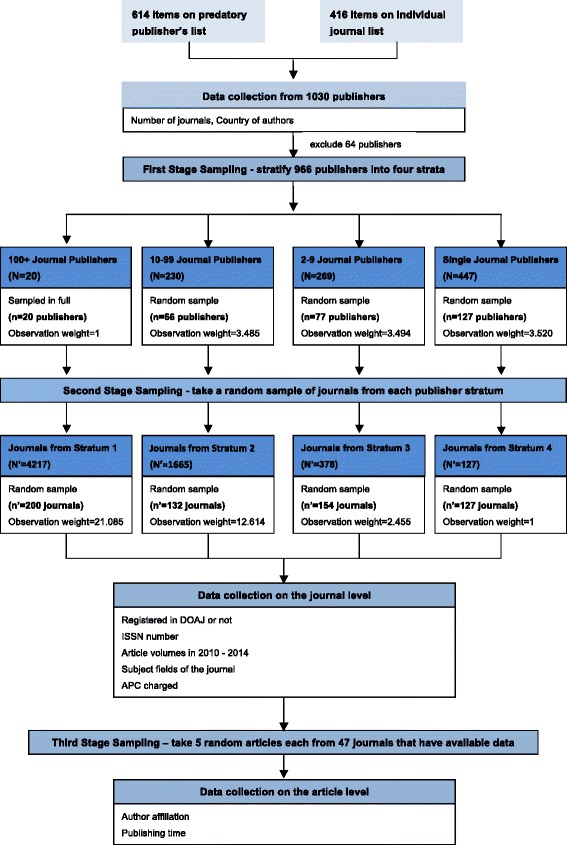
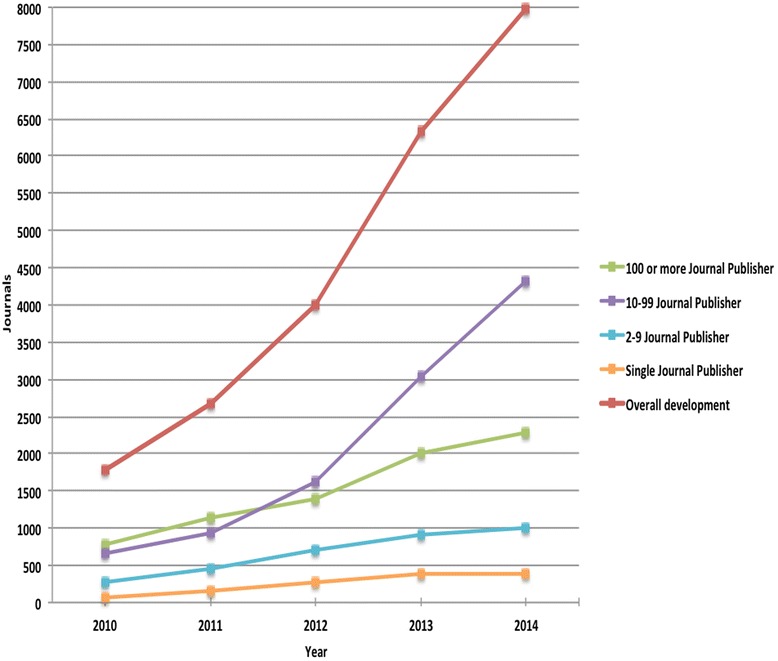
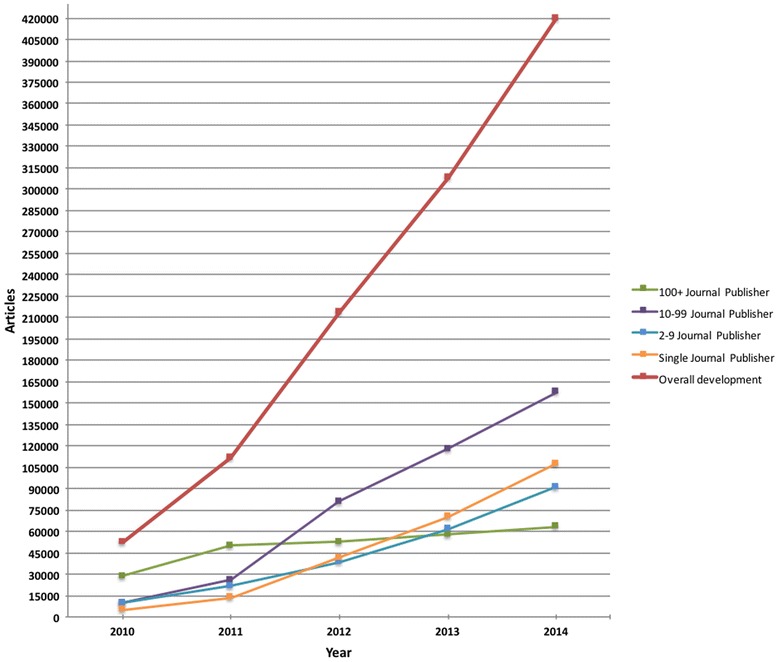
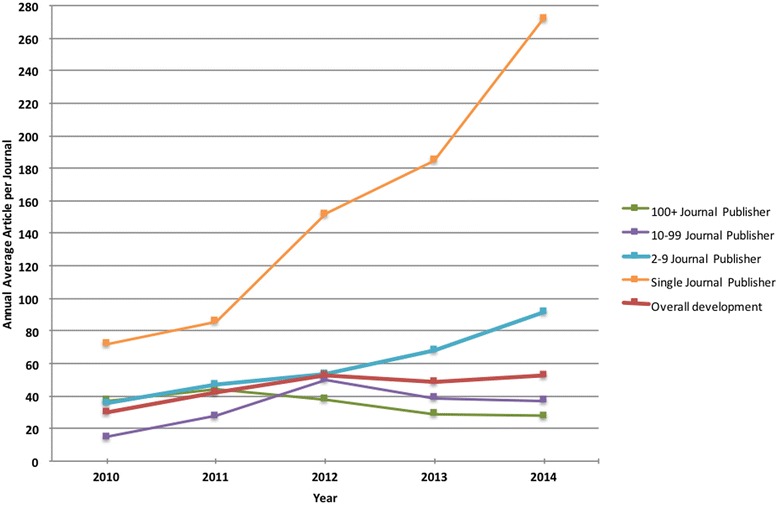
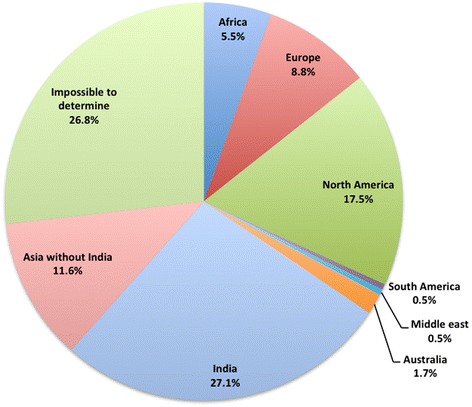
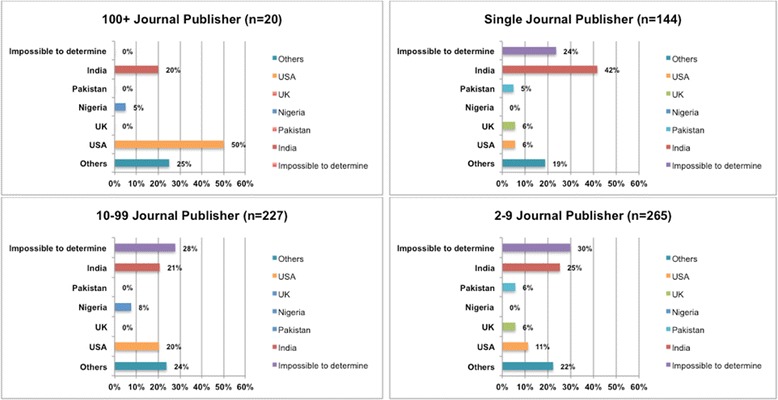
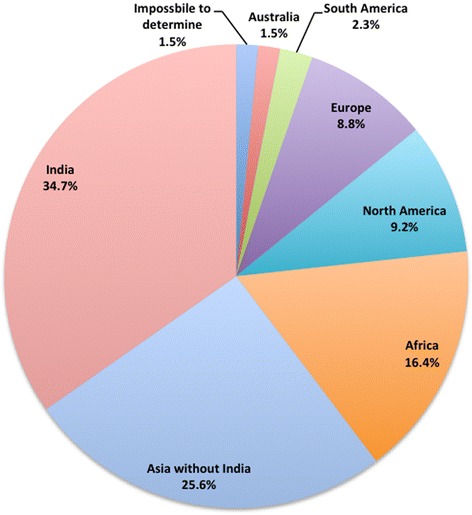
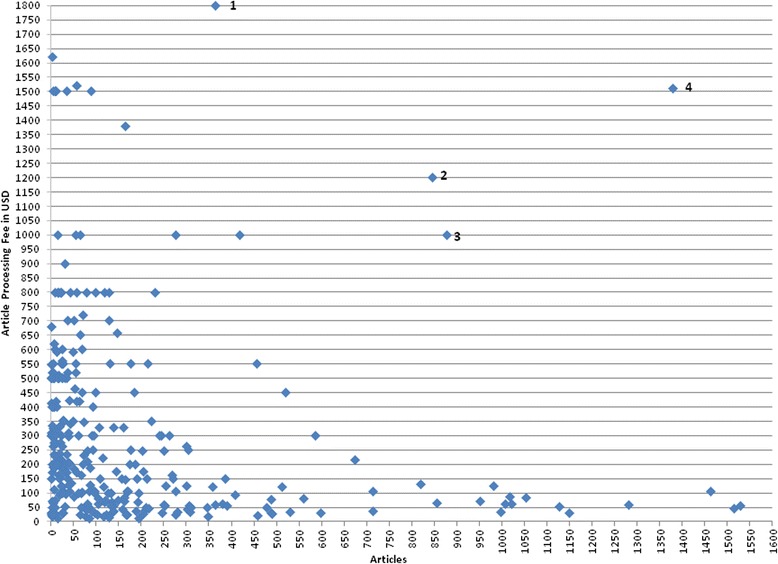
BACKGROUND: A negative consequence of the rapid growth of scholarly open access publishing funded by article processing charges is the emergence of publishers and journals with highly questionable marketing and peer review practices. These so-called predatory publishers are causing unfounded negative publicity for open access publishing in general. Reports about this branch of e-business have so far mainly concentrated on exposing lacking peer review and scandals involving publishers and journals. There is a lack of comprehensive studies about several aspects of this phenomenon, including extent and regional distribution. METHODS: After an initial scan of all predatory publishers and journals included in the so-called Beall's list, a sample of 613 journals was constructed using a stratified sampling method from the total of over 11,000 journals identified. Information about the subject field, country of publisher, article processing charge and article volumes published between 2010 and 2014 were manually collected from the journal websites. For a subset of journals, individual articles were sampled in order to study the country affiliation of authors and the publication delays. RESULTS: Over the studied period, predatory journals have rapidly increased their publication volumes from 53,000 in 2010 to an estimated 420,000 articles in 2014, published by around 8,000 active journals. Early on, publishers with more than 100 journals dominated the market, but since 2012 publishers in the 10-99 journal size category have captured the largest market share. The regional distribution of both the publisher's country and authorship is highly skewed, in particular Asia and Africa contributed three quarters of authors. Authors paid an average article processing charge of 178 USD per article for articles typically published within 2 to 3 months of submission. CONCLUSIONS: Despite a total number of journals and publishing volumes comparable to respectable (indexed by the Directory of Open Access Journals) open access journals, the problem of predatory open access seems highly contained to just a few countries, where the academic evaluation practices strongly favor international publication, but without further quality checks.
Overview
The claims and statistics of this paper haven’t been checked yet.
Free: it reads the open-access text and checks the first 5 claims that cite a source we can check. Create a free account to check every claim.
Integrity signals
Registry
Cites
Statistics
Figures
Verification
Claims the paper makes
The claims and statistics of this paper haven’t been checked yet.
Free: it reads the open-access text and checks the first 5 claims that cite a source we can check. Create a free account to check every claim.
Claims other papers make about this one
Each is checked against this paper’s own text: does it say what the citing paper says it does?
The source backs part of the claim, not all of it — or backs it for a different population, condition or comparison.
In the citing paper
“The growth of online journals that require author publication fees may be driving an increasingly profit-based publishing model (49).”
From Protection of the human gene research literature from contract cheating organizations known as research paper mills (2022) · cites this paper as [49]
Experimental — accuracy not yet measuredThe cited source says what the claim attributes to it.
In the citing paper
“Although these criteria are often considered to be controversial [164], it was shown that predatory journals usually fulfilled several of the criteria outlined by Beall [150,165].”
From Web of Science (WoS) and Scopus: The Titans of Bibliographic Information in Today’s Academic World (2021) · cites this paper as [150]
The cited source says what the claim attributes to it.
In the citing paper
“these artificial journals have evolved and they even manage to pass the selection process of the major bibliographic, as well as OA, DBs [145,150,157,158,166]”
From Web of Science (WoS) and Scopus: The Titans of Bibliographic Information in Today’s Academic World (2021) · cites this paper as [150]
In the citing paper
“Publish or perish research cultures (6,34,43,101) combined with an increasingly commercially-focused publishing environment (49,102) are leading to the dislocation between the scientific and career value of research publications (103)”
From Protection of the human gene research literature from contract cheating organizations known as research paper mills (2022) · cites this paper as [49]
In the citing paper
“When including the entire literature, predatory publishing likely comprises about 5 to 10%.”
From Misinformation in and about science (2021) · cites this paper as [88]
3 more claims about this paper
Create a free account to see every claim other papers make about this one.
Self-check
Percentages, sums and reported differences re-computed from the paper’s own numbers.
The self-check needs the paper’s full text.
Citations
Cites
Bohannon, J. (2013) · Science · doi:10.1126/science.342.6154.60 · Cited by 934
The Development of Open Access Journal Publishing from 1993 to 2009
Laakso, M., Welling, P., Bukvova, H., Nyman, L., Björk, B.-C., & Hedlund, T. (2011) · PLoS ONE · doi:10.1371/journal.pone.0020961 · Cited by 755
Self-citationPredatory publishers are corrupting open access
Beall, J. (2012) · Nature · doi:10.1038/489179a · Cited by 658 · cited 1×
“Jeffrey Beall coined the phrase ‘predatory publishers’ to describe publishers of this sort of journal [6].”
BackgroundSuber, P. (2012) · The MIT Press eBooks · doi:10.7551/mitpress/9286.001.0001 · Cited by 623
The Access/Impact Problem and the Green and Gold Roads to Open Access
Harnad, S. R., Brody, T., Vallières, F., Carr, L. A., Hitchcock, S., Gingras, Y., Oppenheim, C., Stamerjohanns, H., & Hilf, E. R. (2004) · Serials Review · doi:10.1016/j.serrev.2004.09.013 · Cited by 529 · cited 7×
“In addition, there is a ‘green’ route in which authors or third parties can legally make manuscript versions of articles published in traditional journals freely available on the Internet [4].”
BackgroundInfluentialThe publishing delay in scholarly peer-reviewed journals
Björk, B.-C., & Solomon, D. (2013) · Journal of Informetrics · doi:10.1016/j.joi.2013.09.001 · Cited by 432
Self-citation(2000) · Technometrics · doi:10.1080/00401706.2000.10486038 · Cited by 412
Towards Electronic Journals: Realities for Scientists, Librarians, and Publishers,,,,
Tenopir, C., & King, D. W. (2000) · Cited by 400
Anatomy of open access publishing: a study of longitudinal development and internal structure
Laakso, M., & Björk, B.-C. (2012) · BMC Medicine · doi:10.1186/1741-7015-10-124 · Cited by 364 · cited 3×
“Björk and Solomon [32] found delays of 9 – 18 months, depending on the field of science, with social sciences having the longest delays.”
BackgroundMethodSelf-citationWho publishes in “predatory” journals?
Xia, J., Harmon, J. L., Connolly, K. G., Donnelly, R. M., Anderson, M. R., & Howard, H. A. (2015) · Journal of the Association for Information Science and Technology · doi:10.1002/asi.23265 · Cited by 359 · cited 1×
“Xia et al. also studied the origin of authors in seven pharmacological journals included in the above list and found a strong dominance of Indian authors, with Nigerian and Pakistani authors in second and third place [18].”
Result
Research works printed but not linked: 1
- Spears T. Respectable medical journal turns to dark side. Ottawa, ON: Ottawa Citizen; 2014. http://ottawacitizen.com/technology/science/respected-medical-journal-turns-to-dark-side.
Cited by
Items 101–200 of 813
Negre, J. S., Sastre, A. C., & Forgas, R. C. (2022) · Learned Publishing · doi:10.1002/leap.1450 · Cited by 46
“1 communication systems has been increasing annually (Bagues et al., 2019; Perlin et al., 2017; Shen & Björk, 2015).”
BackgroundThe gaming of citation and authorship in academic journals: a warning from medicine
Macdonald, S. (2022) · Social Science Information · doi:10.1177/05390184221142218 · Cited by 59
“The author-pays principle would seem to follow, an arrangement made familiar by open access publishing and which is fundamental to the business model of predatory publishers and medical journals alike (Shen and Björk, 2015; see also Labbé and Labbé, 2013).”
BackgroundAn open automation system for predatory journal detection
Chen, L., Su, S., Liao, C., Wong, K., & Yuan, S. (2023) · Scientific Reports · doi:10.1038/s41598-023-30176-z · Cited by 56
Publishing in predatory open access journals: Authors' perspectives
Salehi, M., Soltani, M., Tamleh, H., & Teimournezhad, S. (2019) · Learned Publishing · doi:10.1002/leap.1261 · Cited by 36
“The number of papers published in predatory journals has been estimated to have increased from 53,000 in 2012 to 420,000 in 2014 (Grzybowski et al., 2017; Shen & Bjork, 2015).”
BackgroundCitation patterns between impact-factor and questionable journals
Kulczycki, E., Hołowiecki, M., Taşkın, Z., & Krawczyk, F. (2021) · Scientometrics · doi:10.1007/s11192-021-04121-8 · Cited by 44
Identifying Predatory or Pseudo-Journals
Laine, C. M., & Winker, M. A. (2017) · The International Journal of Occupational and Environmental Medicine · doi:10.15171/ijoem.2017.1048 · Cited by 33
Beware of the predatory science journal: A potential threat to the integrity of medical research
Johal, J., Ward, R. J., Gielecki, J. S., Walocha, J. A., Natsis, K., Tubbs, R. S., & Loukas, M. (2017) · Clinical Anatomy · doi:10.1002/ca.22899 · Cited by 38
Identifying Predatory or Pseudo-Journals
Laine, C. M., & Winker, M. A. (2017) · Journal of Enam Medical College · doi:10.3329/jemc.v7i2.32650 · Cited by 33
Mills, D., Branford, A., Inouye, K., Robinson, N., & Kingori, P. (2021) · Journal of African Cultural Studies · doi:10.1080/13696815.2020.1864304 · Cited by 46
“The second slide cites an Inside Higher Ed article (Straumsheim 2015) that uses estimates by Shen and Björk (2015) as evidence that predatory journals “dumped more than 420,000 articles into the market in 2014, up from 53,000 in 2010”.”
BackgroundInfluentialPredatory publishing and cybercrime targeting academics
Umlauf, M. G., & Mochizuki, Y. (2018) · International Journal of Nursing Practice · doi:10.1111/ijn.12656 · Cited by 33
Converting Scholarly Journals to Open Access: A Review of Approaches and Experiences
Solomon, D., Laakso, M., & Björk, B. (2016) · Lincoln (University of Nebraska) · Cited by 32
Self-citationPredatory Journals: Illegitimate Publishing and Its Threat to All Readers and Authors
Roberts, J. (2016) · The Journal of Sexual Medicine · doi:10.1016/j.jsxm.2016.10.008 · Cited by 32
Alrawadıeh, Z. (2018) · Tourism and Hospitality Research · doi:10.1177/1467358418800121 · Cited by 35
“Interestingly, the USA are ranked first which calls into question the notion that the predatory phenomenon is “a global North-South dilemma” (Shen and Bj€ork, 2015: 14) and confirms that even authors from developed countries can be involved in predatory publishing (Oermann et al., 2016; Sim on,…”
BackgroundMethodResultInfluentialManuscript Submission Invitations from ‘Predatory Journals’: What Should Authors Do?
Kebede, M. M., Schmaus-Klughammer, A. E., & Tesfaye, B. (2017) · Journal of Korean Medical Science · doi:10.3346/jkms.2017.32.5.709 · Cited by 33
“More than three quarter of the authors were from Asia and Africa (12).”
BackgroundCallaghan, C. W., & Nicholson, D. R. (2020) · Journal of Further and Higher Education · doi:10.1080/0309877x.2019.1695762 · Cited by 41
Zhang, T. (2020) · Scientometrics · doi:10.1007/s11192-020-03736-7 · Cited by 37
Predatory Journals- The Power of the Predator Versus the Integrity of the Honest
Mathew, R. P., Patel, V., & Low, G. (2021) · Current Problems in Diagnostic Radiology · doi:10.1067/j.cpradiol.2021.07.005 · Cited by 44
Cuschieri, S. (2018) · Early Human Development · doi:10.1016/j.earlhumdev.2018.02.017 · Cited by 33
Responsible dissemination of health and medical research: some guidance points
Ravinetto, R., & Singh, J. A. (2022) · BMJ Evidence-Based Medicine · doi:10.1136/bmjebm-2022-111967 · Cited by 29
Adelodun, B., Agbelusi, O., Soma, T., Odey, G., Adeyi, Q., Kumar, P., Ajibade, F. O., Goala, M., Silva, L. F. O., Mostafa, Y. S., et al. (2024) · Waste Management & Research The Journal for a Sustainable Circular Economy · doi:10.1177/0734242x241257655 · Cited by 34
“Besides, it has been previously estimated that 75% of the predatory journal authors are from Africa and Asia (Shen and Björk, 2015), which could also contribute to the low research output from the reputable journals that are indexed in the Scopus database considered in the present study.”
How Frequently Are Articles in Predatory Open Access Journals Cited
Björk, B., Kanto-Karvonen, S., & Harviainen, J. T. (2020) · RePEc: Research Papers in Economics · Cited by 29
Self-citationda Silva, J. A. T., & Kimotho, S. G. (2021) · The Journal of Academic Librarianship · doi:10.1016/j.acalib.2021.102418 · Cited by 31
Academic nightmares: Predatory publishing
Nuland, S. E. V., & Rogers, K. A. (2016) · Anatomical Sciences Education · doi:10.1002/ase.1671 · Cited by 28
Fecal Carriage of Staphylococcus aureus in the Hospital and Community Setting: A Systematic Review
Claassen-Weitz, S., Shittu, A. O., Ngwarai, M. R., Thabane, L., Nicol, M. P., & Kaba, M. (2016) · Frontiers in Microbiology · doi:10.3389/fmicb.2016.00449 · Cited by 30
“All potentially eligible articles were screened for “predatory journals” using “Beall’s list” (Beall, 2015; Shen and Björk, 2015; Siebert et al., 2015).”
Backgroundopen access and academic associations in the political and social sciences: threat or opportunity?
Bull, M. J. (2016) · European Political Science · doi:10.1057/eps.2015.88 · Cited by 27
“Shen and Björk (2015) show that the number of predatory OA journals rose from 1,800 to 8,000 between 2010 and 2014, with the total number of articles published by these journals rising from 53,000 to over 420,000 in the same period.”
BackgroundRichtig, G., Berger, M., Koeller, M., Richtig, M., Richtig, E., Scheffel, J., Maurer, M., & Siebenhaar, F. (2023) · PLoS ONE · doi:10.1371/journal.pone.0287547 · Cited by 36
“In contrast to previous studies, we demonstrate that geographic locations mentioned in the journal title often match the country information stored in the ISSN database [8].”
Citation contagion: a citation analysis of selected predatory marketing journals
Moussa, S. (2020) · Scientometrics · doi:10.1007/s11192-020-03729-6 · Cited by 32
Predatory Conferences: What Are the Signs?
Pecorari, D. (2021) · Journal of Academic Ethics · doi:10.1007/s10805-021-09406-4 · Cited by 35
Maciel, É. D. S., Silva, B. K. R., Figueiredo, F. W. D. S., Pontes‐Silva, A., Quaresma, F. R. P., Adami, F., & Fonseca, F. L. A. (2022) · BMC Public Health · doi:10.1186/s12889-022-12973-9 · Cited by 29
“, diabetes mellitus and cardiovascular diseases), and this has a positive correlation with a high mortality rate [11, 12].”
BackgroundPredatory Journals: Revisiting Beall’s Research
Kendall, G., & Linacre, S. (2022) · Publishing Research Quarterly · doi:10.1007/s12109-022-09888-z · Cited by 27
“This paper is also written in the context of the number of predatory journals and publishers rising from 53,000 predatory articles in 2010 to 420,000 in 2014, which appeared in about 8000 predatory journals [10] and the community not responding to the warnings of Beall on the dangers posed by predatory publishers [11].”
BackgroundKnowledge and Influence of Predatory Journals in Dermatology: A Pan-Austrian Survey
Richtig, G., Richtig, M., Hoetzenecker, W., Saxinger, W., Lange‐Asschenfeldt, B., Steiner, A., Strohal, R., Posch, C., Bauer, J., Müllegger, R., et al. (2018) · Acta Dermato Venereologica · doi:10.2340/00015555-3037 · Cited by 31
“An advantage of open-access journals is, however, that the time from submission to publication is generally shorter than for traditional journals; this guarantees more rapid publication, and, since it is freely available to all readers, also guarantees broader visibility (4).”
Background“Think. Check. Submit.” to avoid predatory publishing
Cortegiani, A., & Shafer, S. L. (2018) · Critical Care · doi:10.1186/s13054-018-2244-1 · Cited by 27
Discussion document: Predatory Publishing
(2019) · doi:10.24318/cope.2019.3.6 · Cited by 27
Threats to the Survival of the Author-Pays-Journal to Publish Model
Al‐Khatib, A., & da Silva, J. A. T. (2016) · Publishing Research Quarterly · doi:10.1007/s12109-016-9486-z · Cited by 28
“Predatory publishers have identified this weakness and have been targeting and attracting authors from lower income countries [22].”
BackgroundWager, E. (2017) · Journal of Epidemiology · doi:10.1016/j.je.2017.01.001 · Cited by 33
Gamble, J., Traynor, R. L., Gruzd, A. A., Mai, P., Dormuth, C. R., & SKETRIS, I. S. (2018) · Pharmacoepidemiology and Drug Safety · doi:10.1002/pds.4401 · Cited by 28
“Moreover, the rapid rise of predatory scientific publishing entities adds further noise to online activity.(44) These predatory journals may be mistaken for legitimate journals by scholars and the public.”
BackgroundScholarly communications, predatory publishers and publish or perish culture in the 2020s
Frederick, D. E. (2020) · Library Hi Tech News · doi:10.1108/lhtn-01-2020-0007 · Cited by 27
Evaluation of untrustworthy journals: Transition from formal criteria to a complex view
Kratochvíl, J., Plch, L., Sebera, M., & Koriťáková, E. (2020) · Learned Publishing · doi:10.1002/leap.1299 · Cited by 25
“Connecting APCs in the amount of $180 and less with predatory practices is also problematic (Rupp et al., 2019; Shamseer et al., 2017; Shen & Björk, 2015).”
BackgroundThe Rise of Predatory Publishing: How To Avoid Being Scammed
Ward, S. (2016) · Weed Science · doi:10.1614/ws-d-16-00080.1 · Cited by 26
Treatment and re/habilitation of children with cerebral palsy in India: a scoping review
Jindal, P., MacDermid, J. C., Rosenbaum, P., Rezze, B. D., Narayan, A., & Nayak, S. L. (2019) · Developmental Medicine & Child Neurology · doi:10.1111/dmcn.14211 · Cited by 33
Open Access: Concepts, findings, and recommendations for stakeholders in dentistry
Hua, F., Shen, C., Walsh, T., Glenny, A., & Worthington, H. V. (2017) · Journal of Dentistry · doi:10.1016/j.jdent.2017.06.012 · Cited by 27
“Lower costs, at least from the perspective of authors and institutions (the average cost of setting up and maintaining repositories is estimated at between 2 to 53 USD per article, much lower than the average APC of 1100 USD) [14, 24]; !”
BackgroundInfluentialSelf-citationAcademic Fraud: Solving the Crisis in Modern Academia
Wilson, P. F. (2020) · Exchanges The Interdisciplinary Research Journal · doi:10.31273/eirj.v7i3.546 · Cited by 37
“The format was popularized by well-reputed publications like PLoSOne and BMJ and has now become a dominant publishing platform for distributing academic content quickly with short article turnaround times (Bowman, 2014; Carafoli, 2015; Shen and Björk, 2015).”
BackgroundMethodInfluentialChand, S., Aroojis, A. J., Pandey, R. A., & Johari, A. N. (2021) · Indian Journal of Orthopaedics · doi:10.1007/s43465-021-00526-y · Cited by 24
Rovetta, A., & Castaldo, L. (2022) · JMIRx Med · doi:10.2196/36510 · Cited by 28
“The predatory phenomenon could be provoked and sustained by the success of the open access publishing method or the excessive editorial costs of renowned journals [53,54].”
BackgroundIbrahim, H., Elhag, S. A., Elnour, S., Abdel‐Razig, S., Harhara, T., & Nair, S. C. (2022) · Medical Education Online · doi:10.1080/10872981.2022.2139169 · Cited by 27
“members without their consent, and reporting misleading metrics or false impact factors, have posed real challenges [11,12].”
BackgroundResultPredatory publishing in medical education: a rapid scoping review
Tomlinson, O. W. (2024) · BMC Medical Education · doi:10.1186/s12909-024-05024-x · Cited by 33
“The prevalence of predatory publishers and their outputs has increased over recent years [12], with some even beginning to infiltrate biomedical databases [13], and attract citations in student bibliographies [14] as well as the wider literature base [15].”
Ejikeme, A. N., & Ezema, I. J. (2019) · Publishing Research Quarterly · doi:10.1007/s12109-018-09626-4 · Cited by 35
“Despite the potentials of open access publishing in research communication, the outlet has generated a lot of debate among scholars—some arguing that open access does not support peer review process [8, 35, 44].”
BackgroundBavdekar, S., & Tullu, M. (2016) · Journal of Postgraduate Medicine · doi:10.4103/0022-3859.173184 · Cited by 23
“[12] The MCI must have been wary of such predatory or fake e-journals.”
Analysis of thirteen predatory publishers: a trap for eager-to-publish researchers
Bolshete, P. (2017) · Current Medical Research and Opinion · doi:10.1080/03007995.2017.1358160 · Cited by 23
“In the study by Shen et al.5 the average APC was found to be 605 USD for Ac ce pt ed M nu sc rip t This APC was comparatively higher than observed in the present study.”
BackgroundChanging the Default to Support Open Access to Education Research
Roehrig, A. D., Soper, D., Cox, B. E., & Colvin, G. P. (2018) · Educational Researcher · doi:10.3102/0013189x18782974 · Cited by 24
“…the long-term financial viability of an academic publishing system based entirely on APCs (University of California Libraries, 2016), and the rise of “predatory” OA publishers that charge APCs in return for questionable or nonexistent peer review and rapid time-to-publication (Shen & Björk, 2015).”
BackgroundCaught in the Trap: The Allure of Deceptive Publishers
Chinn, P. L., & Nicoll, L. H. (2015) · Nurse author & editor · doi:10.1111/j.1750-4910.2015.tb00568.x · Cited by 23
da Silva, J. A. T. (2022) · New Review of Academic Librarianship · doi:10.1080/13614533.2022.2039242 · Cited by 27
“…and policy-makers might have offered erroneous or inaccurate advice or descriptions of the phenomenon, because those highly cited studies, such as Shen and Bj€ork (2015) and Xia et al. (2015), relied exclusively on Beall’s blacklists to draw conclusions about academics or academic populations.”
BackgroundBeall's List Removed: What Stands Between Us and Open Access Predators?
Mimouni, M., Braun, E., Mimouni, F. B., Mimouni, D., & Blumenthal, E. Z. (2017) · The American Journal of Medicine · doi:10.1016/j.amjmed.2017.03.040 · Cited by 23
Predatory Journals: The Worst Thing in Publishing, Ever
Cook, C. E. (2017) · Journal of Orthopaedic and Sports Physical Therapy · doi:10.2519/jospt.2017.0101 · Cited by 24
Predatory-journal papers have little scientific impact
Chawla, D. S. (2020) · Nature · doi:10.1038/d41586-020-00031-6 · Cited by 23
Marar, S. D., Hamza, M. A., Ayyash, M., & Abu-Shaheen, A. K. (2023) · Heliyon · doi:10.1016/j.heliyon.2023.e22270 · Cited by 56
Fighting the good fight: the fallout of fake news in infection prevention and why context matters
Peters, A., Tartari, E., Lotfinejad, N., Parneix, P., & Pittet, D. (2018) · Journal of Hospital Infection · doi:10.1016/j.jhin.2018.08.001 · Cited by 26
Predatory publishing dilutes and distorts evidence in systematic reviews
Hayden, J. A. (2020) · Journal of Clinical Epidemiology · doi:10.1016/j.jclinepi.2020.01.013 · Cited by 24
When peril responds to plague: predatory journal engagement with COVID-19
Allen, R. M. (2021) · Library Hi Tech · doi:10.1108/lht-01-2021-0011 · Cited by 23
Danevska, L., Spiroski, M. Z., Donev, D. M., Pop-Jordanova, N. D., & Polenakovic, M. H. (2016) · PRILOZI · doi:10.1515/prilozi-2016-0011 · Cited by 29
“It means that high criteria from highly developed countries are also applied for developing countries creating comparison bias [45, 46].”
BackgroundIrawan, D. E., Abraham, J., Multazam, M. T., Rachmi, C. N., Mulyaningsih, I., Viridi, S., Mukti, R. R., Djamal, M., & Puradimaja, D. J. (2018) · Berkala Ilmu Perpustakaan dan Informasi · doi:10.22146/bip.32920 · Cited by 30
Publish or Perish? The Steep, Steep Path for Central Asia Journalism and Mass Communication Faculty
Kurambayev, B., & Freedman, E. (2020) · Journalism & Mass Communication Educator · doi:10.1177/1077695820947259 · Cited by 28
Predatory journals: a different pandemic
Taylor, G. A. (2021) · Pediatric Radiology · doi:10.1007/s00247-020-04918-4 · Cited by 27
Investigating predatory publishing in political science: a corpus linguistics approach
Wang, Y., & Soler, J. (2021) · Applied Corpus Linguistics · doi:10.1016/j.acorp.2021.100001 · Cited by 25
From Gutenberg to Open Science: An Unfulfilled Odyssey
Triggle, C. R., & Triggle, D. J. (2016) · Drug Development Research · doi:10.1002/ddr.21369 · Cited by 22
Distinguishing Predatory from Reputable Publishing Practices
Happe, L. E. (2020) · Journal of Managed Care & Specialty Pharmacy · doi:10.18553/jmcp.2020.26.8.956 · Cited by 31
“Researchers from the Hanken School of Economics in Finland purport that most authors are not tricked into predatory publications, but instead take a calculated risk.(6) They attribute these unscrupulous actions at least in part to institutions in developing countries that”
Predatory nursing journals: A case study of author prevalence and characteristics
Gabrielsson, S., Eriksson, S., & Godskesen, T. (2020) · Nursing Ethics · doi:10.1177/0969733020968215 · Cited by 26
Koçyiğit, B. F., Zhaksylyk, A., Akyol, A., & Yessirkepov, M. (2023) · Journal of Korean Medical Science · doi:10.3346/jkms.2023.38.e390 · Cited by 30
Academic stratospheres-cum-underworlds: when highs and lows of publication cultures meet
Stöckelová, T., & Vostal, F. (2017) · Aslib Journal of Information Management · doi:10.1108/ajim-01-2017-0013 · Cited by 21
Open Access Scholarly Journal Publishing in Chinese
Shen, C. (2017) · Publications · doi:10.3390/publications5040022 · Cited by 22
“The entities “Publisher” and “Subject” were further coded using the same classification as in two earlier international OA studies [45,46].”
MethodSelf-citationAvoiding Predatory Journals and Questionable Conferences: A Resource Guide
Eaton, S. E. (2018) · Libraries and Cultural Resources (University of Calgary) · doi:10.11575/prism/20 · Cited by 31
Academics and the Field of Academic Publishing: Challenges and Approaches
Padmalochanan, P. (2019) · Publishing Research Quarterly · doi:10.1007/s12109-018-09628-2 · Cited by 31
The troubles of high-profile open access megajournals
Heneberg, P. (2019) · Scientometrics · doi:10.1007/s11192-019-03144-6 · Cited by 21
“These journals typically attract inexperienced authors from India and Malaysia in particular and more generally from South and Southeast Asia and Africa (Shen and Björk 2015; Xia et al. 2015; Frandsen 2017).”
BackgroundCroatian scientists’ awareness of predatory journals
Grgić, I. H., & Guskić, M. (2019) · International Journal for Educational Integrity · doi:10.1007/s40979-019-0041-5 · Cited by 21
“Despite criticism, the term predatory journal is widely accepted, although sometimes used in quotation marks (Shen & Björk, 2015).”
Taking a stand against predatory publishers
Darbyshire, P., McKenna, L., Lee, S. F., & East, C. E. (2016) · Journal of Advanced Nursing · doi:10.1111/jan.13004 · Cited by 21
Authors beware! The rise of the predatory publisher
Cartwright, V. A. (2016) · Clinical and Experimental Ophthalmology · doi:10.1111/ceo.12836 · Cited by 25
“If Beall’s list is taken to be accurate, a 2015 study found the market to be worth US $74m per annum.(16) Academic researchers and reputable publishers who have been frustrated at the growth of this industry will be pleased to learn that the US Federal Trade Commission recently filed a complaint against OMICS group,(1…”
BackgroundSharma, S., Verhagen, A. P., Elkins, M. R., Brismée, J., Fulk, G. D., Taradaj, J., Steen, L., Jette, A. M., Moore, A. P., Stewart, A., et al. (2023) · Journal of Manual & Manipulative Therapy · doi:10.1080/10669817.2023.2253071 · Cited by 25
“As a consequence, researchers from LMICs publish their work in ‘preda-tory’ journals [11].”
BackgroundSoler, J., & Cooper, A. (2019) · Publications · doi:10.3390/publications7010007 · Cited by 23
“In recent years, interest towards what has been termed ‘predatory publishing’ [1] has grown considerably, with scholars from a range of different fields writing about the reasons for the emergence of this phenomenon, its implications for knowledge dissemination, and its impact on both science itself and scholars from…”
BackgroundResultInfluentialHow can a questionable journal be identified: Frameworks and checklists
Frandsen, T. F. (2019) · Learned Publishing · doi:10.1002/leap.1230 · Cited by 20
Study of the Causes and Consequences of Cloned Journal Publications
Khedkar, E. B., Atul Kumar Dnyaan Prasad Global University, Ingle, A., Khaire, R. J., Paliwal, J. M., Bagul, D., Warpade, S., Londhe, B. M., Ramchandra, M. V., Huddedar, S. P., et al. (2022) · Publishing Research Quarterly · doi:10.1007/s12109-022-09907-z · Cited by 29
“Predatory publishing has become an organized industry [16].”
BackgroundPredatory journals and dishonesty in science
Grzybowski, A. E., Patryn, R. K., & Sak, J. J. (2017) · Clinics in Dermatology · doi:10.1016/j.clindermatol.2017.07.003 · Cited by 21
“2016, the number of predatory journals listed on the Beall's list had reached approximately 10,000, approaching in number the journals found on the Journal Citation Reports and Directory of Open Access Journals.[3] Such publishers create deceptive quasi-scientific periodicals, inviting authors and offering them prompt…”
BackgroundOn the geopolitics of academic publishing: the mislocated centers of scholarly communication
Krawczyk, F., & Kulczycki, E. (2021) · Tapuya Latin American Science Technology and Society · doi:10.1080/25729861.2021.1984641 · Cited by 26
“Moreover, most journals accused of being predatory operate in peripheral countries (Shen and Björk 2015).”
BackgroundNever mind predatory publishers… what about ‘grey’ publishers?
Nicholas, D., Herman, E., Abrizah, A., Bravo, B. R., Boukacem‐Zeghmouri, C., Watkinson, A., Świgoń, M., Xu, J., Jamali, H. R., & Tenopir, C. (2023) · El Profesional de la Informacion · doi:10.3145/epi.2023.sep.09 · Cited by 24
Eben, C., Bőthe, B., Brevers, D., Clark, L., Grubbs, J. B., Heirene, R. M., Kräplin, A., Lewczuk, K., Palmer, L., Perales, J. C., et al. (2023) · Journal of Behavioral Addictions · doi:10.1556/2006.2023.00052 · Cited by 34
“The concerning quality of such papers may in some cases contribute to creating negative attitudes towards open access publishing in general (Shen & Björk, 2015).”
BackgroundIncidence of predatory journals in computer science literature
Ibba, S., Pani, F. E., Stockton, J. G., Barabino, G., Marchesi, M., & Tigano, D. (2017) · Library Review · doi:10.1108/lr-12-2016-0108 · Cited by 20
Linacre, S., Bisaccio, M., & Earle, L. (2019) · Journal of Business-to-Business Marketing · doi:10.1080/1051712x.2019.1603423 · Cited by 22
“A Finnish research team reported that between 2010 and 2014, predatory publications appeared to increase quickly from over 50,000 articles to over 400,000 in 2014 (Shen and Björk 2015).”
BackgroundDo Tenure and Promotion Policies Discourage Publications in Predatory Journals?
McQuarrie, F. A. E., Kondra, A. Z., & Lamertz, K. (2020) · Journal of Scholarly Publishing · doi:10.3138/jsp.51.3.01 · Cited by 20
Zakout, Y. M.-A. (2020) · Journal of Gastrointestinal Cancer · doi:10.1007/s12029-020-00418-8 · Cited by 19
Due diligence in the open-access explosion era: choosing a reputable journal for publication
Masten, Y., & Ashcraft, A. S. (2017) · FEMS Microbiology Letters · doi:10.1093/femsle/fnx206 · Cited by 19
“The first or landmark Berlin Declaration on Open Access meeting of international experts occurred on 22 October 2003, organized by the Max Planck Society and European Cultural Heritage Online project to support use of the open-access model for publication of scientific knowledge.”
BackgroundInfluentialThe Revised Guidelines of the Medical Council of India for Academic Promotions: Need for a Rethink
Aggarwal, R., Gogtay, N., Kumar, R., & Sahni, P. (2016) · Indian Heart Journal · doi:10.1016/j.ihj.2016.09.003 · Cited by 19
The Perils of Predatory Journals and Conferences
Ibrahim, S., & Saw, A. (2020) · Malaysian Orthopaedic Journal · doi:10.5704/moj.2007.003 · Cited by 20
Alamri, Y., Al-Busaidi, I. S., Bintalib, M. G., & Abu‐Zaid, A. (2020) · Journal of Taibah University Medical Sciences · doi:10.1016/j.jtumed.2020.07.010 · Cited by 18
“The number of predatory journals that publish in paper and electronic formats, and encompass multiple biomedical disciplines, has rapidly increased over the past decade.(2) Several lists of potential or probable journals that are predatory exist on the Internet.”
BackgroundWalters, W. H. (2021) · The Journal of Academic Librarianship · doi:10.1016/j.acalib.2021.102484 · Cited by 22
(2020) · Research Integrity and Peer Review · doi:10.1186/s41073-020-0090-6 · Cited by 18
Elliott, T., Fazeen, B., Asrat, A., Cetto, A. M., Eriksson, S., Looi, L., & Negra, D. (2022) · Learned Publishing · doi:10.1002/leap.1458 · Cited by 25
“In response to the rise of predatory journals and conferences (Shen & Björk, 2015; The Economist, 2020), the InterAcademy Partnership (IAP) led a 2-year study, drawing extensively on its member academies and wider academic networks, and reporting in March 2022 (IAP, 2022).”
BackgroundInfluentialBauwens, T., Reike, D., & Friant, M. C. (2023) · Environmental Innovation and Societal Transitions · doi:10.1016/j.eist.2023.100749 · Cited by 35
Open Access Medical Journals: Promise, Perils, and Pitfalls
Baker, E. F., Iserson, K. V., Aswegan, A. L., Larkin, G. L., Derse, A. R., & Kraus, C. K. (2019) · Academic Medicine · doi:10.1097/acm.0000000000002563 · Cited by 18
Boufarss, M., & Laakso, M. (2020) · Scientometrics · doi:10.1007/s11192-020-03529-y · Cited by 25
One year of unsolicited e-mails: The modus operandi of predatory journals and publishers
de Sousa, F. S. D. O., Nadanovsky, P., Dhyppolito, I. M., & dos Santos, A. P. P. (2021) · Journal of Dentistry · doi:10.1016/j.jdent.2021.103618 · Cited by 22
Avoiding predatory publishing for early-career ophthalmologists
Gurnani, B., & Kaur, K. (2021) · Indian Journal of Ophthalmology · doi:10.4103/ijo.ijo_1639_21 · Cited by 18
“, there were 800 predatory journals in 2010, which inflated to around 8,000 journals in 2014, and the total number of predatory articles increased from 53,000 to 420,000 during this period.[31] Due to the exponential rise in publications in open‐access journals and researchers looking for early‐career promotion, these…”
Background
Metadata
- Authors
- Shen, C., & Björk, B.-C.
- Affiliations
- Hanken School of Economics (FI)
- Corresponding author
- Shen, Cenyu
- Venue
- BMC Medicine
- Published
- 2015-10-01
- Volume
- 13
- Issue
- 1
- Pages
- 230-230
- ISSN
- 1741-7015 (ISSN-L)
- PMC
- PMC4589914
- OpenAlex
- W2156487032
- Cited by
- 819
- References
- 28
- Citations by year
- 2026: 44 · 2025: 56 · 2024: 46 · 2023: 81 · 2022: 70 · 2021: 93 · 2020: 88 · 2019: 76 · 2018: 91 · 2017: 86 · 2016: 79 · 2015: 7
- FWCI
- 564.37
- Type
- journal article
- Language
- en
- Open access
- gold
- doi.org
- Licence
- Locations
- BMC Medicine (publishedVersion, cc-by)
- Europe PMC (PubMed Central) (publishedVersion, cc-by)
- PubMed Central (publishedVersion, cc-by)
- PubMed (publishedVersion)
- Työväentutkimus Vuosikirja (acceptedVersion)
- Työväentutkimus Vuosikirja (submittedVersion)
- Topics
- Social Sciences › Library and Information Sciences › Publishing and Scholarly Communication
- Social Sciences › Library and Information Sciences › Academic Publishing and Open Access
- Social Sciences › Library and Information Sciences › scientometrics and bibliometrics research
- Keywords
- predatory publishing, predatory journals, predatory publishers, open access publishing, article processing charges, regional distribution of authors, time to publication, peer review quality, Beall's list, DOAJ
- MeSH terms
- Authorship, Humans, Longitudinal Studies, Peer Review, Periodicals as Topic, Publishing, Bibliometrics, Access to Information
About these checks
Registry, retraction, Cites and statistics results are computed, not judged, with one exception: a printed reference that no index lists is read once by a model before it counts as a citation error. Claims are extracted by a model and kept only when their quote appears verbatim in the text; each cited source is then checked, with a model’s help, for whether it says what the claim relies on. Those verdicts can be wrong — read the claim’s quote and the cited source before relying on one.
Statistics and arithmetic are recomputed, not judged.
Confidence bands are shown only for fields calibrated on our annotated test set. None is calibrated yet, so no band is shown.
What counts as a claim ›How we measure confidence ›How we check this ›
Are you an author, or do you see a problem with this page? Request a review
Data sources
Bibliographic data: Semantic Scholar, OpenAlex, Crossref.
Contains information from the Semantic Scholar Academic Graph Datasets, made available under the ODC Attribution License (ODC-BY 1.0).
Semantic Scholar’s data is described in: Kinney, R., et al. (2023). The Semantic Scholar Open Data Platform. arXiv:2301.10140.
