

Predatory’ open access: a longitudinal study of article volumes and market characteristics
Open accessThe DOI matches its Crossref record; 28 of the 28 references it cites were found in a registry or an index.
Abstract
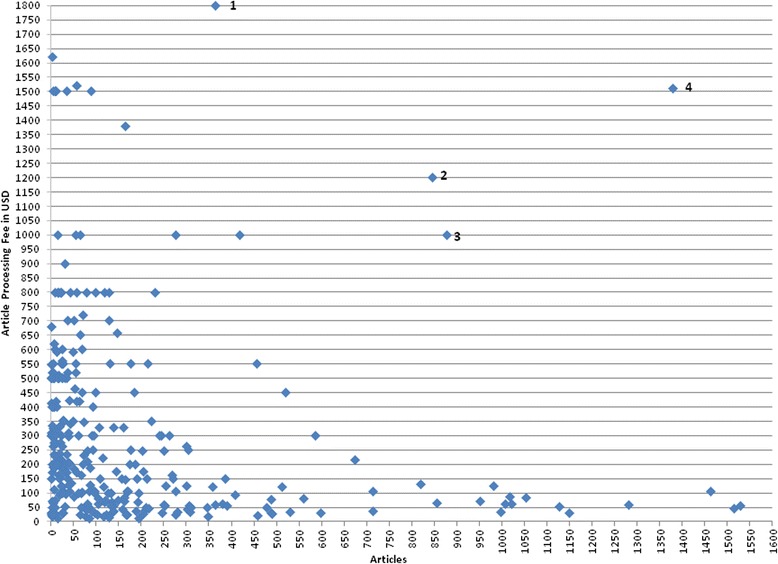
BACKGROUND: A negative consequence of the rapid growth of scholarly open access publishing funded by article processing charges is the emergence of publishers and journals with highly questionable marketing and peer review practices. These so-called predatory publishers are causing unfounded negative publicity for open access publishing in general. Reports about this branch of e-business have so far mainly concentrated on exposing lacking peer review and scandals involving publishers and journals. There is a lack of comprehensive studies about several aspects of this phenomenon, including extent and regional distribution. METHODS: After an initial scan of all predatory publishers and journals included in the so-called Beall's list, a sample of 613 journals was constructed using a stratified sampling method from the total of over 11,000 journals identified. Information about the subject field, country of publisher, article processing charge and article volumes published between 2010 and 2014 were manually collected from the journal websites. For a subset of journals, individual articles were sampled in order to study the country affiliation of authors and the publication delays. RESULTS: Over the studied period, predatory journals have rapidly increased their publication volumes from 53,000 in 2010 to an estimated 420,000 articles in 2014, published by around 8,000 active journals. Early on, publishers with more than 100 journals dominated the market, but since 2012 publishers in the 10-99 journal size category have captured the largest market share. The regional distribution of both the publisher's country and authorship is highly skewed, in particular Asia and Africa contributed three quarters of authors. Authors paid an average article processing charge of 178 USD per article for articles typically published within 2 to 3 months of submission. CONCLUSIONS: Despite a total number of journals and publishing volumes comparable to respectable (indexed by the Directory of Open Access Journals) open access journals, the problem of predatory open access seems highly contained to just a few countries, where the academic evaluation practices strongly favor international publication, but without further quality checks.
Overview
The claims and statistics of this paper haven’t been checked yet.
Free: it reads the open-access text and checks the first 5 claims that cite a source we can check. Create a free account to check every claim.
Integrity signals
Registry
Cites
Statistics
Figures
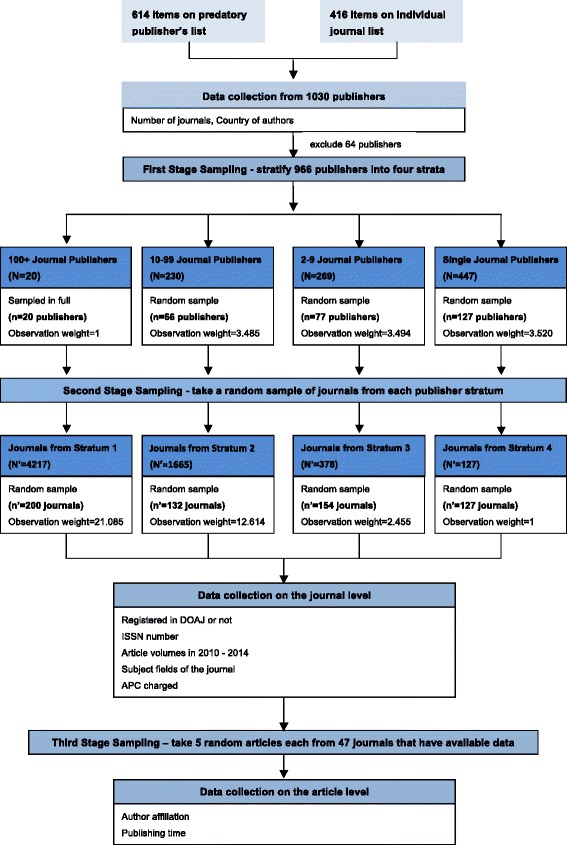
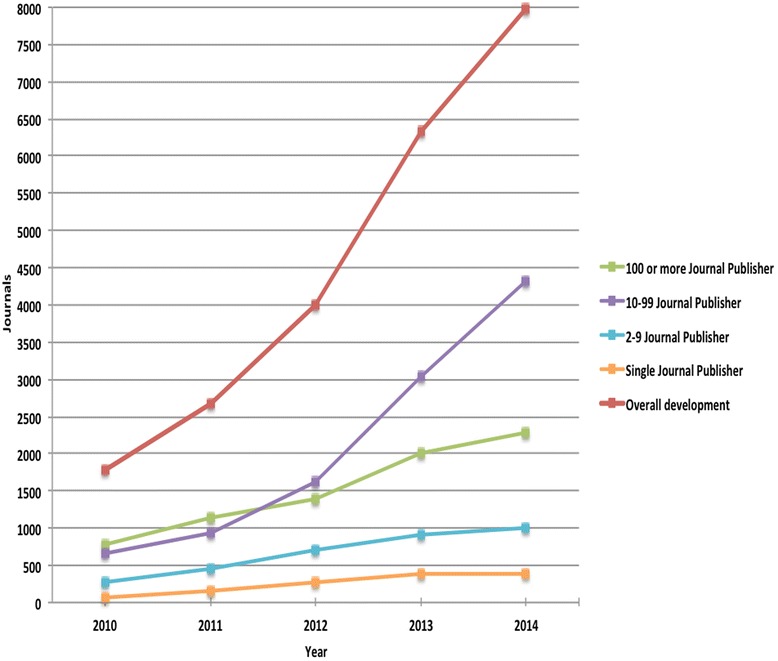
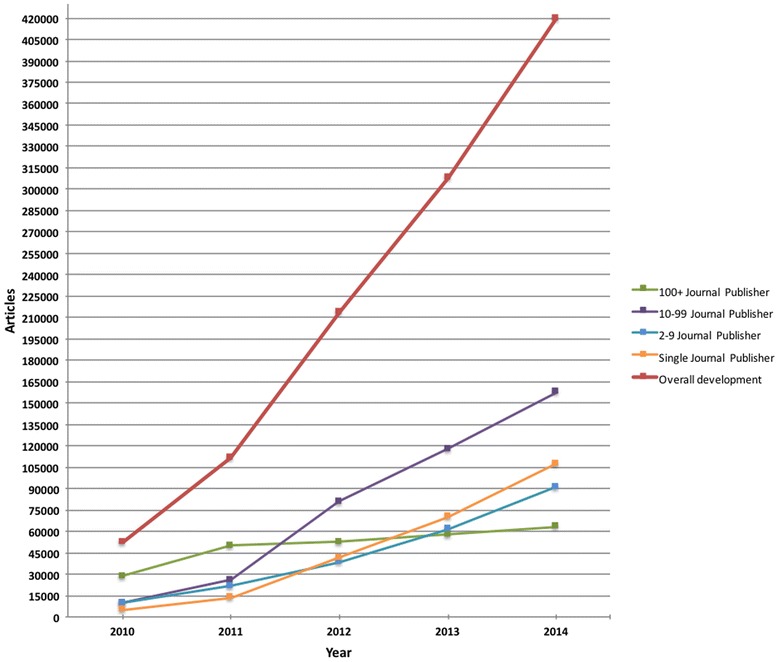
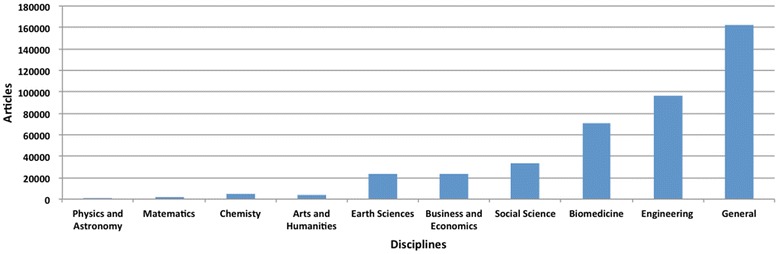
Verification
Claims the paper makes
The claims and statistics of this paper haven’t been checked yet.
Free: it reads the open-access text and checks the first 5 claims that cite a source we can check. Create a free account to check every claim.
Claims other papers make about this one
Each is checked against this paper’s own text: does it say what the citing paper says it does?
The source backs part of the claim, not all of it — or backs it for a different population, condition or comparison.
In the citing paper
“The growth of online journals that require author publication fees may be driving an increasingly profit-based publishing model (49).”
From Protection of the human gene research literature from contract cheating organizations known as research paper mills (2022) · cites this paper as [49]
Experimental — accuracy not yet measuredThe cited source says what the claim attributes to it.
In the citing paper
“Although these criteria are often considered to be controversial [164], it was shown that predatory journals usually fulfilled several of the criteria outlined by Beall [150,165].”
From Web of Science (WoS) and Scopus: The Titans of Bibliographic Information in Today’s Academic World (2021) · cites this paper as [150]
The cited source says what the claim attributes to it.
In the citing paper
“these artificial journals have evolved and they even manage to pass the selection process of the major bibliographic, as well as OA, DBs [145,150,157,158,166]”
From Web of Science (WoS) and Scopus: The Titans of Bibliographic Information in Today’s Academic World (2021) · cites this paper as [150]
In the citing paper
“Publish or perish research cultures (6,34,43,101) combined with an increasingly commercially-focused publishing environment (49,102) are leading to the dislocation between the scientific and career value of research publications (103)”
From Protection of the human gene research literature from contract cheating organizations known as research paper mills (2022) · cites this paper as [49]
In the citing paper
“When including the entire literature, predatory publishing likely comprises about 5 to 10%.”
From Misinformation in and about science (2021) · cites this paper as [88]
3 more claims about this paper
Create a free account to see every claim other papers make about this one.
Self-check
Percentages, sums and reported differences re-computed from the paper’s own numbers.
The self-check needs the paper’s full text.
Citations
Cites
Bohannon, J. (2013) · Science · doi:10.1126/science.342.6154.60 · Cited by 934
The Development of Open Access Journal Publishing from 1993 to 2009
Laakso, M., Welling, P., Bukvova, H., Nyman, L., Björk, B.-C., & Hedlund, T. (2011) · PLoS ONE · doi:10.1371/journal.pone.0020961 · Cited by 755
Self-citationPredatory publishers are corrupting open access
Beall, J. (2012) · Nature · doi:10.1038/489179a · Cited by 658 · cited 1×
“Jeffrey Beall coined the phrase ‘predatory publishers’ to describe publishers of this sort of journal [6].”
BackgroundSuber, P. (2012) · The MIT Press eBooks · doi:10.7551/mitpress/9286.001.0001 · Cited by 623
The Access/Impact Problem and the Green and Gold Roads to Open Access
Harnad, S. R., Brody, T., Vallières, F., Carr, L. A., Hitchcock, S., Gingras, Y., Oppenheim, C., Stamerjohanns, H., & Hilf, E. R. (2004) · Serials Review · doi:10.1016/j.serrev.2004.09.013 · Cited by 529 · cited 7×
“In addition, there is a ‘green’ route in which authors or third parties can legally make manuscript versions of articles published in traditional journals freely available on the Internet [4].”
BackgroundInfluentialThe publishing delay in scholarly peer-reviewed journals
Björk, B.-C., & Solomon, D. (2013) · Journal of Informetrics · doi:10.1016/j.joi.2013.09.001 · Cited by 432
Self-citation(2000) · Technometrics · doi:10.1080/00401706.2000.10486038 · Cited by 412
Towards Electronic Journals: Realities for Scientists, Librarians, and Publishers,,,,
Tenopir, C., & King, D. W. (2000) · Cited by 400
Anatomy of open access publishing: a study of longitudinal development and internal structure
Laakso, M., & Björk, B.-C. (2012) · BMC Medicine · doi:10.1186/1741-7015-10-124 · Cited by 364 · cited 3×
“Björk and Solomon [32] found delays of 9 – 18 months, depending on the field of science, with social sciences having the longest delays.”
BackgroundMethodSelf-citationWho publishes in “predatory” journals?
Xia, J., Harmon, J. L., Connolly, K. G., Donnelly, R. M., Anderson, M. R., & Howard, H. A. (2015) · Journal of the Association for Information Science and Technology · doi:10.1002/asi.23265 · Cited by 359 · cited 1×
“Xia et al. also studied the origin of authors in seven pharmacological journals included in the above list and found a strong dominance of Indian authors, with Nigerian and Pakistani authors in second and third place [18].”
Result
Research works printed but not linked: 1
- Spears T. Respectable medical journal turns to dark side. Ottawa, ON: Ottawa Citizen; 2014. http://ottawacitizen.com/technology/science/respected-medical-journal-turns-to-dark-side.
Cited by
Items 501–600 of 813
Identifying Predatory Journals: A Practical Guide for Researchers
Giray, L. (2026) · Annals of Biomedical Engineering · doi:10.1007/s10439-026-04231-5 · Cited by 4
“Today, thousands of predatory journals publish hundreds of thousands of articles annually, generating significant revenue from unsuspecting or pressured researchers [5].”
Open access – deus ex machina for publishing scholarly journals?
Grgić, I. H. (2015) · Libellarium journal for research in the field of information and related sciences · doi:10.15291/libellarium.v0i0.228 · Cited by 2
Nelson, B. (2016) · Cancer Cytopathology · doi:10.1002/cncy.21717 · Cited by 2
Choosing a Journal for Paper Submission and Methods of Submission
Kate, V., Parija, M., & Parija, S. C. (2017) · Springer eBooks · doi:10.1007/978-981-10-4720-6_11 · Cited by 2
Hall, L. M., & Hendricks, A. E. (2020) · BMC Bioinformatics · doi:10.1186/s12859-020-03817-7 · Cited by 5
Ezema, I. J. (2021) · Issues in Science and Technology Librarianship · doi:10.29173/istl43 · Cited by 5
Dental Council of India Criteria for Research Publications: Need for revision
Wadgave, U., & Khairnar, M. (2020) · The National Medical Journal of India · doi:10.4103/0970-258x.308263 · Cited by 3
The challenge of predatory publishing in India and steps taken to prevent it
Joshi, Y. K. B. (2022) · Science Editor and Publisher · doi:10.24069/sep-22-41 · Cited by 2
Academic Publishing 101: The SAJS monthly Journal Writing and Peer Review Forum
Finch, J. (2023) · South African Journal of Science · doi:10.17159/sajs.2023/15753 · Cited by 2
Business science: Overproduction, self-citations and Article processing charge (APC)
Pinto, A. L., Shirshahi, S., Varmazyar, R., & González‐Valiente, C. L. (2023) · Salud Ciencia y Tecnología - Serie de Conferencias · doi:10.56294/sctconf2023444 · Cited by 2
Kummangal, A. M., Ahsan, A. K., Babu, V. M., Payambrot, R., & Mannakandath, M. L. (2024) · Indian Journal of Dental Research · doi:10.4103/ijdr.ijdr_738_23 · Cited by 2
Keeler, A., ElHawary, H., Tuen, Y. J., Courtemanche, R. J. M., Gilardino, M. S., & Arneja, J. S. (2024) · Plastic Surgery · doi:10.1177/22925503241300336 · Cited by 3
“6,7 Investigation of this phenomenon among general surgery medical trainees identi fi ed that approximately 1% had published in a predatory journal.”
Azam, M., & Perveen, N. (2024) · Research Evaluation · doi:10.1093/reseval/rvae053 · Cited by 2
WHAT IS PREDATORY PUBLISHING AND WHAT IMPACT IT HAS
Cuciureanu, G. (2025) · Journal of Social Sciences · doi:10.52326/jss.utm.2024.7(4).10 · Cited by 3
“În ambele cazur i impactul este semnificativ, efectele fiind negative asupra dezvoltării științifice, integrității academice și reputației cercetătorilor [5, 37, 38].”
InfluentialOne Nation One Subscription: Revolutionizing the research ecosystem of India
Kadam, S. D. (2025) · International Journal of Ayurveda Research · doi:10.4103/ijar.ijar_66_25 · Cited by 2
Managing Community-Based Psychiatric Emergencies: An Integrative Review
Woods, R., & El‐Mallakh, R. S. (2025) · Journal of Psychosocial Nursing and Mental Health Services · doi:10.3928/02793695-20250930-02 · Cited by 2
Predatory Publishing Awareness Among Dental Interns in Riyadh, Saudi Arabia: A Cross-Sectional Study
Alkadi, L., Aldghim, A., Farook, F. F., Alfadley, A. A., & Jamleh, A. O. (2025) · Advances in Medical Education and Practice · doi:10.2147/amep.s548141 · Cited by 2
Evaluation of Open-Access Journals in Obstetrics and Gynaecology
Suarthana, E., Alghanaim, N., Boukhili, N., & Tulandi, T. (2021) · Journal of Obstetrics and Gynaecology Canada · doi:10.1016/j.jogc.2021.05.009 · Cited by 2
India's Combat Against Predatory Journals
Wadgave, U., & Khairnar, M. (2021) · Journal of Indian Association of Public Health Dentistry · doi:10.4103/jiaphd.jiaphd_173_20 · Cited by 2
Post-truth era and impact on the science associated with sport and exercise medicine
Lambert, M. (2016) · South African Journal of Sports Medicine · doi:10.17159/2078-516x/2016/v28i3a1838 · Cited by 2
“[4] Scientists need to guard against the abuse of the scientific”
BackgroundBalancing Interests of Science, Scientists, and the Publishing Business
Balogh, L. P. (2018) · Precision Nanomedicine · doi:10.29016/180418.1 · Cited by 2
“The pressure to publish combined with easy access to the Internet was tempting for fraud and this existential pressure on scientists opened up opportunities for predatory journals [14, 15] and publishers [16] to make ‘easy’ money:(4)”
BackgroundOpen access publishing: a service or a detriment to science?
Pierce, G. J., & Theodossiou, I. (2018) · Ethics in Science and Environmental Politics · doi:10.3354/esep00184 · Cited by 2
Jain, N., & Khan, G. S. (2018) · Indian Journal of Research in Homoeopathy · doi:10.4103/ijrh.ijrh_59_18 · Cited by 2
“Nevertheless, on the other hand, several other studies revealed that India is among the major contributors of articles published in poor-quality predatory OA journals,[31-33] thus contributing to duality in scientific publishing in India.”
Anästhesiologie-Publikationen aus Deutschland, Österreich und der Schweiz 2011–2015
Miller, C., Ausserer, J., Putzer, G., Hamm, P., Herff, H., Wenzel, V., & Paal, P. (2019) · Der Anaesthesist · doi:10.1007/s00101-019-0582-2 · Cited by 2
La necesidad de publicar y el nacimiento de las revistas médicas depredadoras
Castañón-González, A., Cantú-Pompa, J. J., Miranda-Hernández, A., & López-Valdés, J. C. (2017) · Gaceta Médica de México · doi:10.24875/gmm.17003450 · Cited by 2
Yırtıcı-Yağmacı Dergiler ve Açık Erişim Bilimsel Dergilerin Ücret Talepleri Hakkında
Asan, A., & Kıran, K. (2019) · Acta Medica Alanya · doi:10.30565/medalanya.568774 · Cited by 2
Ethical and Legal Considerations
Flanagin, A. (2020) · Oxford University Press eBooks · doi:10.1093/jama/9780190246556.003.0005 · Cited by 6
Predatory Journals and Conferences
Cortegiani, A., Catalisano, G., & Manca, A. (2022) · Springer eBooks · doi:10.1007/978-3-030-99680-2_49 · Cited by 3
Pervasiveness of Open Journal Invitations Across Radiology Specialties
Ansari, G., Khan, M., Weinstein, S. P., Conant, E. F., Mirza‐Aghazadeh‐Attari, M., & Yousem, D. M. (2023) · Current Problems in Diagnostic Radiology · doi:10.1067/j.cpradiol.2023.04.002 · Cited by 2
Bibliometric Analysis of the Top 100 Cited Papers on Predatory Publishing
Kumar, A., Siwach, A. K., & Devi, P. (2023) · Science & Technology Libraries · doi:10.1080/0194262x.2023.2200224 · Cited by 6
“However, the rise of open-access publishing has also led to a rise in predatory publishing practices (Beall 2015; Shen and Bjork 2015), which exploit the open-access model for financial gain by charging exorbitant publication fees without providing the necessary editorial and peer-review services…”
BackgroundThe Pandora's box of predatory journals.
Quintans‐Júnior, L. J., Araújo, A. A. D. S., Silva, R. R., & Martins‐Filho, P. R. (2023) · EXCLI journal · doi:10.17179/excli2022-6011 · Cited by 4
Teaching scientific research integrity: A case study
Saltelli, A. (2023) · Innovations in Education and Teaching International · doi:10.1080/14703297.2023.2237949 · Cited by 5
“Shen and Björk (2015) are a good source for this topic.”
Türkiye’de Yayınlanan Bilimsel Araştırma ve Yayın Etiği Konulu Makalelerin İncelenmesi (1993-2022)
Yılmaz, K. (2024) · MANAS Sosyal Araştırmalar Dergisi · doi:10.33206/mjss.1340104 · Cited by 8
Zworykin, D. D. (2020) · Fisheries · doi:10.37663/0131-6184-2020-4-85-89 · Cited by 2
Pandita, R., & Singh, S. (2021) · Global Knowledge, Memory and Communication · doi:10.1108/gkmc-02-2021-0031 · Cited by 3
Hazards of predatory publication
Harris, J. P. (2018) · ANZ Journal of Surgery · doi:10.1111/ans.14255 · Cited by 2
“They are also critical of the ‘universities or funding agencies in a number of countries that strongly emphasize publishing in “international” journals for evaluating researchers, but without monitoring the quality of the journals in question’.(4) In this complex new world of scientific publication, authors are urged…”
BackgroundPredatory Publishing and Organizers
Aponte, J. (2018) · Hispanic Health Care International · doi:10.1177/1540415318790704 · Cited by 2
“For example, within 5 years (2010 to 2014), there was almost a fourfold increase in the number of predatory journals worldwide (Shen & Bjork, 2015); and the number of published articles in these predatory journals grew six times higher than it was prior to this period.”
BackgroundDigital Open Science – Teaching digital tools for reproducible and transparent researchPreprint
Toelch, U., & Ostwald, D. (2017) · OSF Preprints (OSF Preprints) · doi:10.31219/osf.io/fbvep · Cited by 5
Eisner, D. A. (2016) · Journal of Molecular and Cellular Cardiology · doi:10.1016/j.yjmcc.2016.11.009 · Cited by 2
PREDATORY JOURNALS ARE INDEXING IN REPUTED DATABASES: A CASE STUDY OF UNSOLVED ISSUESPreprint
Hossan, D. (2020) · OSF Preprints (OSF Preprints) · doi:10.31219/osf.io/jctu4 · Cited by 2
Revisiting “Think. Check. Submit.”
Pearson, G. S. (2022) · Journal of the American Psychiatric Nurses Association · doi:10.1177/10783903221116639 · Cited by 2
“While past research has suggested that those who contribute to predatory journals are generally inexperienced and of junior university rank (Shen & Bjork, 2015), a study from Sweden suggested that experienced researchers, at least from Sweden, may also contribute to predatory journals.”
BackgroundSharma, S., Verhagen, A. P., Elkins, M. R., Brismée, J., Fulk, G. D., Taradaj, J., Steen, L., Jette, A. M., Moore, A. P., Stewart, A., et al. (2023) · Neurology Report · doi:10.1097/npt.0000000000000461 · Cited by 3
Sharma, S., Verhagen, A. P., Elkins, M. R., Brismée, J., Fulk, G. D., Taradaj, J., Steen, L., Jette, A. M., Moore, A. P., Stewart, A., et al. (2023) · European Journal of Physiotherapy · doi:10.1080/21679169.2023.2240997 · Cited by 3
“As a consequence, researchers from LMICs publish their work in ‘predatory’ journals [11].”
BackgroundSharma, S., Verhagen, A. P., Elkins, M. R., Brismée, J., Fulk, G. D., Taradaj, J., Steen, L., Jette, A. M., Moore, A. P., Stewart, A., et al. (2023) · South African Journal of Physiotherapy · doi:10.4102/sajp.v79i1.1957 · Cited by 2
“As a consequence, researchers from LMICs publish their work in ‘predatory’ journals (Shen & Bjork 2015).”
BackgroundEditorial Misconducts: Boosting Citation and Impact Factor
Narang, U., & Kurian, N. K. (2024) · Springer eBooks · doi:10.1007/978-981-97-4060-4_13 · Cited by 4
Chernets, V. (2026) · SSRN Electronic Journal · doi:10.2139/ssrn.7296358 · Cited by 2
Publishing in predatory journals: Time for reflections
Ogunbanjo, G. A. (2018) · South African Family Practice · doi:10.4102/safp.v60i2.4857 · Cited by 1
Gerasimov, G. A. (2017) · Clinical and experimental thyroidology · doi:10.14341/ket201736-10 · Cited by 1
Ubom, A. E., Mbiiza, C. M., & Topçu, E. G. (2023) · International Journal of Gynecology & Obstetrics · doi:10.1002/ijgo.14976 · Cited by 1
Alunno‐Bruscia, M., Duquennoi, C., Goulletquer, P., Jaligot, E., Kremer, A., Ruphy, S., & Simon-Plas, F. (2023) · Éditions Quæ eBooks · doi:10.35690/978-2-7592-3718-0 · Cited by 2
Evolution of Scientific Productivity on Predatory Journals: A Scientometric Study
Yadav, C., & Chakravarty, R. (2024) · Science & Technology Libraries · doi:10.1080/0194262x.2024.2357542 · Cited by 1
“…publishing in PJ come from less developed or developing nations, mainly India, Nigeria, and a few African and Middle Eastern countries (Butler 2013; Shen and Björk 2015; Xia et al. 2015) and many predatory publishers are headquartered in the less developed nations (developing nations) (Beall 2012;…”
Critical reflections on the nature of the scientific process for physiologists
Nell, T. A., Joseph, D., Rambharose, S., & Sishi, B. (2024) · Elsevier eBooks · doi:10.1016/b978-0-443-23655-6.00002-2 · Cited by 1
Regional profile of questionable publishing
You, T., Park, J., Lee, J. Y., & Yun, J. (2025) · Journal of Informetrics · doi:10.1016/j.joi.2025.101670 · Cited by 3
“…prejudice of questionable publishing is a problem for less developed countries because these countries share a substantial amount of publications in questionable journals (Shen and Björk, 2015; Sterligov and Savina, 2016; Macháček, Srholec and pro demokracii a ekonomickou anal`yzu (projekt), 2017).”
BackgroundPredatory Journals and Conferences: Impacts and Strategies to Protect Scholarly Integrity
Tornwall, J., Overcash, J. A., & McNett, M. (2025) · Building Healthy Academic Communities Journal · doi:10.18061/bhac.v9i2.10479 · Cited by 1
Unsolicited Emails Following Preprint Publications as an Emerging Academic Issue
da Silva, J. A. T., & Nazarovets, S. (2025) · Internet Reference Services Quarterly · doi:10.1080/10875301.2025.2550600 · Cited by 2
“…the journal, as well as a partial lack of information in the signatures of letters, with many spammers using generic or untraceable email addresses (Shen & Björk, 2015) (see spam #5–7, 12, 16, 21–23, 25, 26 and 29 in Annex B as examples); • Use of flattery and praise to appeal to the scientist’s…”
Gut publizieren in der Anästhesiologie: Qualitätsstandards und der Umgang mit Predatory Journals
Tenge, T., Hill, A., Radke, D. I., Schmidt, G., Student, J., Borgstedt, L., M’Pembele, R., Kraus, R.-F., Roth, S., & Scharffenberg, M. (2026) · Die Anaesthesiologie · doi:10.1007/s00101-026-01656-4 · Cited by 1
“Insgesamt stehen bei Predatory Journals wirtschaftliche Interessen im Vordergrund [5–7].”
KScien predatory publishing policies and practices: a website and bibliometric assessment
da Silva, J. A. T. (2026) · Journal of Electronic Resources Librarianship · doi:10.1080/1941126x.2026.2657821
“…employing aggressive email campaigns (Richtig et al., 2018), thereby creating a false academy (Eriksson & Helgesson, 2017), and creating financial risks (Moher et al., 2017; Shen & Bj € ork, 2015), although the incentives for publishing in such venues are not always clear (Mills & Inouye, 2021).”
Pkhakadze, G. (2026) · Georgian Medical Journal · doi:10.66636/gmj.v1.i2.a87 · Cited by 1
Open Science in den Wirtschaftswissenschaften: Transparenz, Reproduzierbarkeit und Zugang
Schmidt, K. M., Neyse, L., Saam, M., Siegfried, D., Vilhuber, L., & Winter, J. (2026) · Perspektiven der Wirtschaftspolitik · doi:10.1515/pwp-2026-0019 · Cited by 2
Dong, Y., Wang, J., Guan, S., Zhu, Y., Qin, M., Rodolico, A., Siafis, S., Bighelli, I., Davis, J. M., Priller, J., et al. (2026) · Schizophrenia Research · doi:10.1016/j.schres.2026.06.022 · Cited by 1
Predatory Journals: Do They Publish Undergraduate and AI-Generated Papers?
Stockemer, D., & Fakri, F. (2026) · PS Political Science & Politics · doi:10.1017/s1049096526102418 · Cited by 1
Interlending and document supply: a review of the recent literature; 91
McGrath, M. (2016) · Interlending & Document Supply · doi:10.1108/ilds-12-2015-0041 · Cited by 2
Dear Editor: Why did you reject my paper?
Ak, B. (2016) · Medical Journal of Dr D Y Patil University · doi:10.4103/0975-2870.177649 · Cited by 1
The revised guidelines of the Medical Council of India for academic promotions: Need for a rethink
Sahni, P., Aggarwal, R., Gogtay, N., & Kumar, R. (2016) · Journal of Mahatma Gandhi Institute of Medical Sciences · doi:10.4103/0971-9903.178070 · Cited by 1
Predatory Journals, Piracy and New Models of Publishing Scientific Articles
Smutný, Z. (2016) · Acta Informatica Pragensia · doi:10.18267/j.aip.87 · Cited by 1
“Přesto i v případě predátorských vydavatelství se jedná v souhrnu o miliardový byznys (Shen & Björk, 2015).”
External Assessors as "Reviewers" for Quality Assurance of Open Access Journals
Hurme, P., & Crawford, B. J. (2017) · Human Technology · doi:10.17011/ht/urn.201705272514 · Cited by 1
McKelvie, S. J. (2017) · Current Psychology · doi:10.1007/s12144-017-9620-x · Cited by 1
Open Access for Publication – Can It Be Chosen?
Barreto, S. G. (2017) · Springer eBooks · doi:10.1007/978-981-10-4720-6_16 · Cited by 1
Prasad, K. A. R. V. (2017) · Foot & Ankle International · doi:10.1177/1071100717721443 · Cited by 1
Guidelines for authors in Croatian scholarly journals
Grgić, I. H., & Čačković, L. (2017) · Information Discovery and Delivery · doi:10.1108/idd-07-2017-0055 · Cited by 1
Open access -kustantajien evaluointi tieteellisen kirjaston näkökulmasta
Holopainen, M., Kuusela, M., & Roinila, M. (2018) · Informaatiotutkimus · doi:10.23978/inf.70192 · Cited by 1
Maceiras, S. D. (2018) · Geopolítica(s) Revista de estudios sobre espacio y poder · doi:10.5209/geop.57886 · Cited by 1
Efectos del JCR en la calidad de las revistas españolas de Psicología: un selfi en 2017
Ruiz‐García, A., & Aguayo, L. V. (2018) · APUNTES DE PSICOLOGÍA · doi:10.55414/ap.v36i1-2.712 · Cited by 1
Les revues prédatrices: Mise en garde à l’intention des auteurs et des lecteurs
Vakil, C. (2019) · Europe PMC (PubMed Central) · Cited by 1
Toward a Sustainable Model of Scientific Publishing
Palavalli‐Nettimi, R. (2021) · Journal of Science Policy & Governance · doi:10.38126/jspg180111 · Cited by 1
Drapieżne czasopisma są legitymizowane przez artykuły w czasopismach z impact factor
Kulczycki, E., Hołowiecki, M., Taşkın, Z., & Krawczyk, F. (2021) · Ruch Prawniczy Ekonomiczny i Socjologiczny · doi:10.14746/rpeis.2021.83.2.5 · Cited by 3
(2019) · Archives of Physiotherapy · doi:10.1186/s40945-019-0069-0 · Cited by 3
Echeverri, R. A., Montenegro, J. H., Oviedo, M. A., León, A. F., & Rubiano, A. M. (2017) · Panamerican Journal of Trauma Critical Care & Emergency Surgery · doi:10.5005/jp-journals-10030-1170 · Cited by 1
Raubtier-Journale im HNO-Fachgebiet
Lüers, J.-C., Jansen, S., & Klußmann, J. P. (2022) · Laryngo-Rhino-Otologie · doi:10.1055/a-1956-9479 · Cited by 2
“2014 zählte man rund 8000 „predatory journals“, und der Gesamtumsatz der beteiligten RT-Verlage wurde zu diesem Zeitpunkt auf 75 Millionen US-Dollar pro Jahr geschätzt [13].”
BackgroundThe scam of the research world: the predatory practices
Saleem, H., & Iqbal, A. (2022) · Anaesthesia Pain & Intensive Care · doi:10.35975/apic.v26i4.1943 · Cited by 1
“Once the predatory journals start to exploit the channel of open access, these start flowing fake or poorly validated data into the mainstream literature causing the robust data sets to appear murky and unclear.(5,9,10)”
BackgroundPredatory Publication in Science and Ethical Principles: Features and Solutions
Ohei, K. N., & Lubbe, S. (2022) · International Journal of Innovation in Management Economics and Social Sciences · doi:10.52547/ijimes.2.4.65 · Cited by 1
Predatory Journals – Putting Your Hard Works in Garbage
Pullishery, F. (2022) · Dentistry and Medical Research · doi:10.4103/dmr.dmr_36_22 · Cited by 1
Predatory Journals & Developing Countries
thyo, E. M. (2023) · Barw Medical Journal · doi:10.58742/bmj.v1i2.20 · Cited by 1
Petrişor, A.-I. (2022) · Journal of Teaching English for Specific and Academic Purposes · doi:10.22190/jtesap2203493p · Cited by 1
How to Address Publication Overload in Environmental Science
Brandt, W. T., & Tague, C. (2023) · Eos · doi:10.1029/2023eo230361 · Cited by 1
Reflexões a respeito do financiamento das iniciativas de acesso aberto
de Castilhos, C. V. R., Ferreira, F., da Silva, F. C. C., & Pavão, C. M. G. (2022) · Comunicação & Informação · doi:10.5216/ci.v25.70326 · Cited by 1
Habiba, U., & Ahmed, S. M. Z. (2024) · Journal of Academic Ethics · doi:10.1007/s10805-024-09538-3 · Cited by 3
“A number of early studies, including those by Clark & Smith, 2015, Shen and Björk, (2015) and Xia et al. (2015), found that authors from developing were more prone to publishing in predatory journals.”
Predicting the Sentiment of Review Aspects in the Peer Review Text using Machine Learning
Basuki, S., Sari, Z., Tsuchiya, M., & Indrabayu, R. (2024) · Kinetik Game Technology Information System Computer Network Computing Electronics and Control · doi:10.22219/kinetik.v9i4.2042 · Cited by 2
YouTube’s role in raising awareness about predatory publishing practices
Acharya, S., & Rout, L. (2025) · Quality & Quantity · doi:10.1007/s11135-025-02414-1 · Cited by 1
Plagiarism and Ethical Issues: A Literature Review on Academic Misconduct
Montoneri, B. (2018) · Advances in higher education and professional development book series · doi:10.4018/978-1-5225-5837-8.ch001 · Cited by 1
Uso ético de la información: implicaciones y desafíos
Ortega, J. R., & Velázquez, C. A. R. (2017) · doi:10.22201/iibi.9786070290534e.2017 · Cited by 4
Some highlights from the PKP 2019 International Scholarly Publishing Conference
Eikebrokk, T., Ekanger, A., Fonn, K., Frantsvåg, J. E., & Odu, O. (2019) · Nordic Perspectives on Open Science · doi:10.7557/11.5204 · Cited by 1
“Even though there are no recent figures, we know that the number of such articles is staggeringly high: Jeanette referred to Shen & Björk (2015) who report that in 2014 around 420,000 articles were published in 8,000 predatory venues.”
BackgroundLow, D. A., Lamb, J., & Cai, J. (2020) · Medical Physics · doi:10.1002/mp.14082 · Cited by 2
Miller, C., Ausserer, J., Putzer, G., Hamm, P., Herff, H., Wenzel, V., & Paal, P. (2019) · Der Anaesthesist · Cited by 1
A Study of Three Alternative Open Access Publishing Models
Shen, C. (2020) · Työväentutkimus Vuosikirja · Cited by 1
Self-citationPredatory Open Access Journals and Attainment of Educational Sustainable Development Goals in Africa
Olatokun, W. M., & Omiunu, O. G. (2020) · Advances in library and information science (ALIS) book series · doi:10.4018/978-1-7998-5018-2.ch004 · Cited by 1
Sauvage, E., & Olsen, S. J. (2020) · Nordic Journal of Information Literacy in Higher Education · doi:10.15845/noril.v12i2.3063 · Cited by 1
The Baffling Disappearance of Beall’s Blog (www.scholarlyoa.com):Reasons Revealed
Jan, R., & Gul, S. (2021) · Lincoln (University of Nebraska) · Cited by 1
The Predatory Journal: Victimizer or Victim?
Gill, G. (2021) · Informing Science and IT Education Conference · doi:10.28945/4780 · Cited by 1
Metadata
- Authors
- Shen, C., & Björk, B.-C.
- Affiliations
- Hanken School of Economics (FI)
- Corresponding author
- Shen, Cenyu
- Venue
- BMC Medicine
- Published
- 2015-10-01
- Volume
- 13
- Issue
- 1
- Pages
- 230-230
- ISSN
- 1741-7015 (ISSN-L)
- PMC
- PMC4589914
- OpenAlex
- W2156487032
- Cited by
- 819
- References
- 28
- Citations by year
- 2026: 44 · 2025: 56 · 2024: 46 · 2023: 81 · 2022: 70 · 2021: 93 · 2020: 88 · 2019: 76 · 2018: 91 · 2017: 86 · 2016: 79 · 2015: 7
- FWCI
- 564.37
- Type
- journal article
- Language
- en
- Open access
- gold
- doi.org
- Licence
- Locations
- BMC Medicine (publishedVersion, cc-by)
- Europe PMC (PubMed Central) (publishedVersion, cc-by)
- PubMed Central (publishedVersion, cc-by)
- PubMed (publishedVersion)
- Työväentutkimus Vuosikirja (acceptedVersion)
- Työväentutkimus Vuosikirja (submittedVersion)
- Topics
- Social Sciences › Library and Information Sciences › Publishing and Scholarly Communication
- Social Sciences › Library and Information Sciences › Academic Publishing and Open Access
- Social Sciences › Library and Information Sciences › scientometrics and bibliometrics research
- Keywords
- predatory publishing, predatory journals, predatory publishers, open access publishing, article processing charges, regional distribution of authors, time to publication, peer review quality, Beall's list, DOAJ
- MeSH terms
- Authorship, Humans, Longitudinal Studies, Peer Review, Periodicals as Topic, Publishing, Bibliometrics, Access to Information
About these checks
Registry, retraction, Cites and statistics results are computed, not judged, with one exception: a printed reference that no index lists is read once by a model before it counts as a citation error. Claims are extracted by a model and kept only when their quote appears verbatim in the text; each cited source is then checked, with a model’s help, for whether it says what the claim relies on. Those verdicts can be wrong — read the claim’s quote and the cited source before relying on one.
Statistics and arithmetic are recomputed, not judged.
Confidence bands are shown only for fields calibrated on our annotated test set. None is calibrated yet, so no band is shown.
What counts as a claim ›How we measure confidence ›How we check this ›
Are you an author, or do you see a problem with this page? Request a review
Data sources
Bibliographic data: Semantic Scholar, OpenAlex, Crossref.
Contains information from the Semantic Scholar Academic Graph Datasets, made available under the ODC Attribution License (ODC-BY 1.0).
Semantic Scholar’s data is described in: Kinney, R., et al. (2023). The Semantic Scholar Open Data Platform. arXiv:2301.10140.
