

Predatory’ open access: a longitudinal study of article volumes and market characteristics
Open accessThe DOI matches its Crossref record; 28 of the 28 references it cites were found in a registry or an index.
Abstract
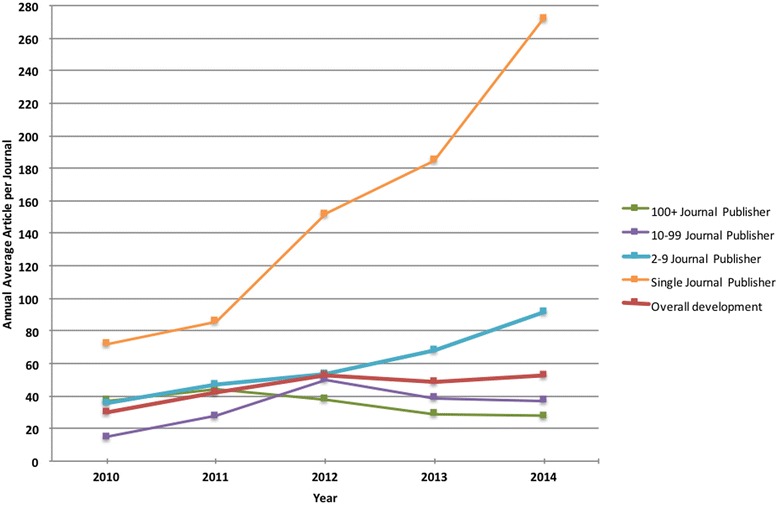
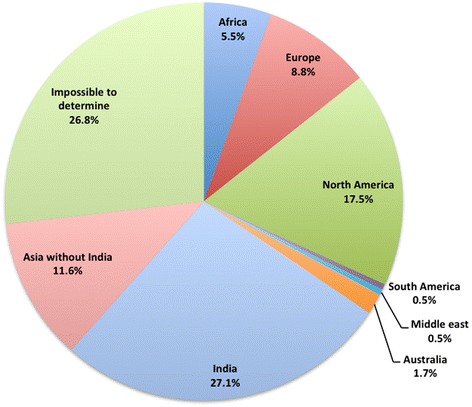
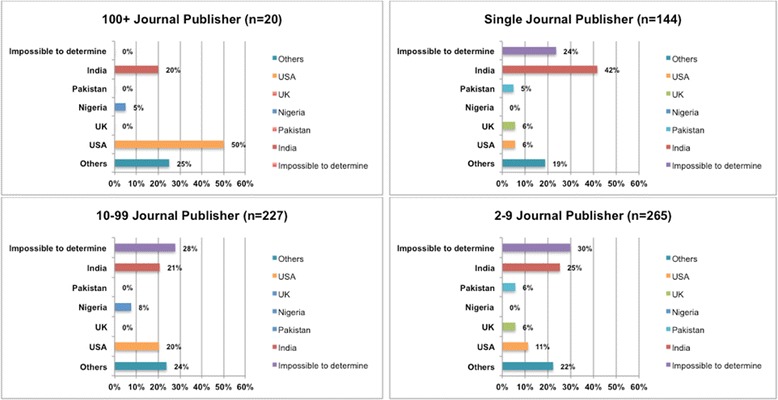
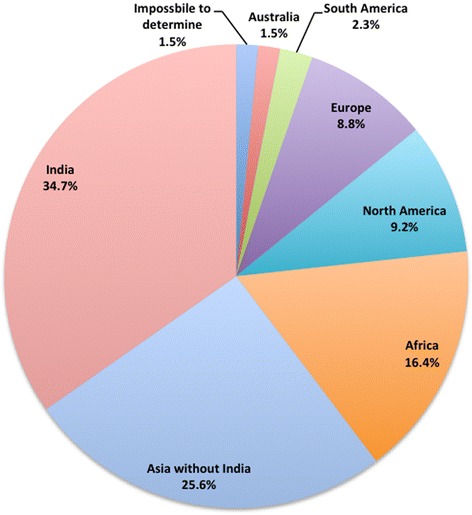
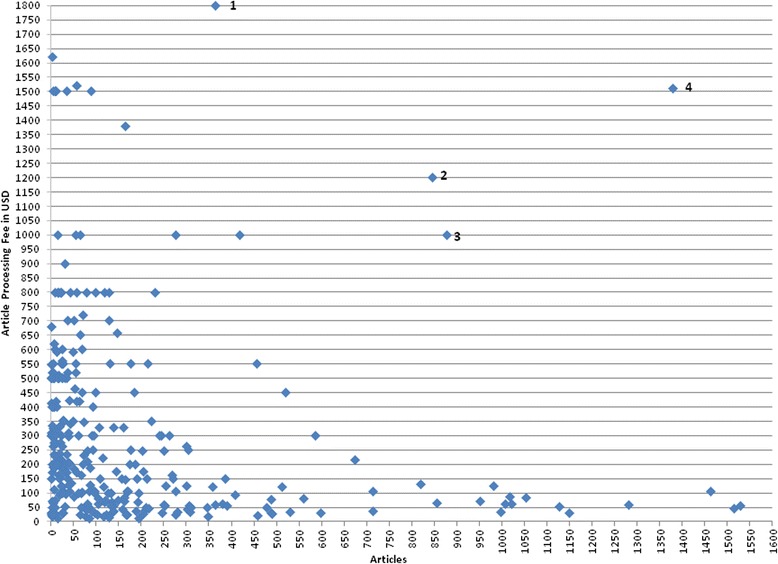
BACKGROUND: A negative consequence of the rapid growth of scholarly open access publishing funded by article processing charges is the emergence of publishers and journals with highly questionable marketing and peer review practices. These so-called predatory publishers are causing unfounded negative publicity for open access publishing in general. Reports about this branch of e-business have so far mainly concentrated on exposing lacking peer review and scandals involving publishers and journals. There is a lack of comprehensive studies about several aspects of this phenomenon, including extent and regional distribution. METHODS: After an initial scan of all predatory publishers and journals included in the so-called Beall's list, a sample of 613 journals was constructed using a stratified sampling method from the total of over 11,000 journals identified. Information about the subject field, country of publisher, article processing charge and article volumes published between 2010 and 2014 were manually collected from the journal websites. For a subset of journals, individual articles were sampled in order to study the country affiliation of authors and the publication delays. RESULTS: Over the studied period, predatory journals have rapidly increased their publication volumes from 53,000 in 2010 to an estimated 420,000 articles in 2014, published by around 8,000 active journals. Early on, publishers with more than 100 journals dominated the market, but since 2012 publishers in the 10-99 journal size category have captured the largest market share. The regional distribution of both the publisher's country and authorship is highly skewed, in particular Asia and Africa contributed three quarters of authors. Authors paid an average article processing charge of 178 USD per article for articles typically published within 2 to 3 months of submission. CONCLUSIONS: Despite a total number of journals and publishing volumes comparable to respectable (indexed by the Directory of Open Access Journals) open access journals, the problem of predatory open access seems highly contained to just a few countries, where the academic evaluation practices strongly favor international publication, but without further quality checks.
Overview
The claims and statistics of this paper haven’t been checked yet.
Free: it reads the open-access text and checks the first 5 claims that cite a source we can check. Create a free account to check every claim.
Integrity signals
Registry
Cites
Statistics
Figures
Verification
Claims the paper makes
The claims and statistics of this paper haven’t been checked yet.
Free: it reads the open-access text and checks the first 5 claims that cite a source we can check. Create a free account to check every claim.
Claims other papers make about this one
Each is checked against this paper’s own text: does it say what the citing paper says it does?
The source backs part of the claim, not all of it — or backs it for a different population, condition or comparison.
In the citing paper
“The growth of online journals that require author publication fees may be driving an increasingly profit-based publishing model (49).”
From Protection of the human gene research literature from contract cheating organizations known as research paper mills (2022) · cites this paper as [49]
Experimental — accuracy not yet measuredThe cited source says what the claim attributes to it.
In the citing paper
“Although these criteria are often considered to be controversial [164], it was shown that predatory journals usually fulfilled several of the criteria outlined by Beall [150,165].”
From Web of Science (WoS) and Scopus: The Titans of Bibliographic Information in Today’s Academic World (2021) · cites this paper as [150]
The cited source says what the claim attributes to it.
In the citing paper
“these artificial journals have evolved and they even manage to pass the selection process of the major bibliographic, as well as OA, DBs [145,150,157,158,166]”
From Web of Science (WoS) and Scopus: The Titans of Bibliographic Information in Today’s Academic World (2021) · cites this paper as [150]
In the citing paper
“Publish or perish research cultures (6,34,43,101) combined with an increasingly commercially-focused publishing environment (49,102) are leading to the dislocation between the scientific and career value of research publications (103)”
From Protection of the human gene research literature from contract cheating organizations known as research paper mills (2022) · cites this paper as [49]
In the citing paper
“When including the entire literature, predatory publishing likely comprises about 5 to 10%.”
From Misinformation in and about science (2021) · cites this paper as [88]
3 more claims about this paper
Create a free account to see every claim other papers make about this one.
Self-check
Percentages, sums and reported differences re-computed from the paper’s own numbers.
The self-check needs the paper’s full text.
Citations
Cites
Bohannon, J. (2013) · Science · doi:10.1126/science.342.6154.60 · Cited by 934
The Development of Open Access Journal Publishing from 1993 to 2009
Laakso, M., Welling, P., Bukvova, H., Nyman, L., Björk, B.-C., & Hedlund, T. (2011) · PLoS ONE · doi:10.1371/journal.pone.0020961 · Cited by 755
Self-citationPredatory publishers are corrupting open access
Beall, J. (2012) · Nature · doi:10.1038/489179a · Cited by 658 · cited 1×
“Jeffrey Beall coined the phrase ‘predatory publishers’ to describe publishers of this sort of journal [6].”
BackgroundSuber, P. (2012) · The MIT Press eBooks · doi:10.7551/mitpress/9286.001.0001 · Cited by 623
The Access/Impact Problem and the Green and Gold Roads to Open Access
Harnad, S. R., Brody, T., Vallières, F., Carr, L. A., Hitchcock, S., Gingras, Y., Oppenheim, C., Stamerjohanns, H., & Hilf, E. R. (2004) · Serials Review · doi:10.1016/j.serrev.2004.09.013 · Cited by 529 · cited 7×
“In addition, there is a ‘green’ route in which authors or third parties can legally make manuscript versions of articles published in traditional journals freely available on the Internet [4].”
BackgroundInfluentialThe publishing delay in scholarly peer-reviewed journals
Björk, B.-C., & Solomon, D. (2013) · Journal of Informetrics · doi:10.1016/j.joi.2013.09.001 · Cited by 432
Self-citation(2000) · Technometrics · doi:10.1080/00401706.2000.10486038 · Cited by 412
Towards Electronic Journals: Realities for Scientists, Librarians, and Publishers,,,,
Tenopir, C., & King, D. W. (2000) · Cited by 400
Anatomy of open access publishing: a study of longitudinal development and internal structure
Laakso, M., & Björk, B.-C. (2012) · BMC Medicine · doi:10.1186/1741-7015-10-124 · Cited by 364 · cited 3×
“Björk and Solomon [32] found delays of 9 – 18 months, depending on the field of science, with social sciences having the longest delays.”
BackgroundMethodSelf-citationWho publishes in “predatory” journals?
Xia, J., Harmon, J. L., Connolly, K. G., Donnelly, R. M., Anderson, M. R., & Howard, H. A. (2015) · Journal of the Association for Information Science and Technology · doi:10.1002/asi.23265 · Cited by 359 · cited 1×
“Xia et al. also studied the origin of authors in seven pharmacological journals included in the above list and found a strong dominance of Indian authors, with Nigerian and Pakistani authors in second and third place [18].”
Result
Research works printed but not linked: 1
- Spears T. Respectable medical journal turns to dark side. Ottawa, ON: Ottawa Citizen; 2014. http://ottawacitizen.com/technology/science/respected-medical-journal-turns-to-dark-side.
Cited by
Items 601–700 of 813
Um ano de e-mails não solicitados: o modus operandi de revistas e editoras predatórias
de Sousa, F. S. D. O., Nadanovsky, P., Dhyppolito, I. M., & dos Santos, A. P. P. (2021) · Revista da Faculdade de Odontologia de Porto Alegre · doi:10.22456/2177-0018.114115 · Cited by 3
Drawing Inspiration from the World of Fine Art in the Battle Against Predatory Publishing
Kendall, G. (2022) · Publishing Research Quarterly · doi:10.1007/s12109-022-09913-1 · Cited by 1
Annals of Surgery Open Access: Where is the Value, and What does the Future Hold?
Funk, L. M., Barr, J., Johnston, F. M., Smith, B. K., Cooper, Z. R., Pugh, C. M., Dimick, J. B., Clavien, P., Read, T. E., & Wong, S. L. (2022) · Annals of Surgery · doi:10.1097/sla.0000000000005723 · Cited by 1
Revistas e editoras predadoras no campo da saúde: problemática e recomendações aos investigadores
Antunes, M. D. L., Lopes, C., & Borges, M. M. (2022) · Ibersid revista de sistemas de información y documentación · doi:10.54886/ibersid.v16i2.4818 · Cited by 3
Otvorený prístup a jeho vplyv na využívanie informačných zdrojov
Michaličková, D., & Šušol, J. (2022) · ITlib Informačné technológie a knižnice · doi:10.52036/1335793x.2022.sc.10-21 · Cited by 1
Will Asia Fully Respond to the Global Transition to Open Access?
Mathew, S. T., Shinwari, Z. K., Irfanullah, H. M., Sarwar, M., & Sayab, M. (2022) · Trends in Scholarly Publishing · doi:10.21124/tsp.2022.49.54 · Cited by 1
The revised guidelines of the Medical Council of India for academic promotions: Need for a rethink
Aggarwal, R., Gogtay, N., Kumar, R., & Sahni, P. (2016) · Journal of Ayurveda and Integrative Medicine · doi:10.1016/j.jaim.2016.03.002 · Cited by 1
“Predatory publishing is perhaps a manifestation of the ‘publish or perish’ phenomenon with authors willing to pay for a publication [7].”
BackgroundInfluentialKabra, M., Gupta, N., Bhave, S. A., Bavdekar, A., Aggarwal, R., Gogtay, N., Kumar, R., & Sahni, P. (2016) · Indian Pediatrics · doi:10.1007/s13312-016-0783-6 · Cited by 1
“Predatory publishing is perhaps a manifestation of the ‘publish or perish’ phenomenon with authors willing to pay for a publication [7].”
BackgroundInfluentialГипноз Вебера: Заметки о «Протестантской этике и духе капитализма». Часть II
Kapeliushnikov, R. (2018) · Journal of Economic Sociology · doi:10.17323/1726-3247-2018-4-12-42 · Cited by 29
Morales, T. E. P., Sharma, H., Castro-Martínez, J. A., González-Lorenzo, L., Pal, A., Verma, S., Channa, S. M., & Ayçaguer, L. C. S. (2019) · doi:10.12804/issne_2382-3135_10336.20552_teur · Cited by 1
“Aquí nos interesa, sin embargo, detenernos en una de ellas, aunque quizás no sea la que más gravita en esta realidad (Shen & Björk, 2015): la irrupción de las llamadas revistas y editoriales depredadoras (red) como parcialmente responsables de los falsos progresos científicos.”
revista biomédica tiene una función importante como herramienta docente
Pardal-Refoyo, J. L. (2022) · Revista ORL · doi:10.14201/orl.28505 · Cited by 1
Etkin, A., & Fullerton, J. T. (2017) · International Journal of Childbirth · doi:10.1891/2156-5287.7.3.114 · Cited by 1
“But do not just take our word for it, check our listing at https://publicationethics across broader domains of interest (Shen & Björk, 2015).”
BackgroundUnderstanding citation patterns between impact-factor and blacklisted journalsPreprint
Kulczycki, E., Hołowiecki, M., Taşkın, Z., & Krawczyk, F. (2021) · OSF Preprints (OSF Preprints) · doi:10.31219/osf.io/j3qcs · Cited by 1
Darbyshire, P. (2019) · Journal of Child Health Care · doi:10.1177/1367493519833846 · Cited by 1
PREDATORY JOURNALS ARE INDEXING IN REPUTED DATABASES: A CASE STUDY OF UNSOLVED ISSUESPreprint
Hossan, D. (2020) · OSF Preprints (OSF Preprints) · doi:10.31219/osf.io/fxvar · Cited by 1
PREDATORY JOURNALS ARE INDEXING IN REPUTED DATABASES: A CASE STUDY OF UNSOLVED ISSUESPreprint
Hossan, D. (2020) · OSF Preprints (OSF Preprints) · doi:10.31219/osf.io/fg964 · Cited by 1
“Today, the emergence of fraudulent scientific journals (called "predatory journals") is one of the greatest threats to science (Shen & Björk, 2015; Masic, 2017; Beall, 2016).”
BackgroundAvoiding Predatory Journals: Four Main Points
Yıldızhan, E. (2022) · Nöro Psikiyatri Arşivi · doi:10.29399/npa.28243 · Cited by 1
Rafiq, R., Ashaba, S., Wechuli, G. M., Bortolussi, R. A., & MacDonald, N. E. (2022) · Research Square · doi:10.21203/rs.3.rs-2108920/v1 · Cited by 1
Sharma, S., Verhagen, A. P., Elkins, M. R., Brismée, J., Fulk, G. D., Taradaj, J., Steen, L., Jette, A. M., Moore, A. P., Stewart, A., et al. (2023) · Physiotherapy · doi:10.1016/j.physio.2023.08.003 · Cited by 6
Taking Back Control Over Academic PublicationsPreprint
Coelho, F. C., & Codeço, C. T. (2024) · Qeios · doi:10.32388/7z95xb · Cited by 1
Taking Back Control over Academic PublicationsPreprint
Coelho, F. C., & Codeço, C. T. (2024) · Qeios · doi:10.32388/7z95xb.2 · Cited by 1
Fleerackers, A., Moorhead, L. L., & Alperín, J. P. (2024) · bioRxiv (Cold Spring Harbor Laboratory) · doi:10.1101/2024.07.24.604934 · Cited by 1
“…often more vulnerable to publishing in predatory journals due to an “increasingly globalized and homogenized view of academic excellence based on ‘where’ and how often one publishes,” which puts pressures on these scholars to demonstrate their international impact (C. Shen & Björk, 2015, p. 14).”
BackgroundThe ugly phenomenon of predatory journals: what they are and how to avoid them
Castellana, E. (2024) · European Journal of Hospital Pharmacy · doi:10.1136/ejhpharm-2024-004354 · Cited by 1
Taking Back Control over Academic PublicationsPreprint
Coelho, F. C., & Codeço, C. T. (2024) · Qeios · doi:10.32388/7z95xb.3 · Cited by 2
Retraction trends in Indonesian research: misconduct, AI risks, and policy gaps
Samala, A. D., Ferdian, F., Fiandra, Y. A., Hanafiah, M. H., Rawas, S., & Asad, M. M. (2025) · Quality & Quantity · doi:10.1007/s11135-025-02453-8 · Cited by 7
The Future of Scholarly Publishing
(2016) · F1000Research Channels · doi:10.12688/f1000research.channels.103 · Cited by 1
Why are predatory journals still winning?
Santos, L. H., Saragiotto, B. T., Pinto, R. Z., Pelicioni, P. H. S., & Elkins, M. R. (2025) · Journal of physiotherapy · doi:10.1016/j.jphys.2025.11.012 · Cited by 2
Nelson, B. (2015) · Cancer Cytopathology · doi:10.1002/cncy.21556
Epidemiological and reporting characteristics of predatory journal articles: protocol
Ahmadzai, N., Alabousi, M., Avey, M. T., Cobey, K. D., Daniel, R., Galipeau, J., Garritty, C., Ghannad, M., Hamel, C., Hersi, M., et al. (2016) · uO Research (University of Ottawa)
The revised guidelines of the Medical Council of India for academic promotions: Need for a rethink
Sahni, P., Aggarwal, R., Gogtay, N., Kumar, R., & Editors (2016) · Journal of Anaesthesiology Clinical Pharmacology · doi:10.4103/0970-9185.175616
“[7] Predatory publishing is perhaps a manifestation of the “publish or perish” phenomenon with authors willing to pay for publication.[7]”
InfluentialThe Changing Nature of OA Journals: Helping Scholars Identify the Good, the Bad, and the Political
Torrence, M., & Ariew, S. A. (2016) · Charleston Conference · doi:10.5703/1288284316321
Publishing Tools in Sermon Studies
Ellison, R. H. (2016)
Peer review in hematopoietic cell transplantation: are we doing our fair share?
Giralt, S., Korngold, R., & Lazarus, H. M. (2016) · Bone Marrow Transplantation · doi:10.1038/bmt.2016.108
Comments on “dear editor: why did you reject my paper?”
Bhat, V. (2016) · Medical Journal of Dr D Y Patil University · doi:10.4103/0975-2870.186081
Hill, K. M. (2016) · Health Psychology Update · doi:10.53841/bpshpu.2016.25.2.43
Stankus, T. (2016) · Science & Technology Libraries · doi:10.1080/0194262x.2016.1217813
What is unique about your journal? Why should it be indexed?
Ak, B. (2016) · Medical Journal of Dr D Y Patil University · doi:10.4103/0975-2870.192139
Berger, E. (2016) · Annals of Emergency Medicine · doi:10.1016/j.annemergmed.2016.09.019
Re: More on Predatory Journals and Illegitimate Publishing
Balon, R. (2017) · The Journal of Sexual Medicine · doi:10.1016/j.jsxm.2016.12.241
Predatory Publishing: A Growing Threat to HIV Nursing?
Relf, M. V., & Swanson, B. A. (2017) · Journal of the Association of Nurses in AIDS Care · doi:10.1016/j.jana.2017.03.001
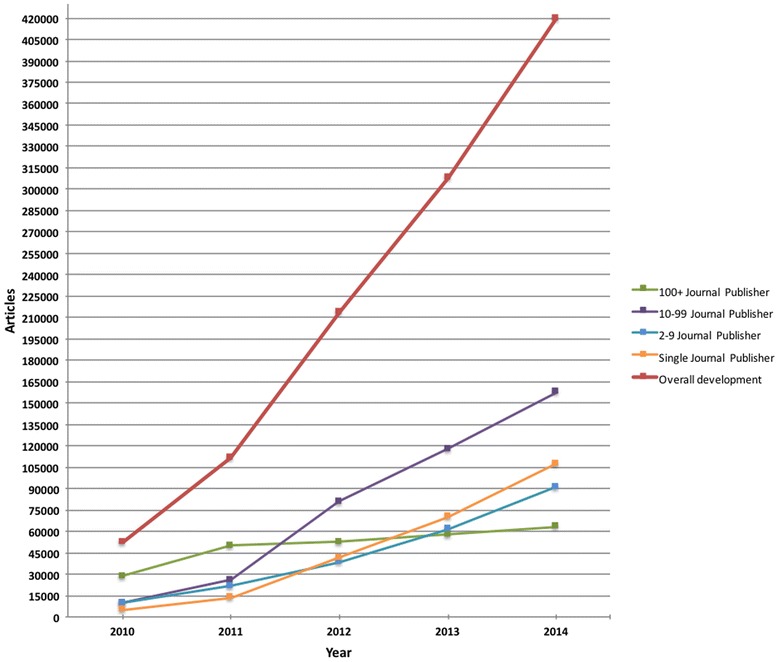
“It has been estimated that 420,000 scientific articles were published in predatory journals in 2014 (Shen & Bj€ork, 2015).”
BackgroundFranco, E. L. (2017) · Journal of Obstetrics and Gynaecology Canada · doi:10.1016/j.jogc.2017.03.122
Quick and Easy Peer Review Processes: Too Good To Be True, Avoid Predatory Journal Traps
Edie, A. H., Conklin, J., & Oermann, M. H. (2017) · 44th Biennial Convention (28 October - 01 November 2017)
Predatory Publishing: The Downside of Open Access Publishing
Garanayak, S. (2017)
Skyggesidene ved åpen publisering: indiske forskere utnyttes av røvertidsskrifter
Seethapathy, G. S., Austarheim, I., & Wangensteen, H. (2017) · Nytt Norsk Tidsskrift · doi:10.18261/issn.1504-3053-2017-02-05 · Cited by 1
The decline of medical publishing: the rise of the pseudo-journal
Delahunt, B., Samaratunga, H., & Egevad, L. (2017) · Pathology · doi:10.1016/j.pathol.2017.08.001
Jack-in-the- (in-)box: Beware of predatory journals
la Garza, C. E. M., & Koschwitz, M.-C. (2017) · Medicina Universitaria · doi:10.1016/j.rmu.2017.10.002
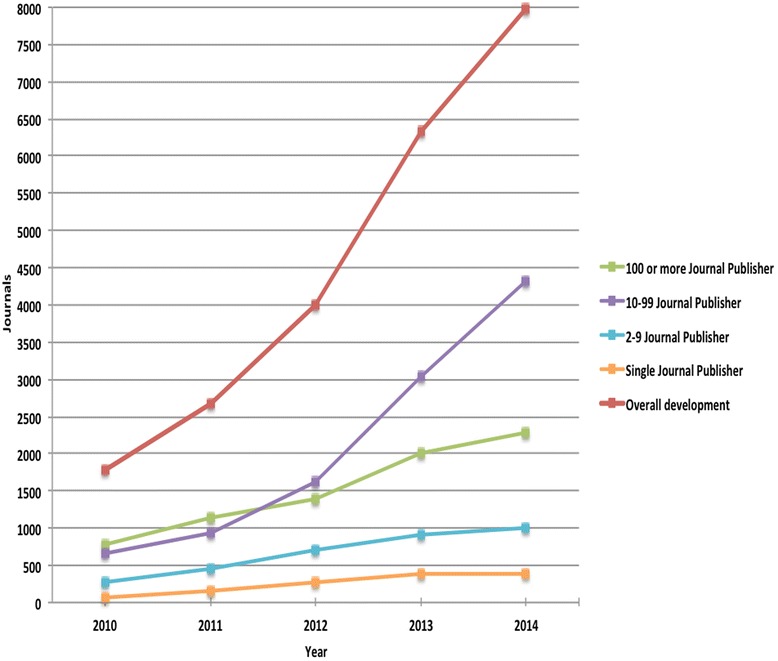
“Another study calculates the amount of papers published in identified predatory journals, growing from 53,000 in 2010 to an estimated 420,000 in 2015, and the number of journals growing from 1800 to 8000 in the same period.(7) We will not analyze here if Beall’s list or any other similar is right or wrong.”
BackgroundCollaborative research has direct patient benefit and merits recognition
Nepogodiev, D., & Glasbey, J. C. (2018) · Clinical Medicine · doi:10.7861/clinmedicine.18-2-189
Editorial: Publishing in predatory journals: Time for reflections
Ogunbanjo, G. A. (2018) · South African Family Practice
The need to publish and the birth of predatory medical journals
Castañón-González, A., Cantú-Pompa, J. J., Miranda-Hernández, A., & López-Valdés, J. C. (2018) · Gaceta Médica de México · doi:10.24875/gmm.m17000032
“We Need to Put Things Back to Normal.” Interview with Ole Bjerg: Interviewed by Elena Gudova
Bjerg, O. (2018) · Journal of Economic Sociology · doi:10.17323/1726-3247-2018-4-172-181
Is the Social Capital Really Social? Deliberations on Jacek Tittenbrun’s “Neither Capital nor Class”
Musiał, G. (2018) · Journal of Economic Sociology · doi:10.17323/1726-3247-2018-4-182-185
Pseudo-Journals and Pseudo-Conferences: the Characteristics and Preventive Measures
Choi, I. (2018) · Journal of the Korean Neurological Association · doi:10.17340/jkna.2018.4.3
Hall, L., & Hendricks, A. E. (2018) · bioRxiv (Cold Spring Harbor Laboratory) · doi:10.1101/500660 · Cited by 1
“Some have raised concerns that reputable Open Access journals may be letting peer-review standards fall to compete with predatory journals (23-27).”
BackgroundSetting Realistic Expectations and Possible Career Pathways for Junior Health Professionals
Barohn, R. J., Kimminau, K. S., & Brooks, W. M. (2018) · Merrill Series on The Research Mission of Public Universities · doi:10.17161/merrill.2018.9121
Identifying neurodisability research priorities in resource poor regions
Seal, A. K. (2019) · Developmental Medicine & Child Neurology · doi:10.1111/dmcn.14222
“In 2014, the industry had over 800 e-journals and published 420 000 articles, the average author fee was $178.5 Over 75% of the material published in these journals is from resource-poor regions such as Asia and Africa.5 Admittedly, there are certain genuine difficulties faced by researchers in these countries, such a…”
BackgroundInfluential‚Predatory Publishing‘ als aktuelle Herausforderung der Open Access Bewegung
Hayden, M. C. (2019) · Colloquium New Philologies · doi:10.23963/cnp.2019.4.1.13
Open access: uma tentativa de ruptura de paradigma
Chimenes, Á. P. A., & Esteves, L. A. (2019) · Revista Ibero-Americana de Ciência da Informação · doi:10.26512/rici.v12.n3.2019.22100 · Cited by 1
Farag, M. B., Arif, R., & Karck, M. (2019) · Zeitschrift für Herz- Thorax- und Gefäßchirurgie · doi:10.1007/s00398-019-00347-0
Are we prepared to save the sanctity of science from predatory journals?
Vignesh, R., & Shankar, E. M. (2019) · Indian Journal of Community Medicine · doi:10.4103/ijcm.ijcm_312_18
“The predatory publishing has become an organized industry, and by 2015, there were over half a million papers minted out by them.[3] The current situation is grim with these predatory journals on the loose and taking toll on the scientists and science altogether.”
BackgroundEl fenómeno de revistas depredadoras
Young, P. (2020)
Empathize and Sympathize with Less Privileged Academic Fraternity
Rao, A. S. (2020) · Higher Education Research · doi:10.11648/j.her.20200504.17
“Another point which has not been widely recognized is that even from North America and Europe and from middle and high income countries also large number of authors do contribute the same/similar journals [15-16].”
Predatory Publishing: Wenn wissenschaftliche Publikationen zum Geschäftsmodell werden
Bühringer, G. (2020) · SUCHT - Zeitschrift für Wissenschaft und Praxis / Journal of Addiction Research and Practice · doi:10.1024/0939-5911/a000676
Predatory journals and publishers at a glance: take apart or take over?
Khaled, M. B., & Diaf, M. (2017) · The North African Journal of Food and Nutrition Research · doi:10.51745/najfnr.1.2.46-50
Fatouh, A. H. (2020) · المجلة الدولية لعلوم المكتبات و المعلومات · doi:10.21608/ijlis.2020.40568.1029
Impacto en el área de comunicación de call for papers de presuntas revistas fraudulentas
Segarra‐Saavedra, J., López, J. M. T., & Frazão-Nogueira, A. G. (2020) · LA Referencia (Red Federada de Repositorios Institucionales de Publicaciones Científicas)
БЬЁРК, Б.-К., BJÖRK, B.-C., КОРКИМЯКИ, Т., & Korkeamäki, T. (2020) · Международный форум по информации · doi:10.36535/0203-6460-2020-02-2
Self-citationPredatory journal: What about hematology?
Tazi, I. (2021) · Ethics Medicine and Public Health · doi:10.1016/j.jemep.2021.100641 · Cited by 1
Коэффициенты приема рукописей в рецензируемых научных журналах: обзор литературы
БЬЁРК, Б.-К., & BJÖRK, B.-C. (2020) · Международный форум по информации · doi:10.36535/0203-6460-2020-02-3
Self-citationJanis, J. E. (2021) · Plastic & Reconstructive Surgery Global Open · doi:10.1097/gox.0000000000003467
Publizieren im Open-Access-Modell
Siegert, O. (2021) · Universitätsverlag Kiel | Kiel University Publishing eBooks · doi:10.38072/978-3-928794-59-6/p3
Who published in Chinese predatory journals? A study on the authorship of blacklist journals
Xu, J., Wang, Z., & Tang, W. (2020) · Illinois Digital Environment for Access to Learning and Scholarship (University of Illinois at Urbana-Champaign) · Cited by 2
The Predatory Journal: Victimizer or Victim?
Gill, G. (2021) · Informing Science The International Journal of an Emerging Transdiscipline · doi:10.28945/4788
Alweis, R. L., & Kalia, H. (2021) · Advances in Clinical Medical Research and Healthcare Delivery · doi:10.53785/2769-2779.1014
Disturbance of greedy publishing to academia.Preprint
You, T., Park, J., Lee, J., Yun, J., & Jung, W. (2021) · arXiv (Cornell University)
Characteristics of Predatory journals in Information Technology Science: An Analytical Study
SALEH, M. D. M. O. A. N. (2021) · المجلة الدولية لعلوم المكتبات و المعلومات · doi:10.21608/ijlis.2020.27275.1005
Altmetrics for Digital Libraries. Concepts, Applications, Evaluation and Recommendations
Nuredini, K. (2021) · Logos Verlag Berlin eBooks · doi:10.30819/5309 · Cited by 1
Medical Science Potential Predatory Journals in Reputed and Counterfeit Indexing Databases
Jan, R., & Gul, S. (2021) · International Journal of Digital Literacy and Digital Competence · doi:10.4018/ijdldc.287625
An Overview of Publications of Complementary and Alternative Medicine Research
Tangkiatkumjai, M. (2021) · IGI Global eBooks · doi:10.4018/978-1-6684-3546-5.ch001
Knowledge management publication in two South African journals
Shongwe, M. M. (2021) · doi:10.4102/aosis.2021.bk262.10
ЧЭНЬ, С. (2021) · Международный форум по информации · doi:10.36535/0203-6460-2021-03-3
Automating public business processes: Towards an AI-augmented government
Bwalya, K. J. (2021) · doi:10.4102/aosis.2021.bk262.02 · Cited by 1
Tejada-Gómez, M. A. (2022) · doi:10.3990/1.9789036553698 · Cited by 4
Predatory Open Access Journals and Attainment of Educational Sustainable Development Goals in Africa
Olatokun, W. M., & Omiunu, O. G. (2021) · IGI Global eBooks · doi:10.4018/978-1-6684-3885-5.ch026 · Cited by 1
Article Processing Charges and Their Impact in Open Access Publishing
Jayaraj, M. M., Pinto, A. J., & Pachiyappan, S. (2022) · Advances in knowledge acquisition, transfer, and management book series/Advances in knowledge acquisition, transfer and management book series · doi:10.4018/978-1-7998-9805-4.ch016
THE GAME: PREDATORY JOURNAL VS. SCOPUSPreprint
HOSSAN, D. (2021) · OSF Preprints (OSF Preprints) · doi:10.31219/osf.io/nf97j
THE GAME: PREDATORY JOURNAL VS. SCOPUSPreprint
HOSSAN, D. (2021) · EdArXiv (OSF Preprints) · doi:10.35542/osf.io/aq5jk
Moosa, I. A. (2018) · Edward Elgar Publishing eBooks · doi:10.4337/9781786434937.00017
Time to Stem the “Polluted Stream” of Information About Back Pain?
(2019) · The Back Letter · doi:10.1097/01.back.0000553236.84453.f8
Hersh, W. (2020) · Health informatics · doi:10.1007/978-3-030-47686-1_6
An Overview of Publications of Complementary and Alternative Medicine Research
Tangkiatkumjai, M. (2017) · Advances in medical diagnosis, treatment, and care (AMDTC) book series · doi:10.4018/978-1-5225-2882-1.ch003
PREDATORY JOURNALS ARE INDEXING IN REPUTED DATABASES: A CASE STUDY OF UNSOLVED ISSUESPreprint
Hossan, D. (2020) · LISSA (OSF Preprints) · doi:10.31229/osf.io/ac8pz
THE GAME: PREDATORY JOURNAL VS. SCOPUSPreprint
HOSSAN, D. (2021) · OSF Preprints (OSF Preprints) · doi:10.31219/osf.io/yb7kt
Acerca de las revistas predatorias
Mayorga, D. A. C. (2020) · Revista Facultad de Ciencias Económicas · doi:10.18359/rfce.5534
Post-truth era and impact on the science associated with sport and exercise medicine
Lambert, M. (2017) · South African Journal of Sports Medicine · doi:10.17159/2078-516x/2016/v28i3a1868
The status of Indonesian language journal (in Indonesian language)Preprint
Irawan, D. E., Multazam, M. T., Abraham, J., & Viridi, S. (2017) · doi:10.31219/osf.io/6zj5s
Metadata
- Authors
- Shen, C., & Björk, B.-C.
- Affiliations
- Hanken School of Economics (FI)
- Corresponding author
- Shen, Cenyu
- Venue
- BMC Medicine
- Published
- 2015-10-01
- Volume
- 13
- Issue
- 1
- Pages
- 230-230
- ISSN
- 1741-7015 (ISSN-L)
- PMC
- PMC4589914
- OpenAlex
- W2156487032
- Cited by
- 819
- References
- 28
- Citations by year
- 2026: 44 · 2025: 56 · 2024: 46 · 2023: 81 · 2022: 70 · 2021: 93 · 2020: 88 · 2019: 76 · 2018: 91 · 2017: 86 · 2016: 79 · 2015: 7
- FWCI
- 564.37
- Type
- journal article
- Language
- en
- Open access
- gold
- doi.org
- Licence
- Locations
- BMC Medicine (publishedVersion, cc-by)
- Europe PMC (PubMed Central) (publishedVersion, cc-by)
- PubMed Central (publishedVersion, cc-by)
- PubMed (publishedVersion)
- Työväentutkimus Vuosikirja (acceptedVersion)
- Työväentutkimus Vuosikirja (submittedVersion)
- Topics
- Social Sciences › Library and Information Sciences › Publishing and Scholarly Communication
- Social Sciences › Library and Information Sciences › Academic Publishing and Open Access
- Social Sciences › Library and Information Sciences › scientometrics and bibliometrics research
- Keywords
- predatory publishing, predatory journals, predatory publishers, open access publishing, article processing charges, regional distribution of authors, time to publication, peer review quality, Beall's list, DOAJ
- MeSH terms
- Authorship, Humans, Longitudinal Studies, Peer Review, Periodicals as Topic, Publishing, Bibliometrics, Access to Information
About these checks
Registry, retraction, Cites and statistics results are computed, not judged, with one exception: a printed reference that no index lists is read once by a model before it counts as a citation error. Claims are extracted by a model and kept only when their quote appears verbatim in the text; each cited source is then checked, with a model’s help, for whether it says what the claim relies on. Those verdicts can be wrong — read the claim’s quote and the cited source before relying on one.
Statistics and arithmetic are recomputed, not judged.
Confidence bands are shown only for fields calibrated on our annotated test set. None is calibrated yet, so no band is shown.
What counts as a claim ›How we measure confidence ›How we check this ›
Are you an author, or do you see a problem with this page? Request a review
Data sources
Bibliographic data: Semantic Scholar, OpenAlex, Crossref.
Contains information from the Semantic Scholar Academic Graph Datasets, made available under the ODC Attribution License (ODC-BY 1.0).
Semantic Scholar’s data is described in: Kinney, R., et al. (2023). The Semantic Scholar Open Data Platform. arXiv:2301.10140.
