

Predatory’ open access: a longitudinal study of article volumes and market characteristics
Open accessThe DOI matches its Crossref record; 28 of the 28 references it cites were found in a registry or an index.
Abstract
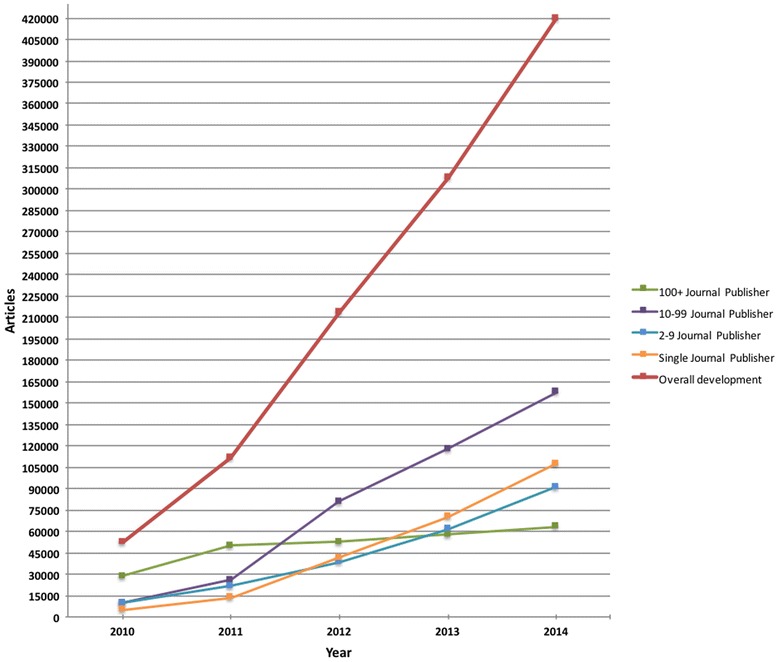
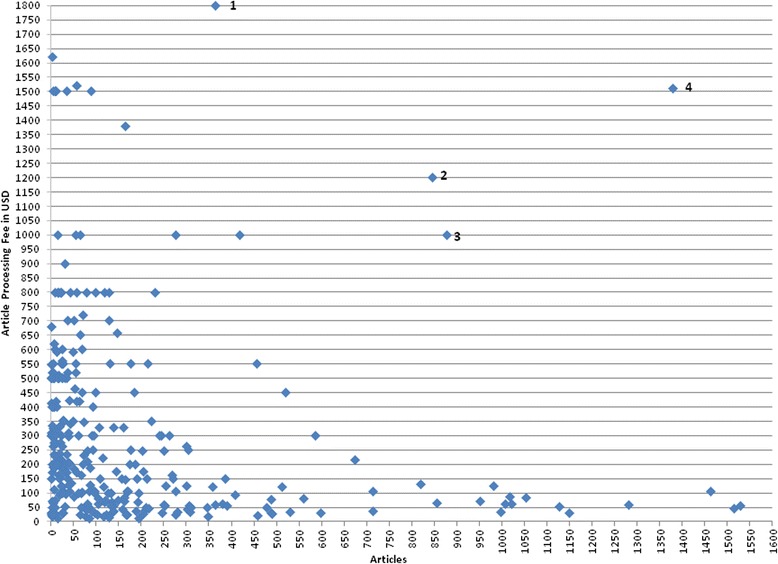
BACKGROUND: A negative consequence of the rapid growth of scholarly open access publishing funded by article processing charges is the emergence of publishers and journals with highly questionable marketing and peer review practices. These so-called predatory publishers are causing unfounded negative publicity for open access publishing in general. Reports about this branch of e-business have so far mainly concentrated on exposing lacking peer review and scandals involving publishers and journals. There is a lack of comprehensive studies about several aspects of this phenomenon, including extent and regional distribution. METHODS: After an initial scan of all predatory publishers and journals included in the so-called Beall's list, a sample of 613 journals was constructed using a stratified sampling method from the total of over 11,000 journals identified. Information about the subject field, country of publisher, article processing charge and article volumes published between 2010 and 2014 were manually collected from the journal websites. For a subset of journals, individual articles were sampled in order to study the country affiliation of authors and the publication delays. RESULTS: Over the studied period, predatory journals have rapidly increased their publication volumes from 53,000 in 2010 to an estimated 420,000 articles in 2014, published by around 8,000 active journals. Early on, publishers with more than 100 journals dominated the market, but since 2012 publishers in the 10-99 journal size category have captured the largest market share. The regional distribution of both the publisher's country and authorship is highly skewed, in particular Asia and Africa contributed three quarters of authors. Authors paid an average article processing charge of 178 USD per article for articles typically published within 2 to 3 months of submission. CONCLUSIONS: Despite a total number of journals and publishing volumes comparable to respectable (indexed by the Directory of Open Access Journals) open access journals, the problem of predatory open access seems highly contained to just a few countries, where the academic evaluation practices strongly favor international publication, but without further quality checks.
Overview
The claims and statistics of this paper haven’t been checked yet.
Free: it reads the open-access text and checks the first 5 claims that cite a source we can check. Create a free account to check every claim.
Integrity signals
Registry
Cites
Statistics
Figures
Verification
Claims the paper makes
The claims and statistics of this paper haven’t been checked yet.
Free: it reads the open-access text and checks the first 5 claims that cite a source we can check. Create a free account to check every claim.
Claims other papers make about this one
Each is checked against this paper’s own text: does it say what the citing paper says it does?
The source backs part of the claim, not all of it — or backs it for a different population, condition or comparison.
In the citing paper
“The growth of online journals that require author publication fees may be driving an increasingly profit-based publishing model (49).”
From Protection of the human gene research literature from contract cheating organizations known as research paper mills (2022) · cites this paper as [49]
Experimental — accuracy not yet measuredThe cited source says what the claim attributes to it.
In the citing paper
“Although these criteria are often considered to be controversial [164], it was shown that predatory journals usually fulfilled several of the criteria outlined by Beall [150,165].”
From Web of Science (WoS) and Scopus: The Titans of Bibliographic Information in Today’s Academic World (2021) · cites this paper as [150]
The cited source says what the claim attributes to it.
In the citing paper
“these artificial journals have evolved and they even manage to pass the selection process of the major bibliographic, as well as OA, DBs [145,150,157,158,166]”
From Web of Science (WoS) and Scopus: The Titans of Bibliographic Information in Today’s Academic World (2021) · cites this paper as [150]
In the citing paper
“Publish or perish research cultures (6,34,43,101) combined with an increasingly commercially-focused publishing environment (49,102) are leading to the dislocation between the scientific and career value of research publications (103)”
From Protection of the human gene research literature from contract cheating organizations known as research paper mills (2022) · cites this paper as [49]
In the citing paper
“When including the entire literature, predatory publishing likely comprises about 5 to 10%.”
From Misinformation in and about science (2021) · cites this paper as [88]
3 more claims about this paper
Create a free account to see every claim other papers make about this one.
Self-check
Percentages, sums and reported differences re-computed from the paper’s own numbers.
The self-check needs the paper’s full text.
Citations
Cites
Bohannon, J. (2013) · Science · doi:10.1126/science.342.6154.60 · Cited by 934
The Development of Open Access Journal Publishing from 1993 to 2009
Laakso, M., Welling, P., Bukvova, H., Nyman, L., Björk, B.-C., & Hedlund, T. (2011) · PLoS ONE · doi:10.1371/journal.pone.0020961 · Cited by 755
Self-citationPredatory publishers are corrupting open access
Beall, J. (2012) · Nature · doi:10.1038/489179a · Cited by 658 · cited 1×
“Jeffrey Beall coined the phrase ‘predatory publishers’ to describe publishers of this sort of journal [6].”
BackgroundSuber, P. (2012) · The MIT Press eBooks · doi:10.7551/mitpress/9286.001.0001 · Cited by 623
The Access/Impact Problem and the Green and Gold Roads to Open Access
Harnad, S. R., Brody, T., Vallières, F., Carr, L. A., Hitchcock, S., Gingras, Y., Oppenheim, C., Stamerjohanns, H., & Hilf, E. R. (2004) · Serials Review · doi:10.1016/j.serrev.2004.09.013 · Cited by 529 · cited 7×
“In addition, there is a ‘green’ route in which authors or third parties can legally make manuscript versions of articles published in traditional journals freely available on the Internet [4].”
BackgroundInfluentialThe publishing delay in scholarly peer-reviewed journals
Björk, B.-C., & Solomon, D. (2013) · Journal of Informetrics · doi:10.1016/j.joi.2013.09.001 · Cited by 432
Self-citation(2000) · Technometrics · doi:10.1080/00401706.2000.10486038 · Cited by 412
Towards Electronic Journals: Realities for Scientists, Librarians, and Publishers,,,,
Tenopir, C., & King, D. W. (2000) · Cited by 400
Anatomy of open access publishing: a study of longitudinal development and internal structure
Laakso, M., & Björk, B.-C. (2012) · BMC Medicine · doi:10.1186/1741-7015-10-124 · Cited by 364 · cited 3×
“Björk and Solomon [32] found delays of 9 – 18 months, depending on the field of science, with social sciences having the longest delays.”
BackgroundMethodSelf-citationWho publishes in “predatory” journals?
Xia, J., Harmon, J. L., Connolly, K. G., Donnelly, R. M., Anderson, M. R., & Howard, H. A. (2015) · Journal of the Association for Information Science and Technology · doi:10.1002/asi.23265 · Cited by 359 · cited 1×
“Xia et al. also studied the origin of authors in seven pharmacological journals included in the above list and found a strong dominance of Indian authors, with Nigerian and Pakistani authors in second and third place [18].”
Result
Research works printed but not linked: 1
- Spears T. Respectable medical journal turns to dark side. Ottawa, ON: Ottawa Citizen; 2014. http://ottawacitizen.com/technology/science/respected-medical-journal-turns-to-dark-side.
Cited by
Items 301–400 of 813
Exploring Arguments Presented in Predatory Journals Using Toulmin’s Model of Argumentation
Ebadi, S., Ashtarian, S., & Zamani, G. (2020) · Journal of Academic Ethics · doi:10.1007/s10805-019-09346-0 · Cited by 15
“Similarly in a study by Shen and Bjork (2015) who studied 262 researchers who published in fake journals and revealed that the majority were from developing countries such as Asian countries and Africa.”
ResultEconomic Modelling of Predatory Journal Publishing
Xia, J. (2019) · Publishing Research Quarterly · doi:10.1007/s12109-019-09661-9 · Cited by 11
“Related studies on predatory APCs can be found in a series of work by Björk and colleagues [9, 10, 42].”
BackgroundInfluentialNew year's resolution: Say no to fake journals and conferences
Kahan, S. I., & Kushner, R. F. (2016) · Obesity · doi:10.1002/oby.21738 · Cited by 10
The challenge of the predatory open-access publishing outbreak
Cortegiani, A., Misseri, G., Gregoretti, C., Einav, S., & Giarratano, A. (2019) · European Journal of Anaesthesiology · doi:10.1097/eja.0000000000001083 · Cited by 10
Open Science in Applied Linguistics: An Introduction to MetasciencePreprint
Al‐Hoorie, A. H., & Hiver, P. V. (2023) · OSF Preprints (OSF Preprints) · doi:10.31219/osf.io/76dak · Cited by 12
Sharma, S., Verhagen, A. P., Elkins, M. R., Brismée, J., Fulk, G. D., Taradaj, J., Steen, L., Jette, A. M., Moore, A. P., Stewart, A., et al. (2023) · Journal of physiotherapy · doi:10.1016/j.jphys.2023.08.013 · Cited by 14
Ethics and Integrity in Academic Publishing
Caporale, C., & Zagarella, R. M. (2023) · UNIPA Springer series · doi:10.1007/978-3-031-24060-7_5 · Cited by 13
Trends in scientific publishing: does quantity compromises quality in life sciences and medicine?
Shamieh, S. E., & Chebly, A. (2024) · Systematic Reviews · doi:10.1186/s13643-024-02668-0 · Cited by 9
“In this context, some may claim that expanding publication volumes may lower the quality of papers and thus affect journals’ reputation [3].”
BackgroundEstimating the predictability of questionable open-access journals
Zhuang, H., Liang, L., & Acuna, D. E. (2025) · Science Advances · doi:10.1126/sciadv.adt2792 · Cited by 17
“Questionable journals are becoming more numerous and entrenched in the academic landscape ( 49 , 50 ), and some countries are trying to take policy against this advance ( 51 ).”
Questioning the efficacy of predatory journals' blacklists
Manca, A., Cugusi, L., & Deriu, F. (2019) · BJPsych Advances · doi:10.1192/bja.2018.72 · Cited by 9
Chinese PhD Students’ Perceptions of Predatory Journals: A Survey Study
Wang, J., Xu, J., & Chen, D. (2021) · Journal of Scholarly Publishing · doi:10.3138/jsp.52.2.02 · Cited by 12
Predator and Alien: the threat of predatory journals and conferences
Leducq, S., Bonsu, N., Clement, K., Barlow, R., & Williams, H. C. (2023) · Clinical and Experimental Dermatology · doi:10.1093/ced/llad133 · Cited by 10
Policy shaping the impact of open-access publications: a longitudinal assessment
Hadad, S., Aharony, N., & Raban, D. R. (2023) · Scientometrics · doi:10.1007/s11192-023-04875-3 · Cited by 11
“The proliferation of predatory journals also negatively impacts researchers’ perception of OA publishing (Beall, 2015; Shen & Björk, 2015).”
The dark side of publishing: Unveiling the deceptive tactics of cloned journals in India
Parray, U. Y., Loan, F. A., & Khan, A. M. (2024) · Journal of Librarianship and Information Science · doi:10.1177/09610006241256392 · Cited by 11
“…originate from developing regions such as Asia (especially India and Pakistan), the Middle East and parts of Africa (Kurt, 2018; Patwardhan, 2019; Shen and Björk, 2015; Xia et al., 2017); the results of this study suggest that cloned journals not only originate from developing regions but also…”
comunicação científica em movimento: das origens aos debates atuais
Santos-d’Amorim, K. (2021) · Brazilian Journal of Information Science research trends · doi:10.36311/1981-1640.2021.v15.e02103 · Cited by 27
Evidence Engines: Common Rhetorical Features of Fraudulent Academic Articles
Pflugfelder, E. H. (2022) · Written Communication · doi:10.1177/07410883211069332 · Cited by 9
“While some may dismiss their impact, their number has rapidly increased, from around 1,800 journals in 2010 to an estimated 8,000 journals publishing 420,000 articles in 2014, and likely more today (Shen & Björk, 2015, p. 5).”
BackgroundDisturbance of questionable publishing to academia
You, T., Park, J., Lee, J. Y., Yun, J., & Jung, W. (2022) · Journal of Informetrics · doi:10.1016/j.joi.2022.101294 · Cited by 15
“However, our findings, combined with insights of previous studies, indicate that QJs are not yet a part of a healthy academic environment [13, 14, 51].”
BackgroundResultLanguage and Geographic Representation of Neurosurgical Journals: A Meta-Science Study
Shlobin, N. A., Punchak, M. A., Boyke, A. E., Beestrum, M., Gutzman, K. E., & Rosseau, G. L. (2022) · World Neurosurgery · doi:10.1016/j.wneu.2022.08.006 · Cited by 10
Koroulakis, A. I., Rice, S. R., DeCesaris, C. M., Knight, N., & Nichols, E. M. (2019) · Advances in Radiation Oncology · doi:10.1016/j.adro.2019.09.001 · Cited by 8
“First, the amount of predatory publishing in the broader scientific domain appears to be rapidly increasing, with total articles numbering 53,000 in 2010 and 420,000 in 2014.(13,14) These numbers are likely even higher as of 2019.”
BackgroundThe burden of predatory journal and congress requests in foot and ankle surgery
Schepers, T., & Rammelt, S. (2019) · Fuß & Sprunggelenk · doi:10.1016/j.fuspru.2019.03.001 · Cited by 9
Literature review in biomedical research: useful search engines beyond PubMed
Cals, J., & Kotz, D. (2015) · Journal of Clinical Epidemiology · doi:10.1016/j.jclinepi.2015.10.012 · Cited by 9
Increasing challenges for an effective peer-review process
Hak, D. J., Giannoudis, P. V., & Mauffrey, C. P. (2016) · European Journal of Orthopaedic Surgery & Traumatology · doi:10.1007/s00590-015-1735-x · Cited by 9
“journals with limited and questionable peer review [2].”
BackgroundMethods Open – A New Journal Track Starting in 2017
Haux, R., Gefeller, O., Sarkar, I. N., Bergemann, D., & Koch, S. (2016) · Methods of Information in Medicine · doi:10.3414/me16-14-0001 · Cited by 9
Heriyanto, H. (2018) · Queensland University of Technology · doi:10.5204/thesis.eprints.117651 · Cited by 15
The changing landscape of scientific publishing
Chiriboga, L. A. (2019) · Journal of Histotechnology · doi:10.1080/01478885.2019.1636554 · Cited by 12
Predatory journals in anaesthesiology and critical care: what to know and how to avoid pitfalls!
Rozencwajg, S., Peiffer‐Smadja, N., James, A., & Kantor, E. (2021) · European Journal of Anaesthesiology · doi:10.1097/eja.0000000000001651 · Cited by 9
Sharma, S., Verhagen, A. P., Elkins, M. R., Brismée, J., Fulk, G. D., Taradaj, J., Steen, L., Jette, A. M., Moore, A. P., Stewart, A., et al. (2023) · Physical Therapy · doi:10.1093/ptj/pzad081 · Cited by 9
Dobusch, L., & Heimstädt, M. (2024) · Philosophy & Social Criticism · doi:10.1177/01914537231203558 · Cited by 8
“In 2014, Shen and Bj¨ork (2015) estimated the size of the predatory journals market to be about US$74 million (compared with US$244 million for serious Open Access journals and US$10.5 billion for the total global journal subscription market).”
BackgroundInfluentialPredatory journals: una amenaza emergente para autores y editores de publicaciones biomédicas
López, P. D. D., & Corrales-García, E. M. (2017) · Neurocirugía · doi:10.1016/j.neucir.2017.07.006 · Cited by 8
Analysis of predatory emails in early career academia and attempts at prevention
Tomlinson, O. W. (2022) · Learned Publishing · doi:10.1002/leap.1500 · Cited by 11
“There has been a notable increase in the prevalence of predatory publishers and outputs over recent years (Shen & Björk, 2015), with many articles subsequently in fi ltrating biomedical databases and being indexed within them (Manca et al., 2020).”
BackgroundEm, S., Serey, M., Sam, R., Pen, D., & Chin, P. (2025) · IGI Global eBooks · doi:10.4018/979-8-3373-0654-4.ch003 · Cited by 8
El fraude en las publicaciones científicas: más allá de fabricar, falsificar y plagiar
Díaz, G. M. (2016) · TecnoLógicas · doi:10.22430/22565337.583 · Cited by 8
“Sin embargo, algunos autores alertan sobre la posibilidad de que investigadores “no tan honestos”, hagan uso de este tipo de publicaciones, así como de revistas depredadoras”, para mejorar su currículo o defraudar a entidades financiadoras [8].”
Applying Rational Choice Theory to Authors' Behaviors in Unethical Publishing in China
Xia, J. (2018) · Library trends · doi:10.1353/lib.2018.0035 · Cited by 8
Trubnikov, D., & Трубникова, Е. И. (2023) · Minerva · doi:10.1007/s11024-023-09502-2 · Cited by 8
“Therefore, as the starting point for the present analysis we chose the predatory publishing problem that during the last decade have attracted attention of many scholars (e.g., Beall 2012; Truth 2012; Shen and Björk 2015; Bell 2017; Severin and Low 2019).”
Now you have to pay! A deeper look at publishing practices of predatory journals
Freiermuth, M. R. (2023) · Learned Publishing · doi:10.1002/leap.1583 · Cited by 8
“Also edit the reference section of your article using the correct format. researchers for promoting their research in predatory journals (Nejadghanbar et al., 2023), this shows little concern for the research process and immediately calls into question the entire review process (Shen & Björk, 2015).”
BackgroundCost in high impact journals: The problem for researchers from low and middle income countries
Gupta, A., Venkatashiva Reddy, B., & Solanki, H. K. (2018) · Public Health Review International Journal of Public Health Research · doi:10.17511/ijphr.2018.i1.06 · Cited by 8
Predatory Publishing in Ophthalmology: A Call for Awareness and Action
Bakri, S. J., & Shah, S. M. (2020) · American Journal of Ophthalmology · doi:10.1016/j.ajo.2020.08.009 · Cited by 11
How frequently are articles in predatory open access journals cited
B-C, B., Kanto-Karvonen, S., & Harviainen, J. T. (2020) · Yearbook of pediatric endocrinology · doi:10.1530/ey.17.14.6 · Cited by 9
THE PEER REVIEW PROCESS IN ASIA
Ahmed, S., & Pinto, B. (2021) · Central Asian Journal of Medical Hypotheses and Ethics · doi:10.47316/cajmhe.2020.1.2.06 · Cited by 9
Violations of Standard Practices by Predatory Economics Journals
Trejo‐Pech, C. O., Thach, S. V., Thompson, J. M., & Manley, J. (2021) · Serials Review · doi:10.1080/00987913.2021.1959183 · Cited by 8
“One study estimated that “published” articles in predatory journals increased from 53,000 in 2010 to 420,000 in 2014 (Shen & Bjork, 2015).”
BackgroundResultInfluentialYurevich, A. V., & Yurevich, M. A. (2021) · Herald of the Russian Academy of Sciences · doi:10.1134/s1019331621040158 · Cited by 9
Impact of Predatory Journals in Plastic Surgery Literature: Researchers Beware
Asaad, M., Elmorsi, R., Winocour, S. J., Mericli, A. F., Reece, E. M., Selber, J. C., Butler, C. E., & Chu, C. K.-C. (2022) · Plastic & Reconstructive Surgery · doi:10.1097/prs.0000000000009054 · Cited by 9
Buitrago, J., & Pérez, J. H. (2023) · Journal of Librarianship and Information Science · doi:10.1177/09610006231187686 · Cited by 14
“Meanwhile, Shen and Björk (2015) and a report by Inter Academy Partnership (IAP, 2022: 49) notes that disingenuous publications seek to defraud mainly researchers in low-or middle-income countries, which is where most of the world’s young researchers reside.”
Differentiating predatory scholarship: best practices in scholarly publication
Gonzalez, J., Bridgeman, M. B., & DeSantis, E. R. H. (2017) · International Journal of Pharmacy Practice · doi:10.1111/ijpp.12380 · Cited by 9
A shift in scholarly publishing practices and the growing menace of predatory journals
Munk, P. L., Coupal, T. M., & Peh, W. (2018) · The Medical Journal of Australia · doi:10.5694/mja17.00892 · Cited by 8
Doctoral Education in Social Work: The Decade Ahead
Howard, M. O., Fräser, M. W., & Bowen, G. L. (2018) · Journal of Social Work Education · doi:10.1080/10437797.2018.1503124 · Cited by 9
“Other pertinent developments include the proliferation of more than 8,000 open-access “predatory” journals across the full range of scientific disciplines (Shen & Björk, 2015, para.”
BackgroundPredatory Journals : Do Not Enter
Khan, F., & Moher, D. (2017) · University of Ottawa Journal of Medicine · doi:10.18192/uojm.v7i1.1755 · Cited by 8
“In that time, authors have published nearly 500,000 articles in 10,000 predatory journals [5].”
Why we should have listened to Jeffrey Beall from the start
Downes, M. (2020) · Learned Publishing · doi:10.1002/leap.1316 · Cited by 8
“442 The so-called ‘predatory’ racketeer publishers have been around for about two decades, their number has been allowed to increase unchecked (Shen & Bjork, 2015), and their population now fluctuates somewhere between 1 and 2000, with the birth rate probably still exceeding the death rate (Lucik…”
BackgroundPredatory journals: Prevention better than cure?
Manca, A., Cugusi, L., Dragone, D., & Deriu, F. (2016) · Journal of the Neurological Sciences · doi:10.1016/j.jns.2016.09.052 · Cited by 8
Beware of Predatory Journals: A Caution from Editors of Three Family Medicine Journals
Bowman, M. A., Saultz, J. W., & Phillips, W. R. (2018) · The Journal of the American Board of Family Medicine · doi:10.3122/jabfm.2018.05.180197 · Cited by 10
“5 billion that traditional journals collected in 2015.(10)”
BackgroundLa epidemia de las revistas depredadoras
García‐Puente, M. (2019) · Redalyc (Universidad Autónoma del Estado de México) · Cited by 8
Perceptions of Turkish Academicians about Predatory Journals: A Qualitative Descriptive Study
Mutlu, G. (2020) · Journal of Qualitative Research in Education · doi:10.14689/issn.2148-2624.1.8c.1s.6m · Cited by 6
Sharma, S., Verhagen, A., Elkins, M., Brismée, J.-M., Fulk, G. D., Taradaj, J., Steen, L., Jette, A., Moore, A., Stewart, A., et al. (2023) · International Journal of Sports Physical Therapy · doi:10.26603/001c.83948 · Cited by 7
“As a consequence, researchers from LMICs publish their work in “predatory” journals.(11) The researchers see predatory journals as “low-hanging fruit,” despite costs associated with publication, because the publishing requirements are easier to meet while the publication process is often swift, as opposed to (internat…”
BackgroundАлименты как множественные деньги: контрибуция, обязательство или забота?
Алексеевна, И. Е. (2018) · Journal of Economic Sociology · doi:10.17323/1726-3247-2018-4-101-133 · Cited by 8
Decolonial dilemmas: balancing global recognition and local impact in South African research
Mthombeni, Z. M. (2024) · Discover Education · doi:10.1007/s44217-024-00327-z · Cited by 9
“Through these traditional academic values such as autonomy, intellectual freedom, creativity, critical thinking, and the generation of intellectually stimulating ideas are being challenged and sometimes compromised (Shams [51];, Tulubas and Gokturk [54], Ylijoki and Ursin [60]).”
A proposed framework to address metric inflation in research publications
Móra, P., & Pilia, S. (2024) · Accountability in Research · doi:10.1080/08989621.2024.2445280 · Cited by 10
“Similarly, paper mills – organizations that produce fabricated or low-quality manuscripts for profit – often rely on inflated co-authorship networks to boost the metrics of paying researchers (Shen, C. and Björk, B.C., 2015).”
Predatory Publishing in Indian LIS Research: A Case Study
Dora, M., & Kampa, R. K. (2023) · Serials Review · doi:10.1080/00987913.2023.2174405 · Cited by 9
“An interesting study by Shen and Bj€ork (2015) with a sample size of 613 journals found that 27% of journals were published from India, while around 35% authors who published in those predatory journals were from India.”
BackgroundRoshchina, Y. M., & Богданов, М. Ю. (2018) · Journal of Economic Sociology · doi:10.17323/1726-3247-2018-4-134-171 · Cited by 16
Nazim, M., & Ashar, M. (2018) · Journal of Electronic Resources in Medical Libraries · doi:10.1080/15424065.2018.1554464 · Cited by 9
The Academic Library in the Face of Cooperative and Commercial Paths to Open Access
Willinsky, J. M. (2018) · Library trends · doi:10.1353/lib.2018.0033 · Cited by 12
A guide to applying the Good Publication Practice 3 guidelines in the Asia-Pacific region
Hesp, B. R., Arai, K., Chu, M. Y. S., Chuah, S., Curameng, J. M., Kamat, S., Ma, Z., Sakko, A. J., & Fernandez, H. (2019) · Research Integrity and Peer Review · doi:10.1186/s41073-019-0079-1 · Cited by 8
Teaching Nursing Students and Nurses About Predatory Publishing
Ashton, K. S. (2019) · Journal of Nursing Education · doi:10.3928/01484834-20191021-03 · Cited by 7
Buitrago, J. (2021) · Journal of Librarianship and Information Science · doi:10.1177/09610006211016533 · Cited by 12
“In contrast, while a growing body of literature documents the problem of predatory publishing in the developing world (e.g. Demir, 2018; Patwardhan, 2019; Shen and Björk, 2015; Xia et al., 2015), it presents few suggestions for addressing it.”
BackgroundÖzay, A. C., Özay, Ö. E., & Gün, İ. (2021) · Ginekologia Polska · doi:10.5603/gp.a2021.0124 · Cited by 8
“We divided OA journals into subgroups according to APC and non-APC and the results of the comparisons for these three groups are shown in Table 2B.”
BackgroundInfluentialBoshoff, N., & Ngwenya, S. (2022) · Science Technology and Society · doi:10.1177/09717218221078186 · Cited by 7
“According to Shen and Björk (2015), the regional distribution of authorship of predatory journals is highly skewed, with Asia and Africa constituting three quarters of those authors.”
BackgroundMiller, C. T., & Rice, R. L. (2023) · Journal of Scholarly Publishing · doi:10.3138/jsp-2022-0073 · Cited by 10
“Publish or perish” is good for African research
Kana, M. A. (2016) · BMJ · doi:10.1136/bmj.i121 · Cited by 10
Impacto de las editoriales y las revistas "depredadoras" en el área de Comunicación
Túñez-López, M., & Martínez-Solana, M. Y. (2018) · Historia y Comunicación Social · doi:10.5209/hics.62267 · Cited by 7
Boukacem‐Zeghmouri, C., Rakotoary, S., & Bador, P. (2021) · Natures Sciences Sociétés · doi:10.1051/nss/2022008 · Cited by 12
Open Access Publishing: A Key Enabler to Research Impact, Informed Practice and Social Justice
Gair, S., Zuchowski, I., & Beddoe, L. (2021) · Advances in Social Work and Welfare Education · Cited by 15
Solicitation for article submission by electronic journals
Ball, S., Kopel, J. J., Alexander, R., & NUGENT, K. M. (2018) · Baylor University Medical Center Proceedings · doi:10.1080/08998280.2018.1498725 · Cited by 7
Avoiding publishing in predatory journals: An evaluation algorithm
Qehaja, A. B. (2020) · Journal on Efficiency and Responsibility in Education and Science · doi:10.7160/eriesj.2020.130305 · Cited by 10
“A total of 8,000 active predatory journals published about 420,000 articles in 2014, following a pretty linear increase from 53,000 in 2010 (Shen and Björk, 2015).”
BackgroundInfluentialFranco, E. L. (2017) · Journal of Obstetrics and Gynaecology Canada · doi:10.1016/j.jogc.2017.03.104 · Cited by 7
Predatory or Legitimate Journals
Habibzadeh, F. (2017) · The International Journal of Occupational and Environmental Medicine · doi:10.15171/ijoem.2017.1067 · Cited by 7
Debt: 5000 Years and Counting as It Was
Aleksandrova, M. (2018) · Journal of Economic Sociology · doi:10.17323/1726-3247-2018-4-186-192 · Cited by 7
An overview of studies assessing predatory journals within the biomedical sciences
Althaus, F., Kohl, C. B. S., & Faggion, C. M. (2025) · Accountability in Research · doi:10.1080/08989621.2025.2465625 · Cited by 6
“Some studies have described that costs to publish in a PJ are relatively low compared to fees charged by non-predatory open-access journals (Shen and Björk 2015).”
Fadel, C., Milanova, A., Šuran, J., Šitovs, A., Kim, T., Bello, A., Abay, S. M., der Horst, S. F. V., Mileva, R., Amadori, M., et al. (2024) · Journal of Veterinary Pharmacology and Therapeutics · doi:10.1111/jvp.13448 · Cited by 6
Democratizing Knowledge or Closing Gates? A Critical Examination of Article-Processing Charges
Acharjee, A., & Acharjee, P. (2024) · Springer eBooks · doi:10.1007/978-981-97-4060-4_5 · Cited by 12
A Multidisciplinary Study of Faculty Knowledge and Attitudes Regarding Predatory Publishing
Webber, N., & Wiegand, S. (2022) · Journal of Librarianship and Scholarly Communication · doi:10.31274/jlsc.13011 · Cited by 13
“Shen and Björk (2015) offered some insight into the breakdown of disciplines by examining topics at the journal level.”
BackgroundInfluentialANALYSIS OF RETRACTED PUBLICATIONS FROM KAZAKHSTAN
Koçyiğit, B. F., & Akyol, A. (2022) · Central Asian Journal of Medical Hypotheses and Ethics · doi:10.47316/cajmhe.2022.3.2.04 · Cited by 6
“An assessment of articles in predatory journals indicated that a considerable portion of the articles was sourced from researchers in Asia and Africa with low experience, and non-native English speakers [10].”
BackgroundThe Russian economic journals market amid international isolation
Balatsky, E. V., & Екимова, Н. А. (2022) · Upravlenets · doi:10.29141/2218-5003-2022-13-4-2 · Cited by 8
Disseminating Biomedical Research: Predatory Journals and Practices
Khan, H., Armond, A. C. V., Ghannad, M., & Moher, D. (2022) · Indian Journal of Rheumatology · doi:10.4103/0973-3698.364675 · Cited by 6
“Shen and Björk [19] provide the most comprehensive data on the prevalence of predatory article publications, more than 400,000 as of 2014 publishers in about 8000 journals.”
Regards croisés sur l’analphabétisme scientifique et le processus d’évaluation par les pairs
Larivée, S. J. (2017) · Revue de psychoéducation · doi:10.7202/1039679ar · Cited by 6
Yırtıcı Dergiler ve Yayıncılar
Aslan, A. (2018) · Acta Medica Alanya · doi:10.30565/medalanya.478311 · Cited by 6
The Changing Landscape of Journalology in Medicine
Wilson, M., & Moher, D. (2018) · Seminars in Nuclear Medicine · doi:10.1053/j.semnuclmed.2018.11.009 · Cited by 7
A Preliminary Study of Alternative Open Access Journal Indexes
Xia, J. (2019) · Publishing Research Quarterly · doi:10.1007/s12109-019-09642-y · Cited by 6
“These index providers do not seem to bother designing their websites by using professional standards, or as pointed by another research that the alternative indexes are mostly one-person business that lacks necessary technical support to bring them onto a professional level [15].”
BackgroundResultThe Past Informs the Present, Academic New Media Pitfalls: A Primer for Plastic Surgeons
Day, K. M., Rohrich, R. J., & Spiess, A. M. (2019) · Plastic & Reconstructive Surgery Global Open · doi:10.1097/gox.0000000000002178 · Cited by 6
Junk science for sale Sham journals proliferating online.
Klyce, W. B., & Feller, E. R. (2017) · PubMed · Cited by 6
Ten hot topics around scholarly publishing
Tennan, J. P., Crane, H., Crick, T., Dávila, J. A., Enkhbayar, A., Havemann, J., Kramer, B. M. R., Martin, R., Masuzzo, P., Nobes, A., et al. (2019) · Bibliosphere · doi:10.20913/1815-3186-2019-3-3-25 · Cited by 9
Overwhelmed by overflows? How people and organizations create and manage excess
Czarniawska, B., & Löfgren, O. (2019) · Lund University Press eBooks · doi:10.7765/9789198469813 · Cited by 13
Reproducibility in Biomedical Research
Mullane, K., Curtis, M. J., & Williams, M. J. (2017) · Elsevier eBooks · doi:10.1016/b978-0-12-804725-5.00001-x · Cited by 11
Clements, J. C., Daigle, R., & Froehlich, H. E. (2018) · Frontiers in Marine Science · doi:10.3389/fmars.2018.00106 · Cited by 8
Illegitimate Academic Publishing: A Need for Sustainable Global Action
Nnaji, J. C. (2018) · Publishing Research Quarterly · doi:10.1007/s12109-018-9614-z · Cited by 7
Risk of publication in worthless journals
Shrestha, J., Subedı, S., Timsina, K. P., & Tripathi, M. P. (2018) · Journal of Agriculture and Natural Resources · doi:10.3126/janr.v1i1.22217 · Cited by 8
“A longitudinal study (an estimated three-quarters of authors were from Asia and Africa) of article volumes and publishing market characteristics estimated 8000 active predatory journals, with total articles increasing from 53,000 in 2010 to 420,000 in 2014 (Shen & Pjork, 2015).”
BackgroundOpen Access and Predatory Publishing
Lowe, N. K. (2017) · Journal of Obstetric, Gynecologic & Neonatal Nursing · doi:10.1016/j.jogn.2017.01.003 · Cited by 6
‘Easier ways to get a publication’: the problem of low quality scientific publications
Carrell, D. T., & Simoni, M. (2017) · Andrology · doi:10.1111/andr.12460 · Cited by 7
The Recent Decisions of the Turkish Council of Higher Education on Predatory Journals
Koçak, Z. (2021) · Balkan Medical Journal · doi:10.4274/balkanmedj.galenos.2022.21022022 · Cited by 7
Liu, J., Wang, X., & Liang, X. (2025) · Information Processing & Management · doi:10.1016/j.ipm.2025.104176 · Cited by 7
Motive, Anreize und Einflussfaktoren für Open-Science-Praktiken
Röwert, R. (2024) · Logos Verlag Berlin eBooks · doi:10.30819/5781 · Cited by 8
A Description of Predatory Publishing in South African Economics Departments
Kerr, A., & Jager, P. G. D. (2021) · South African Journal of Economics · doi:10.1111/saje.12278 · Cited by 6
Metadata
- Authors
- Shen, C., & Björk, B.-C.
- Affiliations
- Hanken School of Economics (FI)
- Corresponding author
- Shen, Cenyu
- Venue
- BMC Medicine
- Published
- 2015-10-01
- Volume
- 13
- Issue
- 1
- Pages
- 230-230
- ISSN
- 1741-7015 (ISSN-L)
- PMC
- PMC4589914
- OpenAlex
- W2156487032
- Cited by
- 819
- References
- 28
- Citations by year
- 2026: 44 · 2025: 56 · 2024: 46 · 2023: 81 · 2022: 70 · 2021: 93 · 2020: 88 · 2019: 76 · 2018: 91 · 2017: 86 · 2016: 79 · 2015: 7
- FWCI
- 564.37
- Type
- journal article
- Language
- en
- Open access
- gold
- doi.org
- Licence
- Locations
- BMC Medicine (publishedVersion, cc-by)
- Europe PMC (PubMed Central) (publishedVersion, cc-by)
- PubMed Central (publishedVersion, cc-by)
- PubMed (publishedVersion)
- Työväentutkimus Vuosikirja (acceptedVersion)
- Työväentutkimus Vuosikirja (submittedVersion)
- Topics
- Social Sciences › Library and Information Sciences › Publishing and Scholarly Communication
- Social Sciences › Library and Information Sciences › Academic Publishing and Open Access
- Social Sciences › Library and Information Sciences › scientometrics and bibliometrics research
- Keywords
- predatory publishing, predatory journals, predatory publishers, open access publishing, article processing charges, regional distribution of authors, time to publication, peer review quality, Beall's list, DOAJ
- MeSH terms
- Authorship, Humans, Longitudinal Studies, Peer Review, Periodicals as Topic, Publishing, Bibliometrics, Access to Information
About these checks
Registry, retraction, Cites and statistics results are computed, not judged, with one exception: a printed reference that no index lists is read once by a model before it counts as a citation error. Claims are extracted by a model and kept only when their quote appears verbatim in the text; each cited source is then checked, with a model’s help, for whether it says what the claim relies on. Those verdicts can be wrong — read the claim’s quote and the cited source before relying on one.
Statistics and arithmetic are recomputed, not judged.
Confidence bands are shown only for fields calibrated on our annotated test set. None is calibrated yet, so no band is shown.
What counts as a claim ›How we measure confidence ›How we check this ›
Are you an author, or do you see a problem with this page? Request a review
Data sources
Bibliographic data: Semantic Scholar, OpenAlex, Crossref.
Contains information from the Semantic Scholar Academic Graph Datasets, made available under the ODC Attribution License (ODC-BY 1.0).
Semantic Scholar’s data is described in: Kinney, R., et al. (2023). The Semantic Scholar Open Data Platform. arXiv:2301.10140.
