

Predatory’ open access: a longitudinal study of article volumes and market characteristics
Open accessThe DOI matches its Crossref record; 28 of the 28 references it cites were found in a registry or an index.
Abstract
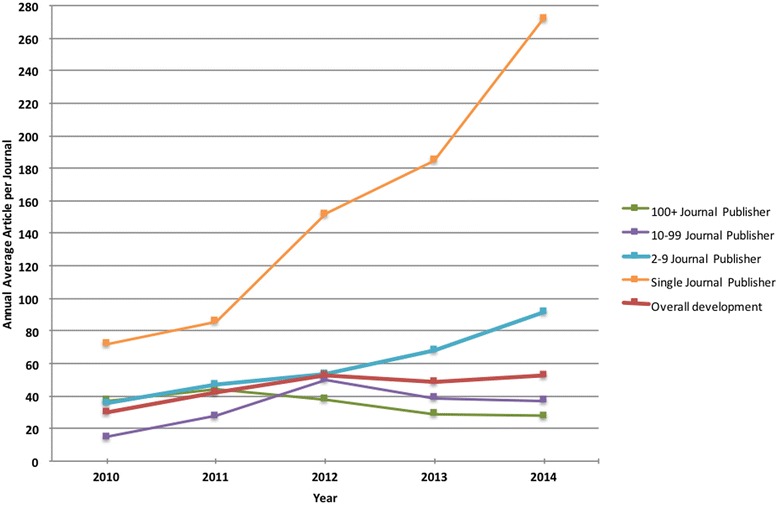
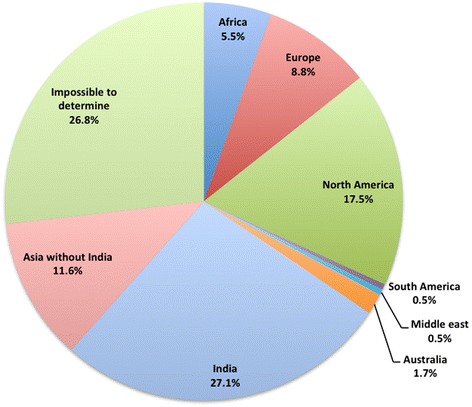
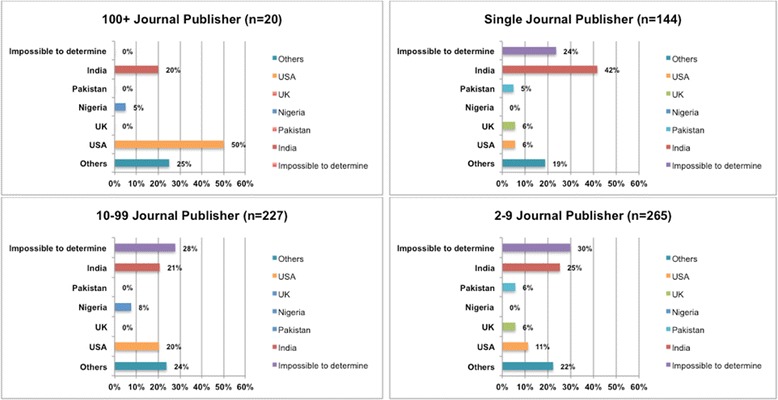
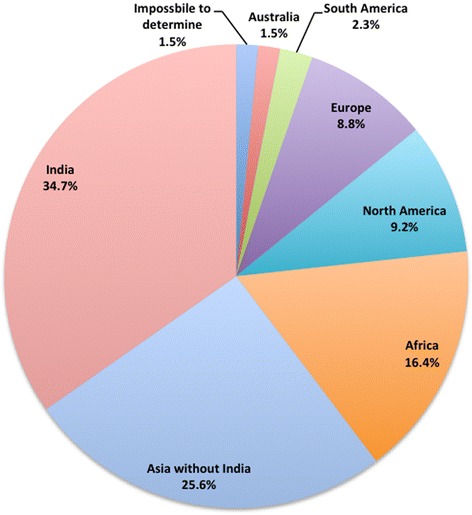
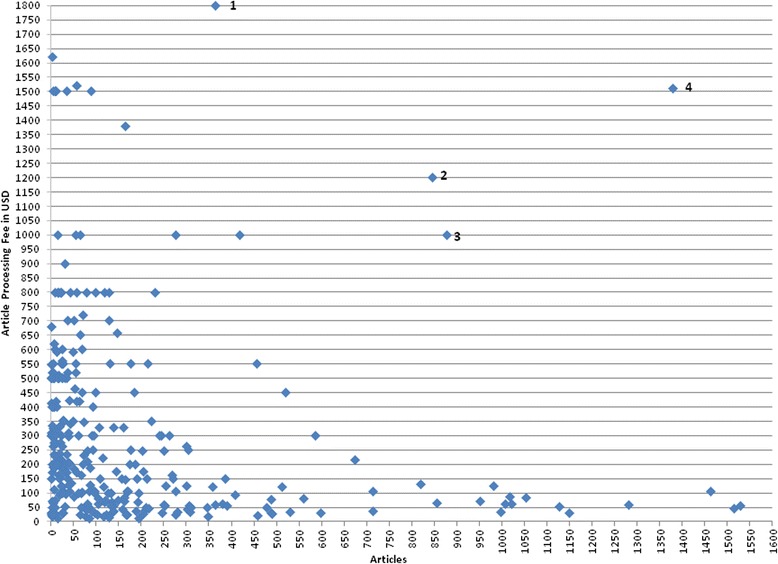
BACKGROUND: A negative consequence of the rapid growth of scholarly open access publishing funded by article processing charges is the emergence of publishers and journals with highly questionable marketing and peer review practices. These so-called predatory publishers are causing unfounded negative publicity for open access publishing in general. Reports about this branch of e-business have so far mainly concentrated on exposing lacking peer review and scandals involving publishers and journals. There is a lack of comprehensive studies about several aspects of this phenomenon, including extent and regional distribution. METHODS: After an initial scan of all predatory publishers and journals included in the so-called Beall's list, a sample of 613 journals was constructed using a stratified sampling method from the total of over 11,000 journals identified. Information about the subject field, country of publisher, article processing charge and article volumes published between 2010 and 2014 were manually collected from the journal websites. For a subset of journals, individual articles were sampled in order to study the country affiliation of authors and the publication delays. RESULTS: Over the studied period, predatory journals have rapidly increased their publication volumes from 53,000 in 2010 to an estimated 420,000 articles in 2014, published by around 8,000 active journals. Early on, publishers with more than 100 journals dominated the market, but since 2012 publishers in the 10-99 journal size category have captured the largest market share. The regional distribution of both the publisher's country and authorship is highly skewed, in particular Asia and Africa contributed three quarters of authors. Authors paid an average article processing charge of 178 USD per article for articles typically published within 2 to 3 months of submission. CONCLUSIONS: Despite a total number of journals and publishing volumes comparable to respectable (indexed by the Directory of Open Access Journals) open access journals, the problem of predatory open access seems highly contained to just a few countries, where the academic evaluation practices strongly favor international publication, but without further quality checks.
Overview
The claims and statistics of this paper haven’t been checked yet.
Free: it reads the open-access text and checks the first 5 claims that cite a source we can check. Create a free account to check every claim.
Integrity signals
Registry
Cites
Statistics
Figures
Verification
Claims the paper makes
The claims and statistics of this paper haven’t been checked yet.
Free: it reads the open-access text and checks the first 5 claims that cite a source we can check. Create a free account to check every claim.
Claims other papers make about this one
Each is checked against this paper’s own text: does it say what the citing paper says it does?
The source backs part of the claim, not all of it — or backs it for a different population, condition or comparison.
In the citing paper
“The growth of online journals that require author publication fees may be driving an increasingly profit-based publishing model (49).”
From Protection of the human gene research literature from contract cheating organizations known as research paper mills (2022) · cites this paper as [49]
Experimental — accuracy not yet measuredThe cited source says what the claim attributes to it.
In the citing paper
“Although these criteria are often considered to be controversial [164], it was shown that predatory journals usually fulfilled several of the criteria outlined by Beall [150,165].”
From Web of Science (WoS) and Scopus: The Titans of Bibliographic Information in Today’s Academic World (2021) · cites this paper as [150]
The cited source says what the claim attributes to it.
In the citing paper
“these artificial journals have evolved and they even manage to pass the selection process of the major bibliographic, as well as OA, DBs [145,150,157,158,166]”
From Web of Science (WoS) and Scopus: The Titans of Bibliographic Information in Today’s Academic World (2021) · cites this paper as [150]
In the citing paper
“Publish or perish research cultures (6,34,43,101) combined with an increasingly commercially-focused publishing environment (49,102) are leading to the dislocation between the scientific and career value of research publications (103)”
From Protection of the human gene research literature from contract cheating organizations known as research paper mills (2022) · cites this paper as [49]
In the citing paper
“When including the entire literature, predatory publishing likely comprises about 5 to 10%.”
From Misinformation in and about science (2021) · cites this paper as [88]
3 more claims about this paper
Create a free account to see every claim other papers make about this one.
Self-check
Percentages, sums and reported differences re-computed from the paper’s own numbers.
The self-check needs the paper’s full text.
Citations
Cites
Bohannon, J. (2013) · Science · doi:10.1126/science.342.6154.60 · Cited by 934
The Development of Open Access Journal Publishing from 1993 to 2009
Laakso, M., Welling, P., Bukvova, H., Nyman, L., Björk, B.-C., & Hedlund, T. (2011) · PLoS ONE · doi:10.1371/journal.pone.0020961 · Cited by 755
Self-citationPredatory publishers are corrupting open access
Beall, J. (2012) · Nature · doi:10.1038/489179a · Cited by 658 · cited 1×
“Jeffrey Beall coined the phrase ‘predatory publishers’ to describe publishers of this sort of journal [6].”
BackgroundSuber, P. (2012) · The MIT Press eBooks · doi:10.7551/mitpress/9286.001.0001 · Cited by 623
The Access/Impact Problem and the Green and Gold Roads to Open Access
Harnad, S. R., Brody, T., Vallières, F., Carr, L. A., Hitchcock, S., Gingras, Y., Oppenheim, C., Stamerjohanns, H., & Hilf, E. R. (2004) · Serials Review · doi:10.1016/j.serrev.2004.09.013 · Cited by 529 · cited 7×
“In addition, there is a ‘green’ route in which authors or third parties can legally make manuscript versions of articles published in traditional journals freely available on the Internet [4].”
BackgroundInfluentialThe publishing delay in scholarly peer-reviewed journals
Björk, B.-C., & Solomon, D. (2013) · Journal of Informetrics · doi:10.1016/j.joi.2013.09.001 · Cited by 432
Self-citation(2000) · Technometrics · doi:10.1080/00401706.2000.10486038 · Cited by 412
Towards Electronic Journals: Realities for Scientists, Librarians, and Publishers,,,,
Tenopir, C., & King, D. W. (2000) · Cited by 400
Anatomy of open access publishing: a study of longitudinal development and internal structure
Laakso, M., & Björk, B.-C. (2012) · BMC Medicine · doi:10.1186/1741-7015-10-124 · Cited by 364 · cited 3×
“Björk and Solomon [32] found delays of 9 – 18 months, depending on the field of science, with social sciences having the longest delays.”
BackgroundMethodSelf-citationWho publishes in “predatory” journals?
Xia, J., Harmon, J. L., Connolly, K. G., Donnelly, R. M., Anderson, M. R., & Howard, H. A. (2015) · Journal of the Association for Information Science and Technology · doi:10.1002/asi.23265 · Cited by 359 · cited 1×
“Xia et al. also studied the origin of authors in seven pharmacological journals included in the above list and found a strong dominance of Indian authors, with Nigerian and Pakistani authors in second and third place [18].”
Result
Research works printed but not linked: 1
- Spears T. Respectable medical journal turns to dark side. Ottawa, ON: Ottawa Citizen; 2014. http://ottawacitizen.com/technology/science/respected-medical-journal-turns-to-dark-side.
Cited by
Items 401–500 of 813
Predatory journals in oncology: prevalence and impacts
Mohammed, S. H., Kakamad, F. H., Salih, A. M., Omar, D. A., Mikael, T. M., Hassan, M. N., Aziz, M. S., Baba, H. O., Abdullah, H. O., Mustafa, M. Q., et al. (2022) · IJS Short Reports · doi:10.1097/sr9.0000000000000055 · Cited by 6
“Some studies point out that the predatory problem is rather limited and regional issue, it is slowlymelting away, and also state that the majority of articles published in predatory journals belong to authors from developing countries in Africa and Asia[10,17].”
BackgroundConlogue, B., Gilman, N., & Holmes, L. M. (2022) · Journal of the Medical Library Association JMLA · doi:10.5195/jmla.2022.1377 · Cited by 12
“It is estimated that around 70,000 articles in the biomedical literature were produced in 2014 in predatory journals [7].”
BackgroundFahlevi, H., Faradisa, F., & Dawood, R. (2023) · Learned Publishing · doi:10.1002/leap.1561 · Cited by 10
“In terms of the number of articles in predatory journals, Shen and Björk (2015) reported a significant increase from 53,000 to 420,000 articles between 2010 and 2014.”
BackgroundThe prey's perspective on the rise of predatory publishing
Camargo, L. M., Smirnov, M., & Maldonado, I. L. (2023) · EXCLI journal · doi:10.17179/excli2023-6392 · Cited by 5
Priorities in journal selection for authors, reviewers, editors, librarians and science funders
Dengler, J. (2023) · Vegetation Classification and Survey · doi:10.3897/vcs.110296 · Cited by 9
Publication requirement for faculty promotion in medical institutions in India: ‘Mind the gap’
Chhavi, N., SRIVASTAVA, G., Goel, A., & Aggarwal, A. (2023) · The National Medical Journal of India · doi:10.25259/nmji_567_21 · Cited by 5
The Macro and Micro Scale of Open Access Predation
da Silva, J. A. T., & Al‐Khatib, A. (2016) · Publishing Research Quarterly · doi:10.1007/s12109-016-9495-y · Cited by 5
The transition toward open access: the University of Hong Kong experience
Chan, G. R. Y. C., & Cheung, A. S.-C. (2017) · Library Management · doi:10.1108/lm-02-2017-0013 · Cited by 5
Use of References in Responses from Scandinavian Drug Information Centres
Schjøtt, J. D., Böttiger, Y., Damkier, P., Reppe, L. A., Kampmann, J. P., Christensen, H. R., & Spigset, O. (2018) · Medicines · doi:10.3390/medicines5030066 · Cited by 7
“There is also a growing number of predatory journals with poor quality publications [11,12].”
BackgroundMukherjee, B. (2018) · Current Science · doi:10.18520/cs/v114/i08/1613-1623 · Cited by 5
“Regularity in publication Status Physics Chemistry Biology Percentage of journals maintain regularity 72% 89% 59% Number of times combined issues came (during last 6(5) 16(6) 29(11) 5 years; irrespective of journals) Number of times issues missed (irrespective of journals) 14(5) 48(13) 65(12) human-handled quality con…”
BackgroundSPI-Hub™: a gateway to scholarly publishing information
Koonce, T. Y., Blasingame, M. N., Zhao, J., Williams, A. M., Su, J., DesAutels, S. J., Giuse, D. A., Clark, J. D., Fox, Z. E., & Giuse, N. B. (2020) · Journal of the Medical Library Association JMLA · doi:10.5195/jmla.2020.815 · Cited by 7
Cobey, K. D., Rice, D. B., Lalu, M. M., Abramowitz, D., Ahmadzai, N., Cunningham, H., Ayala, A. P., Raffoul, H., Khan, F. A., Shamseer, L., et al. (2020) · BMC Medicine · doi:10.1186/s12916-020-01550-9 · Cited by 7
“The number of predatory journals is growing [5].”
‘At-risk articles’: the imperative to recover lost science
Hatherill, J. (2020) · Insights the UKSG journal · doi:10.1629/uksg.514 · Cited by 6
PredCheck: Detecting Predatory Behaviour in Scholarly World
Bedmutha, M. S., Modi, K., Patel, K., Jain, N., & Singh, M. P. (2020) · ACM/IEEE Joint Conference on Digital Libraries · doi:10.1145/3383583.3398593 · Cited by 5
“According to [5], majority of the Beall’s criteria have been bypassed by the evolving predatory ecosystem.”
BackgroundGarcía, J. A., Sánchez, R. M. R., & Fdez-Valdivia, J. (2021) · Scientometrics · doi:10.1007/s11192-021-03918-x · Cited by 7
An analysis of invitations for article submission received via emails
Bavdekar, S. B., Saha, S., Thatte, U. M., & Gogtay, N. (2021) · Indian Journal of Medical Ethics · doi:10.20529/ijme.2021.060 · Cited by 7
Comparative Education ReviewGuide to Searching for World Literature 2017
ANDERSON‐LEVITT, K. M. (2017) · Comparative Education Review · doi:10.1086/693961 · Cited by 5
“I refer to journals that “seem to be in the scholarly publishing business only in order to collect APCs [article processing charges] and provide rapid publishing without proper peer review for authors who need publications in their CVs” (Shen and Björk 2015, 2).”
BackgroundThe revised guidelines of the Medical Council of India for academic promotions: Need for a rethink
Sahni, P., Aggarwal, R., Gogtay, N., & Kumar, R. (2016) · Indian Journal of Occupational and Environmental Medicine · doi:10.4103/0019-5278.183824 · Cited by 5
“[7] Predatory publishing is perhaps a manifestation of the “publish or perish” phenomenon with authors willing to pay for publication.[7]”
BackgroundInfluentialHow to Avoid Becoming Easy Prey for "Predatory" Journals and Why It Matters.
Gades, N. M., & Toth, L. A. (2019) · Europe PMC (PubMed Central) · Cited by 4
Top health research funders’ guidance on selecting journals for funded research
Shamseer, L., Cobey, K. D., Page, M. J., Brehaut, J., Grimshaw, J., Straus, S. E., Stewart, L. A., & Moher, D. (2021) · F1000Research · doi:10.12688/f1000research.27745.1 · Cited by 5
“…deceived by predatory journals or are knowingly seeking easy and rapid publications in them (these journals tend to deliver quicker turnaround time than credible journals due to subpar or non-existent peer review 26,27 ), they are likely breaching the open access policies set out by their funders.”
Bhat, A., Shah, A. D., & Sherighar, S. (2017) · Journal of Empirical Research on Human Research Ethics · doi:10.1177/1556264617698277 · Cited by 5
“Furthermore, the rise in socalled “predatory journals” makes it imperative for Indian journals to maintain high ethical standards (Bartholomew, 2014; Bohannon, 2013; Shen & Bjork, 2015).”
BackgroundThe revised guidelines of the Medical Council of India for academic promotions
Aggarwal, R., Gogtay, N., Kumar, R., & Sahni, P. (2016) · Journal of Postgraduate Medicine · doi:10.4103/0022-3859.175001 · Cited by 5
Contribution to ‘Predatory Journals’ from India—Taking a closer look
Pal, A., & Paul, S. (2017) · Asian Journal of Psychiatry · doi:10.1016/j.ajp.2017.08.001 · Cited by 5
Green, T. (2019) · SSRN Electronic Journal · doi:10.2139/ssrn.3333907 · Cited by 6
Lost in Translation - - the challenges with the use of animal models in translational researchPreprint
Seyhan, A. A. (2019) · OSF Preprints (OSF Preprints) · doi:10.31219/osf.io/kysdu · Cited by 7
Hadad, S., Raban, D. R., & Aharony, N. (2025) · Publications · doi:10.3390/publications13020020 · Cited by 6
“Although advocates assert that TAs can reduce paywall barriers, the APC-based model also raises questions about quality control, especially with the rise of predatory journals seeking to exploit pay-to-publish mechanisms (Beall, 2015; Shen & Björk, 2015).”
Zakaria, F. (2025) · TESOL Journal · doi:10.1002/tesj.70013 · Cited by 4
Linares, C. E. C. (2020) · Journal of Global Management Sciences · doi:10.32829/gms.v3i1.170 · Cited by 4
Retrasos en el proceso editorial de las publicaciones académicas incluidas en SciELO México
Lalli, R. M. D. P., & Navarro, R. M. (2022) · Revista Interamericana de Bibliotecología · doi:10.17533/udea.rib.v45n2e344044 · Cited by 4
Athena Unbound: Why and How Scholarly Knowledge Should Be Free for All
Baldwin, P. A. (2023) · The MIT Press eBooks · doi:10.7551/mitpress/14887.001.0001 · Cited by 14
Predatory journals in dermatology: a bibliometric review
Shamsi, A., Wang, T., Raju, N. V., Ghamgosar, A., Davani, G. M., & Mansourzadeh, M. J. (2024) · Online Information Review · doi:10.1108/oir-04-2023-0161 · Cited by 6
University students' knowledge of potentially predatory journals: A focus group analysis
Schira, R., & Hurst, C. (2024) · The Journal of Academic Librarianship · doi:10.1016/j.acalib.2024.102926 · Cited by 8
The “leaky pipeline” in the academic growth: evidence from excellent young scientists of the NSFC
Wang, X., Zhao, J., & Zhang, B. (2025) · Scientometrics · doi:10.1007/s11192-024-05229-3 · Cited by 3
“Moreover, the preference for studies that can be swiftly completed and published skews the trajectory of scientific research, such as the emergence of predatory journals that have been favored by the researchers who struggled with huge pressure to publish (Shen & Björk, 2015; Xia et al., 2015).”
Tardif, P., Mercier, É., & Moore, L. (2021) · Injury · doi:10.1016/j.injury.2021.03.031 · Cited by 4
Blanchardière, A. D. L., Barde, F., Peiffer‐Smadja, N., & Maisonneuve, H. (2021) · La Revue de Médecine Interne · doi:10.1016/j.revmed.2021.03.327 · Cited by 4
Assessing the quality of pharmacy journals accessible to community pharmacists
Schwertmann, C., Curtain, C. M., & Peterson, G. M. (2021) · Journal of Clinical Pharmacy and Therapeutics · doi:10.1111/jcpt.13444 · Cited by 4
Case Study: What Happens to a Journal after it Accepts a Spoof Paper?
Kendall, G. (2021) · Publishing Research Quarterly · doi:10.1007/s12109-021-09843-4 · Cited by 4
“These articles were published in about 8,000 predatory journals [15].”
BackgroundPublishing in library and information science journals: The success of less experienced researchers
Frandsen, T. F., & Nicolaisen, J. (2022) · Journal of Information Science · doi:10.1177/01655515221101840 · Cited by 8
“Researchers engaged with questionable journals tend to be young and inexperienced when they publish in these journals [37,38], review for them [39] and cite them [40,41].”
BackgroundWalters, W. H. (2022) · Aslib Journal of Information Management · doi:10.1108/ajim-01-2022-0056 · Cited by 5
Global Landscape of the Attack of Predatory Journals in Oncology
Bairi, K. E., Trapani, D., Nidhamalddin, S. J., Khan, S. Z., Chowdhury, A. R., Lengyel, C. G., Hussain, S., Habeeb, B. S., Petrillo, A., Omar, N. E., et al. (2024) · JCO Global Oncology · doi:10.1200/go.23.00287 · Cited by 8
Disentangling Gold Open Access
Torres‐Salinas, D., Robinson‐García, N., & Moed, H. F. (2019) · Springer handbooks · doi:10.1007/978-3-030-02511-3_5 · Cited by 15
El circulo vicioso de las revistas científicas y la progresiva irrelevancia de la ciencia pública
Maceiras, S. D. (2018) · Política y Sociedad · doi:10.5209/poso.57222 · Cited by 7
The growing problem of predatory publishing: a case report
Fiala, C., Lim, B., & Diamandis, E. P. (2019) · Clinical Chemistry and Laboratory Medicine (CCLM) · doi:10.1515/cclm-2019-0798 · Cited by 4
“A 2015 BMC Medicine study estimated that predatory journal publication has rapidly increased: from an estimated 53,000 articles in 2010 to an estimated 420,000 articles in 2014, produced by around 8000 publishers [9].”
BackgroundNormative drift and self‐correction in scholarly book publishing: The case of Makerere University
Schalkwyk, F. B. V. (2020) · Learned Publishing · doi:10.1002/leap.1292 · Cited by 4
Gray areas of academic publishing: ‘Predatory journals’ under the lens
Fazel, I., & Hartse, J. H. (2020) · Journal of English for Research Publication Purposes · doi:10.1075/jerpp.20008.faz · Cited by 5
Calidad editorial versus editoriales depredadoras
Cruz, E. R. B., Pérez, M. E. T., & Sierra, R. R. (2021) · Telos Revista de Estudios Interdisciplinarios en Ciencias Sociales · doi:10.36390/telos232.16 · Cited by 4
Sustainability in open access publishing: The ecancer case study
Foxall, K., & Nailor, A. (2016) · Learned Publishing · doi:10.1002/leap.1023 · Cited by 4
Hänscheid, T., Hardisty, D. W., & Henriques, S. O. (2018) · Acta Médica Portuguesa · doi:10.20344/amp.10762 · Cited by 4
Open access to Construction IT research articles – developments over the past 25 years
Björk, B. (2021) · Journal of Information Technology in Construction · doi:10.36680/j.itcon.2021.002 · Cited by 6
Self-citationThe Future of Scholarly Publishing
Drew, B. (2003) · ADFL Bulletin · doi:10.1632/adfl.34.3.54 · Cited by 4
The aims and scope of WikiJournal of Science
WikiJSci editorial board, & Shafee, T. (2018) · WikiJournal of Science · doi:10.15347/wjs/2018.001 · Cited by 4
“This contrasts with the "predatory journal" model that has proliferated to take advantage of the open-access movement.([27]) Development and future of the format”
ResultPublish or perish: Need for bibliometric and access reform
Bergquist, R. N., Rinaldi, L., & Cringoli, G. (2018) · Geospatial health · doi:10.4081/gh.2018.744 · Cited by 4
How to avoid predatory and hijacking publishers?
van Zundert, A. A. J., & Klein, A. A. (2019) · European Journal of Anaesthesiology · doi:10.1097/eja.0000000000001072 · Cited by 4
Rupp, M., Walter, N., Giannoudis, P. V., & Alt, V. (2022) · Injury · doi:10.1016/j.injury.2022.10.002 · Cited by 4
Delving into the analysis of scientific production and communication in academic literature
Sánchez‐García, E., Martínez‐Falcó, J., Seva‐Larrosa, P., & Marco‐Lajara, B. (2024) · Journal of Librarianship and Information Science · doi:10.1177/09610006231223168 · Cited by 9
Chen, X. (2024) · Publications · doi:10.3390/publications12040046 · Cited by 3
Unsolicited emails from presumed predatory journals: An early-career surgical trainee's perspective
Keane, A. (2025) · The Surgeon · doi:10.1016/j.surge.2025.07.002 · Cited by 6
Predatory Open Access Publishers and other Dangers to Today's Scientific Community
Smutný, Z., & Řezníček, V. (2015) · Acta Informatica Pragensia · doi:10.18267/j.aip.69 · Cited by 3
“První studií zabývající se komplexně vývojem a charakteristikami tohoto svébytného trhu mezi roky 2010 až 2014 z globální perspektivy je (Shen & Björk, 2015).”
BackgroundInfluentialForty-five years in oncology, 25 years with Acta Oncologica
Glimelius, B. L. G. (2018) · Acta Oncologica · doi:10.1080/0284186x.2018.1547841 · Cited by 3
“Today, the market is flooded with new open access journals, and the term ‘predatory publishing’ have been introduced [34].”
BackgroundOptimizing Library Services — How Information Scientists Can Help Fix the Broken Peer Review Process
Wertman, L., Campbell, C. J., & Horne, J. (2018) · Against the grain · doi:10.7771/2380-176x.8020 · Cited by 3
“While the specific reasons are not known, it is reasonable to think that the threat of lawsuits (Flaherty, 2013; Silver, 2017) and heightened criticism from academics motivated Beall to stop publishing the list.”
BackgroundDecatastrophizing research irreproducibility
Jarvis, M. F. (2024) · Biochemical Pharmacology · doi:10.1016/j.bcp.2024.116090 · Cited by 3
Revues prédatrices et paper mills mettent en péril la gestion des savoirs
Maisonneuve, H. (2024) · Bulletin du Cancer · doi:10.1016/j.bulcan.2024.12.002 · Cited by 8
Unethical attitudes in scientific research: hegemony of the impact factor and associated behaviors
Román-Acosta, D., Enrique, L., & Velandia, B. B. (2025) · JoSME : · doi:10.69821/josme.v3i1.11 · Cited by 3
The Scandal of Academic Publishing
Macdonald, S. (2025) · Publishing Research Quarterly · doi:10.1007/s12109-025-10042-8 · Cited by 9
“(Shen and Björk 2015).”
Non-native freshwater fishes in India: existing evidence and knowledge gaps
Kumar, L., Ruland, F., & Jeschke, J. M. (2025) · NeoBiota · doi:10.3897/neobiota.102.146421 · Cited by 5
Publication ethics: science versus commerce
ten Have, H., & Gordijn, B. (2017) · Medicine Health Care and Philosophy · doi:10.1007/s11019-017-9774-1 · Cited by 3
Otwarty dostęp do piśmiennictwa naukowego. Przegląd funkcjonujących form – legalnych i nielegalnych
Rychlik, M., & Theus, M. (2019) · Biblioteka · doi:10.14746/b.2018.22.9 · Cited by 4
How to Avoid Predatory Publishing
la Barrera, C. A., & Reyes‐Terán, G. (2020) · Revista de investigaci�n Cl�nica · doi:10.24875/ric.20000221 · Cited by 3
Contribution of Iranian scholars to medical sciences: A holistic overview of 140-years publication
Sedghi, S., Razmgir, M., & Moradzadeh, M. (2020) · Medical Journal of the Islamic Republic of Iran · doi:10.47176/mjiri.34.158 · Cited by 4
Predatory Awards: The New Threat in the Block
Pal, A., Parmar, A., & Sharma, P. (2021) · Indian Journal of Psychological Medicine · doi:10.1177/02537176211042181 · Cited by 3
Predatory Publishing Practices
Stark, M. J., Markowitz, M. P., & Woods, B. R. (2021) · Clinical Spine Surgery A Spine Publication · doi:10.1097/bsd.0000000000001275 · Cited by 3
From Open Access Publishing to Open Science
Kosmopoulos, C. (2022) · Advances in knowledge acquisition, transfer, and management book series/Advances in knowledge acquisition, transfer and management book series · doi:10.4018/978-1-7998-9805-4.ch001 · Cited by 3
Open access and the evolving academic publishing landscape of the water sector
Stoler, J. B., & Staddon, C. (2022) · Water International · doi:10.1080/02508060.2022.2139397 · Cited by 3
“In a 2015 study of predatory OA journals, over 75% of corresponding authors from a sample of 262 articles were from Asia or Africa (Shen & Björk, 2015).”
BackgroundCredible journals for publication of research in traditional system of medicine
Singh, R. K., Yadav, P. K., & Prajapati, P. K. (2023) · Journal of Research in Ayurvedic Sciences · doi:10.4103/jras.jras_92_22 · Cited by 3
Sharma, S., Verhagen, A. P., Elkins, M. R., Brismée, J., Fulk, G. D., Taradaj, J., Steen, L., Jette, A. M., Moore, A. P., Stewart, A., et al. (2023) · Physiotherapy Review · doi:10.5114/phr.2023.130203 · Cited by 3
The Gray Zone Between Legitimate and Predatory Open Access Scientific Publishing
la Barrera, C. A., Ávila‐Ríos, S., & Reyes‐Terán, G. (2023) · Revista de investigaci�n Cl�nica · doi:10.24875/ric.23000191 · Cited by 3
An Analysis of Solicitations From Predatory Journals in Ophthalmology
Justin, G. A., Huang, C., Nguyen, M. K., Lee, J., Seddon, I. A., Wesley, T. A., Bakri, S. J., Campbell, J. P., Cavuoto, K. M., Collins, M. E., et al. (2024) · American Journal of Ophthalmology · doi:10.1016/j.ajo.2024.02.030 · Cited by 5
Financial barriers in urology publishing: an analysis of legitimate and predatory journals
Vo, L. T., Armany, D., Bariol, S. V., Baskaranathan, S., Hossack, T., Ende, D., & Woo, H. H. (2025) · ANZ Journal of Surgery · doi:10.1111/ans.70019 · Cited by 3
Is More Science Really Less Science? The Scientization of Science, 1900–2020
Baker, D. P., Powell, J. J. W., Adeel, A. B., & Marques, M. (2025) · Minerva · doi:10.1007/s11024-025-09602-1 · Cited by 6
Predatory Publishing - Herausforderung für Wissenschaftler/innen und Bibliotheken
Ginther, C., & Lackner, K. (2018) · O-bib · doi:10.5282/o-bib/2019h2s17-32 · Cited by 3
Interventions in scholarly communication: Design lessons from public health
Altman, M., Cohen, P. N., & Polka, J. (2023) · First Monday · doi:10.5210/fm.v28i8.12941 · Cited by 4
Houghton, F. T. (2019) · Partnership The Canadian Journal of Library and Information Practice and Research · doi:10.21083/partnership.v14i2.5409 · Cited by 3
Practical Advice for South Korean Medical Researchers Regarding Open-Access and Predatory Journals
Rim, C. H. (2020) · Cancer Research and Treatment · doi:10.4143/crt.2020.816 · Cited by 3
The revised guidelines of the Medical Council of India for academic promotions: Need for a rethink
Sahni, P., Aggarwal, R., Gogtay, N., & Kumar, R. (2016) · Indian Journal of Pharmacology · doi:10.4103/0253-7613.178844 · Cited by 3
“[7] Predatory publishing is perhaps a manifestation of the “publish or perish” phenomenon with authors willing to pay for a publication.[7] While the MCI’s corrective measure is laudable, the definition of “E‐journals” is variable.”
InfluentialInformation knowledge and technology for development in Africa
Kalusopa, T., Onyancha, O. B., Ngoepe, M., Bwalya, K. J., Kwanya, T., Too, J., & Shongwe, M. M. (2021) · doi:10.4102/aosis.2021.bk262 · Cited by 6
Assessing the publishing priorities and preferences among STEM researchers at a large R1 institution
Ali, I., Burton, J. T., & Tranfield, W. (2023) · Heliyon · doi:10.1016/j.heliyon.2023.e16316 · Cited by 4
“This rise in OA journal publishing has led to the creation of a new wave of OA journals with questionable editorial standards [8].”
BackgroundDissemination of Research Results
Haven, T. L., & Strech, D. (2023) · Collaborative bioethics · doi:10.1007/978-3-031-29455-6_5 · Cited by 3
Murlimanju, B. V., Prabhu, L. V., Prameela, M. D., Pai, M. M., & Saralaya, V. (2016) · Indian Journal of Orthopaedics · doi:10.4103/0019-5413.189598 · Cited by 3
Editorial: CORR ® Thanks its Peer Reviewers
Leopold, S. S. (2016) · Clinical Orthopaedics and Related Research · doi:10.1007/s11999-016-5124-5 · Cited by 3
The Perils of Predatory Publishing: Views and Advice from an Editor and a Health Sciences Librarian
Miller, E., & DeBerg, J. (2017) · Pain Management Nursing · doi:10.1016/j.pmn.2017.10.003 · Cited by 3
“Predatory publishers often exhibit questionable practices with a major incentive to collect fees from authors for publishing their articles (Shen & Bjork, 2015).”
BackgroundUsos de los llamados a publicar o Call for Papers en revistas científicas colombianas
Percia, H. M. (2017) · Repositorio Digital Institucional de la Universidad de Buenos Aires (Universidad de Buenos Aires) · doi:10.34096/ics.i37.3301 · Cited by 3
More than 1000 new manuscripts in 2017
Glimelius, B. L. G. (2018) · Acta Oncologica · doi:10.1080/0284186x.2017.1423181 · Cited by 3
“It is possible that Acta Oncologica has taken a slightly greater share of the number of articles in oncology, in spite of many recently started journals [8].”
BackgroundOn The Peer Review Reports: Does Size Matter?Preprint
Maddi, A., & Miotti, L. (2023) · Research Square · doi:10.21203/rs.3.rs-2410967/v1 · Cited by 2
Sharma, S., Verhagen, A. P., Elkins, M. R., Brismée, J., Fulk, G. D., Taradaj, J., Steen, L., Jette, A. M., Moore, A. P., Stewart, A., et al. (2023) · Brazilian Journal of Physical Therapy · doi:10.1016/j.bjpt.2023.100530 · Cited by 5
PEDAGOGICAL DOCTORAL STUDENTS IN CHINA UNDER PRESSURE: AN EMPIRICAL ANALYSIS OF CSSCI JOURNALS
Guan, M., Fan, X., & Li, J. (2023) · Problems of Education in the 21st Century · doi:10.33225/pec/23.81.449 · Cited by 2
The Deuce List - A Tool to Evaluate Journals and A Mini-review on Predatory Publishing
Shukla, B., & Panda, A. (2025) · International Journal of Recent Surgical and Medical Sciences · doi:10.25259/ijrsms_11_2025 · Cited by 3
Wissenschaftsbetrug und zweifelhafte Publikationspraktiken
Nydahl, P., Chahdi, M., Goetze, P., Eßl‐Maurer, R., Hermes, C., Kocks, A., Seidlein, A., & Krotsetis, S. (2025) · Medizinische Klinik - Intensivmedizin und Notfallmedizin · doi:10.1007/s00063-025-01307-3 · Cited by 2
Open Access Publishing in Nutrition and Dietetics: State of the Art and Future Directions
Capocasa, M., Venier, D., & Destro‐Bisol, G. (2025) · Nutrition Bulletin · doi:10.1111/nbu.70031 · Cited by 3
“Alongside these advantages, a significant concern is the rise of predatory journals, which exploit APCs to publish articles without rigorous peer review (Shen and Björk 2015; Beall 2017).”
Predatory Publishing and the Policing of Academic Peripheries
Sjöstrand, M. E. (2025) · Libri · doi:10.1515/libri-2025-0118 · Cited by 2
“Authors publishing in so-called “ predatory ” journals are predominantly based in countries such as India, Nigeria, Iran, and Pakistan (Xia et al. 2015; Shen and Björk 2015) and often do so under structural constraints – including limited access to funding, language barriers, or institutional…”
Metadata
- Authors
- Shen, C., & Björk, B.-C.
- Affiliations
- Hanken School of Economics (FI)
- Corresponding author
- Shen, Cenyu
- Venue
- BMC Medicine
- Published
- 2015-10-01
- Volume
- 13
- Issue
- 1
- Pages
- 230-230
- ISSN
- 1741-7015 (ISSN-L)
- PMC
- PMC4589914
- OpenAlex
- W2156487032
- Cited by
- 819
- References
- 28
- Citations by year
- 2026: 44 · 2025: 56 · 2024: 46 · 2023: 81 · 2022: 70 · 2021: 93 · 2020: 88 · 2019: 76 · 2018: 91 · 2017: 86 · 2016: 79 · 2015: 7
- FWCI
- 564.37
- Type
- journal article
- Language
- en
- Open access
- gold
- doi.org
- Licence
- Locations
- BMC Medicine (publishedVersion, cc-by)
- Europe PMC (PubMed Central) (publishedVersion, cc-by)
- PubMed Central (publishedVersion, cc-by)
- PubMed (publishedVersion)
- Työväentutkimus Vuosikirja (acceptedVersion)
- Työväentutkimus Vuosikirja (submittedVersion)
- Topics
- Social Sciences › Library and Information Sciences › Publishing and Scholarly Communication
- Social Sciences › Library and Information Sciences › Academic Publishing and Open Access
- Social Sciences › Library and Information Sciences › scientometrics and bibliometrics research
- Keywords
- predatory publishing, predatory journals, predatory publishers, open access publishing, article processing charges, regional distribution of authors, time to publication, peer review quality, Beall's list, DOAJ
- MeSH terms
- Authorship, Humans, Longitudinal Studies, Peer Review, Periodicals as Topic, Publishing, Bibliometrics, Access to Information
About these checks
Registry, retraction, Cites and statistics results are computed, not judged, with one exception: a printed reference that no index lists is read once by a model before it counts as a citation error. Claims are extracted by a model and kept only when their quote appears verbatim in the text; each cited source is then checked, with a model’s help, for whether it says what the claim relies on. Those verdicts can be wrong — read the claim’s quote and the cited source before relying on one.
Statistics and arithmetic are recomputed, not judged.
Confidence bands are shown only for fields calibrated on our annotated test set. None is calibrated yet, so no band is shown.
What counts as a claim ›How we measure confidence ›How we check this ›
Are you an author, or do you see a problem with this page? Request a review
Data sources
Bibliographic data: Semantic Scholar, OpenAlex, Crossref.
Contains information from the Semantic Scholar Academic Graph Datasets, made available under the ODC Attribution License (ODC-BY 1.0).
Semantic Scholar’s data is described in: Kinney, R., et al. (2023). The Semantic Scholar Open Data Platform. arXiv:2301.10140.
