

Predatory’ open access: a longitudinal study of article volumes and market characteristics
Open accessThe DOI matches its Crossref record; 28 of the 28 references it cites were found in a registry or an index.
Abstract
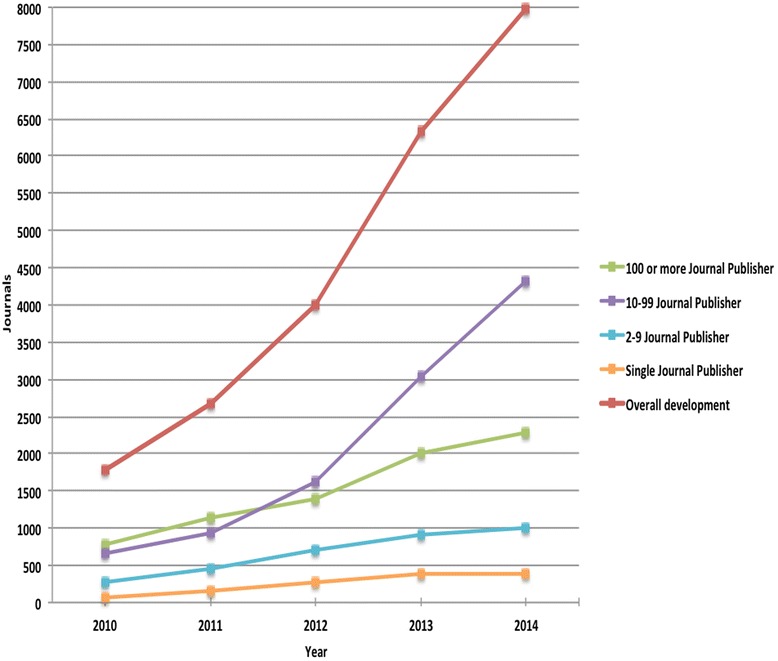
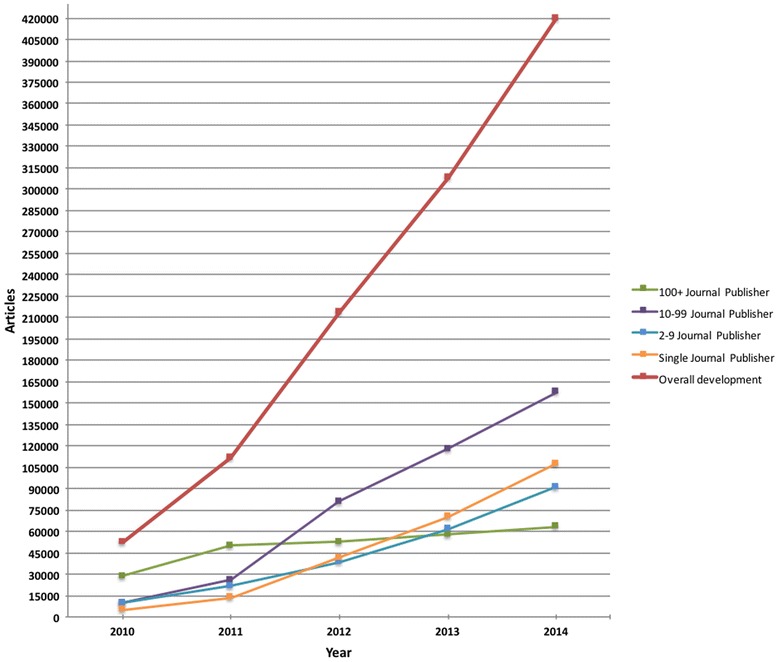
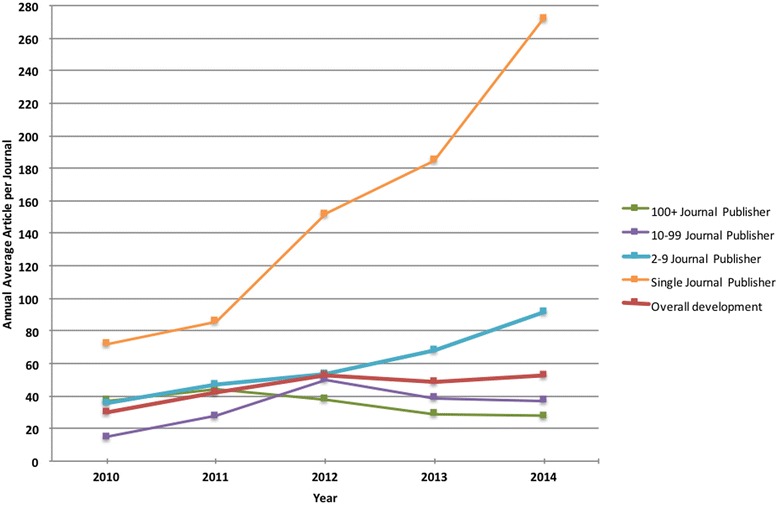
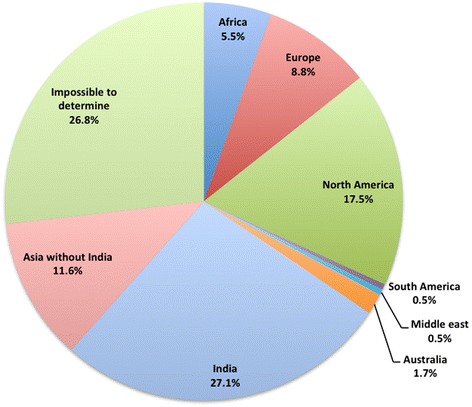
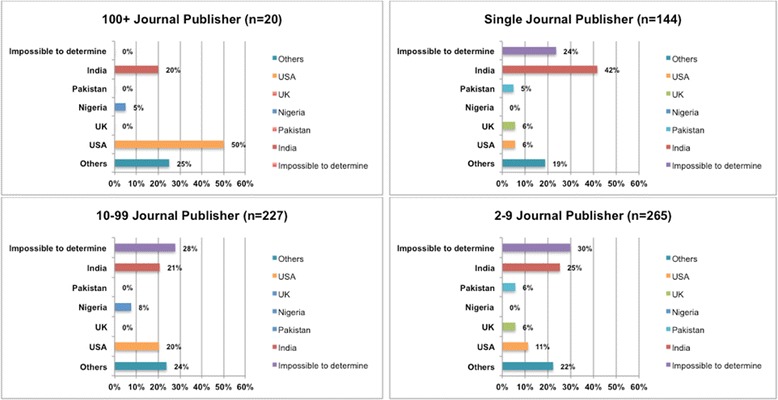
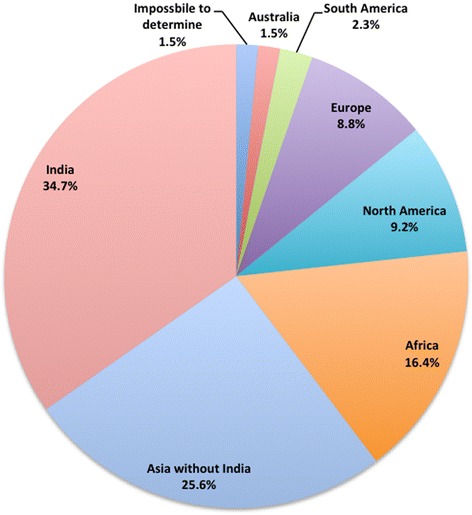
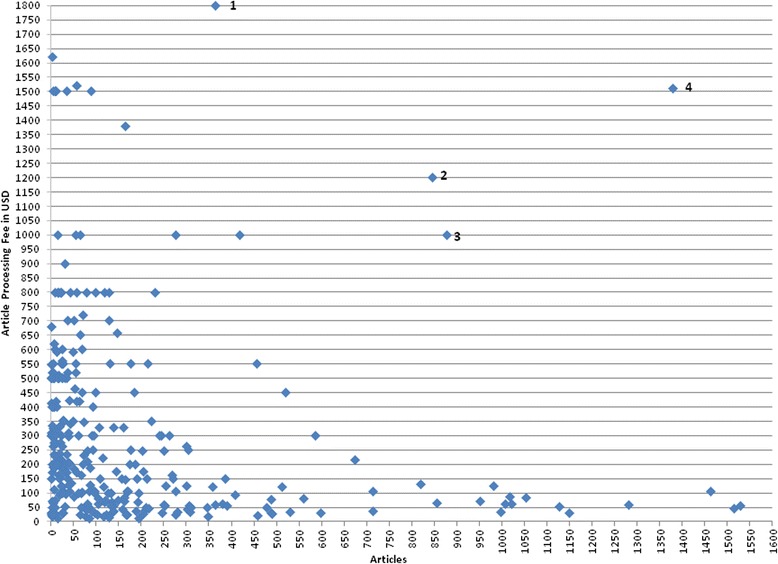
BACKGROUND: A negative consequence of the rapid growth of scholarly open access publishing funded by article processing charges is the emergence of publishers and journals with highly questionable marketing and peer review practices. These so-called predatory publishers are causing unfounded negative publicity for open access publishing in general. Reports about this branch of e-business have so far mainly concentrated on exposing lacking peer review and scandals involving publishers and journals. There is a lack of comprehensive studies about several aspects of this phenomenon, including extent and regional distribution. METHODS: After an initial scan of all predatory publishers and journals included in the so-called Beall's list, a sample of 613 journals was constructed using a stratified sampling method from the total of over 11,000 journals identified. Information about the subject field, country of publisher, article processing charge and article volumes published between 2010 and 2014 were manually collected from the journal websites. For a subset of journals, individual articles were sampled in order to study the country affiliation of authors and the publication delays. RESULTS: Over the studied period, predatory journals have rapidly increased their publication volumes from 53,000 in 2010 to an estimated 420,000 articles in 2014, published by around 8,000 active journals. Early on, publishers with more than 100 journals dominated the market, but since 2012 publishers in the 10-99 journal size category have captured the largest market share. The regional distribution of both the publisher's country and authorship is highly skewed, in particular Asia and Africa contributed three quarters of authors. Authors paid an average article processing charge of 178 USD per article for articles typically published within 2 to 3 months of submission. CONCLUSIONS: Despite a total number of journals and publishing volumes comparable to respectable (indexed by the Directory of Open Access Journals) open access journals, the problem of predatory open access seems highly contained to just a few countries, where the academic evaluation practices strongly favor international publication, but without further quality checks.
Overview
The claims and statistics of this paper haven’t been checked yet.
Free: it reads the open-access text and checks the first 5 claims that cite a source we can check. Create a free account to check every claim.
Integrity signals
Registry
Cites
Statistics
Figures
Verification
Claims the paper makes
The claims and statistics of this paper haven’t been checked yet.
Free: it reads the open-access text and checks the first 5 claims that cite a source we can check. Create a free account to check every claim.
Claims other papers make about this one
Each is checked against this paper’s own text: does it say what the citing paper says it does?
The source backs part of the claim, not all of it — or backs it for a different population, condition or comparison.
In the citing paper
“The growth of online journals that require author publication fees may be driving an increasingly profit-based publishing model (49).”
From Protection of the human gene research literature from contract cheating organizations known as research paper mills (2022) · cites this paper as [49]
Experimental — accuracy not yet measuredThe cited source says what the claim attributes to it.
In the citing paper
“Although these criteria are often considered to be controversial [164], it was shown that predatory journals usually fulfilled several of the criteria outlined by Beall [150,165].”
From Web of Science (WoS) and Scopus: The Titans of Bibliographic Information in Today’s Academic World (2021) · cites this paper as [150]
The cited source says what the claim attributes to it.
In the citing paper
“these artificial journals have evolved and they even manage to pass the selection process of the major bibliographic, as well as OA, DBs [145,150,157,158,166]”
From Web of Science (WoS) and Scopus: The Titans of Bibliographic Information in Today’s Academic World (2021) · cites this paper as [150]
In the citing paper
“Publish or perish research cultures (6,34,43,101) combined with an increasingly commercially-focused publishing environment (49,102) are leading to the dislocation between the scientific and career value of research publications (103)”
From Protection of the human gene research literature from contract cheating organizations known as research paper mills (2022) · cites this paper as [49]
In the citing paper
“When including the entire literature, predatory publishing likely comprises about 5 to 10%.”
From Misinformation in and about science (2021) · cites this paper as [88]
3 more claims about this paper
Create a free account to see every claim other papers make about this one.
Self-check
Percentages, sums and reported differences re-computed from the paper’s own numbers.
The self-check needs the paper’s full text.
Citations
Cites
Bohannon, J. (2013) · Science · doi:10.1126/science.342.6154.60 · Cited by 934
The Development of Open Access Journal Publishing from 1993 to 2009
Laakso, M., Welling, P., Bukvova, H., Nyman, L., Björk, B.-C., & Hedlund, T. (2011) · PLoS ONE · doi:10.1371/journal.pone.0020961 · Cited by 755
Self-citationPredatory publishers are corrupting open access
Beall, J. (2012) · Nature · doi:10.1038/489179a · Cited by 658 · cited 1×
“Jeffrey Beall coined the phrase ‘predatory publishers’ to describe publishers of this sort of journal [6].”
BackgroundSuber, P. (2012) · The MIT Press eBooks · doi:10.7551/mitpress/9286.001.0001 · Cited by 623
The Access/Impact Problem and the Green and Gold Roads to Open Access
Harnad, S. R., Brody, T., Vallières, F., Carr, L. A., Hitchcock, S., Gingras, Y., Oppenheim, C., Stamerjohanns, H., & Hilf, E. R. (2004) · Serials Review · doi:10.1016/j.serrev.2004.09.013 · Cited by 529 · cited 7×
“In addition, there is a ‘green’ route in which authors or third parties can legally make manuscript versions of articles published in traditional journals freely available on the Internet [4].”
BackgroundInfluentialThe publishing delay in scholarly peer-reviewed journals
Björk, B.-C., & Solomon, D. (2013) · Journal of Informetrics · doi:10.1016/j.joi.2013.09.001 · Cited by 432
Self-citation(2000) · Technometrics · doi:10.1080/00401706.2000.10486038 · Cited by 412
Towards Electronic Journals: Realities for Scientists, Librarians, and Publishers,,,,
Tenopir, C., & King, D. W. (2000) · Cited by 400
Anatomy of open access publishing: a study of longitudinal development and internal structure
Laakso, M., & Björk, B.-C. (2012) · BMC Medicine · doi:10.1186/1741-7015-10-124 · Cited by 364 · cited 3×
“Björk and Solomon [32] found delays of 9 – 18 months, depending on the field of science, with social sciences having the longest delays.”
BackgroundMethodSelf-citationWho publishes in “predatory” journals?
Xia, J., Harmon, J. L., Connolly, K. G., Donnelly, R. M., Anderson, M. R., & Howard, H. A. (2015) · Journal of the Association for Information Science and Technology · doi:10.1002/asi.23265 · Cited by 359 · cited 1×
“Xia et al. also studied the origin of authors in seven pharmacological journals included in the above list and found a strong dominance of Indian authors, with Nigerian and Pakistani authors in second and third place [18].”
Result
Research works printed but not linked: 1
- Spears T. Respectable medical journal turns to dark side. Ottawa, ON: Ottawa Citizen; 2014. http://ottawacitizen.com/technology/science/respected-medical-journal-turns-to-dark-side.
Cited by
Web of Science (WoS) and Scopus: The Titans of Bibliographic Information in Today’s Academic World
Pranckutė, R. (2021) · Publications · doi:10.3390/publications9010012 · Cited by 2,696
The Academic, Economic and Societal Impacts of Open Access: An Evidence-Based Review
Tennant, J. P., Waldner, F., Jacques, D. C., Masuzzo, P., Collister, L. B., & Hartgerink, C. H. J. (2016) · F1000Research · doi:10.12688/f1000research.8460.3 · Cited by 560
The foreign gaze: authorship in academic global health
Abimbola, S. (2019) · BMJ Global Health · doi:10.1136/bmjgh-2019-002068 · Cited by 438
Misinformation in and about science
West, J. D., & Bergstrom, C. T. (2021) · Proceedings of the National Academy of Sciences · doi:10.1073/pnas.1912444117 · Cited by 391
“How serious is the problem? According to one study (88), predatory publishers produced nearly half a million articles in 2014, bringing in around $74 million in publication fees.”
BackgroundShamseer, L., Moher, D., Maduekwe, O., Turner, L., Barbour, V., Burch, R., Clark, J., Galipeau, J., Roberts, J., & Shea, B. J. (2017) · BMC Medicine · doi:10.1186/s12916-017-0785-9 · Cited by 383
“Shen C, Bjork B-C.”
BackgroundResultInfluentialStop this waste of people, animals and money
Moher, D., Shamseer, L., Cobey, K. D., Lalu, M. M., Galipeau, J., Avey, M. T., Ahmadzai, N., Alabousi, M., Barbeau, P., Beck, A., et al. (2017) · Nature · doi:10.1038/549023a · Cited by 281
Predatory Journals: Who Publishes in Them and Why?
Demir, S. B. (2018) · Journal of Informetrics · doi:10.1016/j.joi.2018.10.008 · Cited by 245
Predatory journals recruit fake editor
Sorokowski, P., Kulczycki, E., Sorokowska, A., & Pisanski, K. (2017) · Nature · doi:10.1038/543481a · Cited by 237
Problems and challenges of predatory journals
Richtig, G., Berger, M., Lange‐Asschenfeldt, B., Aberer, W., & Richtig, E. (2018) · Journal of the European Academy of Dermatology and Venereology · doi:10.1111/jdv.15039 · Cited by 225
A review of recent publication trends from top publishing countries
Fontelo, P., & Liu, F. (2018) · Systematic Reviews · doi:10.1186/s13643-018-0819-1 · Cited by 186
“Moreover, Shen and Bjork also reported that “the problem of predatory open access seems highly contained to just a few countries, where the academic evaluation practices strongly favor international publication, but without further quality checks” [17].”
BackgroundExploring PubMed as a reliable resource for scholarly communications services
Ossom Williamson, P., & Minter, C. I. J. (2019) · Journal of the Medical Library Association · doi:10.5195/jmla.2019.433 · Cited by 185
The academic, economic and societal impacts of Open Access: an evidence-based review
Tennant, J. P., Waldner, F., Jacques, D. C., Masuzzo, P., Collister, L. B., & Hartgerink, C. H. J. (2016) · F1000Research · doi:10.12688/f1000research.8460.1 · Cited by 182
“The problem of predatory OA seems to highly affect countries where the academic evaluation strongly favors international publication without further quality checks (Shen & Björk, 2015).”
Sci-Hub provides access to nearly all scholarly literature
Himmelstein, D. S., Romero, A. R., Levernier, J. G., Munro, T. A., McLaughlin, S. R., Greshake Tzovaras, B., & Greene, C. S. (2018) · eLife · doi:10.7554/elife.32822 · Cited by 176
Oviedo-García, M. Á. (2021) · Research Evaluation · doi:10.1093/reseval/rvab020 · Cited by 170
A walk on the wild side: ‘Predatory’ journals and information asymmetries in scientific evaluations
Bagues, M., Sylos-Labini, M., & Zinovyeva, N. (2019) · Research Policy · doi:10.1016/j.respol.2018.04.013 · Cited by 156
“In a more comprehensive study, Shen and Bjo¨rk (2015) consider 47 predatory journals and 262 authors.”
The false academy: predatory publishing in science and bioethics
Eriksson, S., & Helgesson, G. (2017) · Medicine, Health Care and Philosophy · doi:10.1007/s11019-016-9740-3 · Cited by 154
The Silent Extinction of Species and Taxonomists—An Appeal to Science Policymakers and Legislators
Löbl, I., Klausnitzer, B., Hartmann, M., & Krell, F. (2023) · Diversity · doi:10.3390/d15101053 · Cited by 186
“A huge and growing number of online journals of low to no quality, the so-called predatory journals, emerged in the last two decades as money-making enterprises [103].”
Identifying predatory or pseudo-journals
Laine, C. M., & Winker, M. A. (2017) · Biochemia Medica · doi:10.11613/bm.2017.031 · Cited by 150
“A longitudinal study of article volumes and publishing market characteristics estimated 8000 active predatory journals, with total articles increasing from 53,000 in 2010 to 420,000 in 2014 (an estimated three-quarters of authors were from Asia and Africa) (8).”
BackgroundWhat is a predatory journal? A scoping review
Cobey, K. D., Lalu, M. M., Skidmore, B., Ahmadzai, N., Grudniewicz, A., & Moher, D. (2018) · F1000Research · doi:10.12688/f1000research.15256.2 · Cited by 142
“Other sources will be included (e.g., 8 ).”
BackgroundDynamics of cumulative advantage and threats to equity in open science: a scoping review
Ross‐Hellauer, T., Reichmann, S., Cole, N. L., Fessl, A., Klebel, T., & Pontika, N. (2022) · Royal Society Open Science · doi:10.1098/rsos.211032 · Cited by 210
“Indeed, according to Shen & Björk [114], it is ‘highly contained’ to a few countries.”
BackgroundChecklists to detect potential predatory biomedical journals: a systematic review
Cukier, S., Helal, L., Rice, D. B., Pupkaite, J., Ahmadzai, N., Wilson, M., Skidmore, B., Lalu, M. M., & Moher, D. (2020) · BMC Medicine · doi:10.1186/s12916-020-01566-1 · Cited by 138
Strinzel, M., Severin, A., Milzow, K., & Egger, M. (2019) · mBio · doi:10.1128/mbio.00411-19 · Cited by 130
Academic Misconduct, Misrepresentation and Gaming: A ReassessmentPreprint
Biagioli, M., Kenney, M. F., Martin, B. R., & Walsh, J. P. (2018) · SSRN Electronic Journal · doi:10.1016/j.respol.2018.10.025 · Cited by 146
Irreproducibility in Preclinical Biomedical Research: Perceptions, Uncertainties, and Knowledge Gaps
Jarvis, M. F., & Williams, M. (2016) · Trends in Pharmacological Sciences · doi:10.1016/j.tips.2015.12.001 · Cited by 129
“This runs the gamut from the ‘luxury’ journals [98] that include Nature, Science, and Cell and reflect a miniscule proportion of the more than 20 000 journals published in 2014 [97] to ‘minimum threshold’, ‘trash’ [100], or ‘predatory’ [95–97] journals.”
BackgroundInfluentialNegative Effects of “Predatory” Journals on Global Health Research
Forero, D. A., Oermann, M. H., Manca, A., Deriu, F., Zerón, H. M., Dadkhah, M., Bhad, R., Deshpande, S. N., Wang, W., & Cifuentes, M. P. (2018) · Annals of Global Health · doi:10.29024/aogh.2389 · Cited by 132
Ten Hot Topics around Scholarly Publishing
Tennant, J. P., Crane, H., Crick, T., Davila, J., Enkhbayar, A., Havemann, J., Kramer, B., Martin, R., Masuzzo, P., Nobes, A., et al. (2019) · Publications · doi:10.3390/publications7020034 · Cited by 127
“The number of predatory journals thus defined has grown exponentially since 2010 [76,77].”
Mills, D., & Inouye, K. (2020) · Learned Publishing · doi:10.1002/leap.1325 · Cited by 163
“Shen and Björk (2015) found that, in total, three quarters of the authors in their extensive survey of predatory publications were from Africa and Asia.”
BackgroundAre predatory journals undermining the credibility of science? A bibliometric analysis of citers
Frandsen, T. F. (2017) · Scientometrics · doi:10.1007/s11192-017-2520-x · Cited by 142
“…with citations to potential predatory and poor quality standards journals is limited to a relatively low number of citing authors from a limited number of countries that seems to support the viewpoint of Shen and Bjork (2015) that these journals present a rather limited and regional problem.”
BackgroundResultInfluentialThe extent of South African authored articles in predatory journals
Mouton, J., & Valentine, A. G. D. T. (2017) · South African Journal of Science · doi:10.17159/sajs.2017/20170010 · Cited by 124
van der Zee, T., & Reich, J. (2018) · AERA Open · doi:10.1177/2332858418787466 · Cited by 134
“Predatory journals have rapidly increased in number; from 2010 to 2014, the number of papers published in predatory journals rose from 53,000 to 420,000 (Shen & Björk, 2015).”
BackgroundThe Rewards of Predatory Publications at a Small Business School
Pyne, D. (2017) · Journal of Scholarly Publishing · doi:10.3138/jsp.48.3.137 · Cited by 105
Study of Predatory Open Access Nursing Journals
Oermann, M. H., Conklin, J., Nicoll, L. H., Chinn, P. L., Ashton, K. S., Edie, A. H., Amarasekara, S., & Budinger, S. C. (2016) · Journal of Nursing Scholarship · doi:10.1111/jnu.12248 · Cited by 104
Cukier, S. N., Lalu, M. M., Bryson, G. L., Cobey, K. D., Grudniewicz, A., & Moher, D. (2020) · BMJ Open · doi:10.1136/bmjopen-2019-035561 · Cited by 119
The Surge of Predatory Open-Access in Neurosciences and Neurology
Manca, A., Martinez, G., Cugusi, L., Dragone, D., Dvir, Z., & Deriu, F. (2017) · Neuroscience · doi:10.1016/j.neuroscience.2017.04.014 · Cited by 99
Predatory Open Access in Rehabilitation
Manca, A., Martinez, G., Cugusi, L., Dragone, D., Mercuro, G. G., & Deriu, F. (2017) · Archives of Physical Medicine and Rehabilitation · doi:10.1016/j.apmr.2017.01.002 · Cited by 109
Seethapathy, G. S., Urumarudappa, S. K. J., & Hareesha, A. S. (2016) · Current Science · doi:10.18520/cs/v111/i11/1759-1764 · Cited by 99
Ethical issues in publishing in predatory journals
Ferris, L. E., & Winker, M. A. (2017) · Biochemia Medica · doi:10.11613/bm.2017.030 · Cited by 115
“There are now an estimated 8000 active predatory journals (3), making ways to identify them increasingly important.”
BackgroundSiler, K. (2020) · Journal of the Association for Information Science and Technology · doi:10.1002/asi.24339 · Cited by 97
The Pressure to Publish More and the Scope of Predatory Publishing Activities
Gasparyan, A. Y., Nurmashev, B., Voronov, A. A., Gerasimov, A. N., Am, K., & Kitas, G. D. (2016) · Journal of Korean Medical Science · doi:10.3346/jkms.2016.31.12.1874 · Cited by 107
“1874 blog, revealed a rapid increase of the volume of articles from 53,000 in 2010 to 420,000 in 2014 (17).”
BackgroundOpen access publishing – noble intention, flawed reality
Frank, J. W., Foster, R., & Pagliari, C. (2022) · Social Science & Medicine · doi:10.1016/j.socscimed.2022.115592 · Cited by 147
Retracted Publications in the Biomedical Literature from Open Access Journals
Wang, T., Xing, Q.-R., Wang, H., & Chen, W. (2018) · Science and Engineering Ethics · doi:10.1007/s11948-018-0040-6 · Cited by 107
“Furthermore, some OAJs publish articles for profit (Shen and Björk 2015).”
Is Predatory Publishing a Real Threat? Evidence from a Large Database Study
Perlin, M., Imasato, T., & Borenstein, D. (2017) · Scientometrics · doi:10.1007/s11192-018-2750-6 · Cited by 88
“From 2013 onwards, we see a higher proportion of predatory journals registered in Qualis, possibly due to the proliferation of predatory publishers (Shen and Björk 2015).”
BackgroundMethodInfluentialQuality of articles published in predatory nursing journals
Oermann, M. H., Nicoll, L. H., Chinn, P. L., Ashton, K. S., Conklin, J., Edie, A. H., Amarasekara, S., & Williams, B. L. (2017) · Nursing Outlook · doi:10.1016/j.outlook.2017.05.005 · Cited by 86
“However, whether OA or a traditional print journal, hallmarks of scholarly publication, such as peer review and indexing, should be similar (Shen & Björk, 2015).”
BackgroundWhy do researchers decide to publish in questionable journals? A review of the literature
Frandsen, T. F. (2019) · Learned Publishing · doi:10.1002/leap.1214 · Cited by 104
RETRACTED ARTICLE: Predatory publishing in Scopus: evidence on cross-country differences
Macháček, V., & Srholec, M. (2021) · Scientometrics · doi:10.1007/s11192-020-03852-4 · Cited by 111
RetractedDigital open science—Teaching digital tools for reproducible and transparent research
Toelch, U., & Ostwald, D. (2018) · PLOS Biology · doi:10.1371/journal.pbio.2006022 · Cited by 80
“Moreover, we discussed university-or funding agency-specific regulations on who is paying for open access and included some cautionary notes on predatory open access journals [27].”
BackgroundGreen, T. (2019) · Learned Publishing · doi:10.1002/leap.1219 · Cited by 78
How Frequently Are Articles in Predatory Open Access Journals Cited
Björk, B.-C., Kanto-Karvonen, S., & Harviainen, J. T. (2020) · Publications · doi:10.3390/publications8020017 · Cited by 77
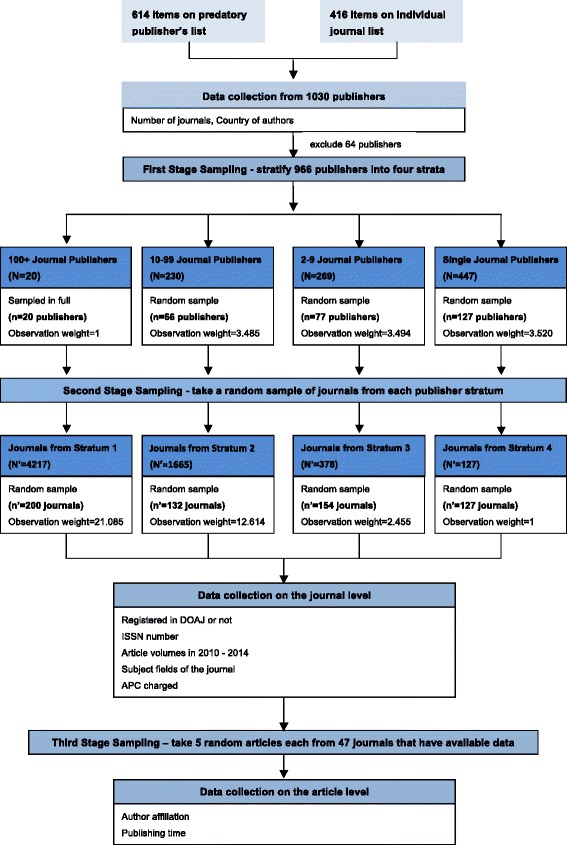
“Shen and Björk [25] tackled this by first studying all entries in the multiple journal publisher list to determine the number of journals for each.”
InfluentialSelf-citationRadiation Therapy Research: A Global Analysis 2001-2015
Aggarwal, A. K., Lewison, G., Rodin, D. L., Zietman, A. L., Sullivan, R. J., & Lievens, Y. N. (2018) · International Journal of Radiation Oncology*Biology*Physics · doi:10.1016/j.ijrobp.2018.03.009 · Cited by 83
“Although the WoS has selection criteria for the inclusion of journals based on repute and citation, it is unknown what proportion of low-quality “predatory” open access articles is included and the impact this has had on the estimations of total radiation therapy research output (39).”
BackgroundHansoti, B., Langdorf, M. I., & Murphy, L. S.-L. (2016) · Western Journal of Emergency Medicine · doi:10.5811/westjem.2016.7.30328 · Cited by 94
Prevalence of potentially predatory publishing in Scopus on the country level
Marina, T., & Sterligov, I. (2021) · Scientometrics · doi:10.1007/s11192-021-03899-x · Cited by 91
Stop Predatory Publishers Now: Act Collaboratively
Moher, D., & Moher, E. (2016) · Annals of Internal Medicine · doi:10.7326/m15-3015 · Cited by 67
“Authors have published nearly a half million articles in 10 000 predatory journals (1).”
BackgroundPredatory publishing in Scopus: Evidence on cross-country differences
Macháček, V., & Srholec, M. (2022) · Quantitative Science Studies · doi:10.1162/qss_a_00213 · Cited by 93
Siler, K., Haustein, S., Smith, E. M. R., Larivière, V., & Alperín, J. P. (2018) · PeerJ · doi:10.7717/peerj.4269 · Cited by 93
Acceptance rates of scholarly peer-reviewed journals: A literature survey
Bjórk, B.-C. (2019) · El Profesional de la Información · doi:10.3145/epi.2019.jul.07 · Cited by 66
Self-citationĐức, N. M., Hiep, D. V., Thông, P. M., Žunić, L., Zildžić, M., Donev, D. M., Јаnkovic, S., Hozo, I., & Mašić, I. (2020) · Medical Archives · doi:10.5455/medarh.2020.74.318-322 · Cited by 79
“A “corrupt" form of the OA model has also emerged in the form of predatory journals, which encourage authors to pay APCs for articles but do not engage in a robust review process (1-6).”
BackgroundBalehegn, M. (2017) · The International Information & Library Review · doi:10.1080/10572317.2016.1278188 · Cited by 68
Olivarez, J., Bales, S. E., Sare, L., & vanDuinkerken, W. (2018) · College & Research Libraries · doi:10.5860/crl.79.1.52 · Cited by 67
Predatory Open-Access Publishing in Anesthesiology
Cortegiani, A., Longhini, F., Sanfilippo, F., Raineri, S. M., Gregoretti, C., & Giarratano, A. (2018) · Anesthesia & Analgesia · doi:10.1213/ane.0000000000003803 · Cited by 65
Mertkan, Ş., Aliusta, G. O., & Suphi, N. (2021) · Research Evaluation · doi:10.1093/reseval/rvab032 · Cited by 74
Predatory open-access publishing in critical care medicine
Cortegiani, A., Sanfilippo, F., Tramarin, J., & Giarratano, A. (2018) · Journal of Critical Care · doi:10.1016/j.jcrc.2018.12.016 · Cited by 57
Economists behaving badly: publications in predatory journals
Wallace, F. H., & Perri, T. J. (2018) · Scientometrics · doi:10.1007/s11192-018-2690-1 · Cited by 55
Presence of alleged predatory journals in bibliographic databases: Analysis of Beall’s list
Somoza‐Fernández, M., Rodríguez‐Gairín, J., & Urbano, C. (2016) · El Profesional de la Informacion · doi:10.3145/epi.2016.sep.03 · Cited by 52
Bell, K. (2017) · tripleC Communication Capitalism & Critique Open Access Journal for a Global Sustainable Information Society · doi:10.31269/triplec.v15i2.870 · Cited by 52
Predatory Publishing: An Emerging Threat to the Medical Literature
Harvey, H. B., & Weinstein, D. F. (2016) · Academic Medicine · doi:10.1097/acm.0000000000001521 · Cited by 52
False gold: Safely navigating open access publishing to avoid predatory publishers and journals
McCann, T. V., & Polacsek, M. (2017) · Journal of Advanced Nursing · doi:10.1111/jan.13483 · Cited by 55
Rigby, J., Cox, D., & Julian, K. (2018) · Scientometrics · doi:10.1007/s11192-017-2630-5 · Cited by 55
“have undesirable aspects, see for example work on the journals in the so-called Beall’s List of predatory journals (Shen and Bjork 2015).”
Byrne, J. A., Park, Y., Richardson, R. A. K., Pathmendra, P., Sun, M., & Stoeger, T. (2022) · Nucleic Acids Research · doi:10.1093/nar/gkac1139 · Cited by 46
“The growth of online journals that require author publication fees may be driving an increasingly profit-based publishing model (49).”
Cohen, A. J., Patiño, G., Kamal, P., Ndoye, M., Tresh, A. S., Mena, J. D., Butler, C., Washington, S. L., & Breyer, B. N. (2019) · Journal of Medical Internet Research · doi:10.2196/13769 · Cited by 55
“6%) authorship was shown previously, using a complex stratified selection criteria of publishers; in our cohort, 23% of authors were from India [5].”
BackgroundMethodInfluentialBibliodiversity at the Centre: Decolonizing Open Access
Berger, M. (2021) · Development and Change · doi:10.1111/dech.12634 · Cited by 72
Open access publishers: The new players
Rodrigues, R., Abadal, E., & de Araújo, B. K. H. (2020) · PLoS ONE · doi:10.1371/journal.pone.0233432 · Cited by 44
“The wave of “predatory lists” of open access publishers in recent years, which have called into question the reputability of many new journals, especially from peripheral countries, is also relevant to this issue, despite the fragilities (not reliable, nor transparent, have flaws and need to be updated constantly) of…”
BackgroundInnovating editorial practices: academic publishers at work
Horbach, S. P. J. M., & Halffman, W. (2020) · Research Integrity and Peer Review · doi:10.1186/s41073-020-00097-w · Cited by 69
An integrated paradigm shift to deal with ‘predatory publishing’
da Silva, J. A. T., Moradzadeh, M., Adjei, K. O. K., Owusu-Ansah, C. M., Balehegn, M., Faúndez, E. I., Janodia, M. D., & Al‐Khatib, A. (2021) · The Journal of Academic Librarianship · doi:10.1016/j.acalib.2021.102481 · Cited by 56
Predatory Journals: think before you submit
Roberts, J. (2016) · Headache The Journal of Head and Face Pain · doi:10.1111/head.12818 · Cited by 46
“Indeed, so wrong that this is now an underground publishing market (that is highly visible above ground, as it were) worth US $74m per annum according to a recent study.(3) Sure, many of the papers these journals publish are drawn from the same parts of the world where the predatory journals appear to originate or fro…”
Björk, B., & Korkeamäki, T. (2020) · College & Research Libraries · doi:10.5860/crl.81.7.1080 · Cited by 71
Self-citationThe revised guidelines of the Medical Council of India for academic promotions: Need for a rethink
Sahni, P., Aggarwal, R., Gogtay, N., & Kumar, R. (2016) · Indian Journal of Urology · doi:10.4103/0970-1591.173117 · Cited by 43
The importance of trustworthiness: lessons from the COVID-19 pandemic
Leonard, M. B., Pursley, D. M., Robinson, L. A., Abman, S. H., & Davis, J. M. (2021) · Pediatric Research · doi:10.1038/s41390-021-01866-z · Cited by 49
A longitudinal study of independent scholar-published open access journals
Björk, B., Shen, C., & Laakso, M. (2016) · PeerJ · doi:10.7717/peerj.1990 · Cited by 42
Self-citationPredatory Publishing Is a Threat to Non-Mainstream Science
Gasparyan, A. Y., Nurmashev, B., Udovik, E. E., Am, K., & Kitas, G. D. (2017) · Journal of Korean Medical Science · doi:10.3346/jkms.2017.32.5.713 · Cited by 43
“The estimated number of articles in predatory journals increased from 53,000 in 2010 to 420,000 in 2014 with an average processing charge of 178 USD per article (23).”
BackgroundCharacteristics of E-Mail Solicitations From Predatory Nursing Journals and Publishers
Lewinski, A. A., & Oermann, M. H. (2018) · The Journal of Continuing Education in Nursing · doi:10.3928/00220124-20180320-07 · Cited by 42
Predatory journals: a major threat in orthopaedic research
Rupp, M., Anastasopoulou, L., Wintermeyer, E., Malhaan, D., Khassawna, T. E., & Heiß, C. (2018) · International Orthopaedics · doi:10.1007/s00264-018-4179-1 · Cited by 42
Citations of articles in predatory nursing journals
Oermann, M. H., Nicoll, L. H., Carter‐Templeton, H., Woodward, A. L., Kidayi, P., Neal, L., Edie, A. H., Ashton, K. S., Chinn, P. L., & Amarasekara, S. (2019) · Nursing Outlook · doi:10.1016/j.outlook.2019.05.001 · Cited by 42
Predatory journals and conferences: why fake counts
Cortegiani, A., Manca, A., & Giarratano, A. (2019) · Current Opinion in Anaesthesiology · doi:10.1097/aco.0000000000000829 · Cited by 49
“In 2014, 420 000 articles were counted from approximately 8000 presumed deceptive journals, demonstrating an eight-fold increase in 5 years [5].”
BackgroundKnöchelmann, M. (2021) · Science & Technology Studies · doi:10.23987/sts.94964 · Cited by 68
How reliable and useful is Cabell's Blacklist ? A data-driven analysis
Dony, C., Raskinet, M., Renaville, F., Simon, S., & Thirion, P. (2020) · LIBER Quarterly The Journal of the Association of European Research Libraries · doi:10.18352/lq.10339 · Cited by 49
Publishing in Predatory Open Access Journals: A Case of Iran
Erfanmanesh, M., & Pourhossein, R. (2017) · Publishing Research Quarterly · doi:10.1007/s12109-017-9547-y · Cited by 40
“This amount was predicted to be around 8000 active journals based on Shen and Bjork [22] findings.”
InfluentialFaculty knowledge and attitudes regarding predatory open access journals: a needs assessment study
Swanberg, S. M., Thielen, J., & Bulgarelli, N. (2020) · Journal of the Medical Library Association JMLA · doi:10.5195/jmla.2020.849 · Cited by 40
“Legitimate OA journals uphold rigorous peer review, allow authors to retain copyright, and have been shown to increase an author’s visibility [2, 3].”
BackgroundEditorial misconduct: the case of online predatory journals
Torres, C. G. (2022) · Heliyon · doi:10.1016/j.heliyon.2022.e08999 · Cited by 49
Disseminating Knowledge: From Potential to Reality—New Open-Access Journals Collide With Convention
Harzing, A.-W., & Adler, N. J. (2016) · Academy of Management Learning & Education · doi:10.5465/amle.2013.0373 · Cited by 39
The Ethics of Predatory Journals
McLeod, A. J., Jr., Savage, A., & Simkin, M. (2016) · Journal of Business Ethics · doi:10.1007/s10551-016-3419-9 · Cited by 40
Predatory journals: Authors and readers beware.
Vakil, C. (2019) · Europe PMC (PubMed Central) · Cited by 39
A cross-sectional study of predatory publishing emails received by career development grant awardees
Wilkinson, T. A., Russell, C. J., Bennett, W. E., Cheng, E. R., & Carroll, A. E. (2019) · BMJ Open · doi:10.1136/bmjopen-2018-027928 · Cited by 43
Gwenzi, W., & Rzymski, P. (2020) · Environmental Research · doi:10.1016/j.envres.2020.110637 · Cited by 43
Eykens, J., Guns, R., Rahman, A. I. M. J., & Engels, T. (2019) · PLoS ONE · doi:10.1371/journal.pone.0224541 · Cited by 43
“Shen and Björk [31], however, report that their sample of authors contains a sizable subset of researchers from Europe (8.”
BackgroundInfluentialWho is Actually Harmed by Predatory Publishers?
Eve, M. P., & Priego, E. (2017) · tripleC Communication Capitalism & Critique Open Access Journal for a Global Sustainable Information Society · doi:10.31269/triplec.v15i2.867 · Cited by 51
“Nonetheless, there are publishers that purport to conduct peer-review and to have academic oversight in place, but whose true purpose is merely to extract an APC from authors and/or institutions, and we will continue to use the extant language of predation (Shen and Björk 2015).”
Debasing the Currency of Science: The Growing Menace of Predatory Open Access Journals
Beninger, P. G., Beall, J., & Shumway, S. E. (2016) · Journal of Shellfish Research · doi:10.2983/035.035.0101 · Cited by 36
Are predatory journals contaminating science? An analysis on the Cabells' Predatory Report
Akça, S., & Akbulut, M. (2021) · The Journal of Academic Librarianship · doi:10.1016/j.acalib.2021.102366 · Cited by 50
Scholarly databases under scrutiny
Demir, S. B. (2018) · Journal of Librarianship and Information Science · doi:10.1177/0961000618784159 · Cited by 41
Scientific Authors in a Changing World of Scholarly Communication: What Does the Future Hold?
Baffy, G., Burns, M. M., Hoffmann, B., Ramani, S., Sabharwal, S., Borus, J. F., Pories, S. E., Quan, S. F., & Ingelfinger, J. R. (2019) · The American Journal of Medicine · doi:10.1016/j.amjmed.2019.07.028 · Cited by 48
“publish in major research journals, they have a globally disrupting effect that may jeopardize academic integrity and legitimate OA publishing.(37) Curated lists such as the Directory of Open Access Journals can guide authors to avoid dishonest publishing practices and their journals.”
BackgroundDeora, H., Tripathi, M., Chaurasia, B. K., & Grotenhuis, J. A. (2020) · Acta Neurochirurgica · doi:10.1007/s00701-020-04546-9 · Cited by 40
Metadata
- Authors
- Shen, C., & Björk, B.-C.
- Affiliations
- Hanken School of Economics (FI)
- Corresponding author
- Shen, Cenyu
- Venue
- BMC Medicine
- Published
- 2015-10-01
- Volume
- 13
- Issue
- 1
- Pages
- 230-230
- ISSN
- 1741-7015 (ISSN-L)
- PMC
- PMC4589914
- OpenAlex
- W2156487032
- Cited by
- 819
- References
- 28
- Citations by year
- 2026: 44 · 2025: 56 · 2024: 46 · 2023: 81 · 2022: 70 · 2021: 93 · 2020: 88 · 2019: 76 · 2018: 91 · 2017: 86 · 2016: 79 · 2015: 7
- FWCI
- 564.37
- Type
- journal article
- Language
- en
- Open access
- gold
- doi.org
- Licence
- Locations
- BMC Medicine (publishedVersion, cc-by)
- Europe PMC (PubMed Central) (publishedVersion, cc-by)
- PubMed Central (publishedVersion, cc-by)
- PubMed (publishedVersion)
- Työväentutkimus Vuosikirja (acceptedVersion)
- Työväentutkimus Vuosikirja (submittedVersion)
- Topics
- Social Sciences › Library and Information Sciences › Publishing and Scholarly Communication
- Social Sciences › Library and Information Sciences › Academic Publishing and Open Access
- Social Sciences › Library and Information Sciences › scientometrics and bibliometrics research
- Keywords
- predatory publishing, predatory journals, predatory publishers, open access publishing, article processing charges, regional distribution of authors, time to publication, peer review quality, Beall's list, DOAJ
- MeSH terms
- Authorship, Humans, Longitudinal Studies, Peer Review, Periodicals as Topic, Publishing, Bibliometrics, Access to Information
About these checks
Registry, retraction, Cites and statistics results are computed, not judged, with one exception: a printed reference that no index lists is read once by a model before it counts as a citation error. Claims are extracted by a model and kept only when their quote appears verbatim in the text; each cited source is then checked, with a model’s help, for whether it says what the claim relies on. Those verdicts can be wrong — read the claim’s quote and the cited source before relying on one.
Statistics and arithmetic are recomputed, not judged.
Confidence bands are shown only for fields calibrated on our annotated test set. None is calibrated yet, so no band is shown.
What counts as a claim ›How we measure confidence ›How we check this ›
Are you an author, or do you see a problem with this page? Request a review
Data sources
Bibliographic data: Semantic Scholar, OpenAlex, Crossref.
Contains information from the Semantic Scholar Academic Graph Datasets, made available under the ODC Attribution License (ODC-BY 1.0).
Semantic Scholar’s data is described in: Kinney, R., et al. (2023). The Semantic Scholar Open Data Platform. arXiv:2301.10140.
