

Predatory’ open access: a longitudinal study of article volumes and market characteristics
Open accessThe DOI matches its Crossref record; 28 of the 28 references it cites were found in a registry or an index.
Abstract
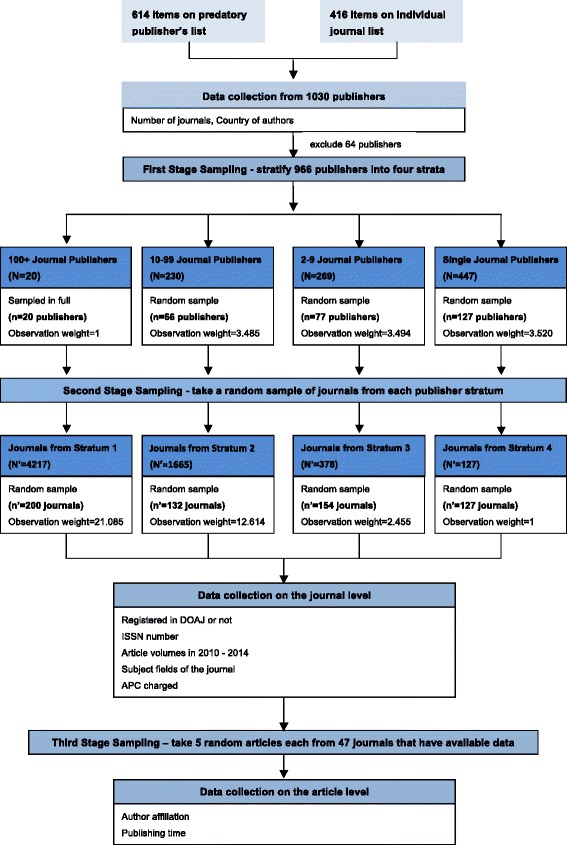
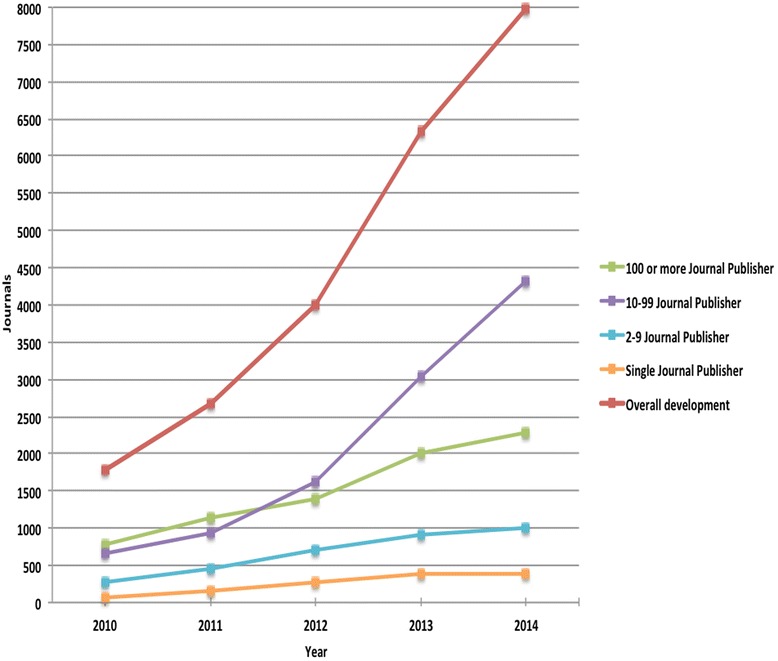
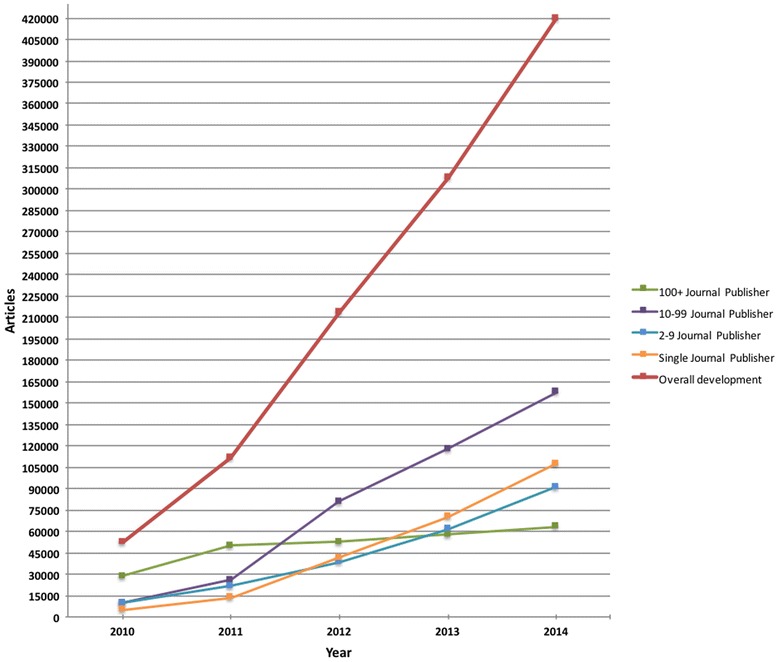
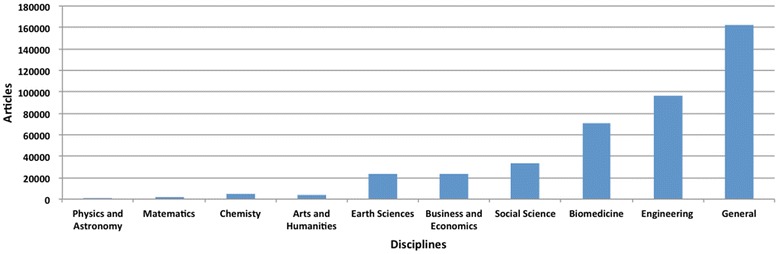
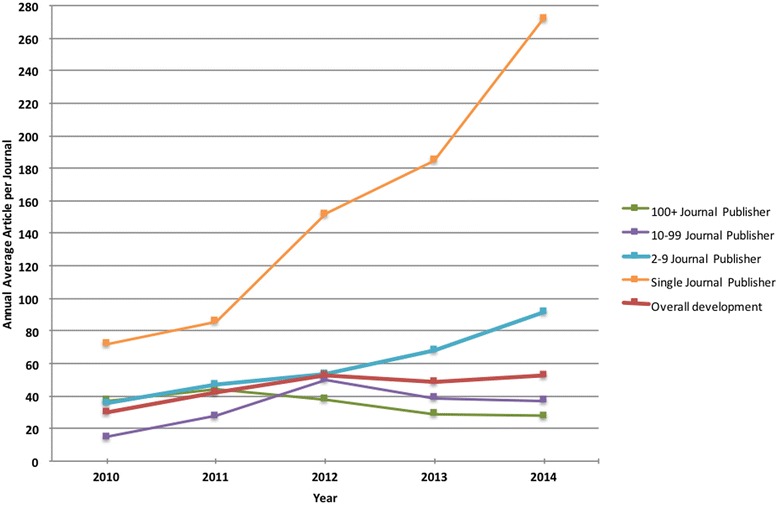
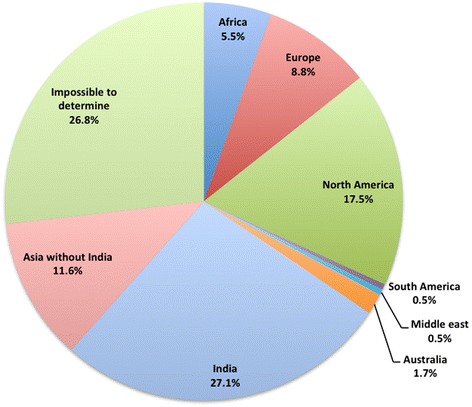
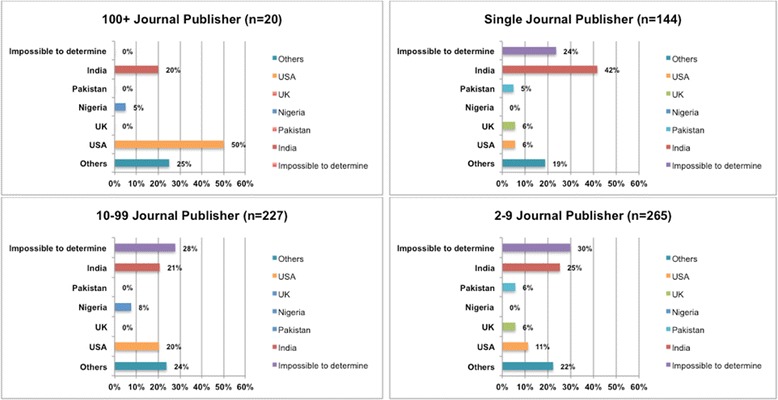
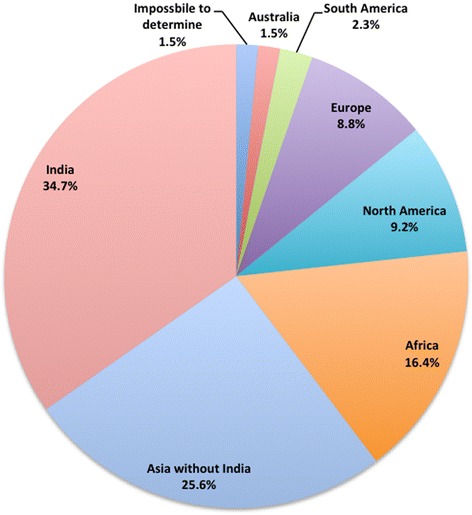
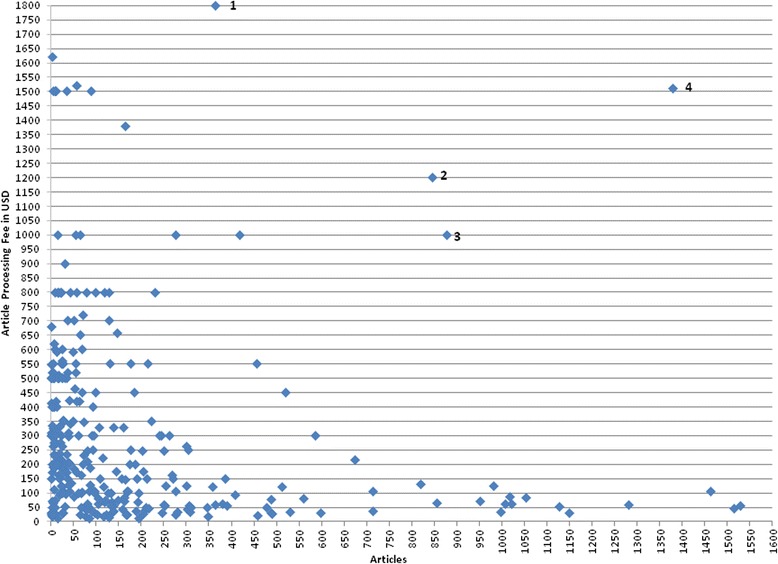
BACKGROUND: A negative consequence of the rapid growth of scholarly open access publishing funded by article processing charges is the emergence of publishers and journals with highly questionable marketing and peer review practices. These so-called predatory publishers are causing unfounded negative publicity for open access publishing in general. Reports about this branch of e-business have so far mainly concentrated on exposing lacking peer review and scandals involving publishers and journals. There is a lack of comprehensive studies about several aspects of this phenomenon, including extent and regional distribution. METHODS: After an initial scan of all predatory publishers and journals included in the so-called Beall's list, a sample of 613 journals was constructed using a stratified sampling method from the total of over 11,000 journals identified. Information about the subject field, country of publisher, article processing charge and article volumes published between 2010 and 2014 were manually collected from the journal websites. For a subset of journals, individual articles were sampled in order to study the country affiliation of authors and the publication delays. RESULTS: Over the studied period, predatory journals have rapidly increased their publication volumes from 53,000 in 2010 to an estimated 420,000 articles in 2014, published by around 8,000 active journals. Early on, publishers with more than 100 journals dominated the market, but since 2012 publishers in the 10-99 journal size category have captured the largest market share. The regional distribution of both the publisher's country and authorship is highly skewed, in particular Asia and Africa contributed three quarters of authors. Authors paid an average article processing charge of 178 USD per article for articles typically published within 2 to 3 months of submission. CONCLUSIONS: Despite a total number of journals and publishing volumes comparable to respectable (indexed by the Directory of Open Access Journals) open access journals, the problem of predatory open access seems highly contained to just a few countries, where the academic evaluation practices strongly favor international publication, but without further quality checks.
Overview
The claims and statistics of this paper haven’t been checked yet.
Free: it reads the open-access text and checks the first 5 claims that cite a source we can check. Create a free account to check every claim.
Integrity signals
Registry
Cites
Statistics
Figures
Verification
Claims the paper makes
The claims and statistics of this paper haven’t been checked yet.
Free: it reads the open-access text and checks the first 5 claims that cite a source we can check. Create a free account to check every claim.
Claims other papers make about this one
Each is checked against this paper’s own text: does it say what the citing paper says it does?
The source backs part of the claim, not all of it — or backs it for a different population, condition or comparison.
In the citing paper
“The growth of online journals that require author publication fees may be driving an increasingly profit-based publishing model (49).”
From Protection of the human gene research literature from contract cheating organizations known as research paper mills (2022) · cites this paper as [49]
Experimental — accuracy not yet measuredThe cited source says what the claim attributes to it.
In the citing paper
“Although these criteria are often considered to be controversial [164], it was shown that predatory journals usually fulfilled several of the criteria outlined by Beall [150,165].”
From Web of Science (WoS) and Scopus: The Titans of Bibliographic Information in Today’s Academic World (2021) · cites this paper as [150]
The cited source says what the claim attributes to it.
In the citing paper
“these artificial journals have evolved and they even manage to pass the selection process of the major bibliographic, as well as OA, DBs [145,150,157,158,166]”
From Web of Science (WoS) and Scopus: The Titans of Bibliographic Information in Today’s Academic World (2021) · cites this paper as [150]
In the citing paper
“Publish or perish research cultures (6,34,43,101) combined with an increasingly commercially-focused publishing environment (49,102) are leading to the dislocation between the scientific and career value of research publications (103)”
From Protection of the human gene research literature from contract cheating organizations known as research paper mills (2022) · cites this paper as [49]
In the citing paper
“When including the entire literature, predatory publishing likely comprises about 5 to 10%.”
From Misinformation in and about science (2021) · cites this paper as [88]
3 more claims about this paper
Create a free account to see every claim other papers make about this one.
Self-check
Percentages, sums and reported differences re-computed from the paper’s own numbers.
The self-check needs the paper’s full text.
Citations
Cites
Bohannon, J. (2013) · Science · doi:10.1126/science.342.6154.60 · Cited by 934
The Development of Open Access Journal Publishing from 1993 to 2009
Laakso, M., Welling, P., Bukvova, H., Nyman, L., Björk, B.-C., & Hedlund, T. (2011) · PLoS ONE · doi:10.1371/journal.pone.0020961 · Cited by 755
Self-citationPredatory publishers are corrupting open access
Beall, J. (2012) · Nature · doi:10.1038/489179a · Cited by 658 · cited 1×
“Jeffrey Beall coined the phrase ‘predatory publishers’ to describe publishers of this sort of journal [6].”
BackgroundSuber, P. (2012) · The MIT Press eBooks · doi:10.7551/mitpress/9286.001.0001 · Cited by 623
The Access/Impact Problem and the Green and Gold Roads to Open Access
Harnad, S. R., Brody, T., Vallières, F., Carr, L. A., Hitchcock, S., Gingras, Y., Oppenheim, C., Stamerjohanns, H., & Hilf, E. R. (2004) · Serials Review · doi:10.1016/j.serrev.2004.09.013 · Cited by 529 · cited 7×
“In addition, there is a ‘green’ route in which authors or third parties can legally make manuscript versions of articles published in traditional journals freely available on the Internet [4].”
BackgroundInfluentialThe publishing delay in scholarly peer-reviewed journals
Björk, B.-C., & Solomon, D. (2013) · Journal of Informetrics · doi:10.1016/j.joi.2013.09.001 · Cited by 432
Self-citation(2000) · Technometrics · doi:10.1080/00401706.2000.10486038 · Cited by 412
Towards Electronic Journals: Realities for Scientists, Librarians, and Publishers,,,,
Tenopir, C., & King, D. W. (2000) · Cited by 400
Anatomy of open access publishing: a study of longitudinal development and internal structure
Laakso, M., & Björk, B.-C. (2012) · BMC Medicine · doi:10.1186/1741-7015-10-124 · Cited by 364 · cited 3×
“Björk and Solomon [32] found delays of 9 – 18 months, depending on the field of science, with social sciences having the longest delays.”
BackgroundMethodSelf-citationWho publishes in “predatory” journals?
Xia, J., Harmon, J. L., Connolly, K. G., Donnelly, R. M., Anderson, M. R., & Howard, H. A. (2015) · Journal of the Association for Information Science and Technology · doi:10.1002/asi.23265 · Cited by 359 · cited 1×
“Xia et al. also studied the origin of authors in seven pharmacological journals included in the above list and found a strong dominance of Indian authors, with Nigerian and Pakistani authors in second and third place [18].”
Result
Research works printed but not linked: 1
- Spears T. Respectable medical journal turns to dark side. Ottawa, ON: Ottawa Citizen; 2014. http://ottawacitizen.com/technology/science/respected-medical-journal-turns-to-dark-side.
Cited by
Items 201–300 of 813
The revised guidelines of the Medical Council of India for academic promotions: Need for a rethink
Aggarwal, R., Gogtay, N., Kumar, R., & Sahni, P. (2016) · Indian Journal of Gastroenterology · doi:10.1007/s12664-015-0617-9 · Cited by 18
“Predatory publishing is perhaps a manifestation of the ‘publish or perish’ phenomenon with authors willing to pay for a publication [7].”
InfluentialSuccess in Publishing: Selecting an Appropriate Journal and Braving the Peer-review Process
Tullu, M. S., & Karande, S. (2018) · Journal of Postgraduate Medicine · doi:10.4103/jpgm.jpgm_618_17 · Cited by 24
“[2,4,6,7,14] 1-8,”
AMWA–EMWA–ISMPP joint position statement on predatory publishing
American Medical Writers Association, European Medical Writers Association, & International Society for Medical Publication Professionals (2019) · Current Medical Research and Opinion · doi:10.1080/03007995.2019.1646535 · Cited by 18
Rhodes, C., & Linnenluecke, M. K. (2025) · Organization · doi:10.1177/13505084251399576 · Cited by 17
Nicholas, D., Herman, E., Watkinson, A., Xu, J., Abrizah, A., Bravo, B. R., Boukacem‐Zeghmouri, C., Polezhaeva, T., & Świgoń, M. (2021) · Foresight-Russia · doi:10.17323/2500-2597.2021.1.56.65 · Cited by 18
Dinis‐Oliveira, R. J. (2021) · Forensic Sciences Research · doi:10.1080/20961790.2021.1989548 · Cited by 21
Predator Effect: Understanding the Past, Present and Future of Deceptive Academic Journals
Linacre, S. (2022) · doi:10.3998/mpub.12739277 · Cited by 27
Predatory publishing: A wake-up call for editors and authors in the Middle East and Africa
Beshyah, S. (2017) · Ibnosina Journal of Medicine and Biomedical Sciences · doi:10.4103/ijmbs.ijmbs_26_17 · Cited by 17
“[4‐6] The black list of predatory journals on his blog formed the basis for much editorial research work and helped focus the professional opinion on this matter.[7,8] There has been a steady increase in the interest and concern of professionals and academics reflected in the relevant volume of work in the internation…”
A “Trojan Horse” in the peer-review process of fee-charging economic journals
Dell’Anno, R., Caferra, R., & Morone, A. (2020) · Journal of Informetrics · doi:10.1016/j.joi.2020.101052 · Cited by 24
Dudley, R. G. (2021) · Journal of Librarianship and Scholarly Communication · doi:10.7710/2162-3309.2345 · Cited by 17
Open Science and Feminist Ethics: Promises and Challenges of Open Access
Brabeck, M. M. (2021) · Psychology of Women Quarterly · doi:10.1177/03616843211030926 · Cited by 17
“In 2010 53,000 papers were published in predatory journals; in 2014 there were 420,000 (Shen & Björk, 2015).”
BackgroundTiller, N. B., & Ekkekakis, P. (2023) · Kinesiology Review · doi:10.1123/kr.2022-0039 · Cited by 19
Stojanovski, J., & Marušić, A. (2017) · Biochemia Medica · doi:10.11613/bm.2017.032 · Cited by 21
“A negative consequence of the rapid growth of scholarly open access publishing funded by APCs, supported by high annual revenues generated by publishing industry (12), has been the emergence of publishers and journals with questionable marketing and peer review practices (13).”
BackgroundCortada, L., Dehennin, I., Bert, W., & Coyne, D. (2019) · Nematology · doi:10.1163/15685411-00003291 · Cited by 16
“…predatory publishers and journals, the negative impact for scientists publishing in these journals is demonstrated through the 1580% ratio of papers published in predatory journals vs Web of Science-indexed journals in 2013-2014, the highest in the world (Shen & Björk, 2015; Ayeni & Adetoro, 2017).”
BackgroundPublishing in predatory language and linguistics journals: Authors’ experiences and motivations
Nejadghanbar, H., Hu, G., & Babadi, M. J. (2023) · Language Teaching · doi:10.1017/s0261444822000490 · Cited by 19
“According to Shen and Björk (2015), the number of active predatory journals has increased from 1,800 to 8,000 between 2010 and 2014, with a corresponding rise of articles from 53,000 to 420,000.”
BackgroundResultInfluentialLivas, C., & Delli, K. (2023) · Progress in Orthodontics · doi:10.1186/s40510-023-00471-6 · Cited by 18
“While biomedicine was ranked as one of most active disciplines in generating predatory articles [18], little has been published so far on the extent and patterns of predatory publishing solicitation in dentistry [19–21].”
BackgroundCitation impact of health and medical journals in Africa: does open accessibility matter?
Ezema, I. J., & Onyancha, O. B. (2017) · The Electronic Library · doi:10.1108/el-11-2016-0245 · Cited by 19
White paper: statement on conflicts of interest
Bion, J., Antonelli, M. M., Blanch, L. L., Curtis, J. R., Druml, C., Du, B., Machado, F. R., Gomersall, C. D., Hartog, C. S., Levy, M. M., et al. (2018) · Intensive Care Medicine · doi:10.1007/s00134-018-5349-8 · Cited by 20
Paudel, P. K., Giri, B., & Dhakal, S. (2020) · Accountability in Research · doi:10.1080/08989621.2020.1768374 · Cited by 21
Moed, H. F., Lopez‐Illescas, C., Guerrero‐Bote, V. P., & Anegón, F. D. M. (2021) · Learned Publishing · doi:10.1002/leap.1428 · Cited by 21
“In a large study on predatory publishing, Shen and Bjork (2015) identified about 11,000 journals from publishers in the Beall list, 8000 of which were active in 2014.”
BackgroundHadad, S., & Aharony, N. (2022) · Online Information Review · doi:10.1108/oir-01-2022-0014 · Cited by 19
Liu, M., Chien, T., & Chou, W. (2022) · Medicine · doi:10.1097/md.0000000000031609 · Cited by 17
“”[14] Both the quantity and quality of predatory journals with articles they publish are growing rapidly[16] due to their own benefit with a nonexistent or almost nonexistent peer-review process,[15,17–19] which allows rapid publication of academic papers without due assurances.”
BackgroundPublish and flourish: Take the road less travelled!
Das, A. K. (2017) · Medical Journal Armed Forces India · doi:10.1016/j.mjafi.2017.02.010 · Cited by 15
“Disturbingly, India has the largest concentration of these publishers and is also one of the biggest contributors to journals in the 'suspect' category across all disciplines and institutes.(7,8) It must be understood by researchers and those desirous of having scientific publications, that a mere 'blacklist' has no r…”
BackgroundInfluentialThe DOAJ Spring Cleaning 2016 and What Was Removed—Tragic Loss or Good Riddance?
Frantsvåg, J. E. (2019) · Publications · doi:10.3390/publications7030045 · Cited by 15
Predatory journals: A threat to evidence-based science
Choudhary, M., & Kurien, N. (2019) · Indian Journal of Health Sciences and Biomedical Research (KLEU) · doi:10.4103/kleuhsj.kleuhsj_146_18 · Cited by 15
“The predatory journals have rapidly increased their publication volume from 53,000 in 2010 to 420,000 articles in 2014, published by around 8000 active journals with an average fee of 178 USD.[5] Thus, predatory publishing has become a big industry luring gullible authors from countries like India.”
BackgroundInfluentialChen, X. (2019) · Publications · doi:10.3390/publications7030058 · Cited by 15
Yun, J. J., Liu, Z., Jeong, E., Kim, S., & Kim, K. (2022) · Sustainability · doi:10.3390/su14052574 · Cited by 18
Boulos, L., Rothfus, M. A., Goudreau, A., & Manley, A. (2022) · Journal of Clinical Epidemiology · doi:10.1016/j.jclinepi.2022.09.004 · Cited by 18
Türkiye’deki Yağmacı Dergiler: Beall Listesi Üzerine Bir Araştırma
Akça, S., & Akbulut, M. (2018) · Bilgi Dünyası · doi:10.15612/bd.2018.695 · Cited by 15
The revised guidelines of the Medical Council of India for academic promotions: Need for a rethink
Sahni, P., Aggarwal, R., Gogtay, N., Kumar, R., & IAME (2016) · Indian Journal of Anaesthesia · doi:10.4103/0019-5049.174800 · Cited by 14
“This Guest Editorial The revised guidelines of the Medical Council of India for academic promotions: Need for a rethink Rakesh Aggarwal, Nithya Gogtay1, Rajeev Kumar2, Peush Sahni3, The Indian Association of Medical Journal Editors* Former Editor, Indian Journal of Gastroenterology, 1Editor, Journal of Postgraduate Me…”
InfluentialHow publishing in open access journals threatens science and what we can do about it
Romesburg, H. C. (2016) · Journal of Wildlife Management · doi:10.1002/jwmg.21111 · Cited by 17
Nelhans, G., & Bodin, T. (2020) · Quantitative Science Studies · doi:10.1162/qss_a_00033 · Cited by 18
Influence of accessibility (open and toll-based) of scholarly publications on retractions
Shah, T. A., Gul, S., Bashir, S., Ahmad, S., Huertas, A., Oliveira, A., Gulzar, F., Najar, A. H., & Chakraborty, K. (2021) · Scientometrics · doi:10.1007/s11192-021-03990-3 · Cited by 17
James, J. E. (2016) · Journal of the Association for Information Science and Technology · doi:10.1002/asi.23757 · Cited by 15
Jager, P. G. D., van der Spuy, P., & de Kock, F. (2016) · South African Journal of Business Management · doi:10.2139/ssrn.2858750 · Cited by 16
Preprints: ethical hazard or academic liberation?
da Silva, J. A. T. (2017) · KOME · doi:10.17646/kome.2017.26 · Cited by 16
Soler, J., & Wang, Y. (2019) · Learned Publishing · doi:10.1002/leap.1244 · Cited by 14
Nigerian Academics Patronizing Predatory Journals: Implications for Scholarly Communication
Tella, A. (2020) · Journal of Scholarly Publishing · doi:10.3138/jsp.51.3.02 · Cited by 17
China is closing gap with United States on research spending
Viglione, G. A. (2020) · Nature · doi:10.1038/d41586-020-00084-7 · Cited by 14
Revistas predatórias: um inimigo a ser combatido na comunicação científica
Guimarães, J. A. C., & Hayashi, M. C. P. I. (2023) · RDBCI Revista Digital de Biblioteconomia e Ciência da Informação · doi:10.20396/rdbci.v21i00.8671811 · Cited by 28
Predatory Journals: What are they?
Shyam, A. K. (2015) · Europe PMC (PubMed Central) · doi:10.13107/jocr.2250-0685.330 · Cited by 13
Topper, L., & Boehr, D. L. (2018) · Journal of the Medical Library Association JMLA · doi:10.5195/jmla.2018.457 · Cited by 13
“A recent study by Shen and Bjork indicated an increase in the prevalence of questionable publishers, with biomedicine being one of the most affected fields [15].”
BackgroundEvaluating medical conferences: the emerging need for a quality metric
Lang, R., Porter, K., Krentz, H. B., & Gill, M. J. (2019) · Scientometrics · doi:10.1007/s11192-019-03291-w · Cited by 15
Revistas depredadoras: fraude en la ciencia
Alonso-Arévalo, J., Saraiva, R., & Holguín, R. G. F. (2020) · Cuardernos de documentación multimedia/Cuadernos de documentación multimedia · doi:10.5209/cdmu.68498 · Cited by 13
Falling prey to predatory journals: Experiences of nursing faculty
Rawas, H. O., de Beer, J., Alnajjar, H. A., & Bano, N. (2020) · International Journal of Africa Nursing Sciences · doi:10.1016/j.ijans.2020.100222 · Cited by 20
The scholarly publishing landscape
Hyland, K. (2021) · Routledge eBooks · doi:10.4324/9781003043782-3 · Cited by 19
Gerashchenko, D. (2022) · Accountability in Research · doi:10.1080/08989621.2022.2081916 · Cited by 15
“Another possibility is that these authors simply look for a way to getting published by choosing journals without paper evaluation (Shen and Björk 2015).”
BackgroundNicholas, D., Bravo, B. R., Boukacem‐Zeghmouri, C., Herman, E., Clark, D., Xu, J., Abrizah, A., Świgoń, M., Watkinson, A., Sims, D., et al. (2023) · El Profesional de la Informacion · doi:10.3145/epi.2023.ene.17 · Cited by 16
Journal portals – an important infrastructure for non-commercial scholarly open access publishing
Björk, B. (2017) · Online Information Review · doi:10.1108/oir-03-2016-0088 · Cited by 13
Self-citationPredatory Publishing: An Industry that Is Threatening Science
Revés, J., da Silva, B. M., Durão, J., Ribeiro, N. V., Lemos, S. S., & Escada, P. (2018) · Acta Médica Portuguesa · doi:10.20344/amp.9810 · Cited by 14
Perceived quality and self‐identity in scholarly publishing
Moksness, L., & Olsen, S. O. (2019) · Journal of the Association for Information Science and Technology · doi:10.1002/asi.24235 · Cited by 14
“These are publishers who capitalize on the increasing pressure to publish and unethically exploit the “author pays” model by accepting and churning out articles with little or no peer review or quality control (Shen & Björk, 2015).”
BackgroundPredatory Journals: A Threat to Scholarly Publishing
Shrestha, J., Subedı, S., Shokati, B., & Chaudhary, A. (2018) · Journal of Education and Research · doi:10.3126/jer.v8i1.25482 · Cited by 13
“Shen and Björk (2015) found that the trend of universities benefitting their academic researchers for frequent scientific publications have also increased the number of fake publications.”
BackgroundAn insight into predatory journals
Pawar, V., & Jawade, J. (2020) · Indian Journal of Public Health · doi:10.4103/ijph.ijph_249_19 · Cited by 13
Current and potential cyber attacks on medical journals; guidelines for improving security
Dadkhah, M., Seno, S. A. H., & Borchardt, G. A. (2016) · European Journal of Internal Medicine · doi:10.1016/j.ejim.2016.11.014 · Cited by 14
“Some of this research focuses on the evaluation of journal quality and points out the questionable quality of most hijacked journals [13].”
BackgroundGlick, M. (2016) · The Journal of the American Dental Association · doi:10.1016/j.adaj.2016.04.002 · Cited by 13
“It was estimated that more than 53,000 open-access articles were published in 2010, a number that increased to more than 420,000 in 2014.(16) In contrast with print journals, Web-based OAJs have no page limitations and obviously will increase their revenues with the publication of more articles, which is, of course, t…”
BackgroundIndian Science and Predatory Journals
Patwardhan, B. (2017) · Journal of Ayurveda and Integrative Medicine · doi:10.1016/j.jaim.2017.02.004 · Cited by 13
“The predatory journals have rapidly increased their publication volume from 53,000 in 2010 to 420,000 articles in 2014, published by around 8000 active journals with an average fee of 178 USD [6].”
BackgroundThe Democratisation Myth: Open Access and the Solidification of Epistemic InjusticesPreprint
Knöchelmann, M. (2020) · SocArXiv (OSF Preprints) · doi:10.31235/osf.io/hw7at · Cited by 19
Factors affecting global flow of scientific knowledge in environmental sciences
Sonne, C., Dietz, R., & Alstrup, A. K. O. (2019) · The Science of The Total Environment · doi:10.1016/j.scitotenv.2019.135012 · Cited by 12
Choices of immediate open access and the relationship to journal ranking and publish-and-read deals
Wenaas, L. (2022) · Frontiers in Research Metrics and Analytics · doi:10.3389/frma.2022.943932 · Cited by 13
“In addition, there are concerns about predatory journals, which are fraudulent journals that publish articles with little or no peer review (Shen and Björk, 2015; Richtig et al., 2018).”
BackgroundOpenness in education as a living idea: A longitudinal investigation of its growth and development
Koçdar, S., Bozkurt, A., Uçar, H., Karadeniz, A., Erdoğdu, E., & Naidu, S. (2023) · Distance Education · doi:10.1080/01587919.2023.2268321 · Cited by 16
“For example, the fully open access initiative PLOS One became one of the largest journals in the world both in terms of the number of papers and citations (Allahar, 2017; Schimmer et al., 2015; Shen & Bj € ork, 2015).”
BackgroundPredatory journal preference in the field of Orthopaedics and Traumatology in Turkey
Şener, M., Davulcu, C. D., Tahta, M., & Günal, İ. (2019) · Acta Orthopaedica et Traumatologica Turcica · doi:10.1016/j.aott.2019.05.003 · Cited by 13
Brandts‐Longtin, O., Lalu, M. M., Adie, E. A., Albert, M. A., Almoli, E., Almoli, F., Bryson, G. L., Dony, C., Dunleavy, D. J., Grudniewicz, A., et al. (2022) · BMJ Open · doi:10.1136/bmjopen-2021-059445 · Cited by 15
Where predatory and mainstream journals differ: A study of language and linguistics journals
Nejadghanbar, H., & Hu, G. (2022) · Learned Publishing · doi:10.1002/leap.1485 · Cited by 13
“There have been such studies on features of predatory journals in general and in several disciplinary areas (e.g., Shen & Bjork, 2015).”
BackgroundResultInfluentialIntelligent Framework for Detecting Predatory Publishing Venues
Ateeq, W., & Al-Khalifa, H. S. (2023) · IEEE Access · doi:10.1109/access.2023.3250256 · Cited by 17
Ezema, I. J., & Onyancha, O. B. (2016) · Serials Review · doi:10.1080/00987913.2016.1182881 · Cited by 12
“…controversies surround Beall’s list, studies has shown that the major interest of predatory open access journals is mainly article processing charges (APC) rather than the scholarly peer review mechanism of reputable journals (Shen & Bjork, 2015;Webster & Butler, 2015; Christopher & Young, 2015).”
BackgroundThe digitalization push in universities
Jaakkola, H., Aramo‐Immonen, H., Henno, J., & Mäkelä, J. (2016) · International Convention on Information and Communication Technology, Electronics and Microelectronics · doi:10.1109/mipro.2016.7522290 · Cited by 19
“…is the result of a large amount of references to it; high impact is easier to reach in highly ranked forums than in lower level ones; an individual researcher has an opportunity to increase his/her visibility by active impact improvement actions; a growing number of citations may also affect the…”
BackgroundKuballa, S., Schulze, M., Böhm, C., Gefeller, O., Haaf, J., Henning, P., Mielke, C., Niggemann, F., Schürg, A., Bergemann, D., et al. (2016) · Methods of Information in Medicine · doi:10.3414/me16-05-0010 · Cited by 12
“lishing organs were launched, which on the one hand offered scientists the opportunity of fast publishing of their results, but which on the other hand raised doubts concerning their seriousness, with terms like predatory open access being coined [30].”
BackgroundRai, A., Kumar, A., Abraham, L., Chandra, A., Kaur, M., & Hasan, S. (2016) · Journal of Education and Ethics in Dentistry · doi:10.4103/jeed.jeed_14_17 · Cited by 12
Critical review of a scientific manuscript: a practical guide for reviewers
Falavigna, A., Blauth, M., & Kates, S. L. (2017) · Journal of neurosurgery · doi:10.3171/2017.5.jns17809 · Cited by 12
Journals removed from DOAJ appearing within SCImago's ranks: A study of excluded journals
Sun, L. (2018) · Learned Publishing · doi:10.1002/leap.1216 · Cited by 12
“In another study, Shen and Björk (2015) also compared these two lists and estimated a 7.8% overlap.”
BackgroundInfluentialAfrica’s challenges in the OA movement: risks and possibilities
da Silva, J. A. T., Adjei, K. O. K., Owusu-Ansah, C. M., Sooryamoorthy, R., & Balehegn, M. (2019) · Online Information Review · doi:10.1108/oir-04-2018-0152 · Cited by 14
The Evolving Ecosystem of Predatory Journals: A Case Study in Indian Perspective
Jain, N., & Singh, M. P. (2019) · Lecture notes in computer science · doi:10.1007/978-3-030-34058-2_9 · Cited by 11
Science belongs to no one—and to everyone
Brücher, B. L. D. M. (2017) · 4open · doi:10.1051/fopen/2017501 · Cited by 12
A decade of changes in OA and non-OA journal publication and production
Kim, E., & Atteraya, M. S. (2023) · Journal of Librarianship and Information Science · doi:10.1177/09610006231179718 · Cited by 11
“It should be noted that major commercial companies seem to have positioned themselves as reputable, diverse, and high-quality publishers in the world of predatory pub-lishers (Gasparyan et al., 2017; Kurt, 2018; Shen and Björk, 2015; Xia et al., 2015).”
Jingura, R. M., Chigwada, J. P., Diver, T., & Shangwa, D. (2023) · Accountability in Research · doi:10.1080/08989621.2023.2256672 · Cited by 12
“The most widely used by researchers is Beall’s blacklist (Berger and Cirasella 2015; Djuric 2015; Lukic´ et al. 2014; Mouton and Valentine 2017; Shen and Björk 2015; Wallace and Perri 2018; Xia 2015).”
Hashish, E. A. A., Alsenany, S. A., & Abdelaliem, S. M. F. (2024) · Journal of Professional Nursing · doi:10.1016/j.profnurs.2024.01.003 · Cited by 12
Williams, M. J., Mullane, K., & Curtis, M. J. (2017) · Elsevier eBooks · doi:10.1016/b978-0-12-804725-5.00005-7 · Cited by 13
An Assessment of Predatory Publication Use in Reviews
Collom, C., Oermann, M. H., Sabol, V. K., & Heintz, P. A. (2020) · Clinical Nurse Specialist · doi:10.1097/nur.0000000000000530 · Cited by 12
Đức, N. M., Ha, H., Khoa, M. T., & Thông, P. M. (2020) · Acta Informatica Medica · doi:10.5455/aim.2020.28.152-156 · Cited by 12
“Indian J Psychol Med.”
BackgroundInfluentialPredatory publishing: A threat to the credibility of science
Shrestha, J., Subedı, S., & Timsina, K. P. (2020) · Nepal Journal of Multidisciplinary Research · doi:10.3126/njmr.v3i1.30214 · Cited by 11
“…to publication, fake impact factors, the introduction of scientists into the editorial board without approval of academics, and not included in a database for dissemination (Beaubien and Eckard, 2014; Berger and Cirasella, 2015; Shen and Bjork, 2015; Shrestha et al. 2019a: Shrestha et al., 2019 b).”
BackgroundCritical appraisal of predatory journals in pathology
Alahmad, Y. M., Abdelhafez, I., Cyprian, F. S., Skenderi, F., Akhtar, S., & Vranić, S. (2019) · Journal of Clinical Pathology · doi:10.1136/jclinpath-2019-206245 · Cited by 13
Analysis of potential predatory journals in radiology
Arıbal, S., İnce, O., Kaya, E., & Önder, H. (2020) · Diagnostic and Interventional Radiology · doi:10.5152/dir.2020.20240 · Cited by 14
“At present, more than 10 000 predatory journals harboring more than 500 000 articles are estimated to exist within the literature (2, 3).”
BackgroundOpen science as a path to education of new psychophysiologists
Bukach, C. M., Bukach, N., Reed, C. L., & Couperus, J. W. (2021) · International Journal of Psychophysiology · doi:10.1016/j.ijpsycho.2021.04.001 · Cited by 15
Genuine versus bogus scientific controversies: the case of statins
Martini, C. M. C., & Andreoletti, M. (2021) · History & Philosophy of the Life Sciences · doi:10.1007/s40656-021-00456-w · Cited by 15
The revised guidelines of the Medical Council of India for academic promotions: Need for a rethink
Sahni, P., Aggarwal, R., Gogtay, N., & Kumar, R. (2015) · Journal of Family Medicine and Primary Care · doi:10.4103/2249-4863.174332 · Cited by 11
“[7] Predatory publishing is perhaps a manifestation of the “publish or perish” phenomenon with authors willing to pay for publication.”
Predatory publishers: Implications for pharmacy practice and practitioners
Tsuyuki, R. T., Hamarneh, Y. N. A., Bermingham, M., Duong, E., Okada, H., & Beall, J. (2017) · Canadian Pharmacists Journal / Revue des Pharmaciens du Canada · doi:10.1177/1715163517725269 · Cited by 11
Clark, J. (2018) · Acta Médica Portuguesa · doi:10.20344/amp.10489 · Cited by 11
Who reviews for predatory journals? A study on reviewer characteristicsPreprint
Severin, A., Strinzel, M., Egger, M., Domingo, M., & Barros, T. F. (2020) · bioRxiv (Cold Spring Harbor Laboratory) · doi:10.1101/2020.03.09.983155 · Cited by 11
Timmis, K. N., Williams, P. M., Karahan, Z. C., López‐García, P., Rainey, P. B., Chavarría, M., Greening, C., Steward, K. F., Hallsworth, J. E., Pereira, C. S., et al. (2025) · Microbial Biotechnology · doi:10.1111/1751-7915.70180 · Cited by 13
“Another suggests that between 2010 and 2015, the number of articles published in journals with predatory practices increased from 53,000 to 420,000 (Shen and Björk 2015).”
On the peer review reports: does size matter?
Maddi, A., & Miotti, L. (2024) · Scientometrics · doi:10.1007/s11192-024-04977-6 · Cited by 11
“The number of predatory journals is currently estimated at 13,000 journals with more than hundred thousand published articles (Boukacem-Zeghmouri et al., 2020; C. Shen & Björk, 2015).”
A comparative study on characteristics of retracted publications across different open access levels
Zheng, E., & Fu, H. (2024) · Journal of Data and Information Science · doi:10.2478/jdis-2024-0010 · Cited by 11
“Moreover, fake science (like the “predatory journals”) that exploited the OA publishing business model is emerging (Shen & Björk, 2015), which dilutes high-quality research (European Commission, 2020).”
Wolf in sheep’s clothing: An analysis of predatory journals through science mapping
Fauzi, M. A., Wider, W., Al‐Adwan, A. S., Sadun, A. S., & Shafi, M. (2025) · Social Science Information · doi:10.1177/05390184251336583 · Cited by 12
“Shen and Björk (2015) discovered that authors paid article processing charges at an average of 178 USD within a publication time frame of 2–3 months.”
Shah, W. A., Ali, R., & Lashari, A. (2022) · Accountability in Research · doi:10.1080/08989621.2022.2106424 · Cited by 13
“Approximately three quarters of predatory publications are produced by African or Asian authors as noted by Shen and Björk (2015).”
Wilson, P. (2023) · Journal of the Medical Library Association JMLA · doi:10.5195/jmla.2022.1554 · Cited by 10
Martinino, A., Chatterjee, S., Smeenk, F. W. J. M., & Pouwels, S. (2023) · Cureus · doi:10.7759/cureus.40126 · Cited by 13
“Based on a thorough literature search of academic papers on the subject [3,4,6,9,13,16,20,23] and after a careful analysis of predatory conferences and journal invites we receive as early career researchers, we have come up with a few suggestions to tackle this issue.”
BackgroundSahni, P., Aggarwal, R., Gogtay, N., & Kumar, R. (2016) · Journal of Conservative Dentistry · doi:10.4103/0972-0707.173180 · Cited by 10
“[7] While the MCI’s corrective measure is laudable, the definition of “e-journals” is variable.”
Open access to scientific knowledge: Its state, problems, and prospects of development
Gurov, A. N., Goncharova, Y. G., & Bubyakin, G. B. (2016) · Scientific and Technical Information Processing · doi:10.3103/s0147688216020040 · Cited by 10
Burggren, W. W., Madasu, D. K., Hawkins, K., & Halbert, M. (2018) · Journal of Librarianship and Scholarly Communication · doi:10.7710/2162-3309.2246 · Cited by 11
“…& Laakso, 2016; Bjork & Solomon, 2012; Butler, 2013; Christopher & Young, 2015; Ferris & Winker, 2017; Gasparyan, Yessirkepov, Diyanova, & Kitas, 2015; Harzing & Adler, 2016; Manca et al., 2017; Natarajan & Nair, 2016; Shahriari, Grant-Kels, & Payette, 2016; Shen & Bjork, 2015; Xu & Chau, 2014).”
Predatory Publishing and the Response from the Scholarly Community
Murphy, J. A. (2019) · Serials Review · doi:10.1080/00987913.2019.1624910 · Cited by 10
“…characteristics of this market” found that between 2010 and 2014 the number of articles published in predatory journals grew from 53,000 to 420,000, and by 2014 there were 11,873 journals available from 996 publishers that met their criteria for classification as predatory (Shen & Bj€ork, 2015).”
Background
Metadata
- Authors
- Shen, C., & Björk, B.-C.
- Affiliations
- Hanken School of Economics (FI)
- Corresponding author
- Shen, Cenyu
- Venue
- BMC Medicine
- Published
- 2015-10-01
- Volume
- 13
- Issue
- 1
- Pages
- 230-230
- ISSN
- 1741-7015 (ISSN-L)
- PMC
- PMC4589914
- OpenAlex
- W2156487032
- Cited by
- 819
- References
- 28
- Citations by year
- 2026: 44 · 2025: 56 · 2024: 46 · 2023: 81 · 2022: 70 · 2021: 93 · 2020: 88 · 2019: 76 · 2018: 91 · 2017: 86 · 2016: 79 · 2015: 7
- FWCI
- 564.37
- Type
- journal article
- Language
- en
- Open access
- gold
- doi.org
- Licence
- Locations
- BMC Medicine (publishedVersion, cc-by)
- Europe PMC (PubMed Central) (publishedVersion, cc-by)
- PubMed Central (publishedVersion, cc-by)
- PubMed (publishedVersion)
- Työväentutkimus Vuosikirja (acceptedVersion)
- Työväentutkimus Vuosikirja (submittedVersion)
- Topics
- Social Sciences › Library and Information Sciences › Publishing and Scholarly Communication
- Social Sciences › Library and Information Sciences › Academic Publishing and Open Access
- Social Sciences › Library and Information Sciences › scientometrics and bibliometrics research
- Keywords
- predatory publishing, predatory journals, predatory publishers, open access publishing, article processing charges, regional distribution of authors, time to publication, peer review quality, Beall's list, DOAJ
- MeSH terms
- Authorship, Humans, Longitudinal Studies, Peer Review, Periodicals as Topic, Publishing, Bibliometrics, Access to Information
About these checks
Registry, retraction, Cites and statistics results are computed, not judged, with one exception: a printed reference that no index lists is read once by a model before it counts as a citation error. Claims are extracted by a model and kept only when their quote appears verbatim in the text; each cited source is then checked, with a model’s help, for whether it says what the claim relies on. Those verdicts can be wrong — read the claim’s quote and the cited source before relying on one.
Statistics and arithmetic are recomputed, not judged.
Confidence bands are shown only for fields calibrated on our annotated test set. None is calibrated yet, so no band is shown.
What counts as a claim ›How we measure confidence ›How we check this ›
Are you an author, or do you see a problem with this page? Request a review
Data sources
Bibliographic data: Semantic Scholar, OpenAlex, Crossref.
Contains information from the Semantic Scholar Academic Graph Datasets, made available under the ODC Attribution License (ODC-BY 1.0).
Semantic Scholar’s data is described in: Kinney, R., et al. (2023). The Semantic Scholar Open Data Platform. arXiv:2301.10140.
