

Construction and description of a constitutive plipastatin mono-producing Bacillus subtilis
Open accessPublished version of a preprint
The DOI matches its Crossref record; 68 of the 68 references it cites were found in a registry or an index.
Abstract
Background: Plipastatin is a potent Bacillus antimicrobial lipopeptide with the prospect to replace conventional antifungal chemicals for controlling plant pathogens. However, the application of this lipopeptide has so far been investigated in a few cases, principally because of the yield in low concentration and unknown regulation of biosynthesis pathways. B. subtilis synthesizes plipastatin by a non-ribosomal peptide synthetase encoded by the ppsABCDE operon. In this study, B. subtilis 3NA (a non-sporulation strain) was engineered to gain more insights about plipastatin mono-production. Results: The 4-phosphopantetheinyl transferase Sfp posttranslationally converts non-ribosomal peptide synthetases from inactive apoforms into their active holoforms. In case of 3NA strain, sfp gene is inactive. Accordingly, the first step was an integration of a repaired sfp version in 3NA to construct strain BMV9. Subsequently, plipastatin production was doubled after integration of a fully expressed degQ version from B. subtilis DSM10 T strain (strain BMV10), ensuring stimulation of DegU-P regulatory pathway that positively controls the ppsABSDE operon. Moreover, markerless substitution of the comparably weak native plipastatin promoter (P pps ) against the strong constitutive promoter P veg led to approximately fivefold enhancement of plipastatin production in BMV11 compared to BMV9. Intriguingly, combination of both repaired degQ expression and promoter exchange (P pps ::P veg ) did not increase the plipastatin yield. Afterwards, deletion of surfactin ( srfAA-AD ) operon by the retaining the regulatory comS which is located within srfAB and is involved in natural competence development, resulted in the loss of plipastatin production in BMV9 and significantly decreased the plipastatin production of BMV11. We also observed that supplementation of ornithine as a precursor for plipastatin formation caused higher production of plipastatin in mono-producer strains, albeit with a modified pattern of plipastatin composition. Conclusions: This study provides evidence that degQ stimulates the native plipastatin production. Moreover, a full plipastatin production requires surfactin synthetase or some of its components. Furthermore, as another conclusion of this study, results point towards ornithine provision being an indispensable constituent for a plipastatin mono-producer B. subtilis strain. Therefore, targeting the ornithine metabolic flux might be a promising strategy to further investigate and enhance plipastatin production by B. subtilis plipastatin mono-producer strains.
Overview
The claims and statistics of this paper haven’t been checked yet.
Free: it reads the open-access text and checks the first 5 claims that cite a source we can check. Create a free account to check every claim.
Integrity signals
Registry
Cites
Statistics
Figures
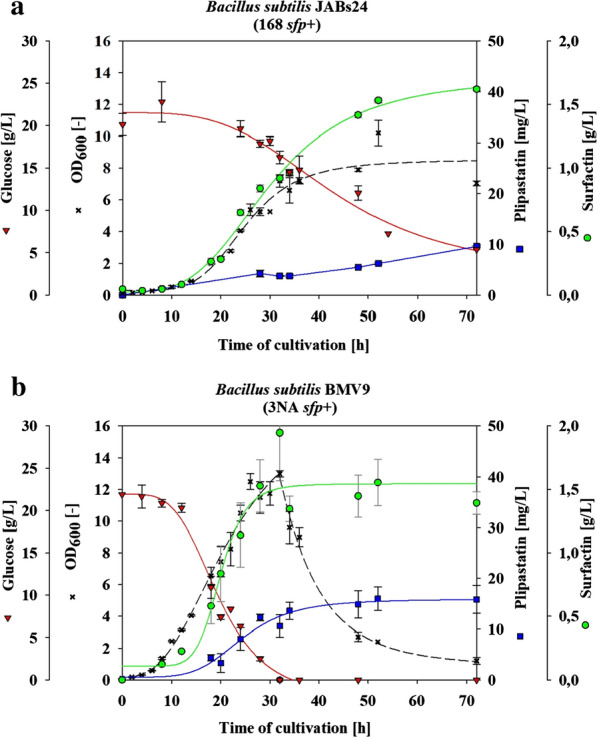
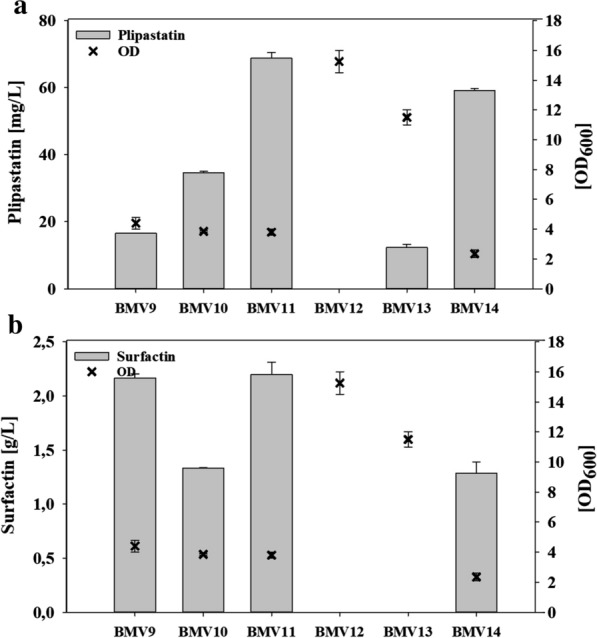
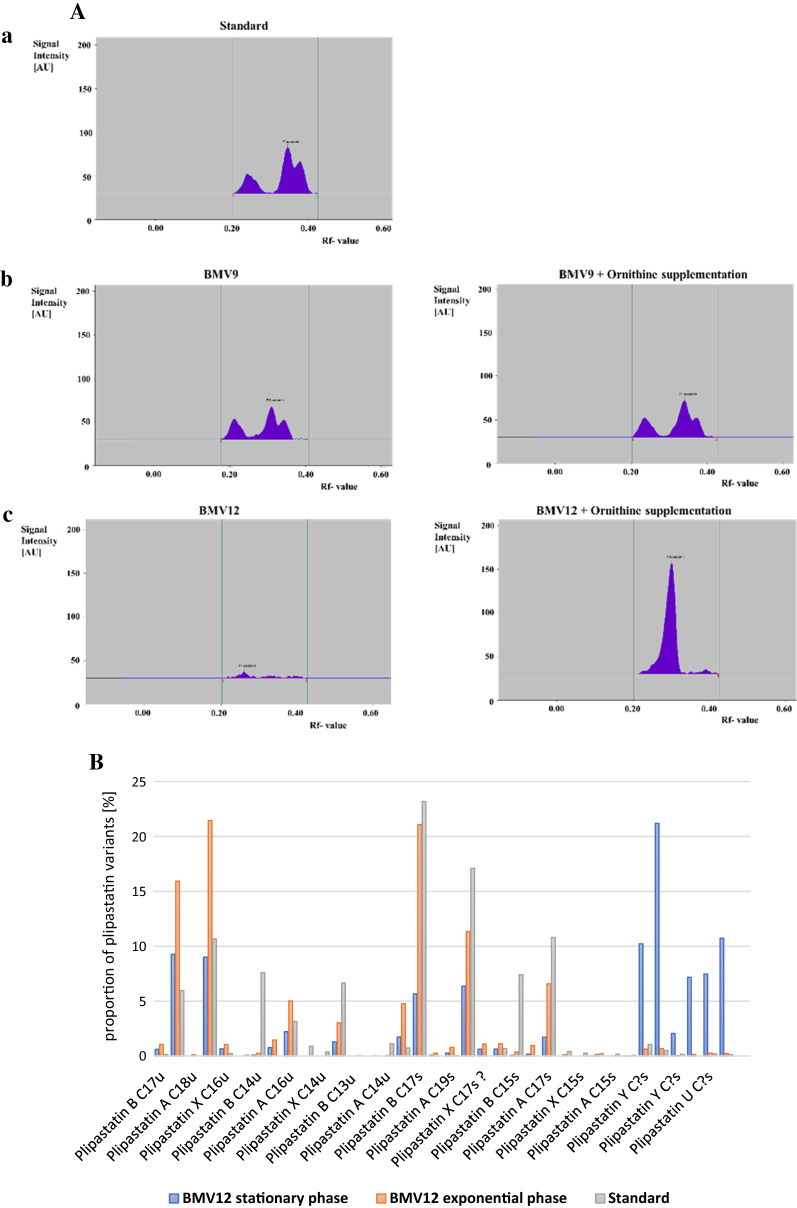
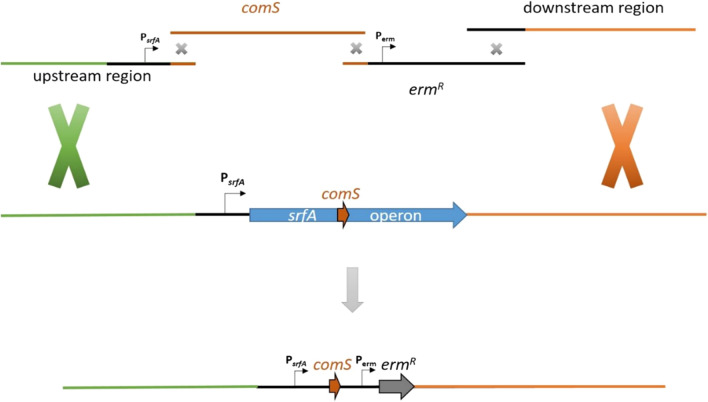
Verification
Claims the paper makes
The claims and statistics of this paper haven’t been checked yet.
Free: it reads the open-access text and checks the first 5 claims that cite a source we can check. Create a free account to check every claim.
Claims other papers make about this one
Each is checked against this paper’s own text: does it say what the citing paper says it does?
The source backs part of the claim, not all of it — or backs it for a different population, condition or comparison.
In the citing paper
“B. subtilis BMV9 was used as a promising surfactin production strain [10].”
From The influence of growth rate-controlling feeding strategy on the surfactin production in Bacillus subtilis bioreactor processes (2024) · cites this paper as [10]
Experimental — accuracy not yet measured
Self-check
Percentages, sums and reported differences re-computed from the paper’s own numbers.
The self-check needs the paper’s full text.
Citations
Cites
Yanisch-Perron, C., Vieira, J., & Messing, J. (1985) · Gene · doi:10.1016/0378-1119(85)90120-9 · Cited by 15,041
The complete genome sequence of the gram-positive bacterium Bacillus subtilis.
Kunst, F., Ogasawara, N., Moszer, I., Albertini, A. M., Alloni, G., Azevedo, V., Bertero, M. G., Bessières, P., Bolotin, A., Borchert, S., et al. (1997) · Nature · doi:10.1038/36786 · Cited by 3,679
Applied Microbiology and Biotechnology
(2013) · Applied Microbiology and Biotechnology · doi:10.1007/253.1432-0614 · Cited by 3,515
Antimicrobial agents and chemotherapy—1969
Parker, R. H. (1971) · Journal of Chronic Diseases · doi:10.1016/0021-9681(71)90113-5 · Cited by 2,504
Chung, C. T., Niemela, S. L., & Miller, R. H. (1989) · Proceedings of the National Academy of Sciences · doi:10.1073/pnas.86.7.2172 · Cited by 1,592
Smith, M. C. M. (1991) · FEBS Letters · doi:10.1016/0014-5793(91)80059-c · Cited by 1,519
Journal of Microbiology and Biotechnology
(2013) · Journal of Microbiology and Biotechnology · doi:10.4014/jmb · Cited by 1,466
Molecular biological methods for Bacillus
Harwood, C. R., & Cutting, S. M. (1990) · Cited by 1,430
Raaijmakers, J. M., De Bruijn, I., Nybroe, O., & Ongena, M. (2010) · FEMS Microbiology Reviews · doi:10.1111/j.1574-6976.2010.00221.x · Cited by 1,131
Ongena, M., Jourdan, E., Adam, A., Paquot, M., Brans, A., Joris, B., Arpigny, J., & Thonart, P. (2007) · Environmental Microbiology · doi:10.1111/j.1462-2920.2006.01202.x · Cited by 855
A new enzyme superfamily — the phosphopantetheinyl transferases
Lambalot, R. H., Gehring, A. M., Flugel, R. S., Zuber, P., LaCelle, M., Marahiel, M. A., Reid, R., Khosla, C., & Walsh, C. T. (1996) · Chemistry & Biology · doi:10.1016/s1074-5521(96)90181-7 · Cited by 851
Overview of the Antimicrobial Compounds Produced by Members of the Bacillus subtilis Group
Caulier, S., Nannan, C., Gillis, A., Licciardi, F., Bragard, C., & Mahillon, J. (2019) · Frontiers in Microbiology · doi:10.3389/fmicb.2019.00302 · Cited by 817
The Condensed Protocols from Molecular Cloning: A Laboratory Manual
Russell, D. W., & Sambrook, J. (2006) · Medical Entomology and Zoology · Cited by 525
Lipopeptides from Bacillus and Paenibacillus spp.: A Gold Mine of Antibiotic Candidates
Cochrane, S. A., & Vederas, J. C. (2016) · Medicinal Research Reviews · doi:10.1002/med.21321 · Cited by 474
Bacillus subtilis: from soil bacterium to super-secreting cell factory
van Dijl, J. M., & Hecker, M. (2013) · Microbial Cell Factories · doi:10.1186/1475-2859-12-3 · Cited by 382
Journal of Molecular Microbiology and Biotechnology
(2015) · Journal of Molecular Microbiology and Biotechnology · doi:10.1159/issn.1464-1801 · Cited by 381
Kim, P. I., Ryu, J., Kim, Y. H., & Chi, Y.-T. (2010) · Journal of Microbiology and Biotechnology · doi:10.4014/jmb.0905.05007 · Cited by 377
The Origins of 168, W23, and Other Bacillus subtilis Legacy Strains
Zeigler, D. R., Prágai, Z., Rodriguez, S., Chevreux, B., Muffler, A., Albert, T., Bai, R., Wyss, M., & Perkins, J. B. (2008) · Journal of Bacteriology · doi:10.1128/jb.00722-08 · Cited by 373
Cawoy, H., Debois, D., Franzil, L., De Pauw, E., Thonart, P., & Ongena, M. (2015) · Microbial Biotechnology · doi:10.1111/1751-7915.12238 · Cited by 332
INTERNATIONAL JOURNAL OF MEDICAL MICROBIOLOGY
(2025) · doi:10.34218/ijomm · Cited by 330
Extracellular signals that define distinct and coexisting cell fates in Bacillus subtilis
López, D., & Kolter, R. (2010) · FEMS Microbiology Reviews · doi:10.1111/j.1574-6976.2009.00199.x · Cited by 286
Nakano, M. M., Corbell, N., Besson, J., & Zuber, P. (1992) · Molecular and General Genetics MGG · doi:10.1007/bf00280011 · Cited by 275
Stanley, N. R., & Lazazzera, B. A. (2005) · Molecular Microbiology · doi:10.1111/j.1365-2958.2005.04746.x · Cited by 264
Zeriouh, H., de Vicente, A., Pérez‐García, A., & Romero, D. (2014) · Environmental Microbiology · doi:10.1111/1462-2920.12271 · Cited by 235
Lipopeptide surfactants: Production, recovery and pore forming capacity
Inès, M., & Dhouha, G. (2015) · Peptides · doi:10.1016/j.peptides.2015.07.006 · Cited by 230
Surfactin and Other Lipopeptides from Bacillus spp.
Jacques, P. (2011) · Microbiology Monographs · doi:10.1007/978-3-642-14490-5_3 · Cited by 214
The magic dance of the alarmones (p)ppGpp
Steinchen, W., & Bange, G. (2016) · Molecular Microbiology · doi:10.1111/mmi.13412 · Cited by 167
Wiley Interdisciplinary Reviews - RNA
(2010) · Wiley Interdisciplinary Reviews - RNA · doi:10.1002/(issn)1757-7012 · Cited by 165
Chumsakul, O., Takahashi, H., Oshima, T., Hishimoto, T., Kanaya, S., Ogasawara, N., & Ishikawa, S. (2011) · Nucleic Acids Research · doi:10.1093/nar/gkq780 · Cited by 154
Mäder, U., Antelmann, H., Buder, T., Dahl, M. K., Hecker, M., & Homuth, G. (2002) · Molecular Genetics and Genomics · doi:10.1007/s00438-002-0774-2 · Cited by 149
Samel, S. A., Wagner, B., Marahiel, M. A., & Essen, L. (2006) · Journal of Molecular Biology · doi:10.1016/j.jmb.2006.03.062 · Cited by 142
Intersection of the stringent response and the CodY regulon in low GC Gram-positive bacteria
Geiger, T., & Wolz, C. (2013) · International Journal of Medical Microbiology · doi:10.1016/j.ijmm.2013.11.013 · Cited by 138
Tao, T.-L., Cui, F.-J., Chen, X.-X., Sun, W.-J., Huang, D.-M., Zhang, J., Yang, Y., Wu, D., & Liu, W.-M. (2018) · Microbial Cell Factories · doi:10.1186/s12934-017-0850-2 · Cited by 137
Tsuge, K., Ano, T., Hirai, M., Nakamura, Y., & Shoda, M. (1999) · Antimicrobial Agents and Chemotherapy · doi:10.1128/aac.43.9.2183 · Cited by 134
Huang, X., Lu, Z., Zhao, H., Bie, X., Lü, F., & Yang, S. (2006) · International Journal of Peptide Research and Therapeutics · doi:10.1007/s10989-006-9041-4 · Cited by 120
International Journal of Peptide Research and Therapeutics
(2013) · International Journal of Peptide Research and Therapeutics · doi:10.1007/10989.1573-3904 · Cited by 107
Geissler, M., Oellig, C., Moss, K., Schwack, W., Henkel, M., & Hausmann, R. (2017) · Journal of Chromatography B · doi:10.1016/j.jchromb.2016.11.013 · Cited by 94
Self-citationLipopeptide Biosurfactants From Bacillus Species
Geissler, M., Heravi, K. M., Henkel, M., & Hausmann, R. (2019) · Elsevier eBooks · doi:10.1016/b978-0-12-812705-6.00006-x · Cited by 94
Self-citationWang, C.-Y., Li, Y., Gao, Z.-W., Liu, L.-C., Zhang, M.-Y., Zhang, T.-Y., Wu, C.-F., & Zhang, Y.-X. (2018) · Microbial Cell Factories · doi:10.1186/s12934-018-0932-9 · Cited by 92
Physiological Studies on Early‐blocked Sporulation Mutants of Bacillus subtilis
Michel, J. F., & Millet, J. (1970) · Journal of Applied Bacteriology · doi:10.1111/j.1365-2672.1970.tb05246.x · Cited by 90
Tn10 insertional mutations of Bacillus subtilis that block the biosynthesis of bacilysin
Karataş, A. Y., Özcengiz, G., & Marahiel, M. A. (2001) · Biochimica et Biophysica Acta (BBA) - Gene Structure and Expression · doi:10.1016/s0167-4781(01)00182-8 · Cited by 83
Nonribosomal Synthesis of Fengycin on an Enzyme Complex Formed by Fengycin Synthetases
Wu, C.-Y., Chen, C., Lee, Y.-H., Cheng, Y.-C., Wu, Y.-C., Shu, H., Goötz, F., & Liu, S. (2006) · Journal of Biological Chemistry · doi:10.1074/jbc.m609726200 · Cited by 82
Yin, H., Guo, C., Wang, Y., Liu, D., Lv, Y., Lv, F., & Lu, Z. (2013) · Anti-Cancer Drugs · doi:10.1097/cad.0b013e3283611395 · Cited by 75
Willenbacher, J., Zwick, M., Mohr, T., Schmid, F., Syldatk, C., & Hausmann, R. (2014) · Applied Microbiology and Biotechnology · doi:10.1007/s00253-014-6010-2 · Cited by 74
Self-citationKarataş, A. Y., Çetin, S., & Özcengiz, G. (2003) · Biochimica et Biophysica Acta (BBA) - Gene Structure and Expression · doi:10.1016/s0167-4781(03)00037-x · Cited by 73
[40] Positive selection vectors based on palindromic DNA sequences
Altenbuchner, J., Viell, P., & Pelletier, I. (1992) · Methods in enzymology on CD-ROM/Methods in enzymology · doi:10.1016/0076-6879(92)16042-i · Cited by 69
Li, X., Mao, Z., Wang, Y., Wu, Y.-X., He, Y., & Long, C. (2012) · Microbial Physiology · doi:10.1159/000338530 · Cited by 64
Regulation and functions of bacterial PNPase
Briani, F., Carzaniga, T., & Dehò, G. (2016) · Wiley Interdisciplinary Reviews - RNA · doi:10.1002/wrna.1328 · Cited by 63
Wang, P., Guo, Q., Ma, Y., Li, S., Lu, X., Zhang, X., & Ma, P. (2015) · Microbiological Research · doi:10.1016/j.micres.2015.06.006 · Cited by 62
Tsuge, K., Matsui, K., & Itaya, M. (2007) · Journal of Biotechnology · doi:10.1016/j.jbiotec.2007.01.033 · Cited by 61
Wenzel, M., & Altenbuchner, J. (2015) · Microbiology · doi:10.1099/mic.0.000150 · Cited by 57
Influence of promoters on the production of fengycin in Bacillus spp.
Yaseen, Y., Gancel, F., Drider, D., Béchet, M., & Jacques, P. (2016) · Research in Microbiology · doi:10.1016/j.resmic.2016.01.008 · Cited by 55
Ansanay, V., Dequin, S., Camarasa, C., Schaeffer, V., Grivet, J.-P., Blondin, B., Salmon, J.-M., & Barre, P. (1996) · Yeast · doi:10.1002/(sici)1097-0061(19960315)12:3<215::aid-yea903>3.0.co;2-m · Cited by 53
Hamdache, A., Azarken, R., Lamarti, A., Aleu, J., & Collado, I. G. (2013) · Phytochemistry Reviews · doi:10.1007/s11101-013-9278-4 · Cited by 52
Yaseen, Y., Gancel, F., Béchet, M., Drider, D., & Jacques, P. (2017) · Archives of Microbiology · doi:10.1007/s00203-017-1406-x · Cited by 49
Do, T.-H., Suzuki, Y., Abe, N., Kaneko, J., Itoh, Y., & Kimura, K. (2011) · Applied and Environmental Microbiology · doi:10.1128/aem.05827-11 · Cited by 46
Gao, L., Guo, J., Fan, Y., Ma, Z., Lu, Z., Zhang, C., Zhao, H., & Bie, X. (2018) · Microbial Cell Factories · doi:10.1186/s12934-018-0929-4 · Cited by 44
Evaluation of surfactin synthesis in a genome reduced Bacillus subtilis strain
Geissler, M., Kühle, I., Morabbi Heravi, K., Altenbuchner, J., Henkel, M., & Hausmann, R. (2019) · AMB Express · doi:10.1186/s13568-019-0806-5 · Cited by 42
Self-citationA DegU-P and DegQ-Dependent Regulatory Pathway for the K-state in Bacillus subtilis
Miras, M., & Dubnau, D. A. (2016) · Frontiers in Microbiology · doi:10.3389/fmicb.2016.01868 · Cited by 36
Morabbi Heravi, K., & Altenbuchner, J. (2018) · Journal of Bacteriology · doi:10.1128/jb.00213-18 · Cited by 34
Kaki, A. A., Smargiasso, N., Ongena, M., Ali, M. K., Moula, N., Pauw, E. D., & Chaouche, N. K. (2020) · Current Microbiology · doi:10.1007/s00284-019-01855-w · Cited by 34
Yaseen, Y., Diop, A., Gancel, F., Béchet, M., Jacques, P., & Drider, D. (2018) · Archives of Microbiology · doi:10.1007/s00203-018-1483-5 · Cited by 30
Complete Genome Sequence of Bacillus subtilis subsp. subtilis Strain ∆6
Reuß, D. R., Thürmer, A., Daniel, R., Quax, W. J., & Stülke, J. (2016) · Genome Announcements · doi:10.1128/genomea.00759-16 · Cited by 26
Complete Genome Sequence of Bacillus subtilis subsp. subtilis Strain 3NA
Reuß, D. R., Schuldes, J., Daniel, R., & Altenbuchner, J. (2015) · Genome Announcements · doi:10.1128/genomea.00084-15 · Cited by 25
Fengycin or plipastatin? A confusing question in Bacilli
Hussein, W. (2019) · Biotechnologia · doi:10.5114/bta.2019.83211 · Cited by 18
Vahidinasab, M., Ahmadzadeh, M., Henkel, M., Hausmann, R., & Heravi, K. M. (2019) · Microbiology Resource Announcements · doi:10.1128/mra.00667-19 · Cited by 18
Self-citationJeong, D.-E., So, Y., Lim, H., Park, S., & Choi, S.-K. (2018) · Journal of Microbiology and Biotechnology · doi:10.4014/jmb.1710.10034 · Cited by 10
Cited by
Wolf, S., Becker, J., Tsuge, Y., Kawaguchi, H., Kondo, A., Marienhagen, J., Bott, M. H., Wendisch, V. F., & Wittmann, C. (2021) · Essays in Biochemistry · doi:10.1042/ebc20200134 · Cited by 139
Put, H., Gerstmans, H., Capelle, H. V., Fauvart, M., Michiels, J. J., & Masschelein, J. (2024) · Natural Product Reports · doi:10.1039/d3np00065f · Cited by 85
Antimicrobial peptides from Bacillus spp. and strategies to enhance their yield
Puan, S. L., Erriah, P., Baharudin, M. M. A.-A., Normi, Y. M., Kamil, W. N. I. W. A., Ali, M. S. M., Ahmad, S. A., Oslan, S. N., Lim, S., & Sabri, S. (2023) · Applied Microbiology and Biotechnology · doi:10.1007/s00253-023-12651-9 · Cited by 75
Bacillus lipopeptides as key players in rhizosphere chemical ecology
Balleux, G., Höfte, M., Arias, A. A., Deleu, M., & Ongena, M. (2024) · Trends in Microbiology · doi:10.1016/j.tim.2024.08.001 · Cited by 74
Vahidinasab, M., Adiek, I., Hosseini, B., Akintayo, S. O., Abrishamchi, B., Pfannstiel, J., Henkel, M., Lilge, L., Voegele, R. T., & Hausmann, R. (2022) · Microorganisms · doi:10.3390/microorganisms10112225 · Cited by 72
Self-citation
Metadata
- Authors
- Vahidinasab, M., Lilge, L., Reinfurt, A., Pfannstiel, J., Henkel, M., Morabbi Heravi, K., & Hausmann, R.
- Affiliations
- University of Hohenheim (DE)
- Corresponding author
- Lilge, Lars
- Venue
- Microbial Cell Factories
- Published
- 2020-11-10
- Volume
- 19
- Issue
- 1
- Pages
- 205-205
- ISSN
- 1475-2859 (ISSN-L)
- PMC
- PMC7654001
- OpenAlex
- W3102096247
- Cited by
- 68
- References
- 67
- Citations by year
- 2026: 6 · 2025: 15 · 2024: 22 · 2023: 8 · 2022: 10 · 2021: 7
- FWCI
- 3.75
- Type
- journal article
- Language
- en
- Open access
- gold
- doi.org
- Licence
- cc-by
- creativecommons.org/licenses/by/4.0/ (tdm)
- creativecommons.org/licenses/by/4.0/ (vor)
- Locations
- Microbial Cell Factories (publishedVersion, cc-by)
- Research Square (acceptedVersion, cc-by)
- PubMed Central (publishedVersion, cc-by)
- PubMed (publishedVersion)
- DOAJ (DOAJ: Directory of Open Access Journals) (submittedVersion)
- Funders
- Food Security Center at the University of Hohenheim (57160040)
- Projekt DEAL
- Topics
- Life Sciences › Immunology and Microbiology › Applied Microbiology and Biotechnology › Microbial Natural Products and Biosynthesis
- Life Sciences › Immunology and Microbiology › Microbiology › Antimicrobial Peptides and Activities
- Life Sciences › Biochemistry, Genetics and Molecular Biology › Genetics › Bacterial Genetics and Biotechnology
- Keywords
- plipastatin, Bacillus subtilis, nonribosomal peptide synthetase, DegQ, surfactin, COMS, biosynthetic regulation, antifungal lipopeptides, plant disease control
- MeSH terms
- Anti-Infective Agents, Bacillus subtilis, Bacterial Proteins, Fatty Acids, Oligopeptides, Operon, Peptide Synthases, Peptides, Cyclic, Promoter Regions, Genetic, Lipopeptides, Metabolic Engineering
About these checks
Registry, retraction, Cites and statistics results are computed, not judged, with one exception: a printed reference that no index lists is read once by a model before it counts as a citation error. Claims are extracted by a model and kept only when their quote appears verbatim in the text; each cited source is then checked, with a model’s help, for whether it says what the claim relies on. Those verdicts can be wrong — read the claim’s quote and the cited source before relying on one.
Statistics and arithmetic are recomputed, not judged.
Confidence bands are shown only for fields calibrated on our annotated test set. None is calibrated yet, so no band is shown.
What counts as a claim ›How we measure confidence ›How we check this ›
Are you an author, or do you see a problem with this page? Request a review
Data sources
Bibliographic data: Semantic Scholar, OpenAlex, Crossref.
Contains information from the Semantic Scholar Academic Graph Datasets, made available under the ODC Attribution License (ODC-BY 1.0).
Semantic Scholar’s data is described in: Kinney, R., et al. (2023). The Semantic Scholar Open Data Platform. arXiv:2301.10140.
