

Adherence to the dietary approaches to stop hypertension (DASH) diet in relation to all-cause and cause-specific mortality: a systematic review and dose-response meta-analysis of prospective cohort studies
Open accessThe DOI matches its Crossref record; 62 of the 62 references it cites were found in a registry or an index.
Abstract
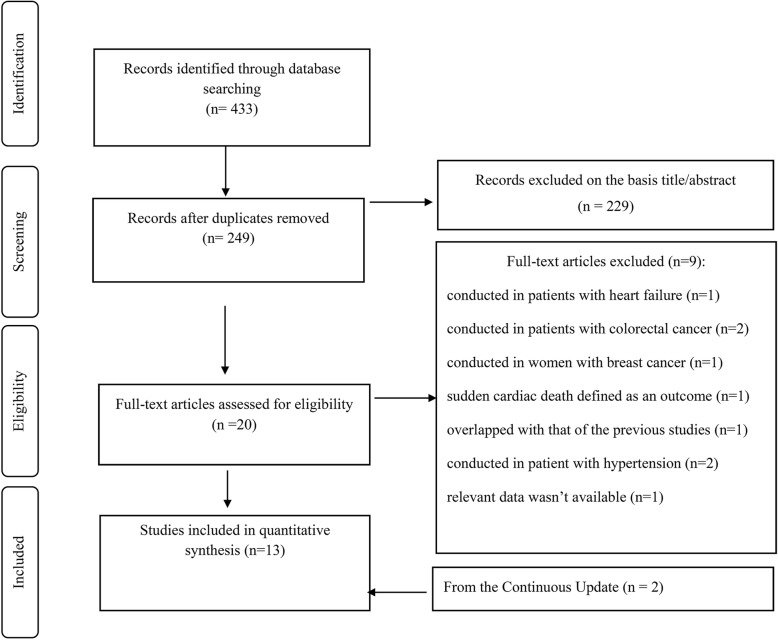
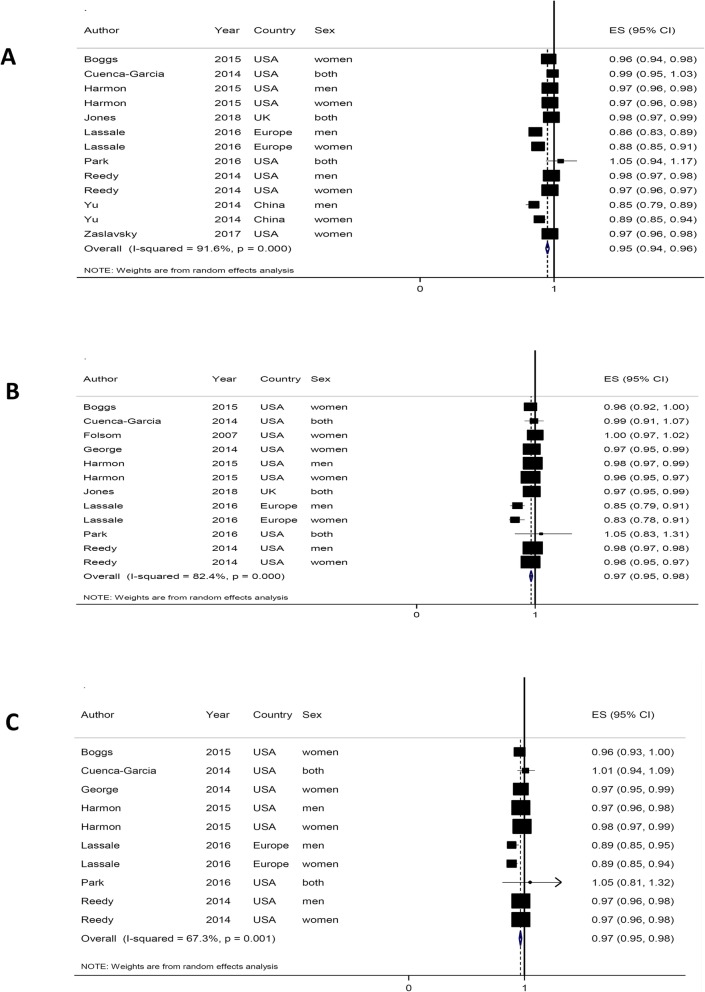
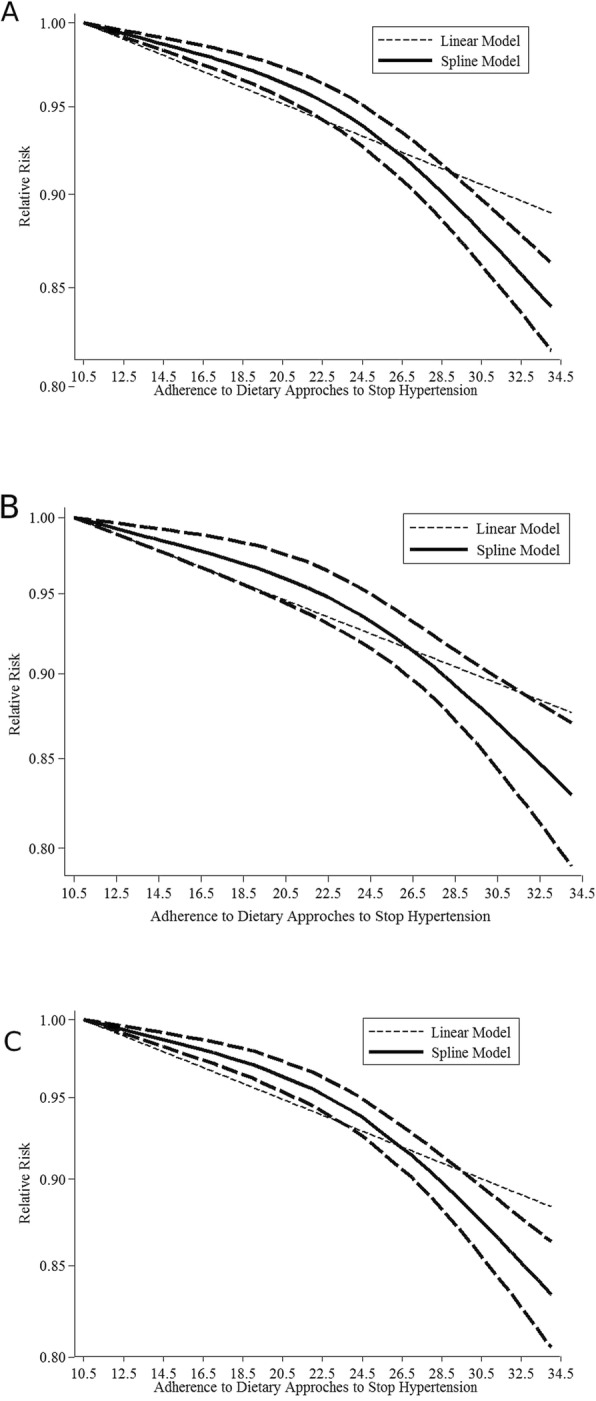
Background: Although previous investigations have proposed an association between Dietary Approaches to Stop Hypertension (DASH)-style diet and lower mortality from chronic diseases, the exposure-response relationship is not clear. The present systematic review and meta-analysis aimed to explore the linear and non-linear dose-response association between adherence to the DASH diet and all-cause and cause-specific mortality. Methods: Database search was performed in PubMed, Scopus, and EMBASE for prospective cohort studies investigating the association between adherence to the Dietary Approaches to Stop Hypertension (DASH) diet and risk of mortality. Summary hazard ratios (HRs) and 95% confidence intervals (CI) were estimated with the use of a random-effects model for the linear and nonlinear relationships. The two-stage hierarchical regression model was applied to test the potential non-linear dose-response associations. Results: The inclusion criteria were met by 17 studies (13 publications). The scores reported for adherence to the DASH diet in different studies were converted to a conventional scoring method in which the adherence score might range between 8 to 40. The linear analysis revealed that summary HRs were 0.95 (95% CI: 0.94–0.96, I 2 = 91.6%,n = 14) for all-cause, 0.96 (95% CI: 0.95–0.98, I 2 = 82.4%,n = 12) for CVD, 0.97 (95% CI: 0.96–0.98, I 2 = 0.00%,n = 2) for stroke, and 0.97 (95% CI: 0.95–0.98, I 2 = 63.7%,n = 12) for cancer mortality per each 5-point increment of adherence to the DASH diet. There was also evidence of non-linear associations between the DASH diet and all-cause and cause-specific mortality as the associations became even more evident when the adherence scores were more than 20 points (P < 0.005). Conclusion: Even the modest adherence to the DASH diet is associated with a lower risk of all-cause and cause-specific mortality. The higher adherence to the diet also strengthens the risk-reducing association. Registration: This review was registered in the international prospective register of systematic reviews (PROSPERO) database (registration ID: CRD42018086500).
Overview
The claims and statistics of this paper haven’t been checked yet.
Free: it reads the open-access text and checks the first 5 claims that cite a source we can check. Create a free account to check every claim.
Integrity signals
Registry
Cites
Statistics
Figures
Verification
Claims the paper makes
The claims and statistics of this paper haven’t been checked yet.
Free: it reads the open-access text and checks the first 5 claims that cite a source we can check. Create a free account to check every claim.
Claims other papers make about this one
Each is checked against this paper’s own text: does it say what the citing paper says it does?
The cited source says what the claim attributes to it.
In the citing paper
“The diet limits sodium intake to 2,300 mg/day and can reduce the risk of cancer,81 cardiovascular risk factors,82 and both all-cause and cause-specific mortality.83”
From Optimal Diet Strategies for Weight Loss and Weight Loss Maintenance (2021) · cites this paper as [83]
Self-check
Percentages, sums and reported differences re-computed from the paper’s own numbers.
The self-check needs the paper’s full text.
Citations
Cites
Bias in meta-analysis detected by a simple, graphical test
Egger, M., Smith, G. D., Schneider, M., & Minder, C. (1997) · BMJ · doi:10.1136/bmj.315.7109.629 · Cited by 56,722
Quantifying heterogeneity in a meta‐analysis
Higgins, J. P. T., & Thompson, S. G. (2002) · Statistics in Medicine · doi:10.1002/sim.1186 · Cited by 36,763
Meta-analysis of Observational Studies in Epidemiology<SUBTITLE>A Proposal for Reporting</SUBTITLE>
Stroup, D. F. (2000) · JAMA · doi:10.1001/jama.283.15.2008 · Cited by 20,623
Sacks, F. M., Svetkey, L. P., Vollmer, W. M., Appel, L. J., Bray, G. A., Harsha, D., Obarzanek, E., Conlin, P. R., Miller, E. R., Simons-Morton, D. G., et al. (2001) · New England Journal of Medicine · doi:10.1056/nejm200101043440101 · Cited by 5,638 · cited 3×
“It is mentioned that the DASH diet might be a stronger predictor of disease risk compared to its components [6, 7].”
BackgroundDietary pattern analysis: a new direction in nutritional epidemiology
Hu, F. B. (2002) · Current Opinion in Lipidology · doi:10.1097/00041433-200202000-00002 · Cited by 4,029 · cited 1×
“Dietary patterns are preferred to individual nutrients, food items, or food groups [3]; because it is proposed that dietary patterns provide a more comprehensive insight into relationships between diet and disease [4].”
BackgroundMozaffarian, D. (2016) · Circulation · doi:10.1161/circulationaha.115.018585 · Cited by 2,216 · cited 2×
“These compounds are inversely associated with the risk of cancers, CVD, and other chronic diseases [61, 62].”
Wang, X., Ouyang, Y., Liu, J., Zhu, M., Zhao, G., Bao, W., & Hu, F. B. (2014) · BMJ · doi:10.1136/bmj.g4490 · Cited by 1,596
Adherence to a DASH-Style Diet and Risk of Coronary Heart Disease and Stroke in Women
Fung, T. T. (2008) · Archives of Internal Medicine · doi:10.1001/archinte.168.7.713 · Cited by 1,567 · cited 4×
“[28] mainly focused on dietary food groups”
BackgroundMethodInfluentialHealth-promoting components of fruits and vegetables in the diet.
Liu, R. H. (2013) · Advances in Nutrition · doi:10.3945/an.112.003517 · Cited by 1,310 · cited 1×
“These compounds are inversely associated with the risk of cancers, CVD, and other chronic diseases [61, 62].”
BackgroundGeneralized Least Squares for Trend Estimation of Summarized Dose–response Data
Orsini, N., Bellocco, R., & Greenland, S. (2006) · The Stata Journal: Promoting communications on statistics and Stata · doi:10.1177/1536867x0600600103 · Cited by 1,241
Schwingshackl, L., & Hoffmann, G. (2015) · Journal of the Academy of Nutrition and Dietetics · doi:10.1016/j.jand.2014.12.009 · Cited by 1,022 · cited 2×
“vational studies exhibited an inverse association between adherence to the DASH diet and risk of health outcomes [30, 31], they only performed a high vs.”
BackgroundResultAune, D., Keum, N., Giovannucci, E., Fadnes, L. T., Boffetta, P., Greenwood, D. C., Tonstad, S., Vatten, L. J., Riboli, E., & Norat, T. (2016) · BMJ · doi:10.1136/bmj.i2716 · Cited by 1,013
Added sugar intake and cardiovascular diseases mortality among US adults
Yang, Q., Zhang, Z., Gregg, E. W., Flanders, W. D., Merritt, R., & Hu, F. B. (2014) · JAMA Internal Medicine · doi:10.1001/jamainternmed.2013.13563 · Cited by 947
Foods, Nutrients, and Dietary Patterns: Interconnections and Implications for Dietary Guidelines
Tapsell, L. C., Neale, E. P., Satija, A., & Hu, F. B. (2016) · Advances in Nutrition · doi:10.3945/an.115.011718 · Cited by 711
Reedy, J., Krebs-Smith, S. M., Miller, P. E., Liese, A. D., Kahle, L. L., Park, Y., & Subar, A. F. (2014) · The Journal of Nutrition · doi:10.3945/jn.113.189407 · Cited by 677
Siervo, M., Lara, J., Chowdhury, S., Ashor, A., Oggioni, C., & Mathers, J. C. (2015) · British Journal of Nutrition · doi:10.1017/s0007114514003341 · Cited by 656
Hamling, J., Lee, P., Weitkunat, R., & Ambühl, M. (2008) · Statistics in Medicine · doi:10.1002/sim.3013 · Cited by 651
Schwingshackl, L., Schwedhelm, C., Hoffmann, G., Lampousi, A.-M., Knüppel, S., Iqbal, K., Bechthold, A., Schlesinger, S., & Boeing, H. (2017) · The American Journal of Clinical Nutrition · doi:10.3945/ajcn.117.153148 · Cited by 600
Meta-analysis of Epidemiologic Dose-Response Data
Berlin, J. A., Longnecker, M. P., & Greenland, S. (1993) · Epidemiology · doi:10.1097/00001648-199305000-00005 · Cited by 571
The Global Burden of Disease Study and the Preventable Burden of NCD
Benziger, C. P., Roth, G. A., & Moran, A. E. (2016) · Global Heart · doi:10.1016/j.gheart.2016.10.024 · Cited by 547
Mellen, P. B., Gao, S. K., Vitolins, M. Z., & Goff, D. C. (2008) · Archives of Internal Medicine · doi:10.1001/archinternmed.2007.119 · Cited by 444
Salehi-Abargouei, A., Maghsoudi, Z., Shirani, F., & Azadbakht, L. (2013) · Nutrition · doi:10.1016/j.nut.2012.12.018 · Cited by 429 · cited 1×
“The previous systematic reviews have shown that the better compliance with the DASH dietary pattern could reduce systolic and diastolic blood pressure, total cholesterol and low-density lipoprotein (LDL) [16, 17], body weight and fat [18]; and also improve glycemic control [19], and serum inflammatory markers [20]; th…”
BackgroundSelf-citationSaneei, P., Salehi-Abargouei, A., Esmaillzadeh, A., & Azadbakht, L. (2014) · Nutrition, Metabolism and Cardiovascular Diseases · doi:10.1016/j.numecd.2014.06.008 · Cited by 419
Self-citationAune, D., Keum, N., Giovannucci, E., Fadnes, L. T., Boffetta, P., Greenwood, D. C., Tonstad, S., Vatten, L. J., Riboli, E., & Norat, T. (2016) · BMC Medicine · doi:10.1186/s12916-016-0730-3 · Cited by 401
Liese, A. D., Krebs-Smith, S. M., Subar, A. F., George, S. M., Harmon, B. E., Neuhouser, M. L., Boushey, C. J., Schap, T. E., & Reedy, J. (2015) · The Journal of Nutrition · doi:10.3945/jn.114.205336 · Cited by 400
Harmon, B. E., Boushey, C. J., Shvetsov, Y. B., Ettienne, R., Reedy, J., Wilkens, L. R., Le Marchand, L., Henderson, B. E., & Kolonel, L. N. (2015) · The American Journal of Clinical Nutrition · doi:10.3945/ajcn.114.090688 · Cited by 364 · cited 3×
“Eight prospective cohort studies provided data for the non-linear dose-response relationship analysis [22, 23, 36, 38, 39, 41].”
BackgroundMethodA global view on the development of non communicable diseases
Wagner, K.-H., & Brath, H. (2012) · Preventive Medicine · doi:10.1016/j.ypmed.2011.11.012 · Cited by 362
Schwingshackl, L., Knüppel, S., Schwedhelm, C., Hoffmann, G., Missbach, B., Stelmach-Mardas, M., Dietrich, S., Eichelmann, F., Kontopanteils, E., Iqbal, K., et al. (2016) · Advances in Nutrition · doi:10.3945/an.116.013052 · Cited by 360
Aune, D., Lau, R., Chan, D. S. M., Vieira, R., Greenwood, D. C., Kampman, E., & Norat, T. (2011) · Gastroenterology · doi:10.1053/j.gastro.2011.04.013 · Cited by 265
George, S. M., Ballard-Barbash, R., Manson, J. E., Reedy, J., Shikany, J. M., Subar, A. F., Tinker, L. F., Vitolins, M., & Neuhouser, M. L. (2014) · American Journal of Epidemiology · doi:10.1093/aje/kwu173 · Cited by 257
FOLSOM, A., PARKER, E., & HARNACK, L. (2007) · American Journal of Hypertension · doi:10.1016/j.amjhyper.2006.09.003 · Cited by 254 · cited 3×
“Folsom 2007 [37] Iowa Women s Health Study, USA 16 CVD (1121) Validated FFQ(1), 127, baseline 11 components: Total grains, whole grains, fruits, vegetables, total dairy, total meats, nuts, seeds and dry beans, sweets, sodium, total fats, saturated fatty acids.”
BackgroundSoltani, S., Shirani, F., Chitsazi, M. J., & Salehi‐Abargouei, A. (2016) · Obesity Reviews · doi:10.1111/obr.12391 · Cited by 251 · cited 1×
“The previous systematic reviews have shown that the better compliance with the DASH dietary pattern could reduce systolic and diastolic blood pressure, total cholesterol and low-density lipoprotein (LDL) [16, 17], body weight and fat [18]; and also improve glycemic control [19], and serum inflammatory markers [20]; th…”
BackgroundSelf-citationSoltani, S., Chitsazi, M. J., & Salehi-Abargouei, A. (2018) · Clinical Nutrition · doi:10.1016/j.clnu.2017.02.018 · Cited by 220
Self-citationShirani, F., Salehi-Abargouei, A., & Azadbakht, L. (2013) · Nutrition · doi:10.1016/j.nut.2012.12.021 · Cited by 204 · cited 2×
“The previous systematic reviews have shown that the better compliance with the DASH dietary pattern could reduce systolic and diastolic blood pressure, total cholesterol and low-density lipoprotein (LDL) [16, 17], body weight and fat [18]; and also improve glycemic control [19], and serum inflammatory markers [20]; th…”
BackgroundSelf-citationThe DASH Diet, Sodium Intake and Blood Pressure Trial (DASH-Sodium)
SVETKEY, L. P., SACKS, F. M., OBARZANEK, E., VOLLMER, W. M., APPEL, L. J., LIN, P.-H., KARANJA, N. M., HARSHA, D. W., BRAY, G. A., AICKIN, M., et al. (1999) · Journal of the American Dietetic Association · doi:10.1016/s0002-8223(99)00423-x · Cited by 203 · cited 3×
“It is mentioned that the DASH diet might be a stronger predictor of disease risk compared to its components [6, 7].”
BackgroundWu, L., & Sun, D. (2017) · Scientific Reports · doi:10.1038/srep41317 · Cited by 200
Levitan, E. B., Lewis, C. E., Tinker, L. F., Eaton, C. B., Ahmed, A., Manson, J. E., Snetselaar, L. G., Martin, L. W., Trevisan, M., Howard, B. V., et al. (2013) · Circulation: Heart Failure · doi:10.1161/circheartfailure.113.000495 · Cited by 199
Günther, A. L. B., Liese, A. D., Bell, R. A., Dabelea, D., Lawrence, J. M., Rodriguez, B. L., Standiford, D. A., & Mayer-Davis, E. J. (2009) · Hypertension · doi:10.1161/hypertensionaha.108.116665 · Cited by 181
Chen, G.-C., Tong, X., Xu, J.-Y., Han, S.-F., Wan, Z.-X., Qin, J.-B., & Qin, L.-Q. (2016) · The American Journal of Clinical Nutrition · doi:10.3945/ajcn.115.122432 · Cited by 167
Dixon, L. B., Subar, A. F., Peters, U., Weissfeld, J. L., Bresalier, R. S., Risch, A., Schatzkin, A., & Hayes, R. B. (2007) · The Journal of Nutrition · doi:10.1093/jn/137.11.2443 · Cited by 165
Yu, D., Zhang, X., Xiang, Y., Yang, G., Li, H., Gao, Y., Zheng, W., & Shu, X. (2014) · American Journal of Clinical Nutrition · doi:10.3945/ajcn.113.079194 · Cited by 165
Kant, A. K. (2010) · Applied Physiology, Nutrition, and Metabolism · doi:10.1139/h10-005 · Cited by 163
Dietary Sodium, Potassium, Saturated Fat, Alcohol, and Stroke Mortality
Sasaki, S., Zhang, X.-H., & Kesteloot, H. (1995) · Stroke · doi:10.1161/01.str.26.5.783 · Cited by 125
Parikh, A., Lipsitz, S. R., & Natarajan, S. (2009) · American Journal of Hypertension · doi:10.1038/ajh.2009.10 · Cited by 114
Liu, Q., Cook, N., Bergström, A., & Hsieh, C. (2009) · Computational Statistics & Data Analysis · doi:10.1016/j.csda.2009.05.001 · Cited by 112
Bertoia, M. L., Triche, E. W., Michaud, D. S., Baylín, A., Hogan, J. W., Neuhouser, M. L., Tinker, L. F., Horn, L. V., Waring, M. E., Li, W., et al. (2013) · American Journal of Clinical Nutrition · doi:10.3945/ajcn.112.056135 · Cited by 106
Lassale, C., Gunter, M. J., Romaguera, D., Peelen, L. M., Van der Schouw, Y. T., Beulens, J. W. J., Freisling, H., Muller, D. C., Ferrari, P., Huybrechts, I., et al. (2016) · PLOS ONE · doi:10.1371/journal.pone.0159025 · Cited by 106
Izano, M. A., Fung, T. T., Chiuve, S. S., Hu, F. B., & Holmes, M. D. (2013) · Nutrition and Cancer · doi:10.1080/01635581.2013.804939 · Cited by 98
Post Diagnosis Diet Quality and Colorectal Cancer Survival in Women
Fung, T. T., Kashambwa, R., Sato, K., Chiuve, S. E., Fuchs, C. S., Wu, K., Giovannucci, E., Ogino, S., Hu, F. B., & Meyerhardt, J. A. (2014) · PLoS ONE · doi:10.1371/journal.pone.0115377 · Cited by 97
Jones, N. R. V., Forouhi, N. G., Khaw, K.-T., Wareham, N. J., & Monsivais, P. (2018) · European Journal of Epidemiology · doi:10.1007/s10654-017-0354-8 · Cited by 78
Jacobs, S., Harmon, B. E., Ollberding, N. J., Wilkens, L. R., Monroe, K. R., Kolonel, L. N., Marchand, L. L., Boushey, C. J., & Maskarinec, G. (2016) · Journal of Nutrition · doi:10.3945/jn.116.234237 · Cited by 73
Diaz, K. M., Booth, J. N., Calhoun, D. A., Irvin, M. R., Howard, G., Safford, M. M., Muntner, P., & Shimbo, D. (2014) · Hypertension · doi:10.1161/hypertensionaha.114.03565 · Cited by 72
Kiage, J. N., Merrill, P. D., Robinson, C., Cao, Y., Malik, T. A., Hundley, B. C., Lao, P., Judd, S. E., Cushman, M., Howard, V. J., et al. (2013) · American Journal of Clinical Nutrition · doi:10.3945/ajcn.112.049064 · Cited by 71
Milajerdi, A., Namazi, N., Larijani, B. A., & Azadbakht, L. (2018) · Nutrition and Cancer · doi:10.1080/01635581.2018.1502331 · Cited by 69
Higher Diet Quality Is Inversely Associated with Mortality in African-American Women1–4
Boggs, D. A., Ban, Y., Palmer, J. R., & Rosenberg, L. A. (2015) · Journal of Nutrition · doi:10.3945/jn.114.195735 · Cited by 61
Biesbroek, S., Verschuren, W. M. M., Boer, J. M. A., van de Kamp, M. E., van der Schouw, Y. T., Geelen, A., Looman, M., & Temme, E. H. M. (2017) · British Journal of Nutrition · doi:10.1017/s0007114517001878 · Cited by 60
Diet Quality and Mortality Risk in Metabolically Obese Normal-Weight Adults
Park, Y., Fung, T. T., Steck, S. E., Zhang, J., Hazlett, L. J., Han, K., Lee, S., & Merchant, A. T. (2016) · Mayo Clinic Proceedings · doi:10.1016/j.mayocp.2016.06.022 · Cited by 57
Cuenca‐García, M., Artero, E. G., Sui, X., Lee, D.-C., Hébert, J. R., & Blair, S. N. (2014) · Annals of Epidemiology · doi:10.1016/j.annepidem.2014.01.007 · Cited by 55
Ali Mohsenpour, M., Fallah-Moshkani, R., Ghiasvand, R., Khosravi-Boroujeni, H., Mehdi Ahmadi, S., Brauer, P., & Salehi-Abargouei, A. (2019) · Journal of the American College of Nutrition · doi:10.1080/07315724.2018.1554460 · Cited by 51 · cited 2×
“vational studies exhibited an inverse association between adherence to the DASH diet and risk of health outcomes [30, 31], they only performed a high vs.”
BackgroundResultSelf-citationLow diet quality and the risk of stroke mortality: the multiethnic cohort study
Aigner, A., Becher, H., Jacobs, S., Wilkens, L. R., Boushey, C. J., Marchand, L. L., Haiman, C. A., & Maskarinec, G. (2018) · European Journal of Clinical Nutrition · doi:10.1038/s41430-018-0103-4 · Cited by 50
Zaslavsky, O., Zelber‐Sagi, S., Hébert, J. R., Steck, S. E., Shivappa, N., Tabung, F. K., Wirth, M. D., Bu, Y., Shikany, J. M., Orchard, T., et al. (2017) · American Journal of Clinical Nutrition · doi:10.3945/ajcn.116.151530 · Cited by 49
Low Diet Quality and the Risk of Stroke Mortality: The Multiethnic Cohort Study
Aigner, A., Becher, H., Jacobs, S., Wilkens, L., Boushey, C. J., Marchand, L. L., Haiman, C. A., & Maskarinec, G. (2017) · Das Gesundheitswesen · doi:10.1055/s-0037-1605857 · Cited by 3
Research works printed but not linked: 2
- Wells G, editor SBOD. The Newcastle-Ottawa Scale (NOS) for Assessing the Quality of non-randomised Studies in Meta-analysis. Proceedings or the Third Symposium on Systematic Reviews beyond the Basics; 2000.
- Djousse L Petrone A Gaziano J Alternate healthy eating index, Mediterranean and DASH dietary patterns and risk of death in the Physician’s Health Study Cardiology (Switzerland) 2014 128 426
Cited by
Mancia, G., Kreutz, R., Brunström, M., Burnier, M., Grassi, G., Januszewicz, A., Muiesan, M. L., Tsioufis, K., Agabiti-Rosei, E., Algharably, E. A. E., et al. (2023) · Journal of Hypertension · doi:10.1097/hjh.0000000000003480 · Cited by 3,473
Diretrizes Brasileiras de Hipertensão Arterial – 2020
Barroso, W. K. S., Rodrigues, C. I. S., Bortolotto, L. A., Mota-Gomes, M. A., Brandão, A. A., Feitosa, A. D. D. M., Machado, C. A., Poli-de-Figueiredo, C. E., Amodeo, C., Mion, D., et al. (2021) · Arquivos Brasileiros de Cardiologia · doi:10.36660/abc.20201238 · Cited by 1,068
Aleksandrova, K., Koelman, L., & Rodrigues, C. E. (2021) · Redox Biology · doi:10.1016/j.redox.2021.101869 · Cited by 505
Okamura, T., Tsukamoto, K., Arai, H., Fujioka, Y., Ishigaki, Y., Koba, S., Ohmura, H., Shoji, T., Yokote, K., Yoshida, H., et al. (2024) · Journal of Atherosclerosis and Thrombosis · doi:10.5551/jat.gl2022 · Cited by 302
Chinese Guidelines for the Prevention and Treatment of Hypertension (2024 revision)
Wang, J. (2025) · 老年心脏病学杂志:英文版 · doi:10.26599/1671-5411.2025.01.008 · Cited by 198
Metadata
- Authors
- Soltani, S., Arablou, T., Jayedi, A., & Salehi-Abargouei, A.
- Affiliations
- Iran University of Medical Sciences (IR)
- Semnan University of Medical Sciences (IR)
- Venue
- Nutrition Journal
- Published
- 2020-04-22
- Volume
- 19
- Issue
- 1
- Pages
- 37-37
- ISSN
- 1475-2891 (ISSN-L)
- PMC
- PMC7178992
- OpenAlex
- W3019131542
- Cited by
- 179
- References
- 62
- Citations by year
- 2026: 22 · 2025: 37 · 2024: 27 · 2023: 33 · 2022: 39 · 2021: 15 · 2020: 6
- FWCI
- 3.89
- Type
- journal article
- Language
- en
- Open access
- gold
- doi.org
- Licence
- cc-by
- creativecommons.org/licenses/by/4.0/ (tdm)
- creativecommons.org/licenses/by/4.0/ (vor)
- Locations
- Nutrition Journal (publishedVersion, cc-by)
- PubMed Central (publishedVersion, cc-by)
- PubMed (publishedVersion)
- DOAJ (DOAJ: Directory of Open Access Journals) (submittedVersion, cc-by-sa)
- Funders
- Nutrition and Food Security research center, Shahid Sadoughi University of Medical Sciences
- Topics
- Health Sciences › Medicine › Public Health, Environmental and Occupational Health › Nutritional Studies and Diet
- Health Sciences › Nursing › Nutrition and Dietetics › Sodium Intake and Health
- Health Sciences › Medicine › Cardiology and Cardiovascular Medicine › Blood Pressure and Hypertension Studies
- Keywords
- DASH diet, dietary adherence, all-cause mortality, cause-specific mortality, cardiovascular mortality, stroke mortality, cancer mortality, dose-response relationship, nonlinear relationship, diet and mortality, hypertension prevention, Mediterranean diet, dietary habits
- MeSH terms
- Dietary Approaches To Stop Hypertension, Cardiovascular Diseases, Humans, Neoplasms, Patient Compliance, Prospective Studies, Risk, Cohort Studies, Proportional Hazards Models, Stroke
About these checks
Registry, retraction, Cites and statistics results are computed, not judged, with one exception: a printed reference that no index lists is read once by a model before it counts as a citation error. Claims are extracted by a model and kept only when their quote appears verbatim in the text; each cited source is then checked, with a model’s help, for whether it says what the claim relies on. Those verdicts can be wrong — read the claim’s quote and the cited source before relying on one.
Statistics and arithmetic are recomputed, not judged.
Confidence bands are shown only for fields calibrated on our annotated test set. None is calibrated yet, so no band is shown.
What counts as a claim ›How we measure confidence ›How we check this ›
Are you an author, or do you see a problem with this page? Request a review
Data sources
Bibliographic data: Semantic Scholar, OpenAlex, Crossref.
Contains information from the Semantic Scholar Academic Graph Datasets, made available under the ODC Attribution License (ODC-BY 1.0).
Semantic Scholar’s data is described in: Kinney, R., et al. (2023). The Semantic Scholar Open Data Platform. arXiv:2301.10140.
