

Processing of collagen based biomaterials and the resulting materials properties
Open accessThe DOI matches its Crossref record; 514 of the 514 references it cites were found in a registry or an index.
Abstract
Collagen, the most abundant extracellular matrix protein in animal kingdom belongs to a family of fibrous proteins, which transfer load in tissues and which provide a highly biocompatible environment for cells. This high biocompatibility makes collagen a perfect biomaterial for implantable medical products and scaffolds for in vitro testing systems. To manufacture collagen based solutions, porous sponges, membranes and threads for surgical and dental purposes or cell culture matrices, collagen rich tissues as skin and tendon of mammals are intensively processed by physical and chemical means. Other tissues such as pericardium and intestine are more gently decellularized while maintaining their complex collagenous architectures. Tissue processing technologies are organized as a series of steps, which are combined in different ways to manufacture structurally versatile materials with varying properties in strength, stability against temperature and enzymatic degradation and cellular response. Complex structures are achieved by combined technologies. Different drying techniques are performed with sterilisation steps and the preparation of porous structures simultaneously. Chemical crosslinking is combined with casting steps as spinning, moulding or additive manufacturing techniques. Important progress is expected by using collagen based bio-inks, which can be formed into 3D structures and combined with live cells. This review will give an overview of the technological principles of processing collagen rich tissues down to collagen hydrolysates and the methods to rebuild differently shaped products. The effects of the processing steps on the final materials properties are discussed especially with regard to the thermal and the physical properties and the susceptibility to enzymatic degradation. These properties are key features for biological and clinical application, handling and metabolization.
Overview
The claims and statistics of this paper haven’t been checked yet.
Free: it reads the open-access text and checks the first 5 claims that cite a source we can check. Create a free account to check every claim.
Integrity signals
Registry
Cites
Statistics
Figures
Verification
Claims the paper makes
The claims and statistics of this paper haven’t been checked yet.
Free: it reads the open-access text and checks the first 5 claims that cite a source we can check. Create a free account to check every claim.
Claims other papers make about this one
Each is checked against this paper’s own text: does it say what the citing paper says it does?
The source backs part of the claim, not all of it — or backs it for a different population, condition or comparison.
In the citing paper
“which can be associated with the reduction of lipid-soluble components, leaving behind only the denatured ECM molecules and water-soluble substances [65].”
From Effects of Various Decellularization Methods for the Development of Decellularized Extracellular Matrix from Tilapia (Oreochromis niloticus) Viscera (2024) · cites this paper as [65]
Experimental — accuracy not yet measured
Self-check
Percentages, sums and reported differences re-computed from the paper’s own numbers.
The self-check needs the paper’s full text.
Citations
Cites
1 retracted
Thompson, J. A., Haudenschild, C. C., Anderson, K. D., DiPietro, J. M., Anderson, W. F., & Maciag, T. (1989) · Proceedings of the National Academy of Sciences · doi:10.1073/pnas.86.20.7928 · Cited by 138
RetractedMolecular Mechanisms of Stress-Responsive Changes in Collagen and Elastin Networks in Skin
Aziz, J., Shezali, H., Radzi, Z., Yahya, N. A., Abu Kassim, N. H., Czernuszka, J., & Rahman, M. T. (2016) · Skin Pharmacology and Physiology · doi:10.1159/000447017 · Cited by 7,323
Collagen Structure and Stability
Shoulders, M. D., & Raines, R. T. (2009) · Annual Review of Biochemistry · doi:10.1146/annurev.biochem.77.032207.120833 · Cited by 3,923 · cited 1×
“Oxidation of lysine and hydroxylysine by lysyloxidase initiates the formation of the various natural enzyme-derived crosslinks [62, 508].”
BackgroundPolymers for 3D Printing and Customized Additive Manufacturing
Ligon, S. C., Liska, R., Stampfl, J., Gurr, M., & Mülhaupt, R. (2017) · Chemical Reviews · doi:10.1021/acs.chemrev.7b00074 · Cited by 3,741 · cited 1×
“Though metals and ceramics are processed as well, polymers are the most intensively utilized materials class [283].”
BackgroundAn overview of tissue and whole organ decellularization processes
Crapo, P. M., Gilbert, T. W., & Badylak, S. F. (2011) · Biomaterials · doi:10.1016/j.biomaterials.2011.01.057 · Cited by 3,591 · cited 7×
“The exact impact is unclear, however [20].”
BackgroundInfluentialMatrix Metalloproteinases: A Review
Birkedal-Hansen, H., Moore, W. G. I., Bodden, M. K., Windsor, L. J., Birkedal-Hansen, B., DeCarlo, A., & Engler, J. A. (1993) · Critical Reviews in Oral Biology & Medicine · doi:10.1177/10454411930040020401 · Cited by 2,970
Perfusion-decellularized matrix: using nature's platform to engineer a bioartificial heart
Ott, H. C., Matthiesen, T. S., Goh, S.-K., Black, L. D., Kren, S. M., Netoff, T. I., & Taylor, D. A. (2008) · Nature Medicine · doi:10.1038/nm1684 · Cited by 2,650 · cited 1×
“These investigations aimed to save the complex structures of the organs, especially the vascular networks and the mechanical stability of the constructs [18, 23, 214, 218, 260, 261] and others.”
BackgroundThe status, challenges, and future of additive manufacturing in engineering
Gao, W., Zhang, Y., Ramanujan, D., Ramani, K., Chen, Y., Williams, C. B., Wang, C. C. L., Shin, Y. C., Zhang, S., & Zavattieri, P. D. (2015) · Computer-Aided Design · doi:10.1016/j.cad.2015.04.001 · Cited by 2,631
Electrospinning of Collagen Nanofibers
Matthews, J. A., Wnek, G. E., Simpson, D. G., & Bowlin, G. L. (2002) · Biomacromolecules · doi:10.1021/bm015533u · Cited by 2,251
Decellularization of tissues and organs
Gilbert, T. W., Sellaro, T. L., & Badylak, S. F. (2006) · Biomaterials · doi:10.1016/j.biomaterials.2006.02.014 · Cited by 2,222 · cited 2×
“Nevertheless, after one or repeated freeze–thaw cycles, decellularization comprises an intensive treatment with complexing agents, surfactants, also alkaline and acids and possibly enzymes [3, 4, 20, 21].”
Background
Research works printed but not linked: 9
- 29. International Consensus. Acellular matrices for the treatment of wounds-an expert working group review. London: Wounds International; 2010.
- 68. Burjanadze T, Kiziria E, Mikeladze S. Molecular mechanism for the phylogenetic change of thermostability of fibril- forming collagen. Evidence that (Gly-X-Hyp) triplets are main factors determining stability of collagen. Bull Georg Natl Acad Sci. 2010;4:137-41.
- Savic Z, Savic I. Sausage Casings. 2nd ed. Wien: VICTUS International; 2016.
- Landmann W. The machines in the tannery: a review of leather produciong machinery and equipment in current use. Liverpool: World Trades Pub; 2003.
- Nageotte J. Coagulation fibrillaire in vitro du collagène dissous dans un acide dilué. Hebd Seances Acad Sci. 1927;184:115.
- Kühn K. The classical collagens: types I, II and III in structure and function of collagen types. New York: Academic Press; 1987. p. 1–42.
- Schroepfer M. Influences on thermal stability of fibrous collagen—calorimetric investigations. In: Talk at 5th Freiberg collagen symposium. Freiberg. 2012.
- Oetjen G-W, Haseley P. Transplants, collagen. Weinheim: Wiley-VCH; 2004. p. 333–40.
- Ruef C, Harbarth S, Henry A, Pittet D. Sterilisation mit ethylenoxid: anwendungen und grenzen, swiss-noso–nosokomiale infekt. Spit. 1997;4:3–6.
Cited by
Items 401–500 of 538
Shabbir, A., & Gashti, M. P. (2026) · ACS Applied Bio Materials · doi:10.1021/acsabm.6c00711 · Cited by 1
From In Vivo Synthesis to In Vitro Drug Delivery Device Formation
Joshi, R. V. (2021) · SpringerBriefs in applied sciences and technology · doi:10.1007/978-3-030-63817-7_2 · Cited by 1
Trends in Functional Biomaterials in Tissue Engineering and Regenerative Medicine
Arora, D., Pant, P., & Sharma, P. K. (2021) · Springer eBooks · doi:10.1007/978-981-16-0002-9_7 · Cited by 1
Koukaeyan, M., Ahmadi, R., Nilforoushzadeh, M. A., & Zare, S. (2022) · یافته · doi:10.32592/yafteh.2022.24.1.2 · Cited by 1
The use of collagen fleece for healing purposes
Jelušić, D., & Siber, S. (2022) · International Journal of Dental Biomaterials Research · doi:10.56939/dbr221020j · Cited by 1
Concentration-mediated Folding and Unfolding of Collagen Triple Helix
Sun, X., Xiao, J., Fu, C., & Li, W. (2022) · Protein and Peptide Letters · doi:10.2174/0929866530666221125163837 · Cited by 1
Zhao, C., Xinlei, J., Dong, F., Zhang, M., Li, T., & Wang, H. (2022) · PubMed · Cited by 2
Metal-Assembled Collagen Peptide Microflorettes as Magnetic Resonance Imaging Agents
Ernenwein, D., Geisler, I. M., Pavlishchuk, A. V., & Chmielewski, J. A. (2023) · Molecules · doi:10.3390/molecules28072953 · Cited by 1
Thermosensitive and pH-sensitive Drug Release from Taxifolin-Containing Collagen-Acrylic Hydrogels
Luneva, O., Bikova, K., Kashurin, A. I., Motovilov, V. V., & Uspenskaya, M. V. (2022) · IEEE-EMBS Conference on Biomedical Engineering and Sciences · doi:10.1109/iecbes54088.2022.10079601 · Cited by 1
“Collagen is able to create the protective moistureretaining layer on the skin, moisturizing it and maintaining the water-lipid balance [7].”
BackgroundViable tendon neotissue from adult adipose-derived multipotent stromal cells
Taguchi, T., Lopez, M. J., & Takawira, C. (2024) · Frontiers in Bioengineering and Biotechnology · doi:10.3389/fbioe.2023.1290693 · Cited by 1
“Collagen type I (COLI) comprises 60% – 80% of tendon and ligament structure, and there are numerous commercially available, FDA-approved formulations (Cockerham and Hsu, 2009; Longo et al., 2010; Snedeker and Foolen, 2017; Meyer, 2019).”
BackgroundIchise, S. F., & Koide, T. (2024) · Macromolecular Bioscience · doi:10.1002/mabi.202300553 · Cited by 1
Exploring the application of poly(1,2-ethanediol citrate)/polylactide nonwovens in cell culturing
Bandzerewicz, A., Howis, J., Wierzchowski, K., Šlouf, M., Hodan, J., Denis, P., Gołofit, T., Pilarek, M., & Gadomska‐Gajadhur, A. (2024) · Frontiers in Bioengineering and Biotechnology · doi:10.3389/fbioe.2024.1332290 · Cited by 2
“At the same time, the scaffold will degrade into products absorbed and metabolized by the body (Ikada, 2006; Chaudhari et al., 2016; Caddeo, Bof fi to, and Sartori, 2017; Meyer, 2019; Sharma et al., 2019; Qi et al., 2022).”
BackgroundDerivatives of Structural Proteins
Rajan, D. P. (2024) · Springer eBooks · doi:10.1007/978-981-97-2562-5_4 · Cited by 1
Qadir, M. B., Khaliq, Z., Tahir, R., & Javaid, A. (2024) · Elsevier eBooks · doi:10.1016/b978-0-323-91194-8.00009-9 · Cited by 1
Tissue-Specific Applications of Biotextile Collagen Scaffolds
Zhang, F., Zha, D., Huang, Y., Deshpande, M. V., He, T., Chen, J., Bambharoliya, T., & King, M. W. (2024) · Springer eBooks · doi:10.1007/978-3-031-71563-1_4 · Cited by 1
Sourcing, Extracting, and Processing Collagen Raw Materials
Zhang, F., Zha, D., Huang, Y., Deshpande, M. V., He, T., Chen, J., Bambharoliya, T., & King, M. W. (2024) · Springer eBooks · doi:10.1007/978-3-031-71563-1_2 · Cited by 2
Somasundaram, S., Felix, D., Genasan, K., Kamarul, T., & Raghavendran, H. R. B. (2024) · Regenerative Engineering and Translational Medicine · doi:10.1007/s40883-024-00358-w · Cited by 1
“However, its lack of mechanical strength, structural instability, and rapid biodegradation can limit its use in some tissues [52, 53].”
Xenogeneic Small Intestine Submucosa Surface Modification During Processing for Tissue Engineering
Macagonova, O., Cociug, A., Țaralunga, T., Braniste, T., Vereștiuc, L., & Nacu, V. (2024) · E-Health and Bioengineering Conference (EHB) · doi:10.1109/ehb64556.2024.10805574 · Cited by 1
Kollagene aus wirbellosen Meerestieren
Ehrlich, H. (2024) · Springer eBooks · doi:10.1007/978-3-031-51282-7_25 · Cited by 1
Godoy, E. P., Artioli, L. G., Botticelli, D., Nicoletti, F., Dassatti, L., Bragaglia, M., Nanni, F. M. C., Xavier, S. P., & Silva, E. R. (2025) · Applied Sciences · doi:10.3390/app15042184 · Cited by 1
Collagens from Marine Invertebrates
Ehrlich, H. (2019) · Biologically-inspired systems · doi:10.1007/978-3-319-92483-0_25 · Cited by 1
Schierjott, R. A., Hettich, G., Baxmann, M., Morosato, F., Cristofolini, L., & Grupp, T. M. (2020) · Journal of Orthopaedic Research® · doi:10.1002/jor.24810 · Cited by 1
“32 It is not expected that the described difference in soaking and rinsing has a significant influence on the test results, but that the interface characteristics at the cup ‐ foam and cup ‐ defect filling contact areas, that is, the (remaining) humidity is more relevant for the primary stability.”
Backgroundhttps://jssm.umt.edu.my/wp-content/uploads/sites/51/2021/08/JSSMV16N6-16.pdf
Idris, U. P. S., RAZALI, M. R., Lola, M. S., WAHID, M. E. A., Zainuddin, N. H., Hamid, A. A. K. A., Abdullah, M. T., Terengganu, U. M., Segaran, T. C., ASSAW, S. A. L., et al. (2021) · Journal of Sustainability Science and Management · doi:10.46754/jssm.2021.08.017 · Cited by 1
Collagen Biomaterials for Nerve Tissue Engineering
Eleftheriadou, D., & Phillips, J. B. (2022) · Reference series in biomedical engineering · doi:10.1007/978-3-030-21052-6_20 · Cited by 2
Marine Collagen for Delivery of Therapeutics
Choudhary, S., Sharma, K., Sharma, V., Kumar, V., & Sehgal, R. (2022) · Springer eBooks · doi:10.1007/978-981-16-5374-2_4 · Cited by 3
Tarnutzer, K., Sankar, D. S., Dengjel, J., & Ewald, C. Y. (2022) · bioRxiv (Cold Spring Harbor Laboratory) · doi:10.1101/2022.11.21.517313 · Cited by 1
Decellularized Small Intestine for Full Thickness Burn Wound TreatmentPreprint
Silva, I. V., Rodrigues, I., Sousa, C., Costa, R., Moroni, L., & Oliveira, A. (2026) · bioRxiv (Cold Spring Harbor Laboratory) · doi:10.64898/2026.02.10.704815 · Cited by 2
Collagen Biomaterials for Nerve Tissue Engineering
Eleftheriadou, D., & Phillips, J. B. (2020) · Springer eBooks · doi:10.1007/978-3-030-06217-0_20-1
The effects of soy protein on viscoelastic behaviors of polymer materials
Feikert, P. (2020) · Holmes Museum Of Anthropology (Wichita State University)
Joshi, R. V. (2021) · SpringerBriefs in applied sciences and technology · doi:10.1007/978-3-030-63817-7_3
You, P. Y., Liu, Y. H., Wang, X. Z., Wang, S. W., & Tang, L. (2021) · PubMed Central · doi:10.19723/j.issn.1671-167x.2021.04.026
Avaliação da estrutura e síntese da matriz extracelular do tecido cutâneo em pacientes diabéticos
de Miranda, J. T. (2021) · Digital Library of Theses and Dissertations (Universidade de São Paulo) · doi:10.11606/t.5.2021.tde-11012022-102911
Research Progress of Collagen Material on Wound Healing
刘, 龙. (2022) · Advances in Clinical Medicine · doi:10.12677/acm.2022.124469
Bridging of man and machine: the design and fabrication of next generation bio-hybrid materials
Gomes, C. M. (2020) · Digital Repository Service (Northeastern University) · doi:10.17760/d20397587
Risk prediction and an injectable collagen material for intervertebral disc degeneration
Bradley, J. (2021) · MOspace Institutional Repository (University of Missouri) · doi:10.32469/10355/90004
DUROPLASTY: REVIEW OF MATERIALS AND TECHNIQUES
Kravtsova, A. V., Pyatikop, V. O., & Sergiyenko, Y. G. (2022) · Eastern Ukrainian Medical Journal · doi:10.21272/eumj.2022;10(1):1-16 · Cited by 1
Büyükköroğlu, G., Şenel, B., & Sevim, G. (2022) · Elsevier eBooks · doi:10.1016/b978-0-323-90042-3.00008-6 · Cited by 2
Research Progress on the Effect of Collagen-Related Materials on Burn Wound
吕, 志. (2022) · Advances in Clinical Medicine · doi:10.12677/acm.2022.125672
Hara, M., Tominaga, K., & Mori, H. (2022) · SSRN Electronic Journal · doi:10.2139/ssrn.4051382
Soft tissue healing outcomes in dentistry with acellular dermal collagen matrix
Frosecchi, M., & Angelis, N. D. (2022) · International Journal of Dental Biomaterials Research · doi:10.56939/dbr221028f
de Alencar, F. C., Passos, L., dos Santos, M. K. T., Fonseca, K. L. D. S., Barbosa, L. D. A., Leandro, L. M. D. L., Samonek, F., Ferraz, A. D. V., Neto, Á. F., & Olivier, N. C. (2022) · Pimenta Cultural eBooks · doi:10.31560/pimentacultural/2022.94258.11
Hidroxiapatita decorada com nanopartículas de prata
Lara, N., & Bernardi, M. I. B. (2022) · Pimenta Cultural eBooks · doi:10.31560/pimentacultural/2022.94258.1
Geração e aproveitamento de resíduos das indústrias de fundição
de Souza, A. E., Teixeira, S. R., Cuzzati, F. L., & Afonso, J. V. P. (2022) · Pimenta Cultural eBooks · doi:10.31560/pimentacultural/2022.94258.7
Perovskitas orgânico-inorgânicas de haletos: panorama atual, desafios e perspectivas
Minussi, F. B., & Araújo, E. B. (2022) · Pimenta Cultural eBooks · doi:10.31560/pimentacultural/2022.94258.6
Moreira, F. S., Sarmento, J. S., Nascimento, L. M., Palácio, M. P. S., Garcia, P. H. N., Alves, R. D. S. G., dos Santos, V. S., Vasconcelos, V. M. R., & Nogueira, R. E. F. Q. (2022) · Pimenta Cultural eBooks · doi:10.31560/pimentacultural/2022.94258.4
de Amorim, M. O., Dionizio, M. R. D. S., Júnior, J. C. C. S., Ruiz, Y. L., da Mota, A. J., & Andrade, J. C. S. (2022) · Pimenta Cultural eBooks · doi:10.31560/pimentacultural/2022.94258.2
Fontes vegetais para obtenção de biodiesel e suas principais propriedades físico-químicas
dos Santos, M. J. A., Gomes, K. A. G. G., & Rocha, B. G. (2022) · Pimenta Cultural eBooks · doi:10.31560/pimentacultural/2022.94258.15
Carvalho, B. M., Mingroni, V. H. U. F., Gois, B. H. D. S., Silva, P. L., da Silva, A. A., Corrêa, J. M. B., Roncaselli, L. K. M., Martins, L. M., Filho, L. C. S., Hiorns, R. C., et al. (2022) · Pimenta Cultural eBooks · doi:10.31560/pimentacultural/2022.94258.12
Scaffolds tubulares de polímeros biodegradáveis
Martinez, A. C., Nozaki, A. P. M., Remiro, P. D. F. R., Barbosa, R. M., & Moraes, Â. M. (2022) · Pimenta Cultural eBooks · doi:10.31560/pimentacultural/2022.94258.9
Uso da hidroxiapatita no tratamento superficial de implantes dentários
do Couto, B. G. D. S., & Andrade, J. C. S. (2022) · Pimenta Cultural eBooks · doi:10.31560/pimentacultural/2022.94258.3
Efeito do tempo de sinterização nas características estruturais de cerâmicas magnéticas
Silva, J. M. M., de Oliveira, B. C. C., da Luz, K. S. F., de Brito, A. G. J., Nascimento, M. S. D. S., Silva, R. A., Santos, A. X., & Diniz, V. C. S. (2022) · Pimenta Cultural eBooks · doi:10.31560/pimentacultural/2022.94258.5 · Cited by 1
Géis e sólidos moleculares multi-componentes: princípios e perspectivas tecnológicas
Candido, R. G., Spechotto, J. P. S., & Triboni, E. R. (2022) · Pimenta Cultural eBooks · doi:10.31560/pimentacultural/2022.94258.13
da Silva, J. S., da Silva, W. M., Barbosa, J. N., Júnior, D. B., Nesio, F. B., Cordeiro, E. R., Silva, A. C. D., Hernández, L. I. N., Irmão, M. A. D. S., & Olivier, N. C. (2022) · Pimenta Cultural eBooks · doi:10.31560/pimentacultural/2022.94258.10
Conhecendo a melanina: um pigmento natural do passado para o futuro
Paulin, J. V., & Graeff, C. F. O. (2022) · Pimenta Cultural eBooks · doi:10.31560/pimentacultural/2022.94258.14
Sezer, S., & Elçin, Y. M. (2022) · Communications Faculty of Science University of Ankara Series C Biology Geological Engineering and Geophysical Engineering · doi:10.53447/communc.1147162
Zhang, Y. (2023) · Open Access Victoria University of Wellington | Te Herenga Waka (Figshare) · doi:10.26686/wgtn.21875412
Encapsulation: Advances in cell encapsulation
Saeinasab, M., Davies, E., & Sefat, F. (2023) · Elsevier eBooks · doi:10.1016/b978-0-323-85947-9.00022-4
Application of Medical Collagen Sponge in Burn Surgery
杨, 文. (2023) · Advances in Clinical Medicine · doi:10.12677/acm.2023.134952
López, B. E. R., López, D. A. R., Vasconez, B. S. T., Solís, M. K. Z., & Garrido-Cisneros, E. (2023) · doi:10.29166/odontologia.vol26.n1.2023-e4387
Decellularized Tissue-Derived Materials for Organoid Culture
Willemse, J., & Verstegen, M. M. A. (2023) · Springer eBooks · doi:10.1007/978-3-030-92090-6_50-1
López, B. E. R., López, D., Vasconez, B. S. T., Solís, M. K. Z., & Cisneros, Á. E. G. (2023) · Odontología · doi:10.29166/odontologia.vol25.n1.2023-e4387
de Souza, S. D. A. (2022) · doi:10.47749/t/unicamp.2022.1244737 · Cited by 1
Arguchinskaya, N. V., Beketov, E. E., Isaeva, E. V., Kisel, A. A., Eremin, P. S., Иванов, С. А., Шегай, П. В., & Каприн, А. Д. (2023) · Applied Biochemistry and Microbiology · doi:10.1134/s0003683823080033 · Cited by 1
“It is a family of filamentous glycoproteins of the animal origin [1] and can be extracted from animal tissues [2] or obtained using recombinant cells [3, 4].”
Membranas reabsorvíveis em regenerações ósseas guiadas - uma revisão de literatura
Filho, C. B., & Battistella, M. A. (2023) · Journal of Multidisciplinary Dentistry · doi:10.46875/jmd.v13i1.813
Li, Q., Sun, Y., Zhao, H., Zhang, F., Guo, Y., Chen, X., & Zhao, G. (2023) · Journal of Biomedical Materials Research Part A · doi:10.1002/jbm.a.37663
Fibroblast Embedded 3D Collagen as a Potential Tool for Epithelial Wound Repair
Behning, C., Kelly, L., Smith, E., Ma, Y., & Roberts, L. A. (2024) · American Journal of Undergraduate Research · doi:10.33697/ajur.2023.107
Comparison of three techniques for decellularization of porcine bone-tendon-bone grafts
Sepúlveda-García, J. A., Martínez-Puente, D. H., Ballesteros-Elizondo, R. G., Rodríguez‐Rocha, H., García‐García, A., Soto‐Domínguez, A., Cárdenas, O. S., Vílchez‐Cavazos, F., Montes‐de‐Oca‐Luna, R., & Loera‐Arias, M. D. J. (2024) · Biotechnic & Histochemistry · doi:10.1080/10520295.2024.2350030
“EDTA also fulfills an important post-treatment function, serving as a cleaning solution for detergent molecules and cell remnants that adhere to the matrix by way of metal ions (Gilbert et al. 2006; Meyer 2019).”
Effect of diet, vitamin D3 and other factors on genital prolapse recurrensce
М.В., Л., Kulzhanov, M., Imashkyzy, I. B., Serikkyzy, L., & Barmanasheva, Z. (2024) · International Journal of Public Health Science (IJPHS) · doi:10.11591/ijphs.v13i3.23790
“There are some studies on the disruption of collagen structure, due to its glycolisation [25].”
BackgroundDecellularized Tissue-Derived Materials for Organoid Culture
Willemse, J., & Verstegen, M. M. A. (2024) · Springer eBooks · doi:10.1007/978-3-031-56363-8_50
Biomaterials in dentistry: Advances in tissue engineering for dental restoration
Alonazi, R. S., Alqubaysi, H. A., & Al-Mutairi, N. H. (2024) · International Journal of Health Sciences · doi:10.53730/ijhs.v8ns1.15035 · Cited by 2
Intracellular fate of nanosystems, their degradation and body accumulation
Rizzello, L. (2024) · Elsevier eBooks · doi:10.1016/b978-0-12-823994-0.00011-6 · Cited by 1
Verbytskyi, S., Voitsekhivska, L., Пацера, Н., & Okhrimenko, Y. (2024) · Food Resources · doi:10.31073/foodresources2024-22-01
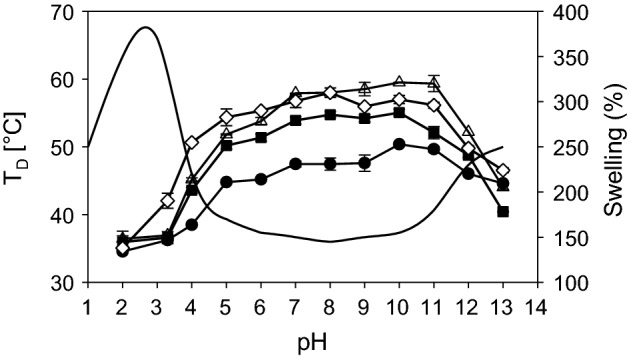
“For example, at pH=3, the denaturation temperature (Td) of collagen decreases to (35-40)°C; at pH=1, Td is 30°C [16, 17].”
BackgroundNanostructured surfaces in biopolymers—characterization of nanostructures
Awais, S., Munir, H., & Najeeb, J. (2024) · Elsevier eBooks · doi:10.1016/b978-0-443-15606-9.00008-5
β-tcp/collagen composite scaffolds facilitate bone remodeling in vertebral plate fusionPreprint
Wang, Z., Liang, X., Xu, S., Wang, L., Hao, B., Ma, J., Wang, X., & He, X. (2024) · Research Square · doi:10.21203/rs.3.rs-4873280/v1
Александрович, М. П., Eremin, P. S., Михайлович, П. Н., Kostromina, E. Y., Greben, A. I., & Ринатовна, Г. И. (2024) · Doklady Biochemistry and Biophysics · doi:10.1134/s1607672924701187
“The popularity of using natural biopolymers as components of tissue-engineered structures is primarily due to their high biocompatibility with human and animal cells and tissues [25–27].”
Bioplastic collagen based materials in reconstructive surgery
Eremin, P. S., Rozhkova, E., Marchenkova, L., & Markov, P. (2024) · Vrach · doi:10.29296/25877305-2024-10-06
Extraction and Characterisation of Type I Collagen from the Scales of Redcoat Sargocentron rubrum
Doğdu, S. A., Turan, C., & Depçi, T. (2024) · Journal of Anatolian Environmental and Animal Sciences · doi:10.35229/jaes.1564496
Vázquez, A. G., Saeidi, T., Verde, J. M., Wanert, F., Spiridon, I. A., Schmid, A., Swanström, L. L., Lilge, L. D., & Bogaards, A. (2024) · Research Square · doi:10.21203/rs.3.rs-5299662/v1
Budiati, T., Suryaningsih, W., Ardiyansyah, M., Cahyani, A., & Utami, M. M. D. (2025) · IOP Conference Series Earth and Environmental Science · doi:10.1088/1755-1315/1446/1/012021
Craniofacial Bone Defects, Cranial Bone Tissue Engineering, and Reconstruction
Çırak, A., & Vargel, İ. (2025) · Tissue repair and reconstruction · doi:10.1007/978-981-96-3808-6_1 · Cited by 1
Production of Collagen Modified PDLA Biofilms
Uzuner‐Demir, A., Aydoğan‐Gemici, M., Polat, O., Ahi, Z. B., Arıcan, F., Özkoç, G., Mert, O., & Kodal, M. (2025) · ChemistrySelect · doi:10.1002/slct.202501064
Nelogi, S., Chindak, S., Puranik, N., Halgekard, A., & Santhosh, V. N. (2025) · Odontology · doi:10.1007/s10266-025-01163-9
The Impacts and Quality of Marine-Collagen-Containing Cream on Facial Skin
Seifzadeh, M., & Raoufi, A. (2025) · Proceedings of the National Academy of Sciences India Section B Biological Sciences · doi:10.1007/s40011-025-01732-6
“It moreover has antimicrobial properties and can anticipate the entrance of microorganisms into injured and harmed tissue [2].”
Biomanufacturability of Squid Ring Teeth Protein Library via Orthogonal High-Throughput ScreeningPreprint
Singhal, K., Allen, B. D., Baer, T. M., & Demirel, M. C. (2025) · bioRxiv (Cold Spring Harbor Laboratory) · doi:10.1101/2025.08.25.672143
Bioactive surface coatings and its types
Shukla, M., Shukla, M., Patel, J. C., & Sharma, S. (2025) · Elsevier eBooks · doi:10.1016/b978-0-443-31606-7.00018-1
Evolving landscape of biomaterials in biomedical applications
Daoud, R. M., AlHoda, M., Esther, A., & Greish, K. F. (2025) · Elsevier eBooks · doi:10.1016/b978-0-443-26657-7.00022-2
Water and solute permeability of membranes used in guided bone regeneration—An in vitro study
NEACSU, R. I., Horia, N. I. T. U., Șipoș, A., Barbu–Tudoran, L., Nicoarǎ, A., Bucur, A., & Ormenișan, A. (2025) · Dental Materials Journal · doi:10.4012/dmj.2024-371 · Cited by 1
Dey, D., Mudaliar, S. B., Mazumder, N., & Prasad, A. S. B. (2025) · Lecture notes in nanoscale science and technology · doi:10.1007/978-3-031-94551-9_9
Vázquez, A. G., Verde, J. M., Wanert, F., Spiridon, I. A., Schmid, A., Saeidi, T., Swanström, L. L., Bown, S. G., Lilge, L. D., & Bogaards, A. (2025) · Cancers · doi:10.3390/cancers17203340
“Damage to elastin and collagen—key components of the extracellular matrix—must be avoided [9,10].”
Self-similar Sequences Yield Higher Protein Expression in a Squid Ring Teeth Protein LibraryPreprint
Demirel, M. C., Singhal, K., Allen, B. D., & Baer, T. M. (2025) · Research Square · doi:10.21203/rs.3.rs-7724325/v1
Jovanović, M., Stajčić, I., Petrović, M., Stojanović, D., Ilić, N., Ibric, S. R., & Uskoković, P. S. (2025) · Journal of Polymers and the Environment · doi:10.1007/s10924-025-03703-4
“A third transition, denoted as T i , was detected between 140 and 190 °C and corresponds to the isomerization of peptide bonds within the gelatin structure, specifically the transformation from trans-to cis - configuration in polypro - line-II helices [69].”
Microarchitecture of the cavernous sinus walls: Clinical implications for pituitary adenomas
Farraj, K. A., Jecko, V., Chasseloup, F., Roblot, P., Liguoro, D., Adam, C., Guimiot, F., Kamenický, P., & Lefevre, E. (2025) · Tissue and Cell · doi:10.1016/j.tice.2025.103226 · Cited by 2
Comparative Structural and Functional Analysis of Micronized Collagen-Based Scaffolds
Dempsey, S. G., Smith, M. J., Danford, A., Wilson, A., Konar, S., Nursalim, Y., Veale, R. W. F., Yong, H., Taghavi, N., Yates, X., et al. (2026) · Tissue Engineering Part A · doi:10.1177/19373341251396168
“2 Reconstituted collagen bioscaffolds are prepared from collagen that has been extracted under relatively harsh conditions to solubilize the collagen, typically as mixtures of collagen I and III.”
Experimental Study of Umbilical Cord Graft and Established Sling Materials for Frontalis Suspension
Cho, D., Lee, M.-K., Lee, S. R., Kwon, J., & Yoon, J. S. (2025) · Tissue Engineering Part A · doi:10.1177/19373341251398493
“This suggests that ethanol treatment may cause irreversible microstructural changes through dehydration-induced protein compaction and intermolecular bonding, 40,41 although partial rehydration could restore some elasticity.”
Prolyl-hydroxylase domain inhibition enhances collagen levels in oral mucosa-derived fibroblasts
Hasson, S. N., Kilimnik, I., Shahar, B., Lifshits, L. A., Sova, M., Bar, D. Z., Adler‐Abramovich, L., Weinberg, E., & Gal, M. (2025) · Biochimica et Biophysica Acta (BBA) - Molecular Basis of Disease · doi:10.1016/j.bbadis.2025.168124 · Cited by 1
Jiang, Y., Cheng, B., Li, L., Duan, X., Wang, J., Wang, M., Yu, Y., Yen, K.-C., Kao, M.-S., Hsieh, D., et al. (2025) · ACS Sustainable Chemistry & Engineering · doi:10.1021/acssuschemeng.5c06326
Kim, Y., Lee, Y., Son, K. E., Lee, S., Kim, S., Park, K., Hyun, H., Choi, S., & Kim, M. S. (2026) · Acta Pharmaceutica Sinica B · doi:10.1016/j.apsb.2026.08.011
Metadata
- Authors
- Meyer, M.
- Affiliations
- Forschungsinstitut für Leder und Kunststoffbahnen (DE)
- Corresponding author
- Meyer, Michael
- ORCID
- Meyer, Michael
- Venue
- BioMedical Engineering OnLine
- Published
- 2019-03-18
- Volume
- 18
- Issue
- 1
- Pages
- 24-24
- ISSN
- 1475-925X (ISSN-L)
- PMC
- PMC6423854
- OpenAlex
- W2939654433
- Semantic Scholar
- 3b421ab6ace8ea0a3cb20ecbde76d6c9ab3688ce
- Cited by
- 539
- References
- 511
- Citations by year
- 2026: 46 · 2025: 63 · 2024: 82 · 2023: 76 · 2022: 119 · 2021: 88 · 2020: 54 · 2019: 10
- FWCI
- 4.30
- Type
- journal article
- Language
- en
- Open access
- gold
- doi.org
- Licence
- cc-by
- creativecommons.org/licenses/by/4.0/ (tdm)
- Locations
- BioMedical Engineering OnLine (publishedVersion, cc-by)
- Europe PMC (PubMed Central) (publishedVersion, cc-by)
- PubMed Central (publishedVersion, cc-by)
- PubMed (publishedVersion)
- DOAJ (DOAJ: Directory of Open Access Journals) (submittedVersion)
- Topics
- Physical Sciences › Materials Science › Biomaterials › Collagen: Extraction and Characterization
- Physical Sciences › Materials Science › Biomaterials › Silk-based biomaterials and applications
- Health Sciences › Medicine › Surgery › Tissue Engineering and Regenerative Medicine
- Keywords
- collagen, collagen-based biomaterials, decellularization, tissue processing, scaffolds, porous sponge, membranes, chemical crosslinking, drying methods, sterilization, enzymatic degradation, thermal stability, bioinks, 3D bioprinting, collagen peptides, biocompatibility
- MeSH terms
- Animals, Biocompatible Materials, Collagen, Humans, Materials Testing, Mechanical Phenomena
About these checks
Registry, retraction, Cites and statistics results are computed, not judged, with one exception: a printed reference that no index lists is read once by a model before it counts as a citation error. Claims are extracted by a model and kept only when their quote appears verbatim in the text; each cited source is then checked, with a model’s help, for whether it says what the claim relies on. Those verdicts can be wrong — read the claim’s quote and the cited source before relying on one.
Statistics and arithmetic are recomputed, not judged.
Confidence bands are shown only for fields calibrated on our annotated test set. None is calibrated yet, so no band is shown.
What counts as a claim ›How we measure confidence ›How we check this ›
Are you an author, or do you see a problem with this page? Request a review
Data sources
Bibliographic data: Semantic Scholar, OpenAlex, Crossref.
Contains information from the Semantic Scholar Academic Graph Datasets, made available under the ODC Attribution License (ODC-BY 1.0).
Semantic Scholar’s data is described in: Kinney, R., et al. (2023). The Semantic Scholar Open Data Platform. arXiv:2301.10140.
