

CAFs secreted exosomes promote metastasis and chemotherapy resistance by enhancing cell stemness and epithelial-mesenchymal transition in colorectal cancer
Open accessThe DOI matches its Crossref record; 40 of the 40 references it cites were found in a registry or an index.
Abstract
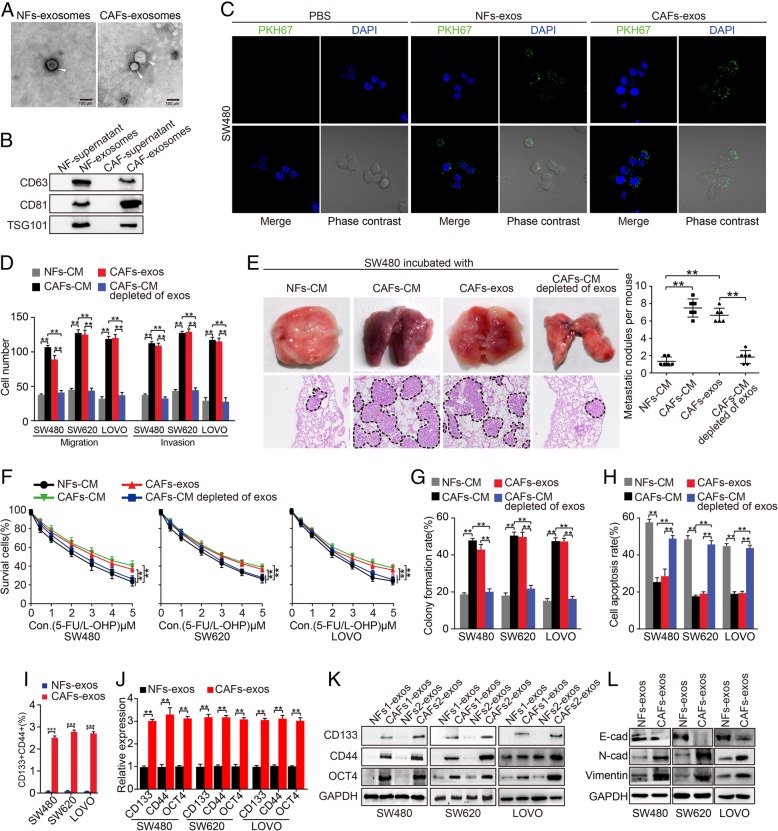
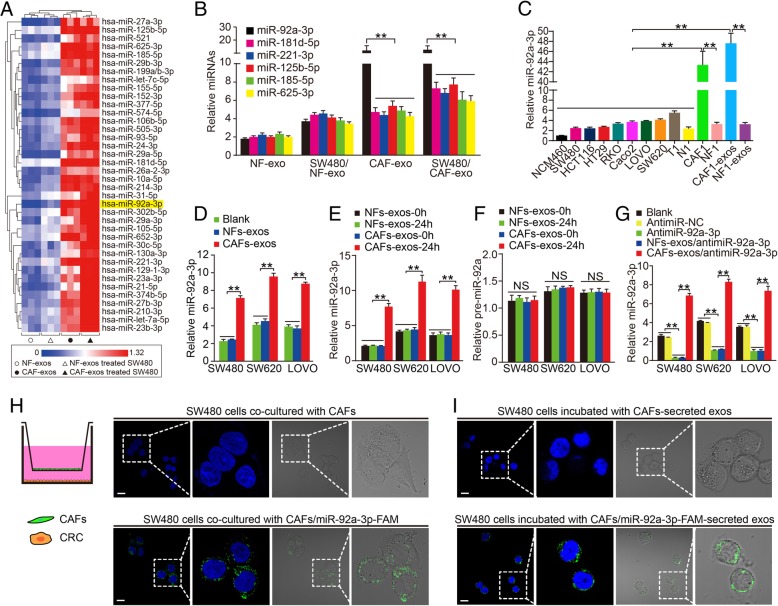
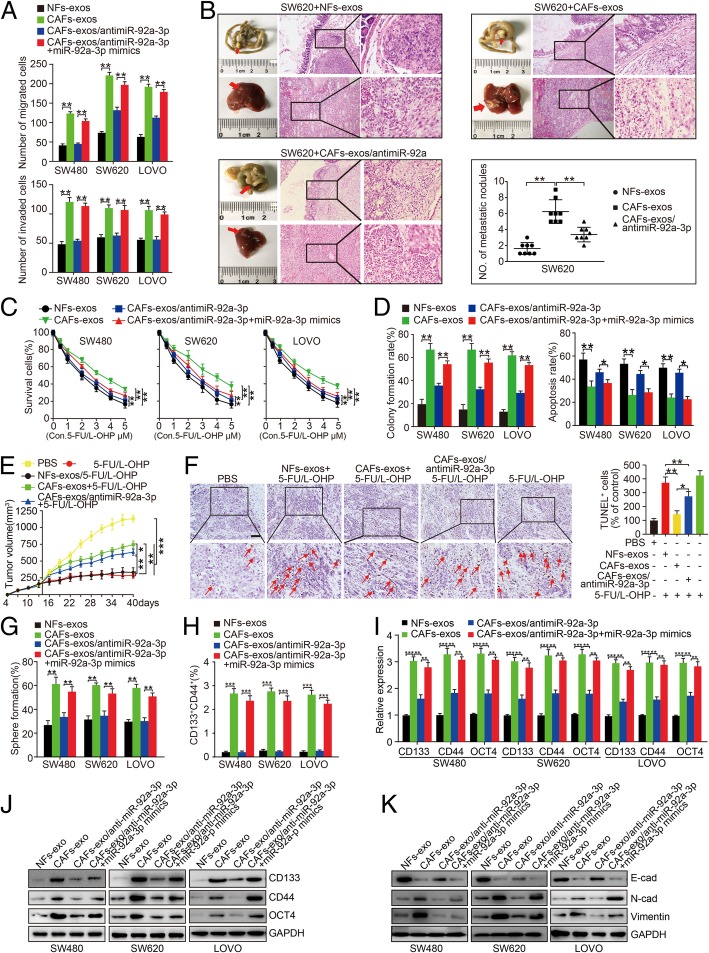
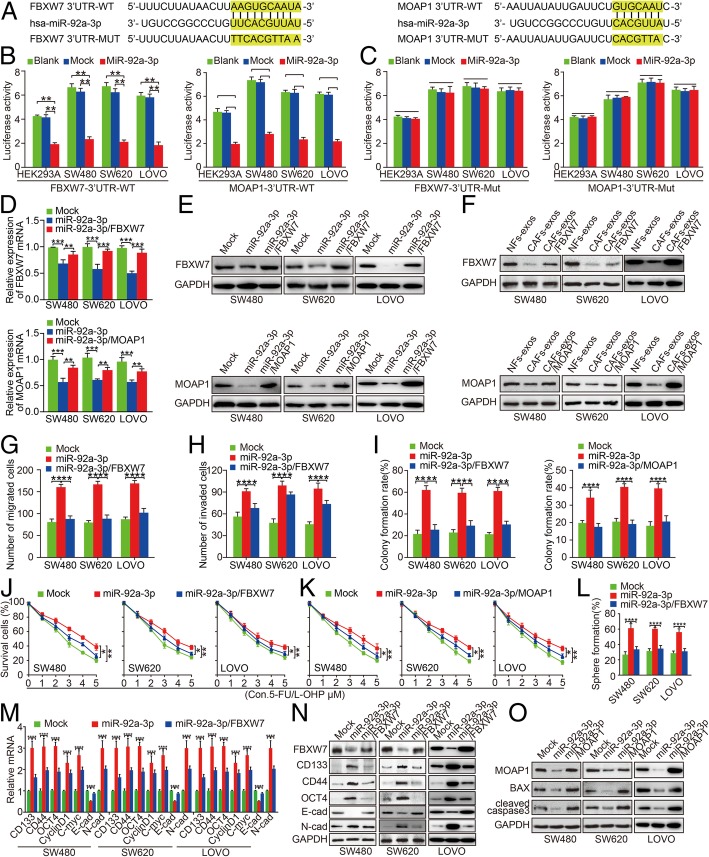
BACKGROUND: Cancer associated fibroblasts (CAFs) are key stroma cells that play dominant roles in tumor progression. However, the CAFs-derived molecular determinants that regulate colorectal cancer (CRC) metastasis and chemoresistance have not been fully characterized. METHODS: CAFs and NFs were obtained from fresh CRC and adjacent normal tissues. Exosomes were isolated from conditioned medium and serum of CRC patients using ultracentrifugation method and ExoQuick Exosome Precipitation Solution kit, and characterized by transmission electronic microscopy, nanosight and western blot. MicroRNA microarray was employed to identify differentially expressed miRNAs in exosomes secreted by CAFs or NFs. The internalization of exosomes, transfer of miR-92a-3p was observed by immunofluorescence. Boyden chamber migration and invasion, cell counting kit-8, flow cytometry, plate colony formation, sphere formation assays, tail vein injection and primary colon cancer liver metastasis assays were employed to explore the effect of NFs, CAFs and exosomes secreted by them on epithelial-mesenchymal transition, stemness, metastasis and chemotherapy resistance of CRC. Luciferase report assay, real-time qPCR, western blot, immunofluorescence, and immunohistochemistry staining were employed to explore the regulation of CRC metastasis and chemotherapy resistance by miR-92a-3p, FBXW7 and MOAP1. RESULTS: CAFs promote the stemness, epithelial-mesenchymal transition (EMT), metastasis and chemotherapy resistance of CRC cells. Importantly, CAFs exert their roles by directly transferring exosomes to CRC cells, leading to a significant increase of miR-92a-3p level in CRC cells. Mechanically, increased expression of miR-92a-3p activates Wnt/β-catenin pathway and inhibits mitochondrial apoptosis by directly inhibiting FBXW7 and MOAP1, contributing to cell stemness, EMT, metastasis and 5-FU/L-OHP resistance in CRC. Clinically, miR-92a-3p expression is significantly increased in CRC tissues and negatively correlated with the levels of FBXW7 and MOAP1 in CRC specimens, and high expression of exosomal miR-92a-3p in serum was highly linked with metastasis and chemotherapy resistance in CRC patients. CONCLUSIONS: CAFs secreted exosomes promote metastasis and chemotherapy resistance of CRC. Inhibiting exosomal miR-92a-3p provides an alternative modality for the prediction and treatment of metastasis and chemotherapy resistance in CRC.
Overview
The claims and statistics of this paper haven’t been checked yet.
Free: it reads the open-access text and checks the first 5 claims that cite a source we can check. Create a free account to check every claim.
Integrity signals
Registry
Cites
Statistics
Figures
Verification
Claims the paper makes
The claims and statistics of this paper haven’t been checked yet.
Free: it reads the open-access text and checks the first 5 claims that cite a source we can check. Create a free account to check every claim.
Claims other papers make about this one
Each is checked against this paper’s own text: does it say what the citing paper says it does?
The source backs part of the claim, not all of it — or backs it for a different population, condition or comparison.
In the citing paper
“Targeting these exosomes can effectively reduce autophagy activity and reverse CRC chemotherapy sensitivity [299,300,301].”
From Drug Resistance in Colorectal Cancer: From Mechanism to Clinic (2022) · cites this paper as [299]
Experimental — accuracy not yet measuredThe source backs part of the claim, not all of it — or backs it for a different population, condition or comparison.
In the citing paper
“A series of studies have shown that CAF-derived exosomes, such as miR-92a-3p, H19 and CCAL, promote CRC EMT and lead to CRC metastasis and chemotherapy resistance by activating the Wnt/β-catenin pathway.”
From Drug Resistance in Colorectal Cancer: From Mechanism to Clinic (2022) · cites this paper as [299]
Experimental — accuracy not yet measured
Self-check
Percentages, sums and reported differences re-computed from the paper’s own numbers.
The self-check needs the paper’s full text.
Citations
Cites
Bartel (2004) · doi:10.1016/s0092-8674(04)00045-5 · Cited by 34,714
MicroRNAs: Target Recognition and Regulatory Functions
Bartel, D. P. (2009) · Cell · doi:10.1016/j.cell.2009.01.002 · Cited by 20,068
Microenvironmental regulation of tumor progression and metastasis
Quail, D. F., & Joyce, J. A. (2013) · Nature Medicine · doi:10.1038/nm.3394 · Cited by 7,994
Global Cancer Incidence and Mortality Rates and Trends—An Update
Torre, L. A., Siegel, R. L., Ward, E. M., & Jemal, A. (2016) · Cancer Epidemiology, Biomarkers & Prevention · doi:10.1158/1055-9965.epi-15-0578 · Cited by 3,692
Tournigand, C., André, T., Achille, E., Lledo, G., Flesh, M., Mery-Mignard, D., Quinaux, E., Couteau, C., Buyse, M., Ganem, G., et al. (2004) · Journal of Clinical Oncology · doi:10.1200/jco.2004.05.113 · Cited by 2,915
Pancreatic cancer exosomes initiate pre-metastatic niche formation in the liver
Costa-Silva, B., Aiello, N. M., Ocean, A. J., Singh, S., Zhang, H., Thakur, B. K., Becker, A., Hoshino, A., Mark, M. T., Molina, H., et al. (2015) · Nature Cell Biology · doi:10.1038/ncb3169 · Cited by 2,692
The cancer stem cell: premises, promises and challenges
Clevers, H. (2011) · Nature Medicine · doi:10.1038/nm.2304 · Cited by 1,923
Cancer-secreted miR-105 destroys vascular endothelial barriers to promote metastasis
Zhou, W., Fong, M. Y., Min, Y., Somlo, G., Liu, L., Palomares, M. R., Yu, Y., Chow, A., O’Connor, S. T. F., Chin, A. R., et al. (2014) · Cancer Cell · doi:10.1016/j.ccr.2014.03.007 · Cited by 1,476
Migrating cancer stem cells — an integrated concept of malignant tumour progression
Brabletz, T., Jung, A., Spaderna, S., Hlubek, F., & Kirchner, T. (2005) · Nature Reviews Cancer · doi:10.1038/nrc1694 · Cited by 1,352 · cited 1×
“Cancer stem cells (CSCs) are self-renewable cell types that contribute to initiation, metastasis, relapse, and chemotherapy resistance of cancer cells [22, 23].”
BackgroundExosomes Mediate Stromal Mobilization of Autocrine Wnt-PCP Signaling in Breast Cancer Cell Migration
Luga, V., Zhang, L., Viloria-Petit, A. M., Ogunjimi, A. A., Inanlou, M. R., Chiu, E., Buchanan, M., Hosein, A. N., Basik, M., & Wrana, J. L. (2012) · Cell · doi:10.1016/j.cell.2012.11.024 · Cited by 1,311
Cited by
Items 201–300 of 785
Marín, J. J. G., Macías, R. I. R., Monte, M. J., Herráez, E., Peleteiro‐Vigil, A., de Blas, B. S., Sanchon-Sanchez, P., Temprano, Á. G., Espinosa-Escudero, R. A., Lozano, E., et al. (2020) · Cancers · doi:10.3390/cancers12092605 · Cited by 44
Roles of exosomes in diagnosis and treatment of colorectal cancer
Umwali, Y., Yue, C.-B., Gabriel, A. N. A., Zhang, Y., & Zhang, X. (2021) · World Journal of Clinical Cases · doi:10.12998/wjcc.v9.i18.4467 · Cited by 41
Yang, C., Zhang, Y., Yan, M., Wang, J., Wang, J., Wang, M., Xuan, Y., Cheng, H., Ma, J., Chai, C., et al. (2024) · BMC Cancer · doi:10.1186/s12885-023-11791-5 · Cited by 49
Mir, R., Baba, S. K., Elfaki, I., Algehainy, N. A., Alanazi, M. A., Altemani, F. H., Tayeb, F. J., Barnawi, J., Husain, E., Bedaiwi, R. I., et al. (2024) · Journal of Cancer · doi:10.7150/jca.98426 · Cited by 40
“CAFs secrete EVs containing miR-92a-3p, which, upon transfer to CRC cells, activates the Wnt/β -catenin pathway and inhibits mitochondrial apoptosis, thereby promoting resistance to combined oxaliplatin and 5-FU treatment [252].”
BackgroundSun, L., Ke, M.-L., Wang, X., Yin, M., Wei, J., Xu, L., Tian, X., Wang, F., Zhang, H., Fu, S., et al. (2022) · Molecular Carcinogenesis · doi:10.1002/mc.23445 · Cited by 42
Self-citationLi, P., & Huang, D. (2024) · Frontiers in Cell and Developmental Biology · doi:10.3389/fcell.2024.1507621 · Cited by 42
“The interplay between tumor cells and cancer-associated fi broblasts (CAFs) is also pivotal in driving cancer progression and metastasis (Hu et al., 2019; Gong et al., 2020; Kobayashi et al., 2022; Koncina et al., 2023).”
Izquierdo‐Altarejos, P., Cabrera‐Pastor, A., González‐King, H., Montoliu, C., & Felipo, V. (2020) · Cells · doi:10.3390/cells9030572 · Cited by 40
“There is overwhelming evidence that exosomes, a subtype of EVs, contribute to tumor progression and metastasis [49,50], to the immunopathology in infectious diseases [51] and to neurodegenerative diseases [52].”
BackgroundWang, X., Yuan, Z., & Ding, K. (2021) · International Journal of Oncology · doi:10.3892/ijo.2021.5224 · Cited by 41
“Exosomal miR‐92a‐3p derived from cancer‐associated fibro‐ blasts (CAFs) inhibits F‐box/WD repeat‐containing protein 7 and modulator of apoptosis 1 by activating the Wnt/β‐catenin pathway, and ultimately inhibits mitochondria‐related apop‐ tosis (49).”
BackgroundLiu, Y., Hua, F., Zhan, Y., Yang, Y., Xie, J., Cheng, Y., & Li, F. (2021) · Cell Death Discovery · doi:10.1038/s41420-021-00524-x · Cited by 40
“The sEVs secret miRNAs which transfer from CAFs to cancer cells [16].”
BackgroundExtracellular Vesicles and Cancer Stem Cells in Tumor Progression: New Therapeutic Perspectives
Scioli, M. G., Terriaca, S., Fiorelli, E., Storti, G., Fabbri, G., Cervelli, V., & Orlandi, A. (2021) · International Journal of Molecular Sciences · doi:10.3390/ijms221910572 · Cited by 41
“To determine the clinical role of miR-92a-3p, its expression was analyzed in normal and cancer tissues from CRC patients, showing that the expression was increased in patients with CRC metastasis and fluorouracil/oxaliplatin (5-FU/L-OHP) therapy resistance and inversely correlated with FBXW7 and MOAP1 [140].”
BackgroundInfluentialYang, M., Li, D., Jiang, Z., Li, C., Ji, S., Sun, J. P., Chang, Y., Ruan, S., Wang, Z., Liang, R., et al. (2022) · Molecular Cancer Research · doi:10.1158/1541-7786.mcr-21-0924 · Cited by 52
Sun, Z., Li, J., Yang, Y., Tong, Y., Li, H., Wang, C., Du, L., & Jiang, Y. (2022) · Bioconjugate Chemistry · doi:10.1021/acs.bioconjchem.2c00309 · Cited by 37
The rising roles of exosomes in the tumor microenvironment reprogramming and cancer immunotherapy
Wu, Y., Han, W., Dong, H., Liu, X., & Su, X. (2024) · MedComm · doi:10.1002/mco2.541 · Cited by 40
The role of cancer-associated fibroblasts in the invasion and metastasis of colorectal cancer
Yin, J., Zhu, W., Feng, S., Yan, P., & Qin, S. (2024) · Frontiers in Cell and Developmental Biology · doi:10.3389/fcell.2024.1375543 · Cited by 44
Exosomes: a double‐edged sword in cancer immunotherapy
Chen, J., Hu, S., Liu, J., Jiang, H., Wang, S., & Yang, Z. (2025) · MedComm · doi:10.1002/mco2.70095 · Cited by 39
“92, 93 miR-1247-3p from TEXs converts fibroblasts into CAFs by downregulating B4GALT3, thereby activating the β 1-integrin–NF-κ B signaling pathway and promoting lung metastasis of hepatocellular carcinoma.”
Huang, D., Chen, J., Hu, D., Xie, F., Yang, T., Li, Z., Wang, X., Xiao, Y., Zhong, J., Jiang, Y., et al. (2021) · Frontiers in Oncology · doi:10.3389/fonc.2021.675940 · Cited by 36
Exosomal circRNAs: Emerging Players in Tumor Metastasis
Zhou, H., He, X., He, Y., Ou, C., & Cao, P. (2021) · Frontiers in Cell and Developmental Biology · doi:10.3389/fcell.2021.786224 · Cited by 40
FBXW7 and the Hallmarks of Cancer: Underlying Mechanisms and Prospective Strategies
Shen, W., Zhou, Q., Peng, C., Li, J., Yuan, Q., Zhu, H., Zhao, M., Jiang, X., Liu, W., & Ren, C. (2022) · Frontiers in Oncology · doi:10.3389/fonc.2022.880077 · Cited by 49
Jiang, Y., Qiu, Q., Jing, X., Song, Z., Zhang, Y., Wang, C., Liu, K., Ye, F., Ji, X., Luo, F., et al. (2022) · Biochemical and Biophysical Research Communications · doi:10.1016/j.bbrc.2022.12.026 · Cited by 39
Extracellular Vesicle-Mediated Mitochondrial Reprogramming in Cancer
Carles-Fontana, R., Heaton, N. D., Palma, E., & Khorsandi, S. E. (2022) · Cancers · doi:10.3390/cancers14081865 · Cited by 42
Recent Advances in the Study of Extracellular Vesicles in Colorectal Cancer
Glass, S. E., & Coffey, R. J. (2022) · Gastroenterology · doi:10.1053/j.gastro.2022.06.039 · Cited by 37
Liu, Y., Zeng, S., Zhang, W., Li, J.-P., Yin, Y. H., Zhuang, Y., Zhou, J., Liu, S., & Zou, X. (2023) · Pharmacological Research · doi:10.1016/j.phrs.2022.106644 · Cited by 35
Xie, J., Lin, X., Deng, X., Tang, H., Zou, Y., Chen, W., & Xie, X. (2025) · Cancer Drug Resistance · doi:10.20517/cdr.2024.152 · Cited by 65
Wnt Signaling in the Tumor Microenvironment
Ruan, Y., Ogana, H. A. N., Gang, E., Kim, H. N., & Kim, Y. (2020) · Advances in experimental medicine and biology · doi:10.1007/978-3-030-47189-7_7 · Cited by 37
“CAFs also promoted the stemness, metastasis, and chemoresistance of colorectal cancer cells by secreting exosomes to increase miR-92a-3p, a microRNA, activating the Wnt/β-catenin pathway and inhibiting mitochondrial apoptosis by directly inhibiting FBXW7 and MOAP1[73].”
BackgroundYang, C., Cao, F., Huang, S., & Zheng, Y. (2021) · Frontiers in Immunology · doi:10.3389/fimmu.2021.717505 · Cited by 37
Sun, W., Cui, J., Ge, Y., Wang, J., Yu, Y., Han, B., & Liu, B. (2022) · Cell Death Discovery · doi:10.1038/s41420-022-00919-4 · Cited by 36
“For instance, CAFs-derived exosomes have been validated to promote metastasis and chemotherapy resistance in CRC [30], and Cheng et al.”
BackgroundZinc Finger Proteins: Functions and Mechanisms in Colon Cancer
Liu, S., Sima, X., Liu, X., & Chen, H. (2022) · Cancers · doi:10.3390/cancers14215242 · Cited by 41
“It is a widely heterogeneous disease, closely related to environmental and genetic factors [1].”
BackgroundZhang, Y., Pan, Q., & Shao, Z. (2022) · Human Cell · doi:10.1007/s13577-022-00800-7 · Cited by 34
Role of exosomal miRNA in chemotherapy resistance of Colorectal cancer: A systematic review
Maleki, M., Golchin, A., Javadi, S., Khelghati, N., Morovat, P., Asemi, Z., Alemi, F., Vaghari‐Tabari, M., Yousefi, B., & Majidinia, M. (2021) · Chemical Biology & Drug Design · doi:10.1111/cbdd.13947 · Cited by 35
“Also, MOAP1 and FBXW7 were confirmed as miR- 92a- 3p downstream targets in CRC (Hu et al., 2019).”
BackgroundInfluentialShang, H., Lü, L., Fan, M., Lu, Y., Shi, X., & Lü, H. (2024) · International Immunopharmacology · doi:10.1016/j.intimp.2024.112282 · Cited by 37
Balaji, S., Kim, U. R., Muthukkaruppan, V., & Vanniarajan, A. (2021) · Life Sciences · doi:10.1016/j.lfs.2021.119750 · Cited by 36
Lin, S., & Zhu, B. (2023) · Molecular and Cellular Biochemistry · doi:10.1007/s11010-023-04737-9 · Cited by 36
“Emerging evidences have shown that CAFs are key determinants in regulating growth, metastasis, invasion, and drug resistance of CRC through exosomes-mediated cellular communication [24]; however, the underlying mechanisms remain to be further explored.”
Xi, Y., Shen, Y., Chen, L., Tan, L., Shen, W., & Niu, X. (2023) · Cytokine & Growth Factor Reviews · doi:10.1016/j.cytogfr.2023.08.010 · Cited by 33
Zhang, H., Liang, H., Wu, S., Jiang, H.-Q., Wang, Q., & Yu, Z. (2021) · Frontiers in Oncology · doi:10.3389/fonc.2021.622263 · Cited by 31
“At present, it has been confirmed that a variety of cells in the body can secrete exosomes, which may contain non-coding RNAs, messenger RNA (mRNA), protein or DNA, and so on (6).”
BackgroundRetractedExosomal microRNAs in colorectal cancer: Overcoming barriers of the metastatic cascade (Review)
Danac, J. M. C., Uy, A., & Garcia, R. L. (2021) · International Journal of Molecular Medicine · doi:10.3892/ijmm.2021.4945 · Cited by 32
Díaz, M. B. N., Martín, M. J., & Gentili, C. (2022) · World Journal of Gastroenterology · doi:10.3748/wjg.v28.i26.3027 · Cited by 40
Role of exosomes in tumour growth, chemoresistance and immunity: state-of-the-art
Hosseinikhah, S. M., Gheybi, F., Moosavian, S. A., Shahbazi, M., Jaafari, M. R., Sillanpää, M. E. T., Kesharwani, P., Alavizadeh, S. H., & Sahebkar, A. (2022) · Journal of drug targeting · doi:10.1080/1061186x.2022.2114000 · Cited by 33
“of IL-1β, IL-6, TNF-α, IL-23a, and CCL5 in human leukaemia monocytic cell line (THP-1), via activating NF-κB signalling pathways [35,36].”
BackgroundZhao, H., Huang, M., & Jiang, L. (2023) · International Journal of Molecular Sciences · doi:10.3390/ijms242216149 · Cited by 34
“Similar to breast cancer, CAFs play an important role in regulating the tumor microenvironment in EC, mainly by promoting tumor growth and metastasis through exosomes [155,156].”
BackgroundStresses in the metastatic cascade: molecular mechanisms and therapeutic opportunities
Shen, M., & Kang, Y. (2020) · Genes & Development · doi:10.1101/gad.343251.120 · Cited by 34
“Moreover, CAFs that are recruited by tumor cells were also reported to promote chemoresistance and metastasis by secreting exosomes (Hu et al. 2019a).”
BackgroundTumor Microenvironment in Metastatic Colorectal Cancer: The Arbitrator in Patients’ Outcome
Galindo-Pumariño, C., Collado, M., Herrera, M., & Peña, C. (2021) · Cancers · doi:10.3390/cancers13051130 · Cited by 31
“miR-92a-3p Association with metastatic status and chemotherapy predictive value [100]”
BackgroundLi, X., Lan, Q., Lai, W., Wu, H., Xu, H., Fang, K., Chu, Z., & Zeng, Y. (2022) · BMC Cancer · doi:10.1186/s12885-022-09926-1 · Cited by 32
Exosome-transmitted circ IFNGR2 Modulates Ovarian Cancer Metastasis via miR-378/ST5 Axis
Chen, X., Ren, X., Jiaoting, E., Zhou, Y., & Bian, R. (2023) · Molecular and Cellular Biology · doi:10.1080/10985549.2022.2160605 · Cited by 34
“colorectal or endometrial cancer TME as key contributor to tumor cell growth and migration.(30,31) In the present study, we observed that exosomes exhaled by CAFs were”
BackgroundSun, L., Yu, J., Guinney, J., Qin, B., & Sinicrope, F. A. (2023) · Molecular Cancer Research · doi:10.1158/1541-7786.mcr-22-0552 · Cited by 33
Exosomes derived from cancer-associated fibroblasts mediate response to cancer therapy
Masoudi-Khoram, N., Soheilifar, M. H., Ghorbanifar, S., Nobari, S., Hakimi, M., & Hassani, M. (2023) · Critical Reviews in Oncology/Hematology · doi:10.1016/j.critrevonc.2023.103967 · Cited by 31
A circulating microRNA panel as a novel dynamic monitor for oral squamous cell carcinoma
Piao, Y., Jung, S., Lim, M. A., Oh, C., Jin, Y., Kim, H. J., Nguyen, Q. K., Chang, J. W., Won, H.-R., & Koo, B. S. (2023) · Scientific Reports · doi:10.1038/s41598-023-28550-y · Cited by 29
Albadari, N. G., Xie, Y., & Li, W. (2024) · Frontiers in Pharmacology · doi:10.3389/fphar.2023.1340401 · Cited by 38
Gou, Z., Li, J., Liu, J., & Yang, N. (2024) · Frontiers in Cell and Developmental Biology · doi:10.3389/fcell.2024.1378302 · Cited by 38
Rauth, S., Malafa, M. P., Ponnusamy, M. P., & Batra, S. K. (2024) · Gastroenterology · doi:10.1053/j.gastro.2024.05.005 · Cited by 34
Oszvald, Á., Szvicsek, Z., Pápai, M., Kelemen, A., Varga, Z., Tölgyes, T., Dede, K., Bursics, A., Buzás, E. I., & Wiener, Z. (2020) · Frontiers in Cell and Developmental Biology · doi:10.3389/fcell.2020.00558 · Cited by 32
Early Steps of Resistance to Targeted Therapies in Non-Small-Cell Lung Cancer
Delahaye, C., Figarol, S., Pradines, A., Favre, G., Mazières, J., & Calvayrac, O. (2022) · Cancers · doi:10.3390/cancers14112613 · Cited by 34
“In colorectal cancers, CAFs induce stemness and EMT of cancers cells by exosomal miR-92a-3p secretion leading to resistance to chemotherapy [168].”
BackgroundSun, L., Ke, M.-L., Yin, M., Zeng, Y., Ji, Y., Hu, Y., Fu, S., & Zhang, C. (2023) · Cancer Science · doi:10.1111/cas.16014 · Cited by 31
“7 30–32 However, the regulation of miRNAs encapsulated in CAF-derived EVs in ovarian cancer progression is not yet fully understood.”
BackgroundMetastatic outgrowth via the two-way interplay of autophagy and metabolism
Behrooz, A. B., Cordani, M., Donadelli, M., & Ghavami, S. (2023) · Biochimica et Biophysica Acta (BBA) - Molecular Basis of Disease · doi:10.1016/j.bbadis.2023.166824 · Cited by 26
Bahrami, A., Binabaj, M. M., & Ferns, G. A. (2021) · Biomedicine & Pharmacotherapy · doi:10.1016/j.biopha.2021.111882 · Cited by 29
Exosomes and Brain Metastases: A Review on Their Role and Potential Applications
Oliveira, F. D., Castanho, M. A. R. B., & Neves, V. (2021) · International Journal of Molecular Sciences · doi:10.3390/ijms221910899 · Cited by 35
Zhou, M., Wang, S., Liu, D.-C., & Jiapeng, Z. (2021) · ACS Biomaterials Science & Engineering · doi:10.1021/acsbiomaterials.1c00611 · Cited by 28
Xie, L., Huang, H., Zheng, Z., Yang, Q., Wang, S., Chen, Y., Yu, J., & Cui, C. (2021) · Annals of Translational Medicine · doi:10.21037/atm-21-4702 · Cited by 30
“All samples were normalized to internal controls, and fold changes were calculated by relative quantification (2).”
BackgroundMethodBête Noire of Chemotherapy and Targeted Therapy: CAF-Mediated Resistance
De, P. K., Aske, J. C., Sulaiman, R. A., & Dey, N. (2022) · Cancers · doi:10.3390/cancers14061519 · Cited by 34
“In colorectal cancers, chemotherapy resistance was attributed to CAF-secreted exosomes [61].”
BackgroundYang, M., Sun, M., & Zhang, H. (2022) · Frontiers in Oncology · doi:10.3389/fonc.2022.879848 · Cited by 30
Exosomal circRNAs: Novel biomarkers and therapeutic targets for gastrointestinal tumors
Wang, D., Li, R., Jiang, J., Qian, H., & Xu, W. (2022) · Biomedicine & Pharmacotherapy · doi:10.1016/j.biopha.2022.114053 · Cited by 30
Xiong, L., Wei, Y., Jia, Q., Chen, J., Chen, T., Yuan, J., Pi, C., Liu, H., Tang, J., Yin, S., et al. (2023) · Journal of Nanobiotechnology · doi:10.1186/s12951-023-01888-1 · Cited by 32
“miR-92a-3p CAF Upregulated Wnt / β-catenin, FBXW7, MOAP1 Inhibit mitochondrial apoptosis to promote cell stemness, EMT, metastasis, and 5-FU / OX resistance [47]”
BackgroundGao, Q., Lei, F., Zeng, Q., Gao, Z., Niu, P., Junnan, Ning, Li, J., & Zhang, J. (2020) · International Journal of Biological Sciences · doi:10.7150/ijbs.40787 · Cited by 30
“Exosomes secreted by tumor cells, which often contain a large amount of miRNAs, can play a major role in the self-regulation of tumor cells and have now become a focus of cancer research [15-17].”
BackgroundZhuang, X., & Zhou, B. (2020) · Biomedicine & Pharmacotherapy · doi:10.1016/j.biopha.2020.110672 · Cited by 30
Cancer-associated fibroblasts and the tumor microenvironment in non-small cell lung cancer
Suzuki, J., Tsuboi, M., & Ishii, G. (2022) · Expert Review of Anticancer Therapy · doi:10.1080/14737140.2022.2019018 · Cited by 31
“acil (5-FU)/oxaliplatin (OXA) resistance [111,112].”
Cold atmospheric plasma: Novel opportunities for tumor microenvironment targeting
Dai, X., & Zhu, K. (2023) · Cancer Medicine · doi:10.1002/cam4.5491 · Cited by 29
Sheng, Z., Wang, X., Ding, X., Zheng, Y., Guo, A., Cui, J., Ma, J., Duan, W., Dong, H., Zhang, H., et al. (2024) · Cellular Signalling · doi:10.1016/j.cellsig.2024.111182 · Cited by 30
Potential role of epithelial–mesenchymal transition induced by periodontal pathogens in oral cancer
Ma, Y., Yu, Y., Yin, Y., Wang, L., Yang, H., Luo, S., Zheng, Q., Pan, Y., & Zhang, D. (2023) · Journal of Cellular and Molecular Medicine · doi:10.1111/jcmm.18064 · Cited by 30
“72 In addition, it was mentioned that miR-7, miR-100 and miR-125 were related to the release of inflammatory cytokines and metalloproteases in gingival fibroblasts during the early stages of periodontitis.”
BackgroundHu, J., Tang, H., & Wang, Y. (2023) · Cancer Gene Therapy · doi:10.1038/s41417-023-00700-4 · Cited by 29
“This study may contribute to exploring the biomarkers for the diagnosis and treatment of metastatic and chemoresistant CRC.”
Self-citationWang, C., Guo, J., Zhang, Y., Zhou, S., & Jiang, B. (2024) · Biochemical Genetics · doi:10.1007/s10528-024-10784-8 · Cited by 30
Qi, Y., Rezaeian, A.-H., Wang, J., Huang, D., Chen, H., Inuzuka, H., & Wei, W. (2024) · Biochimica et Biophysica Acta (BBA) - Reviews on Cancer · doi:10.1016/j.bbcan.2024.189140 · Cited by 32
New Insights into Therapy-Induced Progression of Cancer
Shnaider, P. V., Ivanova, O. M., Malyants, I. K., Anufrieva, K. S., Semenov, I. A., Pavlyukov, M. S., Lagarkova, M. A., Govorun, V. M., & Shender, V. О. (2020) · International Journal of Molecular Sciences · doi:10.3390/ijms21217872 · Cited by 29
Ahmadi, M., Jafari, R., Mahmoodi, M., & Rezaie, J. (2021) · Cell Biochemistry and Function · doi:10.1002/cbf.3622 · Cited by 30
“induce stemness and drug resistance in CRC cells via the activation of the Wnt/β-catenin signalling.(49) In return, CRC cells produce exosomes bearing tumorigenic miRNAs like miRNA-6737-5p, miRNA-6819-5p,”
BackgroundActivated fibroblasts enhance cancer cell migration by microvesicles-mediated transfer of Galectin-1
Toti, A., Santi, A., Pardella, E., Nesi, I., Tomasini, R., Mello, T., Paoli, P. D., Caselli, A., & Cirri, P. (2021) · Journal of Cell Communication and Signaling · doi:10.1007/s12079-021-00624-4 · Cited by 30
“Similarly, exosome-mediated transfer of miR-92a-3p from CAFs to colorectal cancer cells promotes metastasis and 5-fluorouracil (5-FU)/ oxaliplatin (L-OHP) resistance (Hu et al. 2019).”
BackgroundExosome-Mediated Therapeutic Strategies for Management of Solid and Hematological Malignancies
Allegra, A., Petrarca, C., Gioacchino, M. D., Casciaro, M., Musolino, C., & Gangemi, S. (2022) · Cells · doi:10.3390/cells11071128 · Cited by 28
“Moreover, CAFs secreted exosomal miR-92a-3p promoted cell stemness and EMT and inhibited cell apoptosis, leading to metastasis and chemotherapy resistance in cancer cells [15].”
BackgroundShi, W., Liu, Y., Qiu, X., Yang, L., & Lin, G. (2023) · Carcinogenesis · doi:10.1093/carcin/bgad014 · Cited by 30
Zhou, B., Guo, W., Guo, L., Li, Y., Zheng, Z., Huai, Q., Tan, F., Li, Y., Xue, Q., Ying, J., et al. (2023) · Pharmacological Research · doi:10.1016/j.phrs.2023.106800 · Cited by 26
Reshaping the tumor microenvironment: extracellular vesicles as messengers of cancer cells
Bhatta, B., & Cooks, T. (2020) · Carcinogenesis · doi:10.1093/carcin/bgaa107 · Cited by 27
The Role of αvβ3 Integrin in Cancer Therapy Resistance
Pachane, B. C., & Selistre-de-Araújo, H. S. (2024) · Biomedicines · doi:10.3390/biomedicines12061163 · Cited by 29
“EVs produced by cancer-associated fibroblasts (CAFs) were demonstrated to produce stemness, epithelial-mesenchymal transition, metastasis, and drug resistance when transferred to colorectal cancer [56,57], bladder cancer [58], gastric cancer [54], and pancreatic cancer cells [59].”
BackgroundCirculating exosomal miRNAs and cancer early diagnosis
Zhu, L., Zhao, L., Wang, Q., Zhong, S., Guo, X., Zhu, Y., Bao, J., Xu, K., & Liu, S. (2021) · Clinical & Translational Oncology · doi:10.1007/s12094-021-02706-6 · Cited by 30
Jang, S.-D., Song, J., Kim, H., Im, C., Khawar, I. A., Park, J. K., & Kuh, H. (2021) · Cancers · doi:10.3390/cancers13235955 · Cited by 25
“When EMT occurs in cancer cells, increased invasion and migration abilities are commonly accompanied by the induction of drug resistance [59,60]; thus, targeting EMT is an effective strategy for the development of anti-metastatic therapy [58].”
BackgroundEmerging actionable targets to treat therapy-resistant colorectal cancers
Grassilli, E., & Cerrito, M. G. (2022) · Cancer Drug Resistance · doi:10.20517/cdr.2021.96 · Cited by 33
Potential Effects of Exosomes and their MicroRNA Carrier on Osteoporosis
Li, Q.-C., Li, C., Zhang, W., Pi, W., & Han, N. (2022) · Current Pharmaceutical Design · doi:10.2174/1381612828666220128104206 · Cited by 25
Zhang, J., Qin, Y., Jiang, Q., Li, F., Jing, X., Cao, L. K., Cai, S., Wu, F., Li, Q., Lian, J., et al. (2022) · Journal of Proteome Research · doi:10.1021/acs.jproteome.2c00159 · Cited by 25
Exosomes in Colorectal Cancer: From Physiology to Clinical Applications
Titu, S., Gâta, V. A., Decea, R. M., Mocan, T., Dina, C., Irimie, A., & Lisencu, C. I. (2023) · International Journal of Molecular Sciences · doi:10.3390/ijms24054382 · Cited by 31
“In colorectal cancer, CAF-derived exosomes loaded with miR-92a-3p are aimed at FBXW7 and MOAP1 in the tumor microenvironment and further activate the WNT/β-catenin pathway, inhibit mitochondrial apoptosis, leading to cell stemness, epithelial–mesenchymal transition, tumor metastasis and resistance to 5-FU/L-OHP [55].”
BackgroundLin, X., Yang, X., Yang, Y., Zhang, H., & Huang, X. (2023) · Frontiers in Oncology · doi:10.3389/fonc.2023.1132141 · Cited by 30
“CAFs transfer exosomes miR92a-3p and lncRNA H19 into CRC cells, activate Wnt/b-catenin, mediate EMT, and promote CRC stemness and 5-FU/OXA resistance (135, 155).”
BackgroundExtracellular vesicles in cancer: challenges and opportunities for clinical laboratories
González, Á., López-Borrego, S., Sandúa, A., Valés‐Gómez, M., & Alegre, E. (2024) · Critical Reviews in Clinical Laboratory Sciences · doi:10.1080/10408363.2024.2309935 · Cited by 28
“This is the case of cancer-associated fibroblasts, which release EVs that potentiate EMT, promote tumor proliferation, migration, and invasion, and induce the metabolic reprogramming of cancer cells, favoring immune escape [42,45].”
Exosomal miRNA as biomarker in cancer diagnosis and prognosis: A review
Zhu, M., Gao, Y., Zhu, K., Yuan, Y., Bai, H., & Meng, L. (2024) · Medicine · doi:10.1097/md.0000000000040082 · Cited by 35
“[74] Sun et al found that ex-miR-135a-5p was associated with liver metastasis, progression, and prognosis of colorectal cancer.”
BackgroundThe role and clinical applications of exosomes in cancer drug resistance
Pan, W., Miao, Q., Yin, W., Li, X., Ye, W., Zhang, D., Deng, L., Zhang, J., & Chen, M. (2024) · Cancer Drug Resistance · doi:10.20517/cdr.2024.97 · Cited by 34
Zhang, X., Wang, Y., Cui, W., Li, D., Song, J., Liu, Y., Liu, Y., & Yang, S. (2025) · Drug Resistance Updates · doi:10.1016/j.drup.2025.101273 · Cited by 30
Fan, C., Zhu, W., Chen, Y., Zhu, W., & Ding, J. (2025) · MedComm · doi:10.1002/mco2.70415 · Cited by 36
Ma, Y., Yang, X., Xin, R., Liu, J., & Fu, D. (2020) · Biochimica et Biophysica Acta (BBA) - Reviews on Cancer · doi:10.1016/j.bbcan.2020.188497 · Cited by 28
Exosomal Components and Modulators in Colorectal Cancer: Novel Diagnosis and Prognosis Biomarkers
Chang, Y., Chan, M., Li, C., Fang, C., Hsiao, M., & Chen, C. (2021) · Biomedicines · doi:10.3390/biomedicines9080931 · Cited by 26
Chang, L., Chiu, H., Wu, M., & Shen, T. (2022) · International Journal of Molecular Sciences · doi:10.3390/ijms23031379 · Cited by 24
“Overexpression of CAF-derived sEV-miR-92a-3p downregulates the expression of its target genes FBXW7 (F-box and WD repeat domain containing 7) and MOAP1 (modulator of apoptosis 1) to inhibit the ubiquitination and degradation of β-catenin, resulting in the invasion and migration of CRC cells via activation of the Wnt-β…”
BackgroundTan, X., Song, X., Fan, B., Li, M., Zhang, A., & Pei, L. (2022) · Anti-Cancer Drugs · doi:10.1097/cad.0000000000001365 · Cited by 28
Drug Resistance in Cancers: A Free Pass for Bullying
Li, J., Li, X., & Guo, Q. (2022) · Cells · doi:10.3390/cells11213383 · Cited by 26
Zhang, Z., Tang, Y., Luo, D., Qiu, J. L., & Chen, L. (2025) · APL Bioengineering · doi:10.1063/5.0244706 · Cited by 27
SMARCD3 is a potential prognostic marker and therapeutic target in CAFs
Ming, J., Wang, H., Chen, H., & Han, Y. P. (2020) · Aging · doi:10.18632/aging.104102 · Cited by 25
“Exosomes released by CAFs can promote colorectal cancer metastasis and therapeutic resistance by inducing Epithelial-mesenchymal transition (EMT) and tumor cell stemness [10].”
BackgroundCould Extracellular Vesicles Contribute to Generation or Awakening of “Sleepy” Metastatic Niches?
Hernández‐Barranco, A., Nogués, L., & Peinado, H. (2021) · Frontiers in Cell and Developmental Biology · doi:10.3389/fcell.2021.625221 · Cited by 25
“, breast and colorectal cancers), two intrinsic characteristics of dormant cells (Boelens et al., 2014; Hu et al., 2019).”
BackgroundThe multifaceted involvement of exosomes in tumor progression: Induction and inhibition
Gu, W., Shen, Y., Zhang, L., Zhang, H., Nagle, D. G., Luan, X., & Liu, S. (2021) · MedComm · doi:10.1002/mco2.49 · Cited by 24
Exosomes in Pathogenesis, Diagnosis, and Treatment of Hepatocellular Carcinoma
Li, S., & Chen, L. (2022) · Frontiers in Oncology · doi:10.3389/fonc.2022.793432 · Cited by 26
“Recently, the role of exosomes in the EMTprogramhas been revealed in different types of cancer, including colorectal cancer and breast cancer, etc (99, 100).”
BackgroundChemoresistance Transmission via Exosome-Transferred MMP14 in Pancreatic Cancer
Li, X., Li, K., Li, M., Lin, X., Mei, Y., Huang, X., & Yang, H. (2022) · Frontiers in Oncology · doi:10.3389/fonc.2022.844648 · Cited by 28
“In addition, exosomes shed from tumor microenvironment were found to promote the stemness, epithelial-mesenchymal transition (EMT), metastasis and chemotherapy resistance of cancer cells (9, 10).”
Background
Metadata
- Authors
- Hu, J. L., Wang, W., Lan, X. L., Zeng, Z. C., Liang, Y. S., Yan, Y. R., Song, F. Y., Wang, F. F., Zhu, X. H., Liao, W. J., Liao, W. T., Ding, Y. Q., & Liang, L.
- Affiliations
- Key Laboratory of Guangdong Province (CN)
- Nanfang Hospital (CN)
- Venue
- Molecular Cancer
- Published
- 2019-05-07
- Volume
- 18
- Issue
- 1
- Pages
- 91-91
- ISSN
- 1476-4598 (ISSN-L)
- PMC
- PMC6503554
- OpenAlex
- W2947891482
- Cited by
- 773
- References
- 40
- Citations by year
- 2026: 63 · 2025: 96 · 2024: 136 · 2023: 127 · 2022: 157 · 2021: 118 · 2020: 64 · 2019: 12
- FWCI
- 29.85
- Type
- journal article
- Language
- en
- Open access
- gold
- doi.org
- Licence
- cc-by
- creativecommons.org/licenses/by/4.0/ (tdm)
- Locations
- Molecular Cancer (publishedVersion, cc-by)
- PubMed Central (publishedVersion, cc-by)
- PubMed (publishedVersion)
- DOAJ (DOAJ: Directory of Open Access Journals) (submittedVersion, cc-by-sa)
- Funders
- National Basic Research Program of China (973 Program, 2015CB554002)
- National Natural Science Foundation of China (81672821, 81272759, 81472313, 81401927)
- Topics
- Life Sciences › Biochemistry, Genetics and Molecular Biology › Molecular Biology › Extracellular vesicles in disease
- Health Sciences › Medicine › Oncology › Cancer Cells and Metastasis
- Life Sciences › Biochemistry, Genetics and Molecular Biology › Cancer Research › MicroRNA in disease regulation
- Keywords
- colorectal cancer, cancer-associated fibroblasts, exosomes, miR-92a-3p, epithelial-mesenchymal transition, cancer stemness, metastasis, chemoresistance, FBXW7, Wnt/β-catenin signaling, mitochondrial apoptosis
- MeSH terms
- Cancer-Associated Fibroblasts, F-Box-WD Repeat-Containing Protein 7, Animals, Humans, Liver Neoplasms, Neoplasm Transplantation, Colorectal Neoplasms, Up-Regulation, Gene Expression Regulation, Neoplastic, Drug Resistance, Neoplasm, MicroRNAs, Cell Line, Tumor, Adaptor Proteins, Signal Transducing, Apoptosis Regulatory Proteins, Mice, Exosomes, Epithelial-Mesenchymal Transition, Wnt Signaling Pathway
About these checks
Registry, retraction, Cites and statistics results are computed, not judged, with one exception: a printed reference that no index lists is read once by a model before it counts as a citation error. Claims are extracted by a model and kept only when their quote appears verbatim in the text; each cited source is then checked, with a model’s help, for whether it says what the claim relies on. Those verdicts can be wrong — read the claim’s quote and the cited source before relying on one.
Statistics and arithmetic are recomputed, not judged.
Confidence bands are shown only for fields calibrated on our annotated test set. None is calibrated yet, so no band is shown.
What counts as a claim ›How we measure confidence ›How we check this ›
Are you an author, or do you see a problem with this page? Request a review
Data sources
Bibliographic data: Semantic Scholar, OpenAlex, Crossref.
Contains information from the Semantic Scholar Academic Graph Datasets, made available under the ODC Attribution License (ODC-BY 1.0).
Semantic Scholar’s data is described in: Kinney, R., et al. (2023). The Semantic Scholar Open Data Platform. arXiv:2301.10140.
