

CAFs secreted exosomes promote metastasis and chemotherapy resistance by enhancing cell stemness and epithelial-mesenchymal transition in colorectal cancer
Open accessThe DOI matches its Crossref record; 40 of the 40 references it cites were found in a registry or an index.
Abstract
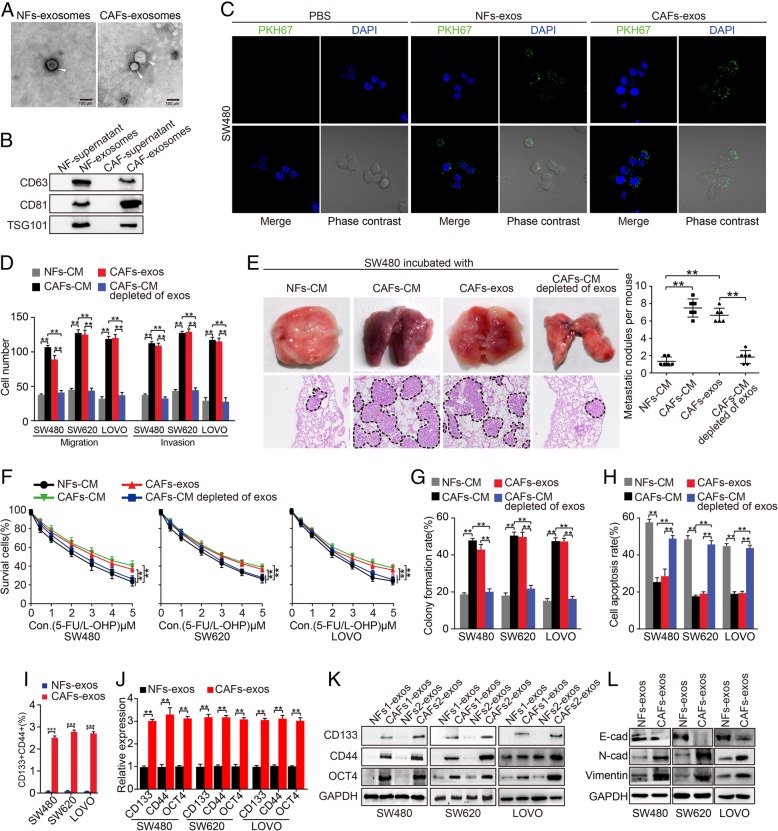
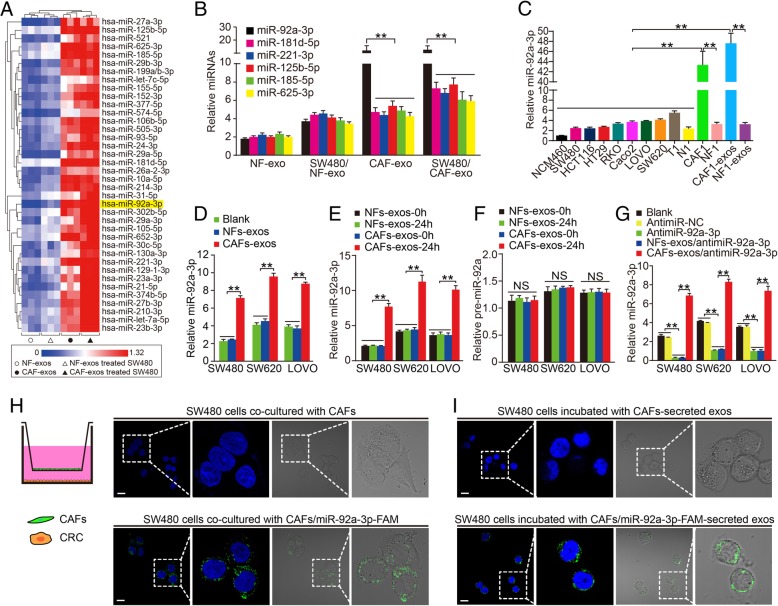
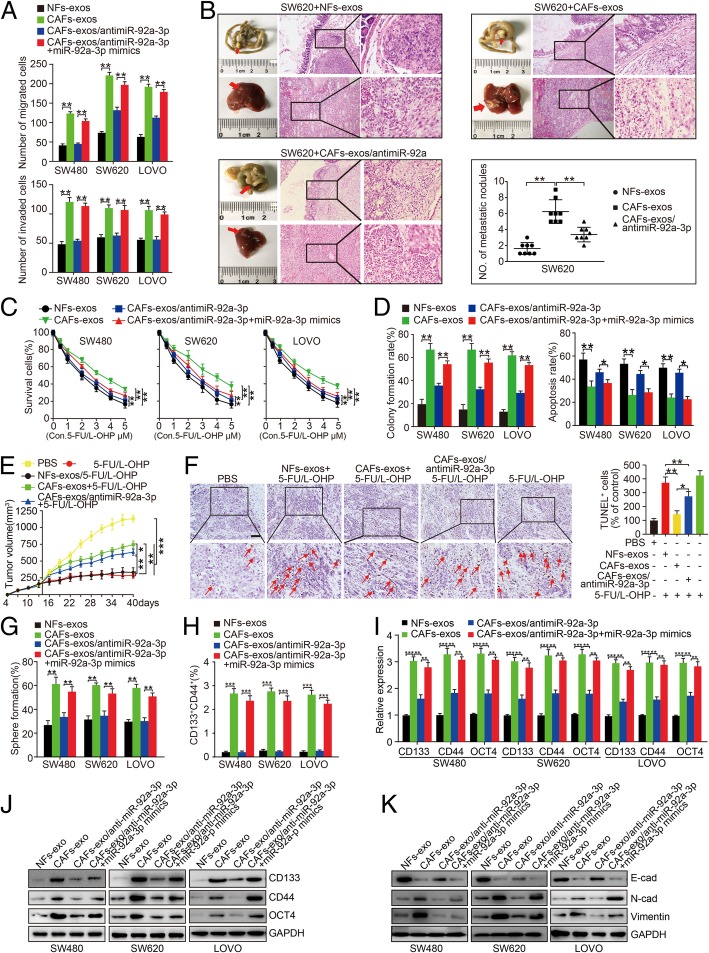
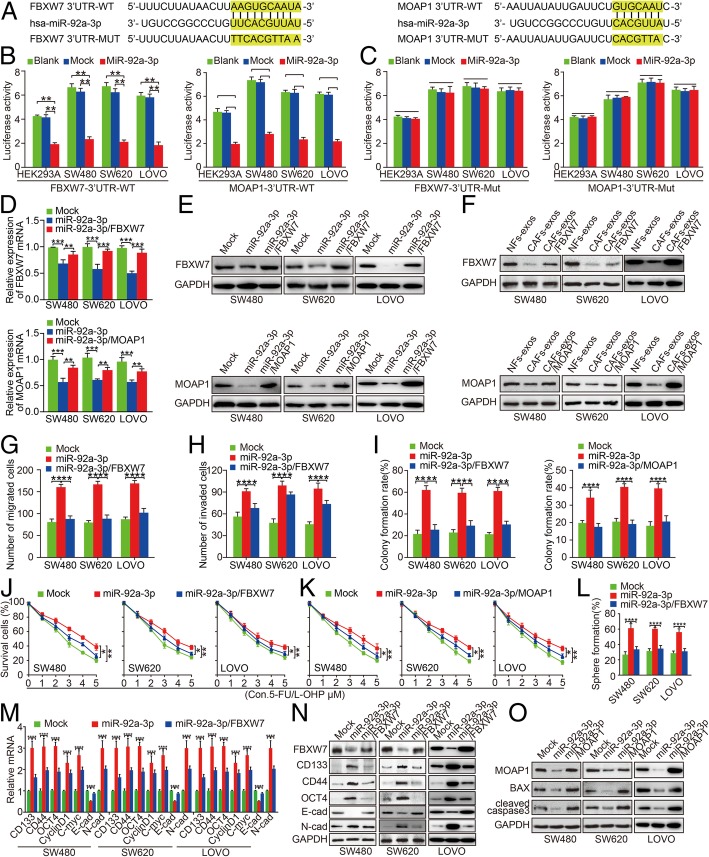
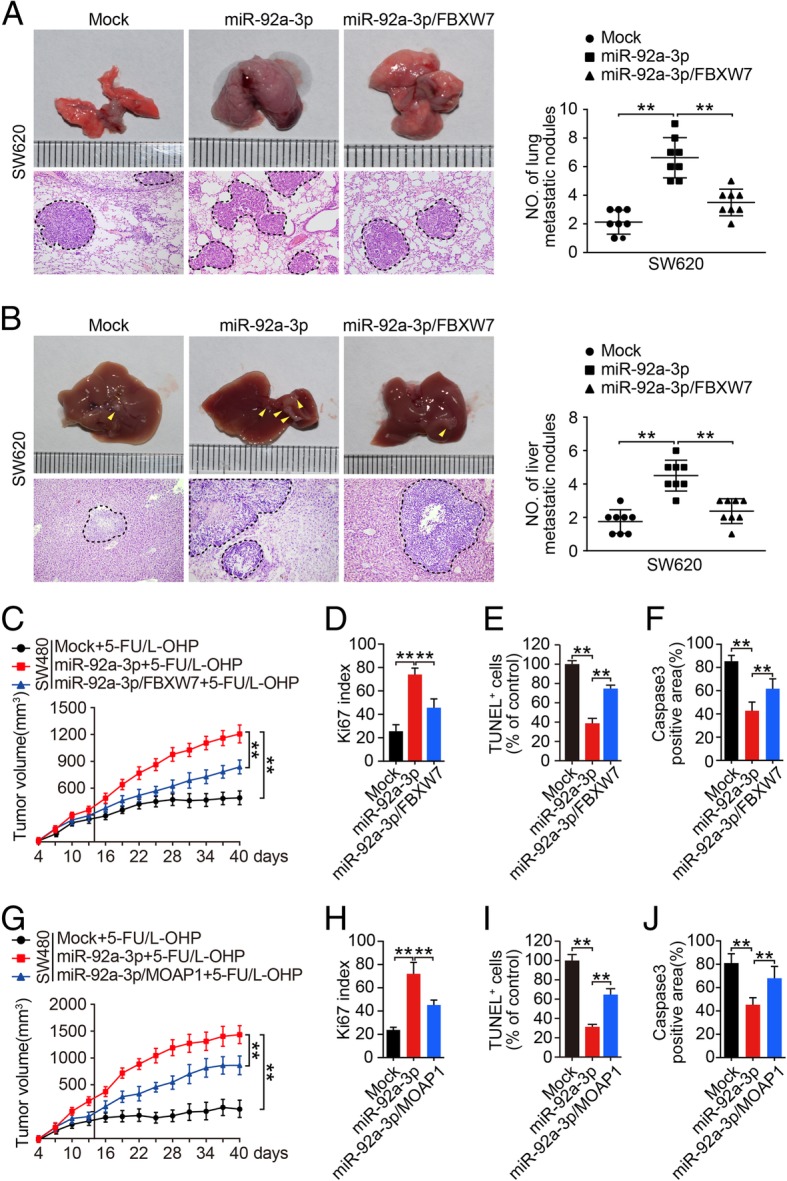
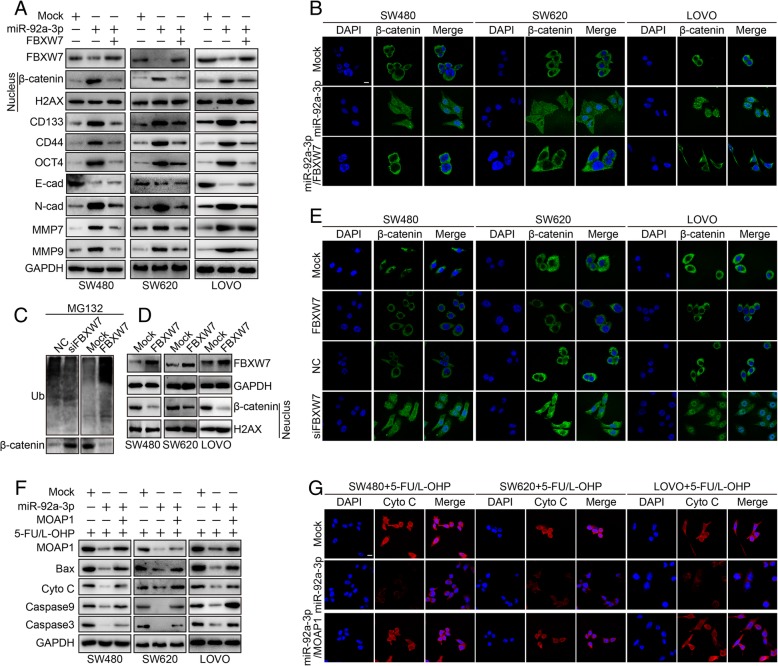
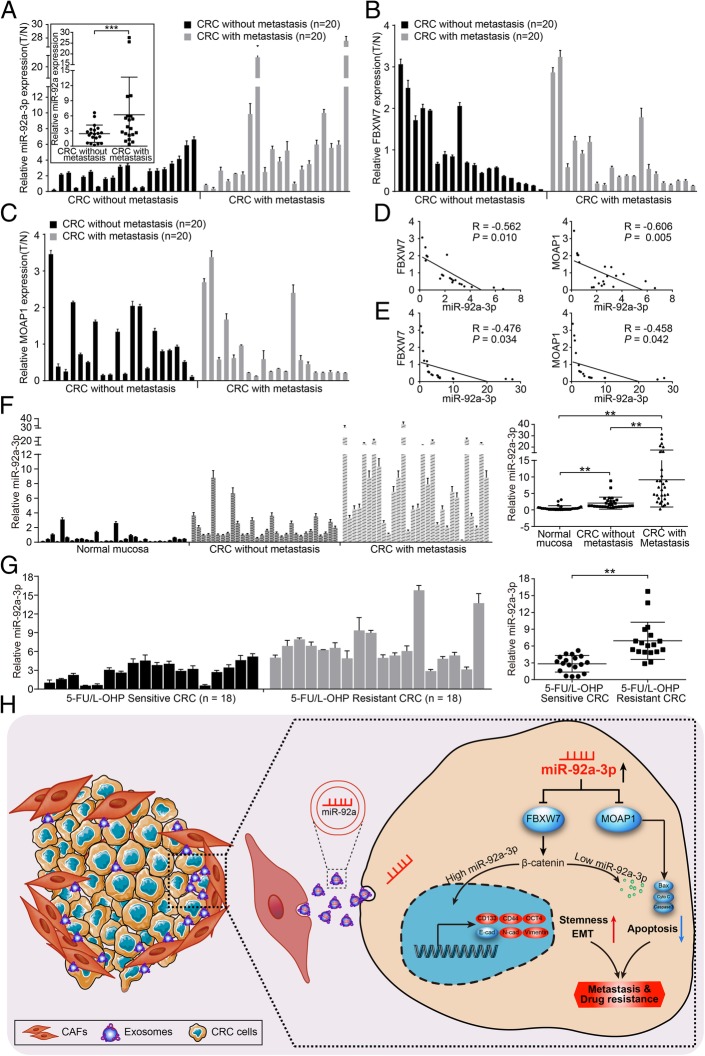
BACKGROUND: Cancer associated fibroblasts (CAFs) are key stroma cells that play dominant roles in tumor progression. However, the CAFs-derived molecular determinants that regulate colorectal cancer (CRC) metastasis and chemoresistance have not been fully characterized. METHODS: CAFs and NFs were obtained from fresh CRC and adjacent normal tissues. Exosomes were isolated from conditioned medium and serum of CRC patients using ultracentrifugation method and ExoQuick Exosome Precipitation Solution kit, and characterized by transmission electronic microscopy, nanosight and western blot. MicroRNA microarray was employed to identify differentially expressed miRNAs in exosomes secreted by CAFs or NFs. The internalization of exosomes, transfer of miR-92a-3p was observed by immunofluorescence. Boyden chamber migration and invasion, cell counting kit-8, flow cytometry, plate colony formation, sphere formation assays, tail vein injection and primary colon cancer liver metastasis assays were employed to explore the effect of NFs, CAFs and exosomes secreted by them on epithelial-mesenchymal transition, stemness, metastasis and chemotherapy resistance of CRC. Luciferase report assay, real-time qPCR, western blot, immunofluorescence, and immunohistochemistry staining were employed to explore the regulation of CRC metastasis and chemotherapy resistance by miR-92a-3p, FBXW7 and MOAP1. RESULTS: CAFs promote the stemness, epithelial-mesenchymal transition (EMT), metastasis and chemotherapy resistance of CRC cells. Importantly, CAFs exert their roles by directly transferring exosomes to CRC cells, leading to a significant increase of miR-92a-3p level in CRC cells. Mechanically, increased expression of miR-92a-3p activates Wnt/β-catenin pathway and inhibits mitochondrial apoptosis by directly inhibiting FBXW7 and MOAP1, contributing to cell stemness, EMT, metastasis and 5-FU/L-OHP resistance in CRC. Clinically, miR-92a-3p expression is significantly increased in CRC tissues and negatively correlated with the levels of FBXW7 and MOAP1 in CRC specimens, and high expression of exosomal miR-92a-3p in serum was highly linked with metastasis and chemotherapy resistance in CRC patients. CONCLUSIONS: CAFs secreted exosomes promote metastasis and chemotherapy resistance of CRC. Inhibiting exosomal miR-92a-3p provides an alternative modality for the prediction and treatment of metastasis and chemotherapy resistance in CRC.
Overview
The claims and statistics of this paper haven’t been checked yet.
Free: it reads the open-access text and checks the first 5 claims that cite a source we can check. Create a free account to check every claim.
Integrity signals
Registry
Cites
Statistics
Figures
Verification
Claims the paper makes
The claims and statistics of this paper haven’t been checked yet.
Free: it reads the open-access text and checks the first 5 claims that cite a source we can check. Create a free account to check every claim.
Claims other papers make about this one
Each is checked against this paper’s own text: does it say what the citing paper says it does?
The source backs part of the claim, not all of it — or backs it for a different population, condition or comparison.
In the citing paper
“Targeting these exosomes can effectively reduce autophagy activity and reverse CRC chemotherapy sensitivity [299,300,301].”
From Drug Resistance in Colorectal Cancer: From Mechanism to Clinic (2022) · cites this paper as [299]
Experimental — accuracy not yet measuredThe source backs part of the claim, not all of it — or backs it for a different population, condition or comparison.
In the citing paper
“A series of studies have shown that CAF-derived exosomes, such as miR-92a-3p, H19 and CCAL, promote CRC EMT and lead to CRC metastasis and chemotherapy resistance by activating the Wnt/β-catenin pathway.”
From Drug Resistance in Colorectal Cancer: From Mechanism to Clinic (2022) · cites this paper as [299]
Experimental — accuracy not yet measured
Self-check
Percentages, sums and reported differences re-computed from the paper’s own numbers.
The self-check needs the paper’s full text.
Citations
Cites
Bartel (2004) · doi:10.1016/s0092-8674(04)00045-5 · Cited by 34,714
MicroRNAs: Target Recognition and Regulatory Functions
Bartel, D. P. (2009) · Cell · doi:10.1016/j.cell.2009.01.002 · Cited by 20,068
Microenvironmental regulation of tumor progression and metastasis
Quail, D. F., & Joyce, J. A. (2013) · Nature Medicine · doi:10.1038/nm.3394 · Cited by 7,994
Global Cancer Incidence and Mortality Rates and Trends—An Update
Torre, L. A., Siegel, R. L., Ward, E. M., & Jemal, A. (2016) · Cancer Epidemiology, Biomarkers & Prevention · doi:10.1158/1055-9965.epi-15-0578 · Cited by 3,692
Tournigand, C., André, T., Achille, E., Lledo, G., Flesh, M., Mery-Mignard, D., Quinaux, E., Couteau, C., Buyse, M., Ganem, G., et al. (2004) · Journal of Clinical Oncology · doi:10.1200/jco.2004.05.113 · Cited by 2,915
Pancreatic cancer exosomes initiate pre-metastatic niche formation in the liver
Costa-Silva, B., Aiello, N. M., Ocean, A. J., Singh, S., Zhang, H., Thakur, B. K., Becker, A., Hoshino, A., Mark, M. T., Molina, H., et al. (2015) · Nature Cell Biology · doi:10.1038/ncb3169 · Cited by 2,692
The cancer stem cell: premises, promises and challenges
Clevers, H. (2011) · Nature Medicine · doi:10.1038/nm.2304 · Cited by 1,923
Cancer-secreted miR-105 destroys vascular endothelial barriers to promote metastasis
Zhou, W., Fong, M. Y., Min, Y., Somlo, G., Liu, L., Palomares, M. R., Yu, Y., Chow, A., O’Connor, S. T. F., Chin, A. R., et al. (2014) · Cancer Cell · doi:10.1016/j.ccr.2014.03.007 · Cited by 1,476
Migrating cancer stem cells — an integrated concept of malignant tumour progression
Brabletz, T., Jung, A., Spaderna, S., Hlubek, F., & Kirchner, T. (2005) · Nature Reviews Cancer · doi:10.1038/nrc1694 · Cited by 1,352 · cited 1×
“Cancer stem cells (CSCs) are self-renewable cell types that contribute to initiation, metastasis, relapse, and chemotherapy resistance of cancer cells [22, 23].”
BackgroundExosomes Mediate Stromal Mobilization of Autocrine Wnt-PCP Signaling in Breast Cancer Cell Migration
Luga, V., Zhang, L., Viloria-Petit, A. M., Ogunjimi, A. A., Inanlou, M. R., Chiu, E., Buchanan, M., Hosein, A. N., Basik, M., & Wrana, J. L. (2012) · Cell · doi:10.1016/j.cell.2012.11.024 · Cited by 1,311
Cited by
Items 601–700 of 785
Interactions between cancer and stroma mediated by extracellular vesicles
Najafzadeh, M., Sajjadi, S. M., Kharazi, S., Karimifard, F., Safarpour, H., & Kharazinejad, E. (2024) · Egyptian Journal of Medical Human Genetics · doi:10.1186/s43042-024-00582-7 · Cited by 3
“…cells which encompass the activation of the Wnt/β-catenin pathway, inhibition of mitochondrial apoptosis via the downregulation of FBXW7 and MOAP1, acquisition of cell stemness, induction of the epithelial-mesenchymal transition (EMT), promotion of metastasis, and resistance to 5-FU/L-OHP [40].”
BackgroundA Snapshot of the Tumor Microenvironment in Colorectal Cancer: The Liquid Biopsy
Herrera, M., Galindo-Pumariño, C., García‐Barberán, V., & Peña, C. (2020) · Vide Leaf, Hyderabad eBooks · doi:10.37247/pamb.1.2020.9 · Cited by 3
Yang, J., Yang, Y., Zhang, X., Qin, Y., Sato, T., Qing, S., Wang, Y., Ye, X., Xu, M., Liu, Y., et al. (2025) · Molecular and Cellular Biochemistry · doi:10.1007/s11010-025-05232-z · Cited by 2
“The extracellular vesicles are tiny vesicles made up of a lipid bilayer that houses a plethora of biologically active molecules [6, 7].”
Exploring the Role of Cellular Interactions in the Colorectal Cancer Microenvironment
Tang, J., Chen, L., Shen, X., Xia, T., Li, Z., Chai, X., Huang, Y., Yang, S., Peng, X., Lai, J., et al. (2025) · Journal of Immunology Research · doi:10.1155/jimr/4109934 · Cited by 3
“Its composition and regulation, in fl u-enced by CAFs and their secreted factors, have garnered signi fi cant interest in CRC research [176 – 178].”
Faa, G., Ziranu, P., Pretta, A., Cau, F., Castagnola, M., Spanu, D., Saba, G., D’Agata, A. P., Tiwari, E., Suri, J. S., et al. (2025) · Biomedicine & Pharmacotherapy · doi:10.1016/j.biopha.2025.118145 · Cited by 3
Bai, Z., Zhang, Y., Li, J., Yan, S., Zhang, K., Li, X., & Li, J.-P. (2025) · The FASEB Journal · doi:10.1096/fj.202403246r · Cited by 2
Peng, P., Li, X., Su, Z., Chen, H., & Lv, J. (2025) · Scientific Reports · doi:10.1038/s41598-025-08723-7 · Cited by 3
“EMT is an important process in cancer metastasis 13 .”
InfluentialCancer‑associated fibroblasts in human malignancies, with a particular emphasis on sarcomas (Review)
Benešová, I., Kalkusova, K., Kwon, Y., Táborská, P., Stakheev, D., Krausová, K., Smetanová, J., Ozaniak, A., Bartůňková, J., Smrž, D., et al. (2025) · International Journal of Oncology · doi:10.3892/ijo.2025.5785 · Cited by 3
“These EVs are capable of increasing cancer cell stemness and EMT and, therefore, of promoting metastasis and resistance to therapy (90).”
He, J. N., Gao, Y., Sun, Z. S., Li, Y., Wang, J., Zhang, L., & Liu, S. (2025) · Frontiers in Immunology · doi:10.3389/fimmu.2025.1686071 · Cited by 2
Zhao, L., Han, Y., Du, J., & Zhao, X. (2026) · Journal of Biomechanics · doi:10.1016/j.jbiomech.2026.113170 · Cited by 2
Beclin-1 as an autophagy biomarker in colorectal cancer
Rekha, A., Mishra, R., Aundhia, C. J., Rathore, V., Anand, K., Negi, P., Singh, S. K., Dua, K., & Gupta, G. (2026) · Clinica Chimica Acta · doi:10.1016/j.cca.2026.120892 · Cited by 2
Hjazi, A. M., Saleh, R. O., Al-Khafaji, Z., Alkhathami, A. G., Malathi, H., Kundlas, M., Maharana, L., Chauhan, A. S., Mustafa, Y. F., & Hamzah, H. F. (2026) · Journal of Biochemical and Molecular Toxicology · doi:10.1002/jbt.70780 · Cited by 3
“Furthermore, a high expression of exosomal miR‐92a‐3p in the serum of CRC patients is strongly linked with both metastasis and chemotherapy resistance [95].”
Zhang, C., Tang, X., Chen, S., Akanyibah, F. A., & Mao, F. (2026) · Frontiers in Cell and Developmental Biology · doi:10.3389/fcell.2026.1760517 · Cited by 2
“…the Wnt/ β -catenin pathway by increasing the expression of miR-92a-3p exosomes and inhibit mitochondrial cell death by directly suppressing F-Box and WD Repeat Domain Containing 7 (FBXW7) and modulator of apoptosis 1 (MOAP1), thereby promoting cell stemness and EMT in CRC (Hu et al., 2019).”
Wu, J., & Zhang, L. (2026) · Pathology - Research and Practice · doi:10.1016/j.prp.2026.156480 · Cited by 3
The Role and Mechanisms of Tumor-Derived Exosomes in the Formation of the Premetastatic Niche
王继超, & Ye, J. (2026) · Cancer Control · doi:10.1177/10732748261448980 · Cited by 3
“57 Similarly, in pancreatic ductal adenocarcinoma, tumor-derived exosomes carrying lncRNA-Sox2ot promote EMT and confer stem-like properties on tumor cells by modulating Sox2 expression, thereby enhancing their metastatic adaptability.”
Ghosh-Mitra, A., Patel, M., & Das, S. (2026) · International Journal of Molecular Sciences · doi:10.3390/ijms27115112 · Cited by 2
Aiyejuto, D., Luthria, A., Hui, T., & Shenoy, A. K. (2026) · Cancers · doi:10.3390/cancers18162569 · Cited by 2
“More generally, EV-mediated transfer of resistance-associated RNAs and proteins from CSCs or CAFs to bulk tumor cells has emerged as a recurrent mechanism of acquired chemoresistance in CRC and other malignancies [69].”
Current Update of Research on Exosomes in Cancer
Tendulkar, R., & Tendulkar, M. (2023) · Current Molecular Medicine · doi:10.2174/1566524023666230717105000 · Cited by 2
Colorectal cancer cells secreting DKK4 transform fibroblasts to promote tumour metastasis
Li, X., Chen, Y., Lu, R., Hu, M. S., Gu, L., Huang, Q., Meng, W., Zhu, H., Fan, C., Zhou, Z., et al. (2024) · Oncogene · doi:10.1038/s41388-024-03008-1 · Cited by 2
“Primary human colon CAFs were obtained from fresh tumour tissue of a CRC patient according to reported methods [52].”
MethodFAP Serves as a Prognostic Biomarker in Head and Neck Squamous Cell Carcinoma
Liao, Z., Fan, H., Weng, J., Zhou, J., & Zheng, Y. (2024) · Analytical Cellular Pathology · doi:10.1155/2024/8810804 · Cited by 3
Interplay between Wnt signaling molecules and exosomal miRNAs in breast cancer (Review)
Li, H., Li, X., & Du, W. (2024) · Oncology Reports · doi:10.3892/or.2024.8766 · Cited by 4
“Abnormal expres‑ sion or mutations in miRNAs are associated with a range of tumors, including BC, where they function as oncogenes or tumor suppressors (76,77).”
BackgroundLiang, C., Wang, M., Huang, Y., Yam, J. W. P., Zhang, X., & Zhang, X. (2024) · International Journal of Molecular Sciences · doi:10.3390/ijms252312548 · Cited by 7
“Recent studies have revealed that the exosome-mediated transfer of ncRNAs can enhance resistance to various therapeutic approaches, including chemotherapy [151] and radiotherapy [115].”
Shao, S., Tang, L., Rong, W.-Q., Han, Y.-C., Liu, X.-D., Zhu, H.-R., Song, Q., & Ji, Q. (2025) · Phytomedicine · doi:10.1016/j.phymed.2025.156390 · Cited by 2
Ebid, N., Sharaky, M. M., Elkhoely, A. A., Morsy, E. M. E., & Saad, S. Y. (2025) · Journal of Biochemical and Molecular Toxicology · doi:10.1002/jbt.70201 · Cited by 2
“It has been established that CAFs contribute to cisplatin resistance in pancreatic cancer [27], colorectal cancer [28 – 30], lung cancer [31 – 33], ovarian cancer [34, 35], head and neck cancer [36, 37], and esophageal squamous cell carcinoma [38].”
Liu, J., Li, D. X., Li, J., Fu, W., Jia, Q., Bai, Y., Huang, A., & Chen, F. (2025) · Frontiers in Pharmacology · doi:10.3389/fphar.2025.1620764 · Cited by 3
Chen, R., Dai, J., Wang, B., Peng, G., Xun, Y., & Li, Y. (2025) · Journal of Biochemical and Molecular Toxicology · doi:10.1002/jbt.70320 · Cited by 3
“They not only closely interact with cancer cells through the secretion of cell ‐ cell adhesion or molecules, but also indirectly accelerate cancer cell growth, metastasis and drug resistance by secreting cytokines, growth factors and extracellular matrix (ECM) proteins [7, 8].”
Li, X., & Han, M. C. (2025) · SLAS TECHNOLOGY · doi:10.1016/j.slast.2025.100313 · Cited by 2
Molecular pathology of microRNA-103a as a probable diagnostic and therapeutic tumor marker
Akhlaghipour, I., Taghehchian, N., & Moghbeli, M. (2025) · Advances in Cancer Biology - Metastasis · doi:10.1016/j.adcanc.2025.100150 · Cited by 2
Progress of regulatory RNA in small extracellular vesicles in colorectal cancer
Hu, X., Lu, Y., Zhou, J., Wang, L., Zhang, M., Mao, Y., & Chen, Z. (2023) · Frontiers in Cell and Developmental Biology · doi:10.3389/fcell.2023.1225965 · Cited by 2
Sha, Y., Liang, W., Mo, C., Hou, X., & Ou, M. (2023) · Oncology Letters · doi:10.3892/ol.2023.14186 · Cited by 2
Key processes in tumor metastasis and therapeutic strategies with nanocarriers: a review
Li, H., Huang, H., Tan, H., Jia, Q., Song, W., Zhang, Q., Zhou, B., & Bai, J. (2024) · Molecular Biology Reports · doi:10.1007/s11033-023-08910-7 · Cited by 3
“Cancer-associated fibroblasts (CAFs), an important component of the tumor microenvironment, have been shown to promote tumor cell metastasis by secreting exosomes in a variety of cancers [92, 93].”
Liu, S., Sheng, S., Zhang, S., Yang, L., Zhu, X., An, H., Ding, J., Li, C., Zhang, W., Xu, Q., et al. (2025) · Research Square · doi:10.21203/rs.3.rs-6912640/v1 · Cited by 2
Self-citationRole of Exosomal Non-Coding RNAs In Vivo and In Vitro Studies in Colorectal Cancer
Zaky, M. Y., & Hamdalla, H. M. (2025) · MicroRNA · doi:10.2174/0122115366331268250303031240 · Cited by 1
Liang, Y., Zhou, Y., Xu, T., Wang, Y., Xu, X., Chen, R., Jiang, Q., Lü, N., Zhao, L., Huang, Z., et al. (2025) · Cellular Signalling · doi:10.1016/j.cellsig.2025.111806 · Cited by 2
Self-citationHuang, P., Guo, K., Tu, J., Fang, J., Zhou, L. F., Luo, X., & Xu, H. (2025) · Human Mutation · doi:10.1155/humu/6705599 · Cited by 1
“In CRC, EMT is considered one of the key driving factors of cancer progression and metastasis, and it has been demonstrated to be closely related to CT resistance [33, 34].”
The role of lipid metabolic interactions in reshaping the tumor microenvironment
Yang, R., Liu, S., Bi, Y., Jin, R., Ye, Z., Cai, X., Bode, A. M., Liu, W., & Luo, X. (2025) · Acta Biochimica et Biophysica Sinica · doi:10.3724/abbs.2025166 · Cited by 3
PNMA4 enhances anti-RNA virus immunity by promoting RIG-I signaling pathway
Song, H., Li, Z., Xie, Y.-T., Tang, X. D., Hu, Y., Yang, T., Huang, Y., Cheng, Y., Pei, G., & Kuang, M. (2025) · International Immunopharmacology · doi:10.1016/j.intimp.2025.115446 · Cited by 1
Interaction of nanodrug delivery systems via fibroblasts in colorectal cancer
Wang, W., Li, M., Liu, Y., & Weigmann, B. (2025) · Expert Opinion on Drug Delivery · doi:10.1080/17425247.2025.2593979 · Cited by 1
“Exosomal signaling : CAF-derived extracellular vesicles (EVs) transfer microRNAs/lncRNAs (e.g. miR-92a-3p) that activate Wnt/β-catenin, suppress apoptosis, and enhance stemness/ EMT – converging on immune evasion and therapy resistance [62].”
Self-citationXi, C., Zhang, Z., Ye, N., Tang, H., Ding, W., & Wang, Y. (2025) · Cellular Signalling · doi:10.1016/j.cellsig.2025.112297 · Cited by 2
Allani, M., & Agrawal, A. (2026) · BioNanoScience · doi:10.1007/s12668-026-02408-9 · Cited by 1
“Clonal growth was assessed using a standard colony-forma-tion assay as outlined in prior reports [ 34 ], which evaluates whether single cells can proliferate long-term to yield macroscopically visible colonies in vitro.”
Shi, J., Wang, X., Zhang, W., Gao, Z., Zhang, C., Tao, Z., Yang, Y., Xu, J., Hong, H., Ma, Y., et al. (2026) · Cancer Research · doi:10.1158/0008-5472.can-25-1718 · Cited by 2
Jiang, R., Tan, X., Zhang, G., Chen, H., Yu, H., Zheng, Y., Kong, M., Shan, K., Liu, J., Zhang, R., et al. (2026) · Chinese Journal of Natural Medicines · doi:10.1016/s1875-5364(26)61108-9 · Cited by 1
Exosomal Cargo-Derived Mediators of Ovarian Cancer Chemoresistance
Rutecki, S., Książek, K., & Mikuła‐Pietrasik, J. (2026) · Molecular Diagnosis & Therapy · doi:10.1007/s40291-026-00844-7 · Cited by 1
Fu, Z., Kuang, Y., Li, M., Zhou, K., Shi, H., Gu, Y., Wu, X., Zhu, Y., & Liu, J. (2026) · Extracellular Vesicles and Circulating Nucleic Acids · doi:10.20517/evcna.2025.184 · Cited by 1
Bao, Q., Chen, H., Wu, J., Wang, Y., Chen, X., Lin, Z., Xu, Y., & Chen, J. (2026) · APOPTOSIS · doi:10.1007/s10495-026-02347-6 · Cited by 1
Li, X., Yan-jiao, L., Ren, D.-D., Yuan, M., Qi, Y., Li, H.-W., Zhang, Y., & Wang, R.-Y. (2026) · World Journal of Gastrointestinal Oncology · doi:10.4251/wjgo.v18.i5.115697 · Cited by 2
Сигнальный путь Wnt и открытие лекарств. I. Фармакологические мишени
Степанович, Х. Ю., Zaitsev, S., Tiasto, V., Митяева, А. М., Шодунке, О. К., & Степанович, Б. И. (2026) · Clinical and Fundamental Medicine · doi:10.24866/3033-5485/2026-1/42-67 · Cited by 1
Yu, J., Xiang, J., Lin, Y., Wang, S., Liu, Y., Chen, E., Liu, X., Wu, J., Wang, Y., & Zhao, L. (2026) · Clinical and Experimental Medicine · doi:10.1007/s10238-026-02193-5 · Cited by 1
“As an important component of the local stromal microenvironment, CAFs play a key role in PMN formation [17 ].”
Hwang, D. W., Suh, M., & Lee, D. S. (2021) · Elsevier eBooks · doi:10.1016/b978-0-12-816386-3.00054-5 · Cited by 2
Filin, I. Y., Kitaeva, K. V., Chulpanova, D. S., Rizvanov, A. A., Akhmetzyanova, E. R., & Solovyeva, V. V. (2022) · BioNanoScience · doi:10.1007/s12668-022-01044-3 · Cited by 1
“Moreover, components of the tumor microenvironment, in particular the exosomes of tumor-associated fibroblasts, inhibit mitochondrial apoptosis in colorectal cancer cells [21].”
BackgroundCancer stem cell–derived exosomes: what is known to date
Bhasin, N., Dabral, P., Selvendiran, K., & Anbalagan, M. (2023) · Elsevier eBooks · doi:10.1016/b978-0-443-13212-4.00028-3 · Cited by 1
Gao, L.-F., Zhong, Y. W., Long, T., Wang, X., Zhu, J., Wang, X., Hu, Z., & Li, Z. (2021) · Research Square · doi:10.21203/rs.3.rs-961545/v1 · Cited by 1
The Stockholm Syndrome of Cancer: Fibroblasts as a Powerful Shield against Colorectal Cancer Therapy
Tardito, S., Zocchi, M. R., & Benelli, R. (2023) · Cancers · doi:10.3390/cancers15020491 · Cited by 1
Eslami, M., Davarpanah, A., Rismanbaf, A., Taghizadeh‐Hesary, F., Dorgaleleh, S., Memarsadeghi, O., Nayernia, K., & Behnam, B. (2023) · Preprints.org · doi:10.20944/preprints202306.0602.v1 · Cited by 1
Yan, Z., Sheng, Z., Zheng, Y., Feng, R., Shi, L., Li, H., Yin, C., Xiao, Q., Luo, H., & Zhang, B. (2021) · Research Square · doi:10.21203/rs.3.rs-184011/v1
Zhang, Y., Cao, Y., zhenlie, C., zihan, Q., kaiyu, Q., & Liu, T. (2021) · Research Square · doi:10.21203/rs.3.rs-853234/v1
Yang, P., Zhang, D., Wang, T., Jin, C., Peng, C., Ji, J., Tan, Y., Zhou, J., Wang, L., & Sun, Y. (2022) · Research Square · doi:10.21203/rs.3.rs-1360377/v1
Sun, X., Liu, Q., Huang, J., Diao, G., & Liang, Z. (2020) · Research Square · doi:10.21203/rs.3.rs-84140/v1
Yu, Z., Yang, C., Zhang, Y., Yu, Z., Wang, J., Wang, J., Wang, M., Xuan, Y., Cheng, H., Ma, J., et al. (2022) · Research Square · doi:10.21203/rs.3.rs-1721959/v1
Filin, I. Y., Kitaeva, K. V., Chulpanova, D. S., Rizvanov, A. A., Akhmetzyanova, E. R., & Solovyeva, V. V. (2022) · Research Square · doi:10.21203/rs.3.rs-1807487/v1
Huang, L., Zhang, J., Wang, X., Su, C., Wu, S., Yang, C., Luo, M., Wang, F., & Fu, L. (2022) · Research Square · doi:10.21203/rs.3.rs-1594991/v1
Self-citationTuerdi, R., Li, P., Xilifu, Y. Y., & Ailixier (2022) · ScienceAsia · doi:10.2306/scienceasia1513-1874.2022.095
Kim, M., Son, I. T., Noh, G. T., Woo, S., Lee, R., & Oh, B. Y. (2022) · Research Square · doi:10.21203/rs.3.rs-1852719/v1
Yin, W., Zhang, H., Fang, M., Yue, J., Jiang, Z., Zhou, R., Xie, R., Wu, S., & Ying, S. (2022) · Research Square · doi:10.21203/rs.3.rs-1945707/v1
Cheng, F., Wang, Z., You, G., Liu, Y., He, J., & Yang, J. (2023) · Research Square · doi:10.21203/rs.3.rs-2535332/v1
Role of cancer-associated fibroblasts in colorectal cancer
Liang, Q., & Zhou, X.-H. (2023) · World Chinese Journal of Digestology · doi:10.11569/wcjd.v31.i4.129
Role of cancer-associated fibroblasts in colorectal cancer
Liang, Q., & Zhou, X.-H. (2023) · World Chinese Journal of Digestology · doi:10.11569/wcjd.v31.i4.134
Wang, S., Deng, S., Jin, X., Chen, W., Wang, X., Zhan, H., Fang, X., & Fu, J. (2023) · Life Sciences · doi:10.1016/j.lfs.2023.121576 · Cited by 2
Peng, P., Wei, W., Lin, S., Li, X., & Lv, J. (2023) · Research Square · doi:10.21203/rs.3.rs-2780721/v1
SLC25A24, a potential and novel biomarker for diagnosing colorectal cancerPreprint
Xu, H., Liu, Y., Liu, S., An, Q., Cao, H., Fan, X., & Jiang, Y. (2023) · Research Square · doi:10.21203/rs.3.rs-2943350/v1
Ting-Ting, D., Li, L., Wang, L., Zhao, Y., che, S., Sun, J.-X., Gao, Z., & Gao, L. (2023) · Research Square · doi:10.21203/rs.3.rs-3264483/v1
Sui, Z., Cheng, H., Yang, L., Zhou, M., Wu, K., Shi, R.-P., & Wang, S. (2023) · Research Square · doi:10.21203/rs.3.rs-3362254/v1
Peng, D., Lu, J., Nie, G., Wang, Y., Wen, N., Xiong, X., Li, B., & Cheng, N. (2023) · Research Square · doi:10.21203/rs.3.rs-3431574/v1
Vitamin D and colorectal cancer
Ferrer‐Mayorga, G., Múñoz, A., & González‐Sancho, J. M. (2023) · Elsevier eBooks · doi:10.1016/b978-0-323-91338-6.00039-2 · Cited by 3
Sulfarotene Inhibits Colorectal Cancer via Mitigating Natural-Killer-Cell-Induced Stemness
Hu, K., Dong, Y., Zhang, J., Liu, M., Sun, X., Cao, X., Zhang, P., & Liu, T. (2024) · Pharmaceuticals · doi:10.3390/ph17030387
Zhang, Y., Zhao, J., Ding, M., Su, Y., Cui, D., Jiang, C., Zhao, S., Jia, G., Wang, X., Ruan, Y., et al. (2020) · Figshare · doi:10.6084/m9.figshare.13467027
Ma, J., Wang, P., Huang, L., Qiao, J., & Li, J. (2021) · Figshare · doi:10.6084/m9.figshare.14131028
Shen, R., Li, P., Zhang, B., Feng, L., & Cheng, S. (2022) · Figshare · doi:10.6084/m9.figshare.21301454
Shen, R., Li, P., Zhang, B., Feng, L., & Cheng, S. (2022) · Figshare · doi:10.6084/m9.figshare.21301460
Cioce, M., Fumagalli, M. R., Donzelli, S., Goeman, F., Canu, V., Rutigliano, D., Orlandi, G., Sacconi, A., Pulito, C., Palcau, A. C., et al. (2023) · Figshare · doi:10.6084/m9.figshare.23700779
Shen, R., Li, P., Zhang, B., Feng, L., & Cheng, S. (2022) · Figshare · doi:10.6084/m9.figshare.21301448
Shen, R., Li, P., Zhang, B., Feng, L., & Cheng, S. (2022) · Figshare · doi:10.6084/m9.figshare.21301466
Shen, R., Li, P., Zhang, B., Feng, L., & Cheng, S. (2022) · Figshare · doi:10.6084/m9.figshare.21301457
Ma, J., Wang, P., Huang, L., Qiao, J., & Li, J. (2021) · Figshare · doi:10.6084/m9.figshare.14131031
Shen, R., Li, P., Zhang, B., Feng, L., & Cheng, S. (2022) · Figshare · doi:10.6084/m9.figshare.21301463
Shen, R., Li, P., Zhang, B., Feng, L., & Cheng, S. (2022) · Figshare · doi:10.6084/m9.figshare.21301451
LAI, Z., ZHAO, H., & Deng, H. X. (2024) · Biocell · doi:10.32604/biocell.2024.053983 · Cited by 1
“This process contributes signi fi cantly to the enhancement of cellular stemness, EMT, metastasis, and 5-fl uorouracil/ oxaliplatin (5-FU/L-OHP) resistance in CRC [54].”
Saha, B., Adhikary, S., Banerjee, A., & Pathak, S. (2024) · Springer eBooks · doi:10.1007/978-981-97-2494-9_12
Overcoming chemotherapy resistance in colorectal cancer
Demetriou, D., Molefi, T., Chatziioannou, A. A., & Dlamini, Z. (2024) · Elsevier eBooks · doi:10.1016/b978-0-443-33475-7.00012-3
Unraveling the mystery of treatment resistance in colorectal cancer
Dlamini, Z., Hull, R., & Kaufmann, A. M. (2024) · Elsevier eBooks · doi:10.1016/b978-0-443-33475-7.00009-3
Cancer-associated Fibroblasts (CAFs)-derived Exosomes Regulating Chemoresistance
Khan, G., & Hussain, M. S. (2025) · Current Topics in Medicinal Chemistry · doi:10.2174/0115680266384380250603112353
Yue, Y., Chen, M., Qin, Y., Qian, Y., Cui, T., Liu, T., Su, L.-L., Li, Z., & Yan, S. (2025) · Fitoterapia · doi:10.1016/j.fitote.2025.106711
Cancer-associated fibroblasts drive metabolic heterogeneity in KRAS-mutant colorectal cancer cellsPreprint
Elton, E., Tavakoli, N., Çetin, H., & Finley, S. D. (2025) · bioRxiv (Cold Spring Harbor Laboratory) · doi:10.1101/2025.09.30.679631
“Additionally, CAFs are functionally diverse, and multiple CAF subtypes have been shown to contribute to treatment resistance 40,41 .”
Tumor Microenvironment as a Key Target for Immunotherapy in Lung Cancer Patients
Ganina, A., Doskali, M., Zaripova, L. N., Askarov, M. B., Mukhamedzhanova, P., Brimova, A., Kozina, L., Karimova, M., Berikbol, D., Chuvakova, E., et al. (2025) · Russian Open Medical Journal · doi:10.15275/rusomj.2025.0303
Molecular and cellular remodeling of the colorectal tumor microenvironment using nanoparticles
Asiri, M., AlKhafaje, Z., Hussein, U. A., Adel, Z., Alkadir, O. K. A., Aldulaimi, A., Saeed, S. M., Taher, W. M., Alwan, M., & Smerat, A. (2025) · Journal of Drug Delivery Science and Technology · doi:10.1016/j.jddst.2025.107798
Metadata
- Authors
- Hu, J. L., Wang, W., Lan, X. L., Zeng, Z. C., Liang, Y. S., Yan, Y. R., Song, F. Y., Wang, F. F., Zhu, X. H., Liao, W. J., Liao, W. T., Ding, Y. Q., & Liang, L.
- Affiliations
- Key Laboratory of Guangdong Province (CN)
- Nanfang Hospital (CN)
- Venue
- Molecular Cancer
- Published
- 2019-05-07
- Volume
- 18
- Issue
- 1
- Pages
- 91-91
- ISSN
- 1476-4598 (ISSN-L)
- PMC
- PMC6503554
- OpenAlex
- W2947891482
- Cited by
- 773
- References
- 40
- Citations by year
- 2026: 63 · 2025: 96 · 2024: 136 · 2023: 127 · 2022: 157 · 2021: 118 · 2020: 64 · 2019: 12
- FWCI
- 29.85
- Type
- journal article
- Language
- en
- Open access
- gold
- doi.org
- Licence
- cc-by
- creativecommons.org/licenses/by/4.0/ (tdm)
- Locations
- Molecular Cancer (publishedVersion, cc-by)
- PubMed Central (publishedVersion, cc-by)
- PubMed (publishedVersion)
- DOAJ (DOAJ: Directory of Open Access Journals) (submittedVersion, cc-by-sa)
- Funders
- National Basic Research Program of China (973 Program, 2015CB554002)
- National Natural Science Foundation of China (81672821, 81272759, 81472313, 81401927)
- Topics
- Life Sciences › Biochemistry, Genetics and Molecular Biology › Molecular Biology › Extracellular vesicles in disease
- Health Sciences › Medicine › Oncology › Cancer Cells and Metastasis
- Life Sciences › Biochemistry, Genetics and Molecular Biology › Cancer Research › MicroRNA in disease regulation
- Keywords
- colorectal cancer, cancer-associated fibroblasts, exosomes, miR-92a-3p, epithelial-mesenchymal transition, cancer stemness, metastasis, chemoresistance, FBXW7, Wnt/β-catenin signaling, mitochondrial apoptosis
- MeSH terms
- Cancer-Associated Fibroblasts, F-Box-WD Repeat-Containing Protein 7, Animals, Humans, Liver Neoplasms, Neoplasm Transplantation, Colorectal Neoplasms, Up-Regulation, Gene Expression Regulation, Neoplastic, Drug Resistance, Neoplasm, MicroRNAs, Cell Line, Tumor, Adaptor Proteins, Signal Transducing, Apoptosis Regulatory Proteins, Mice, Exosomes, Epithelial-Mesenchymal Transition, Wnt Signaling Pathway
About these checks
Registry, retraction, Cites and statistics results are computed, not judged, with one exception: a printed reference that no index lists is read once by a model before it counts as a citation error. Claims are extracted by a model and kept only when their quote appears verbatim in the text; each cited source is then checked, with a model’s help, for whether it says what the claim relies on. Those verdicts can be wrong — read the claim’s quote and the cited source before relying on one.
Statistics and arithmetic are recomputed, not judged.
Confidence bands are shown only for fields calibrated on our annotated test set. None is calibrated yet, so no band is shown.
What counts as a claim ›How we measure confidence ›How we check this ›
Are you an author, or do you see a problem with this page? Request a review
Data sources
Bibliographic data: Semantic Scholar, OpenAlex, Crossref.
Contains information from the Semantic Scholar Academic Graph Datasets, made available under the ODC Attribution License (ODC-BY 1.0).
Semantic Scholar’s data is described in: Kinney, R., et al. (2023). The Semantic Scholar Open Data Platform. arXiv:2301.10140.
