

CAFs secreted exosomes promote metastasis and chemotherapy resistance by enhancing cell stemness and epithelial-mesenchymal transition in colorectal cancer
Open accessThe DOI matches its Crossref record; 40 of the 40 references it cites were found in a registry or an index.
Abstract
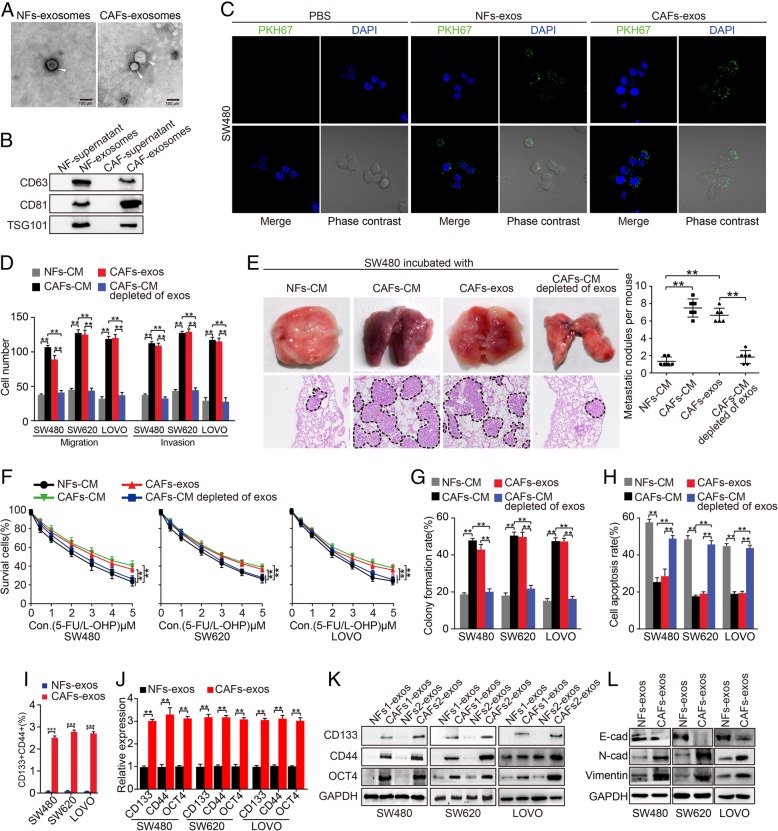
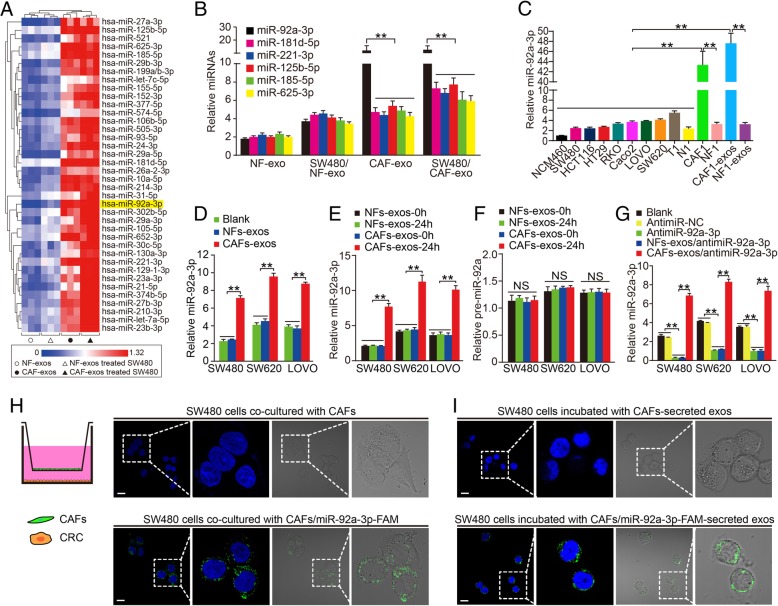
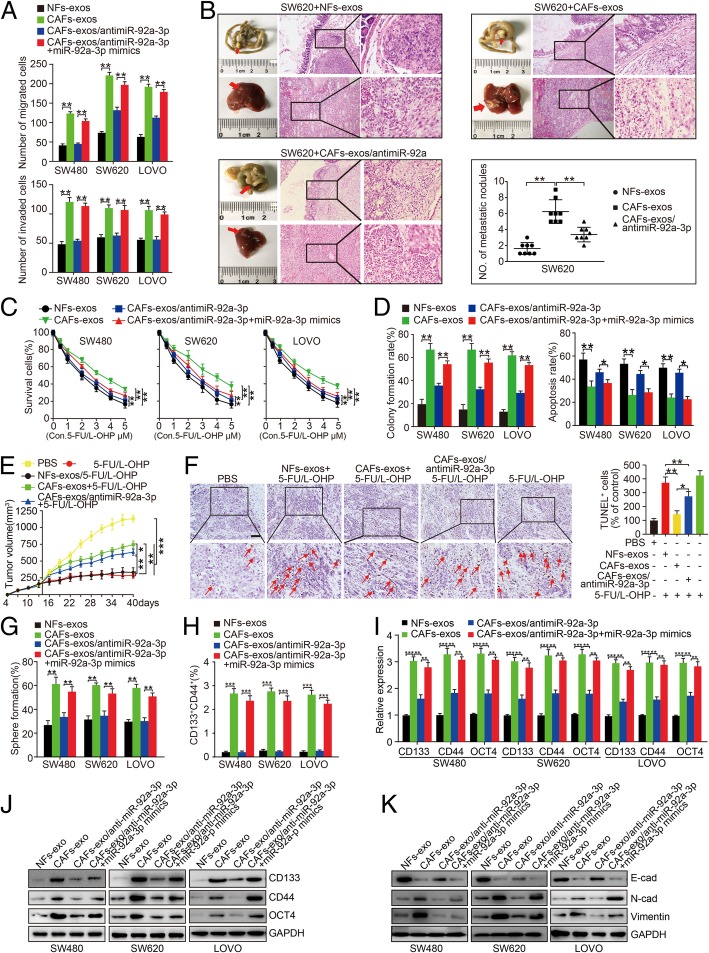
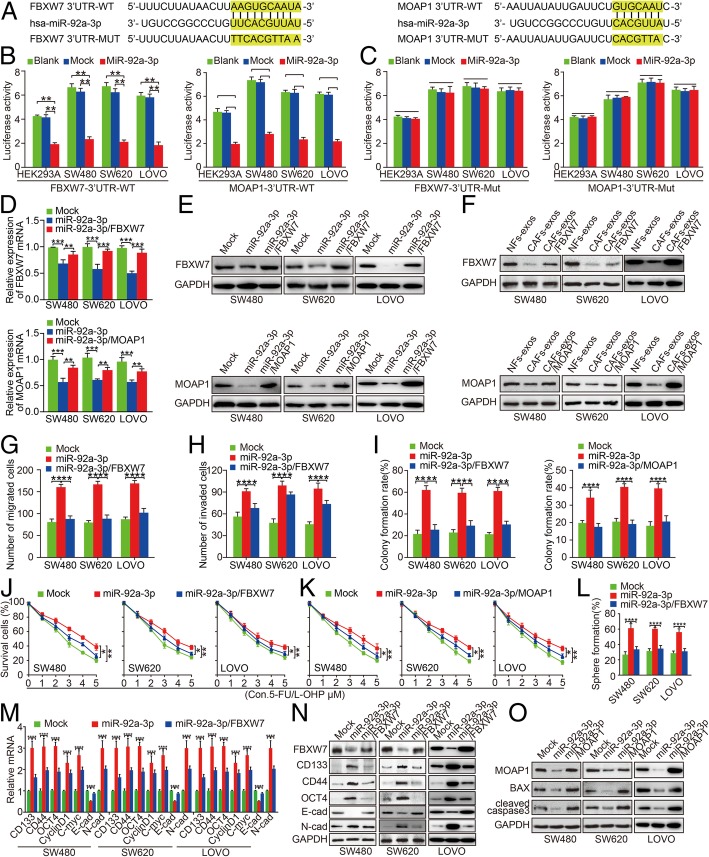
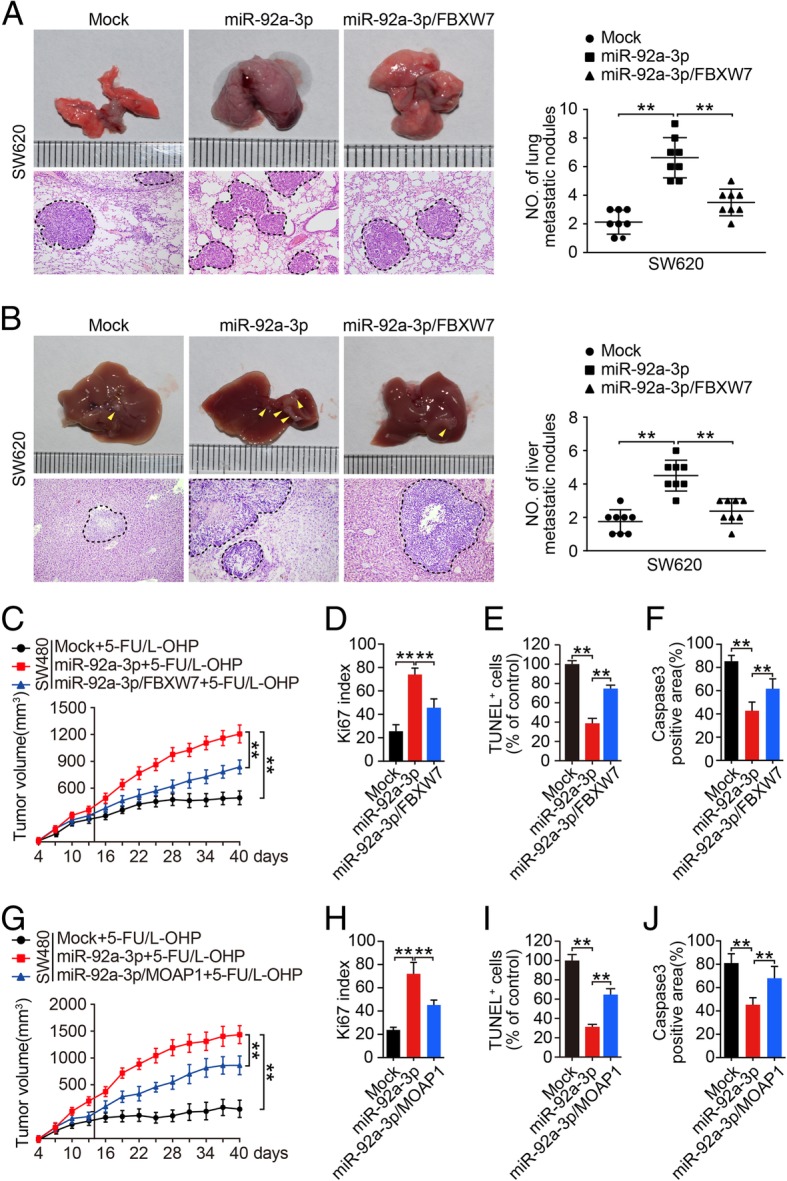
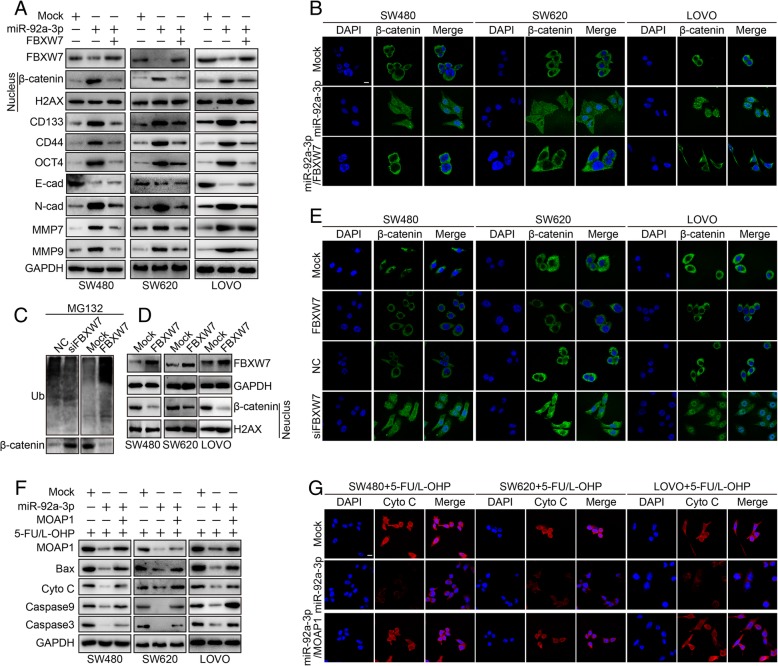
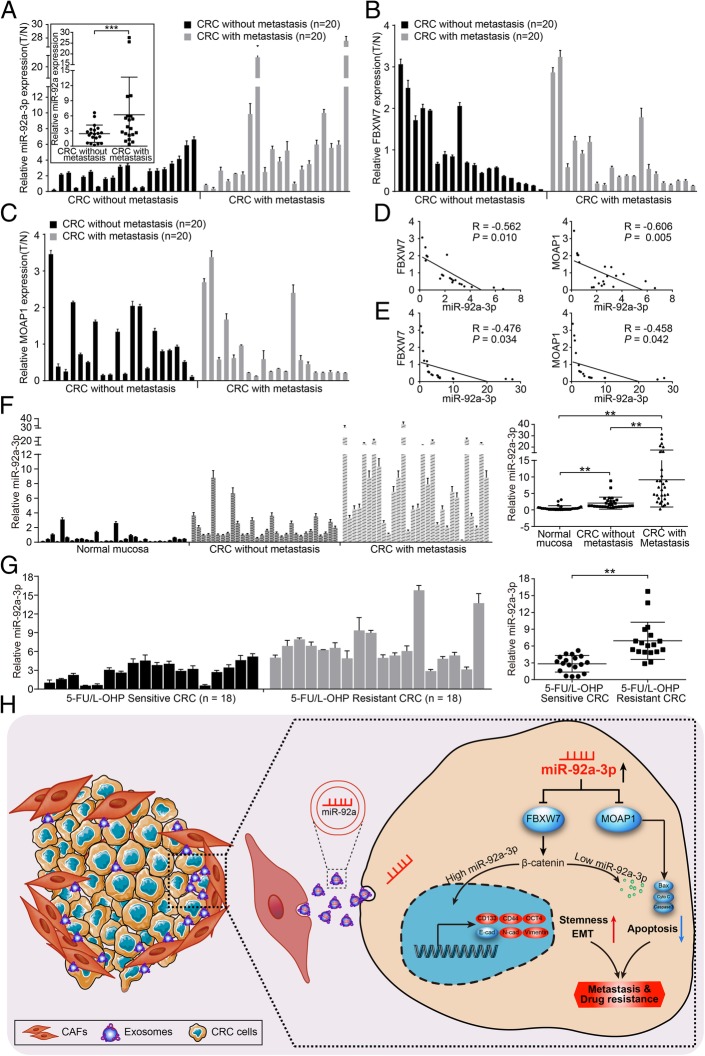
BACKGROUND: Cancer associated fibroblasts (CAFs) are key stroma cells that play dominant roles in tumor progression. However, the CAFs-derived molecular determinants that regulate colorectal cancer (CRC) metastasis and chemoresistance have not been fully characterized. METHODS: CAFs and NFs were obtained from fresh CRC and adjacent normal tissues. Exosomes were isolated from conditioned medium and serum of CRC patients using ultracentrifugation method and ExoQuick Exosome Precipitation Solution kit, and characterized by transmission electronic microscopy, nanosight and western blot. MicroRNA microarray was employed to identify differentially expressed miRNAs in exosomes secreted by CAFs or NFs. The internalization of exosomes, transfer of miR-92a-3p was observed by immunofluorescence. Boyden chamber migration and invasion, cell counting kit-8, flow cytometry, plate colony formation, sphere formation assays, tail vein injection and primary colon cancer liver metastasis assays were employed to explore the effect of NFs, CAFs and exosomes secreted by them on epithelial-mesenchymal transition, stemness, metastasis and chemotherapy resistance of CRC. Luciferase report assay, real-time qPCR, western blot, immunofluorescence, and immunohistochemistry staining were employed to explore the regulation of CRC metastasis and chemotherapy resistance by miR-92a-3p, FBXW7 and MOAP1. RESULTS: CAFs promote the stemness, epithelial-mesenchymal transition (EMT), metastasis and chemotherapy resistance of CRC cells. Importantly, CAFs exert their roles by directly transferring exosomes to CRC cells, leading to a significant increase of miR-92a-3p level in CRC cells. Mechanically, increased expression of miR-92a-3p activates Wnt/β-catenin pathway and inhibits mitochondrial apoptosis by directly inhibiting FBXW7 and MOAP1, contributing to cell stemness, EMT, metastasis and 5-FU/L-OHP resistance in CRC. Clinically, miR-92a-3p expression is significantly increased in CRC tissues and negatively correlated with the levels of FBXW7 and MOAP1 in CRC specimens, and high expression of exosomal miR-92a-3p in serum was highly linked with metastasis and chemotherapy resistance in CRC patients. CONCLUSIONS: CAFs secreted exosomes promote metastasis and chemotherapy resistance of CRC. Inhibiting exosomal miR-92a-3p provides an alternative modality for the prediction and treatment of metastasis and chemotherapy resistance in CRC.
Overview
The claims and statistics of this paper haven’t been checked yet.
Free: it reads the open-access text and checks the first 5 claims that cite a source we can check. Create a free account to check every claim.
Integrity signals
Registry
Cites
Statistics
Figures
Verification
Claims the paper makes
The claims and statistics of this paper haven’t been checked yet.
Free: it reads the open-access text and checks the first 5 claims that cite a source we can check. Create a free account to check every claim.
Claims other papers make about this one
Each is checked against this paper’s own text: does it say what the citing paper says it does?
The source backs part of the claim, not all of it — or backs it for a different population, condition or comparison.
In the citing paper
“Targeting these exosomes can effectively reduce autophagy activity and reverse CRC chemotherapy sensitivity [299,300,301].”
From Drug Resistance in Colorectal Cancer: From Mechanism to Clinic (2022) · cites this paper as [299]
Experimental — accuracy not yet measuredThe source backs part of the claim, not all of it — or backs it for a different population, condition or comparison.
In the citing paper
“A series of studies have shown that CAF-derived exosomes, such as miR-92a-3p, H19 and CCAL, promote CRC EMT and lead to CRC metastasis and chemotherapy resistance by activating the Wnt/β-catenin pathway.”
From Drug Resistance in Colorectal Cancer: From Mechanism to Clinic (2022) · cites this paper as [299]
Experimental — accuracy not yet measured
Self-check
Percentages, sums and reported differences re-computed from the paper’s own numbers.
The self-check needs the paper’s full text.
Citations
Cites
Bartel (2004) · doi:10.1016/s0092-8674(04)00045-5 · Cited by 34,714
MicroRNAs: Target Recognition and Regulatory Functions
Bartel, D. P. (2009) · Cell · doi:10.1016/j.cell.2009.01.002 · Cited by 20,068
Microenvironmental regulation of tumor progression and metastasis
Quail, D. F., & Joyce, J. A. (2013) · Nature Medicine · doi:10.1038/nm.3394 · Cited by 7,994
Global Cancer Incidence and Mortality Rates and Trends—An Update
Torre, L. A., Siegel, R. L., Ward, E. M., & Jemal, A. (2016) · Cancer Epidemiology, Biomarkers & Prevention · doi:10.1158/1055-9965.epi-15-0578 · Cited by 3,692
Tournigand, C., André, T., Achille, E., Lledo, G., Flesh, M., Mery-Mignard, D., Quinaux, E., Couteau, C., Buyse, M., Ganem, G., et al. (2004) · Journal of Clinical Oncology · doi:10.1200/jco.2004.05.113 · Cited by 2,915
Pancreatic cancer exosomes initiate pre-metastatic niche formation in the liver
Costa-Silva, B., Aiello, N. M., Ocean, A. J., Singh, S., Zhang, H., Thakur, B. K., Becker, A., Hoshino, A., Mark, M. T., Molina, H., et al. (2015) · Nature Cell Biology · doi:10.1038/ncb3169 · Cited by 2,692
The cancer stem cell: premises, promises and challenges
Clevers, H. (2011) · Nature Medicine · doi:10.1038/nm.2304 · Cited by 1,923
Cancer-secreted miR-105 destroys vascular endothelial barriers to promote metastasis
Zhou, W., Fong, M. Y., Min, Y., Somlo, G., Liu, L., Palomares, M. R., Yu, Y., Chow, A., O’Connor, S. T. F., Chin, A. R., et al. (2014) · Cancer Cell · doi:10.1016/j.ccr.2014.03.007 · Cited by 1,476
Migrating cancer stem cells — an integrated concept of malignant tumour progression
Brabletz, T., Jung, A., Spaderna, S., Hlubek, F., & Kirchner, T. (2005) · Nature Reviews Cancer · doi:10.1038/nrc1694 · Cited by 1,352 · cited 1×
“Cancer stem cells (CSCs) are self-renewable cell types that contribute to initiation, metastasis, relapse, and chemotherapy resistance of cancer cells [22, 23].”
BackgroundExosomes Mediate Stromal Mobilization of Autocrine Wnt-PCP Signaling in Breast Cancer Cell Migration
Luga, V., Zhang, L., Viloria-Petit, A. M., Ogunjimi, A. A., Inanlou, M. R., Chiu, E., Buchanan, M., Hosein, A. N., Basik, M., & Wrana, J. L. (2012) · Cell · doi:10.1016/j.cell.2012.11.024 · Cited by 1,311
Cited by
Items 301–400 of 785
Exosome-Associated circRNAs as Key Regulators of EMT in Cancer
Amicone, L., Marchetti, A., & Cicchini, C. (2022) · Cells · doi:10.3390/cells11101716 · Cited by 25
Exosomes in lung cancer metastasis, diagnosis, and immunologically relevant advances
Zhao, J., Li, X., Liu, L., Zhu, Z., & He, C. (2023) · Frontiers in Immunology · doi:10.3389/fimmu.2023.1326667 · Cited by 29
Extracellular vesicle-mediated crosstalk in tumor microenvironment dominates tumor fate
Dou, X., Feng, C., Li, J., Jiang, E., & Shang, Z. (2024) · Trends in Cell Biology · doi:10.1016/j.tcb.2024.08.008 · Cited by 29
The role of exosomes in colorectal cancer disease progression and response to therapy
Bracci, L., Lozupone, F., & Parolini, I. (2019) · Cytokine & Growth Factor Reviews · doi:10.1016/j.cytogfr.2019.12.004 · Cited by 25
The Role of Tumor Stem Cells in Colorectal Cancer Drug Resistance
Chen, Z., Wang, G., Guo, M., Zhu, N., Chen, X., Yan, Y., Li, N., & Yu, W. (2024) · Cancer Control · doi:10.1177/10732748241274196 · Cited by 25
Self-citationExosomal noncoding RNAs in colorectal cancer
Wu, Q., Liu, W., Wang, J., Zhu, L., Wang, Z., & Peng, Y. (2020) · Cancer Letters · doi:10.1016/j.canlet.2020.08.037 · Cited by 22
Lung Cancer Cell-Derived Exosomal let-7d-5p Down-Regulates OPRM1 to Promote Cancer-Induced Bone Pain
Li, X., Chen, Y., Wang, J., Jiang, C., & Huang, Y. S. (2021) · Frontiers in Cell and Developmental Biology · doi:10.3389/fcell.2021.666857 · Cited by 22
Exosomal IDH1 increases the resistance of colorectal cancer cells to 5-Fluorouracil
Yang, H., Xie, S., Liang, B., Tang, Q., Liu, H., Wang, D., & Huang, G. (2021) · Journal of Cancer · doi:10.7150/jca.58846 · Cited by 24
“Additionally, CAFs also transmit miRNA-encapsulated exosomes to CRC cells to enhance tumor cell invasiveness and 5FU resistance [42].”
BackgroundZarin, B., Rafiee, L., Daneshpajouhnejad, P., & Javanmard, S. H. (2021) · Tumor Biology · doi:10.3233/tub-200075 · Cited by 23
Greco, L., Rubbino, F., Morelli, A., Gaiani, F., Grizzi, F., de’Angelis, G. L., Malesci, A., & Laghi, L. (2021) · International Journal of Molecular Sciences · doi:10.3390/ijms222111469 · Cited by 24
The recent advances of cancer associated fibroblasts in cancer progression and therapy
Wu, C., Gu, J., Gu, H., Zhang, X.-X., Zhang, X., & Ji, R. (2022) · Frontiers in Oncology · doi:10.3389/fonc.2022.1008843 · Cited by 25
“In human colorectal cancer, CAFs promoted cancer proliferation, EMT and metastasis by secreting pro-inflammatory factors, such as IL-6, IL-8 and exosomal miRNA-92a-3p to activate Wnt/bcatenin pathway as well as inhibit mitochondrial apoptosis (55, 56).”
BackgroundLuo, Z.-D., Wang, Y., Zhao, Y.-X., Yu, L.-C., Li, T. X., Fan, Y.-J., Zeng, S., Zhang, Y., Zhang, Y., & Zhang, X. (2023) · World Journal of Gastroenterology · doi:10.3748/wjg.v29.i1.1 · Cited by 23
Liu, W., Jin, M., Chen, Q., Li, Q., Xing, X., Luo, Y., & Sun, X. (2023) · Cell Communication and Signaling · doi:10.1186/s12964-023-01304-z · Cited by 23
Yimin, E., Lü, Q., Zhu, K., Li, W., Sun, J., Ji, P., Meng, M., Liu, Z., & Yu, C. (2024) · iScience · doi:10.1016/j.isci.2024.109350 · Cited by 25
Chen, Y., Zhang, M., He, Y., Li, S., Feng, S., Liu, Z., Zhang, N., Liu, M., & Wang, Q. (2024) · Journal of Medicinal Chemistry · doi:10.1021/acs.jmedchem.4c00843 · Cited by 23
Zhang, M., Shi, R., Guo, Z., & He, J. (2020) · Pathology - Research and Practice · doi:10.1016/j.prp.2020.152884 · Cited by 26
He, X., Zhong, X., Hu, Z., Zhao, S., Wei, P., & Li, D. (2020) · Clinical and Translational Medicine · doi:10.1002/ctm2.249 · Cited by 22
Natua, S., Dhamdhere, S. G., Mutnuru, S. A., & Shukla, S. (2021) · Wiley Interdisciplinary Reviews - RNA · doi:10.1002/wrna.1676 · Cited by 22
Zheng, L., Cai, W., Ke, Y., Hu, X., Yang, C., Zhang, R., Wu, H., Liu, D., Yu, H., & Wu, C. (2025) · Cell Communication and Signaling · doi:10.1186/s12964-025-02138-7 · Cited by 23
“CAFs-derived exosomes promote stemness, EMT, and metastasis of CRC cells [101] and enhance the RT resistance of CRC by reducing apoptosis and enhancing DNA damage repair ability after radiation [102, 103].”
Exosomes and ferroptosis: roles in tumour regulation and new cancer therapies
Shi, Y., Qiu, B., Huang, L., Lin, J., Li, Y., Ze, Y., Huang, C., & Yao, Y. (2022) · PeerJ · doi:10.7717/peerj.13238 · Cited by 23
“Exosomes secreted by tumour cells and cancer-associated fibroblasts (CAFs) promote tumour cell chemoresistance through the delivery of exosomal cargo (Hu et al., 2019; Yang et al., 2020b).”
BackgroundHu, H., Mao, G., Zheng, J., & Guo, F. (2022) · Drug Design Development and Therapy · doi:10.2147/dddt.s386786 · Cited by 21
“Additionally, exosomes are able to provide a new method for transferring effector information between cells in biological functions and normal body responses.(21,22) For example, exosomal miRNA-21 can accelerate the proliferation of keloid fibroblasts by downregulating Smad7.”
MethodExtracellular Vesicles (EVs) in Tumor Diagnosis and Therapy
Tan, M., Ge, Y., Wang, X., Wang, Y., Liu, Y., He, F., & Teng, H. (2023) · Technology in Cancer Research & Treatment · doi:10.1177/15330338231171463 · Cited by 30
Wang, H., Min, J., Liu, J., Xu, C., Liu, Y., Yu, Z., Gong, A., & Xu, M. (2023) · Journal of Cancer · doi:10.7150/jca.81320 · Cited by 23
“Hu et al. confirmed that miR-92a-3p in exosomes secreted by tumor-associated fibroblasts promoted stemness and resistance in colorectal cancer cells by inhibiting F-box and WD repeat domain containing 7 (FBXW7) and modulator of apoptosis 1 (MOAP1) [27].”
BackgroundSmall Extracellular Vesicles and Metastasis—Blame the Messenger
Seibold, T., Waldenmaier, M., Seufferlein, T. T. W., & Eiseler, T. (2021) · Cancers · doi:10.3390/cancers13174380 · Cited by 22
The uptake of extracellular vesicles: Research progress in cancer drug resistance and beyond
Qian, L., Chen, P., Zhang, S., Wang, Z., Guo, Y., Koutouratsas, V., Fleishman, J. S., Huang, C., & Zhang, S. (2025) · Drug Resistance Updates · doi:10.1016/j.drup.2025.101209 · Cited by 22
Zeng, S., Wang, J., Shi, Z., Zhao, H., Gao, J., & Li, J. (2025) · Frontiers in Pharmacology · doi:10.3389/fphar.2025.1560714 · Cited by 26
Wang, K., Li, B., Fan, P., Ren, X., & Jiang, H. (2021) · Bioengineered · doi:10.1080/21655979.2021.2011636 · Cited by 20
“Images were obtained by fluorescence microscope (Olympus, Japan) and analyzed by image J software [20].”
MethodGong, W., Guo, Y., Yuan, H., Chai, R., Wan, Z., Zheng, B., Hu, X., Chen, B., Gao, S., Dai, Q., et al. (2023) · Cancer Gene Therapy · doi:10.1038/s41417-023-00591-5 · Cited by 24
“found that exosomal miR-92a-3p released from CAFs could promote CRC cell metastasis and chemotherapy resistance [26].”
BackgroundTumour‐derived exosomes in liver metastasis: A Pandora's box
Li, S., Qu, Y., Liu, L., Wang, C., Li, Y., Bai, H., & Wang, J. (2023) · Cell Proliferation · doi:10.1111/cpr.13452 · Cited by 23
“74 These observations high-light an important effect of TDEs on EMT development and CAF formation; thus, deciphering the mechanisms of TDE-mediated EMT in a liver PMN is essential.”
Wu, C., Li, D., Cheng, X., Gu, H., Qian, Y., & Li, F. (2023) · Cell Cycle · doi:10.1080/15384101.2023.2231740 · Cited by 21
Exosomes target HBV-host interactions to remodel the hepatic immune microenvironment
Wu, X., Niu, J., & Shi, Y. (2024) · Journal of Nanobiotechnology · doi:10.1186/s12951-024-02544-y · Cited by 22
“Thus, exosome-based treatments for tumor resistance appear feasible and have achieved prelimi-nary efficacy in colorectal cancer [135–137], although such treatments have not yet been reported in hepatitis B-related liver cancer.”
BackgroundSu, Z., Lu, C., Zhang, F., Liu, H., Li, M., Qiao, M., Zou, X., Luo, D., Li, H., He, M. Y., et al. (2024) · Journal of Cellular Physiology · doi:10.1002/jcp.31344 · Cited by 28
“Additionally, miR ‐ 92a ‐ 3p has been reported to be linked to stemness in cancers (Hu et al., 2019; H. Song et al., 2016).”
InfluentialF-box proteins in cancer stemness: An emerging prognostic and therapeutic target
Khan, A. Q., Al-Tamimi, M., Shahab Uddin, M. S., & Steinhoff, M. S. (2021) · Drug Discovery Today · doi:10.1016/j.drudis.2021.07.006 · Cited by 23
Bueno-Urquiza, L. J., Godínez-Rubí, M., Villegas‐Pineda, J. C., Vega‐Magaña, N., Jave‐Suárez, L. F., Puebla‐Mora, A. G., Aguirre-Sandoval, G. E., Martínez-Silva, M. G., Ramírez-de-Arellano, A., & Pereira-Suárez, A. L. (2024) · Cells · doi:10.3390/cells13070560 · Cited by 24
Extracellular vesicles and the tumour microenvironment
Belényesi, S.-K., Patmore, S., & O’Driscoll, L. (2025) · Biochimica et Biophysica Acta (BBA) - Reviews on Cancer · doi:10.1016/j.bbcan.2025.189275 · Cited by 27
Natural Alternatives in the Treatment of Colorectal Cancer: A Mechanisms Perspective
Fernandez-Muñoz, K. V., Sánchez-Barrera, C. Á., Meraz‐Ríos, M. A., Reyes, J. L., Pérez-Yépez, E.-A., Ortiz-Melo, M. T., Terrazas, L. I., & Mendoza-Rodríguez, M. (2025) · Biomolecules · doi:10.3390/biom15030326 · Cited by 24
“In CRC, there is evidence that CAFs can promote chemoresistance to 5-FU and oxali-platin by different mechanisms, promoting cell stemness and EMT [54,55].”
Pompili, S., Vetuschi, A., Sferra, R., & Cappariello, A. (2022) · Frontiers in Oncology · doi:10.3389/fonc.2022.933675 · Cited by 19
“In another study, miR-92a-3p expression in the circulating EVs of CRC patients has been demonstrated to be correlated with metastasis to the liver and chemoresistance to 5-FU (154).”
BackgroundInfluentialCancer-associated fibroblasts as accomplices to confer therapeutic resistance in cancer
Wang, W., Cheng, B., & Yu, Q. (2022) · Cancer Drug Resistance · doi:10.20517/cdr.2022.67 · Cited by 19
Self-citationCai, K., Yang, Y., Guo, Z., Cai, R.-L., Hashida, H., & Li, H. (2022) · Annals of Translational Medicine · doi:10.21037/atm-22-3035 · Cited by 19
“Epithelial to mesenchymal transition (EMT) is the key mechanism that drives most cancers, including CRC invasion and metastasis (6).”
The Roles of Exosomes in Ovarian Cancer Chemo-resistance
Liu, Y., Xiao, L., Zhang, T., & Liu, G. (2023) · Journal of Cancer · doi:10.7150/jca.84930 · Cited by 22
“They showed that exosomal miR-92a-3p was increased in 5-FU-resistant VRC patients, indicating it might predict chemotherapy resistance in CRC patients[60].”
Wu, Y., Cao, Y., Chen, L., Lai, X., Zhang, S., & Wang, S. (2024) · Biological Procedures Online · doi:10.1186/s12575-024-00245-2 · Cited by 21
“It has been previously unveiled that CAFs-derived exosomal miR-92a-3p could activate Wnt/β-catenin pathway and inhibit mitochondrial apoptosis by directly inhibiting FBXW7 and MOAP1, which in turn contributed to cell stemness, EMT, metastasis and 5-FU/L-OHP resistance in CRC [351].”
BackgroundTherapeutic and diagnostic applications of exosomes in colorectal cancer
Shakerian, N., Eslam, E. D., Afsharnoori, F., Bana, N., ghahroodi, F. N., Tarin, M., Mard‐Soltani, M., Khalesi, B., Hashemi, Z. S., & Khalili, S. (2024) · Medical Oncology · doi:10.1007/s12032-024-02440-3 · Cited by 24
“These membrane-bound vesicles are known as exosomes and carry various signaling molecules, as depicted in the figure stromal cells also have a role in cancer cells resistance such as upregulation of miR-92a-3p expression through transferring of exosomes to CRC cells by CAFs [151].”
Dai, W. H., Zhou, J., & Chen, T. (2024) · Molecular Cancer · doi:10.1186/s12943-024-02103-x · Cited by 22
“As the main component of omental stromal cells, carci-noma-associated fibroblast (CAF) plays a key role in the omental metastasis of OC cells [56].”
BackgroundExosomes, their sources, and possible uses in cancer therapy in the era of personalized medicine
Zemánek, T., Danišovič, Ľ., & Nicodemou, A. (2024) · Journal of Cancer Research and Clinical Oncology · doi:10.1007/s00432-024-06066-w · Cited by 21
“Similarly, exosomes from CD45RO − CD8 + T cells containing miR-765 were found to partially inhibit estrogen-driven endometrial cancer progression by modulating epithelial-mesenchymal transition (EMT) (Zhou et al. 2021 ).”
Wang, J., Liu, L., Gao, X., Liu, X., Dai, Y., Mao, Z., Huang, S., Li, J., Wang, D., Qi, Y., et al. (2025) · Theranostics · doi:10.7150/thno.103722 · Cited by 30
“There is also increasing evidence that sEVs promote cancer stemness [39, 40].”
Lu, S., Ding, X., Wang, Y., Hu, X., Sun, T., Wei, M., Wang, X., & Wu, H. (2021) · Frontiers in Cell and Developmental Biology · doi:10.3389/fcell.2021.772542 · Cited by 19
Exosomes as Theranostic Targets: Implications for the Clinical Prognosis of Aggressive Cancers
Gulati, R., Nandi, D., Sarkar, K., Venkataraman, P., Ramkumar, K. M., Ranjan, P., & Janardhanan, R. (2022) · Frontiers in Molecular Biosciences · doi:10.3389/fmolb.2022.890768 · Cited by 19
Xue, C., Gao, Y., Sun, Z., Li, X., Zhang, M., Yang, Y., Han, Q., Bai, C., & Zhao, R. C. (2022) · Frontiers in Oncology · doi:10.3389/fonc.2022.837781 · Cited by 17
“Although recent studies have found that CAFs attribute to the progression of colon cancer (40, 41), the origin and role of CAFs incolon cancer and its mechanism have needed to be fully elucidated.”
BackgroundTsurusawa, N., Iha, K., Sato, A., Tsai, H.-Y., Sonoda, H., Watabe, S., Yoshimura, T., Wu, D., Lin, M., & Ito, E. (2022) · Cancers · doi:10.3390/cancers14163887 · Cited by 21
“Although exosome-mediated stemness promotion of cancer cells was recently reported, it was mostly thought to occur due to nucleic acids in exosomes [12,40].”
BackgroundLncRNA CARMN inhibits cervical cancer cell growth via the miR-92a-3p/BTG2 /Wnt/β-catenin axis
Wang, L., Zhao, H., Fang, Y., Yuan, B., Guo, Y., & Wang, W. (2022) · Physiological Genomics · doi:10.1152/physiolgenomics.00088.2022 · Cited by 20
Self-citationBasak, M., Chaudhary, D. K., Takahashi, R., Yamamoto, Y., Tiwari, S., Tahara, H., & Mittal, A. (2022) · ACS Biomaterials Science & Engineering · doi:10.1021/acsbiomaterials.2c00893 · Cited by 20
Exosomal miR-93-5p as an important driver of bladder cancer progression
Yuan, F., Yin, X., Huang, Y., Cai, X.-W., Jin, L., Dai, G., Zang, Y., Sun, Y., Liu, X., & Xue, B. (2023) · Translational Andrology and Urology · doi:10.21037/tau-22-872 · Cited by 18
“Importantly, the proportion of cancer suppressor genes and oncogenes in tumor-derived exosomes is out of balance, which promotes the growth and metastasis of tumors and inhibit the immune response of the body (5) .”
Tian, J., Zhang, L., La, X., Fan, X., & Li, Z. (2025) · Cell Death and Disease · doi:10.1038/s41419-025-07466-7 · Cited by 21
“It has been shown that M2 macrophage-derived exosomes promote tumor angiogenesis [16], metastasis [17] and maintain cancer cell stemness [18, 19].”
Unveiling the tumor microenvironment in colorectal cancer therapeutic resistance
Han, J., Liang, W., & Li, K. (2026) · Frontiers in Cell and Developmental Biology · doi:10.3389/fcell.2025.1753180 · Cited by 21
Colon Fibroblasts and Inflammation: Sparring Partners in Colorectal Cancer Initiation?
Onfroy-Roy, L., Hamel, D., Malaquin, L., & Ferrand, A. (2021) · Cancers · doi:10.3390/cancers13081749 · Cited by 20
Yeoh, Y., Low, T. Y., Abu, N., & Lee, P. Y. (2021) · PeerJ · doi:10.7717/peerj.12338 · Cited by 19
“Research evidence suggests that the transportation of exosomal miR-92a-3p from CAFs to CRC activates the Wnt/β-catenin pathway and inhibits mitochondrial apoptosis by targeting FBXW7 and MOAP1, contributing to cancer progression and chemotherapy resistance (Hu et al., 2019).”
BackgroundLiu, Y.-J., Han, M., Li, J.-P., Zeng, S.-H., Ye, Q.-W., Yin, Z.-H., Liu, S.-L., & Zou, X. (2022) · Journal of Inflammation Research · doi:10.2147/jir.s361362 · Cited by 18
“As a critical step in the process of tumor metastasis, activation of the EMT process is necessary for metastatic growth.(42) Gap junction is one of the most widely distributed cell junctions and cell-to-cell communication channels in animal tissues, providing a way for the diffusion of low molecular weight substances…”
BackgroundLi, H., Xie, C., Lu, Y., Chang, K., Guan, F., & Li, X. (2022) · Biomolecules · doi:10.3390/biom12101448 · Cited by 18
“miR92a-enriched exosomes derived from cancer-associated fibroblasts of colorectal cancer (CRC) can be transferred into CRC cells to promote migration, invasion, metastasis, stemness, and drug resistance [36].”
BackgroundZhou, W., Li, S., Zhang, X., Li, C., & Zhang, J. (2023) · International Immunopharmacology · doi:10.1016/j.intimp.2023.110137 · Cited by 16
Díaz, M. B. N., Carriere, P., & Gentili, C. (2023) · World Journal of Stem Cells · doi:10.4252/wjsc.v15.i5.281 · Cited by 20
Shi, X., Wei, K., Wu, Y., Mao, L., Pei, W., Zhu, H., Shi, Y., Zhang, S., Tao, S., Wang, J., et al. (2023) · Cellular Signalling · doi:10.1016/j.cellsig.2023.110884 · Cited by 19
Self-citationExosomal non-coding RNAs: Blueprint in colorectal cancer metastasis and therapeutic targets
Hussen, B. M., Abdullah, S. T., Abdullah, S. R., Younis, Y. M., Hidayat, H. J., Rasul, M. F., & Mohamadtahr, S. (2023) · Non-coding RNA Research · doi:10.1016/j.ncrna.2023.09.001 · Cited by 19
Biological factors driving colorectal cancer metastasis
An, S.-X., Yu, Z., Fu, C., Wei, M., & Shen, L.-H. (2024) · World Journal of Gastrointestinal Oncology · doi:10.4251/wjgo.v16.i2.259 · Cited by 21
“Hu et al [77] showed that CAF-derived miR-92a-3p exosomes promoted cell stemness, the EMT, metastasis and chemoresistance in CRC cells by activating the Wnt/beta-catenin signaling pathway and inhibiting mitochondrial apoptosis through FBXW7 and MOAP1 inhibition.”
Liu, X., Zhang, J., Zheng, S., Li, M., Xu, W., Shi, J., Kamei, K., & Tian, C. (2024) · Journal of Controlled Release · doi:10.1016/j.jconrel.2024.04.031 · Cited by 20
Lyu, P., Gu, X., Wang, F., Sun, H., Zhou, Q., Yang, S., & Yuan, W. (2024) · Biomarker Research · doi:10.1186/s40364-024-00622-9 · Cited by 20
“The expression of exo-miR-92a-3p is related to CRLM through regulating down-stream FBXW7 and MOAP1 expression in CAFs [103].”
BackgroundSelf-citationChen, J., Sun, J., Ma, Y., Zhu, M., Hu, J., Lu, Q., & Cai, Z. (2024) · Journal of Biochemical and Molecular Toxicology · doi:10.1002/jbt.23769 · Cited by 19
Self-citationThe Gastrointestinal Tumor Microenvironment: An Updated Biological and Clinical Perspective
Batista, S., Gregório, A. C., Otake, A. H., Couto, N., & Costa‐Silva, B. (2019) · Journal of Oncology · doi:10.1155/2019/6240505 · Cited by 17
“For instance, gemcitabine treatment increases fibroblast-derived exosomes containing Snail and miR146a, a Snail target, which induce resistance to chemotherapies in PDAC [210] and promote metastasis and chemotherapy resistance by enhancing cell stemness and EMT in CRC cells [220].”
BackgroundPieniądz, P., Pięt, M., & Paduch, R. (2024) · Applied Sciences · doi:10.3390/app14072930 · Cited by 20
Xu, Y., Ren, Z., Fang, Z., Yang, H., & Hu, C. (2024) · World Journal of Surgical Oncology · doi:10.1186/s12957-024-03482-7 · Cited by 21
Xiong, Y., Zhuang, Y., Zhong, M., Qin, W., Huang, B., Zhao, J., Gao, Z., Ma, J., Wu, Z., Hong, X., et al. (2022) · Cancer Control · doi:10.1177/10732748221081369 · Cited by 17
Shen, R., Li, P., Zhang, B., Feng, L., & Cheng, S. (2022) · Journal of Translational Medicine · doi:10.1186/s12967-022-03661-8 · Cited by 18
“The roles of TAMs and CAFs in inducing immunotherapy resistance, [59, 60] promoting chemotherapy resistance [61] and supporting tumor growth [41] have been elucidated in various cancer types.”
BackgroundHuang, Q.-Y., Wu, L., Wang, Y., Kong, X., Xiao, X., Huang, Q.-Y., Li, M., Zhai, Y., Shi, F., Zhao, R., et al. (2022) · Acta Biochimica et Biophysica Sinica · doi:10.3724/abbs.2022150 · Cited by 17
Xu, A., Xu, X., Luo, Z., Huang, X., Gong, R.-Q., & Fu, D. (2023) · Frontiers in Oncology · doi:10.3389/fonc.2023.1191660 · Cited by 17
Kim, M., Son, I. T., Noh, G. T., Woo, S., Lee, R., & Oh, B. Y. (2023) · Journal of Clinical Medicine · doi:10.3390/jcm12123905 · Cited by 16
“CAFs are crucial components of the tumor microenvironment that can interact with cancer cells to promote tumor metastasis and progression [31,32].”
BackgroundFBXW7 and human tumors: mechanisms of drug resistance and potential therapeutic strategies
Wang, W., Jiang, K., Liu, X., Li, J., Zhou, W., Wang, C., Cui, J., & Liang, T. (2023) · Frontiers in Pharmacology · doi:10.3389/fphar.2023.1278056 · Cited by 17
Self-citationWang, D., Li, L., Zhang, Y., & Ye, K. (2024) · Molecular Biotechnology · doi:10.1007/s12033-024-01055-3 · Cited by 17
“Activated CAFs can usually accelerates tumor proliferation, metastasis, epithelial-mesenchymal transition (EMT), and immunosuppression through direct intercellular contact or the secretion of soluble factors, including cytokines, chemokine and extracellular matrix components [12, 13].”
Wang, C., Yang, G., Feng, G. Z., Deng, C.-E., Zhang, Q., & Chen, S. (2024) · Frontiers in Immunology · doi:10.3389/fimmu.2024.1410603 · Cited by 21
Zhang, Y., Li, C., Jia, R., Gao, R., Zhao, Y., Ji, Q., Cai, J., Li, Q., & Wang, Y. (2021) · Biomaterials Science · doi:10.1039/d1bm00160d · Cited by 16
RetractedWang, J., Tian, Q., Liu, Y., Cai, C., Fu, S., Li, J., Guan, Y., Liao, X., Su, D., Sun, T., et al. (2025) · Molecular Cancer · doi:10.1186/s12943-025-02414-7 · Cited by 22
Cancer-associated fibroblasts: central players in cancer hallmarks and therapeutic resistance
Lu, Y., Wu, Y., Xu, X., Feng, Y., & Wang, N. (2025) · Cell Communication and Signaling · doi:10.1186/s12964-025-02516-1 · Cited by 18
“CAF-secreted exosomes may further contribute to the CSC niche [64].”
Emerging Therapeutic RNAs for the Targeting of Cancer Associated Fibroblasts
Santana-Viera, L., Ibba, M. L., Rotoli, D., Catuogno, S., & Esposito, C. L. (2020) · Cancers · doi:10.3390/cancers12061365 · Cited by 15
“Mechanically, increased expression of miR-92a-3p activates Wnt/β-catenin pathway and inhibits mitochondrial apoptosis, contributing to cell stemness, EMT, metastasis, and 5-FU/L-OHP resistance [71].”
BackgroundChen, X., Jia, M., Ji, J., Zhao, Z., & Zhao, Y. (2022) · Frontiers in Oncology · doi:10.3389/fonc.2022.887532 · Cited by 18
Greimelmaier, K., Klopp, N., Mairinger, E., Wessolly, M., Borchert, S., Steinborn, J., Schmid, K. W., Wohlschlaeger, J., & Mairinger, F. D. (2023) · Pathology & Oncology Research · doi:10.3389/pore.2023.1611163 · Cited by 15
Engineered Exosomes as Theranostic Platforms for Cancer Treatment
Yang, X., Xie, X., Liu, S., Ma, W., Zheng, Z., Wei, H., & Yu, C. (2023) · ACS Biomaterials Science & Engineering · doi:10.1021/acsbiomaterials.3c00745 · Cited by 17
Cao, L., & Ouyang, H. (2024) · Frontiers in Oncology · doi:10.3389/fonc.2024.1374742 · Cited by 19
MicroRNAs: Multifaceted Regulators of Colorectal Cancer Metastasis and Clinical Applications
Wen, X.-Q., Qian, X., Sun, H.-K., Zheng, L., Zhu, W., Li, T., & Hu, J. (2020) · OncoTargets and Therapy · doi:10.2147/ott.s265580 · Cited by 18
Self-citationWu, C., Wang, M., Huang, Q., Guo, Y., Gong, H., Hu, C., & Zhou, L. F. (2021) · Journal of Clinical Laboratory Analysis · doi:10.1002/jcla.24108 · Cited by 16
Revealing the Roles of MOAP1 in Diseases: A Review
Su, Y., Wang, W., & Meng, X. (2022) · Cells · doi:10.3390/cells11050889 · Cited by 17
“High miR-92a-3p expression contributes to chemotherapy resistance and metastasis of CRC [17].”
BackgroundSelf-citationZhang, W., Jiang, Z., & Tang, D. (2022) · Clinical & Translational Oncology · doi:10.1007/s12094-022-02908-6 · Cited by 16
“CAF-derived exosomal miR-92a promotes EMT formation in CRC by activating the Wnt/β-linked protein pathway and inhibiting epithelial cell adhesion proteins expression [41].”
BackgroundSmall Extracellular Vesicles: Functions and Potential Clinical Applications as Cancer Biomarkers
Wang, Y., Zhao, R., Jiao, X., Wu, L., Wei, Y., Shi, F., Zhong, J., & Xiong, L. (2021) · Life · doi:10.3390/life11101044 · Cited by 23
“Cancer-associated fibroblasts (CAFs) are crucial constituents of the TME that associate with cancer cells to advance tumorigenesis and movement [54], and sEVs can activate CAFs to influence the TME.”
BackgroundFBXW7 attenuates tumor drug resistance and enhances the efficacy of immunotherapy
Chen, S., Lin, J., Zhao, J., Lin, Q., Liu, J., Wang, Q., Mui, R. K., & Ma, L. (2023) · Frontiers in Oncology · doi:10.3389/fonc.2023.1147239 · Cited by 16
“Cryptochrome 2 (CRY2), a significant circadian clock protein related to the cell cycle, is reported to have a higher expression in CRC, which could be reversed by FBXW7.”
BackgroundInfluentialRegulatory role of exosomes in colorectal cancer progression and potential as biomarkers
Hui, J., Zhou, M., An, G., Zhang, H., Lu, Y., Wang, X., & Zhao, X. (2023) · Cancer Biology and Medicine · doi:10.20892/j.issn.2095-3941.2023.0119 · Cited by 21
Zhang, Y., Jiao, Z., & Wang, S. (2023) · Journal of Innate Immunity · doi:10.1159/000534830 · Cited by 15
“Finally, HSMEC uptake of EVs and EVs-miR-378a-5p was observed using a confocal microscope (LSM710, Zeiss, Germany) [37, 37].”
MethodZHANG, Y., TANG, S., GAO, Y., LU, Z., Yang, Y., Chen, J., & Li, T. (2024) · Oncology Research Featuring Preclinical and Clinical Cancer Therapeutics · doi:10.32604/or.2023.043481 · Cited by 14
Al-nakhle, H. H. (2024) · Current Issues in Molecular Biology · doi:10.3390/cimb46030120 · Cited by 17
“Furthermore, this elevated miR-92a-3p expression is inversely correlated with levels of FBXW7 and MOAP1 in CRC samples, highlighting the significance of these interactions [68].”
BackgroundExosomal non-coding RNAs in colorectal cancer metastasis
Yu, X., Bu, C., Yang, X., Jiang, W., He, X., Sun, R., Guo, H., Li, S., & Ou, C. (2024) · Clinica Chimica Acta · doi:10.1016/j.cca.2024.117849 · Cited by 14
Qiu, J., Guo, Q., Chu, Y., Wang, C., Xue, H., Zhang, Y., Liu, H., Li, G., & Han, L. G. (2024) · Analytica Chimica Acta · doi:10.1016/j.aca.2024.342576 · Cited by 17
Ahmadpour, S., Habibi, M. A., Ghazi, F. S., Molazadeh, M., Pashaie, M. R., & Mohammadpour, Y. (2024) · Cancer Treatment and Research Communications · doi:10.1016/j.ctarc.2024.100823 · Cited by 17
Drug Delivery System Targeting Cancer-Associated Fibroblast for Improving Immunotherapy
Zhang, Z., Wang, R., & Chen, L. (2025) · International Journal of Nanomedicine · doi:10.2147/ijn.s500591 · Cited by 17
“7 Additionally, there are different subtypes and phenotypes of CAFs in different tumors, which increases the difficulty of unified targeting of CAFs to treat cancer.”
Novel Techniques to Study the Bone-Tumor Microenvironment
Shupp, A. B., Kolb, A. D., & Bussard, K. M. (2020) · Advances in experimental medicine and biology · doi:10.1007/978-3-030-35727-6_1 · Cited by 13
Metadata
- Authors
- Hu, J. L., Wang, W., Lan, X. L., Zeng, Z. C., Liang, Y. S., Yan, Y. R., Song, F. Y., Wang, F. F., Zhu, X. H., Liao, W. J., Liao, W. T., Ding, Y. Q., & Liang, L.
- Affiliations
- Key Laboratory of Guangdong Province (CN)
- Nanfang Hospital (CN)
- Venue
- Molecular Cancer
- Published
- 2019-05-07
- Volume
- 18
- Issue
- 1
- Pages
- 91-91
- ISSN
- 1476-4598 (ISSN-L)
- PMC
- PMC6503554
- OpenAlex
- W2947891482
- Cited by
- 773
- References
- 40
- Citations by year
- 2026: 63 · 2025: 96 · 2024: 136 · 2023: 127 · 2022: 157 · 2021: 118 · 2020: 64 · 2019: 12
- FWCI
- 29.85
- Type
- journal article
- Language
- en
- Open access
- gold
- doi.org
- Licence
- cc-by
- creativecommons.org/licenses/by/4.0/ (tdm)
- Locations
- Molecular Cancer (publishedVersion, cc-by)
- PubMed Central (publishedVersion, cc-by)
- PubMed (publishedVersion)
- DOAJ (DOAJ: Directory of Open Access Journals) (submittedVersion, cc-by-sa)
- Funders
- National Basic Research Program of China (973 Program, 2015CB554002)
- National Natural Science Foundation of China (81672821, 81272759, 81472313, 81401927)
- Topics
- Life Sciences › Biochemistry, Genetics and Molecular Biology › Molecular Biology › Extracellular vesicles in disease
- Health Sciences › Medicine › Oncology › Cancer Cells and Metastasis
- Life Sciences › Biochemistry, Genetics and Molecular Biology › Cancer Research › MicroRNA in disease regulation
- Keywords
- colorectal cancer, cancer-associated fibroblasts, exosomes, miR-92a-3p, epithelial-mesenchymal transition, cancer stemness, metastasis, chemoresistance, FBXW7, Wnt/β-catenin signaling, mitochondrial apoptosis
- MeSH terms
- Cancer-Associated Fibroblasts, F-Box-WD Repeat-Containing Protein 7, Animals, Humans, Liver Neoplasms, Neoplasm Transplantation, Colorectal Neoplasms, Up-Regulation, Gene Expression Regulation, Neoplastic, Drug Resistance, Neoplasm, MicroRNAs, Cell Line, Tumor, Adaptor Proteins, Signal Transducing, Apoptosis Regulatory Proteins, Mice, Exosomes, Epithelial-Mesenchymal Transition, Wnt Signaling Pathway
About these checks
Registry, retraction, Cites and statistics results are computed, not judged, with one exception: a printed reference that no index lists is read once by a model before it counts as a citation error. Claims are extracted by a model and kept only when their quote appears verbatim in the text; each cited source is then checked, with a model’s help, for whether it says what the claim relies on. Those verdicts can be wrong — read the claim’s quote and the cited source before relying on one.
Statistics and arithmetic are recomputed, not judged.
Confidence bands are shown only for fields calibrated on our annotated test set. None is calibrated yet, so no band is shown.
What counts as a claim ›How we measure confidence ›How we check this ›
Are you an author, or do you see a problem with this page? Request a review
Data sources
Bibliographic data: Semantic Scholar, OpenAlex, Crossref.
Contains information from the Semantic Scholar Academic Graph Datasets, made available under the ODC Attribution License (ODC-BY 1.0).
Semantic Scholar’s data is described in: Kinney, R., et al. (2023). The Semantic Scholar Open Data Platform. arXiv:2301.10140.
