

Crosstalk between cancer‐associated fibroblasts and immune cells in the tumor microenvironment: new findings and future perspectives
Open accessThe DOI matches its Crossref record; 369 of the 369 references it cites were found in a registry or an index.
Abstract
Cancer-associated fibroblasts (CAFs), a stromal cell population with cell-of-origin, phenotypic and functional heterogeneity, are the most essential components of the tumor microenvironment (TME). Through multiple pathways, activated CAFs can promote tumor growth, angiogenesis, invasion and metastasis, along with extracellular matrix (ECM) remodeling and even chemoresistance. Numerous previous studies have confirmed the critical role of the interaction between CAFs and tumor cells in tumorigenesis and development. However, recently, the mutual effects of CAFs and the tumor immune microenvironment (TIME) have been identified as another key factor in promoting tumor progression. The TIME mainly consists of distinct immune cell populations in tumor islets and is highly associated with the antitumor immunological state in the TME. CAFs interact with tumor-infiltrating immune cells as well as other immune components within the TIME via the secretion of various cytokines, growth factors, chemokines, exosomes and other effector molecules, consequently shaping an immunosuppressive TME that enables cancer cells to evade surveillance of the immune system. In-depth studies of CAFs and immune microenvironment interactions, particularly the complicated mechanisms connecting CAFs with immune cells, might provide novel strategies for subsequent targeted immunotherapies. Herein, we shed light on recent advances regarding the direct and indirect crosstalk between CAFs and infiltrating immune cells and further summarize the possible immunoinhibitory mechanisms induced by CAFs in the TME. In addition, we present current related CAF-targeting immunotherapies and briefly describe some future perspectives on CAF research in the end.
Overview
The claims and statistics of this paper haven’t been checked yet.
Free: it reads the open-access text and checks the first 5 claims that cite a source we can check. Create a free account to check every claim.
Integrity signals
Registry
Cites
Statistics
Figures
Verification
Claims the paper makes
The claims and statistics of this paper haven’t been checked yet.
Free: it reads the open-access text and checks the first 5 claims that cite a source we can check. Create a free account to check every claim.
Claims other papers make about this one
Each is checked against this paper’s own text: does it say what the citing paper says it does?
The source backs part of the claim, not all of it — or backs it for a different population, condition or comparison.
In the citing paper
“CAFs recruit and polarize immune cells such as macrophages, neutrophils, T cells and DCs to a pro‐tumorigenic phenotype by secreting several cytokines, chemokines, and other effector molecules such as Interleukin 6 (IL‐6), and 8 (IL‐8), TGF‐β, CXCL12, CCL2, SDF‐1, VEGF, Indoleamine‐pyrrole 2,3‐dioxygenase (IDO) and tryptophan 2,3‐dioxygenase (TDO2) [27].”
From Tumor microenvironment signaling and therapeutics in cancer progression (2023) · cites this paper as [27]
Experimental — accuracy not yet measuredThe cited source says what the claim attributes to it.
In the citing paper
“substantial evidence indicating that CAFs can suppress anti-tumor immunity through interactions with immune effector cells, particularly CD8+ T cells 72.”
From TBX3 shapes an immunosuppressive microenvironment and induces immunotherapy resistance (2025) · cites this paper as [72]
Self-check
Percentages, sums and reported differences re-computed from the paper’s own numbers.
The self-check needs the paper’s full text.
Citations
Cites
1 retracted
Dou, D., Ren, X., Han, M., Xu, X., Ge, X., Gu, Y., & Wang, X. (2020) · Frontiers in Immunology · doi:10.3389/fimmu.2020.02026 · Cited by 175
RetractedMantovani, A., Allavena, P., Sica, A., & Balkwill, F. (2008) · Nature · doi:10.1038/nature07205 · Cited by 11,399 · cited 1×
“M1-type macrophages mainly behave as an antitumor role in the TIME by mediating antibody-dependent cellular cytotoxicity and producing ROS and tumor necrosis factor (TNF) [123], whereas M2-type macrophages exhibit tumor-promoting activity by contributing to the activation of tumor angiogenesis, immune suppression, inv…”
BackgroundThe basics of epithelial-mesenchymal transition
Kalluri, R., & Weinberg, R. A. (2009) · Journal of Clinical Investigation · doi:10.1172/jci39104 · Cited by 10,196
Microenvironmental regulation of tumor progression and metastasis
Quail, D. F., & Joyce, J. A. (2013) · Nature Medicine · doi:10.1038/nm.3394 · Cited by 7,994
Molecular Mechanisms of Stress-Responsive Changes in Collagen and Elastin Networks in Skin
Aziz, J., Shezali, H., Radzi, Z., Yahya, N. A., Abu Kassim, N. H., Czernuszka, J., & Rahman, M. T. (2016) · Skin Pharmacology and Physiology · doi:10.1159/000447017 · Cited by 7,323
The chemokine system in diverse forms of macrophage activation and polarization
MANTOVANI, A., SICA, A., SOZZANI, S., ALLAVENA, P., VECCHI, A., & LOCATI, M. (2004) · Trends in Immunology · doi:10.1016/j.it.2004.09.015 · Cited by 6,534 · cited 1×
“macrophages (TAMs) Macrophages that infiltrate tumors, known as tumorassociated macrophages (TAMs), are classified into two distinct subsets that are activated by different polarizing cytokines, termed M1 (lipopolysaccharide (LPS) alone or with Th1 cytokines) and M2 (Th2 cytokines) [122].”
BackgroundMolecular mechanisms and clinical applications of angiogenesis
Carmeliet, P., & Jain, R. K. (2011) · Nature · doi:10.1038/nature10144 · Cited by 5,467
TGFβ attenuates tumour response to PD-L1 blockade by contributing to exclusion of T cells
Mariathasan, S., Turley, S. J., Nickles, D., Castiglioni, A., Yuen, K., Wang, Y., Kadel III, E. E., Koeppen, H., Astarita, J. L., Cubas, R., et al. (2018) · Nature · doi:10.1038/nature25501 · Cited by 5,400
Macrophage plasticity, polarization, and function in health and disease
Shapouri‐Moghaddam, A., Mohammadian, S., Vazini, H., Taghadosi, M., Esmaeili, S., Mardani, F., Seifi, B., Mohammadi, A., Afshari, J. T., & Sahebkar, A. (2018) · Journal of Cellular Physiology · doi:10.1002/jcp.26429 · Cited by 4,930 · cited 5×
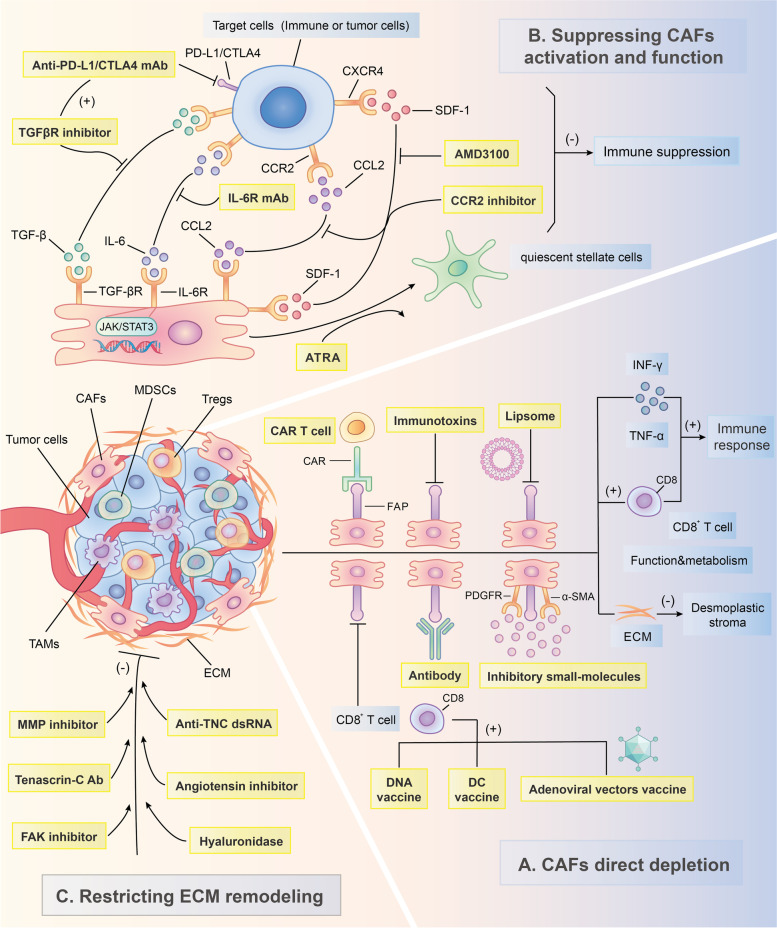
“The elimination of CAFs by FAP-targeting therapy can enhance the anticancer immune response mediated by high levels of certain inflammatory mediators, such as IFN-γ and TNF-α, and facilitate the toxic effects and metabolism of CD8 + T cells with a decreased desmoplastic stroma in the TME [224, 300, 301, 326].”
BackgroundInfluentialChen, W., Jin, W., Hardegen, N., Lei, K.-J., Li, L., Marinos, N., McGrady, G., & Wahl, S. M. (2003) · The Journal of Experimental Medicine · doi:10.1084/jem.20030152 · Cited by 4,699 · cited 2×
“[213], CAF-derived TGF-β can facilitate the differentiation of naïve T cells into CD4 + CD25 + Treg cells by inducing the expression of the Foxp3 gene in T lymphocytes.”
Background
Cited by
Items 601–700 of 1,003
c-Met Signaling as a Therapeutic Target in Head and Neck Cancer
Centuori, S. M., & Bauman, J. E. (2022) · The Cancer Journal · doi:10.1097/ppo.0000000000000619 · Cited by 19
“This is consistent with studies in other tumor types, which have demonstrated that CAFs restrict the recruitment of effector T cells to tumor tissues through the production of cytokines, chemokines, exosomes, and other immunomodulatory molecules.41 Cancer-associated fibroblasts may promote M2-macrophage polarization t…”
BackgroundResultInfluentialLu, J., Shuai, B., Shou, Z., Guo, W., Zhou, C., Ouyang, X., Zhou, H., Li, J., Cui, J., Jiang, F., et al. (2022) · Cancers · doi:10.3390/cancers14194645 · Cited by 19
“The tumor microenvironment (TME) is a complex and integrated system formed by the interaction of tumor cells with surrounding stromal cells, myeloid cells, and immune cells [5].”
BackgroundGeisler, L. J., Hellberg, T., Lambrecht, J., Jann, H., Knorr, J., Eschrich, J., Loosen, S. H., Wree, A., Hammerich, L., Krieg, A. H., et al. (2022) · Journal of Clinical Medicine · doi:10.3390/jcm11206191 · Cited by 19
“It is apparent that all analytes, except the anti-inflammatory IL-10, were upregulated in comparison to healthy controls, most likely due to a complex interaction between the stromal tumor microenvironment and inflammatory infiltrates, which has already been described for other tumor identities [27,28] as well as for…”
BackgroundZheng, X., Jiang, K., Xiao, W., Zeng, D., Peng, W., Bai, J., Chen, X., Li, P., Zhang, L., Zheng, X., et al. (2022) · Frontiers in Immunology · doi:10.3389/fimmu.2022.974265 · Cited by 20
Lei, J.-X., Wang, R., Hu, C., Lou, X., Lv, M., Li, C., Gai, B., Wu, X., Dou, R., Cai, D., et al. (2024) · International Journal of Surgery · doi:10.1097/js9.0000000000001684 · Cited by 19
“Moreover, CAFs contribute to the development of therapeutic resistance by orchestrating the formation of a physical barrier surrounding the tumor, impeding the effective penetration of anticancer drugs into the tumor microenvironment [47,48] .”
BackgroundLyu, P., Gu, X., Wang, F., Sun, H., Zhou, Q., Yang, S., & Yuan, W. (2024) · Biomarker Research · doi:10.1186/s40364-024-00622-9 · Cited by 20
New avenues for cancer immunotherapy: Cell-mediated drug delivery systems
Zhang, H., Grippin, A., Sun, M., Ma, Y., Kim, B. Y. S., Teng, L., Jiang, W., & Yang, Z. (2024) · Journal of Controlled Release · doi:10.1016/j.jconrel.2024.09.037 · Cited by 19
Wang, Q., Zhao, Y., Tan, G., & Ai, J. (2024) · npj Precision Oncology · doi:10.1038/s41698-024-00716-5 · Cited by 19
Wang, T., Tian, L., Wei, B., Li, J., Zhang, C., Long, R., Zhu, X., Zhang, Y., Wang, W., Tang, G., et al. (2024) · Scientific Reports · doi:10.1038/s41598-024-77630-0 · Cited by 19
“In HGSOC, fibroblasts can form a dense physical barrier around tumor cells, impede the infiltration of immune cells, and promote tumor cell proliferation through the secretion of cytokines 38,39 .”
BackgroundSelf-citationZheng, B., & Guo, W. (2024) · The Journal of Pathology · doi:10.1002/path.6369 · Cited by 19
Navigating Tumor Microenvironment Barriers with Nanotherapeutic Strategies for Targeting Metastasis
Thomas, M. R., Badekila, A. K., Pai, V., Nijil, S., Bhandary, Y. P., Rai, A., & Kini, S. (2025) · Advanced Healthcare Materials · doi:10.1002/adhm.202403107 · Cited by 19
Bae, S., Lee, H., Na, K. J., Lee, D. S., Choi, H., & Kim, Y. T. (2025) · Genome Medicine · doi:10.1186/s13073-025-01457-1 · Cited by 20
“Alternatively, MHC class I expression, which is responsible for the antigen presentation of cancer cells, is reduced [5], or cancer interacts with cancer-associated fibroblasts (CAFs) and alters the microenvironment such that immune cells have more difficulty suppressing tumor growth [6].”
Li, Y., Cui, H., & Cui, H. (2025) · Advanced Functional Materials · doi:10.1002/adfm.202503391 · Cited by 19
Crosstalk between Tumor-Associated Macrophages and MicroRNAs: A Key Role in Tumor Microenvironment
Zhou, X., Chen, B., Zhang, Z., Huang, Y., Li, J., Wei, Q., Cao, D., & Ai, J. (2022) · International Journal of Molecular Sciences · doi:10.3390/ijms232113258 · Cited by 19
“current immunotherapy and search for novel important biomarkers [9].”
BackgroundIzci, M., Maksoudian, C., Goncalves, F. R., Aversa, L., Salembier, R., Sargsian, A., Gilabert, I. P., Chu, T., Ríos‐Luci, C., Bolea‐Fernandez, E., et al. (2022) · Journal of Nanobiotechnology · doi:10.1186/s12951-022-01727-9 · Cited by 19
“It may be that high levels of N-TECs require the presence of CAFs and TAMs as all members of the TME interact closely with one another [35].”
BackgroundLamsal, A., Andersen, S. B., Johansson, I., Vietri, M., Bokil, A. A., Kurganovs, N. J., Rylander, F., Bjørkøy, G., Pettersen, K., & Giambelluca, M. S. (2023) · Cell Communication and Signaling · doi:10.1186/s12964-023-01062-y · Cited by 19
Guo, Y., Li, H., & Sun, C. (2023) · Journal of Gastrointestinal Oncology · doi:10.21037/jgo-23-198 · Cited by 19
CRABP2 regulates infiltration of cancer-associated fibroblasts and immune response in melanoma
Zeng, S., CHEN, X., Yi, Q., Thakur, A., Yang, H. J., Yan, Y., & LIU, S. (2024) · Oncology Research Featuring Preclinical and Clinical Cancer Therapeutics · doi:10.32604/or.2023.042345 · Cited by 19
Cao, L., & Ouyang, H. (2024) · Frontiers in Oncology · doi:10.3389/fonc.2024.1374742 · Cited by 19
Wang, Y., Ju, X., Hua, R., Chen, J., Dai, X., Liu, L., Wang, G., Bai, Y., Hu, H., & Li, X. (2024) · British Journal of Cancer · doi:10.1038/s41416-024-02856-8 · Cited by 18
“In summary, our results demonstrate that the application of deep learning to routine histology may provide prognostic imaging biomarkers to advance personalised immunotherapy for lung cancer.”
Zhao, S., Zhang, Y., Meng, X., Wang, Y., Li, Y., Li, H., Zhao, X., Yang, P., Liu, S., & Yang, C. (2025) · BMC Cancer · doi:10.1186/s12885-025-14261-2 · Cited by 19
“CAFs, another key component of the TME that exert a crucial effect on TIME [44, 45], present complex heterogeneity [33, 48].”
Zhang, Y., & Liu, Z. (2025) · Advanced Science · doi:10.1002/advs.202508692 · Cited by 18
AEBP1 drives fibroblast-mediated T cell dysfunction in tumors
Wang, X., Li, J., Song, D., Wu, Y., Liu, J., Yi, Z., Sun, J., Huang, J., Wu, L., Zhang, X., et al. (2025) · Nature Communications · doi:10.1038/s41467-025-63659-w · Cited by 18
“Additionally, the physical barriers created by CAFs and the extracellular matrix (ECM) in the TME also hinder T cell in fi ltration and migration towards the tumor site, exacerbating T cell dysfunction 5 .”
Self-citationTang, H. J., You, T., Ge, H., Bai, C., Wang, Y., Sun, Z., Han, Q., & Zhao, R. C. (2025) · Journal for ImmunoTherapy of Cancer · doi:10.1136/jitc-2024-010812 · Cited by 18
“Autophagy inhibitors enhanced the proliferation-inhibiting and apoptosis-promoting effects of anlotinib on macrophages (figure 6B–”
Zhou, H., Zheng, H., Yao, W., Sun, H., Yong-Guang, Y., Li, Z. S., Song, D., Zhang, Y., & Sun, T. (2025) · Journal of Nanobiotechnology · doi:10.1186/s12951-025-03970-2 · Cited by 19
“In contrast, immunosuppressive chemokines (such as the CCL2/CCR2 axis) recruit MDSCs and TAMs to build an immunosuppressive barrier, while the CXCL12/CXCR4 pathway hinders T cell infiltration by recruiting stromal cells [52, 58, 59].”
Barriers and Strategies to Enhance CAR ‐T Cell Infiltration in Solid Tumours: A Systematic Review
Zhang, Y., Sun, H., Zhao, L., Zhao, N., 陈政良, He, L., Guo, Z., & Yu, J. (2026) · Immunology · doi:10.1111/imm.70094 · Cited by 19
Zhang, C., Zhou, L., Li, S., Zhao, J., Meng, X., Ma, L., Wang, Y., Li, C., Zheng, L., & Ming, L. (2022) · Cancer Letters · doi:10.1016/j.canlet.2022.215918 · Cited by 18
Engineered multifunctional nanocarriers for controlled drug delivery in tumor immunotherapy
Katopodi, T., Petanidis, S., Tsavlis, D., Anestakis, D., Charalampidis, C., Chatziprodromidou, I. P., Eskitzis, P., Zarogoulidis, P., Kosmidis, C. S., Matthaios, D., et al. (2022) · Frontiers in Oncology · doi:10.3389/fonc.2022.1042125 · Cited by 18
Ding, C., Yu, Z., Li, X., Zhu, J., Dai, M., & He, Q. (2023) · Oncology Letters · doi:10.3892/ol.2023.13663 · Cited by 18
“The crosstalk between the ECM and tumor‐infiltrating immune cells (TIICs) serves a crucial role in the progression of tumors (5).”
BackgroundIn vivo models of pancreatic ductal adenocarcinoma
Vudatha, V., Herremans, K. M., Freudenberger, D. C., Liu, C., & Trevino, J. (2023) · Advances in cancer research · doi:10.1016/bs.acr.2023.02.002 · Cited by 19
Li, L., Liu, J., Wang, W., Fu, Y., Deng, Y., Li, X., Liu, Z., Pang, Y., Xu, Y., Yan, M., et al. (2023) · Translational Oncology · doi:10.1016/j.tranon.2023.101733 · Cited by 18
Self-citationHuang, L., Lou, N., Xie, T., Tang, L. M., Han, X., & Shi, Y. (2023) · Cancer Immunology Immunotherapy · doi:10.1007/s00262-023-03485-5 · Cited by 18
Huang, B., Chen, Q., Ye, Z., Zeng, L., Huang, C., Xie, Y., Zhang, R., & Shen, H. (2023) · International Journal of Molecular Sciences · doi:10.3390/ijms241713175 · Cited by 18
“Additionally, CAFs, which are important cells in the tumor ECM, secrete various cytokines, growth factors, chemokines, exosomes, and other effector molecules that are crucial for cancer cells to evade immune surveillance and remodel the tumor stroma [17].”
BackgroundZheng, S., Guerrero, E. N., & Foijer, F. (2023) · Cells · doi:10.3390/cells12232712 · Cited by 18
“Beyond secreting exosomes and growth factors that fuel tumour development, the ECM contributes to an immunosuppressive TME [97].”
BackgroundChu, B.-W., Wang, Y., Yang, J., & Dong, B. (2023) · Aging · doi:10.18632/aging.205324 · Cited by 18
“The tumor may be suppressed through cellular immune mechanisms involving CD4+ T cells, CD8+ T cells, and NK cells, while CAF, as a major part of the tumor stroma, played a crucial function in tumor immune evasion [18].”
Dadgar, H., Norouzbeigi, N., Jafari, E., Albalooshi, B., Al‐Ibraheem, A., Haidar, M., Omar, Y., Esmail, A. A. H., Marafi, F., Usmani, S., et al. (2024) · Clinical and Translational Imaging · doi:10.1007/s40336-023-00609-w · Cited by 18
Yang, Y., Li, Z., Wang, Y., Gao, J., Meng, Y., Wang, S., Zhao, X., Tang, C., Yang, W., Li, Y., et al. (2024) · EMBO Molecular Medicine · doi:10.1038/s44321-024-00051-z · Cited by 18
“Interestingly, these complex and diverse metabolic patterns also affect immune cells (Ghesquière et al, 2014; Mao et al, 2021).”
Influence of tumor microenvironment on the different breast cancer subtypes and applied therapies
Almeida, C. F., Correia‐da‐Silva, G., Teixeira, N. A. A., & Amaral, C. (2024) · Biochemical Pharmacology · doi:10.1016/j.bcp.2024.116178 · Cited by 18
Kobayashi, T., Noma, K., Nishimura, S., Kato, T., Nishiwaki, N., Ohara, T., Kunitomo, T., Kawasaki, K., Akai, M., Komoto, S., et al. (2024) · Molecular Cancer Therapeutics · doi:10.1158/1535-7163.mct-23-0527 · Cited by 18
Røgenes, H., Finne, K., Winge, I., Akslen, L. A., Östman, A., & Milošević, V. (2024) · Frontiers in Immunology · doi:10.3389/fimmu.2024.1325191 · Cited by 18
Cheon, I., Lee, S., Oh, S., & Ahn, Y. (2024) · Molecular Therapy — Nucleic Acids · doi:10.1016/j.omtn.2024.102194 · Cited by 18
“CAF activation is induced by extrinsic factors from the TME 9,10 and intrinsic factors within CAFs.”
InfluentialNorgard, R. J., Budhani, P., O’Brien, S. A., Xia, Y., Egan, J. N., Flynn, B., Tagore, J. R., Seco, J., Peet, G. W., Mikucka, A., et al. (2024) · Cancer Research Communications · doi:10.1158/2767-9764.crc-24-0172 · Cited by 18
“Elevated levels of CCL7 and IL6 observed after SOS1i + MEKi by iCAFs is known to drive CCR2 + macrophages into tumors and induce an M2 protumorigenic macrophage phenotype (31) through IL6/JAK/STAT3 signaling (45, 46).”
BackgroundYe, Y.-H., Xin, H., Li, J.-L., Li, N., Pan, S.-Y., Chen, L., Pan, J.-Y., Hu, Z., Wang, P., Luo, C., et al. (2024) · Clinical and Molecular Hepatology · doi:10.3350/cmh.2024.0296 · Cited by 18
Exosomes: Key Factors in Ovarian Cancer Peritoneal Metastasis and Drug Resistance
Shao, M., Gao, Y., Xu, X., Chan, D. W., & Du, J. (2024) · Biomolecules · doi:10.3390/biom14091099 · Cited by 19
“Cancer-associated fibroblasts (CAFs) represent a critical component of the tumor microenvironment, exerting a substantial influence on tumor progression [52].”
BackgroundFeng, H., Liu, J., Jia, H., Bu, X., Yang, W., & Su, P. (2024) · Journal of Biochemical and Molecular Toxicology · doi:10.1002/jbt.23778 · Cited by 18
Self-citationZhou, T., Yan, H., Deng, Y., Zhu, Y., Xia, X., Wu, W., Zhang, W., Chen, H., Hu, J., Zhou, Z., et al. (2024) · Interdisciplinary medicine · doi:10.1002/inmd.20240018 · Cited by 19
Cao, Y., Wen, E., Chen, Q., Li, X., & Wang, Z. (2024) · Advanced Healthcare Materials · doi:10.1002/adhm.202402211 · Cited by 18
Duan, X., Xiong, Y., & Gan, J. (2024) · Cancer Biology & Therapy · doi:10.1080/15384047.2024.2424490 · Cited by 18
The Hippo Pathway in Breast Cancer: The Extracellular Matrix and Hypoxia
Yang, H., Yang, J., Zheng, X., Chen, T., Zhang, R., Chen, R., Cao, T., Zeng, F., & Liu, Q. (2024) · International Journal of Molecular Sciences · doi:10.3390/ijms252312868 · Cited by 18
Col1A1 as a new decoder of clinical features and immune microenvironment in ovarian cancer
Xiao, X., Long, F., Yu, S., Wu, W., Nie, D., Ren, X., Li, W., Wang, X., Yu, L., Wang, P., et al. (2025) · Frontiers in Immunology · doi:10.3389/fimmu.2024.1496090 · Cited by 18
Sang, M., Ge, J., Ge, J., Tang, G., Wang, Q., Wu, J., Mao, L., Ding, X., & Zhou, X. (2025) · Frontiers in Immunology · doi:10.3389/fimmu.2024.1382842 · Cited by 19
“However, CTL-mediated antitumor immunity can be inhibited by immunosuppressive cells within the TME, such as M2 tumor-associated macrophages (TAMs), myeloid-derived suppressor cells (MDSCs), cancer-associated fi broblasts, and regulatory T cells (Tregs) (6, 10, 13, 14).”
Clinical significance of the tumor microenvironment on immune tolerance in gastric cancer
He, X., Guan, X., & Li, Y. (2025) · Frontiers in Immunology · doi:10.3389/fimmu.2025.1532605 · Cited by 18
“Therapeutic regimens targeting CAFs have been validated in a variety of tumors (55).”
Fibroblast heterogeneity in pancreatic ductal adenocarcinoma: Perspectives in immunotherapy
Luong, T., Golivi, Y., Nagaraju, G. P., & El‐Rayes, B. F. (2022) · Cytokine & Growth Factor Reviews · doi:10.1016/j.cytogfr.2022.09.001 · Cited by 18
Akter, Z., Salamat, N., Ali, M. Y., & Li, Z. (2023) · Frontiers in Oncology · doi:10.3389/fonc.2022.1072739 · Cited by 18
You, D., Wang, Y., Xu, J., Yang, R., Wang, W., Wang, X., Cao, X., Li, Y., Yu, L., Wang, W., et al. (2023) · Discover Oncology · doi:10.1007/s12672-023-00753-9 · Cited by 18
“Carcinoma-associated fibroblasts (CAFs) have received increasing attention in recent years as an important component of the tumour microenvironment [5].”
BackgroundSelf-citationCrosstalk between endoplasmic reticulum stress and multidrug-resistant cancers: hope or frustration
Qing, B., Wang, S., Du, Y., Liu, C., & Li, W. (2023) · Frontiers in Pharmacology · doi:10.3389/fphar.2023.1273987 · Cited by 19
“T cells by expressing coinhibitory molecules and secreting immunosuppressive factors, which eventually lead to the immune escape of tumor cells (Mao et al., 2021).”
BackgroundCancer‐derived non‐coding RNAs endow tumor microenvironment with immunosuppressive properties
Hu, T., Shi, R., Gu, Y., Zhou, H., Fang, Y., Xu, T., Xu, Y., Wu, X., Ma, L., & Shu, Y. (2023) · Wiley Interdisciplinary Reviews - RNA · doi:10.1002/wrna.1822 · Cited by 19
“…TGF-β , IL-1 β , IL-6, VEGF, and CXCL12, CAFs inhibit the antitumor activities of infiltrating immune cells, including T lymphocytes, NK cells, DCs, TAMs, and MDSCs. Immune cells also promote CAF functions, thereby creating a positive feedback loop of tumor immunosuppression (Mao et al., 2021).”
BackgroundAl-Bzour, N., Al-Bzour, A. N., Ababneh, O. E., Al-Jezawi, M. M., Saeed, A., & Saeed, A. (2023) · International Journal of Molecular Sciences · doi:10.3390/ijms242216505 · Cited by 18
“The interactions between CAFs and immune cells in the TME drive an immunosuppressive effect, which in turn enables tumor cells to bypass the surveillance of the immune system [92].”
BackgroundSun, X., Meng, F., Nong, M.-Y., Fang, H., Lu, C., Wang, Y., & Zhang, P. (2023) · Aging · doi:10.18632/aging.205306 · Cited by 18
“CAF, as a highly adaptable and dynamic constituent of the TME, exerts a crucial function in promoting cancer progression via intricate crosstalk with other cellular and non-cellular constituents within the TME [42].”
BackgroundJiang, W., Xu, S. Y., & Li, P. (2024) · Current Gene Therapy · doi:10.2174/0115665232291300240509104344 · Cited by 18
Deng, Y., Chen, Q., Guo, C., Chen, J., Li, X., Li, Z., Zhang, Y., Zhao, J., Zhou, J., Cai, J., et al. (2025) · Molecular Cancer · doi:10.1186/s12943-025-02231-y · Cited by 17
“Previous studies have demonstrated that cancer-associated fibroblast activation of ECM-related signaling pathways can lead to stroma-associated fibrosis, promoting tumor cell migration and increasing vascular permeability [47, 48].”
Trained Immunity in Health and Disease
Yao, M., Zhou, J., Mei, J., Gao, C., Ding, P., Li, G., Zhang, C., Li, Z., & Gao, J. (2025) · MedComm · doi:10.1002/mco2.70461 · Cited by 17
Wan, S., Moure, U. A. E., Liu, R., Liu, C., Wang, K., Deng, L., Liang, P., & Cui, H. (2022) · Frontiers in Immunology · doi:10.3389/fimmu.2022.1013094 · Cited by 17
Pan-cancer analysis identifies PD-L2 as a tumor promotor in the tumor microenvironment
Lv, J., Jiang, Z., Yuan, J., Zhuang, M., Guan, X., Liu, H., Yin, Y., Ma, Y., Liu, Z., Wang, H., et al. (2023) · Frontiers in Immunology · doi:10.3389/fimmu.2023.1093716 · Cited by 17
Xu, A., Xu, X., Luo, Z., Huang, X., Gong, R.-Q., & Fu, D. (2023) · Frontiers in Oncology · doi:10.3389/fonc.2023.1191660 · Cited by 17
Vasculogenic mimicry score identifies the prognosis and immune landscape of lung adenocarcinoma
Yang, W., Li, Z., Wang, W., Wu, J., Li, J., Huang, X., Zhang, X., & Ye, X. (2023) · Frontiers in Genetics · doi:10.3389/fgene.2023.1206141 · Cited by 17
“The TME and immune cell infiltration play key roles in tumor development and the tumor immune response (Mao et al., 2021).”
BackgroundSelf-citationThe role of cancer-associated fibroblasts in bladder cancer progression
Huang, L., Xie, Q., Deng, J., & Wei, W.-F. (2023) · Heliyon · doi:10.1016/j.heliyon.2023.e19802 · Cited by 17
“The tumor immune microenvironment (TIME) has been linked to the clinical prognosis of cancer patients [63].”
BackgroundDrug resistance mechanism and reversal strategy in lung cancer immunotherapy
Xu, Y., Liu, Y., Ge, Y., Li, H., Zhang, Y., & Wang, L. (2023) · Frontiers in Pharmacology · doi:10.3389/fphar.2023.1230824 · Cited by 18
“ECM deposition and remodeling inside the tumor microenvironment are primarily controlled by cancer-associated fi broblasts (CAFs).”
BackgroundInfluentialHe, F., Bandyopadhyay, A. M., Klesse, L. J., Rogojina, A. T., Chun, S. H., Butler, E. B., Hartshorne, T., Holland, T., Garcia, D. K., Weldon, K. S., et al. (2023) · Nature Communications · doi:10.1038/s41467-023-43373-1 · Cited by 17
CAR NK Cell Therapy for the Treatment of Metastatic Melanoma: Potential & Prospects
Hibler, W., Merlino, G. T., & Yu, Y. (2023) · Cells · doi:10.3390/cells12232750 · Cited by 17
“…the TME that have been redirected to a pro-tumoral state resembling the phenotype of myofibroblasts [120] and secrete a variety of immunosuppressive cytokines, growth factors, and proteases that promote extracellular matrix (ECM) remodeling into a more favorable environment for tumor growth [121].”
BackgroundThe impact of SLC10A3 on prognosis and immune microenvironment in colorectal adenocarcinoma
Wang, B., Fan, W., Tao, Y., Zhang, S., Wang, J., Fan, Z., Liu, L., & Wang, Y. (2024) · European journal of medical research · doi:10.1186/s40001-023-01526-4 · Cited by 17
Wang, D., Li, L., Zhang, Y., & Ye, K. (2024) · Molecular Biotechnology · doi:10.1007/s12033-024-01055-3 · Cited by 17
Macrophages as Targets in Hepatocellular Carcinoma Therapy
Liu, Y., Mao, Z., Ding, Y., & Wang, W. (2024) · Molecular Cancer Therapeutics · doi:10.1158/1535-7163.mct-23-0660 · Cited by 17
Self-citationFeng, Y., Qiao, S., Chen, J., Wen, X., Chen, Y., Song, X., Xu, J., Qiao, X., Yang, J., Zhang, S., et al. (2024) · OncoTargets and Therapy · doi:10.2147/ott.s447502 · Cited by 17
“33 CAFs are critical in shaping the body’s immunosuppression, promoting tumor growth, progression, and metastasis, and enhancing tumor chemoresistance.”
BackgroundSelf-citationLi, Y., Zheng, Y., Xu, S., Hu, H. H., Peng, L., Zhu, J., & Wu, M. (2024) · International Immunopharmacology · doi:10.1016/j.intimp.2024.111944 · Cited by 17
Chen, Y., Liu, X., Ainiwan, Y., Li, M., Pan, J., Chen, Y., Xiao, Z., Wang, Z., Xiao, X., Tang, J., et al. (2024) · Cancer Letters · doi:10.1016/j.canlet.2024.216905 · Cited by 17
Li, Z., Sun, S., Wang, Y., Hua, Y., Liu, M., Zhou, Y., Zhong, L., Li, T., Zhao, H., Zhou, X., et al. (2024) · Cancer Letters · doi:10.1016/j.canlet.2024.216962 · Cited by 17
Cancer-associated fibroblasts: heterogeneity and their role in the tumor immune response
Xiao, Y., Wang, Z., Gu, M., Wei, P., Wang, X., & Li, W. (2024) · Clinical and Experimental Medicine · doi:10.1007/s10238-024-01375-3 · Cited by 18
“Although most studies have demonstrated that CAFs can promote tumor proliferation, some researchers have found that a subset of CAF subgroups exert tumor-suppressive effects [10, 11].”
ResultMetabolic heterogeneity in tumor microenvironment – A novel landmark for immunotherapy
Chen, C., Han, P., & Qing, Y. (2024) · Autoimmunity Reviews · doi:10.1016/j.autrev.2024.103579 · Cited by 17
Macrophage biology in the pathogenesis of Helicobacter pylori infection
Xiao, F., Li, N., Xu, X., & Zhu, Y. (2024) · Critical Reviews in Microbiology · doi:10.1080/1040841x.2024.2366944 · Cited by 17
“…the tumor microenvironment (tMe). immune cells within this environment notably influence tumor initiation, growth, and metastasis (lei et al. 2020; Mao et al. 2021). consequently, the forthcoming emphasis would be on delineating the molecular mechanisms through which M2 macrophages regulate the…”
Zhou, L., Zhang, W., Hu, X., Wang, D., & Tang, D. (2024) · Clinical Medicine Insights Oncology · doi:10.1177/11795549241287058 · Cited by 17
Qi, F., Fu, D., Cai, H., Zheng, Y., Wang, N., & Xu, Z. (2024) · Advanced Functional Materials · doi:10.1002/adfm.202418240 · Cited by 18
Drug Delivery System Targeting Cancer-Associated Fibroblast for Improving Immunotherapy
Zhang, Z., Wang, R., & Chen, L. (2025) · International Journal of Nanomedicine · doi:10.2147/ijn.s500591 · Cited by 17
Qin, J., Hu, S., Chen, Y., Xu, M., Xiao, Q., Lou, J., Ding, M., Sun, H., Xu, T., Pan, Y., et al. (2025) · Molecular Carcinogenesis · doi:10.1002/mc.23882 · Cited by 17
“CAFs, as the predominant stromal cells in the TME, play a key role in promoting ECM remodeling and the immuno-suppressive microenvironment [39].”
Chang, Y., Huang, K., Tang, H., Yao, Y., Min, J., Quan, H., Xu, K. W., Wang, H., Zhang, J., & Zhao, Y. (2025) · Advanced Composites and Hybrid Materials · doi:10.1007/s42114-025-01242-z · Cited by 17
“Within the TME, CAFs play a crucial role by synthesizing a significant portion of the ECM, thereby influencing both the structure of the microenvironment and the response to treatment [6].”
Anti‐Tumor Strategies Targeting Nutritional Deprivation: Challenges and Opportunities
Shi, J., Han, W., Wang, J., & Kong, X. (2025) · Advanced Materials · doi:10.1002/adma.202415550 · Cited by 17
Yagi, T., Kagawa, S., Nogi, S., Taniguchi, A., Yoshimoto, M., Suemori, K., Nagai, Y., Fujita, S., Kuroda, S., Kikuchi, S., et al. (2025) · Cancer Immunology Immunotherapy · doi:10.1007/s00262-025-03946-z · Cited by 17
“However, a comprehensive understanding of the TME is still lacking, and the relationship between CAF and other components of the TME remains unclear [12].”
Xiu, Y., Luo, H., Xu, Q., Li, W., Wu, J., Sun, R., Sun, D., Yan, K., Liu, H., & Wang, Q. (2025) · International Journal of Biological Macromolecules · doi:10.1016/j.ijbiomac.2025.141556 · Cited by 17
Integrating model systems and genomic insights to decipher mechanisms of cancer metastasis
Leung, M. M., Swanton, C., & McGranahan, N. (2025) · Nature Reviews Genetics · doi:10.1038/s41576-025-00825-2 · Cited by 18
“TAMs can also secrete IL-6, forming a positive-feedback loop that promotes further EMT and consequently increases metastasis efficacy 129,131 .”
Zhang, Y., Qi, C., Wei, Q., Li, Y., & Tian, P. (2025) · Respiratory Research · doi:10.1186/s12931-025-03294-7 · Cited by 17
“CAFs can also secrete many cytokines, growth factors, chemokines, exosomes, and other effector molecules that promote an immuno-suppressive environment within the TME, leading to immune escape [66].”
Comprehensive prognostic and immunological analysis of CCT2 in pan-cancer
Lv, W., Shi, L., Pan, J., & Wang, S. (2022) · Frontiers in Oncology · doi:10.3389/fonc.2022.986990 · Cited by 18
Gou, Q., Liu, Z., Xie, Y., Deng, Y., Ma, J., Li, J., & Zheng, H. (2022) · Frontiers in Pharmacology · doi:10.3389/fphar.2022.995555 · Cited by 17
“Correlation analysis between TIDE results members and TRG score showed that TRG score was highly positively correlated with CAFs, TAM M2, and MDSC, and all of these cells were reported to be immune suppressive cells and closely associated with cancer stemness (Kwak et al., 2020; Boutilier and Elsawa, 2021; Mao et al.,…”
ResultModulation of the Tumor-Associated Immuno-Environment by Non-Invasive Physical Plasma
Förster, S., Niu, Y., Eggers, B., Nokhbehsaim, M., Kramer, F., Bekeschus, S., Mustea, A., & Stope, M. B. (2023) · Cancers · doi:10.3390/cancers15041073 · Cited by 17
“In addition, desmoplasia in TME induced by poor tissue oxygenation and chronic inflammation also blocks the movement of the anti-tumor immune cells towards the tumor lesions [62].”
BackgroundInfluentialWang, Y., Chen, Z., Zhao, G., & Li, Q. (2023) · Mediators of Inflammation · doi:10.1155/2023/3781091 · Cited by 17
Yang, J., Liu, K., Lü, Y., Ji, J., Qin, J., Deng, H., & Wang, Z. (2023) · Frontiers in Immunology · doi:10.3389/fimmu.2023.1174762 · Cited by 17
Deriving spatial features from in situ proteomics imaging to enhance cancer survival analysis
Dayao, M. T., Trevino, A. E., Kim, H., Ruffalo, M., D’Angio, H. B., Preska, R., Duvvuri, U., Mayer, A. T., & Bar‐Joseph, Z. (2023) · Bioinformatics · doi:10.1093/bioinformatics/btad245 · Cited by 17
“For example, such interactions can facilitate the degradation of the extracellular matrix, which results in dysfunction in the cancer immune response (Ziani et al. 2018; Mao et al. 2021).”
Cancer-associated fibroblasts: Just on the opposite side of antitumour immunity?
Guo, S., Yuan, J., Meng, X., Feng, X., Ma, D., Han, Y., & Li, K. (2023) · International Immunopharmacology · doi:10.1016/j.intimp.2023.110601 · Cited by 17
Dong, H., Yang, C., Chen, X. '., Sun, H., He, X., & Wang, W. (2023) · Breast Cancer · doi:10.1007/s12282-023-01496-9 · Cited by 17
“Cancer-associated fibroblasts (CAFs) are the most abundant cells in tumor microenvironment, which expresses fibroblast activation protein (FAP) and α-smooth muscle actin (α-SMA) [6].”
BackgroundSelf-citationXu, Y., Jin, Y., Gao, S., Wang, Y., Qu, C., Wu, Y., Ding, N., Dai, Y., Jiang, L., & Liu, S. (2022) · Journal of Oncology · doi:10.1155/2022/7204415 · Cited by 18
Qiu, Y., Wang, Y., Liu, J., Sun, K., Liu, B., & Hou, Q. (2025) · BMC Cancer · doi:10.1186/s12885-025-14212-x · Cited by 17
“Recently, mounting evidence has demonstrated that CAFs can interact with diverse immune cell populations in the TME, exerting a profound influence on anti-tumor immune response [70].”
Self-citation
Metadata
- Authors
- Mao, X., Xu, J., Wang, W., Liang, C., Hua, J., Liu, J., Zhang, B., Meng, Q., Yu, X., & Shi, S.
- Affiliations
- Shanghai Medical College of Fudan University (CN)
- Corresponding author
- Meng, Qingcai
- Yu, Xianjun
- Shi, Si
- Venue
- Molecular Cancer
- Published
- 2021-10-11
- Volume
- 20
- Issue
- 1
- Pages
- 131-131
- ISSN
- 1476-4598 (ISSN-L)
- PMC
- PMC8504100
- OpenAlex
- W3205475594
- Cited by
- 2,290
- References
- 369
- Citations by year
- 2026: 379 · 2025: 596 · 2024: 647 · 2023: 459 · 2022: 202 · 2021: 6
- FWCI
- 40.37
- Type
- journal article
- Language
- en
- Open access
- gold
- doi.org
- Licence
- cc-by
- creativecommons.org/licenses/by/4.0 (tdm)
- creativecommons.org/licenses/by/4.0 (vor)
- Locations
- Molecular Cancer (publishedVersion, cc-by)
- Europe PMC (PubMed Central) (publishedVersion, other-oa)
- PubMed Central (publishedVersion, cc-by)
- PubMed (publishedVersion)
- DOAJ (DOAJ: Directory of Open Access Journals) (submittedVersion, cc-by-sa)
- Funders
- national natural science foundation of china (81802352, 81772555, 81902428)
- china national funds for distinguished young scientists (81625016)
- shanghai rising-star program (20QA1402100)
- Topics
- Health Sciences › Medicine › Oncology › Cancer Immunotherapy and Biomarkers
- Life Sciences › Immunology and Microbiology › Immunology › Immune cells in cancer
- Health Sciences › Medicine › Oncology › Cancer Cells and Metastasis
- Keywords
- cancer-associated fibroblasts, tumor microenvironment, tumor immune microenvironment, tumor-infiltrating immune cells, immunosuppression, tumor immune evasion, extracellular matrix remodeling, chemoresistance, tumor angiogenesis, metastasis, exosomes, cytokines and chemokines
- MeSH terms
- Cancer-Associated Fibroblasts, Tumor-Associated Macrophages, Animals, Cell Communication, Disease Susceptibility, Gene Expression Regulation, Humans, Immune System, Immunity, Innate, Neoplasm Metastasis, Neoplasms, Biomarkers, Tumor, Signal Transduction, Lymphocytes, Tumor-Infiltrating, Adaptive Immunity, Tumor Microenvironment, Neoplasm Grading
About these checks
Registry, retraction, Cites and statistics results are computed, not judged, with one exception: a printed reference that no index lists is read once by a model before it counts as a citation error. Claims are extracted by a model and kept only when their quote appears verbatim in the text; each cited source is then checked, with a model’s help, for whether it says what the claim relies on. Those verdicts can be wrong — read the claim’s quote and the cited source before relying on one.
Statistics and arithmetic are recomputed, not judged.
Confidence bands are shown only for fields calibrated on our annotated test set. None is calibrated yet, so no band is shown.
What counts as a claim ›How we measure confidence ›How we check this ›
Are you an author, or do you see a problem with this page? Request a review
Data sources
Bibliographic data: Semantic Scholar, OpenAlex, Crossref.
Contains information from the Semantic Scholar Academic Graph Datasets, made available under the ODC Attribution License (ODC-BY 1.0).
Semantic Scholar’s data is described in: Kinney, R., et al. (2023). The Semantic Scholar Open Data Platform. arXiv:2301.10140.
