

Crosstalk between cancer‐associated fibroblasts and immune cells in the tumor microenvironment: new findings and future perspectives
Open accessThe DOI matches its Crossref record; 369 of the 369 references it cites were found in a registry or an index.
Abstract
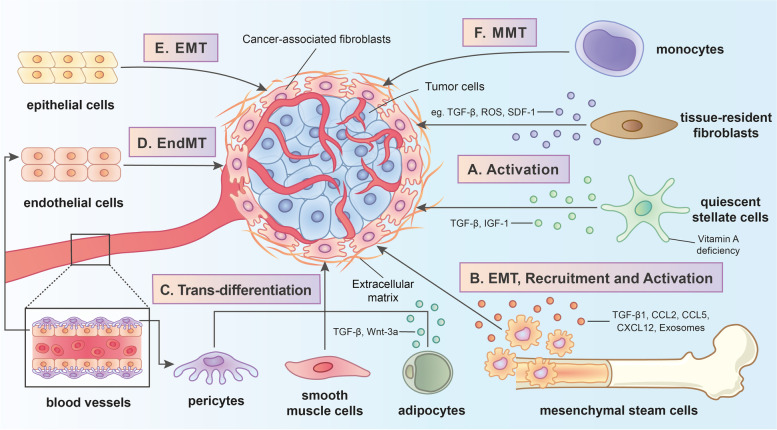
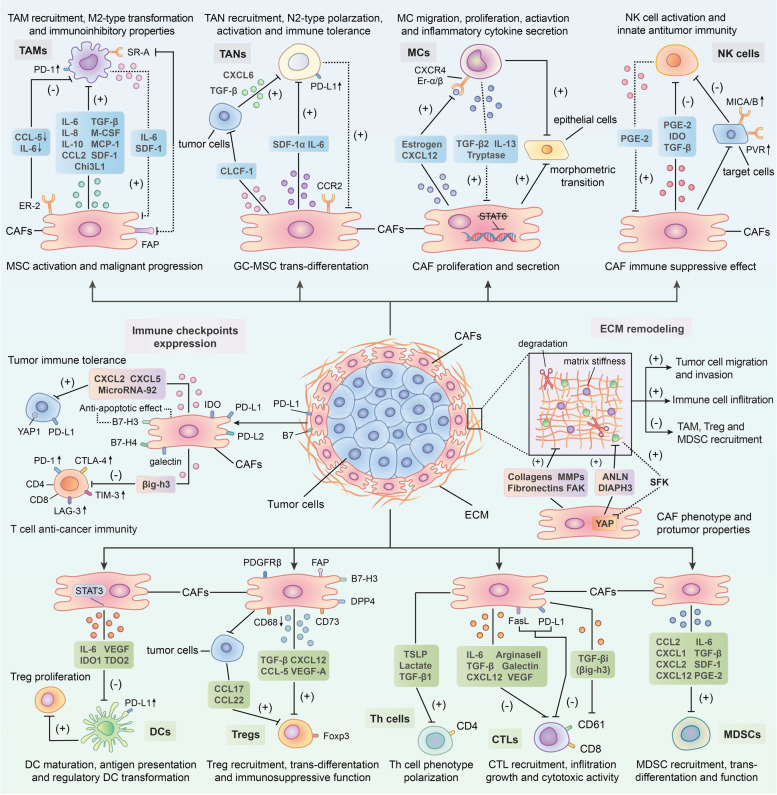
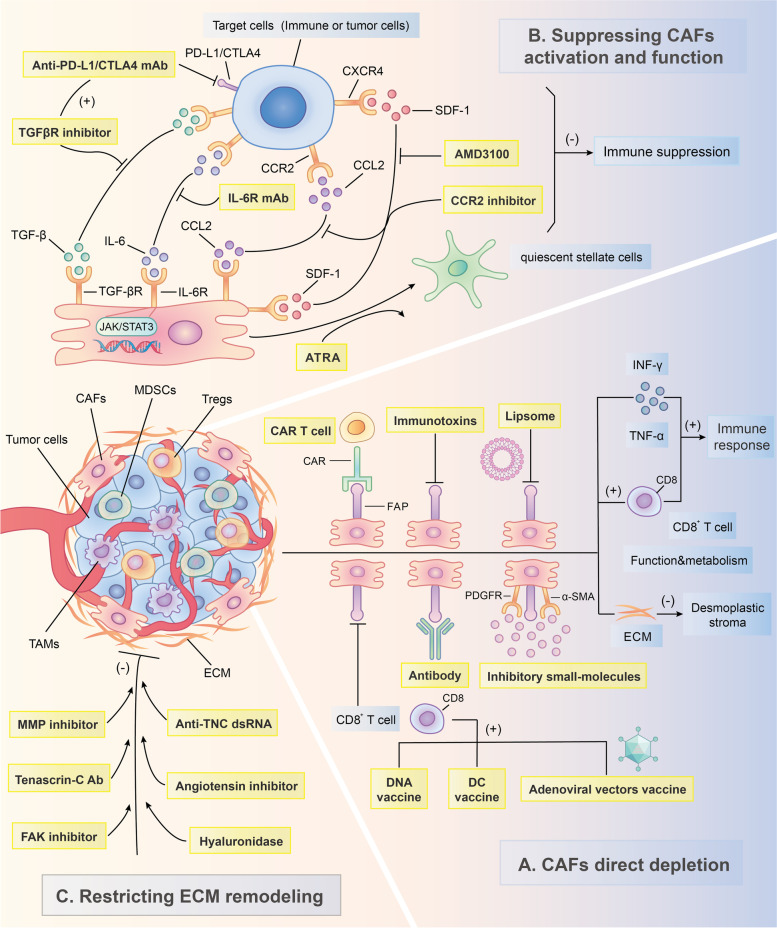
Cancer-associated fibroblasts (CAFs), a stromal cell population with cell-of-origin, phenotypic and functional heterogeneity, are the most essential components of the tumor microenvironment (TME). Through multiple pathways, activated CAFs can promote tumor growth, angiogenesis, invasion and metastasis, along with extracellular matrix (ECM) remodeling and even chemoresistance. Numerous previous studies have confirmed the critical role of the interaction between CAFs and tumor cells in tumorigenesis and development. However, recently, the mutual effects of CAFs and the tumor immune microenvironment (TIME) have been identified as another key factor in promoting tumor progression. The TIME mainly consists of distinct immune cell populations in tumor islets and is highly associated with the antitumor immunological state in the TME. CAFs interact with tumor-infiltrating immune cells as well as other immune components within the TIME via the secretion of various cytokines, growth factors, chemokines, exosomes and other effector molecules, consequently shaping an immunosuppressive TME that enables cancer cells to evade surveillance of the immune system. In-depth studies of CAFs and immune microenvironment interactions, particularly the complicated mechanisms connecting CAFs with immune cells, might provide novel strategies for subsequent targeted immunotherapies. Herein, we shed light on recent advances regarding the direct and indirect crosstalk between CAFs and infiltrating immune cells and further summarize the possible immunoinhibitory mechanisms induced by CAFs in the TME. In addition, we present current related CAF-targeting immunotherapies and briefly describe some future perspectives on CAF research in the end.
Overview
The claims and statistics of this paper haven’t been checked yet.
Free: it reads the open-access text and checks the first 5 claims that cite a source we can check. Create a free account to check every claim.
Integrity signals
Registry
Cites
Statistics
Figures
Verification
Claims the paper makes
The claims and statistics of this paper haven’t been checked yet.
Free: it reads the open-access text and checks the first 5 claims that cite a source we can check. Create a free account to check every claim.
Claims other papers make about this one
Each is checked against this paper’s own text: does it say what the citing paper says it does?
The source backs part of the claim, not all of it — or backs it for a different population, condition or comparison.
In the citing paper
“CAFs recruit and polarize immune cells such as macrophages, neutrophils, T cells and DCs to a pro‐tumorigenic phenotype by secreting several cytokines, chemokines, and other effector molecules such as Interleukin 6 (IL‐6), and 8 (IL‐8), TGF‐β, CXCL12, CCL2, SDF‐1, VEGF, Indoleamine‐pyrrole 2,3‐dioxygenase (IDO) and tryptophan 2,3‐dioxygenase (TDO2) [27].”
From Tumor microenvironment signaling and therapeutics in cancer progression (2023) · cites this paper as [27]
Experimental — accuracy not yet measuredThe cited source says what the claim attributes to it.
In the citing paper
“substantial evidence indicating that CAFs can suppress anti-tumor immunity through interactions with immune effector cells, particularly CD8+ T cells 72.”
From TBX3 shapes an immunosuppressive microenvironment and induces immunotherapy resistance (2025) · cites this paper as [72]
Self-check
Percentages, sums and reported differences re-computed from the paper’s own numbers.
The self-check needs the paper’s full text.
Citations
Cites
1 retracted
Dou, D., Ren, X., Han, M., Xu, X., Ge, X., Gu, Y., & Wang, X. (2020) · Frontiers in Immunology · doi:10.3389/fimmu.2020.02026 · Cited by 175
RetractedMantovani, A., Allavena, P., Sica, A., & Balkwill, F. (2008) · Nature · doi:10.1038/nature07205 · Cited by 11,399 · cited 1×
“M1-type macrophages mainly behave as an antitumor role in the TIME by mediating antibody-dependent cellular cytotoxicity and producing ROS and tumor necrosis factor (TNF) [123], whereas M2-type macrophages exhibit tumor-promoting activity by contributing to the activation of tumor angiogenesis, immune suppression, inv…”
BackgroundThe basics of epithelial-mesenchymal transition
Kalluri, R., & Weinberg, R. A. (2009) · Journal of Clinical Investigation · doi:10.1172/jci39104 · Cited by 10,196
Microenvironmental regulation of tumor progression and metastasis
Quail, D. F., & Joyce, J. A. (2013) · Nature Medicine · doi:10.1038/nm.3394 · Cited by 7,994
Molecular Mechanisms of Stress-Responsive Changes in Collagen and Elastin Networks in Skin
Aziz, J., Shezali, H., Radzi, Z., Yahya, N. A., Abu Kassim, N. H., Czernuszka, J., & Rahman, M. T. (2016) · Skin Pharmacology and Physiology · doi:10.1159/000447017 · Cited by 7,323
The chemokine system in diverse forms of macrophage activation and polarization
MANTOVANI, A., SICA, A., SOZZANI, S., ALLAVENA, P., VECCHI, A., & LOCATI, M. (2004) · Trends in Immunology · doi:10.1016/j.it.2004.09.015 · Cited by 6,534 · cited 1×
“macrophages (TAMs) Macrophages that infiltrate tumors, known as tumorassociated macrophages (TAMs), are classified into two distinct subsets that are activated by different polarizing cytokines, termed M1 (lipopolysaccharide (LPS) alone or with Th1 cytokines) and M2 (Th2 cytokines) [122].”
BackgroundMolecular mechanisms and clinical applications of angiogenesis
Carmeliet, P., & Jain, R. K. (2011) · Nature · doi:10.1038/nature10144 · Cited by 5,467
TGFβ attenuates tumour response to PD-L1 blockade by contributing to exclusion of T cells
Mariathasan, S., Turley, S. J., Nickles, D., Castiglioni, A., Yuen, K., Wang, Y., Kadel III, E. E., Koeppen, H., Astarita, J. L., Cubas, R., et al. (2018) · Nature · doi:10.1038/nature25501 · Cited by 5,400
Macrophage plasticity, polarization, and function in health and disease
Shapouri‐Moghaddam, A., Mohammadian, S., Vazini, H., Taghadosi, M., Esmaeili, S., Mardani, F., Seifi, B., Mohammadi, A., Afshari, J. T., & Sahebkar, A. (2018) · Journal of Cellular Physiology · doi:10.1002/jcp.26429 · Cited by 4,930 · cited 5×
“The elimination of CAFs by FAP-targeting therapy can enhance the anticancer immune response mediated by high levels of certain inflammatory mediators, such as IFN-γ and TNF-α, and facilitate the toxic effects and metabolism of CD8 + T cells with a decreased desmoplastic stroma in the TME [224, 300, 301, 326].”
BackgroundInfluentialChen, W., Jin, W., Hardegen, N., Lei, K.-J., Li, L., Marinos, N., McGrady, G., & Wahl, S. M. (2003) · The Journal of Experimental Medicine · doi:10.1084/jem.20030152 · Cited by 4,699 · cited 2×
“[213], CAF-derived TGF-β can facilitate the differentiation of naïve T cells into CD4 + CD25 + Treg cells by inducing the expression of the Foxp3 gene in T lymphocytes.”
Background
Cited by
Cancer vaccines as promising immuno-therapeutics: platforms and current progress
Liu, J., Fu, M., Wang, M., Wan, D., Wei, Y., & Wei, X. (2022) · Journal of Hematology & Oncology · doi:10.1186/s13045-022-01247-x · Cited by 715
“CAFs can prevent the proliferation and migration of DC, recruit MDSCs, and inhibit T cell invasion by remodeling the extracellular matrix to construct dense fibrous stroma [59].”
BackgroundSelf-citationCold and hot tumors: from molecular mechanisms to targeted therapy
Wu, B., Zhang, B., Li, B., Wu, H., & Jiang, M. (2024) · Signal Transduction and Targeted Therapy · doi:10.1038/s41392-024-01979-x · Cited by 682
Self-citationMolecular mechanisms of tumor resistance to radiotherapy
Wu, Y., Song, Y., Wang, R., & Wang, T. (2023) · Molecular Cancer · doi:10.1186/s12943-023-01801-2 · Cited by 527
Fibroblasts in cancer: Unity in heterogeneity
Chhabra, Y., & Weeraratna, A. T. (2023) · Cell · doi:10.1016/j.cell.2023.03.016 · Cited by 474
Liquid biopsy in lung cancer: significance in diagnostics, prediction, and treatment monitoring
Li, W., Liu, J.-B., Hou, L.-K., Yu, F., Zhang, J., Wu, W., Tang, X.-M., Sun, F., Lu, H.-M., Deng, J., et al. (2022) · Molecular Cancer · doi:10.1186/s12943-022-01505-z · Cited by 457
“Exosomes are self-regulating, and can also regulate adjacent cells and distant target cells by autocrine or paracrine mechanisms, and mediate the physiological and/ or pathological activities of the body [42].”
Self-citationStromal cells in the tumor microenvironment: accomplices of tumor progression?
Zhao, Y., Shen, M., Wu, L., Yang, H., Yao, Y., Yang, Q., Du, J., Liu, L., Li, Y., & Bai, Y. (2023) · Cell Death & Disease · doi:10.1038/s41419-023-06110-6 · Cited by 431
Zhang, H., Yue, X., Chen, Z., Liu, C., Wu, W., Zhang, N., Liu, Z., Yang, L., Jiang, Q., Cheng, Q., et al. (2023) · Molecular Cancer · doi:10.1186/s12943-023-01860-5 · Cited by 424
“As a substantial component of tumor stroma, CAFs perform an essential function in tumor progression and metastasis [6], including ECM depositing and remodeling [7], having crosstalk with immune cells [8], promoting cancer cell proliferation, angiogenesis, and drug resistance [9– 11].”
BackgroundImmune evasion in cancer: mechanisms and cutting-edge therapeutic approaches
Tufail, M., Jiang, C.-H., & Li, N. (2025) · Signal Transduction and Targeted Therapy · doi:10.1038/s41392-025-02280-1 · Cited by 363
Tumor microenvironment signaling and therapeutics in cancer progression
Goenka, A., Khan, F., Verma, B., Sinha, P., Dmello, C. C., Jogalekar, M. P., Gangadaran, P., & Ahn, B. (2023) · Cancer Communications · doi:10.1002/cac2.12416 · Cited by 323
“CAFs recruit and polarize immune cells such as macrophages, neutrophils, T cells and DCs to a pro-tumorigenic phenotype by secreting several cytokines, chemokines, and other effector molecules such as Interleukin 6 (IL-6), and 8 (IL-8), TGF-β, CXCL12, CCL2, SDF-1, VEGF, Indoleamine-pyrrole 2,3-dioxygenase (IDO) and tr…”
BackgroundTargeting the tumor stroma for cancer therapy
Xu, M., Zhang, T., Xia, R., Wei, Y., & Wei, X. (2022) · Molecular Cancer · doi:10.1186/s12943-022-01670-1 · Cited by 319
“[288] As an indispensable population of antigen-presenting cells, dendritic cells (DCs) are affected by CAFs to induce tumor cells immune evasion, usually accompanied by impaired DCs maturation and blocked antigen presentation [289].”
BackgroundRoles of cancer-associated fibroblasts (CAFs) in anti- PD-1/PD-L1 immunotherapy for solid cancers
Pei, L., Liu, Y., Liu, L., Gao, S., Gao, X., Feng, Y., Sun, Z., Zhang, Y., & Wang, C. (2023) · Molecular Cancer · doi:10.1186/s12943-023-01731-z · Cited by 257
“PD‐L1 inhibitor immunotherapy As key components of the TME, CAFs are not only involved in the remodeling process of the ECM, but also interact with other cells in the TME [11].”
BackgroundInfluentialKundu, M., Butti, R., Panda, V. K., Malhotra, D., Das, S., Mitra, T., Kapse, P., Gosavi, S. W., & Kundu, G. C. (2024) · Molecular Cancer · doi:10.1186/s12943-024-01990-4 · Cited by 250
“The CAFs-synthesized ECM may impact CD8 + T cell recruitment, thereby modulating the immunosuppressive environment [7].”
BackgroundInfluentialA generic non-invasive neuromotor interface for human-computer interaction
Kaifosh, P., Reardon, T. R., Labs, C.-L. A. R., Allen, B. D., Anderson, C., Arnoud, S., Arora, R., Atray, M., Awad, L., Ayerbe, F., et al. (2025) · Nature · doi:10.1038/s41586-025-09255-w · Cited by 230
VEGF signaling: Role in angiogenesis and beyond
Shaw, P., Dwivedi, S. K. D., Bhattacharya, R., Mukherjee, P., & Rao, G. (2024) · Biochimica et Biophysica Acta (BBA) - Reviews on Cancer · doi:10.1016/j.bbcan.2024.189079 · Cited by 215
Decoding the spatiotemporal heterogeneity of tumor-associated macrophages
Chu, X., Tian, Y., & Lv, C. (2024) · Molecular Cancer · doi:10.1186/s12943-024-02064-1 · Cited by 214
“(4) Recruitment by cancer-associated fibroblasts (CAFs), and recruited TAMs promote the role of CAFs in promoting extracellular matrix remodeling and facilitating tumor invasion [14, 15].”
BackgroundCancer-associated fibroblasts in pancreatic ductal adenocarcinoma
Zhang, T., Ren, Y., Yang, P., Wang, J., & Zhou, H. (2022) · Cell Death & Disease · doi:10.1038/s41419-022-05351-1 · Cited by 214
Zhang, F., Ma, Y., Li, D., Wei, J., Chen, K., Zhang, E., Liu, G., Chu, X., Liu, X., Liu, W., et al. (2024) · Journal of Hematology & Oncology · doi:10.1186/s13045-024-01600-2 · Cited by 211
“Cytokines and chemokines derived from CAFs can induce the release of inflammatory mediators from immunosuppressive cells (Tregs, TAMs, TANs, and MDSCs) to remodel the TIME [115].”
BackgroundWang, Z., Zhang, X., Fang, C., Liu, X., Liao, Q., Wu, N., & Wang, J. (2024) · Immunology · doi:10.1111/imm.13793 · Cited by 204
Targeting CAFs to overcome anticancer therapeutic resistance
Saw, P. E., Chen, J., & Song, E. (2022) · Trends in Cancer · doi:10.1016/j.trecan.2022.03.001 · Cited by 197
Zheng, H., An, M., Luo, Y., Diao, X., Zhong, W., Pang, M., Lin, Y., Chen, J., Li, Y., Kong, Y., et al. (2024) · Cancer Cell · doi:10.1016/j.ccell.2024.02.002 · Cited by 191
Cancer stem cells: landscape, challenges and emerging therapeutic innovations
Lee, H., Kim, B., Park, J., Park, S., Yoo, G., Yum, S., Kang, W., Lee, J.-M., Youn, H., & Youn, B. (2025) · Signal Transduction and Targeted Therapy · doi:10.1038/s41392-025-02360-2 · Cited by 188
“277,278 Collectively, these observations emphasize that the metabolic phenotype of CSCs is deeply context dependent and shaped by both the tumor ’ s tissue of origin and ongoing crosstalk within the TME.”
Yang, Y., Li, S., To, K. K. W., Zhu, S., Wang, F., & Fu, L. (2025) · Journal of Experimental & Clinical Cancer Research · doi:10.1186/s13046-025-03377-9 · Cited by 184
“It is noteworthy that TAMs are usually abundantly found around the CAF settlement area, suggesting tight interactions between the two cell types [229].”
The tumor microenvironment shows a hierarchy of cell-cell interactions dominated by fibroblasts
Mayer, S., Milo, T., Isaacson, A., Halperin, C., Miyara, S., Stein, Y., Lior, C., Pevsner-Fischer, M., Tzahor, E., Mayo, A., et al. (2023) · Nature Communications · doi:10.1038/s41467-023-41518-w · Cited by 183
Multidrug Resistance of Cancer Cells and the Vital Role of P-Glycoprotein
Karthika, C., Sureshkumar, R., Zehravi, M., Akter, R., Ali, F., Ramproshad, S., Mondal, B., Tagde, P., Ahmed, Z., Khan, F. S., et al. (2022) · Life · doi:10.3390/life12060897 · Cited by 181
“In addition, the chemoresistance of cancer cells in the tumour microenvironment may influence immune cell infiltration [103].”
BackgroundGlaviano, A., Lau, H., Carter, L. M., Lee, E. H. C., Lam, H. Y., Okina, E., Tan, D. J. J., Tan, W., Ang, H. L., Carbone, D., et al. (2025) · Journal of Hematology & Oncology · doi:10.1186/s13045-024-01634-6 · Cited by 182
Hu, Q., Zhu, Y., Mei, J., Liu, Y. L., & Zhou, G. (2025) · Journal of Hematology & Oncology · doi:10.1186/s13045-025-01717-y · Cited by 181
“The interaction between ECM and cells, such as cancer cells, immune cells, and stromal cells in the TME plays a vital role in tumorigenesis and development [62].”
Yi, M., Niu, M., Wu, Y., Ge, H., Jiao, D., Zhu, S., Zhang, J., Yan, Y., Zhou, P., Chu, Q., et al. (2022) · Journal of Hematology & Oncology · doi:10.1186/s13045-022-01363-8 · Cited by 175
TGF-beta signal transduction: biology, function and therapy for diseases
Tie, Y., Tang, F., Peng, D., Zhang, Y., & Shi, H. (2022) · Molecular Biomedicine · doi:10.1186/s43556-022-00109-9 · Cited by 174
The promising role of tumor-associated macrophages in the treatment of cancer
Wang, H., Wang, X., Zhang, X., & Xu, W. (2024) · Drug Resistance Updates · doi:10.1016/j.drup.2023.101041 · Cited by 175
NK cells are never alone: crosstalk and communication in tumour microenvironments
Zhou, Y., Cheng, L., Liu, L., & Li, X. (2023) · Molecular Cancer · doi:10.1186/s12943-023-01737-7 · Cited by 172
“Generally, most CAF subgroups act as cancer-promoting CAFs (pCAFs) that promote tumour progression, while cancerrestraining CAFs (rCAFs) inhibit tumour progression [124].”
BackgroundYamamoto, Y., Kasashima, H., Fukui, Y., Tsujio, G., Yashiro, M., & Maeda, K. (2022) · Cancer Science · doi:10.1111/cas.15609 · Cited by 170
Wang, H., Liang, Y., Liu, Z., Zhang, R., Chao, J., Wang, M., Liu, M., Qiao, L., Xuan, Z., Zhao, H., et al. (2024) · Journal for ImmunoTherapy of Cancer · doi:10.1136/jitc-2023-008721 · Cited by 170
Tumor microenvironment-mediated immune tolerance in development and treatment of gastric cancer
Liu, Y., Li, C., Lu, Y., Liu, C., & Yang, W. (2022) · Frontiers in Immunology · doi:10.3389/fimmu.2022.1016817 · Cited by 166
Chen, C., Guo, Q., Liu, Y., Hou, Q., Liao, M., Guo, Y., Zang, Y., Wang, F., Liu, H., Luan, X., et al. (2023) · Clinical and Translational Medicine · doi:10.1002/ctm2.1515 · Cited by 166
Self-citationMagar, A. G., Morya, V. K., Kwak, M. K., Oh, J. U., & Noh, K.-C. (2024) · International Journal of Molecular Sciences · doi:10.3390/ijms25063313 · Cited by 341
“FGF releases growth factors, MMPs, and other cytokines that alter the levels of collagen and fibronectin, resulting in a dense and fibrotic ECM that promotes cell survival, invasion, angiogenesis, and protects cancer cells from the immune system by creating an immune-suppressive TME [81].”
BackgroundInfluentialCancer-associated fibroblasts: The chief architect in the tumor microenvironment
Sarkar, M., Nguyen, T., Gundre, E., Ogunlusi, O., El-Sobky, M. H., Giri, B., & Sarkar, T. R. (2023) · Frontiers in Cell and Developmental Biology · doi:10.3389/fcell.2023.1089068 · Cited by 165
Zheng, S., Wang, W., Shen, L., Yao, Y., Xia, W., & Ni, C. (2024) · Experimental Hematology & Oncology · doi:10.1186/s40164-024-00543-1 · Cited by 163
“In a model of pancreatic cancer with selective Treg deletion, the absence of Treg-derived TGF-β1 hinted towards decreased collagen synthesis by CAFs, subsequently leading to a greater T cell influx [262].”
BackgroundSelf-citationOverview and countermeasures of cancer burden in China
Wang, Y., Yan, Q., Fan, C., Mo, Y., Wang, Y., Li, X., Liao, Q., Guo, C., Li, G., Zeng, Z., et al. (2023) · Science China Life Sciences · doi:10.1007/s11427-022-2240-6 · Cited by 163
“Cancer cells can evade the body’s immune surveillance (Mao et al., 2021), and the occurrence of immune escape is an”
BackgroundNF-κB signaling pathway in tumor microenvironment
Cao, Y., Yi, Y., Han, C., & Shi, B. (2024) · Frontiers in Immunology · doi:10.3389/fimmu.2024.1476030 · Cited by 164
“Just as we concluded and reviewed above, TME is a highly complicated system mainly composed of in fi ltrating immune cells, cancer-associated stromal cells(e.g. CAFs, ECs) and tumor cells, along with the extracellular matrix (ECM) and various molecules (116).”
BackgroundYu, L., Shen, N., Shi, Y., Shi, X., Fu, X., Li, S., Zhu, B., Yu, W., & Zhang, Y. J. (2022) · Frontiers in Immunology · doi:10.3389/fimmu.2022.1009789 · Cited by 160
Crosstalk between ferroptosis and cuproptosis: From mechanism to potential clinical application
Liu, N., & Chen, M. (2024) · Biomedicine & Pharmacotherapy · doi:10.1016/j.biopha.2023.116115 · Cited by 160
Ren, Y., Wang, R., Weng, S., Xu, H., Zhang, Y., Chen, S., Liu, S., Ba, Y., Zhou, Z., Luo, P., et al. (2023) · Molecular Cancer · doi:10.1186/s12943-023-01831-w · Cited by 156
“To improve the effectiveness of CAF-targeted medicines, additional research is needed to find particular cell surface indicators for CAFs [172].”
BackgroundCAFs orchestrates tumor immune microenvironment—A new target in cancer therapy?
Zhang, C., Fei, Y., Wang, H., Hu, S., Liu, C., Hu, R., & Du, Q. (2023) · Frontiers in Pharmacology · doi:10.3389/fphar.2023.1113378 · Cited by 127
“Tissue-resident fibroblasts are typically activated by cytokines secreted by tumor cells and other stromal cells, such as specifically transforming growth factor beta (TGFβ), platelet-derived growth factor (PDGF), basic fibroblast growth factor (bFGF), epithelial growth factor (EGF), connective tissue growth factor (C…”
BackgroundExosome-Mediated Immunosuppression in Tumor Microenvironments
Xie, Q., Zheng, J.-Q., Ding, J., Wu, Y.-F., Liu, L., Yu, Z., & Chen, G. (2022) · Cells · doi:10.3390/cells11121946 · Cited by 149
Kang, W., Qiu, X., Luo, Y., Luo, J., Liu, Y., Xi, J., Li, X., & Yang, Z. (2023) · Journal of Translational Medicine · doi:10.1186/s12967-023-04437-4 · Cited by 149
“Activated tumor-associated fibroblasts have the capability to secrete various substances, including extracellular matrix and vascular endothelial growth factor (VEGF), among others, thereby contributing to the complex nature of the TME [36].”
BackgroundHallmarks of cancer resistance
Tufail, M., Hu, J.-J., Liang, J., He, C., Wan, W., Huang, Y., Jiang, C., Wu, H., & Li, N. (2024) · iScience · doi:10.1016/j.isci.2024.109979 · Cited by 149
“37 Within the TME, immune cells serve as both architects of restraint and facilitators of cancer growth (Figure 2).”
BackgroundExtracellular vesicles in tumor immunity: mechanisms and novel insights
Kuang, L., Wu, L., & Li, Y. (2025) · Molecular Cancer · doi:10.1186/s12943-025-02233-w · Cited by 145
Ruan, R., Li, L., Li, X., Huang, C., Zhanmin, Z., Zhong, H., Zeng, S., Shi, Q., Yang, X., Zeng, Q., et al. (2023) · Molecular Cancer · doi:10.1186/s12943-023-01761-7 · Cited by 143
Peng, Z., Ye, M., Ding, H., Feng, Z., & Hu, K. (2022) · Journal of Translational Medicine · doi:10.1186/s12967-022-03510-8 · Cited by 135
Muscle-to-tumor crosstalk: The effect of exercise-induced myokine on cancer progression
Huang, Q., Wu, M., Wu, X., Zhang, Y., & Xia, Y. (2022) · Biochimica et Biophysica Acta (BBA) - Reviews on Cancer · doi:10.1016/j.bbcan.2022.188761 · Cited by 138
From gatekeepers to providers: regulation of immune functions by cancer-associated fibroblasts
Arpinati, L., & Scherz‐Shouval, R. (2023) · Trends in cancer · doi:10.1016/j.trecan.2023.01.007 · Cited by 140
Ding, F., Liu, J., Ai, K., Xu, C., Mao, X., Liu, Z., & Xiao, H. (2023) · Advanced Materials · doi:10.1002/adma.202306419 · Cited by 135
Self-citationClinical approaches to overcome PARP inhibitor resistance
Zou, Y., Zhang, H., Chen, P., Tang, J., Yang, S., Nicot, C., Guan, Z., Li, X., & Tang, H. (2025) · Molecular Cancer · doi:10.1186/s12943-025-02355-1 · Cited by 132
“TAFs can produce collagen, fibronectin, and other ECM components, creating physical barriers to immune cell infiltration and drug diffusion [219].”
Frontiers in pancreatic cancer on biomarkers, microenvironment, and immunotherapy
Yu, B., Shao, S., & Ma, W. (2024) · Cancer Letters · doi:10.1016/j.canlet.2024.217350 · Cited by 131
Wang, H., Wang, T., Yan, S., Tang, J., Zhang, Y., Wang, L., Xu, H., & Tu, C. (2024) · Molecular Cancer · doi:10.1186/s12943-024-02183-9 · Cited by 133
“Cytokines play a pivotal role in remodeling TME, significantly influencing the behavior of tumor and immune cells [167].”
Immune-checkpoint inhibitor resistance in cancer treatment: Current progress and future directions
Zhang, C., Zhang, C., & Wang, H. (2023) · Cancer Letters · doi:10.1016/j.canlet.2023.216182 · Cited by 128
Zhou, X., Han, J., Zuo, A., Ba, Y., Liu, S., Xu, H., Zhang, Y., Weng, S., Zhou, Z., Liu, L., et al. (2024) · Molecular Cancer · doi:10.1186/s12943-024-02180-y · Cited by 127
Zhu, Y., Li, X., Wang, L., Hong, X., & Yang, J. (2022) · Frontiers in Endocrinology · doi:10.3389/fendo.2022.988295 · Cited by 125
Zhang, Z., Yu, Y., Zhang, Z., Li, D., Liang, Z., Wang, L., Chen, Y., Liang, Y., & Niu, H. (2023) · Journal of Experimental & Clinical Cancer Research · doi:10.1186/s13046-023-02900-0 · Cited by 121
“On the other hand, CAFs promote the expression of immune checkpoint molecules by secreting various cytokines and products, which indirectly affect the recruitment and activity of immune cells [41].”
BackgroundDual Relationship Between Stromal Cells and Immune Cells in the Tumor Microenvironment
Mun, J.-Y., Leem, S.-H., Lee, J. H., & Kim, H. S. (2022) · Frontiers in Immunology · doi:10.3389/fimmu.2022.864739 · Cited by 103
“They are known to crosstalk with immune cells (37).”
BackgroundZhi, Y., Wang, Q., Zi, M., Zhang, S., Ge, J., Liu, K., Lu, L., Fan, C., Yan, Q., Shi, L., et al. (2024) · Advanced Science · doi:10.1002/advs.202306515 · Cited by 119
Cancer-Associated Fibroblasts in the Hypoxic Tumor Microenvironment
Kim, I., Choi, S., Yoo, S., Lee, M., & Kim, I. (2022) · Cancers · doi:10.3390/cancers14143321 · Cited by 118
“CAFs are known to support cancer cells evade surveillance of the immune system by secreting various factors that can regulate tumor-associated immune cells [12,71].”
BackgroundThe Research Progress of Antiangiogenic Therapy, Immune Therapy and Tumor Microenvironment
Hu, H., Chen, Y., Tan, S., Wu, S., Huang, Y., Fu, S., Luo, F., & He, J. (2022) · Frontiers in Immunology · doi:10.3389/fimmu.2022.802846 · Cited by 117
Reprogramming the tumor microenvironment by genome editing for precision cancer therapy
Liu, K., Cui, J., Zhan, Y., Ouyang, Q., Lu, Q., Yang, D., Li, X., & Yin, J. (2022) · Molecular Cancer · doi:10.1186/s12943-022-01561-5 · Cited by 113
Impaired function of dendritic cells within the tumor microenvironment
Xiao, Z., Wang, R., Wang, X., Yang, H., Dong, J.-M., He, X., Yang, Y., Guo, J., Cui, J., & Zhou, Z. (2023) · Frontiers in Immunology · doi:10.3389/fimmu.2023.1213629 · Cited by 114
Qin, Q., Yu, R., Eriksson, J., Tsai, H., & Zhu, H. (2024) · Cancer Letters · doi:10.1016/j.canlet.2024.216859 · Cited by 112
Zhu, Y.-H., Zheng, J.-H., Jia, Q.-Y., Duan, Z., Yao, H., Yang, J., Sun, Y., Jiang, S.-H., Liu, D., & Huo, Y. (2022) · Cellular Oncology · doi:10.1007/s13402-022-00741-1 · Cited by 111
“The markers of CAF include α-smooth muscle actin (α-SMA), fibroblast activating protein (FAP), fibroblast specific protein 1 (FSP1), platelet-derived growth factor receptor (PDGFR)α/β, and vimentin [111].”
BackgroundInfluentialLenvatinib in hepatocellular carcinoma: Resistance mechanisms and strategies for improved efficacy
Qin, Y., Han, S., Yu, Y., Ding, Q., Ran, M., Yang, M., Liu, Y., Li, Y., Lu, L., Liu, Y., et al. (2024) · Liver International · doi:10.1111/liv.15953 · Cited by 111
“95 Among them, CAF, a major stromal cell population with cell- of-origin, phenotypic and functional heterogeneity within the TME.”
Su, P., Jiang, L., Zhang, Y., Yu, T., Kang, W., Liu, Y., & Yu, J. (2022) · Cancer Cell International · doi:10.1186/s12935-022-02717-5 · Cited by 110
Shiau, C., Cao, J., Gong, D. H., Gregory, M., Caldwell, N. J., Yin, X., Cho, J.-W., Wang, P. L., Su, J., Wang, S., et al. (2024) · Nature Genetics · doi:10.1038/s41588-024-01890-9 · Cited by 110
“Concordant with earlier literature 24,51 , iCAFs demonstrated higher expression of IL-6 family ligands (including LIF, IL-6, CLCF1, IL-11 and OSM) compared with myCAFs (log 2 (fold change) = 0.453) (Fig.”
InfluentialTumor microenvironment targeted nano-drug delivery systems for multidrug resistant tumor therapy
Shao, X., Zhao, X., Wang, B., Fan, J., Wang, J., & An, H. (2025) · Theranostics · doi:10.7150/thno.103636 · Cited by 112
A prenatal skin atlas reveals immune regulation of human skin morphogenesis
Gopee, N. H., Winheim, E., Olabi, B., Admane, C., Foster, A. R., Huang, N., Botting, R. A., Torabi, F., Sumanaweera, D., Le, A. P., et al. (2024) · Nature · doi:10.1038/s41586-024-08002-x · Cited by 108
Jiang, Y., Wang, Y., Chen, G., Sun, F., Wu, Q., Huang, Q., Zeng, D., Qiu, W., Wang, J., Yao, Z., et al. (2024) · Cell Metabolism · doi:10.1016/j.cmet.2024.05.013 · Cited by 107
Du, R., Zhang, X., Lu, X., Ma, X., Guo, X., Shi, C., Ren, X., Ma, X., He, Y., Gao, Y., et al. (2023) · Drug Resistance Updates · doi:10.1016/j.drup.2023.100947 · Cited by 106
Li, J., Xiao, Z., Wang, D., Jia, L., Nie, S., Zeng, X., & Hu, W. (2023) · Molecular Cancer · doi:10.1186/s12943-023-01844-5 · Cited by 105
ENPP1 is an innate immune checkpoint of the anticancer cGAMP–STING pathway in breast cancer
Wang, S., Böhnert, V., Joseph, A. J., Sudaryo, V., Skariah, G. M., Swinderman, J. T., Yu, F. B., Subramanyam, V., Wolf, D. M., Lyu, X., et al. (2023) · Proceedings of the National Academy of Sciences · doi:10.1073/pnas.2313693120 · Cited by 105
“Among fibroblasts, a unique cluster enriched in tumors overexpresses myofibroblast marker Acta2 as well as Tgfb1 and Tgfb2 and are known as myCAF and overtly immunosuppressive (41, 53).”
BackgroundPeng, L., Wang, F., Wang, Z., Tan, J., Li, H., Tian, X., Liu, G., & Zhou, L. (2022) · Briefings in Bioinformatics · doi:10.1093/bib/bbac234 · Cited by 103
Ren, Q., Zhang, P., Lin, H., Feng, Y., Chi, H., Zhang, X., Xia, Z., Cai, H., & Yu, Y. (2023) · Frontiers in Immunology · doi:10.3389/fimmu.2023.1201573 · Cited by 103
The interactions of paclitaxel with tumour microenvironment
Yu, D., Lou, Z., Ma, F.-Y., & Najafi, M. (2022) · International Immunopharmacology · doi:10.1016/j.intimp.2022.108555 · Cited by 102
Sun, L., Kang, X., Wang, C., Wang, R., Yang, G., Jiang, W. H., Wu, Q., Wang, Y., Wu, Y., Gao, J., et al. (2023) · Cell Discovery · doi:10.1038/s41421-023-00532-4 · Cited by 102
T-cell infiltration and its regulatory mechanisms in cancers: insights at single-cell resolution
Yang, W., Liu, S., Mao, M., Gong, Y., Li, X., Lei, T., Liu, C., Wu, S., & Hu, Q. (2024) · Journal of Experimental & Clinical Cancer Research · doi:10.1186/s13046-024-02960-w · Cited by 104
“The most predominant stromal cells in the majority of solid tumors are CAFs [69].”
BackgroundCao, Z., Quazi, S., Arora, S., Osellame, L. D., Burvenich, I. J. G., Janes, P. W., & Scott, A. M. (2025) · Journal of Biomedical Science · doi:10.1186/s12929-024-01099-2 · Cited by 100
Tumor microenvironment: recent advances in understanding and its role in modulating cancer therapies
Shah, D. D., Chorawala, M. R., Raghani, N. R., Patel, R., Fareed, M., Kashid, V. A., & Prajapati, B. G. (2025) · Medical Oncology · doi:10.1007/s12032-025-02641-4 · Cited by 100
“CAFs are activated fibroblasts that promote tumor growth by secreting growth factors, remodeling the extracellular matrix, and facilitating tumor cell invasion [33].”
Opportunities and challenges of CD47-targeted therapy in cancer immunotherapy
CHEN, Q., GUO, X., & Ma, W. (2023) · Oncology Research Featuring Preclinical and Clinical Cancer Therapeutics · doi:10.32604/or.2023.042383 · Cited by 98
“These molecules impact cancer cell behavior and immune cell activity and can be secreted by both cancer and stromal cells [31,32].”
BackgroundTumor dormancy and relapse: understanding the molecular mechanisms of cancer recurrence
Tufail, M., Jiang, C., & Li, N. (2025) · Military Medical Research · doi:10.1186/s40779-025-00595-2 · Cited by 97
Integrative multi-omics approaches to explore immune cell functions: Challenges and opportunities
Wang, X., Dian, F., Yang, Y., Gimple, R. C., & Zhou, S. (2023) · iScience · doi:10.1016/j.isci.2023.106359 · Cited by 96
“68 Owing to the fact that various cytokines, growth factors, chemokines, exosomes and other effector molecules serve as the mediators in the intricate communication, how to dissect the communica-tional process and investigate the underlying mechanism are still challenging.”
Yu, K.-X., Yuan, W.-J., Wang, H.-Z., & Li, Y. (2024) · Cancer Immunology Immunotherapy · doi:10.1007/s00262-024-03675-9 · Cited by 95
“…macrophages (TAMs), tumor-infiltrating lymphocytes (TILs), cancer-associated fibroblasts (CAFs), blood vessels, and extracellular matrix (ECM) composed of collagen and proteoglycan, which may play a core role in tumor evasion of immune surveillance and resistance to immunotherapy [1, 2].”
BackgroundExtracellular matrix stiffness regulates colorectal cancer progression via HSF4
Wang, K., Ning, S., Zhang, S., Jiang, M., Huang, Y., Pei, H., Li, M., & Tan, F. (2025) · Journal of Experimental & Clinical Cancer Research · doi:10.1186/s13046-025-03297-8 · Cited by 97
Modelling the complex nature of the tumor microenvironment: 3D tumor spheroids as an evolving tool
Rodrigues, D. B., Reis, R. L., & Pirraco, R. P. (2024) · Journal of Biomedical Science · doi:10.1186/s12929-024-00997-9 · Cited by 94
Zhu, Y., Fang, S., Fan, B., Xu, K., Liu, X., Wang, L., Zhu, L., Chen, C., Wu, R., Ni, J., et al. (2024) · Theranostics · doi:10.7150/thno.89805 · Cited by 93
“The neoplastic epithelium exists within a dense stroma composed mainly of fibroblasts, which are recognized as critical mediators of disease progression through their direct effects on cancer cells [5, 6] .”
BackgroundPeng, Z., Tong, Z., Ren, Z., Ye, M., & Hu, K. (2023) · Molecular Medicine · doi:10.1186/s10020-023-00665-y · Cited by 91
Chemokines and cytokines: Axis and allies in prostate cancer pathogenesis
Mughees, M., Kaushal, J., Sharma, G., Wajid, S., Batra, S. K., & Siddiqui, J. A. (2022) · Seminars in Cancer Biology · doi:10.1016/j.semcancer.2022.02.017 · Cited by 90
Peyraud, F., Guégan, J., Rey, C., Lara, O., Odin, O., Castillo, M. D., Vanhersecke, L., Coindre, J., Clot, E., Brunet, M., et al. (2025) · Cell Reports Medicine · doi:10.1016/j.xcrm.2025.101934 · Cited by 91
Luo, W., Wen, T., & Qu, X. (2024) · Journal of Experimental & Clinical Cancer Research · doi:10.1186/s13046-023-02935-3 · Cited by 87
“In the case of CCR2, its inhibitors CCX872 and PF-04136309 showed better therapeutic effect and clinical prognosis in combination with FOLFIRINOX [80, 81].”
BackgroundTargeting extracellular matrix stiffness for cancer therapy
Feng, X., Cao, F., Wu, X., Xie, W., Wang, P., & Jiang, H. (2024) · Frontiers in Immunology · doi:10.3389/fimmu.2024.1467602 · Cited by 87
Sandbhor, P., Palkar, P., Bhat, S., John, G., & Goda, J. S. (2024) · Nanoscale · doi:10.1039/d3nr06131k · Cited by 86
Roles of tumor-associated neutrophils in tumor metastasis and its clinical applications
Yan, M., Zheng, M., Niu, R., Yang, X., Tian, S., Fan, L., Li, Y., & Zhang, S. (2022) · Frontiers in Cell and Developmental Biology · doi:10.3389/fcell.2022.938289 · Cited by 83
“During metastasis, they are intricately linked to the surrounding matrix and to each other (Mao et al., 2021).”
BackgroundMicroenvironmental regulation of solid tumour resistance to CAR T cell therapy
Lamplugh, Z. L., Wellhausen, N., June, C. H., & Fan, Y. (2025) · Nature reviews. Immunology · doi:10.1038/s41577-025-01229-3 · Cited by 86
CXCL12+ tumor-associated endothelial cells promote immune resistance in hepatocellular carcinoma
Lu, Y., Liu, Y., Zuo, X., Li, G., Wang, J., Liu, J., Wang, X., Wang, S., Zhang, W., Zhang, K., et al. (2025) · Journal of Hepatology · doi:10.1016/j.jhep.2024.09.044 · Cited by 82
Self-citationChen, K., Wang, Q., Liu, X., Tian, X., Dong, A., & Yang, Y. (2023) · Journal of Translational Medicine · doi:10.1186/s12967-023-04051-4 · Cited by 81
“There are sophisticated cell-to-cell communications between immune cells and tumor cells, which are involved in every step of tumor progression in PDAC [22, 23].”
Background
Metadata
- Authors
- Mao, X., Xu, J., Wang, W., Liang, C., Hua, J., Liu, J., Zhang, B., Meng, Q., Yu, X., & Shi, S.
- Affiliations
- Shanghai Medical College of Fudan University (CN)
- Corresponding author
- Meng, Qingcai
- Yu, Xianjun
- Shi, Si
- Venue
- Molecular Cancer
- Published
- 2021-10-11
- Volume
- 20
- Issue
- 1
- Pages
- 131-131
- ISSN
- 1476-4598 (ISSN-L)
- PMC
- PMC8504100
- OpenAlex
- W3205475594
- Cited by
- 2,290
- References
- 369
- Citations by year
- 2026: 379 · 2025: 596 · 2024: 647 · 2023: 459 · 2022: 202 · 2021: 6
- FWCI
- 40.37
- Type
- journal article
- Language
- en
- Open access
- gold
- doi.org
- Licence
- cc-by
- creativecommons.org/licenses/by/4.0 (tdm)
- creativecommons.org/licenses/by/4.0 (vor)
- Locations
- Molecular Cancer (publishedVersion, cc-by)
- Europe PMC (PubMed Central) (publishedVersion, other-oa)
- PubMed Central (publishedVersion, cc-by)
- PubMed (publishedVersion)
- DOAJ (DOAJ: Directory of Open Access Journals) (submittedVersion, cc-by-sa)
- Funders
- national natural science foundation of china (81802352, 81772555, 81902428)
- china national funds for distinguished young scientists (81625016)
- shanghai rising-star program (20QA1402100)
- Topics
- Health Sciences › Medicine › Oncology › Cancer Immunotherapy and Biomarkers
- Life Sciences › Immunology and Microbiology › Immunology › Immune cells in cancer
- Health Sciences › Medicine › Oncology › Cancer Cells and Metastasis
- Keywords
- cancer-associated fibroblasts, tumor microenvironment, tumor immune microenvironment, tumor-infiltrating immune cells, immunosuppression, tumor immune evasion, extracellular matrix remodeling, chemoresistance, tumor angiogenesis, metastasis, exosomes, cytokines and chemokines
- MeSH terms
- Cancer-Associated Fibroblasts, Tumor-Associated Macrophages, Animals, Cell Communication, Disease Susceptibility, Gene Expression Regulation, Humans, Immune System, Immunity, Innate, Neoplasm Metastasis, Neoplasms, Biomarkers, Tumor, Signal Transduction, Lymphocytes, Tumor-Infiltrating, Adaptive Immunity, Tumor Microenvironment, Neoplasm Grading
About these checks
Registry, retraction, Cites and statistics results are computed, not judged, with one exception: a printed reference that no index lists is read once by a model before it counts as a citation error. Claims are extracted by a model and kept only when their quote appears verbatim in the text; each cited source is then checked, with a model’s help, for whether it says what the claim relies on. Those verdicts can be wrong — read the claim’s quote and the cited source before relying on one.
Statistics and arithmetic are recomputed, not judged.
Confidence bands are shown only for fields calibrated on our annotated test set. None is calibrated yet, so no band is shown.
What counts as a claim ›How we measure confidence ›How we check this ›
Are you an author, or do you see a problem with this page? Request a review
Data sources
Bibliographic data: Semantic Scholar, OpenAlex, Crossref.
Contains information from the Semantic Scholar Academic Graph Datasets, made available under the ODC Attribution License (ODC-BY 1.0).
Semantic Scholar’s data is described in: Kinney, R., et al. (2023). The Semantic Scholar Open Data Platform. arXiv:2301.10140.
