

Crosstalk between cancer‐associated fibroblasts and immune cells in the tumor microenvironment: new findings and future perspectives
Open accessThe DOI matches its Crossref record; 369 of the 369 references it cites were found in a registry or an index.
Abstract
Cancer-associated fibroblasts (CAFs), a stromal cell population with cell-of-origin, phenotypic and functional heterogeneity, are the most essential components of the tumor microenvironment (TME). Through multiple pathways, activated CAFs can promote tumor growth, angiogenesis, invasion and metastasis, along with extracellular matrix (ECM) remodeling and even chemoresistance. Numerous previous studies have confirmed the critical role of the interaction between CAFs and tumor cells in tumorigenesis and development. However, recently, the mutual effects of CAFs and the tumor immune microenvironment (TIME) have been identified as another key factor in promoting tumor progression. The TIME mainly consists of distinct immune cell populations in tumor islets and is highly associated with the antitumor immunological state in the TME. CAFs interact with tumor-infiltrating immune cells as well as other immune components within the TIME via the secretion of various cytokines, growth factors, chemokines, exosomes and other effector molecules, consequently shaping an immunosuppressive TME that enables cancer cells to evade surveillance of the immune system. In-depth studies of CAFs and immune microenvironment interactions, particularly the complicated mechanisms connecting CAFs with immune cells, might provide novel strategies for subsequent targeted immunotherapies. Herein, we shed light on recent advances regarding the direct and indirect crosstalk between CAFs and infiltrating immune cells and further summarize the possible immunoinhibitory mechanisms induced by CAFs in the TME. In addition, we present current related CAF-targeting immunotherapies and briefly describe some future perspectives on CAF research in the end.
Overview
The claims and statistics of this paper haven’t been checked yet.
Free: it reads the open-access text and checks the first 5 claims that cite a source we can check. Create a free account to check every claim.
Integrity signals
Registry
Cites
Statistics
Figures
Verification
Claims the paper makes
The claims and statistics of this paper haven’t been checked yet.
Free: it reads the open-access text and checks the first 5 claims that cite a source we can check. Create a free account to check every claim.
Claims other papers make about this one
Each is checked against this paper’s own text: does it say what the citing paper says it does?
The source backs part of the claim, not all of it — or backs it for a different population, condition or comparison.
In the citing paper
“CAFs recruit and polarize immune cells such as macrophages, neutrophils, T cells and DCs to a pro‐tumorigenic phenotype by secreting several cytokines, chemokines, and other effector molecules such as Interleukin 6 (IL‐6), and 8 (IL‐8), TGF‐β, CXCL12, CCL2, SDF‐1, VEGF, Indoleamine‐pyrrole 2,3‐dioxygenase (IDO) and tryptophan 2,3‐dioxygenase (TDO2) [27].”
From Tumor microenvironment signaling and therapeutics in cancer progression (2023) · cites this paper as [27]
Experimental — accuracy not yet measuredThe cited source says what the claim attributes to it.
In the citing paper
“substantial evidence indicating that CAFs can suppress anti-tumor immunity through interactions with immune effector cells, particularly CD8+ T cells 72.”
From TBX3 shapes an immunosuppressive microenvironment and induces immunotherapy resistance (2025) · cites this paper as [72]
Self-check
Percentages, sums and reported differences re-computed from the paper’s own numbers.
The self-check needs the paper’s full text.
Citations
Cites
1 retracted
Dou, D., Ren, X., Han, M., Xu, X., Ge, X., Gu, Y., & Wang, X. (2020) · Frontiers in Immunology · doi:10.3389/fimmu.2020.02026 · Cited by 175
RetractedMantovani, A., Allavena, P., Sica, A., & Balkwill, F. (2008) · Nature · doi:10.1038/nature07205 · Cited by 11,399 · cited 1×
“M1-type macrophages mainly behave as an antitumor role in the TIME by mediating antibody-dependent cellular cytotoxicity and producing ROS and tumor necrosis factor (TNF) [123], whereas M2-type macrophages exhibit tumor-promoting activity by contributing to the activation of tumor angiogenesis, immune suppression, inv…”
BackgroundThe basics of epithelial-mesenchymal transition
Kalluri, R., & Weinberg, R. A. (2009) · Journal of Clinical Investigation · doi:10.1172/jci39104 · Cited by 10,196
Microenvironmental regulation of tumor progression and metastasis
Quail, D. F., & Joyce, J. A. (2013) · Nature Medicine · doi:10.1038/nm.3394 · Cited by 7,994
Molecular Mechanisms of Stress-Responsive Changes in Collagen and Elastin Networks in Skin
Aziz, J., Shezali, H., Radzi, Z., Yahya, N. A., Abu Kassim, N. H., Czernuszka, J., & Rahman, M. T. (2016) · Skin Pharmacology and Physiology · doi:10.1159/000447017 · Cited by 7,323
The chemokine system in diverse forms of macrophage activation and polarization
MANTOVANI, A., SICA, A., SOZZANI, S., ALLAVENA, P., VECCHI, A., & LOCATI, M. (2004) · Trends in Immunology · doi:10.1016/j.it.2004.09.015 · Cited by 6,534 · cited 1×
“macrophages (TAMs) Macrophages that infiltrate tumors, known as tumorassociated macrophages (TAMs), are classified into two distinct subsets that are activated by different polarizing cytokines, termed M1 (lipopolysaccharide (LPS) alone or with Th1 cytokines) and M2 (Th2 cytokines) [122].”
BackgroundMolecular mechanisms and clinical applications of angiogenesis
Carmeliet, P., & Jain, R. K. (2011) · Nature · doi:10.1038/nature10144 · Cited by 5,467
TGFβ attenuates tumour response to PD-L1 blockade by contributing to exclusion of T cells
Mariathasan, S., Turley, S. J., Nickles, D., Castiglioni, A., Yuen, K., Wang, Y., Kadel III, E. E., Koeppen, H., Astarita, J. L., Cubas, R., et al. (2018) · Nature · doi:10.1038/nature25501 · Cited by 5,400
Macrophage plasticity, polarization, and function in health and disease
Shapouri‐Moghaddam, A., Mohammadian, S., Vazini, H., Taghadosi, M., Esmaeili, S., Mardani, F., Seifi, B., Mohammadi, A., Afshari, J. T., & Sahebkar, A. (2018) · Journal of Cellular Physiology · doi:10.1002/jcp.26429 · Cited by 4,930 · cited 5×
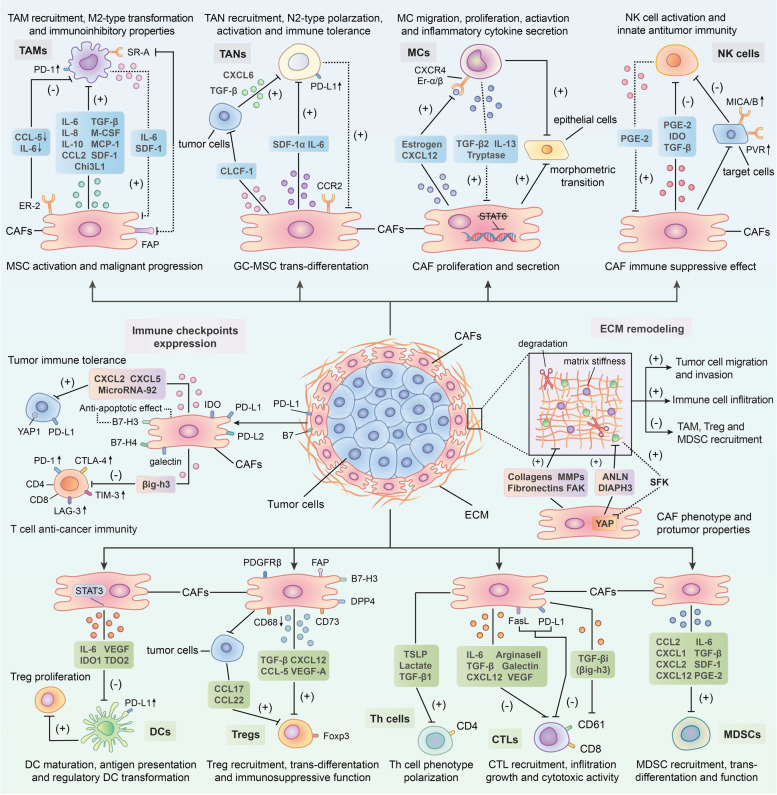
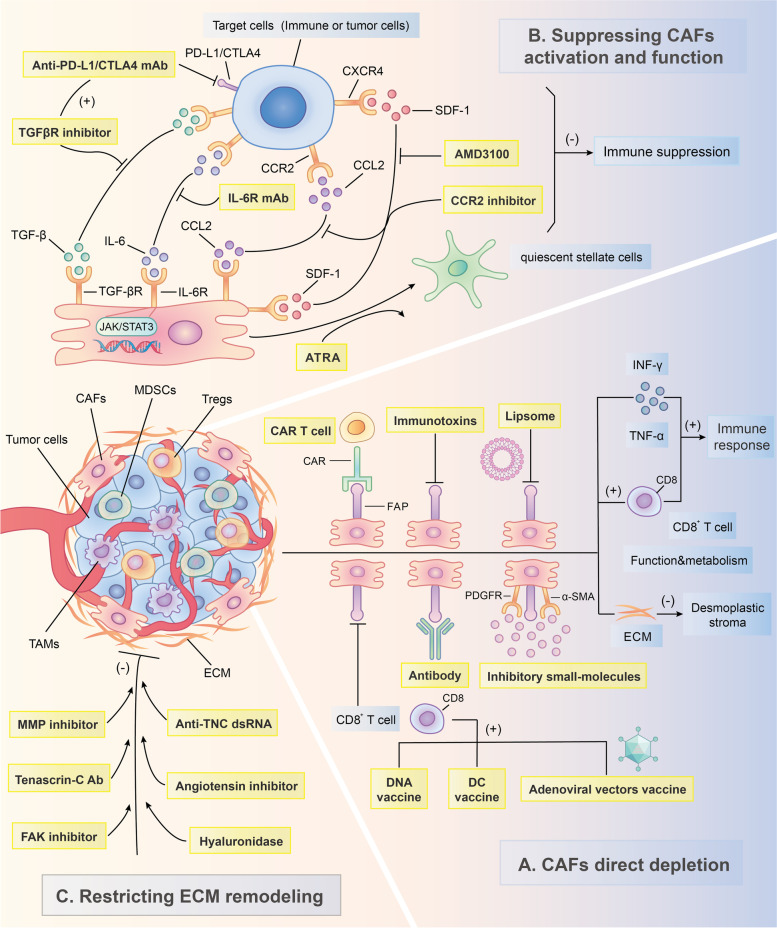
“The elimination of CAFs by FAP-targeting therapy can enhance the anticancer immune response mediated by high levels of certain inflammatory mediators, such as IFN-γ and TNF-α, and facilitate the toxic effects and metabolism of CD8 + T cells with a decreased desmoplastic stroma in the TME [224, 300, 301, 326].”
BackgroundInfluentialChen, W., Jin, W., Hardegen, N., Lei, K.-J., Li, L., Marinos, N., McGrady, G., & Wahl, S. M. (2003) · The Journal of Experimental Medicine · doi:10.1084/jem.20030152 · Cited by 4,699 · cited 2×
“[213], CAF-derived TGF-β can facilitate the differentiation of naïve T cells into CD4 + CD25 + Treg cells by inducing the expression of the Foxp3 gene in T lymphocytes.”
Background
Cited by
Items 801–900 of 1,003
Zhang, M., Zhu, J., Zhang, P., Li, L., Min, M., Li, T., & He, W. (2023) · Frontiers in Oncology · doi:10.3389/fonc.2023.1174252 · Cited by 14
Mei, J., Cai, Y., Chen, L., Wu, Y., Liu, J., Qian, Z., Jiang, Y., Zhang, P., Xia, T., Pan, X., et al. (2023) · British Journal of Cancer · doi:10.1038/s41416-023-02432-6 · Cited by 14
Self-citationChen, D., & Hu, Y. (2023) · Journal of Drug Delivery Science and Technology · doi:10.1016/j.jddst.2023.105048 · Cited by 14
Advancing Cancer Treatment Through Nanotechnology Driven Immunotherapy for Pancreatic Cancer
Nair, S. T., Kamalasanan, K., Sneha, S., Pavithran, K., & Harb, H. (2023) · ACS Applied Nano Materials · doi:10.1021/acsanm.3c03454 · Cited by 14
Wei, X., Song, M., Jin, G., Jia, W., Wang, J., Liang, M., & Zou, L. (2023) · Coordination Chemistry Reviews · doi:10.1016/j.ccr.2023.215488 · Cited by 14
Advancements and challenges in the treatment of esophageal cancer: A comprehensive review
Christodoulidis, G., Agko, E. S., Koumarelas, K. E., Kouliou, M. N., & Zacharoulis, D. (2024) · World Journal of Clinical Oncology · doi:10.5306/wjco.v15.i12.1463 · Cited by 14
Emerging functions and applications of exosomes in oral squamous cell carcinoma
Qie, Y., Sun, X., Yang, Y., & Yan, T. (2023) · Journal of Oral Pathology and Medicine · doi:10.1111/jop.13479 · Cited by 13
Advances in the role of GPX3 in ovarian cancer (Review)
Geng, D., Zhou, Y., & Wang, M. (2024) · International Journal of Oncology · doi:10.3892/ijo.2024.5619 · Cited by 13
“The function of GPX3 is to reduce ROS levels (49).”
BackgroundWu, Z., Wang, X., Wu, H., Du, S., Wang, Z., Xie, S., Zhang, R., Chen, G., & Chen, H. (2024) · Computers in Biology and Medicine · doi:10.1016/j.compbiomed.2024.108307 · Cited by 13
Yan, S., He, Y., Zhu, Y., Ye, W., Chen, Y., Zhu, C., Zhan, F., & Ma, Z. (2024) · Frontiers in Cell and Developmental Biology · doi:10.3389/fcell.2024.1384450 · Cited by 13
Zhang, H., & Liu, J. (2024) · Scientific Reports · doi:10.1038/s41598-024-59211-3 · Cited by 13
“Various inflammatory factors that affect the occurrence and progression of cancer, including IL-6, IL-1, and TNF-a dysregulation, can all affect cholesterol synthesis 59 .”
BackgroundSelf-citationSun, X., Zhang, W., Gou, C., Wang, X., Wang, X., Shao, X., Chen, X., & Chen, Z. (2024) · Biochimica et Biophysica Acta (BBA) - Molecular Basis of Disease · doi:10.1016/j.bbadis.2024.167211 · Cited by 13
Kim, S., Yun, S., Doh, J., & Kim, H. N. (2024) · Advanced Healthcare Materials · doi:10.1002/adhm.202400475 · Cited by 13
Regulation of metaplasia and dysplasia in the stomach by the stromal microenvironment
Rhodes, J., Goldenring, J. R., & Lee, S. (2024) · Experimental & Molecular Medicine · doi:10.1038/s12276-024-01240-z · Cited by 14
“Additionally, there is evidence that myo fi broblasts can develop from myeloid cells, endothelial cells, and adipocytes 54 – 56 .”
BackgroundCarlomagno, S., Setti, C., Ortolani, F., & Sivori, S. (2024) · Immunology Letters · doi:10.1016/j.imlet.2024.106898 · Cited by 13
Panoramic tumor microenvironment in pancreatic ductal adenocarcinoma
Li, X., Hou, W., Xiao, C., Yang, H., Zhao, C., & Cao, D. (2024) · Cellular Oncology · doi:10.1007/s13402-024-00970-6 · Cited by 13
Cheng, J., Li, J., Jiang, X., Ma, X., Li, B., Zhai, H., Luo, X., Zhou, Y., Wu, J., Zhang, Z., et al. (2024) · Molecular Medicine · doi:10.1186/s10020-024-00884-x · Cited by 15
“Cancer-associated fibroblasts are the most common stromal cells, and extensive crosstalk between these cells and immune cells plays a critical role in tumor development (Mao et al. 2021).”
BackgroundPotential regulation and prognostic model of colorectal cancer with extracellular matrix genes
Yang, X., Gao, J., Zhang, T., Lü, Y., Jing, C., Zhang, Z., & Tian, D. (2024) · Heliyon · doi:10.1016/j.heliyon.2024.e36164 · Cited by 13
“Moreover, the ECM undergoes dynamic remodeling during tumorigenesis, resulting in a cancer-supporting matrix that promotes tumor growth, invasion, angiogenesis, immune evasion, and drug resistance [7 – 10].”
BackgroundSi, Y., Zhao, Z., Meng, X., & Zhao, K. (2024) · Scientific Reports · doi:10.1038/s41598-024-74336-1 · Cited by 13
“By interacting with these immune cells, CAFs can form an immunosuppressive TME, enabling tumor cells to evade immune surveillance 28 .”
BackgroundLuan, X., Wang, X., Bian, G., Li, X., Gao, Z., Liu, Z., Zhang, Z., Han, T., Zhao, J., Zhao, H., et al. (2024) · Oncology Reports · doi:10.3892/or.2024.8846 · Cited by 15
Sex-dimorphic tumor growth is regulated by tumor microenvironmental and systemic signals
Wang, X., Bao, H., Huang, Y., Barua, A., Lai, C.-M., Sun, J. Y., Zhou, Y., Cong, F., Gong, S., Chang, C.-H., et al. (2024) · Science Advances · doi:10.1126/sciadv.ads4229 · Cited by 13
“Both immune cells and CAFs in the TME have been documented as sources of such signals, including cytokines and chemokines, acting to sustain the proliferation of tumor cells ( 7 , 8 ).”
The impact of POSTN on tumor cell behavior and the tumor microenvironment in lung adenocarcinoma
Sun, D., Lu, J., Tian, H., Li, H., Chen, X., Feng, H., Yang, W., Yu, J., & Chen, D. (2024) · International Immunopharmacology · doi:10.1016/j.intimp.2024.113713 · Cited by 13
Kaynak, A., Vallabhapurapu, S., Davis, H. W., Smith, E. P., Müller, P., Vojtěšek, B., Franco, R. S., Shao, W.-H., & Qi, X. (2025) · Cancers · doi:10.3390/cancers17030450 · Cited by 13
Characterizing macrophage diversity in colorectal malignancies through single-cell genomics
Zhao, T., Luo, Y., Sun, Y., & Wei, Z. (2025) · Frontiers in Immunology · doi:10.3389/fimmu.2025.1526668 · Cited by 13
Tiwari, P. K., Chaudhary, A. A., Gupta, S. K., Chouhan, M., Singh, H. N., Rustagi, S., Khan, S.-U.-D., & Kumar, S. (2025) · Frontiers in Molecular Biosciences · doi:10.3389/fmolb.2025.1561464 · Cited by 13
Song, B., Li, S., Zhang, S., Tong, C., Chen, Q., Li, Y., Hao, M., Niu, W., & Jin, C. (2025) · PeerJ · doi:10.7717/peerj.19332 · Cited by 13
Dai, H., Ren, J., Wang, C., Huang, J., & Wang, X. (2025) · Scientific Reports · doi:10.1038/s41598-025-96686-0 · Cited by 14
“CAFs secrete cytokines, chemokines, growth factors, and exosomes, which engage in dynamic crosstalk with tumor-infiltrating immune cells, contributing to an immunosuppressive TME that allows tumor cells to evade immune surveillance mechanisms 66,67 .”
Aquino, A., & Franzese, O. (2025) · Cancers · doi:10.3390/cancers17091547 · Cited by 13
“Moreover, TAMs and CAFs interact with the ECM to recruit and retain immunosuppressive cells [325].”
The role and potential mechanisms of exosomes in the progression of hepatocellular carcinoma
Tong, T., Gao, W., Jian, H., Yang, R., Zhang, J., Li, K., & Zeng, P. (2025) · Holistic Integrative Oncology · doi:10.1007/s44178-025-00171-7 · Cited by 13
“Within the immunosuppressive tumor microenvironment, TDEs serve as crucial mediators of crosstalk between tumor cells and immune cells, thereby promoting tumor progression and immune escape [41].”
Yao, N., Fu, Y., Wang, T. Z., Qin, J., Cao, Y., Shi, M., Ma, F., Shen, B., & Jiang, L. (2025) · Cancer Letters · doi:10.1016/j.canlet.2025.217898 · Cited by 14
CD248 induces PD-L1 expression on cancer-associated fibroblasts to promote NSCLC immune escape
Yang, Z., Wang, X., Zhu, X., Li, L., Zeng, X., Ren, J., Wang, L., Wu, J., Zhang, Q., Wang, S., et al. (2025) · Frontiers in Cell and Developmental Biology · doi:10.3389/fcell.2025.1635915 · Cited by 13
Mechanical regulation of extracellular vesicle activity during tumour progression
Parihar, K., Liu, D.-A., Hassan, G., Issadore, D., Janmey, P. A., Weaver, V. M., Guo, W., & Radhakrishnan, R. (2025) · Nature Biomedical Engineering · doi:10.1038/s41551-025-01446-0 · Cited by 14
Wu, J., Dai, T., Li, Z., Pan, M., Zhang, W., Chen, H., Zheng, G., Li, Q., Lian, Q., Liu, Y., et al. (2025) · Cellular Oncology · doi:10.1007/s13402-025-01100-6 · Cited by 13
Emerging role of cancer-associated fibroblasts in the premetastatic niche
Yang, S., Guo, Y., Jia, J., Cui, W., Zhang, X., Wang, Y., Xie, Z., Fang, Y., Ding, X., Chang, L., et al. (2025) · Molecular Cancer · doi:10.1186/s12943-025-02461-0 · Cited by 13
“In different tumors, resident fibroblasts are activated into CAFs by stimulation with different regulators, including TGF-β, hepatocyte growth factor (HGF), platelet-derived growth factor (PDGF) and reactive oxygen species (ROS) [84, 89].”
Musculoskeletal Diseases: Mechanisms and Therapeutic Advances
Ma, X., Yinwang, E., Chai, X., Wang, F., Chen, Z., Wang, S., Zhou, H., Xue, Y., Lei, J., Chen, F., et al. (2025) · MedComm · doi:10.1002/mco2.70519 · Cited by 14
Wang, B., Li, Y., Shi, M., Liao, Y., Ruan, Y., Han, S., Ma, Y., Guan, X., Yang, R., Dang, T., et al. (2025) · Cell Reports Medicine · doi:10.1016/j.xcrm.2025.102480 · Cited by 14
“10,13 Importantly, disrupting one component can trigger compensatory phenotypic alterations in the other.”
InfluentialMa, Q., Wang, J., & Jiang, Q. (2026) · Cellular and Molecular Life Sciences · doi:10.1007/s00018-025-06056-2 · Cited by 14
“The promotion of tumor immune escape is achieved by activating the TGF-β signaling pathway and inhibiting antigen presentation [20 – 22].”
Liu, R., Su, L., Gao, S., Liu, W., & Wang, H. (2026) · Advanced Science · doi:10.1002/advs.202510043 · Cited by 14
“The Wnt pathway also regulates CAF heterogeneity, with β -catenin signaling promoting myofibroblastic differentiation while its inhibition skews toward inflammatory phenotypes [ 72 ].”
InfluentialShang, C., Ke, M., Liu, L. L., Wang, C., Liu, Y., & Zheng, X. (2022) · Frontiers in Oncology · doi:10.3389/fonc.2022.868726 · Cited by 13
RetractedComprehensive Analysis of TRIM Family Genes in Hepatitis Virus B-Related Hepatoma Carcinoma
Hu, W., Liu, D., Li, R., Qian, H., Qiu, W., Ye, Q., & Kong, F. (2022) · Frontiers in Genetics · doi:10.3389/fgene.2022.913743 · Cited by 13
“The Association of Identified TRIM Genes With Infiltrating Immune Cells, as Well as Immune Checkpoint Genes, in HBV-Associated Hepatocellular Carcinoma Current investigation has demonstrated that tumor immune infiltrating cells had a vital effect on tumor immune regulation (Mao et al., 2021; Xie et al., 2021).”
BackgroundWang, Z., Li, J., Zhang, P., Zhao, L., Huang, B., Xu, Y., Wu, G., & Xia, Q. (2022) · Frontiers in Genetics · doi:10.3389/fgene.2022.862210 · Cited by 13
“Cancer-associated fibroblasts can limit the recruitment of immune effector cells, such as CD8 T cells, to tumor tissues by secreting different chemokines (Mao et al., 2021).”
BackgroundLiu, L., Jin, H., Dong, M., Tian, J., Li, H., Liu, Q., Chen, Y., & Zou, Z. (2022) · APOPTOSIS · doi:10.1007/s10495-022-01766-5 · Cited by 13
Selection and Identification of an ssDNA Aptamer for Fibroblast Activation Protein
Zhang, X., Yang, G. H., Zhao, Y., Dai, X., Liu, W., Qu, F., & Huang, Y. (2023) · Molecules · doi:10.3390/molecules28041682 · Cited by 13
Rao, Z., Lu, C., Fan, H., Du, F., Zhu, Y., Xia, Y., Wang, Z., & Ning, P. (2023) · Advanced Healthcare Materials · doi:10.1002/adhm.202203356 · Cited by 13
Li, C., Yu, S., Chen, J., Hou, Q., Wang, S., Qian, C., & Yin, S. (2023) · Frontiers in Immunology · doi:10.3389/fimmu.2023.1127982 · Cited by 13
Matarrese, P., Vona, R., Ascione, B., Cittadini, C., Tocci, A., & Mileo, A. M. (2023) · Cells · doi:10.3390/cells12071048 · Cited by 13
Fan, M., Zhang, Y., Shi, H., Xiang, L., Yao, H., & Lin, R. (2023) · Life Sciences · doi:10.1016/j.lfs.2023.121657 · Cited by 13
Analyzing the role of cancer‐associated fibroblast activation on macrophage polarization
Bruch‐Oms, M., Olivera‐Salguero, R., Mazzolini, R., del Valle‐Pérez, B., Mayo‐González, P., Beteta, Á., Peña, R., & de Herreros, A. G. (2023) · Molecular Oncology · doi:10.1002/1878-0261.13454 · Cited by 13
Li, T., Zhou, Z., Xie, Z., Fan, X., Zhang, Y., Zhang, Y., Song, X., & Ruan, Y. (2023) · Journal of Cancer Research and Clinical Oncology · doi:10.1007/s00432-023-05011-7 · Cited by 13
“Therefore, we hypothesized that the high-risk group may have an ECM-related ICB resistance mechanism.”
BackgroundInfluentialXu, X., Zhong, D., Wang, X., Luo, F., Zheng, X., Feng, T., Chen, R., Cheng, Y., Wang, Y., & Ma, G. (2024) · Scientific Reports · doi:10.1038/s41598-024-56105-2 · Cited by 13
Yan, Z., Zhong, Z., Shi, C., Feng, M., Feng, X., & Liu, T. (2024) · Cancer Biology & Therapy · doi:10.1080/15384047.2024.2355705 · Cited by 13
“The results revealed a positive correlation between KRT81 and several checkpoints, notably TNFRSF family members 4, 9, 14, 18, and CD27.”
BackgroundStephan, A., Suhrmann, J.-H., Skowron, M. A., Che, Y., Poschmann, G., Petzsch, P., Kresbach, C., Wruck, W., Pongratanakul, P., Adjaye, J., et al. (2024) · Matrix Biology · doi:10.1016/j.matbio.2024.06.001 · Cited by 13
Wang, B., Pan, Y., Xie, Y., Wang, C., Yang, Y., Sun, H., Yan, Z., Cui, Y., Li, L., Zhou, Y., et al. (2024) · Biological Procedures Online · doi:10.1186/s12575-024-00254-1 · Cited by 13
“The convergence of CAF-driven tumorigenic signals and immune evasion mechanisms underscores the importance of understanding the dynamic interplay between these elements in shaping the pancreatic cancer microenvironment [31].”
BackgroundDong, L., Sun, Q., Song, F., Song, X., Lu, C., Li, Y., & Song, X. (2023) · Heliyon · doi:10.1016/j.heliyon.2023.e14003 · Cited by 13
Wu, C., Mao, Y., Zhang, F., Wang, X., Fan, N., Zhang, W., Zhang, W., Li, P., & Tang, B. (2023) · Sensors and Actuators B Chemical · doi:10.1016/j.snb.2023.133891 · Cited by 13
Drugs for treatment of peptic ulcers.
Dajani, E. Z., & Trotman, B. W. (1992) · PubMed · Cited by 13
Liu, J., Xu, X., Li, Y., Xu, J., Zhao, R., Liu, S., Wu, J., Zhang, L., & Zhang, B. (2023) · Biomaterials Science · doi:10.1039/d3bm00254c · Cited by 12
Self-citationZhou, Y., Qiu, C., Fu, Q., Li, T., Zhang, X., Zhu, C., Qin, X., & Wu, B. (2023) · Journal of Inflammation Research · doi:10.2147/jir.s426558 · Cited by 12
“28 Furthermore, endothelial cells are involved in the detachment and metabolism of tumor cells, promoting tumor formation and metastasis.”
BackgroundLi, S., Weng, J., Xiao, C., Lu, J. N., Cao, W., Song, F., He, Z., Zhang, P., Zhu, Z., & Xu, J. (2023) · Cancer Reports · doi:10.1002/cnr2.1904 · Cited by 13
“30 The arecoline could inhibit cuproptosis, significantly increasing the viability of CAFs in oral squamous cell carcinoma.”
BackgroundSelf-citationAdvancing clinical cancer care: Unveiling the power of surface‐enhanced Raman spectroscopy
Li, X., Yang, G., Zhang, S., & Ren, H. (2024) · Journal of Raman Spectroscopy · doi:10.1002/jrs.6637 · Cited by 12
Tumor-derived extracellular vesicles: how they mediate glioma immunosuppression
Ma, T., Su, G., Wu, Q., Shen, M., Feng, X., & Zhang, Z. (2024) · Molecular Biology Reports · doi:10.1007/s11033-023-09196-5 · Cited by 12
“TIME is shaped by a complex interplay among immune cells, cytokines, and tumor cells, which collectively influence the anti-tumor immune response [8].”
Kou, Z., Liu, C., Zhang, W., Sun, C., Liu, L., & Zhang, Q. (2024) · International Journal of Oncology · doi:10.3892/ijo.2024.5642 · Cited by 13
“In addition, CAFs and immune cells are the main supporting cell populations in solid tumors and there is exten‑ sive functional interaction between them (7).”
BackgroundMechanisms of Cancer Resistance to Various Therapies
Batool, A., Rashid, W., Fatima, K., & Khan, S. U. (2024) · Springer eBooks · doi:10.1007/978-981-97-1666-1_2 · Cited by 13
Eskandari-Malayeri, F., Rezeai, M., Narimani, T., Esmaeil, N., & Azizi, M. (2024) · Discover Oncology · doi:10.1007/s12672-024-01156-0 · Cited by 12
A comprehensive prognostic and immunological implications of PFKP in pan-cancer
Ling, X., Zhang, L., Fang, C., Liang, H., & Ma, J. (2024) · Cancer Cell International · doi:10.1186/s12935-024-03497-w · Cited by 12
“Negative correlations were observed between PFKP expression and overall survival rates in several tumors, including KICH, HNSC, LUAD, and others.”
BackgroundResearch progress on cancer-associated fibroblasts in osteosarcoma
Feng, L., Chen, Y., & JIN, W. (2025) · Oncology Research Featuring Preclinical and Clinical Cancer Therapeutics · doi:10.32604/or.2024.054207 · Cited by 12
“CAFs are crucial regulators of tumor immunity [71].”
Duan, L., Cao, S., Zhao, F., Du, X., Gao, Z., Wang, X., & Bian, F. (2025) · Molecular and Cellular Biochemistry · doi:10.1007/s11010-025-05226-x · Cited by 12
Fan, J., Chen, Y., Gong, Y., Sun, H., Hou, R., Dou, X., Zhang, Y., & Huo, C. (2025) · Scientific Reports · doi:10.1038/s41598-025-93916-3 · Cited by 12
“These cells are key players in the tumor stroma, affecting extracellular matrix remodeling 29 , immune cell recruitment 30 , and tumor growth 31 .”
Wang, Q., Yu, Y., Ruan, L., Huang, M., Chen, W., Sun, X., Liu, J., & Jiang, Z. (2025) · Cancer Cell International · doi:10.1186/s12935-025-03750-w · Cited by 12
“However, previous studies on TAMs have yielded variable and sometimes contradictory results regarding their prognostic value [31, 32], highlighting the need for a more nuanced understanding of TAM heterogeneity [33, 34].”
Self-citationChen, X., Zhong, X., Zhang, F., Zhou, X., Yue, X., & Li, X. (2025) · Scientific Reports · doi:10.1038/s41598-025-92867-z · Cited by 12
Cao, Q., Sun, D., Tu, C., Wang, J., Fu, R., Gong, R., Xiao, Y., Liu, Q., & Li, X. (2025) · Communications Biology · doi:10.1038/s42003-025-07512-2 · Cited by 13
“Samples 4, 5, and 6 were used for scRNA-seq extraction and sequencing.”
Expanding horizons of cancer immunotherapy: hopes and hurdles
Sonar, P. V., Singh, A. K., Mandadi, S., & Sharma, N. K. (2025) · Frontiers in Oncology · doi:10.3389/fonc.2025.1511560 · Cited by 12
Wang, S., Cheng, W., Wang, X., Wu, Z., & Su, J. (2025) · European journal of medical research · doi:10.1186/s40001-025-02667-4 · Cited by 13
“In recent years, the concept of the immune microenvironment has been extensively applied across various fields, including cancer, chronic infections, inflammation, autoimmune disorders, and transplant rejection [11–14].”
Chen, Y., Feng, S., Li, L., Liu, G., Ma, Q., Liu, Z., Zhao, Y., & Wang, Q. (2025) · Journal of Medicinal Chemistry · doi:10.1021/acs.jmedchem.5c00815 · Cited by 12
Li, J., Huang, Y. Y., Fu, L., Shi, M., Hu, G., Du, F., Wang, Z., Xiao, Y., Zhang, Y., & Li, Y. (2025) · International Journal of Oncology · doi:10.3892/ijo.2025.5774 · Cited by 13
“Recent studies have shown that miRNAs derived from CAFs decrease lipid reactive oxygen species (ROS) levels and inhibit ferroptosis in cancer cells by targeting ChaC gluta‑ thione specific γ ‑glutamyl cyclotransferase 1 and long‑chain acyl‑CoA synthase 4 (ACSL4), leading to chemotherapy resis‑ tance (39,40).”
InfluentialZhu, L., Jing, X., & Ahn, B. (2025) · Oral Oncology · doi:10.1016/j.oraloncology.2025.107513 · Cited by 12
Xu, Q., Wen, Y., Huang, T., Li, H., Liu, X., Shi, S.-N., Gong, W., Mills, G. B., Ma, D., Gao, Q., et al. (2025) · Biomarker Research · doi:10.1186/s40364-025-00814-x · Cited by 13
“…cells, CAFs can induce the degradation of the extracellular matrix (ECM) by releasing matrix metalloproteinases (MMPs) and synthesizing new ECM proteins, providing structural support for tumor invasion and angiogenesis, which largely contributes to drug resistance in cancer treatment [141–143].”
Self-citationNabi‐Afjadi, M., Farzam, F., Soltani, S., Golestani, N., Asl, S. S., Aziziyan, F., Zalpoor, H., Ghasemi, F., Dabirmanesh, B., & Khajeh, K. (2025) · Cancer Cell International · doi:10.1186/s12935-025-03959-9 · Cited by 12
“In a mouse model of breast cancer metastasis, periostin was required to form an immunosuppressive pre-metastatic niche in the lungs [92].”
Rashed, N., Liu, W., & Luo, X. (2025) · Biochimica et Biophysica Acta (BBA) - Reviews on Cancer · doi:10.1016/j.bbcan.2025.189474 · Cited by 13
Mao, S., Zhang, X., Zhao, Y., Li, X., Wang, Z., Zhou, P., Wang, Z., Zhang, X., Hu, X., Huang, G., et al. (2025) · Journal of Translational Medicine · doi:10.1186/s12967-025-07333-1 · Cited by 12
“Once activated, CAFs contribute to immune suppression and drive tumorigenesis, therapy resistance, and metastasis [99– 101].”
Role of the tumor microenvironment in chemotherapy resistance in ovarian cancer and targeted therapy
Qi, R., Yang, J., Shen, S., Yu, Y., & Yang, Q. (2025) · Journal of Ovarian Research · doi:10.1186/s13048-025-01927-5 · Cited by 12
“TME plays an important role in regulating tumor extracellular matrix remodeling, maintaining tumor cell stemness, angiogenesis, regulating tumor metabolism, immune response, and treatment resistance [14, 19–22].”
Tumor immune organoids in immunotherapy resistance and drug screening
Zhang, M., Li, L., Pu, H., Yan, W., Zhang, X., Guo, X., Zhao, Y., Meng, Q., & Yin, M. (2026) · Drug Resistance Updates · doi:10.1016/j.drup.2026.101360 · Cited by 12
Self-citationThe tumor ecosystem: Rewiring an open, systemically integrated network for therapeutic gain
Chiodelli, P., Papait, A., Agoni, L., Quaglia, F., Silini, A. R., & Parolini, O. (2026) · Biomedicine & Pharmacotherapy · doi:10.1016/j.biopha.2026.119047 · Cited by 12
Qi, L., Dang, G., Ling, X., Miao, Y., Bo, Y., Zhai, Y., Chen, X., Zhai, Q., Zheng, L., Zhang, Y., et al. (2026) · Cancer Research · doi:10.1158/0008-5472.can-25-2871 · Cited by 12
Guo, J., Zhao, J., Sun, L., & Chen, Y. (2022) · Frontiers in Oncology · doi:10.3389/fonc.2022.955718 · Cited by 12
Huang, Z., Lu, Y., Wang, W., Xie, N., Chen, Y., Xiong, G., Xu, X., Zhang, M., & Wang, C. (2022) · Journal of Oral Pathology and Medicine · doi:10.1111/jop.13357 · Cited by 12
Self-citationHe, C., Zhang, X.-D., Zhu, S., Zheng, J., Wang, Y., Wang, Q., Yin, H., Fu, Y.-J., Song, X., Tang, J., et al. (2022) · Frontiers in Genetics · doi:10.3389/fgene.2022.998147 · Cited by 12
Cancer-associated fibroblasts-derived lncRNA signature as a putative biomarker in breast cancer
Li, Z., Yu, J., Lv, C., & Luo, Z. (2022) · Frontiers in Oncology · doi:10.3389/fonc.2022.1028664 · Cited by 12
Role of Noncoding RNAs in the Tumor Immune Microenvironment of Hepatocellular Carcinoma
Lv, Y., Wang, Z., & Yuan, K. (2023) · Journal of Clinical and Translational Hepatology · doi:10.14218/jcth.2022.00412 · Cited by 12
Chen, W., Xu, D., Liu, Q., Wu, Y., Wang, Y., & Yang, J. (2023) · Biomedicine & Pharmacotherapy · doi:10.1016/j.biopha.2023.114697 · Cited by 12
STK24 Promotes Progression of LUAD and Modulates the Immune Microenvironment
Li, Y., Liu, Y., Wang, K., Xue, D. Q., Huang, Y., Tan, Z., & Chen, Y. (2023) · Mediators of Inflammation · doi:10.1155/2023/8646088 · Cited by 12
The role of circular RNA in tumor microenvironment and immunotherapy
He, Y. T., Huang, Q., Ge, Y., Liu, X., Tong, Y., Shang, H., Ding, X., Peng, E., Wu, J., Chen, Z., et al. (2023) · International Journal of Biological Macromolecules · doi:10.1016/j.ijbiomac.2023.124929 · Cited by 12
Yang, S., Li, G., Yin, X., Wang, Y., Jiang, X., Bian, X., Fang, T., Yin, S., Zhang, L., & Xue, Y. (2023) · The Journal of Pathology Clinical Research · doi:10.1002/cjp2.333 · Cited by 13
A Comprehensive Analysis of the Prognostic, Immunological and Diagnostic Role of CCNF in Pan-cancer
Gao, X., Bu, H., Ge, J., Gao, X., Wang, L., Zhang, Z., & Wang, L. (2023) · Journal of Cancer · doi:10.7150/jca.86597 · Cited by 12
“The TME primarily consists of cancer-associated fibroblasts (CAFs), tumor cells, tumor-infiltrating immune cells, endothelial cells, extracellular matrix (ECM), and various signaling molecules [33].”
BackgroundGuo, Z., Li, Z., Chen, M., Qi, X., Sun, Z., Wu, S., Hou, X., Qiu, M., & Cao, Y. (2023) · Frontiers in Molecular Biosciences · doi:10.3389/fmolb.2023.1158747 · Cited by 12
Ji, Y., Lin, Z., Li, G., Tian, X., Wu, Y., Wan, J., Liu, T., & Xu, M. Q. (2023) · Frontiers in Genetics · doi:10.3389/fgene.2023.1136783 · Cited by 12
“Increasing evidence has demonstrated that the degree of immune cell infiltration was significantly correlated with cancer progression and the prognosis of cancer patients (Mao et al., 2021).”
BackgroundLv, Y., Hu, J., Zheng, W., Shan, L., Bai, B., Zhu, H., & Dai, S. (2023) · Translational Cancer Research · doi:10.21037/tcr-23-261 · Cited by 12
“Cancer-associated fibroblasts (CAFs), which comprise the majority of the stromal cells in the TME (6), regulate the development and spread of cancer through a variety of mechanisms (7).”
InfluentialBiomarkers for Immunotherapy in Driver-Gene-Negative Advanced NSCLC
Huang, Y., Chau, Y. F., Bai, H., Wu, X., & Duan, J. (2023) · International Journal of Molecular Sciences · doi:10.3390/ijms241914521 · Cited by 12
“Cytokines are well-known regulators of immune activity that can recruit immune cells to the TME and promote the expression of certain immune checkpoint molecules in the process of antitumor activities [93].”
BackgroundXue, M., Tong, Y., Xiong, Y., & Yu, C. (2023) · Frontiers in Oncology · doi:10.3389/fonc.2023.1257266 · Cited by 12
Shen, C., Chai, W., Han, J., Zhang, Z., Liu, X., Yang, S., Wang, Y., Wang, D., Wan, F., Fan, Z., et al. (2023) · Frontiers in Immunology · doi:10.3389/fimmu.2023.1213947 · Cited by 12
Metadata
- Authors
- Mao, X., Xu, J., Wang, W., Liang, C., Hua, J., Liu, J., Zhang, B., Meng, Q., Yu, X., & Shi, S.
- Affiliations
- Shanghai Medical College of Fudan University (CN)
- Corresponding author
- Meng, Qingcai
- Yu, Xianjun
- Shi, Si
- Venue
- Molecular Cancer
- Published
- 2021-10-11
- Volume
- 20
- Issue
- 1
- Pages
- 131-131
- ISSN
- 1476-4598 (ISSN-L)
- PMC
- PMC8504100
- OpenAlex
- W3205475594
- Cited by
- 2,290
- References
- 369
- Citations by year
- 2026: 379 · 2025: 596 · 2024: 647 · 2023: 459 · 2022: 202 · 2021: 6
- FWCI
- 40.37
- Type
- journal article
- Language
- en
- Open access
- gold
- doi.org
- Licence
- cc-by
- creativecommons.org/licenses/by/4.0 (tdm)
- creativecommons.org/licenses/by/4.0 (vor)
- Locations
- Molecular Cancer (publishedVersion, cc-by)
- Europe PMC (PubMed Central) (publishedVersion, other-oa)
- PubMed Central (publishedVersion, cc-by)
- PubMed (publishedVersion)
- DOAJ (DOAJ: Directory of Open Access Journals) (submittedVersion, cc-by-sa)
- Funders
- national natural science foundation of china (81802352, 81772555, 81902428)
- china national funds for distinguished young scientists (81625016)
- shanghai rising-star program (20QA1402100)
- Topics
- Health Sciences › Medicine › Oncology › Cancer Immunotherapy and Biomarkers
- Life Sciences › Immunology and Microbiology › Immunology › Immune cells in cancer
- Health Sciences › Medicine › Oncology › Cancer Cells and Metastasis
- Keywords
- cancer-associated fibroblasts, tumor microenvironment, tumor immune microenvironment, tumor-infiltrating immune cells, immunosuppression, tumor immune evasion, extracellular matrix remodeling, chemoresistance, tumor angiogenesis, metastasis, exosomes, cytokines and chemokines
- MeSH terms
- Cancer-Associated Fibroblasts, Tumor-Associated Macrophages, Animals, Cell Communication, Disease Susceptibility, Gene Expression Regulation, Humans, Immune System, Immunity, Innate, Neoplasm Metastasis, Neoplasms, Biomarkers, Tumor, Signal Transduction, Lymphocytes, Tumor-Infiltrating, Adaptive Immunity, Tumor Microenvironment, Neoplasm Grading
About these checks
Registry, retraction, Cites and statistics results are computed, not judged, with one exception: a printed reference that no index lists is read once by a model before it counts as a citation error. Claims are extracted by a model and kept only when their quote appears verbatim in the text; each cited source is then checked, with a model’s help, for whether it says what the claim relies on. Those verdicts can be wrong — read the claim’s quote and the cited source before relying on one.
Statistics and arithmetic are recomputed, not judged.
Confidence bands are shown only for fields calibrated on our annotated test set. None is calibrated yet, so no band is shown.
What counts as a claim ›How we measure confidence ›How we check this ›
Are you an author, or do you see a problem with this page? Request a review
Data sources
Bibliographic data: Semantic Scholar, OpenAlex, Crossref.
Contains information from the Semantic Scholar Academic Graph Datasets, made available under the ODC Attribution License (ODC-BY 1.0).
Semantic Scholar’s data is described in: Kinney, R., et al. (2023). The Semantic Scholar Open Data Platform. arXiv:2301.10140.
