

Crosstalk between cancer‐associated fibroblasts and immune cells in the tumor microenvironment: new findings and future perspectives
Open accessThe DOI matches its Crossref record; 369 of the 369 references it cites were found in a registry or an index.
Abstract
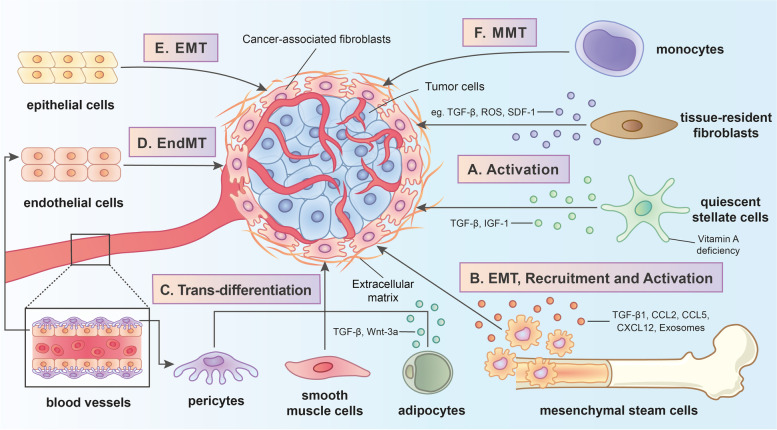
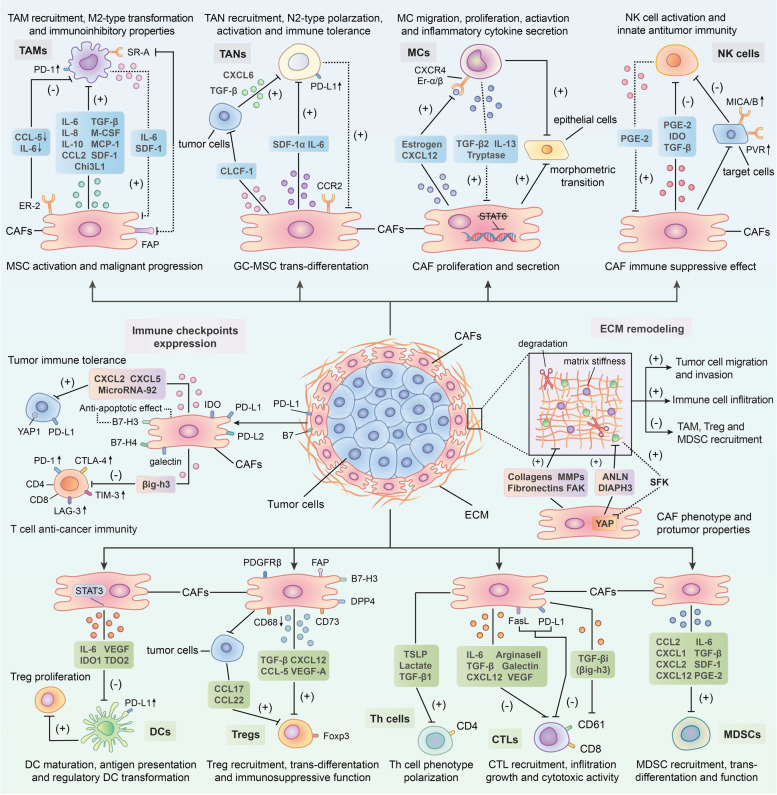
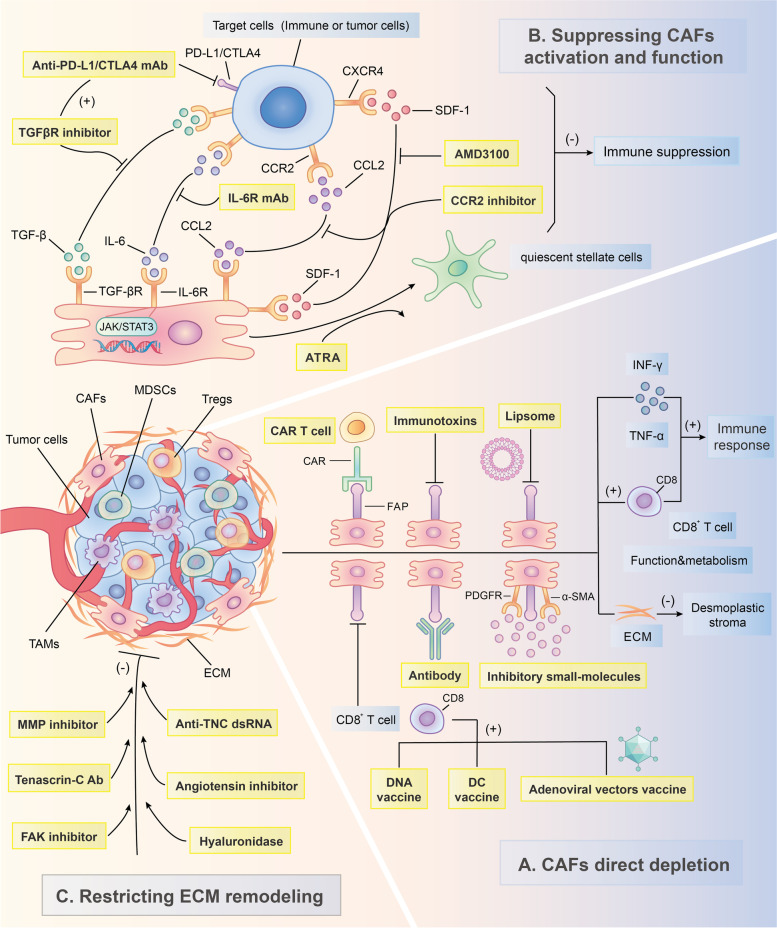
Cancer-associated fibroblasts (CAFs), a stromal cell population with cell-of-origin, phenotypic and functional heterogeneity, are the most essential components of the tumor microenvironment (TME). Through multiple pathways, activated CAFs can promote tumor growth, angiogenesis, invasion and metastasis, along with extracellular matrix (ECM) remodeling and even chemoresistance. Numerous previous studies have confirmed the critical role of the interaction between CAFs and tumor cells in tumorigenesis and development. However, recently, the mutual effects of CAFs and the tumor immune microenvironment (TIME) have been identified as another key factor in promoting tumor progression. The TIME mainly consists of distinct immune cell populations in tumor islets and is highly associated with the antitumor immunological state in the TME. CAFs interact with tumor-infiltrating immune cells as well as other immune components within the TIME via the secretion of various cytokines, growth factors, chemokines, exosomes and other effector molecules, consequently shaping an immunosuppressive TME that enables cancer cells to evade surveillance of the immune system. In-depth studies of CAFs and immune microenvironment interactions, particularly the complicated mechanisms connecting CAFs with immune cells, might provide novel strategies for subsequent targeted immunotherapies. Herein, we shed light on recent advances regarding the direct and indirect crosstalk between CAFs and infiltrating immune cells and further summarize the possible immunoinhibitory mechanisms induced by CAFs in the TME. In addition, we present current related CAF-targeting immunotherapies and briefly describe some future perspectives on CAF research in the end.
Overview
The claims and statistics of this paper haven’t been checked yet.
Free: it reads the open-access text and checks the first 5 claims that cite a source we can check. Create a free account to check every claim.
Integrity signals
Registry
Cites
Statistics
Figures
Verification
Claims the paper makes
The claims and statistics of this paper haven’t been checked yet.
Free: it reads the open-access text and checks the first 5 claims that cite a source we can check. Create a free account to check every claim.
Claims other papers make about this one
Each is checked against this paper’s own text: does it say what the citing paper says it does?
The source backs part of the claim, not all of it — or backs it for a different population, condition or comparison.
In the citing paper
“CAFs recruit and polarize immune cells such as macrophages, neutrophils, T cells and DCs to a pro‐tumorigenic phenotype by secreting several cytokines, chemokines, and other effector molecules such as Interleukin 6 (IL‐6), and 8 (IL‐8), TGF‐β, CXCL12, CCL2, SDF‐1, VEGF, Indoleamine‐pyrrole 2,3‐dioxygenase (IDO) and tryptophan 2,3‐dioxygenase (TDO2) [27].”
From Tumor microenvironment signaling and therapeutics in cancer progression (2023) · cites this paper as [27]
Experimental — accuracy not yet measuredThe cited source says what the claim attributes to it.
In the citing paper
“substantial evidence indicating that CAFs can suppress anti-tumor immunity through interactions with immune effector cells, particularly CD8+ T cells 72.”
From TBX3 shapes an immunosuppressive microenvironment and induces immunotherapy resistance (2025) · cites this paper as [72]
Self-check
Percentages, sums and reported differences re-computed from the paper’s own numbers.
The self-check needs the paper’s full text.
Citations
Cites
1 retracted
Dou, D., Ren, X., Han, M., Xu, X., Ge, X., Gu, Y., & Wang, X. (2020) · Frontiers in Immunology · doi:10.3389/fimmu.2020.02026 · Cited by 175
RetractedMantovani, A., Allavena, P., Sica, A., & Balkwill, F. (2008) · Nature · doi:10.1038/nature07205 · Cited by 11,399 · cited 1×
“M1-type macrophages mainly behave as an antitumor role in the TIME by mediating antibody-dependent cellular cytotoxicity and producing ROS and tumor necrosis factor (TNF) [123], whereas M2-type macrophages exhibit tumor-promoting activity by contributing to the activation of tumor angiogenesis, immune suppression, inv…”
BackgroundThe basics of epithelial-mesenchymal transition
Kalluri, R., & Weinberg, R. A. (2009) · Journal of Clinical Investigation · doi:10.1172/jci39104 · Cited by 10,196
Microenvironmental regulation of tumor progression and metastasis
Quail, D. F., & Joyce, J. A. (2013) · Nature Medicine · doi:10.1038/nm.3394 · Cited by 7,994
Molecular Mechanisms of Stress-Responsive Changes in Collagen and Elastin Networks in Skin
Aziz, J., Shezali, H., Radzi, Z., Yahya, N. A., Abu Kassim, N. H., Czernuszka, J., & Rahman, M. T. (2016) · Skin Pharmacology and Physiology · doi:10.1159/000447017 · Cited by 7,323
The chemokine system in diverse forms of macrophage activation and polarization
MANTOVANI, A., SICA, A., SOZZANI, S., ALLAVENA, P., VECCHI, A., & LOCATI, M. (2004) · Trends in Immunology · doi:10.1016/j.it.2004.09.015 · Cited by 6,534 · cited 1×
“macrophages (TAMs) Macrophages that infiltrate tumors, known as tumorassociated macrophages (TAMs), are classified into two distinct subsets that are activated by different polarizing cytokines, termed M1 (lipopolysaccharide (LPS) alone or with Th1 cytokines) and M2 (Th2 cytokines) [122].”
BackgroundMolecular mechanisms and clinical applications of angiogenesis
Carmeliet, P., & Jain, R. K. (2011) · Nature · doi:10.1038/nature10144 · Cited by 5,467
TGFβ attenuates tumour response to PD-L1 blockade by contributing to exclusion of T cells
Mariathasan, S., Turley, S. J., Nickles, D., Castiglioni, A., Yuen, K., Wang, Y., Kadel III, E. E., Koeppen, H., Astarita, J. L., Cubas, R., et al. (2018) · Nature · doi:10.1038/nature25501 · Cited by 5,400
Macrophage plasticity, polarization, and function in health and disease
Shapouri‐Moghaddam, A., Mohammadian, S., Vazini, H., Taghadosi, M., Esmaeili, S., Mardani, F., Seifi, B., Mohammadi, A., Afshari, J. T., & Sahebkar, A. (2018) · Journal of Cellular Physiology · doi:10.1002/jcp.26429 · Cited by 4,930 · cited 5×
“The elimination of CAFs by FAP-targeting therapy can enhance the anticancer immune response mediated by high levels of certain inflammatory mediators, such as IFN-γ and TNF-α, and facilitate the toxic effects and metabolism of CD8 + T cells with a decreased desmoplastic stroma in the TME [224, 300, 301, 326].”
BackgroundInfluentialChen, W., Jin, W., Hardegen, N., Lei, K.-J., Li, L., Marinos, N., McGrady, G., & Wahl, S. M. (2003) · The Journal of Experimental Medicine · doi:10.1084/jem.20030152 · Cited by 4,699 · cited 2×
“[213], CAF-derived TGF-β can facilitate the differentiation of naïve T cells into CD4 + CD25 + Treg cells by inducing the expression of the Foxp3 gene in T lymphocytes.”
Background
Cited by
Items 701–800 of 1,003
Li, Y., Qiu, H., Zhao, Z., Qi, F., & Cai, P. (2025) · Frontiers in Immunology · doi:10.3389/fimmu.2025.1636483 · Cited by 17
Zhou, M., Liu, H., Hui, J., Chen, Q., Zhao, Y., Wang, H., Liu, W. ‐., Bian, Y., Ji, S., Wang, B., et al. (2025) · Cancer Research · doi:10.1158/0008-5472.can-25-0663 · Cited by 16
Zhang, Z., Zhu, X., Yang, F., Lai, N., Zhu, L., Cole, K., Hu, B., Li, T., Zhu, Y., Zhang, L.-M., et al. (2023) · Med · doi:10.1016/j.medj.2023.07.010 · Cited by 16
Zhang, Q., Wang, J., Zhang, J., Wang, Y., Wang, Y., & Liu, F. (2023) · Cellular Signalling · doi:10.1016/j.cellsig.2023.111016 · Cited by 16
Shang, L., Chen, X., Zhu, T., Chong, S., Liu, H., Huang, W., Fu, W., She, H. Q., & Shen, X. (2024) · Applied Biochemistry and Biotechnology · doi:10.1007/s12010-023-04782-6 · Cited by 16
“Moreover, CAFs interact with tumor-related immune cells by secreting exosomes to allow immune escape [19, 20].”
Chen, C., Zhang, Y., Wu, X., & Shen, J. (2024) · Translational Oncology · doi:10.1016/j.tranon.2024.101885 · Cited by 16
“Cancer-associated fibroblasts (CAFs) play a significant role in the tumor microenvironment by engaging in cellular communication with other tumor cells and contributing to the secretion of extracellular matrix components [42,43].”
BackgroundLiang, J., Lei, K., Liang, R., Huang, J., Tan, B., Lin, H., & Wang, M. (2024) · Cellular Signalling · doi:10.1016/j.cellsig.2024.111093 · Cited by 16
Liu, X., Chen, Y.-X., Wan, H., Wang, Y.-L., Wang, Y., Gao, Y., Wu, L.-B., & Pei, Z. (2024) · Scientific Reports · doi:10.1038/s41598-024-54670-0 · Cited by 16
“The diverse array of immune cells and molecules present within this unique ecological niche in the body are extremely interactive and their interactions can have profound influences on how tumor cells evolve and spread, thus determining the course of disease progression 51,52 .”
BackgroundPANoptosis-related genes function as efficient prognostic biomarkers in colon adenocarcinoma
Liu, Y., Wang, Y., Feng, H., Ma, L., & Liu, Y. (2024) · Frontiers in Endocrinology · doi:10.3389/fendo.2024.1344058 · Cited by 16
Jiao, J.-Z., Zhang, Y., Zhang, W., He, M., Meng, M., Liu, T., Ma, Q., Xu, Y., Gao, P., Chen, C., et al. (2024) · Acta Pharmacologica Sinica · doi:10.1038/s41401-024-01260-5 · Cited by 16
Sánchez-Ramírez, D., Mendoza-Rodríguez, M., Alemán, O. R., Candanedo-González, F., Rodríguez‐Sosa, M., Montesinos, J. J., Salcedo, M., Brito-Toledo, I., Vaca‐Paniagua, F., & Terrazas, L. I. (2024) · World Journal of Gastrointestinal Oncology · doi:10.4251/wjgo.v16.i5.1705 · Cited by 16
“Activated CAFs primarily express alpha-smooth muscle actin ( α -SMA), fibronectin, vimentin, fibroblast-specific protein 1, and fibroblast activation protein (FAP)[17,24].”
InfluentialNeutrophil Extracellular Traps: A Crucial Factor in Post-Surgical Abdominal Adhesion Formation
Lu, Y., Elrod, J., i, M. H., Knopf, J., & Boettcher, M. (2024) · Cells · doi:10.3390/cells13110991 · Cited by 16
“Interestingly, while fibrin deposition acts as a supportive matrix for cell migration and temporary wound stabilization, it also plays a pivotal role in adhesion formation [40,41].”
BackgroundLiu, Y., Li, J.-P., Han, M., Li, J.-X., Ye, Q., Lin, S.-T., Zhou, J., Liu, S., & Zou, X. (2024) · Journal of Translational Medicine · doi:10.1186/s12967-024-05389-z · Cited by 16
“Mesenchymal cell activation contributes to the tumor stroma promoting tumor cell invasiveness and metastasis, and impedes T and NK cell infiltration thereby inhibiting tumor-killing effects [73, 74].”
BackgroundZhang, Y., Chen, X., Hu, B., Zou, B., & Xu, Y. (2024) · Nanomedicine · doi:10.1080/17435889.2024.2374230 · Cited by 17
Zou, D., Xin, X., Xu, Y., Xu, H., Huang, L., & Xu, T. (2024) · Heliyon · doi:10.1016/j.heliyon.2024.e36446 · Cited by 16
“Cancer-associated fibroblasts (CAFs) are one of the most important stromal cell components in the TME, and they exhibit biological heterogeneity in terms of cell origin, phenotype, and function [52,53].”
BackgroundExploring the molecular mechanisms and therapeutic potential of SMAD4 in colorectal cancer
Shan, H., Tian, G., Zhang, Y., & Qiu, Z. (2024) · Cancer Biology & Therapy · doi:10.1080/15384047.2024.2392341 · Cited by 16
“…of the CRC microenvironment, SMAD4 also plays a critical role in the activation and maintenance of cancer-associated fibroblasts (CAFs), 15,45,46 which produce a significant amount of matrix components in the fibrotic microenvironment of CRC and enhance tumor invasiveness and chemotherapy…”
BackgroundJiang, H., Wang, G.-T., Wang, Z., Qing-yong, M., & Ma, Z. (2024) · World Journal of Gastrointestinal Oncology · doi:10.4251/wjgo.v16.i9.3980 · Cited by 16
“As activated fibroblasts residing within the cancer stroma, CAFs actively promote cancer progression through intricate interactions with cancer cells[29].”
Qin, Y., Miyake, T., Muramoto, K., Maekawa, T., Nishina, Y., Wang, Y., Shimizu, T., & Tani, M. (2024) · Annals of Surgical Oncology · doi:10.1245/s10434-024-16593-y · Cited by 16
“54 Mean-while, overexpression of COL10A1 , which may influence immune cell infiltration, is negatively associated with survival in patients with CRC. 55,56 COL11A1 -expressing CAFs may promote tumor growth by modulating ECM remodeling and affecting the distribution of TILs.”
Functions of METTL1/WDR4 and QKI as m7G modification - related enzymes in digestive diseases
Zhou, W., Yi, Y., Cao, W., Zhong, X., & Chen, L. (2025) · Frontiers in Pharmacology · doi:10.3389/fphar.2024.1491763 · Cited by 16
Shi, Z., Hu, C., Li, H., & Sun, C. (2025) · International Journal of Molecular Sciences · doi:10.3390/ijms26073234 · Cited by 16
“The interaction between CAFs and TIME is considered to be another key factor in promoting tumor progression [28].”
Tao, S., Gao, Y., Wang, X., Wu, C., Zhang, Y., Zhu, H., & Li, J. (2025) · The FASEB Journal · doi:10.1096/fj.202402024rrr · Cited by 16
“29,30,81 The findings of this study not only supplement the research on CAFs in BRCA but also offer potential directions for research in other cancer types.”
Liu, X., Wang, C., Mao, H., & Wei, J. (2025) · Oncology Reports · doi:10.3892/or.2025.8926 · Cited by 16
“MyCAFs are contractile and ECM‑remodeling cells that highly express α SMA, trans‑ gelin, periostin and collagen‑related genes (21).”
InfluentialLi, Y., Chen, R., Zhang, L., Jiang, Y., Ren, S., Li, S., Xu, H.-F., Tan, Y., Chen, S., Tan, X., et al. (2025) · Current Molecular Pharmacology · doi:10.1016/j.cmp.2025.06.002 · Cited by 16
Self-citationThe Role of Tumor Microenvironment in the Pathogenesis of Sézary Syndrome
Miyashiro, D., Souza, B. D. C. E., Torrealba, M. P., Manfrere, K. C. G., Sato, M. N., & Sanches, J. A. (2022) · International Journal of Molecular Sciences · doi:10.3390/ijms23020936 · Cited by 16
Cancer Metabolism and Ischemia-Reperfusion Injury: Two Sides of the Same Coin
Nemeth, D. V., Baldini, E., Sorrenti, S., D’Andrea, V., & Bellini, M. I. (2022) · Journal of Clinical Medicine · doi:10.3390/jcm11175096 · Cited by 16
“CAFs remodel ECM giving rise to desmoplasia and fibrosis, which limit the access of drugs and immune cells to TME and allow for crosstalk between immune cells whose final outcome can be immunosuppression [16].”
BackgroundMangueira, V. M., de Sousa, T. K. G., Batista, T. M., de Abrantes, R. A., Moura, A. P. G., Ferreira, R. C., de Almeida, R. N., Braga, R. M., Leite, F. C., Medeiros, K. C. D. P., et al. (2022) · Frontiers in Pharmacology · doi:10.3389/fphar.2022.963736 · Cited by 16
“We can highlight the essential role of cytokines in tumor inflammation related not only to angiogenesis but also to tumor development, survival, and metastasis (Hinshaw and Shevde, 2011; Mao et al., 2021).”
BackgroundXu, Q., Zhao, T., Han, H., Fan, J., & Xie, W. (2022) · Thoracic Cancer · doi:10.1111/1759-7714.14762 · Cited by 16
“transformed from local tissue native fibroblasts.(20,21) The transformation of CAFs is regulated by the tumor microenvironment.”
BackgroundPancancer Analyses Reveal Genomics and Clinical Characteristics of the SETDB1 in Human Tumors
Lin, X., Xiao, M., Chen, Z., Ding, C., Zhang, T., & Li, Q. (2022) · Journal of Oncology · doi:10.1155/2022/6115878 · Cited by 16
Tumor Microenvironment: Cellular Interaction and Metabolic Adaptations
Benvenuto, M., & Focaccetti, C. (2024) · International Journal of Molecular Sciences · doi:10.3390/ijms25073642 · Cited by 16
Shi, H., Xiao, M., Li, Y., Liu, X., Na, J., Liang, C., Hua, J., Meng, Q., Wei, M., Wang, W., et al. (2025) · Theranostics · doi:10.7150/thno.112633 · Cited by 15
“TGF-β not only promotes the transformation of monocytes into M2 macrophages [216] but also induces N2 neutrophil polarization in HCC [265].”
Self-citationDarzi, A., Shokouhfar, M., Farajee, N., Ghafari, A., Deldar, F., Eini, P., Vanan, A. G., & Bahrami, N. (2025) · Biomedicine & Pharmacotherapy · doi:10.1016/j.biopha.2025.118875 · Cited by 15
Targeting OxLDL-mediated CD36 + CAF reprogramming potentiates PD-1 immunotherapy in osteosarcoma
Zeng, A., Chen, H., Luo, T., Chen, W., Song, Y., Xu, Y., Chen, Z., Tang, Q., Zhu, X., Deng, C., et al. (2025) · Molecular Cancer · doi:10.1186/s12943-025-02516-2 · Cited by 16
“Given that different CAF subtypes may exert distinct functions in tumor progression and immune evasion [19], we first examined the expression patterns of canonical CAF markers (TAGLN, COL1A1, DCN, LUM, COL3A1, FN1, THY1, and ACTA2), which validated the accuracy of our CAF annotation (Fig.”
Fibroblast–immune crosstalk in oral squamous cell carcinoma: from tumor promotion to immune evasion
Liu, X., Wang, D., Cheng, X., Ma, Y., Li, S., Deng, J., & Qiao, C. (2026) · Frontiers in Immunology · doi:10.3389/fimmu.2025.1703277 · Cited by 15
“Through the production of pro-in fl ammatory mediators, CAFs also facilitate the recruitment of tumor-associated macrophages (TAMs), promoting immune evasion (25).”
CAR-T cells in solid tumors: engineering, biomarkers, translational pathways and the road ahead
Shaer, N. S. H. A., Masoud, I., Tleyjeh, A., Al-Attas, A. A., Al-Attas, M. A., Khan, M. I., & Yaqinuddin, A. (2026) · Frontiers in Immunology · doi:10.3389/fimmu.2026.1796675 · Cited by 17
Damiani, V., Cufaro, M. C., Fucito, M., Dufrusine, B., Rossi, C., Boccio, P. D., Federici, L., Turco, M. C., Sallese, M., Pieragostino, D., et al. (2022) · Cells · doi:10.3390/cells11071160 · Cited by 15
“The interaction between tumor cells, immune cells and CAFs involves a wide range of molecules including cytokines such as transforming growth factor beta (TGFB), interleukin-6 (IL6), C-C motif chemokine ligand 2 (CCL2), interleukin-8 (IL8), C-X-C motif chemokine ligand 1 (CXCL1) and hepatocyte growth factor (HGF) [17].”
BackgroundExtracellular vesicle-mediated immunoregulation in cancer
Yamamoto, T., Yamamoto, Y., & Ochiya, T. (2022) · International Journal of Hematology · doi:10.1007/s12185-022-03436-3 · Cited by 15
“Breast cancer cells exposed to CAF-derived EVs showed increased expression of PD-L1 along with increased expression of miR-92.”
BackgroundInfluentialLamouline, A., Bersini, S., & Moretti, M. (2023) · Frontiers in Oncology · doi:10.3389/fonc.2023.1135401 · Cited by 15
Ling, X., Zhang, L., Fang, C., Liang, H., Zhu, J., & Ma, J. (2023) · Translational Lung Cancer Research · doi:10.21037/tlcr-23-157 · Cited by 15
“The TME has garnered increased attention due to its association with tumor growth, invasion, and metastasis (38).”
Heterogeneity and function of cancer-associated fibroblasts in renal cell carcinoma
Tang, H., Xu, W., Lu, J., Anwaier, A., Ye, D., & Zhang, H. (2023) · Journal of the National Cancer Center · doi:10.1016/j.jncc.2023.04.001 · Cited by 15
Exosomal Long Noncoding RNAs in NSCLC: Dysfunctions and Clinical Potential
Lin, H., Li, J., Wang, M., Zhang, X., & Zhu, T. (2023) · Journal of Cancer · doi:10.7150/jca.84506 · Cited by 15
Chen, Y., Deng, Q., Chen, H., Yang, J., Chen, Z., Li, J., & Fu, Z. (2023) · Scientific Reports · doi:10.1038/s41598-023-43495-y · Cited by 15
“The cytokines, exosomes, growth factors, chemokines, and other effector molecules secreted by CAFs are key factors in their interactions with immune cells that infiltrate tumors 15 .”
BackgroundLi, K., Huang, Z., Xie, G., Huang, B., Song, L., Zhang, Y., & Yang, J. (2024) · Journal of Translational Medicine · doi:10.1186/s12967-023-04815-y · Cited by 15
Zhang, Y., QIN, N., WANG, X., LIANG, R., Liu, Q., GENG, R., JIANG, T., Liu, Y., & Li, J. (2024) · Oncology Research Featuring Preclinical and Clinical Cancer Therapeutics · doi:10.32604/or.2023.029697 · Cited by 15
“CAFs suppress immune cell function and promote tumor development by secreting various cytokines to exchange information with other stromal cells and tumor cells [39].”
BackgroundChen, Y., Zhang, F., Zhang, B., Trojanowicz, B., Hämmerle, M., Kleeff, J. H., & Sunami, Y. (2024) · Cancer Reports · doi:10.1002/cnr2.1990 · Cited by 15
Self-citationDeng, H., Wen, C., Jiang, S., Yu, Y., Zhao, J., & Zhang, B. (2024) · American Journal of Cancer Research · doi:10.62347/ddii2115 · Cited by 15
Self-citationYe, Z., Cheng, P., Huang, Q., Hu, J., Huang, L., & Hu, G. (2024) · Frontiers in Immunology · doi:10.3389/fimmu.2024.1388176 · Cited by 15
Endothelin and the tumor microenvironment: a finger in every pie
Arndt, P. F., Turkowski, K., Cekay, M., Eul, B. G., Grimminger, F., & Savai, R. (2024) · Clinical Science · doi:10.1042/cs20240426 · Cited by 15
Werner, W., Kuzminskaya, M., Lurje, I., Tacke, F., & Hammerich, L. (2024) · Seminars in Liver Disease · doi:10.1055/a-2334-8311 · Cited by 15
“127,128 Myo fi broblastic HSC and CAF promote disease progression and tumorigenesis in both CCA and HCC. 129,130 Interestingly, subpopulation analysis also revealed HSC with tumor-sup-pressing characteristics during hepatocarcinogenesis.”
Biophysical perspectives to understanding cancer-associated fibroblasts
Devarasou, S., Kang, M., & Shin, J. H. (2024) · APL Bioengineering · doi:10.1063/5.0199024 · Cited by 15
Li, J.-P., Liu, Y., Wang, S., Lu, Z., Ye, Q., Zhou, J., Zou, X., & Chen, Y.-G. (2024) · International Immunopharmacology · doi:10.1016/j.intimp.2024.112666 · Cited by 15
Cheng, J.-M., Yu, Q., Li, J., Xu, Z., Li, J., Guan, L., Xiao, J., & Duan, X. (2024) · Nano Today · doi:10.1016/j.nantod.2024.102411 · Cited by 15
SIN3B Loss Heats up Cold Tumor Microenvironment to Boost Immunotherapy in Pancreatic Cancer
Zhang, Z., Tang, Y., Wang, Y., Xu, J., Yang, X., Liu, M., Mazzone, M., Niu, N., Sun, Y., Tang, Y., et al. (2024) · Advanced Science · doi:10.1002/advs.202402244 · Cited by 15
Self-citationThe curious case of type I interferon signaling in cancer
Chhipa, A. S., Boscaro, V., Gallicchio, M., & Patel, S. S. (2024) · Biochimica et Biophysica Acta (BBA) - Reviews on Cancer · doi:10.1016/j.bbcan.2024.189204 · Cited by 15
Advances and prospects in tumor infiltrating lymphocyte therapy
Qiu, X., Li, S., Fan, T., Zhang, Y., Wang, B., Zhang, B., Zhang, M., & Zhang, L. (2024) · Discover Oncology · doi:10.1007/s12672-024-01410-5 · Cited by 15
Self-citationCellular and molecular aspects of drug resistance in cancers
Shaik, R., Malik, M. S., Basavaraju, S., Qurban, J., Al-Subhi, F. M. M., Badampudi, S., Peddapaka, J., Shaik, A., Abd‐El‐Aziz, A., Moussa, Z., et al. (2024) · DARU Journal of Pharmaceutical Sciences · doi:10.1007/s40199-024-00545-8 · Cited by 15
“In hypoxic situations, HIF activation can lead to EGFR-independent pathways that support tumour development [144].”
Nanomaterials in cancer immunotherapy: targeting cancer-associated fibroblasts
Zhang, Z., & Chen, L. (2025) · Cancer Nanotechnology · doi:10.1186/s12645-024-00302-1 · Cited by 15
“Additional markers include Vimentin, fibronectin (FN), laminin (LN), matrix metalloproteinases (MMPs), epithelial cell adhesion molecule (EPCAM), synovial glycoprotein (SGR), and mannose-binding lectin (MBL) (Hernández-Jiménez et al. 2022; Nurmik et al. 2020; Mao et al. 2021; Zhao et al. 2023).”
Xu, Y., Wang, T., Liang, X., Yang, J., Zhang, Y., & Bao, S. (2025) · Frontiers in Immunology · doi:10.3389/fimmu.2025.1571800 · Cited by 15
Jin, X., Wuyun, T., Zhang, Y., Wang, X., & Zhao, L. (2025) · Journal of Nanobiotechnology · doi:10.1186/s12951-025-03456-1 · Cited by 16
Targeting Intratumoral Bacteria for Cancer Treatment
Shi, J., Liang, J., Li, Y., Zhang, Z., Sun, J. X., He, Z., Luo, C., Qu, X., Che, X., & Zhang, S. (2025) · Small · doi:10.1002/smll.202505651 · Cited by 15
Pal, S., Laskar, J. A., Bhowmick, B., & Bera, K. (2025) · Bulletin of the National Research Centre/Bulletin of the National Research Center · doi:10.1186/s42269-025-01346-y · Cited by 15
“Once in the gastric mucosa, BMDCs differentiate into epithelial cells or cancer-associated fibroblasts (CAFs), both of which contribute to tumor formation and progression (Mao et al. 2021).”
Structural immunity: immune cells as architects of tissue barriers
Özcan, A., Vicanolo, T., Angeli, V., Rinkevich, Y., & Hidalgo, A. (2025) · Nature reviews. Immunology · doi:10.1038/s41577-025-01230-w · Cited by 15
Zhang, D., Lü, W., Zhuo, Z., Mei, H., Wu, X., & Cui, Y. (2022) · Discover Oncology · doi:10.1007/s12672-022-00506-0 · Cited by 15
Tang, S., Ling, Z., Jiang, J., Gu, X. Q., Leng, Y., Wei, C., Cheng, H., & Li, X. (2022) · Frontiers in Oncology · doi:10.3389/fonc.2022.1037794 · Cited by 15
A review on microbiota: relation with diseases and nutrients role
Öz, E., Şimşek, A., Şimşek, M., Tuncer, N., Bayrak, M., Çadırcı, K., Brennan, C. S., Kumar, M., Proestos, C., Brennan, M. A., et al. (2023) · International Journal of Food Science & Technology · doi:10.1111/ijfs.16530 · Cited by 15
Single-cell causal network inferred by cross-mapping entropy
Li, L., Xia, R., Chen, W., Zhao, Q., Tao, P., & Chen, L. (2023) · Briefings in Bioinformatics · doi:10.1093/bib/bbad281 · Cited by 15
Liu, B., Deng, Y., Duan, Z., Chu, C., Wang, X., Yang, C., Li, J., & Ding, W. (2023) · Cellular Signalling · doi:10.1016/j.cellsig.2023.110941 · Cited by 15
Peri, S. S., Narayanaa, Y. K., Hubert, T. D., Rajaraman, R., Arfuso, F., Sundaram, S., Archana, B., Warrier, S. R., Dharmarajan, A., & Perumalsamy, L. R. (2023) · Cancers · doi:10.3390/cancers15245847 · Cited by 15
“CAFs promote tumour evasion, immunosuppression, and neo-angiogenesis, further fuelling tumour progression [12,59].”
BackgroundAdvancements in Preclinical Models of Pancreatic Cancer
Salu, P., & Reindl, K. M. (2024) · Pancreas · doi:10.1097/mpa.0000000000002277 · Cited by 15
SOCS3: An Immunological Biomarker Offering Potential Therapeutic Targets for Malignant Tumors
Zhang, Y., Chu, M., Ye, M., Yin, Y., & Chen, H. (2025) · Biological Procedures Online · doi:10.1186/s12575-025-00296-z · Cited by 14
“The TME has garnered increasing attention due to its crucial role in tumor immunosuppression, distant metastasis, local drug resistance, and response to targeted therapies [98, 99].”
Comprehensive Analysis of Potential Prognostic Values of ANGPTLs in Colorectal Cancer
Zhang, Y., Yang, X., Liu, S., Zhuang, Z., Wei, M., Deng, X., & Wang, Z. (2022) · Genes · doi:10.3390/genes13122215 · Cited by 14
“Immune cell infiltration in the tumor microenvironment (TME) has a great impact on tumor growth, angiogenesis, invasion, and metastasis [42].”
BackgroundRole of the tumor microenvironment in the lymphatic metastasis of cervical cancer (Review)
Wang, L., Yi, S., Teng, Y., Li, W., & Cai, J. (2023) · Experimental and Therapeutic Medicine · doi:10.3892/etm.2023.12185 · Cited by 14
“CAFs interact with tumor‐infiltrating immune cells to form a tumor‐immune suppressive microenvironment by secreting growth factors, cytokines, exosomes, chemokines, and other effectors, assisting tumor cell escape from immune surveil‐ lance and attack and promoting tumor cell proliferation and distant metastasis (59).”
BackgroundUnveiling novel insights in prostate cancer through single-cell RNA sequencing
Yu, W., Wang, C., Shang, Z., & Tian, J. (2023) · Frontiers in Oncology · doi:10.3389/fonc.2023.1224913 · Cited by 14
Mapping knowledge structure and themes trends of cancer-associated fibroblasts: a text-mining study
Cheng, K., Li, W., Wu, H., & Li, C. (2023) · Frontiers in Molecular Biosciences · doi:10.3389/fmolb.2023.1302016 · Cited by 14
Xu, K., Li, D., Qian, J., Zhang, Y., Zhang, M., Zhou, H., Hou, X., Jiang, J. D., Zhang, Z., Sun, H., et al. (2024) · Frontiers in Immunology · doi:10.3389/fimmu.2024.1288240 · Cited by 14
“Through secretion of chemokines and effector molecules such as c-x-c chemokine ligand 5 (CXCL5), IL-1 b , matrix metalloproteinases (MMPs), and collagen, CAFs contribute to immunosuppression and tumor angiogenesis (66).”
BackgroundZhang, H., Xu, W., Zhu, H., Chen, X., & Tsai, H. (2024) · Journal of Cancer · doi:10.7150/jca.92502 · Cited by 14
“The aberrant phenotype and metabolic modifications of PDAC facilitate an immunosuppressive TME that promotes cancer cell proliferation[14].”
BackgroundWang, J., Wang, Y., & Jiang, X. (2024) · Journal of drug targeting · doi:10.1080/1061186x.2024.2384071 · Cited by 14
“Additionally, the ecM can induce immune tolerance by promoting the recruitment of immunosuppressive cell types, such as tregs, tAMs, and MDScs [242,243].”
Zhao, Q., Shao, H., & Zhang, T. (2024) · American Journal of Translational Research · doi:10.62347/smsg9047 · Cited by 14
“It is worth noting that many immune cells are also present in the stromal component of the TME [12].”
Chen, C., Wang, F., Cheng, C., Li, H., Fan, Y., & Jia, L. (2024) · Reproductive Sciences · doi:10.1007/s43032-024-01716-3 · Cited by 14
“CAFs are a heterogeneous cell type within the tumor microenvironment with an essential role in governing cancer cell invasion and metastasis, immune evasion, and angiogenesis partly by secreting soluble factors and Exo [7, 8].”
Chen, X., Huang, Y., Wee, L., Zhao, K., Mao, Y., Li, Z., Yao, S., Li, S., Li, S., Huang, X., et al. (2024) · 中国科学通报:英文版 · doi:10.1016/j.scib.2024.10.005 · Cited by 14
Predictive biomarkers for immune checkpoint inhibitors therapy in lung cancer
Yao, J., Lin, X., Zhang, X., Xie, M., Ma, X., Bao, X., Song, J., Liang, Y., Wang, Q., & Xue, X. (2024) · Human Vaccines & Immunotherapeutics · doi:10.1080/21645515.2024.2406063 · Cited by 15
“73 Available data strongly support that accumulation of myeloid-derived suppressor cells (MDSC) contributes to immune tolerance and is associated with poor prognosis in lung cancer.”
BackgroundChan, H., Kuo, D., Shueng, P., & Chuang, H. (2024) · Pharmaceuticals · doi:10.3390/ph17121663 · Cited by 14
Zhang, P., Chen, S., Cai, J., Song, L., Quan, B., Wan, J.-L., Zhu, G., Wang, B., Yang, Y., Zhou, Z., et al. (2024) · Cellular Oncology · doi:10.1007/s13402-024-01032-7 · Cited by 14
“TME is a multifaceted network that includes malignant cells, immune cells, and stromal cells (such as CAFs and endothe - lial cells), and supplies extracellular matrix (ECM) and a range of signaling molecules [ 45 ].”
Chen, D., Liu, P., Lin, J., Zang, L., Liu, Y., Zhai, S., Lu, X., Weng, Y., & Li, H. (2024) · Advanced Science · doi:10.1002/advs.202406624 · Cited by 14
Inhibition of MBTPS1 enhances antitumor immunity and potentiates anti-PD-1 immunotherapy
Wang, Y.-Y., Lin, J., Wu, W.-W., Fu, Z., Cao, F., Chen, Y., Mo, H., Hui, S., Liu, Z., Zeng, Z.-L., et al. (2025) · Nature Communications · doi:10.1038/s41467-025-59193-4 · Cited by 14
Zhu, X., Zhang, L., Yu, X., Yan, P., Zhang, X., Zhao, Y., Wang, D., & Yang, X. (2025) · Scientific Reports · doi:10.1038/s41598-025-03017-4 · Cited by 14
“COL1A1 is a primary component of type I collagen, widely distributed in the interstitial and connective tissues of various solid organs throughout the body 62 .”
Self-citationJin, Z., Zhang, C., Shen, L., & Cao, Y. (2025) · Cancer Letters · doi:10.1016/j.canlet.2025.217792 · Cited by 15
Zhang, L., Wang, K., Zhang, J., Qian, X., Zhang, X., Wang, Y., Hu, Q., Zhan, Z., Hu, W., Lin, H., et al. (2025) · Journal of Translational Medicine · doi:10.1186/s12967-025-06831-6 · Cited by 14
“CAFs can degrade the ECM by releasing matrix metalloproteinases while synthesizing new matrix proteins that provide structural support for tumor invasion and angiogenesis [15, 16].”
Zhang, R., Yan, W., Yuan, J., Ma, Y., Ren, Z., Chen, X., Lv, J., Wu, M., Yu, J., & Chen, D. (2025) · Cell Reports · doi:10.1016/j.celrep.2025.116018 · Cited by 16
Zhang, H., Sun, Y., Liu, R., Hamdy, H., Shi, Z., Jiang, D., & Sun, J. (2025) · Drug Resistance Updates · doi:10.1016/j.drup.2025.101315 · Cited by 14
Adusumalli, R., & Banala, R. R. (2025) · Journal of the Egyptian National Cancer Institute · doi:10.1186/s43046-025-00334-7 · Cited by 14
“CAFs hinder the maturation of dendritic cells and the presentation of antigens through the secretion of IL-6, VEGF, and TGF-β, consequently restricting the effective priming of T cells [68, 83].”
Fu, Y., Li, M., Wu, S., Wang, J., & Wang, S. (2026) · Cell Death and Disease · doi:10.1038/s41419-026-08685-2 · Cited by 15
“…CAFs operate within a three-dimensional, multicellular interaction network that includes tumor epithelial cells, endothelial cells, pericytes, and diverse immune subsets; this 3D architecture enables CAFs to coordinate spatial patterning of growth, angiogenesis, and immunosuppression [8].”
Liu, Y., Wang, T., & Li, R. (2022) · BMC Oral Health · doi:10.1186/s12903-022-02358-0 · Cited by 14
Hu, K., Zhang, X., Zhou, L., & Li, J. (2022) · Journal of Immunology Research · doi:10.1155/2022/3205040 · Cited by 14
“The immune cells in fi ltration of tumor represents a particular pattern of the host immune reaction, thereby playing a pivotal role in tumor progression [42].”
Irradiation enhances the malignancy-promoting behaviors of cancer-associated fibroblasts
Zhang, Z., Dong, Y., Wu, B., Li, Y., Liu, Z., Liu, Z., Gao, Y., Gao, L., Song, Q., Zheng, Z., et al. (2022) · Frontiers in Oncology · doi:10.3389/fonc.2022.965660 · Cited by 14
Wang, J.-J., Song, Z., Ren, L., Zhang, B., Zhang, Y., Yang, X., Liu, T., Gu, Y., & Feng, C. (2022) · Oncology Letters · doi:10.3892/ol.2022.13565 · Cited by 14
“As an important component of the TIM, tumor‐infiltrating immune cells are generally associated with the occurrence, progression, treat‐ ment, and/or metastasis of tumors (43).”
BackgroundSelf-citationModulation of immunosuppressive cells and noncoding RNAs as immunotherapy in osteosarcoma
Xia, Y., Wang, D., Piao, Y., Chen, M., Wang, D., Jiang, Z., & Liu, B. (2022) · Frontiers in Immunology · doi:10.3389/fimmu.2022.1025532 · Cited by 14
Pan, X., Xu, X., Wang, L., Zhang, S., Chen, Y., Yang, R., Chen, X., Cheng, B., Xia, J., & Ren, X. (2023) · Frontiers in Oncology · doi:10.3389/fonc.2023.1021262 · Cited by 14
Epigenetic regulation of stem cells in lung cancer oncogenesis and therapy resistance
Wu, J., Feng, J., Zhang, Q., He, Y., Xu, C. S., Wang, C., & Li, W. (2023) · Frontiers in Genetics · doi:10.3389/fgene.2023.1120815 · Cited by 14
“The tumor microenvironment contains a significant number of immune cells, cancer stem cells respond differently to signals as prompted by their unique microenvironment (Mao et al., 2021).”
BackgroundTargeting intracellular proteins with cell type-specific functions for cancer immunotherapy
Carelock, M. E., Master, R. P., Kim, M., Jin, Z., Wang, L. A., Maharjan, C. K., Hua, N., De, U., Kolb, R. H., Xiao, Y., et al. (2023) · Life Medicine · doi:10.1093/lifemedi/lnad019 · Cited by 14
Sun, S., Zhang, Y., Li, Y., & Wei, L. (2023) · Frontiers in Immunology · doi:10.3389/fimmu.2023.1161628 · Cited by 14
Metadata
- Authors
- Mao, X., Xu, J., Wang, W., Liang, C., Hua, J., Liu, J., Zhang, B., Meng, Q., Yu, X., & Shi, S.
- Affiliations
- Shanghai Medical College of Fudan University (CN)
- Corresponding author
- Meng, Qingcai
- Yu, Xianjun
- Shi, Si
- Venue
- Molecular Cancer
- Published
- 2021-10-11
- Volume
- 20
- Issue
- 1
- Pages
- 131-131
- ISSN
- 1476-4598 (ISSN-L)
- PMC
- PMC8504100
- OpenAlex
- W3205475594
- Cited by
- 2,290
- References
- 369
- Citations by year
- 2026: 379 · 2025: 596 · 2024: 647 · 2023: 459 · 2022: 202 · 2021: 6
- FWCI
- 40.37
- Type
- journal article
- Language
- en
- Open access
- gold
- doi.org
- Licence
- cc-by
- creativecommons.org/licenses/by/4.0 (tdm)
- creativecommons.org/licenses/by/4.0 (vor)
- Locations
- Molecular Cancer (publishedVersion, cc-by)
- Europe PMC (PubMed Central) (publishedVersion, other-oa)
- PubMed Central (publishedVersion, cc-by)
- PubMed (publishedVersion)
- DOAJ (DOAJ: Directory of Open Access Journals) (submittedVersion, cc-by-sa)
- Funders
- national natural science foundation of china (81802352, 81772555, 81902428)
- china national funds for distinguished young scientists (81625016)
- shanghai rising-star program (20QA1402100)
- Topics
- Health Sciences › Medicine › Oncology › Cancer Immunotherapy and Biomarkers
- Life Sciences › Immunology and Microbiology › Immunology › Immune cells in cancer
- Health Sciences › Medicine › Oncology › Cancer Cells and Metastasis
- Keywords
- cancer-associated fibroblasts, tumor microenvironment, tumor immune microenvironment, tumor-infiltrating immune cells, immunosuppression, tumor immune evasion, extracellular matrix remodeling, chemoresistance, tumor angiogenesis, metastasis, exosomes, cytokines and chemokines
- MeSH terms
- Cancer-Associated Fibroblasts, Tumor-Associated Macrophages, Animals, Cell Communication, Disease Susceptibility, Gene Expression Regulation, Humans, Immune System, Immunity, Innate, Neoplasm Metastasis, Neoplasms, Biomarkers, Tumor, Signal Transduction, Lymphocytes, Tumor-Infiltrating, Adaptive Immunity, Tumor Microenvironment, Neoplasm Grading
About these checks
Registry, retraction, Cites and statistics results are computed, not judged, with one exception: a printed reference that no index lists is read once by a model before it counts as a citation error. Claims are extracted by a model and kept only when their quote appears verbatim in the text; each cited source is then checked, with a model’s help, for whether it says what the claim relies on. Those verdicts can be wrong — read the claim’s quote and the cited source before relying on one.
Statistics and arithmetic are recomputed, not judged.
Confidence bands are shown only for fields calibrated on our annotated test set. None is calibrated yet, so no band is shown.
What counts as a claim ›How we measure confidence ›How we check this ›
Are you an author, or do you see a problem with this page? Request a review
Data sources
Bibliographic data: Semantic Scholar, OpenAlex, Crossref.
Contains information from the Semantic Scholar Academic Graph Datasets, made available under the ODC Attribution License (ODC-BY 1.0).
Semantic Scholar’s data is described in: Kinney, R., et al. (2023). The Semantic Scholar Open Data Platform. arXiv:2301.10140.
