

Apps to promote physical activity among adults: a review and content analysis
Open accessThe DOI matches its Crossref record; 21 of the 21 references it cites were found in a registry or an index.
Abstract
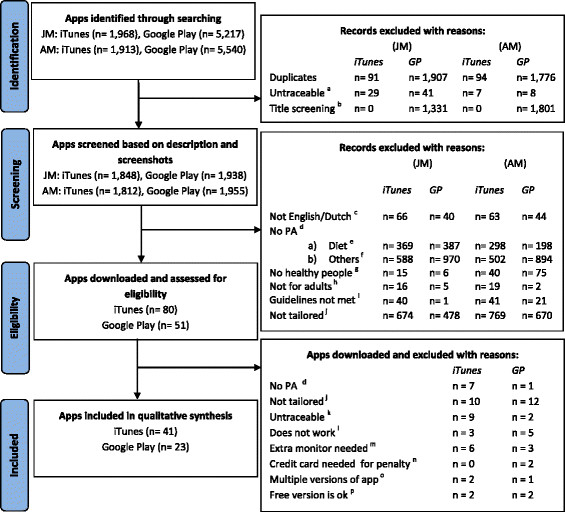
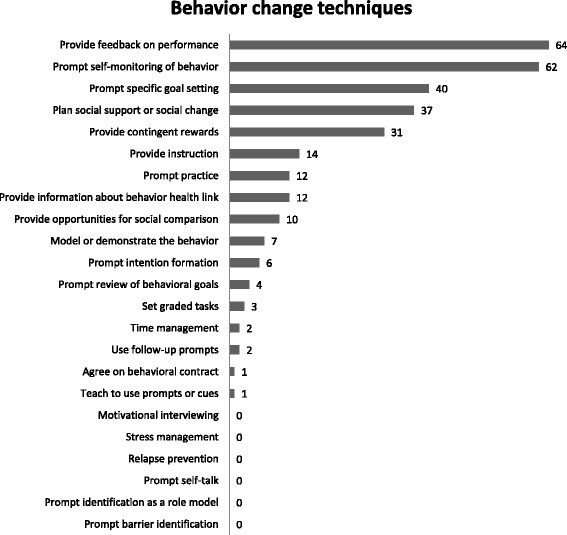
BACKGROUND: In May 2013, the iTunes and Google Play stores contained 23,490 and 17,756 smartphone applications (apps) categorized as Health and Fitness, respectively. The quality of these apps, in terms of applying established health behavior change techniques, remains unclear. METHODS: The study sample was identified through systematic searches in iTunes and Google Play. Search terms were based on Boolean logic and included AND combinations for physical activity, healthy lifestyle, exercise, fitness, coach, assistant, motivation, and support. Sixty-four apps were downloaded, reviewed, and rated based on the taxonomy of behavior change techniques used in the interventions. Mean and ranges were calculated for the number of observed behavior change techniques. Using nonparametric tests, we compared the number of techniques observed in free and paid apps and in iTunes and Google Play. RESULTS: On average, the reviewed apps included 5 behavior change techniques (range 2-8). Techniques such as self-monitoring, providing feedback on performance, and goal-setting were used most frequently, whereas some techniques such as motivational interviewing, stress management, relapse prevention, self-talk, role models, and prompted barrier identification were not. No differences in the number of behavior change techniques between free and paid apps, or between the app stores were found. CONCLUSIONS: The present study demonstrated that apps promoting physical activity applied an average of 5 out of 23 possible behavior change techniques. This number was not different for paid and free apps or between app stores. The most frequently used behavior change techniques in apps were similar to those most frequently used in other types of physical activity promotion interventions.
Overview
The claims and statistics of this paper haven’t been checked yet.
Free: it reads the open-access text and checks the first 5 claims that cite a source we can check. Create a free account to check every claim.
Integrity signals
Registry
Cites
Statistics
Figures
Verification
Claims the paper makes
The claims and statistics of this paper haven’t been checked yet.
Free: it reads the open-access text and checks the first 5 claims that cite a source we can check. Create a free account to check every claim.
Claims other papers make about this one
Each is checked against this paper’s own text: does it say what the citing paper says it does?
In the citing paper
“Developing mHealth interventions in multidisciplinary teams is a best practice approach recommended by many researchers [45-47].”
From Theory-Based Design and Development of a Socially Connected, Gamified Mobile App for Men About Breastfeeding (Milk Man) (2016) · cites this paper as [46]
Self-check
Percentages, sums and reported differences re-computed from the paper’s own numbers.
The self-check needs the paper’s full text.
Citations
Cites
Ezzati, M., López, A. D., Rodgers, A., & Murray, C. J. L. (2004) · Cited by 3,319
A taxonomy of behavior change techniques used in interventions
Abraham, C., & Michie, S. (2008) · Health Psychology · doi:10.1037/0278-6133.27.3.379 · Cited by 2,525 · cited 12×
“Previous reviews that applied Abraham and Michie’s taxonomy [14] to assess the number of behavior change techniques used in non-app interventions identified on average 6–8 behavior change techniques [14,15,22].”
BackgroundMethodInfluentialWebb, T. L., Joseph, J., Yardley, L., & Michie, S. (2010) · Journal of Medical Internet Research · doi:10.2196/jmir.1376 · Cited by 2,517 · cited 7×
“Although we found that the average number of behavior change techniques used in apps was lower than previously reported for other types of physical activity promotion, the most frequently used types of behavior change techniques used were similar [7,15,22].”
BackgroundMethodInfluentialEffective techniques in healthy eating and physical activity interventions: A meta-regression.
Michie, S., Abraham, C., Whittington, C., McAteer, J., & Gupta, S. (2009) · Health Psychology · doi:10.1037/a0016136 · Cited by 2,229 · cited 8×
“Previous reviews that applied Abraham and Michie’s taxonomy [14] to assess the number of behavior change techniques used in non-app interventions identified on average 6–8 behavior change techniques [14,15,22].”
BackgroundMethodInfluentialHealth behavior models in the age of mobile interventions: are our theories up to the task?
Riley, W. T., Rivera, D. E., Atienza, A. A., Nilsen, W., Allison, S. M., & Mermelstein, R. (2011) · Translational Behavioral Medicine · doi:10.1007/s13142-011-0021-7 · Cited by 978 · cited 1×
“The application of smartphones and apps in health behavior interventions are growing rapidly, however little has been published about the interventions using the new technology to provide real-time feedback [25].”
BackgroundOne size does not fit all: the case for tailoring print materials
Kreuter, M. W., Strecher, V. J., & Glassman, B. (1999) · Annals of Behavioral Medicine · doi:10.1007/bf02895958 · Cited by 831 · cited 1×
“, feedback based on the user’s own characteristics [10]) and advice is more likely to be effective than generic information about physical activity [9,11,12].”
BackgroundGriffiths, F., Lindenmeyer, A., Powell, J., Lowe, P., & Thorogood, M. (2006) · Journal of Medical Internet Research · doi:10.2196/jmir.8.2.e10 · Cited by 820 · cited 1×
“Many advantages of using the Internet as a delivery mode apply to smartphone apps too: constantly accessible, adjustable to the needs of the user [13], able to provide (computer-) tailored feedback, large reach and interactive”
BackgroundInterventions for promoting physical activity
Foster, C., Hillsdon, M., Thorogood, M., Kaur, A., & Wedatilake, T. (2005) · Cochrane Database of Systematic Reviews · doi:10.1002/14651858.cd003180.pub2 · Cited by 692
A meta-analysis of web-delivered tailored health behavior change interventions
Lustria, M. L. A., Noar, S. M., Cortese, J., Van Stee, S. K., Glueckauf, R. L., & Lee, J. (2013) · Journal of Health Communication · doi:10.1080/10810730.2013.768727 · Cited by 689 · cited 1×
“, feedback based on the user’s own characteristics [10]) and advice is more likely to be effective than generic information about physical activity [9,11,12].”
BackgroundA Review of eHealth Interventions for Physical Activity and Dietary Behavior Change
Norman, G. J., Zabinski, M. F., Adams, M. A., Rosenberg, D. E., Yaroch, A. L., & Atienza, A. A. (2007) · American Journal of Preventive Medicine · doi:10.1016/j.amepre.2007.05.007 · Cited by 605 · cited 2×
“This technology offers the opportunity for ecological momentary assessment (EMA) and makes it feasible to provide timely messages based on the user’s location [23,24].”
BackgroundMethod
Research works printed but not linked: 1
- http://whqlibdoc.who.int/publications/2010/9789241599979_eng.pdf World Health Organization: Global Recommendations on Physical Activity for Health. [] 26180873
Cited by
Items 201–300 of 542
Silva, A. G., Simões, P., Queirós, A., Rocha, N. P., & Rodrigues, M. J. F. (2020) · International Journal of Environmental Research and Public Health · doi:10.3390/ijerph17072251 · Cited by 24
“Arguments in favor of using mobile apps to promote physical activity include the possibility of reaching a high number of individuals at low costs [11,12].”
BackgroundSiddiqui, N. R., Hodges, S. J., & Sharif, M. O. (2021) · Progress in Orthodontics · doi:10.1186/s40510-021-00373-5 · Cited by 24
Palička, P., Jakubec, L., & Zvoníček, J. (2016) · Journal of Human Sport and Exercise · doi:10.14198/jhse.2016.11.proc1.08 · Cited by 26
Alturki, R. (2016) · International Journal of Research in Engineering and Technology · doi:10.15623/ijret.2016.0509032 · Cited by 31
Liao, G., Chien, Y.-T., Chen, Y.-J., Hsiung, H.-F., Chen, H.-J., Hsieh, M., & Wu, W.-J. (2017) · JMIR mhealth and uhealth · doi:10.2196/mhealth.6233 · Cited by 24
“Furthermore, as motivational interviewing and self-talk were not present in any app analyzed in [33], offering A24 (reminding past success in exercise) would create unique value in the market.”
Broom, D. R., Lee, K. Y., Lam, M. H. S., & Flint, S. W. (2019) · Health Psychology Research · doi:10.4081/hpr.2019.7714 · Cited by 22
Enhancing The Impact of Mobile Health Literacy Interventions to Reduce Health Disparities
Ownby, R. L., Acevedo, A., & Waldrop‐Valverde, D. (2019) · Quarterly review of distance education · doi:10.1108/qrde-08-2019-0003 · Cited by 25
Proceedings of the 24th International Conference on Auditory Display - ICAD 2018
Lenzi, S., & Gleria, F. (2018) · doi:10.21785/icad2018.000 · Cited by 22
Pearson, E., Prapavessis, H., Higgins, C., Petrella, R. J., White, L., & Mitchell, M. (2020) · International Journal of Behavioral Nutrition and Physical Activity · doi:10.1186/s12966-020-01043-1 · Cited by 21
Kuru, H. (2023) · Health Education & Behavior · doi:10.1177/10901981231213586 · Cited by 33
“Previous research has explored BCTs used in fitness apps (Conroy et al., 2014; Middelweerd et al., 2014) and the features that users prefer and find effective in encouraging the adoption and sustained use of fitness apps (Belmon et al., 2015; H. E. Lee & Cho, 2017).”
MethodArigo, D., Brown, M. M., Pasko, K., Ainsworth, M. C., Travers, L., Gupta, A. K., Downs, D. S., & Smyth, J. M. (2020) · JMIR Research Protocols · doi:10.2196/19044 · Cited by 22
“In line with multiple theoretical models of health behavior and behavior change processes [34,35] and their evidence bases as mechanisms of behavior change [36-40], critical psychosocial influences on PA include body satisfaction, social interactions, social comparisons, and mood state.”
BackgroundHarding, A. I. S., Escamilla-Fajardo, P., & Berenguer, S. A. (2021) · Retos · doi:10.47197/retos.v42i0.87761 · Cited by 38
“Además, las apps son potentes y tienen múltiples funciones interactivas (Middelweerd et al., 2014).”
BackgroundWhite, B., White, J., Giglia, R., & Tawia, S. (2016) · Health Promotion Journal of Australia · doi:10.1071/he15114 · Cited by 20
“Several researcher-led application development projects have recommended that software developers be engaged early in the process and that development is collaborative.(7,9,10) Working in partnership for the delivery of health promotion initiatives is a well-recognised approach(11,12) and the need to gather multidisci…”
BackgroundMathur, S., Janaudis‐Ferreira, T., Hemphill, J., Cafazzo, J. A., Hart, D. R., Holdsworth, S., Lovas, M., & Wickerson, L. M. (2021) · Clinical Transplantation · doi:10.1111/ctr.14472 · Cited by 21
“Digital health tools have been found to be beneficial in supporting behavior change, including PA. 29 There is also an increasing need for digital health tools currently in healthcare to provide virtual care and remote monitoring due to restrictions on in-person, and group activitiessuch asexercise…”
BackgroundFang, P., Shi, S., Menhas, R., Laar, R. A., & Saeed, M. M. (2022) · Journal of Multidisciplinary Healthcare · doi:10.2147/jmdh.s354984 · Cited by 21
“As the internet and mobile phones have advanced in recent years, physical activity has increased due to mobile phone fitness apps.(26) In China, such as Gu Dong, KEEP, and Yue Dongguan, mobile fitness apps assist people in physical activity participation.”
BackgroundIdentifying Evidence-Informed Physical Activity Apps: Content Analysis
Kebede, M. M., Steenbock, B., Helmer, S. M., Sill, J., Möllers, T., & Pischke, C. R. (2018) · JMIR mhealth and uhealth · doi:10.2196/10314 · Cited by 21
“In addition, several content analyses have been conducted, predominantly in the Netherlands and the United Kingdom, to identify active components of various types of apps, including PA apps [18,19].”
BackgroundMethodResultInfluentialLepp, A., & Barkley, J. E. (2019) · Digital Health · doi:10.1177/2055207619844870 · Cited by 28
“Cell-phone-based physical activity monitors and fitness “apps” may also promote physical activity.(26) Finally, playing cell phone based physically interactive video games (e.”
BackgroundLocke, H., Brooks, J. M., Arendsen, L. J., Jacob, N. K., Casson, A. J., Jones, A. K. P., & Sivan, M. (2020) · British Journal of Pain · doi:10.1177/2049463720908798 · Cited by 25
“However, such features have been used effectively in other health and wellness apps (56,57).”
Wang, Y., König, L. M., & Reiterer, H. (2021) · JMIR Formative Research · doi:10.2196/15369 · Cited by 21
“Self-monitoring and feedback based on the collected data are frequently used to change physical activity and sedentary behavior [36-39].”
Huang, G. (2020) · Health Communication · doi:10.1080/10410236.2020.1794548 · Cited by 19
“…with these steps, those apps allow users to set goals (goalsetting), record their activities (self-monitoring), evaluate their performance in relation to pre-set goals and/or others’ attainments (self-evaluation), and obtain tangible/intangible rewards (self-reaction) (Middelweerd et al., 2014).”
BackgroundEngagement Features in Physical Activity Smartphone Apps: Focus Group Study With Sedentary People
D’Αddario, M., Baretta, D., Zanatta, F., Greco, A., & Steca, P. (2020) · JMIR mhealth and uhealth · doi:10.2196/20460 · Cited by 26
“It is noteworthy that although commercial physical activity apps often implement such features [39], this might be done in a more theory-driven way as highlighted for goal setting in a recent review and content analysis of commercial apps [40].”
BackgroundKarimi, N., Opie, R., Crawford, D. A., O’Connell, S. L., & Ball, K. (2024) · Journal of Medical Internet Research · doi:10.2196/42595 · Cited by 22
“Therefore, these results do not support the previously suggested associations between greater intervention effectiveness and increasing number of BCTs [75,77-79].”
A systematic review of smartphone applications for cancer survivors
Changrani, K., Chima, S., Sharma, A. K., Han, G.-G., Sharma, A., McNamara, M., Jefford, M., Emery, J. D., & Druce, P. (2023) · Journal of Cancer Survivorship · doi:10.1007/s11764-023-01435-9 · Cited by 24
“It is unsurprising that apps that target health promotion were the most predominant, given that exercise and diet apps are widely used by the general population [53].”
Encouraging Physical Activity via a Personalized Mobile System
Klein, M. C. A., Manzoor, A. F., Middelweerd, A., Mollee, J. S., & Velde, S. J. T. (2015) · IEEE Internet Computing · doi:10.1109/mic.2015.51 · Cited by 19
Self-citationMartín‐Payo, R., Harris, J., & Armes, J. (2019) · Journal of Cancer Survivorship · doi:10.1007/s11764-019-00760-2 · Cited by 20
Salwen‐Deremer, J. K., Khan, A., Martin, S. S., Holloway, B. M., & Coughlin, J. W. (2019) · Journal of Technology in Behavioral Science · doi:10.1007/s41347-019-00118-6 · Cited by 22
“…indicated that there is minimal inclusion of traditional behavioral change theories in exercise (Cowan et al. 2012; Direito et al. 2014; Middelweerd et al. 2014; Yang et al. 2015), dietary (West et al. 2013), and weight loss (Azar et al. 2013) targeted mobile applications, commonly…”
BackgroundAdu, M. D., Malabu, U. H., Malau‐Aduli, A. E. O., Drovandi, A. D., & Malau‐Aduli, B. S. (2020) · International Journal of Environmental Research and Public Health · doi:10.3390/ijerph17072573 · Cited by 21
“The use of multi-component behavioural change strategies and mHealth features as described above have the greatest potential impact on behavioural change in self-management [42,55,56].”
MethodAl‐Abbadey, M., Fong, M. M.-W., Wilde, L., Ingham, R., & Ghio, D. (2021) · Digital Health · doi:10.1177/20552076211014988 · Cited by 25
“The BCTs that were used in the apps aligned with the BCTs that were most commonly used in other types of physical activity promotion interventions.(15) This study indicated that mHealth apps have the potential to effectively integrate tailored BCTs.”
BackgroundMethodvan den Helder, J., van Dronkelaar, C., Tieland, M., Mehra, S., Dadema, T., Visser, B., Kröse, B., Engelbert, R., & Weijs, P. J. M. (2018) · BMC Geriatrics · doi:10.1186/s12877-018-0863-7 · Cited by 20
Moves app: a digital diary to track physical activity and location
Evenson, K. R., & Furberg, R. (2016) · British Journal of Sports Medicine · doi:10.1136/bjsports-2016-096103 · Cited by 18
Smartphone Use Predicts Being an “Active Couch Potato” in Sufficiently Active Adults
Fennell, C., Lepp, A., & Barkley, J. E. (2019) · American Journal of Lifestyle Medicine · doi:10.1177/1559827619861383 · Cited by 22
“interactive video games (eg, Pokémon Go!).(47,49,61) In this regard, these devices”
BackgroundHuang, Z., Lum, E., & Car, J. (2020) · JMIR mhealth and uhealth · doi:10.2196/15364 · Cited by 24
“Previous studies have shown that paid apps were not of higher quality compared with free apps [28,29].”
BackgroundHow Do Runners Experience Personalization of Their Training Scheme: The Inspirun E-Coach?
Janssen, M., Goudsmit, J., Lauwerijssen, C., Brombacher, A., Lallemand, C., & Vos, S. B. (2020) · Sensors · doi:10.3390/s20164590 · Cited by 22
Busch, L., Utesch, T., & Strauß, B. (2020) · International Journal of Sport and Exercise Psychology · doi:10.1080/1612197x.2020.1854820 · Cited by 20
“Often, aspects of self-monitoring, goal setting, and performance feedback are implemented (Middelweerd et al., 2014).”
BackgroundBondaronek, P., Slee, A. E., Hamilton, F. L., & Murray, E. (2019) · BMJ Open · doi:10.1136/bmjopen-2018-027536 · Cited by 17
Technology-Supported Behavior Change—Applying Design Thinking to mHealth Application Development
Schweitzer, R., Schlögl, S., & Schweitzer, M. (2024) · European Journal of Investigation in Health Psychology and Education · doi:10.3390/ejihpe14030039 · Cited by 27
“To this end, an analysis by Middelweerd et al. [78] showed that integrated behavior-change techniques are often ineffective and thus require improvements.”
Sanders, J. E., Redd, C. B., Larsen, B. G., Vamos, A. C., Brzostowski, J. T., Hafner, B. J., Allyn, K. J., Henrikson, K. M., McLean, J. B., & Hinrichs, P. (2018) · JPO Journal of Prosthetics and Orthotics · doi:10.1097/jpo.0000000000000209 · Cited by 16
Villalobos-Zúñiga, G., Rodríguez, I., Fedosov, A., & Cherubini, M. (2021) · International Conference on Human-Computer Interaction with Mobile Devices and Services (MobileHCI) · doi:10.1145/3447526.3472039 · Cited by 27
“Collectively, prior research endeavors were not necessarily grounded to a motivational theory to create behavior change mobile applications and evaluate users’ motivation and attitude towards physical activity (e.g., [40]).”
BackgroundMcAleese, D., Linardakis, M. K., & Papadaki, A. (2022) · Nutrients · doi:10.3390/nu14061290 · Cited by 17
“1) [22], and apps for physical activity (irrespective of user ratings, n = 5 BCTs) [33].”
BackgroundMethodResultInfluentialVisier‐Alfonso, M. E., Sánchez‐López, M., Rodríguez‐Martin, B., Hermosa, A. R., Gutiérrez, R. B., Sequí‐Domínguez, I., & Martínez‐Vizcaíno, V. (2023) · JMIR mhealth and uhealth · doi:10.2196/44753 · Cited by 21
“However, with the growth in technology, the use of eHealth (ie, electronic devices with health-related purposes [5], including physical activity [PA] and fitness apps), has increased [6].”
BackgroundAbid, A., & Baxter, S. L. (2024) · Journal of Glaucoma · doi:10.1097/ijg.0000000000002382 · Cited by 19
Keaver, L., Loftus, A., & Quinn, L. (2021) · Journal of Human Nutrition and Dietetics · doi:10.1111/jhn.12857 · Cited by 15
Comparing the Validity of a GPS Monitor and a Smartphone Application to Measure Physical Activity
Adamakis, M. (2017) · Journal of Mobile Technology in Medicine · doi:10.7309/jmtm.6.2.4 · Cited by 20
“Finally, Runkeeper has been identified as the application with the most applied behavior changing techniques (eight in number) in the market.(18)”
MethodComputerised decision support in physical activity interventions: A systematic literature review
Triantafyllidis, A. K., Filos, D., Claes, J., Buys, R., Cornelissen, V., Kouidi, E. J., Chouvarda, I., & Maglaveras, N. (2017) · International Journal of Medical Informatics · doi:10.1016/j.ijmedinf.2017.12.012 · Cited by 23
Pokémon GO or Pokémon Gone: How can cities respond to trends in technology linking people and space?
Adlakha, D., Marquet, O., Hipp, J. A., & Tully, M. A. (2017) · Cities & Health · doi:10.1080/23748834.2017.1358560 · Cited by 15
“Extending beyond the virtual dimension of mobile gaming, apps like Pokémon GO may have the potential to incorporate actual physical activity requirements for players to be successful and promote face-to-face social interactions between these players.(35) Other potential benefits derived from the huge popularity of the…”
BackgroundMobile health apps to reduce sedentary behavior: a scoping review
Ueno, D. T., Guerra, P. H., Christofoletti, A. E. M., Bonolo, A., Nakamura, P. M., & Kokubun, E. (2021) · Health Promotion International · doi:10.1093/heapro/daab124 · Cited by 16
Sirasakamol, O., Ariya, P., Nadee, W., & Puritat, K. (2022) · International Journal of Online and Biomedical Engineering (iJOE) · doi:10.3991/ijoe.v18i06.29515 · Cited by 9
The State of Behavior Change Techniques in Virtual Reality Rehabilitation of Neurologic Populations
Felsberg, D. T., Maher, J. P., & Rhea, C. K. (2019) · Frontiers in Psychology · doi:10.3389/fpsyg.2019.00979 · Cited by 19
Wang, Y., Wang, Y., Greene, B. W., & Sun, L. (2019) · International Journal of Medical Informatics · doi:10.1016/j.ijmedinf.2019.104029 · Cited by 16
Stephenson, A., García-Constantino, M., McDonough, S., MURPHY, M. H., Nugent, C., & Mair, J. L. (2020) · Digital Health · doi:10.1177/2055207620913410 · Cited by 18
Alnooh, G., Alessa, T., Noorwali, E. A., Albar, S. A., Williams, E. A., de Witte, L., & Hawley, M. (2023) · Nutrients · doi:10.3390/nu15153476 · Cited by 22
Lalot, F., Zerhouni, O., & Pinelli, M. (2017) · Games for Health Journal · doi:10.1089/g4h.2017.0051 · Cited by 19
“Nonetheless, other ways of changing health behaviors have recently emerged that rely notably on smartphone applications.(6) Of particular interest for the present research is the development of exergames (i.”
Mollee, J. S., & Klein, M. C. A. (2016) · International Conference on Ubiquitous Computing and Communications (IUCC) · doi:10.1109/iucc-css.2016.023 · Cited by 17
“Another mechanism that plays a part in behavior evaluation and behavior change is social comparison [11] [12], which is often applied in physical activity promotion apps as a form of providing feedback to the user [13].”
BackgroundSelf-citationVos, A. L., de Bruijn, G., Klein, M. C. A., Lakerveld, J., Boerman, S. C., & Smit, E. G. (2023) · JMIR Formative Research · doi:10.2196/40851 · Cited by 17
“Although PA apps are already widely available and seem promising for improving PA behavior [17], studies indicate that they are rarely based on health behavior theories [18,19], and most apps do not incorporate evidence-based behavior change techniques (BCTs; eg, goal setting, action planning, or self-monitoring) [20,…”
BackgroundMethodKonstanti, C., Karapanos, E., & Markopoulos, P. (2021) · International Journal of Human-Computer Interaction · doi:10.1080/10447318.2021.1990519 · Cited by 16
Arredondo, E. M., Haughton, J., Ayala, G. X., Slymen, D. J., Sallis, J. F., Perez, L. G., SERRANO, N. H., Ryan, S., Valdivia, R., Lopez, N. V., et al. (2022) · International Journal of Behavioral Nutrition and Physical Activity · doi:10.1186/s12966-022-01329-6 · Cited by 14
“However, inactive individuals who successfully begin PA are at risk of lapse or relapse into inactivity [50, 51] As such, long term PA community interventions may benefit from including low cost strategies to support PA like activity trackers and apps which are increasingly integrating evidence-based behavioral strate…”
BackgroundExploratory study of a virtual community for physical activity
Elloumi, L., van Beijnum, B.-J. F., & Hermens, H. J. (2018) · Health and Technology · doi:10.1007/s12553-018-0221-y · Cited by 13
“Many interventions and systems have been developed to help people be more physically active, e.g., apps to promote physical activity [5], active video games [6] and Internet-based physical activity interventions [7, 8].”
BackgroundMiddelweerd, A., Velde, S. J. T., Mollee, J. S., Klein, M. C. A., & Brug, J. (2018) · JMIR Research Protocols · doi:10.2196/resprot.7169 · Cited by 13
“BCTs that were applied most often were providing feedback on performance, prompting self-monitoring of behavior, prompting specific goal setting, and planning social support or social change [30].”
BackgroundMethodInfluentialSelf-citationArigo, D., Lassiter, J. M., Baga, K., Jackson, D. A., Lobo, A. F., & Guetterman, T. C. (2023) · Digital Health · doi:10.1177/20552076231210654 · Cited by 17
“12,24 Women in midlife cite their lack of connectedness, positive role models, and social support as key barriers to PA engagement 25 — despite the purported availability of these resources in existing PA programs 13 — pointing to a speci fi c set of needs to be addressed more effectively.”
BackgroundAllik, A., Pilt, K., Karai, D., Fridolin, I., Leier, M., & Jervan, G. (2019) · Applied Sciences · doi:10.3390/app9224833 · Cited by 14
The COVID-19 pandemic: The importance of physical activity among faculty members
Fröberg, A. (2020) · Journal of American College Health · doi:10.1080/07448481.2020.1817037 · Cited by 14
“There are also numerous smartphones applications that can be used to promote the adoption and maintenance of physical activity.(30,31) Currently, there are more than 300 000 healthrelated applications available worldwide.”
BackgroundLawrason, S., Brown-Ganzert, L., Campeau, L., MacInnes, M., Wilkins, C. J., & Ginis, K. A. M. (2022) · JMIR Formative Research · doi:10.2196/34303 · Cited by 15
“Furthermore, considering that more than 50% of mHealth interventions do not incorporate theory or BCTs [18,55], this intervention development paper provides guidance on how to incorporate these important elements.”
BackgroundSelf-Monitoring Symptoms in Glaucoma: A Feasibility Study of a Web-Based Diary Tool
McDonald, L., Glen, F. C., Taylor, D. J., & Crabb, D. P. (2017) · Journal of Ophthalmology · doi:10.1155/2017/8452840 · Cited by 16
“Plotting self-reported symptoms, using an appropriate tool, could have the same motivational behavioural effect as measuring daily steps as a measure of exercise [33].”
Persuasive health and wellbeing application: A theory-driven design in promoting physical activity
Haque, S., Abdullah, W. M., Rahaman, S., Kangas, M., & Jämsä, T. J. (2016) · International Conference on Medical Engineering, Health Informatics and Technology (MediTec) · doi:10.1109/meditec.2016.7835369 · Cited by 13
Åkerberg, A., Söderlund, A., & Lindén, M. (2017) · Open Access Journal of Sports Medicine · doi:10.2147/oajsm.s124542 · Cited by 14
Abrantes, A. M., Blevins, C. E., Lindsay, C., Battle, C. L., Buman, M. P., Agu, E., & Stein, M. D. (2018) · Psychology of sport and exercise · doi:10.1016/j.psychsport.2018.02.007 · Cited by 13
Sanders, G. J., Roe, B. H., Knowles, Z. R., Kaehne, A., & Fairclough, S. J. (2018) · Primary Health Care Research & Development · doi:10.1017/s1463423618000373 · Cited by 17
“, 2017), content analysis (Middelweerd et al., 2014) and used specialist qualitative data analysis packages, such as NVivo (Warmoth et al.”
MethodPersonality Traits, Gamification and Features to Develop an App to Reduce Physical Inactivity
Meixner, C., Baumann, H., & Wollesen, B. (2020) · Information · doi:10.3390/info11070367 · Cited by 17
Southcott, E., & Jooste, J. (2023) · Physical Culture and Sport Studies and Research · doi:10.2478/pcssr-2024-0008 · Cited by 14
“…in fitness app users, a substantial at - trition rate among exercisers who use these apps has been reported (Krebbs & Duncan, 2015) as many smartphone programs fail to consider the crucial elements of theory inspired behaviour modification strategies (Conroy et al., 2014; Middelweerd et al., 2014).”
BackgroundA Wellness Mobile Application for Smart Health: Pilot Study Design and Results
Sannino, G., Forastiere, M., & Pietro, G. D. (2017) · Sensors · doi:10.3390/s17030611 · Cited by 15
“However, it is important to remark that our proposed Wellness App includes 9 behavior change techniques, one more than the app with the best score reported in study [22], namely the “RunKeeper App”.”
BackgroundMethodResultInfluentialSui, W., Morava, A., Tsang, J. M. F., Sui, A., & Rhodes, R. E. (2022) · Journal of Health Psychology · doi:10.1177/13591053221074584 · Cited by 11
“, 2019) or mobile apps (n = 5.0 ± 1.0; Middelweerd et al., 2014), and a lower number than wristworn PA wearables (n = 10.”
BackgroundInfluentialMoreno-Ligero, M., Lucena-Antón, D., Salazar, A., Failde, I., & Moral-Muñoz, J. A. (2023) · Journal of Medical Systems · doi:10.1007/s10916-023-01963-y · Cited by 14
“Because of this background, mHealth could complement multimodal programs in neurorehabilitation, making it more effective, including different sensorial feedback, motor experiences, and increasing the subject’s motivation [28].”
Improving User Engagement by Aggregating and Analysing Health and Fitness Data on a Mobile App
Leijdekkers, P., & Gay, V. C. (2015) · Lecture notes in computer science · doi:10.1007/978-3-319-19312-0_30 · Cited by 11
“: [3-5]).”
Coughlin, S. S., Jacobs, M., Thind, H., Champagne, N., Liu, B., Golden, M. S., Osimo, C., Tracy, N., & Massey, R. I. (2015) · JOURNAL OF ENVIRONMENT AND HEALTH SCIENCE · doi:10.15436/2378-6841.15.e004 · Cited by 11
Masteller, B. R., Sirard, J. R., & Freedson, P. S. (2017) · JMIR mhealth and uhealth · doi:10.2196/mhealth.6347 · Cited by 13
“BCTs can be implemented alone or combined to elicit a specific behavior change in intervention areas such as PA. Middelweerd et al [15] recently performed a content analysis on mobile apps to promote PA in adults.”
Schaffarczyk, L., & Ilhan, A. (2019) · Lecture notes in computer science · doi:10.1007/978-3-030-21905-5_10 · Cited by 18
Wibowo, R. A., Kelly, P., & Baker, G. (2020) · Physical Therapy Reviews · doi:10.1080/10833196.2020.1756125 · Cited by 15
“These applications, including fitness-specific applications, gaming 88 applications, or social media applications, could provide individually tailored PA 89 intervention containing behavior change techniques (BCTs) [15].”
BackgroundContent analysis of behavior change techniques in maternal and infant health apps
Biviji, R., Vest, J. R., Dixon, B. E., Cullen, T., & Harle, C. A. (2020) · Translational Behavioral Medicine · doi:10.1093/tbm/ibaa039 · Cited by 11
Towards a Holistic Approach to Designing Theory-based Mobile Health InterventionsPreprint
Wang, Y., Fadhil, A., Lange, J.-P., & Reiterer, H. (2017) · arXiv (Cornell University) · doi:10.48550/arxiv.1712.02548 · Cited by 14
Editorial: Use of Smartphone Applications to Increase Physical Activity and Fitness
Damaševičius, R., Kim, J., & Dourado, V. Z. (2022) · Frontiers in Public Health · doi:10.3389/fpubh.2021.713306 · Cited by 11
Piras, A., & Raffi, M. (2023) · doi:10.20944/preprints202309.0363.v1 · Cited by 10
“Print-based materials [12] and technology-based support, such as websites [13–15], smartphone apps [16,17], and telephone helplines [12,18], have also been shown to be effective in supporting people with diabetes to increase their level of PA.”
BackgroundSimões, M. D. S., Gonze, B. D. B., Proença, N. L., Lauria, V. T., Terra, V. D. S., Padovani, R. D. C., & Dourado, V. Z. (2019) · Trials · doi:10.1186/s13063-019-3879-1 · Cited by 11
Sittig, S., Hauff, C., Graves, R., Williams, S. G., McDermott, R. C., Fruh, S., Hall, H. R., Campbell, M., Swanzy, D. M., Wright, T. F., et al. (2020) · CIN Computers Informatics Nursing · doi:10.1097/cin.0000000000000600 · Cited by 15
Digital Health in Schools: A Systematic Review
França, C., Santos, F., Martins, F., Lopes, H., de Gouveia, B. R. F. O., Gonçalves, F., Campos, P., Marques, A., Ihle, A., Gonçalves, T., et al. (2022) · Sustainability · doi:10.3390/su142113848 · Cited by 14
Imrisek, S. D., Lee, M., Goldner, D., Nagra, H., Lavaysse, L. M., Hoy‐Rosas, J., Dachis, J., & Sears, L. E. (2022) · JMIR Diabetes · doi:10.2196/34624 · Cited by 12
“Among mHealth apps, it has been noted that self-regulation techniques, such as self-monitoring, goal setting, and performance feedback, are the most frequently utilized [13,14].”
BackgroundHuman–Animal Interaction in the Aging Boom
Johnson, R. A., & Bibbo, J. L. (2015) · Elsevier eBooks · doi:10.1016/b978-0-12-801292-5.00018-3 · Cited by 15
Bittel, D. C., Bittel, A. J., Williams, C. L., & Elazzazi, A. M. (2016) · American Journal of Physical Medicine & Rehabilitation · doi:10.1097/phm.0000000000000618 · Cited by 12
Li, A., Sun, Y., Wang, L., & Guo, J. (2024) · Information & Management · doi:10.1016/j.im.2024.103942 · Cited by 15
Konishi, N., Oba, T., Takano, K., Katahira, K., & Kimura, K. (2024) · JMIR mhealth and uhealth · doi:10.2196/59708 · Cited by 11
“The most frequently implemented BCTs include self-monitoring, providing feedback on performance, and goal-setting [6].”
The Use of Geocaching as a Form of Physical Activity in Youth
Battista, R. A., & West, S. T. (2018) · American Journal of Health Education · doi:10.1080/19325037.2018.1428700 · Cited by 9
“smartphone) and “Pokemon Go!” Though smartphone applications have been shown to be a distraction for physical activity in at least some cases,(26) they have also been found elsewhere to serve as an avenue to promote physical activity.(27) For example, college students who downloaded and used the Pokemon Go! app showed…”
Theoretical advances in mobile health communication research
Brew‐Sam, N., & Chib, A. I. (2020) · Elsevier eBooks · doi:10.1016/b978-0-12-816958-2.00008-3 · Cited by 10
Emmerzaal, J., Brabandere, A. D., Vanrompay, Y., Vranken, J., Storms, V., Baets, L. D., Corten, K., Davis, J. J., Jonkers, I., Vanwanseele, B., et al. (2020) · Sensors · doi:10.3390/s20236967 · Cited by 12
“Furthermore, the graphical interface of applications (apps) allows tailored feedback, social interaction, personalized goal setting and self-monitoring [19,20], which might help with the commencement and maintenance of physical activity [21].”
BackgroundMahdi, S., Michalik-Denny, E., & Buckland, N. J. (2022) · Frontiers in Public Health · doi:10.3389/fpubh.2022.803152 · Cited by 10
“Smartphone applications are self-contained programs that can be accessed easily and are far-reaching, making them a cost-effective and useful method of delivery for behavioral interventions (3).”
MethodAldossari, M. Q., Nguyen, Q. N., Ta, A., & Schulz, S. A. (2022) · Information Systems Management · doi:10.1080/10580530.2022.2124559 · Cited by 11
“…matched with the most frequently used behavior change techniques used in most popular health and fitness apps, including performance feed-back, prompt self-monitoring, specific goal setting, social support, and contingent rewards (Middelweerd et al., 2014; Munson & Consolvo, 2012; Normand, 2008).”
BackgroundMethodMateo‐Orcajada, A., Abenza‐Cano, L., & Vaquero‐Cristóbal, R. (2024) · International Journal of Adolescence and Youth · doi:10.1080/02673843.2024.2389310 · Cited by 9
“…users’ knowledge of different habits that can lead them to healthier behaviours, including the possibility of goal setting and planning, feedback and monitoring, social support, the comparison of behaviour, social rewards, and the credible source (Bondaronek et al., 2018; Middelweerd et al., 2014).”
Aborujilah, A., Mohammad, R., Al-Othmani, A. Z., Husen, M. N., Long, Z. A., Ali, N. A., & Murugan, V. A. (2020) · International Conference on Ubiquitous Information Management and Communication (IMCOM) · doi:10.1109/imcom48794.2020.9001732 · Cited by 9
“The categories include three sub-types: predisposing, enabling, and reinforcing- health apps[16].”
BackgroundHayotte, M., Martinent, G., Nègre, V., Thérouanne, P., & d’Arripe-Longueville, F. (2021) · International Journal of Obesity · doi:10.1038/s41366-021-00813-6 · Cited by 13
"Musical Exercise” for People with Visual Impairments: A Preliminary Study with the Blindfolded
Khan, R. A., Jeon, M., & Yoon, T. (2018) · International Conference on Auditory Display (ICAD) · doi:10.21785/icad2018.030 · Cited by 9
Patterson, K., Davey, R., Keegan, R. J., Niyonsenga, T., Mohanty, I., van Berlo, S., & Freene, N. (2020) · BMJ Open · doi:10.1136/bmjopen-2020-040479 · Cited by 10
Tagare, R. L. (2022) · Journal for Educators Teachers and Trainers · doi:10.47750/jett.2022.13.05.007 · Cited by 13
Metadata
- Authors
- Middelweerd, A., Mollee, J. S., van der Wal, C. N., Brug, J., & te Velde, S. J.
- Affiliations
- Amsterdam Public Health (NL)
- Vrije Universiteit Amsterdam (NL)
- Venue
- International Journal of Behavioral Nutrition and Physical Activity
- Published
- 2014-07-25
- Volume
- 11
- Issue
- 1
- Pages
- 97-97
- ISSN
- 1479-5868 (ISSN-L)
- PMC
- PMC4132213
- OpenAlex
- W2139141017
- Cited by
- 546
- References
- 21
- Citations by year
- 2026: 17 · 2025: 21 · 2024: 22 · 2023: 40 · 2022: 53 · 2021: 50 · 2020: 71 · 2019: 67 · 2018: 66 · 2017: 53 · 2016: 58 · 2015: 26 · 2014: 1
- FWCI
- 83.09
- Type
- journal article
- Language
- en
- Open access
- gold
- doi.org
- Locations
- International Journal of Behavioral Nutrition and Physical Activity (publishedVersion, cc-by)
- Europe PMC (PubMed Central) (publishedVersion, cc-by)
- PubMed Central (publishedVersion, cc-by)
- PubMed (publishedVersion)
- Amsterdam UMC (VU Amsterdam) - Institutional Repository (publishedVersion)
- Pure Amsterdam UMC (submittedVersion)
- VU Research Portal (submittedVersion, other-oa)
- Data Archiving and Networked Services (DANS) (submittedVersion, other-oa)
- Data Archiving and Networked Services (DANS) (submittedVersion)
- Funders
- Stichting voor de Technische Wetenschappen
- Topics
- Health Sciences › Health Professions › General Health Professions › Mobile Health and mHealth Applications
- Health Sciences › Medicine › Public Health, Environmental and Occupational Health › Physical Activity and Health
- Social Sciences › Psychology › Applied Psychology › Digital Mental Health Interventions
- Keywords
- mobile health apps, physical activity promotion, behaviour change techniques, mobile application, self-monitoring, goal setting, performance feedback, free vs paid apps, health behavior change
- MeSH terms
- Health Promotion, Humans, Motivation, Motor Activity, Software, Health Behavior, Cell Phone
About these checks
Registry, retraction, Cites and statistics results are computed, not judged, with one exception: a printed reference that no index lists is read once by a model before it counts as a citation error. Claims are extracted by a model and kept only when their quote appears verbatim in the text; each cited source is then checked, with a model’s help, for whether it says what the claim relies on. Those verdicts can be wrong — read the claim’s quote and the cited source before relying on one.
Statistics and arithmetic are recomputed, not judged.
Confidence bands are shown only for fields calibrated on our annotated test set. None is calibrated yet, so no band is shown.
What counts as a claim ›How we measure confidence ›How we check this ›
Are you an author, or do you see a problem with this page? Request a review
Data sources
Bibliographic data: Semantic Scholar, OpenAlex, Crossref.
Contains information from the Semantic Scholar Academic Graph Datasets, made available under the ODC Attribution License (ODC-BY 1.0).
Semantic Scholar’s data is described in: Kinney, R., et al. (2023). The Semantic Scholar Open Data Platform. arXiv:2301.10140.
