

Apps to promote physical activity among adults: a review and content analysis
Open accessThe DOI matches its Crossref record; 21 of the 21 references it cites were found in a registry or an index.
Abstract
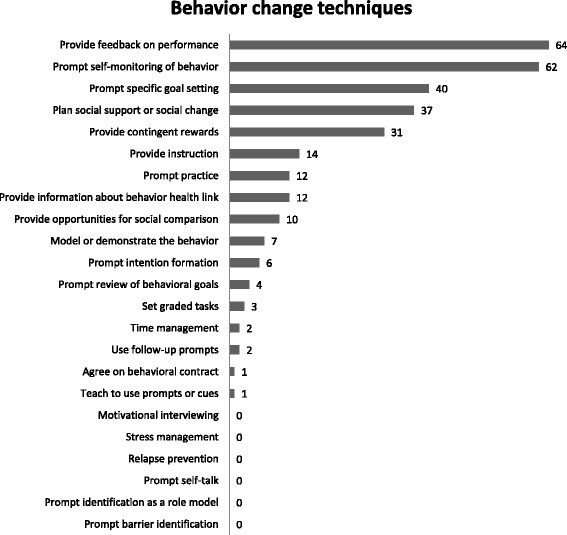
BACKGROUND: In May 2013, the iTunes and Google Play stores contained 23,490 and 17,756 smartphone applications (apps) categorized as Health and Fitness, respectively. The quality of these apps, in terms of applying established health behavior change techniques, remains unclear. METHODS: The study sample was identified through systematic searches in iTunes and Google Play. Search terms were based on Boolean logic and included AND combinations for physical activity, healthy lifestyle, exercise, fitness, coach, assistant, motivation, and support. Sixty-four apps were downloaded, reviewed, and rated based on the taxonomy of behavior change techniques used in the interventions. Mean and ranges were calculated for the number of observed behavior change techniques. Using nonparametric tests, we compared the number of techniques observed in free and paid apps and in iTunes and Google Play. RESULTS: On average, the reviewed apps included 5 behavior change techniques (range 2-8). Techniques such as self-monitoring, providing feedback on performance, and goal-setting were used most frequently, whereas some techniques such as motivational interviewing, stress management, relapse prevention, self-talk, role models, and prompted barrier identification were not. No differences in the number of behavior change techniques between free and paid apps, or between the app stores were found. CONCLUSIONS: The present study demonstrated that apps promoting physical activity applied an average of 5 out of 23 possible behavior change techniques. This number was not different for paid and free apps or between app stores. The most frequently used behavior change techniques in apps were similar to those most frequently used in other types of physical activity promotion interventions.
Overview
The claims and statistics of this paper haven’t been checked yet.
Free: it reads the open-access text and checks the first 5 claims that cite a source we can check. Create a free account to check every claim.
Integrity signals
Registry
Cites
Statistics
Figures
Verification
Claims the paper makes
The claims and statistics of this paper haven’t been checked yet.
Free: it reads the open-access text and checks the first 5 claims that cite a source we can check. Create a free account to check every claim.
Claims other papers make about this one
Each is checked against this paper’s own text: does it say what the citing paper says it does?
In the citing paper
“Developing mHealth interventions in multidisciplinary teams is a best practice approach recommended by many researchers [45-47].”
From Theory-Based Design and Development of a Socially Connected, Gamified Mobile App for Men About Breastfeeding (Milk Man) (2016) · cites this paper as [46]
Self-check
Percentages, sums and reported differences re-computed from the paper’s own numbers.
The self-check needs the paper’s full text.
Citations
Cites
Ezzati, M., López, A. D., Rodgers, A., & Murray, C. J. L. (2004) · Cited by 3,319
A taxonomy of behavior change techniques used in interventions
Abraham, C., & Michie, S. (2008) · Health Psychology · doi:10.1037/0278-6133.27.3.379 · Cited by 2,525 · cited 12×
“Previous reviews that applied Abraham and Michie’s taxonomy [14] to assess the number of behavior change techniques used in non-app interventions identified on average 6–8 behavior change techniques [14,15,22].”
BackgroundMethodInfluentialWebb, T. L., Joseph, J., Yardley, L., & Michie, S. (2010) · Journal of Medical Internet Research · doi:10.2196/jmir.1376 · Cited by 2,517 · cited 7×
“Although we found that the average number of behavior change techniques used in apps was lower than previously reported for other types of physical activity promotion, the most frequently used types of behavior change techniques used were similar [7,15,22].”
BackgroundMethodInfluentialEffective techniques in healthy eating and physical activity interventions: A meta-regression.
Michie, S., Abraham, C., Whittington, C., McAteer, J., & Gupta, S. (2009) · Health Psychology · doi:10.1037/a0016136 · Cited by 2,229 · cited 8×
“Previous reviews that applied Abraham and Michie’s taxonomy [14] to assess the number of behavior change techniques used in non-app interventions identified on average 6–8 behavior change techniques [14,15,22].”
BackgroundMethodInfluentialHealth behavior models in the age of mobile interventions: are our theories up to the task?
Riley, W. T., Rivera, D. E., Atienza, A. A., Nilsen, W., Allison, S. M., & Mermelstein, R. (2011) · Translational Behavioral Medicine · doi:10.1007/s13142-011-0021-7 · Cited by 978 · cited 1×
“The application of smartphones and apps in health behavior interventions are growing rapidly, however little has been published about the interventions using the new technology to provide real-time feedback [25].”
BackgroundOne size does not fit all: the case for tailoring print materials
Kreuter, M. W., Strecher, V. J., & Glassman, B. (1999) · Annals of Behavioral Medicine · doi:10.1007/bf02895958 · Cited by 831 · cited 1×
“, feedback based on the user’s own characteristics [10]) and advice is more likely to be effective than generic information about physical activity [9,11,12].”
BackgroundGriffiths, F., Lindenmeyer, A., Powell, J., Lowe, P., & Thorogood, M. (2006) · Journal of Medical Internet Research · doi:10.2196/jmir.8.2.e10 · Cited by 820 · cited 1×
“Many advantages of using the Internet as a delivery mode apply to smartphone apps too: constantly accessible, adjustable to the needs of the user [13], able to provide (computer-) tailored feedback, large reach and interactive”
BackgroundInterventions for promoting physical activity
Foster, C., Hillsdon, M., Thorogood, M., Kaur, A., & Wedatilake, T. (2005) · Cochrane Database of Systematic Reviews · doi:10.1002/14651858.cd003180.pub2 · Cited by 692
A meta-analysis of web-delivered tailored health behavior change interventions
Lustria, M. L. A., Noar, S. M., Cortese, J., Van Stee, S. K., Glueckauf, R. L., & Lee, J. (2013) · Journal of Health Communication · doi:10.1080/10810730.2013.768727 · Cited by 689 · cited 1×
“, feedback based on the user’s own characteristics [10]) and advice is more likely to be effective than generic information about physical activity [9,11,12].”
BackgroundA Review of eHealth Interventions for Physical Activity and Dietary Behavior Change
Norman, G. J., Zabinski, M. F., Adams, M. A., Rosenberg, D. E., Yaroch, A. L., & Atienza, A. A. (2007) · American Journal of Preventive Medicine · doi:10.1016/j.amepre.2007.05.007 · Cited by 605 · cited 2×
“This technology offers the opportunity for ecological momentary assessment (EMA) and makes it feasible to provide timely messages based on the user’s location [23,24].”
BackgroundMethod
Research works printed but not linked: 1
- http://whqlibdoc.who.int/publications/2010/9789241599979_eng.pdf World Health Organization: Global Recommendations on Physical Activity for Health. [] 26180873
Cited by
Gamification for health and wellbeing: A systematic review of the literature
Johnson, D., Deterding, S., Kuhn, K.-A., Staneva, A., Stoyanov, S., & Hides, L. (2016) · Internet Interventions · doi:10.1016/j.invent.2016.10.002 · Cited by 1,237
Schoeppe, S., Alley, S., Van Lippevelde, W., Bray, N. A., Williams, S. L., Duncan, M. J., & Vandelanotte, C. (2016) · International Journal of Behavioral Nutrition and Physical Activity · doi:10.1186/s12966-016-0454-y · Cited by 949
Lyons, E. J., Lewis, Z. H., Mayrsohn, B. G., & Rowland, J. L. (2014) · Journal of Medical Internet Research · doi:10.2196/jmir.3469 · Cited by 547
“Two content analyses of physical activity apps that used taxonomies of 23 and 26 BCTs, respectively, found that the apps included an average of 5/23 and 8/26 [42,43].”
Can smartphone apps increase physical activity? Systematic review and meta-analysis
Romeo, A., Edney, S., Plotnikoff, R., Curtis, R., Ryan, J., Sanders, I., Crozier, A., & Maher, C. (2019) · Journal of Medical Internet Research · doi:10.2196/12053 · Cited by 487
“The reference lists of all eligible studies and of relevant systematic reviews [11,12,16,17] were screened to identify any further studies for inclusion.”
A qualitative study of user perceptions of mobile health apps
Peng, W., Kanthawala, S., Yuan, S., & Hussain, S. A. (2016) · BMC Public Health · doi:10.1186/s12889-016-3808-0 · Cited by 465
Edwards, E. A., Lumsden, J., Rivas, C., Steed, L., Edwards, L. A., Thiyagarajan, A., Sohanpal, R., Caton, H., Griffiths, C. J., Munafò, M. R., et al. (2016) · BMJ Open · doi:10.1136/bmjopen-2016-012447 · Cited by 446
Mercer, K., Giangregorio, L., Schneider, E., Chilana, P., Li, M., & Grindrod, K. (2016) · JMIR mHealth and uHealth · doi:10.2196/mhealth.4225 · Cited by 419
“The area is rapidly growing, with the number of mobile phone health and fitness apps growing from 7000 in 2010 to over 40,000 in 2013 [75,76].”
Constandt, B., Thibaut, E., De Bosscher, V., Scheerder, J., Ricour, M., & Willem, A. (2020) · International Journal of Environmental Research and Public Health · doi:10.3390/ijerph17114144 · Cited by 404
“This finding reinforces the idea that health and sport apps might help to stimulate exercise [23].”
ResultA systematic review of just-in-time adaptive interventions (JITAIs) to promote physical activity
Hardeman, W., Houghton, J., Lane, K., Jones, A., & Naughton, F. (2019) · International Journal of Behavioral Nutrition and Physical Activity · doi:10.1186/s12966-019-0792-7 · Cited by 396
Vandelanotte, C., Müller, A. M., Short, C. E., Hingle, M., Nathan, N., Williams, S. L., Lopez, M. L., Parekh, S., & Maher, C. A. (2016) · Journal of Nutrition Education and Behavior · doi:10.1016/j.jneb.2015.12.006 · Cited by 396
The emerging clinical role of wearables: Factors for successful implementation in healthcare
Smuck, M., Odonkor, C. A., Wilt, J. K., Schmidt, N., & Swiernik, M. A. (2021) · npj Digital Medicine · doi:10.1038/s41746-021-00418-3 · Cited by 393
Evaluating mobile phone applications for health behaviour change: A systematic review
McKay, F. H., Cheng, C., Wright, A., Shill, J., Stephens, H., & Uccellini, M. (2018) · Journal of Telemedicine and Telecare · doi:10.1177/1357633x16673538 · Cited by 364
Smartphone Applications for Patients' Health and Fitness
Higgins, J. P. (2016) · The American Journal of Medicine · doi:10.1016/j.amjmed.2015.05.038 · Cited by 347
“8,10,39-47”
Bardus, M., van Beurden, S. B., Smith, J. R., & Abraham, C. (2016) · International Journal of Behavioral Nutrition and Physical Activity · doi:10.1186/s12966-016-0359-9 · Cited by 350
“The four reviews that explicitly assessed technique content in PA and fitness apps [8, 11, 13, 14] identified varying numbers of techniques, ranging from 1 [8] to 18 per app [11].”
BackgroundMethodResultInfluentialVillinger, K., Wahl, D. R., Boeing, H., Schupp, H. T., & Renner, B. (2019) · Obesity Reviews · doi:10.1111/obr.12903 · Cited by 292
“We included information from the articles, authors, and apps to decrease the likelihood ofmissing out on actually implemented BCTs.”
ResultInfluentialSchoeppe, S., Alley, S., Rebar, A. L., Hayman, M., Bray, N. A., Van Lippevelde, W., Gnam, J.-P., Bachert, P., Direito, A., & Vandelanotte, C. (2017) · International Journal of Behavioral Nutrition and Physical Activity · doi:10.1186/s12966-017-0538-3 · Cited by 277
“With the growth in mobile technologies came the development and popularity of numerous health and fitness apps that can provide behavioural interventions in large population groups [11].”
BackgroundMethodResultInfluentialThe impact of post-adoption beliefs on the continued use of health apps
Cho, J. (2016) · International Journal of Medical Informatics · doi:10.1016/j.ijmedinf.2015.12.016 · Cited by 273
Gal, R., May, A. M., van Overmeeren, E. J., Simons, M., & Monninkhof, E. M. (2018) · Sports Medicine - Open · doi:10.1186/s40798-018-0157-9 · Cited by 257
Demeyer, H., Louvaris, Z., Frei, A., Rabinovich, R. A., de Jong, C., Gimeno-Santos, E., Loeckx, M., Buttery, S. C., Rubio, N., Van der Molen, T., et al. (2017) · Thorax · doi:10.1136/thoraxjnl-2016-209026 · Cited by 256
Games for Health for Children—Current Status and Needed Research
Institute of Digital Media and Child Development Working Group on Games for Health, Baranowski, T., Blumberg, F., Buday, R., DeSmet, A., Fiellin, L. E., Green, C. S., Kato, P. M., Lu, A. S., Maloney, A. E., et al. (2016) · Games for Health Journal · doi:10.1089/g4h.2015.0026 · Cited by 243
“Applications can be linked to mobile exergames and provide tailored feedback and advice at appropriate times and places in real time when it is more likely to affect behavior change.(119) Some of these games incorporate global positioning systems, which facilitates location-based elements in exergaming (e.”
Chiu, W., Cho, H., & Chi, C. G. (2021) · Information Technology & People · doi:10.1108/itp-09-2019-0463 · Cited by 214
Domains of Chronic Low Back Pain and Assessing Treatment Effectiveness: A Clinical Perspective
Tagliaferri, S. D., Miller, C. T., Owen, P. J., Mitchell, U. H., Brisby, H., Fitzgibbon, B., Masse‐Alarie, H., Van Oosterwijck, J., & Belavy, D. L. (2020) · Pain Practice · doi:10.1111/papr.12846 · Cited by 210
Huang, G., & Ren, Y. (2020) · Computers in Human Behavior · doi:10.1016/j.chb.2019.09.013 · Cited by 203
Stockwell, S., Schofield, P., Fisher, A., Firth, J., Jackson, S. E., Stubbs, B., & Smith, L. (2019) · Experimental Gerontology · doi:10.1016/j.exger.2019.02.020 · Cited by 212
“DBCI have previously been used in the promotion of PA participation and dietary behaviors (Flores Mateo et al., 2015; Middelweerd et al., 2014; Rabin et al., 2011), rehabilitation programs (Rawstorn et al.”
Howe, K. B., Suharlim, C., Ueda, P., Howe, D., Kawachi, I., & Rimm, E. B. (2016) · BMJ · doi:10.1136/bmj.i6270 · Cited by 206
Lewis, B. A., Napolitano, M. A., Buman, M. P., Williams, D. M., & Nigg, C. R. (2017) · Journal of Behavioral Medicine · doi:10.1007/s10865-016-9797-8 · Cited by 194
“A recent study reviewed the content of commercially available smartphone apps (Middelweerd et al., 2014); 41 apps were identified from iTunes and 23 from Google Play.”
Online Recruitment Methods for Web-Based and Mobile Health Studies: A Review of the Literature
Lane, T. S., Armin, J., & Gordon, J. S. (2015) · Journal of Medical Internet Research · doi:10.2196/jmir.4359 · Cited by 194
Lachman, M. E., Lipsitz, L., Lubben, J., Castaneda-Sceppa, C., & Jette, A. M. (2018) · Innovation in Aging · doi:10.1093/geroni/igy007 · Cited by 191
ICT and transport behavior: A conceptual review
Gössling, S. (2018) · International Journal of Sustainable Transportation · doi:10.1080/15568318.2017.1338318 · Cited by 185
“Speci fi cally, health-related apps, often in combination with a device for measurements of body performance, are becoming increasingly popular, leading to a growing interest in physical activity (Middelweerd et al., 2014).”
BackgroundMüller, A. M., Maher, C. A., Vandelanotte, C., Hingle, M., Middelweerd, A., Lopez, M. L., DeSmet, A., Short, C. E., Nathan, N., Hutchesson, M. J., et al. (2018) · Journal of Medical Internet Research · doi:10.2196/jmir.8954 · Cited by 180
“Thus far, eHealth and mHealth research related to physical activity, sedentary behavior, and diet has been summarized in several studies that focused on use and effectiveness of different technologies such as mobile phone and/or SMS (short message service) text messaging [15-18], digital games [19,20], the Internet [2…”
Self-citationUsing Health and Well-Being Apps for Behavior Change: A Systematic Search and Rating of Apps
McKay, F. H., Wright, A., Shill, J., Stephens, H., & Uccellini, M. (2019) · JMIR mHealth and uHealth · doi:10.2196/11926 · Cited by 182
“Given the large number of physical activity apps on the market, this is a clear gap in app design, particularly given the large amount of research that has already been conducted on the importance of these features [23,35,36].”
BackgroundChiu, W., & Cho, H. (2020) · Asia Pacific Journal of Marketing and Logistics · doi:10.1108/apjml-09-2019-0534 · Cited by 166
Methods for Evaluating the Content, Usability, and Efficacy of Commercial Mobile Health Apps
Jake-Schoffman, D. E., Silfee, V. J., Waring, M. E., Boudreaux, E. D., Sadasivam, R. S., Mullen, S. P., Carey, J. L., Hayes, R. B., Ding, E. Y., Bennett, G. G., et al. (2017) · JMIR mHealth and uHealth · doi:10.2196/mhealth.8758 · Cited by 165
“On average, apps included 22% (5/23) of the behavior change techniques (range 2-8) Apps (N=64) reviewed for use of behavior change techniques Physical activity [24] Behavior change techniques”
Quality of Publicly Available Physical Activity Apps: Review and Content Analysis
Bondaronek, P., Alkhaldi, G., Slee, A., Hamilton, F. L., & Murray, E. (2018) · JMIR mHealth and uHealth · doi:10.2196/mhealth.9069 · Cited by 156
“The results of this study are similar to those found in previous reviews of PA apps: Middelweerd et al [17] found that, on average, 5 BCTs were used in each app; Conroy et al [16] reported between 1 and 13 BCTs with a mean of 4.2; and a study using the same BCT taxonomy as the one in this study found, on average, 6.6…”
BackgroundResultInfluentialHealth and Fitness App Use in College Students: A Qualitative Study
Gowin, M., Cheney, M., Gwin, S., & Franklin Wann, T. (2015) · American Journal of Health Education · doi:10.1080/19325037.2015.1044140 · Cited by 148
(2016) · PubMed · Cited by 146
Chen, J., Lieffers, J., Bauman, A., Hanning, R., & Allman‐Farinelli, M. (2017) · Journal of Human Nutrition and Dietetics · doi:10.1111/jhn.12446 · Cited by 143
King, A. C., Hekler, E. B., Grieco, L. A., Winter, S. J., Sheats, J. L., Buman, M. P., Banerjee, B., Robinson, T. N., & Cirimele, J. (2016) · PLOS ONE · doi:10.1371/journal.pone.0156370 · Cited by 142
“This older inactive population, while carrying greater chronic disease burden than their younger counterparts, has rarely been targeted specifically in the mobile app health promotion arena [6].”
BackgroundJanssen, M., Scheerder, J., Thibaut, E., Brombacher, A., & Vos, S. (2017) · PLOS ONE · doi:10.1371/journal.pone.0181167 · Cited by 110
A Systematic, Multi-domain Review of Mobile Smartphone Apps for Evidence-Based Stress Management
Coulon, S. M., Monroe, C. M., & West, D. S. (2016) · American Journal of Preventive Medicine · doi:10.1016/j.amepre.2016.01.026 · Cited by 162
Barkley, J. E., & Lepp, A. (2015) · Computers in Human Behavior · doi:10.1016/j.chb.2015.11.001 · Cited by 147
Dietary interventions among university students: A systematic review
Deliens, T., Crombruggen, R. V., Verbruggen, S., Bourdeaudhuij, I. D., Deforche, B. I., & Clarys, P. (2016) · Appetite · doi:10.1016/j.appet.2016.05.003 · Cited by 140
Domin, A., Spruijt‐Metz, D., Theisen, D., Ouzzahra, Y., & Vögele, C. (2021) · JMIR mhealth and uhealth · doi:10.2196/24308 · Cited by 136
“A data extraction form was developed specifically for this review and served as a basis for Tables S1-S10 presented in Multimedia Appendix 1 [2,22,24-30,35-37,46-181].”
BackgroundMethodMcKay, F. H., Slykerman, S., & Dunn, M. (2019) · JMIR mHealth and uHealth · doi:10.2196/11130 · Cited by 118
“[4,20,21,22,85] • Share with Facebook or other socials • Tell the user that they are doing x and at this time, other people like them are doing y The app allows the person to share his or her behaviors on social media or in forums.”
InfluentialDevan, H., Farmery, D., Peebles, L., & Grainger, R. (2019) · JMIR mHealth and uHealth · doi:10.2196/13080 · Cited by 115
Lobelo, F., Kelli, H. M., Tejedor, S. C., Pratt, M., McConnell, M. V., Martin, S. S., & Welk, G. J. (2016) · Progress in Cardiovascular Diseases · doi:10.1016/j.pcad.2016.02.007 · Cited by 112
“A review of common mHealth apps for tracking and promoting PA revealed that on average they include only 5 out of 23 behavior change techniques, such as performance feedback, selfmonitoring, social support, rewards and specific goal setting [52].”
BackgroundFennell, C., Barkley, J. E., & Lepp, A. (2019) · Computers in Human Behavior · doi:10.1016/j.chb.2018.08.044 · Cited by 106
Behavior Change Techniques in Apps for Medication Adherence
Morrissey, E. C., Corbett, T. K., Walsh, J. C., & Molloy, G. J. (2015) · American Journal of Preventive Medicine · doi:10.1016/j.amepre.2015.09.034 · Cited by 131
Stragier, J., Vanden Abeele, M., Mechant, P., & De Marez, L. (2016) · Computers in Human Behavior · doi:10.1016/j.chb.2016.06.013 · Cited by 94
“The focus of academic research is relatively broad, however, ranging from descriptive analyses to intervention studies (Middelweerd, Mollee, van der Wal, Brug, & Te Velde, 2014).”
BackgroundThe use of mobile devices for physical activity tracking in older adults’ everyday life
Seifert, A., Schlomann, A., Rietz, C., & Schelling, H. R. (2017) · Digital Health · doi:10.1177/2055207617740088 · Cited by 130
“These findings also fit well with the fact that the most commonly used behavior change techniques in current applications that promote physical activity are providing feedback, selfmonitoring, and goal-setting.(51) On another note, the low rates of agreement for reasons for use related to exchanging data indicate that…”
ResultUnderstanding Different Types of Recreational Runners and How They Use Running-Related Technology
Janssen, M., Walravens, R., Thibaut, E., Scheerder, J., Brombacher, A., & Vos, S. B. (2020) · International Journal of Environmental Research and Public Health · doi:10.3390/ijerph17072276 · Cited by 124
“Running-related technology such as sports watches and apps have great potential to support runners in their training activities [26,27], guide them in running injury-free, and motivate them.”
BackgroundImpact of mHealth technology on adherence to healthy PA after stroke: a randomized study
Grau-Pellicer, M., Lalanza, J., Jovell-Fernández, E., & Capdevila, L. (2020) · Topics in Stroke Rehabilitation · doi:10.1080/10749357.2019.1691816 · Cited by 101
Pokémon GO May Increase Physical Activity and Decrease Sedentary Behaviors
Nigg, C. R., Mateo, D. J., & An, J. (2016) · American Journal of Public Health · doi:10.2105/ajph.2016.303532 · Cited by 101
“Gaming technology has attempted to promote physical activity but with limited success regarding uptake or effectiveness.(4) On July 6, 2016, Pokémon GO(5) was released.”
BackgroundDescribing the Process of Adopting Nutrition and Fitness Apps: Behavior Stage Model Approach
König, L. M., Sproesser, G., Schupp, H. T., & Renner, B. (2018) · JMIR mHealth and uHealth · doi:10.2196/mhealth.8261 · Cited by 98
“As mHealth apps that are currently available predominantly focus on self-regulatory strategies such as self-monitoring, providing instruction or feedback, and goal setting [51-53], using mHealth apps might necessitate self-regulatory competencies such as a deliberative decision-making style.”
BackgroundYang, Y., & Koenigstorfer, J. (2021) · Journal of Medical Internet Research · doi:10.2196/26063 · Cited by 118
“In previous studies, only a limited number of factors considered by researchers have been based on theories or behavior change techniques [16,26,27].”
Middelweerd, A., van der Laan, D. M., van Stralen, M. M., Mollee, J. S., Stuij, M., te Velde, S. J., & Brug, J. (2015) · International Journal of Behavioral Nutrition and Physical Activity · doi:10.1186/s12966-015-0189-1 · Cited by 97
“This PA app was selected because (1) it was found to include behaviour change theories and techniques in a recent review, such as prompting goal setting, prompting self-monitoring, providing feedback on performance, providing rewards and planning social support [12]; (2) it was freely available from both iTunes and Go…”
MethodSelf-citationSubhi, Y., Bube, S. H., Rolskov Bojsen, S., Skou Thomsen, A. S., & Konge, L. (2015) · JMIR mHealth and uHealth · doi:10.2196/mhealth.4169 · Cited by 95
“In 17 studies, none of the assessed apps (n=2237) adhered fully to the compared evidence [11,20,21,33,38,44-49, 51-54 51-54, 58, 61 ]. b +/- indicates that the app store was searched, but no apps were found. c - indicates that the app store was not searched. d Studies in which this is unclear is…”
BackgroundApp use, physical activity and healthy lifestyle: a cross sectional study
Dallinga, J. M., Mennes, M., Alpay, L., Bijwaard, H., & Baart de la Faille-Deutekom, M. (2015) · BMC Public Health · doi:10.1186/s12889-015-2165-8 · Cited by 92
“Although more than 17,000 health and fitness apps have been developed and are available for the public [12], the literature considering the relationship of app use and health and physical activity is scarce.”
Smartphone apps for managing alcohol consumption: a literature review
Colbert, S., Thornton, L., & Richmond, R. (2020) · Addiction Science & Clinical Practice · doi:10.1186/s13722-020-00190-x · Cited by 94
Garnweidner-Holme, L., Borgen, I., Garitano, I., Noll, J., & Lukasse, M. (2015) · Healthcare · doi:10.3390/healthcare3020310 · Cited by 88
“Behavior Change Techniques (BCTs) refer to specific strategies used in an intervention to promote behavior change.”
BackgroundInfluentialLiu, D., Maimaitijiang, R., Gu, J., Zhong, S., Zhou, M., Wu, Z., Luo, A., Lu, C., & Hao, Y. (2019) · JMIR mhealth and uhealth · doi:10.2196/13127 · Cited by 107
“The number of smartphone health and fitness apps has dramatically increased in recent years, with more than 17,000 having been developed for the public [19,20].”
BackgroundGamification in Stress Management Apps: A Critical App Review
Hoffmann, A., Christmann, C. A., & Bleser, G. (2017) · JMIR Serious Games · doi:10.2196/games.7216 · Cited by 84
“As is common procedure [36,56], the apps in this study were reviewed by 2 previously trained, independent raters according to the taxonomy of gamification techniques (Table 1).”
Teledentistry and its applications in paediatric dentistry: A literature review
Sharma, H., Suprabha, B. S., & Rao, A. P. (2021) · Pediatric Dental Journal · doi:10.1016/j.pdj.2021.08.003 · Cited by 115
“They are convenient to use since the apps can be accessed directly via smartphone eliminating requirement of another device, specific reminders and instructions for new behaviours or habits can be personalized with a real-time assessment of the individual and feedback can be delivered [24].”
BackgroundWhite, B. K., Martin, A., White, J. A., Burns, S. K., Maycock, B. R., Giglia, R. C., & Scott, J. A. (2016) · JMIR mHealth and uHealth · doi:10.2196/mhealth.5652 · Cited by 86
“Developing mHealth interventions in multidisciplinary teams is a best practice approach recommended by many researchers [45-47].”
BackgroundWhat makes a mobile app successful in supporting health behaviour change?
Fitzgerald, M., & McClelland, T. (2017) · Health Education Journal · doi:10.1177/0017896916681179 · Cited by 82
Li, J., Liu, X., Ma, L., & Zhang, W. (2018) · Informatics for Health and Social Care · doi:10.1080/17538157.2018.1434179 · Cited by 95
“There are many advantages to using fitness-tracking apps; they are constantly accessible, adjustable to user needs, able to provide tailored feedback, widely available, and have interactive features.(2) Therefore, fitness-tracking apps are popular on iTunes and Google Play.”
BackgroundPetersen, J. M., Prichard, I., & Kemps, E. (2019) · Journal of Medical Internet Research · doi:10.2196/12687 · Cited by 83
“This research has identified that feedback, self-monitoring, and goal setting are features frequently integrated into apps, in line with findings by this review [19,58,59].”
ResultHensher, M., Cooper, P., Dona, S. W. A., Angeles, M. R., Nguyen, D., Heynsbergh, N., Chatterton, M. L., & Peeters, A. (2021) · Journal of the American Medical Informatics Association · doi:10.1093/jamia/ocab041 · Cited by 90
Brown, H. M., Bucher, T., Collins, C. E., & Rollo, M. E. (2019) · Maternal & Child Nutrition · doi:10.1111/mcn.12768 · Cited by 81
“However, other reviews of apps targeting dietary, physical activity, and sedentary behaviour in adults found goal setting, self‐monitoring, and performance feedback to be the most frequently used BCTs (Bardus et al., 2016; Lyons, Lewis, Mayrsohn, & Rowland, 2014; Middelweerd et al., 2014).”
Background“Pokémon Go!” May Promote Walking, Discourage Sedentary Behavior in College Students
Barkley, J. E., Lepp, A., & Glickman, E. L. (2017) · Games for Health Journal · doi:10.1089/g4h.2017.0009 · Cited by 87
“, fitness apps) may have utility in promoting greater physical activity behavior.(16,17) Another cell phone-based activity, geocaching, may also promote positive health behaviors.”
Carter, D. D., Robinson, K., Forbes, J., & Hayes, S. (2018) · PLOS ONE · doi:10.1371/journal.pone.0208759 · Cited by 75
Bidargaddi, N., Pituch, T., Maaieh, H., Short, C., & Strecher, V. (2018) · Preventive Medicine Reports · doi:10.1016/j.pmedr.2018.07.004 · Cited by 77
“There is a proliferation of mobile health apps using monitoring and feedback approaches to promote healthy behaviors (activity, healthy eating, sleep and mental wellbeing) with a large number of users (Abroms et al., 2011; Middelweerd et al., 2014; Bardus et al., 2016).”
BackgroundByun, H., Chiu, W., & Bae, J.-S. (2017) · International Journal of Asian Business and Information Management · doi:10.4018/ijabim.2018010105 · Cited by 91
Modave, F., Bian, J., Leavitt, T., Bromwell, J., Harris III, C., & Vincent, H. (2015) · JMIR mHealth and uHealth · doi:10.2196/mhealth.4669 · Cited by 75
“Some work [27-30] has been performed on the characterization of health and fitness-related apps, presenting the app functionalities, and studying health behavior theory constructs in these apps.”
The fitness of apps: a theory-based examination of mobile fitness app usage over 5 months
Herrmann, L. K., & Kim, J. (2017) · mHealth · doi:10.21037/mhealth.2017.01.03 · Cited by 71
“Research suggests that apps based in health behavior theory, behavior change techniques, and evidence-based practices are lacking (7-11).”
BackgroundMutz, M., Müller, J., & Reimers, A. K. (2021) · International Journal of Environmental Research and Public Health · doi:10.3390/ijerph18094409 · Cited by 84
Gender differences in gratifications from fitness app use and implications for health interventions
Klenk, S., Reifegerste, D., & Renatus, R. (2017) · Mobile Media & Communication · doi:10.1177/2050157917691557 · Cited by 90
“• • Personalized, supportive messages via immediate feedback, affirmations, text messages, or direct communication with individuals (Middelweerd et al., 2014).”
BackgroundChakraborty, D., Singu, H. B., & Patre, S. (2022) · Journal of Retailing and Consumer Services · doi:10.1016/j.jretconser.2022.103033 · Cited by 78
Elsotouhy, M. M., Ghonim, M. A., Alaskar, T. H., & Khashan, M. A. (2022) · International Journal of Human-Computer Interaction · doi:10.1080/10447318.2022.2135813 · Cited by 85
“While health and fitness apps can promote positive behavioral changes (Higgins, 2016; Middelweerd et al., 2014), they must possess an allure that encourages customers to keep using them.”
BackgroundMobile Health Physical Activity Intervention Preferences in Cancer Survivors: A Qualitative Study
Robertson, M. C., Tsai, E., Lyons, E. J., Srinivasan, S., Swartz, M. C., Baum, M. L., & Basen-Engquist, K. M. (2017) · JMIR mHealth and uHealth · doi:10.2196/mhealth.6970 · Cited by 72
“Using theory-based behavior change methods may be a particularly useful approach to increase physical activity in this population; however, most existing apps are not grounded in behavior change theory [15-17].”
Digital wellbeing tools through users lens
Almourad, M. B., Alrobai, A., Skinner, T., Hussain, M., & Ali, R. (2021) · Technology in Society · doi:10.1016/j.techsoc.2021.101778 · Cited by 69
Yang, X., Ma, L., Zhao, X., & Kankanhalli, A. (2020) · International Journal of Medical Informatics · doi:10.1016/j.ijmedinf.2019.104039 · Cited by 67
Elbert, S. P., Dijkstra, A., & Oenema, A. (2016) · Journal of Medical Internet Research · doi:10.2196/jmir.5056 · Cited by 67
“In particular, it enables the use of different communication modes (eg, text, video, and audio) and the use of computer tailoring to convey health information [13].”
Fukuoka, Y., Haskell, W., Lin, F., & Vittinghoff, E. (2019) · JAMA Network Open · doi:10.1001/jamanetworkopen.2019.4281 · Cited by 70
Laws, R. A., Litterbach, E.-K. V., Denney-Wilson, E. A., Russell, C. G., Taki, S., Ong, K.-L., Elliott, R. M., Lymer, S. J., & Campbell, K. J. (2016) · Journal of Medical Internet Research · doi:10.2196/jmir.5691 · Cited by 68
“Furthermore, the recruitment of diverse samples, including typically under-represented groups, is important to improve the external validity of mHealth studies [7,8].”
BackgroundChristmann, C. A., Hoffmann, A., & Bleser, G. (2017) · JMIR mHealth and uHealth · doi:10.2196/mhealth.6471 · Cited by 67
“These studies detected an average of 5 [51], 6 [50,62], or even 8 [47,63] behavior change techniques.”
BackgroundMixed-methods analysis of factors impacting use of a postoperative mHealth app
Scott, A. R., Alore, E. A., Naik, A. D., Berger, D. H., & Suliburk, J. W. (2017) · JMIR mhealth and uhealth · doi:10.2196/mhealth.6728 · Cited by 67
“Together, software stores for the two most popular mobile platforms, Apple Inc’s iOS and Google Inc’s Android, offer over 100,000 health-related apps [20], but many of these tools lack a solid evidence base for their use [21-24].”
Ormel, H. L., van der Schoot, G. G. F., Westerink, N.-D. L., Sluiter, W. J., Gietema, J. A., & Walenkamp, A. (2018) · Supportive Care in Cancer · doi:10.1007/s00520-018-4263-5 · Cited by 77
“In a recent review, RunKeeper was rated best on using behavioral change techniques to stimulate a healthy lifestyle [28].”
Direito, A., Jiang, Y., Whittaker, R., & Maddison, R. (2015) · BMC Public Health · doi:10.1186/s12889-015-1968-y · Cited by 66
“Even though content analysis of apps provide preliminary insights on their potential [46, 47], there is a dearth of empirical evidence to support their effectiveness on the targeted health behavior [48, 49], including physical activity [50, 51].”
BackgroundSocial Comparison Features in Physical Activity Promotion Apps: Scoping Meta-Review
Arigo, D., Brown, M. M., Pasko, K., & Suls, J. (2020) · Journal of Medical Internet Research · doi:10.2196/15642 · Cited by 66
“Increase physical activity Apple and Android 64 Commercial Middelweerd et al (2014) [3]”
BackgroundInfluentialReview of researches on smartphone applications for physical activity promotion in healthy adults
Jee, H. (2017) · Journal of Exercise Rehabilitation · doi:10.12965/jer.1732928.464 · Cited by 77
“…http://www.e-jer.org smart devices and related innovative mobile applications, a vast number of low-cost or free healthcare applications have been released in recent years for continual and personalized monitoring of daily activities (Middelweerd et al., 2014).”
BackgroundSimons, D., Bourdeaudhuij, I. D., Clarys, P., Cocker, K. A. D., Vandelanotte, C., & Deforche, B. I. (2018) · JMIR mhealth and uhealth · doi:10.2196/mhealth.8287 · Cited by 76
“However, most of these apps are not developed in collaboration with health professionals or academics, do not incorporate theoretical content, and have a relative absence of evidence-based behavior change techniques (BCTs) [27-32].”
BackgroundUbhi, H. K., Michie, S., Kotz, D., van Schayck, O. C. P., Selladurai, A., & West, R. (2016) · Translational Behavioral Medicine · doi:10.1007/s13142-015-0352-x · Cited by 66
“This approach is used widely [37 – 39].”
MethodHartin, P. J., Nugent, C. D., McClean, S. I., Cleland, I., Tschanz, J. T., Clark, C. J., & Norton, M. C. (2016) · JMIR mHealth and uHealth · doi:10.2196/mhealth.4878 · Cited by 64
“…highly interactive, and individually tailored feedback, combined with gamification elements, such as rewards and leaderboards, would have the largest opportunity to maintain and encourage engagement with adults in a behavior change study [40], given the advantages that each element brings.”
Penglee, N., Christiana, R. W., Battista, R. A., & Rosenberg, E. (2019) · International Journal of Environmental Research and Public Health · doi:10.3390/ijerph16081315 · Cited by 74
“The need for careful design of smartphone apps has been suggested due to the fact that most currently available apps for physical activity and exercise are lacking in the way they utilize evidence-based individual behavior change techniques [21].”
BackgroundBol, N., Høie, N. M., Nguyen, M. H., & Smit, E. S. (2019) · Digital Health · doi:10.1177/2055207619888074 · Cited by 73
“engage in behaviours associated with a healthy lifestyle, such as physical activity.(5,6) As smartphones and other”
BackgroundGeuens, J., Swinnen, T. W., Westhovens, R., de Vlam, K., Geurts, L., & Abeele, V. V. (2016) · JMIR mhealth and uhealth · doi:10.2196/mhealth.6286 · Cited by 75
“This may result in technology that has a low impact on health care practices [35-37].”
Elavsky, S., Smahel, D., & Machackova, H. (2017) · Translational Behavioral Medicine · doi:10.1007/s13142-017-0525-x · Cited by 63
Zhang, X., & Xu, X. (2020) · International Journal of Nursing Sciences · doi:10.1016/j.ijnss.2020.07.009 · Cited by 76
Comparative analysis of smoking cessation smartphone applications available in 2012 versus 2014
Ubhi, H. K., Kotz, D., Michie, S., van Schayck, O. C. P., Sheard, D., Selladurai, A., & West, R. (2016) · Addictive Behaviors · doi:10.1016/j.addbeh.2016.02.026 · Cited by 61
“A recent review of apps found that paid apps contained just as many BCTs as free apps did (12).”
Background
Metadata
- Authors
- Middelweerd, A., Mollee, J. S., van der Wal, C. N., Brug, J., & te Velde, S. J.
- Affiliations
- Amsterdam Public Health (NL)
- Vrije Universiteit Amsterdam (NL)
- Venue
- International Journal of Behavioral Nutrition and Physical Activity
- Published
- 2014-07-25
- Volume
- 11
- Issue
- 1
- Pages
- 97-97
- ISSN
- 1479-5868 (ISSN-L)
- PMC
- PMC4132213
- OpenAlex
- W2139141017
- Cited by
- 546
- References
- 21
- Citations by year
- 2026: 17 · 2025: 21 · 2024: 22 · 2023: 40 · 2022: 53 · 2021: 50 · 2020: 71 · 2019: 67 · 2018: 66 · 2017: 53 · 2016: 58 · 2015: 26 · 2014: 1
- FWCI
- 83.09
- Type
- journal article
- Language
- en
- Open access
- gold
- doi.org
- Locations
- International Journal of Behavioral Nutrition and Physical Activity (publishedVersion, cc-by)
- Europe PMC (PubMed Central) (publishedVersion, cc-by)
- PubMed Central (publishedVersion, cc-by)
- PubMed (publishedVersion)
- Amsterdam UMC (VU Amsterdam) - Institutional Repository (publishedVersion)
- Pure Amsterdam UMC (submittedVersion)
- VU Research Portal (submittedVersion, other-oa)
- Data Archiving and Networked Services (DANS) (submittedVersion, other-oa)
- Data Archiving and Networked Services (DANS) (submittedVersion)
- Funders
- Stichting voor de Technische Wetenschappen
- Topics
- Health Sciences › Health Professions › General Health Professions › Mobile Health and mHealth Applications
- Health Sciences › Medicine › Public Health, Environmental and Occupational Health › Physical Activity and Health
- Social Sciences › Psychology › Applied Psychology › Digital Mental Health Interventions
- Keywords
- mobile health apps, physical activity promotion, behaviour change techniques, mobile application, self-monitoring, goal setting, performance feedback, free vs paid apps, health behavior change
- MeSH terms
- Health Promotion, Humans, Motivation, Motor Activity, Software, Health Behavior, Cell Phone
About these checks
Registry, retraction, Cites and statistics results are computed, not judged, with one exception: a printed reference that no index lists is read once by a model before it counts as a citation error. Claims are extracted by a model and kept only when their quote appears verbatim in the text; each cited source is then checked, with a model’s help, for whether it says what the claim relies on. Those verdicts can be wrong — read the claim’s quote and the cited source before relying on one.
Statistics and arithmetic are recomputed, not judged.
Confidence bands are shown only for fields calibrated on our annotated test set. None is calibrated yet, so no band is shown.
What counts as a claim ›How we measure confidence ›How we check this ›
Are you an author, or do you see a problem with this page? Request a review
Data sources
Bibliographic data: Semantic Scholar, OpenAlex, Crossref.
Contains information from the Semantic Scholar Academic Graph Datasets, made available under the ODC Attribution License (ODC-BY 1.0).
Semantic Scholar’s data is described in: Kinney, R., et al. (2023). The Semantic Scholar Open Data Platform. arXiv:2301.10140.
