

The role of collagen in cancer: from bench to bedside
Open accessThe DOI matches its Crossref record; 318 of the 318 references it cites were found in a registry or an index.
Abstract
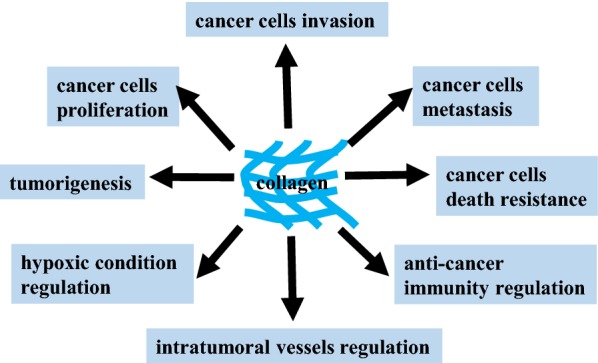
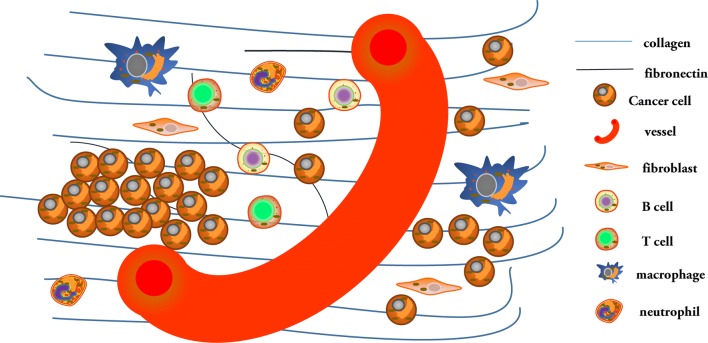
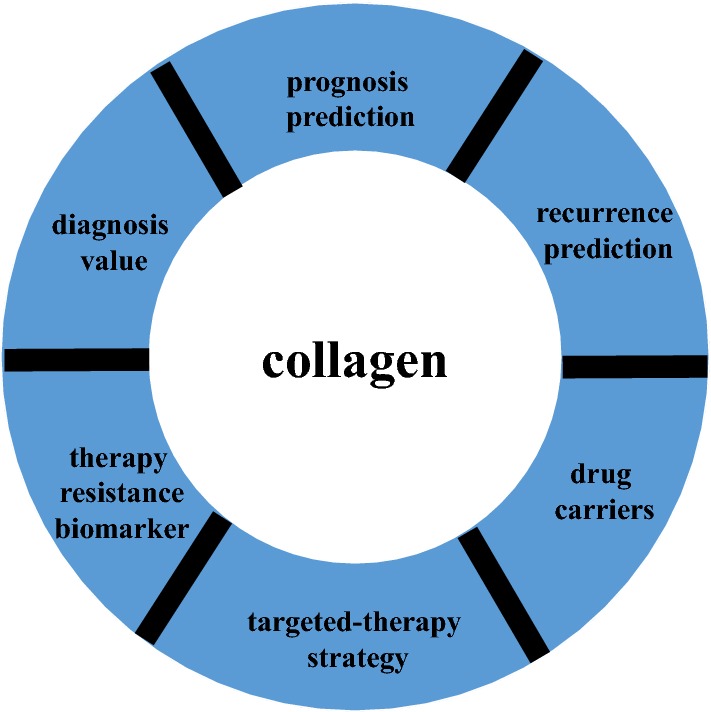
Collagen is the major component of the tumor microenvironment and participates in cancer fibrosis. Collagen biosynthesis can be regulated by cancer cells through mutated genes, transcription factors, signaling pathways and receptors; furthermore, collagen can influence tumor cell behavior through integrins, discoidin domain receptors, tyrosine kinase receptors, and some signaling pathways. Exosomes and microRNAs are closely associated with collagen in cancer. Hypoxia, which is common in collagen-rich conditions, intensifies cancer progression, and other substances in the extracellular matrix, such as fibronectin, hyaluronic acid, laminin, and matrix metalloproteinases, interact with collagen to influence cancer cell activity. Macrophages, lymphocytes, and fibroblasts play a role with collagen in cancer immunity and progression. Microscopic changes in collagen content within cancer cells and matrix cells and in other molecules ultimately contribute to the mutual feedback loop that influences prognosis, recurrence, and resistance in cancer. Nanoparticles, nanoplatforms, and nanoenzymes exhibit the expected gratifying properties. The pathophysiological functions of collagen in diverse cancers illustrate the dual roles of collagen and provide promising therapeutic options that can be readily translated from bench to bedside. The emerging understanding of the structural properties and functions of collagen in cancer will guide the development of new strategies for anticancer therapy.
Overview
The claims and statistics of this paper haven’t been checked yet.
Free: it reads the open-access text and checks the first 5 claims that cite a source we can check. Create a free account to check every claim.
Integrity signals
Registry
Cites
Statistics
Figures
Verification
Claims the paper makes
The claims and statistics of this paper haven’t been checked yet.
Free: it reads the open-access text and checks the first 5 claims that cite a source we can check. Create a free account to check every claim.
Claims other papers make about this one
Each is checked against this paper’s own text: does it say what the citing paper says it does?
The cited source says what the claim attributes to it.
In the citing paper
“Collagen in turn influences tumor cell behavior through integrins, tyrosine kinase receptors, discoidin domain receptors, and some signaling pathways [124].”
From Tumor microenvironment complexity and therapeutic implications at a glance (2020) · cites this paper as [124]
The cited source says what the claim attributes to it.
In the citing paper
“In addition, hypoxia, which is common in collagen-rich tumors, promotes cancer progression [124].”
From Tumor microenvironment complexity and therapeutic implications at a glance (2020) · cites this paper as [124]
Self-check
Percentages, sums and reported differences re-computed from the paper’s own numbers.
The self-check needs the paper’s full text.
Citations
Cites
1 retracted
Guo, Q., Zheng, M., Xu, Y., Wang, N., & Zhao, W. (2018) · Bioscience Reports · doi:10.1042/bsr20181523 · Cited by 51
RetractedBray, F., Ferlay, J., Soerjomataram, I., Siegel, R. L., Torre, L. A., & Jemal, A. (2018) · CA: A Cancer Journal for Clinicians · doi:10.3322/caac.21492 · Cited by 84,109 · cited 1×
“6 million cancer deaths were evaluated in 2018 [1], and there are predicted to be 1,762,450 additional cancer cases and 606,880 cancer deaths in the United States in 2019 [2].”
BackgroundHallmarks of Cancer: The Next Generation
Hanahan, D., & Weinberg, R. A. (2011) · Cell · doi:10.1016/j.cell.2011.02.013 · Cited by 66,590 · cited 1×
“In addition, cancer cells exhibit multiple hallmarks of cancer progression, including the recruitment of various cells to form a tumor microenvironment [3], which consists of varying functional stromal cell subtypes and matrix protein polymers [4].”
BackgroundSiegel, R. L., Miller, K. D., & Jemal, A. (2019) · CA: A Cancer Journal for Clinicians · doi:10.3322/caac.21551 · Cited by 20,160
TGFβ attenuates tumour response to PD-L1 blockade by contributing to exclusion of T cells
Mariathasan, S., Turley, S. J., Nickles, D., Castiglioni, A., Yuen, K., Wang, Y., Kadel III, E. E., Koeppen, H., Astarita, J. L., Cubas, R., et al. (2018) · Nature · doi:10.1038/nature25501 · Cited by 5,400 · cited 1×
“However, others noted that the metastatic urothelial cancer response to programmed death-1 and programmed death-ligand 1 treatment involved the movement of CD8+ T cells from the cancer parenchyma to the collagen-rich peritumoral stroma [127].”
BackgroundThe biology and function of fibroblasts in cancer
Kalluri, R. (2016) · Nature Reviews Cancer · doi:10.1038/nrc.2016.73 · Cited by 4,366
Ricard-Blum, S. (2011) · Cold Spring Harbor Perspectives in Biology · doi:10.1101/cshperspect.a004978 · Cited by 2,305
Turning foes to friends: targeting cancer-associated fibroblasts
Chen, X., & Song, E. (2019) · Nature Reviews Drug Discovery · doi:10.1038/s41573-018-0004-1 · Cited by 1,879
Collagen reorganization at the tumor-stromal interface facilitates local invasion
Provenzano, P. P., Eliceiri, K. W., Campbell, J. M., Inman, D. R., White, J. G., & Keely, P. J. (2006) · BMC Medicine · doi:10.1186/1741-7015-4-38 · Cited by 1,804
Phenotype molding of stromal cells in the lung tumor microenvironment
Lambrechts, D., Wauters, E., Boeckx, B., Aibar, S., Nittner, D., Burton, O., Bassez, A., Decaluwé, H., Pircher, A., Van den Eynde, K., et al. (2018) · Nature Medicine · doi:10.1038/s41591-018-0096-5 · Cited by 1,648
Cited by
Items 101–200 of 759
In situ brain tumor detection using a Raman spectroscopy system—results of a multicenter study
Ember, K. J. I., Dallaire, F., Plante, A., Sheehy, G., Guiot, M., Agarwal, R., Yadav, R., Douet, A., Selb, J. J., Tremblay, J.-P., et al. (2024) · Scientific Reports · doi:10.1038/s41598-024-62543-9 · Cited by 65
“Increased levels of collagen in the extracellular matrix have been reported in glioblastoma 30 and other tumors 31 , and may underlie the elevated protein contributions detected in tumors here.”
BackgroundMidkine as a driver of age-related changes and increase in mammary tumorigenesis
Yan, P., Rojas-Jiménez, E. A., Li, Z., Bui, T. M., Seehawer, M., Nishida, J., Foidart, P., Stevens, L. E., Xie, Y., Gomez, M. M., et al. (2024) · Cancer Cell · doi:10.1016/j.ccell.2024.09.002 · Cited by 62
Lee, J. H., Song, J., Kim, I. G., You, G., Kim, H., Ahn, J., & Mok, H. (2022) · Acta Biomaterialia · doi:10.1016/j.actbio.2022.01.005 · Cited by 51
Proline metabolism shapes the tumor microenvironment: from collagen deposition to immune evasion
Kay, E. J., Zanivan, S. R., & Rufini, A. (2023) · Current Opinion in Biotechnology · doi:10.1016/j.copbio.2023.103011 · Cited by 53
Song, H., Jiang, H., Hu, W., Hai, Y., Cai, Y., Li, H., Liao, Y. R., Huang, Y., Lv, X., Zhang, Y., et al. (2024) · Science Advances · doi:10.1126/sciadv.adl3511 · Cited by 50
“This starkly contrasts with human tissues, where collagen serves as the primary component ( 55 ).”
BackgroundSelf-citationMR Elastography of the Breast: Evolution of Technique, Case Examples, and Future Directions
Patel, B., Samreen, N., Zhou, Y., Chen, J., Brandt, K. R., Ehman, R. L., & Pepin, K. M. (2020) · Clinical Breast Cancer · doi:10.1016/j.clbc.2020.08.005 · Cited by 51
Wu, X., Wang, H., Zhu, D., Chai, Y., Wang, J., Dai, W., Xiao, Y., Tang, W., Li, J., Hong, L., et al. (2021) · Cell Death and Disease · doi:10.1038/s41419-021-04460-7 · Cited by 57
“As members of the collagen family, COL9A3 and COL6A5 serve as essential skeletons in the extracellular matrix (ECM), which is the major component of the tumour microenvironment [16, 17].”
BackgroundImodoye, S. O., Adedokun, K. A., & Bello, I. O. (2024) · Histochemistry and Cell Biology · doi:10.1007/s00418-023-02258-6 · Cited by 50
“Xu et al. (2019) recently observed that hypoxia is a frequent factor in collagen-rich tumors that drives cancer progression, probably through the production of HIF, a known inducer of EMT.”
Overcoming physical stromal barriers to cancer immunotherapy
Chung, S. W., Xie, Y., & Suk, J. S. (2021) · Drug Delivery and Translational Research · doi:10.1007/s13346-021-01036-y · Cited by 54
“In tumor tissues, cancer cell and cancer-associated fibroblasts increase deposition of ECM molecules and mediate abnormal ECM remodeling, which in turn leads to tissue stiffening [42].”
BackgroundKiemen, A. L., Damanakis, A. I., Braxton, A. M., He, J. P., Laheru, D. A., Fishman, E. K., Chames, P., Almagro-Pérez, C., Wu, P., Wirtz, D., et al. (2023) · Med · doi:10.1016/j.medj.2022.11.009 · Cited by 53
Full-Spectrum CARS Microscopy of Cells and Tissues with Ultrashort White-Light Continuum Pulses
Vernuccio, F., Vanna, R., Ceconello, C., Bresci, A., Manetti, F., Sorrentino, S., Ghislanzoni, S., Lambertucci, F., Motiño, O., Martins, I., et al. (2023) · The Journal of Physical Chemistry B · doi:10.1021/acs.jpcb.3c01443 · Cited by 44
Recent advances in tumor microenvironment associated therapeutic strategies and evaluation models
Haider, T., Sandha, K. K., Soni, V., & Gupta, P. N. (2020) · Materials Science and Engineering C · doi:10.1016/j.msec.2020.111229 · Cited by 45
Hydrogels to engineer tumor microenvironments in vitro
Fernando, K., Kwang, L. G., Lim, J. T. C., & Fong, E. L. S. (2021) · Biomaterials Science · doi:10.1039/d0bm01943g · Cited by 48
Estrogen/ER in anti-tumor immunity regulation to tumor cell and tumor microenvironment
Wang, T., Jin, J., Qian, C., Lou, J., Lin, J., Xu, A., Xia, K., Jin, L., Liu, B., Tao, H., et al. (2021) · Cancer Cell International · doi:10.1186/s12935-021-02003-w · Cited by 57
“Collagen has the key function in anti-tumor immunity regulation, together with macrophages, lymphocytes, and fibroblasts [132].”
BackgroundZhang, L., Wang, L., Yang, H., Li, C., & Fang, C. (2021) · Bioscience Reports · doi:10.1042/bsr20211615 · Cited by 48
Salimian, N., Peymani, M., Ghaedi, K., Hashemi, M., & Rahimi, E. (2023) · Gene · doi:10.1016/j.gene.2023.147867 · Cited by 46
Vasiukov, G., Novitskaya, T., Zijlstra, A., Owens, P., Ye, F., Zhao, Z., Moses, H. L., Blackwell, T. S., Feoktistov, I., & Novitskiy, S. V. (2020) · Cancer Research · doi:10.1158/0008-5472.can-19-3954 · Cited by 45
“Overall collagen accumulation is considered to be a hallmark of breast cancer progression (39).”
BackgroundEngineered Cytokines for Cancer and Autoimmune Disease Immunotherapy
Uricoli, B., Birnbaum, L. A., Do, P., Kelvin, J., Jain, J., Costanza, E., Chyong, A., Porter, C. C., Rafiq, S., & Dreaden, E. C. (2021) · Advanced Healthcare Materials · doi:10.1002/adhm.202002214 · Cited by 46
Harnessing Extracellular Matrix Biology for Tumor Drug Delivery
Subrahmanyam, N., & Ghandehari, H. (2021) · Journal of Personalized Medicine · doi:10.3390/jpm11020088 · Cited by 42
“One well-established example is collagen [90].”
CellNeighborEX: deciphering neighbor‐dependent gene expression from spatial transcriptomics data
Kim, H., Kumar, A., Lövkvist, C., Palma, A. M., Martin, P. C. N., Kim, J., Bhoopathi, P., Trevino, J., Fisher, P. B., Madan, E., et al. (2023) · Molecular Systems Biology · doi:10.15252/msb.202311670 · Cited by 44
“Based on previous studies showing that collagen influences cancer cell behaviors such as metastasis, tumorigenesis, and proliferation (Xu et al, 2019), we can infer that the four genes might affect liver cancer by controlling the collagen arrangement among VSMC, Hepatocyte, and Tumor cells.”
BackgroundWang, L., Li, C., Zhan, H., Li, S., Zeng, K., Xu, C., Zou, Y., Xie, Y., Zhan, Z., Yin, S., et al. (2024) · Cell Reports Medicine · doi:10.1016/j.xcrm.2024.101533 · Cited by 55
Self-citationChen, L., Kong, X., Fang, Y., Paunikar, S., Wang, X., Brown, J. A. L., Bourke, E., Li, X., & Wang, J. (2021) · Frontiers in Cell and Developmental Biology · doi:10.3389/fcell.2021.747314 · Cited by 48
Collagen XI Alpha 1 Chain, a Novel Therapeutic Target for Cancer Treatment
Wu, Y., & Chou, C. (2022) · Frontiers in Oncology · doi:10.3389/fonc.2022.925165 · Cited by 48
Vaez, M., Asgari, M., Hirvonen, L. M., Bakir, G., Khattignavong, E., Ezzo, M., Aguayo, S. D., Schuh, C. M. A. P., Gough, K. M., & Bozec, L. (2022) · Acta Biomaterialia · doi:10.1016/j.actbio.2022.11.033 · Cited by 46
Shu, C., Yan, H., Zheng, W., Lin, K., James, A., Selvarajan, S., Lim, C. M., & Huang, Z. (2021) · Analytical Chemistry · doi:10.1021/acs.analchem.1c01559 · Cited by 46
Jensen, C., Nissen, N. I., von Arenstorff, C. S., Karsdal, M. A., & Willumsen, N. (2021) · Journal of Experimental & Clinical Cancer Research · doi:10.1186/s13046-021-02133-z · Cited by 45
Chen, B., Li, L., Li, M., & Wang, X. (2020) · Cellular Oncology · doi:10.1007/s13402-020-00534-4 · Cited by 46
“Collagen is the major component of the tumor stroma and is involved in cancer fibrosis [32].”
BackgroundImpact of Extracellular Matrix Components to Renal Cell Carcinoma Behavior
Majo, S., Courtois, S., Souleyreau, W., Bikfalvi, A., & Auguste, P. (2020) · Frontiers in Oncology · doi:10.3389/fonc.2020.00625 · Cited by 39
“, Col A1 in colorectal and breast cancers (33).”
BackgroundCollagen Organization in Relation to Ductal Carcinoma In Situ Pathology and Outcomes
Sprague, B. L., Vacek, P. M., Mulrow, S. E., Evans, M. F., Trentham‐Dietz, A., Herschorn, S. D., James, T. A., Surachaicharn, N., Keikhosravi, A., Eliceiri, K. W., et al. (2021) · Cancer Epidemiology Biomarkers & Prevention · doi:10.1158/1055-9965.epi-20-0889 · Cited by 45
“have been identified by which cancer cells can influence collagen synthesis and organization or by which collagen can influence cancer cell behavior (41, 42).”
BackgroundTian, Y., Cheng, T., Sun, F., Zhou, Y., Yuan, C., Guo, Z., & Wang, Z. (2024) · Advances in Colloid and Interface Science · doi:10.1016/j.cis.2024.103124 · Cited by 41
Imaging 3D cell cultures with optical microscopy
Hsieh, H.-C., Han, Q., Brenes, D., Bishop, K. W., Wang, R., Wang, Y., Poudel, C., Glaser, A. K., Freedman, B., Vaughan, J. C., et al. (2025) · Nature Methods · doi:10.1038/s41592-025-02647-w · Cited by 51
“Fibroblasts and ECM provide an essential structural scaffold and chemical support to tumors 200,201 .”
Liu, J., Yang, L., Liu, D., Wu, Q., Yu, Y., Huang, X., Li, J., & Liu, S. (2025) · Journal of Orthopaedic Translation · doi:10.1016/j.jot.2025.07.006 · Cited by 56
“The crosslinking, which stabilizes and facilitates the structural modifications, is induced by lysyl oxidases and transglutaminases [140 – 143].”
Majo, S., & Auguste, P. (2021) · Cancers · doi:10.3390/cancers13071725 · Cited by 39
“These antagonistic roles need to be further investigated in the perspective of anti-collagen therapies [7].”
BackgroundInfluentialThe Role of IGF/IGF-IR-Signaling and Extracellular Matrix Effectors in Bone Sarcoma Pathogenesis
Tzanakakis, G. N., Giatagana, E.-M., Berdiaki, A., Spyridaki, I., Hida, K., Neagu, M. T., Tsatsakis, A. M., & Nikitovic, D. (2021) · Cancers · doi:10.3390/cancers13102478 · Cited by 41
Vanni, S., Fausti, V., Fonzi, E., Liverani, C., Miserocchi, G., Spadazzi, C., Cocchi, C., Calabrese, C., Gurrieri, L., Riva, N., et al. (2023) · International Journal of Molecular Sciences · doi:10.3390/ijms24086926 · Cited by 38
“with altered ECM composition, likely favoring cell invasiveness and aggressiveness [18].”
BackgroundFernandez, J. L., Årbogen, S. B. S., Sadeghinia, M. J., Haram, M., Snipstad, S., TORP, S. H., Einen, C., Mühlenpfordt, M., Maardalen, M., Vikedal, K., et al. (2023) · Cancers · doi:10.3390/cancers15225415 · Cited by 43
Faro, V. L., Bhattacharya, A., Zhou, W., Zhou, D., Wang, Y., Läll, K., Kanai, M., Lopera-Maya, E. A., Straub, P., Pawar, P. P., et al. (2024) · Cell Reports Medicine · doi:10.1016/j.xcrm.2024.101430 · Cited by 45
The Multifaced Role of Collagen in Cancer Development and Progression
Buglio, G. L., Cicero, A. L., Campora, S., & Ghersi, G. (2024) · International Journal of Molecular Sciences · doi:10.3390/ijms252413523 · Cited by 42
Strnadová, K., Pfeiferová, L., Přikryl, P., Dvořánková, B., Vlčák, E., Frýdlová, J., Vokurka, M., Novotný, J., Šáchová, J., Hradilová, M., et al. (2021) · Histochemistry and Cell Biology · doi:10.1007/s00418-021-02052-2 · Cited by 41
Collagen as the extracellular matrix biomaterials in the arena of medical sciences
Ramachandregowda, S., Muktha, H., Ramakrishnaiah, T. N., Surendra, A. S., Sushma, S. M., Tejaswini, C., Roopini, K., & Rajashekara, S. (2024) · Tissue and Cell · doi:10.1016/j.tice.2024.102497 · Cited by 43
Li, Y., Zhou, S., Wei, B., Qin, M., & Liang, Z. (2021) · Mathematical Biosciences & Engineering · doi:10.3934/mbe.2021296 · Cited by 38
“Collagen is a major component of the ECM, and increasing evidence suggests that it influences tumor cell progression and metastasis through integrins, discoidin domain receptors, tyrosine kinase receptors, and some signaling pathways [22].”
Liu, G., Liu, R., Shan, Y., & Sun, C. (2021) · Journal of Biological Chemistry · doi:10.1016/j.jbc.2021.101133 · Cited by 36
“(2021) 297(4) 101133 Collagen I, laminin, and fibronectin are the main ECM proteins that can participate in cell–ECM interaction and play a key role in cell migration.”
InfluentialMutant P53 in the formation and progression of the tumor microenvironment: Friend or foe
Asl, E. R., Rostamzadeh, D., Duijf, P. H. G., Mafi, S., Mansoori, B., Barati, S., Cho, W. C. S., & Mansoori, B. (2023) · Life Sciences · doi:10.1016/j.lfs.2022.121361 · Cited by 40
P2X7 receptor: the regulator of glioma tumor development and survival
Matysniak, D. P., Chumak, V., Nowak, N., Kukla, A., Lehka, L., Oślislok, M., & Pomorski, P. (2021) · Purinergic Signalling · doi:10.1007/s11302-021-09834-2 · Cited by 35
Giamougiannis, P., Morais, C. L. M., Grabowska, R., Ashton, K. M., Wood, N. J., Martin‐Hirsch, P. L., & Martin, F. L. (2020) · Analytical and Bioanalytical Chemistry · doi:10.1007/s00216-020-03045-1 · Cited by 37
Regulation of in vivo delivery of nanomedicines by herbal medicines
Guan, J., Chen, W., Yang, M., Wu, E., Qian, J., & Zhan, C. (2021) · Advanced Drug Delivery Reviews · doi:10.1016/j.addr.2021.04.015 · Cited by 37
Hassanein, S. S., Abdel-Mawgood, A. L., & Ibrahim, S. (2021) · Frontiers in Oncology · doi:10.3389/fonc.2021.766659 · Cited by 37
Amino acid metabolic reprogramming in tumor metastatic colonization
Wang, Z., Wu, X., Chen, H., & Wang, K. (2023) · Frontiers in Oncology · doi:10.3389/fonc.2023.1123192 · Cited by 40
Feng, Y., Shi, Y., Tian, Y., Yang, Y.-X., Wang, J., Guo, H., Banitaba, S. N., Khademolqorani, S., & Li, J. (2023) · Processes · doi:10.3390/pr11072105 · Cited by 37
Liu, T., Wan, X., Chen, Z., Wang, G., Cao, R., Zhou, F., Meng, Z., Luo, Y., & Chen, L. (2023) · Cell Death and Disease · doi:10.1038/s41419-023-06298-7 · Cited by 41
DDR1-targeted therapies: current limitations and future potential
Wu, D., Ding, Z., Lu, T., Chen, Y., Zhang, F., & Lü, S. (2024) · Drug Discovery Today · doi:10.1016/j.drudis.2024.103975 · Cited by 36
Eliahoo, P., Setayesh, H., Hoffman, T., Wu, Y., Li, S., & Treweek, J. B. (2024) · ACS Materials Au · doi:10.1021/acsmaterialsau.3c00038 · Cited by 38
Self-citationRecent Advances on Collagen Biomaterial: From Extraction, Cross-Linking to Tissue Regeneration
Zhu, L. Q., Yu, Z.-L., Li, S., Xu, C.-Z., Hou, Y., Liao, L., Xu, Y., Zhang, J., Wei, B., Wen, W., et al. (2024) · Journal of macromolecular science. Part C, Reviews in macromolecular chemistry and physics/Journal of macromolecular science. Reviews in macromolecular chemistry and physics · doi:10.1080/15583724.2024.2382128 · Cited by 37
“[75] And DDRs includes DDR-1 and DDR-2, DDR-2 usually are overexpressed on epithe-lium-derived tumor.”
Self-citationMin, S., Lee, Y., Hong, J., Park, T. J., Woo, H. G., Kwon, S. M., & Yoon, G. (2021) · Cell Death and Disease · doi:10.1038/s41419-021-04370-8 · Cited by 42
“Recently, high expression of several collagens was found in diverse cancers [14].”
BackgroundExtracellular Matrix Remodeling by Fibroblast-MMP14 Regulates Melanoma Growth
Pach, E., Kümper, M., Fromme, J. E., Zamek, J., Metzen, F., Koch, M., Mauch, C., & Zigrino, P. (2021) · International Journal of Molecular Sciences · doi:10.3390/ijms222212276 · Cited by 37
Neoadjuvant therapy alters the immune microenvironment in pancreatic cancer
Zhang, H., Ye, L., Yu, X., Jin, K., & Wu, W. (2022) · Frontiers in Immunology · doi:10.3389/fimmu.2022.956984 · Cited by 39
Self-citationChowdhury, T., Cressiot, B., Parisi, C., Smolyakov, G., Thiébot, B., Trichet, L., Fernandes, F. M., Pelta, J., & Manivet, P. (2023) · ACS Sensors · doi:10.1021/acssensors.2c02308 · Cited by 35
Wormsbaecher, C., Hindman, A. R., Avendano, A., Cortes-Medina, M. G., Jones, C. E., Bushman, A., Onua, L. M., Kovalchin, C. E., Murphy, A. R., Helber, H. L., et al. (2020) · Breast Cancer Research · doi:10.1186/s13058-020-01275-w · Cited by 38
“Increased collagen deposition is associated with fibrotic and neoplastic diseases, such as cancer [48].”
BackgroundStratified 3D Microtumors as Organotypic Testing Platforms for Screening Pancreatic Cancer Therapies
Monteiro, M. V., Gaspar, V. M., Mendes, L., Duarte, I. F., & Mano, J. F. (2021) · Small Methods · doi:10.1002/smtd.202001207 · Cited by 34
Zhang, L., Zou, X., Huang, J., Fan, J., Sun, X., Zhang, B., Zheng, B., Guo, C., Fu, D., Yao, L., et al. (2021) · Analytical Chemistry · doi:10.1021/acs.analchem.1c03861 · Cited by 37
Overcoming the Fibrotic Fortress in Pancreatic Ductal Adenocarcinoma: Challenges and Opportunities
Min, K. K. M., Ffrench, C. B., Jessup, C. F., Shepherdson, M., Barreto, S. G., & Bonder, C. S. (2023) · Cancers · doi:10.3390/cancers15082354 · Cited by 42
“An analysis of tumour extracts also reveal that of the 28 different collagen subtypes (categorised into four subfamilies), PDAC tumours contain an overabundance of fibril-forming collagen subfamily types I, III, and V, and network-forming collagen subfamily type IV [50,51].”
BackgroundZhu, B., Fan, L., Yu, J., Liang, Z., Ke, X., Wang, Y., Song, Z., Li, Z., Li, G., & Guo, Y. (2024) · Biochimica et Biophysica Acta (BBA) - Molecular Cell Research · doi:10.1016/j.bbamcr.2024.119871 · Cited by 38
Reyimu, A., Chen, Y., Song, X., Zhou, W., Dai, J., & Jiang, F. (2021) · World Journal of Surgical Oncology · doi:10.1186/s12957-021-02360-w · Cited by 33
Type XX Collagen Is Elevated in Circulation of Patients with Solid Tumors
Thorlacius‐Ussing, J., Jensen, C., Madsen, E. A., Nissen, N. I., Manon‐Jensen, T., Chen, I. M., Johansen, J. S., Diab, H. M. H., Jørgensen, L. N., Karsdal, M. A., et al. (2022) · International Journal of Molecular Sciences · doi:10.3390/ijms23084144 · Cited by 35
“The connection of type XX collagen to fibrillar collagens is not insignificant: changes in the ECM and collagen composition as a result of cancer has been shown to influence tumor progression, metastasis, and clinical outcome of patients [7].”
BackgroundGuo, X., Du, L., Ma, N., Zhang, P., Wang, Y., Han, Y., Huang, X. L., Zhang, Q., Tan, X., Xiao, L., et al. (2022) · Journal of Translational Medicine · doi:10.1186/s12967-022-03804-x · Cited by 34
“macrophage suppress EMT Classically activated M1 macrophages promote inflammation and inhibit fibrosis, while alternatively activated M2 macrophages modulate inflammation and promote fibrosis [23, 24].”
BackgroundThe Tumor Stroma of Squamous Cell Carcinoma: A Complex Environment That Fuels Cancer Progression
Buruiană, A., Gheban, B., Gheban-Roşca, I. A., Georgiu, C., Crișan, D., & Crişan, M. (2024) · Cancers · doi:10.3390/cancers16091727 · Cited by 37
“…[100], triggering signaling pathways that can promote cell survival, proliferation, and migration, enhancing the invasive behavior of cancer cells [101]; by protecting the cancer cell from immune attack by creating a physical barrier, they hinder the access of immune cells to the tumor and shield…”
BackgroundKršek, A., Jagodic, A., & Batičić, L. (2024) · Medicina · doi:10.3390/medicina60091384 · Cited by 38
Matrix adhesion and remodeling diversifies modes of cancer invasion across spatial scales
Pramanik, D., Jolly, M. K., & Bhat, R. (2021) · Journal of Theoretical Biology · doi:10.1016/j.jtbi.2021.110733 · Cited by 34
Mammary collagen is under reproductive control with implications for breast cancer
Guo, Q., Sun, D., Barrett, A. S., Jindal, S., Pennock, N. D., Conklin, M. W., Xia, Z., Mitchell, E., Samatham, R. V., Mirza, N., et al. (2021) · Matrix Biology · doi:10.1016/j.matbio.2021.10.006 · Cited by 32
SpaceX: gene co-expression network estimation for spatial transcriptomics
Acharyya, S., Zhou, X., & Baladandayuthapani, V. (2022) · Bioinformatics · doi:10.1093/bioinformatics/btac645 · Cited by 36
Yan, W., Liu, X., Wang, Y., Han, S., Wang, F., Liu, X., Xiao, F., & Hu, G. (2020) · Frontiers in Pharmacology · doi:10.3389/fphar.2020.00534 · Cited by 32
“It was previously known that collagen is a major component of the tumor microenvironment that participates in cancer fi brosis, which can in fl uence tumor cell behavior through integrins (Xu et al., 2019).”
BackgroundLAMB1 Is Related to the T Stage and Indicates Poor Prognosis in Gastric Cancer
Tao, R., Chen, Z., Zhao, L., Wei, R., Fan, J., Hong, S., & Yang, Z. (2021) · Technology in Cancer Research & Treatment · doi:10.1177/15330338211004944 · Cited by 30
Rujchanarong, D., Lefler, J. E., Saunders, J. E., Pippin, S., Spruill, L., Bethard, J. R., Ball, L. E., Mehta, A. S., Drake, R. R., Ostrowski, M. C., et al. (2021) · Cancers · doi:10.3390/cancers13174419 · Cited by 33
“Breast density, defined by higher proportion of stromal and epithelial cells, is significantly correlated with increased collagen deposition [5,7,11–13] and contributes to breast cancer risk and progression [3,5,7,14,15].”
BackgroundA 3D Collagen-Based Bioprinted Model to Study Osteosarcoma Invasiveness and Drug Response
Pellegrini, E., Desando, G., Petretta, M., Cellamare, A., Cristalli, C., Pasello, M., Manara, M. C., Grigolo, B., & Scotlandi, K. (2022) · Polymers · doi:10.3390/polym14194070 · Cited by 31
“It is widely described that collagen plays an important role in therapy resistance [34].”
BackgroundYang, M., Lu, Z., Yu, B., Zhao, J., Li, L., Zhu, K., Ma, M., Long, F., Wu, R., Hu, G. M., et al. (2022) · Cancers · doi:10.3390/cancers14133244 · Cited by 32
“The higher the scores, the greater the proportion of corresponding components in the TME.”
BackgroundInfluentialStewart, D. C., Brisson, B. K., Dekky, B., Berger, A. C., Yen, W. K., Mauldin, E. A., Loebel, C., GILLETTE, D. M., Assenmacher, C., QUINCEY, C., et al. (2024) · npj Breast Cancer · doi:10.1038/s41523-024-00690-y · Cited by 34
Jiang, W., Li, M., Tan, J., Feng, M., Zheng, J., Chen, D., Liu, Z., Yan, B., Wang, G., Xu, S., et al. (2021) · Annals of Surgical Oncology · doi:10.1245/s10434-021-10218-4 · Cited by 30
Self-citationEbelt, N. D., Zamloot, V., Zuniga, E., Passi, K. B., Sobocinski, L. J., Young, C. A., Blazar, B. R., & Manuel, E. R. (2021) · Cancers · doi:10.3390/cancers13143565 · Cited by 34
“decreasing solid stresses and normalizing tissue vasculature [47].”
BackgroundInfluentialAkanda, M. R., Ahn, E., Kim, Y. J., Salam, S. M. A., Noh, M., Kim, S. S., Jung, T., Kim, I., Kim, C., Lee, K., et al. (2023) · Journal of Cancer · doi:10.7150/jca.80115 · Cited by 29
“A double-edged role of collagen has been reported in cancer fibrosis [39].”
BackgroundGobert, A. P., Smith, T. M., Latour, Y. L., Asim, M., Barry, D. P., Allaman, M. M., Williams, K. J., McNamara, K. M., Delgado, A. G., Short, S. P., et al. (2023) · Gastroenterology · doi:10.1053/j.gastro.2023.05.041 · Cited by 31
Fujimoto, H., Yoshihara, M., Rodgers, R. J., Iyoshi, S., Mogi, K., Miyamoto, E., Hayakawa, S., Hayashi, M., Nomura, S., Kitami, K., et al. (2024) · Cancer and Metastasis Reviews · doi:10.1007/s10555-024-10169-8 · Cited by 32
“We define this excessive accumulation of collagen fibers in tumors as tumor-associated fibrosis (TAF), which contributes to tumor progression, metastasis, and chemotherapy resistance of EOC so as with other neoplasms [13].”
BackgroundInfluentialTargeting collagen to optimize cancer immunotherapy
Wang, Y., Zhang, F., Qian, Z., Ying, J., Wu, D., Liu, L., Ning, X., Mei, J., Chen, D., & Zhang, Y. (2025) · Experimental Hematology and Oncology · doi:10.1186/s40164-025-00691-y · Cited by 32
Self-citationBerberine inhibits glioma cell migration and invasion by suppressing TGF-β1/COL11A1 pathway
Sun, Y., Huang, H., Zhan, Z., Gao, H., Zhang, C., Lai, J., Cao, J., Li, C., Chen, Y., & Liu, Z. (2022) · Biochemical and Biophysical Research Communications · doi:10.1016/j.bbrc.2022.07.101 · Cited by 29
Rafaeva, M., Jensen, A. R. D., Horton, E. R., Zornhagen, K. W., Strøbech, J. E., Fleischhauer, L., Mayorca‐Guiliani, A. E., Nielsen, S. R., Grønseth, D. S. B., Kuś, F., et al. (2023) · Frontiers in Immunology · doi:10.3389/fimmu.2023.1154528 · Cited by 33
Asama, H., Suzuki, R., Hikichi, T., Takagi, T. J., Masamune, A., & Ohira, H. (2018) · Pancreatology · doi:10.1016/j.pan.2018.10.012 · Cited by 28
N6-methyladenosine (m6A) RNA modification in fibrosis and collagen-related diseases
Tan, M., Liu, S., & Liu, L. (2024) · Clinical Epigenetics · doi:10.1186/s13148-024-01736-5 · Cited by 30
“In some cases, cancer cells and tumor-associated macrophages can also produce collagen [18].”
BackgroundSelf-citationThe Effects of Resveratrol on Prostate Cancer through Targeting the Tumor Microenvironment
Silk, N., Reich, J. S., Sinha, R., Chawla, S., Geary, K. R., & Zhang, D. (2021) · Journal of Xenobiotics · doi:10.3390/jox11010002 · Cited by 28
“Communication between collagen and cancer cells exists in every cancer development stage [96].”
BackgroundClough, H. C., O’Brien, M., Zhu, X., Miller, A. F., Saiani, A., & Tsigkou, O. (2021) · Materials Science and Engineering C · doi:10.1016/j.msec.2021.112200 · Cited by 28
Collective Cell Migration in a Fibrous Environment: A Hybrid Multiscale Modelling Approach
Suveges, S., Chamseddine, I. M., Rejniak, K. A., Eftimie, R., & Trucu, D. (2021) · Frontiers in Applied Mathematics and Statistics · doi:10.3389/fams.2021.680029 · Cited by 27
Next-Generation 3D Scaffolds for Nano-Based Chemotherapeutics Delivery and Cancer Treatment
Shahriar, S. M. S., Andrabi, S. M., Islam, F. S., An, J. M., Schindler, S. J., Matis, M. P., Lee, D. Y., & Lee, Y.-K. (2022) · Pharmaceutics · doi:10.3390/pharmaceutics14122712 · Cited by 30
Photocleavable Surfactant-Enabled Extracellular Matrix Proteomics
Knott, S. J., Brown, K. A., Josyer, H., Carr, A. V., Inman, D. R., Jin, S., Friedl, A., Ponik, S. M., & Ge, Y. (2020) · Analytical Chemistry · doi:10.1021/acs.analchem.0c03104 · Cited by 30
Wishart, G., Gupta, P., Nisbet, A., Schettino, G., & Velliou, E. G. (2021) · Cancers · doi:10.3390/cancers13236080 · Cited by 26
“, an ECM protein that is abundant in the PDAC tumour microenvironment and secreted by both stro a c cer cells [55,62,63]) was o itored in t e ff l s f r ll iti r t .”
BackgroundMethodRole of Collagen Regulators in Cancer Treatment: A Comprehensive Review
Angre, T. D., Kumar, A., Singh, A. K., Thareja, S., & Kumar, P. (2022) · Anti-Cancer Agents in Medicinal Chemistry · doi:10.2174/1871520622666220501162351 · Cited by 28
RhoBTB3 Regulates Proliferation and Invasion of Breast Cancer Cells via Col1a1
Kim, K.-H., & Kim, Y. (2022) · Molecules and Cells · doi:10.14348/molcells.2022.2037 · Cited by 27
“The Col1a1, a major component of the extracellular matrix in the tumor microenvironment, plays a major role in cancer development and progression (Burns-Cox et al., 2001; Martins Cavaco et al., 2020; Wolf et al., 2009; Xu et al., 2019).”
BackgroundLiu, X., Ni, G., Zhang, P., Li, H., Li, J., Sebold, B. C., Wu, X., Chen, G., Yuan, S., & Wang, T. (2023) · Journal of Experimental & Clinical Cancer Research · doi:10.1186/s13046-023-02598-0 · Cited by 31
“Collagens are major components of the TME and play roles in cancer fibrosis, as well as interacting with receptors, exosomes, and microRNAs to influence tumour cell behaviours [61].”
BackgroundSelf-citationWang, X., Bai, Y., Zhang, F., Li, D., Chen, K., Wu, R., Tang, Y., Wei, X., & Han, P. (2023) · Frontiers in Immunology · doi:10.3389/fimmu.2023.955949 · Cited by 33
Protein MRI Contrast Agents as an Effective Approach for Precision Molecular Imaging
Li, D., Kirberger, M., Qiao, J., Gui, Z., Xue, S., Pu, F., Jiang, J., Xu, Y., Tan, S., Salarian, M., et al. (2024) · Investigative Radiology · doi:10.1097/rli.0000000000001057 · Cited by 25
Lv, Y., Shan, Y., Song, L., Zhao, Y., Lai, R., Su, J., & Zhang, X. (2021) · Aging · doi:10.18632/aging.203355 · Cited by 26
“Among the components with significant correlation to tumor progression, collagen family have been emerging as crucial participant in regulating tumor progression [21].”
BackgroundFlores-Torres, S., Jiang, T., Kort-Mascort, J., Yang, Y. K., Peza-Chavez, O., Pal, S., Mainolfi, A., Pardo, L. A., Ferri, L. E., Bertos, N., et al. (2023) · ACS Biomaterials Science & Engineering · doi:10.1021/acsbiomaterials.2c00998 · Cited by 25
Almici, E., Arshakyan, M., Carrasco, J. L., Martínez, A., Ramírez, J., Enguita, A. B., Monsó, E., Montero, J., Samitier, J., & Alcaraz, J. (2023) · Modern Pathology · doi:10.1016/j.modpat.2023.100155 · Cited by 28
Metadata
- Authors
- Xu, S., Xu, H., Wang, W., Li, S., Li, H., Li, T., Zhang, W., Yu, X., & Liu, L.
- Affiliations
- Shanghai Medical College of Fudan University (CN)
- Corresponding author
- Yu, Xianjun
- Liu, Liang
- Venue
- Journal of Translational Medicine
- Published
- 2019-09-14
- Volume
- 17
- Issue
- 1
- Pages
- 309-309
- ISSN
- 1479-5876 (ISSN-L)
- PMC
- PMC6744664
- OpenAlex
- W2972865130
- Cited by
- 735
- References
- 318
- Citations by year
- 2026: 40 · 2025: 105 · 2024: 139 · 2023: 141 · 2022: 120 · 2021: 130 · 2020: 56 · 2019: 1
- FWCI
- 4.89
- Type
- journal article
- Language
- en
- Open access
- gold
- doi.org
- Licence
- cc-by
- creativecommons.org/licenses/by/4.0/ (tdm)
- creativecommons.org/licenses/by/4.0/ (vor)
- Locations
- Journal of Translational Medicine (publishedVersion, cc-by)
- PubMed Central (publishedVersion, cc-by)
- PubMed (publishedVersion)
- DOAJ (DOAJ: Directory of Open Access Journals) (submittedVersion)
- Funders
- National Science Foundation for Distinguished Young Scholars of China (81625016)
- National Natural Science Foundation of China (81871941, 81872366, 81827807, 81802675, 81702341)
- Outstanding Academic Leader Program of the “Technological Innovation Action Plan” of the Shanghai Science and Technology Commission (18XD1401200)
- Young Talented Specialist Training Program of Shanghai
- Topics
- Physical Sciences › Materials Science › Biomaterials › Collagen: Extraction and Characterization
- Life Sciences › Biochemistry, Genetics and Molecular Biology › Cell Biology › Cellular Mechanics and Interactions
- Life Sciences › Biochemistry, Genetics and Molecular Biology › Molecular Biology › TGF-β signaling in diseases
- Keywords
- collagen, tumor microenvironment, collagen synthesis, integrins, discoidin domain receptors, exosomes, microRNA, tumor hypoxia, extracellular matrix, fibronectin, hyaluronic acid, matrix metalloproteinases, tumor immunology, tumor progression, nanotherapeutics, nanozymes, cancer therapy
- MeSH terms
- Collagen, Humans, Neoplasms, Prognosis, MicroRNAs, Exosomes, Translational Research, Biomedical
About these checks
Registry, retraction, Cites and statistics results are computed, not judged, with one exception: a printed reference that no index lists is read once by a model before it counts as a citation error. Claims are extracted by a model and kept only when their quote appears verbatim in the text; each cited source is then checked, with a model’s help, for whether it says what the claim relies on. Those verdicts can be wrong — read the claim’s quote and the cited source before relying on one.
Statistics and arithmetic are recomputed, not judged.
Confidence bands are shown only for fields calibrated on our annotated test set. None is calibrated yet, so no band is shown.
What counts as a claim ›How we measure confidence ›How we check this ›
Are you an author, or do you see a problem with this page? Request a review
Data sources
Bibliographic data: Semantic Scholar, OpenAlex, Crossref.
Contains information from the Semantic Scholar Academic Graph Datasets, made available under the ODC Attribution License (ODC-BY 1.0).
Semantic Scholar’s data is described in: Kinney, R., et al. (2023). The Semantic Scholar Open Data Platform. arXiv:2301.10140.
