

The role of collagen in cancer: from bench to bedside
Open accessThe DOI matches its Crossref record; 318 of the 318 references it cites were found in a registry or an index.
Abstract
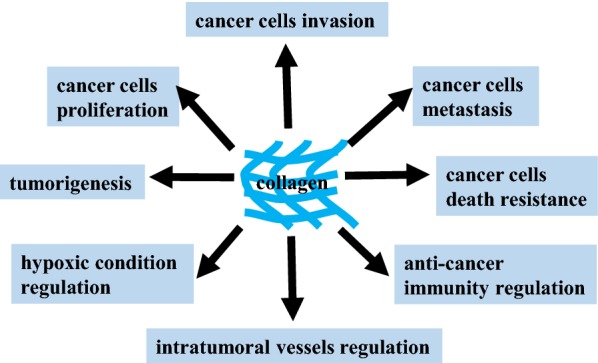
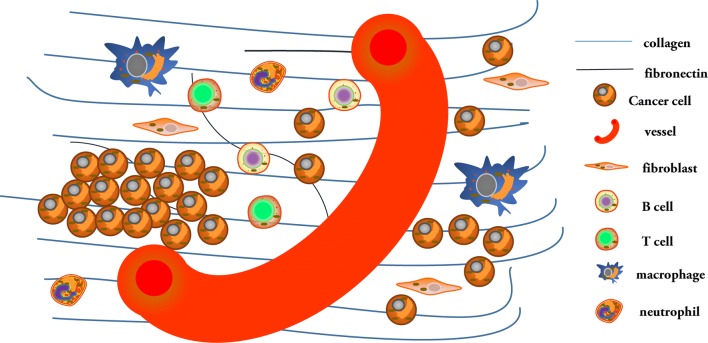
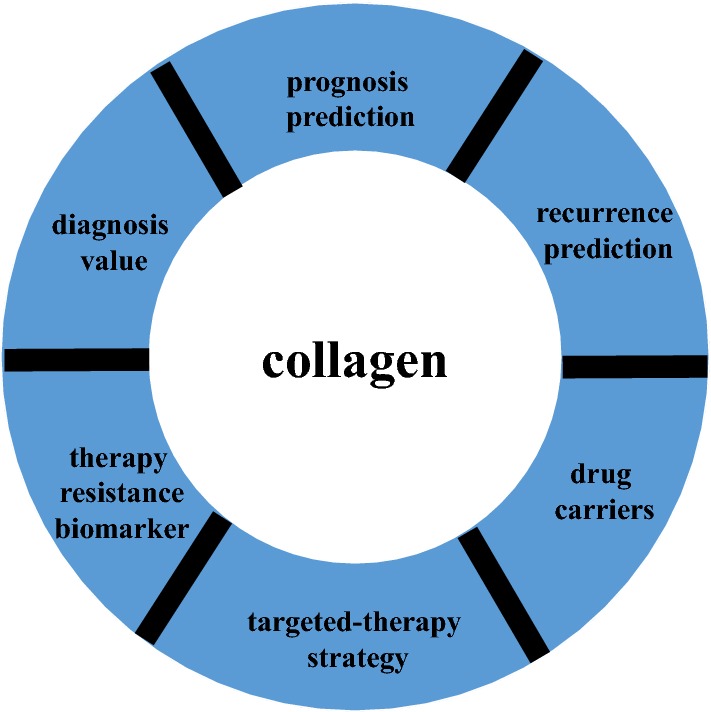
Collagen is the major component of the tumor microenvironment and participates in cancer fibrosis. Collagen biosynthesis can be regulated by cancer cells through mutated genes, transcription factors, signaling pathways and receptors; furthermore, collagen can influence tumor cell behavior through integrins, discoidin domain receptors, tyrosine kinase receptors, and some signaling pathways. Exosomes and microRNAs are closely associated with collagen in cancer. Hypoxia, which is common in collagen-rich conditions, intensifies cancer progression, and other substances in the extracellular matrix, such as fibronectin, hyaluronic acid, laminin, and matrix metalloproteinases, interact with collagen to influence cancer cell activity. Macrophages, lymphocytes, and fibroblasts play a role with collagen in cancer immunity and progression. Microscopic changes in collagen content within cancer cells and matrix cells and in other molecules ultimately contribute to the mutual feedback loop that influences prognosis, recurrence, and resistance in cancer. Nanoparticles, nanoplatforms, and nanoenzymes exhibit the expected gratifying properties. The pathophysiological functions of collagen in diverse cancers illustrate the dual roles of collagen and provide promising therapeutic options that can be readily translated from bench to bedside. The emerging understanding of the structural properties and functions of collagen in cancer will guide the development of new strategies for anticancer therapy.
Overview
The claims and statistics of this paper haven’t been checked yet.
Free: it reads the open-access text and checks the first 5 claims that cite a source we can check. Create a free account to check every claim.
Integrity signals
Registry
Cites
Statistics
Figures
Verification
Claims the paper makes
The claims and statistics of this paper haven’t been checked yet.
Free: it reads the open-access text and checks the first 5 claims that cite a source we can check. Create a free account to check every claim.
Claims other papers make about this one
Each is checked against this paper’s own text: does it say what the citing paper says it does?
The cited source says what the claim attributes to it.
In the citing paper
“Collagen in turn influences tumor cell behavior through integrins, tyrosine kinase receptors, discoidin domain receptors, and some signaling pathways [124].”
From Tumor microenvironment complexity and therapeutic implications at a glance (2020) · cites this paper as [124]
The cited source says what the claim attributes to it.
In the citing paper
“In addition, hypoxia, which is common in collagen-rich tumors, promotes cancer progression [124].”
From Tumor microenvironment complexity and therapeutic implications at a glance (2020) · cites this paper as [124]
Self-check
Percentages, sums and reported differences re-computed from the paper’s own numbers.
The self-check needs the paper’s full text.
Citations
Cites
1 retracted
Guo, Q., Zheng, M., Xu, Y., Wang, N., & Zhao, W. (2018) · Bioscience Reports · doi:10.1042/bsr20181523 · Cited by 51
RetractedBray, F., Ferlay, J., Soerjomataram, I., Siegel, R. L., Torre, L. A., & Jemal, A. (2018) · CA: A Cancer Journal for Clinicians · doi:10.3322/caac.21492 · Cited by 84,109 · cited 1×
“6 million cancer deaths were evaluated in 2018 [1], and there are predicted to be 1,762,450 additional cancer cases and 606,880 cancer deaths in the United States in 2019 [2].”
BackgroundHallmarks of Cancer: The Next Generation
Hanahan, D., & Weinberg, R. A. (2011) · Cell · doi:10.1016/j.cell.2011.02.013 · Cited by 66,590 · cited 1×
“In addition, cancer cells exhibit multiple hallmarks of cancer progression, including the recruitment of various cells to form a tumor microenvironment [3], which consists of varying functional stromal cell subtypes and matrix protein polymers [4].”
BackgroundSiegel, R. L., Miller, K. D., & Jemal, A. (2019) · CA: A Cancer Journal for Clinicians · doi:10.3322/caac.21551 · Cited by 20,160
TGFβ attenuates tumour response to PD-L1 blockade by contributing to exclusion of T cells
Mariathasan, S., Turley, S. J., Nickles, D., Castiglioni, A., Yuen, K., Wang, Y., Kadel III, E. E., Koeppen, H., Astarita, J. L., Cubas, R., et al. (2018) · Nature · doi:10.1038/nature25501 · Cited by 5,400 · cited 1×
“However, others noted that the metastatic urothelial cancer response to programmed death-1 and programmed death-ligand 1 treatment involved the movement of CD8+ T cells from the cancer parenchyma to the collagen-rich peritumoral stroma [127].”
BackgroundThe biology and function of fibroblasts in cancer
Kalluri, R. (2016) · Nature Reviews Cancer · doi:10.1038/nrc.2016.73 · Cited by 4,366
Ricard-Blum, S. (2011) · Cold Spring Harbor Perspectives in Biology · doi:10.1101/cshperspect.a004978 · Cited by 2,305
Turning foes to friends: targeting cancer-associated fibroblasts
Chen, X., & Song, E. (2019) · Nature Reviews Drug Discovery · doi:10.1038/s41573-018-0004-1 · Cited by 1,879
Collagen reorganization at the tumor-stromal interface facilitates local invasion
Provenzano, P. P., Eliceiri, K. W., Campbell, J. M., Inman, D. R., White, J. G., & Keely, P. J. (2006) · BMC Medicine · doi:10.1186/1741-7015-4-38 · Cited by 1,804
Phenotype molding of stromal cells in the lung tumor microenvironment
Lambrechts, D., Wauters, E., Boeckx, B., Aibar, S., Nittner, D., Burton, O., Bassez, A., Decaluwé, H., Pircher, A., Van den Eynde, K., et al. (2018) · Nature Medicine · doi:10.1038/s41591-018-0096-5 · Cited by 1,648
Cited by
Items 701–759 of 759
Qian, G., Yu, Y., 董有海, Hong, Y., & Wang, M. (2024) · Figshare · doi:10.6084/m9.figshare.26289164
Zheng, H., Tan, J. W., Qin, F., Zheng, Y., YANG, X., Qin, X., & Liao, H. (2024) · Figshare · doi:10.6084/m9.figshare.26709983
Jellied vesicles: probing the interactions between vesicles and the extracellular matrix environment
Tam, N. W. (2025) · publish.UP (University of Potsdam) · doi:10.25932/publishup-66768
Qian, G., Yu, Y., 董有海, Hong, Y., & Wang, M. (2024) · Figshare · doi:10.6084/m9.figshare.26289574
Xu, Y., Jin, H., Chen, Y., Yang, Z., Xu, D., Zhang, X., Yang, J., & Wang, Y. (2024) · Figshare · doi:10.6084/m9.figshare.26737482
Hybrid nanosystems for the delivery of therapeutic agents as tretament for complex diseases
Moreno-Zafra, V. (2021) · Library Open Repository (Universidad Complutense Madrid)
Bacteria - Hydrogel Interactions: Mechanistic Insights via Microelastography and Deep Learning
Karmarkar, B. (2024) · VTechWorks (Virginia Tech)
Desa, D. E., & Brown, E. B. (2021) · UR Research (University of Rochester) · Cited by 1
Sendín Martín, M. D. L. M. (2022) · idUS (Universidad de Sevilla)
HMGB Proteins, lncRNAs, and their Interaction in Rpithelial Ovarian Cancer
Salamini-Montemurri, M. (2023) · RUC (Universidade Da Coruña)
Aragó Belenguer, M. (2022) · Dipòsit Digital de la Universitat de Barcelona (Universitat de Barcelona)
Taborda, D. Y. O. (2022) · LA Referencia (Red Federada de Repositorios Institucionales de Publicaciones Científicas)
Differential Effects of KIM-1 in Subcutaneous and Orthotopic Renca Models of Kidney Cancer
Yotis, D. M. (2021) · Scholarship@Western (Western University)
Furlani, M. (2024) · Università Politecnica delle Marche (Università Politecnica delle Marche)
Flores-Torres, S. (2023) · eScholarship@McGill (McGill) · doi:10.82308/2519 · Cited by 1
Spatial Characterization of Extracellular Matrix Peptides using Mass Spectrometry Imaging
Mayer, T., & München, T. U. (2025) · mediaTUM – the media and publications repository of the Technical University Munich (Technical University Munich)
Karenza, R. L., Paramadini, A. W., & Yusro, M. (2025) · Journal of Energy Mechanical Material and Manufacturing Engineering · doi:10.22219/jemmme.v10i1.40011
Zhang, Y., Wang, A., Li, Q., Zhang, L., Wang, L., Pan, Z., Hu, Y., & Xie, X. (2026) · Japanese Journal of Radiology · doi:10.1007/s11604-025-01909-z
“…and disruption of the air bronchogram were significantly prominent in malignant nodules, which may be due to localized absence of bronchial epithelial cells and/or fibrosis-associated traction effects caused by peripheral cancer cells or tumor-associated collagen fiber proliferation [ 39].”
Comparative omics reveals conserved extracellular matrix signatures during mammary tumor progression
de Almeida, B. S., Rocha, G. V., Nunes, S., Zanette, D. L., Batista, M., Estrela-Lima, A., Regis-Silva, C. G., & Damasceno, K. A. (2026) · Frontiers in Oncology · doi:10.3389/fonc.2026.1788746
Importance of CD105(+)/CD34(-) stromal mesenchymal cells in breast cancer progression
Giorello, M. B. (2024) · Repositorio Digital Institucional de la Universidad de Buenos Aires (Universidad de Buenos Aires)
Applications of freeze casting in biomaterials fabrication and cell cryopreservation
Qin, K. (2020) · theses.fr (ABES) · doi:10.70675/9bf1f914z5e4fz4ec1z8617zeaaa4c39824a · Cited by 1
Long-term regulation of colorectal cancer cells under mechanical stress
Mouelhi, M. (2023) · theses.fr (ABES) · doi:10.70675/c4c32dd5zfd5ez4187za887z25dd0c7e3452
Eldjoudi, A. N. (2023) · theses.fr (ABES) · doi:10.70675/690000f1zbe7dz4590zaa5fz92ff6ce464c8
Delebosse, F. L. A. (2023) · theses.fr (ABES) · doi:10.70675/b7e19954z5c9ez45eczafb3z3c95a21a3c07
MiR-29a as a molecular target in cancer: Prevention strategies with natural products
Alhujaily, M. M. (2026) · Current Molecular Pharmacology · doi:10.1016/j.cmp.2026.03.003
Abikar, A., & Ranganathan, P. (2026) · Biochemistry and Biophysics Reports · doi:10.1016/j.bbrep.2026.102580
王, 玺. (2026) · Advances in Clinical Medicine · doi:10.12677/acm.2026.1641686
Advancing collagen‐related pathology assessment through second‐harmonic generation imaging
Rodrigues, J., Karnati, M., Raju, G., Pious, E., Gogoi, A., Zhuo, G., Mazumder, N., & Kao, F. (2026) · Journal of Microscopy · doi:10.1111/jmi.70098
残留がん細胞の選択的捕捉と殺傷のための術後留置マトリックスの開発
黄, 道. (2020) · Institutional Repositories DataBase (IRDB)
Srikantamurthy, M. M., Kaur, P., Bindewald, E., Alshammari, M. N., Thirunagari, S., & Moorthy, N. D. (2026) · Medicine in Omics · doi:10.1016/j.meomic.2026.100061
Adediran, B., Vela‐Rodríguez, C., Murthy, S., Rahman, M. M., Wierenga, R. K., Lehtiö, L., & Koski, M. K. (2026) · Scientific Reports · doi:10.1038/s41598-026-53109-y
“The PSB domains of C-P4H-I and C-P4H-II (henceforth referred to as PSB-I and PSB-II, respectively), have a sequence identity of 65%, and they have somewhat different peptide binding specificity and properties 21,24–26 .”
Emerging Role of COL10A1 in Breast Cancer Pathogenesis and its Potential as a Clinical Biomarker
Roy, N. R., Narju, S. P., Hoque, F., & Barman, S. (2026) · Journal of Rangpur Medical College · doi:10.3329/jrpmc.v11i1.90014
Anti-cancerous and anti-metastatic effects of Corchorus Olitorius on breast cancer cell lines
Arter, E. (2025) · London Met Repository (London Metropolitan University) · Cited by 1
Tumor stroma and its role in therapy resistance: mechanisms and therapeutic opportunities
Luong, D., Shah, S. H. R., Sivasoorian, S. S., & Iyer, A. K. (2026) · Expert Opinion on Drug Delivery · doi:10.1080/17425247.2026.2651211 · Cited by 1
“For instance, type I collagen contributes to desmoplasia in pancreatic ductal adenocarcinoma (PDAC), promoting tumor proliferation and chemoresistance [51].”
Hardman, D., Carrasco, G., Lee, M., Furqan, M., Enjalbert, R., Brunton, V. G., & Bernabéu, M. O. (2026) · Research Square · doi:10.21203/rs.3.rs-9883915/v1
Ghosh, A., Ghosh, S., Shukla, P., Duraiswamy, S., & Pati, F. (2026) · ACS Applied Bio Materials · doi:10.1021/acsabm.6c00164 · Cited by 1
Molecular genetic markers of liver functional activity in patients with malignant neoplasms
Babashev, O., & Gordiichuk, P. (2026) · International Journal of Medicine and Medical Research · doi:10.11603/ijmmr.2413-6077.2026.1.16457
“Initially considered primarily as mediators of fibrosis through activation into myofibro-blasts, HSCs were subsequently reported to contribute to hepatic development, regeneration, immunoregulation, retinoid storage, and xenobiotic metabolism [25].”
Hassan, J., Muliira, J. K., Lazarus, E. R., Qadire, M. I. A., Khalil, A. S. M., & Alsinawi, S. S. (2026) · European Journal of Oncology Nursing · doi:10.1016/j.ejon.2026.103244
Li, J., Li, S. B., Yu, X., Mu, Q., Luo, M., Wang, Y., Liu, Z. H., Gu, C., Chen, J., 贺旺成, et al. (2026) · MedComm · doi:10.1002/mco2.70815
Self-citationChatterji, S., Diack, A., Szostok, M., Morgan, M. D., Silvestri, V., Ottini, L., Moelans, C. B., van Diest, P. J., Selli, Ç., Sims, A. H., et al. (2026) · The Journal of Pathology Clinical Research · doi:10.1002/2056-4538.70101 · Cited by 1
“Crosstalk between collagen and cancer cells can also be facilitated through TGF-β /Smad signalling [59].”
Targeting the Barriers Driving Immune Exclusion
Álvarez-Lorenzo, S., Inés, V.-Q., & Velasco-Velázquez, M. A. (2026) · Pharmaceuticals · doi:10.3390/ph19071012
“For example, the binding of discoidin domain receptor 1 (DDR1) to collagen activates multiple signaling pathways [62] that cooperate to induce an ECM remodeling, consisting of the alignment of collagen fibers, which blocks immune cell infiltration in breast cancer mice models (E0771, M-Wnt and AT-3…”
Vigo-Díaz, N., López-Cortés, R., Rodríguez-Silva, L., Maneiro, M., & Núñez, C. (2026) · International Journal of Molecular Sciences · doi:10.3390/ijms27156794
“This framework serves as the basis for the collagen-type-resolved discussion developed throughout the following sections [22,23,30].”
Furlani, M., Mortellaro, C., & Giuliani, A. (2026) · Materials · doi:10.3390/ma19153272
“Because Because collagen remodeling is sensitive to mechanical loading and local inflammation, three-dimensional analysis of collagen-rich peri-implant tissue is important for understanding both physiological healing and pathological breakdown [28–30].”
Wang, Q., Tian, N., Guo, H., Xiang, Y., Xiao, Y., Lin, G., Zhang, G., Xu, L., Lu, J., Chen, G., et al. (2026) · Journal for ImmunoTherapy of Cancer · doi:10.1136/jitc-2026-015376 · Cited by 1
“13 15 However, the precise role of the tumor stroma in the TME of RC, particularly its interplay with the tumor immune microenvironment, remains incompletely understood.”
Yang, J., Weyer, V., Sami, A. S., Sticht, C., Giordano, F. A., Herskind, C., & Veldwijk, M. R. (2026) · Molecular Biology Reports · doi:10.1007/s11033-026-12438-x
Alginate Ionic Hydrogels as Hierarchical Supramolecular MaterialsPreprint
Dash, S., & Mishra, D. (2026) · ChemRxiv · doi:10.26434/chemrxiv.15008085/v1
Aman Jamshaid, S. M. (2026) · The Research of Medical Science Review · doi:10.5281/zenodo.22248898
Olowofolahan, A. O., Giwa, A. A., & Oyebode, D. M. (2026) · Comparative Clinical Pathology · doi:10.1007/s00580-026-03859-y
“Some scientific reports have also linked extensive collagen deposition to some tumors and cancers (Whatcott et al. 2015; Xu et al. 2019; Olowo-folahan et al. 2024).”
Angelicola, S., Frascino, M., Chillico, I. C., Michel, P. L. S., Pistone, D., Semprini, M. S., Pittino, O. M., Ardizzoni, A., Alessio, N. L., Agustoni, F., et al. (2026) · Frontiers in Immunology · doi:10.3389/fimmu.2026.1945729
Therapeutic Targeting of Collagen Biosynthetic Enzymes in Cancer
Koley, S., Kundu, D., & Durairaj, M. K. (2026) · Journal of Current Oncology · doi:10.1177/25898892261496084
Luan, F., Chen, G., Chen, K., Zhang, C., He, X., Chen, J., & Xu, S. (2026) · Frontiers in Oncology · doi:10.3389/fonc.2026.1912517
Self-citationA fiqh-based analysis of animal-derived substances in industrial use
Şahin, A. B. (2025) · Dspace Repository (Marmara Üniversitesi)
Rare Germline Variants and Genetic Susceptibility to Pleural Mesothelioma: Moving Beyond DNA Repair
Herman, E. J., Debernardi, C., Hafeez, K. S., Devito, S., Lim, T. Y., Russo, A., Allione, A., Weiderpass, E., Agudo, A., Vecchia, M. L., et al. (2026) · doi:10.64898/2026.09.29.26364318
Metadata
- Authors
- Xu, S., Xu, H., Wang, W., Li, S., Li, H., Li, T., Zhang, W., Yu, X., & Liu, L.
- Affiliations
- Shanghai Medical College of Fudan University (CN)
- Corresponding author
- Yu, Xianjun
- Liu, Liang
- Venue
- Journal of Translational Medicine
- Published
- 2019-09-14
- Volume
- 17
- Issue
- 1
- Pages
- 309-309
- ISSN
- 1479-5876 (ISSN-L)
- PMC
- PMC6744664
- OpenAlex
- W2972865130
- Cited by
- 735
- References
- 318
- Citations by year
- 2026: 40 · 2025: 105 · 2024: 139 · 2023: 141 · 2022: 120 · 2021: 130 · 2020: 56 · 2019: 1
- FWCI
- 4.89
- Type
- journal article
- Language
- en
- Open access
- gold
- doi.org
- Licence
- cc-by
- creativecommons.org/licenses/by/4.0/ (tdm)
- creativecommons.org/licenses/by/4.0/ (vor)
- Locations
- Journal of Translational Medicine (publishedVersion, cc-by)
- PubMed Central (publishedVersion, cc-by)
- PubMed (publishedVersion)
- DOAJ (DOAJ: Directory of Open Access Journals) (submittedVersion)
- Funders
- National Science Foundation for Distinguished Young Scholars of China (81625016)
- National Natural Science Foundation of China (81871941, 81872366, 81827807, 81802675, 81702341)
- Outstanding Academic Leader Program of the “Technological Innovation Action Plan” of the Shanghai Science and Technology Commission (18XD1401200)
- Young Talented Specialist Training Program of Shanghai
- Topics
- Physical Sciences › Materials Science › Biomaterials › Collagen: Extraction and Characterization
- Life Sciences › Biochemistry, Genetics and Molecular Biology › Cell Biology › Cellular Mechanics and Interactions
- Life Sciences › Biochemistry, Genetics and Molecular Biology › Molecular Biology › TGF-β signaling in diseases
- Keywords
- collagen, tumor microenvironment, collagen synthesis, integrins, discoidin domain receptors, exosomes, microRNA, tumor hypoxia, extracellular matrix, fibronectin, hyaluronic acid, matrix metalloproteinases, tumor immunology, tumor progression, nanotherapeutics, nanozymes, cancer therapy
- MeSH terms
- Collagen, Humans, Neoplasms, Prognosis, MicroRNAs, Exosomes, Translational Research, Biomedical
About these checks
Registry, retraction, Cites and statistics results are computed, not judged, with one exception: a printed reference that no index lists is read once by a model before it counts as a citation error. Claims are extracted by a model and kept only when their quote appears verbatim in the text; each cited source is then checked, with a model’s help, for whether it says what the claim relies on. Those verdicts can be wrong — read the claim’s quote and the cited source before relying on one.
Statistics and arithmetic are recomputed, not judged.
Confidence bands are shown only for fields calibrated on our annotated test set. None is calibrated yet, so no band is shown.
What counts as a claim ›How we measure confidence ›How we check this ›
Are you an author, or do you see a problem with this page? Request a review
Data sources
Bibliographic data: Semantic Scholar, OpenAlex, Crossref.
Contains information from the Semantic Scholar Academic Graph Datasets, made available under the ODC Attribution License (ODC-BY 1.0).
Semantic Scholar’s data is described in: Kinney, R., et al. (2023). The Semantic Scholar Open Data Platform. arXiv:2301.10140.
