

The role of collagen in cancer: from bench to bedside
Open accessThe DOI matches its Crossref record; 318 of the 318 references it cites were found in a registry or an index.
Abstract
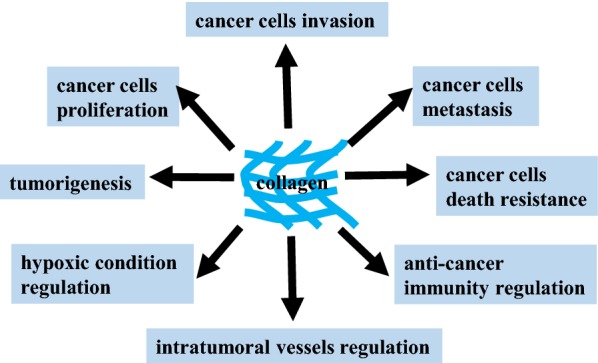
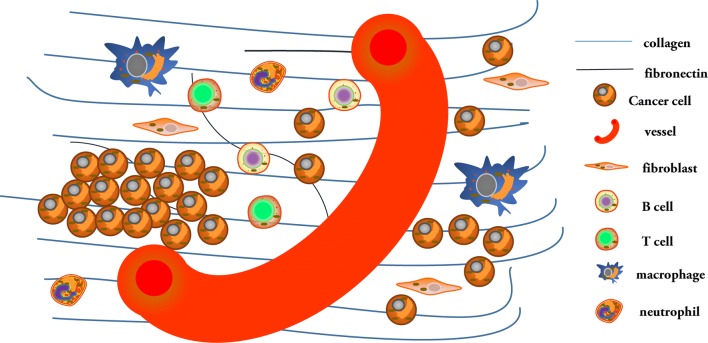
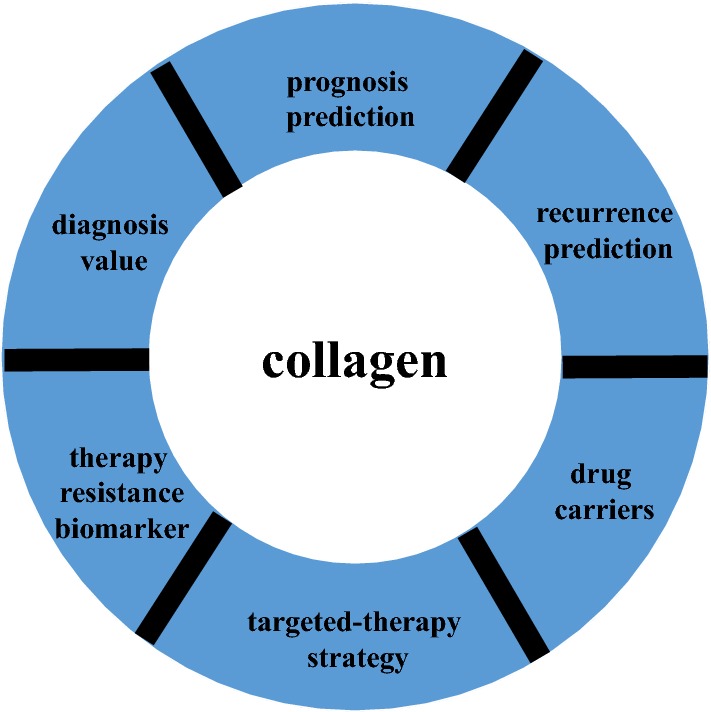
Collagen is the major component of the tumor microenvironment and participates in cancer fibrosis. Collagen biosynthesis can be regulated by cancer cells through mutated genes, transcription factors, signaling pathways and receptors; furthermore, collagen can influence tumor cell behavior through integrins, discoidin domain receptors, tyrosine kinase receptors, and some signaling pathways. Exosomes and microRNAs are closely associated with collagen in cancer. Hypoxia, which is common in collagen-rich conditions, intensifies cancer progression, and other substances in the extracellular matrix, such as fibronectin, hyaluronic acid, laminin, and matrix metalloproteinases, interact with collagen to influence cancer cell activity. Macrophages, lymphocytes, and fibroblasts play a role with collagen in cancer immunity and progression. Microscopic changes in collagen content within cancer cells and matrix cells and in other molecules ultimately contribute to the mutual feedback loop that influences prognosis, recurrence, and resistance in cancer. Nanoparticles, nanoplatforms, and nanoenzymes exhibit the expected gratifying properties. The pathophysiological functions of collagen in diverse cancers illustrate the dual roles of collagen and provide promising therapeutic options that can be readily translated from bench to bedside. The emerging understanding of the structural properties and functions of collagen in cancer will guide the development of new strategies for anticancer therapy.
Overview
The claims and statistics of this paper haven’t been checked yet.
Free: it reads the open-access text and checks the first 5 claims that cite a source we can check. Create a free account to check every claim.
Integrity signals
Registry
Cites
Statistics
Figures
Verification
Claims the paper makes
The claims and statistics of this paper haven’t been checked yet.
Free: it reads the open-access text and checks the first 5 claims that cite a source we can check. Create a free account to check every claim.
Claims other papers make about this one
Each is checked against this paper’s own text: does it say what the citing paper says it does?
The cited source says what the claim attributes to it.
In the citing paper
“Collagen in turn influences tumor cell behavior through integrins, tyrosine kinase receptors, discoidin domain receptors, and some signaling pathways [124].”
From Tumor microenvironment complexity and therapeutic implications at a glance (2020) · cites this paper as [124]
The cited source says what the claim attributes to it.
In the citing paper
“In addition, hypoxia, which is common in collagen-rich tumors, promotes cancer progression [124].”
From Tumor microenvironment complexity and therapeutic implications at a glance (2020) · cites this paper as [124]
Self-check
Percentages, sums and reported differences re-computed from the paper’s own numbers.
The self-check needs the paper’s full text.
Citations
Cites
1 retracted
Guo, Q., Zheng, M., Xu, Y., Wang, N., & Zhao, W. (2018) · Bioscience Reports · doi:10.1042/bsr20181523 · Cited by 51
RetractedBray, F., Ferlay, J., Soerjomataram, I., Siegel, R. L., Torre, L. A., & Jemal, A. (2018) · CA: A Cancer Journal for Clinicians · doi:10.3322/caac.21492 · Cited by 84,109 · cited 1×
“6 million cancer deaths were evaluated in 2018 [1], and there are predicted to be 1,762,450 additional cancer cases and 606,880 cancer deaths in the United States in 2019 [2].”
BackgroundHallmarks of Cancer: The Next Generation
Hanahan, D., & Weinberg, R. A. (2011) · Cell · doi:10.1016/j.cell.2011.02.013 · Cited by 66,590 · cited 1×
“In addition, cancer cells exhibit multiple hallmarks of cancer progression, including the recruitment of various cells to form a tumor microenvironment [3], which consists of varying functional stromal cell subtypes and matrix protein polymers [4].”
BackgroundSiegel, R. L., Miller, K. D., & Jemal, A. (2019) · CA: A Cancer Journal for Clinicians · doi:10.3322/caac.21551 · Cited by 20,160
TGFβ attenuates tumour response to PD-L1 blockade by contributing to exclusion of T cells
Mariathasan, S., Turley, S. J., Nickles, D., Castiglioni, A., Yuen, K., Wang, Y., Kadel III, E. E., Koeppen, H., Astarita, J. L., Cubas, R., et al. (2018) · Nature · doi:10.1038/nature25501 · Cited by 5,400 · cited 1×
“However, others noted that the metastatic urothelial cancer response to programmed death-1 and programmed death-ligand 1 treatment involved the movement of CD8+ T cells from the cancer parenchyma to the collagen-rich peritumoral stroma [127].”
BackgroundThe biology and function of fibroblasts in cancer
Kalluri, R. (2016) · Nature Reviews Cancer · doi:10.1038/nrc.2016.73 · Cited by 4,366
Ricard-Blum, S. (2011) · Cold Spring Harbor Perspectives in Biology · doi:10.1101/cshperspect.a004978 · Cited by 2,305
Turning foes to friends: targeting cancer-associated fibroblasts
Chen, X., & Song, E. (2019) · Nature Reviews Drug Discovery · doi:10.1038/s41573-018-0004-1 · Cited by 1,879
Collagen reorganization at the tumor-stromal interface facilitates local invasion
Provenzano, P. P., Eliceiri, K. W., Campbell, J. M., Inman, D. R., White, J. G., & Keely, P. J. (2006) · BMC Medicine · doi:10.1186/1741-7015-4-38 · Cited by 1,804
Phenotype molding of stromal cells in the lung tumor microenvironment
Lambrechts, D., Wauters, E., Boeckx, B., Aibar, S., Nittner, D., Burton, O., Bassez, A., Decaluwé, H., Pircher, A., Van den Eynde, K., et al. (2018) · Nature Medicine · doi:10.1038/s41591-018-0096-5 · Cited by 1,648
Cited by
Items 601–700 of 759
Histomorphological stratification of stromal types associated with canine mammary tumours
Devi, S. S., George, A. J., Dhanushkrishna, B., Prasanna, K. S., Radhika, G., & Martin, K. D. J. (2022) · Journal of Veterinary and Animal Sciences · doi:10.51966/jvas.2022.53.4.688-693 · Cited by 1
Xu, J., Chen, M., Hu, M., Wang, H., Zuo, Z., Wang, J., & Xie, Z. (2022) · PubMed · Cited by 6
(2023) · Cancer Studies and Therapeutics · doi:10.31038/cst.2023823 · Cited by 1
Advances in immunotherapy for osteosarcoma: a review of emerging treatment strategies
Poboży, K., Domański, P., Domańska-Poboża, J., Konarski, W., & Poboży, T. (2023) · Oncoreview · doi:10.24292/01.or.132100923 · Cited by 1
Mou, J.-Y., Ma, Z.-W., Zhang, M., Yuan, Q., Wang, Z., Liu, Q., Li, F., Liu, Z., & Wang, L. (2024) · International Journal of Biological Macromolecules · doi:10.1016/j.ijbiomac.2024.129432 · Cited by 1
Fibroblasts transfection by electroporation in 3D reconstructed human dermal tissue
Albérola, G., Bellard, E., Kolosnjaj‐Tabi, J., Guard, J., Golzio, M., & Rols, M. (2024) · Bioelectrochemistry · doi:10.1016/j.bioelechem.2024.108670 · Cited by 1
Protein-Based Materials as Cancer In Vitro Models
Ramos, P., Maia, F. R., Reis, R. L., & Oliveira, J. M. (2024) · Springer eBooks · doi:10.1007/978-3-031-56363-8_14 · Cited by 1
Challenges of Targeting Tumor Microenvironment in Prostate Cancer
Li, G., & Chen, Z. (2024) · IntechOpen eBooks · doi:10.5772/intechopen.1005744 · Cited by 1
White Light Diffraction Phase Microscopy in Imaging of Breast and Colon Tissues
Smarandache, A., Pîrvulescu, R. A., Andrei, I. R., Dinache, A., Romanitan, M. O., Brănişteanu, D. C., Zemba, M., Anton, N., Pascu, M., & Nastasa, V. (2024) · Diagnostics · doi:10.3390/diagnostics14171966 · Cited by 1
“…analysis of connective tissues, particularly collagen fibers, have recently been discovered to be of great importance in cancer biology for detecting subtle biochemical changes during tumor progression and perhaps during cancer treatment, particularly in the case of breast malignancy [28,30,39].”
BackgroundPulse-Echo Ultrasound for Quantitative Measurements of Two Uncorrelated Elastic Parameters
Hansen, R., Ervik, Ø., Amini, N., Solberg, S., Berg, S., Ayyalasomayajula, V. S. R. K., Skallerud, B., Leira, H. O., Sorger, H., & Avdal, J. (2024) · Ultrasound in Medicine & Biology · doi:10.1016/j.ultrasmedbio.2024.08.006 · Cited by 1
Penile Cancer: Innovations in Ultrastructural and Vibrational Markers
Filho, J. F. S. D., Silva, A. C. M., Júnior, A. A. L. T., Sousa, B. L. N., Santos‐Oliveira, R., Silva, G. E. B., dos Santos, C. C., & Alencar, L. M. R. (2025) · ACS Omega · doi:10.1021/acsomega.4c07293 · Cited by 1
Cerce, D. D. P., CÂNDIDO, G. C., de Almeida, M. B., Silva, J. L., Dias, F. G. G., & Aldrovani, M. (2025) · Journal of Comparative Pathology · doi:10.1016/j.jcpa.2025.02.001 · Cited by 1
Intratumoral Manipulation of the Immune Microenvironment of Solid Tumors
Mao, L., Xu, K., Jin, T., Yan, W., & Fang, R. H. (2025) · ACS Nano Medicine · doi:10.1021/acsnanomed.5c00063 · Cited by 1
Heij, L. R., Reichel, K., de Koning, W., Bednarsch, J., Tan, X., Deierl, J. C., Groningen, M. C. C., Al‐Masri, T. M., van Dam, R. M., García-Vallejo, J. J., et al. (2023) · bioRxiv (Cold Spring Harbor Laboratory) · doi:10.1101/2023.08.14.553195 · Cited by 1
“Collagen production is commonly induced by cancer cells, is associated with an unfavorable patient outcome, and is known to promote a TME characterized by the exclusion of effector T cells (34).”
BackgroundCreith, B., Harrison, J., Johnson, P., Oreffo, R. O. C., Clarkin, C., & Mahajan, S. (2025) · bioRxiv (Cold Spring Harbor Laboratory) · doi:10.1101/2025.07.23.666332 · Cited by 2
Joseph, A. (2020) · Saint Mary's University Institutional Repository (Saint Mary's University) · Cited by 2
Jiang, W., Gao, Y., Zhuo, S., & Yan, J. (2021) · Annals of Surgical Oncology · doi:10.1245/s10434-021-10229-1
“Collagen in the tumor microenvironment, which has an enormous impact on the behavior of tumors, is associated with radiotherapy sensitivity and chemotherapy resistance.(4) However, the relationship between collagen structural features and the treatment response is still unknown.”
BackgroundNovel multimodal optical imaging and classification of the zebrafish cancer model
Fahrnberger, F. (2021) · reposiTUm (TU Wien) · doi:10.34726/hss.2021.84560 · Cited by 2
Reye, G. (2021) · Queensland University of Technology · doi:10.5204/thesis.eprints.211468
Wagle, M. M., Rao, A. K., Kabekkodu, S. P., & Mallya, S. P. (2021) · Research Square · doi:10.21203/rs.3.rs-879048/v1
INHBA is A Novel Prognostic Biomarker And Correlated With Immune Infiltrates In Gastric CancerPreprint
Yu, W., Zhong, Z., He, G., Zhang, W., Ye, Z., & Huang, S. (2021) · Research Square · doi:10.21203/rs.3.rs-877929/v1
Self-citationJiang, W., Wang, S., Liu, Z., Zheng, J., Li, M., Dong, X., Yan, B., Cheng, J., Wang, G., Xu, S., et al. (2021) · SSRN Electronic Journal · doi:10.2139/ssrn.3925471
Self-citationPHOTOSCINTILLOGRAPHY: A DIAGNOSTIC UTILIZATION OF RADIOISOTOPES IN CLINICS.
Ephraim, K. H. (1965) · OSTI OAI (U.S. Department of Energy Office of Scientific and Technical Information)
Wide-field polarization-resolved SHG microscopy in biomedical imaging
Mirsanaye, K., Castaño, L. U., Kamaliddin, Y., Golaraei, A., Kontenis, L., Done, S. J., Žurauskas, E., Wilson, B. C., & Barzda, V. (2021) · Advances in Microscopic Imaging · doi:10.1117/12.2615714
“The abundance, arrangement, distribution, threedimensional (3D) organization, and molecular microstructure of collagen found in the ECM are important factors in determining the functional characteristics of collagen-rich tissues and have been shown to play a significant role in development of diseases such as cancer […”
BackgroundDeen, S. S., McLean, M. A., Gill, A. B., Crawford, R., Latimer, J. A., Baldwin, P., Earl, H. M., Parkinson, C., Smith, S. E., Hodgkin, C., et al. (2022) · BJR|Open · doi:10.1259/bjro.20210078
Wagle, M. M., Rao, A. K., Kabekkodu, S. P., & Mallya, S. P. (2022) · Research Square · doi:10.21203/rs.3.rs-879048/v2
Lahr, C. A. (2021) · Queensland University of Technology · doi:10.5204/thesis.eprints.207759
Investigating the genetic complexity of glaucoma
Faro, V. L. (2022) · University of Groningen research database (University of Groningen / Centre for Information Technology) · doi:10.33612/diss.216689872
Synthesis of Thiol-Acrylate Hydrogels for 3D Cell Culture and Microfluidic Applications
Khan, A. H. (2022) · Louisiana State University · doi:10.31390/gradschool_dissertations.5784 · Cited by 1
Chernov, A. N., Galimova, E. S., & Валерьевна, Ш. О. (2022) · Medical academic journal · doi:10.17816/maj83594
Wide-field Polarization-Resolved SHG Microscopy in Biomedical Imaging
Mirsanaye, K., Castaño, L. U., Kamaliddin, Y., Golaraei, A., Kontenis, L., Done, S. J., Žurauskas, E., Wilson, B. C., & Barzda, V. (2021) · European Conferences on Biomedical Optics (ECBO) · doi:10.1364/ecbo.2021.em3b.2
Matić, N. (2022) · Linköping University medical dissertations · doi:10.3384/9789179293833
Minnai, F., Noci, S., Chierici, M., Cotroneo, C. E., Bartolini, B., Incarbone, M., Tosi, D., Mattioni, G., Jurman, G., Dragani, T. A., et al. (2022) · Cancer Science · doi:10.1111/cas.15591
Diffusion MRI of the breast: standard and advanced techniques
Honda, M., Sigmund, E. E., Kataoka, M., Bihan, D. L., & Iima, M. (2022) · Advances in magnetic resonance technology and applications · doi:10.1016/b978-0-12-822729-9.00010-2 · Cited by 1
Zakaria, M. A., Kiew, M. C., Rajab, N. F., Chua, E. W., & Masre, S. F. (2022) · Current Issues in Molecular Biology · doi:10.3390/cimb44100310
“Increased collagen content was believed to inactivate YAP through enhanced crosslinking and collagen binding with transmembrane cell surface receptors [54,62,63].”
BackgroundMonteiro, J. S. (2022) · Digital Library of Theses and Dissertations (Universidade de São Paulo) · doi:10.11606/t.95.2022.tde-22112022-101941 · Cited by 1
Mimicking Chemical Features of the Tumor Microenvironment
Jayaprakash, S. R., Patra, I. P., Bist, S., & Pradhan, S. (2022) · Royal Society of Chemistry eBooks · doi:10.1039/9781839166013-00097
Molecular Mechanism and Application of Somatic Cell Cloning in Mammals
Samiec, M., & Skrzyszowska, M. (2023) · MDPI eBooks · doi:10.3390/books978-3-0365-5965-0
Gonçalves, R. D. C. (2022) · Digital Library of Theses and Dissertations (Universidade de São Paulo) · doi:10.11606/t.5.2022.tde-01022023-090414
Multimodal Nonlinear Vibrational Hyperspectral ImagingPreprint
Wagner, J. C., Wu, Z., & Xiong, W. (2023) · ChemRxiv · doi:10.26434/chemrxiv-2023-6d253 · Cited by 1
Baskiotis, C., Assainova, O., Saab, N. A., Elbouz, M., Alfalou, A., & Brosseau, C. (2023) · Polarized Light and Optical Angular Momentum for Biomedical Diagnostics · doi:10.1117/12.2649370
Expression of gemcitabine metabolizing enzymes in different pancreatic cancer model systems
Knoll, L. (2023) · eDiss (Georg-August-Universität Göttingen) · doi:10.53846/goediss-9800
Genetic Aspects of Oral Submucous Fibrosis
Ray, J. G., & Desai, R. S. (2023) · Textbooks in contemporary dentistry · doi:10.1007/978-3-031-12855-4_9
Wagle, M. M., Rao, A. K., Kabekkodu, S. P., & Mallya, S. P. (2023) · Asian Pacific Journal of Cancer Prevention · doi:10.31557/apjcp.2023.24.5.1601
“Since tumor cells continuously interact with ECM, an increased disruption can accelerate tumor progression by negatively interfering with cell adhesion (Fang et al., 2014; Paszek et al., 2005; Xu et al., 2019).”
BackgroundBaldavira, C. M. (2023) · Digital Library of Theses and Dissertations (Universidade de São Paulo) · doi:10.11606/t.5.2023.tde-26052023-123151
Protein-Based Materials as Cancer In Vitro Models
Ramos, P., Maia, F. R., Reis, R. L., & Oliveira, J. M. (2023) · Springer eBooks · doi:10.1007/978-3-030-92090-6_14-1
Extracellular Matrix Remodeling on Cancer Progression
Deepika, B., Girigoswami, A., & Girigoswami, K. (2023) · Springer eBooks · doi:10.1007/978-3-030-92090-6_10-1
Identification of circRNA-miRNA-mRNA Network Regulated by Hsp90 in Human Melanoma A375 Cells
Fu, Q., Gao, H., Liu, K., Su, J., Zhang, J., Guo, X., & Yang, F. Y. (2023) · Combinatorial Chemistry & High Throughput Screening · doi:10.2174/1386207326666230609145247 · Cited by 1
The Effect of Overnutrition on Mediated Collagen in Drosophila Melanogaster Physiology
Kwok, N., Caulkins, J., & Joykutty, L. (2023) · Journal of Student Research · doi:10.47611/jsrhs.v12i2.4429
“However, collagen helps support bodily functions, prevent rapid tumor growth, and to avoid muscle problems (Xu et al., 2019).”
BackgroundQin, J., Shi, M., Ren, L., Jiang, L., & Shen, B. (2023) · Research Square · doi:10.21203/rs.3.rs-3037921/v1
Concise functional enrichment of ranked gene listsPreprint
Jia, X., Phan, A., & Kadelka, C. (2023) · bioRxiv (Cold Spring Harbor Laboratory) · doi:10.1101/2023.06.30.547164
“Categories such as collagen metabolic process , alpha-amino acid biosynthetic process , and nucleoside diphosphate metabolic process are relevant to the hallmarks of “Evading immune destruction” and “Activating invasion and metastasis” [42–44].”
BackgroundWojtowicz, K., Tyczewska, M., & Kałużna, S. (2023) · Postepy Biologii Komorki · doi:10.59674/pbk6
Potential of Biotechnology in Cancer Management
George, A., Varghese, J., & Padinharayil, H. (2023) · Springer eBooks · doi:10.1007/978-981-99-5281-6_2
Wen, J., & Wen, Z. (2023) · Journal of Orthopaedic Science and Research · doi:10.46889/josr.2023.4301
Shebl, I., Helwa, I., Mokhtar, R. H., & Afifi, N. S. (2023) · The Egyptian Journal of Histology · doi:10.21608/ejh.2023.220742.1913
Chae, Y. J., Lee, K.-G., Oh, D., Lee, S., Park, Y., & Kim, J. (2023) · bioRxiv (Cold Spring Harbor Laboratory) · doi:10.1101/2023.10.19.563185
“Similarly, the expression of CCR2, IL23 , and COL4 is correlated with cancer progression 40-42 , and therefore, the lower expression of these genes in the bi-AAC treated group is consistent with the significantly decreased tumor burden.”
ResultKim, J., Park, Y., Chae, Y. J., Lee, K.-G., Oh, D., & Lee, S. (2023) · Research Square · doi:10.21203/rs.3.rs-3468161/v1
Li, J., Bai, L., Cao, J., Zhi, W., & Cheng, Q. (2023) · IEEE International Ultrasonics Symposium · doi:10.1109/ius51837.2023.10307830
“The deposition of collagen induced by activated CAFs will result in increased tissue stiffness [4]; this has substantial consequences on TME, comprising leaky vasculature and lifted prosurvival signals of cancer cells [5].”
BackgroundLi, Z., Chen, X., Xu, S., Guo, W., Li, L., Han, X., Zheng, L., Kang, D., Chen, J., Xu, S., et al. (2023) · doi:10.1117/12.2687023
“Therefore, the invasion of breast cancer is the result of the synergistic action of tumor cells, connective cells and collagen [9][10]. connective cells are also an important component of the tumor microenvironment that cannot be ignored [11], so spatial distribution features of connective cells…”
BackgroundSelf-citationDetermination of antioxidant and antimicrobial activity of fish collagen
DOĞAN, S. Y. (2023) · International Conference on Scientific and Academic Research (ICSAR) · doi:10.59287/as-proceedings.600
Automated Detection of Collagen Bundles in Second Harmonic Generation Microscopy Images
Kayasandık, C. B. (2023) · Balkan Journal of Electrical and Computer Engineering · doi:10.17694/bajece.1269884
Liu, X., Ni, G., Zhang, P., Li, H., Li, J., Sebold, B. C., Wu, X., Chen, G., Yuan, S., & Wang, T. (2023) · Figshare · doi:10.6084/m9.figshare.22613425
Self-citationWhat is the tumor microenvironment?
Wang, W., Han, Y., Park, I. S., Jo, H., Lee, J., Kim, H., & Song, Y. S. (2024) · Elsevier eBooks · doi:10.1016/b978-0-12-824040-3.00007-8
Self-citationKorbag, S., & Korbag, I. (2024) · Pakistan Journal of Life and Social Sciences (PJLSS) · doi:10.57239/pjlss-2024-22.2.0068
“Collagen, a key component of the extracellular matrix (ECM), forms the base-membrane and interstitial matrix, providing mechanical support and stability for tissue and organs (Frantz et al ., 2010; McKee et al ., 2019; Xu et al ., 2019).”
BackgroundConstantin, M. (2024) · ROMANIAN BIOTECHNOLOGICAL LETTERS · doi:10.25083/rbl/28.4/4077.4087
Artamonova, N., Kafka, M., Faiss, L., Avetisyan, D., Sanz, I. P., Bombarda, G. L., Iacono, G., Zattoni, F., Steiner, E., D’Elia, C., et al. (2024) · European Urology Open Science · doi:10.1016/j.euros.2024.09.005
“Within the ECM, collagens intertwine to form fibers and establish networks with other matrix components, including hyaluronan [2].”
BackgroundHyperspectral Image Data for Diagnosis of Endometriosis
Patzke, S., Wöhler, C., & Thiem, J. (2024) · International Conference on Bioinformatics Research and Applications (ICBRA) · doi:10.1145/3700666.3700689
Amiri, B. S., Maddah, R., & Nafissi, N. (2025) · Indian Journal of Gynecologic Oncology · doi:10.1007/s40944-024-00935-5
“Mutant COL1A1 enhances PI3K–AKT-mammalian target of mTOR signaling in cancer stem cells after stopping Rapamycin treatment [15]. miR-29b acts as a suppressor of the COL1A1 gene by suppressing the PI3K/ Akt/Sp1 pathway.”
Chen, Y. (2025) · American Journal of Translational Research · doi:10.62347/suvc1606
Li, Y., Wu, R., Wang, H., Zhong, M., Qing, Y., Lu, S., Zhang, Z., Ma, T., Luo, J., Xiao, H., et al. (2025) · International Journal of Medical Sciences · doi:10.7150/ijms.107703 · Cited by 1
“COL1A1, the main part of type I collagen, has been linked to carcinogenesis, metastasis, and EMT in many malignancies[36].”
The role of macrophages in oral cancer: A narrative review
Abbas, R., Shah, Z., & Bhat, M. M. (2025) · Saudi Journal of Oral Sciences · doi:10.4103/sjoralsci.sjoralsci_7_24
Lindgren, M., Ljuslinder, I., Jonsson, P., & Nyström, H. (2025) · The International Journal of Biological Markers · doi:10.1177/03936155251329590
Tumor Microenvironment-Responsive Proteolytic Nanodrug against Breast Cancer
Li, T., Zhang, W., Cheng, L., Qian, X., & Zou, J. (2025) · ACS Applied Nano Materials · doi:10.1021/acsanm.5c01844
Self-citationLearning-enhanced 3D fiber orientation mapping in thick cardiac tissues
Saruhan, E. N., Öztürk, H., Kul, D., Sevgin, B., Çoban, M. N., & Pekkan, K. (2025) · Biomedical Optics Express · doi:10.1364/boe.563643
“These include 2D Fourier transform [13,14], Hough transform [15,16], directional filters [17–19], intensity derivatives [20–22] or intensity variation [23], fiber tracking algorithms [24,25], and edge detection [26].”
Jimenez, M. C., Lasso, P., Susana Fiorentino, G., & Barreto, A. (2025) · Cancer Cell International · doi:10.1186/s12935-025-03860-5
Poon, W., Davarci, O. O., Raghunathan, R., Liu, J., Zhao, H., & Wong, S. T. C. (2025) · Optics in the Life Sciences · doi:10.1364/translational.2025.tth2e.4
Tang, Y., Zhang, Q., Yuan, Z., Yin, D., Zhang, S., Sun, Y., Mo, C., Tang, Z., Zhao, J., & Tang, Y. (2025) · Cell Cycle · doi:10.1080/15384101.2025.2539645
“Genes associated with collagen are crucial in the metabolic, proliferative, differentiative, and apoptotic signaling pathways of cancer cells, influencing their behavior to foster tumorigenesis and progression [27].”
Sokolowska, K. E., Antoniewski, J., Sobalska‐Kwapis, M., Strapagiel, D., Lubiński, J., Huzarski, T., & Wojdacz, T. K. (2025) · Research Square · doi:10.21203/rs.3.rs-7301339/v1
Portable Nuclear Magnetic Resonance (NMR) for Quantitative Measurement of Biological Tissues
Foongkajornkiat, S. (2025) · Queensland University of Technology · doi:10.5204/thesis.eprints.259303
Ghani, S. A. A., & Rabea, A. A. (2025) · Odovtos - International Journal of Dental Sciences · doi:10.15517/q2c1s711
“Moreover, collagen can stimulate tumor cell growth and metastasis (32).”
Zhang, B., Liu, Y., Yang, F., Yang, M., Pan, Y., Lei, Y., Li, C., Hu, J., Mo, C., Liao, S., et al. (2025) · Research Square · doi:10.21203/rs.3.rs-7536468/v1
Collagen I is the effective therapeutic target for treating desmoid tumors
Lee, Y., Kim, Y., Lee, C., Kim, T. I., & Cho, Y. (2025) · Anti-Cancer Drugs · doi:10.1097/cad.0000000000001781
Gene Co-expression Network Analysis Based on GPUs for Biomarkers Discovery in Sarcomas
Cadenas, M. R., López, A. L., Saz-Navarro, D. M., Ortega, J. A., & Gómez-Vela, F. (2025) · Lecture notes in computer science · doi:10.1007/978-3-032-08452-1_24
Beton-Mysur, K., Kopeć, M., Surmacki, J. M., Jarota, A., & Brożek-Płuska, B. (2025) · Wiadomości Chemiczne · doi:10.53584/wiadchem.2025.11.13
Hydrogels Derived from Decellularized Intestines as Platforms for Studying Colorectal Cancer
Botelho, C. J. M. (2022) · Portuguese National Funding Agency for Science, Research and Technology (RCAAP Project by FCT) · doi:10.34626/d5nk-ac56
Jurj, A., Ionescu, C., Berindan‐Neagoe, I., & Braicu, C. (2022) · Figshare · doi:10.6084/m9.figshare.21151438
Brodsky, A. S., Khurana, J., Guo, K. S., Wu, E. Y., Yang, D., Siddique, A. S., Wong, I. Y., Uzun, E. D. G., & Resnick, M. B. (2022) · Figshare · doi:10.6084/m9.figshare.19127236
Zheng, H., Tan, J. W., Qin, F., Zheng, Y., YANG, X., Qin, X., & Liao, H. (2024) · Figshare · doi:10.6084/m9.figshare.26709977
Wormsbaecher, C., Hindman, A. R., Avendano, A., Cortes-Medina, M. G., Jones, C. E., Bushman, A., Onua, L. M., Kovalchin, C. E., Murphy, A. R., Helber, H. L., et al. (2020) · Figshare · doi:10.6084/m9.figshare.12258035
Brodsky, A. S., Khurana, J., Guo, K. S., Wu, E. Y., Yang, D., Siddique, A. S., Wong, I. Y., Uzun, E. D. G., & Resnick, M. B. (2022) · Figshare · doi:10.6084/m9.figshare.19127248
Brodsky, A. S., Khurana, J., Guo, K. S., Wu, E. Y., Yang, D., Siddique, A. S., Wong, I. Y., Uzun, E. D. G., & Resnick, M. B. (2022) · Figshare · doi:10.6084/m9.figshare.19127239
Zheng, H., Tan, J. W., Qin, F., Zheng, Y., YANG, X., Qin, X., & Liao, H. (2024) · Figshare · doi:10.6084/m9.figshare.26709980
Additional file 1 of The expression of stromal biomarkers in small papillary thyroid carcinomas
Bayadsi, H., Barghout, G., Gustafsson, M., Sund, M., & Hennings, J. (2022) · Figshare · doi:10.6084/m9.figshare.21340358
Zheng, H., Tan, J. W., Qin, F., Zheng, Y., YANG, X., Qin, X., & Liao, H. (2024) · Figshare · doi:10.6084/m9.figshare.26709974
Qian, G., Yu, Y., 董有海, Hong, Y., & Wang, M. (2024) · Figshare · doi:10.6084/m9.figshare.26748512
Liu, X., Ni, G., Zhang, P., Li, H., Li, J., Sebold, B. C., Wu, X., Chen, G., Yuan, S., & Wang, T. (2023) · Figshare · doi:10.6084/m9.figshare.22613422
Self-citationBrodsky, A. S., Khurana, J., Guo, K. S., Wu, E. Y., Yang, D., Siddique, A. S., Wong, I. Y., Uzun, E. D. G., & Resnick, M. B. (2022) · Figshare · doi:10.6084/m9.figshare.19127251
Metadata
- Authors
- Xu, S., Xu, H., Wang, W., Li, S., Li, H., Li, T., Zhang, W., Yu, X., & Liu, L.
- Affiliations
- Shanghai Medical College of Fudan University (CN)
- Corresponding author
- Yu, Xianjun
- Liu, Liang
- Venue
- Journal of Translational Medicine
- Published
- 2019-09-14
- Volume
- 17
- Issue
- 1
- Pages
- 309-309
- ISSN
- 1479-5876 (ISSN-L)
- PMC
- PMC6744664
- OpenAlex
- W2972865130
- Cited by
- 735
- References
- 318
- Citations by year
- 2026: 40 · 2025: 105 · 2024: 139 · 2023: 141 · 2022: 120 · 2021: 130 · 2020: 56 · 2019: 1
- FWCI
- 4.89
- Type
- journal article
- Language
- en
- Open access
- gold
- doi.org
- Licence
- cc-by
- creativecommons.org/licenses/by/4.0/ (tdm)
- creativecommons.org/licenses/by/4.0/ (vor)
- Locations
- Journal of Translational Medicine (publishedVersion, cc-by)
- PubMed Central (publishedVersion, cc-by)
- PubMed (publishedVersion)
- DOAJ (DOAJ: Directory of Open Access Journals) (submittedVersion)
- Funders
- National Science Foundation for Distinguished Young Scholars of China (81625016)
- National Natural Science Foundation of China (81871941, 81872366, 81827807, 81802675, 81702341)
- Outstanding Academic Leader Program of the “Technological Innovation Action Plan” of the Shanghai Science and Technology Commission (18XD1401200)
- Young Talented Specialist Training Program of Shanghai
- Topics
- Physical Sciences › Materials Science › Biomaterials › Collagen: Extraction and Characterization
- Life Sciences › Biochemistry, Genetics and Molecular Biology › Cell Biology › Cellular Mechanics and Interactions
- Life Sciences › Biochemistry, Genetics and Molecular Biology › Molecular Biology › TGF-β signaling in diseases
- Keywords
- collagen, tumor microenvironment, collagen synthesis, integrins, discoidin domain receptors, exosomes, microRNA, tumor hypoxia, extracellular matrix, fibronectin, hyaluronic acid, matrix metalloproteinases, tumor immunology, tumor progression, nanotherapeutics, nanozymes, cancer therapy
- MeSH terms
- Collagen, Humans, Neoplasms, Prognosis, MicroRNAs, Exosomes, Translational Research, Biomedical
About these checks
Registry, retraction, Cites and statistics results are computed, not judged, with one exception: a printed reference that no index lists is read once by a model before it counts as a citation error. Claims are extracted by a model and kept only when their quote appears verbatim in the text; each cited source is then checked, with a model’s help, for whether it says what the claim relies on. Those verdicts can be wrong — read the claim’s quote and the cited source before relying on one.
Statistics and arithmetic are recomputed, not judged.
Confidence bands are shown only for fields calibrated on our annotated test set. None is calibrated yet, so no band is shown.
What counts as a claim ›How we measure confidence ›How we check this ›
Are you an author, or do you see a problem with this page? Request a review
Data sources
Bibliographic data: Semantic Scholar, OpenAlex, Crossref.
Contains information from the Semantic Scholar Academic Graph Datasets, made available under the ODC Attribution License (ODC-BY 1.0).
Semantic Scholar’s data is described in: Kinney, R., et al. (2023). The Semantic Scholar Open Data Platform. arXiv:2301.10140.
