

The role of collagen in cancer: from bench to bedside
Open accessThe DOI matches its Crossref record; 318 of the 318 references it cites were found in a registry or an index.
Abstract
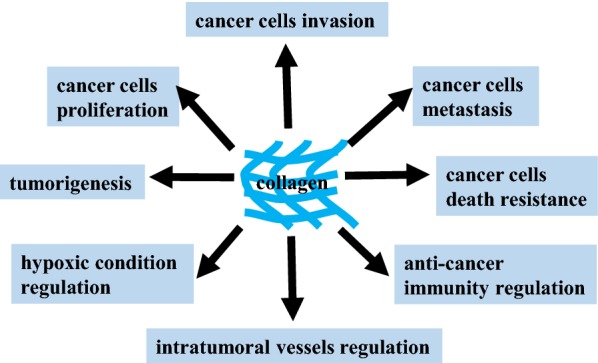
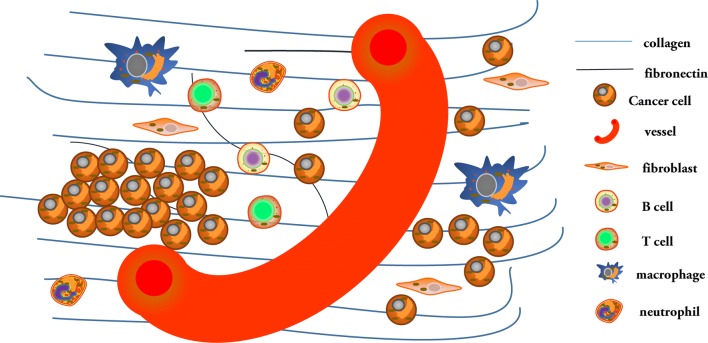
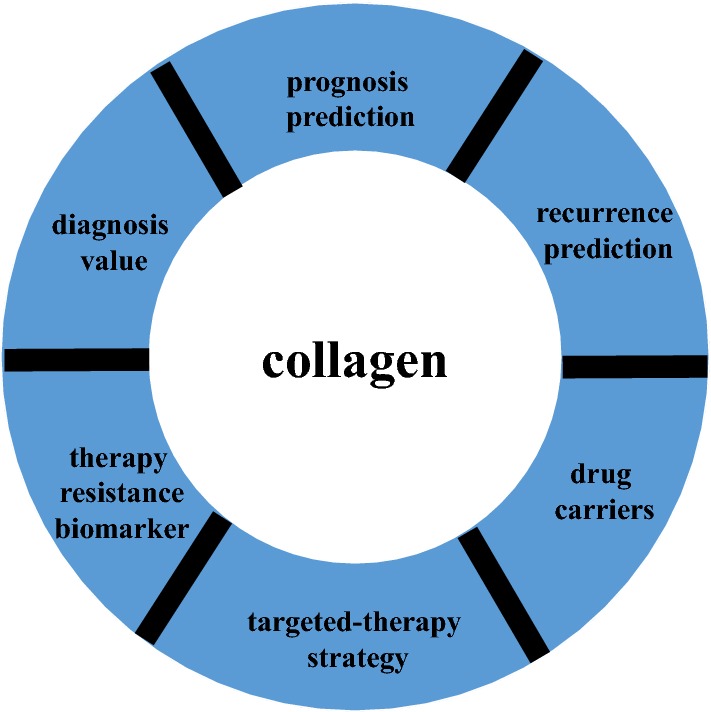
Collagen is the major component of the tumor microenvironment and participates in cancer fibrosis. Collagen biosynthesis can be regulated by cancer cells through mutated genes, transcription factors, signaling pathways and receptors; furthermore, collagen can influence tumor cell behavior through integrins, discoidin domain receptors, tyrosine kinase receptors, and some signaling pathways. Exosomes and microRNAs are closely associated with collagen in cancer. Hypoxia, which is common in collagen-rich conditions, intensifies cancer progression, and other substances in the extracellular matrix, such as fibronectin, hyaluronic acid, laminin, and matrix metalloproteinases, interact with collagen to influence cancer cell activity. Macrophages, lymphocytes, and fibroblasts play a role with collagen in cancer immunity and progression. Microscopic changes in collagen content within cancer cells and matrix cells and in other molecules ultimately contribute to the mutual feedback loop that influences prognosis, recurrence, and resistance in cancer. Nanoparticles, nanoplatforms, and nanoenzymes exhibit the expected gratifying properties. The pathophysiological functions of collagen in diverse cancers illustrate the dual roles of collagen and provide promising therapeutic options that can be readily translated from bench to bedside. The emerging understanding of the structural properties and functions of collagen in cancer will guide the development of new strategies for anticancer therapy.
Overview
The claims and statistics of this paper haven’t been checked yet.
Free: it reads the open-access text and checks the first 5 claims that cite a source we can check. Create a free account to check every claim.
Integrity signals
Registry
Cites
Statistics
Figures
Verification
Claims the paper makes
The claims and statistics of this paper haven’t been checked yet.
Free: it reads the open-access text and checks the first 5 claims that cite a source we can check. Create a free account to check every claim.
Claims other papers make about this one
Each is checked against this paper’s own text: does it say what the citing paper says it does?
The cited source says what the claim attributes to it.
In the citing paper
“Collagen in turn influences tumor cell behavior through integrins, tyrosine kinase receptors, discoidin domain receptors, and some signaling pathways [124].”
From Tumor microenvironment complexity and therapeutic implications at a glance (2020) · cites this paper as [124]
The cited source says what the claim attributes to it.
In the citing paper
“In addition, hypoxia, which is common in collagen-rich tumors, promotes cancer progression [124].”
From Tumor microenvironment complexity and therapeutic implications at a glance (2020) · cites this paper as [124]
Self-check
Percentages, sums and reported differences re-computed from the paper’s own numbers.
The self-check needs the paper’s full text.
Citations
Cites
1 retracted
Guo, Q., Zheng, M., Xu, Y., Wang, N., & Zhao, W. (2018) · Bioscience Reports · doi:10.1042/bsr20181523 · Cited by 51
RetractedBray, F., Ferlay, J., Soerjomataram, I., Siegel, R. L., Torre, L. A., & Jemal, A. (2018) · CA: A Cancer Journal for Clinicians · doi:10.3322/caac.21492 · Cited by 84,109 · cited 1×
“6 million cancer deaths were evaluated in 2018 [1], and there are predicted to be 1,762,450 additional cancer cases and 606,880 cancer deaths in the United States in 2019 [2].”
BackgroundHallmarks of Cancer: The Next Generation
Hanahan, D., & Weinberg, R. A. (2011) · Cell · doi:10.1016/j.cell.2011.02.013 · Cited by 66,590 · cited 1×
“In addition, cancer cells exhibit multiple hallmarks of cancer progression, including the recruitment of various cells to form a tumor microenvironment [3], which consists of varying functional stromal cell subtypes and matrix protein polymers [4].”
BackgroundSiegel, R. L., Miller, K. D., & Jemal, A. (2019) · CA: A Cancer Journal for Clinicians · doi:10.3322/caac.21551 · Cited by 20,160
TGFβ attenuates tumour response to PD-L1 blockade by contributing to exclusion of T cells
Mariathasan, S., Turley, S. J., Nickles, D., Castiglioni, A., Yuen, K., Wang, Y., Kadel III, E. E., Koeppen, H., Astarita, J. L., Cubas, R., et al. (2018) · Nature · doi:10.1038/nature25501 · Cited by 5,400 · cited 1×
“However, others noted that the metastatic urothelial cancer response to programmed death-1 and programmed death-ligand 1 treatment involved the movement of CD8+ T cells from the cancer parenchyma to the collagen-rich peritumoral stroma [127].”
BackgroundThe biology and function of fibroblasts in cancer
Kalluri, R. (2016) · Nature Reviews Cancer · doi:10.1038/nrc.2016.73 · Cited by 4,366
Ricard-Blum, S. (2011) · Cold Spring Harbor Perspectives in Biology · doi:10.1101/cshperspect.a004978 · Cited by 2,305
Turning foes to friends: targeting cancer-associated fibroblasts
Chen, X., & Song, E. (2019) · Nature Reviews Drug Discovery · doi:10.1038/s41573-018-0004-1 · Cited by 1,879
Collagen reorganization at the tumor-stromal interface facilitates local invasion
Provenzano, P. P., Eliceiri, K. W., Campbell, J. M., Inman, D. R., White, J. G., & Keely, P. J. (2006) · BMC Medicine · doi:10.1186/1741-7015-4-38 · Cited by 1,804
Phenotype molding of stromal cells in the lung tumor microenvironment
Lambrechts, D., Wauters, E., Boeckx, B., Aibar, S., Nittner, D., Burton, O., Bassez, A., Decaluwé, H., Pircher, A., Van den Eynde, K., et al. (2018) · Nature Medicine · doi:10.1038/s41591-018-0096-5 · Cited by 1,648
Cited by
Items 501–600 of 759
A Novel Plasmonic Nanoantenna-Based Sensor With Graphene Tuning for Cancer Biomarker Detection
Scalici, M., Scarpulla, S., & Livreri, P. (2025) · IEEE Sensors Journal · doi:10.1109/jsen.2025.3586814 · Cited by 4
“Microscopic alterations in collagen can impact prognosis and contribute to resistance to treat-ment [29], [30].”
Garcia, A. P. V., Salvi, M., Reis, L. A., Ribeiro, B. R. M., Nunes, C. B., Paula, A., & Cassali, G. D. (2025) · International Journal of Molecular Sciences · doi:10.3390/ijms26146928 · Cited by 5
Representation learning enables robust single cell phenotyping in whole slide liquid biopsy imaging
Naghdloo, A., Tessone, D., Nagaraju, R. M., Zhang, B., Kang, J., Li, S., Oberai, A. A., Hicks, J. B., & Kühn, P. (2025) · Scientific Reports · doi:10.1038/s41598-025-20514-8 · Cited by 4
Self-citationRamezankhani, R., Ghavidel, A. A., Rashidi, S., Rojhannezhad, M., Abolkheir, H. R., Mirhosseini, M., Taleahmad, S., & Vosough, M. (2022) · Frontiers in Genetics · doi:10.3389/fgene.2022.966941 · Cited by 4
“Interstitial collagens and mainly collagen type 1 have tumorpromoting properties, which exert proliferation and migration, among others (Weniger et al., 2018; Xu et al., 2019).”
BackgroundRecent Developments in the Study of the Microenvironment of Cancer and Drug Delivery
Chaudhary, B., Kumar, P., Arya, P., Singla, D., Kumar, V., Kumar, D., Roshan, S., Wadhwa, S., Gulati, M., Singh, S. K., et al. (2022) · Current Drug Metabolism · doi:10.2174/1389200224666230110145513 · Cited by 5
Franchi, M., Karamanos, K.-A., Cappadone, C., Calonghi, N., Greco, N., Franchi, L., Onisto, M., & Masola, V. (2023) · Biomedicines · doi:10.3390/biomedicines11071788 · Cited by 4
Luo, Y., Ye, Y., Zhang, Y., Chen, L., Qu, X., Yi, N., Ran, J., & Chen, Y. (2023) · Translational Cancer Research · doi:10.21037/tcr-23-141 · Cited by 4
“Several agents utilized to target collagen for cancer therapy have entered clinical trials (39) .”
BackgroundNatural polymers for diagnosis and treatment of cancers
Mehrabi, A., Najafloo, R., Valizadeh, H., Sarmadi, V. H., Naderi, S., Faghihebadi, G., & Milan, P. B. (2024) · Elsevier eBooks · doi:10.1016/b978-0-323-85661-4.00017-2 · Cited by 5
Comparative evaluation of collagen modifications in breast cancer in human and canine carcinomas
Garcia, A. P. V., Reis, L. A., Ribeiro, B. R. M., Nunes, C. B., Paula, A., & Cassali, G. D. (2024) · Scientific Reports · doi:10.1038/s41598-024-79854-6 · Cited by 4
PEIXOTO, M. D. A., dos Reis, E. M., Cesca, K., & Porto, L. M. (2020) · Cellulose Chemistry and Technology · doi:10.35812/cellulosechemtechnol.2020.54.66 · Cited by 4
Firing up the Tumor Microenvironment with Nanoparticle-Based Therapies
Pan, Y., Song, X., Wang, Y., & Wei, J. (2021) · Pharmaceutics · doi:10.3390/pharmaceutics13091338 · Cited by 6
“Enzymes that can dissolve collagen or HA have been under trial [27].”
BackgroundNi, N., Fang, X. D., Mullens, D. A., Cai, J. J., Ivanov, I. V., Bartholin, L., & Li, Q. (2022) · Cancers · doi:10.3390/cancers14092184 · Cited by 4
“Collagen is a tumor microenvironment component that impacts cancer cell behavior via interaction with multiple signaling molecules [39].”
BackgroundInfluentialWang, D., Zhang, J., Wang, J., Cai, Z., Jin, S., & Chen, G. (2024) · Cancer Innovation · doi:10.1002/cai2.125 · Cited by 7
“Collagen remodeling within the TME is closely related to various hallmarks of cancer [62].”
Yu, C., Tian, B., Meng, Q., Chen, Z., Pang, Y., Zhang, X., Bian, Y., Zhou, S., Hao, M.-J., Gao, Y., et al. (2024) · IEEE Transactions on Computational Biology and Bioinformatics · doi:10.1109/tcbb.2024.3443854 · Cited by 5
“These genes are involved in collagen synthesis and organization [41].”
Self-citationMarine Collagen: Promising Biomaterial in Delivery of Therapeutics for Cancer Therapy
Ali, M. K., Mir, S. H., & Parvez, R. (2022) · Springer eBooks · doi:10.1007/978-981-16-4787-1_8 · Cited by 4
Daulagala, A. C., Çetįn, M., Nair-Menon, J. U., Jimenez, D. W., Bridges, C., Bradshaw, A. D., Şahin, Ö., & Kourtidis, A. (2024) · bioRxiv (Cold Spring Harbor Laboratory) · doi:10.1101/2024.05.28.596237 · Cited by 4
“Increased collagen deposition in the colon is a key characteristic of fibrosis and can promote tumorigenesis ( 67-69 ).”
Yi, L., Wen, Y., Xiao, M., Yuan, J., Ke, X., Zhang, X., Khan, L. A., Song, Q., & Yao, Y. (2024) · Histopathology · doi:10.1111/his.15202 · Cited by 4
“17,18 Both ECM 19 and CAFs 20 are crucial in immune modulation, regulating immune cell infiltration and migration.”
Barhoum, M., Brassart‐Pasco, S., Dupont-Deshorgue, A., Thierry, A., Kanagaratnam, L., Brassart, B., Ramaholimihaso, F., Botsen, D., Carlier, C., Brügel, M., et al. (2025) · Journal of Clinical Laboratory Analysis · doi:10.1002/jcla.70016 · Cited by 4
“Among ECM components, collagens are key regulators of tumor progression [28].”
Wang, M., Li, J., Mo, W., Qi, D., Ni, S., Tang, F., Wang, X., Qing, C., & Zhou, M. (2025) · Analytical Methods · doi:10.1039/d5ay01178g · Cited by 3
Regulation of neutrophil function by the extracellular matrix
Calo, C. J., Radke, M., Patil, T., & Hind, L. E. (2025) · Biochemical Society Transactions · doi:10.1042/bst20253020 · Cited by 4
Quesada, B. A. O., Khan, A. H., Zhou, S. P., Moe, M., Chen, J., Martin, E. C., Pojman, J. A., & Melvin, A. T. (2025) · ACS Biomaterials Science & Engineering · doi:10.1021/acsbiomaterials.5c01025 · Cited by 4
Gato-Diaz, U., Alves, L. D. C., Concheiro, Á., Piñeiro, Y., Alvarez‐Lorenzo, C., Blanco‐Fernandez, B., & Rivas, J. M. (2025) · International Journal of Biological Macromolecules · doi:10.1016/j.ijbiomac.2025.149205 · Cited by 4
Zhang, X., Sun, J., Li, Z., & Wang, S. (2026) · Mechanobiology in Medicine · doi:10.1016/j.mbm.2026.100189 · Cited by 6
“14 For instance, collagens act as a barrier in early-stage tumors and promote invasion after being remodeled in advanced-stage tumors; moderate collagen density restricts tumor cell dissemination, while excessively high density triggers immune evasion.”
Nanoengineered protein-based biomaterials for nano drug delivery for cancer
Satpathy, J., Varma, A., & Sudhakar, K. (2023) · AIP conference proceedings · doi:10.1063/5.0164749 · Cited by 3
Ghannam, S. F., Rutland, C. S., Allegrucci, C., Mather, M. L., Alsaleem, M. A., Bateman-Price, T. D., Patke, R., Ball, G., Mongan, N. P., & Rakha, E. A. (2024) · Journal of Microscopy · doi:10.1111/jmi.13361 · Cited by 3
Wang, Y., & Wang, J. (2025) · The Breast Journal · doi:10.1155/tbj/7861864 · Cited by 3
Elias, T. M., Desa, D. E., Brown, E. B., Paul, S., Ramirez, G., Turner, B. M., Madden, K. S., González, R. S., Weiss, A., & Brown, E. B. (2025) · Biophotonics discovery. · doi:10.1117/1.bios.2.2.022703 · Cited by 3
“18 Collagen and cancer cells have an interesting bilateral relationship that encourages cancer progression; collagen properties can influence cancer cell behavior, whereas cancer cells can alter surrounding collagen fibers in a constructive 19 and destructive 18 manner.”
Inhibition of autotaxin activity with IOA ‐289 decreases fibrosis in mouse E0771 breast tumors
Tang, X., Khan, H., Niewola‐Staszkowska, K., Wuest, F. R., & Brindley, D. N. (2025) · International Journal of Cancer · doi:10.1002/ijc.35471 · Cited by 3
Batur, L. K., Yavaş, C., & Hekim, N. (2025) · Current Issues in Molecular Biology · doi:10.3390/cimb47050364 · Cited by 5
“Supplementation, particularly with bioactive compounds like collagen peptides, is of growing interest for its potential role in modulating tumor biology, improving patient outcomes, and reducing recurrence [12].”
InfluentialEvolutionary Patterns of Collagen Fiber Arrangement and Calcification in Atherosclerosis
Ma, C., Jia, Z., Liu, S., Liao, X., Kang, H., Niu, X., & Fan, Y. (2025) · Research · doi:10.34133/research.0798 · Cited by 3
“For example, in cancerous regions, Col fibers undergo changes in diameter, cross-sectional shape, and alignment, which modulate behaviors such as cancer cell migration [ 11 – 17 ].”
Biomaterials and Its Advances for Delivering Anticancer Drugs
Rajakumari, R., Thomas, S., & Kalarikkal, N. (2021) · Gels horizons: from science to smart materials · doi:10.1007/978-981-16-2119-2_2 · Cited by 3
Mohamed, A. A., Abo-Amer, Y. E.-E., Aalkhalegy, A., Fathalla, L. A., Elmaghraby, M. B., Elhoseeny, M. M., Mostafa, S. M., El-Abgeegy, M., Khattab, R. A., El-damasy, D. A., et al. (2021) · The Open Biomarkers Journal · doi:10.2174/1875318302111010108 · Cited by 3
Sun, X., Xu, H., Liu, G., Chen, J., Xu, J., Li, M., & Liu, L. (2022) · Frontiers in Genetics · doi:10.3389/fgene.2022.833989 · Cited by 5
“Xu and colleagues reviewed themechanisms underlying this result (Xu et al., 2019).”
BackgroundSelf-citationWang, Q., Zhang, W., Guo, Y., Shi, F., Li, Y., Kong, Y., Lyu, J., & Wang, S. (2023) · International Immunopharmacology · doi:10.1016/j.intimp.2023.109821 · Cited by 3
Self-citationLong Noncoding RNA AP000695.2 as a Novel Prognostic Biomarker for Gastric Cance
Cheng, Y., Yi, X., Fu, S., Cheng, J., Li, W., & Xu, H. (2023) · Discovery Medicine · doi:10.24976/discov.med.202335174.4 · Cited by 3
Self-citationDhamdhere, M. R., Spiegelman, D. V., Schneper, L. M., Erbe, A. K., Sondel, P. M., & Spiegelman, V. S. (2023) · Cancers · doi:10.3390/cancers15194693 · Cited by 3
“This collagen-rich, tumor-specific ECM with increased stiffness is known to promote malignant transformation, intravasation, EMT, and metabolic adaptability and, thus, metastasis [54,55].”
BackgroundNian, L., Li, W., Dai, M., Zhang, C., Li, L., Zhang, G., & Xiao, J. (2024) · Sensors and Actuators B Chemical · doi:10.1016/j.snb.2024.135466 · Cited by 3
Tumor-specific Peptide Probes and the Applications in Bioimaging
Wang, B., Cai, X., & Xiao, J. (2024) · 化学学报 · doi:10.6023/a23100448 · Cited by 3
Weidle, U. H., & Birzele, F. (2024) · Cancer Genomics & Proteomics · doi:10.21873/cgp.20442 · Cited by 4
“The extension of understanding of the functions of the extracellular matrix (ECM) will enable the design of new therapeutics for the treatment of cancer (257).”
BackgroundOlowofolahan, A. O., Aina, O. O., & Olorunsogo, O. O. (2024) · Comparative Clinical Pathology · doi:10.1007/s00580-024-03577-3 · Cited by 3
“In addition, extensive collagen deposition has been linked to some tumors and cancers (Whatcott et al. 2015; Xu et al. 2019).”
Sorafenib-associated translation reprogramming in hepatocellular carcinoma cells
Contreras, L., Rodríguez‐Gil, A., Muntané, J., & de la Cruz, J. (2025) · RNA Biology · doi:10.1080/15476286.2025.2483484 · Cited by 3
“Collagen is the main component of the ECM, its remodelling influences different aspects of cancer cells, including angiogenesis and migration (e.g. [50,51]), and is valuable as a cancer diagnosis biomarker (e.g. [52]).”
Identification of Extra Cellular Matrix (ECM) Genes in Triple Negative Breast Cancer
Vora, H. H. (2025) · Asian Pacific Journal of Cancer Biology · doi:10.31557/apjcb.2025.10.2.301-307 · Cited by 2
“One important ECM component, collagen, may help cancer cells decrease apoptosis and modify angiogenesis, which progressively accelerates the growth of cancer [4, 5].”
Characterization of collagen profile in peritoneal metastases of colorectal cancer
Villarejo‐Campos, P., Gómez‐Heras, S. G., González‐Moreno, S., Qian, S., Franco‐Rodríguez, R., Díaz-Caro, I., Olivera-Salazar, R., García‐Olmo, D., & García‐Arranz, M. (2025) · Scientific Reports · doi:10.1038/s41598-025-05604-x · Cited by 3
Manach, D. L., Kowsari‐Esfahan, R., Reszczyńska, E., Nghe, P., & Nees, M. (2026) · Advanced Healthcare Materials · doi:10.1002/adhm.202503566 · Cited by 2
“COL enables fibroblast-driven remodeling [36, 62]; HA contributes to increased viscoelasticity and hydration [63, 64]; and Matrigel proved essential to resist fibroblast-mediated contraction in COL/HA-only matrices, likely due to its laminin-rich composition.”
Borrego, E. A., Pérez, J. L. G., Esparza, A., Delgado, P., Moreno, K., Poon, W., Chambers, D., Joddar, B., & Natividad-Diaz, S. L. (2025) · Discover Applied Sciences · doi:10.1007/s42452-025-07523-y · Cited by 2
“This is done to remove pixels that are not associated with a specimen-specific feature, but which are instead considered as part of the negligible background [33].”
From 3D culture to clinical decision-making: Systematic innovations in breast cancer organoids
Hu, M., Zhou, C., Li, M., & Zhao, J. (2025) · Biomaterials Advances · doi:10.1016/j.bioadv.2025.214528 · Cited by 3
Avila, E., Méndez-Pérez, E. A., Díaz, L., & García‐Quiroz, J. (2025) · Future Oncology · doi:10.1080/14796694.2025.2577629 · Cited by 2
Gerhardt, A., Nanakaliy, D., Shah, H. D., Sarfaraz, S., Madigan, C., Downing, M., Elliott, R. P., Dipto, R., Vrapciu, B., Noetzel, J. W., et al. (2025) · Current Issues in Molecular Biology · doi:10.3390/cimb47121003 · Cited by 3
“To this effect, fibronectin, collagens, and laminins appear to not only serve a structural purpose (e.g., fibrillogenesis, etc.), but interact directly with integrins and other proteins to regulate metastatic processes such as EMT [95–100] as well as immune evasion [96,97,101].”
Biophysical approaches to cancer diagnostics: Collagen biomarkers in colorectal cancer
Biswas, S., & Mahato, K. K. (2026) · Physics of Life Reviews · doi:10.1016/j.plrev.2026.01.009 · Cited by 2
Luo, Y., Zou, B., Mei, X., Zhang, H., Li, Y., Bai, Y., Liu, W., Qian, L., Chen, J., Zhong, L., et al. (2026) · Journal of Magnetic Resonance Imaging · doi:10.1002/jmri.70263 · Cited by 3
Potential biomarkers for lung adenocarcinoma identified by integrative transcriptomics analysis
Kasavi, C. (2021) · Biotech Studies · doi:10.38042/biotechstudies.932937 · Cited by 2
“Collagen is the most abundant component of ECM, and the modifications in the content and the distribution of collagen due to tumor microenvironment lead to structural changes in ECM during the development of cancer (Lai Xu et al., 2017; S. Xu et al., 2019).”
BackgroundLiu, Z., Cai, C., Ma, X., Liu, J., Chen, L., Lui, V. W. Y., Cooper, G. F., & Lu, X. (2022) · Cancers · doi:10.3390/cancers14194825 · Cited by 2
“For example, Collagen production plays an important role in the development of fibrosis and is a prominent component of the tumor microenvironment [27].”
BackgroundMolecular Mechanisms of Oral Submucous Fibrosis and Oral Cancer
Dhopte, A., & Bagde, H. S. (2022) · Journal of Precision Oncology · doi:10.4103/jpo.jpo_23_22 · Cited by 2
Active Peptides and Motifs within Collagen and Other ECM Proteins
Dai, L., Lue, S. W., Hansenne-Cervantes, I., Karas, C., Iyke, N. E., Parish, A., Wang, J., & Zuilkoski, C. M. (2023) · American Journal of Molecular Biology · doi:10.4236/ajmb.2023.134017 · Cited by 2
Mogal, M. R., Jame, J. A., Sohel, M., Mozibullah, M., Mahmod, M. R., Junayed, A., Kar, N., Arbia, L., Mamun, A. A., & Sikder, M. A. (2024) · Cancer Reports · doi:10.1002/cnr2.2059 · Cited by 3
“55,56 Recent research has uncovered a protective role of collagen type 1 protein in PC.”
BackgroundKasoha, M., Findeklee, S., Nigdelis, M. P., Schmidt, G., Solomayer, E., & Hamoud, B. H. (2024) · Biomedicines · doi:10.3390/biomedicines12061201 · Cited by 2
Genova, T., Pavlova, P. E., Zaharieva, L., Troyanova, P. P., & Terziev, I. (2024) · Photonics · doi:10.3390/photonics11080687 · Cited by 2
Liu, D., Guo, L., Waasdorp, C., Meijer, S. L., Bootsma, S., Oyarce, C., Bijlsma, M. F., & van Laarhoven, H. W. M. (2024) · Biomedicine & Pharmacotherapy · doi:10.1016/j.biopha.2024.117261 · Cited by 3
Tam, N. W., Dimova, R., & Cipitria, A. (2026) · Materials Today Bio · doi:10.1016/j.mtbio.2026.103133 · Cited by 2
“EVs promoting and accelerating fibrillogenesis may contribute to fibrotic reorganization of the cancer niche by exacerbating or compounding upon cell-mediated fibrous deposition and tissue stiffening observed in solid tumours [72 – 74].”
Breast Collagen Organization: Variance by Patient Age and Breast Quadrant
Asiimwe, A. C., Marin, M. P., & Salvatore, M. M. (2024) · Diagnostics · doi:10.3390/diagnostics14161748 · Cited by 2
“The strength of collagen is affected by lysyl oxidase (LOX) crosslinks [22].”
BackgroundSato, A., Takagi, K., Yoshida, M., Yamaguchi, M., Sagehashi, M., Miki, Y., Miyashita, M., & Suzuki, T. (2024) · Cancers · doi:10.3390/cancers16244285 · Cited by 3
Cao, J.-F., Zhou, C., Mao, H., & Zhang, X. (2025) · Computer Methods in Biomechanics & Biomedical Engineering · doi:10.1080/10255842.2025.2484572 · Cited by 2
“Existing studies have shown that P4HA1 accelerates fibrosis in various cancers and serves as a prognostic biomarker for multiple cancers, including lung adenocarcinoma, pan-cancer, and esophageal squamous cell carcinoma (Xu et al. 2019; Zhao and Liu 2021; Gou et al. 2023).”
Liu, Y., Qian, S., Jia, W. P., He, J., Li, M., Gao, X., Cai, H., Wang, Y., Han, Y., Tan, T., et al. (2025) · Biomedicines · doi:10.3390/biomedicines13051217 · Cited by 2
“Recent efforts to modulate the extracellular matrix (ECM), such as targeting collagen and hyaluronan, have shown promise in sensitizing CMS4 tumors to chemotherapy and immunotherapy [11–13].”
Application of a Multiomics Imaging Workflow to Explore Asparlas Treatment in Solid Tumors
van der Vloet, L., Mohren, R., Bouillod, C., Heeren, R. M. A., Vandenbosch, M., & Hilaire, P. B. S. (2025) · Analytical Chemistry · doi:10.1021/acs.analchem.5c01503 · Cited by 2
Characterization of human non-small cell lung cancer histology samples by atomic force microscopy
Bugovecka, L., Isajevs, S., Malinovskis, U., Liepins, A., Adrijanova, A., & Erts, D. (2025) · Nanomedicine Nanotechnology Biology and Medicine · doi:10.1016/j.nano.2025.102844 · Cited by 2
Shi, J. F., Zhang, C., Gao, Z., Ding, F., Dai, D., Wu, X., Han, X. W., Shi, L., Song, X., & Tao, G. (2025) · Discover Oncology · doi:10.1007/s12672-025-03405-2 · Cited by 2
“As the primary structural component of the ECM, collagen plays a pivotal role in modulating the TME in gastric cancer [5].”
A modern look at the molecular-biological mechanisms of breast tumours in dogs
Bilyi, D. D., Gerdeva, A. А., Самойлюк, В. В., Suslova, N. I., & Yevtushenko, I. D. (2020) · Regulatory Mechanisms in Biosystems · doi:10.15421/022001 · Cited by 2
“Hypoxia, widespread in collagen-rich conditions, exacerbates the progression of cancer, and other extracellular matrix substances: fibronectin, hyaluronic acid, matrix metalloproteinases by interacting with collagen affect the activity of tumour cells (Xu et al., 2019).”
BackgroundDifferentiation of early gastric cancer infiltration depths using nonlinear optical microscopy
Xu, X., Wang, G., Peng, D., Zheng, L., Lin, L., Zheng, X., Zhan, Z., & Zhuo, S. (2021) · Journal of Physics D Applied Physics · doi:10.1088/1361-6463/ac10a1 · Cited by 2
Waszczykowska, K., Prazanowska, K. H., Kałuzińska‐Kołat, Ż., Kołat, D., & Płuciennik, E. (2022) · Molecular Genetics and Genomics · doi:10.1007/s00438-022-01900-7 · Cited by 2
“There is also evidence for collagens being the prognostic factors in breast (COL1A1 and COL4A1; development and progression), cervical (COL6A1; survival and recurrence) and ovarian cancer (COL6A2; survival) (Cheon et al. 2014; Xu et al. 2019).”
BackgroundCuriosidades e implicaciones tecnológicas de la hidroxiapatita sintética
Sánchez-Campos, D., Leza, D. S., Pérez, E., Rodríguez-Lugo, V., & Mendoza-Anaya, D. (2022) · PÄDI Boletín Científico de Ciencias Básicas e Ingenierías del ICBI · doi:10.29057/icbi.v10i19.9231 · Cited by 2
Kheirkhah, N., Kornecki, A., Czarnota, G. J., Samani, A., & Naini, A. S. (2023) · Physica Medica · doi:10.1016/j.ejmp.2023.102619 · Cited by 2
Time‐resolved fluorescence and diffuse reflectance for lung squamous carcinoma margin detection
Costa, S., Fang, Q., Farrell, T. J., Dao, E., & Farquharson, M. (2024) · Lasers in Surgery and Medicine · doi:10.1002/lsm.23761 · Cited by 2
“25 Some cancers show an increase in collagen in the surrounding matrix which would be demonstrated by an increase in collagen intensity.”
BackgroundTse, G., Zhou, J., Lee, S., Hung, J. K. F., Leung, K. S. K., Liu, Y., Zhang, Y., Liu, T., Wong, W. T., Wong, I. C. K., et al. (2022) · medRxiv · doi:10.1101/2022.07.26.22278092 · Cited by 2
Alfonso, A. B., Pomerleau, V., Nicolás, V. R., Raisch, J., Jurkovic, C.-M., Boisvert, F., & Perreault, N. (2022) · Biomedicines · doi:10.3390/biomedicines11010019 · Cited by 1
McKinney, L. P., Singh, R., Jordan, I. K., Varambally, S., Dammer, E. B., & Lillard, J. W. (2023) · Onco · doi:10.3390/onco3020007 · Cited by 2
“Cancer cells are known to reversibly reshape collagen to advance progression in a reinforcing cell–collagen loop [22], and our findings support and further resolve these molecular mechanisms.”
ResultExtracellular Matrix Remodeling on Cancer Progression
Deepika, B., Girigoswami, A., & Girigoswami, K. (2024) · Springer eBooks · doi:10.1007/978-3-031-56363-8_10 · Cited by 1
Collagen Mimetic Peptides for Targeting Pathological Collagen
Xiao, J. (2024) · Springer series in biomaterials science and engineering · doi:10.1007/978-981-10-1941-8_9 · Cited by 1
Imran, A., Gulzar, A., Gulzar, M., Basharat, S., Saman, F., Rana, A., Nazar, I., Ahmad, S., Maryam, I., & Sher, M. G. (2024) · Developmental medico-life-sciences · doi:10.69750/dmls.01.010.076 · Cited by 1
Application of Magnetic Resonance Imaging in Breast Cancer Patients
Zhang, Y., & Qian, Y. (2025) · IntechOpen eBooks · doi:10.5772/intechopen.1008509 · Cited by 2
Predicting the risk grades of thymic epithelial tumours using T1 mapping and diffusion-weighted MRI
Lan, J.-T., Liu, C., Zhang, J., Ma, Y., Xiao, G., Wang, S., Yang, G., Cui, G., & Hu, Y.-C. (2025) · British Journal of Radiology · doi:10.1093/bjr/tqaf060 · Cited by 1
Altered expression of collagen gene family members and its epigenetic background in equine Sarcoids
Pawlina‐Tyszko, K., Semik‐Gurgul, E., Podstawski, P., Herc, W., Witkowski, M., & Ropka‐Molik, K. (2025) · Research in Veterinary Science · doi:10.1016/j.rvsc.2025.105656 · Cited by 1
Li, M., Deng, Z., Cheng, K., Fu, X., & Li, X. (2025) · Frontiers in Marine Science · doi:10.3389/fmars.2025.1615994 · Cited by 1
Zhao, P., & Xu, H. (2025) · Discover Oncology · doi:10.1007/s12672-025-03152-4 · Cited by 2
“As a major component of the extracellular matrix, collagen provides structural support to tumor cells and influences cellular behaviors such as proliferation, migration, and invasion [23, 24].”
Self-citationSingh, P., Singh, S., Sharma, K., Singh, R., Sinha, S. S., & Grover, N. (2025) · Dental Journal of Advance Studies · doi:10.5005/djas-11014-0085 · Cited by 1
Gamiet, N., Deepnarain, N., Abel, S., Burger, H. ‐., Mayer, E., & Lilly, M. (2025) · Mycotoxin Research · doi:10.1007/s12550-025-00607-z · Cited by 1
“Collagen proteins, including COL1A1, are often mutated or altered during tumour progression to facilitate cellular invasion and metastasis (Xu et al. 2019).”
Talia, M., Scordamaglia, D., Cirillo, F., Zicarelli, A., Francesco, E. M. D., Malaguarnera, R., Cesario, E., Miglietta, A., Maggiolini, M., & Lappano, R. (2025) · Journal of Translational Medicine · doi:10.1186/s12967-025-07196-6 · Cited by 2
Redmond, J., Agarwal, S., McCarthy, H. O., Buchanan, P., Levingstone, T. J., & Dunne, N. (2025) · Biomaterials Advances · doi:10.1016/j.bioadv.2025.214635 · Cited by 1
Raunekar, V., Saha, S. K., Sharma, N., Dutta, S., Sarkar, M., Rani, H., Deshpande, N., Mohanty, S. S., Gopikrishnan, A., Bhardhwaj, K., et al. (2026) · Journal of Cell Science · doi:10.1242/jcs.264040 · Cited by 1
Chen, J., Xu, L., Liu, T., Chen, W.-J., Dai, B., Rong, S., Lan, Z.-T., Wang, L., Liu, Y., Li, J.-H., et al. (2026) · Endocrinology · doi:10.1210/endocr/bqag012 · Cited by 1
FKBP10 as a prognostic biomarker and therapeutic target in hepatocellular carcinoma
Xie, X., Li, J., Zhang, A. Q., Wu, L., Wu, C., Tang, P. M., & Liu, X. (2026) · Discover Oncology · doi:10.1007/s12672-026-04604-1 · Cited by 1
“FKBP10 plays a critical role as a molecular chaperone for collagen maturation and correct conformation [12], which is remarkably relevant to tumor environment construction and malignancy [13–15].”
Shubina, I. Z., Bui, C., Nguyen, T. L., Kazantsev, A., Nguyen, D., Nguyễn, Q. G., Tran, K. T., Burlaka, N. A., Sokolov, N. Y., Kirgizov, K. I., et al. (2026) · Cancers · doi:10.3390/cancers18071079 · Cited by 1
“…behavior through mechanotransduction; increased ECM stiffness and collagen alignment activate integrin-FAK and downstream PI3K/AKT/MAPK signaling, promoting epithelial–mesenchymal transition, while certain collagen contexts can enhance neuronal differentiation and reduce N-Myc expression [28,29].”
Wang, L., Zhi, P., Alradwan, I. A., He, C., Abbasi, A. Z., Gao, H., Rauth, A. M., Cescon, D. W., Henderson, J. T., & Wu, X. Y. (2026) · Journal of Nanobiotechnology · doi:10.1186/s12951-026-04526-8 · Cited by 2
“These processes collectively establish a tumor-permissive microenvironment, accelerating TNBC progression and metastasis [43, 45].”
Mohammad-Rezaei, M., Shafaghat, Z., Noroozbeygi, M., Velu, P., Safaee, M., Heiranizadeh, N., & Safari, E. (2026) · Clinical & Translational Oncology · doi:10.1007/s12094-026-04450-1 · Cited by 1
Roumieux, M., Collin, G., Terryn, C., Gulick, L. V., Morjani, H., Hachet, C., Schneider, C., Jaisson, S., Duca, L., Dedieu, S., et al. (2026) · Life Sciences · doi:10.1016/j.lfs.2026.124585 · Cited by 1
Tumor FAK supports fibrillar collagen expression in ovarian cancer ascites
Ojalill, M., Haanen, T. J., Khan, S. U., Zhang, Y., Boyer, A. D., Chen, X. L., Suwal, U., Rappu, P., Heino, J., McHale, M. T., et al. (2026) · Matrix Biology · doi:10.1016/j.matbio.2026.102053 · Cited by 1
Effects of the Tumor Environment on Ion Channels: Implication for Breast Cancer Progression
Ouadid‐Ahidouch, H., Morjani, H., Schnipper, J., Girault, A., & Ahidouch, A. (2020) · Reviews of physiology, biochemistry and pharmacology · doi:10.1007/112_2020_19 · Cited by 1
A novel method to produce synthetic murine CXCL10 for efficient screening of functional variants
Decalf, J., Tom, J., Mai, E., Hernández-Barry, H., Noland, C. L., Vollmar, B. S., Li, A., Li, H., Xie, D., Zhu, L., et al. (2021) · Bioorganic Chemistry · doi:10.1016/j.bioorg.2021.105376 · Cited by 1
Self-citationBasics of targeted nanodrug delivery of chemotherapeutics for breast cancer therapy
Malaiya, A., Singhai, M., Paliwal, S. R., & Paliwal, R. (2022) · Elsevier eBooks · doi:10.1016/b978-0-12-824476-0.00017-6 · Cited by 1
Advanced 3D In Vitro Models to Recapitulate the Breast Tumor Microenvironment
Bağcı, G., Ximenes-Carballo, C., Pérez‐Amodio, S., Castaño, Ó., Engel, E., & Blanco‐Fernandez, B. (2022) · Interdisciplinary cancer research · doi:10.1007/16833_2022_56 · Cited by 3
Cell Patterning to Mimic Tumor Anatomy
Brennan-Smith, M. C., & Nelson, C. M. (2022) · Royal Society of Chemistry eBooks · doi:10.1039/9781839166013-00163 · Cited by 1
Metadata
- Authors
- Xu, S., Xu, H., Wang, W., Li, S., Li, H., Li, T., Zhang, W., Yu, X., & Liu, L.
- Affiliations
- Shanghai Medical College of Fudan University (CN)
- Corresponding author
- Yu, Xianjun
- Liu, Liang
- Venue
- Journal of Translational Medicine
- Published
- 2019-09-14
- Volume
- 17
- Issue
- 1
- Pages
- 309-309
- ISSN
- 1479-5876 (ISSN-L)
- PMC
- PMC6744664
- OpenAlex
- W2972865130
- Cited by
- 735
- References
- 318
- Citations by year
- 2026: 40 · 2025: 105 · 2024: 139 · 2023: 141 · 2022: 120 · 2021: 130 · 2020: 56 · 2019: 1
- FWCI
- 4.89
- Type
- journal article
- Language
- en
- Open access
- gold
- doi.org
- Licence
- cc-by
- creativecommons.org/licenses/by/4.0/ (tdm)
- creativecommons.org/licenses/by/4.0/ (vor)
- Locations
- Journal of Translational Medicine (publishedVersion, cc-by)
- PubMed Central (publishedVersion, cc-by)
- PubMed (publishedVersion)
- DOAJ (DOAJ: Directory of Open Access Journals) (submittedVersion)
- Funders
- National Science Foundation for Distinguished Young Scholars of China (81625016)
- National Natural Science Foundation of China (81871941, 81872366, 81827807, 81802675, 81702341)
- Outstanding Academic Leader Program of the “Technological Innovation Action Plan” of the Shanghai Science and Technology Commission (18XD1401200)
- Young Talented Specialist Training Program of Shanghai
- Topics
- Physical Sciences › Materials Science › Biomaterials › Collagen: Extraction and Characterization
- Life Sciences › Biochemistry, Genetics and Molecular Biology › Cell Biology › Cellular Mechanics and Interactions
- Life Sciences › Biochemistry, Genetics and Molecular Biology › Molecular Biology › TGF-β signaling in diseases
- Keywords
- collagen, tumor microenvironment, collagen synthesis, integrins, discoidin domain receptors, exosomes, microRNA, tumor hypoxia, extracellular matrix, fibronectin, hyaluronic acid, matrix metalloproteinases, tumor immunology, tumor progression, nanotherapeutics, nanozymes, cancer therapy
- MeSH terms
- Collagen, Humans, Neoplasms, Prognosis, MicroRNAs, Exosomes, Translational Research, Biomedical
About these checks
Registry, retraction, Cites and statistics results are computed, not judged, with one exception: a printed reference that no index lists is read once by a model before it counts as a citation error. Claims are extracted by a model and kept only when their quote appears verbatim in the text; each cited source is then checked, with a model’s help, for whether it says what the claim relies on. Those verdicts can be wrong — read the claim’s quote and the cited source before relying on one.
Statistics and arithmetic are recomputed, not judged.
Confidence bands are shown only for fields calibrated on our annotated test set. None is calibrated yet, so no band is shown.
What counts as a claim ›How we measure confidence ›How we check this ›
Are you an author, or do you see a problem with this page? Request a review
Data sources
Bibliographic data: Semantic Scholar, OpenAlex, Crossref.
Contains information from the Semantic Scholar Academic Graph Datasets, made available under the ODC Attribution License (ODC-BY 1.0).
Semantic Scholar’s data is described in: Kinney, R., et al. (2023). The Semantic Scholar Open Data Platform. arXiv:2301.10140.
