

A public health perspective of aging: do hyper-inflammatory syndromes such as COVID-19, SARS, ARDS, cytokine storm syndrome, and post-ICU syndrome accelerate short- and long-term inflammaging?
Open accessThe DOI matches its Crossref record; 75 of the 75 references it cites were found in a registry or an index.
Abstract
A central clinical question as the world deals with the COVID-19 pandemic is what the long-term sequelae for the millions of individuals will be who recover from the hyperinflammatory state characterizing COVID-19 and in particular for the hundreds of thousands who are ill enough to need hospitalization and in particular ICU care. Even when the pandemic is finally controlled, will COVID-19 survivors face exaggerated internal inflammatory processes, worsening co-morbidities, and increased susceptibility to age-related diseases? Clues for what may happen in post-COVID-19 patients can be elicited from those who recovered from other conditions that lead to similar hyperinflammatory states such as Severe Acute Respiratory Syndrome (SARS), acute respiratory disease syndrome (ARDS), cytokine storm syndrome, and post-ICU syndrome. The short-and long-term sequalae following recovery from each of these conditions suggests that these syndromes lead to an accelerated state of chronic subclinical systemic inflammation often seen in aging (termed inflammaging) resulting in increased and worsening age-related conditions including frailty even in younger individuals.
Overview
The claims and statistics of this paper haven’t been checked yet.
Free: it reads the open-access text and checks the first 5 claims that cite a source we can check. Create a free account to check every claim.
Integrity signals
Registry
Cites
Statistics
Figures
Verification
Claims the paper makes
The claims and statistics of this paper haven’t been checked yet.
Free: it reads the open-access text and checks the first 5 claims that cite a source we can check. Create a free account to check every claim.
Claims other papers make about this one
Each is checked against this paper’s own text: does it say what the citing paper says it does?
The source backs part of the claim, not all of it — or backs it for a different population, condition or comparison.
In the citing paper
“COVID-19-related VIS may also aggravate age-related pathologies via enhanced SASP-mediated inflammation29,169, as demonstrated for cardiovascular diseases and diabetes in preclinical models170, and might further deteriorate immune competence by inducing senescence in immune cells171,172.”
From COVID-19 and cellular senescence (2023) · cites this paper as [169]
Experimental — accuracy not yet measuredThe cited source says what the claim attributes to it.
In the citing paper
“Hallmarks of immune aging are (a) a state of proinflammatory activation characterized by high circulating levels of proinflammatory cytokines — such as IL-6 and TNF-α — and localized tissue inflammation”
From Connecting aging biology and inflammation in the omics era (2022) · cites this paper as [6]
In the citing paper
“and (b) an aberrant response to antigens and pathogens that could either be blunted, such as in flu vaccination, or excessive, such as in response to SARS-CoV-2 (6).”
From Connecting aging biology and inflammation in the omics era (2022) · cites this paper as [6]
Self-check
Percentages, sums and reported differences re-computed from the paper’s own numbers.
The self-check needs the paper’s full text.
Citations
Cites
Clinical features of patients infected with 2019 novel coronavirus in Wuhan, China
Huang, C., Wang, Y., Li, X., Ren, L., Zhao, J., Hu, Y., Zhang, L., Fan, G., Xu, J., Gu, X., et al. (2020) · The Lancet · doi:10.1016/s0140-6736(20)30183-5 · Cited by 48,884
Clinical characteristics of coronavirus disease 2019 in China
Guan, W.-J., Ni, Z.-Y., Hu, Y., Liang, W.-H., Ou, C.-Q., He, J.-X., Liu, L., Shan, H., Lei, C.-L., Hui, D. S. C., et al. (2020) · New England Journal of Medicine · doi:10.1056/nejmoa2002032 · Cited by 30,246
Zhou, F., Yu, T., Du, R., Fan, G., Liu, Y., Liu, Z., Xiang, J., Wang, Y., Song, B., Gu, X., et al. (2020) · The Lancet · doi:10.1016/s0140-6736(20)30566-3 · Cited by 27,263 · cited 1×
“hypertension, diabetes, and/or obesity [3].”
Wu, Z., & McGoogan, J. M. (2020) · JAMA · doi:10.1001/jama.2020.2648 · Cited by 17,016 · cited 1×
“Most individuals infected with SARS-CoV-2 develop a flu-like, mild clinical syndrome (non-pneumonia or a mild atypical pneumonia), and a sizeable proportion (~ 20%) require hospitalization (dyspnea, low oxygen saturation), with a substantial proportion leading to a critical illness (respiratory failure, septic shock,…”
López-Otín, C., Blasco, M. A., Partridge, L., Serrano, M., & Kroemer, G. (2013) · Cell · doi:10.1016/j.cell.2013.05.039 · Cited by 14,982
Dexamethasone in Hospitalized Patients with Covid-19
The RECOVERY Collaborative Group (2021) · New England Journal of Medicine · doi:10.1056/nejmoa2021436 · Cited by 11,477
Effect of Dexamethasone in Hospitalized Patients with COVID-19 – Preliminary Report
Horby, P., Lim, W. S., Emberson, J., Mafham, M., Bell, J., Linsell, L., Staplin, N., Brightling, C., Ustianowski, A., Elmahi, E., et al. (2020) · doi:10.1101/2020.06.22.20137273 · Cited by 11,475 · cited 1×
“Regarding possible COVID-19 treatments that intersect with inflammaging, intriguing results from the RECOVERY (Randomised Evaluation of COVid-19 thERapY) randomized clinical trial of over 11,500 patients in the UK reported that low-dose dexamethasone (6 mg once per day for up to ten days, either by mouth or by intrave…”
Pathological findings of COVID-19 associated with acute respiratory distress syndrome
Xu, Z., Shi, L., Wang, Y., Zhang, J., Huang, L., Zhang, C., Liu, S., Zhao, P., Liu, H., Zhu, L., et al. (2020) · The Lancet Respiratory Medicine · doi:10.1016/s2213-2600(20)30076-x · Cited by 8,545 · cited 1×
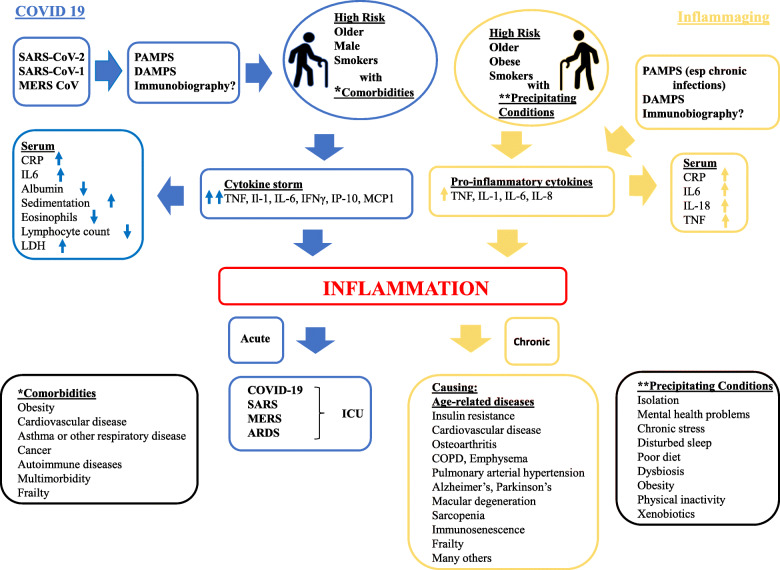
“SARS-CoV-2 mostly affects levels of pro-inflammatory cytokines/chemokines typical of T helper 1 (TH1) cell response such as IL-6, IFNγ, IP-10, and MCP1 [11, 12], that attract monocytes and T cells to the infected site [13, 14], which probably contributes to the lymphopenia and increased neutrophil–lymphocyte ratio see…”
Collaborative, T. O., Williamson, E., Walker, A. J., Bhaskaran, K., Bacon, S., Bates, C., Morton, C. E., Curtis, H. J., Mehrkar, A., Evans, D., et al. (2020) · doi:10.1101/2020.05.06.20092999 · Cited by 6,674 · cited 1×
“Interestingly, at least in studies conducted in adult and older COVID-19 patients, prognostic factors for mortality are the same as those found associated with a high likelihood and prospective risk of chronic inflammation, namely older age, male sex, obesity, smoking, cardiovascular diseases, asthma or other respirat…”
Factors associated with COVID-19-related death using OpenSAFELY
Williamson, E. J., Walker, A. J., Bhaskaran, K., Bacon, S., Bates, C., Morton, C. E., Curtis, H. J., Mehrkar, A., Evans, D., Inglesby, P., et al. (2020) · Nature · doi:10.1038/s41586-020-2521-4 · Cited by 6,674
Inflamm‐aging: An Evolutionary Perspective on Immunosenescence
FRANCESCHI, C., BONAFÈ, M., VALENSIN, S., OLIVIERI, F., DE LUCA, M., OTTAVIANI, E., & DE BENEDICTIS, G. (2000) · Annals of the New York Academy of Sciences · doi:10.1111/j.1749-6632.2000.tb06651.x · Cited by 5,358
Self-citationChronic inflammation in the etiology of disease across the life span
Furman, D., Campisi, J., Verdin, E., Carrera-Bastos, P., Targ, S., Franceschi, C., Ferrucci, L., Gilroy, D. W., Fasano, A., Miller, G. W., et al. (2019) · Nature Medicine · doi:10.1038/s41591-019-0675-0 · Cited by 4,915 · cited 2×
“1) including metabolic syndrome, type 2 diabetes, non-alcoholic fatty liver disease, cardiovascular disease (CVD), sarcopenia, osteoporosis, immunosenescence, autoimmune disorders, cancer, chronic kidney disease, neurodegenerative disorders, depression, and possibly accelerated cognitive decline and dementia [19].”
Self-citationDysregulation of Immune Response in Patients With Coronavirus 2019 (COVID-19) in Wuhan, China
Qin, C., Zhou, L., Hu, Z., Zhang, S., Yang, S., Tao, Y., Xie, C., Ma, K., Shang, K., Wang, W., et al. (2020) · Clinical Infectious Diseases · doi:10.1093/cid/ciaa248 · Cited by 4,775 · cited 1×
“SARS-CoV-2 mostly affects levels of pro-inflammatory cytokines/chemokines typical of T helper 1 (TH1) cell response such as IL-6, IFNγ, IP-10, and MCP1 [11, 12], that attract monocytes and T cells to the infected site [13, 14], which probably contributes to the lymphopenia and increased neutrophil–lymphocyte ratio see…”
The trinity of COVID-19: immunity, inflammation and intervention
Tay, M. Z., Poh, C. M., Rénia, L., MacAry, P. A., & Ng, L. F. P. (2020) · Nature Reviews Immunology · doi:10.1038/s41577-020-0311-8 · Cited by 4,360 · cited 3×
“Fragmentation of cells releases PAMPs and DAMPs and activates inflammation through local cells including, in the case of the lung, alveolar epithelial cells and alveolar macrophages that release pro-inflammatory cytokines and chemokines that attract immune cells including monocytes and T cells [10].”
Chronic Inflammation (Inflammaging) and Its Potential Contribution to Age-Associated Diseases
Franceschi, C., & Campisi, J. (2014) · The Journals of Gerontology Series A: Biological Sciences and Medical Sciences · doi:10.1093/gerona/glu057 · Cited by 3,891
Self-citationInflammageing: chronic inflammation in ageing, cardiovascular disease, and frailty
Ferrucci, L., & Fabbri, E. (2018) · Nature Reviews Cardiology · doi:10.1038/s41569-018-0064-2 · Cited by 3,690 · cited 1×
“Interestingly, these clinical features are similar to those experienced by older individuals with inflammaging and frailty-related sarcopenia [34, 45].”
Self-citationInflammaging: a new immune–metabolic viewpoint for age-related diseases
Franceschi, C., Garagnani, P., Parini, P., Giuliani, C., & Santoro, A. (2018) · Nature Reviews Endocrinology · doi:10.1038/s41574-018-0059-4 · Cited by 3,586 · cited 2×
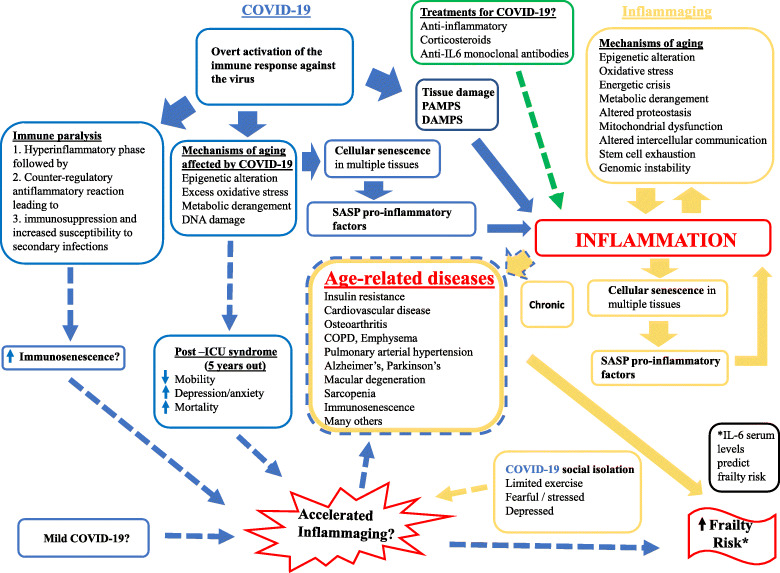
“molecular damage, metabolism/dysregulated nutrient sensing, altered intercellular communication, loss of proteostasis, stem cell exhaustion, cellular senescence, and regeneration, results in inflammation [24, 47].”
Self-citationThe pro- and anti-inflammatory properties of the cytokine interleukin-6
Scheller, J., Chalaris, A., Schmidt-Arras, D., & Rose-John, S. (2011) · Biochimica et Biophysica Acta (BBA) - Molecular Cell Research · doi:10.1016/j.bbamcr.2011.01.034 · Cited by 3,212 · cited 8×
“Indeed, inflammaging, which results in an increased incidence and worsening of age-related conditions [25–27], is characterized clinically by higher levels of several inflammatory blood biomarkers, including CRP, IL-6, IL-18, and TNF [28].”
InfluentialAging, Cellular Senescence, and Cancer
Campisi, J. (2013) · Annual Review of Physiology · doi:10.1146/annurev-physiol-030212-183653 · Cited by 2,954
Functional Disability 5 Years after Acute Respiratory Distress Syndrome
Herridge, M. S., Tansey, C. M., Matté, A., Tomlinson, G., Diaz-Granados, N., Cooper, A., Guest, C. B., Mazer, C. D., Mehta, S., Stewart, T. E., et al. (2011) · New England Journal of Medicine · doi:10.1056/nejmoa1011802 · Cited by 2,847 · cited 1×
“[39], five years after leaving the ICU, patients who recovered from ARDS had long-term physical and psychological sequelae including exercise limitations and decreased physical quality of life.”
Geroscience: Linking Aging to Chronic Disease
Kennedy, B. K., Berger, S. L., Brunet, A., Campisi, J., Cuervo, A. M., Epel, E. S., Franceschi, C., Lithgow, G. J., Morimoto, R. I., Pessin, J. E., et al. (2014) · Cell · doi:10.1016/j.cell.2014.10.039 · Cited by 2,764
Self-citationHyperinflammatory shock in children during COVID-19 pandemic
Riphagen, S., Gomez, X., Gonzalez-Martinez, C., Wilkinson, N., & Theocharis, P. (2020) · The Lancet · doi:10.1016/s0140-6736(20)31094-1 · Cited by 2,494 · cited 1×
“Noteworthy, while severe COVID-19 affects disproportionally older people, systemic inflammation from SARS-CoV-2 is detected in patients of all age groups, including a severe multisystem inflammatory syndrome with features of Kawasaki disease recently identified in children [17, 18].”
Verdoni, L., Mazza, A., Gervasoni, A., Martelli, L., Ruggeri, M., Ciuffreda, M., Bonanomi, E., & D'Antiga, L. (2020) · The Lancet · doi:10.1016/s0140-6736(20)31103-x · Cited by 2,380 · cited 1×
“Noteworthy, while severe COVID-19 affects disproportionally older people, systemic inflammation from SARS-CoV-2 is detected in patients of all age groups, including a severe multisystem inflammatory syndrome with features of Kawasaki disease recently identified in children [17, 18].”
Cummings, M. J., Baldwin, M. R., Abrams, D., Jacobson, S. D., Meyer, B. J., Balough, E. M., Aaron, J. G., Claassen, J., Rabbani, L. E., Hastie, J., et al. (2020) · The Lancet · doi:10.1016/s0140-6736(20)31189-2 · Cited by 2,212 · cited 1×
“Most individuals infected with SARS-CoV-2 develop a flu-like, mild clinical syndrome (non-pneumonia or a mild atypical pneumonia), and a sizeable proportion (~ 20%) require hospitalization (dyspnea, low oxygen saturation), with a substantial proportion leading to a critical illness (respiratory failure, septic shock,…”
Franceschi, C., Capri, M., Monti, D., Giunta, S., Olivieri, F., Sevini, F., Panourgia, M. P., Invidia, L., Celani, L., Scurti, M., et al. (2007) · Mechanisms of Ageing and Development · doi:10.1016/j.mad.2006.11.016 · Cited by 2,087
Self-citationCytokine release syndrome in severe COVID-19
Moore, J. B., & June, C. H. (2020) · Science · doi:10.1126/science.abb8925 · Cited by 1,912 · cited 1×
“In particular, monoclonal antibodies against the IL-6 signaling pathway have been proposed [56].”
Immunology of COVID-19: Current State of the Science
Vabret, N., Britton, G. J., Gruber, C., Hegde, S., Kim, J., Kuksin, M., Levantovsky, R., Malle, L., Moreira, A., Park, M. D., et al. (2020) · Immunity · doi:10.1016/j.immuni.2020.05.002 · Cited by 1,623 · cited 10×
“The hypothetical mechanism underlying this severe condition is that PAMPs from bacterial, fungal, and viral organisms and DAMPs from host injury bind to PRR on innate immune cells, which results in the production of pro- and anti-inflammatory cytokines (cytokine storm) to produce many cellular and counter responses in…”
InfluentialImmunosuppression in sepsis: a novel understanding of the disorder and a new therapeutic approach
Hotchkiss, R. S., Monneret, G., & Payen, D. (2013) · The Lancet Infectious Diseases · doi:10.1016/s1473-3099(13)70001-x · Cited by 1,442 · cited 1×
“The initial hyperinflammatory (cytokine storm) phase of sepsis is followed by a powerful counter-regulatory, anti-inflammatory reaction (originally called compensatory anti-inflammatory response syndrome, now immune-paralysis) [59, 61], characterized by apoptosis of immune effector cell and cellular (especially T cell…”
Tian, S., Hu, W., Niu, L., Liu, H., Xu, H., & Xiao, S.-Y. (2020) · Journal of Thoracic Oncology · doi:10.1016/j.jtho.2020.02.010 · Cited by 1,414
Carsana, L., Sonzogni, A., Nasr, A., Rossi, R. S., Pellegrinelli, A., Zerbi, P., Rech, R., Colombo, R., Antinori, S., Corbellino, M., et al. (2020) · The Lancet Infectious Diseases · doi:10.1016/s1473-3099(20)30434-5 · Cited by 1,396 · cited 1×
“Lung and upper respiratory tissue pathology studies have shown that SARS-CoV-2 infection results in severe local tissue damage [53, 54].”
Liang, W., Liang, H., Ou, L., Chen, B., Chen, A., Li, C., Li, Y., Guan, W., Sang, L., Lu, J., et al. (2020) · JAMA Internal Medicine · doi:10.1001/jamainternmed.2020.2033 · Cited by 1,387
Immunosenescence and Inflamm-Aging As Two Sides of the Same Coin: Friends or Foes?
Fulop, T., Larbi, A., Dupuis, G., Le Page, A., Frost, E. H., Cohen, A. A., Witkowski, J. M., & Franceschi, C. (2018) · Frontiers in Immunology · doi:10.3389/fimmu.2017.01960 · Cited by 1,364
Self-citationAn interpretable mortality prediction model for COVID-19 patients
Yan, L., Zhang, H.-T., Goncalves, J., Xiao, Y., Wang, M., Guo, Y., Sun, C., Tang, X., Jing, L., Zhang, M., et al. (2020) · Nature Machine Intelligence · doi:10.1038/s42256-020-0180-7 · Cited by 1,301 · cited 1×
“advance with greater than 90% accuracy [6].”
Senescent cells: an emerging target for diseases of ageing
Childs, B. G., Gluscevic, M., Baker, D. J., Laberge, R.-M., Marquess, D., Dananberg, J., & van Deursen, J. M. (2017) · Nature Reviews Drug Discovery · doi:10.1038/nrd.2017.116 · Cited by 1,284 · cited 1×
“Cellular senescence has been implicated in many chronic diseases including atherosclerosis, cancer, and osteoarthritis and is hence an emerging target for the development of new treatments [48].”
Age and Age-Related Diseases: Role of Inflammation Triggers and Cytokines
Rea, I. M., Gibson, D. S., McGilligan, V., McNerlan, S. E., Alexander, H. D., & Ross, O. A. (2018) · Frontiers in Immunology · doi:10.3389/fimmu.2018.00586 · Cited by 1,267
COVID-19 cytokine storm: the interplay between inflammation and coagulation
Jose, R. J., & Manuel, A. (2020) · The Lancet Respiratory Medicine · doi:10.1016/s2213-2600(20)30216-2 · Cited by 1,240 · cited 2×
“During the CSS, there is overproduction of IL-6, TNFα, and IL-1β, the main triad of inflammatory mediators, but there is also increased plasma levels of IL-2, IL-7, IL-10, granulocyte colony- stimulating factor (G- CSF), IP-10, MCP1, and macrophage inflammatory protein 1α (MIP1α) [10, 11] [37].”
Inflammation and frailty in the elderly: A systematic review and meta-analysis
Soysal, P., Stubbs, B., Lucato, P., Luchini, C., Solmi, M., Peluso, R., Sergi, G., Isik, A. T., Manzato, E., Maggi, S., et al. (2016) · Ageing Research Reviews · doi:10.1016/j.arr.2016.08.006 · Cited by 1,089 · cited 1×
“IL-6 serum levels also predict incident disability and frailty [29], with high IL-6 scores being related to lower walking speeds [30], and the risk of developing mobility disability increasing linearly for IL-6 levels higher than 2.”
Franceschi, C., Garagnani, P., Vitale, G., Capri, M., & Salvioli, S. (2017) · Trends in Endocrinology & Metabolism · doi:10.1016/j.tem.2016.09.005 · Cited by 997 · cited 1×
“Epigenetic regulators that circulate in the blood, such as MiRNAs, appear to change with age [63] and several have been linked to inflammation (inflamma-miRs), including miR-21, − 126 and -146a that target the NF-κB pathway [64].”
Self-citationPal, S., & Tyler, J. K. (2016) · Science Advances · doi:10.1126/sciadv.1600584 · Cited by 860 · cited 1×
“Thus, it is possible that a changed chromatin state occurs characterized by the incorporation of new histone variants, DNA methylation patterns, and histone modification patterns that result in different transcriptional programs activated by transcription factors, resulting in the recruitment of different chromatin mo…”
Serum IL‐6 Level and the Development of Disability in Older Persons
Ferrucci, L., Harris, T. B., Guralnik, J. M., Tracy, R. P., Corti, M., Cohen, H. J., Penninx, B., Pahor, M., Wallace, R., & Havlik, R. J. (1999) · Journal of the American Geriatrics Society · doi:10.1111/j.1532-5415.1999.tb01583.x · Cited by 809
Self-citationClinical characteristics of 82 cases of death from COVID-19
Zhang, B., Zhou, X., Qiu, Y., Song, Y., Feng, F., Feng, J., Song, Q., Jia, Q., & Wang, J. (2020) · PLOS ONE · doi:10.1371/journal.pone.0235458 · Cited by 683
Ferrucci, L., Penninx, B. W. J. H., Volpato, S., Harris, T. B., Bandeen‐Roche, K., Balfour, J., Leveille, S. G., Fried, L. P., & Md, J. M. G. (2002) · Journal of the American Geriatrics Society · doi:10.1046/j.1532-5415.2002.50605.x · Cited by 618 · cited 1×
“IL-6 serum levels also predict incident disability and frailty [29], with high IL-6 scores being related to lower walking speeds [30], and the risk of developing mobility disability increasing linearly for IL-6 levels higher than 2.”
Self-citationPost-intensive care syndrome: An overview
Rawal, G., Yadav, S., & Kumar, R. (2017) · Journal of Translational Internal Medicine · doi:10.1515/jtim-2016-0016 · Cited by 611 · cited 1×
“Many ICU patients that experience severe and prolonged illness suffer from post-intensive care syndrome (PICS) that manifests as cognitive, psychological and physical disabilities and a large percentage of them never fully recover their well-being and functional status [43].”
Post‐intensive care syndrome: its pathophysiology, prevention, and future directions
Inoue, S., Hatakeyama, J., Kondo, Y., Hifumi, T., Sakuramoto, H., Kawasaki, T., Taito, S., Nakamura, K., Unoki, T., Kawai, Y., et al. (2019) · Acute Medicine & Surgery · doi:10.1002/ams2.415 · Cited by 598 · cited 1×
“Physical impairment in PICS often involves muscle weakness, extreme fatiguability, mood disorders, polyneuropathy, and symptoms of deconditioning that only mildly respond to exercise programs [44].”
Nikolich-Zugich, J., Knox, K. S., Rios, C. T., Natt, B., Bhattacharya, D., & Fain, M. J. (2020) · GeroScience · doi:10.1007/s11357-020-00186-0 · Cited by 577 · cited 1×
“amount efficacious immune responses to new threats [58].”
Frailty and sarcopenia: The potential role of an aged immune system
Wilson, D., Jackson, T., Sapey, E., & Lord, J. M. (2017) · Ageing Research Reviews · doi:10.1016/j.arr.2017.01.006 · Cited by 573 · cited 1×
“Interestingly, these clinical features are similar to those experienced by older individuals with inflammaging and frailty-related sarcopenia [34, 45].”
Postmortem Examination of Patients With COVID-19
Schaller, T., Hirschbühl, K., Burkhardt, K., Braun, G., Trepel, M., Märkl, B., & Claus, R. (2020) · JAMA · doi:10.1001/jama.2020.8907 · Cited by 557 · cited 1×
“Lung and upper respiratory tissue pathology studies have shown that SARS-CoV-2 infection results in severe local tissue damage [53, 54].”
Elevated interleukin‐6 and severe COVID‐19: A meta‐analysis
Aziz, M., Fatima, R., & Assaly, R. (2020) · Journal of Medical Virology · doi:10.1002/jmv.25948 · Cited by 554
Systemic inflammatory response syndrome
Davies, M. G., & Hagen, P.-O. (1997) · Journal of British Surgery · doi:10.1002/bjs.1800840707 · Cited by 456 · cited 1×
“This condition is often observed in severe septic shock characterized by high fever, pathologically low blood pressure, organ hypoperfusion and respiratory failure due to an uncontrolled pro-inflammatory response termed systemic inflammatory response syndrome [59, 60].”
The systemic inflammatory response syndrome
Meeran, H., & Messent, M. (2001) · Trauma · doi:10.1177/146040860100300203 · Cited by 425
Aging, inflammation and the environment
Bektas, A., Schurman, S. H., Sen, R., & Ferrucci, L. (2018) · Experimental Gerontology · doi:10.1016/j.exger.2017.12.015 · Cited by 421 · cited 1×
“molecular damage, metabolism/dysregulated nutrient sensing, altered intercellular communication, loss of proteostasis, stem cell exhaustion, cellular senescence, and regeneration, results in inflammation [24, 47].”
Self-citationEpigenetic regulation of the innate immune response to infection
Zhang, Q., & Cao, X. (2019) · Nature Reviews Immunology · doi:10.1038/s41577-019-0151-6 · Cited by 366 · cited 1×
“In defending against SARS-CoV-2 infection, there may be beneficial host epigenetic changes that upregulate the proinflammatory innate immune response [65], an adaptive response that may be useful in the immediate term but harmful in the long term.”
Min, C.-K., Cheon, S., Ha, N.-Y., Sohn, K. M., Kim, Y., Aigerim, A., Shin, H. M., Choi, J.-Y., Inn, K.-S., Kim, J.-H., et al. (2016) · Scientific Reports · doi:10.1038/srep25359 · Cited by 364 · cited 1×
“In MERS, patients with severe disease had high levels of serum proinflammatory cytokines (IL-6 and IFN-α) and chemokines (IL-8, CXCL- 10, and CCL5) compared to mild or moderate disease [41].”
Coronavirus breakthrough: dexamethasone is first drug shown to save lives
Ledford, H. (2020) · Nature · doi:10.1038/d41586-020-01824-5 · Cited by 356 · cited 1×
“maximum before the full development of the cytokine storm [70].”
Interleukin-6 as a potential biomarker of COVID-19 progression
Ulhaq, Z. S., & Soraya, G. V. (2020) · Médecine et Maladies Infectieuses · doi:10.1016/j.medmal.2020.04.002 · Cited by 331
The changing immune system in sepsis: Is individualized immuno-modulatory therapy the answer?
Boomer, J. S., Green, J. M., & Hotchkiss, R. S. (2014) · Virulence · doi:10.4161/viru.26516 · Cited by 317 · cited 3×
“The hypothetical mechanism underlying this severe condition is that PAMPs from bacterial, fungal, and viral organisms and DAMPs from host injury bind to PRR on innate immune cells, which results in the production of pro- and anti-inflammatory cytokines (cytokine storm) to produce many cellular and counter responses in…”
Menachery, V. D., Eisfeld, A. J., Schäfer, A., Josset, L., Sims, A. C., Proll, S., Fan, S., Li, C., Neumann, G., Tilton, S. C., et al. (2014) · mBio · doi:10.1128/mbio.01174-14 · Cited by 305 · cited 1×
“For example, in SARS-CoV-1 infection specific changes of histone methylation delay the expression of host interferon-stimulated genes therefore allowing for viral replication, while repressive histone modifications with MERS-CoV downregulate expression of interferon-stimulated gene subsets [66].”
Frydrych, L. M., Bian, G., O’Lone, D. E., Ward, P. A., & Delano, M. J. (2018) · Journal of Leukocyte Biology · doi:10.1002/jlb.5vmr0118-021rr · Cited by 299 · cited 1×
“In fact, immunobiography may be the mechanism by which obesity and the metabolic syndrome, both of which are characterized by chronic inflammation and abnormal production of cytokines (TNF, IL-1, and IL-6) and altered immune T cell response, appear to increase the risk of infection as well as its severity and conseque…”
Franceschi, C., Salvioli, S., Garagnani, P., de Eguileor, M., Monti, D., & Capri, M. (2017) · Frontiers in Immunology · doi:10.3389/fimmu.2017.00982 · Cited by 290
Self-citationCellular senescence and the senescent secretory phenotype in age-related chronic diseases
Zhu, Y., Armstrong, J. L., Tchkonia, T., & Kirkland, J. L. (2014) · Current Opinion in Clinical Nutrition and Metabolic Care · doi:10.1097/mco.0000000000000065 · Cited by 273
Human T cell immunosenescence and inflammation in aging
Bektas, A., Schurman, S. H., Sen, R., & Ferrucci, L. (2017) · Journal of Leukocyte Biology · doi:10.1189/jlb.3ri0716-335r · Cited by 271 · cited 1×
“to mount an effective defense is often referred to as immunosenescence [57].”
Self-citationCOVID-19 and the role of chronic inflammation in patients with obesity
Chiappetta, S., Sharma, A. M., Bottino, V., & Stier, C. (2020) · International Journal of Obesity · doi:10.1038/s41366-020-0597-4 · Cited by 259 · cited 1×
“In fact, immunobiography may be the mechanism by which obesity and the metabolic syndrome, both of which are characterized by chronic inflammation and abnormal production of cytokines (TNF, IL-1, and IL-6) and altered immune T cell response, appear to increase the risk of infection as well as its severity and conseque…”
Laboratory findings of COVID-19: a systematic review and meta-analysis
Zhang, Z.-L., Hou, Y.-L., Li, D.-T., & Li, F.-Z. (2020) · Scandinavian Journal of Clinical and Laboratory Investigation · doi:10.1080/00365513.2020.1768587 · Cited by 253
Clinical characteristics of 82 death cases with COVID-19Preprint
Zhang, B., Zhou, X., Qiu, Y., et al. (2020) · medRxiv · doi:10.1101/2020.02.26.20028191 · Cited by 249 · cited 3×
“In those with more severe disease, high concentrations of pro-inflammatory mediators, which has been named ‘the cytokine storm,’ affects levels of pro-inflammatory cytokines/ chemokines typical of T helper 1 cell response such as IL-6, IFNγ, IP-10, and MCP1.”
CHIEN, J., HSUEH, P., CHENG, W., YU, C., & YANG, P. (2006) · Respirology · doi:10.1111/j.1440-1843.2006.00942.x · Cited by 225 · cited 1×
“In SARS, patients with severe disease had high levels of serum pro-inflammatory cytokines (IFN-γ, IL-1, IL-6, IL-12, and TGFβ) and chemokines (CCL2, CXCL10, CXCL9, and IL-8) compared to patients with mild disease [40].”
MicroRNAs linking inflamm-aging, cellular senescence and cancer
Olivieri, F., Rippo, M. R., Monsurrò, V., Salvioli, S., Capri, M., Procopio, A. D., & Franceschi, C. (2013) · Ageing Research Reviews · doi:10.1016/j.arr.2013.05.001 · Cited by 205 · cited 1×
“Epigenetic regulators that circulate in the blood, such as MiRNAs, appear to change with age [63] and several have been linked to inflammation (inflamma-miRs), including miR-21, − 126 and -146a that target the NF-κB pathway [64].”
Self-citationMenachery, V. D., Schäfer, A., Burnum-Johnson, K. E., Mitchell, H. D., Eisfeld, A. J., Walters, K. B., Nicora, C. D., Purvine, S. O., Casey, C. P., Monroe, M. E., et al. (2018) · Proceedings of the National Academy of Sciences · doi:10.1073/pnas.1706928115 · Cited by 192 · cited 1×
“In MERSCoV, epigenetic changes cause a global downregulation of reactive mechanisms to antigen-presentation gene expression [67].”
Mirsoian, A., Bouchlaka, M. N., Sckisel, G. D., Chen, M., Pai, C.-C. S., Maverakis, E., Spencer, R. G., Fishbein, K. W., Siddiqui, S., Monjazeb, A. M., et al. (2014) · Journal of Experimental Medicine · doi:10.1084/jem.20140116 · Cited by 138 · cited 1×
“For example, in a mouse model, the presence of inflammaging increased the incidence and lethality of the cytokine storm following inducement with systemic immunotherapy [42].”
Self-citationElevated interleukin‐6 is associated with severity of COVID‐19: A meta‐analysis
Zhu, J., Pang, J., Ji, P., Zhong, Z., Li, H., Li, B., & Zhang, J. (2021) · Journal of Medical Virology · doi:10.1002/jmv.26085 · Cited by 128
Cell senescence is an antiviral defense mechanism
Baz-Martínez, M., Da Silva-Álvarez, S., Rodríguez, E., Guerra, J., El Motiam, A., Vidal, A., García-Caballero, T., González-Barcia, M., Sánchez, L., Muñoz-Fontela, C., et al. (2016) · Scientific Reports · doi:10.1038/srep37007 · Cited by 103 · cited 1×
“cells in comparison with non-senescent cells [51].”
Malavolta, M., Giacconi, R., Brunetti, D., Provinciali, M., & Maggi, F. (2020) · Cells · doi:10.3390/cells9040909 · Cited by 72
Obesity in geroscience — is cellular senescence the culprit?
Franceschi, C. (2017) · Nature Reviews Endocrinology · doi:10.1038/nrendo.2016.213 · Cited by 55
Self-citationSenescence: an antiviral defense that is tumor suppressive?
Reddel, R. R. (2010) · Carcinogenesis · doi:10.1093/carcin/bgp274 · Cited by 50 · cited 1×
“fighting of viruses that endanger genomic integrity [50].”
Potential Treatments for COVID-19 Related Cytokine Storm - Beyond Corticosteroids
Miao, Y., Fan, L., & Li, J. (2020) · Frontiers in Immunology · doi:10.3389/fimmu.2020.01445 · Cited by 39 · cited 1×
“Corticosteroids could be used to dampen CSS, though their usage did not show previous survival benefit with MERS and ARDS, likely because corticosteroids delayed the clearance of the virus [69].”
Pulmonary Post-Mortem Findings in a Large Series of COVID-19 Cases from Northern ItalyPreprint
Carsana, L., Sonzogni, A., Nasr, A., Rossi, R. S., Pellegrinelli, A., Zerbi, P., Rech, R., Colombo, R., Antinori, S., Corbellino, M., et al. (2020) · SSRN Electronic Journal · doi:10.2139/ssrn.3572890 · Cited by 39
Cited by
Immunology of aging: the birth of inflammaging
Fulop, T., Larbi, A., Pawelec, G., Khalil, A., Cohen, A. A., Hirokawa, K., Witkowski, J. M., & Franceschi, C. (2021) · Clinical Reviews in Allergy & Immunology · doi:10.1007/s12016-021-08899-6 · Cited by 464
Self-citationWong, T. L., & Weitzer, D. J. (2021) · Medicina · doi:10.3390/medicina57050418 · Cited by 446
Iqbal, F. M., Lam, K., Sounderajah, V., Clarke, J. M., Ashrafian, H., & Darzi, A. (2021) · EClinicalMedicine · doi:10.1016/j.eclinm.2021.100899 · Cited by 310
Unraveling the Mystery Surrounding Post-Acute Sequelae of COVID-19
Ramakrishnan, R. K., Kashour, T., Hamid, Q., Halwani, R., & Tleyjeh, I. M. (2021) · Frontiers in Immunology · doi:10.3389/fimmu.2021.686029 · Cited by 235
“Acute COVID-19 infection has been hypothesized to accelerate several hallmarks of aging (70).”
BackgroundConnecting aging biology and inflammation in the omics era
Walker, K. A., Basisty, N., Wilson, D. M., & Ferrucci, L. (2022) · Journal of Clinical Investigation · doi:10.1172/jci158448 · Cited by 189
Self-citation
Metadata
- Authors
- Bektas, A., Schurman, S. H., Franceschi, C., & Ferrucci, L.
- Affiliations
- National Institutes of Health (US)
- N. I. Lobachevsky State University of Nizhny Novgorod (RU)
- Corresponding author
- Ferrucci, Luigi
- Venue
- Immunity & Ageing
- Published
- 2020-08-24
- Volume
- 17
- Issue
- 1
- Pages
- 23-23
- ISSN
- 1742-4933 (ISSN-L)
- PMC
- PMC7443812
- OpenAlex
- W3080204848
- Cited by
- 102
- References
- 72
- Citations by year
- 2026: 1 · 2025: 7 · 2024: 7 · 2023: 31 · 2022: 23 · 2021: 27 · 2020: 5
- FWCI
- 2.82
- Type
- journal article
- Language
- en
- Open access
- gold
- doi.org
- Licence
- cc-by
- creativecommons.org/licenses/by/4.0 (tdm)
- creativecommons.org/licenses/by/4.0 (vor)
- Locations
- Immunity & Ageing (publishedVersion, cc-by)
- PubMed Central (publishedVersion, cc-by)
- PubMed (publishedVersion)
- DOAJ (DOAJ: Directory of Open Access Journals) (submittedVersion, cc-by-sa)
- Funders
- National Institute on Aging
- National Institute of Environmental Health Sciences
- Topics
- Health Sciences › Medicine › Infectious Diseases › COVID-19 Clinical Research Studies
- Health Sciences › Medicine › Clinical Neurology › Long-Term Effects of COVID-19
- Life Sciences › Biochemistry, Genetics and Molecular Biology › Aging › Genetics, Aging, and Longevity in Model Organisms
- Keywords
- inflammaging, COVID-19 pandemic, SARS, acute respiratory distress syndrome, cytokine storm, post-intensive care syndrome, hyperinflammation, long-term sequelae, frailty, age-related diseases, chronic systemic inflammation, aging
About these checks
Registry, retraction, Cites and statistics results are computed, not judged, with one exception: a printed reference that no index lists is read once by a model before it counts as a citation error. Claims are extracted by a model and kept only when their quote appears verbatim in the text; each cited source is then checked, with a model’s help, for whether it says what the claim relies on. Those verdicts can be wrong — read the claim’s quote and the cited source before relying on one.
Statistics and arithmetic are recomputed, not judged.
Confidence bands are shown only for fields calibrated on our annotated test set. None is calibrated yet, so no band is shown.
What counts as a claim ›How we measure confidence ›How we check this ›
Are you an author, or do you see a problem with this page? Request a review
Data sources
Bibliographic data: Semantic Scholar, OpenAlex, Crossref.
Contains information from the Semantic Scholar Academic Graph Datasets, made available under the ODC Attribution License (ODC-BY 1.0).
Semantic Scholar’s data is described in: Kinney, R., et al. (2023). The Semantic Scholar Open Data Platform. arXiv:2301.10140.
