

Safety of long-term electrical peripheral nerve stimulation: review of the state of the art
Open accessThe DOI matches its Crossref record; 117 of the 120 references it cites were found in a registry or an index; 18 of the 127 sources its claims cite were checked for support.
Abstract
BACKGROUND: Electrical stimulation of peripheral nerves is used in a variety of applications such as restoring motor function in paralyzed limbs, and more recently, as means to provide intuitive sensory feedback in limb prostheses. However, literature on the safety requirements for stimulation is scarce, particularly for chronic applications. Some aspects of nerve interfacing such as the effect of stimulation parameters on electrochemical processes and charge limitations have been reviewed, but often only for applications in the central nervous system. This review focuses on the safety of electrical stimulation of peripheral nerve in humans. METHODS: We analyzed early animal studies evaluating damage thresholds, as well as more recent investigations in humans. Safety requirements were divided into two main categories: passive and active safety. We made the distinction between short-term (< 30 days) and chronic (> 30 days) applications, as well as between electrode preservation (biostability) and body tissue healthy survival (harmlessness). In addition, transferability of experimental results between different tissues and species was considered. RESULTS: At present, extraneural electrodes have shown superior long-term stability in comparison to intraneural electrodes. Safety limitations on pulse amplitude (and consequently, charge injection) are dependent on geometrical factors such as electrode placement, size, and proximity to the stimulated fiber. In contrast, other parameters such as stimulation frequency and percentage of effective stimulation time are more generally applicable. Currently, chronic stimulation at frequencies below 30 Hz and percentages of effective stimulation time below 50% is considered safe, but more precise data drawn from large databases are necessary. Unfortunately, stimulation protocols are not systematically documented in the literature, which limits the feasibility of meta-analysis and impedes the generalization of conclusions. We therefore propose a standardized list of parameters necessary to define electrical stimulation and allow future studies to contribute to meta-analyses. CONCLUSION: The safety of chronic continuous peripheral nerve stimulation at frequencies higher than 30 Hz has yet to be documented. Precise parameter values leading to stimulation-induced depression of neuronal excitability (SIDNE) and neuronal damage, as well as the transition between the two, are still lacking. At present, neural damage mechanisms through electrical stimulation remain obscure.
Overview
CoChat Summary
TL;DR
This review synthesizes what is known about the safety of long-term electrical stimulation of human peripheral nerves, separating passive electrode safety from active stimulation-parameter safety. It concludes that extraneural electrodes are currently the safer chronic option, while chronic stimulation above 30 Hz and the effects of uninterrupted long-term stimulation remain insufficiently documented.
Key findings
- Extraneural electrodes showed superior long-term stability versus intraneural electrodes; the paper states that extraneural electrodes had proven biostable in humans for at least 12 years (peroneal nerve), up to 18 years (phrenic nerve), up to 8 years (median, radial, sciatic, and ulnar nerves), and up to 11 years in feedback-controlled applications.
- For chronic stimulation, the review says frequencies below 30 Hz and percentages of effective stimulation time below 50% are currently considered safe; however, the safety of chronic continuous stimulation above 30 Hz has “yet to be documented.”
- Reported safe amplitudes depend strongly on geometry and electrode type: up to 3100 μA in cat sciatic nerves, up to 20 mA in humans with cuff/needle electrodes, up to 3 mA in human vagus nerve cuff stimulation, and typically 10–300 μA for intrafascicular electrodes.
- The paper highlights that stimulation protocols are poorly documented, which blocks meta-analysis and generalization, and proposes a standardized parameter list for future studies.
Methods
- Narrative review of the literature focused on safety of peripheral nerve stimulation in humans, with supporting evidence drawn from early animal studies of damage thresholds and more recent human investigations.
- The authors organized safety into passive safety and active safety, and distinguished short-term (< 30 days) from chronic (> 30 days) applications, and biostability from harmlessness.
- The review compares transferability across species and tissue types and summarizes effects of parameters including charge, pulse duration, amplitude, waveform, inter-phase delay, frequency, percentage of effective stimulation time, and treatment duration.
Limitations
- The paper explicitly states that stimulation protocols are not systematically documented in the literature, limiting the feasibility of meta-analysis and the generalization of conclusions.
- The paper explicitly states that precise parameter values for stimulation-induced depression of neuronal excitability (SIDNE), neuronal damage, and the transition between them are still lacking.
- Evident from the text: much of the safety evidence comes from animal studies and short-term human experiments, so chronic human safety conclusions are based on extrapolation rather than direct long-term human data.
Model-written summary. Check it against the paper before relying on it.
Integrity signals
Registry
Cites
Statistics
Figures
Verification
Claims the paper makes
16 Valid · 10 Not valid · 73 Not checked · 38 Own results and interpretations
The cited sources support only part of this claim — read each source’s verdict below.
In the paper
“and up to 11 years stimulating motor and sensory nerves in a feedback controlled application [26]”
§ Safety of long-term electrical peripheral nerve stimulation: review of the state of the art > Passive safety > Biostability and harmlessness
What the sources say
- Partly supportedcites [26] Christie BP Freeberg M Memberg WD Pinault GJC Hoyen HA Tyler DJ Long-term stability of stimulating spiral nerve cuff electrodes on human peripheral nerves J Neuroeng Rehabil. 2017 14 70 10.1186/s12984-017-0285-3 28693584 PMC5504677 sourceExperimental — accuracy not yet measured
The Conclusion reports that non-penetrating spiral nerve cuffs remained operational for up to 11 years in motor and sensory neuroprostheses. The Methods describe sensory feedback for one participant and control signals for motor-system users, but do not establish that the up-to-11-year result was obtained in a feedback-controlled application combining motor and sensory stimulation. (LLM, conf=0.84)
plain- Asserted: passes — The authors put it forward as true.
- Checkable: passes — It can be checked against evidence.
- Load-bearing: passes — The paper’s conclusions depend on it.
- Based: passes — The paper gives a reason why it holds.
- Partly supported
Every source the paper cites for this claim was checked and supports it.
In the paper
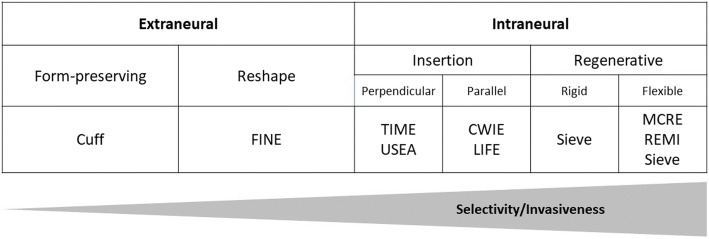
“Data collected by Navarro et al. point to the fact that currently in clinical practice, implanted electrodes are generally extraneural [36].”
§ Safety of long-term electrical peripheral nerve stimulation: review of the state of the art > Passive safety > Structural classification
What the sources say
- Supportedcites [36] Navarro X Krueger TB Lago N Micera S Stieglitz T Dario P A critical review of interfaces with the peripheral nervous system for the control of neuroprostheses and hybrid bionic systems J Peripher Nerv Syst 2005 10 229 258 10.1111/j.1085-9489.2005.10303.x 16221284 source
The electrode-status table (Surface electrodes, p. 6) lists implanted epineurial and helical electrodes as in clinical practice, while listing intrafascicular electrodes for artificial-limb control as research. The Epineurial and helicoidal electrodes section (p. 9) describes epineurial electrodes as placed on the nerve, supporting the review’s general distinction between clinical extraneural interfaces and intraneural research devices. (LLM, conf=0.87)
hedged- Asserted: passes — The authors put it forward as true.
- Checkable: passes — It can be checked against evidence.
- Load-bearing: unclear — It is unclear whether the paper’s conclusions depend on it.
- Based: passes — The paper gives a reason why it holds.
- Supported
The cited sources support only part of this claim — read each source’s verdict below.
In the paper
“At present, extraneural electrodes have shown superior long-term stability in comparison to intraneural electrodes.”
- Also stated in: § Structural classification · plain
“Presently, with regards to long-term human implantations, extraneural electrodes still emerge as the most favorable choice for clinical applications [26, 37].”
§ Safety of long-term electrical peripheral nerve stimulation: review of the state of the art > Abstract > Results
What the sources say
- Partly supportedcites [26] Christie BP Freeberg M Memberg WD Pinault GJC Hoyen HA Tyler DJ Long-term stability of stimulating spiral nerve cuff electrodes on human peripheral nerves J Neuroeng Rehabil. 2017 14 70 10.1186/s12984-017-0285-3 28693584 PMC5504677 sourceExperimental — accuracy not yet measured
The Conclusion reports that non-penetrating spiral nerve cuff electrodes remained reliable for up to 11 years. But the Discussion says the study focused solely on those electrodes; it does not establish that extraneural electrodes are more stable than intraneural electrodes. (LLM, conf=0.85)
- Supportedcites [37] Ortiz-Catalan M Brånemark R Håkansson B Delbeke J On the viability of implantable electrodes for the natural control of artificial limbs: review and discussion Biomed Eng Online 2012 11 33 10.1186/1475-925X-11-33 22715940 PMC3438028 source
The Discussion section, “Suitable IEs for long-term and natural prosthetic control” (page unavailable), says intraneural electrodes can lose long-term recording quality through encapsulation, whereas extra-type epimysial and cuff electrodes have remained functional for years. The Review section, “Nerve-based Electrodes” (page unavailable), also reports stable cuff-electrode performance over time. Together, these passages support the comparison as a summary of the review. (LLM, conf=0.91)
plainstates an association- Asserted: passes — The authors put it forward as true.
- Checkable: passes — It can be checked against evidence.
- Load-bearing: passes — The paper’s conclusions depend on it.
- Based: passes — The paper gives a reason why it holds.
- Also stated in: § Structural classification · plain
The cited sources support only part of this claim — read each source’s verdict below.
In the paper
“Presently, with regards to long-term human implantations, extraneural electrodes still emerge as the most favorable choice for clinical applications [26, 37].”
§ Safety of long-term electrical peripheral nerve stimulation: review of the state of the art > Passive safety > Structural classification
What the sources say
- Partly supportedcites [26] Christie BP Freeberg M Memberg WD Pinault GJC Hoyen HA Tyler DJ Long-term stability of stimulating spiral nerve cuff electrodes on human peripheral nerves J Neuroeng Rehabil. 2017 14 70 10.1186/s12984-017-0285-3 28693584 PMC5504677 sourceExperimental — accuracy not yet measured
The Conclusion (page not provided) finds non-penetrating spiral nerve cuff electrodes reliable for long-term clinical use in human neuroprostheses, with performance reported up to 11 years after implantation. The Discussion (page not provided) says the study examined only spiral cuffs and notes tradeoffs among interfaces; it does not establish that extraneural electrodes generally are the most favorable choice. (LLM, conf=0.88)
- Supportedcites [37] Ortiz-Catalan M Brånemark R Håkansson B Delbeke J On the viability of implantable electrodes for the natural control of artificial limbs: review and discussion Biomed Eng Online 2012 11 33 10.1186/1475-925X-11-33 22715940 PMC3438028 source
The Discussion section, “Suitable IEs for long-term and natural prosthetic control” (page unavailable), says intraneural electrodes carry greater risk, while extra-type electrodes, including cuffs, have demonstrated safety and functionality over several years in clinical applications. The Review’s “Nerve-based Electrodes” section also reports long-term functionality of cuff electrodes implanted in humans. Together, these passages support the cited preference for extraneural electrodes in long-term clinical implantation. (LLM, conf=0.88)
plain- Asserted: passes — The authors put it forward as true.
- Checkable: passes — It can be checked against evidence.
- Load-bearing: unclear — It is unclear whether the paper’s conclusions depend on it.
- Based: passes — The paper gives a reason why it holds.
- Partly supported
Every source the paper cites for this claim was checked and supports it.
In the paper
“In the case of eliciting somatosensory perception via peripheral nerve stimulation, Tan et al. found that the quality of a sensation can be altered by pulse width modulation [17]”
§ Safety of long-term electrical peripheral nerve stimulation: review of the state of the art > Active safety – Stimulation parameters > Duration
What the sources say
- Supportedcites [17] Tan DW Schiefer MA Keith MW Anderson JR Tyler J Tyler DJ A neural interface provides long-term stable natural touch perception Sci Transl Med 2014 6 257ra138 10.1126/scitranslmed.3008669 25298320 PMC5517305 source
In the results (pp. 3–4), Tan et al. report that modulating stimulation pulse width changed perceived sensations, including a shift from tingling to natural pressure. They also report that reducing the modulation changed pulsing pressure to continuous pressure or, at some sites, vibration, itch, or tingling. (LLM, conf=0.94)
plainstates a cause- Asserted: passes — The authors put it forward as true.
- Checkable: passes — It can be checked against evidence.
- Load-bearing: unclear — It is unclear whether the paper’s conclusions depend on it.
- Based: passes — The paper gives a reason why it holds.
- Supported
74 more claims · 5 with their cited sources checked
Create a free account to see all 137 claims and to verify the 2 references still open.
- Probably not a substantial claim. 20
- It may state two separate claims as one. 43
- The quote only partly states this claim. 1
Claims other papers make about this one
Each is checked against this paper’s own text: does it say what the citing paper says it does?
The source backs part of the claim, not all of it — or backs it for a different population, condition or comparison.
In the citing paper
“Complications due to changes in the endoneurial environment include increased endoneurial pressure, nerve fiber compression, variable shifts in thresholds and loss of axons [29, 30].”
From Directed stimulation with interfascicular interfaces for peripheral nerve stimulation (2021) · cites this paper as [30]
Experimental — accuracy not yet measuredThe cited source says what the claim attributes to it.
In the citing paper
“These events have particularly been observed in larger nerve fibers [4, 31, 32] and in chronically implanted intrafascicular devices [30, 33, 34].”
From Directed stimulation with interfascicular interfaces for peripheral nerve stimulation (2021) · cites this paper as [30]
The cited source says what the claim attributes to it.
In the citing paper
“Typical stimulation pulse widths range up to a few hundred μs , and current amplitudes vary from tens of μA to a few mA in peripheral nerve interfaces [9], [101].”
From Active Neural Interface Circuits and Systems for Selective Control of Peripheral Nerves: A Review (2024) · cites this paper as [9]
Citations
Cites
Neural Stimulation and Recording Electrodes
Cogan, S. F. (2008) · Annual Review of Biomedical Engineering · doi:10.1146/annurev.bioeng.10.061807.160518 · Cited by 2,243
Electrical stimulation of excitable tissue: design of efficacious and safe protocols
Merrill, D. R., Bikson, M., & Jefferys, J. G. R. (2005) · Journal of Neuroscience Methods · doi:10.1016/j.jneumeth.2004.10.020 · Cited by 2,078
Coding and use of tactile signals from the fingertips in object manipulation tasks
Johansson, R. S., & Flanagan, J. R. (2009) · Nature Reviews Neuroscience · doi:10.1038/nrn2621 · Cited by 2,063
Which elements are excited in electrical stimulation of mammalian central nervous system: A review
Ranck, J. B. (1975) · Brain Research · doi:10.1016/0006-8993(75)90364-9 · Cited by 2,024 · cited 1×
“Stimulation safety limits cannot be applied as a global concept to neural tissue due to the diversity of cells forming it [103].”
BackgroundBiological Responses to Materials
Anderson, J. M. (2001) · Annual Review of Materials Research · doi:10.1146/annurev.matsci.31.1.81 · Cited by 1,465
Restoring natural sensory feedback in real-time bidirectional hand prostheses
Raspopovic, S., Capogrosso, M., Petrini, F. M., Bonizzato, M., Rigosa, J., Di Pino, G., Carpaneto, J., Controzzi, M., Boretius, T., Fernandez, E., et al. (2014) · Science Translational Medicine · doi:10.1126/scitranslmed.3006820 · Cited by 1,001
Navarro, X., Krueger, T. B., Lago, N., Micera, S., Stieglitz, T., & Dario, P. (2005) · Journal of the Peripheral Nervous System · doi:10.1111/j.1085-9489.2005.10303.x · Cited by 845
A neural interface provides long-term stable natural touch perception
Tan, D. W., Schiefer, M. A., Keith, M. W., Anderson, J. R., Tyler, J., & Tyler, D. J. (2014) · Science Translational Medicine · doi:10.1126/scitranslmed.3008669 · Cited by 751
Charge density and charge per phase as cofactors in neural injury induced by electrical stimulation
McCreery, D. B., Agnew, W. F., Yuen, T. G. H., & Bullara, L. (1990) · IEEE Transactions on Biomedical Engineering · doi:10.1109/10.102812 · Cited by 708
Ben‐Menachem, E., Mañon‐Espaillat, R., Ristanovic, R., Wilder, B. J., Stefan, H., Mirza, W., Tarver, W. B., Wernicke, J. F., & First International Vagus Nerve Stimulation Study Group (1994) · Epilepsia · doi:10.1111/j.1528-1157.1994.tb02482.x · Cited by 683
Research works printed but not linked: 2
- Ortiz-Catalan M Mastinu E Brånemark R Håkansson B Direct Neural Sensory Feedback and Control via Osseointegration 2017 Cape Town XVI World Congr Int Soc Prosthetics Orthot (ISPO)
- Lilly JC. Injury and excitation by electric currents. In: Sheer DE, editor. Electr Stimul brain. Austin: University of Texas Press; 1961. p. 60–4.
Cited by
Items 101–197 of 197
Organ- and Function-Specific Anatomical Organization and Bioelectronic Modulation of the Vagus NervePreprint
Jayaprakash, N., Tóth, V., Song, W., Vardhan, A., Levy, T. J., Tomaio, J. N., Qanud, K., Mughrabi, I. T., Saperstein, Y., Chang, Y.-C., et al. (2022) · SSRN Electronic Journal · doi:10.2139/ssrn.4097124 · Cited by 8
Opančar, A., Głowacki, E. D., & Đerek, V. (2024) · Journal of Neural Engineering · doi:10.1088/1741-2552/ad6a8b · Cited by 9
“Ultimately, only experiments will conclusively determine the safety and efficacy of the stimulation device, protocol, and electrodes [19, 20].”
Wegert, L., Ziółkowski, M., Kalla, T., Lange, I., Haueisen, J., & Hunold, A. (2024) · Journal of Neural Engineering · doi:10.1088/1741-2552/ad8c84 · Cited by 8
“Symmetric and asymmetric biphasic stimulation pulses, as well as biphasic pulses with an interphase delay, are typically applied (Günter et al 2019).”
InfluentialAn In-vitro Study of Electrodes Impedance in Deep Brain Stimulation
Ali, H. A. M., Abdullah, S. S., & Faraj, M. K. (2021) · Journal of Physics Conference Series · doi:10.1088/1742-6596/1829/1/012019 · Cited by 6
“Similar changes cause neuronal tissue damage [51, 52].”
Conductive Conjugated Polymer Nanocapacitors for Localized Electrical Neurostimulation
Martínez-Cartagena, M. E., Muzzio, N., Guntnur, R. T., Fisher, V., Hebbale, S. K., Rodgers, T. M., Romero‐García, J., & Romero, G. (2022) · ACS Applied Nano Materials · doi:10.1021/acsanm.2c03152 · Cited by 6
Cassar, M. G., Sebu, C., Pidcock, M., et al. (2023) · COMPEL The International Journal for Computation and Mathematics in Electrical and Electronic Engineering · doi:10.1108/compel-08-2022-0293 · Cited by 6
Pavčnik, M., Antić, A., Lukanović, A., et al. (2023) · Medicina · doi:10.3390/medicina59071286 · Cited by 6
An Advanced Practice Provider Guide to Peripheral Nerve Stimulation
Hoffmann, C. M., D'Souza, R. S., & Hagedorn, J. M. (2022) · Journal of Pain Research · doi:10.2147/jpr.s370037 · Cited by 6
A rat model for assessing the long-term safety and performance of peripheral nerve electrode arrays
Shafer, B., Welle, C. G., & Vasudevan, S. (2019) · Journal of Neuroscience Methods · doi:10.1016/j.jneumeth.2019.108437 · Cited by 7
Toward Natural Limb Function: A New Era in Prosthetic Innovation
Tian, Y., Wallace, D. M., Cederna, P. S., Chestek, C. A., & Kemp, S. W. P. (2025) · Annals of Neurology · doi:10.1002/ana.27287 · Cited by 8
Neuroskeletal Effects of Chronic Bioelectric Nerve Stimulation in Health and Diabetes
Beeve, A. T., Shen, I. R., Zhang, X., Magee, K. L., Yan, Y., MacEwan, M. R., & Scheller, E. L. (2021) · Frontiers in Neuroscience · doi:10.3389/fnins.2021.632768 · Cited by 4
“More sophisticated designs for chronic neural implants, including helical or spiral cuff electrodes, have demonstrated improved flexibility and reduced activation of inflammatory responses (Christie et al., 2017; Günter et al., 2019).”
BackgroundGonzález‐González, M. A., Romero, K., Beitter, J., Lloyd, D., Lam, D., Hernandez-Reynoso, A. G., Kanneganti, A., Kim, H., Bjune, C. K., Smith, S. A., et al. (2022) · Frontiers in Neuroscience · doi:10.3389/fnins.2022.726467 · Cited by 5
Monroy, G. L., Erfanzadeh, M., Tao, M., DePaoli, D. T., Saytashev, I., Nam, A. S., Rafi, H., Kwong, K., Shea, K. I., Vakoc, B. J., et al. (2023) · Neurophotonics · doi:10.1117/1.nph.10.2.025004 · Cited by 5
Wang, S., Chen, K., Zhang, Q., Ma, J., Zhu, L., Sun, Y., Liu, X., Wang, B., Xu, Z., You, X., et al. (2024) · Materials Science and Engineering R Reports · doi:10.1016/j.mser.2024.100884 · Cited by 7
A low-power implantable neurostimulator for small rodents with functional validation
Wright, J., Wong, J., Chang, Y.-C., Ahmed, U., Zanos, S. P., & Datta, T. (2019) · IEEE Biomedical Circuits and Systems Conference (BioCAS) · doi:10.1109/biocas.2019.8919215 · Cited by 5
“Most experimental protocols only require stimulation for a fraction of each day, typically not more than 2 hours [5].”
BackgroundWu, H., Chang, K.-J., Wen, X., Yarmishyn, A. A., Dai, H.-J., Chan, K.-H., Hsiao, Y., Chen, M.-T., Chien, Y., Ma, H., et al. (2022) · Materials Today Advances · doi:10.1016/j.mtadv.2022.100322 · Cited by 6
Günter, C., Delbeke, J., & Ortiz-Catalan, M. (2020) · Journal of NeuroEngineering and Rehabilitation · doi:10.1186/s12984-020-00695-1 · Cited by 5
Self-citationDeciphering the skeletal interoceptive circuitry to control bone homeostasis
Wu, Y., Guo, J., Chen, Z., Zhang, F., Chow, B., Chen, Z., Yeung, K., & Qiao, W. (2025) · BMEMat · doi:10.1002/bmm2.12138 · Cited by 8
Alves, R. L., Zortéa, M., Mayor, D. F., Watson, T., & Steffert, T. (2025) · Brain Sciences · doi:10.3390/brainsci15030270 · Cited by 9
“Electrical stimulation (ES) is a safe and effective technique commonly used to aid recovery of peripheral and central neural circuits after injury [1–3].”
Ades, C., Abd, M. A., Du, E., Wei, J., Tognoli, E., & Engeberg, E. D. (2022) · IEEE Haptics Symposium · doi:10.1109/haptics52432.2022.9765605 · Cited by 4
Wang, D. (2025) · International Journal of Knowledge Management · doi:10.4018/ijkm.380957 · Cited by 6
Ortiz-Catalan, M., Middleton, A., & Gustafsson, M. (2019) · Annual International Conference of the IEEE Engineering in Medicine and Biology Society (EMBC) · doi:10.1109/embc.2019.8856364 · Cited by 9
Self-citationNeural stimulation technologies
Andersen, T., Bó, A. P. L., Watkins, G. D., Mohammad, S. S., & McEwan, A. L. (2021) · Elsevier eBooks · doi:10.1016/b978-0-12-820594-5.00011-3 · Cited by 6
Morales, A. W., Du, J., Warren, D. J., Fernández-Jover, E., Martínez, G., Bouteiller, J. C., McCreery, D. C., & Lazzi, G. (2024) · Scientific Reports · doi:10.1038/s41598-024-53284-w · Cited by 5
Neural Implants Without Electronics: A Proof-of-Concept Study on a Human Skin Model
Kiele, P., Braig, D., Weis, J., Baslan, Y., Pasluosta, C. F., & Stieglitz, T. (2020) · IEEE Open Journal of Engineering in Medicine and Biology · doi:10.1109/ojemb.2020.2981254 · Cited by 5
“, intrafascicular or extrafascicular) [23].”
BackgroundChronic use of a sensitized bionic hand does not remap the sense of touchPreprint
Ortiz-Catalan, M., Mastinu, E., & Bensmaı̈a, S. J. (2020) · medRxiv · doi:10.1101/2020.05.02.20089185 · Cited by 4
Self-citationThe Role of Scalp EEG Recordings During Cortical Visual Prosthesis Testing
Stephan, K., Troyk, P. R., Dagnelie, G., Cogan, S. F., Barry, M. P., Grant, P., Lane, F. J., Szlyk, J. P., McNulty, M. L., van Drongelen, W., et al. (2025) · Artificial Organs · doi:10.1111/aor.15023 · Cited by 6
Zhang, L., Tan, J., Liao, B., Huang, M., Huang, R., Zhang, X., He, X., Li, X., Ding, X., Jiang, A., et al. (2025) · Bioactive Materials · doi:10.1016/j.bioactmat.2025.11.014 · Cited by 5
“Additionally, electrode types (such as external membrane electrodes versus internal membrane electrodes), stimulation waveforms (DC, AC, or pulsed current), and stimulation modes (continuous versus intermittent) also influence treatment efficacy and safety [182].”
Electrical Stimulation of Denervated Muscle: A Narrative Review
Chu, L., Jarvis, J. C., Andrews, B., & FitzGerald, J. J. (2025) · Artificial Organs · doi:10.1111/aor.70076 · Cited by 4
“Furthermore, the threshold in terms of current density above which there is a risk of tissue damage has been widely considered to be 30 μC/cm 2 for macroelectrodes [24, 25].”
Force stimulation promotes nerve regeneration by restoring cellular energy
Wang, Z., Cai, C., Xie, H., Yang, Y., Li, L., Malek, N. A. N. N., Kamaruddin, W. H. A., Chen, M., Sang, Y., Ji, B., et al. (2025) · BMEMat · doi:10.1002/bmm2.70056 · Cited by 4
An Efficient Circuit for Pulsed Magnetic Neural Stimulation
Asbeck, P. M., Alluri, S., Leung, V., et al. (2023) · IEEE Journal of Electromagnetics RF and Microwaves in Medicine and Biology · doi:10.1109/jerm.2023.3289155 · Cited by 3
“painful, has potentially greater flexibility, and is often more capable of localized excitation than electrical stimulation [3], [4], [5], [6], [7].”
BackgroundA Cuff Lead for Delivering Ionic Direct Current (iDC) to Block Neural Activities of Sciatic Nerve*
Cheng, C., Foxworthy, G. E., & Fridman, G. Y. (2023) · Proceedings of the Annual International Conference of the IEEE Engineering in Medicine and Biology Society · doi:10.1109/embc40787.2023.10340183 · Cited by 3
“[6] The application of DC must be limited in duration, strictly below a threshold determined by the charge injection capacity (CIC) of electrode and the amplitude of applied DC, to avoid nerve damage .”
BackgroundEmerging Treatment for Patients with Disorders of Consciousness: The Field of Neuromodulation
Hopkins, A., Vitello, M. M., Thibaut, A., & Monti, M. M. (2023) · Springer eBooks · doi:10.1007/978-3-031-50563-8_8 · Cited by 4
Nasirzadehroshenin, F., & Feng, Z. (2024) · Journal of The Electrochemical Society · doi:10.1149/1945-7111/ad910f · Cited by 3
Qin, T., Hu, T., Dan, Y., Qiu, C., Chen, M., Kong, F., Huang, S., Zhai, Z., Xu, Y. X., & Sun, T. (2025) · Frontiers in Neurology · doi:10.3389/fneur.2025.1574338 · Cited by 3
Restoration Methods of Respiratory Function for Spinal Cord Injury
Gu, X., Ren, S., Shi, Y., Wang, N., Tong, Z., & Cai, M. (2020) · Mathematical Problems in Engineering · doi:10.1155/2020/7398789 · Cited by 4
Yu, X. P., Li, R., Su, J., Wang, J., Zhang, X., Chen, Y., Kang, Y., Chai, X., & Sui, X. (2022) · Journal of Neuroscience Methods · doi:10.1016/j.jneumeth.2022.109481 · Cited by 3
Shu, Y., Yang, S., Li, P., Gou, S., Cheng, Y., Jia, Q., & Du, Z. J. (2024) · Frontiers in Bioengineering and Biotechnology · doi:10.3389/fbioe.2024.1476447 · Cited by 4
“The more stimulation sites, the higher the degree of invasiveness, and the stronger the targeting of activation, but this may also bring more serious biocompatibility and long-term stability issues (Alba et al., 2015; Du et al., 2017b; Günter et al., 2019).”
Lam, D., Lindemann, M., Yang, K., Liu, D. X., Ludwig, K. A., & Shoffstall, A. J. (2023) · eNeuro · doi:10.1523/eneuro.0305-23.2023 · Cited by 3
“Various PNI electrodes exist on market, differing in stimulation and recording capabilities (Lago et al., 2007; Günter et al., 2019; Cho et al., 2020; Carnicer-Lombarte et al., 2021).”
BackgroundChoi, S. (2025) · Advanced Energy and Sustainability Research · doi:10.1002/aesr.202500352 · Cited by 5
Yoon, G., Choi, J. K., Jinah, J., & Park, Y. S. (2025) · Tissue Engineering and Regenerative Medicine · doi:10.1007/s13770-025-00778-x · Cited by 2
“Intermittent stimulation cycles have been shown to extend safe stimulation duration, reduce cellular stress, and better replicate physiological electrical dynamics in vitro compared with continuous stimulation, supporting our selection of this intermittent protocol [67–69].”
Chan, K. S., Guo, Y., Duan, Q., Wang, X., Hao, Y., Wu, S., & Dai, X. (2026) · ACS Nano · doi:10.1021/acsnano.6c05215 · Cited by 5
Somatosensory Neuromodulation with a Focus Towards Clinical Systems
Graczyk, E. L., & Tyler, D. J. (2022) · Handbook of Neuroengineering · doi:10.1007/978-981-15-2848-4_92-1 · Cited by 2
Chronic pain as a neurological disease and neural engineering strategies for its management
Feng, B. (2024) · Elsevier eBooks · doi:10.1016/b978-0-323-95730-4.00013-5 · Cited by 2
Scarpelli, A., Cordella, F., & Zollo, L. (2025) · Journal of Neural Engineering · doi:10.1088/1741-2552/ade503 · Cited by 2
“PF range was chosen considering the safety values for continuously stimulating nerves without damage [78].”
A novel portable device and validation procedure for transcutaneous electrical nerve stimulation
Paolini, R., Liu, F., Scarpelli, A., Demofonti, A., Cordella, F., Jiang, D., Demosthenous, A., & Zollo, L. (2025) · Wearable Technologies · doi:10.1017/wtc.2025.10004 · Cited by 3
A 4-Channel NMES IC for Wearable Applications
Huang, Y.-K., Rusu, A., & Rodriguez, S. (2021) · IEEE Biomedical Circuits and Systems Conference (BioCAS) · doi:10.1109/biocas49922.2021.9644966 · Cited by 2
Du, J., Morales, A., Kosta, P., Martínez, G., Warren, D. J., Fernández, E., Bouteiller, J. C., McCreery, D. C., & Lazzi, G. (2025) · Bioelectromagnetics · doi:10.1002/bem.22533 · Cited by 1
Electrical anisotropy of fascicles in a realistic neck model for phrenic nerve stimulation
Wegert, L., Ziółkowski, M., Hunold, A., Lange, I., Kalla, T., & Haueisen, J. (2025) · COMPEL The International Journal for Computation and Mathematics in Electrical and Electronic Engineering · doi:10.1108/compel-12-2024-0528 · Cited by 1
Wei, D., Zhao, X., Zeng, M., Li, R., Zhang, W., Urakova, A. O., Ding, J., Wu, C., Sun, J., Chernozem, R. V., et al. (2025) · Acta Biomaterialia · doi:10.1016/j.actbio.2025.11.007 · Cited by 1
Olorocisimo, J. P., Nag, S., Zhang, H., Yang, S. M., Prytula, M., Liu, S., Kanchwala, M., Sun, Y., Zariffa, J., & Genov, R. (2025) · Journal of NeuroEngineering and Rehabilitation · doi:10.1186/s12984-025-01825-3 · Cited by 3
Kitamura, I., Kaneko, M., Sugiyama, Y., Fuse, S., Hirano, S., Iceman, K. E., Pitts, T. E., & KOIKE, T. (2026) · Neuroscience Letters · doi:10.1016/j.neulet.2026.138577 · Cited by 2
Brillet, C. F., Thomas, W. M., Mueller, K. N., Roberts, D., Graham, C. J. C., Lehar, M., Santina, C. C. D., & Fridman, G. Y. (2026) · Journal of Neural Engineering · doi:10.1088/1741-2552/ae6ff3 · Cited by 1
“In parallel, electrochemical safety guidelines focus on limiting electrode polarization to avoid driving irreversible reactions [44].”
Gelenitis, K., Foglyano, K. M., Lombardo, L. M., McDaniel, J., & Triolo, R. J. (2022) · Journal of NeuroEngineering and Rehabilitation · doi:10.1186/s12984-022-01064-w · Cited by 2
Somatosensory Neuromodulation with a Focus Towards Clinical Systems
Graczyk, E. L., & Tyler, D. J. (2023) · Handbook of Neuroengineering · doi:10.1007/978-981-16-5540-1_92 · Cited by 1
Collu, R., Mascia, A., Paolini, R., Cordella, F., Zollo, L., Cosseddu, P., & Barbaro, M. (2023) · Lecture notes in electrical engineering · doi:10.1007/978-3-031-48711-8_47 · Cited by 2
Electrical stimulation in special clinical situations
van der Steld, L. D. P. (2024) · Journal of Cardiac Arrhythmias · doi:10.24207/jca.v37il.3504 · Cited by 1
Qin, L., Dou, M., Niu, L., Huang, L., Li, F., Bao, S., Deng, X., Li, G., & Geng, Y. (2024) · IEEE Transactions on Neural Systems and Rehabilitation Engineering · doi:10.1109/tnsre.2024.3493925 · Cited by 2
“Whereas it is extremely difficult to stimulate individual nerve at specific depth without affecting its neighboring area when applying electric current onto the skin surface [5], [6].”
Iseri, E., Machnoor, M., Nguyen, T. D., Sideris, C., Gokoffski, K. K., & Lazzi, G. (2025) · IEEE Transactions on Biomedical Engineering · doi:10.1109/tbme.2025.3581537 · Cited by 1
“There have been concerted efforts to mimic endogenous EFs and exploit cellular responses for applications such as peripheral nerve healing, post-injury spinal cord rehabilitation, and more recently, optic nerve regeneration [1], [2], [3].”
Innovations in Amputee Care in the United States: Access, Ethics, and Equity
Cain, J. J., Earley, E. J., Potter, B. K., Grover, P., Thomas, P., Stark, G. E., & White, A. (2025) · Prosthesis · doi:10.3390/prosthesis7060153 · Cited by 2
“Regardless of the electrodes used, care must be taken to prevent damage to the nerve and maximize long-term safety [53].”
Multichannel Sensorimotor Integration with a Dexterous Artificial HandPreprint
Abd, M. A., & Engeberg, E. D. (2023) · Research Square · doi:10.21203/rs.3.rs-2684789/v1 · Cited by 1
“There have also been strong advances with neural implants in the peripheral nerves of amputees for direct neural feedback and control [7-9], which could open the gateway to higher control capabilities.”
BackgroundSinir stimülatörü içeren bir Kirschner teli ve bahsedilen Kirschner telinin yerleştirme düzeneği
Safalı, S. (2020) · Türk Ortopedi ve Travmatoloji Birliği Derneği · doi:10.14292/totbid.dergisi.2021.15
An Investigation of the Cellular Mechanisms Underlying Ultrasound Neuromodulation
Newhoff, M. (2020) · University of Minnesota Digital Conservancy (University of Minnesota)
Repetitive neuromuscular monitoring and stimulating electrode fatigue
Carvalho, H. N., Verdonck, M., Geerts, L., et al. (2021) · Journal of Clinical Monitoring and Computing · doi:10.1007/s10877-020-00640-6
Pettersen, E., Shah, F. A., & Ortiz-Catalan, M. (2021) · Research Square · doi:10.21203/rs.3.rs-384578/v1
Self-citationCamossi, F., Crotti, S., Bono, F. D., & Federici, B. (2021) · International IEEE/EMBS Conference on Neural Engineering · doi:10.1109/ner49283.2021.9441200
“One notable example of such undesirable effect is overheating [5].”
BackgroundImpedance Monitoring for Nerve Regeneration Using an Implantable Cuff
Calvillo, A. I. A., Chu, T., Umansky, D., et al. (2021) · IEEE Biomedical Circuits and Systems Conference (BioCAS) · doi:10.1109/biocas49922.2021.9645016
Nerve Stimulation and Stimulating Catheter
Ip, V. H. Y., Sondekoppam, R. V., & Tsui, B. C. H. (2022) · Springer eBooks · doi:10.1007/978-3-030-88727-8_3
Invasive Neural Integration and Clinical Translation
Glass, C., & TUFFAHA, S. H. (2022) · Handbook of Neuroengineering · doi:10.1007/978-981-15-2848-4_131-1
Flexible IrO x Neural Electrode for Mouse Vagus Nerve StimulationPreprint
Sun, T., Tsaava, T., Peragine, J., et al. (2022) · bioRxiv (Cold Spring Harbor Laboratory) · doi:10.1101/2022.10.12.511950
Invasive Neural Integration and Clinical Translation
Glass, C., & TUFFAHA, S. H. (2023) · Handbook of Neuroengineering · doi:10.1007/978-981-16-5540-1_131
Tsui, J. J., & Tsui, J. H. (2023) · Regional Anesthesia & Pain Medicine · doi:10.1136/rapm-2022-104234
Petriv, T. I., QR Health Solutions, K., Almhairat, R. M. D., Vorodi, M. V., Luzan, B., Tsymbaliuk, Y., Vaslovych, V. V., Малышева, Т. А., & Tsymbaliuk, V. (2023) · Cell and Organ Transplantology · doi:10.22494/cot.v11i1.151
Cai, Y., & Wu, S. (2023) · International Journal of Surgery · doi:10.1097/js9.0000000000000764
Neuromodulation Improves Stress Urinary Incontinence-Like Deficits in Female Rabbits
Rahman, F. S., Yousuf, Z., Castelán, F., et al. (2024) · IEEE Open Journal of Engineering in Medicine and Biology · doi:10.1109/ojemb.2024.3408454
Song, D., & Tresch, M. C. (2024) · Scientific Reports · doi:10.1038/s41598-024-66773-9
Mneimneh, M., Quadir, N. A., & Albasha, L. (2024) · IEEE Access · doi:10.1109/access.2024.3441840 · Cited by 1
“Detecting nerve signals and simulating the nerve with an effective current amplitude while preventing the destruction of the nerve is considered extremely critical [9].”
BackgroundIntisar, A., & Kim, M. S. (2024) · Current Opinion in Biomedical Engineering · doi:10.1016/j.cobme.2024.100563
10.1016/b978-0-323-63668-1.00169-5
(2000) · Time to knit · doi:10.1016/b978-0-323-63668-1.00169-5
Bi-modal microwave neuromodulation via thermal and nonthermal mechanismsPreprint
Marar, C., Yu, F., Chen, G., Lin, J., Yang, C., & Cheng, J. (2025) · bioRxiv (Cold Spring Harbor Laboratory) · doi:10.1101/2025.03.26.645466
Cheng, L., Wang, Y., & Zeng, H. (2025) · Healthcare and Rehabilitation · doi:10.1016/j.hcr.2025.100021 · Cited by 1
Between Stimulation and Biologics
Miranda, S. P., Xu, E., Alexis, M., & Ali, Z. S. (2025) · Springer eBooks · doi:10.1007/978-3-031-73931-6_70
Yu, A., Li, P., Yuan, J., Fu, Q., Ning, S., & Xu, W. (2025) · Scientia Sinica Vitae · doi:10.1360/ssv-2024-0349
AI-Enhanced FES for Foot Drop: A Novel Biphasic Charge-Balanced Stimulation Approach
Basumatary, B., Halder, R. S., Mallick, A. N., Khokhar, A., Bansal, R. K., Kumar, R., & Sahani, A. K. (2025) · IEEE Access · doi:10.1109/access.2025.3606694
“Biphasic charge-balanced waveforms, due to their improved safety profile, are preferred for electrical stimulation, minimizing adverse effects [6], [12].”
Somatotopic non-invasive proprioceptive feedback strategy for prosthetic hands: a preliminary study
Lecompte, O., Achiche, S., Gesta, A., & Mohebbi, A. (2025) · Biomedical Physics & Engineering Express · doi:10.1088/2057-1976/ae093e · Cited by 1
Fully Wearable Armband for Long-Term Peripheral Ultrasound Neuromodulation in Pain ManagementPreprint
Moscoso-Barrera, W. D., Han, Y., Jeong, J., Chen, Q., Wynn, T., Yu, M., Tang, K. W. K., Yao, M., Hsieh, J.-C., Wu, D., et al. (2025) · medRxiv · doi:10.1101/2025.10.29.25339092
Tokarev, M. V., Iusupovskaia, E. A., Isaev, N. R., et al. (2025) · Biomedical Engineering · doi:10.1007/s10527-025-10500-9
“At 5min after switching on, the device begins to emit light pulses at a frequency of 33Hz, which is safe for chronic stimulation of peripheral nerves [10].”
Randolph, M. A., Marcu, V. I., Tsiptsis, C., Shoffstall, A. J., Baskin, J. Z., & Tyler, D. J. (2025) · bioRxiv (Cold Spring Harbor Laboratory) · doi:10.1101/2025.11.19.687256
Microwaves stimulate and inhibit neurons via modulation of TRPV and TREK channels
Marar, C., Yu, F., Chen, G., Gong, X., Lin, J., Yang, C., & Cheng, J. (2026) · Journal of Neural Engineering · doi:10.1088/1741-2552/ae62a7
“Additionally, since electrical inhibition requires higher intensity/frequency, it has a higher potential to exceed safety limits [46, 47].”
Decoupling electro-priming from implantation enables functional hyaline chondrogenesis
Yu, Z., Yu, X., Yan, Y., Chen, J., Teng, W., Yao, M., Zhou, J., Zhang, Y. L., Xiang, H., Wang, Z., et al. (2026) · Advanced Composites and Hybrid Materials · doi:10.1007/s42114-026-01857-w
“Although monophasic stimulation offered operational simplicity, its propensity for charge accumulation, detrimental electrolysis and cytotoxic ROS generation necessitated the adoption of a charge-balanced biphasic square waveform to effectively mitigate these electrolytic risks [49 ].”
Gil-Prandi, M., Ortiz-Catalan, M., & Oreggioni, J. (2026) · IEEE International Symposium on Medical Measurements and Applications (MeMeA) · doi:10.1109/memea69746.2026.11537291
“Biphasic charge-balanced stimulation remains the established paradigm for long-term electrical stimulation in living tissue since it reduces the risk of tissue damage, inflammatory responses, and electrode degradation associated with unbalanced or DC-like stimulation paradigms [14].”
Self-citationFu, Q., Ning, S., Yu, A., Liu, Q., Guo, Y., He, J., Li, M., Zhou, J., Xiao, Y., Wang, Y., et al. (2026) · Nanotechnology · doi:10.1088/1361-6528/ae7b3d
Acharya, N., Bhat, A. K., Punja, D., Tomar, A., Adiga, M., & Acharya, A. M. (2026) · Indian Journal of Orthopaedics · doi:10.1007/s43465-026-01869-0
Stability Assessment for Implanted Electrodes Using Equivalent Impedance Analysis
Iseri, E., Dowlatabad, H. M., Gokoffski, K. K., et al. (2025) · International IEEE/EMBS Conference on Neural Engineering · doi:10.1109/ner61569.2025.11589030
“External electric fields can activate or suppress neural activity, protect degenerating neurons, and promote directional axon growth after cell-sparing injuries [1], [2], [3].”
Vannozzi, L., Redondo, J., Trucco, D., Pucci, C., Boccoli, L., Schirru, C., Gherardini, M., Alghilan, W., Parlanti, P., Gemmi, M., et al. (2026) · Bioactive Materials · doi:10.1016/j.bioactmat.2026.08.053
“Indeed, it boosted the electrical integration of the piezo RPNI to the peroneal nerve, enabling the generation of millivolt-range signals upon current pulse stimulation, comparable to physiological nerve activity, similarly to what is observable with muscle autografts [43].”
Park, J., Kim, Y., Shin, H., Kang, M., Nagwade, P., & Lee, S. (2026) · IEEE Transactions on Neural Systems and Rehabilitation Engineering · doi:10.1109/tnsre.2026.3730843
“This gap is notable because, by comparison, electrical stimulation studies [28], [29], [30] have repeatedly shown that stimulation outcomes depend not only on pulse parameters but also on the stimulation configuration (e.g., monopolar vs. bipolar electrode arrangements) [31], [32], [33], [34].”
Continuous Force Control in Upper-Limb Prostheses Using Vibro-Tactile Sensory Stimulation
Besharatzad, N., Thurston, T., Sylwester, S. T., & Mathews, V. J. (2026) · IEEE Access · doi:10.1109/access.2026.3736309
“Electro-tactile methods rely on nerve sensitivity and are less effective in evoking high force ranges due to limitations of stimulation bandwidth imposed by safety concerns and their relatively high noticeable difference thresholds [17], [18].”
Metadata
- Authors
- Günter, C., Delbeke, J., & Ortiz-Catalan, M.
- Affiliations
- Chalmers University of Technology (SE)
- Ghent University (BE)
- Integrum (Sweden) (SE)
- Corresponding author
- Ortiz-Catalan, Max
- Venue
- Journal of NeuroEngineering and Rehabilitation
- Published
- 2019-01-18
- Volume
- 16
- Issue
- 1
- Pages
- 13-13
- ISSN
- 1743-0003 (ISSN-L)
- PMC
- PMC6339286
- OpenAlex
- W2917203101
- Cited by
- 198
- References
- 120
- Citations by year
- 2026: 12 · 2025: 32 · 2024: 30 · 2023: 36 · 2022: 27 · 2021: 30 · 2020: 24 · 2019: 7
- FWCI
- 2.93
- Type
- journal article
- Language
- en
- Update notices
- correction (2020-06-15)
- Open access
- gold
- doi.org
- Licence
- cc-by
- creativecommons.org/licenses/by/4.0/ (tdm)
- creativecommons.org/licenses/by/4.0/ (vor)
- Locations
- Journal of NeuroEngineering and Rehabilitation (publishedVersion, cc-by)
- Europe PMC (PubMed Central) (publishedVersion, other-oa)
- PubMed Central (publishedVersion, cc-by)
- PubMed (publishedVersion)
- Ghent University Academic Bibliography (Ghent University) (submittedVersion, cc-by)
- DOAJ (DOAJ: Directory of Open Access Journals) (submittedVersion, cc-by-sa)
- Chalmers Research (Chalmers University of Technology) (submittedVersion)
- Funders
- Stiftelsen Promobilia
- VINNOVA
- Horizon 2020 Framework Programme
- Topics
- Life Sciences › Neuroscience › Cellular and Molecular Neuroscience › Neuroscience and Neural Engineering
- Health Sciences › Medicine › Anesthesiology and Pain Medicine › Pain Management and Treatment
- Life Sciences › Neuroscience › Neurology › Vagus Nerve Stimulation Research
- Keywords
- peripheral nerve stimulation, charge injection limit, stimulation parameters, stimulation frequency, motor recovery
- MeSH terms
- Animals, Electric Stimulation, Humans, Peripheral Nerves
About these checks
Registry, retraction, Cites and statistics results are computed, not judged, with one exception: a printed reference that no index lists is read once by a model before it counts as a citation error. Claims are extracted by a model and kept only when their quote appears verbatim in the text; each cited source is then checked, with a model’s help, for whether it says what the claim relies on. Those verdicts can be wrong — read the claim’s quote and the cited source before relying on one.
The claim verdicts this report counts are experimental: their accuracy is not yet measured.
A language model drew the claims from the paper on 2026-10-11, under version 3 of the claim definition (model deepseek-v4.1-flash, prompt extract-v3).
A second model labelled each claim on 2026-10-11 (model jev-1.13-20260917, definition revision gold-guideline-v0.2).
Cited sources are checked with a language model’s help (gpt-6-sol).
Statistics and arithmetic are recomputed, not judged.
Confidence bands are shown only for fields calibrated on our annotated test set. None is calibrated yet, so no band is shown.
What counts as a claim ›How we measure confidence ›How we check this ›
Are you an author, or do you see a problem with this page? Request a review
Data sources
Bibliographic data: Semantic Scholar, OpenAlex, Crossref.
Contains information from the Semantic Scholar Academic Graph Datasets, made available under the ODC Attribution License (ODC-BY 1.0).
Semantic Scholar’s data is described in: Kinney, R., et al. (2023). The Semantic Scholar Open Data Platform. arXiv:2301.10140.
