

Safety of long-term electrical peripheral nerve stimulation: review of the state of the art
Open accessThe DOI matches its Crossref record; 119 of the 120 references it cites were found in a registry or an index; 18 of the 127 sources its claims cite were checked for support.
Abstract
BACKGROUND: Electrical stimulation of peripheral nerves is used in a variety of applications such as restoring motor function in paralyzed limbs, and more recently, as means to provide intuitive sensory feedback in limb prostheses. However, literature on the safety requirements for stimulation is scarce, particularly for chronic applications. Some aspects of nerve interfacing such as the effect of stimulation parameters on electrochemical processes and charge limitations have been reviewed, but often only for applications in the central nervous system. This review focuses on the safety of electrical stimulation of peripheral nerve in humans. METHODS: We analyzed early animal studies evaluating damage thresholds, as well as more recent investigations in humans. Safety requirements were divided into two main categories: passive and active safety. We made the distinction between short-term (< 30 days) and chronic (> 30 days) applications, as well as between electrode preservation (biostability) and body tissue healthy survival (harmlessness). In addition, transferability of experimental results between different tissues and species was considered. RESULTS: At present, extraneural electrodes have shown superior long-term stability in comparison to intraneural electrodes. Safety limitations on pulse amplitude (and consequently, charge injection) are dependent on geometrical factors such as electrode placement, size, and proximity to the stimulated fiber. In contrast, other parameters such as stimulation frequency and percentage of effective stimulation time are more generally applicable. Currently, chronic stimulation at frequencies below 30 Hz and percentages of effective stimulation time below 50% is considered safe, but more precise data drawn from large databases are necessary. Unfortunately, stimulation protocols are not systematically documented in the literature, which limits the feasibility of meta-analysis and impedes the generalization of conclusions. We therefore propose a standardized list of parameters necessary to define electrical stimulation and allow future studies to contribute to meta-analyses. CONCLUSION: The safety of chronic continuous peripheral nerve stimulation at frequencies higher than 30 Hz has yet to be documented. Precise parameter values leading to stimulation-induced depression of neuronal excitability (SIDNE) and neuronal damage, as well as the transition between the two, are still lacking. At present, neural damage mechanisms through electrical stimulation remain obscure.
Overview
CoChat Summary
TL;DR
This review synthesizes what is known about the safety of long-term electrical stimulation of human peripheral nerves, separating passive electrode safety from active stimulation-parameter safety. It concludes that extraneural electrodes are currently the safer chronic option, while chronic stimulation above 30 Hz and the effects of uninterrupted long-term stimulation remain insufficiently documented.
Key findings
- Extraneural electrodes showed superior long-term stability versus intraneural electrodes; the paper states that extraneural electrodes had proven biostable in humans for at least 12 years (peroneal nerve), up to 18 years (phrenic nerve), up to 8 years (median, radial, sciatic, and ulnar nerves), and up to 11 years in feedback-controlled applications.
- For chronic stimulation, the review says frequencies below 30 Hz and percentages of effective stimulation time below 50% are currently considered safe; however, the safety of chronic continuous stimulation above 30 Hz has “yet to be documented.”
- Reported safe amplitudes depend strongly on geometry and electrode type: up to 3100 μA in cat sciatic nerves, up to 20 mA in humans with cuff/needle electrodes, up to 3 mA in human vagus nerve cuff stimulation, and typically 10–300 μA for intrafascicular electrodes.
- The paper highlights that stimulation protocols are poorly documented, which blocks meta-analysis and generalization, and proposes a standardized parameter list for future studies.
Methods
- Narrative review of the literature focused on safety of peripheral nerve stimulation in humans, with supporting evidence drawn from early animal studies of damage thresholds and more recent human investigations.
- The authors organized safety into passive safety and active safety, and distinguished short-term (< 30 days) from chronic (> 30 days) applications, and biostability from harmlessness.
- The review compares transferability across species and tissue types and summarizes effects of parameters including charge, pulse duration, amplitude, waveform, inter-phase delay, frequency, percentage of effective stimulation time, and treatment duration.
Limitations
- The paper explicitly states that stimulation protocols are not systematically documented in the literature, limiting the feasibility of meta-analysis and the generalization of conclusions.
- The paper explicitly states that precise parameter values for stimulation-induced depression of neuronal excitability (SIDNE), neuronal damage, and the transition between them are still lacking.
- Evident from the text: much of the safety evidence comes from animal studies and short-term human experiments, so chronic human safety conclusions are based on extrapolation rather than direct long-term human data.
Model-written summary. Check it against the paper before relying on it.
Integrity signals
Registry
Cites
Statistics
Figures
Verification
Claims the paper makes
16 Valid · 10 Not valid · 73 Not checked · 38 Own results and interpretations
The cited sources support only part of this claim — read each source’s verdict below.
In the paper
“and up to 11 years stimulating motor and sensory nerves in a feedback controlled application [26]”
§ Safety of long-term electrical peripheral nerve stimulation: review of the state of the art > Passive safety > Biostability and harmlessness
What the sources say
- Partly supportedcites [26] Christie BP Freeberg M Memberg WD Pinault GJC Hoyen HA Tyler DJ Long-term stability of stimulating spiral nerve cuff electrodes on human peripheral nerves J Neuroeng Rehabil. 2017 14 70 10.1186/s12984-017-0285-3 28693584 PMC5504677 sourceExperimental — accuracy not yet measured
The Conclusion reports that non-penetrating spiral nerve cuffs remained operational for up to 11 years in motor and sensory neuroprostheses. The Methods describe sensory feedback for one participant and control signals for motor-system users, but do not establish that the up-to-11-year result was obtained in a feedback-controlled application combining motor and sensory stimulation. (LLM, conf=0.84)
plain- Asserted: passes — The authors put it forward as true.
- Checkable: passes — It can be checked against evidence.
- Load-bearing: passes — The paper’s conclusions depend on it.
- Based: passes — The paper gives a reason why it holds.
- Partly supported
Every source the paper cites for this claim was checked and supports it.
In the paper
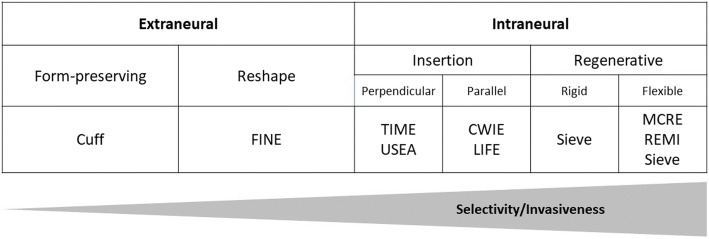
“Data collected by Navarro et al. point to the fact that currently in clinical practice, implanted electrodes are generally extraneural [36].”
§ Safety of long-term electrical peripheral nerve stimulation: review of the state of the art > Passive safety > Structural classification
What the sources say
- Supportedcites [36] Navarro X Krueger TB Lago N Micera S Stieglitz T Dario P A critical review of interfaces with the peripheral nervous system for the control of neuroprostheses and hybrid bionic systems J Peripher Nerv Syst 2005 10 229 258 10.1111/j.1085-9489.2005.10303.x 16221284 source
The electrode-status table (Surface electrodes, p. 6) lists implanted epineurial and helical electrodes as in clinical practice, while listing intrafascicular electrodes for artificial-limb control as research. The Epineurial and helicoidal electrodes section (p. 9) describes epineurial electrodes as placed on the nerve, supporting the review’s general distinction between clinical extraneural interfaces and intraneural research devices. (LLM, conf=0.87)
hedged- Asserted: passes — The authors put it forward as true.
- Checkable: passes — It can be checked against evidence.
- Load-bearing: unclear — It is unclear whether the paper’s conclusions depend on it.
- Based: passes — The paper gives a reason why it holds.
- Supported
The cited sources support only part of this claim — read each source’s verdict below.
In the paper
“At present, extraneural electrodes have shown superior long-term stability in comparison to intraneural electrodes.”
- Also stated in: § Structural classification · plain
“Presently, with regards to long-term human implantations, extraneural electrodes still emerge as the most favorable choice for clinical applications [26, 37].”
§ Safety of long-term electrical peripheral nerve stimulation: review of the state of the art > Abstract > Results
What the sources say
- Partly supportedcites [26] Christie BP Freeberg M Memberg WD Pinault GJC Hoyen HA Tyler DJ Long-term stability of stimulating spiral nerve cuff electrodes on human peripheral nerves J Neuroeng Rehabil. 2017 14 70 10.1186/s12984-017-0285-3 28693584 PMC5504677 sourceExperimental — accuracy not yet measured
The Conclusion reports that non-penetrating spiral nerve cuff electrodes remained reliable for up to 11 years. But the Discussion says the study focused solely on those electrodes; it does not establish that extraneural electrodes are more stable than intraneural electrodes. (LLM, conf=0.85)
- Supportedcites [37] Ortiz-Catalan M Brånemark R Håkansson B Delbeke J On the viability of implantable electrodes for the natural control of artificial limbs: review and discussion Biomed Eng Online 2012 11 33 10.1186/1475-925X-11-33 22715940 PMC3438028 source
The Discussion section, “Suitable IEs for long-term and natural prosthetic control” (page unavailable), says intraneural electrodes can lose long-term recording quality through encapsulation, whereas extra-type epimysial and cuff electrodes have remained functional for years. The Review section, “Nerve-based Electrodes” (page unavailable), also reports stable cuff-electrode performance over time. Together, these passages support the comparison as a summary of the review. (LLM, conf=0.91)
plainstates an association- Asserted: passes — The authors put it forward as true.
- Checkable: passes — It can be checked against evidence.
- Load-bearing: passes — The paper’s conclusions depend on it.
- Based: passes — The paper gives a reason why it holds.
- Also stated in: § Structural classification · plain
The cited sources support only part of this claim — read each source’s verdict below.
In the paper
“Presently, with regards to long-term human implantations, extraneural electrodes still emerge as the most favorable choice for clinical applications [26, 37].”
§ Safety of long-term electrical peripheral nerve stimulation: review of the state of the art > Passive safety > Structural classification
What the sources say
- Partly supportedcites [26] Christie BP Freeberg M Memberg WD Pinault GJC Hoyen HA Tyler DJ Long-term stability of stimulating spiral nerve cuff electrodes on human peripheral nerves J Neuroeng Rehabil. 2017 14 70 10.1186/s12984-017-0285-3 28693584 PMC5504677 sourceExperimental — accuracy not yet measured
The Conclusion (page not provided) finds non-penetrating spiral nerve cuff electrodes reliable for long-term clinical use in human neuroprostheses, with performance reported up to 11 years after implantation. The Discussion (page not provided) says the study examined only spiral cuffs and notes tradeoffs among interfaces; it does not establish that extraneural electrodes generally are the most favorable choice. (LLM, conf=0.88)
- Supportedcites [37] Ortiz-Catalan M Brånemark R Håkansson B Delbeke J On the viability of implantable electrodes for the natural control of artificial limbs: review and discussion Biomed Eng Online 2012 11 33 10.1186/1475-925X-11-33 22715940 PMC3438028 source
The Discussion section, “Suitable IEs for long-term and natural prosthetic control” (page unavailable), says intraneural electrodes carry greater risk, while extra-type electrodes, including cuffs, have demonstrated safety and functionality over several years in clinical applications. The Review’s “Nerve-based Electrodes” section also reports long-term functionality of cuff electrodes implanted in humans. Together, these passages support the cited preference for extraneural electrodes in long-term clinical implantation. (LLM, conf=0.88)
plain- Asserted: passes — The authors put it forward as true.
- Checkable: passes — It can be checked against evidence.
- Load-bearing: unclear — It is unclear whether the paper’s conclusions depend on it.
- Based: passes — The paper gives a reason why it holds.
- Partly supported
Every source the paper cites for this claim was checked and supports it.
In the paper
“In the case of eliciting somatosensory perception via peripheral nerve stimulation, Tan et al. found that the quality of a sensation can be altered by pulse width modulation [17]”
§ Safety of long-term electrical peripheral nerve stimulation: review of the state of the art > Active safety – Stimulation parameters > Duration
What the sources say
- Supportedcites [17] Tan DW Schiefer MA Keith MW Anderson JR Tyler J Tyler DJ A neural interface provides long-term stable natural touch perception Sci Transl Med 2014 6 257ra138 10.1126/scitranslmed.3008669 25298320 PMC5517305 source
In the results (pp. 3–4), Tan et al. report that modulating stimulation pulse width changed perceived sensations, including a shift from tingling to natural pressure. They also report that reducing the modulation changed pulsing pressure to continuous pressure or, at some sites, vibration, itch, or tingling. (LLM, conf=0.94)
plainstates a cause- Asserted: passes — The authors put it forward as true.
- Checkable: passes — It can be checked against evidence.
- Load-bearing: unclear — It is unclear whether the paper’s conclusions depend on it.
- Based: passes — The paper gives a reason why it holds.
- Supported
74 more claims · 5 with their cited sources checked
Create a free account to see all 137 claims and to verify the 1 reference still open.
- Probably not a substantial claim. 20
- It may state two separate claims as one. 43
- The quote only partly states this claim. 1
Claims other papers make about this one
Each is checked against this paper’s own text: does it say what the citing paper says it does?
The source backs part of the claim, not all of it — or backs it for a different population, condition or comparison.
In the citing paper
“Complications due to changes in the endoneurial environment include increased endoneurial pressure, nerve fiber compression, variable shifts in thresholds and loss of axons [29, 30].”
From Directed stimulation with interfascicular interfaces for peripheral nerve stimulation (2021) · cites this paper as [30]
Experimental — accuracy not yet measuredThe cited source says what the claim attributes to it.
In the citing paper
“These events have particularly been observed in larger nerve fibers [4, 31, 32] and in chronically implanted intrafascicular devices [30, 33, 34].”
From Directed stimulation with interfascicular interfaces for peripheral nerve stimulation (2021) · cites this paper as [30]
The cited source says what the claim attributes to it.
In the citing paper
“Typical stimulation pulse widths range up to a few hundred μs , and current amplitudes vary from tens of μA to a few mA in peripheral nerve interfaces [9], [101].”
From Active Neural Interface Circuits and Systems for Selective Control of Peripheral Nerves: A Review (2024) · cites this paper as [9]
Citations
Cites
Neural Stimulation and Recording Electrodes
Cogan, S. F. (2008) · Annual Review of Biomedical Engineering · doi:10.1146/annurev.bioeng.10.061807.160518 · Cited by 2,243
Electrical stimulation of excitable tissue: design of efficacious and safe protocols
Merrill, D. R., Bikson, M., & Jefferys, J. G. R. (2005) · Journal of Neuroscience Methods · doi:10.1016/j.jneumeth.2004.10.020 · Cited by 2,078
Coding and use of tactile signals from the fingertips in object manipulation tasks
Johansson, R. S., & Flanagan, J. R. (2009) · Nature Reviews Neuroscience · doi:10.1038/nrn2621 · Cited by 2,063
Which elements are excited in electrical stimulation of mammalian central nervous system: A review
Ranck, J. B. (1975) · Brain Research · doi:10.1016/0006-8993(75)90364-9 · Cited by 2,024 · cited 1×
“Stimulation safety limits cannot be applied as a global concept to neural tissue due to the diversity of cells forming it [103].”
BackgroundBiological Responses to Materials
Anderson, J. M. (2001) · Annual Review of Materials Research · doi:10.1146/annurev.matsci.31.1.81 · Cited by 1,465
Restoring natural sensory feedback in real-time bidirectional hand prostheses
Raspopovic, S., Capogrosso, M., Petrini, F. M., Bonizzato, M., Rigosa, J., Di Pino, G., Carpaneto, J., Controzzi, M., Boretius, T., Fernandez, E., et al. (2014) · Science Translational Medicine · doi:10.1126/scitranslmed.3006820 · Cited by 1,001
Navarro, X., Krueger, T. B., Lago, N., Micera, S., Stieglitz, T., & Dario, P. (2005) · Journal of the Peripheral Nervous System · doi:10.1111/j.1085-9489.2005.10303.x · Cited by 845
A neural interface provides long-term stable natural touch perception
Tan, D. W., Schiefer, M. A., Keith, M. W., Anderson, J. R., Tyler, J., & Tyler, D. J. (2014) · Science Translational Medicine · doi:10.1126/scitranslmed.3008669 · Cited by 751
Charge density and charge per phase as cofactors in neural injury induced by electrical stimulation
McCreery, D. B., Agnew, W. F., Yuen, T. G. H., & Bullara, L. (1990) · IEEE Transactions on Biomedical Engineering · doi:10.1109/10.102812 · Cited by 708
Ben‐Menachem, E., Mañon‐Espaillat, R., Ristanovic, R., Wilder, B. J., Stefan, H., Mirza, W., Tarver, W. B., Wernicke, J. F., & First International Vagus Nerve Stimulation Study Group (1994) · Epilepsia · doi:10.1111/j.1528-1157.1994.tb02482.x · Cited by 683
Research works printed but not linked: 2
- Ortiz-Catalan M Mastinu E Brånemark R Håkansson B Direct Neural Sensory Feedback and Control via Osseointegration 2017 Cape Town XVI World Congr Int Soc Prosthetics Orthot (ISPO)
- Lilly JC. Injury and excitation by electric currents. In: Sheer DE, editor. Electr Stimul brain. Austin: University of Texas Press; 1961. p. 60–4.
Cited by
Electroactive electrospun nanofibers for tissue engineering
Zhang, X., Li, L., Ouyang, J., Zhang, L., Xue, J., Zhang, H., & Tao, W. (2021) · Nano Today · doi:10.1016/j.nantod.2021.101196 · Cited by 197
Zuo, K. J., Gordon, T., Chan, K. M., & Borschel, G. H. (2020) · Experimental Neurology · doi:10.1016/j.expneurol.2020.113397 · Cited by 161
Ejneby, M. S., Jakešová, M., Ferrero, J. J., Migliaccio, L., Sahalianov, I. Y., Zhao, Z., Berggren, M., Khodagholy, D., Đerek, V., Gelinas, J. N., et al. (2021) · Nature Biomedical Engineering · doi:10.1038/s41551-021-00817-7 · Cited by 185
A review for the peripheral nerve interface designer
Larson, C. E., & Meng, E. (2020) · Journal of Neuroscience Methods · doi:10.1016/j.jneumeth.2019.108523 · Cited by 133
In Vivo Organic Bioelectronics for Neuromodulation
Berggren, M., Głowacki, E. D., Simon, D. T., Stavrinidou, E., & Tybrandt, K. (2022) · Chemical Reviews · doi:10.1021/acs.chemrev.1c00390 · Cited by 130
Advances in Triboelectric Nanogenerators for Self‐Powered Regenerative Medicine
Parandeh, S., Etemadi, N., Kharaziha, M., Chen, G., Nashalian, A., Xiao, X., & Chen, J. (2021) · Advanced Functional Materials · doi:10.1002/adfm.202105169 · Cited by 98
Mechanism of Action of Peripheral Nerve Stimulation for Chronic Pain: A Narrative Review
Sio, L. C. O., Hom, B., Garg, S., & Abd-Elsayed, A. A. (2023) · International Journal of Molecular Sciences · doi:10.3390/ijms24054540 · Cited by 111
Dorrian, R. M., Berryman, C. F., Lauto, A., & Leonard, A. V. (2023) · Frontiers in Cellular Neuroscience · doi:10.3389/fncel.2023.1095259 · Cited by 105
“Alternatively, more specific and invasive devices penetrate the nerve to facilitate the targeted activation of nerve fascicles (Günter et al., 2019).”
BackgroundAchieving long-term stability of thin-film electrodes for neurostimulation
Oldroyd, P., & Malliaras, G. G. (2021) · Acta Biomaterialia · doi:10.1016/j.actbio.2021.05.004 · Cited by 99
“Corrosion due to charge imbalance can effectively be mitigated with charge-balanced biphasic waveforms that prevent electrochemical charge build-up at the electrode-tissue interface [74].”
BackgroundElectrode Materials for Chronic Electrical Microstimulation
Zheng, X. S., Tan, C., Castagnola, E., & Cui, X. T. (2021) · Advanced Healthcare Materials · doi:10.1002/adhm.202100119 · Cited by 96
Neural feedback strategies to improve grasping coordination in neuromusculoskeletal prostheses
Mastinu, E., Engels, L. F., Clemente, F., Dione, M., Sassu, P., Aszmann, O. C., Brånemark, R., Håkansson, B. E. V., Controzzi, M., Wessberg, J., et al. (2020) · Scientific Reports · doi:10.1038/s41598-020-67985-5 · Cited by 94
Self-citationUehlin, J. P., Smith, W. A., Pamula, V. R., Pepin, E. P., Perlmutter, S., Sathe, V., & Rudell, J. C. (2020) · IEEE Journal of Solid-State Circuits · doi:10.1109/jssc.2020.2991524 · Cited by 81
“5 V) for reliable operation in advanced, scaled CMOS technologies [9].”
BackgroundTutorial: a computational framework for the design and optimization of peripheral neural interfaces
Romeni, S., Valle, G., Mazzoni, A., & Micera, S. (2020) · Nature Protocols · doi:10.1038/s41596-020-0377-6 · Cited by 76
Soft Bioelectronics for Therapeutics
Zhang, Z., Zhu, Z., Zhou, P., Zou, Y., Yang, J., Haick, H., & Wang, Y. (2023) · ACS Nano · doi:10.1021/acsnano.3c02513 · Cited by 88
Sun, P., Li, C., Yang, C., Sun, M., Hou, H., Guan, Y., Chen, J., Liu, S., Chen, K., Ma, Y., et al. (2024) · Nature Communications · doi:10.1038/s41467-024-49166-4 · Cited by 84
Advances in Carbon-Based Microfiber Electrodes for Neural Interfacing
Hejazi, M., Tong, W., Ibbotson, M. R., Prawer, S., & Garrett, D. J. (2021) · Frontiers in Neuroscience · doi:10.3389/fnins.2021.658703 · Cited by 85
A fully implantable wireless bidirectional neuromodulation system for mice
Wright, J., Mughrabi, I. T., Wong, J., Mathew, J., Jayaprakash, N., Crosfield, C., Chang, E. H., Chavan, S. S., Tracey, K. J., Pavlov, V. A., et al. (2021) · Biosensors and Bioelectronics · doi:10.1016/j.bios.2021.113886 · Cited by 59
Middleton, A., & Ortiz-Catalan, M. (2020) · Frontiers in Neurorobotics · doi:10.3389/fnbot.2020.00039 · Cited by 62
Self-citationBiofeedback electrostimulation for bionic and long-lasting neural modulation
Jin, F., Li, T., Wei, Z., Xiong, R., Qian, L., Ma, J., Yuan, T., Wu, Q., Lai, C., Ma, X., et al. (2022) · Nature Communications · doi:10.1038/s41467-022-33089-z · Cited by 64
Yan, L., Liu, S., Wang, J., Ding, X., Zhao, Y., Gao, N., Xia, Z., Li, M., Wei, Q., Okoro, O. V., et al. (2024) · Advanced Functional Materials · doi:10.1002/adfm.202402698 · Cited by 58
Electrical stimulation to promote osseointegration of bone anchoring implants: a topical review
Pettersen, E., Anderson, J., & Ortiz-Catalan, M. (2022) · Journal of NeuroEngineering and Rehabilitation · doi:10.1186/s12984-022-01005-7 · Cited by 53
Self-citationIn vivo quantification of excitation and kilohertz frequency block of the rat vagus nerve
Pelot, N. A., & Grill, W. M. (2020) · Journal of Neural Engineering · doi:10.1088/1741-2552/ab6cb6 · Cited by 50
“The mechanisms of action of neural depression are unknown (McCreery et al 1997, 2000, Cogan et al 2016, Günter et al 2019) and may differ between the peripheral and central nervous systems; they could include electroporation (Cogan et al 2016), calcium signalling pathways due to high Ca2+ influx…”
BackgroundUntangling Photofaradaic and Photocapacitive Effects in Organic Optoelectronic Stimulation Devices
Đerek, V., Rand, D., Migliaccio, L., Hanein, Y., & Głowacki, E. D. (2020) · Frontiers in Bioengineering and Biotechnology · doi:10.3389/fbioe.2020.00284 · Cited by 51
“For in vivo stimulation of APs on peripheral nerves, charge densities in the range of 2–50 μC/cm2 are used (McCreery et al., 1990; Cogan et al., 2017; Günter et al., 2019).”
MethodMechanoneural interfaces for bionic integration
Shu, T., Herrera-Arcos, G., Taylor, C. R., & Herr, H. (2024) · Nature Reviews Bioengineering · doi:10.1038/s44222-024-00151-y · Cited by 47
Chronic Use of a Sensitized Bionic Hand Does Not Remap the Sense of Touch
Ortiz-Catalan, M., Mastinu, E., Greenspon, C. M., & Bensmaïa, S. J. (2020) · Cell Reports · doi:10.1016/j.celrep.2020.108539 · Cited by 46
Self-citationDirect measurement of oxygen reduction reactions at neurostimulation electrodes
Ehlich, J., Migliaccio, L., Sahalianov, I. Y., Nikić, M., Brodský, J., Gablech, I., Vu, X. T., Ingebrandt, S., & Głowacki, E. D. (2022) · Journal of Neural Engineering · doi:10.1088/1741-2552/ac77c0 · Cited by 51
“Charge-balanced, cathodic-leading pulses are the standard [9].”
Missey, F., Ejneby, M. S., Ngom, I., Donahue, M. J., Trajlínek, J., Acerbo, E., Botzanowski, B., Cassara, A. M., Neufeld, E., Głowacki, E. D., et al. (2023) · Bioelectronic Medicine · doi:10.1186/s42234-023-00120-7 · Cited by 39
“Direct nerve stimulation using topical electrodes placed on the skin is possible – currents can reach the nerve at depth without the need for invasive surgery (Sluka and Walsh 2003; Jones and Johnson 2009; Günter et al. 2019).”
BackgroundSelf-packaged stretchable printed circuits with ligand-bound liquid metal particles in elastomer
Seo, H., Lee, G., Park, J., Kim, D.-Y., Son, Y., Kim, S., Nam, K. S., Yang, C., Won, J., Bae, J., et al. (2025) · Nature Communications · doi:10.1038/s41467-025-60118-4 · Cited by 61
Ortiz-Catalan, M., Wessberg, J., Mastinu, E., Naber, A., & Brånemark, R. (2019) · IEEE Transactions on Medical Robotics and Bionics · doi:10.1109/tmrb.2019.2931758 · Cited by 41
“TABLE I STIMULATION PARAMETERS [14] Label Parameter Value Unit A Electrode surface area 1.”
Self-citationWu, P., Zhao, Y., Chen, F., Xiao, A., Du, Q., Dong, Q., Ke, M., Liang, X., Zhou, Q., & Chen, Y. (2020) · Frontiers in Bioengineering and Biotechnology · doi:10.3389/fbioe.2020.00709 · Cited by 38
Polymer Scaffolds for Biomedical Applications in Peripheral Nerve Reconstruction
Zhang, M., Li, C., Zhou, L., Pi, W., & Zhang, P. (2021) · Molecules · doi:10.3390/molecules26092712 · Cited by 41
van Midden, V. M., Demšar, J., Pirtošek, Z., & Kojović, M. (2023) · European Journal of Neuroscience · doi:10.1111/ejn.16004 · Cited by 34
“These parameters were carefully chosen by combining parameters from previous studies (Günter et al., 2019; Sclocco et al., 2020).”
MethodClosed-loop bioelectronic medicine for diabetes management
Güemes, A., Etienne‐Cummings, R., & Georgiou, P. (2020) · Bioelectronic Medicine · doi:10.1186/s42234-020-00046-4 · Cited by 35
Grasping Embodiment: Haptic Feedback for Artificial Limbs
Moore, C. H., Corbin, S. F., Mayr, R., Shockley, K. D., da Silva, P. L. P., & Lorenz, T. (2021) · Frontiers in Neurorobotics · doi:10.3389/fnbot.2021.662397 · Cited by 37
“For the time being, however, signal strength and sustainability are both limited by safety concerns (Günter et al., 2019), resulting in users reporting an inability to sense degree of grasping pressure and no meaningful sense of “losing the grip of something” (Middleton and Ortiz-Catalan, 2020).”
BackgroundThe rubber hand illusion is a fallible method to study ownership of prosthetic limbs
Zbinden, J., & Ortiz-Catalan, M. (2021) · Scientific Reports · doi:10.1038/s41598-021-83789-7 · Cited by 33
Self-citationUpper limb prostheses: bridging the sensory gap
Roche, A. D., Bailey, Z., Gonzalez, M. A., Vu, P. P., Chestek, C. A., Gates, D. H., Kemp, S. W. P., Cederna, P. S., Ortiz-Catalan, M., & Aszmann, O. C. (2023) · Journal of Hand Surgery (European Volume) · doi:10.1177/17531934221131756 · Cited by 34
“To improve modality matching, the aim is to increase selectivity and resolution as much as possible without damaging nervous tissue (harmlessness), and preserving function (biostability), over a long period of time (Günter et al., 2019).”
BackgroundSelf-citationPettersen, E., Shah, F. A., & Ortiz-Catalan, M. (2021) · Scientific Reports · doi:10.1038/s41598-021-01901-3 · Cited by 31
“In this work, we investigated the response of MC3T3-E1 preosteoblasts (precursor cells to osteoblasts) to pulsed electrical stimulation with parameters similar to those used in artificial limbs for sensory feedback through peripheral nerve stimulation 3,15,26 .”
MethodSelf-citationA review of haptic feedback through peripheral nerve stimulation for upper extremity prosthetics
Kim, K. (2022) · Current Opinion in Biomedical Engineering · doi:10.1016/j.cobme.2022.100368 · Cited by 32
Pakshir, P., Younesi, F. S., Wootton, K.-A., Battiston, K. G., Whitton, G., Ilagan, B., Louka, D., Statham, M., Mackey, G., Daley, A. B., et al. (2022) · Biomaterials · doi:10.1016/j.biomaterials.2022.121586 · Cited by 30
Flexible IrOx neural electrode for mouse vagus nerve stimulation
Sun, T., Tsaava, T., Peragine, J., Crosfield, C., Lopez, M. F., Modi, R., Sharma, R., Li, C., Sohal, H. S., Chang, E. H., et al. (2023) · Acta Biomaterialia · doi:10.1016/j.actbio.2023.01.026 · Cited by 31
Collu, R., Earley, E. J., Barbaro, M., & Ortiz-Catalan, M. (2023) · Scientific Reports · doi:10.1038/s41598-023-28594-0 · Cited by 27
Self-citationChronic nerve health following implantation of femoral nerve cuff electrodes
Freeberg, M. J., Pinault, G. C. J., Tyler, D. J., Triolo, R. J., & Ansari, R. (2020) · Journal of NeuroEngineering and Rehabilitation · doi:10.1186/s12984-020-00720-3 · Cited by 23
Gene transfer by electroporation with high frequency bipolar pulses in vitro
Potočnik, T., Miklavčič, D., & Lebar, A. M. (2021) · Bioelectrochemistry · doi:10.1016/j.bioelechem.2021.107803 · Cited by 26
“Namely, electrical stimulation studies proved that short bipolar pulses require higher amplitudes for stimulation of nerves and muscles compared to longer pulses [51,67,74,75] and bipolar pulses with long (80–100 ms) interphase delay further increase excitation thresholds [76].”
BackgroundKim, J., Yang, C., Yun, T., Woo, S., Kim, H.-J., Lee, M., Jeong, M., Ryu, H., Kim, N., Park, S., et al. (2023) · Advanced Science · doi:10.1002/advs.202206186 · Cited by 22
Emerging Trends of Biomedical Circuits and Systems
Sawan, M., Yang, J., Tarkhan, M., Chen, J., Wang, M., Wang, C., Xia, F., & Chen, Y.-H. (2021) · Foundations and Trends® in Integrated Circuits and Systems · doi:10.1561/3500000005 · Cited by 23
A Fully Implantable Opto-Electro Closed-Loop Neural Interface for Motor Neuron Disease Studies
Liu, F., Wu, Y., Almarri, N., Habibollahi, M., Lancashire, H. T., Bryson, J. B., Greensmith, L., Jiang, D., & Demosthenous, A. (2022) · IEEE Transactions on Biomedical Circuits and Systems · doi:10.1109/tbcas.2022.3202026 · Cited by 22
“precise control of stimulation waveform patterns, parallel processing of many stimulators at the same time, and electrical recording of any neuron response [8].”
BackgroundAksu, T., Skeete, J., & Huang, H. D. (2023) · Arrhythmia & Electrophysiology Review · doi:10.15420/aer.2022.37 · Cited by 22
Koppaka, S., Hess‐Dunning, A., & Tyler, D. J. (2022) · Journal of Biomechanics · doi:10.1016/j.jbiomech.2022.111058 · Cited by 23
SenseBack - An Implantable System for Bidirectional Neural Interfacing
Williams, I., Brunton, E., Rapeaux, A., Liu, Y., Luan, S., Nazarpour, K., & Constandinou, T. G. (2020) · IEEE Transactions on Biomedical Circuits and Systems · doi:10.1109/tbcas.2020.3022839 · Cited by 23
Evaluation of a conducting elastomeric composite material for intramuscular electrode application
Zheng, X. S., Griffith, A. Y., Chang, E., Looker, M. J., Fisher, L. E., Clapsaddle, B. J., & Cui, X. T. (2019) · Acta Biomaterialia · doi:10.1016/j.actbio.2019.12.021 · Cited by 20
Artificial referred sensation in upper and lower limb prosthesis users: a systematic review
Gonzalez, M. A., Bismuth, A., Lee, C., Chestek, C. A., & Gates, D. H. (2022) · Journal of Neural Engineering · doi:10.1088/1741-2552/ac8c38 · Cited by 27
“While the direct effects of different stimulation parameters on action potential generation has been well established [19], it remains unclear how to modulate these parameters individually and in combination to improve the participants experience of referred sensation, to manipulate stimulation…”
InfluentialWearable High Voltage Compliant Current Stimulator for Restoring Sensory Feedback
Collu, R., Paolini, R., Bilotta, M., Demofonti, A., Cordella, F., Zollo, L., & Barbaro, M. (2023) · Micromachines · doi:10.3390/mi14040782 · Cited by 19
Jeong, J., Kim, T. H., Park, S. U., Lee, J., Chae, U., Jeong, J. Y., Park, S., Kim, S., Cho, I., Jung, Y., et al. (2023) · Chemical Engineering Journal · doi:10.1016/j.cej.2023.142966 · Cited by 18
Sensory restoration for improved motor control of prostheses
Fisher, L. E., Gaunt, R. A., & Huang, H. (2023) · Current Opinion in Biomedical Engineering · doi:10.1016/j.cobme.2023.100498 · Cited by 22
Precise Temporal Control of Interferential Neural Stimulation via Phase Modulation
Terasawa, Y., Tashiro, H., Ueno, T., & Ohta, J. (2021) · IEEE Transactions on Biomedical Engineering · doi:10.1109/tbme.2021.3091689 · Cited by 18
Jin, M. Y., Weaver, T. E., Farris, A., Gupta, M., & Abd-Elsayed, A. A. (2023) · Biomedicines · doi:10.3390/biomedicines11041145 · Cited by 16
Lim, Y.-S., Kim, J. H., Kim, J., Hoang, M., Kang, W., Koh, M., Choi, W. H., Park, S., Jeong, U., Kim, D. H., et al. (2025) · Nature Communications · doi:10.1038/s41467-025-59436-4 · Cited by 21
Translational Approaches to Electrical Stimulation for Peripheral Nerve Regeneration
Ransom, S. C., Shahrestani, S., Lien, B. V., Tafreshi, A. R., Brown, N. J., Hanst, B., Lehrich, B. M., Ransom, R. C., & Sahyouni, R. (2020) · Neurorehabilitation and neural repair · doi:10.1177/1545968320962508 · Cited by 20
Gonzalez, M. A., Nwokeabia, C., Vaskov, A. K., Vu, P. P., Lu, C. W., Patil, P. G., Cederna, P. S., Chestek, C. A., & Gates, D. H. (2023) · IEEE Transactions on Neural Systems and Rehabilitation Engineering · doi:10.1109/tnsre.2023.3345164 · Cited by 17
Early Intensive Neurorehabilitation in Traumatic Peripheral Nerve Injury—State of the Art
Gouveia, D., Cardoso, A., Carvalho, C., Oliveira, A. C., de Almeida, A. P., Gamboa, Ó., Lopes, B., Coelho, A. F., Alvites, R., Varejão, A. S. P., et al. (2024) · Animals · doi:10.3390/ani14060884 · Cited by 28
“These invasive devices penetrate the nerve to facilitate targeted activation of nerve fascicles [192,202].”
BackgroundVėbraitė, I., & Hanein, Y. (2021) · Frontiers in Medical Technology · doi:10.3389/fmedt.2021.675744 · Cited by 23
“Stimulation pulses and their parameters must not damage the electrode or the tissue (47).”
BackgroundA Study on Biocompatible Polymer-Based Packaging of Neural Interface for Chronic Implantation
Park, H., Choi, W., Oh, S.-H., Kim, Y.-J., Seok, S., & Kim, J. (2022) · Micromachines · doi:10.3390/mi13040516 · Cited by 15
Failure Modes of Implanted Neural Interfaces
Delbeke, J., Haesler, S., & Prodanov, D. (2020) · Springer eBooks · doi:10.1007/978-3-030-41854-0_6 · Cited by 17
Self-citationHuber, J., Leszczyńska, K., Wincek, A., Szymankiewicz-Szukała, A., Fortuna, W., Okurowski, S., & Tabakow, P. (2021) · Applied Sciences · doi:10.3390/app11209764 · Cited by 16
A chronic photocapacitor implant for noninvasive neurostimulation with deep red lightPreprint
Ejneby, M. S., Jakešová, M., Ferrero, J. J., Migliaccio, L., Zhao, Z., Magnus Berggren, A., Khodagholy, D., Đerek, V., Gelinas, J. N., & Głowacki, E. D. (2020) · bioRxiv (Cold Spring Harbor Laboratory) · doi:10.1101/2020.07.01.182113 · Cited by 13
Karczewski, A. M., Dingle, A. M., & Poore, S. O. (2021) · Frontiers in Neurorobotics · doi:10.3389/fnbot.2021.711028 · Cited by 13
Magnetoelectric Nanoparticles for Wireless Peripheral Nerve Stimulation: A Computational Study
Galletta, V., Chiaramello, E., Fiocchi, S., Parazzini, M., & Ravazzani, P. (2024) · Applied Sciences · doi:10.3390/app14135372 · Cited by 14
“However, some limitations concern these solutions; to mention some, the stiffness of the penetrating electrodes, the difficulty of the implantation technique for the intrafascicular electrodes, and the low signal-to-noise ratio of the extraneural electrodes [3–5].”
BackgroundHarris, A. R. (2020) · Bioelectronics in Medicine · doi:10.2217/bem-2020-0007 · Cited by 13
Gelenitis, K., Foglyano, K. M., Lombardo, L. M., & Triolo, R. J. (2021) · Journal of NeuroEngineering and Rehabilitation · doi:10.1186/s12984-021-00912-5 · Cited by 11
“Furthermore, reducing the amount of charge needed to produce a desired exercise or motion can greatly decrease the risk of overstimulating and thus minimize any potential of damaging the neural tissue over time [48].”
BackgroundScarpelli, A., Demofonti, A., Cordella, F., Coffa, U., Mereu, F., Gruppioni, E., & Zollo, L. (2024) · IEEE Transactions on Neural Systems and Rehabilitation Engineering · doi:10.1109/tnsre.2024.3443398 · Cited by 14
“It has been demonstrated that this waveform was the safest among other stimulation waveforms since it prevents a build-up of injected charge in the subject [54], [55].”
BackgroundEarley, E. J., Berneving, A., Zbinden, J., & Ortiz-Catalan, M. (2022) · Frontiers in Human Neuroscience · doi:10.3389/fnhum.2022.1030207 · Cited by 12
“Square biphasic, asymmetric, and stimulation pulses (Günter et al., 2019) were applied at the stimulation frequency through the cuff electrode around the median nerve.”
MethodSelf-citationKosta, P., Warren, D. J., & Lazzi, G. (2019) · Healthcare Technology Letters · doi:10.1049/htl.2018.5020 · Cited by 11
Active Neural Interface Circuits and Systems for Selective Control of Peripheral Nerves: A Review
Habibollahi, M., Jiang, D., Lancashire, H. T., & Demosthenous, A. (2024) · IEEE Transactions on Biomedical Circuits and Systems · doi:10.1109/tbcas.2024.3430038 · Cited by 11
“Activation of motor regions is another use of peripheral nerve interfaces to manage respiratory ventilation and urinary incontinence, correct foot drop, and restore or achieve control of prosthetic limbs with tactile feedback [8], [9], [10].”
Jafari, E., & Erfanian, A. (2022) · IEEE Transactions on Neural Systems and Rehabilitation Engineering · doi:10.1109/tnsre.2022.3188735 · Cited by 13
Kaluskar, P., Bharadwaj, D., Iyer, K. S., Dy, C. J., Zheng, M., & Brogan, D. M. (2024) · Journal of Hand Surgery Global Online · doi:10.1016/j.jhsg.2024.03.005 · Cited by 12
“Potential challenges due to genetic manipulation 68,69 Approved for various medical uses 52 Approved for various medical uses 45,50,54,60 Reversibility Reversible with light on/off or changing intensity/wavelength of the stimulation light rays can dictate the in fl uence of ligand-based proteins…”
BackgroundInfluentialEiber, C. D., Delbeke, J., Cardoso, J. R., de Neeling, M. G. J., John, S. E., Lee, C. W., Skefos, J., Sun, A., Prodanov, D., & McKinney, Z. (2021) · IEEE Open Journal of Engineering in Medicine and Biology · doi:10.1109/ojemb.2021.3060919 · Cited by 11
“See [50], [57], [58].”
Self-citationChu, X., Sun, J., Liang, J., Liu, W., Xing, Z., Li, Q., & Qing-wen, L. (2024) · Sports Medicine and Health Science · doi:10.1016/j.smhs.2024.10.002 · Cited by 14
Mechanism of peripheral nerve modulation and recent applications
Shin, H., Kang, M., & Lee, S. (2021) · International Journal of Optomechatronics · doi:10.1080/15599612.2021.1978601 · Cited by 9
Thermoformed Parylene‐C Cuff Electrodes for Small Nerve Interfacing
Zurita, F., Freko, S., Hiendlmeier, L., Duca, F. D., Groll, T., Seelbach, O., Steiger, K., & Wolfrum, B. L. (2023) · Advanced NanoBiomed Research · doi:10.1002/anbr.202300102 · Cited by 12
Principles and Advancements of Microelectrode Arrays in Brain-Machine Interfaces
Seyedkhani, S. A., Mohammadpour, R., & zad, A. I. (2024) · Biomedical engineering · doi:10.5772/intechopen.113875 · Cited by 10
Beauchene, C., Zurn, C. A., Ehrens, D., Duff, I. T., Duan, W., Caterina, M. J., Guan, Y., & Sarma, S. V. (2022) · Neuromodulation Technology at the Neural Interface · doi:10.1016/j.neurom.2022.09.011 · Cited by 9
Role of neuromodulation in acute pain settings
Tsui, B. C. H., & Gupta, R. K. (2023) · Regional Anesthesia & Pain Medicine · doi:10.1136/rapm-2022-103837 · Cited by 8
Ng, K. K. W., So, A., Fang, J. Y., Birznieks, I., & Vickery, R. M. (2024) · Frontiers in Neuroscience · doi:10.3389/fnins.2024.1125597 · Cited by 9
A Current Monitoring and Over-Current Detection Circuit for Safe Electrical Stimulation
Huang, Y.-K., Rusu, A., & Rodriguez, S. (2023) · IEEE Transactions on Circuits & Systems II Express Briefs · doi:10.1109/tcsii.2023.3252804 · Cited by 9
“It has been reported that the safety limits and the patient’s comfort level have a direct correlation to charge injection density (C/cm2), electrode material, and stimulation protocols [5], [13], [14].”
BackgroundEarley, E. J., & Ortiz-Catalan, M. (2023) · International IEEE/EMBS Conference on Neural Engineering · doi:10.1109/ner52421.2023.10123893 · Cited by 6
Self-citationA feasibility study on AI-controlled closed-loop electrical stimulation implants
Eickhoff, S., García-Agúndez, A., Haidar, D., Zaidat, B., Adjei-Mosi, M., Li, P., & Eickhoff, C. (2023) · Scientific Reports · doi:10.1038/s41598-023-36384-x · Cited by 12
“Although the maximal feasible pulse rate depends on safety considerations 21,22 , the fatigue resistance of the stimulation target structure is more likely to be the limiting factor.”
BackgroundSarıyıldız, E., Hanss, F., Zhou, H., Sreenivasa, M., Armitage, L., Mutlu, R., & Alıcı, G. (2023) · Sensors · doi:10.3390/s23208492 · Cited by 16
“Non-invasive methods are currently preferred due to concerns about long-term effects and the safety of invasive methods [15].”
BackgroundGuedan-Duran, A., Jemni-Damer, N., Orueta-Zenarruzabeitia, I., Guinea, G. V., Pérez‐Rigueiro, J., González‐Nieto, D., & Panetsos, F. (2020) · Frontiers in Bioengineering and Biotechnology · doi:10.3389/fbioe.2020.584823 · Cited by 9
“The second reason is to connect the sensory and motor nerves of the amputees to the sensors and actuators of the bionic neuroprostheses that are being available in the market, which demand well-differentiated and ordered sensory and motor axons to be separately guided and connected to the artificial sensors and actuat…”
BackgroundDirected stimulation with interfascicular interfaces for peripheral nerve stimulation
Koppaka, S., Hess-Dunning, A., & Tyler, D. J. (2021) · Journal of Neural Engineering · doi:10.1088/1741-2552/ac33e8 · Cited by 7
“Complications due to changes in the endoneurial environment include increased endoneurial pressure, nerve fiber compression, variable shifts in thresholds and loss of axons [29, 30].”
BackgroundRestoring Somatotopic Sensory Feedback in Lower Limb Amputees through Noninvasive Nerve Stimulation
Demofonti, A., Germanotta, M., Zingaro, A., Bailo, G., Insalaco, S., Cordella, F., Aprile, I. G., & Zollo, L. (2025) · Cyborg and Bionic Systems · doi:10.34133/cbsystems.0243 · Cited by 12
Biohybrid Robotic Hand to Investigate Tactile Encoding and Sensorimotor Integration
Ades, C., Abd, M. A., Hutchinson, D. T., Tognoli, E., Du, E., Wei, J., & Engeberg, E. D. (2024) · Biomimetics · doi:10.3390/biomimetics9020078 · Cited by 10
“For these reasons, a limited number of amputees have used bidirectional neuroprosthetic hands thus far [35], and the number of research efforts to explore the impact that different electrical stimulation encoding methods for tactile feedback have upon motor control are fewer still [32,33], which…”
BackgroundA Sensory Feedback Neural Stimulator Prototype for Both Implantable and Wearable Applications
Mereu, F., Cordella, F., Paolini, R., Scarpelli, A., Demofonti, A., Zollo, L., & Gruppioni, E. (2024) · Micromachines · doi:10.3390/mi15040480 · Cited by 9
“These electrodes can interact with the nerve in various ways and come in a variety of materials and forms [2,5,13].”
BackgroundPepłowski, A., Rathi, S., Piotrkowski, B., Ziółkowski, R., Janczak, D., Krzemiński, J., Brosch, M., & Jakubowska, M. (2020) · Frontiers in Neuroscience · doi:10.3389/fnins.2020.594235 · Cited by 6
“Other mechanisms may lead to electrochemical production of toxic species (Fridman and Santina, 2013) or forced activation of cells that cannot withstand high levels of stimulation (Günter et al., 2019).”
BackgroundNakano, H., Murata, S., Yoshihiro, K. A. I., Abiko, T., Matsuo, D., & Kawaguchi, M. (2020) · Journal of Occupational Health · doi:10.1002/1348-9585.12193 · Cited by 9
Arpa, J., Rechendorff, K., Schembri-Wismayer, P., & Mallia, B. (2022) · Materials Chemistry and Physics · doi:10.1016/j.matchemphys.2022.126435 · Cited by 7
Neuromodulation and restoration of motor responses after severe spinal cord injury
Sayenko, D. G., Bazo, H. A. C., Horner, P. J., & Taccola, G. (2022) · Elsevier eBooks · doi:10.1016/b978-0-12-822427-4.00005-8 · Cited by 9
Improving focality and consistency in micromagnetic stimulation
Ye, H., Hall, V., & Hendee, J. (2023) · Frontiers in Computational Neuroscience · doi:10.3389/fncom.2023.1105505 · Cited by 7
“Since tissue damage and electrode deterioration are directly related to the injected electric current via the multiple electrodes, electric current intensity must be constrained for safety reasons (Gunter et al., 2019).”
BackgroundEvaluation of electric phrenic nerve stimulation patterns for mechanical ventilation: a pilot study
Lohse, A., von Platen, P., Benner, C.-F., Deininger, M. M., Seemann, T., Ziles, D., Breuer, T., Leonhardt, S. K., & Walter, M. (2023) · Scientific Reports · doi:10.1038/s41598-023-38316-1 · Cited by 9
Frederick, R. A., Troyk, P. R., & Cogan, S. F. (2021) · Journal of Neural Engineering · doi:10.1088/1741-2552/ac2bb8 · Cited by 7
“…confounding factors such as the ongoing physiological response of the tissue to the implanted device [6], response of the tissue to applied electrical stimuli [7–9], properties of the electrode or device materials [5, 10], or physical damage to the implanted device or connecting wire cables [6].”
Jayaprakash, N., Song, W., Toth, V., Vardhan, A., Levy, T. J., Tomaio, J. N., Qanud, K., Mughrabi, I. T., Chang, Y.-C., Rob, M., et al. (2022) · SSRN Electronic Journal · doi:10.1101/2022.03.07.483266 · Cited by 10
Metadata
- Authors
- Günter, C., Delbeke, J., & Ortiz-Catalan, M.
- Affiliations
- Chalmers University of Technology (SE)
- Ghent University (BE)
- Integrum (Sweden) (SE)
- Corresponding author
- Ortiz-Catalan, Max
- Venue
- Journal of NeuroEngineering and Rehabilitation
- Published
- 2019-01-18
- Volume
- 16
- Issue
- 1
- Pages
- 13-13
- ISSN
- 1743-0003 (ISSN-L)
- PMC
- PMC6339286
- OpenAlex
- W2917203101
- Cited by
- 198
- References
- 120
- Citations by year
- 2026: 12 · 2025: 32 · 2024: 30 · 2023: 36 · 2022: 27 · 2021: 30 · 2020: 24 · 2019: 7
- FWCI
- 2.93
- Type
- journal article
- Language
- en
- Update notices
- correction (2020-06-15)
- Open access
- gold
- doi.org
- Licence
- cc-by
- creativecommons.org/licenses/by/4.0/ (tdm)
- creativecommons.org/licenses/by/4.0/ (vor)
- Locations
- Journal of NeuroEngineering and Rehabilitation (publishedVersion, cc-by)
- Europe PMC (PubMed Central) (publishedVersion, other-oa)
- PubMed Central (publishedVersion, cc-by)
- PubMed (publishedVersion)
- Ghent University Academic Bibliography (Ghent University) (submittedVersion, cc-by)
- DOAJ (DOAJ: Directory of Open Access Journals) (submittedVersion, cc-by-sa)
- Chalmers Research (Chalmers University of Technology) (submittedVersion)
- Funders
- Stiftelsen Promobilia
- VINNOVA
- Horizon 2020 Framework Programme
- Topics
- Life Sciences › Neuroscience › Cellular and Molecular Neuroscience › Neuroscience and Neural Engineering
- Health Sciences › Medicine › Anesthesiology and Pain Medicine › Pain Management and Treatment
- Life Sciences › Neuroscience › Neurology › Vagus Nerve Stimulation Research
- Keywords
- peripheral nerve stimulation, charge injection limit, stimulation parameters, stimulation frequency, motor recovery
- MeSH terms
- Animals, Electric Stimulation, Humans, Peripheral Nerves
About these checks
Registry, retraction, Cites and statistics results are computed, not judged, with one exception: a printed reference that no index lists is read once by a model before it counts as a citation error. Claims are extracted by a model and kept only when their quote appears verbatim in the text; each cited source is then checked, with a model’s help, for whether it says what the claim relies on. Those verdicts can be wrong — read the claim’s quote and the cited source before relying on one.
The claim verdicts this report counts are experimental: their accuracy is not yet measured.
A language model drew the claims from the paper on 2026-10-11, under version 3 of the claim definition (model deepseek-v4.1-flash, prompt extract-v3).
A second model labelled each claim on 2026-10-11 (model jev-1.13-20260917, definition revision gold-guideline-v0.2).
Cited sources are checked with a language model’s help (gpt-6-sol).
Statistics and arithmetic are recomputed, not judged.
Confidence bands are shown only for fields calibrated on our annotated test set. None is calibrated yet, so no band is shown.
What counts as a claim ›How we measure confidence ›How we check this ›
Are you an author, or do you see a problem with this page? Request a review
Data sources
Bibliographic data: Semantic Scholar, OpenAlex, Crossref.
Contains information from the Semantic Scholar Academic Graph Datasets, made available under the ODC Attribution License (ODC-BY 1.0).
Semantic Scholar’s data is described in: Kinney, R., et al. (2023). The Semantic Scholar Open Data Platform. arXiv:2301.10140.
