

Safety of long-term electrical peripheral nerve stimulation: review of the state of the art
Open accessThe DOI matches its Crossref record; 117 of the 120 references it cites were found in a registry or an index; 18 of the 127 sources its claims cite were checked for support.
Abstract
BACKGROUND: Electrical stimulation of peripheral nerves is used in a variety of applications such as restoring motor function in paralyzed limbs, and more recently, as means to provide intuitive sensory feedback in limb prostheses. However, literature on the safety requirements for stimulation is scarce, particularly for chronic applications. Some aspects of nerve interfacing such as the effect of stimulation parameters on electrochemical processes and charge limitations have been reviewed, but often only for applications in the central nervous system. This review focuses on the safety of electrical stimulation of peripheral nerve in humans. METHODS: We analyzed early animal studies evaluating damage thresholds, as well as more recent investigations in humans. Safety requirements were divided into two main categories: passive and active safety. We made the distinction between short-term (< 30 days) and chronic (> 30 days) applications, as well as between electrode preservation (biostability) and body tissue healthy survival (harmlessness). In addition, transferability of experimental results between different tissues and species was considered. RESULTS: At present, extraneural electrodes have shown superior long-term stability in comparison to intraneural electrodes. Safety limitations on pulse amplitude (and consequently, charge injection) are dependent on geometrical factors such as electrode placement, size, and proximity to the stimulated fiber. In contrast, other parameters such as stimulation frequency and percentage of effective stimulation time are more generally applicable. Currently, chronic stimulation at frequencies below 30 Hz and percentages of effective stimulation time below 50% is considered safe, but more precise data drawn from large databases are necessary. Unfortunately, stimulation protocols are not systematically documented in the literature, which limits the feasibility of meta-analysis and impedes the generalization of conclusions. We therefore propose a standardized list of parameters necessary to define electrical stimulation and allow future studies to contribute to meta-analyses. CONCLUSION: The safety of chronic continuous peripheral nerve stimulation at frequencies higher than 30 Hz has yet to be documented. Precise parameter values leading to stimulation-induced depression of neuronal excitability (SIDNE) and neuronal damage, as well as the transition between the two, are still lacking. At present, neural damage mechanisms through electrical stimulation remain obscure.
Overview
CoChat Summary
TL;DR
This review synthesizes what is known about the safety of long-term electrical stimulation of human peripheral nerves, separating passive electrode safety from active stimulation-parameter safety. It concludes that extraneural electrodes are currently the safer chronic option, while chronic stimulation above 30 Hz and the effects of uninterrupted long-term stimulation remain insufficiently documented.
Key findings
- Extraneural electrodes showed superior long-term stability versus intraneural electrodes; the paper states that extraneural electrodes had proven biostable in humans for at least 12 years (peroneal nerve), up to 18 years (phrenic nerve), up to 8 years (median, radial, sciatic, and ulnar nerves), and up to 11 years in feedback-controlled applications.
- For chronic stimulation, the review says frequencies below 30 Hz and percentages of effective stimulation time below 50% are currently considered safe; however, the safety of chronic continuous stimulation above 30 Hz has “yet to be documented.”
- Reported safe amplitudes depend strongly on geometry and electrode type: up to 3100 μA in cat sciatic nerves, up to 20 mA in humans with cuff/needle electrodes, up to 3 mA in human vagus nerve cuff stimulation, and typically 10–300 μA for intrafascicular electrodes.
- The paper highlights that stimulation protocols are poorly documented, which blocks meta-analysis and generalization, and proposes a standardized parameter list for future studies.
Methods
- Narrative review of the literature focused on safety of peripheral nerve stimulation in humans, with supporting evidence drawn from early animal studies of damage thresholds and more recent human investigations.
- The authors organized safety into passive safety and active safety, and distinguished short-term (< 30 days) from chronic (> 30 days) applications, and biostability from harmlessness.
- The review compares transferability across species and tissue types and summarizes effects of parameters including charge, pulse duration, amplitude, waveform, inter-phase delay, frequency, percentage of effective stimulation time, and treatment duration.
Limitations
- The paper explicitly states that stimulation protocols are not systematically documented in the literature, limiting the feasibility of meta-analysis and the generalization of conclusions.
- The paper explicitly states that precise parameter values for stimulation-induced depression of neuronal excitability (SIDNE), neuronal damage, and the transition between them are still lacking.
- Evident from the text: much of the safety evidence comes from animal studies and short-term human experiments, so chronic human safety conclusions are based on extrapolation rather than direct long-term human data.
Model-written summary. Check it against the paper before relying on it.
Integrity signals
Registry
Cites
Statistics
Figures
Verification
Claims the paper makes
16 Valid · 10 Not valid · 73 Not checked · 38 Own results and interpretations
The cited sources support only part of this claim — read each source’s verdict below.
In the paper
“and up to 11 years stimulating motor and sensory nerves in a feedback controlled application [26]”
§ Safety of long-term electrical peripheral nerve stimulation: review of the state of the art > Passive safety > Biostability and harmlessness
What the sources say
- Partly supportedcites [26] Christie BP Freeberg M Memberg WD Pinault GJC Hoyen HA Tyler DJ Long-term stability of stimulating spiral nerve cuff electrodes on human peripheral nerves J Neuroeng Rehabil. 2017 14 70 10.1186/s12984-017-0285-3 28693584 PMC5504677 sourceExperimental — accuracy not yet measured
The Conclusion reports that non-penetrating spiral nerve cuffs remained operational for up to 11 years in motor and sensory neuroprostheses. The Methods describe sensory feedback for one participant and control signals for motor-system users, but do not establish that the up-to-11-year result was obtained in a feedback-controlled application combining motor and sensory stimulation. (LLM, conf=0.84)
plain- Asserted: passes — The authors put it forward as true.
- Checkable: passes — It can be checked against evidence.
- Load-bearing: passes — The paper’s conclusions depend on it.
- Based: passes — The paper gives a reason why it holds.
- Partly supported
Every source the paper cites for this claim was checked and supports it.
In the paper
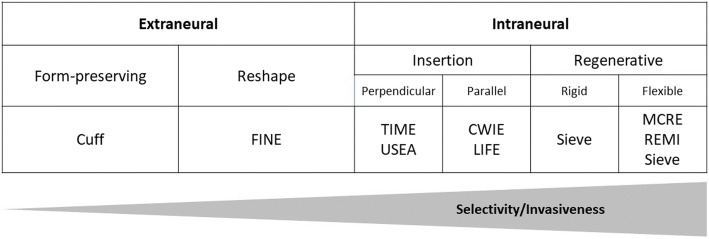
“Data collected by Navarro et al. point to the fact that currently in clinical practice, implanted electrodes are generally extraneural [36].”
§ Safety of long-term electrical peripheral nerve stimulation: review of the state of the art > Passive safety > Structural classification
What the sources say
- Supportedcites [36] Navarro X Krueger TB Lago N Micera S Stieglitz T Dario P A critical review of interfaces with the peripheral nervous system for the control of neuroprostheses and hybrid bionic systems J Peripher Nerv Syst 2005 10 229 258 10.1111/j.1085-9489.2005.10303.x 16221284 source
The electrode-status table (Surface electrodes, p. 6) lists implanted epineurial and helical electrodes as in clinical practice, while listing intrafascicular electrodes for artificial-limb control as research. The Epineurial and helicoidal electrodes section (p. 9) describes epineurial electrodes as placed on the nerve, supporting the review’s general distinction between clinical extraneural interfaces and intraneural research devices. (LLM, conf=0.87)
hedged- Asserted: passes — The authors put it forward as true.
- Checkable: passes — It can be checked against evidence.
- Load-bearing: unclear — It is unclear whether the paper’s conclusions depend on it.
- Based: passes — The paper gives a reason why it holds.
- Supported
The cited sources support only part of this claim — read each source’s verdict below.
In the paper
“At present, extraneural electrodes have shown superior long-term stability in comparison to intraneural electrodes.”
- Also stated in: § Structural classification · plain
“Presently, with regards to long-term human implantations, extraneural electrodes still emerge as the most favorable choice for clinical applications [26, 37].”
§ Safety of long-term electrical peripheral nerve stimulation: review of the state of the art > Abstract > Results
What the sources say
- Partly supportedcites [26] Christie BP Freeberg M Memberg WD Pinault GJC Hoyen HA Tyler DJ Long-term stability of stimulating spiral nerve cuff electrodes on human peripheral nerves J Neuroeng Rehabil. 2017 14 70 10.1186/s12984-017-0285-3 28693584 PMC5504677 sourceExperimental — accuracy not yet measured
The Conclusion reports that non-penetrating spiral nerve cuff electrodes remained reliable for up to 11 years. But the Discussion says the study focused solely on those electrodes; it does not establish that extraneural electrodes are more stable than intraneural electrodes. (LLM, conf=0.85)
- Supportedcites [37] Ortiz-Catalan M Brånemark R Håkansson B Delbeke J On the viability of implantable electrodes for the natural control of artificial limbs: review and discussion Biomed Eng Online 2012 11 33 10.1186/1475-925X-11-33 22715940 PMC3438028 source
The Discussion section, “Suitable IEs for long-term and natural prosthetic control” (page unavailable), says intraneural electrodes can lose long-term recording quality through encapsulation, whereas extra-type epimysial and cuff electrodes have remained functional for years. The Review section, “Nerve-based Electrodes” (page unavailable), also reports stable cuff-electrode performance over time. Together, these passages support the comparison as a summary of the review. (LLM, conf=0.91)
plainstates an association- Asserted: passes — The authors put it forward as true.
- Checkable: passes — It can be checked against evidence.
- Load-bearing: passes — The paper’s conclusions depend on it.
- Based: passes — The paper gives a reason why it holds.
- Also stated in: § Structural classification · plain
The cited sources support only part of this claim — read each source’s verdict below.
In the paper
“Presently, with regards to long-term human implantations, extraneural electrodes still emerge as the most favorable choice for clinical applications [26, 37].”
§ Safety of long-term electrical peripheral nerve stimulation: review of the state of the art > Passive safety > Structural classification
What the sources say
- Partly supportedcites [26] Christie BP Freeberg M Memberg WD Pinault GJC Hoyen HA Tyler DJ Long-term stability of stimulating spiral nerve cuff electrodes on human peripheral nerves J Neuroeng Rehabil. 2017 14 70 10.1186/s12984-017-0285-3 28693584 PMC5504677 sourceExperimental — accuracy not yet measured
The Conclusion (page not provided) finds non-penetrating spiral nerve cuff electrodes reliable for long-term clinical use in human neuroprostheses, with performance reported up to 11 years after implantation. The Discussion (page not provided) says the study examined only spiral cuffs and notes tradeoffs among interfaces; it does not establish that extraneural electrodes generally are the most favorable choice. (LLM, conf=0.88)
- Supportedcites [37] Ortiz-Catalan M Brånemark R Håkansson B Delbeke J On the viability of implantable electrodes for the natural control of artificial limbs: review and discussion Biomed Eng Online 2012 11 33 10.1186/1475-925X-11-33 22715940 PMC3438028 source
The Discussion section, “Suitable IEs for long-term and natural prosthetic control” (page unavailable), says intraneural electrodes carry greater risk, while extra-type electrodes, including cuffs, have demonstrated safety and functionality over several years in clinical applications. The Review’s “Nerve-based Electrodes” section also reports long-term functionality of cuff electrodes implanted in humans. Together, these passages support the cited preference for extraneural electrodes in long-term clinical implantation. (LLM, conf=0.88)
plain- Asserted: passes — The authors put it forward as true.
- Checkable: passes — It can be checked against evidence.
- Load-bearing: unclear — It is unclear whether the paper’s conclusions depend on it.
- Based: passes — The paper gives a reason why it holds.
- Partly supported
Every source the paper cites for this claim was checked and supports it.
In the paper
“In the case of eliciting somatosensory perception via peripheral nerve stimulation, Tan et al. found that the quality of a sensation can be altered by pulse width modulation [17]”
§ Safety of long-term electrical peripheral nerve stimulation: review of the state of the art > Active safety – Stimulation parameters > Duration
What the sources say
- Supportedcites [17] Tan DW Schiefer MA Keith MW Anderson JR Tyler J Tyler DJ A neural interface provides long-term stable natural touch perception Sci Transl Med 2014 6 257ra138 10.1126/scitranslmed.3008669 25298320 PMC5517305 source
In the results (pp. 3–4), Tan et al. report that modulating stimulation pulse width changed perceived sensations, including a shift from tingling to natural pressure. They also report that reducing the modulation changed pulsing pressure to continuous pressure or, at some sites, vibration, itch, or tingling. (LLM, conf=0.94)
plainstates a cause- Asserted: passes — The authors put it forward as true.
- Checkable: passes — It can be checked against evidence.
- Load-bearing: unclear — It is unclear whether the paper’s conclusions depend on it.
- Based: passes — The paper gives a reason why it holds.
- Supported
74 more claims · 5 with their cited sources checked
Create a free account to see all 137 claims and to verify the 1 reference still open.
- Probably not a substantial claim. 20
- It may state two separate claims as one. 43
- The quote only partly states this claim. 1
Claims other papers make about this one
Each is checked against this paper’s own text: does it say what the citing paper says it does?
The source backs part of the claim, not all of it — or backs it for a different population, condition or comparison.
In the citing paper
“Complications due to changes in the endoneurial environment include increased endoneurial pressure, nerve fiber compression, variable shifts in thresholds and loss of axons [29, 30].”
From Directed stimulation with interfascicular interfaces for peripheral nerve stimulation (2021) · cites this paper as [30]
Experimental — accuracy not yet measuredThe cited source says what the claim attributes to it.
In the citing paper
“These events have particularly been observed in larger nerve fibers [4, 31, 32] and in chronically implanted intrafascicular devices [30, 33, 34].”
From Directed stimulation with interfascicular interfaces for peripheral nerve stimulation (2021) · cites this paper as [30]
The cited source says what the claim attributes to it.
In the citing paper
“Typical stimulation pulse widths range up to a few hundred μs , and current amplitudes vary from tens of μA to a few mA in peripheral nerve interfaces [9], [101].”
From Active Neural Interface Circuits and Systems for Selective Control of Peripheral Nerves: A Review (2024) · cites this paper as [9]
Citations
Cites
Neural Stimulation and Recording Electrodes
Cogan, S. F. (2008) · Annual Review of Biomedical Engineering · doi:10.1146/annurev.bioeng.10.061807.160518 · Cited by 2,243
Electrical stimulation of excitable tissue: design of efficacious and safe protocols
Merrill, D. R., Bikson, M., & Jefferys, J. G. R. (2005) · Journal of Neuroscience Methods · doi:10.1016/j.jneumeth.2004.10.020 · Cited by 2,078
Coding and use of tactile signals from the fingertips in object manipulation tasks
Johansson, R. S., & Flanagan, J. R. (2009) · Nature Reviews Neuroscience · doi:10.1038/nrn2621 · Cited by 2,063
Which elements are excited in electrical stimulation of mammalian central nervous system: A review
Ranck, J. B. (1975) · Brain Research · doi:10.1016/0006-8993(75)90364-9 · Cited by 2,024 · cited 1×
“Stimulation safety limits cannot be applied as a global concept to neural tissue due to the diversity of cells forming it [103].”
BackgroundBiological Responses to Materials
Anderson, J. M. (2001) · Annual Review of Materials Research · doi:10.1146/annurev.matsci.31.1.81 · Cited by 1,465
Restoring natural sensory feedback in real-time bidirectional hand prostheses
Raspopovic, S., Capogrosso, M., Petrini, F. M., Bonizzato, M., Rigosa, J., Di Pino, G., Carpaneto, J., Controzzi, M., Boretius, T., Fernandez, E., et al. (2014) · Science Translational Medicine · doi:10.1126/scitranslmed.3006820 · Cited by 1,001
Navarro, X., Krueger, T. B., Lago, N., Micera, S., Stieglitz, T., & Dario, P. (2005) · Journal of the Peripheral Nervous System · doi:10.1111/j.1085-9489.2005.10303.x · Cited by 845
A neural interface provides long-term stable natural touch perception
Tan, D. W., Schiefer, M. A., Keith, M. W., Anderson, J. R., Tyler, J., & Tyler, D. J. (2014) · Science Translational Medicine · doi:10.1126/scitranslmed.3008669 · Cited by 751
Charge density and charge per phase as cofactors in neural injury induced by electrical stimulation
McCreery, D. B., Agnew, W. F., Yuen, T. G. H., & Bullara, L. (1990) · IEEE Transactions on Biomedical Engineering · doi:10.1109/10.102812 · Cited by 708
Ben‐Menachem, E., Mañon‐Espaillat, R., Ristanovic, R., Wilder, B. J., Stefan, H., Mirza, W., Tarver, W. B., Wernicke, J. F., & First International Vagus Nerve Stimulation Study Group (1994) · Epilepsia · doi:10.1111/j.1528-1157.1994.tb02482.x · Cited by 683
Analysis of Models for External Stimulation of Axons
Rattay, F. (1986) · IEEE Transactions on Biomedical Engineering · doi:10.1109/tbme.1986.325670 · Cited by 681
The neurophysiology of unmyelinated tactile afferents
Olausson, H., Wessberg, J., Morrison, I., McGlone, F., & Vallbo, Å. (2010) · Neuroscience & Biobehavioral Reviews · doi:10.1016/j.neubiorev.2008.09.011 · Cited by 587
Direct neural sensory feedback and control of a prosthetic arm
Dhillon, G. S., & Horch, K. W. (2005) · IEEE Transactions on Neural Systems and Rehabilitation Engineering · doi:10.1109/tnsre.2005.856072 · Cited by 573
A review of vagus nerve stimulation as a therapeutic intervention
Johnson, R. L., & Wilson, C. G. (2018) · Journal of Inflammation Research · doi:10.2147/jir.s163248 · Cited by 562
Recherches quantitatives sur l' excitation electrique des nerfs traitee comme une polarization.
Lapique, L. (1907) · Medical Entomology and Zoology · Cited by 562
A model of safe levels for electrical stimulation
Shannon, R. V. (1992) · IEEE Transactions on Biomedical Engineering · doi:10.1109/10.126616 · Cited by 526 · cited 2×
“Maximal tolerated stimulation pulse frequencies vary for different neural structures as demonstrated in a number of publications including the relatively low stimulus frequency tolerance of motor nerves when compared to examples in the central nervous system [44, 65, 92].”
BackgroundMethodOrtiz-Catalan, M., Håkansson, B., & Brånemark, R. (2014) · Science Translational Medicine · doi:10.1126/scitranslmed.3008933 · Cited by 484
Self-citationProspective Long‐Term Study of Vagus Nerve Stimulation for the Treatment of Refractory Seizures
DeGiorgio, C. M., Schachter, S. C., Handforth, A., Salinsky, M., Thompson, J., Uthman, B., Reed, R., Collin, S., Tecoma, E., Morris, G. L., et al. (2000) · Epilepsia · doi:10.1111/j.1528-1157.2000.tb00325.x · Cited by 479
Rapid Conduction and the Evolution of Giant Axons and Myelinated Fibers
Hartline, D. K., & Colman, D. R. (2007) · Current Biology · doi:10.1016/j.cub.2006.11.042 · Cited by 478
Ochoa, J., & Torebjörk, E. (1983) · The Journal of Physiology · doi:10.1113/jphysiol.1983.sp014873 · Cited by 467
Electrical stimulation promotes sensory neuron regeneration and growth-associated gene expression
Geremia, N. M., Gordon, T., Brushart, T. M., Al-Majed, A. A., & Verge, V. M. K. (2007) · Experimental Neurology · doi:10.1016/j.expneurol.2007.01.040 · Cited by 430
A spiral nerve cuff electrode for peripheral nerve stimulation
Naples, G. G., Mortimer, J. T., Scheiner, A., & Sweeney, J. D. (1988) · IEEE Transactions on Biomedical Engineering · doi:10.1109/10.8670 · Cited by 415
Functionally selective peripheral nerve stimulation with a flat interface nerve electrode
Tyler, D. J., & Durand, D. M. (2002) · IEEE Transactions on Neural Systems and Rehabilitation Engineering · doi:10.1109/tnsre.2002.806840 · Cited by 398
Double nerve intraneural interface implant on a human amputee for robotic hand control
Rossini, P. M., Micera, S., Benvenuto, A., Carpaneto, J., Cavallo, G., Citi, L., Cipriani, C., Denaro, L., Denaro, V., Di Pino, G., et al. (2010) · Clinical Neurophysiology · doi:10.1016/j.clinph.2010.01.001 · Cited by 396
Tissue damage thresholds during therapeutic electrical stimulation
Cogan, S. F., Ludwig, K. A., Welle, C. G., & Takmakov, P. (2016) · Journal of Neural Engineering · doi:10.1088/1741-2560/13/2/021001 · Cited by 386
Brummer, S. B., & Turner, M. J. (1977) · IEEE Transactions on Biomedical Engineering · doi:10.1109/tbme.1977.326218 · Cited by 359
Dhillon, G. S., Lawrence, S. M., Hutchinson, D. T., & Horch, K. W. (2004) · The Journal of Hand Surgery · doi:10.1016/j.jhsa.2004.02.006 · Cited by 354
Oddo, C. M., Raspopovic, S., Artoni, F., Mazzoni, A., Spigler, G., Petrini, F., Giambattistelli, F., Vecchio, F., Miraglia, F., Zollo, L., et al. (2016) · eLife · doi:10.7554/elife.09148 · Cited by 332
Trophic Mechanisms in the Peripheral Nervous System
Varon, S. S., & Bunge, R. P. (1978) · Annual Review of Neuroscience · doi:10.1146/annurev.ne.01.030178.001551 · Cited by 326
Davis, T. S., Wark, H. A. C., Hutchinson, D. T., Warren, D. J., O’Neill, K., Scheinblum, T., Clark, G. A., Normann, R. A., & Greger, B. (2016) · Journal of Neural Engineering · doi:10.1088/1741-2560/13/3/036001 · Cited by 314
The Effect of Stimulus Parameters on the Recruitment Characteristics of Direct Nerve Stimulation
Gorman, P. H., & Mortimer, J. T. (1983) · IEEE Transactions on Biomedical Engineering · doi:10.1109/tbme.1983.325041 · Cited by 313
Al-Majed, A. A., Tam, S. L., & Gordon, T. (2004) · Cellular and Molecular Neurobiology · doi:10.1023/b:cemn.0000022770.66463.f7 · Cited by 292
Brief, Noninjurious Electric Waveform for Stimulation of the Brain
Lilly, J. C., Hughes, J. R., Alvord, E. C., & Galkin, T. W. (1955) · Science · doi:10.1126/science.121.3144.468 · Cited by 287 · cited 1×
“[85], and commonly referred to as the 'Lilly pulse'.”
BackgroundSur la possibilite de rendre comparables entre eux les appareils servant a l'excitation electrique.
Weiss, G. (1990) · ARCHIVES ITALIENNES DE BIOLOGIE · doi:10.4449/aib.v35i1.1355 · Cited by 283 · cited 2×
“Excitation properties of different tissues are thus quantified by their specific strength-duration characteristic first experimentally derived in the early 1900’s by Weiss [59] and Lapicque [60].”
BackgroundThe neural basis of perceived intensity in natural and artificial touch
Graczyk, E. L., Schiefer, M. A., Saal, H. P., Delhaye, B. P., Bensmaia, S. J., & Tyler, D. J. (2016) · Science Translational Medicine · doi:10.1126/scitranslmed.aaf5187 · Cited by 258
Schiefer, M., Tan, D., Sidek, S. M., & Tyler, D. J. (2016) · Journal of Neural Engineering · doi:10.1088/1741-2560/13/1/016001 · Cited by 255
Microenvironment of the peripheral nervous system under normal and pathological conditions.
Olsson, Y. (1990) · PubMed · Cited by 244
Lago, N., Yoshida, K., Koch, K. P., & Navarro, X. (2007) · IEEE Transactions on Biomedical Engineering · doi:10.1109/tbme.2006.886617 · Cited by 227
Macrophage Systems in Peripheral Nerves. A Review
GRIFFIN, J. W., GEORGE, R., & HO, T. (1993) · Journal of Neuropathology and Experimental Neurology · doi:10.1097/00005072-199311000-00001 · Cited by 222
Wendelken, S., Page, D. M., Davis, T., Wark, H. A. C., Kluger, D. T., Duncan, C., Warren, D. J., Hutchinson, D. T., & Clark, G. A. (2017) · Journal of NeuroEngineering and Rehabilitation · doi:10.1186/s12984-017-0320-4 · Cited by 216
Cuff electrodes for chronic stimulation and recording of peripheral nerve activity
Loeb, G. E., & Peck, R. A. (1996) · Journal of Neuroscience Methods · doi:10.1016/0165-0270(95)00123-9 · Cited by 215
Maffiuletti, N. A., Roig, M., Karatzanos, E., & Nanas, S. (2013) · BMC Medicine · doi:10.1186/1741-7015-11-137 · Cited by 199
Horch, K., Meek, S., Taylor, T. G., & Hutchinson, D. T. (2011) · IEEE Transactions on Neural Systems and Rehabilitation Engineering · doi:10.1109/tnsre.2011.2162635 · Cited by 194
Agnew, W. F., McCreery, D. B., Yuen, T. G. H., & Bullara, L. A. (1989) · Annals of Biomedical Engineering · doi:10.1007/bf02364272 · Cited by 185
Long-term pain control by direct peripheral-nerve stimulation.
Nashold, B. S., Goldner, J. L., Mullen, J. B., & Bright, D. S. (1982) · The Journal of Bone & Joint Surgery · doi:10.2106/00004623-198264010-00001 · Cited by 184 · cited 1×
“Similar compatibility was shown for up to 18 years stimulating the phrenic nerve [5]; up to 8 years stimulating the median, radial, sciatic, and ulnar nerves [39]; and up to 11 years stimulating motor and sensory nerves in a feedback controlled application [26].”
MethodConsiderations for Safety with Chronically Implanted Nerve Electrodes
Agnew, W. F., & McCreery, D. B. (1990) · Epilepsia · doi:10.1111/j.1528-1157.1990.tb05845.x · Cited by 184
Dhillon, G. S., Krüger, T. B., Sandhu, J. S., & Horch, K. W. (2005) · Journal of Neurophysiology · doi:10.1152/jn.00937.2004 · Cited by 183
Posterior tibial nerve stimulation in the treatment of urge incontinence
Vandoninck, V., van Balken, M. R., Agró, E. F., Petta, F., Caltagirone, C., Heesakkers, J. P. F. A., Kiemeney, L. A. L. M., Debruyne, F. M. J., & Bemelmans, B. L. H. (2003) · Neurourology and Urodynamics · doi:10.1002/nau.10036 · Cited by 181
Prado-Guitierrez, P., Fewster, L. M., Heasman, J. M., McKay, C. M., & Shepherd, R. K. (2006) · Hearing Research · doi:10.1016/j.heares.2006.03.006 · Cited by 173
Wei, X. F., & Grill, W. M. (2005) · Journal of Neural Engineering · doi:10.1088/1741-2560/2/4/010 · Cited by 171
Comparison of neural damage induced by electrical stimulation with faradaic and capacitor electrodes
McCreery, D. B., Agnew, W. F., Yuen, T. G. H., & Bullara, L. A. (1988) · Annals of Biomedical Engineering · doi:10.1007/bf02368010 · Cited by 163
Histological Evaluation of Neural Damage from Electrical Stimulation
Yuen, T. G. H., Agnew, W. F., Bullara, L. A., Jacques, S., & McCreery, D. B. (1981) · Neurosurgery · doi:10.1097/00006123-198109000-00013 · Cited by 160
Non-rectangular waveforms for neural stimulation with practical electrodes
Sahin, M., & Tie, Y. (2007) · Journal of Neural Engineering · doi:10.1088/1741-2560/4/3/008 · Cited by 157
Waters, R. L., McNeal, D. R., Faloon, W., & Clifford, B. (1985) · The Journal of Bone & Joint Surgery · doi:10.2106/00004623-198567050-00016 · Cited by 156
The response of the myelinated nerve fiber to short duration biphasic stimulating currents
van den Honert, C., & Mortimer, J. T. (1979) · Annals of Biomedical Engineering · doi:10.1007/bf02363130 · Cited by 152 · cited 1×
“Van den Honert and Mortimer found that introducing an inter-phase delay can lower the stimulation threshold [91].”
BackgroundMechanical and Biological Interactions of Implants with the Brain and Their Impact on Implant Design
Prodanov, D., & Delbeke, J. (2016) · Frontiers in Neuroscience · doi:10.3389/fnins.2016.00011 · Cited by 147
Self-citationOrtiz-Catalan, M., Brånemark, R., Håkansson, B., & Delbeke, J. (2012) · BioMedical Engineering OnLine · doi:10.1186/1475-925x-11-33 · Cited by 144
Self-citationSkeletal muscle effects of electrostimulation after COPD exacerbation: a pilot study
Abdellaoui, A., Préfaut, C., Gouzi, F., Couillard, A., Coisy-Quivy, M., Hugon, G., Molinari, N., Lafontaine, T., Jonquet, O., Laoudj-Chenivesse, D., et al. (2011) · European Respiratory Journal · doi:10.1183/09031936.00167110 · Cited by 144
Tissue Damage by Pulsed Electrical Stimulation
Butterwick, A., Vankov, A., Huie, P., Freyvert, Y., & Palanker, D. (2007) · IEEE Transactions on Biomedical Engineering · doi:10.1109/tbme.2007.908310 · Cited by 136
The foreign body response to the Utah Slant Electrode Array in the cat sciatic nerve
Christensen, M. B., Pearce, S. M., Ledbetter, N. M., Warren, D. J., Clark, G. A., & Tresco, P. A. (2014) · Acta Biomaterialia · doi:10.1016/j.actbio.2014.07.010 · Cited by 135
Crago, P. E., Peckham, P. H., Mortimer, J. T., & Van Der Meulen, J. P. (1974) · Annals of Biomedical Engineering · doi:10.1007/bf02368496 · Cited by 133
Mechanisms controlling axonal sprouting at the neuromuscular junction
Tam, S. L., & Gordon, T. (2003) · Journal of Neurocytology · doi:10.1023/b:neur.0000020635.41233.0f · Cited by 131
McCreery, D. B., Yuen, T. G. H., Agnew, W. F., & Bullara, L. A. (1997) · IEEE Transactions on Biomedical Engineering · doi:10.1109/10.634645 · Cited by 130
Stieglitz, T., Beutel, H., & Meyer, J.-U. (1997) · Sensors and Actuators A: Physical · doi:10.1016/s0924-4247(97)01494-5 · Cited by 125
Sensory adaptation to electrical stimulation of the somatosensory nerves
Graczyk, E. L., Delhaye, B. P., Schiefer, M. A., Bensmaia, S. J., & Tyler, D. J. (2018) · Journal of Neural Engineering · doi:10.1088/1741-2552/aab790 · Cited by 124
Intramuscular electrical stimulation: Tissue damage
Mortimer, J. T., Kaufman, D., & Roessmann, U. (1980) · Annals of Biomedical Engineering · doi:10.1007/bf02364479 · Cited by 123
Imbalanced biphasic electrical stimulation: Muscle tissue damage
Scheiner, A., Mortimer, J. T., & Roessmann, U. (1990) · Annals of Biomedical Engineering · doi:10.1007/bf02364157 · Cited by 117
Paradigms for restoration of somatosensory feedback via stimulation of the peripheral nervous system
Pasluosta, C. F., Kiele, P., & Stieglitz, T. (2017) · Clinical Neurophysiology · doi:10.1016/j.clinph.2017.12.027 · Cited by 111
Cantrell, D. R., Inayat, S., Taflove, A., Ruoff, R. S., & Troy, J. B. (2008) · Journal of Neural Engineering · doi:10.1088/1741-2560/5/1/006 · Cited by 107
Substrate arrays of Iridium Oxide microelectrodes for in vitro neuronal interfacing
Gawad, S. (2009) · Frontiers in Neuroengineering · doi:10.3389/neuro.16.001.2009 · Cited by 104
Efficiency Analysis of Waveform Shape for Electrical Excitation of Nerve Fibers
Wongsarnpigoon, A., Woock, J. P., & Grill, W. M. (2010) · IEEE Transactions on Neural Systems and Rehabilitation Engineering · doi:10.1109/tnsre.2010.2047610 · Cited by 104
Grill, W. M., & Mortimer, J. T. (1998) · IEEE Transactions on Rehabilitation Engineering · doi:10.1109/86.736150 · Cited by 103
Interfacing the Somatosensory System to Restore Touch and Proprioception: Essential Considerations
Weber, D. J., Friesen, R., & Miller, L. E. (2012) · Journal of Motor Behavior · doi:10.1080/00222895.2012.735283 · Cited by 98
McCreery, D. B., Agnew, W. F., Yuen, T. G. H., & Bullara, L. A. (1992) · Medical & Biological Engineering & Computing · doi:10.1007/bf02446202 · Cited by 97
Mastinu, E., Doguet, P., Botquin, Y., Hakansson, B., & Ortiz-Catalan, M. (2017) · IEEE Transactions on Biomedical Circuits and Systems · doi:10.1109/tbcas.2017.2694710 · Cited by 97
Self-citation“Long-term stability of stimulating spiral nerve cuff electrodes on human peripheral nerves”
Christie, B. P., Freeberg, M., Memberg, W. D., Pinault, G. J. C., Hoyen, H. A., Tyler, D. J., & Triolo, R. J. (2017) · Journal of NeuroEngineering and Rehabilitation · doi:10.1186/s12984-017-0285-3 · Cited by 97
Larsen, J. O., Thomsen, M., Haugland, M., & Sinkjær, T. (1998) · Acta Neuropathologica · doi:10.1007/s004010050907 · Cited by 96
Agnew, W. F., Yuen, T. G. H., & McCreery, D. B. (1983) · Experimental Neurology · doi:10.1016/0014-4886(83)90221-2 · Cited by 96
McCreery, D. B., Agnew, W. F., Yuen, T. G. H., & Bullara, L. A. (1995) · Medical & Biological Engineering & Computing · doi:10.1007/bf02510526 · Cited by 95
Standing After Spinal Cord Injury With Four-Contact Nerve-Cuff Electrodes for Quadriceps Stimulation
Fisher, L. E., Miller, M. E., Bailey, S. N., Davis Jr., J. A., Anderson, J. S., Rhode, L., Tyler, D. J., & Triolo, R. J. (2008) · IEEE Transactions on Neural Systems and Rehabilitation Engineering · doi:10.1109/tnsre.2008.2003390 · Cited by 90
Current Density Profiles of Surface Mounted and Recessed Electrodes for Neural Prostheses
Rubinstein, J. T., Spelman, F. A., Soma, M., & Suesserman, M. F. (1987) · IEEE Transactions on Biomedical Engineering · doi:10.1109/tbme.1987.326007 · Cited by 89
Platinum for neural stimulation: voltammetry considerations
Hudak, E. M., Mortimer, J. T., & Martin, H. B. (2010) · Journal of Neural Engineering · doi:10.1088/1741-2560/7/2/026005 · Cited by 89
(1974) · PubMed · Cited by 89
Durability of implanted electrodes and leads in an upper-limb neuroprosthesis
Kilgore, K. L., Peckham, P. H., Keith, M. W., Montague, F. W., Hart, R. L., Gazdik, M. M., Bryden, A. M., Snyder, S. A., & Stage, T. G. (2003) · The Journal of Rehabilitation Research and Development · doi:10.1682/jrrd.2003.11.0457 · Cited by 85
Mannard, A., Stein, R. B., & Charles, D. (1974) · Science · doi:10.1126/science.183.4124.547 · Cited by 85
Suesserman, M. F., Spelman, F. A., & Rubinstein, J. T. (1991) · IEEE Transactions on Biomedical Engineering · doi:10.1109/10.81558 · Cited by 83
Long‐Term Follow‐Up of Pacing of the Conditioned Diaphragm in Quadriplegia
ELEFTERIADES, J. A., QUIN, J. A., HOGAN, J. F., HOLCOMB, W. G., LETSOU, G. V., CHLOSTA, W. F., & GLENN, W. W. W. L. (2002) · Pacing and Clinical Electrophysiology · doi:10.1046/j.1460-9592.2002.00897.x · Cited by 79
Clark, G. A., Wendelken, S., Page, D. M., Davis, T., Wark, H. A. C., Normann, R. A., Warren, D. J., & Hutchinson, D. T. (2014) · 2014 36th Annual International Conference of the IEEE Engineering in Medicine and Biology Society · doi:10.1109/embc.2014.6944001 · Cited by 78
Long Micro-Channel Electrode Arrays: A Novel Type of Regenerative Peripheral Nerve Interface
Lacour, S. P., Fitzgerald, J. J., Lago, N., Tarte, E., McMahon, S., & Fawcett, J. (2009) · IEEE Transactions on Neural Systems and Rehabilitation Engineering · doi:10.1109/tnsre.2009.2031241 · Cited by 75
Anani, A. B., Ikeda, K., & Körner, L. M. (1977) · Medical & Biological Engineering & Computing · doi:10.1007/bf02457988 · Cited by 74
Tam, S. L., & Gordon, T. (2003) · Journal of Neurobiology · doi:10.1002/neu.10276 · Cited by 70
Estimation of current density distribution under electrodes for external defibrillation
Krasteva, V., & Papazov, S. P. (2002) · BioMedical Engineering OnLine · doi:10.1186/1475-925x-1-7 · Cited by 70
Bowman, B. R., & Erickson, R. C. (1985) · Annals of Biomedical Engineering · doi:10.1007/bf02371251 · Cited by 66
Functional and mechanical evaluation of nerve stretch injury
Rickett, T., Connell, S., Bastijanic, J., Hegde, S., & Shi, R. (2011) · Journal of Medical Systems · doi:10.1007/s10916-010-9468-1 · Cited by 64
Tykocinski, M., Shepherd, R. K., & Clark, G. M. (1995) · Hearing Research · doi:10.1016/0378-5955(95)00108-g · Cited by 61
Analysis of high-perimeter planar electrodes for efficient neural stimulation
Wei, X. (2009) · Frontiers in Neuroengineering · doi:10.3389/neuro.16.015.2009 · Cited by 60
Polyimide micro-channel arrays for peripheral nerve regenerative implants
Lacour, S. P., Atta, R., FitzGerald, J. J., Blamire, M., Tarte, E., & Fawcett, J. (2008) · Sensors and Actuators A: Physical · doi:10.1016/j.sna.2008.05.031 · Cited by 56
Early interfaced neural activity from chronic amputated nerves
Garde, K. (2009) · Frontiers in Neuroengineering · doi:10.3389/neuro.16.005.2009 · Cited by 56
Papazov, S. P., & Daskalov, I. K. (2002) · BioMedical Engineering OnLine · doi:10.1186/1475-925x-1-1 · Cited by 52
Local anaesthetic block protects against electrically-induced damage in peripheral nerve
Agnew, W. F., McCreery, D. B., Yuen, T. G. H., & Bullara, L. A. (1990) · Journal of Biomedical Engineering · doi:10.1016/0141-5425(90)90004-7 · Cited by 49
Material considerations for peripheral nerve interfacing
Kim, Y.-T., & Romero-Ortega, M. I. (2012) · MRS Bulletin · doi:10.1557/mrs.2012.99 · Cited by 47
Evolution and resolution of stimulation-induced axonal injury in peripheral nerve
Agnew, W. F., McCreery, D. B., Yuen, T. G. H., & Bullara, L. A. (1999) · Muscle & Nerve · doi:10.1002/(sici)1097-4598(199910)22:10<1393::aid-mus9>3.0.co;2-e · Cited by 47
Light and electron microscopic studies of phrenic nerves after long-term electrical stimulation
Kim, J. H., Manuelidis, E. E., Glenn, W. W. L., Fukuda, Y., Cole, D. S., & Hogan, J. F. (1983) · Journal of Neurosurgery · doi:10.3171/jns.1983.58.1.0084 · Cited by 47
A minimum profile uniform current density electrode
Ksienski, D. A. (1992) · IEEE Transactions on Biomedical Engineering · doi:10.1109/10.142643 · Cited by 43
Burst-Modulated Waveforms Optimize Electrical Stimuli for Charge Efficiency and Fiber Selectivity
Qing, K. Y., Ward, M. P., & Irazoqui, P. P. (2015) · IEEE Transactions on Neural Systems and Rehabilitation Engineering · doi:10.1109/tnsre.2015.2421732 · Cited by 38
Axon Collaterals and Brain States
Rockland, K. S. (2018) · Frontiers in Systems Neuroscience · doi:10.3389/fnsys.2018.00032 · Cited by 38
Mortimer, T., Agnew, W. F., Horch, K., Citron, P., Creasey, G., & Kantor, C. (1995) · IEEE Transactions on Rehabilitation Engineering · doi:10.1109/86.392373 · Cited by 33
Has the muscular substance a longer chronaxie than the nervous substance?1
Lapicque, L. (1931) · The Journal of Physiology · doi:10.1113/jphysiol.1931.sp002806 · Cited by 31 · cited 1×
“The rheobase is defined as the minimal current required to evoke an action potential with an infinitely long duration pulse, and the chronaxie is the minimum duration to evoke an action potential with pulse intensities of twice the rheobase current [58].”
BackgroundBadi, A. N., Hillman, T., Shelton, C., & Normann, R. A. (2002) · Archives of Otolaryngology–Head & Neck Surgery · doi:10.1001/archotol.128.9.1019 · Cited by 30
Dynamic Current Density of the Disk Electrode Double-Layer
Behrend, M. R., Ahuja, A., & Weiland, J. D. (2008) · IEEE Transactions on Biomedical Engineering · doi:10.1109/tbme.2008.915723 · Cited by 30
The Electrochemistry Of Electrical Stimulation
Robblee, L. S., & Rose, T. L. (2005) · Annual International Conference of the IEEE Engineering in Medicine and Biology Society (EMBC) · doi:10.1109/iembs.1990.691848 · Cited by 22 · cited 1×
“injection limits were defined by Robblee and Rose based on the reversibility of the resulting processes [61].”
BackgroundEditorial: Cellular engineering and the future
Murray, A., & Öberg, P. Å. (1998) · Medical & Biological Engineering & Computing · doi:10.1007/bf02522848 · Cited by 21
Anani, A., & Körner, L. K. (1979) · Medical & Biological Engineering & Computing · doi:10.1007/bf02447053 · Cited by 19
Comparison of rectangular and exponential current pulses for evoking sensation
Wessale, J. L., Geddes, L. A., Ayers, G. M., & Foster, K. S. (1992) · Annals of Biomedical Engineering · doi:10.1007/bf02368523 · Cited by 18
Girsch, W., Koller, R., Gruber, H., Holle, J., Liegl, C., Losert, U., Mayr, W., & Thoma, H. (1991) · Journal of Neurosurgery · doi:10.3171/jns.1991.74.4.0636 · Cited by 18
Nielsen, T. N., Sevcencu, C., & Struijk, J. J. (2014) · IEEE Transactions on Neural Systems and Rehabilitation Engineering · doi:10.1109/tnsre.2013.2278479 · Cited by 15
Parameters of stimulation and perception in an artificial sensory feedback system.
Cf, W., Lockhead, G. R., Dr, M., & Jh, M. (1977) · PubMed · Cited by 14
Jeong (2000) · doi:10.1002/(sici)1097-4636(200005)50:2
(1998) · doi:10.1002/(sici)1098-2752(1998)18:7<397::aid-micr2>3.0.co;2-f
Research works printed but not linked: 2
- Ortiz-Catalan M Mastinu E Brånemark R Håkansson B Direct Neural Sensory Feedback and Control via Osseointegration 2017 Cape Town XVI World Congr Int Soc Prosthetics Orthot (ISPO)
- Lilly JC. Injury and excitation by electric currents. In: Sheer DE, editor. Electr Stimul brain. Austin: University of Texas Press; 1961. p. 60–4.
Cited by
Electroactive electrospun nanofibers for tissue engineering
Zhang, X., Li, L., Ouyang, J., Zhang, L., Xue, J., Zhang, H., & Tao, W. (2021) · Nano Today · doi:10.1016/j.nantod.2021.101196 · Cited by 197
Zuo, K. J., Gordon, T., Chan, K. M., & Borschel, G. H. (2020) · Experimental Neurology · doi:10.1016/j.expneurol.2020.113397 · Cited by 161
Ejneby, M. S., Jakešová, M., Ferrero, J. J., Migliaccio, L., Sahalianov, I. Y., Zhao, Z., Berggren, M., Khodagholy, D., Đerek, V., Gelinas, J. N., et al. (2021) · Nature Biomedical Engineering · doi:10.1038/s41551-021-00817-7 · Cited by 185
A review for the peripheral nerve interface designer
Larson, C. E., & Meng, E. (2020) · Journal of Neuroscience Methods · doi:10.1016/j.jneumeth.2019.108523 · Cited by 133
In Vivo Organic Bioelectronics for Neuromodulation
Berggren, M., Głowacki, E. D., Simon, D. T., Stavrinidou, E., & Tybrandt, K. (2022) · Chemical Reviews · doi:10.1021/acs.chemrev.1c00390 · Cited by 130
Metadata
- Authors
- Günter, C., Delbeke, J., & Ortiz-Catalan, M.
- Affiliations
- Chalmers University of Technology (SE)
- Ghent University (BE)
- Integrum (Sweden) (SE)
- Corresponding author
- Ortiz-Catalan, Max
- Venue
- Journal of NeuroEngineering and Rehabilitation
- Published
- 2019-01-18
- Volume
- 16
- Issue
- 1
- Pages
- 13-13
- ISSN
- 1743-0003 (ISSN-L)
- PMC
- PMC6339286
- OpenAlex
- W2917203101
- Cited by
- 198
- References
- 120
- Citations by year
- 2026: 12 · 2025: 32 · 2024: 30 · 2023: 36 · 2022: 27 · 2021: 30 · 2020: 24 · 2019: 7
- FWCI
- 2.93
- Type
- journal article
- Language
- en
- Update notices
- correction (2020-06-15)
- Open access
- gold
- doi.org
- Licence
- cc-by
- creativecommons.org/licenses/by/4.0/ (tdm)
- creativecommons.org/licenses/by/4.0/ (vor)
- Locations
- Journal of NeuroEngineering and Rehabilitation (publishedVersion, cc-by)
- Europe PMC (PubMed Central) (publishedVersion, other-oa)
- PubMed Central (publishedVersion, cc-by)
- PubMed (publishedVersion)
- Ghent University Academic Bibliography (Ghent University) (submittedVersion, cc-by)
- DOAJ (DOAJ: Directory of Open Access Journals) (submittedVersion, cc-by-sa)
- Chalmers Research (Chalmers University of Technology) (submittedVersion)
- Funders
- Stiftelsen Promobilia
- VINNOVA
- Horizon 2020 Framework Programme
- Topics
- Life Sciences › Neuroscience › Cellular and Molecular Neuroscience › Neuroscience and Neural Engineering
- Health Sciences › Medicine › Anesthesiology and Pain Medicine › Pain Management and Treatment
- Life Sciences › Neuroscience › Neurology › Vagus Nerve Stimulation Research
- Keywords
- peripheral nerve stimulation, charge injection limit, stimulation parameters, stimulation frequency, motor recovery
- MeSH terms
- Animals, Electric Stimulation, Humans, Peripheral Nerves
About these checks
Registry, retraction, Cites and statistics results are computed, not judged, with one exception: a printed reference that no index lists is read once by a model before it counts as a citation error. Claims are extracted by a model and kept only when their quote appears verbatim in the text; each cited source is then checked, with a model’s help, for whether it says what the claim relies on. Those verdicts can be wrong — read the claim’s quote and the cited source before relying on one.
The claim verdicts this report counts are experimental: their accuracy is not yet measured.
A language model drew the claims from the paper on 2026-10-11, under version 3 of the claim definition (model deepseek-v4.1-flash, prompt extract-v3).
A second model labelled each claim on 2026-10-11 (model jev-1.13-20260917, definition revision gold-guideline-v0.2).
Cited sources are checked with a language model’s help (gpt-6-sol).
Statistics and arithmetic are recomputed, not judged.
Confidence bands are shown only for fields calibrated on our annotated test set. None is calibrated yet, so no band is shown.
What counts as a claim ›How we measure confidence ›How we check this ›
Are you an author, or do you see a problem with this page? Request a review
Data sources
Bibliographic data: Semantic Scholar, OpenAlex, Crossref.
Contains information from the Semantic Scholar Academic Graph Datasets, made available under the ODC Attribution License (ODC-BY 1.0).
Semantic Scholar’s data is described in: Kinney, R., et al. (2023). The Semantic Scholar Open Data Platform. arXiv:2301.10140.
