

Glycogen availability and skeletal muscle adaptations with endurance and resistance exercise
Open accessThe DOI matches its Crossref record; 113 of the 113 references it cites were found in a registry or an index.
Abstract
It is well established that glycogen depletion affects endurance exercise performance negatively. Moreover, numerous studies have demonstrated that post-exercise carbohydrate ingestion improves exercise recovery by increasing glycogen resynthesis. However, recent research into the effects of glycogen availability sheds new light on the role of the widely accepted energy source for adenosine triphosphate (ATP) resynthesis during endurance exercise. Indeed, several studies showed that endurance training with low glycogen availability leads to similar and sometimes even better adaptations and performance compared to performing endurance training sessions with replenished glycogen stores. In the case of resistance exercise, a few studies have been performed on the role of glycogen availability on the early post-exercise anabolic response. However, the effects of low glycogen availability on phenotypic adaptations and performance following prolonged resistance exercise remains unclear to date. This review summarizes the current knowledge about the effects of glycogen availability on skeletal muscle adaptations for both endurance and resistance exercise. Furthermore, it describes the role of glycogen availability when both exercise modes are performed concurrently.
Overview
The claims and statistics of this paper haven’t been checked yet.
Free: it reads the open-access text and checks the first 5 claims that cite a source we can check. Create a free account to check every claim.
Integrity signals
Registry
Cites
Statistics
Figures
Verification
Claims the paper makes
The claims and statistics of this paper haven’t been checked yet.
Free: it reads the open-access text and checks the first 5 claims that cite a source we can check. Create a free account to check every claim.
Claims other papers make about this one
Each is checked against this paper’s own text: does it say what the citing paper says it does?
In the citing paper
“For this reason, it would be convenient to start resistance exercises with replenished glycogen stores [16,17].”
From Carbohydrate Availability and Physical Performance: Physiological Overview and Practical Recommendations (2019) · cites this paper as [16]
Self-check
Percentages, sums and reported differences re-computed from the paper’s own numbers.
The self-check needs the paper’s full text.
Citations
Cites
(1992) · Applied Ergonomics · doi:10.1016/0003-6870(92)90338-v · Cited by 7,112
AMPK regulates energy expenditure by modulating NAD+ metabolism and SIRT1 activity
Cantó, C., Gerhart-Hines, Z., Feige, J. N., Lagouge, M., Noriega, L., Milne, J. C., Elliott, P. J., Puigserver, P., & Auwerx, J. (2009) · Nature · doi:10.1038/nature07813 · Cited by 3,300 · cited 3×
“Furthermore, it was shown that the acute actions of AMPK on lipid oxidation alter the balance between cellular NAD1 and NADH, which acts as a messenger to activate SIRT1 [57].”
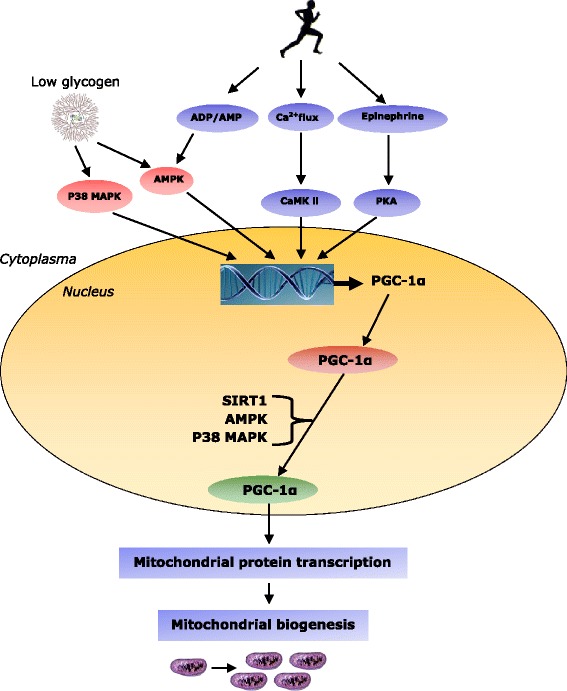
BackgroundAMP-activated protein kinase (AMPK) action in skeletal muscle via direct phosphorylation of PGC-1α
Jäger, S., Handschin, C., St.-Pierre, J., & Spiegelman, B. M. (2007) · Proceedings of the National Academy of Sciences · doi:10.1073/pnas.0705070104 · Cited by 2,491 · cited 2×
“factors (NRF-1 and -2) and the mitochondrial transcription factor A (Tfam) [53].”
BackgroundPhysiological adaptations to low-volume, high-intensity interval training in health and disease
Gibala, M. J., Little, J. P., MacDonald, M. J., & Hawley, J. A. (2012) · The Journal of Physiology · doi:10.1113/jphysiol.2011.224725 · Cited by 1,744 · cited 1×
“Whereas high intensity interval training primarily consists of brief, intermittent bursts of vigorous movements, alternated by periods of rest or low-intensity movements with the purpose to improve both aerobic and anaerobic power production [1].”
BackgroundFolland, J. P., & Williams, A. G. (2007) · Sports Medicine · doi:10.2165/00007256-200737020-00004 · Cited by 1,347
Skeletal muscle hypertrophy and atrophy signaling pathways
Glass, D. J. (2005) · The International Journal of Biochemistry & Cell Biology · doi:10.1016/j.biocel.2005.04.018 · Cited by 1,106 · cited 1×
“The Akt-mTOR-S6K pathway that controls the process of MPS has been studied extensively [85, 86].”
BackgroundCarbohydrates for training and competition
Burke, L. M., Hawley, J. A., Wong, S. H. S., & Jeukendrup, A. E. (2011) · Journal of Sports Sciences · doi:10.1080/02640414.2011.585473 · Cited by 985 · cited 1×
“Although it is widely accepted that carbohydrate ingestion before endurance exercise enhances work capacity [45, 46], carbohydrate ingestion before resistance exercise has not been studied to the same extent.”
BackgroundStructure of mammalian AMPK and its regulation by ADP
Xiao, B., Sanders, M. J., Underwood, E., Heath, R., Mayer, F. V., Carmena, D., Jing, C., Walker, P. A., Eccleston, J. F., Haire, L. F., et al. (2011) · Nature · doi:10.1038/nature09932 · Cited by 926 · cited 1×
“The rise of ADP and AMP during prolonged endurance type exercise results in the phosphorylation of AMPK at Thr172, the active site on the AMPK α subunit [58–60].”
BackgroundThe effects of increasing exercise intensity on muscle fuel utilisation in humans
van Loon, L. J. C., Greenhaff, P. L., Constantin‐Teodosiu, D., Saris, W. H. M., & Wagenmakers, A. J. M. (2001) · The Journal of Physiology · doi:10.1111/j.1469-7793.2001.00295.x · Cited by 897
Bolster, D. R., Crozier, S. J., Kimball, S. R., & Jefferson, L. S. (2002) · Journal of Biological Chemistry · doi:10.1074/jbc.c200171200 · Cited by 851
Cited by
The Crosstalk between the Gut Microbiota and Mitochondria during Exercise
Clark, A., & Mach, N. (2017) · Frontiers in Physiology · doi:10.3389/fphys.2017.00319 · Cited by 338
“…cell contains hundreds to thousands of mitochondria, and the organelle’s size, shape, and number depend on various physiological conditions and stimulus such as endurance exercise, high temperature, diet or hormones (Bartlett and Eaton, 2004; Knuiman et al., 2015; BusquetsCortés et al., 2016).”
BackgroundFundamentals of glycogen metabolism for coaches and athletes
Murray, B., & Rosenbloom, C. (2018) · Nutrition Reviews · doi:10.1093/nutrit/nuy001 · Cited by 224
“synthesis or the overall anabolic response to resistance training.(53,82,83)”
BackgroundMolecular mechanisms of exercise contributing to tissue regeneration
Chen, J., Zhou, R., Feng, Y., & Cheng, L. (2022) · Signal Transduction and Targeted Therapy · doi:10.1038/s41392-022-01233-2 · Cited by 167
Development of a Revised Conceptual Framework of Physical Training for Use in Research and Practice
Jeffries, A. C., Marcora, S. M., Coutts, A. J., Wallace, L., McCall, A., & Impellizzeri, F. M. (2022) · Sports Medicine · doi:10.1007/s40279-021-01551-5 · Cited by 159
Exercise-induced oxidative stress and melatonin supplementation: current evidence
Kruk, J., Aboul-Enein, B. H., & Duchnik, E. (2021) · The Journal of Physiological Sciences · doi:10.1186/s12576-021-00812-2 · Cited by 135
Al-Mhanna, S. B., Batrakoulis, A., Ghazali, W. S. W., Mohamed, M., Aldayel, A. A., Alhussain, M. H., Afolabi, H. A., Wada, Y., Gülü, M., Elkholi, S. M. A., et al. (2024) · PeerJ · doi:10.7717/peerj.17525 · Cited by 178
“Resistance training has been shown to increase muscle mass and glycogen storage ( Knuiman, Hopman & Mensink, 2015 ), whereas aerobic exercise improves mitochondrial function and glucose utilization ( Wang et al., 2020 ).”
BackgroundMata, F., Valenzuela, P. L., Gimenez, J., Tur, C., Ferreria, D., Domínguez, R., Sanchez-Oliver, A. J., & Martínez Sanz, J. M. (2019) · Nutrients · doi:10.3390/nu11051084 · Cited by 112
“For this reason, it would be convenient to start resistance exercises with replenished glycogen stores [16,17].”
BackgroundRole of Functional Beverages on Sport Performance and Recovery
Orrù, S., Imperlini, E., Nigro, E., Alfieri, A., Cevenini, A., Polito, R., Daniele, A., Buono, P., & Mancini, A. (2018) · Nutrients · doi:10.3390/nu10101470 · Cited by 137
“CHO are an important energy substrate and their use is determined by the intensity and duration of exercise [5,41], along with training and nutritional status [42,43].”
BackgroundUnder the Hood: Skeletal Muscle Determinants of Endurance Performance
van der Zwaard, S., Brocherie, F., & Jaspers, R. T. (2021) · Frontiers in Sports and Active Living · doi:10.3389/fspor.2021.719434 · Cited by 89
“Muscle Glycogen Storage Glycogen is an essential substrate for muscle metabolism during endurance exercise (Knuiman et al., 2015).”
BackgroundBeyond energy storage: roles of glycogen metabolism in health and disease
Zhang, H., Ma, J., Tang, K., & Huang, B. (2020) · FEBS Journal · doi:10.1111/febs.15648 · Cited by 89
Doma, K., Deakin, G. B., & Bentley, D. J. (2017) · Sports Medicine · doi:10.1007/s40279-017-0758-3 · Cited by 94
“These findings suggest that muscle glycogen depletion can be sustained for several hours following resistance training, although it should be acknowledged that the degree to which glycogen depletion is sustained or not following RT may depend on post-exercise nutritional intake and activity levels following the sessio…”
BackgroundHenselmans, M., Bjørnsen, T., Hedderman, R., & Vårvik, F. T. (2022) · Nutrients · doi:10.3390/nu14040856 · Cited by 99
“Carbohydrates can be stored as glycogen in the liver (approximately 80–120 g) and muscles (approximately 350–700 g) [3].”
BackgroundUnraveling the effects of the gut microbiota composition and function on horse endurance physiology
Plancade, S., Clark, A. P., Philippe, C., Helbling, J., Moisan, M., Esquerré, D., Moyec, L. L., Robert, C., Barrey, É., & Mach, N. (2019) · Scientific Reports · doi:10.1038/s41598-019-46118-7 · Cited by 80
Exercise twice‐a‐day potentiates markers of mitochondrial biogenesis in men
Andrade‐Souza, V. A., Ghiarone, T., Sansonio, A., Santos Silva, K. A., Tomazini, F., Arcoverde, L., Fyfe, J., Perri, E., Saner, N., Kuang, J., et al. (2020) · The FASEB Journal · doi:10.1096/fj.201901207rr · Cited by 51
Ghrelin mediates exercise endurance and the feeding response post-exercise
Mani, B. K., Castorena, C. M., Osborne-Lawrence, S. L., Vijayaraghavan, P., Metzger, N. P., Elmquist, J. K., & Zigman, J. M. (2018) · Molecular Metabolism · doi:10.1016/j.molmet.2018.01.006 · Cited by 57
“We also determined if altered depletion of glycogen or de fi cient phosphorylation of AMPK (pAMPK) within skeletal muscle might explain the impaired exercise endurance of GHSR-nulls [58 e 61].”
Nutritional Considerations for the Vegan Athlete
West, S., Monteyne, A. J., van der Heijden, I., Stephens, F. B., & Wall, B. T. (2023) · Advances in Nutrition · doi:10.1016/j.advnut.2023.04.012 · Cited by 42
“performing resistance exercise with low muscle glycogen, and therefore low cellular energy status, can blunt the signaling pathways responsible for hypertrophic adaptation [119,120].”
BackgroundHigh-Fat Ketogenic Diets and Physical Performance: A Systematic Review
Murphy, N. E., Carrigan, C. T., & Margolis, L. M. (2021) · Advances in Nutrition · doi:10.1093/advances/nmaa101 · Cited by 38
“Even with high carbohydrate intake, glycogen storage capacity is limited to ∼100 g (∼400 kcal) in the liver and ∼300–700 g (∼1200–2800 kcal) in skeletal muscle (5).”
BackgroundRibeiro, M. B. T., Guzzoni, V., Hord, J. M., Lopes, G. N., Marqueti, R. D. C., de Andrade, R. V., Selistre-de-Araujo, H. S., & Durigan, J. L. Q. (2017) · Scientific Reports · doi:10.1038/s41598-017-09343-6 · Cited by 40
Resistance Training Safety during and after the SARS‐Cov‐2 Outbreak: Practical Recommendations
Gentil, P., de Lira, C. A. B., Souza, D., Jiménez, A., Mayo, X., Gryschek, A. L. D. F. P. L., Pereira, É. G., Alcaráz, P. E., Bianco, A., Paoli, A., et al. (2020) · BioMed Research International · doi:10.1155/2020/3292916 · Cited by 45
“Furthermore, considering that glucose is the main fuel of immune cells [58], the performance of low-volume RT with few repetitions would be less glycolytic dependent [59] and it could prevent the concurrency for energy substrate and subsequently transitory impairment on immune competency.”
BackgroundLlanos, P., & Palomero, J. (2022) · Cells · doi:10.3390/cells11244008 · Cited by 43
“Muscle glycogen is an important fuel source during exercise, and its depletion affects endurance exercise performance negatively [51].”
BackgroundNutrient Timing: A Garage Door of Opportunity?
Arent, S. M., Cintineo, H. P., McFadden, B. A., Chandler, A. J., & Arent, M. A. (2020) · Nutrients · doi:10.3390/nu12071948 · Cited by 60
“Though this may attenuate performance within the acute training bout, it has been shown to potentially bolster long-term adaptations [25,131].”
BackgroundIs there Evidence for the Suggestion that Fatigue Accumulates Following Resistance Exercise?
Kataoka, R., Vasenina, E., Hammert, W. B., Ibrahim, A. H., Dankel, S. J., & Buckner, S. L. (2021) · Sports Medicine · doi:10.1007/s40279-021-01572-0 · Cited by 42
Practical Recommendations Relevant to the Use of Resistance Training for COVID-19 Survivors
Gentil, P., de Lira, C. A. B., Coswig, V. S., Barroso, W. K. S., Vitorino, P. V. D. O., Ramírez‐Campillo, R., Martins, W. R., & Souza, D. (2021) · Frontiers in Physiology · doi:10.3389/fphys.2021.637590 · Cited by 39
“Moreover, low-volume RT with few repetitions is less glycolytic (Knuiman et al., 2015).”
BackgroundMrówczyński, W. (2019) · Neural Plasticity · doi:10.1155/2019/5413067 · Cited by 42
Active Recovery After High-Intensity Interval-Training Does Not Attenuate Training Adaptation
Wiewelhove, T., Schneider, C., Schmidt, A., Döweling, A., Meyer, T., Kellmann, M., Pfeiffer, M., & Ferrauti, A. (2018) · Frontiers in Physiology · doi:10.3389/fphys.2018.00415 · Cited by 40
“In this context, it is speculated that prolonged glycogen depletion during training can enhance the adaptive signaling response that is required for mitochondrial biogenesis (Knuiman et al., 2015).”
BackgroundChávez-Guevara, I. A., Hernández‐Torres, R. P., González-Rodríguez, E., Ramos‐Jiménez, A., & Amaro‐Gahete, F. J. (2022) · European Journal of Applied Physiology · doi:10.1007/s00421-022-04936-0 · Cited by 31
“, lactate dehydrogenase) are reduced with exercise training attenuating muscle glycogenolysis which might delay glycogen depletion improving endurance performance (Holloszy and Coyle 1984; Egan and Zierath 2013; Knuiman et al. 2015; Hearris et al. 2018).”
BackgroundThomas, A. C. Q., Brown, A., Hatt, A. A., Manta, K., Costa‐Parke, A., Kamal, M. J., Joanisse, S., McGlory, C., Phillips, S. M., Kumbhare, D. A., et al. (2022) · The FASEB Journal · doi:10.1096/fj.202200398rr · Cited by 34
The Human Skeletal Muscle Transcriptome in Response to Oral Shilajit Supplementation
Das, A., Datta, S., Rhea, B., Sinha, M., Veeraragavan, M., Gordillo, G. M., & Roy, S. (2016) · Journal of Medicinal Food · doi:10.1089/jmf.2016.0010 · Cited by 37
Ricci, A., Evans, C., Stull, C., Peacock, C. A., French, D. N., Stout, J. R., Fukuda, D. H., Bounty, P. L., Kalman, D., Galpin, A. J., et al. (2025) · Journal of the International Society of Sports Nutrition · doi:10.1080/15502783.2025.2467909 · Cited by 54
Achieving an optimal fat loss phase in resistance-trained athletes: a narrative review
Ruiz-Castellano, C., Espinar, S., Contreras, C., Mata, F., Aragon, A. A., & Martínez-Sanz, J. M. (2021) · Nutrients · doi:10.3390/nu13093255 · Cited by 24
Ardavani, A., Aziz, H., Smith, K., Atherton, P. J., Phillips, B. E., & Idris, I. (2021) · Advances in Therapy · doi:10.1007/s12325-020-01562-0 · Cited by 23
Wei, L., Wen, Y.-T., Lee, M., Ho, H.-M., Huang, C., & Hsu, Y.-J. (2019) · Metabolism · doi:10.1016/j.metabol.2019.01.012 · Cited by 25
Acute and Long-Term Effects of Concurrent Resistance and Swimming Training on Swimming Performance
Arsoniadis, G. G., Botonis, P. G., Bogdanis, G. C., Terzis, G. D., & Toubekis, A. G. (2022) · Sports · doi:10.3390/sports10030029 · Cited by 29
Nutritional Periodization: Applications for the Strength Athlete
Mota, J. A., Nuckols, G., & Smith‐Ryan, A. E. (2019) · Strength and conditioning journal · doi:10.1519/ssc.0000000000000488 · Cited by 25
“Given that the previous literature has demonstrated that a single bout of resistance training can result in a significant drop in muscle glycogen (53) and low glycogen levels have been associated with increased feelings of fatigue, perceived exertion during exercise (43), and decreased athletic performance capabilitie…”
BackgroundHietavala, E., Stout, J. R., Frassetto, L. A., Puurtinen, R., Pitkänen, H., Selänne, H., Suominen, H., & Mero, A. A. (2017) · Applied Physiology, Nutrition, and Metabolism · doi:10.1139/apnm-2017-0279 · Cited by 21
Body composition and motor potential of judo athletes in selected weight categories
Witkowski, K., Superson, M., & Piepiora, P. A. (2021) · Archives of Budo · Cited by 15
Hu, J., Wang, Z., Lei, B., Li, J., & Wang, R. (2021) · International Journal of Environmental Research and Public Health · doi:10.3390/ijerph182010740 · Cited by 19
Physiological and Molecular Adaptations to Strength Training
Ahtiainen, J. P. (2018) · Springer eBooks · doi:10.1007/978-3-319-75547-2_5 · Cited by 23
Zuhri, U. M., Yuliana, N. D., Fadilah, F., Erlina, L., Purwaningsih, E. H., & Khatib, A. (2023) · Journal of Ethnopharmacology · doi:10.1016/j.jep.2023.117296 · Cited by 25
Zainudin, S. B., Salle, D. D. A., & Aziz, A. R. (2022) · Frontiers in Nutrition · doi:10.3389/fnut.2021.779863 · Cited by 15
“Indeed, in their review, Knuiman and colleagues suggested that exercise training in the fasted state can lead to a much greater metabolic stimulus to the working muscles which could amplify training-induced adaptations relative to the same exercise training performed in a well-fed state (25).”
BackgroundDurkalec‐Michalski, K., Zawieja, E. E., Zawieja, B. E., Podgórski, T., Jurkowska, D., & Jeszka, J. (2017) · International Journal of Food Sciences and Nutrition · doi:10.1080/09637486.2017.1411891 · Cited by 12
“Carbohydrates are the main source of energy during high intensity exercise and ATP resynthesis relies heavily on glycogenolysis (Knuiman et al. 2015).”
BackgroundWang, X., Li, Z., & Wu, H. (2023) · IEEE Access · doi:10.1109/access.2023.3314699 · Cited by 11
Jeffries, A. C., Marcora, S., Coutts, A. J., Wallace, L., McCall, A., & Impellizzeri, F. M. (2020) · SportRxiv (OSF Preprints) · doi:10.31236/osf.io/wpvek · Cited by 16
Body composition and dietary patterns in professional and amateur bodybuilders
Makiel, K., Suder, A., Kasza, S., & Kubasiak, K. (2020) · Anthropological Review · doi:10.2478/anre-2020-0016 · Cited by 11
“In order to achieve maximal benefits from the power training, it should be begun with completed store of glycogen (Knuiman et al. 2015).”
BackgroundUshiki, T., Mochizuki, T., Suzuki, K., Kamimura, M., Ishiguro, H., Watanabe, S., Omori, G., Yamamoto, N., & Kawase, T. (2022) · Physiological Reports · doi:10.14814/phy2.15409 · Cited by 9
“…skeletal muscle cells meet high ATP requirements for muscle contraction mainly via oxygendependent mechanisms in several hundred mitochondria per cell, potentially in cooperation with additional energy generation systems (Balberova et al., 2021; Greenhaff et al., 2002; Knuiman et al., 2015).”
BackgroundChanges in Neurotransmission During Exercise
Cabral, D. F. (2025) · Springer eBooks · doi:10.1007/978-3-031-90034-1_6 · Cited by 12
Paquin, J., Tremblay, R., Islam, H., Riesco, E., Marcotte-Chénard, A., & Dionne, I. J. (2024) · Applied Physiology, Nutrition, and Metabolism · doi:10.1139/apnm-2024-0128 · Cited by 7
Wang, P., Tadeo, X., Chew, H. S. J., Sapanel, Y., Ong, Y. H., Leung, N. Y. T., Chow, E. K., & Ho, D. (2024) · PNAS Nexus · doi:10.1093/pnasnexus/pgae214 · Cited by 6
“Mechanisms of ketone level reduction as a result of fitness training with corresponding glycogen usage have also been noted (50, 51).”
BackgroundJiménez-Alfageme, R., Garrone, F. P., Rodríguez-Sánchez, N., Romero-García, D., Sospedra, I., Giménez-Monzó, D., Ayala-Guzmán, C. I., & Sanz, J. M. M. (2025) · Sports Medicine - Open · doi:10.1186/s40798-024-00801-w · Cited by 15
Park, S.-Y., & Yang, W. (2023) · Frontiers in Physiology · doi:10.3389/fphys.2023.1279505 · Cited by 10
“PGC-1 α is responsible for the activation of mitochondrial transcription factors such as nuclear respiratory factors 1 and 2 and the mitochondrial transcription factor A (Knuiman et al., 2015).”
BackgroundPerna, S., Doria, C., Trezza, A., Tucci, M., Martini, D., Bo’, C. D., Bianchi, E., Borrelli, M., Vinelli, V., Leone, A., et al. (2024) · International Journal of Food Sciences and Nutrition · doi:10.1080/09637486.2024.2379823 · Cited by 10
“…glycogen levels by approximately ~24–40%, and consequently there is significant evidence indicating that the performance of prolonged sustained or intermittent high-intensity exercise can be improved by implementing strategies that ensure a sufficient supply of carbohydrates (Knuiman et al. 2015).”
Carbohydrate Supplementation and the Influence of Breakfast on Fuel Use in Hypoxia
Griffiths, A., Deighton, K., Boos, C. J., Rowe, J., Morrison, D. J., Preston, T., King, R. F., & O'Hara, J. P. (2020) · Medicine & Science in Sports & Exercise · doi:10.1249/mss.0000000000002536 · Cited by 6
“As such, it seems likely that muscle glycogen concentration did not reach a critical threshold (<70 mmol·kg−1 wet weight) in which it may be expected calcium release from the sarcoplasmic reticulum is impaired, and subsequently peak power output reduced (41).”
BackgroundLee, M., Hsu, Y.-J., Wu, F.-Y., Huang, C., Li, H., & Chen, W.-C. (2022) · Frontiers in Physiology · doi:10.3389/fphys.2022.893352 · Cited by 6
Sun, Z., Zeng, H., Liu, H., Hu, M., Tian, X., Mao, D., & Zhang, R. (2025) · PeerJ · doi:10.7717/peerj.20146 · Cited by 12
“For example, resistance training increases muscle mass and glycogen storage ( Knuiman, Hopman & Mensink, 2015 ), while aerobic exercise enhances mitochondrial function and glucose utilization ( Wang et al., 2020 ).”
Training, Changes in Nutritional Requirements and Dietary Support of Physical Exercise
Margaritis, I. (2018) · Elsevier eBooks · doi:10.1016/b978-0-12-810422-4.00012-9 · Cited by 9
Reposición del Glucógeno Muscular en la Recuperación del Deportista
Ordóñez, F. M., Grimaldi-Puyana, M., & Sánchez-Oliver, A. J. (2019) · SPORT TK-Revista EuroAmericana de Ciencias del Deporte · doi:10.6018/sportk.362071 · Cited by 11
Battazza, R. A., Suzuki, F. S., Kalytczak, M. M., Paunksnis, M. R. R., Politti, F., Evangelista, A. L., Serra, A. J., Teixeira, C. V. L. S., Rica, R. L., Pontes, F. L., et al. (2019) · Motriz Revista de Educação Física · doi:10.1590/s1980-6574201900010004 · Cited by 5
Reljic, D., Zieseniss, N., Herrmann, H. J., Neurath, M. F., & Zopf, Y. (2024) · Nutrients · doi:10.3390/nu16162713 · Cited by 12
“It has been suggested that previous endurance training may compromise subsequent resistance exercise quality and vice versa, due to residual fatigue and/or reduced substrate availability (e.g., depleted glycogen levels resulting in increased skeletal muscle protein breakdown) [14–16].”
BackgroundWang, H., Ma, H., Yan, H., Pei, Z., Zhao, J., Zhang, H., Zhang, Z., & Lu, W. (2025) · Probiotics and Antimicrobial Proteins · doi:10.1007/s12602-025-10493-7 · Cited by 5
Renner, A., Helms, E. R., Kwan, K., & Csapo, R. (2025) · Journal of the International Society of Sports Nutrition · doi:10.1080/15502783.2025.2591783 · Cited by 8
“Glycogen and its associated water can contribute substantially to total body mass [7,49,50] Therefore, depleting the body's glycogen stores may theoretically result in a notable short-term reduction in body mass.”
The Ketogenic Diet for Bodybuilders and Physique Athletes
Tzur, A., & Roberts, B. M. (2020) · Strength and conditioning journal · doi:10.1519/ssc.0000000000000573 · Cited by 8
“In addition, the duration, intensity, and volume of training are major contributors to muscle glycogen utilization (46).”
BackgroundHamidvand, A., Delleli, S., Rothschild, J. A., Chenaghchi, F., Jafari, A., & Naderi, A. (2025) · Physiological Reports · doi:10.14814/phy2.70683 · Cited by 4
“Low glycogen levels impair the muscle's ability to regenerate adenosine triphosphate (ATP), which is critical for sustaining muscle contractions (Knuiman et al., 2015).”
Pérez, P., Toro-Román, V., Siquier-Coll, J., Bartolomé, I., & Pérez, F. J. G. (2024) · Applied Sciences · doi:10.3390/app14073005 · Cited by 4
Vieira, A., Blanco‐Rambo, E., Macedo, R. C. O., & Cadore, E. L. (2025) · Journal of Bodywork and Movement Therapies · doi:10.1016/j.jbmt.2025.08.003 · Cited by 2
Nikitakis, I. S., & Toubekis, A. G. (2025) · European Journal of Applied Physiology · doi:10.1007/s00421-025-06090-9 · Cited by 4
“Longer sets can impair muscle function, increase perceived exertion, and deplete glycogen, contributing to fatigue (Knuiman et al. 2015; Dekerle and Paterson 2016; Areta and Hopkins 2018).”
Amare, F., Kiflu, A., & Taddese, A. (2026) · BMC Sports Science Medicine and Rehabilitation · doi:10.1186/s13102-026-01528-9 · Cited by 2
“Aerobic exercise primarily enhances VO₂ Peak, mitochondrial oxidative capacity, and fat oxidation [11], whereas resistance training increases skeletal muscle mass, strength, and glycogen storage [12].”
Ribeiro, A. S., Quintilhano, K., Kassiano, W., Nunes, J. P., Avelar, A., Trindade, M. C. D. C., Aguiar, A. F., Schoenfeld, B. J., & Cyrino, E. S. (2023) · International journal of exercise science · doi:10.70252/ymux1745 · Cited by 12
Murru, E., Manca, C., Carta, G., Ruggiu, M., Solinas, R., Montisci, R., Hodson, L., Dearlove, D., Mollica, M. P., Tocco, F., et al. (2024) · Nutrients · doi:10.3390/nu16040525 · Cited by 7
“Glycogen storage in muscles is well known for its significance in endurance training [47].”
BackgroundVieira, A., Blanco‐Rambo, E., Bandeira‐Guimarães, M., Silva, R. T., Fergutz, A., Paz, I. D. A., Munhoz, S. V., Colombelli, R. A. W., Vaz, M. A., Macedo, R. C. O., et al. (2025) · International Journal of Sport Nutrition and Exercise Metabolism · doi:10.1123/ijsnem.2024-0215 · Cited by 3
Paquin, J., St‐Martin, P., Lord, S.-È., Gendron, P., Brochu, M., & Dionne, I. J. (2025) · The Journal of Strength and Conditioning Research · doi:10.1519/jsc.0000000000005096 · Cited by 3
“In resistance training intervention studies, it has largely been purported that improvements in glucose metabolism are tied to muscle hypertrophy itself, mainly based on the well-accepted role of muscle tissue as the main reservoir for glycogen (33).”
Vaithanomsat, P., Sukatta, U., Janchai, P., Tumnark, P., & Phoemsapthawee, J. (2025) · Food Science & Nutrition · doi:10.1002/fsn3.70984 · Cited by 5
Meyer, T., Skorski, S., Pfeiffer, M., Kellmann, M., Ferrauti, A., & Hecksteden, A. (2018) · Sportphysio · doi:10.1055/s-0043-123865 · Cited by 2
BMI and Nutritional Status in Physical Active Population Involved in Recreational Sport
Vasileva, F., Stojmanovska, D. S., Vasilev, A., & Georgiev, G. (2022) · Journal of Anthropology of Sport and Physical Education · doi:10.26773/jaspe.220103 · Cited by 7
Fontanetti, G., Barreto, R. V., Correa, R., Mantovani, G. B., Denadai, B. S., Greco, C. C., & de Lima, L. C. R. (2023) · Applied Sciences · doi:10.3390/app13137520 · Cited by 2
Bertolucci, V., Granado, N. M. M., & Sánchez-Luquez, K. (2025) · DNA · doi:10.3390/dna5030044 · Cited by 1
“By potentiating exercise-induced increases in skeletal muscle PGC-1 α (peroxisome proliferator-activated receptor-gamma coactivator-1 alpha), MLT optimizes glycogen replenishment during the recovery phase [68,69].”
Lactate, Capnia, and Fat Oxidation as Therapeutic Axes for SARS-CoV-2 Spike Protein-Induced Sequelae
Gracidas-Carrion, C. A., Levy, R., Varón, J., & Halma, M. T. J. (2026) · Hormone and Metabolic Research · doi:10.1055/a-2794-9646 · Cited by 1
Supplementation of Maltotetraose Enhances Endurance Capacity and Energy Metabolism of ICR Mice
Gao, F., Kong, H., Tian, Y., Li, D., Li, C., Ban, X., Gu, Z., & Li, Z. (2026) · Journal of Agricultural and Food Chemistry · doi:10.1021/acs.jafc.5c14350 · Cited by 1
Carbohydrate Mouth Rinsing Duration Impact on Fatigue and Recovery from Repeated Sprint Exercise
Tomko, P. M. (2017) · OhioLink ETD Center (Ohio Library and Information Network) · Cited by 1
Weijs, P. J. M., Looijaard, W. G. P. M., Dekker, I. M., Memelink, R. G., Stapel, S. N., Molinger, J., & Straaten, H. M. O. (2019) · Lessons from the ICU · doi:10.1007/978-3-030-24250-3_8 · Cited by 1
8주간의 비대면 타바타운동이 30~40대 과체중 남성의 신체구성, 체력 및 생활습관병 지표에 미치는 영향*
이, 정., 박, 원., & 이, 만. (2024) · 한국체육학회지 · doi:10.23949/kjpe.2024.3.63.2.32 · Cited by 1
Order effect of an 8-week concurrent training program on the maximal fat oxidation
Ruiz‐Alias, S. A., Pérez‐Castilla, A., Jaén‐Carrillo, D., & García‐Pinillos, F. (2024) · Sport Sciences for Health · doi:10.1007/s11332-024-01222-8 · Cited by 2
“It has been shown that a low carbohydrate availability augments the early signaling responses that mediate mitochondrial biogenesis [28, 29].”
Rantepadang, A., Tendean, A. F., Padaunan, E., Purnawinadi, I. G., Riu, S. D. M., & Ruku, D. M. (2025) · Pacific Rim International Journal of Nursing Research · doi:10.60099/prijnr.2025.271912 · Cited by 1
Recovery Strategies to Optimise Adaptations to Concurrent Aerobic and Strength Training
Allen, N. G., Higham, S. M., & Duffield, R. (2018) · Springer eBooks · doi:10.1007/978-3-319-75547-2_15 · Cited by 1
DUATHLON TRAINING MODEL ADAPTED FOR FEMALE RATS: BLOOD GLUCOSE-LACTATE CORRELATIONS
Vasconcelos-Filho, F. S. L., de Souza, M. B., Fortes, J. P. A., de Souza, K. C. L., Carneiro, M. R. A., Júnior, F. F. U. S., & Ceccatto, V. M. (2019) · Revista Brasileira de Medicina do Esporte · doi:10.1590/1517-869220192501181887 · Cited by 1
Effects of plaster therapy on thigh fat
Gonçalves, S. D. (2022) · Our Dermatology Online · doi:10.7241/ourd.20221.6 · Cited by 1
“Aerobic exercise has been linked to fat metabolization due to the increase of free fatty acid oxidation and the preservation of muscle glycogen [4].”
BackgroundBlennerhassett, C. (2018) · Edge Hill University
Nutritional Considerations for Concurrent Training
Etheridge, T., & Atherton, P. J. (2018) · Springer eBooks · doi:10.1007/978-3-319-75547-2_16
Nutritional impact on molecular and physiological adaptations to exercise : nutrition matters
Knuiman, P. (2019) · doi:10.18174/479016 · Cited by 1
Self-citationThe Influence Of A Whey Protein Preload Prior To Carbohydrate Consumption On Cycling Performance
Irvine, C., Sokoloski, M., Rowland, I., Gordon, R., & Ben-Ezra, V. (2020) · Medicine & Science in Sports & Exercise · doi:10.1249/01.mss.0000671204.89803.e1
Farney, T. M., Kowalsky, R. J., Salazar, D. A., Fick, A. N., Nelson, A. G., & Hearon, C. M. (2020) · Medicina · doi:10.3390/medicina56090429
“In order to increase exercise capacity, it is vital to spare glycogen because as stores of glycogen drop below a certain level, power production falls despite sufficient levels of other fuel sources [7].”
BackgroundInfluence of strength training on selected systems of the human body
Sykała, N., Teległów, A., & Mucha, D. (2020) · Journal of Kinesiology and Exercise Sciences · doi:10.5604/01.3001.0014.7767
“The consequence of the deficiency or depletion of glycogen stores may be post-training muscle fatigue [20].”
BackgroundFederal Initiatives to Address Climate Change – PowerPoint Slides
May, J. R. (2007)
Melatonin ve Çinkonun Egzersize Katkıları
Kaya, O. (2023) · Akademisyen Kitabevi eBooks · doi:10.37609/akya.2575
Estratégias e recomendações nutricionais de carboidratos para performance esportiva
Almeida, L. R., Campbell, G. R., & Cruz, M. F. D. A. (2023) · Research Society and Development · doi:10.33448/rsd-v12i6.42253 · Cited by 4
Aspekte der Ernährung bei kombiniertem Ausdauer- und Krafttraining
Etheridge, T., & Atherton, P. J. (2023) · Springer eBooks · doi:10.1007/978-3-031-36310-8_16
Physiologische und molekulare Anpassungen an Krafttraining
Ahtiainen, J. P. (2023) · Springer eBooks · doi:10.1007/978-3-031-36310-8_5
Regenerationsstrategien zur Optimierung der Anpassungen an kombiniertes Ausdauer- und Krafttraining
Allen, N. G., Higham, S. M., & Duffield, R. (2023) · Springer eBooks · doi:10.1007/978-3-031-36310-8_15
Fitria, F., Pujonarti, S. A., & Fitriani, A. (2023) · Muhammadiyah Journal of Nutrition and Food Science (MJNF) · doi:10.24853/mjnf.4.2.129-136
Metadata
- Authors
- Knuiman, P., Hopman, M. T. E., & Mensink, M.
- Affiliations
- Wageningen University & Research (NL)
- Radboud University Nijmegen (NL)
- Corresponding author
- Knuiman, Pim
- Venue
- Nutrition & Metabolism
- Published
- 2015-12
- Volume
- 12
- Issue
- 1
- Pages
- 59-59
- ISSN
- 1743-7075 (ISSN-L)
- PMC
- PMC4687103
- OpenAlex
- W2218861610
- Cited by
- 113
- References
- 110
- Citations by year
- 2026: 10 · 2025: 18 · 2024: 10 · 2023: 13 · 2022: 12 · 2021: 8 · 2020: 13 · 2019: 11 · 2018: 10 · 2017: 6 · 2016: 1
- FWCI
- 0.57
- Type
- journal article
- Language
- en
- Open access
- gold
- doi.org
- Licence
- cc-by
- creativecommons.org/licenses/by/4.0/ (tdm)
- Locations
- Nutrition & Metabolism (publishedVersion, cc-by)
- Europe PMC (PubMed Central) (publishedVersion, cc-by)
- PubMed Central (publishedVersion, cc-by)
- PubMed (publishedVersion)
- Socio-Environmental Systems Modeling (acceptedVersion, cc-by)
- Data Archiving and Networked Services (DANS) (submittedVersion, cc-by)
- Funders
- Eat2Move Gelderland (6163512152)
- Topics
- Health Sciences › Nursing › Nutrition and Dietetics › Muscle metabolism and nutrition
- Health Sciences › Medicine › Orthopedics and Sports Medicine › Sports Performance and Training
- Health Sciences › Medicine › Physiology (medical) › Cardiovascular and exercise physiology
- Keywords
- skeletal muscle adaptation, endurance exercise, resistance training, glycogen depletion, glycogen resynthesis, ATP resynthesis, endurance training, concurrent training, post-exercise recovery
About these checks
Registry, retraction, Cites and statistics results are computed, not judged, with one exception: a printed reference that no index lists is read once by a model before it counts as a citation error. Claims are extracted by a model and kept only when their quote appears verbatim in the text; each cited source is then checked, with a model’s help, for whether it says what the claim relies on. Those verdicts can be wrong — read the claim’s quote and the cited source before relying on one.
Statistics and arithmetic are recomputed, not judged.
Confidence bands are shown only for fields calibrated on our annotated test set. None is calibrated yet, so no band is shown.
What counts as a claim ›How we measure confidence ›How we check this ›
Are you an author, or do you see a problem with this page? Request a review
Data sources
Bibliographic data: Semantic Scholar, OpenAlex, Crossref.
Contains information from the Semantic Scholar Academic Graph Datasets, made available under the ODC Attribution License (ODC-BY 1.0).
Semantic Scholar’s data is described in: Kinney, R., et al. (2023). The Semantic Scholar Open Data Platform. arXiv:2301.10140.
