

Choosing implementation strategies to address contextual barriers: diversity in recommendations and future directions
Open accessThe DOI matches its Crossref record; 50 of the 50 references it cites were found in a registry or an index.
Abstract
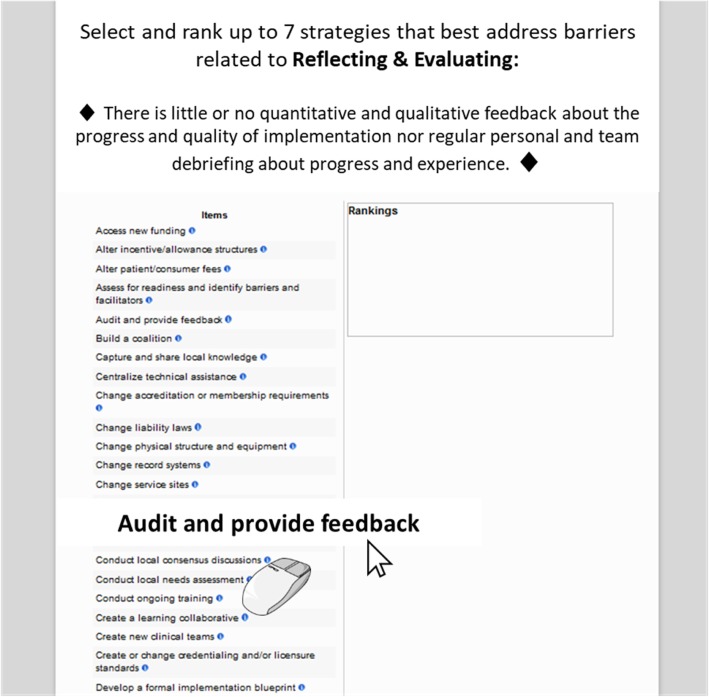
BACKGROUND: A fundamental challenge of implementation is identifying contextual determinants (i.e., barriers and facilitators) and determining which implementation strategies will address them. Numerous conceptual frameworks (e.g., the Consolidated Framework for Implementation Research; CFIR) have been developed to guide the identification of contextual determinants, and compilations of implementation strategies (e.g., the Expert Recommendations for Implementing Change compilation; ERIC) have been developed which can support selection and reporting of implementation strategies. The aim of this study was to identify which ERIC implementation strategies would best address specific CFIR-based contextual barriers. METHODS: Implementation researchers and practitioners were recruited to participate in an online series of tasks involving matching specific ERIC implementation strategies to specific implementation barriers. Participants were presented with brief descriptions of barriers based on CFIR construct definitions. They were asked to rank up to seven implementation strategies that would best address each barrier. Barriers were presented in a random order, and participants had the option to respond to the barrier or skip to another barrier. Participants were also asked about considerations that most influenced their choices. RESULTS: Four hundred thirty-five invitations were emailed and 169 (39%) individuals participated. Respondents had considerable heterogeneity in opinions regarding which ERIC strategies best addressed each CFIR barrier. Across the 39 CFIR barriers, an average of 47 different ERIC strategies (SD = 4.8, range 35 to 55) was endorsed at least once for each, as being one of seven strategies that would best address the barrier. A tool was developed that allows users to specify high-priority CFIR-based barriers and receive a prioritized list of strategies based on endorsements provided by participants. CONCLUSIONS: The wide heterogeneity of endorsements obtained in this study's task suggests that there are relatively few consistent relationships between CFIR-based barriers and ERIC implementation strategies. Despite this heterogeneity, a tool aggregating endorsements across multiple barriers can support taking a structured approach to consider a broad range of strategies given those barriers. This study's results point to the need for a more detailed evaluation of the underlying determinants of barriers and how these determinants are addressed by strategies as part of the implementation planning process.
Overview
The claims and statistics of this paper haven’t been checked yet.
Free: it reads the open-access text and checks the first 5 claims that cite a source we can check. Create a free account to check every claim.
Integrity signals
Registry
Cites
Statistics
Figures
Verification
Claims the paper makes
The claims and statistics of this paper haven’t been checked yet.
Free: it reads the open-access text and checks the first 5 claims that cite a source we can check. Create a free account to check every claim.
Claims other papers make about this one
Each is checked against this paper’s own text: does it say what the citing paper says it does?
The source backs part of the claim, not all of it — or backs it for a different population, condition or comparison.
In the citing paper
“a few best practices have been added: Teaming [42, 46, 73], Assessing Needs [46, 47], Assessing Context, Tailoring Strategies [14], and Adapting [45, 74, 75].”
From The updated consolidated framework for implementation research based on user feedback (2022) · cites this paper as [14]
Experimental — accuracy not yet measuredThe source backs part of the claim, not all of it — or backs it for a different population, condition or comparison.
In the citing paper
“Current literature also reflects an increasing number of studies testing the effectiveness of implementation strategies and the mechanisms that explain how these strategies may influence implementation outcomes [25–31].”
From Ten years of implementation outcomes research: a scoping review (2023) · cites this paper as [26]
Experimental — accuracy not yet measuredThe cited source says what the claim attributes to it.
In the citing paper
“Determinant frameworks can thus be used to inform choice of implementation strategies that may best address contextual determinants [14], generate hypotheses to prospectively guide predictions of implementation outcomes, or retrospectively explain implementation outcomes by assessing differences in determinants across implementation settings [11, 13, 15].”
From The updated consolidated framework for implementation research based on user feedback (2022) · cites this paper as [14]
Self-check
Percentages, sums and reported differences re-computed from the paper’s own numbers.
The self-check needs the paper’s full text.
Citations
Cites
Damschroder, L. J., Aron, D. C., Keith, R. E., Kirsh, S. R., Alexander, J. A., & Lowery, J. C. (2009) · Implementation Science · doi:10.1186/1748-5908-4-50 · Cited by 14,496
Self-citationHoffmann, T. C., Glasziou, P. P., Boutron, I., Milne, R., Perera, R., Moher, D., Altman, D. G., Barbour, V., Macdonald, H., Johnston, M., et al. (2014) · BMJ · doi:10.1136/bmj.g1687 · Cited by 10,548
Proctor, E., Silmere, H., Raghavan, R., Hovmand, P., Aarons, G., Bunger, A., Griffey, R., & Hensley, M. (2011) · Administration and Policy in Mental Health and Mental Health Services Research · doi:10.1007/s10488-010-0319-7 · Cited by 8,721
Michie, S., Richardson, M., Johnston, M., Abraham, C., Francis, J., Hardeman, W., Eccles, M. P., Cane, J., & Wood, C. E. (2013) · Annals of Behavioral Medicine · doi:10.1007/s12160-013-9486-6 · Cited by 7,629
What's in a name? Qualitative description revisited
Sandelowski, M. (2010) · Research in Nursing & Health · doi:10.1002/nur.20362 · Cited by 4,975
Powell, B. J., Waltz, T. J., Chinman, M. J., Damschroder, L. J., Smith, J. L., Matthieu, M. M., Proctor, E. K., & Kirchner, J. E. (2015) · Implementation Science · doi:10.1186/s13012-015-0209-1 · Cited by 4,963
Self-citationMaking sense of implementation theories, models and frameworks
Nilsen, P. (2015) · Implementation Science · doi:10.1186/s13012-015-0242-0 · Cited by 4,447
Implementation strategies: recommendations for specifying and reporting
Proctor, E. K., Powell, B. J., & McMillen, J. C. (2013) · Implementation Science · doi:10.1186/1748-5908-8-139 · Cited by 2,585
Self-citationKnowledge translation of research findings
Grimshaw, J. M., Eccles, M. P., Lavis, J. N., Hill, S. J., & Squires, J. E. (2012) · Implementation Science · doi:10.1186/1748-5908-7-50 · Cited by 2,407
Planning health promotion programs an intervention mapping approach
Bartholomew, L. K., Parcel, G. S., Kok, G., & Gottlieb, N. (2006) · Research Publications (Maastricht University) · Cited by 2,321
Research works printed but not linked: 2
- Waltz TJ Powell BJ Chinman MJ Damschroder LJ Smith JL Matthieu MM Proctor EK Kirchner JE Structuring complex recommendations: methods and general findings Implement Sci 2016 11 Suppl 1 A23
- Powell BJ Aarons GA Amaya-Jackson L Haley A Weiner BJ The collaborative approach to selecting and tailoring implementation strategies (COAST-IS) Implement Sci 2018 13 (Suppl 3): A79 39 40
Cited by
Items 201–300 of 1,000
Hoskins, K., Sanchez, A. L., Hoffacker, C. P., Momplaisir, F. M., Gross, R., Brady, K. A., Pettit, A. R., Zentgraf, K. A., Mills, C., Coley, D., et al. (2022) · Frontiers in Public Health · doi:10.3389/fpubh.2022.872746 · Cited by 19
Barriers to Implementation of Breast Cancer Risk Assessment: The Health Care Team Perspective
Spalluto, L. B., Bonnet, K. R., Sonubi, C., Ernst, L. L., Wahab, R. A., Reid, S., Agrawal, P., Gregory, K., Davis, K. M., Lewis, J. A., et al. (2023) · Journal of the American College of Radiology · doi:10.1016/j.jacr.2022.12.019 · Cited by 18
Linnerud, S., Kvæl, L. A. H., Graverholt, B., Idland, G., Taraldsen, K., & Brovold, T. (2023) · BMC Health Services Research · doi:10.1186/s12913-023-10394-x · Cited by 16
“A tool matches suitable implementation strategies to the barriers identified through CFIR [15].”
MethodIJzerman, R. V. H., van der Vaart, R., Breeman, L. D., Arkenbout, K., Keesman, M., Kraaijenhagen, R. A., Evers, A. W. M., Reimer, W. J. M. S. O., & Janssen, V. R. (2023) · BMC Health Services Research · doi:10.1186/s12913-023-10439-1 · Cited by 24
“…implementation strategies by using the CFIR-Expert Recommendations for Implementing Change (CFIR-ERIC) Matching tool (http://www.cfirguide.org/; accessed on September 6, 2021) [28, 29], and (iii) adopting already received input and feedback from key stakeholders during Phases 2 and 3.”
MethodRodrigues, A., Nichol, B., Wilson, R., Charlton, C., Gibson, B., Finch, T. L., Haighton, C., Maniatopoulos, G., Giles, E. L., Harrison, D., et al. (2024) · BMJ Open · doi:10.1136/bmjopen-2024-084208 · Cited by 17
Let it go, let it go: Stop measuring child maltreatment as a binary yes/no
McGuire, A., Singh, M., & Jackson, Y. (2024) · Child Abuse & Neglect · doi:10.1016/j.chiabu.2024.106994 · Cited by 19
Connell, L., Ackerley, S., & Rycroft‐Malone, J. (2025) · Frontiers in Health Services · doi:10.3389/frhs.2025.1562627 · Cited by 22
Singh, J. A., Hearld, L. R., Hall, A. G., & Beasley, T. M. (2021) · Implementation Science Communications · doi:10.1186/s43058-021-00118-9 · Cited by 16
“In doing so, our study explicitly acknowledges that healthcare providers and patients are often situated in unique organizational and community contexts and empirically assesses how these different contexts shape the decisions around the most appropriate strategies for implementing our evidence-based DA [53].”
BackgroundBest, S., Long, J. C., Gaff, C., Braithwaite, J., & Taylor, N. J. (2021) · Journal of Health Organization and Management · doi:10.1108/jhom-12-2020-0495 · Cited by 15
Durand, C., Chappuis, A., Douriez, É., Poulain, F., Ahmad, R., Lescure, F.-X., & Peiffer‐Smadja, N. (2021) · Journal of the American Pharmacists Association · doi:10.1016/j.japh.2022.02.003 · Cited by 19
Olstad, D. L., Beall, R. F., Spackman, E., Dunn, S., Lipscombe, L. L., Williams, K., Oster, R. T., Scott, S., Zimmermann, G. L., McBrien, K., et al. (2022) · BMJ Open · doi:10.1136/bmjopen-2021-050006 · Cited by 21
Piat, M., Sofouli, E., Wainwright, M., Albert, H., Rivest, M.-P., Casey, R., LeBlanc, S., Labonté, L., O’Rourke, J. J., & Kasdorf, S. (2022) · Evaluation and Program Planning · doi:10.1016/j.evalprogplan.2022.102054 · Cited by 22
MacDonald, S., & Shumway, E. (2022) · International Journal of Language & Communication Disorders · doi:10.1111/1460-6984.12817 · Cited by 21
Pivovarova, E., Taxman, F. S., Boland, A. K., Smelson, D. A., Lemon, S. C., & Friedmann, P. D. (2022) · Journal of Substance Use and Addiction Treatment · doi:10.1016/j.josat.2022.208950 · Cited by 19
Fazel, M. S., Soneson, E., Sellars, E., Butler, G., & Stein, A. L. (2023) · International Journal of Environmental Research and Public Health · doi:10.3390/ijerph20054066 · Cited by 20
“We report here on two pilot projects aimed at better understanding the implementation drivers [35] of two different tailored strategies for supporting and engaging front-line school staff in student mental health: one by providing regular accessible mental health professionals with whom to meet and discuss individual…”
BackgroundIntegrating Implementation Science with Quality Improvement to Improve Perinatal Outcomes
Callaghan‐Koru, J. A., Farzin, A., Ridout, E., & Curran, G. M. (2023) · Clinics in Perinatology · doi:10.1016/j.clp.2023.01.002 · Cited by 17
Barreto, E. F., Chitre, P., Pine, K. H., Shepel, K. K., Rule, A. D., Al‐Shaer, M. H., Abdul-Aziz, M. H., Roberts, J. A., Scheetz, M. H., Ausman, S. E., et al. (2023) · Therapeutic Drug Monitoring · doi:10.1097/ftd.0000000000001059 · Cited by 17
van Scherpenseel, M. C., Velde, S. J. T., Veenhof, C., Emmelot‐Vonk, M. H., & Barten, D. (2023) · Frontiers in Health Services · doi:10.3389/frhs.2023.1138517 · Cited by 19
“The next step of the implementation process is to design tailored implementation strategies that specifically address previously identified determinants in its local context (10, 64).”
BackgroundMethodInfluentialJones, L. K., Romagnoli, K. M., Schubert, T. J., Clegg, K., Kirchner, H. L., Hu, Y., Cawley, D., Norelli, V., Williams, M. S., Gidding, S. S., et al. (2024) · Journal of clinical lipidology · doi:10.1016/j.jacl.2024.01.001 · Cited by 17
Bjerk, M., Flottorp, S. A., Pripp, A. H., Øien, H., Hansen, T. M., Foy, R., Close, J., Linnerud, S., Brovold, T., Solli, R., et al. (2024) · Implementation Science · doi:10.1186/s13012-024-01334-2 · Cited by 16
“Additionally, as part of the implementation plan, we will also use the CFIR [43, 47] to further elaborate and categorise determinants of the implementation process and match the barriers to the ERIC compilation of implementation strategies [44].”
MethodCollister, D., Song, C., & Ruzycki, S. M. (2024) · BMJ Medicine · doi:10.1136/bmjmed-2024-000984 · Cited by 21
“This work can use implementation theory 22 or mapping methods.”
MethodEn Route to Implementation Science 3.0
Albers, B., Shlonsky, A., & Mildon, R. L. (2020) · Springer eBooks · doi:10.1007/978-3-030-03874-8_1 · Cited by 30
Sombié, I., Degroote, S., Somé, P. A., & Ridde, V. (2020) · Implementation Science · doi:10.1186/s13012-020-00989-x · Cited by 21
“In many cases, those seeking to learn from these strategies do not have information on what is essential for their successful implementation [6].”
BackgroundMoise, N., Phillips, E., Carter, E. J., Alcántara, C., Julian, J., Thanataveerat, A., Schwartz, J. E., Ye, S., Duran, A. T., Shimbo, D., et al. (2020) · Implementation Science · doi:10.1186/s13012-020-01017-8 · Cited by 15
“thermore, to our knowledge, an implementation science approach to developing an effective and sustainable model for implementing out-of-office testing has not been applied, providing an opportunity to not only elucidate how best to operationalize the selection of multicomponent implementation strategies, a key gap in…”
BackgroundTen years of implementation outcome research: a scoping review protocol
Lengnick-Hall, R., Proctor, E. K., Bunger, A. C., & Gerke, D. R. (2021) · BMJ Open · doi:10.1136/bmjopen-2021-049339 · Cited by 14
Mullin, A. C., Sharkey, J. D., & Barnett, M. L. (2024) · Frontiers in Education · doi:10.3389/feduc.2024.1346933 · Cited by 22
Implementation Insights from the PEACE Pathway Across UK Eating Disorder Services
Tchanturia, K., Chubinidze, D., Duffy, F., Nimbley, E., Li, Z., & Holliday, J. (2025) · Nutrients · doi:10.3390/nu17091532 · Cited by 16
Iwelunmor, J., Ezechi, O., Obiezu‐Umeh, C., Oladele, D. A., Nwaozuru, U., Aifah, A. A., Gyamfi, J., Gbaja-Biamila, T. A., Musa, A. Z., Onakomaiya, D. O., et al. (2022) · Implementation Science Communications · doi:10.1186/s43058-022-00289-z · Cited by 15
Churruca, K., Westbrook, J. I., Bagot, K. L., McMullan, R. D., Urwin, R., Cunningham, N. J., Mitchell, R. J., Hibbert, P. D., Sunderland, N., Loh, E., et al. (2023) · BMC Health Services Research · doi:10.1186/s12913-023-09614-1 · Cited by 16
“Data were coded according to the CFIR, [22, 23] and a list of implementation strategies to address identified barriers was generated using ERIC [24, 25].”
BackgroundMethodInfluentialDignam, J. K., Shrubsole, K., O’Brien, K. M., Bassett, L. V., Burfein, P., Hickey, N., Roxas, K., Wedley, H., Massoud, N., Singh, J., et al. (2023) · Aphasiology · doi:10.1080/02687038.2023.2287766 · Cited by 17
“The development of this implementation intervention involved a mapping process identifying suitable Behaviour Change Techniques (Michie et al., 2014; Michie et al., 2013) and implementation strategies (Waltz et al., 2019) tailored to address identified barriers.”
Krishnamoorthy, S., Mathieu, S. L., Armstrong, G. T., Ross, V. L., Francis, J., Reifels, L., & Kõlves, K. (2024) · Archives of Suicide Research · doi:10.1080/13811118.2024.2368127 · Cited by 16
“…a comprehensive understanding of the influence of a dynamic complex context on multicomponent, multilevel interventions is further needed and could help in retrospectively explaining implementation outcomes (Damschroder, 2020) and prospectively informing choice of strategies (Waltz et al., 2019).”
Szeszulski, J., & Guastaferro, K. (2024) · Translational Behavioral Medicine · doi:10.1093/tbm/ibae035 · Cited by 16
Transforming Healthcare with Nanomedicine: A SWOT Analysis of Drug Delivery Innovation
Zhang, H., Li, S., & Ma, X. (2024) · Drug Design Development and Therapy · doi:10.2147/dddt.s470210 · Cited by 18
“28 Furthermore, the application of theory in implementation research has offered valuable clarity.”
BackgroundZbukvic, I., Rheinberger, D., Rosebrock, H., Lim, J., McGillivray, L., Mok, K., Stamate, E., McGill, K., Shand, F., Torok, M., et al. (2022) · Implementation Research and Practice · doi:10.1177/26334895211065786 · Cited by 20
Implementation Science: Increasing the Public Health Impact of Audiology Research
Studts, C. R. (2022) · American Journal of Audiology · doi:10.1044/2022_aja-21-00205 · Cited by 17
“Ongoing work in the implementation science field seeks to inform and guide the matching of implementation strategies to specific barriers, facilitators, contexts, and goals (Waltz et al., 2019).”
BackgroundThe Coat Hook Analogy and the Precision Implementation Approach® Solution
Cullen, L., Laures, E. L., Hanrahan, K., & Edmonds, S. W. (2022) · Journal of PeriAnesthesia Nursing · doi:10.1016/j.jopan.2022.07.009 · Cited by 15
Terminology for Dissemination and Implementation Research
Rabin, B. A., Viglione, C., & Brownson, R. C. (2023) · Oxford University Press eBooks · doi:10.1093/oso/9780197660690.003.0002 · Cited by 18
Research and scholarly methods: Implementation science studies
Kuo, G. M., Trinkley, K. E., & Rabin, B. A. (2022) · JACCP JOURNAL OF THE AMERICAN COLLEGE OF CLINICAL PHARMACY · doi:10.1002/jac5.1673 · Cited by 20
“section) can be helpful in identifying implementation strategies as it is shown by the ERIC-Consolidated Framework for Implementation Research (CFIR) matching tool, which links specific CFIR constructs with relevant strategies from the ERIC compilation.(52)”
MethodKoh, W. Q., Hoel, V., Casey, D., & Toomey, E. C. (2022) · Journal of the American Medical Directors Association · doi:10.1016/j.jamda.2022.09.010 · Cited by 24
Sichel, C. E., & Connors, E. H. (2022) · Implementation Science Communications · doi:10.1186/s43058-022-00356-5 · Cited by 18
Dodd, R. H., Sharman, A. R., Marshall, H., Yap, M. L., Stone, E. C. A., Rhee, J., McCullough, S., & Rankin, N. M. (2023) · PLoS ONE · doi:10.1371/journal.pone.0283939 · Cited by 14
“This conceptual framework has been developed to ‘guide systematic assessment of multilevel implementation contexts to identify factors that might influence intervention effectiveness’ [27] and the selection of implementation strategies to overcome barriers and facilitators [28].”
BackgroundMirata, V., & Bergamin, P. B. (2023) · Educational Technology Research and Development · doi:10.1007/s11423-023-10248-7 · Cited by 35
“However, empirical research demonstrated that such relationships do not necessary require a unique one-to-one correspondence (Waltz et al., 2019).”
BackgroundIdentification and development of implementation strategies: the important role of codesign
van der Laag, P. J., Dorhout, B. G., Heeren, A. A., Veenhof, C., Barten, D., & Schoonhoven, L. (2024) · Frontiers in Health Services · doi:10.3389/frhs.2024.1305955 · Cited by 17
Leeman, J., Rohweder, C. L., Lafata, J. E., Wangen, M., Ferrari, R. M., Shea, C. M., Brenner, A. T., Roth, I., Fleming, O., & Toles, M. (2024) · Implementation Science Communications · doi:10.1186/s43058-024-00606-8 · Cited by 22
“By definition, integration strategies “target factors contributing to or impeding the optimal integration of a specific EBI into practice” [11].”
BackgroundWiss, F. M., Jakober, D., Lampert, M. L., & Allemann, S. S. (2024) · Genes · doi:10.3390/genes15070862 · Cited by 16
“To identify potential implementation strategies, we utilized the CFIR-ERIC Implementation Strategy Matching Tool [19].”
MethodVelloza, J., Ndimande-Khoza, M. N., Mills, L., Concepcion, T. L., Gumede, S., Chauke, H., Verhey, R., Chibanda, D., Hosek, S., Weiner, B. J., et al. (2024) · Journal of the International AIDS Society · doi:10.1002/jia2.26274 · Cited by 15
Bahadori, S., Buckle, P., Soukup, T., Ghafur, S., & Kierkegaard, P. (2025) · JMIR mhealth and uhealth · doi:10.2196/67435 · Cited by 28
“Analyzing the findings from these activities can elicit rich, nuanced insights into the barriers and enablers of DHT adoption, which can then be synthesized into evidence-based implementation strategies [37].”
Okamoto, S. K., Helm, S., Chin, S. K., Hata, J., Hata, E., & Okamura, K. H. (2019) · Journal of Community Psychology · doi:10.1002/jcop.22222 · Cited by 17
Seward, N., Hanlon, C., Murdoch, J., Colbourn, T., Prince, M. J., Venkatapuram, S., & Sevdalis, N. (2020) · BMJ Global Health · doi:10.1136/bmjgh-2020-003456 · Cited by 15
Luecking, C. T., Vaughn, A., Burney, R. V., Hennink-Kaminski, H. J., Hales, D. P., & Ward, D. S. (2021) · Translational Behavioral Medicine · doi:10.1093/tbm/ibab001 · Cited by 13
“There is a need for similar systematic methods to plan and evaluate implementations strategies that support use of interventions in real-world settings [45, 50, 51].”
BackgroundVerweij, L., Spoon, D., Terbraak, M. S., Jepma, P., Peters, R. J. G., Reimer, W. J. M. S. O., Latour, C. H. M., & Buurman, B. M. (2021) · Journal of Advanced Nursing · doi:10.1111/jan.14786 · Cited by 17
“…Doll et al., 2015; Feltner et al., 2014; Glasgow et al., 2019; Glasgow et al., 1999; Kwan et al., 2013; Le Berre et al., 2017; Minneboo et al., 2017; Moore et al., 2014; Naylor et al., 2011; Naylor et al., 2017; Oerkild et al., 2012; Verhaegh et al., 2014; Waltz et al., 2019; Zullo et al., 2018).”
MethodBakhshaie, J., Doorley, J. D., Reichman, M., Mace, R. A., Laverty, D. C., Matuszewski, P. E., Elwy, A. R., Fatehi, A., Bowers, L. C., Ly, T., et al. (2022) · Translational Behavioral Medicine · doi:10.1093/tbm/ibac004 · Cited by 14
Borge, R. H., Egeland, K. M., Aarons, G. A., Ehrhart, M. G., Sklar, M., & Skar, A. S. (2022) · Administration and Policy in Mental Health and Mental Health Services Research · doi:10.1007/s10488-022-01199-x · Cited by 22
“Interest in implementation strategies within implementation science is increasing (Powell et al., 2015; Waltz et al., 2019), including initiatives focusing on implementation leadership (Aarons et al.”
BackgroundMiano, T. A., Barreto, E. F., McNett, M., Martin, N. D., Sakhuja, A., Andrews, A., Basu, R. K., & Ablordeppey, E. (2024) · Critical Care Medicine · doi:10.1097/ccm.0000000000006237 · Cited by 18
“Finally, taskforce members used the CFIR—Expert Recommendations for Implementing Change matching tool to identify implementation strategies aligned with identified determinants (37, 38).”
MethodLevine, R., Zingelman, S., McSween, M., Shrubsole, K., Hill, A. J., & Copland, D. A. (2023) · Archives of Physical Medicine and Rehabilitation · doi:10.1016/j.apmr.2023.08.018 · Cited by 13
Moore, S. A., Sridhar, A., Taormina, I., Rajadhyaksha, M., & Azad, G. F. (2024) · Implementation Research and Practice · doi:10.1177/26334895231220279 · Cited by 31
“Prior work suggests that a range of factors in fl uence the selection of implementation strategies to address target determinants (Waltz et al., 2019).”
BackgroundAdaptation in Dissemination and Implementation Science
Baumann, A. A., Stirman, S. W., & Cabassa, L. J. (2023) · Oxford University Press eBooks · doi:10.1093/oso/9780197660690.003.0008 · Cited by 14
Greenwood, H., Davidson, A. R., Thomas, R., & Albarqouni, L. (2024) · BMC Family Practice · doi:10.1186/s12875-024-02321-8 · Cited by 15
“Existing tools, such as the CFIR-ERIC matching tool, can be used to map identified barrier and enabler factors to effective implementation strategies [77, 78].”
MethodJones, K., Cusack, M. C., True, G., Harris, T. E., Roncarati, J. S., Antonellis, C., Brecht, T., & Montgomery, A. E. (2024) · Health Services Research · doi:10.1111/1475-6773.14316 · Cited by 11
Aldawood, A. S., Hind, D., Rushton, S., & Field, B. (2024) · BMJ Open · doi:10.1136/bmjopen-2023-080633 · Cited by 16
Golden, C. A., Hill, J. L., Heelan, K. A., Bartee, R. T., Abbey, B. M., Malmkar, A., & Estabrooks, P. A. (2021) · Preventing Chronic Disease · doi:10.5888/pcd18.200248 · Cited by 13
“Organizations with high scores across these 3 constructs are more likely to be successful in adopting, implementing, and sustaining an EBI (22).”
InfluentialBustos, T. E., Sridhar, A., & Drahota, A. (2021) · Implementation Research and Practice · doi:10.1177/26334895211058086 · Cited by 12
“Further, little to no guidance has been provided on tailoring implementation strategies to address determinants typically found in community settings (Fernandez et al., 2019; Waltz et al., 2019).”
BackgroundProgram Barriers and Facilitators in Virtual Cancer Exercise Implementation: A Qualitative Analysis
Gorzelitz, J., Bouji, N., & Stout, N. L. (2022) · Translational Journal of the American College of Sports Medicine · doi:10.1249/tjx.0000000000000199 · Cited by 16
Brunner, J., Farmer, M. M., Bean‐Mayberry, B., Coffinier, C., Than, C. T., Hamilton, A. B., & Finley, E. P. (2022) · Frontiers in Health Services · doi:10.3389/frhs.2022.946802 · Cited by 13
Simmons, R. G., Baayd, J., Elliott, S., Cohen, S. R., & Turok, D. K. (2022) · Implementation Science Communications · doi:10.1186/s43058-022-00377-0 · Cited by 16
“53) which was developed to match CFIR constructs to corresponding Expert Recommendations for Implementing Change (ERIC) strategies [31].”
BackgroundImplementation and Impact of Perinatal Food Is Medicine Programs: A Qualitative Research Study
Balis, L. E., Yaroch, A. L., Palmer, S., Shaw, E., Santos, P. L. D., & Shanks, C. B. (2024) · Journal of the Academy of Nutrition and Dietetics · doi:10.1016/j.jand.2024.02.007 · Cited by 16
Implementation Science to Advance Health Equity in Stroke Rehabilitation
Juckett, L., Owolabi, M. O., Gustavson, A. M., & Ifejika, N. L. (2024) · Journal of the American Heart Association · doi:10.1161/jaha.123.031311 · Cited by 12
“More information about the CFIR-Expert Recommendations for Implementing Change matching tool and its development and use can be found in the original publication by Waltz et al. 25”
MethodHudon, C., Bisson, M., Chouinard, M., Delahunty‐Pike, A., Lambert, M., Howse, D., Schwarz, C. M., Dumont‐Samson, O., Aubrey‐Bassler, K., Burge, F., et al. (2023) · BMC Health Services Research · doi:10.1186/s12913-023-09379-7 · Cited by 16
Stout, N. L., Harrington, S., Perry, A. M., Alappattu, M. J., Pfab, V., Stewart, B., & Manes, M. R. (2023) · Journal of Cancer Survivorship · doi:10.1007/s11764-023-01374-5 · Cited by 16
Sridhar, A., Olesegun, O., & Drahota, A. (2023) · Global Implementation Research and Applications · doi:10.1007/s43477-023-00086-3 · Cited by 16
Strid, E. N., Wallin, L., & Nilsagård, Y. E. (2023) · BMC Family Practice · doi:10.1186/s12875-023-02079-5 · Cited by 18
Verbunt, E., Akter, S., Manda‐Taylor, L., Sarker, B. K., Ataíde, R., Davidson, E., Pasricha, S., & Prang, K.-H. (2023) · Reproductive Female and Child Health · doi:10.1002/rfc2.25 · Cited by 11
Allen, C. G., Sterba, K. R., Norman, S., Jackson, A., Hunt, K. J., McMahon, L. L., & Judge, D. P. (2023) · Implementation Science Communications · doi:10.1186/s43058-023-00500-9 · Cited by 13
“Level 2 endorsed ERIC strategies indicate that between 20 and 50% of experts ranked this as one of their top seven strategies to address the specific barrier [15].”
BackgroundMethodDenninger, N.-E., Brefka, S., Skudlik, S., Leinert, C., Mross, T., Meyer, G., Sulmann, D., Dallmeier, D., Denkinger, M. D., & Müller, M. (2023) · International Journal of Nursing Studies · doi:10.1016/j.ijnurstu.2023.104645 · Cited by 13
Svedin, F., Blomberg, O., Brantnell, A., Farrand, P. A., Åberg, A. C., & Woodford, J. (2023) · BMC Geriatrics · doi:10.1186/s12877-023-04522-9 · Cited by 12
“…barriers and facilitators throughout intervention development can help design context-specific interventions [26, 90, 91] Furthermore, it may help inform the development of appropriate implementation strategies [92], thereby reducing the risk of future implementation failure and research waste.”
Langley, J. E., Urquhart, R., Tschupruk, C., Christian, E., & Warner, G. (2024) · BMJ Open · doi:10.1136/bmjopen-2023-079234 · Cited by 16
“44 However, the selection of an effective clinician champion can be difficult; there is no established method for identifying or training cham-pions and historically they have come to light naturally in an environment given their influence, ownership, physical presence at the point of change,…”
MethodKirchner, J. E., Waltz, T. J., Powell, B. J., Woodward, E. N., Smith, J. L., & Proctor, E. K. (2023) · Oxford University Press eBooks · doi:10.1093/oso/9780197660690.003.0006 · Cited by 11
Self-citationHu, Y., Yan, R., Yin, X., Gong, E., Xin, X., Gao, A., Shi, X., Wang, J., Xue, H., Feng, L., et al. (2024) · JAMA Network Open · doi:10.1001/jamanetworkopen.2024.3098 · Cited by 13
Strategies to Improve Emergency Transitions From Long-Term Care Facilities: A Scoping Review
Tate, K., Cummings, G. G., Jacobsen, F. F., Halas, G., den Bergh, G. V., Devkota, R., Shrestha, S., & Doupe, M. B. (2024) · The Gerontologist · doi:10.1093/geront/gnae036 · Cited by 14
“These principles are requisite to build skill sets and expertise among stakeholders and thus promote innovation, sustainability, and eventual scale (Damschroder et al., 2022; Waltz et al., 2019).”
BackgroundHeidke, P., Duff, J. S., Keogh, S. J., & Munday, J. (2024) · Journal of Clinical Nursing · doi:10.1111/jocn.17338 · Cited by 14
Nasca, B. J., Reddy, S., Furmanchuk, A., Lundberg, A. L., Kong, N., Andrei, A., Theros, J. S., Thomas, A., Ingram, M.-C. E., Sanchez, J. E., et al. (2024) · Surgery · doi:10.1016/j.surg.2024.06.037 · Cited by 11
Swart, R., Boersma, L. J., Fijten, R., van Elmpt, W., Cremers, H., & Jacobs, M. (2024) · JCO Clinical Cancer Informatics · doi:10.1200/cci.24.00101 · Cited by 15
Harnessing Implementation Science in Clinical Psychology: Past, Present, and Future
Beidas, R. S., Boyd, M. R., Casline, E. P., Scott, K., Patel, Z. S., Mills, C., Mustanski, B. S., Schriger, S. H., Williams, F. S., Waller, C., et al. (2025) · Annual Review of Clinical Psychology · doi:10.1146/annurev-clinpsy-081423-021727 · Cited by 14
“The CFIR-ERIC matching tool helps narrow 2,847 possible barrier–strategy combinations to a more manageable set identified by IS experts (Waltz et al. 2019).”
Weight, C., Vinette, B., Laritz, R., Mooney, M., Castiglione, S. A., Maheu‐Cadotte, M., Argiropoulos, N., Konnyu, K. J., Cassidy, C. E., Collins, S. E., et al. (2025) · Implementation Science · doi:10.1186/s13012-025-01442-7 · Cited by 14
“Future research should explore the extent to which implementation strategies are explicitly aligned with contextual determinants using structured approaches (e.g., CFIR-ERIC Matching Tool [31]), and how this is reported across diverse settings.”
Findlay, M., Bauer, J. D., Shaw, T. J., White, K., Lai, M., & Rankin, N. M. (2021) · Supportive Care in Cancer · doi:10.1007/s00520-021-06162-4 · Cited by 12
“determinants) and the selection of implementation strategies that are best suited to the local context [17].”
BackgroundHills, D., Ekegren, C. L., Plummer, V., Freene, N., Kunstler, B., Robinson, T., Healy, E., Vo, J., Gašević, D., & Crabtree, A. (2021) · Journal of Clinical Nursing · doi:10.1111/jocn.15994 · Cited by 17
Bergling, E., Pendleton, D., Shore, E., Harpin, S. B., Whitesell, N. R., & Puma, J. E. (2022) · Journal of School Health · doi:10.1111/josh.13153 · Cited by 18
Potter, C., Leggat, F. J., Lowe, R., Pallmann, P., Riaz, M. A., Barlow, C., Edwards, A., Siriwardena, A. N., Sevdalis, N., Sewell, B., et al. (2023) · Trials · doi:10.1186/s13063-023-07090-w · Cited by 13
“Use of the CFIR during the analysis will enable barriers and drivers of implementation from the perspective of the service users and providers to be mapped onto potential implementation support strategies as they have emerged in the CFIR evidence base [40], and in addition to whichever strategies might emerge from the…”
MethodClaessens, D., Vervloet, M., Boudewijns, E. A., Keijsers, L. C. E. M., Slok, A. H. M., van Schayck, O. C. P., & van Dijk, L. (2023) · BMJ Open · doi:10.1136/bmjopen-2022-068603 · Cited by 12
McCool-Myers, M., Goedken, P., Henn, M. C., Sheth, A. N., & Kottke, M. (2020) · Sexually Transmitted Diseases · doi:10.1097/olq.0000000000001337 · Cited by 11
Nelson, L. A., Roddy, M. K., Bergner, E. M., Gonzalez, J., Gentry, C. K., LeStourgeon, L. M., Kripalani, S. B., Hull, P. C., & Mayberry, L. S. (2022) · Journal of Clinical and Translational Science · doi:10.1017/cts.2022.503 · Cited by 14
“org) allows users to specify CFIR-based barriers and then generates a prioritized list of potential implementation strategies based on the endorsements of experts who were systematically queried during tool development [25,28].”
InfluentialCzosnek, L., Rankin, N. M., Cormie, P., Murnane, A., Turner, J., Richards, J. A., Rosenbaum, S., & Zopf, E. M. (2023) · Supportive Care in Cancer · doi:10.1007/s00520-023-07844-x · Cited by 14
Reducing Iatrogenic Blood Losses in Premature Infants
Sharma, M., Bowman, E., Zheng, F., Spencer, H. J., Shukri, S.-A., Gates, K., Williams, M., Peeples, S. E., Hall, R. W., Schootman, M., et al. (2024) · PEDIATRICS · doi:10.1542/peds.2024-065921 · Cited by 11
Johnson, A. K., Devlin, S. A., Pyra, M. N., Etshokin, E., Ducheny, K., Friedman, E. E., Hirschhorn, L. R., Haider, S., & Ridgway, J. P. (2024) · JMIR Formative Research · doi:10.2196/59800 · Cited by 15
“…health center (FQHC) providing LGBTQ (lesbian, gay, bisexual, transgender, and queer/questioning)-centered primary care; and map implementation strategies to identified barriers using the CFIR-ERIC (Expert Recommendations for Implementing Change) Implementation Strategy Matching Tool [16-18].”
Jia, Y., Cheng, G., Wang, H., Ma, B., Cai, Y., Ren, X., Guo, Y., Gu, J., & Chen, O. (2025) · Health Research Policy and Systems · doi:10.1186/s12961-025-01330-y · Cited by 13
“We used the CFIR-Expert Recommendations for Implementing Change (ERIC) mapping tool to prioritize and develop appropriate contextual implementation strategies [32].”
Buckler, E. J., Mâsse, L. C., Faulkner, G., Puterman, E. M., McConnell‐Nzunga, J., & Naylor, P. (2022) · Health Promotion International · doi:10.1093/heapro/daac036 · Cited by 11
Westgard, C. M., & Orrego-Ferreyros, L. A. (2022) · PLOS Global Public Health · doi:10.1371/journal.pgph.0001118 · Cited by 14
“To help determine which implementation strategies should be included, the research team used the CFIR ERIC Matching Tool [49].”
MethodOdawara, M., Saito, J., Yaguchi‐Saito, A., Fujimori, M., Uchitomi, Y., & Shimazu, T. (2022) · Frontiers in Public Health · doi:10.3389/fpubh.2022.873769 · Cited by 17
“Since the process of identifying implementation strategies is not clearly documented, it is difficult to understand which strategies work and why they work (25).”
BackgroundBinagwaho, A., Frisch, M. F., Ntawukuriryayo, J. T., & Hirschhorn, L. R. (2020) · Annals of Global Health · doi:10.5334/aogh.3001 · Cited by 10
Vax, S., Gidugu, V., Farkas, M. D., & Drainoni, M. (2021) · Implementation Research and Practice · doi:10.1177/2633489520988254 · Cited by 14
“This study adds to current efforts in the implementation science field to collect and organize implementation strategies into practical frameworks (Kirchner et al., 2020; Kwok et al., 2020; Waltz et al., 2019).”
BackgroundResult
Metadata
- Authors
- Waltz, T. J., Powell, B. J., Fernández, M. E., Abadie, B., & Damschroder, L. J.
- Affiliations
- Eastern Michigan University (US)
- University of North Carolina at Chapel Hill (US)
- The University of Texas Health Science Center at Houston (US)
- VA Center for Clinical Management Research (US)
- Corresponding author
- Damschroder, Laura J.
- Venue
- Implementation Science
- Published
- 2019-04-29
- Volume
- 14
- Issue
- 1
- Pages
- 42-42
- ISSN
- 1748-5908 (ISSN-L)
- PMC
- PMC6489173
- OpenAlex
- W2947410237
- Cited by
- 1,136
- References
- 50
- Citations by year
- 2026: 176 · 2025: 194 · 2024: 220 · 2023: 171 · 2022: 166 · 2021: 121 · 2020: 79 · 2019: 8
- FWCI
- 127.40
- Type
- journal article
- Language
- en
- Open access
- gold
- doi.org
- Licence
- cc-by
- creativecommons.org/licenses/by/4.0/ (tdm)
- creativecommons.org/licenses/by/4.0/ (vor)
- Locations
- Implementation Science (publishedVersion, cc-by)
- Europe PMC (PubMed Central) (publishedVersion, cc-by)
- PubMed Central (publishedVersion, cc-by)
- PubMed (publishedVersion)
- DOAJ (DOAJ: Directory of Open Access Journals) (submittedVersion, cc-by-sa)
- Funders
- U.S. Department of Veterans Affairs (QLP 92-025; QUERI DM, DIB 98-001)
- Topics
- Health Sciences › Health Professions › General Health Professions › Health Policy Implementation Science
- Health Sciences › Health Professions › General Health Professions › Health Sciences Research and Education
- Health Sciences › Medicine › Public Health, Environmental and Occupational Health › Clinical practice guidelines implementation
- Keywords
- implementation strategies, contextual barriers, Consolidated Framework for Implementation Research, Expert Recommendations for Implementing Change, ERIC, implementation planning, strategy selection, implementation barriers and facilitators
- MeSH terms
- Implementation Science, Health Plan Implementation, Health Services Research, Humans, Models, Theoretical, Quality of Health Care, Evidence-Based Practice
About these checks
Registry, retraction, Cites and statistics results are computed, not judged, with one exception: a printed reference that no index lists is read once by a model before it counts as a citation error. Claims are extracted by a model and kept only when their quote appears verbatim in the text; each cited source is then checked, with a model’s help, for whether it says what the claim relies on. Those verdicts can be wrong — read the claim’s quote and the cited source before relying on one.
Statistics and arithmetic are recomputed, not judged.
Confidence bands are shown only for fields calibrated on our annotated test set. None is calibrated yet, so no band is shown.
What counts as a claim ›How we measure confidence ›How we check this ›
Are you an author, or do you see a problem with this page? Request a review
Data sources
Bibliographic data: Semantic Scholar, OpenAlex, Crossref.
Contains information from the Semantic Scholar Academic Graph Datasets, made available under the ODC Attribution License (ODC-BY 1.0).
Semantic Scholar’s data is described in: Kinney, R., et al. (2023). The Semantic Scholar Open Data Platform. arXiv:2301.10140.
