

Choosing implementation strategies to address contextual barriers: diversity in recommendations and future directions
Open accessThe DOI matches its Crossref record; 50 of the 50 references it cites were found in a registry or an index.
Abstract
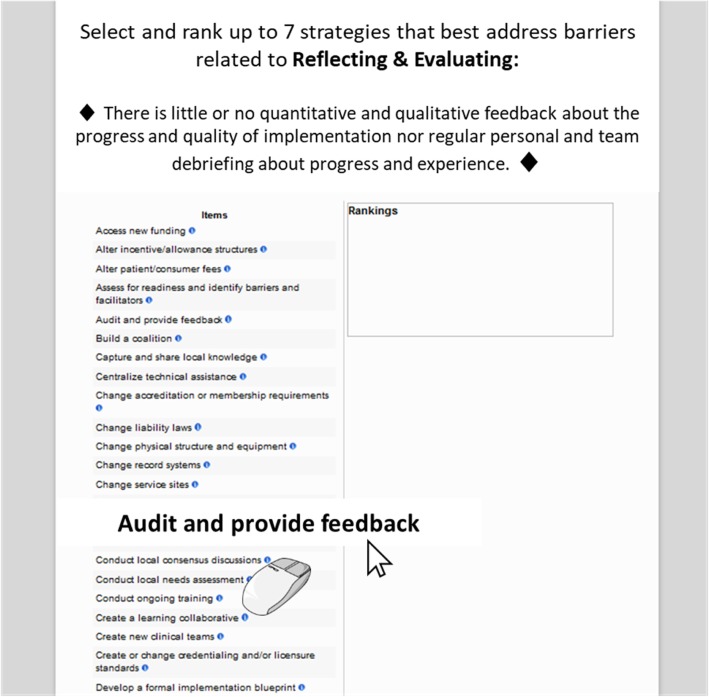
BACKGROUND: A fundamental challenge of implementation is identifying contextual determinants (i.e., barriers and facilitators) and determining which implementation strategies will address them. Numerous conceptual frameworks (e.g., the Consolidated Framework for Implementation Research; CFIR) have been developed to guide the identification of contextual determinants, and compilations of implementation strategies (e.g., the Expert Recommendations for Implementing Change compilation; ERIC) have been developed which can support selection and reporting of implementation strategies. The aim of this study was to identify which ERIC implementation strategies would best address specific CFIR-based contextual barriers. METHODS: Implementation researchers and practitioners were recruited to participate in an online series of tasks involving matching specific ERIC implementation strategies to specific implementation barriers. Participants were presented with brief descriptions of barriers based on CFIR construct definitions. They were asked to rank up to seven implementation strategies that would best address each barrier. Barriers were presented in a random order, and participants had the option to respond to the barrier or skip to another barrier. Participants were also asked about considerations that most influenced their choices. RESULTS: Four hundred thirty-five invitations were emailed and 169 (39%) individuals participated. Respondents had considerable heterogeneity in opinions regarding which ERIC strategies best addressed each CFIR barrier. Across the 39 CFIR barriers, an average of 47 different ERIC strategies (SD = 4.8, range 35 to 55) was endorsed at least once for each, as being one of seven strategies that would best address the barrier. A tool was developed that allows users to specify high-priority CFIR-based barriers and receive a prioritized list of strategies based on endorsements provided by participants. CONCLUSIONS: The wide heterogeneity of endorsements obtained in this study's task suggests that there are relatively few consistent relationships between CFIR-based barriers and ERIC implementation strategies. Despite this heterogeneity, a tool aggregating endorsements across multiple barriers can support taking a structured approach to consider a broad range of strategies given those barriers. This study's results point to the need for a more detailed evaluation of the underlying determinants of barriers and how these determinants are addressed by strategies as part of the implementation planning process.
Overview
The claims and statistics of this paper haven’t been checked yet.
Free: it reads the open-access text and checks the first 5 claims that cite a source we can check. Create a free account to check every claim.
Integrity signals
Registry
Cites
Statistics
Figures
Verification
Claims the paper makes
The claims and statistics of this paper haven’t been checked yet.
Free: it reads the open-access text and checks the first 5 claims that cite a source we can check. Create a free account to check every claim.
Claims other papers make about this one
Each is checked against this paper’s own text: does it say what the citing paper says it does?
The source backs part of the claim, not all of it — or backs it for a different population, condition or comparison.
In the citing paper
“a few best practices have been added: Teaming [42, 46, 73], Assessing Needs [46, 47], Assessing Context, Tailoring Strategies [14], and Adapting [45, 74, 75].”
From The updated consolidated framework for implementation research based on user feedback (2022) · cites this paper as [14]
Experimental — accuracy not yet measuredThe source backs part of the claim, not all of it — or backs it for a different population, condition or comparison.
In the citing paper
“Current literature also reflects an increasing number of studies testing the effectiveness of implementation strategies and the mechanisms that explain how these strategies may influence implementation outcomes [25–31].”
From Ten years of implementation outcomes research: a scoping review (2023) · cites this paper as [26]
Experimental — accuracy not yet measuredThe cited source says what the claim attributes to it.
In the citing paper
“Determinant frameworks can thus be used to inform choice of implementation strategies that may best address contextual determinants [14], generate hypotheses to prospectively guide predictions of implementation outcomes, or retrospectively explain implementation outcomes by assessing differences in determinants across implementation settings [11, 13, 15].”
From The updated consolidated framework for implementation research based on user feedback (2022) · cites this paper as [14]
Self-check
Percentages, sums and reported differences re-computed from the paper’s own numbers.
The self-check needs the paper’s full text.
Citations
Cites
Damschroder, L. J., Aron, D. C., Keith, R. E., Kirsh, S. R., Alexander, J. A., & Lowery, J. C. (2009) · Implementation Science · doi:10.1186/1748-5908-4-50 · Cited by 14,496
Self-citationHoffmann, T. C., Glasziou, P. P., Boutron, I., Milne, R., Perera, R., Moher, D., Altman, D. G., Barbour, V., Macdonald, H., Johnston, M., et al. (2014) · BMJ · doi:10.1136/bmj.g1687 · Cited by 10,548
Proctor, E., Silmere, H., Raghavan, R., Hovmand, P., Aarons, G., Bunger, A., Griffey, R., & Hensley, M. (2011) · Administration and Policy in Mental Health and Mental Health Services Research · doi:10.1007/s10488-010-0319-7 · Cited by 8,721
Michie, S., Richardson, M., Johnston, M., Abraham, C., Francis, J., Hardeman, W., Eccles, M. P., Cane, J., & Wood, C. E. (2013) · Annals of Behavioral Medicine · doi:10.1007/s12160-013-9486-6 · Cited by 7,629
What's in a name? Qualitative description revisited
Sandelowski, M. (2010) · Research in Nursing & Health · doi:10.1002/nur.20362 · Cited by 4,975
Powell, B. J., Waltz, T. J., Chinman, M. J., Damschroder, L. J., Smith, J. L., Matthieu, M. M., Proctor, E. K., & Kirchner, J. E. (2015) · Implementation Science · doi:10.1186/s13012-015-0209-1 · Cited by 4,963
Self-citationMaking sense of implementation theories, models and frameworks
Nilsen, P. (2015) · Implementation Science · doi:10.1186/s13012-015-0242-0 · Cited by 4,447
Implementation strategies: recommendations for specifying and reporting
Proctor, E. K., Powell, B. J., & McMillen, J. C. (2013) · Implementation Science · doi:10.1186/1748-5908-8-139 · Cited by 2,585
Self-citationKnowledge translation of research findings
Grimshaw, J. M., Eccles, M. P., Lavis, J. N., Hill, S. J., & Squires, J. E. (2012) · Implementation Science · doi:10.1186/1748-5908-7-50 · Cited by 2,407
Planning health promotion programs an intervention mapping approach
Bartholomew, L. K., Parcel, G. S., Kok, G., & Gottlieb, N. (2006) · Research Publications (Maastricht University) · Cited by 2,321
Research works printed but not linked: 2
- Waltz TJ Powell BJ Chinman MJ Damschroder LJ Smith JL Matthieu MM Proctor EK Kirchner JE Structuring complex recommendations: methods and general findings Implement Sci 2016 11 Suppl 1 A23
- Powell BJ Aarons GA Amaya-Jackson L Haley A Weiner BJ The collaborative approach to selecting and tailoring implementation strategies (COAST-IS) Implement Sci 2018 13 (Suppl 3): A79 39 40
Cited by
Items 601–700 of 1,000
Training and Capacity Building in Dissemination and Implementation Science
Davis, R. E., Sevdalis, N., & Baumann, A. A. (2023) · Oxford University Press eBooks · doi:10.1093/oso/9780197660690.003.0030 · Cited by 4
Dubbeldeman, E. M., Crone, M. R., Jong, J. C. K., & van der Kleij, R. (2024) · Implementation Science Communications · doi:10.1186/s43058-024-00604-w · Cited by 3
“Informed by existing literature on links between determinants, behaviour change, and strategies [12, 21], experts were provided a preselected list of BCTs and implementation strategies for each relevant determinant to formulate implementation hypotheses.”
BackgroundMethodKiki, G. M., Mwaka, C. R., Gagnon, D., MARCON, V., Bouchard, D., Lamontagne, M., & Best, K. L. (2024) · Revue scientifiques des travaux de fin d'étude en rééducation et réadaptation. · doi:10.25965/rse2r.297 · Cited by 2
Boekhout, J. M., Hut, R., van Uffelen, J. G. Z., Czwikla, G., & Peels, D. A. (2024) · Geriatrics · doi:10.3390/geriatrics9050113 · Cited by 3
“Implementation strategies like conducting local consensus discussions, conducting local needs assessments, and capturing and sharing knowledge are implementation strategies that are recommended to target these determinants [70,71].”
BackgroundHussen, S. A., Byrd, R. N., Doraivelu, K., Moore, S. J., Camp, D. M., Wood-Palmer, D., Kalokhe, A. S., Farber, E. W., & Ali, M. K. (2024) · Translational Behavioral Medicine · doi:10.1093/tbm/ibae046 · Cited by 2
O’Connell, S., Cully, G., McHugh, S., Maxwell, M., Jeffers, A., Kavalidou, K., Lovejoy, S. A., Jennings, R., Russell, V., Arensman, E., et al. (2024) · BMJ Quality & Safety · doi:10.1136/bmjqs-2024-017415 · Cited by 6
Yin, X., Wang, Z., Yang, J., Li, J., Han, S., Feng, W., Liu, Q., Li, N., Zhang, L., Ke, J., et al. (2024) · Journal of Clinical Hypertension · doi:10.1111/jch.14918 · Cited by 3
Implementation mapping to plan for the Supraglottic Airway for Resuscitation (SUGAR) trial
Lawson, G. M., Foglia, E. E., Lee, S., Worsley, D., Martin, A., Szyld, E. G., DeShea, L., Brent, C. R., & Bonafide, C. P. (2024) · Implementation Science Communications · doi:10.1186/s43058-024-00668-8 · Cited by 4
“We also used the CFIR-ERIC matching tool [16], which can be used to identify implementation strategies from the Expert Recommendations for Implementing Change (ERIC; [17] matched to barriers identified using CFIR, to ensure that we had not omitted any potentially important implementation strategies.”
Kelly, Y., O’Rourke, N., Hegarty, J. M., Gannon, J., Flynn, R., & Keyes, L. M. (2024) · BMC Health Services Research · doi:10.1186/s12913-024-12075-9 · Cited by 4
Köhler, M., Thaqi, Q., Kuske, S., Schwalbach, T., Riguzzi, M., & Naef, R. (2025) · International Journal of Nursing Studies Advances · doi:10.1016/j.ijnsa.2025.100305 · Cited by 4
“To ensure a systematic and comprehensive strategy selection, the research team used the Expert Recommendation for Implementing Change (ERIC) taxonomy (Perry et al., 2019; Powell et al., 2015), which comprises 73 discrete implementation strategies (Waltz et al., 2019).”
Walker, T. J., Are, F. G., Heredia, N. I., Onadeko, K., Saving, E. E., Kang, E., & Fernández, M. E. (2025) · Prevention Science · doi:10.1007/s11121-025-01790-2 · Cited by 6
“Currently, knowledge gaps remain for understanding why implementation strategies are effective, and how best to link strategies to barriers/facilitators (i.e., determinants) both in clinical and community settings (Balis & Houghtaling, 2023; Waltz et al., 2019).”
Self-citationMayr, H. L., Hayes, L., Wang, W. Y. S., Murray, E., Kelly, J. T., PALMER, M. A., & Hickman, I. J. (2025) · Healthcare · doi:10.3390/healthcare13050506 · Cited by 3
“…were evidence-based and targeted to the specific identified local context gaps and barriers, the CFIR-ERIC Implementation Strategy Matching Tool [34] was additionally applied (this tool matches Consolidated Framework for Implementation Research barriers to Expert Recommendations for…”
Novel Survivorship Paradigms in Head/Neck Cancer
Armache, M., Larson, A., Stemme, R. A., Walsh‐Bailey, C., Scott, K., Pearman, T. P., Stepan, K. O., Mierzwa, M. L., Mady, L. J., & Gharzai, L. A. (2025) · Seminars in Radiation Oncology · doi:10.1016/j.semradonc.2025.02.003 · Cited by 3
Psychiatric Advance Directives and Related Documents
Henderson, C., & Braun, E. (2025) · The International Library of Bioethics · doi:10.1007/978-94-024-2274-0_39 · Cited by 2
Abbott, K. H., Noble, M., Kotterman, A., Menne, H. L., Gurwitz, J. H., & Haitsma, K. S. V. (2025) · The Gerontologist · doi:10.1093/geront/gnaf117 · Cited by 2
Deinse, T. B. V., Mackey, B. J., & Powell, N. K. (2025) · BMC Global and Public Health · doi:10.1186/s44263-025-00147-9 · Cited by 3
“This type of implementation strategy is aligned with strategies listed within the Expert Recommendations for Implementing Change (e.g., network weaving), which is a compilation of 73 implementation strategies to enhance the uptake of interventions [45, 46].”
Muñoz‐Laboy, M., French, A., Davison, R., Morton, S. J., Arnold, E. A., Rudolph, A. E., Jones, R. M., Fernandez, M. I., & Martínez, O. (2025) · Frontiers in Health Services · doi:10.3389/frhs.2025.1435663 · Cited by 3
Tennakoon, M., Chileshe, N., Rameezdeen, R., Ochoa, J. J., & Samaraweera, A. (2025) · International Journal of Construction Management · doi:10.1080/15623599.2025.2515493 · Cited by 4
“The choice of quantitative and qualitative methods to explain implementation strategies best addresses the contextual issues (Waltz et al. 2019).”
Nebbs, A., Martin, A., Neil, A. L., Broughton, K., Dawkins, S., & Roydhouse, J. K. (2025) · Safety Science · doi:10.1016/j.ssci.2025.106961 · Cited by 8
Steinberg, J., Chan, P. T., Yap, S., Aw, M., Tiernan, G., Kang, Y. J., He, E., Kennedy, E., Jansen, J., Edge, R., et al. (2026) · International Journal of Evidence-Based Healthcare · doi:10.1097/xeb.0000000000000557 · Cited by 4
Juckett, L., Wengerd, L. R., Banhos, M., & Darragh, A. R. (2022) · Neurorehabilitation and neural repair · doi:10.1177/15459683221138747 · Cited by 2
Wilson, K. L., Axelson, S. M., Garney, W. R., Garcia, K., Suellentrop, K., & Esquivel, C. H. (2023) · Prevention Science · doi:10.1007/s11121-023-01578-2 · Cited by 5
“…practitioners can adopt because they are forced to prioritize sexual risk behavior outcomes, therefore, exclude systems-level initiatives focused on more distal change mechanisms, such as community-change, technology, or communication interventions (Morrissey et al., 1997; Waltz et al., 2019).”
BackgroundJuckett, L., DeMott, L., & Oliver, H. V. (2021) · Journal of Hand Therapy · doi:10.1016/j.jht.2021.04.004 · Cited by 2
Stout, N. L. (2022) · Rehabilitation Oncology · doi:10.1097/01.reo.0000000000000293 · Cited by 2
Mothers In Motion Program: Implementation Process and Acceptability by Community
Chang, M., Militello, L. K., & Stephens, J. D. (2023) · Nutrients · doi:10.3390/nu15122739 · Cited by 2
“In addition to the above-mentioned challenges, a known barrier to implementing lifestyle interventions is the selection of appropriate implementation strategies for a given intervention [13].”
BackgroundImai, T., Sasaki, N., MORIMOTO, H., & Tsutsumi, A. (2024) · Journal of Occupational Safety and Health · doi:10.2486/josh.josh-2023-0009-ji · Cited by 2
Trevena, L. J., Mac, O. A., Muscat, D. M., Bakhit, M., Shepherd, H. L., Dimopoulos-Bick, T. L., Osten, R., Hoffmann, T., & Thompson, R. (2021) · Research Square · doi:10.21203/rs.3.rs-493777/v1 · Cited by 2
Tømmerås, T., Backer‐Grøndahl, A., Arnesen, A., Apeland, A., Laland, H., Askeland, E., Kjøbli, J., Idsøe, T., Grønlie, A. A., Gomez, M. B., et al. (2022) · medRxiv · doi:10.1101/2022.08.16.22278822 · Cited by 3
Improving the implementation of transitional care innovations
Fakha, A. (2023) · Research Publications (Maastricht University) · doi:10.26481/dis.20230710af · Cited by 5
Mapping evidence on implementation research in oral health: a global scoping review protocol
Rao, A., James, A., Monga, N., & Janakiram, C. (2026) · BMJ Open · doi:10.1136/bmjopen-2025-113269 · Cited by 1
Proceedings of the 5th UK Implementation Science Research Conference
(2023) · Implementation Science · doi:10.1186/s13012-023-01270-7 · Cited by 4
He, H., Wang, N., Lu, J., Li, J., Li, J., Lu, H. S., & Zhu, X. (2024) · Women and Children Nursing · doi:10.1016/j.wcn.2024.01.001 · Cited by 1
Morley, K. I., Hocking, L., Saunders, C. L., Bousfield, J., Bostock, J., Brimicombe, J. D., Burgoine, T., Dawney, J., Hofman, J., Lee, D., et al. (2024) · PLoS ONE · doi:10.1371/journal.pone.0298701 · Cited by 3
Churruca, K., Graham, J., Ellis, L. A., Westbrook, J. I., Wabe, N., Hibbert, P. D., Ludlow, K., Urwin, R., Meulenbroeks, I., Thanigasalam, J., et al. (2024) · BMJ Open · doi:10.1136/bmjopen-2024-089293 · Cited by 3
Gahlot, A., Richardson, G., Librea, P., & Kim, G. J. (2024) · Frontiers in Rehabilitation Sciences · doi:10.3389/fresc.2024.1414878 · Cited by 2
“We then used the Expert Recommendations for Implementing Change (CFIR-ERIC) matching toolkit (38 – 40).”
MethodZupanec, S., Hamilton, R., Petropolous, A., Campbell, C., Punnett, A., Riggs, C., Rahim, M., Landier, W., & Mills, D. (2024) · Journal of Pediatric Hematology/Oncology Nursing · doi:10.1177/27527530241300092 · Cited by 1
“To address the barriers confronting implementation leaders and deliverers, CFIR – ERIC recommends formally identifying, preparing, and training champions for leadership, and building out formal commitments (Waltz et al., 2019).”
InfluentialGrønlie, A. A., Backer‐Grøndahl, A., Nes, R. B., Gomez, M. B., & Tømmerås, T. (2024) · Trials · doi:10.1186/s13063-024-08704-7 · Cited by 1
Bolton, C. D., Finley, E. P., Karns-Wright, T., & Potter, J. S. (2024) · Substance Use & Addiction Journal · doi:10.1177/29767342241297435 · Cited by 1
“…for Implementing Change (ERIC) taxonomy 26 as a foundational guide and aligned with common steps for matching strategies with barriers, 27 this collaborative effort involved integrating empirical data on effective strategies, expert consensus on local context and resources, and…”
Lorente-Català, R., Jaén, I., Buscà-Huertas, X., Ferrer, B. F., & García‐Palacios, A. (2025) · BMC Public Health · doi:10.1186/s12889-025-21519-8 · Cited by 1
“Psycho-educational meetings emerge as a potentially essential facilitator in addressing these factors [44].”
InfluentialAugust, D. L., Marsh, N. M., Hall, S., Royle, R. H., Cobbald, L., Koorts, P. J., McLaughlin, L. M., Lack, G., Iminof, D., Foxcroft, K., et al. (2026) · The Journal of Perinatal & Neonatal Nursing · doi:10.1097/jpn.0000000000000877 · Cited by 3
Wolfensberger, A., Gendolla, S., Dunaiceva, J., Plüss-Suard, C., Niquille, A., Nicolet, A., Marti, J., Powell, B. J., Naef, R., Boillat‐Blanco, N., et al. (2025) · BMJ Open · doi:10.1136/bmjopen-2024-091285 · Cited by 1
Self-citationLeveraging implementation science to enhance intensive longitudinal methods
Steinberg, E., & Schultes, M.-T. (2025) · International Journal of Research & Method in Education · doi:10.1080/1743727x.2025.2475763 · Cited by 2
“To promote the fit of strategies with determinants, the CFIR-ERIC matching tool (Waltz et al .”
Advancing the Field of Deimplementation: Perspectives on Low-Value Clinical Preventive Services
Pilar, M. R., Gartlehner, G., Kugley, S., Strazza, K., Ng, V., Hinnant, L. W., Banger, A. K., Reddy, S., Blake, J., Mueller, N., et al. (2025) · AJPM Focus · doi:10.1016/j.focus.2025.100339 · Cited by 1
“35,36 Experts acknowledged that deimplementing low-value CPSs would likely require using various, multilevel strategies on the basis of the particular preventive service, patient population, provider characteristics, and setting context.”
Tarfa, A., Fadul, N. A., Stohs, E. J., Wetherhold, J., Kebede, M., Mirghani, N., & Ashraf, M. S. (2025) · JMIR Research Protocols · doi:10.2196/60901 · Cited by 1
“…design was guided by the Consolidated Framework for Implementation Research (CFIR) and the Expert Recommendations for Implementing Change (ERIC, Detlev Offenbach) matching tool [16] to identify the implementation strategies necessary for creating a learning collaborative among program participants.”
Rogal, S. S., Neely, B., Merante, M., Slazinski, K., McFarland, L., Brodkorb, C., Cooper, J. K., Lamorte, C., Gibson, S. P., Comstock, E., et al. (2025) · Implementation Science Communications · doi:10.1186/s43058-025-00749-2 · Cited by 1
“The Expert Recommendations for Implementing Change (ERIC) taxonomy of 73 strategies provides a standard approach to catalog and select bundles of strategies associated with higher performance on various implementation measures [16–18].”
Steensma, R., van den Bogerd, N., Dijkstra, K., Meijboom, W., Janssen-Heijnen, M. L. G., Krabbendam, L., & Maas, J. (2025) · HERD Health Environments Research & Design Journal · doi:10.1177/19375867251331105 · Cited by 2
“However, as the authors themselves note, it should be used with caution due to the lack of consensus on the best strategies for speci fi c factors (Waltz et al., 2019).”
Masket, D., Thomson, C. C., Amaral, A. C. K.-B., Hough, C. L., Johnson, N. J., Kaufman, D. A., Siner, J. M., Stevens, J. P., Agarwal, L., Banankhah, P., et al. (2025) · Annals of the American Thoracic Society · doi:10.1513/annalsats.202501-089oc · Cited by 1
Linnerud, S., Kvæl, L. A. H., Graverholt, B., Bjerk, M., Taraldsen, K., & Brovold, T. (2025) · PLoS ONE · doi:10.1371/journal.pone.0322727 · Cited by 3
“This was not surprising, as these strategies are suggested to enhance competence levels of the innovation, willingness to change, and create motivation among stakeholders [28].”
Levine, R., Dignam, J. K., McSween, M., Hill, A. J., Copland, D. A., & Shrubsole, K. (2025) · Disability and Rehabilitation · doi:10.1080/09638288.2025.2536179 · Cited by 2
“Determinants categorised via the CFIR were mapped to ERIC strategies using the CFIR-ERIC strategy mapping tool [41].”
Smith, G., Duarté‐Vélez, Y., Chen, E. S., Bueno, M., Elwy, A. R., & Sarkar, I. N. (2025) · Frontiers in Health Services · doi:10.3389/frhs.2025.1473375 · Cited by 1
“In this way, our project used community-driven knowledge to inform future implementation strategies that come from CFIR, a method which informs the selection of implementation strategies for future implementation efforts (38).”
Campos, L., Moniz, A., Donato, H., Nunes, B., & Cruz, E. B. (2025) · JBI Evidence Synthesis · doi:10.11124/jbies-24-00396 · Cited by 1
Higashi, R. T., Quirk, L., Kruse, G. R., Chen, P. M., Dang, T. H., Haas, J. S., Atlas, S. J., Feldman, S., Kobrin, S. C., Lee, S. J. C., et al. (2025) · Cancer Epidemiology Biomarkers & Prevention · doi:10.1158/1055-9965.epi-25-0331 · Cited by 2
Beaudoin, S., Savard, M., Bezeau, D., Dubuc, M.-M., Chevrier, J., Berrigan, F., & Turcotte, S. (2025) · Staps · doi:10.3917/sta.pa.0115 · Cited by 1
Rosen, C. S., Peterson, A. L., Riggs, D. S., Haddock, C. K., Fong, C., Young‐McCaughan, S., Cook, J. H., Comtois, K. A., Borah, E. V., Davis, C. A., et al. (2025) · Journal of Anxiety Disorders · doi:10.1016/j.janxdis.2025.103080 · Cited by 4
Baim‐Lance, A. M., Ko, F., Hung, W. W., Kim, M., Sreevalsan, K., & Chow, S. (2025) · Surgery in Geriatrics and Frailty · doi:10.4081/sigaf.2025.28 · Cited by 1
van Nassau, F., Nauta, J., Bouma, A. J., Krops, L. A., van den Akker‐Scheek, I., Diercks, R. L., de Jong, J., Leutscher, H., Stevens, M. J., van Twillert, S., et al. (2025) · Frontiers in Health Services · doi:10.3389/frhs.2025.1645456 · Cited by 1
“Therefore, our matching process was guided by expert-based knowledge incorporated in the CFIR matching tool (31).”
Integrating Decision Science and Implementation Science to Inform Policy Decision Making
Smith, N., Doan, T. T., Yuan, C. T., & Cruden, G. (2025) · MDM Policy & Practice · doi:10.1177/23814683251386876 · Cited by 4
Farquharson, K., Kittelman, A., Holmes, S. R., Barrett, C. A., & Lyon, A. R. (2025) · Journal of School Leadership · doi:10.1177/10526846251384766 · Cited by 3
“As an example, the Consolidated Framework for Implementation Research (CFIR) has a strategy matching database (Waltz et al., 2019; https://c fi rguide.org/choosing-strategies/) that can be used to identify suitable implementation strategies for speci fi c barriers.”
Price, M. A., Mulkern, P. J., Condon, M., Rakhilin, M., Johansen, K., Lyon, A. R., Saldana, L., Pachankis, J. E., Woodward, S. A., Roeder, K., et al. (2025) · Implementation Science Communications · doi:10.1186/s43058-025-00809-7 · Cited by 1
“In this study, we used the HEIF to identify determinants then linked them to implementation strategies from the Expert Recommendations for Implementing Change (ERIC) Compilation of Implementation Strategies [106–109].”
Hubeishy, M. H., Trøstrup, J., Joensen, M., Thomas, K., Dannapfel, P., Rossen, C. B., Jensen, T. S., Maribo, T., & Rolving, N. (2025) · Implementation Science Communications · doi:10.1186/s43058-025-00820-y · Cited by 3
“Subsequently, the barriers and facilitators must be linked to effective strategies based on behaviour change theory [31–33].”
Mobilisation OverViEw in a Quaternary intensive care unit: A cross-sectional descriptive survey
Neilson, A. J., Keogh, S., & Ingleman, J. (2025) · Australian Critical Care · doi:10.1016/j.aucc.2025.101499 · Cited by 2
Weatherson, K., Bourne, J. E., Cranston, K. D., Braaten, K., Grieve, N. J., Kelly, J., & Jung, M. E. (2026) · JMIR Research Protocols · doi:10.2196/80276 · Cited by 2
“The CFIR–Expert Recommendations for Implementing Change matching tool [68] will be used to identify potential implementation strategies that can be used to address each identified factor.”
Implementation science and epistemic justice in Brazilian medical education
Caramori, U., da Cunha, A. T. R., Pacheco, R. A., & Bragança, J. F. (2025) · Revista Brasileira de Educação Médica · doi:10.1590/1981-5271v49.4-2025-0125.ing · Cited by 1
Ryan, E. A., Norynberg, K., Connor, P., Sinclair, D., & Reddan, T. (2025) · Journal of Medical Radiation Sciences · doi:10.1002/jmrs.70053 · Cited by 2
Piat, M., Melville-Richards, L., Wainwright, M., Sofouli, E., Albert, H., Rivest, M.-P., & Graham, I. D. (2025) · BMC Health Services Research · doi:10.1186/s12913-025-13931-y · Cited by 3
McDaneld, P. M., Owuor, T. O., Keelara, S., Lasky, C. E., & Prinzi, A. M. (2026) · Diagnostic Microbiology and Infectious Disease · doi:10.1016/j.diagmicrobio.2026.117279 · Cited by 2
Craven, K., Holmes, J. A., Kettlewell, J., & Radford, K. (2026) · Global Implementation Research and Applications · doi:10.1007/s43477-026-00212-x · Cited by 1
“The implementation planning approach (Fernandez et al., 2019b) and the Con - solidated Framework for Implementation Research-Expert Recommendations for Implementing Change strategy-matching tool (Waltz et al., 2019) also support tailoring but typically require more time or specialist expertise.”
Implementation strategy for data-driven surgical systems: a South African perspective
Kluyts, H., Biccard, B. M., Chu, K., Maswime, S., & Crisp, N. (2026) · BMJ Health & Care Informatics · doi:10.1136/bmjhci-2025-101769 · Cited by 2
“24 The CFIR expert recommendations for implementing change (ERIC) matching tool 25 has been used to develop implementation strategies, by considering the CFIR constructs as potential barriers to implementation and ERIC 26 concepts as strategies to overcome these barriers.”
Understanding digital navigators in health care: a scoping review protocol
Strudwick, G., Shin, H. D., Kassam, I., Pape, C., Rodak, T., Torous, J. B., Bhat, V., Kemp, J., Rosen, B., & Kidd, S. A. (2026) · JBI Evidence Synthesis · doi:10.11124/jbies-25-00167 · Cited by 2
Banda-Katha, G., Kachitosi, T., Mwandumba, H. C., Mwapasa, V., Ngwira, L. G., Kreuels, B., & Rahden, P. (2026) · PLOS Global Public Health · doi:10.1371/journal.pgph.0005852 · Cited by 2
“In addition, the CFIR-Expert Recommendations for Implementing Change (CFIR-ERIC) tool was developed to generate tailored implementation strategies based on identified barriers to improve implementation processes [17,18].”
Tabak, R. G., Schwarz, C. D., Haire-Joshu, D. L., Wang, J., Gilbert, A. S., & Steger-May, K. (2026) · Frontiers in Health Services · doi:10.3389/frhs.2026.1637060 · Cited by 2
Waltz, T. J., Schlundt, D., Jones, S. C., Gishe, J., Alexander, L. R., Williams, N. A., Lee, O. D., Clarkson, K., Zhen, J., & Selove, R. (2026) · Implementation Science Communications · doi:10.1186/s43058-026-00878-2 · Cited by 1
“The opportunities for growth were entered into a version of the CFIR-ERIC Tool [15] designed for EPICC which provided an approach for prioritizing ERIC strategies that technical assistants could use to address the barriers that were identified in the EPICC survey responses.”
Self-citationTailored interventions to address determinants of practice
McHugh, S., Riordan, F., O'Mahony, A., McCarthy, L.-J., Navarro, A. C., Kerins, C., Murphy, J., Morrissey, E. C., O’Reilly, É. J., O'Connor, S., et al. (2026) · Cochrane Database of Systematic Reviews · doi:10.1002/14651858.cd005470.pub4 · Cited by 3
Self-citationPrioritized barriers to implementation of personalized immunotherapy for sepsis patients
Bos, N., Swillens, J. E. M., Vandeberg, L., Schouten, J. A., van de Veerdonk, F. L., Netea, M. G., Study group ESGBIES, Oerlemans, A. J. M., & Hulscher, M. (2026) · Implementation Science Communications · doi:10.1186/s43058-026-00891-5 · Cited by 2
“Developing educational materials and offering training on these areas would be effective strategies to address these barriers in this particular group [35, 36].”
InfluentialFernando, M., Naicker, S., Abell, B., McPhail, S., & Tyack, Z. F. (2026) · International Journal of Evidence-Based Healthcare · doi:10.1097/xeb.0000000000000561 · Cited by 1
Job, J., Strauss, R., Martin, Z., & Jackson, C. L. (2026) · Australian Journal of Rural Health · doi:10.1111/ajr.70172 · Cited by 1
“A package of implementation strategies has been identified in this study to facilitate VIP GP service delivery, address the highlighted barriers and support broader implementation of the model (Additional File S8) [30].”
Yildiz, F., Bartels, S. J., Cauley, C. E., Vrees, M. D., Crabtree, B. F., Marcantonio, E. R., Ritchie, C. S., Hwabejire, J. O., Ricciardi, R., Deiner, S. G., et al. (2026) · Pilot and Feasibility Studies · doi:10.1186/s40814-026-01796-9 · Cited by 1
“To identify optimal implementation strategies, we will employ the ERIC framework [39], a comprehensive compilation of implementation strategies and a selection guide for building a customized implementation plan [31, 39].”
Liao, X., Tian, Y., Cheng, Y., Sun, X., Zhang, Y., Tang, Y., Zhao, Z., Lun, Y., 王申堂, Li, Y., et al. (2026) · JMIR Formative Research · doi:10.2196/76002 · Cited by 1
“This publicly available, evidence-based tool is designed to match specific implementation barriers identified through the CFIR to relevant ERIC strategies [42].”
Chen, J., Yang, J., Liu, S., He, W., Chen, X., Cai, Y., Tong, G., Zhou, H., Luo, H., Luo, L., et al. (2026) · Tobacco Induced Diseases · doi:10.18332/tid/217143
van Bree, E. M., Cornelisse, E. N. A., Traversari, A. A. L., Brakema, E. A., Bouvy, N. D., & van der Kleij, R. (2026) · BMC Health Services Research · doi:10.1186/s12913-026-14358-9 · Cited by 3
Barriers to and enablers of use of infectious disease decision support systems: a scoping review
Johncox, E., Zai, B., Hobson, S. J., Parmley, E. J., Sharif, S., & Grant, L. E. (2026) · BMC Digital Health · doi:10.1186/s44247-026-00258-9 · Cited by 1
Wijaya, C., Cohen, N. L., Siddiqui, S., & Rudd, B. N. (2026) · Psychiatric Services · doi:10.1176/appi.ps.20250588 · Cited by 1
Murphy, D., Philpot, S. P., Bushby, B., Cornelisse, V. J., Grulich, A. E., Wright, E., & Bavinton, B. R. (2026) · Journal of the Association of Nurses in AIDS Care · doi:10.1097/jnc.0000000000000642 · Cited by 2
Shogren, K. A., Hume, K., Hicks, T. A., Rentschler, L. F., Chien, H. Y., Alsaeed, A. H., Chen, N. N., & Bossen, B. (2026) · Career Development and Transition for Exceptional Individuals · doi:10.1177/21651434261442956 · Cited by 1
“Addressing the efficacy of practices and implementation determinants (Waltz et al., 2019) for use by teachers is critical.”
Did Financial Incentives Increase 5-11-Year-Olds' COVID-19 Vaccination? Synthetic Control Method
Hodson, N., Imran, A., Khanna, S., & Jerram, R. (2026) · Journal of Public Health Management and Practice · doi:10.1097/phh.0000000000002333 · Cited by 1
Calac, A. J., McMann, T., Yracheta, J., & Mackey, T. K. (2026) · Frontiers in Health Services · doi:10.3389/frhs.2026.1731352 · Cited by 2
“…being implemented (innovation), outer setting (e.g., federal rules and regulations), inner setting (e.g., available resources), individuals involved (e.g., engineers, community members, technical advisors), and design process (e.g., needs assessments, interviews, iterative evaluation) (25).”
Sofouli, E., Piat, M., & Stirman, S. W. (2026) · Mental Health and Social Inclusion · doi:10.1108/mhsi-12-2025-0331 · Cited by 1
Hybrid effectiveness-implementation studies in mental health: three practical examples
Lorente-Català, R., & García‐Palacios, A. (2026) · International Journal of Evidence-Based Healthcare · doi:10.1097/xeb.0000000000000592 · Cited by 1
The extended postoperative complication score: A dual-axis reporting plan for general surgery
Coccolini, F., Cicuttin, E., Chirica, M., Александрович, Р. В., Coimbra, R. S. M., Sartelli, M., Işık, A., Biffl, W. L., Cremonini, C., Colli, A., et al. (2026) · The Journal of Trauma: Injury, Infection, and Critical Care · doi:10.1097/ta.0000000000005014 · Cited by 1
“47,48 Clinicians involved in the Delphi process confirmed the usability of both axes in routine practice and agreed on the clinical meaningfulness of the resultant matrix.”
Aldawood, A., Field, B., Rushton, S., & Hind, D. (2026) · Disability and Rehabilitation Assistive Technology · doi:10.1080/17483107.2026.2671843 · Cited by 1
Straiton, N., Muller, D. W., Macdonald, P. S., Wilson, K., Arriagada, A., Roy, D. A., Mills, N., Frost, S. A., McInnes, E., Inglis, S. C., et al. (2026) · Heart Lung and Circulation · doi:10.1016/j.hlc.2026.04.114 · Cited by 2
Steeves, L., Sampalli, S., & Ufcrquhart, R. (2026) · Health Research Policy and Systems · doi:10.1186/s12961-026-01479-0 · Cited by 2
“Some IS tools have provided guidance for researchers to support selection of implementation strategies on the basis of identified barriers [13].”
Rapid-access arrhythmia care as an integrated model: A RE-AIM guided systematic review
ODO, C. C., Odoh, L., Uzoma-Azoma, L., Agbo, N., Odoh, I. S., & Awoyemi, T. (2026) · Public Health · doi:10.1016/j.puhe.2026.106340 · Cited by 1
Lorente-Català, R., Castro, A., Fernández‐Martínez, S., Moreno, E. V., Guerrero-Pertiñez, G., Forteza-Rey, I., Gili, M., del Hoyo, Y. L., Mayoral, F., García‐Campayo, J., et al. (2026) · BMC Public Health · doi:10.1186/s12889-026-27573-0 · Cited by 1
“…high stress levels, insufficient training, and lack of program integration into existing workflows — may have contributed to the low adherence and non-initiation rates observed among patients, as inner setting factors are recognized as key determinants of patient engagement in IR frameworks [68].”
The Dissemination Research Logic Model for advancing dissemination science and practice
Merrill, K. G., Gamarel, K. E., Naar, S., Hightow‐Weidman, L., & Hosek, S. (2026) · Implementation Science · doi:10.1186/s13012-026-01530-2 · Cited by 1
“…outcomes can consult Baumann et al.‘s catalog of constructs compiled across dissemination frameworks [1], Leeman et al.‘s focus on awareness, knowledge, attitudes, and intention to adopt [25], and our taxonomy of dissemination outcomes developed in the context of HIV prevention research [66].”
Shaw, L., Wilson, C. L., Haskell, L., Franklin, D., Dalziel, S. R., Taylor, N., Borland, M., O’Brien, S., Babl, F. E., & Tavender, E. J. (2026) · Pediatric Research · doi:10.1038/s41390-026-05304-w · Cited by 1
Shaw, S., Wagner, A., Roa, A. G., Enoch, Zuniga, M., Sawyer, S., Williams, R., Brown, T., Slaughter, F. A., Rapson, T., et al. (2026) · Journal of the International AIDS Society · doi:10.1002/jia2.70147 · Cited by 1
Moon, D. J., Johnson‐Motoyama, M., & Nichols, C. B. (2021) · Global Implementation Research and Applications · doi:10.1007/s43477-021-00018-z · Cited by 1
Implementation science to guide pharmacy and health services research
García‐Cárdenas, V., & Hohmeier, K. C. (2022) · Elsevier eBooks · doi:10.1016/b978-0-323-91888-6.00046-6 · Cited by 3
Baran, M. B., & Sawrikar, V. (2022) · Administration and Policy in Mental Health and Mental Health Services Research · doi:10.1007/s10488-022-01222-1 · Cited by 4
“This could be achieved by utilizing a range of process models designed to guide the translation of research into practice (see Nilsen, 2015 for a review), including the Expert Recommendations for Implementing Change (ERIC) compilation, which has been specifically designed to complement the CFIR framework in tailoring…”
Method
Metadata
- Authors
- Waltz, T. J., Powell, B. J., Fernández, M. E., Abadie, B., & Damschroder, L. J.
- Affiliations
- Eastern Michigan University (US)
- University of North Carolina at Chapel Hill (US)
- The University of Texas Health Science Center at Houston (US)
- VA Center for Clinical Management Research (US)
- Corresponding author
- Damschroder, Laura J.
- Venue
- Implementation Science
- Published
- 2019-04-29
- Volume
- 14
- Issue
- 1
- Pages
- 42-42
- ISSN
- 1748-5908 (ISSN-L)
- PMC
- PMC6489173
- OpenAlex
- W2947410237
- Cited by
- 1,136
- References
- 50
- Citations by year
- 2026: 176 · 2025: 194 · 2024: 220 · 2023: 171 · 2022: 166 · 2021: 121 · 2020: 79 · 2019: 8
- FWCI
- 127.40
- Type
- journal article
- Language
- en
- Open access
- gold
- doi.org
- Licence
- cc-by
- creativecommons.org/licenses/by/4.0/ (tdm)
- creativecommons.org/licenses/by/4.0/ (vor)
- Locations
- Implementation Science (publishedVersion, cc-by)
- Europe PMC (PubMed Central) (publishedVersion, cc-by)
- PubMed Central (publishedVersion, cc-by)
- PubMed (publishedVersion)
- DOAJ (DOAJ: Directory of Open Access Journals) (submittedVersion, cc-by-sa)
- Funders
- U.S. Department of Veterans Affairs (QLP 92-025; QUERI DM, DIB 98-001)
- Topics
- Health Sciences › Health Professions › General Health Professions › Health Policy Implementation Science
- Health Sciences › Health Professions › General Health Professions › Health Sciences Research and Education
- Health Sciences › Medicine › Public Health, Environmental and Occupational Health › Clinical practice guidelines implementation
- Keywords
- implementation strategies, contextual barriers, Consolidated Framework for Implementation Research, Expert Recommendations for Implementing Change, ERIC, implementation planning, strategy selection, implementation barriers and facilitators
- MeSH terms
- Implementation Science, Health Plan Implementation, Health Services Research, Humans, Models, Theoretical, Quality of Health Care, Evidence-Based Practice
About these checks
Registry, retraction, Cites and statistics results are computed, not judged, with one exception: a printed reference that no index lists is read once by a model before it counts as a citation error. Claims are extracted by a model and kept only when their quote appears verbatim in the text; each cited source is then checked, with a model’s help, for whether it says what the claim relies on. Those verdicts can be wrong — read the claim’s quote and the cited source before relying on one.
Statistics and arithmetic are recomputed, not judged.
Confidence bands are shown only for fields calibrated on our annotated test set. None is calibrated yet, so no band is shown.
What counts as a claim ›How we measure confidence ›How we check this ›
Are you an author, or do you see a problem with this page? Request a review
Data sources
Bibliographic data: Semantic Scholar, OpenAlex, Crossref.
Contains information from the Semantic Scholar Academic Graph Datasets, made available under the ODC Attribution License (ODC-BY 1.0).
Semantic Scholar’s data is described in: Kinney, R., et al. (2023). The Semantic Scholar Open Data Platform. arXiv:2301.10140.
