

Choosing implementation strategies to address contextual barriers: diversity in recommendations and future directions
Open accessThe DOI matches its Crossref record; 50 of the 50 references it cites were found in a registry or an index.
Abstract
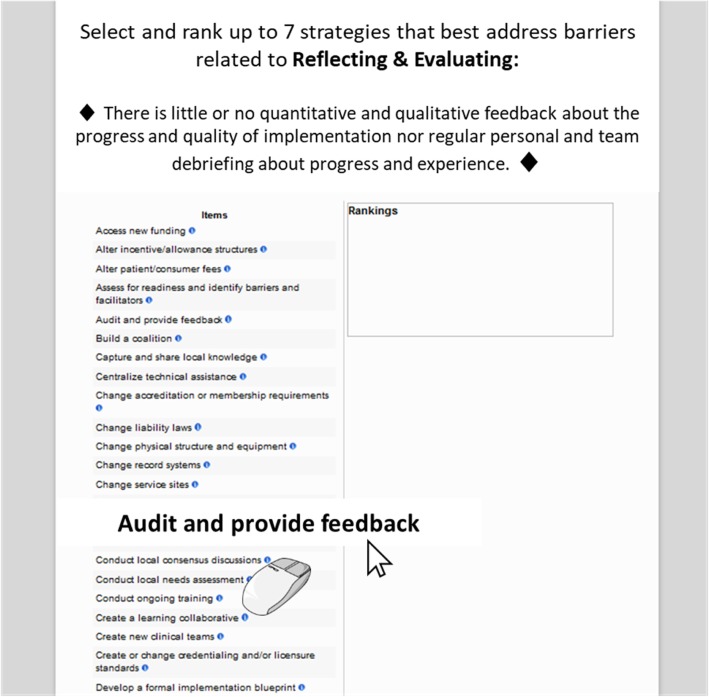
BACKGROUND: A fundamental challenge of implementation is identifying contextual determinants (i.e., barriers and facilitators) and determining which implementation strategies will address them. Numerous conceptual frameworks (e.g., the Consolidated Framework for Implementation Research; CFIR) have been developed to guide the identification of contextual determinants, and compilations of implementation strategies (e.g., the Expert Recommendations for Implementing Change compilation; ERIC) have been developed which can support selection and reporting of implementation strategies. The aim of this study was to identify which ERIC implementation strategies would best address specific CFIR-based contextual barriers. METHODS: Implementation researchers and practitioners were recruited to participate in an online series of tasks involving matching specific ERIC implementation strategies to specific implementation barriers. Participants were presented with brief descriptions of barriers based on CFIR construct definitions. They were asked to rank up to seven implementation strategies that would best address each barrier. Barriers were presented in a random order, and participants had the option to respond to the barrier or skip to another barrier. Participants were also asked about considerations that most influenced their choices. RESULTS: Four hundred thirty-five invitations were emailed and 169 (39%) individuals participated. Respondents had considerable heterogeneity in opinions regarding which ERIC strategies best addressed each CFIR barrier. Across the 39 CFIR barriers, an average of 47 different ERIC strategies (SD = 4.8, range 35 to 55) was endorsed at least once for each, as being one of seven strategies that would best address the barrier. A tool was developed that allows users to specify high-priority CFIR-based barriers and receive a prioritized list of strategies based on endorsements provided by participants. CONCLUSIONS: The wide heterogeneity of endorsements obtained in this study's task suggests that there are relatively few consistent relationships between CFIR-based barriers and ERIC implementation strategies. Despite this heterogeneity, a tool aggregating endorsements across multiple barriers can support taking a structured approach to consider a broad range of strategies given those barriers. This study's results point to the need for a more detailed evaluation of the underlying determinants of barriers and how these determinants are addressed by strategies as part of the implementation planning process.
Overview
The claims and statistics of this paper haven’t been checked yet.
Free: it reads the open-access text and checks the first 5 claims that cite a source we can check. Create a free account to check every claim.
Integrity signals
Registry
Cites
Statistics
Figures
Verification
Claims the paper makes
The claims and statistics of this paper haven’t been checked yet.
Free: it reads the open-access text and checks the first 5 claims that cite a source we can check. Create a free account to check every claim.
Claims other papers make about this one
Each is checked against this paper’s own text: does it say what the citing paper says it does?
The source backs part of the claim, not all of it — or backs it for a different population, condition or comparison.
In the citing paper
“a few best practices have been added: Teaming [42, 46, 73], Assessing Needs [46, 47], Assessing Context, Tailoring Strategies [14], and Adapting [45, 74, 75].”
From The updated consolidated framework for implementation research based on user feedback (2022) · cites this paper as [14]
Experimental — accuracy not yet measuredThe source backs part of the claim, not all of it — or backs it for a different population, condition or comparison.
In the citing paper
“Current literature also reflects an increasing number of studies testing the effectiveness of implementation strategies and the mechanisms that explain how these strategies may influence implementation outcomes [25–31].”
From Ten years of implementation outcomes research: a scoping review (2023) · cites this paper as [26]
Experimental — accuracy not yet measuredThe cited source says what the claim attributes to it.
In the citing paper
“Determinant frameworks can thus be used to inform choice of implementation strategies that may best address contextual determinants [14], generate hypotheses to prospectively guide predictions of implementation outcomes, or retrospectively explain implementation outcomes by assessing differences in determinants across implementation settings [11, 13, 15].”
From The updated consolidated framework for implementation research based on user feedback (2022) · cites this paper as [14]
Self-check
Percentages, sums and reported differences re-computed from the paper’s own numbers.
The self-check needs the paper’s full text.
Citations
Cites
Damschroder, L. J., Aron, D. C., Keith, R. E., Kirsh, S. R., Alexander, J. A., & Lowery, J. C. (2009) · Implementation Science · doi:10.1186/1748-5908-4-50 · Cited by 14,496
Self-citationHoffmann, T. C., Glasziou, P. P., Boutron, I., Milne, R., Perera, R., Moher, D., Altman, D. G., Barbour, V., Macdonald, H., Johnston, M., et al. (2014) · BMJ · doi:10.1136/bmj.g1687 · Cited by 10,548
Proctor, E., Silmere, H., Raghavan, R., Hovmand, P., Aarons, G., Bunger, A., Griffey, R., & Hensley, M. (2011) · Administration and Policy in Mental Health and Mental Health Services Research · doi:10.1007/s10488-010-0319-7 · Cited by 8,721
Michie, S., Richardson, M., Johnston, M., Abraham, C., Francis, J., Hardeman, W., Eccles, M. P., Cane, J., & Wood, C. E. (2013) · Annals of Behavioral Medicine · doi:10.1007/s12160-013-9486-6 · Cited by 7,629
What's in a name? Qualitative description revisited
Sandelowski, M. (2010) · Research in Nursing & Health · doi:10.1002/nur.20362 · Cited by 4,975
Powell, B. J., Waltz, T. J., Chinman, M. J., Damschroder, L. J., Smith, J. L., Matthieu, M. M., Proctor, E. K., & Kirchner, J. E. (2015) · Implementation Science · doi:10.1186/s13012-015-0209-1 · Cited by 4,963
Self-citationMaking sense of implementation theories, models and frameworks
Nilsen, P. (2015) · Implementation Science · doi:10.1186/s13012-015-0242-0 · Cited by 4,447
Implementation strategies: recommendations for specifying and reporting
Proctor, E. K., Powell, B. J., & McMillen, J. C. (2013) · Implementation Science · doi:10.1186/1748-5908-8-139 · Cited by 2,585
Self-citationKnowledge translation of research findings
Grimshaw, J. M., Eccles, M. P., Lavis, J. N., Hill, S. J., & Squires, J. E. (2012) · Implementation Science · doi:10.1186/1748-5908-7-50 · Cited by 2,407
Planning health promotion programs an intervention mapping approach
Bartholomew, L. K., Parcel, G. S., Kok, G., & Gottlieb, N. (2006) · Research Publications (Maastricht University) · Cited by 2,321
Research works printed but not linked: 2
- Waltz TJ Powell BJ Chinman MJ Damschroder LJ Smith JL Matthieu MM Proctor EK Kirchner JE Structuring complex recommendations: methods and general findings Implement Sci 2016 11 Suppl 1 A23
- Powell BJ Aarons GA Amaya-Jackson L Haley A Weiner BJ The collaborative approach to selecting and tailoring implementation strategies (COAST-IS) Implement Sci 2018 13 (Suppl 3): A79 39 40
Cited by
Items 401–500 of 1,000
Xiao, J., Huang, S., Wáng, Q., Tan, S., Chen, L., Yuan, H., Xiang, D., Zhang, B., Li, X., Guo, Y. J., et al. (2024) · Journal of Epidemiology and Global Health · doi:10.1007/s44197-024-00244-2 · Cited by 9
“…strategy construction, we integrated suggestions from participants and mapped them to ERIC strategies using the CFIR-ERIC Strategy Matching Tool [15], followed by adaptation and refinement through multidisciplinary group discussion and consultation with external experts (Supplementary material…”
Yakovchenko, V., McCullough, M. B., Smith, J. L., Gabrielian, S. E., Byrne, T. H., Bruzios, K. E., Koosis, E. R., & Smelson, D. A. (2021) · Implementation Research and Practice · doi:10.1177/26334895211049483 · Cited by 7
“Efforts by Waltz et al. (2019) to systematize how CFIR constructs link to implementation strategies is an ongoing effort.”
BackgroundLearning Health Systems Can Promote and Sustain High-Value Occupational Therapy
Kinney, A. R., Fields, B., Juckett, L., Read, H., Martino, M. N., & Weaver, J. (2021) · American Journal of Occupational Therapy · doi:10.5014/ajot.2022.049071 · Cited by 6
Mouchaers, I., Buma, L. E., Verbeek, H., Zwakhalen, S. M. G., van Haastregt, J. C. M., Vlaeyen, E., Goderis, G., & Metzelthin, S. (2024) · Scientific Reports · doi:10.1038/s41598-024-62047-6 · Cited by 6
Huebschmann, A. G., Wagner, N. M., Gleason, M. C., Brinton, J. T., Brtnikova, M., Brewer, S. E., Begum, A., Armstrong, R., DeCamp, L. R., McFarlane, A. E., et al. (2024) · Implementation Science · doi:10.1186/s13012-024-01387-3 · Cited by 10
Núñez, G., Buren, M. K., Bailey, T., & Crowley, C. (2024) · American Journal of Speech-Language Pathology · doi:10.1044/2024_ajslp-23-00172 · Cited by 5
Ginting, M. L., Sum, G., Wang, S. Z., Ding, Y. Y., & Tay, L. B. G. (2025) · Frontiers in Health Services · doi:10.3389/frhs.2025.1563686 · Cited by 6
Community-Based Efforts to Reduce Violence: A Scoping Review on the Implementation of Cure Violence
Solomon, S. R., Roman, C. G., Davey-Rothwell, M. A., Abaya, R., Webster, D. W., & Frattorolli, S. (2025) · INQUIRY The Journal of Health Care Organization Provision and Financing · doi:10.1177/00469580251360956 · Cited by 9
“26-29 We focused on implementation constructs from the IRLM 18 while collecting information on the study design and CV intervention, including funding, staffing, size, and location.”
Proactive planning for contextual fit: the role of the implementation premortem
Wippold, G. M., Garcia, K. A., Domlyn, A. M., Wong, D. R., & Fernández, M. E. (2025) · Implementation Science Communications · doi:10.1186/s43058-025-00768-z · Cited by 6
“In sum, determinant frameworks can help identify the what and when of implementing programs in real-world and contextually complex settings [50], yet there is a lack of guidance about which implementation strategies to use in a particular context [8].”
Self-citationMolle, J., Agnel, J., Colson, S., & Chays‐Amania, A. (2025) · International Journal of Nursing Studies Advances · doi:10.1016/j.ijnsa.2025.100414 · Cited by 14
Girard, A., Roberge, P., Ellefsen, É., Bernard‐Hamel, J., Carrier, J., & Hudon, C. (2021) · International Journal of Integrated Care · doi:10.5334/ijic.5556 · Cited by 8
Berkel, C., Knox, D., Flemotomos, N., Martínez, V. R., Atkins, D. C., Narayanan, S. S., Rodriguez, L. A., Gallo, C. G., & Smith, J. D. (2023) · Implementation Research and Practice · doi:10.1177/26334895231187906 · Cited by 9
“In addition to the clinical need for scalable implementation measurement, the field of implementation science is also lacking efficient implementation outcome measures that would facilitate the testing of implementation strategies at the organizational level (Proctor et al., 2013; Waltz et al., 2019).”
BackgroundCarroll, A. J., Knapp, A. A., Villamar, J. A., Mohanty, N., Coldren, E., Hossain, T., Limaye, D., Mendoza, D., Minier, M., Sethi, M., et al. (2024) · Families Systems & Health · doi:10.1037/fsh0000852 · Cited by 9
Meng, M., Hu, J., Liu, X., Tian, M., Lei, W., Liu, E., Han, Z., Li, Q., & Chen, Y. (2024) · BMC Health Services Research · doi:10.1186/s12913-024-10860-0 · Cited by 5
“As map CFIR-ERIC suggests, we should tailor strategies [26, 32].”
BackgroundMethodInfluentialKim, B., Guyer, M. E., & Keshavan, M. S. (2024) · Early Intervention in Psychiatry · doi:10.1111/eip.13496 · Cited by 7
“…specific strategies to match identified barriers (examples of tools are shown in Table 1) (Consolidated Framework for Implementation Research, 2024; Waltz et al., 2019), and for any strategy being devised, it is important to specify how to facilitate the innovation's implementation by…”
BackgroundOkamura, K. H., Palafu, T., An, K. J., Marshall, S. M., Chin, S. K., Stern, K. A., Powell, B. J., Becker, S. J., Mandell, D. S., & Okamoto, S. K. (2024) · School Mental Health · doi:10.1007/s12310-024-09660-y · Cited by 6
“…mapping was to understand Ho‘ouna Pono implementation barriers from the perspective of educational leadership in Hawai‘i Island and HIDOE, while promoting state, district/complex, and school-level investment and “buy-in” for the strategies used to implement the curriculum (Waltz et al., 2019).”
Self-citationJenniskens, K., Rasing, S. P. A., Popma, A., Creemers, D. H. M., Ghalit, C., van Vuuren, L., Mérelle, S. Y. M., Spijker, J., & van Nassau, F. (2024) · Frontiers in Public Health · doi:10.3389/fpubh.2024.1386031 · Cited by 7
August, D. L., Walker, R., Gibson, V., Marsh, N. M., Kleidon, T. M., Delaforce, A., Mihalopoulous, C., Ullman, A. J., & Keogh, S. J. (2024) · Journal of Advanced Nursing · doi:10.1111/jan.16342 · Cited by 6
“(Powell et al., 2015 ; Waltz et al., 2019) Barriers and enablers then informed an implementation enhancement plan for implementation of alternative PICC material choice(s).”
Juckett, L., Banhos, M., Howard, M. L., Walters, T., Horn, L. M., Kinney, A. R., & Wengerd, L. R. (2024) · Implementation Science Communications · doi:10.1186/s43058-024-00643-3 · Cited by 5
“First, we entered major implementation barriers identified from our scoping review into Waltz et al.’s barrier-to-strategy matching tool [19].”
MethodLopez, C. J., Neil‐Sztramko, S., Tanyoas, M., Campbell, K. L., Bender, J. L., Strudwick, G., Langelier, D. M., Reiman, T., Greenland, J., Jones, J. M., et al. (2024) · Implementation Science Communications · doi:10.1186/s43058-024-00650-4 · Cited by 8
“To leverage identified barriers and inform the selection of implementation strategies, we utilized the CFIR-ERIC Matching Tool [34].”
MethodGraham, E. L., Amador-Fernández, N., Benrimoj, S. I., Martínez‐Martínez, F., Llinares, R. P., Sánchez-Tormo, J., Baixauli-Fernández, V. J., Colomer-Molina, V., Hoyos, E. P., Gastelurrutia, M. Á., et al. (2025) · Research in Social and Administrative Pharmacy · doi:10.1016/j.sapharm.2025.02.002 · Cited by 5
Wilfling, D., Kühn, A., Lüth, F., Berg, A., Klatt, T., Meyer, G., Dörner, J., Halek, M., Köpke, S., Dichter, M., et al. (2025) · Age and Ageing · doi:10.1093/ageing/afaf051 · Cited by 5
“Based on Grol et al. (from the CFIR framework [32]), the stage of change of an involved person is characterised through the progress of a qualified, enthusiastic and sustained use of the intervention.”
Self, K. J., Johnson, A., Craker, L. K., Silvey, R., Fallon, S., Cunningham, S., & Kanamori, M. (2025) · Archives of Public Health · doi:10.1186/s13690-025-01560-0 · Cited by 6
“We then used the CFIR-ERIC matching tool to match the ERIC strategies to the CFIR constructs included in the semi-structured interview guide in line with previous approaches to matching CFIR and ERIC strategies in qualitative implementation research meth-ods [24].”
InfluentialDelaforce, A., Duff, J. S., Munday, J., Farmer, S. L., Miller, K. L., Glover, L., Corney, C., Hurst, C. P., Ansell, G., Gutta, N., et al. (2021) · Journal of Multidisciplinary Healthcare · doi:10.2147/jmdh.s313309 · Cited by 5
Gullick, J. G., Wu, J., Chew, D. P., Gale, C. P., Yan, A. T.-K., Goodman, S. G., Waters, D., Hyun, K. K., & Brieger, D. B. (2022) · BMC Health Services Research · doi:10.1186/s12913-022-07750-8 · Cited by 6
“1 The COM-B model (reproduced with permission [20])”
MethodTeggart, K., Bryant‐Lukosius, D., Neil‐Sztramko, S., & Ganann, R. (2022) · BMJ Open · doi:10.1136/bmjopen-2021-057661 · Cited by 5
Delaforce, A., Farmer, S. L., Duff, J. S., Munday, J., Miller, K. L., Glover, L., Corney, C., Ansell, G., Gutta, N., Tuffaha, H., et al. (2023) · Transfusion · doi:10.1111/trf.17287 · Cited by 7
“Implementation outcome: - Acceptability, appropriateness, and feasibility of the PAIDSEM-P.27”
BackgroundMethodInfluentialIntegration of hospital and community care for paediatric ophthalmology: A mixed‐methods study
Chan, S. C. Y., Shah, P. R., Tan, K., Ford, B., Webber, A. L., & Keay, L. J. (2023) · Ophthalmic and Physiological Optics · doi:10.1111/opo.13160 · Cited by 6
“…then mapped to specific implementation strategies compiled by the Expert Recommendations for Implementation Change (ERIC) project 25 using the CFIR-ERIC matching tool developed by Waltz et al. 26 for advising future health model implementation approaches to adequately address identified barriers.”
Michail, M., Robinson, J., Witt, K., Occhipinti, J., Skinner, A., Lamblin, M., Veresova, M., Kartal, D., & Waring, J. J. (2023) · BMJ Open · doi:10.1136/bmjopen-2022-071111 · Cited by 5
Howe, C. J., Lewis, B., & Edmondson, S. N. (2023) · Journal of Nursing Care Quality · doi:10.1097/ncq.0000000000000744 · Cited by 7
“Waltz et al, 10 however, cautioned that implementation teams should consider context-specific needs when selecting implementation strategies.”
BackgroundSasaki, N., Shimazu, T., Takeno, H., Ogawa, S., Sawada, U., Tsutsumi, A., & Imamura, K. (2024) · Pilot and Feasibility Studies · doi:10.1186/s40814-024-01481-9 · Cited by 6
“According to the Expert Recommendations for Implementing Change (ERIC), educating stakeholders (employees, employers/managers, and recruiters) is a possible strategy if leadership engagement can be a barrier in the context [27, 28].”
BackgroundMethodJohnson, J. K., Sullivan, J. L., Trinkley, K. E., Lapin, B. R., Passek, S. D., Asp, V., Ford, B. S., & Rabin, B. A. (2024) · PM&R · doi:10.1002/pmrj.13204 · Cited by 6
“33,34 Our process, including the use of the publicly available iPRISM webtool, 3 can be replicated by others to implement clinical decision support tools or other innovative products, programs, or interventions in rehabilitation.”
Jimenez, E. E., Rosland, A.-M. M., Stockdale, S. E., Reddy, A., Wong, M. S., Torrence, N., Huynh, A. K., & Chang, E. T. (2024) · Implementation Science Communications · doi:10.1186/s43058-024-00613-9 · Cited by 6
“Literature has demonstrated increased uptake and adherence to EBPs and increase sustainability with IC [51, 52].”
BackgroundSimpson, J., Babatunde, A., Simpson, A., Gilbert, S., Keene, A. R., Stephenson, L., Chua, K., Owen, G. S., Crowe, F., Edwards, P., et al. (2024) · BMC Psychiatry · doi:10.1186/s12888-024-06213-0 · Cited by 5
“See Additional file 2: Known barriers and recommended strategies for how identified barriers to ACD implementation characterised by the Consolidated Framework for Implementation Research (CFIR) [35] are addressed by the project strategies.”
BackgroundBahia, M. M., Carpenter, J., & Cherney, L. R. (2024) · American Journal of Speech-Language Pathology · doi:10.1044/2024_ajslp-24-00215 · Cited by 6
Garneau, H. C., Cheng, H. L., Kim, J. P., Magid, M. A., Chin-Purcell, L., & McGovern, M. P. (2025) · Implementation Science Communications · doi:10.1186/s43058-025-00726-9 · Cited by 9
“They should also drive the adaptation of the innovation being implemented and inform the selection and tailoring of implementation strategies [8, 9].”
Hinrichs‐Kinney, L., Beisheim, E. H., Butera, K. A., Braaten, M., Holtrop, J. S., & Stevens‐Lapsley, J. E. (2025) · PM&R · doi:10.1002/pmrj.13389 · Cited by 8
“7,17,18 This approach results in multicomponent strategies specific to the type of evidence and clinical context, 8,19 – 21 which are superior to “ one-size-fits-all ” strategies and are better facilitators of practice change.”
Krausova, B., Gnanapragasam, S., Demetriou, L., Beck, A., Pires-Yfantouda, R., Docherty, M. J., & Sevdalis, N. (2021) · Implementation Science Communications · doi:10.1186/s43058-021-00128-7 · Cited by 5
Nurses' perspectives on pain management practices during newborn blood sampling in China
Hu, J., Gifford, W., Zhou, Y., Zhang, Q., & Harrison, D. M. (2021) · Journal of Neonatal Nursing · doi:10.1016/j.jnn.2021.06.015 · Cited by 7
Velloza, J., Roche, S. D., Concepcion, T. L., & Ortblad, K. F. (2022) · Current Opinion in HIV and AIDS · doi:10.1097/coh.0000000000000768 · Cited by 6
Strategies for implementing the interRAI home care frailty scale with home-delivered meal clients
Juckett, L., Oliver, H. V., Hariharan, G., Bunck, L. E., & Devier, A. (2023) · Frontiers in Public Health · doi:10.3389/fpubh.2023.1022735 · Cited by 5
“Strategies were drawn from the Expert Recommendations for Implementing Change (ERIC) taxonomy (31) using the CFIR-ERIC matching tool (32).”
MethodLodge, M., Dhesi, J. K., Shipway, D., Braude, P., Meilak, C., Partridge, J. S. L., Andrew, N. E., Srikanth, V. K., Ayton, D., & Moran, C. (2024) · BMC Health Services Research · doi:10.1186/s12913-024-10844-0 · Cited by 5
“Although some tools exist to support people to take our results and develop an implementation strategy (e.g., the CFIR-ERIC (Expert Recommendations for Implementing Change) tool), there is a lack of expert consensus and experience with these approaches [42–44].”
MethodGirling, C., Packham, A., Robinson, L., Arden, M. A., Hind, D., & Wildman, M. J. (2022) · Implementation Science Communications · doi:10.1186/s43058-022-00263-9 · Cited by 7
Harvey, L. H., Sliwinski, S. K., Flike, K., Boudreau, J., Gifford, A. L., Branch‐Elliman, W., & Hyde, J. K. (2022) · Research Square · doi:10.21203/rs.3.rs-1720487/v1 · Cited by 5
Psihogios, A. M., & Stiles‐Shields, C. (2024) · Journal of Pediatric Psychology · doi:10.1093/jpepsy/jsae094 · Cited by 6
Molldrem, S., Luft, H., Farroni, J. S., Lyons, E., & Wooten, K. C. (2025) · Journal of Clinical and Translational Science · doi:10.1017/cts.2025.22 · Cited by 4
“We used the CFIR-ERIC Matching Tool, which identifies ERIC implementation strategies that are most promising for overcoming known key CFIR-based barriers [32].”
InfluentialLi, J., Maddock, E., Hosking, M., Ebrill, K., Sullivan, J., Loi, K., Tavares-Rixon, D., Jayasena, R., Grieve, G., & Delaforce, A. (2025) · JMIR Medical Informatics · doi:10.2196/66421 · Cited by 7
“In 2019, the strategies were mapped to the CFIR framework to identify which strategies are best suited to addressing factors influencing implementation [23].”
Aschbrenner, K. A., Walsh‐Bailey, C., Brown, M. C., Khan, T., Baggett, T. P., Jones, S. M. W., Levy, D. E., Pace, L. E., & Winickoff, J. P. (2025) · Journal of Clinical and Translational Science · doi:10.1017/cts.2025.29 · Cited by 6
“Research teams have developed processes and tools for assessing contextual factors for implementing EBIs [30 – 32] which informs tailoring of implementation strategies to the unique characteristics and circumstances of the setting where it is being implemented [33].”
Adams, K., Taliano, J. M., Okorie, I., Alvendia, M., Patel, P., Garg, S., & Chang, L. W. (2025) · Human Vaccines & Immunotherapeutics · doi:10.1080/21645515.2025.2481005 · Cited by 4
The SIMPLER Nutrition Pathway for Fragility Fractures: A Quality Improvement Initiative
Bell, J., Geirsdóttir, Ó. G., Johansen, A., Santy‐Tomlinson, J., Frihagen, F., McGlasson, R. A., Sutton, E., & Hertz, K. (2025) · Nutrients · doi:10.3390/nu17121987 · Cited by 6
Markaryan, M., Labie, C., Verschueren, S., Assche, D. V., Nijs, J., Maîresse, O., Malfliet, A., de Vlam, K., Runge, N., Caeyers, N., et al. (2025) · Brazilian Journal of Physical Therapy · doi:10.1016/j.bjpt.2025.101243 · Cited by 7
“Pre-selected implementation strategies from the Expert Recommendations for Implementing Change (ERIC) 49,50 were adapted for the purpose of the study (Supplementary Material 1).”
Branch‐Elliman, W., Chambers, D., Albin, O. R., Batshon, L. J., Castejón-Ramírez, S., Cheng, V. C., Emetuche, N., Datta, R., Kamboj, M., Krein, S. L., et al. (2025) · Infection Control and Hospital Epidemiology · doi:10.1017/ice.2025.75 · Cited by 5
“51,59 In their work on selecting and tailoring implementation strategies, Powell et al detail the pros and cons of each of these different approaches to developing the bundle of strategies.”
Fanning, N., Liang, S., Landers, A., Brown, H. J., Rother, C., Taylor, N. J., Fu, F., & Morrow, A. (2025) · Clinical Nutrition · doi:10.1016/j.clnu.2025.106546 · Cited by 7
Shen, Y., Huang, G., Le, H., Yu, S., Xu, M., OuYang, J., Fan, Y., & Wang, Q. (2025) · British Journal of Educational Technology · doi:10.1111/bjet.70037 · Cited by 12
Pees, S. O., van Oostrom, S. H., Schaafsma, F. G., & Proper, K. I. (2023) · BMC Public Health · doi:10.1186/s12889-023-16858-3 · Cited by 5
“In addition, the CFIR-ERIC strategy matching tool was used to come up with strategies and methods from literature [12].”
MethodTeggart, K., Silva, A., Lopez, C. J., Bryant‐Lukosius, D., Neil‐Sztramko, S., & Ganann, R. (2024) · Cancer Nursing · doi:10.1097/ncc.0000000000001414 · Cited by 8
Pathak, B. G., Mazumder, S., Nisar, Y. B., Bhatt, A., Singh, M., Madhur, T., & Sandøy, I. F. (2025) · Health Expectations · doi:10.1111/hex.70263 · Cited by 8
Svedin, F., Blomberg, O., Brantnell, A., Farrand, P. A., von Essén, L., Åberg, A. C., & Woodford, J. (2025) · BMC Geriatrics · doi:10.1186/s12877-025-06087-1 · Cited by 5
“Identified barriers and facilitators will inform intervention adaptations and the adoption of evidence-based implementation strategies [55].”
Volpi, C. R., Chama, J., Mansfield, M. E., Adebiyi, R., Mitchell, A. B., Aigoro, J. A., Bawa, Y. J., Kolawole, K. E., Ononaku, U., Jibrin, P., et al. (2025) · PLOS Global Public Health · doi:10.1371/journal.pgph.0004616 · Cited by 4
“Subsequent to the player group discussions, the research team inputted the barriers from each respective group into the CFIR-ERIC Matching Tool v.1 [28], resulting in a ranking of implementation strategies endorsed by experts that could simultaneously overcome the inputted barriers.”
The use of implementation mapping in healthcare settings: a scoping review
Warhurst, K., Tyack, Z. F., Beckmann, M. M., & Abell, B. (2025) · Frontiers in Public Health · doi:10.3389/fpubh.2025.1603178 · Cited by 9
“…and strategy selection, failure to clearly define implementation goals, inadequate understanding of the determinants impacting on implementation (which informs strategy selection) and limited understanding and description of the mechanisms of change hypothesised to lead to the desired result (5–8).”
Branch‐Elliman, W., Dassum, S. R., Stroever, S. J., Albin, O. R., Batshon, L. J., Castejón-Ramírez, S., Cheng, V. C., Emetuche, N., Datta, R., Kamboj, M., et al. (2025) · Infection Control and Hospital Epidemiology · doi:10.1017/ice.2025.76 · Cited by 5
“7 Prior to initiating a de-implementation project, formative work, often manifested as qualitative interviews combined with the collection of quantitative data, may be helpful to guide the process of designing the de-implementation plan.”
Duffy, C. C., Bass, G. A., Kaplan, L. J., Bonafide, C. P., O'Sullivan, E. P., & Baker, P. (2025) · British Journal of Anaesthesia · doi:10.1016/j.bja.2025.08.035 · Cited by 5
“28 Recognising the organisational context into which eFONA training must be embedded, the Expert Recommendations for Implementing Change (ERIC) framework offers a taxonomy of implementation strategies to translate evidence into practice.”
Ware, S. L., Studts, C. R., Lei, F., Bush, H., Higgins, E., Studts, J. L., & Bastos-Carvalho, A. (2022) · BMC Health Services Research · doi:10.1186/s12913-022-07915-5 · Cited by 7
“Synthesis of multiphase findings Evidence for direct correlations between perceived barriers and intervention performance is critical to implementation planning [47] and strategy selection [26], yet Fig.”
BackgroundDamschroder, L. J., Sussman, J. B., Pfeiffer, P. N., Kurlander, J. E., Freitag, M. B., Robinson, C., Spoutz, P. M., Christopher, M. L. D., Battar, S., Dickerson, K., et al. (2022) · Implementation Science Communications · doi:10.1186/s43058-022-00297-z · Cited by 6
“LEAP, a blended implementation approach [66], is specifically designed to address these barriers by interweaving four discrete, evidence-based implementation strategies: (1) create a learning collaborative, (2) assess for readiness and identify barriers and facilitators, (3) audit and provide feedback, and (4) conduct…”
Self-citationOilcloth sessions as an implementation strategy: a qualitative study in Denmark
Kirk, J. W., Stefánsdóttir, N. Þ., Powell, B. J., Lindstroem, M. B., Andersen, O., Tjørnhøj‐Thomsen, T., & Nilsén, P. (2022) · BMC Medical Education · doi:10.1186/s12909-022-03635-w · Cited by 4
“The challenges of organizational innovation in healthcare are substantial [10] due to the diversity of the professional disciplines and medical specialties involved [11].”
BackgroundSelf-citationOkamura, K. H., Okamoto, S. K., Marshall, S. M., Chin, S. K., Garcia, P. M., Powell, B. J., Stern, K. A., Becker, S. J., & Mandell, D. S. (2022) · Implementation Science Communications · doi:10.1186/s43058-022-00359-2 · Cited by 5
“Concept mapping can help improve the selection and tailoring of implementation strategies [17, 18, 20] by providing a meaningful visual depiction of implementation concepts to participants [21–23].”
BackgroundMethodSelf-citationMolebatsi, K., Foster, A. H., Ntsayagae, E., Bikimane, B., Bauer, A., Suleiman, K., Acosta, E., Beidas, R. S., & Schnoll, R. A. (2022) · Global Implementation Research and Applications · doi:10.1007/s43477-022-00062-3 · Cited by 4
“1 3 for all constructs (Waltz et al., 2019), the CFIR-ERIC pairings in this study were finalized using team consensus.”
Flemons, K., Cameron, A., Dossett, L. A., Helmle, K. E., McKeen, J. A., & Ruzycki, S. M. (2023) · Canadian Journal of Diabetes · doi:10.1016/j.jcjd.2023.05.001 · Cited by 6
Venâncio, S. I., Relvas, G. R. B., Melo, D. S., de Souza, C. B., Moreira, H. D. O. M., Veras, J. J. P., Veiga, M. M. L., Ramos, M. K. P., Ferreira, R. A. B., Alves, V. H., et al. (2023) · Global Implementation Research and Applications · doi:10.1007/s43477-023-00098-z · Cited by 5
“…this could be a future exercise that would facilitate the creation of a tool to consult the barriers versus strategies for implementation of the EAAB, because until now there is little consensus regarding which strategies are most appropriate to address CFIR barriers (Waltz et al., 2019).”
InfluentialFehlberg, Z., Fisher, L., Liu, C., Kugenthiran, N., Milne, R. L., Young, M., Willis, A. M., Southey, M. C., Goranitis, I., & Best, S. (2024) · European Journal of Human Genetics · doi:10.1038/s41431-024-01729-1 · Cited by 6
Development and usability testing of a multifaceted intervention to reduce low-value injury care
Berube, M., Lapierre, A., Sykes, M. J., Grimshaw, J., Turgeon, A. F., Lauzier, F., Taljaard, M., Stelfox, H. T., Witteman, H. O., Berthelot, S., et al. (2025) · BMC Health Services Research · doi:10.1186/s12913-024-12153-y · Cited by 6
“We also used the Consolidated Framework for Implementation Research (CFIR) [23] and the Expert Recommendations for Implementing Change (ERIC) [24] tool, as theoretical foundations for determining intervention strategies.”
InfluentialWeerasuriya, R., Elias, J., Martyn, M. M., O’Haire, S., Gaff, C., Smith, K. M., Desai, J., & Taylor, N. J. (2025) · Public Health Genomics · doi:10.1159/000544946 · Cited by 4
“The respective constructs for each prioritised challenge (identi fi ed in phase 1b) were inputted into the CFIR-ERIC matching tool (available online: https://c fi rguide.org/ choosing-strategies/) to yield a list of potentially relevant theory-driven strategies [44].”
Finsterwald, M., Kita, Z., Dell‐Kuster, S., Burri‐Winkler, K., Auderset, A. C., Winkens, J., Burkhart, C. S., Vegten, A. V., & Clack, L. (2025) · International Journal for Quality in Health Care · doi:10.1093/intqhc/mzaf023 · Cited by 5
“CFIR 2.0) [20, 21] to capture the barriers and facilitators to implementation and the Expert Recommendations for Implementing Change (ERIC) framework [22] to analyse needs and appropriate implementation strategies.”
InfluentialDoig, M., Cunningham, A., Bedford, V., Le, H. V., O'Connor, M. J., Bezak, E., Parange, N., Hutchinson, A. D., Gorayski, P., & Short, M. (2025) · Journal of Medical Radiation Sciences · doi:10.1002/jmrs.880 · Cited by 4
Staples, T., Beran-Maryott, G., Brinkerhoff, A., Bradford, M., Ward, R. S., & Thackeray, A. (2021) · Journal of Physical Therapy Education · doi:10.1097/jte.0000000000000182 · Cited by 4
Alberto, L., Marshall, A. P., Walker, R., Pálizas, F., & Aitken, L. M. (2021) · Nursing and Health Sciences · doi:10.1111/nhs.12884 · Cited by 3
Davis, J. L., Ayakaka, I., Ggita, J. M., Ochom, E., Babirye, D., Turimumahoro, P., Gupta, A. J., Mugabe, F., Armstrong-Hough, M. J., Cattamanchi, A., et al. (2022) · Frontiers in Public Health · doi:10.3389/fpubh.2022.837211 · Cited by 5
“Several influential articles have laid out the theory and practice of designing implementation strategies (30, 48, 49), but there have been relatively few examples of how these approaches can be applied in low-income countries.”
BackgroundKoh, W. Q., Casey, D., Hoel, V., & Toomey, E. C. (2022) · Implementation Science Communications · doi:10.1186/s43058-022-00308-z · Cited by 7
“To address this, Waltz and colleagues developed the CFIR-ERIC mapping tool, which was intended to map the barriers that have been coded to CFIR constructs onto ERIC implementation strategies [21].”
Methodvon Meyenfeldt, E. M., & van Nassau, F. (2022) · Journal of Thoracic Disease · doi:10.21037/jtd-2022-20 · Cited by 5
“An implementation plan consists of a series of implementation strategies, each devised to address one or more specific contextual barriers of reinforce a known facilitator (12,16).”
Hargreaves, J., Leslie, S., Cottrell, M. A., Snoswell, A., O’Leary, S. P., & Window, P. (2023) · Australian Journal of Clinical Education · doi:10.53300/001c.75204 · Cited by 4
“Conceptualising contextual determinants using CFIR was intended to guide intervention implementation within the specific setting under study by defining under what conditions intervention implementation will potentially be effective in that context (Keith et al., 2017; Waltz et al., 2019).”
MethodTalla, P. K., Thomas, A., Ataman, R., Auger, C., McKerral, M., Wittich, W., Poncet, F., & Ahmed, S. (2023) · BMJ Open · doi:10.1136/bmjopen-2022-068866 · Cited by 5
King, A. C., Harris-Lane, L. M., Bérubé, S., Burke, K., Churchill, A., Cornish, P. A., Goguen, B., Jaouich, A., & Rash, J. A. (2023) · International Journal of Mental Health Systems · doi:10.1186/s13033-023-00611-9 · Cited by 6
“0 aligned with provider professional standards of care, and was deemed acceptable, applicable, and feasible to implement in practice [56]; and (3) develop and communicate a formal implementation blue-print that includes a formal plan for sustainability [57].”
BackgroundThe ART of Readiness: A Practical Tool for Implementation Tailoring at the Activity Level
Scott, V. C., LaMarca, T. K., Hamm, D. W., Tolley, A. J., Rachel, S. A., & Wandersman, A. (2024) · Global Implementation Research and Applications · doi:10.1007/s43477-023-00115-1 · Cited by 7
“The practice of routine contextual assessment and implementation monitoring is aligned with implementation research and recommendations (Domlyn et al., 2021; Scott et al., 2017; Waltz et al., 2019).”
Cassidy, C. E., Flynn, R., Campbell, A., Dobson, L., Langley, J. E., McNeil, D. A., Milne, E., Zanoni, P., Churchill, M., & Benzies, K. (2024) · BMC Nursing · doi:10.1186/s12912-024-01777-4 · Cited by 5
“…being the most commonly reported KT strategies, previous research clearly highlights the range of contextual factors influencing sustainability of EBIs, including inadequate staff resourcing and lack of organizational support [35, 39], which cannot be addressed by educational strategies alone [40].”
BackgroundColton, Z. A., Liles, S. M., Griffith, M. M., Stanek, C. J., Walden, J., King, A. A., Barnard-Kirk, T., Creary, S. E., & Nahata, L. (2024) · Journal of Pediatric Psychology · doi:10.1093/jpepsy/jsae031 · Cited by 8
Implementation Strategies for Quality Improvement in Palliative Care: A Scoping Review
Dai, Y., Daveson, B. A., Gan, L., Ding, J., Chen, Y., & Johnson, C. E. (2024) · Health Expectations · doi:10.1111/hex.14151 · Cited by 4
“Developing tailored implementation strategies based on the identified barriers, facilitators and contextual resources is regarded as a pre ‐ requisite for successfully implementing innovation into routine clinical practice [35 – 38].”
BackgroundPeels, D. A., Boekhout, J. M., van Nassau, F., Lechner, L., Bolman, C. A. W., & Berendsen, B. (2024) · Implementation Science Communications · doi:10.1186/s43058-024-00622-8 · Cited by 5
“Although at present, guidance on how to select implementation strategies is available (for example in the CFIR-ERIC matching tool [34]), at the time of selecting the implementation strategies in the current project, literature regarding effective implementation strategies was limited.”
BackgroundMethodBoudewijns, E. A., Vermond, D., van der Kleij, R., Chavannes, N. H., van Schayck, O. C. P., Kirenga, B., & Brakema, E. A. (2020) · BMJ Open · doi:10.1136/bmjopen-2020-041821 · Cited by 5
Satterfield, J. M., Werder, K., Reynolds, S., Kryzhanovskaya, I., & Curtis, A. C. (2022) · Substance Abuse · doi:10.1080/08897077.2022.2116742 · Cited by 6
Hagström, A., Hasson, H., Hollander, A., Vahtra, C., Delilovic, S., & Augustsson, H. (2024) · Journal of Migration and Health · doi:10.1016/j.jmh.2024.100243 · Cited by 3
“The Behaviour Change Wheel or the CFIR-ERIC matching tool (Waltz et al., 2019) can be valuable for matching strategies to existing barriers.”
Implementation of Cultural Intelligence Education into Doctor of Pharmacy Curricula: A Review
Ghosh, S., Mortha, S. M., Roberts, M. C., & McLaughlin, J. E. (2025) · American Journal of Pharmaceutical Education · doi:10.1016/j.ajpe.2025.101360 · Cited by 3
Haga, S. M., Jacobsen, H., & Engell, T. (2025) · BMC Health Services Research · doi:10.1186/s12913-025-12937-w · Cited by 3
Kidd, J., Splett, J. W., Lord, R., Varner, M., Yost, M., Corbin, C. M., & Sonsteng-Person, M. A. (2025) · Journal of Emotional and Behavioral Disorders · doi:10.1177/10634266251358175 · Cited by 3
“An implementation framework, like CFIR, methodi-cally organizes implementation determinants such that strategies to address them more simply and logically flow, as evidenced by recent work connecting implementation determinant to empirically supported implementation strategies (Waltz et al., 2019).”
Rauzi, M. R., Balakrishnan, S., Flynn, S. M., Keysor, J. J., & Hoenig, H. (2025) · Archives of Physical Medicine and Rehabilitation · doi:10.1016/j.apmr.2025.08.008 · Cited by 6
McLoughlin, G. M., Smith, A., Dopp, A. R., Jones, R. M., Martínez, O., Kumanyika, S., Yucel, R. M., Brownson, R. C., & Fisher, J. O. (2025) · Implementation Science Communications · doi:10.1186/s43058-025-00769-y · Cited by 4
“In close partnership with the SDP this study encompasses a rigorous implementation mapping procedure to improve the implementation and public health impact of USM within SDP schools [38, 50].”
Abdulqader, A. K. A., Ali, S. I., Alamoudi, F. A., & Shaban, M. (2025) · BMC Nursing · doi:10.1186/s12912-025-03974-1 · Cited by 5
“Aligning barrier → strategy choices with a common taxonomy (e.g., ERIC) may further increase reproducibility—examples include reminders/prompts, workflow redesign, and identifying/preparing champions [22].”
Guo, Y., Huang, J., Cheng, Y., Yang, Z., & Zang, Y. (2025) · BMJ Open · doi:10.1136/bmjopen-2025-107924 · Cited by 3
“This tool, developed by Waltz et al , 35 is an Excel spreadsheet matching system derived from the Expert Recommendations for Implementing Change (ERIC).”
Vis, C., van Bodegom‐Vos, L., Walters, B. H., Powell, B. J., Ista, E., & van Nassau, F. (2025) · Implementation Science · doi:10.1186/s13012-025-01477-w · Cited by 5
Self-citationSannes, A., Rognli, E. W., Hanssen‐Bauer, K., Torp, N. C., Storfossen, S. K., Høstaker, M. N., & Aalberg, M. (2025) · Journal of Medical Internet Research · doi:10.2196/83543 · Cited by 6
“Nonetheless, empirical evidence linking CFIR-identified barriers to specific ERIC strategies remains limited [79].”
George, N. B., Malone, S. M., Siječić, A., Cross, G., Martos, M. R., Noyd, D. H., Force, L. M., Bhakta, N. H., Ehrhardt, M. J., & Kepper, M. M. (2026) · Journal of Cancer Survivorship · doi:10.1007/s11764-025-01958-3 · Cited by 3
Metadata
- Authors
- Waltz, T. J., Powell, B. J., Fernández, M. E., Abadie, B., & Damschroder, L. J.
- Affiliations
- Eastern Michigan University (US)
- University of North Carolina at Chapel Hill (US)
- The University of Texas Health Science Center at Houston (US)
- VA Center for Clinical Management Research (US)
- Corresponding author
- Damschroder, Laura J.
- Venue
- Implementation Science
- Published
- 2019-04-29
- Volume
- 14
- Issue
- 1
- Pages
- 42-42
- ISSN
- 1748-5908 (ISSN-L)
- PMC
- PMC6489173
- OpenAlex
- W2947410237
- Cited by
- 1,136
- References
- 50
- Citations by year
- 2026: 176 · 2025: 194 · 2024: 220 · 2023: 171 · 2022: 166 · 2021: 121 · 2020: 79 · 2019: 8
- FWCI
- 127.40
- Type
- journal article
- Language
- en
- Open access
- gold
- doi.org
- Licence
- cc-by
- creativecommons.org/licenses/by/4.0/ (tdm)
- creativecommons.org/licenses/by/4.0/ (vor)
- Locations
- Implementation Science (publishedVersion, cc-by)
- Europe PMC (PubMed Central) (publishedVersion, cc-by)
- PubMed Central (publishedVersion, cc-by)
- PubMed (publishedVersion)
- DOAJ (DOAJ: Directory of Open Access Journals) (submittedVersion, cc-by-sa)
- Funders
- U.S. Department of Veterans Affairs (QLP 92-025; QUERI DM, DIB 98-001)
- Topics
- Health Sciences › Health Professions › General Health Professions › Health Policy Implementation Science
- Health Sciences › Health Professions › General Health Professions › Health Sciences Research and Education
- Health Sciences › Medicine › Public Health, Environmental and Occupational Health › Clinical practice guidelines implementation
- Keywords
- implementation strategies, contextual barriers, Consolidated Framework for Implementation Research, Expert Recommendations for Implementing Change, ERIC, implementation planning, strategy selection, implementation barriers and facilitators
- MeSH terms
- Implementation Science, Health Plan Implementation, Health Services Research, Humans, Models, Theoretical, Quality of Health Care, Evidence-Based Practice
About these checks
Registry, retraction, Cites and statistics results are computed, not judged, with one exception: a printed reference that no index lists is read once by a model before it counts as a citation error. Claims are extracted by a model and kept only when their quote appears verbatim in the text; each cited source is then checked, with a model’s help, for whether it says what the claim relies on. Those verdicts can be wrong — read the claim’s quote and the cited source before relying on one.
Statistics and arithmetic are recomputed, not judged.
Confidence bands are shown only for fields calibrated on our annotated test set. None is calibrated yet, so no band is shown.
What counts as a claim ›How we measure confidence ›How we check this ›
Are you an author, or do you see a problem with this page? Request a review
Data sources
Bibliographic data: Semantic Scholar, OpenAlex, Crossref.
Contains information from the Semantic Scholar Academic Graph Datasets, made available under the ODC Attribution License (ODC-BY 1.0).
Semantic Scholar’s data is described in: Kinney, R., et al. (2023). The Semantic Scholar Open Data Platform. arXiv:2301.10140.
