

Choosing implementation strategies to address contextual barriers: diversity in recommendations and future directions
Open accessThe DOI matches its Crossref record; 50 of the 50 references it cites were found in a registry or an index.
Abstract
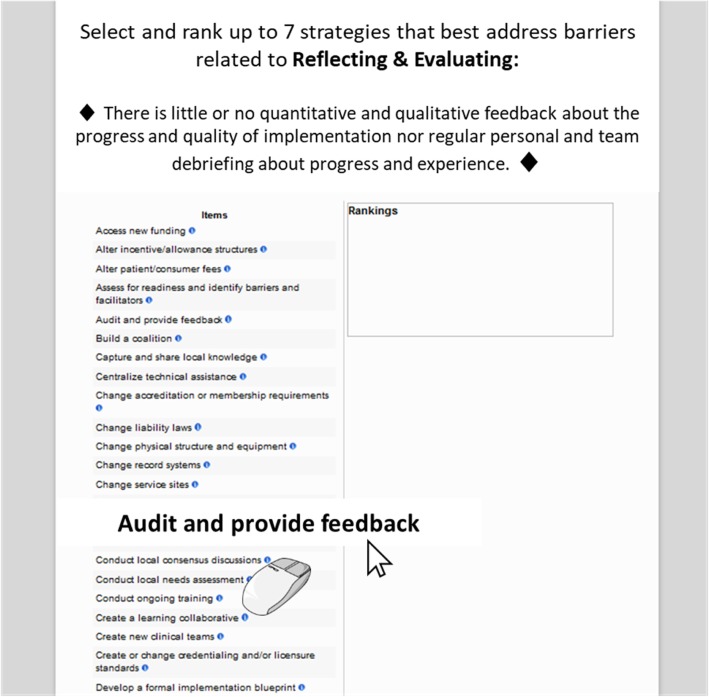
BACKGROUND: A fundamental challenge of implementation is identifying contextual determinants (i.e., barriers and facilitators) and determining which implementation strategies will address them. Numerous conceptual frameworks (e.g., the Consolidated Framework for Implementation Research; CFIR) have been developed to guide the identification of contextual determinants, and compilations of implementation strategies (e.g., the Expert Recommendations for Implementing Change compilation; ERIC) have been developed which can support selection and reporting of implementation strategies. The aim of this study was to identify which ERIC implementation strategies would best address specific CFIR-based contextual barriers. METHODS: Implementation researchers and practitioners were recruited to participate in an online series of tasks involving matching specific ERIC implementation strategies to specific implementation barriers. Participants were presented with brief descriptions of barriers based on CFIR construct definitions. They were asked to rank up to seven implementation strategies that would best address each barrier. Barriers were presented in a random order, and participants had the option to respond to the barrier or skip to another barrier. Participants were also asked about considerations that most influenced their choices. RESULTS: Four hundred thirty-five invitations were emailed and 169 (39%) individuals participated. Respondents had considerable heterogeneity in opinions regarding which ERIC strategies best addressed each CFIR barrier. Across the 39 CFIR barriers, an average of 47 different ERIC strategies (SD = 4.8, range 35 to 55) was endorsed at least once for each, as being one of seven strategies that would best address the barrier. A tool was developed that allows users to specify high-priority CFIR-based barriers and receive a prioritized list of strategies based on endorsements provided by participants. CONCLUSIONS: The wide heterogeneity of endorsements obtained in this study's task suggests that there are relatively few consistent relationships between CFIR-based barriers and ERIC implementation strategies. Despite this heterogeneity, a tool aggregating endorsements across multiple barriers can support taking a structured approach to consider a broad range of strategies given those barriers. This study's results point to the need for a more detailed evaluation of the underlying determinants of barriers and how these determinants are addressed by strategies as part of the implementation planning process.
Overview
The claims and statistics of this paper haven’t been checked yet.
Free: it reads the open-access text and checks the first 5 claims that cite a source we can check. Create a free account to check every claim.
Integrity signals
Registry
Cites
Statistics
Figures
Verification
Claims the paper makes
The claims and statistics of this paper haven’t been checked yet.
Free: it reads the open-access text and checks the first 5 claims that cite a source we can check. Create a free account to check every claim.
Claims other papers make about this one
Each is checked against this paper’s own text: does it say what the citing paper says it does?
The source backs part of the claim, not all of it — or backs it for a different population, condition or comparison.
In the citing paper
“a few best practices have been added: Teaming [42, 46, 73], Assessing Needs [46, 47], Assessing Context, Tailoring Strategies [14], and Adapting [45, 74, 75].”
From The updated consolidated framework for implementation research based on user feedback (2022) · cites this paper as [14]
Experimental — accuracy not yet measuredThe source backs part of the claim, not all of it — or backs it for a different population, condition or comparison.
In the citing paper
“Current literature also reflects an increasing number of studies testing the effectiveness of implementation strategies and the mechanisms that explain how these strategies may influence implementation outcomes [25–31].”
From Ten years of implementation outcomes research: a scoping review (2023) · cites this paper as [26]
Experimental — accuracy not yet measuredThe cited source says what the claim attributes to it.
In the citing paper
“Determinant frameworks can thus be used to inform choice of implementation strategies that may best address contextual determinants [14], generate hypotheses to prospectively guide predictions of implementation outcomes, or retrospectively explain implementation outcomes by assessing differences in determinants across implementation settings [11, 13, 15].”
From The updated consolidated framework for implementation research based on user feedback (2022) · cites this paper as [14]
Self-check
Percentages, sums and reported differences re-computed from the paper’s own numbers.
The self-check needs the paper’s full text.
Citations
Cites
Damschroder, L. J., Aron, D. C., Keith, R. E., Kirsh, S. R., Alexander, J. A., & Lowery, J. C. (2009) · Implementation Science · doi:10.1186/1748-5908-4-50 · Cited by 14,496
Self-citationHoffmann, T. C., Glasziou, P. P., Boutron, I., Milne, R., Perera, R., Moher, D., Altman, D. G., Barbour, V., Macdonald, H., Johnston, M., et al. (2014) · BMJ · doi:10.1136/bmj.g1687 · Cited by 10,548
Proctor, E., Silmere, H., Raghavan, R., Hovmand, P., Aarons, G., Bunger, A., Griffey, R., & Hensley, M. (2011) · Administration and Policy in Mental Health and Mental Health Services Research · doi:10.1007/s10488-010-0319-7 · Cited by 8,721
Michie, S., Richardson, M., Johnston, M., Abraham, C., Francis, J., Hardeman, W., Eccles, M. P., Cane, J., & Wood, C. E. (2013) · Annals of Behavioral Medicine · doi:10.1007/s12160-013-9486-6 · Cited by 7,629
What's in a name? Qualitative description revisited
Sandelowski, M. (2010) · Research in Nursing & Health · doi:10.1002/nur.20362 · Cited by 4,975
Powell, B. J., Waltz, T. J., Chinman, M. J., Damschroder, L. J., Smith, J. L., Matthieu, M. M., Proctor, E. K., & Kirchner, J. E. (2015) · Implementation Science · doi:10.1186/s13012-015-0209-1 · Cited by 4,963
Self-citationMaking sense of implementation theories, models and frameworks
Nilsen, P. (2015) · Implementation Science · doi:10.1186/s13012-015-0242-0 · Cited by 4,447
Implementation strategies: recommendations for specifying and reporting
Proctor, E. K., Powell, B. J., & McMillen, J. C. (2013) · Implementation Science · doi:10.1186/1748-5908-8-139 · Cited by 2,585
Self-citationKnowledge translation of research findings
Grimshaw, J. M., Eccles, M. P., Lavis, J. N., Hill, S. J., & Squires, J. E. (2012) · Implementation Science · doi:10.1186/1748-5908-7-50 · Cited by 2,407
Planning health promotion programs an intervention mapping approach
Bartholomew, L. K., Parcel, G. S., Kok, G., & Gottlieb, N. (2006) · Research Publications (Maastricht University) · Cited by 2,321
Research works printed but not linked: 2
- Waltz TJ Powell BJ Chinman MJ Damschroder LJ Smith JL Matthieu MM Proctor EK Kirchner JE Structuring complex recommendations: methods and general findings Implement Sci 2016 11 Suppl 1 A23
- Powell BJ Aarons GA Amaya-Jackson L Haley A Weiner BJ The collaborative approach to selecting and tailoring implementation strategies (COAST-IS) Implement Sci 2018 13 (Suppl 3): A79 39 40
Cited by
Items 301–400 of 1,000
Ridgeway, J. L., Branda, M. E., Gravholt, D., Brito, J. P., Hargraves, I. G., Hartasanchez, S. A., Leppin, A. L., Gomez, Y. L., Mann, D. M., Nautiyal, V., et al. (2021) · Implementation Science Communications · doi:10.1186/s43058-021-00145-6 · Cited by 10
Glasgow, R. E., Brtnikova, M., Dickinson, L. M., Carroll, J. K., & Studts, J. L. (2023) · Journal of Behavioral Medicine · doi:10.1007/s10865-023-00400-2 · Cited by 11
“, 2017) that the optimal and preferred strategies will vary by issue, context, and other factors (Chambers et al., 2013; Waltz et al., 2019).”
BackgroundBahadori, S. (2024) · doi:10.2196/preprints.67435 · Cited by 10
Harvey, L. H., Sliwinski, S. K., Flike, K., Boudreau, J., Gifford, A. L., Branch‐Elliman, W., & Hyde, J. K. (2023) · Journal of Addictive Diseases · doi:10.1080/10550887.2023.2210021 · Cited by 13
Yan, R., Yin, X., Hu, Y., Wang, H., Sun, C., Gong, E., Xin, X., & Zhang, J. (2023) · Implementation Science Communications · doi:10.1186/s43058-023-00501-8 · Cited by 11
“The CFIR-ERIC Matching tool, developed in 2019 based on expert consensus, is a methodology used to align identified barriers to implementation strategies within CFIR [26, 27].”
MethodBlomgren, J., Wells, M. B., Erlandsson, K., Amongin, D., Kabiri, L., & Lindgren, H. E. (2023) · Global Health Action · doi:10.1080/16549716.2023.2275866 · Cited by 12
“The ERIC strategies have been developed by a panel of experts in implementation science and clinical practice to establish a consensus on standardised terminology, definitions, and categories for implementation strategies [28].”
MethodMendieta, C. V., de Vries, E., Calvache, J. A., Ahmedzai, S. H., Prue, G., McConnell, T., & Reid, J. (2023) · Healthcare · doi:10.3390/healthcare11222917 · Cited by 8
Implementing a Clinical Pathway for Needs Assessment and Supportive Care Interventions
Stout, N. L., Alfano, C. M., Liu, R., Dixit, N., & Jefford, M. (2024) · JCO Oncology Practice · doi:10.1200/op.23.00482 · Cited by 11
Cooper, J., Pratt, J., Park, J., Fahim, C., Lovnicki, J. M., Groeneweg, G. S. S., Carleton, B., & Straus, S. E. (2024) · The Pharmacogenomics Journal · doi:10.1038/s41397-024-00356-9 · Cited by 10
“The CFIR-ERIC tool matches 73 implementation strategies identi fi ed using expert-consensus to the CFIR constructs [23, 25].”
Mace, R. A., Cohen, J. E., Lyons, C., Ritchie, C., Bartels, S. J., Okereke, O. I., Hoeppner, B. B., Brewer, J. A., Joo, J. H., & Vranceanu, A. (2024) · Aging & Mental Health · doi:10.1080/13607863.2024.2430525 · Cited by 10
“…secondary aim was to propose concrete strategies for addressing these socio-ecological barriers within behavioral AD/ ADRD prevention interventions using the Expert Recommendations for Implementing Change (ERIC) frame-work—a taxonomy of evidence-based implementation strategies (Waltz et al., 2019).”
Morrow, A., Baffsky, R., Tucker, K., Parkinson, B., Steinberg, J., Chan, P., Kennedy, E., Debono, D. S., Hogden, E., & Taylor, N. J. (2024) · BMC Health Services Research · doi:10.1186/s12913-024-11857-5 · Cited by 11
Morrow, A., Tyedmers, E., Debono, D. S., Chan, P., Steinberg, J., Tiernan, G., Hogden, E., & Taylor, N. J. (2025) · BMJ Open · doi:10.1136/bmjopen-2024-087926 · Cited by 12
“25 For each identified theme, the CFIR-ERIC Implementation Strategy Matching Tool was used to identify actionable strategies for addressing barriers and improving future research efforts.”
Implementation of a sexual health clinic in an oncology setting: patient and provider perspectives
Matthew, A., Incze, T., Stragapede, E., Guirguis, S., Neil‐Sztramko, S., & Elterman, D. (2025) · BMC Health Services Research · doi:10.1186/s12913-024-12092-8 · Cited by 15
Implementing the Eat, Sleep, Console Model of Care: A Scoping Review
Gallant, S. M., DeCoste, K. L., Norris, N., McConnell, E., Al-Rassi, J., Churchill, M., Higgins, A., Rothfus, M. A., Mann, C., Benoit, B., et al. (2025) · Hospital Pediatrics · doi:10.1542/hpeds.2024-008078 · Cited by 11
Lehmann, J., Dragan, T., Rammant, E., de Ligt, K. M., Lai-Kwon, J. E., Lidington, E. K., Bultijnck, R., Dejaco, D., Taylor, K., Gašpert, T., et al. (2025) · European Journal of Cancer · doi:10.1016/j.ejca.2025.115333 · Cited by 10
Gunderson, L. M., Shattuck, D. G., Green, A. E., Vitous, C. A., Ramos, M. M., & Willging, C. E. (2021) · Implementation Research and Practice · doi:10.1177/2633489520986214 · Cited by 12
Davis, K. F., Rosenblatt, S. A., Buffman, H., Polikoff, L., Napolitano, N., Giuliano, J. S., Sanders, R. C., Edwards, L. R., Krishna, A., Parsons, S. J., et al. (2021) · American Journal of Medical Quality · doi:10.1097/jmq.0000000000000032 · Cited by 9
Toto, P. E., Alchin, T., Yanes, C., Park, S., & Fields, B. (2022) · The Gerontologist · doi:10.1093/geront/gnac097 · Cited by 13
Mustafa, M., Hatah, E., & Makmor‐Bakry, M. (2022) · Research in Social and Administrative Pharmacy · doi:10.1016/j.sapharm.2022.12.005 · Cited by 13
Bisschops, E. H., de Schipper, J. C., Salhi, Z., Embregts, P. J. C. M., & Schuengel, C. (2023) · Journal of Intellectual & Developmental Disability · doi:10.3109/13668250.2023.2275225 · Cited by 13
“…of successful implementation based on such plans (e.g., van Schijn-del-Speet et al., 2013, 2014) and e ff orts to provide online tools to choose and tailor implementation strategies, such as the CFIR-ERIC tool and the ItFits toolkit (Powell et al., 2015; Vis et al., 2023; Waltz et al., 2019).”
MethodContextual Determinants of Time to Surgery for Patients With Hip Fracture
Welch, J. M., Gomez, G. I., Chatterjee, M., Shapiro, L. M., Morris, A. M., Gardner, M. J., Harris, A. H. S., Baker, L. C., Koltsov, J. C. B., Castillo, T. N., et al. (2023) · JAMA Network Open · doi:10.1001/jamanetworkopen.2023.47834 · Cited by 12
Sánchez, Á., Pijoán, J. I., Pablo, S., Mediavilla, M. C., de Rozas, R. S., Lekue, I., Gonzalez-Larragan, S., Lantaron, G., Argote, J. I., García-Álvarez, A., et al. (2020) · Implementation Science · doi:10.1186/s13012-020-0966-3 · Cited by 9
“A similar process for identifying potential implementation strategies will be also conducted using the CFIR-ERIC Implementation Strategy Matching Tool [40].”
MethodKwak, L., Toropova, A., Powell, B. J., Lengnick‐Hall, R., Jensen, I. B., Bergström, G., Elinder, L. S., Stigmar, K., Wåhlin, C., & Björklund, C. (2022) · Implementation Science · doi:10.1186/s13012-022-01230-7 · Cited by 11
“There is evidence that educational meetings and workshops can impact professional behavior [23] by providing access to knowledge and information [20].”
BackgroundSelf-citationBuilt environment approaches: Extension personnel's preferences, barriers, and facilitators
Balis, L. E., & Grocke-Dewey, M. (2022) · Frontiers in Public Health · doi:10.3389/fpubh.2022.960949 · Cited by 10
Triplett, N. S., Mbwayo, A., Kiche, S. W., Liu, L., Silva, J., AlRasheed, R., Johnson, C. M., Amanya, C., Munson, S. A., Weiner, B. J., et al. (2023) · Cambridge Prisms Global Mental Health · doi:10.1017/gmh.2023.23 · Cited by 12
“Given the documented challengeswith implementing and sustaining interventions and their components (e.g., mobile phone supervision), there have been calls for greater research on how to best tailor implementation support (Baker et al., 2015; Powell et al., 2017;Waltz et al., 2019).”
BackgroundBouma, S. E., van den Akker‐Scheek, I., Schiphof, D., van der Woude, L. H. V., Diercks, R. L., & Stevens, M. J. (2023) · Musculoskeletal Care · doi:10.1002/msc.1791 · Cited by 11
Moving Integrative Health Research from Effectiveness to Widespread Dissemination
Taylor, S. L., Dusek, J. A., & Elwy, A. R. (2021) · The Journal of Alternative and Complementary Medicine · doi:10.1089/acm.2021.0080 · Cited by 12
“14,15 As such, it can be difficult to determine which set of strategies to study or use.”
Strong, H., Hood, A., Johnson, Y., Hackworth, R., Reed-Shackelford, M., Ramaswamy, R., Varughese, T. E., Quinn, C. T., & Crosby, L. E. (2023) · Clinical Trials · doi:10.1177/17407745231154199 · Cited by 9
Nayahangan, L. J., Thinggaard, E., Khan, F., Gustafsson, A., Mørcke, A. M., Dubrowski, A., Hirshfield, L. E., & Konge, L. (2023) · Medical Education · doi:10.1111/medu.15248 · Cited by 9
“28,54 While the CFIR was a valuable tool, our findings also highlighted some limitations of the framework, particularly in defining the domains.”
BackgroundMethodDeveloping an implementation intervention for managing acute vertigo in the emergency department
Herdman, D., Ahmad, H., Antoniades, G., Bailur, G. S., Pajaniappane, A., & Moss, P. (2023) · Emergency Medicine Journal · doi:10.1136/emermed-2023-213344 · Cited by 9
Minian, N., Gayapersad, A., Coroiu, A., Dragonetti, R., Zawertailo, L. A., Zaheer, J., O’Neill, B. G., Lange, S., Thomson, N., Crawford, A. S., et al. (2024) · Frontiers in Psychiatry · doi:10.3389/fpsyt.2024.1286078 · Cited by 10
Thermal Imaging for Burn Wound Depth Assessment: A Mixed-Methods Implementation Study
de Haan, J., Stoop, M. M., van Zuijlen, P. P. M., & Pijpe, A. (2024) · Journal of Clinical Medicine · doi:10.3390/jcm13072061 · Cited by 10
Gustafsson, C., & Dannapfel, P. (2024) · Disability and Rehabilitation Assistive Technology · doi:10.1080/17483107.2024.2352130 · Cited by 19
“In an implementation, it is a challenge to identify the determinants (i.e., barriers and facilitators) and the determining strategies to address them [11].”
Mace, R. A., Lyons, C., Cohen, J. E., Ritchie, C., Bartels, S. J., Okereke, O. I., Hoeppner, B. B., Brewer, J. A., & Vranceanu, A. (2024) · Journal of Alzheimer s Disease · doi:10.3233/jad-240365 · Cited by 8
“91 We discussed the findings with the larger multidisciplinary team to guide implications for optimizing the My Healthy Brain intervention and study procedures.”
Dar, A., Budgett, J., Zabihi, S., Whitfield, E., Lang, I., Rapaport, P., Heath, B., Ogden, M., Phillips, R., Burton, A., et al. (2024) · BJPsych Open · doi:10.1192/bjo.2024.733 · Cited by 7
Hyzak, K. A., Bunger, A. C., Bogner, J. A., & Davis, A. K. (2024) · Journal of Head Trauma Rehabilitation · doi:10.1097/htr.0000000000001004 · Cited by 10
“20 , 40–42 Our results also provide a basis for building and testing stronger mechanistic models (ie, models that investigate how and why strategies work) to explain the dynamic, multilevel change processes inherent to implementation.”
Measurement-Based Care: A Practical Strategy Toward Improving Behavioral Health Through Primary Care
Carlo, A. D., Scott, K., McNutt, C., Talebi, H., & Ratzliff, A. (2024) · Journal of General Internal Medicine · doi:10.1007/s11606-024-08877-6 · Cited by 10
“30 Encouraging developments of late include SAMHSA funding opportunities to states that offer TA for BHI implementation (including MBC) and emerging primary care APMs that emphasize MBC, such as CMMI’s MCP initiative.”
Aldridge, G., Reupert, A., Wu, L., Seguin, J. P., Olivier, P. L., Pringle, G., & Yap, M. B. H. (2024) · International Journal of Environmental Research and Public Health · doi:10.3390/ijerph21121599 · Cited by 14
Raghavan, D., Drummond, K. L., Sanders, S. A., & Kirchner, J. E. (2025) · Chronic Respiratory Disease · doi:10.1177/14799731251314870 · Cited by 8
“25 A previous study using surveys to understand barriers to adherence to COPD guidelines among primary care providers from US, identi fi ed poor familiarity with recommendations, low self-ef fi cacy, and time constraints as important barriers.”
Zhai, S., Yuwen, W., Zyniewicz, T. L., Sonney, J., Hash, J. B., Chen, M., & Ward, T. M. (2025) · Digital Health · doi:10.1177/20552076251348579 · Cited by 9
“15,16 22 For example, the design problems that affect implementation success could be too complicated to use (i.e., low learnability and memor-ability), too challenging to understand and navigate (i.e., high cognitive burden and low fl exibility), and not fi t for delivery context (i.e., not…”
Nilsen, P. (2026) · Implementation Science Communications · doi:10.1186/s43058-026-00901-6 · Cited by 18
“Taxonomies such as the Expert Recommendations for Implementing Change (ERIC) [57] provide extensive lists of potential strategies, and recent efforts have sought to map ERIC strategies to CFIR constructs [58].”
Wilfley, D. E., Fowler, L. A., Hampl, S. E., Gillette, M. L. D., Staiano, A. E., Graham, A. K., Grammer, A. C., Nelson, L. T., Carlson, J., Brown, D. S., et al. (2021) · Childhood Obesity · doi:10.1089/chi.2021.0175 · Cited by 8
“24,25 Although this mapping helped uncover broad implementation strategies to consider, the specifics of each strategy ( e.g. , how, who) were based on discussion among the implementation planning workgroups.”
Goals of Care Documentation: Insights from A Pilot Implementation Study
Haverfield, M. C., García, A., Giannitrapani, K. F., Walling, A. M., Rigdon, J., Bekelman, D. B., Lo, N. K., Lehmann, L. S., Jacobs, J., Festa, N., et al. (2021) · Journal of Pain and Symptom Management · doi:10.1016/j.jpainsymman.2021.12.023 · Cited by 9
Gadappa, S. N., Prabhu, P. M., Deshpande, S. S., Gaikwad, N. B., Arora, S., Rege, S., Meyer, S. R., García‐Moreno, C., & Amin, A. (2022) · Implementation Research and Practice · doi:10.1177/26334895211067988 · Cited by 11
“…be effective in improving quality of care in the health system for women affected by violence, contextual factors that operate at individual, community, health systems institutional and societal levels must be understood and addressed in intervention design and implementation (Waltz et al., 2019).”
Promoting prosociality toward future generations in antibiotic intake
Santana, A. P., Korn, L., Betsch, C., & BOHM, R. M. (2023) · Journal of Health Psychology · doi:10.1177/13591053221149526 · Cited by 10
“In summary, implementation of empathy-based interventions to promote appropriate use of antibiotics should consider and address barriers that could hinder their effectiveness (Waltz et al., 2019).”
BackgroundImplementing medication adherence interventions in four Dutch living labs; context matters
Hogervorst, S., Vervloet, M., Janssen, R., Koster, E. S., Adriaanse, M. C., Bekker, C. L., van den Bemt, B. J. F., Bouvy, M. L., Heerdink, E. R., Hugtenburg, J. G., et al. (2023) · BMC Health Services Research · doi:10.1186/s12913-023-10018-4 · Cited by 10
“…of a project aiming to implement interventions, as it enables the tailoring of interventions to context-specific determinants [24], guides choices regarding implementation strategies [25], helps explain implementation outcomes [26] and helps to guide the selection of sustainability strategies [27].”
BackgroundCoumoundouros, C., Arab, R. A. E., Farrand, P. A., Hamilton, A., Sanderman, R., von Essén, L., & Woodford, J. (2023) · JMIR Human Factors · doi:10.2196/51461 · Cited by 9
“The Expert Recommendations for Implementing Change [55] may also be used to guide the selection of implementation strategies to build system-and individual-level capacity to implement a future e–mental health intervention.”
Takefala, T. G., Mayr, H. L., Doola, R., Johnston, H. E., Hodgkinson, P. J., Andelkovic, M., Macdonald, G. A., & Hickman, I. J. (2024) · Nutrition in Clinical Practice · doi:10.1002/ncp.11198 · Cited by 8
“,30,31 Our experience aligns with this in that facilitation by the dietitian acting in the “ champion ” role was an important and ongoing strategy throughout the implementation process while the protocol was embedded into practice.”
The Early Implementation of FFT-CW®, MST-Psychiatric®, and SafeCare® in Australia
Albers, B., Hateley-Browne, J., Steele, T., Rose, V. K., Shlonsky, A., & Mildon, R. L. (2020) · Research on Social Work Practice · doi:10.1177/1049731520908326 · Cited by 11
“While frameworks exist for both concepts, these have hardly been connected, due to a lack of evidence on how to effectively match strategies with determinants (Waltz et al., 2019).”
BackgroundSathya, C., Harrison, L., Dauber, K., & Kapoor, S. (2022) · Implementation Science Communications · doi:10.1186/s43058-022-00371-6 · Cited by 10
“The checklist will include (1) delegation of duties to clinical team members, (2) development of resource documents highlighting options for post-ED follow-up, and (3) identification of champions [31].”
BackgroundBaldwin, L., Tuzzio, L., Cole, A., Holden, E., Powell, J., & Parchman, M. L. (2022) · The Journal of the American Board of Family Medicine · doi:10.3122/jabfm.2022.210449r1 · Cited by 10
Talla, P. K., Robillard, C., Ahmed, S., Guindon, A., Houtekier, C., & Thomas, A. (2023) · BMC Health Services Research · doi:10.1186/s12913-023-09027-0 · Cited by 10
O’Connor, C. M. C., Poulos, R. G., Preti, C., Heldon, M., Barclay, L., Beattie, E., & Poulos, C. J. (2023) · Health Promotion Journal of Australia · doi:10.1002/hpja.720 · Cited by 9
“There is no set formula in addressing identified contextual barriers (Waltz et al., 2019), but the ERIC compilation provides a range of potential strategies to inform development of a tailored implementation strategy.”
Chitiyo, C., Verhey, R., Mboweni, S. N., Healey, A., Chibanda, D., Araya, R., & Wagenaar, B. H. (2023) · Global Implementation Research and Applications · doi:10.1007/s43477-023-00093-4 · Cited by 9
“Additionally, we applied the CFIR-ERIC matching tool to thoroughly understand and learn about strategies to improve the implementation which was one goal of our implementation research study.”
MethodInfluentialKinney, A. R., Graham, J. E., Sharp, J. L., Hoffman, A. L., & Malcolm, M. P. (2020) · Archives of Physical Medicine and Rehabilitation · doi:10.1016/j.apmr.2020.12.005 · Cited by 7
Improving Nursing Home Disaster Readiness Through Implementation Science
Bell, S. A., Inloes, J. B., Donnelly, J., Wasserman, M., & Wyte‐Lake, T. (2023) · Journal of the American Medical Directors Association · doi:10.1016/j.jamda.2023.02.004 · Cited by 11
Levine, A. A., Shin, M. H., Adjognon, O. L., Engle, R. L., & Sullivan, J. L. (2024) · Home Health Care Services Quarterly · doi:10.1080/01621424.2023.2301413 · Cited by 10
Lubeya, M. K., Mwanahamuntu, M., Chibwesha, C. J., Mukosha, M., & Kawonga, M. (2024) · Vaccines · doi:10.3390/vaccines12050542 · Cited by 8
“…lame after receiving the HPV vaccine, and misinformation about cervical cancer prevention (51); external influence by friends and families (49); COVID-19 pandemic—some adolescents thought the vaccine was for COVID-19 rather than HPV infection prevention (34); and fear of vaccine side effects (32).”
BackgroundDamme, A. V., Talrich, F., Crone, M. R., Rijnders, M. E. B., Patil, C. L., Rising, S. S., Abanga, J., Billings, D. L., Hindori‐Mohangoo, A. D., Hindori, M. P., et al. (2024) · Midwifery · doi:10.1016/j.midw.2024.104166 · Cited by 8
Review of the facilitators and barriers to adoption of biofortified foods and food products
Huey, S. L., Islam, S., Mehta, N. H., Konieczynski, E. M., Friesen, V. M., Krisher, J. T., Mbuya, M. N. N., Monterrosa, E. C., Nyangaresi, A. M., & Mehta, S. (2024) · Nutrition Research Reviews · doi:10.1017/s0954422424000258 · Cited by 11
Berger, E., Schol, C. M. A., Gunput, S. T. G., Kiers, D., Gommers, D. A. M. P. J., Rose, L., & van Mol, M. M. C. (2024) · Mayo Clinic Proceedings Digital Health · doi:10.1016/j.mcpdig.2024.11.006 · Cited by 20
Moore, T. R., Hennessy, E., Chusan, Y. A. C., Ashcraft, L. E., & Economos, C. D. (2024) · Annals of Epidemiology · doi:10.1016/j.annepidem.2024.12.002 · Cited by 10
Ghahramani, S., Larson, S. C., L’Hotta, A. J., Harris, K. M., Lipsey, K. L., Geng, E., Juckett, L., & Hoyt, C. R. (2025) · Implementation Science Communications · doi:10.1186/s43058-024-00690-w · Cited by 7
Claessens, D., Boudewijns, E. A., Vervloet, M., Keijsers, L. C. E. M., Slok, A. H. M., van Schayck, O. C. P., & van Dijk, L. (2025) · BMJ Open · doi:10.1136/bmjopen-2024-087197 · Cited by 7
“Further research is planned to evaluate HCPs’ experiences in using the tool, as well as their intervention fidelity and overall implementation outcomes.”
Edu-Mensah, M., Feeley, C., Walker, S., & Stacey, T. (2025) · Midwifery · doi:10.1016/j.midw.2025.104426 · Cited by 14
Chays‐Amania, A., Schwingrouber, J., Melnyk, B. M., Haller, P. H., Soler, J., & Colson, S. (2025) · Worldviews on Evidence-Based Nursing · doi:10.1111/wvn.70050 · Cited by 10
Integrating implementation science and intervention optimization
Guastaferro, K., Moucheraud, C., Purtle, J., Collins, L. M., & Shelley, D. (2025) · Implementation Science · doi:10.1186/s13012-025-01457-0 · Cited by 9
“…outcomes,and uses the CFIR – Expert Recommendations for Implementing Change (ERIC) Matching Tool to select implementation strategies that are hypothesized to address the identified barriers and facilitators to affect the needed change in provider behavior for increasing adoption of the EBI [61].”
Balis, L. E., Swindle, T., Palmer, S., Shaw, E., Jones-Dozier, S., & Grocke-Dewey, M. (2025) · Implementation Science · doi:10.1186/s13012-025-01456-1 · Cited by 8
“Multiple methods have been suggested to make the selection and tailoring process more systematic, yet existing methods typically require expert consultation and specific training [5] or are not specific to community settings [6].”
Fontaine, G., Ramos, J., Mooney, M., Perron, M.-È., Crump, L., & Lambert, S. (2026) · Journal of Patient-Reported Outcomes · doi:10.1186/s41687-026-01006-3 · Cited by 10
“We mapped all unique strategies to the 15 CFIR barriers with the highest evidence score, i.e., a score based on the frequency of the barriers in the included sources moderated by the quality of the evidence, from the parent umbrella review using the CFIR–ERIC matching tool [29].”
Application status of the CFIR-ERIC matching tool in healthcare context: a scoping review
Meng, M., Wang, Z., Yang, D., Jiang, H., Lu, J., Chen, S., Zhang, X., Huang, J., 冯婷, Li, X., et al. (2026) · Implementation Science · doi:10.1186/s13012-026-01490-7 · Cited by 13
“Given that, Waltz et al. [16] developed the CFIR-ERIC matching tool by integrating the CFIR with the ERIC compilation.”
InfluentialRadović, A., Kirk-Johnson, A., Coren, M. A., George-Milford, B., & Kolko, D. J. (2022) · Implementation Research and Practice · doi:10.1177/26334895221120796 · Cited by 9
“CFIR was also used to identify potential implementation strategies (Waltz et al., 2019) that are also based on the ERIC compilation (Powell et al., 2015).”
MethodA Potential Indicator for Assessing Patient Blood Management Standard Implementation
Kazamer, A., Ilinca, R., Vesa, Ș. C., Lorenzovici, L., Stănescu-Spînu, I.-I., Ganea, I., Greabu, M., Miricescu, D., Biczo, A., & Ionescu, D. C. (2023) · Healthcare · doi:10.3390/healthcare11162233 · Cited by 9
“The PBM guideline implementation is hampered by a number of obstacles, and the recommended implementation solutions [4] call for integrating different approaches.”
BackgroundInfluentialAngus, R. L., Hattingh, L., & Weir, K. A. (2024) · BMC Health Services Research · doi:10.1186/s12913-024-10599-8 · Cited by 8
“Other resources available through the CFIR team, such as the CFIR-ERIC matching tool for selecting mitigation strategies for barriers to implementation may also be useful [33].”
MethodMacKenzie, N. E., Chambers, C. T., Cassidy, C. E., Corkum, P. V., McGrady, M. E., Parker, J. A., & Birnie, K. A. (2024) · BMC Health Services Research · doi:10.1186/s12913-024-10782-x · Cited by 9
“It is especially useful in work informed by the CFIR, given research that has linked the two (i.e., ERIC strategies can target CFIR determinants) [62].”
MethodRawal, S., Snead, C. A., Soiro, F. D., Lawrence, J., Rivers, B. M., & Young, H. N. (2025) · The Journal of Rural Health · doi:10.1111/jrh.12888 · Cited by 7
Bell, J., Mitchell, R. J., Harris, I. A., Seymour, H., Armstrong, E. G., Harris, R. G., Fleming, S., Hurring, S., & Close, J. (2024) · Healthcare · doi:10.3390/healthcare12212157 · Cited by 8
Harkness, A., Soulliard, Z. A., Layland, E. K., Behari, K., Rogers, B. G., Bharat, B., Safren, S. A., & Pachankis, J. E. (2024) · Implementation Science Communications · doi:10.1186/s43058-024-00657-x · Cited by 11
“Our interpretation of the current study’s findings is consistent with prior research suggesting that shadowing is a particularly useful strategy for overcoming implementation barriers such as low provider self-efficacy and low access to knowledge and information [51].”
ResultMontena, A. L., Possemato, K., Kuhn, E. R., Carlson, E. B., McGovern, M. P., Smith, J. S., & Blonigen, D. M. (2021) · Journal of Technology in Behavioral Science · doi:10.1007/s41347-021-00198-3 · Cited by 11
Hull, L. E., Cheng, D. T.-Y., Hallman, M. H., Rieu‐Werden, M. L., & Haas, J. S. (2022) · JAMA Network Open · doi:10.1001/jamanetworkopen.2022.40829 · Cited by 9
Rommerskirch‐Manietta, M., Manietta, C., Purwins, D., Braunwarth, J. I., Quasdorf, T., & Roes, M. (2023) · Implementation Science Communications · doi:10.1186/s43058-023-00486-4 · Cited by 10
“Considering and identifying these factors can help to better select and design the implementation strategy up front [38], make appropriate adjustments during implementation, and gain a better understanding of what did or did not work and how and why after implementation has been completed.”
BackgroundThe “D&I Bridge”: introducing a teaching tool to define the D, the I, and the why
Becker, S. J., DiClemente-Bosco, K., Scott, K., Helseth, S. A., Patel, Z. S., & Li, D. H. (2024) · Implementation Science Communications · doi:10.1186/s43058-024-00558-z · Cited by 7
“Such methods commonly include identification of barriers to the adoption of effective health services and the use of customized strategies to address these barriers [10, 11].”
Verhey, R., Chitiyo, C., Mboweni, S. N., Chiriseri, E., Chibanda, D., Healey, A., Wagenaar, B. H., & Araya, R. (2021) · BMJ Open · doi:10.1136/bmjopen-2020-045481 · Cited by 8
“33 34 We will engage in a participatory stakeholder Delphi rating exercise to select specific strategies.”
BackgroundMesa, M. P., Hall, C., Zucker, T. A., Dahl‐Leonard, K., Oh, Y., & Denton, C. A. (2024) · The Elementary School Journal · doi:10.1086/731257 · Cited by 7
Charmant, W. M., Snoeker, B. A. M., van Hout, H. P. J., Geleijn, E., van der Velde, N., Veenhof, C., & Nanayakkara, P. W. B. (2024) · BMC Emergency Medicine · doi:10.1186/s12873-024-01085-9 · Cited by 7
“During the preparation phase, implementation strategies were developed using the Consolidated Framework for Implementation Research Expert Recommendations for Implementing Change (CFIR ERIC) Tool which was filled out based on, known facilitators and barriers [17, 18].”
MethodWindle, A., Marshall, A., Harvey, G., & Davy, C. P. (2025) · International Journal of Evidence-Based Healthcare · doi:10.1097/xeb.0000000000000493 · Cited by 7
Gharzai, L. A., Bromfield, J. A., Kwan, M., Larson, A., Kingsbury, J. A., Akthar, A. S., Agarwal, G., Vermylen, J. H., Becker, S. J., Scott, K., et al. (2025) · Otolaryngology · doi:10.1002/ohn.1268 · Cited by 7
Matheny, M. E., Carpenter-Song, E. A., Ricket, I. M., Solomon, R., Stabler, M. E., Davis, S. E., Zubkoff, L., Westerman, D. M., Dorn, C. A., Cox, K. C., et al. (2025) · Journal of the American Heart Association · doi:10.1161/jaha.124.038920 · Cited by 8
Physical activity in kidney disease: evidence and implementation
Young, H. M. L., Billany, R. E., Graham-Brown, M. P. M., Lightfoot, C. J., March, D. S., & Smith, A. C. (2025) · Nature Reviews Nephrology · doi:10.1038/s41581-025-00999-2 · Cited by 10
“• The CFIR can be used to systematically assess potential barriers and facilitators to implementation effectiveness 124 , and thus is often used for developing context-specific logic models 155 .”
The Voting Scheme Determines the Winner. Considering Possible Options for Designing a Delphi Study
Ehringfeld, I., Steinhoff, P., Störk, S., Whittal, A., & Herber, O. R. (2023) · International Journal of Qualitative Methods · doi:10.1177/16094069221148871 · Cited by 7
“An effective methodological approach for structuring a group communication process among key stakeholders on a given topic is the Delphi technique (Linstone & Turoff, 2011; Waltz et al., 2019).”
BackgroundMethodStrategies to reduce low-value care – An applied behavior analysis using a single-case design
Ingvarsson, S., Sandaker, I., Nilsén, P., Hasson, H., Augustsson, H., & Schwarz, U. V. T. (2023) · Frontiers in Health Services · doi:10.3389/frhs.2023.1099538 · Cited by 7
Hyde, A. M., Johnson, E., Luig, T., Schroeder, D., Carbonneau, M., Campbell-Scherer, D. L., & Tandon, P. (2023) · BMC Health Services Research · doi:10.1186/s12913-023-09632-z · Cited by 7
“There is a need to understand implementation context(s), including perceptions of the proposed intervention, social factors, capabilities and relationships of individuals, and organizational culture and capacity before the introduction of an intervention [33–35] to understand how context might impact the implementatio…”
BackgroundMcNett, M., Tucker, S., Juckett, L., & Bunger, A. C. (2024) · Global Implementation Research and Applications · doi:10.1007/s43477-024-00122-w · Cited by 9
“This can be done using a determinants TMF, such as the Consolidated Framework for Implementation Research (CFIR), (Damschroder et al., 2009; Waltz et al., 2019 ) or the integrated-Promoting Action on Research Implementation in Health Services (i-PARIHS) (Harvey & Kitson, 2016; Hunter et al., 2023),…”
Building an implementation strategy for community-based rehabilitation for mental health in Colombia
Agudelo‐Hernández, F., Andrade, R. M. R., & Giraldo-Álvarez, A. B. (2024) · International Journal of Evidence-Based Healthcare · doi:10.1097/xeb.0000000000000431 · Cited by 13
“17 Thus, implementation science often involves multiple stakeholders, including patients, providers, supervisors, agency leaders, and payers.”
Johnson, G. G. R. J., Singh, H., Helewa, R. M., Sibley, K. M., Reynolds, K., El‐Kefraoui, C., & Doupe, M. B. (2024) · Scientific Reports · doi:10.1038/s41598-024-63753-x · Cited by 7
“Researchers have recently developed and refined a tool to align CFIR constructs to the expert recommendations for implementing change (ERIC) framework 20,22 .”
BackgroundMethodInfluentialCheng, L., Kugenthiran, N., Quinlan, C., Stark, Z., Jayasinghe, K., & Best, S. (2025) · European Journal of Human Genetics · doi:10.1038/s41431-025-01797-x · Cited by 8
“To develop theoretical implementation strategies , all identi fi ed barriers were mapped onto CFIR constructs to facilitate the next step using the CFIR-ERIC matching tool [18].”
Guerrero, E. G., Kaplan, C. D., Gruß, I., Frantsve‐Hawley, J., Fellows, J. L., Yosuf, N., & Polk, D. E. (2021) · Journal of Clinical and Translational Science · doi:10.1017/cts.2021.857 · Cited by 5
“colleagues; (2) assign/train NCCL champion for each clinic; (3) provide clinical supervision; and (4) use the train-the-trainer.”
BackgroundWoodward, E. N., Willging, C. E., Landes, S. J., Hausmann, L. R. M., Drummond, K. L., Ounpraseuth, S., Ball, I. A., & Kirchner, J. E. (2022) · BMJ Open · doi:10.1136/bmjopen-2021-050107 · Cited by 7
Kinney, A. R., Graham, J. E., Bukhari, R. A., Hoffman, A. L., & Malcolm, M. P. (2022) · American Journal of Occupational Therapy · doi:10.5014/ajot.2022.049060 · Cited by 6
“Understanding such determinants may inform the selection of implementation strategies that maximize access to acute care occupational therapy services among those who would bene fi t (Waltz et al., 2019).”
Ouellette, R. R., Strambler, M. J., Genovese, M. A., Selino, S., Joyner, L., Sevin, S., Granzow, E., & Connors, E. H. (2024) · School Mental Health · doi:10.1007/s12310-024-09639-9 · Cited by 11
“…research and theory also recommends use of ongoing (Herschell et al., 2010; Valenstein-Mah et al., 2020) and multi-level (Heidbreder, 2017; McHugh et al., 2018) implementation supports, and collecting stakeholder feed-back to ensure contextual relevance of selected supports (Waltz et al., 2019).”
Brewer, S. E., Reedy, J., Maestas, D., DeCamp, L. R., Begum, A., Brtnikova, M., Cicutto, L. C., Szefler, S. J., & Huebschmann, A. G. (2023) · Ethnicity & Disease · doi:10.18865/ed.decipher.35 · Cited by 9
Metadata
- Authors
- Waltz, T. J., Powell, B. J., Fernández, M. E., Abadie, B., & Damschroder, L. J.
- Affiliations
- Eastern Michigan University (US)
- University of North Carolina at Chapel Hill (US)
- The University of Texas Health Science Center at Houston (US)
- VA Center for Clinical Management Research (US)
- Corresponding author
- Damschroder, Laura J.
- Venue
- Implementation Science
- Published
- 2019-04-29
- Volume
- 14
- Issue
- 1
- Pages
- 42-42
- ISSN
- 1748-5908 (ISSN-L)
- PMC
- PMC6489173
- OpenAlex
- W2947410237
- Cited by
- 1,136
- References
- 50
- Citations by year
- 2026: 176 · 2025: 194 · 2024: 220 · 2023: 171 · 2022: 166 · 2021: 121 · 2020: 79 · 2019: 8
- FWCI
- 127.40
- Type
- journal article
- Language
- en
- Open access
- gold
- doi.org
- Licence
- cc-by
- creativecommons.org/licenses/by/4.0/ (tdm)
- creativecommons.org/licenses/by/4.0/ (vor)
- Locations
- Implementation Science (publishedVersion, cc-by)
- Europe PMC (PubMed Central) (publishedVersion, cc-by)
- PubMed Central (publishedVersion, cc-by)
- PubMed (publishedVersion)
- DOAJ (DOAJ: Directory of Open Access Journals) (submittedVersion, cc-by-sa)
- Funders
- U.S. Department of Veterans Affairs (QLP 92-025; QUERI DM, DIB 98-001)
- Topics
- Health Sciences › Health Professions › General Health Professions › Health Policy Implementation Science
- Health Sciences › Health Professions › General Health Professions › Health Sciences Research and Education
- Health Sciences › Medicine › Public Health, Environmental and Occupational Health › Clinical practice guidelines implementation
- Keywords
- implementation strategies, contextual barriers, Consolidated Framework for Implementation Research, Expert Recommendations for Implementing Change, ERIC, implementation planning, strategy selection, implementation barriers and facilitators
- MeSH terms
- Implementation Science, Health Plan Implementation, Health Services Research, Humans, Models, Theoretical, Quality of Health Care, Evidence-Based Practice
About these checks
Registry, retraction, Cites and statistics results are computed, not judged, with one exception: a printed reference that no index lists is read once by a model before it counts as a citation error. Claims are extracted by a model and kept only when their quote appears verbatim in the text; each cited source is then checked, with a model’s help, for whether it says what the claim relies on. Those verdicts can be wrong — read the claim’s quote and the cited source before relying on one.
Statistics and arithmetic are recomputed, not judged.
Confidence bands are shown only for fields calibrated on our annotated test set. None is calibrated yet, so no band is shown.
What counts as a claim ›How we measure confidence ›How we check this ›
Are you an author, or do you see a problem with this page? Request a review
Data sources
Bibliographic data: Semantic Scholar, OpenAlex, Crossref.
Contains information from the Semantic Scholar Academic Graph Datasets, made available under the ODC Attribution License (ODC-BY 1.0).
Semantic Scholar’s data is described in: Kinney, R., et al. (2023). The Semantic Scholar Open Data Platform. arXiv:2301.10140.
