

Choosing implementation strategies to address contextual barriers: diversity in recommendations and future directions
Open accessThe DOI matches its Crossref record; 50 of the 50 references it cites were found in a registry or an index.
Abstract
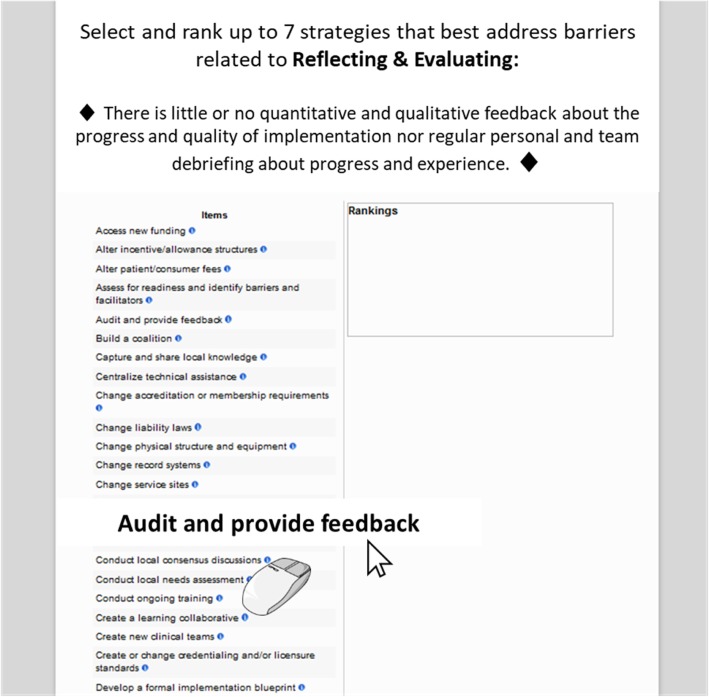
BACKGROUND: A fundamental challenge of implementation is identifying contextual determinants (i.e., barriers and facilitators) and determining which implementation strategies will address them. Numerous conceptual frameworks (e.g., the Consolidated Framework for Implementation Research; CFIR) have been developed to guide the identification of contextual determinants, and compilations of implementation strategies (e.g., the Expert Recommendations for Implementing Change compilation; ERIC) have been developed which can support selection and reporting of implementation strategies. The aim of this study was to identify which ERIC implementation strategies would best address specific CFIR-based contextual barriers. METHODS: Implementation researchers and practitioners were recruited to participate in an online series of tasks involving matching specific ERIC implementation strategies to specific implementation barriers. Participants were presented with brief descriptions of barriers based on CFIR construct definitions. They were asked to rank up to seven implementation strategies that would best address each barrier. Barriers were presented in a random order, and participants had the option to respond to the barrier or skip to another barrier. Participants were also asked about considerations that most influenced their choices. RESULTS: Four hundred thirty-five invitations were emailed and 169 (39%) individuals participated. Respondents had considerable heterogeneity in opinions regarding which ERIC strategies best addressed each CFIR barrier. Across the 39 CFIR barriers, an average of 47 different ERIC strategies (SD = 4.8, range 35 to 55) was endorsed at least once for each, as being one of seven strategies that would best address the barrier. A tool was developed that allows users to specify high-priority CFIR-based barriers and receive a prioritized list of strategies based on endorsements provided by participants. CONCLUSIONS: The wide heterogeneity of endorsements obtained in this study's task suggests that there are relatively few consistent relationships between CFIR-based barriers and ERIC implementation strategies. Despite this heterogeneity, a tool aggregating endorsements across multiple barriers can support taking a structured approach to consider a broad range of strategies given those barriers. This study's results point to the need for a more detailed evaluation of the underlying determinants of barriers and how these determinants are addressed by strategies as part of the implementation planning process.
Overview
The claims and statistics of this paper haven’t been checked yet.
Free: it reads the open-access text and checks the first 5 claims that cite a source we can check. Create a free account to check every claim.
Integrity signals
Registry
Cites
Statistics
Figures
Verification
Claims the paper makes
The claims and statistics of this paper haven’t been checked yet.
Free: it reads the open-access text and checks the first 5 claims that cite a source we can check. Create a free account to check every claim.
Claims other papers make about this one
Each is checked against this paper’s own text: does it say what the citing paper says it does?
The source backs part of the claim, not all of it — or backs it for a different population, condition or comparison.
In the citing paper
“a few best practices have been added: Teaming [42, 46, 73], Assessing Needs [46, 47], Assessing Context, Tailoring Strategies [14], and Adapting [45, 74, 75].”
From The updated consolidated framework for implementation research based on user feedback (2022) · cites this paper as [14]
Experimental — accuracy not yet measuredThe source backs part of the claim, not all of it — or backs it for a different population, condition or comparison.
In the citing paper
“Current literature also reflects an increasing number of studies testing the effectiveness of implementation strategies and the mechanisms that explain how these strategies may influence implementation outcomes [25–31].”
From Ten years of implementation outcomes research: a scoping review (2023) · cites this paper as [26]
Experimental — accuracy not yet measuredThe cited source says what the claim attributes to it.
In the citing paper
“Determinant frameworks can thus be used to inform choice of implementation strategies that may best address contextual determinants [14], generate hypotheses to prospectively guide predictions of implementation outcomes, or retrospectively explain implementation outcomes by assessing differences in determinants across implementation settings [11, 13, 15].”
From The updated consolidated framework for implementation research based on user feedback (2022) · cites this paper as [14]
Self-check
Percentages, sums and reported differences re-computed from the paper’s own numbers.
The self-check needs the paper’s full text.
Citations
Cites
Damschroder, L. J., Aron, D. C., Keith, R. E., Kirsh, S. R., Alexander, J. A., & Lowery, J. C. (2009) · Implementation Science · doi:10.1186/1748-5908-4-50 · Cited by 14,496
Self-citationHoffmann, T. C., Glasziou, P. P., Boutron, I., Milne, R., Perera, R., Moher, D., Altman, D. G., Barbour, V., Macdonald, H., Johnston, M., et al. (2014) · BMJ · doi:10.1136/bmj.g1687 · Cited by 10,548
Proctor, E., Silmere, H., Raghavan, R., Hovmand, P., Aarons, G., Bunger, A., Griffey, R., & Hensley, M. (2011) · Administration and Policy in Mental Health and Mental Health Services Research · doi:10.1007/s10488-010-0319-7 · Cited by 8,721
Michie, S., Richardson, M., Johnston, M., Abraham, C., Francis, J., Hardeman, W., Eccles, M. P., Cane, J., & Wood, C. E. (2013) · Annals of Behavioral Medicine · doi:10.1007/s12160-013-9486-6 · Cited by 7,629
What's in a name? Qualitative description revisited
Sandelowski, M. (2010) · Research in Nursing & Health · doi:10.1002/nur.20362 · Cited by 4,975
Powell, B. J., Waltz, T. J., Chinman, M. J., Damschroder, L. J., Smith, J. L., Matthieu, M. M., Proctor, E. K., & Kirchner, J. E. (2015) · Implementation Science · doi:10.1186/s13012-015-0209-1 · Cited by 4,963
Self-citationMaking sense of implementation theories, models and frameworks
Nilsen, P. (2015) · Implementation Science · doi:10.1186/s13012-015-0242-0 · Cited by 4,447
Implementation strategies: recommendations for specifying and reporting
Proctor, E. K., Powell, B. J., & McMillen, J. C. (2013) · Implementation Science · doi:10.1186/1748-5908-8-139 · Cited by 2,585
Self-citationKnowledge translation of research findings
Grimshaw, J. M., Eccles, M. P., Lavis, J. N., Hill, S. J., & Squires, J. E. (2012) · Implementation Science · doi:10.1186/1748-5908-7-50 · Cited by 2,407
Planning health promotion programs an intervention mapping approach
Bartholomew, L. K., Parcel, G. S., Kok, G., & Gottlieb, N. (2006) · Research Publications (Maastricht University) · Cited by 2,321
Research works printed but not linked: 2
- Waltz TJ Powell BJ Chinman MJ Damschroder LJ Smith JL Matthieu MM Proctor EK Kirchner JE Structuring complex recommendations: methods and general findings Implement Sci 2016 11 Suppl 1 A23
- Powell BJ Aarons GA Amaya-Jackson L Haley A Weiner BJ The collaborative approach to selecting and tailoring implementation strategies (COAST-IS) Implement Sci 2018 13 (Suppl 3): A79 39 40
Cited by
Items 501–600 of 1,000
Schultes, M.-T., Baenziger, J., Nyantakyi, E., Wu, C. X., Ferrari, G., Sieswerda, E., van Werkhoven, C. H., Minotti, C., Wolfensberger, A., Tediosi, F., et al. (2026) · Implementation Science · doi:10.1186/s13012-026-01488-1 · Cited by 3
“Based on these data sources and informed by the ERIC compilation [34], as well as the CFIR-ERIC-matching tool [37], we developed a set of core implementation strategies that will be offered to all sites in the intervention arm of the NeoDeco study.”
Fontaine, G., Michie, S., Beidas, R. S., Geng, E. H., Fahim, C., Powell, B. J., Welch, V. N., Thomas, J., Chan, J., Abbasgholizadeh-Rahimi, S., et al. (2026) · Implementation Science · doi:10.1186/s13012-026-01503-5 · Cited by 7
Self-citationChew, H. S. J., Ang, W. W., Tan, X. S., Vashishtha, R., Chan, S. L., & Sevdalis, N. (2026) · International Journal of Nursing Sciences · doi:10.1016/j.ijnss.2026.04.013 · Cited by 4
“It has been used to map barriers to solutions for research [16].”
Miksić, N. G., Krajnc, Z., Novak, I., Fokter, S. K., Naranđa, J., Moličnik, L., & Moličnik, A. (2026) · Journal of Clinical Medicine · doi:10.3390/jcm15103718 · Cited by 7
“…for Implementing Change (ERIC) project was developed, among others, to standardize terminology in this field, and it offers a curated list of evidence-informed strategies organized into categories and provides a much more structured way to match a barrier with an appropriate strategy [42].”
Juckett, L., Schmidt, E. K., Tanner, K. J., Sagester, G., Wengerd, L. R., Hunter, E. G., Lieberman, D., & Richardson, H. (2022) · American Journal of Occupational Therapy · doi:10.5014/ajot.2022.047076 · Cited by 5
“This tool allows users to select key implementation barriers (on the basis of CFIR constructs) on an autopopulated spreadsheet and matches those barriers to recommended implementation strategies endorsed by a panel of implementation scientists (Waltz et al., 2019).”
Juckett, M., Dandoy, C. E., DeFilipp, Z. M., Kindwall‐Keller, T. L., Spellman, S. R., Üstün, C., Waldman, B. M., Weisdorf, D. J., Wood, W. A., Horowitz, M. M., et al. (2023) · Blood Reviews · doi:10.1016/j.blre.2023.101079 · Cited by 3
Quasdorf, T., Manietta, C., Rommerskirch‐Manietta, M., Braunwarth, J. I., Roßmann, C., & Roes, M. (2023) · BMC Geriatrics · doi:10.1186/s12877-023-04213-5 · Cited by 3
“In particular, the consideration of context-specific implementation determinants seems crucial for success [75, 76].”
BackgroundMethodDemedis, J., Reedy, J., Chow, E. J., Holliman, B. D., Peterson, P. N., & Studts, C. R. (2024) · Pediatric Blood & Cancer · doi:10.1002/pbc.30872 · Cited by 4
“43,44 For example, the ERIC compilation identifies provider education and development of clinical resources as critical to successful implementation, grouping them into providing interactive assistance, training and educating partners, supporting clinicians, and creation of new clinical teams.”
BackgroundMethodUltrasound in Cardiopulmonary Arrest and Resuscitation
Loscalzo, S. M., White, L. J., Rosenblatt, S. A., Woods-Hill, C. Z., Teran, F., Wolfe, H. A., Himebauch, A. S., Glau, C. L., Nishisaki, A., & Conlon, T. (2024) · Pediatric Emergency Care · doi:10.1097/pec.0000000000003165 · Cited by 3
Halliday, S., Dombrowski, J. C., Emerson, R., Beima‐Sofie, K., Chwastiak, L., Sherr, K., Tsui, J. I., Wagenaar, B. H., & Rao, D. (2024) · AIDS Care · doi:10.1080/09540121.2024.2411296 · Cited by 3
“…review, we mapped the identi fi ed barriers and facilitators to corresponding Consolidated Framework for Implementation Research domains and constructs (see Supplemental File C) as our preliminary codebook informing our deductive coding approach (Damschroder et al., 2009; Waltz et al.,2019).”
Services in Minoritized Autistic Adolescents and Adults Varying in Language Skills
Girolamo, T. M., Escobedo, A. G., Ghali, S., Greene-Pendelton, K., Campos, I., & Ram-Kiran, P. (2024) · Seminars in Speech and Language · doi:10.1055/s-0044-1793913 · Cited by 3
Yeoh, E., Yam, C. H. K., Ip, E. M.-Y., Chow, T. Y., & Hung, C. T. (2024) · Implementation Science Communications · doi:10.1186/s43058-024-00680-y · Cited by 3
Dubbeldeman, E. M., van der Kleij, R., Sprenger, M., Aslam, A. S., Jong, J. C. K., & Crone, M. R. (2024) · Children and Youth Services Review · doi:10.1016/j.childyouth.2024.108110 · Cited by 5
Translating the Neck Pain Clinical Guidelines Into Practice: An Integrated Framework Approach
Ramirez, M. M., Carvalho, M., Clewley, D. J., Pruka, K., George, S. Z., & Horn, M. E. (2025) · JOSPT open. · doi:10.2519/josptopen.2025.0101 · Cited by 4
Lander, J., Altawil, H., Apfelbacher, C., Bitzer, E. M., Brandstetter, S., Fillenberg, B. D., Hartmann, M., Holmberg, C., von Sommoggy, J., & Dierks, M. (2025) · Archives of Public Health · doi:10.1186/s13690-025-01534-2 · Cited by 3
“…to the IRLM, we will agree on up to three “implementation strategies” according to Waltz et al. (2019) – e.g. obtaining and providing regular feedback [24] – to be applied during the implementation, and elaborate the (technical) details of each strategy, e.g. when and how to provide feedback.”
Multi-dimensional requirements for reinforcement recommendation reasoning
Li, Y., Tong, X., & Lv, Z. (2025) · Applied Intelligence · doi:10.1007/s10489-024-05854-8 · Cited by 4
Hutchinson, K., Fisher, G., Schütz, A. K., Carr, S., Heard, S., Reynolds, M. A., Goodwin, N., & Hogden, A. (2025) · Healthcare · doi:10.3390/healthcare13070801 · Cited by 3
Obama, B. M., Grant, R., Harbarth, S., Buetti, N., & Catho, G. (2025) · Antimicrobial Resistance and Infection Control · doi:10.1186/s13756-025-01549-y · Cited by 3
“Successful adoption requires adapting these processes to the social and organizational context [18].”
Determinants to implementing a new early literacy screener: Barriers and facilitators
Tatel, S., Darcy, L. J., Solari, E. J., Conner, C. L., Hayes, L. L., Osborne-Lampkin, L., DeCoster, J., Wilburn, K. E., & Richmond, C. L. (2025) · Annals of Dyslexia · doi:10.1007/s11881-025-00333-2 · Cited by 5
“Implementing new practices across settings involves complex challenges (Waltz et al., 2019).”
Smith, S., Paull, S., Iwanowski, K. M., Harris, T., Moullin, J. C., Jane, M., Bill, J., Kerr, D. A., Pollard, C. M., Pearson, G., et al. (2025) · Frontiers in Health Services · doi:10.3389/frhs.2025.1604809 · Cited by 5
Kunhiraman, H. H., Shah, V., Nahle, T., Trinh, N., Lempner, A., Singh, S., Borse, T., Iyer, N., Kruse‐Diehr, A. J., Guha, A., et al. (2025) · Current Treatment Options in Oncology · doi:10.1007/s11864-025-01362-0 · Cited by 3
“Using the CFIR, an institution seeking to implement SDOH screening in cardio-oncology can preemptively identify barriers and then identify implementation strategies to address them [42].”
Alvarado, B., Kuforiji, O. A., Cofie, N., Nagy, E., Guan, H., Stoner, B. P., Dalgarno, N., Martínez-Cajas, J., & Plazas, P. C. (2025) · Journal of HIV & Social Services · doi:10.1080/15381501.2025.2572602 · Cited by 4
“…adoption in smaller urban and rural Ontario settings, our results suggest the following strategies, which also align with CFIR-ERIC recommendations (Waltz et al., 2019): (1) Alter incentives: innovate PrEP program funding with dedicated provincial support, clear medical directives, and workforce…”
Kvæl, L. A. H. (2025) · Implementation Science Communications · doi:10.1186/s43058-025-00807-9 · Cited by 4
“Opinion leaders influence attitudes and behaviors during implementation [36] and play a key role in providing knowledge, problem-solving, skill-building, and ensuring program continuity [20, 44].”
Paratz, E. D., Mock, N., Cochrane, A. D., Harper, R. W., Larobina, M. E., WILSON, W. M., Appelbe, A., Eggleton, S., Kushwaha, V. V., Almeida, I. T. D. S., et al. (2019) · Heart Lung and Circulation · doi:10.1016/j.hlc.2019.10.008 · Cited by 3
Pestka, D. L., & Sorensen, T. D. (2021) · INNOVATIONS in pharmacy · doi:10.24926/iip.v12i1.3610 · Cited by 3
Wolff, A. L., & Robbins, L. P. (2021) · Journal of Hand Therapy · doi:10.1016/j.jht.2021.05.008 · Cited by 3
Michaud‐Létourneau, I., Gayard, M., Njoroge, B., Agabiirwe, C. N., Luwangula, A. K., McGough, L. J., Mwangi, A. M., Pelto, G. H., Tumilowicz, A., & Pelletier, D. L. (2021) · Current Developments in Nutrition · doi:10.1093/cdn/nzab146 · Cited by 3
The People-Centred Approach to Policymaking: Re-Imagining Evidence-Based Policy in Nigeria
Ndu, M. N., Ariba, O., & Ohuruogu, A. (2022) · Global Implementation Research and Applications · doi:10.1007/s43477-022-00040-9 · Cited by 3
“Other researchers note that developing an appropriate implementation strategy to address these challenges requires understanding the context, identifying an appropriate theoretical framework and developing a method that uses the framework (Jo & Bucknall, 2010; O’Toole, 2004; Waltz et al., 2019).”
BackgroundMethodEvidence Into Practice: Journal Clubs as an Implementation Strategy
Farrington, M. M., Brimeyer, D., Dolezal, D., Kucera, M., & Cullen, L. (2022) · Journal of PeriAnesthesia Nursing · doi:10.1016/j.jopan.2021.11.018 · Cited by 3
Implementation mapping for tobacco cessation in a federally qualified health center
Domlyn, A. M., Crowder, C., Eisenson, H., Pollak, K. I., Davis, J. M., Calhoun, P. S., & Wilson, S. M. (2022) · Frontiers in Public Health · doi:10.3389/fpubh.2022.908646 · Cited by 5
“There is much debate in the literature about best methods for selecting strategies, with general consensus that a systematic and constituent-influenced approach is optimal, with the entire IM process often cited as an option (35, 36).”
BackgroundStrategies Addressing Barriers to the Implementation of a Pediatric Hand Fracture Care Pathway
Baykan, A., Lafrenière, A., Fraulin, F. O. G., Hartley, R. L., Harrop, A. R., Love, S., Ronksley, P. E., & Donald, M. (2023) · Plastic & Reconstructive Surgery Global Open · doi:10.1097/gox.0000000000004896 · Cited by 3
Supporting Sustained STAR-VA Implementation: Evaluation of a Sustainment Coaching Program
Bower, E. S., Curyto, K. J., & Karel, M. J. (2023) · Journal of the American Medical Directors Association · doi:10.1016/j.jamda.2023.03.037 · Cited by 4
Moore, L., Berube, M., Belcaïd, A., Turgeon, A. F., Taljaard, M., Fowler, R., Yanchar, N. L., Mercier, É., Paquet, J., Stelfox, H. T., et al. (2023) · Implementation Science · doi:10.1186/s13012-023-01279-y · Cited by 5
Tan, E. S., McLeod, B. D., Mildon, R. L., Shlonsky, A., Seah, C. K. F., McCrickerd, K., Goh, E., & Kembhavi, G. (2023) · PLoS ONE · doi:10.1371/journal.pone.0291723 · Cited by 9
Reszel, J., Daub, O., Dunn, S., Cassidy, C. E., Hafizi, K., Lightfoot, M., Pervez, D., Quosdorf, A., Wood, A., & Graham, I. D. (2023) · BMC Pregnancy and Childbirth · doi:10.1186/s12884-023-06042-1 · Cited by 3
“This requires implementation strategies that are tailored to the change being implemented, the identified multi-level barriers, and the implementation context [55].”
MethodOkada, N., Goble, R. L., Seo, K., & Han, G. (2023) · IDRiM Journal · doi:10.5595/001c.90964 · Cited by 3
“There is a substantial literature considering types of barriers and large numbers have been identified; most often the identification is in relation to implementation strategies (Addis, Wade, and Hatgis 1999, Waltz et al. 2019, Moussa et al. 2021)”
BackgroundEekholm, S., Samuelson, K. A. M., Ahlström, G., & Lindhardt, T. (2023) · Healthcare · doi:10.3390/healthcare12010032 · Cited by 7
“Therefore, end-users should be integrated into the early stages of the design and development process [25,35,44].”
BackgroundPatton, L. J., Morris, A., Nash, A., Richards, K., Huntington, L., Batchelor, L. L., Harris, J., Young, V., & Howe, C. J. (2024) · Pediatric Quality and Safety · doi:10.1097/pq9.0000000000000719 · Cited by 7
Chan, P. S.-F., Fang, Y., Xie, Y. J., Wong, M. C. S., Nilsén, P., Leung, S. F., Cheung, K., Wang, Z. J., & Yeoh, E. (2024) · Implementation Science Communications · doi:10.1186/s43058-024-00590-z · Cited by 5
“…on the CFIR-ERIC (Expert Recommendations for Implementing Change) tool for matching determinants and strategies to address these determinants [26, 43], some strategies In line with the findings in the United Kingdom, Slo-venia, the United States, New Zealand, and Germany, common barriers applied…”
ResultBrekelmans, M., Hopmans, T. E. M., van Mourik, M. S. M., de Greeff, S. C., Swillens, J. E. M., & van Rooden, S. M. (2024) · Antimicrobial Resistance and Infection Control · doi:10.1186/s13756-024-01418-0 · Cited by 3
“Using the CFIR-ERIC tool [32], useful strategies can be selected to improve the currently used multifaceted implementation strategy.”
MethodDubowitz, H., Belanger, R., Magder, L., Palinkas, L. A., Kim, H., & Muralidharan, V. (2024) · Academic Pediatrics · doi:10.1016/j.acap.2024.07.001 · Cited by 3
Dubbeldeman, E. M., van der Kleij, R., Brakema, E. A., & Crone, M. R. (2024) · Health Research Policy and Systems · doi:10.1186/s12961-024-01167-x · Cited by 3
“Various strategies focusing on the training and education of stakeholders, including educational meetings, collaborative learning, and ongoing training, were considered feasible and potentially effective in facilitating change in practice, which is in line with previous research [46, 90, 91].”
BackgroundMethodResultInfluentialCoetzer-Liversage, A., Stein, L. A. R., Stephens, M., Jefferis, E. S., Step, M. M., Crowe, A. R., & Sloboda, Z. (2024) · Health Behavior Research · doi:10.4148/2572-1836.1265 · Cited by 2
Johnson, N. L., Tiem, J. M. V., Balkenende, E., Jones, D., Friberg, J. E., Chasco, E. E., Moeckli, J. K., Steffensmeier, K. S., Steffen, M. J. A., Arora, K., et al. (2024) · Implementation Science · doi:10.1186/s13012-024-01395-3 · Cited by 4
“This variation in responses among administrators, implementors, and evaluators points to the value of a more nuanced understanding of the unique, context-dependent, and rela-tionally based communication processes undergirding implementation strategies [21].”
BackgroundHelle, A. C., Washington, K. T., Masters, J., Sher, K. J., Aarons, G. A., & Hawley, K. M. (2025) · Journal of Substance Use and Addiction Treatment · doi:10.1016/j.josat.2024.209617 · Cited by 3
Nurjono, M., Ho, E., Lee, J. Y., Petcu, R., & Sim, C. P. C. (2025) · Digital Health · doi:10.1177/20552076241312562 · Cited by 4
Petch, J., Bortesi, J. P. T., Sheth, T., Natarajan, M. K., Pinilla‐Echeverri, N., Di, S., Bangdiwala, S. I., Mosleh, K., Ibrahim, O., Bainey, K. R., et al. (2025) · JMIR Research Protocols · doi:10.2196/71726 · Cited by 6
“Key barriers will be mapped to the most appropriate implementation strategies from an established compilation of potential strategies, the Expert Recommendations for Implementing Change [20].”
Piat, M., Melville-Richards, L., Wainwright, M., Rivest, M.-P., Sofouli, E., Singh, K., Richardson, J., Albert, H., & Graham, I. D. (2025) · Global Implementation Research and Applications · doi:10.1007/s43477-025-00170-w · Cited by 4
“As an implementation strategy, facilitation is used to mitigate a multitude of implementation barriers and is a “process that draws on a broad range of additional strategies” (Waltz et al., 2019, p. 11).”
Chen, J. C., DeJong, C., Agarwal, M., Hairston, A. M., Durstenfeld, M. S., Powell, B. J., McKay, V., Huffman, M. D., Hsue, P. Y., & Agarwal, A. (2025) · JACC Advances · doi:10.1016/j.jacadv.2025.102195 · Cited by 4
Self-citationWhen Policy Hits Practice – Learning from the Failed Implementation of MST-EA in Australia
Albers, B., & Shlonsky, A. (2020) · Human Services Organizations Management Leadership & Governance · doi:10.1080/23303131.2020.1779893 · Cited by 6
Holcomb, J. L., Walton, G. H., Sokale, I. O., Ferguson, G. M., Schick, V., & Highfield, L. D. (2021) · Frontiers in Medicine · doi:10.3389/fmed.2021.596873 · Cited by 5
“These strategies serve as the building blocks of creating a multi-level approach to address identified determinants of implementation for a specific QI intervention (35).”
BackgroundMarhefka, S. L., Noble, C. A., Buhi, E. R., Turner, D. E., Mahony, H., Singleton, A., DeBate, R. D., & Daley, E. M. (2021) · Health Promotion Practice · doi:10.1177/15248399211042339 · Cited by 3
“Finally, we began this work before critical research was completed to consolidate and organize implementation strategies independent of (Powell et al., 2015; Waltz et al., 2019) or specifically within schools (Cook et al.”
MethodSmith, P. A., Kilgour, C., Rice, D., Callaway, L. K., & Martin, E. K. (2022) · BMC Health Services Research · doi:10.1186/s12913-022-08633-8 · Cited by 5
Selection of Strategies for Improving Patient Care
Grol, R. P. T. M., & Wensing, M. (2020) · Wiley eBooks · doi:10.1002/9781119488620.ch10 · Cited by 3
Implementation strategies for telemental health: a systematic reviewPreprint
Appleton, R., Barnett, P., Juan, N. V. S., Tuudah, E., Lyons, N., Parker, J., Roxburgh, E., Spyridonidis, S., Tamworth, M., Worden, M., et al. (2022) · medRxiv · doi:10.1101/2022.04.29.22274367 · Cited by 3
McLoughlin, G. M., Allen, P. M., Walsh‐Bailey, C., & Brownson, R. C. (2021) · Research Square · doi:10.21203/rs.3.rs-206237/v2 · Cited by 3
Ford, J. H., Zehner, M. E., Schaper, H., & Saldana, L. (2023) · Implementation Research and Practice · doi:10.1177/26334895231200379 · Cited by 4
Implementing absolute cardiovascular disease risk assessment into pathology collection services
Pagano, L., Sharman, J. E., Nash, R., Sutton, L. P., Donovan, S., Owens, D., Murfett, L., Heathcote, S., Wells, G., Zurynski, Y. A., et al. (2024) · Journal of Evaluation in Clinical Practice · doi:10.1111/jep.14034 · Cited by 2
Mustafa, M., Hatah, E., & Makmor‐Bakry, M. (2024) · PLoS ONE · doi:10.1371/journal.pone.0304291 · Cited by 4
Iverson, K. M., Brady, J. E., Adjognon, O. L., Stolzmann, K. L., Dichter, M. E., Bruce, L. E., Portnoy, G. A., Iqbal, S., Gerber, M. R., Haskell, S. G., et al. (2024) · Women s Health Issues · doi:10.1016/j.whi.2024.07.001 · Cited by 2
Hayes, J. F., Darling, K. E., Tomashek, H., Elwy, A. R., & Wing, R. R. (2024) · Obesity Science & Practice · doi:10.1002/osp4.70021 · Cited by 3
Kiene, S. M., Miller, A. P., Tuhebwe, D., Ceballos, D. A., Sanchez, C. N., Moody, J. S., Famania-Martinez, L., Moore, R. V., Oren, E., & McDaniels-Davidson, C. R. (2024) · Implementation Science Communications · doi:10.1186/s43058-024-00669-7 · Cited by 2
Dean, B. J. F., Lang, G., Baird, L., Grove, A., Stephens, T., & Toyé, F. (2025) · BMJ Open · doi:10.1136/bmjopen-2024-098580 · Cited by 2
“These findings have identified the key ingredi-ents for delivering an early MRI wrist injury pathway, and this can enable the development of an evidence-based solutuion to address this implementation gap.”
Ishii, K., Takemura, Y., & Kitamura, A. (2025) · BMC Nursing · doi:10.1186/s12912-025-03271-x · Cited by 3
“However, EBP providers may not necessarily select the most appropriate strategy [8], as choosing a strategy is complex [9].”
An Educational Video Game in Trauma Triage at Nontrauma Centers
Mohan, D., Fischhoff, B., Talisa, V. B., Elmer, J., White, D. B., Angus, D. C., Peitzman, A. B., Bendesky, B., Cook, A. C., Forsythe, R. M., et al. (2025) · JAMA Network Open · doi:10.1001/jamanetworkopen.2025.13375 · Cited by 2
Delaforce, A., Li, J., Niven, P., Maddock, E., Grujovski, M., Fahy, M., Good, N. M., & Jayasena, R. (2025) · Journal of Multidisciplinary Healthcare · doi:10.2147/jmdh.s529247 · Cited by 3
Purvis, R., Taylor, N., James, P. A., Young, M., & Forrest, L. E. (2025) · Patient · doi:10.1007/s40271-025-00747-5 · Cited by 3
“…for Implementing Change (ERIC) compilation of implementation strategies [45], consisting of 73 different strategies bought together through expert consensus, providing a compendium of approaches which can be prioritised and selected to address specific contextual implementation barriers [46].”
Gao, J., Bai, D., Chen, H., You, Q., Chen, X., Lu, X., Ji, W., & Hou, C. (2025) · Nursing and Health Sciences · doi:10.1111/nhs.70180 · Cited by 3
“The preliminary list was developed using the CFIR-ERIC Implementation Strategy Matching Tool (Waltz et al. 2019).”
Chu, J., Liu, C., Ritchie, C. D., & Kan, K. M. (2025) · Journal of Pediatric Urology · doi:10.1016/j.jpurol.2025.07.020 · Cited by 3
Prior, A., Logan, D., Masters, J., Greenwood, K., Vest, N. A., & Helle, A. C. (2025) · Journal of American College Health · doi:10.1080/07448481.2025.2533907 · Cited by 2
“Future research may explore these program development and/or implementation studies and identify implementation strategies 48 that address key barriers 49 and may most effectively scale up CRP implementation across campuses.”
Norman, M. Z., Torres, K. A., Saldana, L., Spiro, K., Naranjo, D. M., Wong, J. C., Reed, A., Bensen, R., Barry, S., Harris, M. A., et al. (2025) · Global Implementation Research and Applications · doi:10.1007/s43477-025-00182-6 · Cited by 3
“As noted by Sridhar and colleagues (2023), however, a gap in the literature exists in terms of how to respond to implementation determinants especially when these determinants are highly unique to a certain setting (Waltz et al., 2019).”
Boersema, G. C., Botma, Y., & Mulder, M. (2025) · International Journal of Older People Nursing · doi:10.1111/opn.70044 · Cited by 3
“Although these strategies exist in the literature (Waltz et al. 2019), they have not yet been depicted in a single continuous cycle.”
Ray, C. E., Goedken, C. C., Hughes, A. M., Wilson, G., Hicks, N. R., Fitzpatrick, M. A., Jones, M., Pfeiffer, C. D., Klutts, J. S., Evans, M. E., et al. (2025) · Frontiers in Health Services · doi:10.3389/frhs.2025.1566454 · Cited by 2
Koray, M. H., Adomah-Afari, A., Xu, D. R., & Wu, D. (2025) · BMC Public Health · doi:10.1186/s12889-025-24285-9 · Cited by 4
“In the fourth stage, finally, themes related to proposed strategies from participants were compared and mapped to ERIC clusters and corresponding strategies [36].”
InfluentialLi, M., Zhang, J., Zheng, J., Wu, C., Shao, Z., Cheng, L., Yu, H., Xu, L., Zhang, Y., Wang, X., et al. (2025) · Journal of Medical Internet Research · doi:10.2196/78333 · Cited by 4
“We applied the Consolidated Framework for Implementation Research (CFIR) 2.0 to guide study analysis and the Expert Recommendations for Implementing Change (ERIC) to generate strategies [29,30].”
InfluentialWalker, S., Levu, K., Tran, M., Henshaw, C., Broun, K., Austin, G., Trevena, L. J., Taylor, N., & Feletto, E. (2025) · BMC Family Practice · doi:10.1186/s12875-025-03016-4 · Cited by 2
van Scherpenseel, M. C., van Veenendaal, L. J., Barten, D., Veenhof, C., Emmelot‐Vonk, M. H., & Velde, S. J. T. (2025) · Implementation Science Communications · doi:10.1186/s43058-025-00814-w · Cited by 4
“Strategy mapping was conducted in co-creation with the HSCPs in the three working groups, by using the original CFIR-Expert Recommendations for Implementing Change (ERIC) Implementation Strategy Matching Tool [34, 35].”
Sridhar, A., Bravo, A., Landa, Y., Choudhuri, P. G., Shih, W., Michael, O. G., & Locke, J. J. (2025) · Implementation Science Communications · doi:10.1186/s43058-025-00810-0 · Cited by 2
“…previous work suggesting that using implementation strategies that are selected and tailored to address specific barriers to implementation may be particularly effective for improving implementation efforts, though further research evaluating the effectiveness of tailored strategies is needed [39].”
HIV Prevention for People Releasing from Incarceration: A Qualitative Pre-implementation Study
Callen, E., Graham, S. M., Forsyth, W., Gerbino, N. R., Senter, Z., Hauber, B., Weiner, B. J., Bagdon-Cox, C., & Jack, H. E. (2025) · Journal of General Internal Medicine · doi:10.1007/s11606-025-09895-8 · Cited by 2
Ackerley, S., Hung, S. H., Sheehy, L., Donkers, S. J., Timofeeva, P., Best, K. L., Peters, S. P., Park, S. S., Ouellet, B., Ezeugwu, V. E., et al. (2026) · Implementation Science Communications · doi:10.1186/s43058-025-00812-y · Cited by 2
“53) was used in conjunction with the updated strategy matching file [24, 25] to match the relevant CFIR-based contextual constructs (updated or original when not directly mapped) to identify key implementation strategies.”
Kwan, Y. H., Cheung, Y. S., Chew, X. R., Ding, J., Lim, N. Q. B. I., Phan, T., Chua, B. W. J., Woon, T. H., Østbye, T., Abdullah, H. R., et al. (2026) · Scientific Reports · doi:10.1038/s41598-026-35154-9 · Cited by 4
“The CFIR-Expert Recommendations for Implementing Change (ERIC) 18 matching tool, a compilation of 73 implementation strategies 18 was then used to identify ERIC strategies to overcome the identified CFIR barriers 19 .”
Implementing in hospital technology‐assisted mobility initiatives: A scoping review
Mathura, P. V., Wenzel, A. R. J., Dennett, L., & Kassam, N. (2026) · Journal of Hospital Medicine · doi:10.1002/jhm.70262 · Cited by 2
Zheng, X., Zhang, Y., Xie, L., Liu, Y., Yu, Q., Zhang, H., Li, Y., & Wang, A. (2026) · Health and Quality of Life Outcomes · doi:10.1186/s12955-026-02489-w · Cited by 6
“To identify key implementation strategies, we employed a structured, three-step process linking our qualitative findings to the Expert Recommendations for Implementing Change (ERIC) compilation [22, 23].”
InfluentialLandes, S. J., Walker, J. A., Bekman, N. M., Kumpula, M. J., Lhermitte, S. L., Hoff, R. A., van Engelen, L., Betthauser, L. M., Beaudreau, S. A., Batdorf, W. H., et al. (2026) · Frontiers in Psychiatry · doi:10.3389/fpsyt.2025.1668417 · Cited by 3
“” (36) Use of a theory, model, or framework and implementation strategies that target barriers and facilitators to implementation can enhance the likelihood that an intervention is successfully implemented (37).”
Wilkinson, S. A., Guzman, K. R. D., Falconer, N., Snoswell, C. L., Coombes, I., Robertson, K., Miles, J. A., Paradissis, C., Raggatt, L. J., Wang, W. Y. S., et al. (2026) · BMC Health Services Research · doi:10.1186/s12913-026-14501-6 · Cited by 2
“W e w i ll u t i l i s e t h e E x p e r t R e c o mm e n d a t i o n s f o r I m p l e m e n t i n g C h a n g e ( E R I C ) [ 50 , 52 ] a n d t h e B e h a v i o u r C h a n g e W h ee l ( B C W ) a n d T h e o r e t i c a l D o m a i n s F r a m e w o r k ( T D F ) [ 53 ] t o p r o v i d e a s u…”
Chan, Y. Z., Yoon, S., Kwan, A. S. T., & Low, L. L. (2026) · Frontiers in Public Health · doi:10.3389/fpubh.2026.1748178 · Cited by 3
“For the secondary objective of the study, the strategies used to address the identified determinants (facilitators and barriers) were extracted from the data and mapped onto the CFIR-ERIC matching tool to identify the associated implementation strategies (43, 44).”
Selove, R., Aghili, M., Green, C., & Brown, C. H. (2020) · Journal of American College Health · doi:10.1080/07448481.2020.1809429 · Cited by 4
Improving Knowledge of Active Safety and QI Projects Amongst Practitioners in a Pediatric ICU
Flaherty, B. F., Hummel, K., Vijayarajah, S., White, B. R., Outsen, S., & Larsen, G. Y. (2022) · Pediatric Quality and Safety · doi:10.1097/pq9.0000000000000569 · Cited by 2
Cusack, M. C., Varley, A. L., & Montgomery, A. E. (2022) · Journal of Veterans Studies · doi:10.21061/jvs.v8i1.313 · Cited by 2
Hoffacker, C. P., Klein, M. R., Becker‐Haimes, E. M., Fishman, J., Schoenwald, S. K., Fugo, P. B., McLeod, B. D., Dorsey, S., Litke, S. G., Shider, L., et al. (2022) · Implementation Research and Practice · doi:10.1177/26334895221114664 · Cited by 3
“…the two approaches, with the TPB guiding our methods for eliciting beliefs about using each method, and the CFIR offering an organizing structure that allowed for more meaningful insights and richer contextual understanding to inform future implementation strategy selection (Waltz et al., 2019).”
MethodSridhar, A., Drahota, A., & Tschida, J. E. (2022) · Implementation Science Communications · doi:10.1186/s43058-022-00339-6 · Cited by 2
“Other methods include intervention/ implementation mapping, which has also been utilized within the healthcare setting [10], as well as the CFIRERIC Implementation Strategy Mapping Tool [6] which has been utilized within adult mental health care delivery settings [11].”
BackgroundMethodCan Common Elements Support a Public Health Approach to Child Maltreatment?
Polimeni, M., Tan, E. S., Seah, C. K. F., Lewis, J., McLeod, B. D., & Bjørndal, A. (2022) · International Journal on Child Maltreatment Research Policy and Practice · doi:10.1007/s42448-022-00127-8 · Cited by 2
Maurin, R., Deltetto, I., Keay, L. J., Huang, J., & Taylor, C. B. (2023) · Clinical and Experimental Optometry · doi:10.1080/08164622.2023.2175602 · Cited by 2
Evans, S. K., Dopp, A. R., Meredith, L. S., Ober, A. J., Osilla, K. C., Komaromy, M. S., & Watkins, K. E. (2023) · The Journal of Behavioral Health Services & Research · doi:10.1007/s11414-023-09851-6 · Cited by 3
“17 In a study aimed at testing psychometric Consolidated Framework for Implementation Research (CFIR) measures, Fernandez et al. 20 argue that inner setting constructs—those that focus on organizational context specifically—can be used to inform or enhance implementation approaches; for example,…”
Parks, R., & Ramly, E. (2023) · Proceedings of the Human Factors and Ergonomics Society Annual Meeting · doi:10.1177/21695067231192253 · Cited by 3
“Tailoring is a useful concept most explicitly used in IS that includes many approaches for selecting or designing implementation strategies to address barriers (Lewis et al., 2018; Powell et al., 2017; Waltz et al., 2019; Wensing et al., 2011).”
BackgroundKemp, C. G., Danforth, K., Aldridge, L. R., Murray, L. K., & Haroz, E. E. (2023) · Cambridge Prisms Global Mental Health · doi:10.1017/gmh.2023.63 · Cited by 2
“These determinants can inform the choice of implementation strategies; they are also usefulfor understanding the process ofimplementation and they may moderate or mediate intervention effects (Waltz et al., 2019).”
ten Tusscher, M. R., Stuiver, M. M., Kampshoff, C. S., Huijsmans, R. J., Aaronson, N. K., Velthuis, M. J., Gal, R., van Waart, H., May, A. M., & Buffart, L. M. (2023) · European Journal of Cancer Care · doi:10.1155/2023/2296881 · Cited by 3
“Because it has been suggested that implementation strategies must be tailored to its context to improve efectiveness [90], we summarized exercise trials with a homogeneity in settings, circumstances, and conditions, thereby specifcally focusing on patients with breast cancer in the Netherlands.”
Shi, Z., Comeau, J., Bloom, G. A., Gainforth, H. L., Thomas, A., & Sweet, S. N. (2023) · Frontiers in Rehabilitation Sciences · doi:10.3389/fresc.2023.1296505 · Cited by 5
Sullivan, J. L., Pendergast, J. N., Wray, L. O., Adjognon, O. L., & Curyto, K. J. (2023) · Journal of the American Medical Directors Association · doi:10.1016/j.jamda.2023.11.011 · Cited by 2
Bjørnerud, A. M., Falkenberg, H. K., Braathu, N., Skar, A. S., & Engell, T. (2024) · Global Implementation Research and Applications · doi:10.1007/s43477-024-00116-8 · Cited by 2
“…to some degree, aligns with calls from the field emphasizing (1) the purposeful use of TMFs (Dam-schroder, 2020; Moullin et al., 2019) and the importance of (2) tailoring implementation strategies to sufficiently address contextually important implementation determinants (Waltz et al., 2019).”
Metadata
- Authors
- Waltz, T. J., Powell, B. J., Fernández, M. E., Abadie, B., & Damschroder, L. J.
- Affiliations
- Eastern Michigan University (US)
- University of North Carolina at Chapel Hill (US)
- The University of Texas Health Science Center at Houston (US)
- VA Center for Clinical Management Research (US)
- Corresponding author
- Damschroder, Laura J.
- Venue
- Implementation Science
- Published
- 2019-04-29
- Volume
- 14
- Issue
- 1
- Pages
- 42-42
- ISSN
- 1748-5908 (ISSN-L)
- PMC
- PMC6489173
- OpenAlex
- W2947410237
- Cited by
- 1,136
- References
- 50
- Citations by year
- 2026: 176 · 2025: 194 · 2024: 220 · 2023: 171 · 2022: 166 · 2021: 121 · 2020: 79 · 2019: 8
- FWCI
- 127.40
- Type
- journal article
- Language
- en
- Open access
- gold
- doi.org
- Licence
- cc-by
- creativecommons.org/licenses/by/4.0/ (tdm)
- creativecommons.org/licenses/by/4.0/ (vor)
- Locations
- Implementation Science (publishedVersion, cc-by)
- Europe PMC (PubMed Central) (publishedVersion, cc-by)
- PubMed Central (publishedVersion, cc-by)
- PubMed (publishedVersion)
- DOAJ (DOAJ: Directory of Open Access Journals) (submittedVersion, cc-by-sa)
- Funders
- U.S. Department of Veterans Affairs (QLP 92-025; QUERI DM, DIB 98-001)
- Topics
- Health Sciences › Health Professions › General Health Professions › Health Policy Implementation Science
- Health Sciences › Health Professions › General Health Professions › Health Sciences Research and Education
- Health Sciences › Medicine › Public Health, Environmental and Occupational Health › Clinical practice guidelines implementation
- Keywords
- implementation strategies, contextual barriers, Consolidated Framework for Implementation Research, Expert Recommendations for Implementing Change, ERIC, implementation planning, strategy selection, implementation barriers and facilitators
- MeSH terms
- Implementation Science, Health Plan Implementation, Health Services Research, Humans, Models, Theoretical, Quality of Health Care, Evidence-Based Practice
About these checks
Registry, retraction, Cites and statistics results are computed, not judged, with one exception: a printed reference that no index lists is read once by a model before it counts as a citation error. Claims are extracted by a model and kept only when their quote appears verbatim in the text; each cited source is then checked, with a model’s help, for whether it says what the claim relies on. Those verdicts can be wrong — read the claim’s quote and the cited source before relying on one.
Statistics and arithmetic are recomputed, not judged.
Confidence bands are shown only for fields calibrated on our annotated test set. None is calibrated yet, so no band is shown.
What counts as a claim ›How we measure confidence ›How we check this ›
Are you an author, or do you see a problem with this page? Request a review
Data sources
Bibliographic data: Semantic Scholar, OpenAlex, Crossref.
Contains information from the Semantic Scholar Academic Graph Datasets, made available under the ODC Attribution License (ODC-BY 1.0).
Semantic Scholar’s data is described in: Kinney, R., et al. (2023). The Semantic Scholar Open Data Platform. arXiv:2301.10140.
