

Inoculation of α-synuclein preformed fibrils into the mouse gastrointestinal tract induces Lewy body-like aggregates in the brainstem via the vagus nerve
Open accessThe DOI matches its Crossref record; 48 of the 48 references it cites were found in a registry or an index.
Abstract
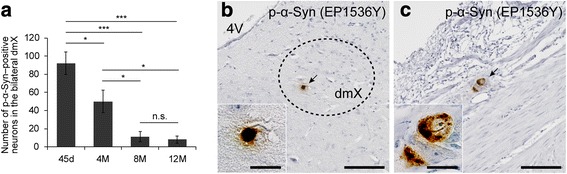
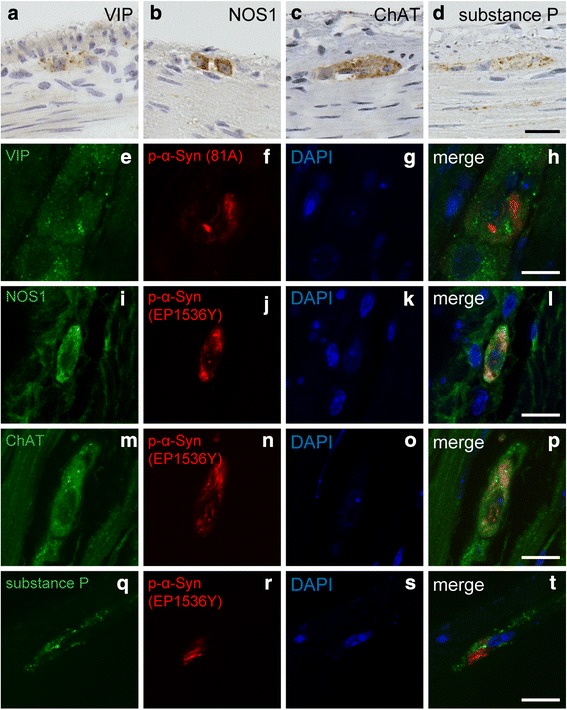
BACKGROUND: Intraneuronal α-synuclein (α-Syn) aggregates known as Lewy bodies (LBs) and the loss of dopaminergic neurons in the substantia nigra pars compacta (SNpc) are the pathological hallmarks of Parkinson's disease (PD). Braak's hypothesis based on autopsy studies suggests that Lewy pathology initially occurs in the enteric nervous system (ENS) and then travels retrogradely to the dorsal motor nucleus of the vagus nerve (dmX), proceeding from there in a caudo-rostral direction. Recent evidence that α-Syn aggregates propagate between interconnected neurons supports this hypothesis. However, there is no direct evidence demonstrating this transmission from the ENS to the dmX and then to the SNpc. METHODS: We inoculated α-Syn preformed fibrils (PFFs) or phosphate-buffered saline (PBS) into the mouse gastric wall and analyzed the progression of the pathology. RESULTS: The mice inoculated with α-Syn PFFs, but not with PBS, developed phosphorylated α-Syn (p-α-Syn)-positive LB-like aggregates in the dmX at 45 days postinoculation. This aggregate formation was completely abolished when vagotomy was performed prior to inoculation of α-Syn PFFs, suggesting that the aggregates in the dmX were retrogradely induced via the vagus nerve. Unexpectedly, the number of neurons containing p-α-Syn-positive aggregates in the dmX decreased over time, and no further caudo-rostral propagation beyond the dmX was observed up to 12 months postinoculation. P-α-Syn-positive aggregates were also present in the myenteric plexus at 12 months postinoculation. However, unlike in patients with PD, there was no cell-type specificity in neurons containing those aggregates in this model. CONCLUSIONS: These results indicate that α-Syn PFF inoculation into the mouse gastrointestinal tract can induce α-Syn pathology resembling that of very early PD, but other factors are apparently required if further progression of PD pathology is to be replicated in this animal model.
Overview
The claims and statistics of this paper haven’t been checked yet.
Free: it reads the open-access text and checks the first 5 claims that cite a source we can check. Create a free account to check every claim.
Integrity signals
Registry
Cites
Statistics
Figures
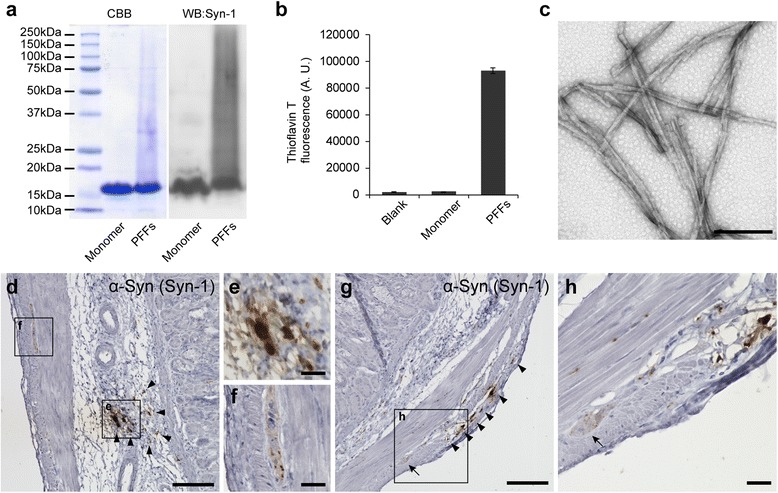
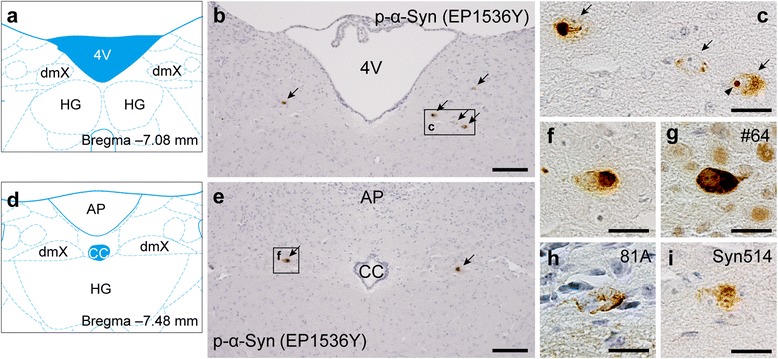
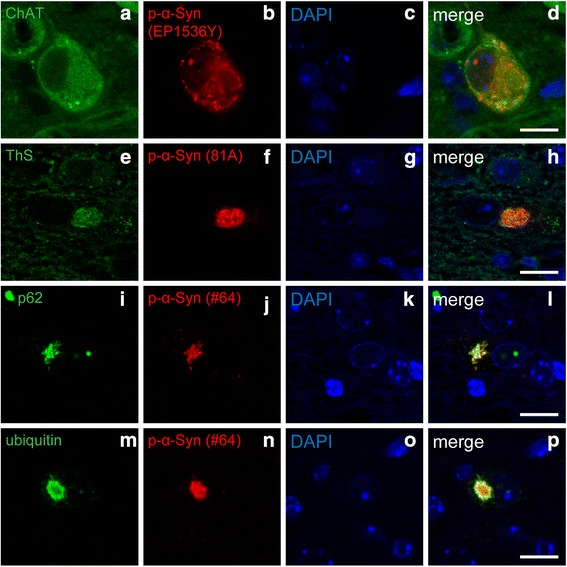
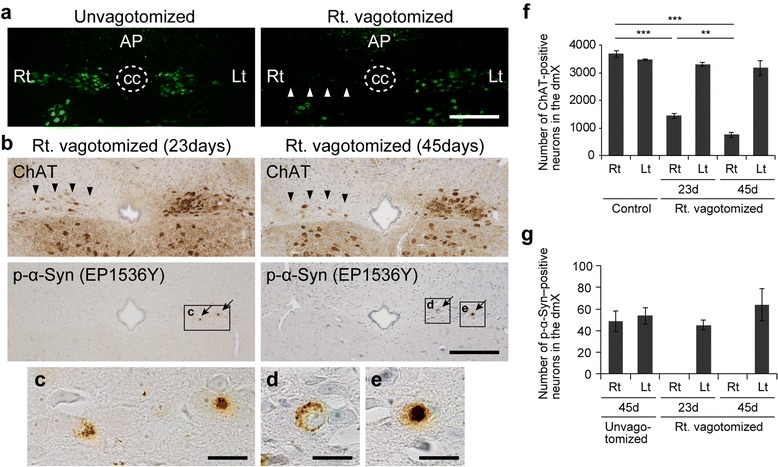
Verification
Claims the paper makes
The claims and statistics of this paper haven’t been checked yet.
Free: it reads the open-access text and checks the first 5 claims that cite a source we can check. Create a free account to check every claim.
Claims other papers make about this one
Each is checked against this paper’s own text: does it say what the citing paper says it does?
The cited source says what the claim attributes to it.
In the citing paper
“Vagotomy can prevent the transmission of pathological a-synuclein to the CNS in animal models.137,138”
From The role of gut dysbiosis in Parkinson’s disease: mechanistic insights and therapeutic options (2021) · cites this paper as [138]
The cited source says what the claim attributes to it.
In the citing paper
“Furthermore, PFF inoculation into the gastric wall of C57BL/6J mice led to LB-like aggregates in the dorsal motor nucleus 45 days p.i [35].”
From Intrastriatal injection of preformed alpha-synuclein fibrils alters central and peripheral immune cell profiles in non-transgenic mice (2019) · cites this paper as [35]
Self-check
Percentages, sums and reported differences re-computed from the paper’s own numbers.
The self-check needs the paper’s full text.
Citations
Cites
Staging of brain pathology related to sporadic Parkinson’s disease
Braak, H., Tredici, K. D., Rüb, U., de Vos, R. A. I., Jansen Steur, E. N. H., & Braak, E. (2003) · Neurobiology of Aging · doi:10.1016/s0197-4580(02)00065-9 · Cited by 10,777 · cited 1×
“systematically analyzed the pathology in cases with incidental LB pathology or sporadic PD and suggested that Lewy pathology initially develops in the olfactory bulb and the dorsal motor nucleus of the vagus nerve (dmX) and then spreads in the brain stereotypically [6, 7].”
BackgroundKalia, L. V., & Lang, A. E. (2015) · The Lancet · doi:10.1016/s0140-6736(14)61393-3 · Cited by 6,184
Epidemiology of Parkinson's disease
de Lau, L. M., & Breteler, M. M. (2006) · The Lancet Neurology · doi:10.1016/s1474-4422(06)70471-9 · Cited by 4,110
Luk, K. C., Kehm, V., Carroll, J., Zhang, B., O’Brien, P., Trojanowski, J. Q., & Lee, V. M.-Y. (2012) · Science · doi:10.1126/science.1227157 · Cited by 2,563
Braak, H., de Vos, R. A. I., Bohl, J., & Del Tredici, K. (2006) · Neuroscience Letters · doi:10.1016/j.neulet.2005.11.012 · Cited by 1,354 · cited 1×
“Moreover, since Lewy pathology is found in the enteric nervous system (ENS) in the early stage of PD, they hypothesized that Lewy pathology in the ENS travels retrogradely to the dmX and then proceeds from there in a caudo-rostral direction [8].”
BackgroundMazzulli, J. R., Xu, Y.-H., Sun, Y., Knight, A. L., McLean, P. J., Caldwell, G. A., Sidransky, E., Grabowski, G. A., & Krainc, D. (2011) · Cell · doi:10.1016/j.cell.2011.06.001 · Cited by 1,341
MDS research criteria for prodromal Parkinson's disease
Berg, D., Postuma, R. B., Adler, C. H., Bloem, B. R., Chan, P., Dubois, B., Gasser, T., Goetz, C. G., Halliday, G., Joseph, L., et al. (2015) · Movement Disorders · doi:10.1002/mds.26431 · Cited by 1,309 · cited 1×
“prodromal symptoms of PD or risk factors for developing the disease [4, 5].”
Backgroundα-Synuclein strains cause distinct synucleinopathies after local and systemic administration
Peelaerts, W., Bousset, L., Van der Perren, A., Moskalyuk, A., Pulizzi, R., Giugliano, M., Van den Haute, C., Melki, R., & Baekelandt, V. (2015) · Nature · doi:10.1038/nature14547 · Cited by 1,130
Parkinson's disease: a dual‐hit hypothesis
Hawkes, C. H., Del Tredici, K., & Braak, H. (2007) · Neuropathology and Applied Neurobiology · doi:10.1111/j.1365-2990.2007.00874.x · Cited by 1,021
Neuropathological assessment of Parkinson’s disease: refining the diagnostic criteria
Dickson, D. W., Braak, H., Duda, J. E., Duyckaerts, C., Gasser, T., Halliday, G. M., Hardy, J., Leverenz, J. B., Del Tredici, K., Wszolek, Z. K., et al. (2009) · The Lancet Neurology · doi:10.1016/s1474-4422(09)70238-8 · Cited by 972
Research works printed but not linked: 1
- 47. Franklin K, Paxinos G: The Mouse Brain in Stereotaxic Coordinates. Compact 3rd Edition edn: Academic Press; 2008.
Cited by
Kim, S., Kwon, S.-H., Kam, T.-I., Panicker, N., Karuppagounder, S. S., Lee, S., Lee, J. H., Kim, W. R., Kook, M., Foss, C. A., et al. (2019) · Neuron · doi:10.1016/j.neuron.2019.05.035 · Cited by 1,397
“These findings are consistent with prior observations that pathological a-syn levels can plateau after a-syn PFF injection (Manfredsson et al., 2018; Rey et al., 2016; Uemura et al., 2018).”
BackgroundResultInfluentialGut microbes and metabolites as modulators of blood-brain barrier integrity and brain health
Parker, A., Fonseca, S., & Carding, S. R. (2020) · Gut Microbes · doi:10.1080/19490976.2019.1638722 · Cited by 702
Nguyen, P. H., Ramamoorthy, A., Sahoo, B. R., Zheng, J., Faller, P., Straub, J. E., Dominguez, L., Shea, J.-E., Dokholyan, N. V., De Simone, A., et al. (2021) · Chemical Reviews · doi:10.1021/acs.chemrev.0c01122 · Cited by 678
Protein transmission in neurodegenerative disease
Peng, C., Trojanowski, J. Q., & Lee, V. M.-Y. (2020) · Nature Reviews Neurology · doi:10.1038/s41582-020-0333-7 · Cited by 625
Ge, P., Dawson, V. L., & Dawson, T. M. (2020) · Molecular Neurodegeneration · doi:10.1186/s13024-020-00367-7 · Cited by 496
Signaling pathways in Parkinson’s disease: molecular mechanisms and therapeutic interventions
Dong-Chen, X., Yong, C., Yang, X., Chen-Yu, S., & Li-Hua, P. (2023) · Signal Transduction and Targeted Therapy · doi:10.1038/s41392-023-01353-3 · Cited by 469
Modeling Parkinson’s Disease With the Alpha-Synuclein Protein
Gómez-Benito, M., Granado, N., García-Sanz, P., Michel, A., Dumoulin, M., & Moratalla, R. (2020) · Frontiers in Pharmacology · doi:10.3389/fphar.2020.00356 · Cited by 437
“A recent study in which a-Syn PFFs have been injected into the mouse gastric wall shows that mice developed a-Synimmunoreactive aggregates in the dorsal motor nucleus at 45 days post-inoculation, but no propagation of pa-Syn aggregates beyond of the dorsal motor nucleus of the vagus nerve was observed 12 months after…”
BackgroundInfluentialA gut bacterial amyloid promotes α-synuclein aggregation and motor impairment in mice
Sampson, T. R., Challis, C., Jain, N., Moiseyenko, A., Ladinsky, M. S., Shastri, G. G., Thron, T., Needham, B. D., Horvath, I., Debelius, J. W., et al. (2020) · eLife · doi:10.7554/elife.53111 · Cited by 439
Brain-First versus Gut-First Parkinson’s Disease: A Hypothesis
Borghammer, P., & Van Den Berge, N. (2019) · Journal of Parkinson’s Disease · doi:10.3233/jpd-191721 · Cited by 419
Gut-seeded α-synuclein fibrils promote gut dysfunction and brain pathology specifically in aged mice
Challis, C., Hori, A., Sampson, T. R., Yoo, B. B., Challis, R. C., Hamilton, A. M., Mazmanian, S. K., Volpicelli-Daley, L. A., & Gradinaru, V. (2020) · Nature Neuroscience · doi:10.1038/s41593-020-0589-7 · Cited by 405
Meta‐Analysis of Gut Dysbiosis in Parkinson's Disease
Nishiwaki, H., Ito, M., Ishida, T., Hamaguchi, T., Maeda, T., Kashihara, K., Tsuboi, Y., Ueyama, J., Shimamura, T., Mori, H., et al. (2020) · Movement Disorders · doi:10.1002/mds.28119 · Cited by 370
Chen, Z., Li, G., & Liu, J. (2020) · Neurobiology of Disease · doi:10.1016/j.nbd.2019.104700 · Cited by 363
Neuropathology and molecular diagnosis of Synucleinopathies
Koga, S., Sekiya, H., Kondru, N., Ross, O. A., & Dickson, D. W. (2021) · Molecular Neurodegeneration · doi:10.1186/s13024-021-00501-z · Cited by 347
Van Den Berge, N., Ferreira, N., Gram, H., Mikkelsen, T. W., Alstrup, A. K. O., Casadei, N., Tsung-Pin, P., Riess, O., Nyengaard, J. R., Tamgüney, G., et al. (2019) · Acta Neuropathologica · doi:10.1007/s00401-019-02040-w · Cited by 300
The role of gut dysbiosis in Parkinson’s disease: mechanistic insights and therapeutic options
Wang, Q., Luo, Y., Ray Chaudhuri, K., Reynolds, R., Tan, E.-K., & Pettersson, S. (2021) · Brain · doi:10.1093/brain/awab156 · Cited by 281
The Microbiome as a Modifier of Neurodegenerative Disease Risk
Fang, P., Kazmi, S. A., Jameson, K. G., & Hsiao, E. Y. (2020) · Cell Host & Microbe · doi:10.1016/j.chom.2020.06.008 · Cited by 226
“…PFFs injected into the gastrointestinal tract are unable to reach the brain following vagotomy (Kim et al., 2019; Pan-Montojo et al., 2012; Uemura et al., 2018), suggesting a role for the vagus nerve in propagating alpha-synuclein spread from the periphery to the brain in a prion-like…”
BackgroundNeuropathological evidence of body-first vs. brain-first Lewy body disease
Borghammer, P., Horsager, J., Andersen, K., Van Den Berge, N., Raunio, A., Murayama, S., Parkkinen, L., & Myllykangas, L. (2021) · Neurobiology of Disease · doi:10.1016/j.nbd.2021.105557 · Cited by 214
Bidirectional gut-to-brain and brain-to-gut propagation of synucleinopathy in non-human primates
Arotcarena, M.-L., Dovero, S., Prigent, A., Bourdenx, M., Camus, S., Porras, G., Thiolat, M.-L., Tasselli, M., Aubert, P., Kruse, N., et al. (2020) · Brain · doi:10.1093/brain/awaa096 · Cited by 210
Neuroinflammation and Parkinson’s Disease—From Neurodegeneration to Therapeutic Opportunities
Araújo, B., Caridade-Silva, R., Soares-Guedes, C., Martins-Macedo, J., Gomes, E. D., Monteiro, S., & Teixeira, F. G. (2022) · Cells · doi:10.3390/cells11182908 · Cited by 187
“α-Syn aggregates in mice after inoculation with α-Syn preformed fibrils (PFF) into the gastric wall [222].”
BackgroundThe Gut–Brain Axis and Its Relation to Parkinson’s Disease: A Review
Klann, E. M., Dissanayake, U., Gurrala, A., Farrer, M., Shukla, A. W., Ramirez-Zamora, A., Mai, V., & Vedam-Mai, V. (2022) · Frontiers in Aging Neuroscience · doi:10.3389/fnagi.2021.782082 · Cited by 182
Implications of the Gut Microbiome in Parkinson's Disease
Elfil, M., Kamel, S., Kandil, M., Koo, B. B., & Schaefer, S. M. (2020) · Movement Disorders · doi:10.1002/mds.28004 · Cited by 151
“Furthermore, some of these studies showed that vagotomy prevented the retrograde propagation of α-synuclein from the peripheral ENS to the CNS.(45,47,51) These studies explain how neuropathologic changes in the ENS may spread to the CNS, but do not speak to how such a process may be initiated.”
ResultInfluentialCell-to-Cell Transmission of Tau and α-Synuclein
Uemura, N., Uemura, M. T., Luk, K. C., Lee, V. M.-Y., & Trojanowski, J. Q. (2020) · Trends in Molecular Medicine · doi:10.1016/j.molmed.2020.03.012 · Cited by 149
Self-citationEarls, R. H., Menees, K. B., Chung, J., Gutekunst, C.-A., Lee, H. J., Hazim, M. G., Rada, B., Wood, L. B., & Lee, J.-K. (2020) · Proceedings of the National Academy of Sciences · doi:10.1073/pnas.1909110117 · Cited by 139
Earls, R. H., Menees, K. B., Chung, J., Barber, J., Gutekunst, C.-A., Hazim, M. G., & Lee, J.-K. (2019) · Journal of Neuroinflammation · doi:10.1186/s12974-019-1636-8 · Cited by 151
“It has been suggested that α-syn pathology may begin within the ENS and propagate up to midbrain regions through the vagal nerve afferents [35, 54, 55].”
BackgroundAlpha-Synuclein: Mechanisms of Release and Pathology Progression in Synucleinopathies
Brás, I. C., & Outeiro, T. F. (2021) · Cells · doi:10.3390/cells10020375 · Cited by 136
Molecular and cellular mechanisms of selective vulnerability in neurodegenerative diseases
Kampmann, M. (2024) · Nature reviews. Neuroscience · doi:10.1038/s41583-024-00806-0 · Cited by 173
“Subsequent studies have injected α-synuclein into other sites of early Lewy pathology in PD, including the olfactory bulb 241 and the gastrointestinal tract 242,243 .”
Spichak, S., Bastiaanssen, T. F. S., Berding, K., Vlckova, K., Clarke, G., Dinan, T. G., & Cryan, J. F. (2021) · Neuroscience & Biobehavioral Reviews · doi:10.1016/j.neubiorev.2021.02.044 · Cited by 127
Microbiome or Infections: Amyloid-Containing Biofilms as a Trigger for Complex Human Diseases
Miller, A. L., Bessho, S., Grando, K. C. M., & Tükel, Ç. (2021) · Frontiers in Immunology · doi:10.3389/fimmu.2021.638867 · Cited by 141
“However, studies by one group found that the pathology failed to progress past the dorsal motor nucleus (149, 150).”
BackgroundBicknell, B. T., Liebert, A. D., Borody, T. J., Herkes, G., McLachlan, C. S., & Kiat, H. (2023) · International Journal of Molecular Sciences · doi:10.3390/ijms24119577 · Cited by 148
“Animal models of PD have shown that an altered microbiome can lead to a build-up of α -synuclein in the gut with transport to the brain, which truncating the vagus nerve can prevent [234,235].”
Prion-Like Mechanisms in Parkinson’s Disease
Ma, J., Gao, J., Wang, J., & Xie, A. (2019) · Frontiers in Neuroscience · doi:10.3389/fnins.2019.00552 · Cited by 124
“A recent study by Takahashi and colleagues indicates that α-syn PFF inoculation into the mouse gastrointestinal tract induces α-syn pathology resembling that at early stage of PD, which supports the “gut-to-brain” hypothesis (Uemura et al., 2018).”
BackgroundThe Prion-Like Spreading of Alpha-Synuclein in Parkinson’s Disease: Update on Models and Hypotheses
Jan, A., Gonçalves, N. P., Vægter, C. B., Jensen, P. H., & Ferreira, N. (2021) · International Journal of Molecular Sciences · doi:10.3390/ijms22158338 · Cited by 144
Taguchi, T., Ikuno, M., Hondo, M., Parajuli, L. K., Taguchi, K., Ueda, J., Sawamura, M., Okuda, S., Nakanishi, E., Hara, J., et al. (2019) · Brain · doi:10.1093/brain/awz380 · Cited by 132
Self-citationAgeing promotes pathological alpha-synuclein propagation and autonomic dysfunction in wild-type rats
Van Den Berge, N., Ferreira, N., Mikkelsen, T. W., Alstrup, A. K. O., Tamgüney, G., Karlsson, P., Terkelsen, A. J., Nyengaard, J. R., Jensen, P. H., & Borghammer, P. (2021) · Brain · doi:10.1093/brain/awab061 · Cited by 117
Modeling α-Synuclein Propagation with Preformed Fibril Injections
Chung, H. K., Ho, H.-A., Pérez-Acuña, D., & Lee, S.-J. (2019) · Journal of Movement Disorders · doi:10.14802/jmd.19046 · Cited by 116
Nishiwaki, H., Ito, M., Hamaguchi, T., Maeda, T., Kashihara, K., Tsuboi, Y., Ueyama, J., Yoshida, T., Hanada, H., Takeuchi, I., et al. (2022) · npj Parkinson's Disease · doi:10.1038/s41531-022-00328-5 · Cited by 116
Gut microbiome and Parkinson's disease: Perspective on pathogenesis and treatment
Salim, S., Ahmad, F. A., Banu, A., & Mohammad, F. (2022) · Journal of Advanced Research · doi:10.1016/j.jare.2022.10.013 · Cited by 134
Cui, H., Wang, W., Zheng, X., Xia, D., Liu, H., Qin, C., Tian, H., & Teng, J. (2021) · Journal of Molecular Neuroscience · doi:10.1007/s12031-021-01836-4 · Cited by 121
Structural and Functional Insights into α-Synuclein Fibril Polymorphism
Mehra, S., Gadhe, L. G., Bera, R., Sawner, A. S., & Maji, S. K. (2021) · Biomolecules · doi:10.3390/biom11101419 · Cited by 118
Parkinson’s progression prediction using machine learning and serum cytokines
Ahmadi Rastegar, D., Ho, N., Halliday, G. M., & Dzamko, N. (2019) · npj Parkinson's Disease · doi:10.1038/s41531-019-0086-4 · Cited by 107
Nitrosative stress in Parkinson’s disease
Stykel, M. G., & Ryan, S. D. (2022) · npj Parkinson's Disease · doi:10.1038/s41531-022-00370-3 · Cited by 94
Functional amyloids from bacterial biofilms – structural properties and interaction partners
Akbey, Ü., & Andreasen, M. (2022) · Chemical Science · doi:10.1039/d2sc00645f · Cited by 93
Gut Inflammation in Association With Pathogenesis of Parkinson’s Disease
Chen, Q.-Q., Haikal, C., Li, W., & Li, J.-Y. (2019) · Frontiers in Molecular Neuroscience · doi:10.3389/fnmol.2019.00218 · Cited by 89
“Uemura et al. (2018) found phosphorylated α-syn-positive LBlike aggregates in the DMNV 45 days after α-syn preformed fibrils (PFFs) were injected into the mouse gastric wall.”
BackgroundMethodO’Donovan, S. M., Crowley, E. K., Brown, J. R. ‐., O’Sullivan, O., O’Leary, O. F., Timmons, S., Nolan, Y. M., Clarke, D. J., Hyland, N. P., Joyce, S. A., et al. (2020) · Neurogastroenterology & Motility · doi:10.1111/nmo.13726 · Cited by 86
Accelerated Amyloid Beta Pathogenesis by Bacterial Amyloid FapC
Javed, I., Zhang, Z., Adamčík, J., Andrikopoulos, N., Li, Y., Otzen, D. E., Lin, S., Mezzenga, R., Davis, T. P., Ding, F., et al. (2020) · Advanced Science · doi:10.1002/advs.202001299 · Cited by 93
Xiang, J., Tang, J., Kang, F., Ye, J., Cui, Y., Zhang, Z., Wang, J., Wu, S., & Ye, K. (2024) · Neuron · doi:10.1016/j.neuron.2024.08.003 · Cited by 91
Uemura, N., Uemura, M. T., Lo, A., Bassil, F., Zhang, B., Luk, K. C., Lee, V. M. Y., Takahashi, R., & Trojanowski, J. Q. (2019) · Journal of Neuropathology & Experimental Neurology · doi:10.1093/jnen/nlz070 · Cited by 82
Self-citationThe gut-brain axis and Parkinson disease: Clinical and pathogenetic relevance
Menozzi, E., Macnaughtan, J., & Schapira, A. H. V. (2021) · Annals of Medicine · doi:10.1080/07853890.2021.1890330 · Cited by 81
“In another study, the inoculation of a-synuclein preformed fibrils (PFF) into the mouse GI tract induced LB-like aggregates in the DMV but no further caudorostral propagation beyond [27].”
BackgroundNeuronal FAM171A2 mediates α-synuclein fibril uptake and drives Parkinson’s disease
Wu, K., Xu, Q., Liu, Y., Feng, Y., Han, S., Zhang, Y.-R., Chen, S.-D., Guo, Y. X., Wu, B., Ma, L., et al. (2025) · Science · doi:10.1126/science.adp3645 · Cited by 96
Propagation of pathologic α-synuclein from kidney to brain may contribute to Parkinson’s disease
Yuan, X., Nie, S., Yang, Y., Liu, C., Xia, D., Meng, L., Xia, Y., Su, H., Zhang, C., Bu, L., et al. (2025) · Nature Neuroscience · doi:10.1038/s41593-024-01866-2 · Cited by 92
“The dose was chosen based on previous reports that 25–48 µg of PFFs can trigger α-Syn pathology when injected into the mouse gut 7,46 .”
Animal models of brain-first and body-first Parkinson's disease
Berge, N. V. D., & Ulusoy, A. (2021) · Neurobiology of Disease · doi:10.1016/j.nbd.2021.105599 · Cited by 88
Glucocerebrosidase-associated Parkinson disease: Pathogenic mechanisms and potential drug treatments
Gegg, M. E., Menozzi, E., & Schapira, A. H. V. (2022) · Neurobiology of Disease · doi:10.1016/j.nbd.2022.105663 · Cited by 83
“This can be abolished when the vagal nerve is cut (Holmqvist et al., 2014; Kim et al., 2019; Uemura et al., 2018).”
Lei, Q., Wu, T., Wu, J., Hu, X., Guan, Y., Wang, Y., Yan, J., & Shi, G. (2021) · Molecular Medicine Reports · doi:10.3892/mmr.2021.12374 · Cited by 80
Organotypic slice culture model demonstrates inter-neuronal spreading of alpha-synuclein aggregates
Elfarrash, S., Jensen, N. M., Ferreira, N., Betzer, C., Thevathasan, J. V., Diekmann, R., Adel, M., Omar, N. M., Boraie, M. Z., Gad, S., et al. (2019) · Acta Neuropathologica Communications · doi:10.1186/s40478-019-0865-5 · Cited by 69
Animal Model for Prodromal Parkinson’s Disease
Taguchi, T., Ikuno, M., Yamakado, H., & Takahashi, R. (2020) · International Journal of Molecular Sciences · doi:10.3390/ijms21061961 · Cited by 77
“The initially reported mice model injected with α-syn fibrils into the stomach showed the transient formation of α-syn aggregates in the DMV without further upward propagation [31,32].”
BackgroundSelf-citationDifferentially targeted seeding reveals unique pathological alpha-synuclein propagation patterns
Rahayel, S., Mišić, B., Zheng, Y., Liu, Z.-Q., Abdelgawad, A. A., Abbasi, N., Caputo, A., Zhang, B., Lo, A., Kehm, V. M., et al. (2021) · Brain · doi:10.1093/brain/awab440 · Cited by 72
“Moreover, alpha-synuclein preformed fibrils injected in the gastrointestinal system of mice also propagate to the CNS.(19,20) However, despite these findings, the propagation hypothesis is still subject to debate, with some authors arguing that alpha-synuclein is not the causal pathological agent of so-called synuclei…”
BackgroundSchaser, A. J., Stackhouse, T. L., Weston, L. J., Kerstein, P. C., Osterberg, V. R., López, C. S., Dickson, D. W., Luk, K. C., Meshul, C. K., Woltjer, R. L., et al. (2020) · Acta Neuropathologica Communications · doi:10.1186/s40478-020-01026-0 · Cited by 67
“Recent work using PFFs to model Lewy pathology spread from either the peripheral olfactory or enteric nervous systems has shown conflicting results, with some groups unable to demonstrate robust and progressive peripheral-to-central transmission starting either in the peripheral olfactory epithelium [51] or enteric ne…”
BackgroundMethodThe gut in Parkinson’s disease: Bottom‐up, top‐down, or neither?
Leclair‐Visonneau, L., Neunlist, M., Derkinderen, P., & Lebouvier, T. (2020) · Neurogastroenterology & Motility · doi:10.1111/nmo.13777 · Cited by 62
α ‐Synuclein Spread from Olfactory Bulb Causes Hyposmia, Anxiety, and Memory Loss in BAC‐ SNCA Mice
Uemura, N., Ueda, J., Yoshihara, T., Ikuno, M., Uemura, M. T., Yamakado, H., Asano, M., Trojanowski, J. Q., & Takahashi, R. (2021) · Movement Disorders · doi:10.1002/mds.28512 · Cited by 73
“The characterization of α-Syn PFFs before and after sonication was described previously.(13,14)”
MethodSelf-citationGut-to-Brain α-Synuclein Transmission in Parkinson’s Disease: Evidence for Prion-like Mechanisms
Chen, M., & Mor, D. E. (2023) · International Journal of Molecular Sciences · doi:10.3390/ijms24087205 · Cited by 76
“Moreover, the presence and then disappearance of the CNS lesions in this and other studies [70,71] argues that a certain threshold of α-synuclein transmission must be met in order to have sustained CNS pathology.”
BackgroundGut mucosal cells transfer α-synuclein to the vagus nerve
Chandra, R., Sokratian, A., Chavez, K. R., King, S., Swain, S. M., Snyder, J. C., West, A. B., & Liddle, R. A. (2023) · JCI Insight · doi:10.1172/jci.insight.172192 · Cited by 70
Reyes, J. F., Ekmark-Léwen, S., Perdiki, M., Klingstedt, T., Hoffmann, A., Wiechec, E., Nilsson, P., Nilsson, K. P. R., Alafuzoff, I., Ingelsson, M., et al. (2021) · Acta Neuropathologica Communications · doi:10.1186/s40478-021-01136-3 · Cited by 59
“In animal models, recent studies have shown that injection of α-syn within the gut leads to α-syn accumulation in the brain [26].”
BackgroundBack and to the Future: From Neurotoxin‐Induced to Human Parkinson's Disease Models
Airavaara, M., Parkkinen, I., Konovalova, J., Albert, K., Chmielarz, P., & Domanskyi, A. (2020) · Current Protocols in Neuroscience · doi:10.1002/cpns.88 · Cited by 66
“However, there was no further progression of Lewy body-like pathology at 23 months when pS129 was propagation studied after injecting PFFs into the mouse gastric wall (Rey et al., 2018; Uemura et al., 2018).”
BackgroundLipids: Key Players That Modulate α-Synuclein Toxicity and Neurodegeneration in Parkinson’s Disease
Mori, A., Imai, Y., & Hattori, N. (2020) · International Journal of Molecular Sciences · doi:10.3390/ijms21093301 · Cited by 68
Merchant, K., Cedarbaum, J. M., Brundin, P., Dave, K. D., Eberling, J. L., Espay, A. J., Hutten, S. J., Javidnia, M., Luthman, J., Maetzler, W., et al. (2018) · Journal of Parkinson s Disease · doi:10.3233/jpd-181471 · Cited by 63
Rapid macropinocytic transfer of α-synuclein to lysosomes
Bayati, A., Banks, E., Han, C., Luo, W., Reintsch, W. E., Zorca, C. E., Shlaifer, I., Del Cid Pellitero, E., Vanderperre, B., McBride, H. M., et al. (2022) · Cell Reports · doi:10.1016/j.celrep.2022.111102 · Cited by 57
The Gut Microbiome–Brain Crosstalk in Neurodegenerative Diseases
Ghezzi, L., Cantoni, C., Rotondo, E., & Galimberti, D. (2022) · Biomedicines · doi:10.3390/biomedicines10071486 · Cited by 57
Cognitive heterogeneity in Parkinson’s disease: A mechanistic view
Carceles‐Cordon, M., Weintraub, D., & Chen‐Plotkin, A. S. (2023) · Neuron · doi:10.1016/j.neuron.2023.03.021 · Cited by 69
Wang, S., Jiang, W., Ouyang, T., Shen, X.-Y., Wang, F., Qu, Y.-H., Zhang, M., Luo, T., & Wang, H.-Q. (2019) · Scientific Reports · doi:10.1038/s41598-019-56149-9 · Cited by 56
Benvenuti, L., D'Antongiovanni, V., Pellegrini, C., Antonioli, L., Bernardini, N., Blandizzi, C., & Fornai, M. (2020) · International Journal of Molecular Sciences · doi:10.3390/ijms21239199 · Cited by 55
Jellinger, K. A. (2019) · Journal of Neural Transmission · doi:10.1007/s00702-019-02028-6 · Cited by 60
Brain regions susceptible to alpha-synuclein spreading
Guo, Y., Xiong, H., Chen, K., Zou, J.-J., & Lei, P. (2021) · Molecular Psychiatry · doi:10.1038/s41380-021-01296-7 · Cited by 55
Srivastava, A., Alam, P., & Caughey, B. W. (2022) · Biomolecules · doi:10.3390/biom12040576 · Cited by 64
Psychobiotics and the Microbiota–Gut–Brain Axis: Where Do We Go from Here?
Binda, S., Tremblay, A., Iqbal, U., Kassem, O., Barz, M. L., Thomas, V., Bronner, S., Perrot, T. S., Ismail, N., & Parker, J. A. (2024) · Microorganisms · doi:10.3390/microorganisms12040634 · Cited by 72
“Interestingly, it was also associated with an increase of α -Syn in the GI tract [45] and some data suggested that α -Syn may spread via the vagus nerve to the brainstem [46].”
BackgroundCross-seeding of alpha-synuclein aggregation by amyloid fibrils of food proteins
Vaneyck, J., Segers‐Nolten, I. M. J., Broersen, K., & Claessens, M. M. A. E. (2021) · Journal of Biological Chemistry · doi:10.1016/j.jbc.2021.100358 · Cited by 55
“A recent study in a mouse model showed that gastrointestinal aSyn fibrils can reach the brainstem by means of vagus nerve–mediated transport as vagus nerve severing ameliorated early PD-like pathogenesis (41).”
BackgroundInflammatory bowel disease induces pathological α‐synuclein aggregation in the human gut and brain
Espinosa‐Oliva, A. M., Ruiz, R., Soto, M. S., Boza‐Serrano, A., Rodriguez-Perez, A. I., Roca-Ceballos, M. A., García‐Revilla, J., Santiago, M., Serres, S., Economopoulus, V., et al. (2024) · Neuropathology and Applied Neurobiology · doi:10.1111/nan.12962 · Cited by 59
Microglia and gut microbiota: A double-edged sword in Alzheimer's disease
Bano, N., Khan, S., Ahamad, S., Kanshana, J. S., Dar, N. J., Khan, S. J., Nazir, A., & Bhat, S. A. (2024) · Ageing Research Reviews · doi:10.1016/j.arr.2024.102515 · Cited by 53
González-Sanmiguel, J., Schuh, C. M. A. P., Muñoz-Montesino, C., Contreras‐Kallens, P., Aguayo, L. G., & Aguayo, S. D. (2020) · Cells · doi:10.3390/cells9112476 · Cited by 51
The Microbiota-Gut-Brain Axis as a Key to Neuropsychiatric Disorders: A Mini Review
Stopińska, K., Radziwoń-Zaleska, M., & Domitrz, I. (2021) · Journal of Clinical Medicine · doi:10.3390/jcm10204640 · Cited by 51
Malfertheiner, K., Stefanova, N., & Heras-Garvin, A. (2021) · Frontiers in Neurology · doi:10.3389/fneur.2021.737195 · Cited by 46
Renner, H., Schöler, H. R., & Bruder, J. M. (2021) · Movement Disorders · doi:10.1002/mds.28775 · Cited by 49
A Summary of Phenotypes Observed in the In Vivo Rodent Alpha-Synuclein Preformed Fibril Model
Polinski, N. K. (2021) · Journal of Parkinson s Disease · doi:10.3233/jpd-212847 · Cited by 53
“Roughly half of the studies observe pS129 aSyn pathology spread to the midbrain/forebrain [62, 64, 65, 68] whereas the other half observe pathology in the periphery/brainstem that never progresses to the midbrain/forebrain [61, 63, 64, 66, 68].”
BackgroundAutonomic dysfunction in Parkinson disease and animal models
Metzger, J. M., & Emborg, M. E. (2019) · Clinical Autonomic Research · doi:10.1007/s10286-018-00584-7 · Cited by 48
Spreading of alpha‐synuclein – relevant or epiphenomenon?
Killinger, B. A., & Kordower, J. H. (2019) · Journal of Neurochemistry · doi:10.1111/jnc.14779 · Cited by 49
“(Holmqvist et al. 2014; Uemura et al. 2018) but this pathology doesn’t progressively spread through the CNS Peripheral asyn seeds can accelarate widespread CNS pathology in transgenic mice harboring a aggregation prone pathological”
BackgroundInfluentialGastrointestinal Dysfunction in Parkinson’s Disease: Current and Potential Therapeutics
Han, M. N., Finkelstein, D. I., McQuade, R. M., & Diwakarla, S. (2022) · Journal of Personalized Medicine · doi:10.3390/jpm12020144 · Cited by 59
Christensen, L. F. B., Jensen, K. F., Nielsen, J., Vad, B. S., Christiansen, G., & Otzen, D. E. (2019) · ACS Omega · doi:10.1021/acsomega.8b03590 · Cited by 43
Albert, K., Pelizzari‐Raymundo, D., Panhelainen, A. E., Eesmaa, A., Shvachiy, L., de Araújo, G. R., Chmielarz, P., Xu, Y., Singh, A., Cordeiro, Y., et al. (2021) · Molecular Therapy · doi:10.1016/j.ymthe.2021.04.035 · Cited by 48
“Cell-to-cell and neuronto-neuron transmission of a-synuclein has nonetheless been demonstrated experimentally in in vitro co-culture systems using microfluidic devices showing axonal transport,(10) in in vivo cell transplant studies with mouse brain,(11) and in mice that were inoculated with a-synuclein PFFs to the ga…”
BackgroundColonic inflammation affects myenteric alpha-synuclein in nonhuman primates
Resnikoff, H., Metzger, J. M., Lopez, M., Bondarenko, V., Mejia, A., Simmons, H. A., & Emborg, M. E. (2019) · Journal of Inflammation Research · doi:10.2147/jir.s196552 · Cited by 42
“Animal studies injecting different forms of αsyn (eg, monomeric, oligomeric, fibrillar) into the ENS have shown mixed results regarding caudo-rostral, transsynaptic spreading of α-syn pathology to the CNS, possibly due to the ability of recombinant α-syn monomers to form aggregates with varying biological activities.(…”
BackgroundThe impact of indigenous microbes on Parkinson's disease
Sampson, T. (2020) · Neurobiology of Disease · doi:10.1016/j.nbd.2019.03.014 · Cited by 41
Yassin, L. K., Skrabulyte-Barbulescu, J., Alshamsi, S. H., Saeed, S., Alkuwaiti, S. H., Almazrouei, S., Alnuaimi, A., BaniYas, S., Aldhaheri, D., Alderei, M., et al. (2025) · Frontiers in Aging Neuroscience · doi:10.3389/fnagi.2025.1667448 · Cited by 53
Regulation of immune-driven pathogenesis in Parkinson’s disease by gut microbiota
Zheng, W., He, R., Yan, Z., Huang, Y., Huang, W., Cai, Z., Su, Y., Liu, S., Deng, Y., Wang, Q., et al. (2020) · Brain Behavior and Immunity · doi:10.1016/j.bbi.2020.01.009 · Cited by 40
Inflammation and Parkinson's disease pathogenesis: Mechanisms and therapeutic insight
Forloni, G., Vitola, P. L., Cerovic, M., & Balducci, C. (2020) · Progress in molecular biology and translational science · doi:10.1016/bs.pmbts.2020.11.001 · Cited by 45
Parkinson’s Disease and Photobiomodulation: Potential for Treatment
Bicknell, B. T., Liebert, A. D., & Herkes, G. (2024) · Journal of Personalized Medicine · doi:10.3390/jpm14010112 · Cited by 43
The Gut‐Brain Axis in Parkinson disease: Emerging Concepts and Therapeutic Implications
Menozzi, E., Schapira, A. H. V., & Borghammer, P. (2025) · Movement Disorders Clinical Practice · doi:10.1002/mdc3.70029 · Cited by 48
“39 When PFFs were injected in the duodenum, old mice (16 months-old) showed progression of phosphorylated α -synuclein to the brain and decreased striatal dopamine innervation, whereas young mice (8-10 week-old) developed gastrointestinal alterations and accumulation of phosphorylated α -synuclein…”
Wu, J., Li, C.-S., Huang, W., Zhou, S.-Y., Zhao, L., Li, T., Li, M., Zhang, M.-X., Qiao, C.-M., Zhao, W.-J., et al. (2025) · Brain Behavior and Immunity · doi:10.1016/j.bbi.2025.04.001 · Cited by 43
Khan, M. S., Nasiripour, S., & Bopassa, J. C. (2025) · International Journal of Molecular Sciences · doi:10.3390/ijms26136416 · Cited by 58
Uemura, N., Yagi, H., Uemura, M. T., Yamakado, H., & Takahashi, R. (2020) · Neuroscience Letters · doi:10.1016/j.neulet.2019.134651 · Cited by 37
Self-citationThe neuromicrobiology of Parkinson’s disease: A unifying theory
Muñoz, M., Empadinhas, N., & Cardoso, S. M. (2021) · Ageing Research Reviews · doi:10.1016/j.arr.2021.101396 · Cited by 39
“However, these findings are not without controversy since most have failed to demonstrate Asyn propagation from the gut to the brain and also the absence of enteric Asyn pathologies in some LBD patients (Adler and Beach, 2016; Borghammer and Van Den Berge, 2019; Dorsey et al., 2018; Manfredsson et al., 2018; Uemura et…”
Miao, Y., & Meng, H. (2024) · Cell Communication and Signaling · doi:10.1186/s12964-023-01402-y · Cited by 43
“Animal and clinical studies have demonstrated that LB-like aggregates are deposited in the enteric nervous system (ENS) and dorsal motor nucleus of the vagus nerve (DMV) at an early stage and are linked to the severity of motor and gastrointestinal symptoms [201, 202].”
BackgroundGut Microbiota and Immune System Dynamics in Parkinson’s and Alzheimer’s Diseases
Kuštrimović, N. Z., Balkhi, S., Bilato, G., & Mortara, L. (2024) · International Journal of Molecular Sciences · doi:10.3390/ijms252212164 · Cited by 45
Bicknell, B. T., Liebert, A. D., McLachlan, C. S., & Kiat, H. (2022) · Journal of Personalized Medicine · doi:10.3390/jpm12010049 · Cited by 39
“Vagotomy has been shown to be protective against PD in mice [15], and truncal vagotomy is somewhat protective in humans [16].”
Metadata
- Authors
- Uemura, N., Yagi, H., Uemura, M. T., Hatanaka, Y., Yamakado, H., & Takahashi, R.
- Affiliations
- Kyoto University (JP)
- Center for Research on Green Sustainable Chemistry, Tottori University (JP)
- Corresponding author
- Uemura, Norihito
- Venue
- Molecular Neurodegeneration
- Published
- 2018-05-11
- Volume
- 13
- Issue
- 1
- Pages
- 21-21
- ISSN
- 1750-1326 (ISSN-L)
- PMC
- PMC5948849
- OpenAlex
- W2805466047
- Semantic Scholar
- bddf7237105efd3978a767f66b0cfff6c97551c6
- Cited by
- 328
- References
- 47
- Citations by year
- 2026: 28 · 2025: 35 · 2024: 47 · 2023: 39 · 2022: 41 · 2021: 55 · 2020: 45 · 2019: 34 · 2018: 4
- FWCI
- 23.38
- Type
- journal article
- Language
- en
- Update notices
- correction (2019-07-26)
- Open access
- gold
- doi.org
- Licence
- cc-by
- creativecommons.org/licenses/by/4.0/ (tdm)
- creativecommons.org/licenses/by/4.0/ (vor)
- Locations
- Molecular Neurodegeneration (publishedVersion, cc-by)
- Europe PMC (PubMed Central) (publishedVersion, cc-by)
- PubMed Central (publishedVersion, cc-by)
- PubMed (publishedVersion)
- Institutional Repositories DataBase (IRDB) (acceptedVersion)
- DOAJ (DOAJ: Directory of Open Access Journals) (submittedVersion, cc-by-sa)
- Funders
- Japan Agency for Medical Research and Development (JP17dm0207020h0004)
- Japan Society for the Promotion of Science (JP17H05698, JP17K16119)
- Takeda Science Foundation
- Kanae Foundation for the Promotion of Medical Science
- Topics
- Health Sciences › Medicine › Clinical Neurology › Parkinson's Disease Mechanisms and Treatments
- Life Sciences › Neuroscience › Cellular and Molecular Neuroscience › Alzheimer's disease research and treatments
- Life Sciences › Biochemistry, Genetics and Molecular Biology › Molecular Biology › Nuclear Receptors and Signaling
- Keywords
- alpha-synuclein, preformed fibrils, Parkinson's disease, Lewy bodies, vagus nerve, dorsal motor nucleus of the vagus, enteric nervous system, vagotomy, substantia nigra pars compacta, myenteric plexus, phosphorylated alpha-synuclein, Braak hypothesis, Parkinson's disease model
- MeSH terms
- Animals, Brain Stem, Male, Mice, Inbred C57BL, Parkinson Disease, Vagus Nerve, Lewy Bodies, Protein Transport, Gastrointestinal Tract, Mice, alpha-Synuclein
About these checks
Registry, retraction, Cites and statistics results are computed, not judged, with one exception: a printed reference that no index lists is read once by a model before it counts as a citation error. Claims are extracted by a model and kept only when their quote appears verbatim in the text; each cited source is then checked, with a model’s help, for whether it says what the claim relies on. Those verdicts can be wrong — read the claim’s quote and the cited source before relying on one.
Statistics and arithmetic are recomputed, not judged.
Confidence bands are shown only for fields calibrated on our annotated test set. None is calibrated yet, so no band is shown.
What counts as a claim ›How we measure confidence ›How we check this ›
Are you an author, or do you see a problem with this page? Request a review
Data sources
Bibliographic data: Semantic Scholar, OpenAlex, Crossref.
Contains information from the Semantic Scholar Academic Graph Datasets, made available under the ODC Attribution License (ODC-BY 1.0).
Semantic Scholar’s data is described in: Kinney, R., et al. (2023). The Semantic Scholar Open Data Platform. arXiv:2301.10140.
