

A randomized controlled trial of mindfulness: effects on university students’ mental health
Open accessPublished version of a preprint
The DOI matches its Crossref record; 67 of the 69 references it cites were found in a registry or an index.
Abstract
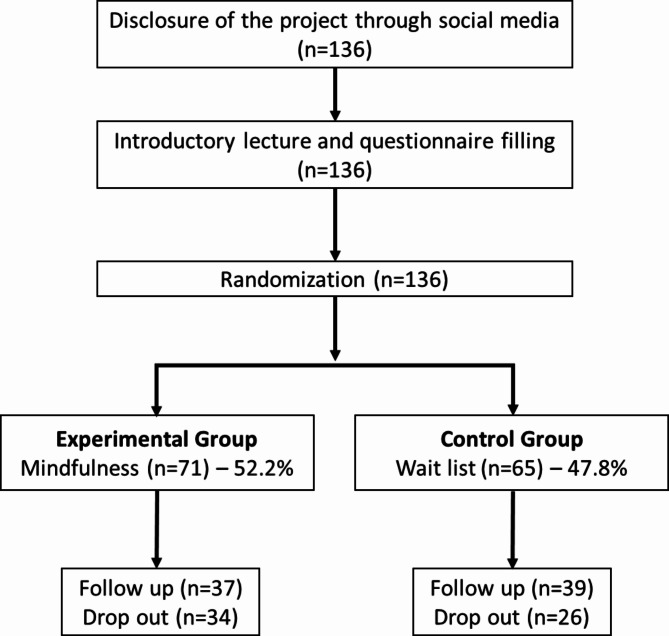
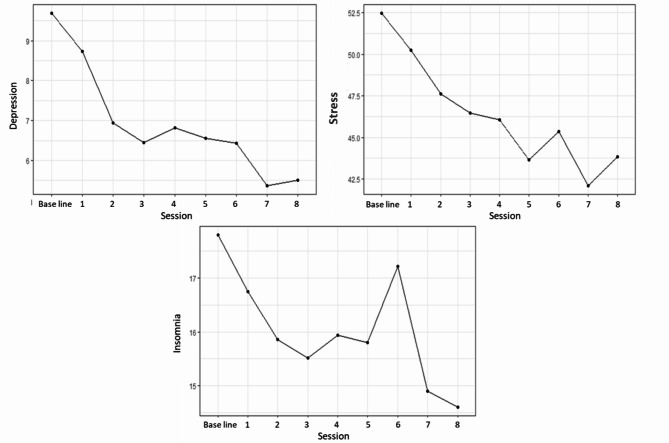
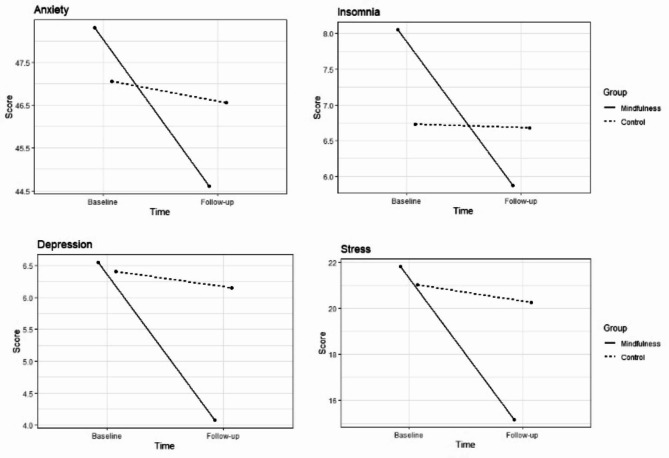
Background: The development of mental health disorders is common in the university population, and mindfulness-based interventions (MBIs) seem to be effective in addressing them in different contexts. Thus, this study investigated the impact of an 8-week MBI adapted to university students from the Mindfulness-Based Relapse Prevention (MBSR) on different symptoms related to mental health problems, specifically symptoms of anxiety, depression, stress and insomnia. Methods: University students (n = 136) were randomized into MBI group (n = 71) or wait-list group (n = 65). All participants completed self-administered questionnaires before and after the intervention, and the experimental group answered questionnaires weekly during intervention. Generalized mixed models were used to assess the effects of the intervention. Results: There were improvements in the symptoms of stress (B = 5.76, p < 0.001), depression (B = 1.55, p < 0.01) and insomnia (B = 1.35, p = 0.020) from the beginning of the intervention to the final assessment when it was compared to the control group. No effect was found in respect of trait anxiety. The MBI was found to be effective in reducing important symptoms related to university students’ mental health, possibly grounding further research on the intervention’s potential of preventing the development of mental disorders. Trial registration: The research was registered in the Brazilian Registry of Clinical Trials (ReBEC) - number RBR-63qsqx, approved at 09/16/2019.
Overview
The claims and statistics of this paper haven’t been checked yet.
Free: it reads the open-access text and checks the first 5 claims that cite a source we can check. Create a free account to check every claim.
Integrity signals
Registry
Cites
Statistics
Figures
Verification
Claims the paper makes
The claims and statistics of this paper haven’t been checked yet.
Free: it reads the open-access text and checks the first 5 claims that cite a source we can check. Create a free account to check every claim.
Claims other papers make about this one
Each is checked against this paper’s own text: does it say what the citing paper says it does?
The cited source says what the claim attributes to it.
In the citing paper
“several trials of Gallo, Torres-Plates, or Trombka reporting statistically significant reductions in psychological distress in both clinical and non-clinical samples [36,37,39].”
From The Effects of Mindfulness Techniques on Anxiety, Depression, and Stress, with an Emphasis on Gratitude: A Systematic Review and Meta-Analysis (2026) · cites this paper as [39]
Self-check
Percentages, sums and reported differences re-computed from the paper’s own numbers.
The self-check needs the paper’s full text.
Citations
Cites
(2010) · Intellectum (Universidad de La Sabana) · doi:10.1111/j.1467- · Cited by 16,131
Whiteford, H. A., Degenhardt, L., Rehm, J., Baxter, A. J., Ferrari, A. J., Erskine, H. E., Charlson, F. J., Norman, R. E., Flaxman, A. D., Johns, N., et al. (2013) · The Lancet · doi:10.1016/s0140-6736(13)61611-6 · Cited by 6,006 · cited 1×
“In addition to being among the health problems that most impact the lives of individuals [7], anxiety and depression disorders also share symptoms, such as fatigue, problems related to sleep and irritability, and cognitive processes, such as negative affects and errors in processing information [8].”
BackgroundMindfulness-based therapy: a comprehensive meta-analysis
Khoury, B., Lecomte, T., Fortin, G., Masse, M., Therien, P., Bouchard, V., Chapleau, M.-A., Paquin, K., & Hofmann, S. G. (2013) · Clinical Psychology Review · doi:10.1016/j.cpr.2013.05.005 · Cited by 2,003 · cited 1×
“…can be defined as the ability to “pay attention at the present moment in an intentional and non-judgmental way” [17] and has become popular in recent decades, presenting very positive results when associated with psychotherapy for the treatment of depression and anxiety disorders [18–20].”
BackgroundSleep Patterns and Predictors of Disturbed Sleep in a Large Population of College Students
Lund, H. G., Reider, B. D., Whiting, A. B., & Prichard, J. R. (2010) · Journal of Adolescent Health · doi:10.1016/j.jadohealth.2009.06.016 · Cited by 1,907
Chiesa, A., & Serretti, A. (2009) · The Journal of Alternative and Complementary Medicine · doi:10.1089/acm.2008.0495 · Cited by 1,681
Effects of mindfulness-based stress reduction on medical and premedical students
Shapiro, S. L., Schwartz, G. E., & Bonner, G. (1998) · Journal of Behavioral Medicine · doi:10.1023/a:1018700829825 · Cited by 1,493 · cited 1×
“In fact, there is no consensus in the literature on the effect of mindfulness on anxiety, with some studies pointing to improvements [67, 69] and others, including ours, finding no difference [65, 70].”
BackgroundMindfulness meditation improves cognition: evidence of brief mental training
Zeidan, F., Johnson, S. K., Diamond, B. J., David, Z., & Goolkasian, P. (2010) · Consciousness and Cognition · doi:10.1016/j.concog.2010.03.014 · Cited by 1,363 · cited 1×
“…8-week protocol [49], decreased proinflammatory cytokines related to depression disorder [47], improvements in depression symptoms and of psychological well-being [50] and the reduction of tiredness, anxiety, improvement of visual-spatial processing, working memory and executive functioning [51].”
BackgroundCollege Students: Mental Health Problems and Treatment Considerations
Pedrelli, P., Nyer, M., Yeung, A., Zulauf, C., & Wilens, T. (2015) · Academic Psychiatry · doi:10.1007/s40596-014-0205-9 · Cited by 1,325 · cited 1×
“High rates of mental disorders have been reported in this population [1, 2], leading to an increase in the demand for mental health services at universities [2–4] and a search for effective ways to meet this demand.”
BackgroundAmerican College Health Association
(1979) · Journal of American College Health Association · doi:10.1080/01644300.1979.10392892 · Cited by 1,154
Mechanisms of mindfulness training: Monitor and Acceptance Theory (MAT
Lindsay, E. K., & Creswell, J. D. (2017) · Clinical Psychology Review · doi:10.1016/j.cpr.2016.10.011 · Cited by 919 · cited 2×
“…awareness of experiences, that is, the ability to monitor attention, can explain the improvement presented with regard to the cognitive functioning of individuals who undergo mindfulness protocols, but this same skill can increase affective reactivity [43], which could explain this slight increase.”
BackgroundSleep deprivation: Impact on cognitive performance
Alhola, P., & Polo-Kantola, P. (2007) · Neuropsychiatric Disease and Treatment · doi:10.2147/ndt.a930 · Cited by 869
What defines mindfulness-based programs? The warp and the weft
Crane, R. S., Brewer, J., Feldman, C., Kabat-Zinn, J., Santorelli, S., Williams, J. M. G., & Kuyken, W. (2017) · Psychological Medicine · doi:10.1017/s0033291716003317 · Cited by 868 · cited 1×
“An adaptation of the MBRP (Mindfulness Based Relapse Prevention) protocol was used, following the parameters given by Crane (2016) [39].”
MethodMindfulness-Based Interventions for Anxiety and Depression
Hofmann, S. G., & Gómez, A. F. (2017) · Psychiatric Clinics of North America · doi:10.1016/j.psc.2017.08.008 · Cited by 756 · cited 1×
“…can be defined as the ability to “pay attention at the present moment in an intentional and non-judgmental way” [17] and has become popular in recent decades, presenting very positive results when associated with psychotherapy for the treatment of depression and anxiety disorders [18–20].”
BackgroundPerceived Stress Scale: Reliability and Validity Study in Brazil
Siqueira Reis, R., Ferreira Hino, A. A., & Romélio Rodriguez Añez, C. (2010) · Journal of Health Psychology · doi:10.1177/1359105309346343 · Cited by 698
Santos, I. S., Tavares, B. F., Munhoz, T. N., de Almeida, L. S. P., da Silva, N. T. B., Tams, B. D., Patella, A. M., & Matijasevich, A. (2013) · Cadernos de Saúde Pública · doi:10.1590/0102-311x00144612 · Cited by 669
The Prevalence of Sleep Disorders in College Students: Impact on Academic Performance
Gaultney, J. F. (2010) · Journal of American College Health · doi:10.1080/07448481.2010.483708 · Cited by 636 · cited 1×
“Impaired sleep is another aspect of this group’s mental health that deserves attention [9, 10], especially when considering it has been previously shown to be associated with physical and other mental health problems [11].”
BackgroundPsychosocial stress and impaired sleep
Åkerstedt, T. (2006) · Scandinavian Journal of Work, Environment & Health · doi:10.5271/sjweh.1054 · Cited by 585 · cited 1×
“It has also been suggested that the high levels of stress experienced by some students may have a negative impact on sleep, changing its length and its quality [10, 12–14].”
BackgroundComorbidity of anxiety and depression in youth: Implications for treatment and prevention.
Garber, J., & Weersing, V. R. (2010) · Clinical Psychology: Science and Practice · doi:10.1111/j.1468-2850.2010.01221.x · Cited by 582 · cited 1×
“In addition to being among the health problems that most impact the lives of individuals [7], anxiety and depression disorders also share symptoms, such as fatigue, problems related to sleep and irritability, and cognitive processes, such as negative affects and errors in processing information [8].”
BackgroundRamel1, W., Goldin, P. R., Carmona, P. E., & McQuaid, J. R. (2004) · Cognitive Therapy and Research · doi:10.1023/b:cotr.0000045557.15923.96 · Cited by 580 · cited 1×
“In fact, there is no consensus in the literature on the effect of mindfulness on anxiety, with some studies pointing to improvements [67, 69] and others, including ours, finding no difference [65, 70].”
BackgroundParsons, C. E., Crane, C., Parsons, L. J., Fjorback, L. O., & Kuyken, W. (2017) · Behaviour Research and Therapy · doi:10.1016/j.brat.2017.05.004 · Cited by 550 · cited 1×
“Practicing mindfulness between sessions is already known as an important factor for the number of positive consequences observed [52, 53].”
BackgroundWeekly change in mindfulness and perceived stress in a mindfulness-based stress reduction program
Baer, R. A., Carmody, J., & Hunsinger, M. (2012) · Journal of Clinical Psychology · doi:10.1002/jclp.21865 · Cited by 546 · cited 1×
“One previous study that assessed the weekly change in stress symptoms in patients at a medical centre was found, where a statistically significant difference was observed in relation to the baseline only after the fourth session [45].”
Mindfulness treatment for substance misuse: A systematic review and meta-analysis
Li, W., Howard, M. O., Garland, E. L., McGovern, P., & Lazar, M. (2017) · Journal of Substance Abuse Treatment · doi:10.1016/j.jsat.2017.01.008 · Cited by 446 · cited 1×
“…sleep-related problems [25–27], anxiety and depression disorders [28, 29] (using the mindfulness-based cognitive therapy protocol - MBCT) and also as a therapeutic adjunct in treating people with alcohol use disorders [30] (with the use of mindfulness-based relapse prevention protocol - MBRP).”
MethodSong, Y., & Lindquist, R. (2015) · Nurse Education Today · doi:10.1016/j.nedt.2014.06.010 · Cited by 434
A CORRECTED AKAIKE INFORMATION CRITERION FOR VECTOR AUTOREGRESSIVE MODEL SELECTION
Hurvich, C. M., & Tsai, C. (1993) · Journal of Time Series Analysis · doi:10.1111/j.1467-9892.1993.tb00144.x · Cited by 398 · cited 1×
“The choice of the best distribution was based on adherence criteria, using the lower Akaike Information Criteria (AIC) [42].”
MethodCarsley, D., Khoury, B., & Heath, N. L. (2018) · Mindfulness · doi:10.1007/s12671-017-0839-2 · Cited by 381
Santos, I. S., Tavares, B. F., Munhoz, T. N., de Almeida, L. S. P., da Silva, N. T. B., Tams, B. D., Patella, A. M., & Matijasevich, A. (2013) · LA Referencia (Red Federada de Repositorios Institucionales de Publicaciones Científicas) · Cited by 367
The mental health of university students in the United Kingdom
Macaskill, A. (2013) · British Journal of Guidance & Counselling · doi:10.1080/03069885.2012.743110 · Cited by 357
Bamber, M. D., & Kraenzle Schneider, J. (2016) · Educational Research Review · doi:10.1016/j.edurev.2015.12.004 · Cited by 348 · cited 1×
“A meta-analysis of the effect of MBIs on anxiety among college students reported a significant improvement, although there is a chance that the result was influenced by publication bias [71].”
BackgroundMindfulness-based stress reduction and attentional control
Anderson, N. D., Lau, M. A., Segal, Z. V., & Bishop, S. R. (2007) · Clinical Psychology & Psychotherapy · doi:10.1002/cpp.544 · Cited by 326
Dawson, A. F., Brown, W. W., Anderson, J., Datta, B., Donald, J. N., Hong, K., Allan, S., Mole, T. B., Jones, P. B., & Galante, J. (2020) · Applied Psychology: Health and Well-Being · doi:10.1111/aphw.12188 · Cited by 312 · cited 1×
“Similarly to what was observed in other contexts, MBIs seem to promote an improvement of distress, anxiety and depression symptoms, well-being and rumination on university students [33].”
ResultBränström, R., Kvillemo, P., Brandberg, Y., & Moskowitz, J. T. (2010) · Annals of Behavioral Medicine · doi:10.1007/s12160-010-9168-6 · Cited by 312
(2019) · PubMed · Cited by 300
van der Riet, P., Levett-Jones, T., & Aquino-Russell, C. (2018) · Nurse Education Today · doi:10.1016/j.nedt.2018.03.018 · Cited by 286
Kang, Y. S., Choi, S. Y., & Ryu, E. (2009) · Nurse Education Today · doi:10.1016/j.nedt.2008.12.003 · Cited by 278 · cited 1×
“Moreover, high levels of stress can lead to several other negative consequences related to hormones, and it has been increasingly experienced by students over recent decades [15, 16].”
BackgroundBränström, R., Duncan, L. G., & Moskowitz, J. T. (2011) · British Journal of Health Psychology · doi:10.1348/135910710x501683 · Cited by 266
Sleep and quality of life in the Austrian population
Zeitlhofer, J., Schmeiser-Rieder, A., Tribl, G., Rosenberger, A., Bolitschek, J., Kapfhammer, G., Saletu, B., Katschnig, H., Holzinger, B., Popovic, R., et al. (2000) · Acta Neurologica Scandinavica · doi:10.1034/j.1600-0404.2000.102004249.x · Cited by 265
Gross, C. R., Kreitzer, M. J., Reilly-Spong, M., Wall, M., Winbush, N. Y., Patterson, R., Mahowald, M., & Cramer-Bornemann, M. (2011) · EXPLORE · doi:10.1016/j.explore.2010.12.003 · Cited by 249 · cited 1×
“…range of problems [21], such as in stress reduction (using mindfulness-based stress reduction - MBSR) [22–24], in treating sleep-related problems [25–27], anxiety and depression disorders [28, 29] (using the mindfulness-based cognitive therapy protocol - MBCT) and also as a therapeutic adjunct…”
MethodUniversity student counseling and mental health in the United States: Trends and challenges
Prince, J. P. (2015) · Mental Health & Prevention · doi:10.1016/j.mhp.2015.03.001 · Cited by 248
Breedvelt, J. J. F., Amanvermez, Y., Harrer, M., Karyotaki, E., Gilbody, S., Bockting, C. L. H., Cuijpers, P., & Ebert, D. D. (2019) · Frontiers in Psychiatry · doi:10.3389/fpsyt.2019.00193 · Cited by 222
Lindsay, E. K., & Creswell, J. D. (2019) · Current Opinion in Psychology · doi:10.1016/j.copsyc.2018.12.004 · Cited by 220 · cited 1×
“Thus, in line with previous studies [44], the present study indicates the possibility that a greater emphasis on acceptance skills, an important emotion regulation mechanism, could maximize the effectiveness of these interventions.”
ResultSleep and Academic Performance in Undergraduates: A Multi-measure, Multi-predictor Approach
Gomes, A. A., Tavares, J., & de Azevedo, M. H. P. (2011) · Chronobiology International · doi:10.3109/07420528.2011.606518 · Cited by 211
Mindfulness Meditation, Anxiety Reduction, and Heart Disease: A Pilot Study
Tacón, A. M., McComb, J., Caldera, Y., & Randolph, P. (2003) · Family & Community Health · doi:10.1097/00003727-200301000-00004 · Cited by 209
Sleep difficulties in college students: The role of stress, affect and cognitive processes
Amaral, A. P., Soares, M. J., Pinto, A. M., Pereira, A. T., Madeira, N. G. G. F., Bos, S. C., Marques, M., Roque, C., & Macedo, A. (2017) · Psychiatry Research · doi:10.1016/j.psychres.2017.11.072 · Cited by 208 · cited 2×
“It has also been suggested that the high levels of stress experienced by some students may have a negative impact on sleep, changing its length and its quality [10, 12–14].”
BackgroundSleep problems: Predictor or outcome of media use among emerging adults at university?
Tavernier, R., & Willoughby, T. (2014) · Journal of Sleep Research · doi:10.1111/jsr.12132 · Cited by 190 · cited 1×
“Impaired sleep is another aspect of this group’s mental health that deserves attention [9, 10], especially when considering it has been previously shown to be associated with physical and other mental health problems [11].”
BackgroundGlozier, N., Martiniuk, A., Patton, G., Ivers, R., Li, Q., Hickie, I., Senserrick, T., Woodward, M., Norton, R., & Stevenson, M. (2010) · Sleep · doi:10.1093/sleep/33.9.1139 · Cited by 177 · cited 2×
“The effect of MBIs on stress has been reported for decades in different populations [64–67].”
BackgroundMindfulness-Based Relapse Prevention for Addictive Behaviors: A Clinician's Guide: Book review
BIEN, T. (2011) · Journal of Psychiatric and Mental Health Nursing · doi:10.1111/j.1365-2850.2011.01761.x · Cited by 173
A meta-analysis of the relationship between trait mindfulness and substance use behaviors
Karyadi, K. A., VanderVeen, J. D., & Cyders, M. A. (2014) · Drug and Alcohol Dependence · doi:10.1016/j.drugalcdep.2014.07.014 · Cited by 158
Greeson, J. M., Smoski, M. J., Suarez, E. C., Brantley, J. G., Ekblad, A. G., Lynch, T. R., & Wolever, R. Q. (2015) · The Journal of Alternative and Complementary Medicine · doi:10.1089/acm.2014.0285 · Cited by 143
A mindfulness‐based approach to the treatment of insomnia
Ong, J., & Sholtes, D. (2010) · Journal of Clinical Psychology · doi:10.1002/jclp.20736 · Cited by 125
Demarzo, M., Montero-Marin, J., Puebla-Guedea, M., Navarro-Gil, M., Herrera-Mercadal, P., Moreno-González, S., Calvo-Carrión, S., Bafaluy-Franch, L., & Garcia-Campayo, J. (2017) · Frontiers in Psychology · doi:10.3389/fpsyg.2017.01343 · Cited by 121
Josefsson, T., Lindwall, M., & Broberg, A. G. (2014) · Mindfulness · doi:10.1007/s12671-012-0142-1 · Cited by 119 · cited 1×
“While some did not find differences in psychological symptom rating scales after the intervention [47] or compared to the active control group [48], others observed changes similar to the 8-week protocol [49], decreased proinflammatory cytokines related to depression disorder [47], improvements in…”
ResultDirubbo, N. E. (1992) · The Nurse Practitioner · doi:10.1097/00006205-199202000-00020 · Cited by 116
The Utility of Home-Practice in Mindfulness-Based Group Interventions: A Systematic Review
Lloyd, A., White, R., Eames, C., & Crane, R. (2018) · Mindfulness · doi:10.1007/s12671-017-0813-z · Cited by 113 · cited 1×
“Practicing mindfulness between sessions is already known as an important factor for the number of positive consequences observed [52, 53].”
BackgroundGalambos, N. L., Vargas Lascano, D. I., Howard, A. L., & Maggs, J. L. (2013) · Behavioral Sleep Medicine · doi:10.1080/15402002.2011.596234 · Cited by 89 · cited 1×
“It has also been suggested that the high levels of stress experienced by some students may have a negative impact on sleep, changing its length and its quality [10, 12–14].”
BackgroundMa, L., Zhang, Y., & Cui, Z. (2019) · Mindfulness · doi:10.1007/s12671-019-01192-w · Cited by 86 · cited 1×
“When it comes to its effects in university students, literature already provides some very important benefits brought by MBIs, especially when targeting those with an already diagnosed mental disorder [32].”
BackgroundEffectiveness of Mindfulness-Based Therapies in Reducing Symptoms of Depression: A Meta-Analysis
McCarney, R. W., Schulz, J., & Grey, A. R. (2012) · European Journal of Psychotherapy & Counselling · doi:10.1080/13642537.2012.713186 · Cited by 85
Study, examinations, and stress: blood pressure assessments in college students1
Hughes *, B. M. (2005) · Educational Review · doi:10.1080/0013191042000274169 · Cited by 72
Prevalência de depressão entre estudantes universitários
Cavestro, J. D. M., & Rocha, F. L. (2006) · Jornal Brasileiro de Psiquiatria · doi:10.1590/s0047-20852006000400001 · Cited by 71 · cited 1×
“High rates of mental disorders have been reported in this population [1, 2], leading to an increase in the demand for mental health services at universities [2–4] and a search for effective ways to meet this demand.”
BackgroundThe Effect of Meditation on Health: a Metasynthesis of Randomized Controlled Trials
Rose, S., Zell, E., & Strickhouser, J. E. (2019) · Mindfulness · doi:10.1007/s12671-019-01277-6 · Cited by 49
Harnett, P. H., Whittingham, K., Puhakka, E., Hodges, J., Spry, C., & Dob, R. (2010) · Mindfulness · doi:10.1007/s12671-010-0024-3 · Cited by 36 · cited 1×
“A previous study evaluated the effect of a brief mind-fulness intervention performed in just three sessions in an adult audience without major psychological symptoms and observed a decrease in the Depression, Anxiety and Stress Scale (DASS) score and an improvement in life satisfaction [46].”
BackgroundBilinçli Farkındalık ve Psikolojik İhtiyaçlar: Kültürler Arası Bir Karşılaştırma
Özyeşil, Z. (2012) · İlköğretim Online · doi:10.17051/io.83991 · Cited by 35
Evaluation of a mindfulness-based mobile application with college students: A pilot study
Moffitt-Carney, K. M., & Duncan, A. B. (2021) · Journal of American College Health · doi:10.1080/07448481.2019.1661420 · Cited by 23
Simione, L., Raffone, A., & Mirolli, M. (2020) · Mindfulness · doi:10.1007/s12671-019-01255-y · Cited by 22
Parsons, C. E., Jensen, K. L., Roepstorff, A., Fjorback, L. O., & Linehan, C. (2019) · Digital Health · doi:10.1177/2055207619868550 · Cited by 19
The Massachusetts General Hospital Guide to Depression: New Treatment Insights and Options
(2018) · Springer eBooks · doi:10.1007/978-3-319-97241-1 · Cited by 16
The Role of Mindfulness in the Insomnia Severity of Female Chronic Hypnotic Users
Curado, D. F., de Barros, V. V., Opaleye, E. S., Bowen, S. W., Hachul, H., & Noto, A. R. (2018) · International Journal of Behavioral Medicine · doi:10.1007/s12529-018-9724-1 · Cited by 6
Self-citationLee, W.-K., & Ju, S. (2014) · Journal of the Korea Academia-Industrial cooperation Society · doi:10.5762/kais.2014.15.6.3714 · Cited by 2 · cited 1×
“…8-week protocol [49], decreased proinflammatory cytokines related to depression disorder [47], improvements in depression symptoms and of psychological well-being [50] and the reduction of tiredness, anxiety, improvement of visual-spatial processing, working memory and executive functioning [51].”
Background
Cited by
Alvarado-García, P. A. A., Vásquez, M. R. S., Gomez, F. M. I., Rodríguez, N. M. G., & Paniagua, W. G. C. (2025) · Frontiers in Psychology · doi:10.3389/fpsyg.2025.1508934 · Cited by 72
Tadros, M., Newby, J. M., Li, S., & Werner‐Seidler, A. (2025) · PLoS ONE · doi:10.1371/journal.pone.0317125 · Cited by 41
Juniar, D., van Ballegooijen, W., Kleygrewe, G., van Schaik, A., Passchier, J., & Riper, H. M. (2025) · Frontiers in Digital Health · doi:10.3389/fdgth.2025.1603389 · Cited by 22
García-Pérez, L., Atencia-Rodríguez, M. E., González, M. D. M. C., & Ruz, R. P. (2025) · Journal of American College Health · doi:10.1080/07448481.2025.2492174 · Cited by 17
Rajan, A., Kumar, M., & Pranav Raj, P. (2026) · npj Mental Health Research · doi:10.1038/s44184-026-00188-4 · Cited by 12
Metadata
- Authors
- Gallo, G. G., Curado, D. F., Machado, M. P. A., Espíndola, M. I., Scattone, V. V., & Noto, A. R.
- Affiliations
- Universidade Federal de São Paulo (BR)
- Corresponding author
- Gallo, Giovana Gonçalves
- Venue
- International Journal of Mental Health Systems
- Published
- 2023-10-13
- Volume
- 17
- Issue
- 1
- Pages
- 32-32
- ISSN
- 1752-4458 (ISSN-L)
- PMC
- PMC10571349
- OpenAlex
- W4387601824
- Cited by
- 23
- References
- 69
- Citations by year
- 2026: 12 · 2025: 9 · 2024: 2
- FWCI
- 6.71
- Type
- journal article
- Language
- en
- Open access
- gold
- doi.org
- Licence
- cc-by
- creativecommons.org/licenses/by/4.0 (tdm)
- creativecommons.org/licenses/by/4.0 (vor)
- Locations
- International Journal of Mental Health Systems (publishedVersion, cc-by)
- Research Square (acceptedVersion, cc-by)
- PubMed Central (publishedVersion, cc-by)
- PubMed (publishedVersion)
- DOAJ (DOAJ: Directory of Open Access Journals) (submittedVersion, cc-by-sa)
- Funders
- Associação Fundo de Incentivo à Pesquisa
- Topics
- Social Sciences › Psychology › Clinical Psychology › Mindfulness and Compassion Interventions
- Social Sciences › Psychology › Applied Psychology › Digital Mental Health Interventions
- Social Sciences › Psychology › Developmental and Educational Psychology › Student Stress and Coping
- Keywords
- mindfulness-based interventions, mindfulness-based relapse prevention, university students, student mental health, anxiety, depression, stress, insomnia, mental disorder prevention
About these checks
Registry, retraction, Cites and statistics results are computed, not judged, with one exception: a printed reference that no index lists is read once by a model before it counts as a citation error. Claims are extracted by a model and kept only when their quote appears verbatim in the text; each cited source is then checked, with a model’s help, for whether it says what the claim relies on. Those verdicts can be wrong — read the claim’s quote and the cited source before relying on one.
Statistics and arithmetic are recomputed, not judged.
Confidence bands are shown only for fields calibrated on our annotated test set. None is calibrated yet, so no band is shown.
What counts as a claim ›How we measure confidence ›How we check this ›
Are you an author, or do you see a problem with this page? Request a review
Data sources
Bibliographic data: Semantic Scholar, OpenAlex, Crossref.
Contains information from the Semantic Scholar Academic Graph Datasets, made available under the ODC Attribution License (ODC-BY 1.0).
Semantic Scholar’s data is described in: Kinney, R., et al. (2023). The Semantic Scholar Open Data Platform. arXiv:2301.10140.
