

The role of cellular reactive oxygen species in cancer chemotherapy
Open accessThe DOI matches its Crossref record; 75 of the 75 references it cites were found in a registry or an index.
Abstract
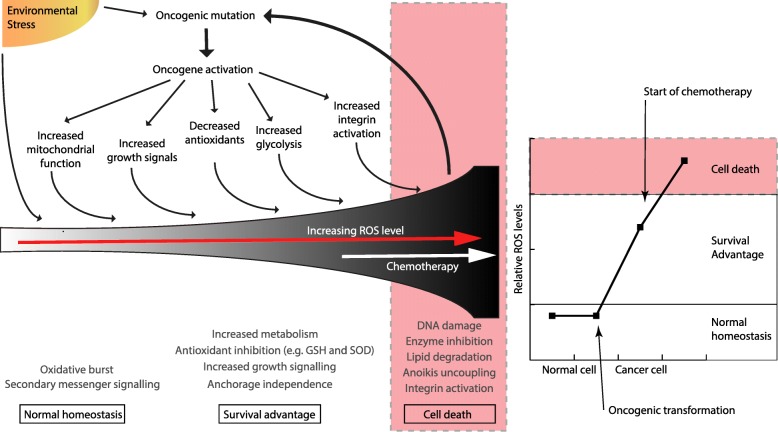
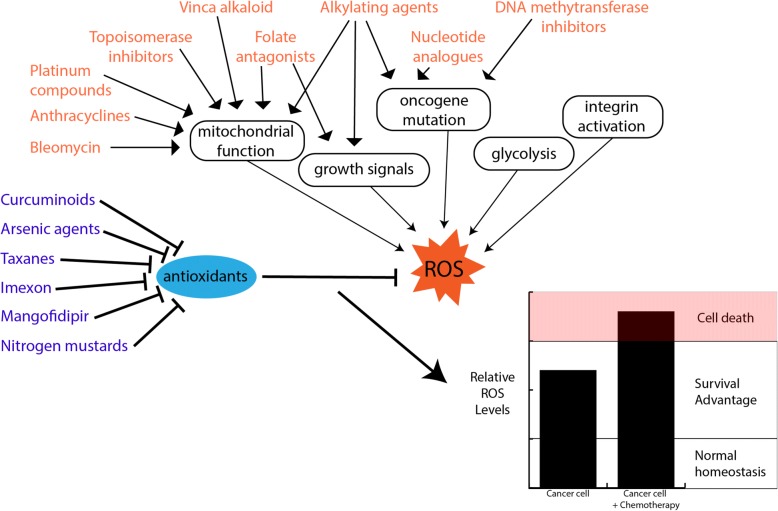
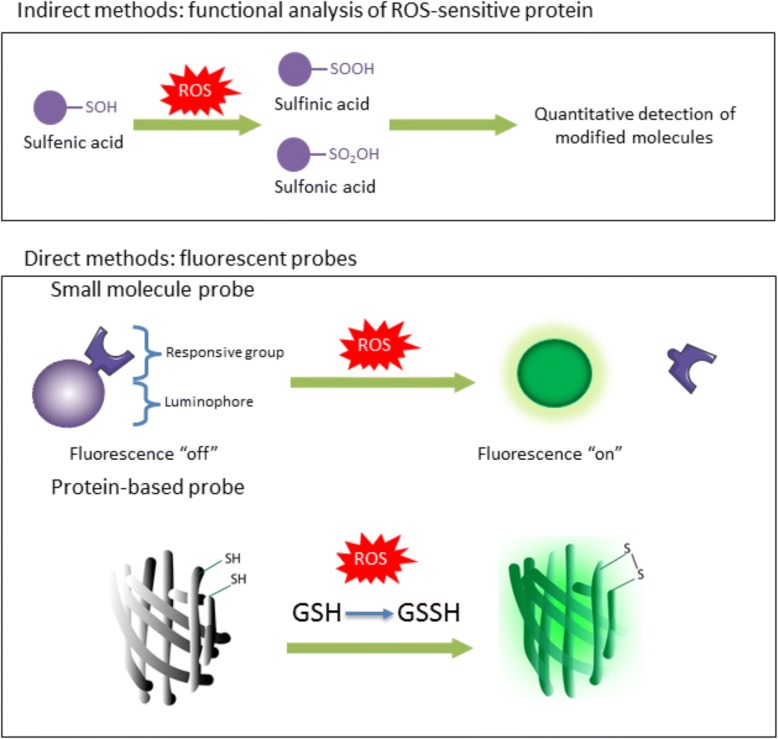
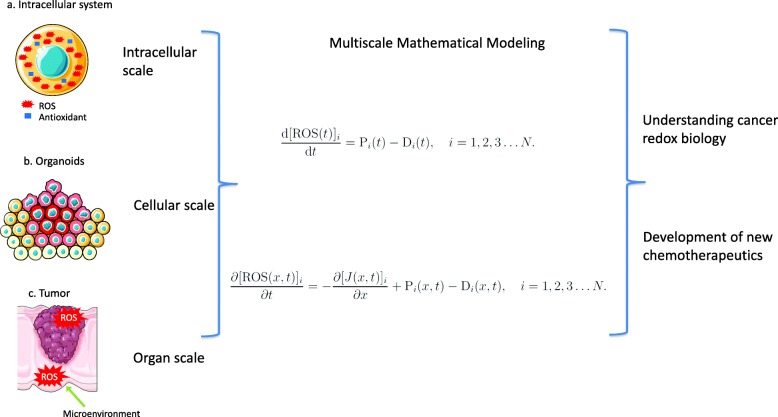
Most chemotherapeutics elevate intracellular levels of reactive oxygen species (ROS), and many can alter redox-homeostasis of cancer cells. It is widely accepted that the anticancer effect of these chemotherapeutics is due to the induction of oxidative stress and ROS-mediated cell injury in cancer. However, various new therapeutic approaches targeting intracellular ROS levels have yielded mixed results. Since it is impossible to quantitatively detect dynamic ROS levels in tumors during and after chemotherapy in clinical settings, it is of increasing interest to apply mathematical modeling techniques to predict ROS levels for understanding complex tumor biology during chemotherapy. This review outlines the current understanding of the role of ROS in cancer cells during carcinogenesis and during chemotherapy, provides a critical analysis of the methods used for quantitative ROS detection and discusses the application of mathematical modeling in predicting treatment responses. Finally, we provide insights on and perspectives for future development of effective therapeutic ROS-inducing anticancer agents or antioxidants for cancer treatment.
Overview
The claims and statistics of this paper haven’t been checked yet.
Free: it reads the open-access text and checks the first 5 claims that cite a source we can check. Create a free account to check every claim.
Integrity signals
Registry
Cites
Statistics
Figures
Verification
Claims the paper makes
The claims and statistics of this paper haven’t been checked yet.
Free: it reads the open-access text and checks the first 5 claims that cite a source we can check. Create a free account to check every claim.
Claims other papers make about this one
Each is checked against this paper’s own text: does it say what the citing paper says it does?
In the citing paper
“Most chemotherapeutic agents produce ROS, and many can alter redox homeostasis in cancer cells.4”
From Reactive Oxygen Species in Cancer: Current Findings and Future Directions (2021) · cites this paper as [4]
Self-check
Percentages, sums and reported differences re-computed from the paper’s own numbers.
The self-check needs the paper’s full text.
Citations
Cites
Ferroptosis: An Iron-Dependent Form of Nonapoptotic Cell Death
Dixon, S. J., Lemberg, K. M., Lamprecht, M. R., Skouta, R., Zaitsev, E. M., Gleason, C. E., Patel, D. N., Bauer, A. J., Cantley, A. M., Yang, W. S., et al. (2012) · Cell · doi:10.1016/j.cell.2012.03.042 · Cited by 18,691
Reactive oxygen species: Metabolism, oxidative stress, and signal transduction
Apel, K., & Hirt, H. (2004) · Annual Review of Plant Biology · doi:10.1146/annurev.arplant.55.031903.141701 · Cited by 11,723
Activation of apoptosis signalling pathways by reactive oxygen species
Redza-Dutordoir, M., & Averill-Bates, D. A. (2016) · Biochimica et Biophysica Acta (BBA) - Molecular Cell Research · doi:10.1016/j.bbamcr.2016.09.012 · Cited by 3,731
Tumour evolution inferred by single-cell sequencing
Navin, N., Kendall, J., Troge, J., Andrews, P., Rodgers, L., McIndoo, J., Cook, K., Stepansky, A., Levy, D., Esposito, D., et al. (2011) · Nature · doi:10.1038/nature09807 · Cited by 2,598
Halliwell, B., & Whiteman, M. (2004) · British Journal of Pharmacology · doi:10.1038/sj.bjp.0705776 · Cited by 2,238
Antioxidants Maintain Cellular Redox Homeostasis by Elimination of Reactive Oxygen Species
He, L., He, T., Farrar, S., Ji, L., Liu, T., & Ma, X. (2017) · Cellular Physiology and Biochemistry · doi:10.1159/000485089 · Cited by 2,127
ROS stress in cancer cells and therapeutic implications
Pelicano, H., Carney, D., & Huang, P. (2004) · Drug Resistance Updates · doi:10.1016/j.drup.2004.01.004 · Cited by 2,006
Mitochondrial metabolism and ROS generation are essential for Kras-mediated tumorigenicity
Weinberg, F., Hamanaka, R., Wheaton, W. W., Weinberg, S., Joseph, J., Lopez, M., Kalyanaraman, B., Mutlu, G. M., Budinger, G. R. S., & Chandel, N. S. (2010) · Proceedings of the National Academy of Sciences · doi:10.1073/pnas.1003428107 · Cited by 1,742
Free-radical chemistry of cigarette smoke and its toxicological implications.
Church, D. F., & Pryor, W. A. (1985) · Environmental Health Perspectives · doi:10.1289/ehp.8564111 · Cited by 1,441
Oxidative stress inhibits distant metastasis by human melanoma cells
Piskounova, E., Agathocleous, M., Murphy, M. M., Hu, Z., Huddlestun, S. E., Zhao, Z., Leitch, A. M., Johnson, T. M., DeBerardinis, R. J., & Morrison, S. J. (2015) · Nature · doi:10.1038/nature15726 · Cited by 1,269
Cited by
Items 101–200 of 795
Total DNA Methylation Changes Reflect Random Oxidative DNA Damage in Gliomas
Barciszewska, A., Giel-Pietraszuk, M., Perrigue, P. M., & Naskręt-Barciszewska, M. Z. (2019) · Cells · doi:10.3390/cells8091065 · Cited by 73
Salatino, A., Aversa, I., Battaglia, A. M., Sacco, A., Vito, A. D., Santamaria, G., Chirillo, R., Veltri, P., Tradigo, G., Cello, A. D., et al. (2019) · Oxidative Medicine and Cellular Longevity · doi:10.1155/2019/3461251 · Cited by 65
In Vivo Imaging with Genetically Encoded Redox Biosensors
Kostyuk, A. I., Panova, A. S., Kokova, A. D., Kotova, D. A., Maltsev, D. I., Podgorny, O. V., Belousov, V. V., & Bilan, D. S. (2020) · International Journal of Molecular Sciences · doi:10.3390/ijms21218164 · Cited by 73
ArulJothi, K. N., Kumaran, K., Senthil, S., Nidhu, A. B., Munaff, N., Babu, J. V., Kirubakaran, R., Singh, S. K., Gupt, G., Dua, K., et al. (2022) · Medical Oncology · doi:10.1007/s12032-022-01900-y · Cited by 72
Hispidulin: A novel natural compound with therapeutic potential against human cancers
Ashaq, A., Maqbool, M. F., Maryam, A., Khan, M. N., Shakir, H. A., Irfan, M. I., Qazi, J. I., Li, Y., & Ma, T. (2020) · Phytotherapy Research · doi:10.1002/ptr.6862 · Cited by 65
Nanoplatform-based natural products co-delivery system to surmount cancer multidrug-resistant
Liang, Y., Liu, Z.-Y., Wang, P., Li, Y., Wang, R., & Xie, S. (2021) · Journal of Controlled Release · doi:10.1016/j.jconrel.2021.06.034 · Cited by 65
Ghafouri‐Fard, S., Shoorei, H., Abak, A., Seify, M., Mohaqiq, M., Keshmir, F., Taheri, M. N., & Ayatollahi, S. A. (2021) · Biomedicine & Pharmacotherapy · doi:10.1016/j.biopha.2021.112040 · Cited by 80
Oxidative Stress in Breast Cancer: A Biochemical Map of Reactive Oxygen Species Production
Bel’skaya, L. V., & Dyachenko, E. I. (2024) · Current Issues in Molecular Biology · doi:10.3390/cimb46050282 · Cited by 84
Scuto, M. C., Ontario, M. L., Salinaro, A. T., Caligiuri, I., Rampulla, F., Zimbone, V., Modafferi, S., Rizzolio, F., Canzonieri, V., Calabrese, E. J., et al. (2021) · Free Radical Biology and Medicine · doi:10.1016/j.freeradbiomed.2021.12.267 · Cited by 67
Rebollido-Rios, R., Venton, G., Sánchez‐Redondo, S., Iglesias, C., Fournet, G., González, E., Romero‐Fernandez, W., Escuela, D. O. B., Stefano, A. B. D., Penarroche-Díaz, R., et al. (2020) · Oncogene · doi:10.1038/s41388-020-1184-9 · Cited by 68
NLRP3 inflammasomes that induce antitumor immunity
Zhivaki, D., & Kagan, J. C. (2021) · Trends in Immunology · doi:10.1016/j.it.2021.05.001 · Cited by 63
Wongkaewkhiaw, S., Wongrakpanich, A., Krobthong, S., Saengsawang, W., Chairoungdua, A., & Boonmuen, N. (2022) · PLoS ONE · doi:10.1371/journal.pone.0266044 · Cited by 65
The small members of the JMJD protein family: Enzymatic jewels or jinxes?
Oh, S., Shin, S., & Janknecht, R. (2019) · Biochimica et Biophysica Acta (BBA) - Reviews on Cancer · doi:10.1016/j.bbcan.2019.04.002 · Cited by 65
“Notably, many chemotherapeutics are believed to cause elevated ROS levels and thereby kill cancer cells [181].”
In vitro biomimetic models for glioblastoma-a promising tool for drug response studies
Stanković, T., Ranđelović, T., Dragoj, M., Burić, S. S., Fernández, L. J., Ochoa, I., Pérez‐García, V. M., & Pešić, M. (2021) · Drug Resistance Updates · doi:10.1016/j.drup.2021.100753 · Cited by 67
Aging, Cancer, and Inflammation: The Telomerase Connection
Boccardi, V., & Marano, L. (2024) · International Journal of Molecular Sciences · doi:10.3390/ijms25158542 · Cited by 75
The Role of Mitochondria in the Chemoresistance of Pancreatic Cancer Cells
Fu, Y., Ricciardiello, F., Yang, G., Qiu, J., Huang, H., Xiao, J., Cao, Z., Zhao, F., Liu, Y., Luo, W., et al. (2021) · Cells · doi:10.3390/cells10030497 · Cited by 64
Antioxidant responses related to temozolomide resistance in glioblastoma
Campos-Sandoval, J. A., Gómez-García, M. C., Santos-Jiménez, J. D. L., Matés, J. M., Alonso, F. J., & Márquez, J. (2021) · Neurochemistry International · doi:10.1016/j.neuint.2021.105136 · Cited by 68
Zhang, X., Zhao, Q. C., Yang, J., Wang, T., Chen, F., & Zhang, K. (2023) · Coordination Chemistry Reviews · doi:10.1016/j.ccr.2023.215115 · Cited by 60
Exploring the cytotoxic activity of new phenanthroline salicylaldimine Zn(II) complexes
Matos, C. P., Addis, Y., Nunes, P., Barroso, S., Alho, I., Martins, M., Matos, A., Marques, F., Cavaco, I., Pessoa, J. C., et al. (2019) · Journal of Inorganic Biochemistry · doi:10.1016/j.jinorgbio.2019.110727 · Cited by 60
Cellular Mechanisms of Circulating Tumor Cells During Breast Cancer Metastasis
Park, H., Brown, S. R., & Kim, Y. (2020) · International Journal of Molecular Sciences · doi:10.3390/ijms21145040 · Cited by 68
Chen, Y., Li, Y., Huang, L., Du, Y., Gan, F., Li, Y., & Yao, Y. (2021) · Oxidative Medicine and Cellular Longevity · doi:10.1155/2021/6620306 · Cited by 68
Ahlina, F. N., Nugraheni, N., Salsabila, I. A., Haryanti, S., Da’i, M., & Meiyanto, E. (2020) · Asian Pacific Journal of Cancer Prevention · doi:10.31557/apjcp.2020.21.1.107 · Cited by 67
Moreira, H., Szyjka, A., Paliszkiewicz, K., & Barg, E. (2019) · Oxidative Medicine and Cellular Longevity · doi:10.1155/2019/6793957 · Cited by 55
Dias-Carvalho, A., Ferreira, M., Ferreira, R. M., Bastos, M. D. L., Sá, S. I., Capela, J. P., Carvalho, F. D., & Costa, V. M. (2021) · Archives of Toxicology · doi:10.1007/s00204-021-03171-4 · Cited by 59
ROS and miRNA Dysregulation in Ovarian Cancer Development, Angiogenesis and Therapeutic Resistance
Stieg, D. C., Wang, Y., Liu, L.-Z., & Jiang, B. (2022) · International Journal of Molecular Sciences · doi:10.3390/ijms23126702 · Cited by 60
Lysosomal cyst(e)ine storage potentiates tolerance to oxidative stress in cancer cells
He, L., Chen, J., Deng, P., Huang, S., Liu, P., Wang, C., Huang, X., Li, Y., Chen, B., Shi, D., et al. (2023) · Molecular Cell · doi:10.1016/j.molcel.2023.08.032 · Cited by 59
Rožanc, J., Kotnik, P., Milojević, M., Gradišnik, L., Hrnčič, M. K., Knez, Ž., & Maver, U. (2021) · Plants · doi:10.3390/plants10030566 · Cited by 73
Chung, I., Chen, L., Tsang, N., Chuang, W., Liao, T.-C., Yuan, S.-N., OuYang, C., Ojcius, D. M., Wu, C., & Chang, Y. (2019) · Molecular & Cellular Proteomics · doi:10.1074/mcp.ra119.001808 · Cited by 57
“Double-Edged Sword” Effect of Reactive Oxygen Species (ROS) in Tumor Development and Carcinogenesis
Zhao, W., Zhuang, P., Chen, Y., Wu, Y. L., Zhong, M., & Lun, Y. (2023) · Physiological Research · doi:10.33549/physiolres.935007 · Cited by 65
Hirsutine, an Emerging Natural Product with Promising Therapeutic Benefits: A Systematic Review
Bhuia, M. S., Wilairatana, P., Ferdous, J., Chowdhury, R., Bappi, M. H., Rahman, M. A., Mubarak, M. S., & Islam, M. T. (2023) · Molecules · doi:10.3390/molecules28166141 · Cited by 57
Piezoelectric Biomaterial with Advanced Design for Tissue Infection Repair
Shang, S., Zheng, F., Tan, W., Xing, Z., Chen, S., Peng, F., Lv, X., Wang, D., Zhu, X., Wu, J., et al. (2025) · Advanced Science · doi:10.1002/advs.202413105 · Cited by 63
Structurally characterized gallium–chrysin complexes with anticancer potential
Halevas, E. G., Mavroidi, B., Antonoglou, O., Hatzidimitriou, A. G., Sagnou, M., Pantazaki, Α. A., Litsardakis, G., & Pelecanou, M. (2020) · Dalton Transactions · doi:10.1039/c9dt04540f · Cited by 56
Wu, J., Yeung, S. J., Liu, S., Qdaisat, A. Z., Jiang, D., Liu, W., Cheng, Z., Liu, W., Wang, H., Li, L., et al. (2021) · Signal Transduction and Targeted Therapy · doi:10.1038/s41392-021-00581-9 · Cited by 57
Self-citationMousavi‐kiasary, S. M. S., Senabreh, A., Zandi, A., Pena, R., Cruz, F., Adibi, A., & Hooshmand, N. (2025) · Pharmaceutics · doi:10.3390/pharmaceutics17060682 · Cited by 61
Guo, J., Jiangling, Z., Liang, L., Liu, N., Qi, M., Zhao, S., Su, J., Liu, J., Peng, C., Chen, X., et al. (2020) · Journal of Cellular and Molecular Medicine · doi:10.1111/jcmm.15093 · Cited by 54
Iksen, I., Witayateeraporn, W., Hardianti, B., & Pongrakhananon, V. (2024) · Phytotherapy Research · doi:10.1002/ptr.8157 · Cited by 61
de Carvalho, J. T. G., Baldivia, D. D. S., Leite, D. F., de Araújo, L. C. A., Espindola, P. P. D. T., Antunes, K. Á., da Rocha, P. D. S., Souza, K. D. P., & dos Santos, E. L. (2019) · Oxidative Medicine and Cellular Longevity · doi:10.1155/2019/3685264 · Cited by 64
Yang, R., Fu, S., Li, R., Zhang, L., Xu, Z., Cao, Y., Cui, H., Kang, Y., & Xue, P. (2020) · Theranostics · doi:10.7150/thno.50486 · Cited by 51
Wu, C., Yang, J., Xiao, W., Jiang, Z., Chen, S., Guo, D., Zhang, P., Liu, C., Yang, H., & Xie, Z. (2022) · Cell Death and Disease · doi:10.1038/s41419-022-04904-8 · Cited by 51
Self-citationAl-Warhi, T. I., Al-Karmalawy, A. A., Elmaaty, A. A., Alshubramy, M. A., Abdel‐Motaal, M., Majrashi, T. A., Asem, M., Nabil, A., Eldehna, W. M., & Sharaky, M. M. (2022) · Journal of Enzyme Inhibition and Medicinal Chemistry · doi:10.1080/14756366.2022.2135512 · Cited by 51
Reactive oxygen species in cancer: Mechanistic insights and therapeutic innovations
Ma, N., Wang, Y., Li, X., Xu, M., & Tan, D. (2025) · Cell Stress and Chaperones · doi:10.1016/j.cstres.2025.100108 · Cited by 66
Gold nanoparticles assisted co-delivery of nisin and doxorubicin against murine skin cancer
Preet, S., Pandey, S. K., Kaur, K., Chauhan, S., & Saini, A. (2019) · Journal of Drug Delivery Science and Technology · doi:10.1016/j.jddst.2019.101147 · Cited by 56
Calcabrini, C., Maffei, F., Turrini, E., & Fimognari, C. (2020) · Frontiers in Pharmacology · doi:10.3389/fphar.2020.00567 · Cited by 50
Fiorillo, M., Tóth, F., Brindisi, M., Sotgia, F., & Lisanti, M. P. (2020) · Cells · doi:10.3390/cells9061529 · Cited by 58
Nox, Nox, Are You There? The Role of NADPH Oxidases in the Peripheral Nervous System
Eid, S., Savelieff, M. G., Eid, A. A., & Feldman, E. L. (2022) · Antioxidants and Redox Signaling · doi:10.1089/ars.2021.0135 · Cited by 54
Ether phospholipids are required for mitochondrial reactive oxygen species homeostasis
Chen, Z., Ho, I.-L., Soeung, M., Yen, E.-Y., Liu, J., Liang, Y., Rose, J. L., Srinivasan, S., Jiang, S., Chang, Q., et al. (2023) · Nature Communications · doi:10.1038/s41467-023-37924-9 · Cited by 60
Esfahani, M. K. M., Alavi, S. E., Cabot, P. J., Islam, N., & Izake, E. L. (2021) · Pharmaceutics · doi:10.3390/pharmaceutics13101605 · Cited by 53
Sensing mechanism of reactive oxygen species optical detection
Yan, F., Zang, Y., Sun, J., Sun, Z., & Zhang, H. (2020) · TrAC Trends in Analytical Chemistry · doi:10.1016/j.trac.2020.116009 · Cited by 49
TRPM2: bridging calcium and ROS signaling pathways—implications for human diseases
Maliougina, M., & Hiani, Y. E. (2023) · Frontiers in Physiology · doi:10.3389/fphys.2023.1217828 · Cited by 50
Mao, X., Wu, S., Huang, D., & Li, C. (2024) · Acta Pharmaceutica Sinica B · doi:10.1016/j.apsb.2024.03.006 · Cited by 57
A Novel Nrf2 Pathway Inhibitor Sensitizes Keap1-Mutant Lung Cancer Cells to Chemotherapy
Zhang, D., Hou, Z., Aldrich, K. E., Lockwood, L. R., Odom, A. L., & Liby, K. T. (2021) · Molecular Cancer Therapeutics · doi:10.1158/1535-7163.mct-21-0210 · Cited by 47
Celesia, A., Morana, O., Fiore, T., Pellerito, C., D’Anneo, A., Lauricella, M., Carlisi, D., Blasio, A. D., Calvaruso, G., Giuliano, M., et al. (2020) · International Journal of Molecular Sciences · doi:10.3390/ijms21218135 · Cited by 49
Yee, Y. H., Chong, S. J. F., Kong, L. R., Goh, B. C., & Pervaiz, S. (2020) · Redox Biology · doi:10.1016/j.redox.2020.101834 · Cited by 50
Yang, P., Tang, A.-L., Tan, S., Wang, G.-Y., Huang, H.-Y., Niu, W., Liu, S.-T., Ge, M., Yang, L.-L., Gao, F., et al. (2024) · Talanta · doi:10.1016/j.talanta.2024.126004 · Cited by 48
Harnessing altered oxidative metabolism in cancer by augmented prooxidant therapy
Firczuk, M., Bajor, M., Graczyk‐Jarzynka, A., Fidyt, K., Góral, A., & Zagożdżon, R. (2019) · Cancer Letters · doi:10.1016/j.canlet.2019.11.037 · Cited by 46
Reactive oxygen species in cancer: a paradox between pro- and anti-tumour activities
Kohan, R., Collin, A., Guizzardi, S., de Talamoni, N. T., & Picotto, G. (2020) · Cancer Chemotherapy and Pharmacology · doi:10.1007/s00280-020-04103-2 · Cited by 50
Emerging Roles of the Copper–CTR1 Axis in Tumorigenesis
Su, Y., Zhang, X., Li, S., Xie, W., & Guo, J. (2022) · Molecular Cancer Research · doi:10.1158/1541-7786.mcr-22-0056 · Cited by 50
Tamoxifen induces radioresistance through NRF2-mediated metabolic reprogramming in breast cancer
Reinema, F. V., Sweep, F., Adema, G., Peeters, W. M., Martens, J., Bussink, J., & Span, P. (2023) · Cancer & Metabolism · doi:10.1186/s40170-023-00304-4 · Cited by 33
Recent Progress in Anti‐Tumor Nanodrugs Based on Tumor Microenvironment Redox Regulation
Yao, L., Zhu, X., Shan, Y., Zhang, L., Yao, J., & Xiong, H. (2024) · Small · doi:10.1002/smll.202310018 · Cited by 46
Xin, Z., Hu, C. W., Zhang, C., Liu, M., Li, J., Sun, X., Hu, Y., Liu, X., & Wang, K. (2024) · Redox Biology · doi:10.1016/j.redox.2024.103362 · Cited by 55
Glucose-6-Phosphate Dehydrogenase Is Not Essential for K-Ras–Driven Tumor Growth or Metastasis
Ghergurovich, J. M., Esposito, M., Chen, Z., Wang, J. Z., Bhatt, V. D., Lan, T., White, E., Kang, Y., Guo, J. Y., & Rabinowitz, J. D. (2020) · Cancer Research · doi:10.1158/0008-5472.can-19-2486 · Cited by 45
Noman, A. S. M., Parag, R. R., Rashid, M. I., Islam, M. S., Rahman, M. Z., Chowdhury, A. A., Sultana, A., Jerin, C., Siddiqua, A., Rahman, L., et al. (2020) · Cell Death and Disease · doi:10.1038/s41419-020-02907-x · Cited by 48
de Haan, L. R., Reiniers, M. J., Reeskamp, L. F., Belkouz, A., Ao, L., Cheng, S., Ding, B., van Golen, R. F., & Heger, M. (2022) · Antioxidants · doi:10.3390/antiox11081424 · Cited by 55
Prevention of Oxidative Stress and Diseases by Antioxidant Supplementation
Martemucci, G., Portincasa, P., Centonze, V., Mariano, M., Khalil, M., & D‘Alessandro, A. G. (2022) · Medicinal Chemistry · doi:10.2174/1573406419666221130162512 · Cited by 55
The Oxidative Stress and Nervous Distress Connection in Gastrointestinal Disorders
Stavely, R. G., Ott, L. C., Rashidi, N., Sakkal, S., & Nurgali, K. (2023) · Biomolecules · doi:10.3390/biom13111586 · Cited by 48
Liu, X., Hao, Y., Popovtzer, R., Feng, L., & Liu, Z. (2020) · Advanced Healthcare Materials · doi:10.1002/adhm.202001167 · Cited by 47
Redox interactions-induced cardiac toxicity in cancer therapy
Fu, X., Tang, J., Wen, P., Huang, Z., & Najafi, M. (2021) · Archives of Biochemistry and Biophysics · doi:10.1016/j.abb.2021.108952 · Cited by 44
Liu, H., Zhang, W., Jin, L., Liu, S., Liang, L., & Wei, Y. (2023) · International Journal of Molecular Sciences · doi:10.3390/ijms24076279 · Cited by 50
Kozak, J., Jonak, K. E., & Maciejewski, R. (2020) · Biomedicine & Pharmacotherapy · doi:10.1016/j.biopha.2020.110037 · Cited by 44
Delphinidin modulates JAK/STAT3 and MAPKinase signaling to induce apoptosis in HCT116 cells
Zhang, Z., Pan, Y., Zhao, Y., Ren, M., Li, Y., Lu, G., Wu, K., & He, S. (2021) · Environmental Toxicology · doi:10.1002/tox.23152 · Cited by 43
Increased glucose availability sensitizes pancreatic cancer to chemotherapy
Gohar, A. V., Hue, J. J., Abbas, A., Graor, H. J., Hajihassani, O., Zarei, M., Titomihelakis, G., Feczko, J., Rathore, M. G., Chełstowska, S., et al. (2023) · Nature Communications · doi:10.1038/s41467-023-38921-8 · Cited by 50
Insights into the Role of Oxidative Stress in Hepatocellular Carcinoma Development
Li, Y., Yu, Y., Yang, L., & Wang, R. (2023) · Frontiers in Bioscience-Landmark · doi:10.31083/j.fbl2811286 · Cited by 57
Lipid peroxidation of immune cells in cancer
Xiao, L., Xian, M., Zhang, C., Guo, Q., & Yi, Q. (2024) · Frontiers in Immunology · doi:10.3389/fimmu.2023.1322746 · Cited by 58
Sensitize Tumor Immunotherapy: Immunogenic Cell Death Inducing Nanosystems
Peng, J., Li, S., & Ti, H. (2024) · International Journal of Nanomedicine · doi:10.2147/ijn.s457782 · Cited by 45
Fu, J., Peng, Z., Zhang, Y., & Shi, D. (2020) · Gynecologic Oncology · doi:10.1016/j.ygyno.2020.01.013 · Cited by 41
Kudlik, G., Takács, T., Radnai, L., Kurilla, A., Szeder, B., Koprivanacz, K., Merő, B. L., Buday, L., & Vas, V. (2020) · International Journal of Molecular Sciences · doi:10.3390/ijms21218117 · Cited by 48
Ahmed, W., & Lingner, J. (2020) · Cell Reports · doi:10.1016/j.celrep.2020.108347 · Cited by 44
Li, Y., Yu, H., Ren, J., Lu, G., Cao, Y., Xu, Z., Kang, Y., & Xue, P. (2021) · Small · doi:10.1002/smll.202104302 · Cited by 45
Yu, Q., Li, J., Yu, Y., Yan, M., Xu, D., & Yin, S. (2024) · Coordination Chemistry Reviews · doi:10.1016/j.ccr.2024.216056 · Cited by 43
Reactive oxygen species: Janus-faced molecules in the era of modern cancer therapy
O’Reilly, A., Zhao, W., Wickström, S. L., Arnér, E. S. J., & Kiessling, R. W. (2024) · Journal for ImmunoTherapy of Cancer · doi:10.1136/jitc-2024-009409 · Cited by 59
Quantitative Measurement of Functional Activity of the PI3K Signaling Pathway in Cancer
van de Stolpe, A. (2019) · Cancers · doi:10.3390/cancers11030293 · Cited by 40
Fontana, F., Raimondi, M., Marzagalli, M., Audano, M., Beretta, G., Procacci, P., Sartori, P., Mitro, N., & Limonta, P. (2020) · Free Radical Biology and Medicine · doi:10.1016/j.freeradbiomed.2020.07.009 · Cited by 42
Irokawa, H., Numasaki, S., Kato, S., Iwai, K., Inose-Maruyama, A., Ohdate, T., Hwang, G., Toyama, T., Watanabe, T., & Kuge, S. (2021) · Biochemical Journal · doi:10.1042/bcj20200897 · Cited by 46
Sayed, A. M. M., Hassanein, E. H. M., Ali, F. E. M., Omar, Z. M. M., Rashwan, E. K., Mohammedsaleh, Z. M., & El‐Ghafar, O. A. M. A. (2021) · Life Sciences · doi:10.1016/j.lfs.2021.119911 · Cited by 42
Metabolic Adaptation-Mediated Cancer Survival and Progression in Oxidative Stress
Tang, Y., Zhang, Z., Chen, Y., Qin, S., Zhou, L., Gao, W., & Shen, Z. (2022) · Antioxidants · doi:10.3390/antiox11071324 · Cited by 54
Malik, M., Świtlicka, A., Bieńko, A., Komarnicka, U. K., Bieńko, D. C., Kozieł, S., Kyzioł, A., Mazur, T., & Machura, B. (2022) · RSC Advances · doi:10.1039/d2ra05133h · Cited by 39
Schmitt, L.-I., Leo, M., Kutritz, A., Kleinschnitz, C., & Hagenacker, T. (2020) · Molecular and Cellular Neuroscience · doi:10.1016/j.mcn.2020.103499 · Cited by 41
Reproducibility of ‘COST reference microplasma jets’
Riedel, F., Golda, J., Held, J., Davies, H. L., van der Woude, M. W., Bredin, J., Niemi, K., Gans, T., der Gathen, V. S.-V., & O’Connell, D. (2020) · Plasma Sources Science and Technology · doi:10.1088/1361-6595/abad01 · Cited by 39
Bhattacharya, K., Bhattacharya, K., Xavier, V. J., Ziarati, A., Picard, D., & Bürgi, T. (2022) · ACS Applied Materials & Interfaces · doi:10.1021/acsami.2c05054 · Cited by 39
Oxidation of retromer complex controls mitochondrial translation
Zhang, J., Ali, M. Y., Chong, H. B., Tien, P.-C., Woods, J., Noble, C., Vornbäumen, T., Ordulu, Z., Possemato, A. P., Harry, S., et al. (2025) · Nature · doi:10.1038/s41586-025-08756-y · Cited by 38
Umapathi, A., Navya, P. N., Madhyastha, H., Singh, M., Madhyastha, R., Maruyama, M., & Daima, H. K. (2020) · Colloids and Surfaces A Physicochemical and Engineering Aspects · doi:10.1016/j.colsurfa.2020.125484 · Cited by 38
Zhang, Y., Chen, G., Zhuang, X., & Guo, M. (2021) · Oxidative Medicine and Cellular Longevity · doi:10.1155/2021/8807676 · Cited by 40
Babajani, A., Eftekharinasab, A., Bekeschus, S., Mehdian, H., Vakhshiteh, F., & Madjd, Z. (2024) · Cancer Cell International · doi:10.1186/s12935-024-03523-x · Cited by 43
The Dual Role of ROS in Hematological Malignancies: Stem Cell Protection and Cancer Cell Metastasis
Samimi, A., Khodayar, M. J., Alidadi, H., & Khodadi, E. (2020) · Stem Cell Reviews and Reports · doi:10.1007/s12015-019-09949-5 · Cited by 44
Oxidative Stress and Inflammation Can Fuel Cancer
Vaidya, F. U., Chhipa, A. S., Sagar, N., & Pathak, C. (2020) · Springer eBooks · doi:10.1007/978-981-15-1568-2_14 · Cited by 46
Manaloto, E., Gowen, A., Lesniak, A., He, Z., Casey, A., Cullen, P. J., & Curtin, J. F. (2020) · Archives of Biochemistry and Biophysics · doi:10.1016/j.abb.2020.108462 · Cited by 41
Understanding the complicated relationship between antioxidants and carcinogenesis
Majumder, D., Nath, P., Debnath, R., & Maiti, D. (2020) · Journal of Biochemical and Molecular Toxicology · doi:10.1002/jbt.22643 · Cited by 41
Huang, Z., Su, Q., Li, W., Ren, H., Huang, H., & Wang, A. (2021) · Journal of genetics and genomics/Journal of Genetics and Genomics · doi:10.1016/j.jgg.2021.06.014 · Cited by 39
Deng, Y., Ouyang, X., Sun, J., Shi, X., Li, Y., Chan, Y. K., Yang, W., & Peng, S. (2022) · Bioactive Materials · doi:10.1016/j.bioactmat.2022.07.003 · Cited by 48
Kwak, A., Park, J. W., Lee, S., Lee, J., Seo, J., Yoon, G., Lee, M., Choi, J., & Shim, J. (2022) · Phytomedicine · doi:10.1016/j.phymed.2022.154383 · Cited by 43
Metadata
- Authors
- Yang, H., Villani, R. M., Wang, H., Simpson, M. J., Roberts, M. S., Tang, M., & Liang, X.
- Affiliations
- Translational Research Institute (AU)
- Queensland University of Technology (AU)
- Shanghai Jiao Tong University (CN)
- Corresponding author
- Liang, Xiaowen
- ORCID
- Venue
- Journal of Experimental & Clinical Cancer Research
- Published
- 2018-11-01
- Volume
- 37
- Issue
- 1
- Pages
- 266-266
- ISSN
- 0392-9078 (ISSN-L)
- 1756-9966
- PMC
- PMC6211502
- OpenAlex
- W2898994124
- Cited by
- 794
- References
- 75
- Citations by year
- 2026: 59 · 2025: 89 · 2024: 111 · 2023: 103 · 2022: 130 · 2021: 145 · 2020: 110 · 2019: 45
- FWCI
- 7.32
- Type
- journal article
- Language
- en
- Open access
- gold
- doi.org
- Licence
- cc-by
- creativecommons.org/licenses/by/4.0/ (tdm)
- Locations
- Journal of Experimental & Clinical Cancer Research (publishedVersion, cc-by)
- Europe PMC (PubMed Central) (publishedVersion, cc-by)
- PubMed Central (publishedVersion, cc-by)
- PubMed (publishedVersion)
- DOAJ (DOAJ: Directory of Open Access Journals) (submittedVersion, cc-by-sa)
- QUT ePrints (Queensland University of Technology) (submittedVersion, cc-by)
- Funders
- Medical Research Council
- Australian Research Council (DP170100474)
- National Health and Medical Research Council (1125794)
- Topics
- Life Sciences › Biochemistry, Genetics and Molecular Biology › Molecular Biology › Redox biology and oxidative stress
- Life Sciences › Biochemistry, Genetics and Molecular Biology › Molecular Biology › Cancer and biochemical research
- Life Sciences › Pharmacology, Toxicology and Pharmaceutics › Toxicology › Bioactive Compounds and Antitumor Agents
- Keywords
- reactive oxygen species, cancer chemotherapy, oxidative stress, redox homeostasis, treatment response prediction, antioxidants, carcinogenesis
- MeSH terms
- Humans, Neoplasms, Reactive Oxygen Species, Oxidative Stress
About these checks
Registry, retraction, Cites and statistics results are computed, not judged, with one exception: a printed reference that no index lists is read once by a model before it counts as a citation error. Claims are extracted by a model and kept only when their quote appears verbatim in the text; each cited source is then checked, with a model’s help, for whether it says what the claim relies on. Those verdicts can be wrong — read the claim’s quote and the cited source before relying on one.
Statistics and arithmetic are recomputed, not judged.
Confidence bands are shown only for fields calibrated on our annotated test set. None is calibrated yet, so no band is shown.
What counts as a claim ›How we measure confidence ›How we check this ›
Are you an author, or do you see a problem with this page? Request a review
Data sources
Bibliographic data: Semantic Scholar, OpenAlex, Crossref.
Contains information from the Semantic Scholar Academic Graph Datasets, made available under the ODC Attribution License (ODC-BY 1.0).
Semantic Scholar’s data is described in: Kinney, R., et al. (2023). The Semantic Scholar Open Data Platform. arXiv:2301.10140.
