

The role of cellular reactive oxygen species in cancer chemotherapy
Open accessThe DOI matches its Crossref record; 75 of the 75 references it cites were found in a registry or an index.
Abstract
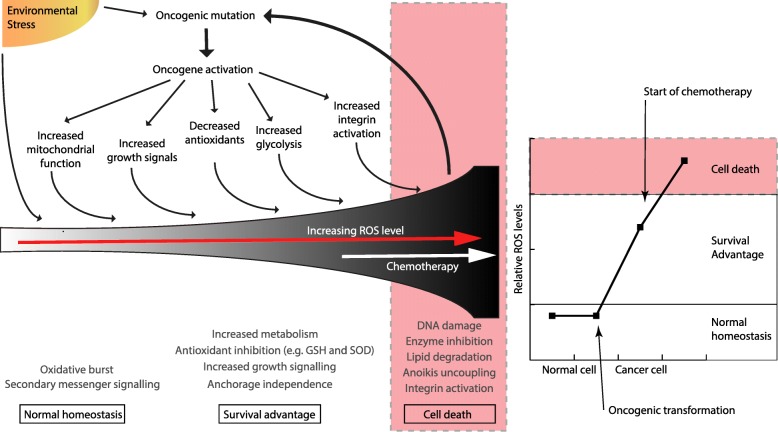
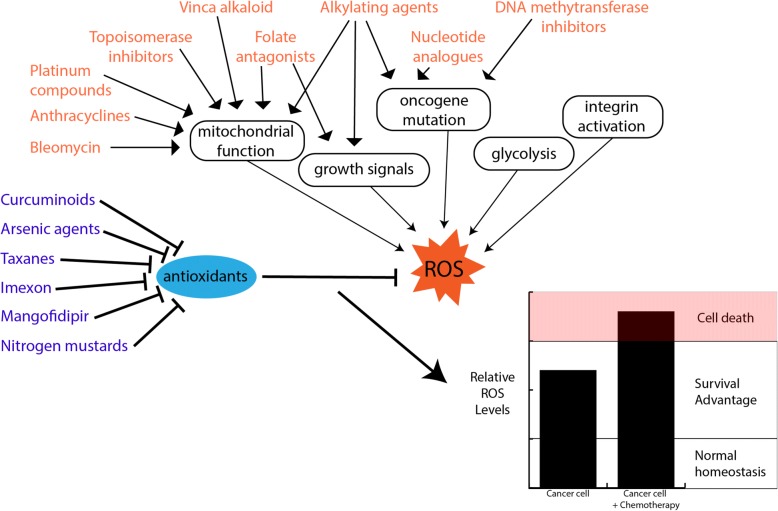
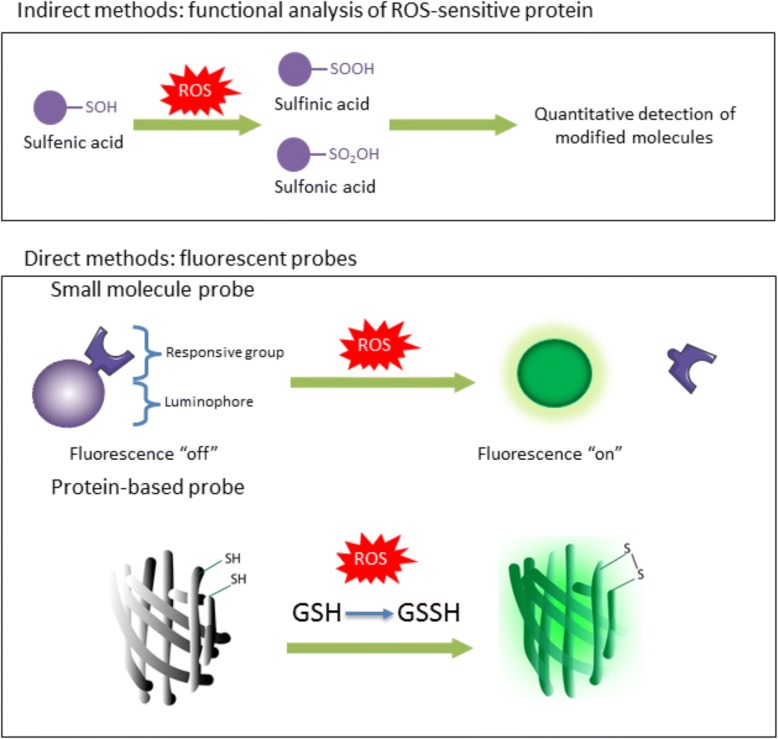
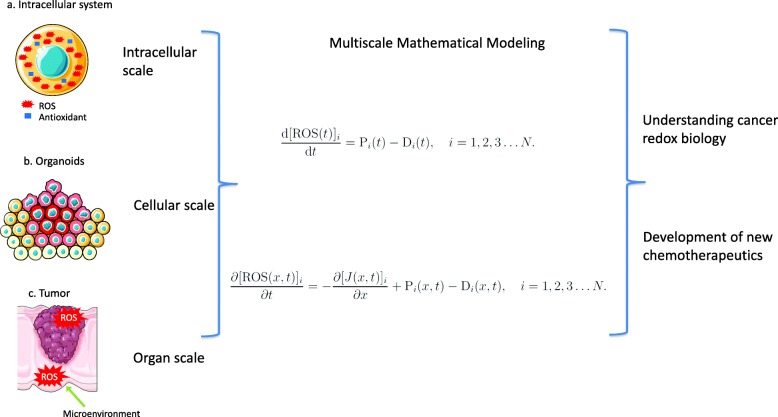
Most chemotherapeutics elevate intracellular levels of reactive oxygen species (ROS), and many can alter redox-homeostasis of cancer cells. It is widely accepted that the anticancer effect of these chemotherapeutics is due to the induction of oxidative stress and ROS-mediated cell injury in cancer. However, various new therapeutic approaches targeting intracellular ROS levels have yielded mixed results. Since it is impossible to quantitatively detect dynamic ROS levels in tumors during and after chemotherapy in clinical settings, it is of increasing interest to apply mathematical modeling techniques to predict ROS levels for understanding complex tumor biology during chemotherapy. This review outlines the current understanding of the role of ROS in cancer cells during carcinogenesis and during chemotherapy, provides a critical analysis of the methods used for quantitative ROS detection and discusses the application of mathematical modeling in predicting treatment responses. Finally, we provide insights on and perspectives for future development of effective therapeutic ROS-inducing anticancer agents or antioxidants for cancer treatment.
Overview
The claims and statistics of this paper haven’t been checked yet.
Free: it reads the open-access text and checks the first 5 claims that cite a source we can check. Create a free account to check every claim.
Integrity signals
Registry
Cites
Statistics
Figures
Verification
Claims the paper makes
The claims and statistics of this paper haven’t been checked yet.
Free: it reads the open-access text and checks the first 5 claims that cite a source we can check. Create a free account to check every claim.
Claims other papers make about this one
Each is checked against this paper’s own text: does it say what the citing paper says it does?
In the citing paper
“Most chemotherapeutic agents produce ROS, and many can alter redox homeostasis in cancer cells.4”
From Reactive Oxygen Species in Cancer: Current Findings and Future Directions (2021) · cites this paper as [4]
Self-check
Percentages, sums and reported differences re-computed from the paper’s own numbers.
The self-check needs the paper’s full text.
Citations
Cites
Ferroptosis: An Iron-Dependent Form of Nonapoptotic Cell Death
Dixon, S. J., Lemberg, K. M., Lamprecht, M. R., Skouta, R., Zaitsev, E. M., Gleason, C. E., Patel, D. N., Bauer, A. J., Cantley, A. M., Yang, W. S., et al. (2012) · Cell · doi:10.1016/j.cell.2012.03.042 · Cited by 18,691
Reactive oxygen species: Metabolism, oxidative stress, and signal transduction
Apel, K., & Hirt, H. (2004) · Annual Review of Plant Biology · doi:10.1146/annurev.arplant.55.031903.141701 · Cited by 11,723
Activation of apoptosis signalling pathways by reactive oxygen species
Redza-Dutordoir, M., & Averill-Bates, D. A. (2016) · Biochimica et Biophysica Acta (BBA) - Molecular Cell Research · doi:10.1016/j.bbamcr.2016.09.012 · Cited by 3,731
Tumour evolution inferred by single-cell sequencing
Navin, N., Kendall, J., Troge, J., Andrews, P., Rodgers, L., McIndoo, J., Cook, K., Stepansky, A., Levy, D., Esposito, D., et al. (2011) · Nature · doi:10.1038/nature09807 · Cited by 2,598
Halliwell, B., & Whiteman, M. (2004) · British Journal of Pharmacology · doi:10.1038/sj.bjp.0705776 · Cited by 2,238
Antioxidants Maintain Cellular Redox Homeostasis by Elimination of Reactive Oxygen Species
He, L., He, T., Farrar, S., Ji, L., Liu, T., & Ma, X. (2017) · Cellular Physiology and Biochemistry · doi:10.1159/000485089 · Cited by 2,127
ROS stress in cancer cells and therapeutic implications
Pelicano, H., Carney, D., & Huang, P. (2004) · Drug Resistance Updates · doi:10.1016/j.drup.2004.01.004 · Cited by 2,006
Mitochondrial metabolism and ROS generation are essential for Kras-mediated tumorigenicity
Weinberg, F., Hamanaka, R., Wheaton, W. W., Weinberg, S., Joseph, J., Lopez, M., Kalyanaraman, B., Mutlu, G. M., Budinger, G. R. S., & Chandel, N. S. (2010) · Proceedings of the National Academy of Sciences · doi:10.1073/pnas.1003428107 · Cited by 1,742
Free-radical chemistry of cigarette smoke and its toxicological implications.
Church, D. F., & Pryor, W. A. (1985) · Environmental Health Perspectives · doi:10.1289/ehp.8564111 · Cited by 1,441
Oxidative stress inhibits distant metastasis by human melanoma cells
Piskounova, E., Agathocleous, M., Murphy, M. M., Hu, Z., Huddlestun, S. E., Zhao, Z., Leitch, A. M., Johnson, T. M., DeBerardinis, R. J., & Morrison, S. J. (2015) · Nature · doi:10.1038/nature15726 · Cited by 1,269
Cited by
Items 401–500 of 795
Wang, H., Xia, P., Kurboniyon, M. S., Fang, S., Huang, K., Ning, S., Jin, G., Zhang, L., & Wang, C. (2024) · Frontiers in Pharmacology · doi:10.3389/fphar.2024.1448867 · Cited by 11
Self-citationStinson, J. A., Sheen, A. M., Lax, B. M., Yang, G. N., Duhamel, L., Santollani, L., Fink, E., Palmeri, J. R., & Wittrup, K. D. (2024) · Molecular Cancer Therapeutics · doi:10.1158/1535-7163.mct-24-0163 · Cited by 13
Zhang, H., Han, X., Wang, Z., Wang, Z., Cui, Y., Tian, R., Zhu, Y., Han, B., Liu, H., Zuo, X., et al. (2021) · Frontiers in Cell and Developmental Biology · doi:10.3389/fcell.2021.719209 · Cited by 13
Slimani, W., Maioli, M., Cruciani, S., Zerizer, S., Santaniello, S., Kabouche, Z., Coradduzza, D., Chessa, M., Fancello, S., Migheli, R., et al. (2023) · Plants · doi:10.3390/plants12122272 · Cited by 13
Cancer Chemotherapy and Chemiluminescence Detection of Reactive Oxygen Species in Human Semen
Takeshima, T., Kuroda, S., & Yumura, Y. (2019) · Antioxidants · doi:10.3390/antiox8100449 · Cited by 13
Nguyen, T. L., Katayama, R., Kojima, C., Matsumoto, A., Ishihara, K., & Yusa, S. (2020) · Polymer Journal · doi:10.1038/s41428-020-0390-1 · Cited by 11
Novel Platinum(II) Complex‐based Luminescent Probe for Detection of Hypochlorite in Cancer Cells
Tang, J., Huang, D., Meng, F., Li, P., Peng, F., & Huang, J. (2020) · Photochemistry and Photobiology · doi:10.1111/php.13344 · Cited by 11
The role of PPARγ in chemotherapy-evoked pain
Khasabova, I. A., Seybold, V. S., & Simone, D. A. (2021) · Neuroscience Letters · doi:10.1016/j.neulet.2021.135845 · Cited by 11
Hu, A., Alarfaj, A. A., Hirad, A. H., Veeraraghavan, V. P., Surapaneni, K. M., Hussein‐Al‐Ali, S. H., Nandakumar, N., & Elayappan, P. K. (2022) · Arabian Journal of Chemistry · doi:10.1016/j.arabjc.2022.103844 · Cited by 12
Ferreira, W. A. S., Vitiello, G. A. F., Medina, T. D. S., & de Oliveira, E. H. C. (2022) · Scientific Reports · doi:10.1038/s41598-022-10114-1 · Cited by 13
Efendiev, K. T., Shiryaev, A., Rakhmanova, A., Pisareva, T., Mamedova, A., Ивановна, С. С., Reshetov, I. V., Skobeltsin, A. S., Krivetskaya, A. A., Ryabova, A. V., et al. (2025) · International Journal of Molecular Sciences · doi:10.3390/ijms26178640 · Cited by 10
Wang, Y., Li, X., Wang, Z., Wang, P., Chen, Z., & Yang, J. (2026) · Coordination Chemistry Reviews · doi:10.1016/j.ccr.2026.217628 · Cited by 12
Westwood, L., Nixon, I. J., Emmerson, E., & Callanan, A. (2024) · Frontiers in Biomaterials Science · doi:10.3389/fbiom.2024.1347324 · Cited by 14
Cheng, Y., Chen, X., Hu, D., Du, J., Xing, Y., Liang, X., & Yang, Y. (2024) · International Immunopharmacology · doi:10.1016/j.intimp.2024.112808 · Cited by 14
Self-citationBose, G. S., Jindal, S., Landage, K. B., Jindal, A., Mahale, M. P., Kulkarni, A. P., & Mittal, S. P. K. (2024) · FEBS Journal · doi:10.1111/febs.17253 · Cited by 12
Zaman, A., Ghosh, A., Ghosh, A. K., & Das, P. K. (2024) · Nanoscale · doi:10.1039/d4nr00426d · Cited by 10
Targeting Oxidative Stress for Disease
Oršolić, N., & Jembrek, M. J. (2025) · International Journal of Molecular Sciences · doi:10.3390/ijms26062692 · Cited by 10
Reactive Oxygen Species in Cancer
Ogidi, O. I., Erho, S. A., & Omu, O. (2025) · Advances in medical diagnosis, treatment, and care (AMDTC) book series · doi:10.4018/979-8-3693-7919-6.ch010 · Cited by 14
Yuan, Z., Yi, G.-F., Ma, R., Wang, Z., Hu, J., Zhao, W., & Hu, Y. (2024) · Cellular Signalling · doi:10.1016/j.cellsig.2024.111042 · Cited by 15
Elevated SRC3 expression predicts pemetrexed resistance in lung adenocarcinoma
Chen, Y., Sun, Y., Zhao, W., Ma, Y., Yan, Z., & Nie, X. (2020) · Biomedicine & Pharmacotherapy · doi:10.1016/j.biopha.2020.109958 · Cited by 10
Modi, K., Lawson, S., Chen, G., Tumuluri, D., Rekhtman, I., Kurtz, M. E., Brailoiu, G. C., Chen, Q., & Lakshmikuttyamma, A. (2020) · International Journal of Molecular Sciences · doi:10.3390/ijms21165777 · Cited by 11
Mittal, D., Biswas, L., & Verma, A. K. (2021) · Nanomedicine · doi:10.2217/nnm-2020-0400 · Cited by 12
Jaiswal, S., Joshi, B. P., Chen, J., Wang, F., Dame, M. K., Spence, J. R., Newsome, G. M., Katz, E. L., Shah, Y. M., Ramakrishnan, S. K., et al. (2022) · Antioxidants and Redox Signaling · doi:10.1089/ars.2020.8244 · Cited by 11
Balaji, S., Neupane, R., Malla, S., Khupse, R. S., Amawi, H. A., Kumari, S., Tukaramrao, D. B., Chattopadhyay, S., Ashby, C. R., Boddu, S. H. S., et al. (2022) · Life · doi:10.3390/life12111879 · Cited by 11
Adjuvant Anti-tumor Therapy with Polyphenolic Compounds: A Review
Фанилевич, Г. И., Jiang, J., Beylerli, O., Beilerli, A., Ilyasova, T., Shumadalova, A. V., Bai, Y., Du, W., & Yang, B. (2024) · Current Medicinal Chemistry · doi:10.2174/0109298673284605240301035057 · Cited by 10
Szymanowska, A., Radomska, D., Czarnomysy, R., Mojzych, M., Kotwica-Mojzych, K., Bielawski, K., & Bielawska, A. (2024) · Journal of Enzyme Inhibition and Medicinal Chemistry · doi:10.1080/14756366.2024.2343352 · Cited by 10
Zhang, B.-B., Liu, H., Wang, Y., & Zhang, Y. (2024) · ACS Biomaterials Science & Engineering · doi:10.1021/acsbiomaterials.4c01233 · Cited by 11
Monteiro, L. P. G., Gomes, A., Silva, C., Mendes, R. F., Paz, F. A. A., Chernyshov, D., Rocha, J., Martel, F., Santos, T. M., & Ferreira, B. J. M. L. (2024) · Heliyon · doi:10.1016/j.heliyon.2024.e41323 · Cited by 9
Ibraheem, K., Smith, A. L., Collett, A., & Georgopoulos, N. T. (2025) · Frontiers in Pharmacology · doi:10.3389/fphar.2025.1558593 · Cited by 8
Walker, T. D. J., Faraahi, Z., Price, M. J., Hawarden, A., Waddell, C. A., Russell, B., Jones, D. M., McCormick, A., Gavrielides, N., Tyagi, S., et al. (2023) · British Journal of Cancer · doi:10.1038/s41416-023-02168-3 · Cited by 10
Qiu, Y., Wang, X., Sun, Y., Du, Y.-E., Yin, G., Luo, H., Wen, S., Lang, L., Liu, M., & Tang, X. (2023) · Biochimica et Biophysica Acta (BBA) - Molecular Basis of Disease · doi:10.1016/j.bbadis.2023.166727 · Cited by 10
ÖZALP, G. R., Üstüner, B., Gülcan, A. V. C. I., Bari, Ö., Yılmaz, M., Denk, B., & Aktar, A. (2023) · Animal Reproduction Science · doi:10.1016/j.anireprosci.2023.107260 · Cited by 9
Pathways of 4-Hydroxy-2-Nonenal Detoxification in a Human Astrocytoma Cell Line
Peroni, E., Scali, V., Balestri, F., Cappiello, M., Mura, U., CORSO, A. D., & Moschini, R. (2020) · Antioxidants · doi:10.3390/antiox9050385 · Cited by 9
Zhou, W. (2020) · Journal of Inorganic and Organometallic Polymers and Materials · doi:10.1007/s10904-020-01710-7 · Cited by 9
Çetin, R., Quandt, E., & Kaulich, M. (2021) · Cells · doi:10.3390/cells10020260 · Cited by 13
Peroxiredoxin 5 is involved in cancer cell invasion and tumor growth of oral squamous cell carcinoma
Lee, M. K., Zhang, X., Kim, H. J., & Hwang, Y. S. (2021) · Oral Diseases · doi:10.1111/odi.13910 · Cited by 12
Koroth, J., Mahadeva, R., Ravindran, F., Parashar, T. R., Teja, V., Karki, S. S., & Choudhary, B. (2021) · Translational Oncology · doi:10.1016/j.tranon.2021.101280 · Cited by 9
Saleh, M. A., Antar, S. A., Abdo, W., Ashour, A. A., & Zaki, A. A. (2022) · Environmental Science and Pollution Research · doi:10.1007/s11356-022-22268-6 · Cited by 9
Yang, P., Wang, X., Yang, J., Yan, B., Sheng, H., Li, Y., Yang, Y., & Wang, J. (2025) · ACS Omega · doi:10.1021/acsomega.5c00981 · Cited by 10
Sharma, P., Rai, Y., Khan, M. A., Bhatt, A. N., Najmi, A. K., Chaturvedi, S., Akhtar, M., & Mishra, A. K. (2025) · Frontiers in Oncology · doi:10.3389/fonc.2025.1563076 · Cited by 10
Gąbka, M., Dałek, P., Przybyło, M., Gackowski, D., Oliński, R., & Langner, M. (2021) · Cells · doi:10.3390/cells10112964 · Cited by 9
Understanding ROS-Induced DNA Damage for Therapeutics
Moin, I., Mittal, D., & Verma, A. K. (2022) · Springer eBooks · doi:10.1007/978-981-15-9411-3_53 · Cited by 10
Raj, A., Shuklan, P., Madan, P., Chauhan, K., Phogat, J., & Rani, S. (2023) · ACS Omega · doi:10.1021/acsomega.3c02626 · Cited by 10
Barreto, Z., Fatima, A., Tariq, T., Zafar, A., Saif, M. S., Zafar, A., Yousaf, A., Huang, X., & Hasan, M. (2023) · Biomaterials and Biosensors · doi:10.58567/bab02010004 · Cited by 9
Gu, X., Lu, S., Fan, M., Xu, S., Lin, G., Zhao, Y., Zhao, W., Liu, X., Dong, X., & Zhang, X. (2024) · European Journal of Pharmacology · doi:10.1016/j.ejphar.2024.176538 · Cited by 8
Kim, H., Shin, J., Lee, Y., Jin, B., Lee, W., Lee, Y., Choi, S., Han, J. M., Ahn, M., Kim, J., et al. (2024) · Cancer Science · doi:10.1111/cas.16248 · Cited by 9
El‐Khouly, F. E., Adil, S. M., Wiese, M., Hulleman, E., Hendrikse, N. H., Kaspers, G. J. L., Kramm, C. M., van Zanten, S. E. M. V., van Vuurden, D. G., & SIOPE DIPG Network (2021) · Pediatric Blood & Cancer · doi:10.1002/pbc.29061 · Cited by 10
Arjunan, A., Pajaniradje, S., Francis, A. P., Subramanian, S., Chandramohan, S., Parthasarathi, D., Sajith, A. M., Padusha, M. S. A., Mathur, P. P., & Rajagopalan, R. (2021) · DARU Journal of Pharmaceutical Sciences · doi:10.1007/s40199-021-00419-3 · Cited by 8
Regulating Effect of Cytochrome b5 Overexpression on Human Breast Cancer Cells
Tong, X.-Y., Yang, X., Gao, S., Wang, X., Wen, G., & Lin, Y. (2022) · Molecules · doi:10.3390/molecules27144556 · Cited by 9
Zhu, Y., Wang, S., Niu, P., Chen, H., Zhou, J., Jiang, L., Li, D., & Shi, D. (2023) · PeerJ · doi:10.7717/peerj.15498 · Cited by 8
Zhang, C., Han, F., Shi, M., Sun, H., Li, Y., Ci, Y., Yao, Y., Dou, P., Akhtar, M. L., Nie, H., et al. (2019) · Molecular Carcinogenesis · doi:10.1002/mc.23024 · Cited by 8
Huang, C., Cheng, Y., Lin, Y., Chou, C., Ho, C., Wang, H., & Way, T. (2021) · Environmental Toxicology · doi:10.1002/tox.23372 · Cited by 8
Self-citationROS, Redox Regulation, and Anticancer Therapy
Bansal, M. P. (2023) · Springer eBooks · doi:10.1007/978-981-99-7342-2_9 · Cited by 15
Gupta, N., Curcic, M., & Srivastava, S. (2024) · Cancers · doi:10.3390/cancers16050872 · Cited by 7
Gencheva, R., Coppo, L., Arnér, E. S. J., & Ren, X. (2025) · Free Radical Biology and Medicine · doi:10.1016/j.freeradbiomed.2025.03.049 · Cited by 7
Sophorolipids as anticancer agents: progress and challenges
Singh, S. B., Kuniyal, K., Rawat, A., Bisht, A., Shah, V., & Daverey, A. (2025) · Discover Oncology · doi:10.1007/s12672-025-02303-x · Cited by 7
Li, J., Huang, Y. Y., Fu, L., Shi, M., Hu, G., Du, F., Wang, Z., Xiao, Y., Zhang, Y., & Li, Y. (2025) · International Journal of Oncology · doi:10.3892/ijo.2025.5774 · Cited by 13
Recent advances in small-molecule fluorescent probes with the function of targeting cancer receptors
Li, X., Liu, C., Zhu, H., Wang, K., Ren, X., Ma, L., Zhang, X., Liu, M., & Zhu, B. (2023) · Analytical Methods · doi:10.1039/d3ay01387a · Cited by 7
Islam, M. S., Al-Jassas, R. M., Al‐Majid, A. M., Haukka, M., Nafie, M. S., Abu-Serie, M. M., Teleb, M., El-Yazbi, A. F., Alayyaf, A. A., Barakat, A., et al. (2024) · RSC Medicinal Chemistry · doi:10.1039/d4md00337c · Cited by 8
Porfireva, A. V., Goida, A., Evtugyn, V. G., Mozgovaya, M., Krasnova, T., & Evtugyn, G. A. (2024) · Chemosensors · doi:10.3390/chemosensors12100215 · Cited by 9
Aminuddin, A., Ng, P. Y., Leong, C., Makpol, S., & Chua, E. W. (2024) · Discover Oncology · doi:10.1007/s12672-024-01445-8 · Cited by 8
Huang, K., Chiang, Y., Ali, M. K., & Hsia, S. (2024) · Biomedicine & Pharmacotherapy · doi:10.1016/j.biopha.2024.117582 · Cited by 7
Molecular Mechanisms of Acanthamoeba castellanii Response to Different Sources of Oxidative Stress
Ženíšková, K., Stopka, P., Martín‐Pérez, T., Chevreux, G., Grechnikova, M., Drncová, E., Malych, R., Mach, J., Walochnik, J., Camadro, J., et al. (2025) · Journal of Proteome Research · doi:10.1021/acs.jproteome.4c00573 · Cited by 7
Kenawy, E.-R., Tenhu, H. J., Azaam, M. M., Khattab, S. A., Kenawy, M. E., Radwan, A. M., & Abosharaf, H. A. (2025) · International Journal of Biological Macromolecules · doi:10.1016/j.ijbiomac.2025.140506 · Cited by 7
Coulidiati, T. H., Dantas, B. B., Martins, G. V. F., Gomes, E. R. D. M., Gonçalves, J. C. R., & Araújo, D. A. M. (2020) · Anti-Cancer Agents in Medicinal Chemistry · doi:10.2174/1871520620666200721124221 · Cited by 8
Kavitha, A., & Handanahal, S. S. (2021) · World Journal of Microbiology and Biotechnology · doi:10.1007/s11274-021-03076-5 · Cited by 7
Hsu, C.-H., Ma, H., Ong, J. R., Hsieh, M., Yadav, V. K., Yeh, C., Chao, T., Lee, W., Huang, W.-C., Kuo, K.-T., et al. (2022) · Disease Markers · doi:10.1155/2022/8446629 · Cited by 11
Chandrasekharan, A., Varadarajan, S. N., Lekshmi, A., & Santhoshkumar, T. R. (2022) · Free Radical Biology and Medicine · doi:10.1016/j.freeradbiomed.2022.11.031 · Cited by 8
LnNP@ZIF8 Smart System for In Situ NIR-II Ratiometric Imaging-Based Tumor Drug Resistance Evaluation
Wang, Q., Zhang, Z., Qiu, D., Mao, X., Zhou, Z., Xia, T., Wei, J., Ding, Q., & Zhang, X. (2022) · Nanomaterials · doi:10.3390/nano12244478 · Cited by 7
Muruthi, C. W., Ngugi, M. P., Runo, S. M., & Mwitari, P. (2023) · Heliyon · doi:10.1016/j.heliyon.2023.e12965 · Cited by 10
Nano-Biosensors for Cancer Diagnostics: Current Status and Future Prospects
Karki, K., Bisht, R., Shahi, K. S., Ranga, R., & Malik, U. (2019) · Journal of Nanoscience and Technology · doi:10.30799/jnst.260.19050415 · Cited by 7
Santos, L. L. D., Custódio, I. D. D., Silva, A. T. F., Ferreira, I. C. C., Marinho, E. D. C., Caixeta, D. C., de Souza, A. V., Teixeira, R. R., Araújo, T. G., Shivappa, N., et al. (2020) · Nutrients · doi:10.3390/nu12113303 · Cited by 8
Kyriakou, S., Cheung, W., Mantso, T., Mitsiogianni, M., Anestopoulos, I., Veuger, S. J., Trafalis, D. T. P., Franco, R., Pappa, A., Tétard, D., et al. (2021) · Investigational New Drugs · doi:10.1007/s10637-021-01087-5 · Cited by 7
Li, M., McCullum, C. A., Rolle, L. T. A., Ni, Q., Ge, Z., Sun, S. X., Pienta, K. J., & Amend, S. R. (2026) · Scientific Reports · doi:10.1038/s41598-025-33677-1 · Cited by 6
Reactive Oxygen and Nitrogen Species on Monocyte and Macrophage Biology
Jimenez‐Trinidad, F. R., Morini, S., Buffon, A., Prisco, A. D., Galati, G., Ciutiis, A. D., d’Aiello, A., Jiménez‐Altayó, F., Dantas, A. P., Liuzzo, G., et al. (2026) · Antioxidants · doi:10.3390/antiox15030389 · Cited by 8
Ouerfelli, M., Metón, I., Codina-Torrella, I., & Almajano, M. P. (2022) · Molecules · doi:10.3390/molecules27217495 · Cited by 7
Singh, V., Singh, M. K., Jain, M., Pandey, A. K., Kumar, A., & Sahu, D. K. (2023) · Urologic Oncology Seminars and Original Investigations · doi:10.1016/j.urolonc.2023.09.008 · Cited by 7
Reyes-Soto, C. Y., Carreto, R. J. R., Ortiz-Alegría, L. B., Silva‐Palacios, A., Zazueta, C., Galván‐Arzate, S., Karasu, Ç., Túnez, I., Tinkov, A. A., Aschner, M., et al. (2024) · Discover Oncology · doi:10.1007/s12672-024-01145-3 · Cited by 8
Yang, Y., Yan, F., & Shi, Z. (2024) · Chemical Research in Chinese Universities · doi:10.1007/s40242-024-4108-3 · Cited by 8
Sharma, B., Shekhar, H., Sahu, A., Haque, S., Kaur, D., Tuli, H. S., & Sharma, U. (2025) · Molecular Biology Reports · doi:10.1007/s11033-025-10375-9 · Cited by 7
Retinoids and Reactive Oxygen Species in Cancer Cell Death and Therapeutics
El‐Baba, C., Eid, A. H., Shaito, A., Kobeissy, F. H., & Darwiche, N. (2021) · Springer eBooks · doi:10.1007/978-981-15-4501-6_186-1 · Cited by 6
Al-Ali, A. A. A., Al-Tamimi, S. Q. K., Al-Maliki, S. J., & Abdullah, M. A. (2022) · Applied Nanoscience · doi:10.1007/s13204-021-02248-x · Cited by 7
Zanoletti, L., Valdata, A., Nehlsen, K., Faris, P. S., Casali, C., Cacciatore, R., Sbarsi, I., Carriero, F., Arfini, D., van Baarle, L., et al. (2023) · Frontiers in Cellular Neuroscience · doi:10.3389/fncel.2023.1170309 · Cited by 6
Antioxidant and chemoprotective potential of Streptomyces levis strain isolated from human gut
Verma, J., Attri, S., Arora, S., & Manhas, R. K. (2023) · AMB Express · doi:10.1186/s13568-023-01570-7 · Cited by 9
Non-coding RNA profile for natural killer cell activity
Ghafouri‐Fard, S., Askari, A., Zangooie, A., Shoorei, H., Pourmoshtagh, H., & Taheri, M. N. (2023) · Molecular and Cellular Probes · doi:10.1016/j.mcp.2023.101935 · Cited by 8
Barar, E., & Shi, J. (2023) · Biomedicines · doi:10.3390/biomedicines11102792 · Cited by 6
Fanelli, G., Alloisio, G., Lelli, V., Marini, S., Rinalducci, S., & Gioia, M. (2024) · Frontiers in Molecular Biosciences · doi:10.3389/fmolb.2023.1297826 · Cited by 12
de Abreu, J. S. S., & Fernandes, J. (2021) · Molecular Biology Reports · doi:10.1007/s11033-021-06524-5 · Cited by 6
Li, G., Chang, X., Luo, X., Zhao, Y., Wang, W., & Kang, X. (2021) · PubMed Central · doi:10.12122/j.issn.1673-4254.2021.06.21 · Cited by 6
Stokowa‐Sołtys, K., Kierpiec, K., & Wieczorek, R. (2022) · Dalton Transactions · doi:10.1039/d2dt00328g · Cited by 6
Moustafa, E. M., Rashed, L. A., El-Sebaie, M. M., Thabet, N. M., & Abdel-Rafei, M. K. (2020) · Journal of Radiation Research and Applied Sciences · doi:10.1080/16878507.2020.1715569 · Cited by 7
Mathuram, T. L., Venkatesan, T., Das, J., Natarajan, U., & Rathinavelu, A. (2020) · Biotechnology Letters · doi:10.1007/s10529-020-02861-w · Cited by 6
Guzonjić, A., Crevar, M., Simić, I., Samardžić, N., Krstić, V. Ć., Stevuljević, J. K., & Jovanović, D. J. (2025) · Discover Oncology · doi:10.1007/s12672-025-03251-2 · Cited by 7
Lian, X., Dai, M., Xu, X., Zhao, H., Li, S., Liu, X., Lian, Y., Ma, T., & Lian, X. (2025) · Phytomedicine · doi:10.1016/j.phymed.2025.157283 · Cited by 7
Begum, R. F., Afreen, N., Nirenjen, S., Singh, S. A., Singh, S. K., & Prajapati, B. G. (2025) · Medical Oncology · doi:10.1007/s12032-025-03075-8 · Cited by 6
Advances in fluorescent probe design and imaging applications for Alzheimer's disease biomarker
Li, Y., Liu, H., Yin, C., & Huo, F. (2025) · Dyes and Pigments · doi:10.1016/j.dyepig.2025.113411 · Cited by 5
Potent anticancer 5-fluorouracil platinum(IV) prodrugs
Khoury, A., Elias, M. G., Sakoff, J. A., Gilbert, J., Scott, K. F., & Aldrich-Wright, J. R. (2025) · Journal of Inorganic Biochemistry · doi:10.1016/j.jinorgbio.2025.113165 · Cited by 6
Recent Progress of Metal-Based Nanozymes for Biomedical Applications
Chen, B., Dai, Y., Yang, S., Zhou, X., Guan, Y., Ding, Z., Wang, Z., Xu, M., Yuwen, L., & Wang, L. (2026) · ACS Applied Materials & Interfaces · doi:10.1021/acsami.5c12850 · Cited by 12
Sulaiman, S. H., Omer, R. A., Barzani, K. I. S., Barzani, H. A. H., Ashfaq, M., Smerat, A., & Feizi‐Dehnayebi, M. (2026) · Chemical Physics Impact · doi:10.1016/j.chphi.2026.101054 · Cited by 6
Fan, Z., Wang, X., Yang, X., & Li, Z. (2024) · Accounts of Materials Research · doi:10.1021/accountsmr.4c00240 · Cited by 6
Metadata
- Authors
- Yang, H., Villani, R. M., Wang, H., Simpson, M. J., Roberts, M. S., Tang, M., & Liang, X.
- Affiliations
- Translational Research Institute (AU)
- Queensland University of Technology (AU)
- Shanghai Jiao Tong University (CN)
- Corresponding author
- Liang, Xiaowen
- ORCID
- Venue
- Journal of Experimental & Clinical Cancer Research
- Published
- 2018-11-01
- Volume
- 37
- Issue
- 1
- Pages
- 266-266
- ISSN
- 0392-9078 (ISSN-L)
- 1756-9966
- PMC
- PMC6211502
- OpenAlex
- W2898994124
- Cited by
- 794
- References
- 75
- Citations by year
- 2026: 59 · 2025: 89 · 2024: 111 · 2023: 103 · 2022: 130 · 2021: 145 · 2020: 110 · 2019: 45
- FWCI
- 7.32
- Type
- journal article
- Language
- en
- Open access
- gold
- doi.org
- Licence
- cc-by
- creativecommons.org/licenses/by/4.0/ (tdm)
- Locations
- Journal of Experimental & Clinical Cancer Research (publishedVersion, cc-by)
- Europe PMC (PubMed Central) (publishedVersion, cc-by)
- PubMed Central (publishedVersion, cc-by)
- PubMed (publishedVersion)
- DOAJ (DOAJ: Directory of Open Access Journals) (submittedVersion, cc-by-sa)
- QUT ePrints (Queensland University of Technology) (submittedVersion, cc-by)
- Funders
- Medical Research Council
- Australian Research Council (DP170100474)
- National Health and Medical Research Council (1125794)
- Topics
- Life Sciences › Biochemistry, Genetics and Molecular Biology › Molecular Biology › Redox biology and oxidative stress
- Life Sciences › Biochemistry, Genetics and Molecular Biology › Molecular Biology › Cancer and biochemical research
- Life Sciences › Pharmacology, Toxicology and Pharmaceutics › Toxicology › Bioactive Compounds and Antitumor Agents
- Keywords
- reactive oxygen species, cancer chemotherapy, oxidative stress, redox homeostasis, treatment response prediction, antioxidants, carcinogenesis
- MeSH terms
- Humans, Neoplasms, Reactive Oxygen Species, Oxidative Stress
About these checks
Registry, retraction, Cites and statistics results are computed, not judged, with one exception: a printed reference that no index lists is read once by a model before it counts as a citation error. Claims are extracted by a model and kept only when their quote appears verbatim in the text; each cited source is then checked, with a model’s help, for whether it says what the claim relies on. Those verdicts can be wrong — read the claim’s quote and the cited source before relying on one.
Statistics and arithmetic are recomputed, not judged.
Confidence bands are shown only for fields calibrated on our annotated test set. None is calibrated yet, so no band is shown.
What counts as a claim ›How we measure confidence ›How we check this ›
Are you an author, or do you see a problem with this page? Request a review
Data sources
Bibliographic data: Semantic Scholar, OpenAlex, Crossref.
Contains information from the Semantic Scholar Academic Graph Datasets, made available under the ODC Attribution License (ODC-BY 1.0).
Semantic Scholar’s data is described in: Kinney, R., et al. (2023). The Semantic Scholar Open Data Platform. arXiv:2301.10140.
