

The role of cellular reactive oxygen species in cancer chemotherapy
Open accessThe DOI matches its Crossref record; 75 of the 75 references it cites were found in a registry or an index.
Abstract
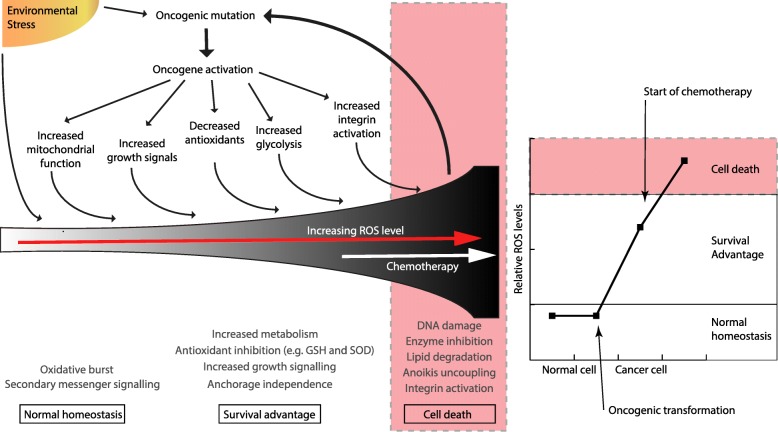
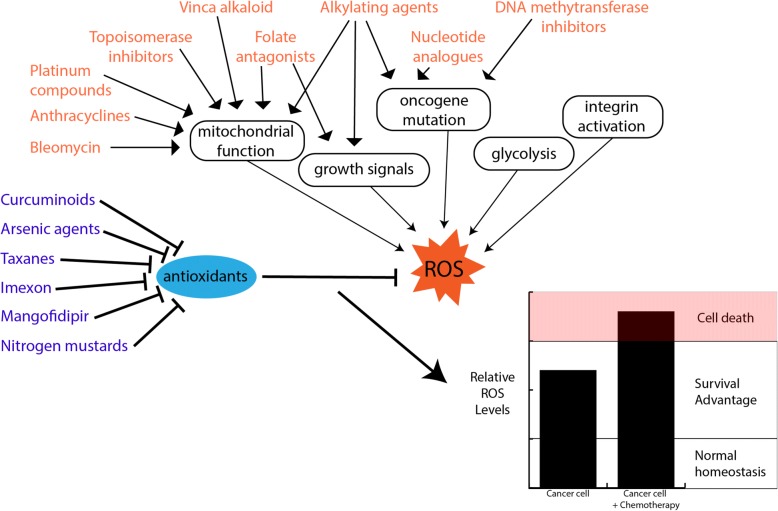
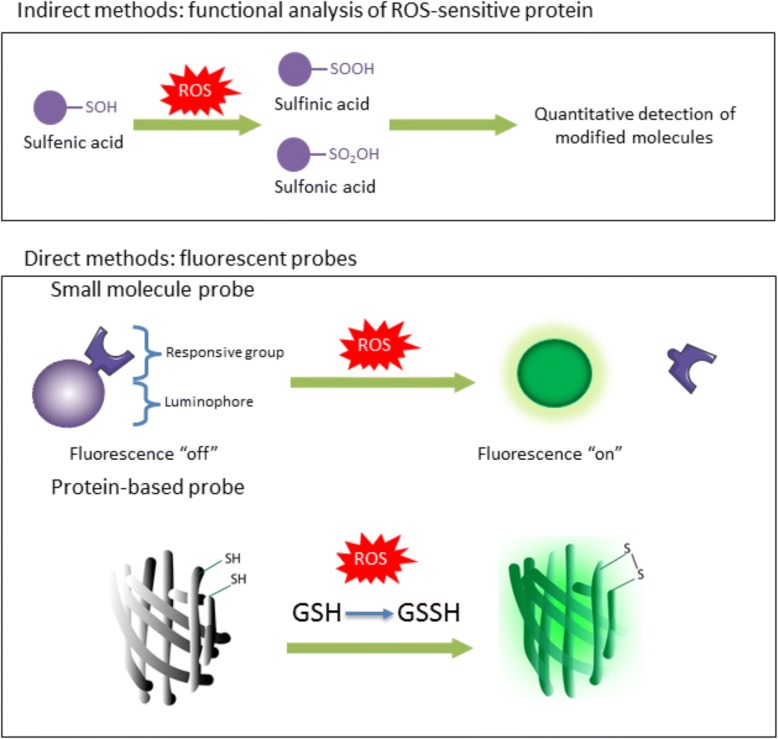
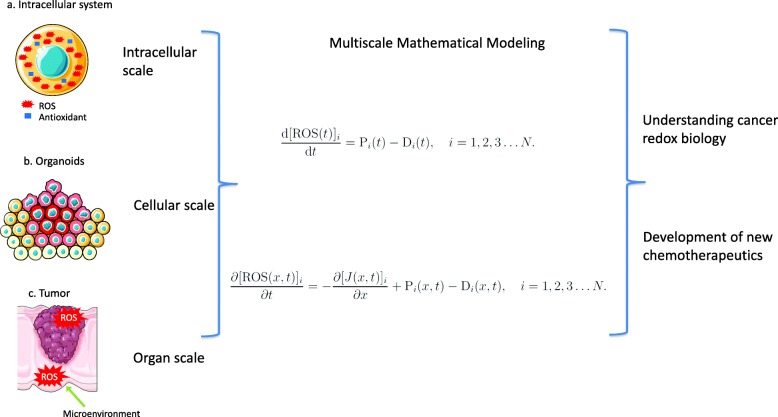
Most chemotherapeutics elevate intracellular levels of reactive oxygen species (ROS), and many can alter redox-homeostasis of cancer cells. It is widely accepted that the anticancer effect of these chemotherapeutics is due to the induction of oxidative stress and ROS-mediated cell injury in cancer. However, various new therapeutic approaches targeting intracellular ROS levels have yielded mixed results. Since it is impossible to quantitatively detect dynamic ROS levels in tumors during and after chemotherapy in clinical settings, it is of increasing interest to apply mathematical modeling techniques to predict ROS levels for understanding complex tumor biology during chemotherapy. This review outlines the current understanding of the role of ROS in cancer cells during carcinogenesis and during chemotherapy, provides a critical analysis of the methods used for quantitative ROS detection and discusses the application of mathematical modeling in predicting treatment responses. Finally, we provide insights on and perspectives for future development of effective therapeutic ROS-inducing anticancer agents or antioxidants for cancer treatment.
Overview
The claims and statistics of this paper haven’t been checked yet.
Free: it reads the open-access text and checks the first 5 claims that cite a source we can check. Create a free account to check every claim.
Integrity signals
Registry
Cites
Statistics
Figures
Verification
Claims the paper makes
The claims and statistics of this paper haven’t been checked yet.
Free: it reads the open-access text and checks the first 5 claims that cite a source we can check. Create a free account to check every claim.
Claims other papers make about this one
Each is checked against this paper’s own text: does it say what the citing paper says it does?
In the citing paper
“Most chemotherapeutic agents produce ROS, and many can alter redox homeostasis in cancer cells.4”
From Reactive Oxygen Species in Cancer: Current Findings and Future Directions (2021) · cites this paper as [4]
Self-check
Percentages, sums and reported differences re-computed from the paper’s own numbers.
The self-check needs the paper’s full text.
Citations
Cites
Ferroptosis: An Iron-Dependent Form of Nonapoptotic Cell Death
Dixon, S. J., Lemberg, K. M., Lamprecht, M. R., Skouta, R., Zaitsev, E. M., Gleason, C. E., Patel, D. N., Bauer, A. J., Cantley, A. M., Yang, W. S., et al. (2012) · Cell · doi:10.1016/j.cell.2012.03.042 · Cited by 18,691
Reactive oxygen species: Metabolism, oxidative stress, and signal transduction
Apel, K., & Hirt, H. (2004) · Annual Review of Plant Biology · doi:10.1146/annurev.arplant.55.031903.141701 · Cited by 11,723
Activation of apoptosis signalling pathways by reactive oxygen species
Redza-Dutordoir, M., & Averill-Bates, D. A. (2016) · Biochimica et Biophysica Acta (BBA) - Molecular Cell Research · doi:10.1016/j.bbamcr.2016.09.012 · Cited by 3,731
Tumour evolution inferred by single-cell sequencing
Navin, N., Kendall, J., Troge, J., Andrews, P., Rodgers, L., McIndoo, J., Cook, K., Stepansky, A., Levy, D., Esposito, D., et al. (2011) · Nature · doi:10.1038/nature09807 · Cited by 2,598
Halliwell, B., & Whiteman, M. (2004) · British Journal of Pharmacology · doi:10.1038/sj.bjp.0705776 · Cited by 2,238
Antioxidants Maintain Cellular Redox Homeostasis by Elimination of Reactive Oxygen Species
He, L., He, T., Farrar, S., Ji, L., Liu, T., & Ma, X. (2017) · Cellular Physiology and Biochemistry · doi:10.1159/000485089 · Cited by 2,127
ROS stress in cancer cells and therapeutic implications
Pelicano, H., Carney, D., & Huang, P. (2004) · Drug Resistance Updates · doi:10.1016/j.drup.2004.01.004 · Cited by 2,006
Mitochondrial metabolism and ROS generation are essential for Kras-mediated tumorigenicity
Weinberg, F., Hamanaka, R., Wheaton, W. W., Weinberg, S., Joseph, J., Lopez, M., Kalyanaraman, B., Mutlu, G. M., Budinger, G. R. S., & Chandel, N. S. (2010) · Proceedings of the National Academy of Sciences · doi:10.1073/pnas.1003428107 · Cited by 1,742
Free-radical chemistry of cigarette smoke and its toxicological implications.
Church, D. F., & Pryor, W. A. (1985) · Environmental Health Perspectives · doi:10.1289/ehp.8564111 · Cited by 1,441
Oxidative stress inhibits distant metastasis by human melanoma cells
Piskounova, E., Agathocleous, M., Murphy, M. M., Hu, Z., Huddlestun, S. E., Zhao, Z., Leitch, A. M., Johnson, T. M., DeBerardinis, R. J., & Morrison, S. J. (2015) · Nature · doi:10.1038/nature15726 · Cited by 1,269
Cited by
Items 601–700 of 795
Natural Compounds that Modulate Circadian Rhythms
Tomita, T., Wadhwa, R., & Onishi, Y. (2024) · Current Topics in Medicinal Chemistry · doi:10.2174/0115680266300569240514101800 · Cited by 2
Tao, X.-N., Liu, H., Xiang, X., Zhu, C., Qiu, J., Zhao, H. L., & Liu, K. (2024) · ACS Applied Materials & Interfaces · doi:10.1021/acsami.4c05340 · Cited by 2
Obeid, J. C. G., & Damaghi, M. (2024) · Elsevier eBooks · doi:10.1016/b978-0-443-13209-4.00012-x · Cited by 3
Sochacka, M., Hoser, G., Remiszewska, M., Suchocki, P., Sikora, K., & Giebułtowicz, J. (2024) · Nutrients · doi:10.3390/nu16172860 · Cited by 2
Wang, M., Xue, L., Fei, Z., Luo, L., Zhang, K., Gao, Y., Liu, X., & Liu, C. (2024) · Scientific Reports · doi:10.1038/s41598-024-75482-2 · Cited by 5
Labuda, R., Bacher, M., Rosenau, T., Gratzl, H., Doppler, M., Hager, S., Marko, D., Wiesner, C., Očková, M., Ollinger, N., et al. (2024) · Scientific Reports · doi:10.1038/s41598-024-75510-1 · Cited by 2
Smothers, A. R., Beasley, M. E., Warren, H. R., Kegel, O. G., Edenfield, W. J., O’Connell, J. J., & Booth, B. W. (2025) · American Journal of Cancer Research · doi:10.62347/lxjh5896 · Cited by 3
Golnarnik, G., Thiede, B., Søland, T. M., Galtung, H. K., & Haug, T. M. (2025) · Archives of Oral Biology · doi:10.1016/j.archoralbio.2025.106254 · Cited by 3
Dual‐Interface Nanopipette Sensor for Electrochemical Interferent Shielding
Tian, S., Gao, R., Du, Z., Qi, Y.-T., Chen, Y., Xia, F., Zhang, X., & Huang, W. (2025) · Angewandte Chemie · doi:10.1002/ange.202504520 · Cited by 2
Wang, H., Li, Y., Li, C., Liu, X., Liu, B., Wu, C., & Zeng, F. (2025) · International Journal of Biological Macromolecules · doi:10.1016/j.ijbiomac.2025.145026 · Cited by 3
Self-citationPark, B., Lee, E.-H., Kim, J., Sung, J. Y., Huh, Y. S., & Kang, S. (2025) · Biofabrication · doi:10.1088/1758-5090/adf66b · Cited by 2
ROS Modulatory Role of HDAC Inhibitors in Cancer Cells: A Systemic Approach
Ramaiah, M. J., Ramalingam, P. S., Moparthi, N. R., & Kutala, V. K. (2022) · Handbook of Oxidative Stress in Cancer: Therapeutic Aspects · doi:10.1007/978-981-16-1247-3_250-1 · Cited by 3
Europium-Containing Conjugate for Photodynamic Therapy of Malignant Neoplasms
Shevchenko, O. V., Плехова, Н. Г., Медков, М. А., Parichuk, K. A., Апанасевич, В. И., Tananaev, I. G., Yudakov, A. A., & Lukyanov, P. A. (2022) · Russian Journal of Inorganic Chemistry · doi:10.1134/s003602362209011x · Cited by 2
Samarkhazan, N. S., Yekta, R., Sayadi, M., Tackallou, S. H., Safaralizadeh, R., & Mahdavi, M. (2020) · Human & Experimental Toxicology · doi:10.1177/0960327120905958 · Cited by 2
Mahmoud, M., & Sharaky, M. M. (2021) · Egyptian Journal of Food Science · doi:10.21608/ejfs.2021.60913.1094 · Cited by 4
Mitochondria as balancers of reduction/oxidation for intracellular environment
Rezaei, M., Handali, S., & Pourahmad, J. (2021) · Elsevier eBooks · doi:10.1016/b978-0-12-822416-8.00002-6 · Cited by 3
Environmental Toxicants and Carcinogenicity: Role of Oxidative Stress
Saini, S., Paithankar, J. G., Sharma, A., & Chowdhuri, D. K. (2021) · Springer eBooks · doi:10.1007/978-981-15-4501-6_35-1 · Cited by 2
Bhattacharjee, S., Paul, S., & Raybarman, C. (2022) · Handbook of Oxidative Stress in Cancer: Therapeutic Aspects · doi:10.1007/978-981-16-5422-0_152 · Cited by 2
Widodo, H., & Rohman, A. (2023) · Journal of Applied Pharmaceutical Science · doi:10.7324/japs.2023.84845 · Cited by 2
Wu, Q., Xu, S., Xu, W., & Meng, H. (2023) · ScienceAsia · doi:10.2306/scienceasia1513-1874.2023.029 · Cited by 2
Savenkova, D., Havrysh, K. V., Сергеевна, С. В., Ионова, Н. Э., Nurgalieva, A. K., Minigulova, L. F., Bogdanov, M. V., & Kiyamova, R. (2020) · BioNanoScience · doi:10.1007/s12668-020-00740-2 · Cited by 3
Impact of ROS on Cancer and Stem Cell Growth and Therapeutics
Bhat, A. Q., Ayaz, M. O., Hossain, M. S., Bhat, A. M., & Dar, M. J. (2021) · Springer eBooks · doi:10.1007/978-981-15-4501-6_188-1 · Cited by 2
Oxidative Stress and Antioxidant Strategies in Human Diseases
Yuan, K., & Zhang, Y. (2021) · Springer eBooks · doi:10.1007/978-981-16-0522-2_1 · Cited by 3
Investigation of the Mechanism of Impaired Skin Barrier Function in Dogs With Malignant Tumors
Geum, M., & KIM, H.-J. (2022) · In Vivo · doi:10.21873/invivo.12761 · Cited by 2
Constraint-Based Modeling to Understand ROS-Mediated Effects in Cancer
Bhalla, P., Sahoo, S., Rengaswamy, R., Karunagaran, D., & Suraishkumar, G. K. (2022) · Springer eBooks · doi:10.1007/978-981-15-9411-3_144 · Cited by 1
Effects of pyrrolopyrimidine derivatives on cancer cells cultured in vitro and potential mechanism
Kılıç-Kurt, Z., Celik, A., & Bakar‐Ates, F. (2023) · Naunyn-Schmiedeberg s Archives of Pharmacology · doi:10.1007/s00210-023-02799-6 · Cited by 1
Soares, B. C. C., Khine, H. E. E., Sritularak, B., Chanvorachote, P., Alduina, R., Sungthong, R., & Chaotham, C. (2024) · Frontiers in Pharmacology · doi:10.3389/fphar.2024.1361085 · Cited by 1
Samir, M., El-Kholany, E. A., Bakr, Y. M., Khattab, E. S. A. E. H., & Ghazy, M. (2024) · Delta University Scientific Journal · doi:10.21608/dusj.2024.255658.1045 · Cited by 1
Dual-labelled polymeric micelles for singlet oxygen reporting in biological systems
Nakagawa, Y., Mizuno, H. L., Ushimaru, Y., Norimatsu, J., Igarashi, K., Masuda, K., Takai, M., Anraku, Y., & Cabral, H. (2024) · Molecular Systems Design & Engineering · doi:10.1039/d4me00105b · Cited by 1
O’Connell, F., Mylod, E., Donlon, N. E., Davern, M., Butler, C., O’Connor, N., Menon, M. S., Donohoe, C. L., Ravi, N., Doherty, D. G., et al. (2025) · Translational Oncology · doi:10.1016/j.tranon.2025.102302 · Cited by 2
The Influence of AQP5 on the Response to Hydrogen Peroxide in Breast Cancer Cell Lines
Lučić, I., Mlinarić, M., Gašparović, A. Č., & Milković, L. (2025) · International Journal of Molecular Sciences · doi:10.3390/ijms26073243 · Cited by 1
Targeting Metabolic Reprogramming: A New Frontier in Cancer Therapy
Thakur, R. K., & Kumari, N. (2025) · Springer eBooks · doi:10.1007/978-981-96-7336-0_9 · Cited by 1
Sang, R., Zhao, X., Sun, K.-T., Zhang, Y., & Luo, B. (2025) · Antioxidants and Redox Signaling · doi:10.1089/ars.2024.0868 · Cited by 2
Dynamics of reactive oxygen species produced by the COST microplasma jet
Chur, S., Minke, R., He, Y., Vass, M., Mussenbrock, T., Brinkmann, R. P., Kemaneci, E., Schücke, L., der Gathen, V. S.-V., Gibson, A. R., et al. (2025) · Plasma Sources Science and Technology · doi:10.1088/1361-6595/adfd7f · Cited by 1
Xie, J., Su, J., Zhou, W., Cai, S., Liao, W., Zong, J., Peng, J., Qu, H., He, F., & Ding, K. (2025) · International Journal of Biological Macromolecules · doi:10.1016/j.ijbiomac.2025.147227 · Cited by 2
Wu, J., Zhang, P., Ji, C., Ou, S., Zhang, J., Xiao, X., Feng, J., Li, R., Zhang, H., & Li, Z. (2025) · Biochemical Pharmacology · doi:10.1016/j.bcp.2025.117447 · Cited by 1
Alanazi, M., Wu, M., Tian, D., Zhang, H., Yong, J., Xu, Z. P., & Zhang, R. (2025) · ACS Applied Nano Materials · doi:10.1021/acsanm.5c03823 · Cited by 1
Nasab, S. E., Shahhoseini, M., & Tavana, S. (2025) · Journal of Ovarian Research · doi:10.1186/s13048-025-01821-0 · Cited by 1
Advances in redox imaging for cancer diagnosis and therapy
Yasui, H., Kato, K., Bo, T., & Inanami, O. (2025) · Journal of Clinical Biochemistry and Nutrition · doi:10.3164/jcbn.25-211 · Cited by 2
Elaeagnus Angustifolia: Unveiling Anti-Cancer Potential from Ancient Remedies to Modern Therapeutics
Zakaria, Z., Ahen, Y., Ahmed, N. H., Sokary, S., Abuhijleh, H., Bawadi, H. A., & Al‐Asmakh, M. (2026) · Cancer Management and Research · doi:10.2147/cmar.s521703 · Cited by 5
Hypoxia-Driven Mechanisms of Drug Resistance in Prostate Cancer
Ressel, M. R., Flores, C. E., & Warfel, N. A. (2026) · Cancers · doi:10.3390/cancers18060899 · Cited by 2
Du, J., Guo, Z., Lu, Q., Guo, H., Liu, F., Hao, Z., Duan, Y., Li, Z. L., & Wu, H. (2026) · Oncogene · doi:10.1038/s41388-026-03839-0 · Cited by 2
Wu, J., Lai, T. P., Li, L., Yuan, Y., Wang, Y., Liu, G., Li, W., Zhang, L., & Wan, L. (2026) · Journal of Controlled Release · doi:10.1016/j.jconrel.2026.115137 · Cited by 1
Research progress on responses and survival strategies of bacteria under oxidative stress
Yang, J., SUN, Y., Zhao, F., & Liao, H. (2026) · Microbial Pathogenesis · doi:10.1016/j.micpath.2026.108696 · Cited by 1
Apoptosis-Inducing Active Protein from Marine Clam Donax variabilis on NSCLC Cells
Sahayanathan, G. J., & Chinnasamy, A. (2020) · International Journal of Peptide Research and Therapeutics · doi:10.1007/s10989-020-10139-y · Cited by 1
Role of semisynthetic flavonoids on cytotoxic chemotherapy—Dual benefit to cancer patients?
Sak, K. (2020) · Elsevier eBooks · doi:10.1016/b978-0-12-819092-0.00047-9 · Cited by 1
Novel Cyanoximates as Chemotherapeutic Candidates
Yusuf, K. A., & Kim, K. (2021) · Acta Scientific Medical Sciences · doi:10.31080/asmi.2021.04.0818 · Cited by 1
Reactive Oxygen Species Mediated Cancer Progression and Metastasis: Amelioration by Botanicals
Chugh, N., & Koul, A. (2021) · Springer eBooks · doi:10.1007/978-981-15-4501-6_160-1 · Cited by 1
Design, Synthesis and Biological Evaluation of Pyrimidinamine Derivatives Containing Urea Moiety
Wang, Z., Ouyang, G., Liu, W., Hou, M., Wang, Q., Tan, H., Ji, L., Wang, C., & Long, X. (2022) · Heterocycles · doi:10.3987/com-22-14745 · Cited by 1
Role of ROS in Combined Radiation Effect in Cancer Therapy
Gautam, A., & Goyal, L. (2022) · Handbook of Oxidative Stress in Cancer: Therapeutic Aspects · doi:10.1007/978-981-16-5422-0_65 · Cited by 2
Nanotechnology in ROS-induced Cancer Therapy
Singh, D., & Sahoo, A. (2022) · Handbook of Oxidative Stress in Cancer: Therapeutic Aspects · doi:10.1007/978-981-16-5422-0_118 · Cited by 1
Selenium Nanoparticle in the Management of Oxidative Stress During Cancer Chemotherapy
Sk, U. H., RoyMahapatra, D., & Bhattacharya, S. (2022) · Handbook of Oxidative Stress in Cancer: Therapeutic Aspects · doi:10.1007/978-981-16-5422-0_116 · Cited by 3
Tada, T., Mizuno, Y., Shibata, Y., Yasui, H., & Kuge, Y. (2024) · Nuclear Medicine and Biology · doi:10.1016/j.nucmedbio.2024.108914 · Cited by 1
Matei, E., Ionescu, A. C., Enciu, M., Popovici, V., Mitroi, A. F., Aşchie, M., Deacu, M., Bălţătescu, G. I., Nicolau, A.-A., Roșu, M. C., et al. (2024) · Medicine · doi:10.1097/md.0000000000039450 · Cited by 7
Oluremi, A. S., Baldwin, C., Gustavison, N. A., Bashiru, M., Oyebade, A., Siraj, N., Rao, R. R., & Ali, N. (2025) · ACS Omega · doi:10.1021/acsomega.5c02820 · Cited by 2
Highlighting the Journey So Far with Cancer and Chemotherapy
Yusuf, K. A., & Kim, K. (2020) · ACTA SCIENTIFIC MICROBIOLOGY · doi:10.31080/asmi.2020.03.0618
Exercise, selenium, and cancer cells
Shamsi, M. M., & Hassan, Z. M. (2021) · Elsevier eBooks · doi:10.1016/b978-0-12-819547-5.00042-0 · Cited by 4
Environmental Toxicants and Carcinogenicity: Role of Oxidative Stress
Saini, S., Paithankar, J. G., Sharma, A., & Chowdhuri, D. K. (2022) · Springer eBooks · doi:10.1007/978-981-15-9411-3_35 · Cited by 1
Chua, H. L., & Huong, A. K. C. (2022) · International Journal of Online and Biomedical Engineering (iJOE) · doi:10.3991/ijoe.v18i01.27415 · Cited by 1
Reactive Oxygen Species–Mediated Cancer Progression and Metastasis: Amelioration by Botanicals
Chugh, N., & Koul, A. (2022) · Springer eBooks · doi:10.1007/978-981-15-9411-3_160 · Cited by 2
ROS-Mediated Inflammatory Response in Cancer
Muralidar, S., Gopal, G., & Ambi, S. V. (2022) · Springer eBooks · doi:10.1007/978-981-15-9411-3_181 · Cited by 2
Targeting Redox Signaling and ROS Metabolism in Cancer Treatment
Ali, E. S., Barua, D., Saha, S. K., Ahmed, M. U., Mishra, S. K., & Mubarak, M. S. (2022) · Springer eBooks · doi:10.1007/978-981-15-9411-3_119 · Cited by 1
Low-Dose Oxidant Toxicity and Oxidative Stress in Human Papillary Thyroid Carcinoma Cells K1
Lens, H. H. M., Lopes, N. M. D., Pasqual-Melo, G., Marinello, P. C., Miebach, L., Cecchini, R., Bekeschus, S., & Cecchini, A. L. (2022) · Applied Sciences · doi:10.3390/app12168311 · Cited by 1
Singh, S., Dhankhar, R., Dhull, A. K., & Dahiya, K. (2022) · Handbook of Oxidative Stress in Cancer: Therapeutic Aspects · doi:10.1007/978-981-16-5422-0_57 · Cited by 1
ROS-Induced Cancers: A Combinatorial Approach for Successful Chemotherapy
Sarkar, S., Basu, M., & Ghosh, M. K. (2022) · Handbook of Oxidative Stress in Cancer: Therapeutic Aspects · doi:10.1007/978-981-16-5422-0_244 · Cited by 1
陈大伟, Yang, J., Meng, F., Beseler, C. L., Liu, X. M., Liu, X., Guo, Y., Qin, L., Zuo, R., & Ren, S. (2020) · Research Square · doi:10.21203/rs.3.rs-50132/v1 · Cited by 2
Cai, X., & Hong, J. (2022) · Research Square · doi:10.21203/rs.3.rs-1142038/v2 · Cited by 1
Chen, D., Yang, J., Meng, F., Beseler, C. L., Li, H., Liu, X., Guo, Y., Qin, L., Zuo, R., & Ren, S. (2020) · Research Square · doi:10.21203/rs.3.rs-50132/v2 · Cited by 1
Development of nanoformulations for the enhanced delivery of target drugs
Koohi, M. (2023) · Queensland University of Technology · doi:10.5204/thesis.eprints.239043 · Cited by 1
Anticancer activity of cepharanthine on non-small cell lung cancer cells
Detpichai, Y., & Wonganan, P. (2020) · Chula Digiverse · doi:10.58837/chula.the.2020.380 · Cited by 1
Yue, C., Lian, W., Duan, M., Xia, D., Cao, X., & Peng, J. (2023) · Research Square · doi:10.21203/rs.3.rs-3319077/v1 · Cited by 1
Dual targeting of KDM1A and antioxidants is an effective anticancer strategyPreprint
Mudambi, S., Fitzgerald, M. E., Washington, D., Pera, P. J., Huss, W. J., & Paragh, G. (2024) · bioRxiv (Cold Spring Harbor Laboratory) · doi:10.1101/2024.06.12.597953 · Cited by 1
Azharuddin, M., Roberg, K. B., Dhara, A. K., Jain, M. V., D’Arcy, P., Hinkula, J., Slater, N. K. H., & Patra, H. K. (2019) · bioRxiv (Cold Spring Harbor Laboratory) · doi:10.1101/702316
METCAM/MUC18 Promotes Tumor Progression and Metastasis in Most Human Cancers
Wu, G. (2019) · IntechOpen eBooks · doi:10.5772/intechopen.87037
Martínez, V. R. (2019) · El Servicio de Difusión de la Creación Intelectual (National University of La Plata) · doi:10.35537/10915/88310
Selinexor Hyperactivates Akt and Induces Its Nuclear Accumulation
Lawrence, E. S. (2020)
Antioxidant Effect of Schisandra Chinensis
Mohammed, S. (2020) · Zenodo (CERN European Organization for Nuclear Research) · doi:10.5281/zenodo.8378486
The transcription factor NRF2 shapes the identity of radio-resistant tumor cells
Manda, G., Cuadrado, A., & Instituto de Investigaciones Biomédicas “Alberto Sols” UAM-CSIC, M. (2020) · Journal of Cell Identity · doi:10.47570/joci.2020.004
Mechanisms by Which MnTE-2-PyP Suppresses Prostate Cancer Cell Growth
Zhu, Y. (2019) · Free Radical Biology and Medicine · doi:10.1016/j.freeradbiomed.2019.10.212
Statins, cancer, and oxidative stress
Shomali, T., & Ashrafi, M. (2021) · Elsevier eBooks · doi:10.1016/b978-0-12-819547-5.00023-7
Rabêlo, A. C. S. (2020) · Digital Library of Theses and Dissertations (Universidade de São Paulo) · doi:10.11606/t.10.2020.tde-28012021-182303 · Cited by 2
Effect of Septoria on the specific activity of Glycines max (L.) Merr hydrolases
Martinenko, N. V., Lavrent’yeva, S. I., Tarasova, O. N., & Иваченко, Л. Е. (2021) · IOP Conference Series Earth and Environmental Science · doi:10.1088/1755-1315/677/5/052089
Bioavailability and Modes of Action of Novel Metal Based Phenanthroline Drugs
O’Leary, T. (2020) · Arrow - TU Dublin (Technological University Dublin) · doi:10.21427/7sw6-vk06
Gopisetty, M. K. (2021) · SZTE Repository of Dissertations (University of Szeged) · doi:10.14232/phd.10713
The heterogeneity of the DNA damage response landscape determines patient outcomes in ovarian cancerPreprint
Walker, T. D. J., Faraahi, Z., Price, M. J., Hawarden, A., Waddell, C., Russell, B., Jones, D., McCormick, A., Gavrielides, N., Tyagi, S., et al. (2021) · bioRxiv (Cold Spring Harbor Laboratory) · doi:10.1101/2021.08.03.454868
Ruiz, M. C. (2021) · El Servicio de Difusión de la Creación Intelectual (National University of La Plata) · doi:10.35537/10915/121979
Association of Oxidative Stress and Mitochondrial Dysfunction to Gynecological Malignancies
Ghosh, D., Chatterjee, P., Mitra, T., & Roy, S. S. (2021) · Springer eBooks · doi:10.1007/978-981-15-4501-6_15-1
Targeting Redox Signaling and ROS Metabolism in Cancer Treatment
Ali, E. S., Barua, D., Saha, S. K., Ahmed, M. U., Mishra, S. K., & Mubarak, M. S. (2021) · Springer eBooks · doi:10.1007/978-981-15-4501-6_119-1
ROS-Mediated Inflammatory Response in Cancer
Muralidar, S., Gopal, G., & Ambi, S. V. (2021) · Springer eBooks · doi:10.1007/978-981-15-4501-6_181-1
Petrović, S. Ž., & Leskovac, A. R. (2021) · Springer eBooks · doi:10.1007/978-981-15-4501-6_130-1
The Intricacy of ROS in Cancer Therapy Resistance
Das, C. K., Majumder, R., Roy, P., & Mandal, M. (2021) · Springer eBooks · doi:10.1007/978-981-15-4501-6_125-1
Constraint-Based Modeling to Understand ROS-Mediated Effects in Cancer
Bhalla, P., Sahoo, S., Rengaswamy, R., Karunagaran, D., & Suraishkumar, G. K. (2021) · Springer eBooks · doi:10.1007/978-981-15-4501-6_144-1
Aggiornamenti sulla prima fase di Capua
Johannowsky, W. (2025) · Annali di archeologia e storia antica · doi:10.6093/1127-7130/12031
Recent Interpretations of the CPLR by New York Appellate Courts
Goldberg, B. D., & Montes, R. J. (2011) · Albany law review
Hong, J., & Cai, X. (2021) · Research Square · doi:10.21203/rs.3.rs-1142038/v1
Singh, S., Dhankhar, R., Dhull, A. K., & Dahiya, K. (2021) · Handbook of Oxidative Stress in Cancer: Therapeutic Aspects · doi:10.1007/978-981-16-1247-3_57-1
Nanotechnology in ROS-induced Cancer Therapy
Singh, D., & Sahoo, A. (2021) · Handbook of Oxidative Stress in Cancer: Therapeutic Aspects · doi:10.1007/978-981-16-1247-3_118-1
1,4 NQ-BC Nanoparticles Impair Mitochondria and Lysosomes in THP1 Cells by Proteomics AnalysisPreprint
Yuan, C., Li, Z., Xiao, Q., Ge, J., Jiang, W., Wang, X., Wang, Z., Yuan, Y., Zhuang, Y., Hao, W., et al. (2021) · SSRN Electronic Journal · doi:10.2139/ssrn.3980536
Bhattacharjee, S., Paul, S., & Raybarman, C. (2022) · Handbook of Oxidative Stress in Cancer: Therapeutic Aspects · doi:10.1007/978-981-16-1247-3_152-1
ROS-Induced Cancers: A Combinatorial Approach For Successful Chemotherapy
Sarkar, S., Basu, M., & Ghosh, M. K. (2022) · Handbook of Oxidative Stress in Cancer: Therapeutic Aspects · doi:10.1007/978-981-16-1247-3_244-1
Metadata
- Authors
- Yang, H., Villani, R. M., Wang, H., Simpson, M. J., Roberts, M. S., Tang, M., & Liang, X.
- Affiliations
- Translational Research Institute (AU)
- Queensland University of Technology (AU)
- Shanghai Jiao Tong University (CN)
- Corresponding author
- Liang, Xiaowen
- ORCID
- Venue
- Journal of Experimental & Clinical Cancer Research
- Published
- 2018-11-01
- Volume
- 37
- Issue
- 1
- Pages
- 266-266
- ISSN
- 0392-9078 (ISSN-L)
- 1756-9966
- PMC
- PMC6211502
- OpenAlex
- W2898994124
- Cited by
- 794
- References
- 75
- Citations by year
- 2026: 59 · 2025: 89 · 2024: 111 · 2023: 103 · 2022: 130 · 2021: 145 · 2020: 110 · 2019: 45
- FWCI
- 7.32
- Type
- journal article
- Language
- en
- Open access
- gold
- doi.org
- Licence
- cc-by
- creativecommons.org/licenses/by/4.0/ (tdm)
- Locations
- Journal of Experimental & Clinical Cancer Research (publishedVersion, cc-by)
- Europe PMC (PubMed Central) (publishedVersion, cc-by)
- PubMed Central (publishedVersion, cc-by)
- PubMed (publishedVersion)
- DOAJ (DOAJ: Directory of Open Access Journals) (submittedVersion, cc-by-sa)
- QUT ePrints (Queensland University of Technology) (submittedVersion, cc-by)
- Funders
- Medical Research Council
- Australian Research Council (DP170100474)
- National Health and Medical Research Council (1125794)
- Topics
- Life Sciences › Biochemistry, Genetics and Molecular Biology › Molecular Biology › Redox biology and oxidative stress
- Life Sciences › Biochemistry, Genetics and Molecular Biology › Molecular Biology › Cancer and biochemical research
- Life Sciences › Pharmacology, Toxicology and Pharmaceutics › Toxicology › Bioactive Compounds and Antitumor Agents
- Keywords
- reactive oxygen species, cancer chemotherapy, oxidative stress, redox homeostasis, treatment response prediction, antioxidants, carcinogenesis
- MeSH terms
- Humans, Neoplasms, Reactive Oxygen Species, Oxidative Stress
About these checks
Registry, retraction, Cites and statistics results are computed, not judged, with one exception: a printed reference that no index lists is read once by a model before it counts as a citation error. Claims are extracted by a model and kept only when their quote appears verbatim in the text; each cited source is then checked, with a model’s help, for whether it says what the claim relies on. Those verdicts can be wrong — read the claim’s quote and the cited source before relying on one.
Statistics and arithmetic are recomputed, not judged.
Confidence bands are shown only for fields calibrated on our annotated test set. None is calibrated yet, so no band is shown.
What counts as a claim ›How we measure confidence ›How we check this ›
Are you an author, or do you see a problem with this page? Request a review
Data sources
Bibliographic data: Semantic Scholar, OpenAlex, Crossref.
Contains information from the Semantic Scholar Academic Graph Datasets, made available under the ODC Attribution License (ODC-BY 1.0).
Semantic Scholar’s data is described in: Kinney, R., et al. (2023). The Semantic Scholar Open Data Platform. arXiv:2301.10140.
