

The role of cellular reactive oxygen species in cancer chemotherapy
Open accessThe DOI matches its Crossref record; 75 of the 75 references it cites were found in a registry or an index.
Abstract
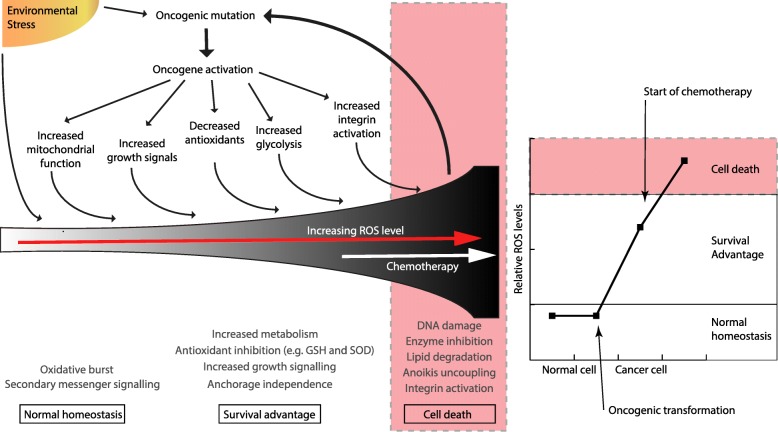
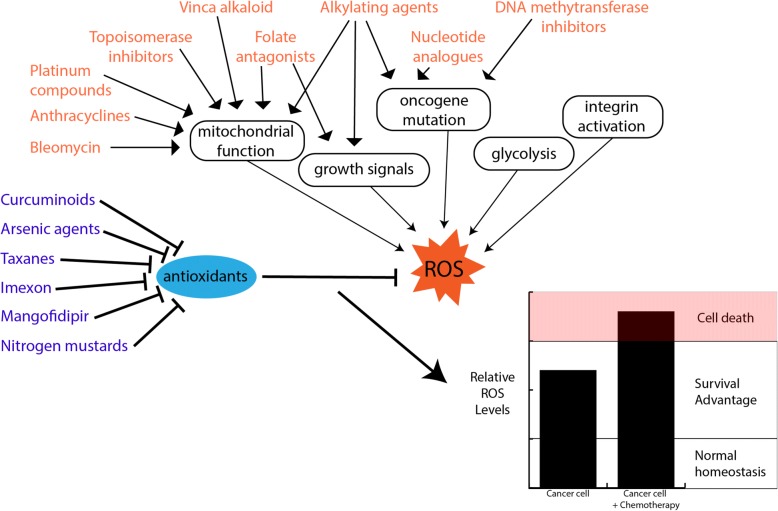
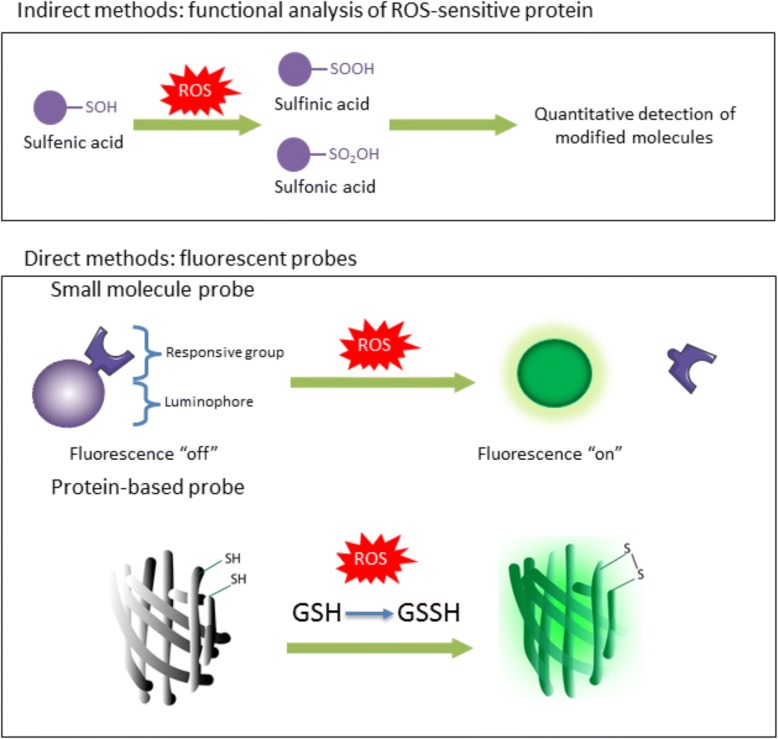
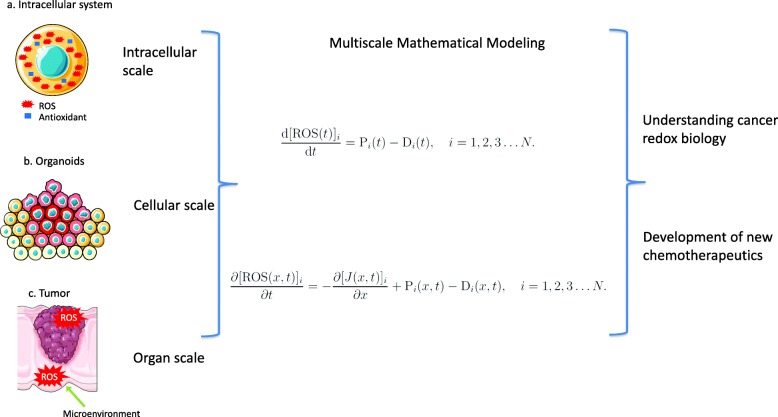
Most chemotherapeutics elevate intracellular levels of reactive oxygen species (ROS), and many can alter redox-homeostasis of cancer cells. It is widely accepted that the anticancer effect of these chemotherapeutics is due to the induction of oxidative stress and ROS-mediated cell injury in cancer. However, various new therapeutic approaches targeting intracellular ROS levels have yielded mixed results. Since it is impossible to quantitatively detect dynamic ROS levels in tumors during and after chemotherapy in clinical settings, it is of increasing interest to apply mathematical modeling techniques to predict ROS levels for understanding complex tumor biology during chemotherapy. This review outlines the current understanding of the role of ROS in cancer cells during carcinogenesis and during chemotherapy, provides a critical analysis of the methods used for quantitative ROS detection and discusses the application of mathematical modeling in predicting treatment responses. Finally, we provide insights on and perspectives for future development of effective therapeutic ROS-inducing anticancer agents or antioxidants for cancer treatment.
Overview
The claims and statistics of this paper haven’t been checked yet.
Free: it reads the open-access text and checks the first 5 claims that cite a source we can check. Create a free account to check every claim.
Integrity signals
Registry
Cites
Statistics
Figures
Verification
Claims the paper makes
The claims and statistics of this paper haven’t been checked yet.
Free: it reads the open-access text and checks the first 5 claims that cite a source we can check. Create a free account to check every claim.
Claims other papers make about this one
Each is checked against this paper’s own text: does it say what the citing paper says it does?
In the citing paper
“Most chemotherapeutic agents produce ROS, and many can alter redox homeostasis in cancer cells.4”
From Reactive Oxygen Species in Cancer: Current Findings and Future Directions (2021) · cites this paper as [4]
Self-check
Percentages, sums and reported differences re-computed from the paper’s own numbers.
The self-check needs the paper’s full text.
Citations
Cites
Ferroptosis: An Iron-Dependent Form of Nonapoptotic Cell Death
Dixon, S. J., Lemberg, K. M., Lamprecht, M. R., Skouta, R., Zaitsev, E. M., Gleason, C. E., Patel, D. N., Bauer, A. J., Cantley, A. M., Yang, W. S., et al. (2012) · Cell · doi:10.1016/j.cell.2012.03.042 · Cited by 18,691
Reactive oxygen species: Metabolism, oxidative stress, and signal transduction
Apel, K., & Hirt, H. (2004) · Annual Review of Plant Biology · doi:10.1146/annurev.arplant.55.031903.141701 · Cited by 11,723
Activation of apoptosis signalling pathways by reactive oxygen species
Redza-Dutordoir, M., & Averill-Bates, D. A. (2016) · Biochimica et Biophysica Acta (BBA) - Molecular Cell Research · doi:10.1016/j.bbamcr.2016.09.012 · Cited by 3,731
Tumour evolution inferred by single-cell sequencing
Navin, N., Kendall, J., Troge, J., Andrews, P., Rodgers, L., McIndoo, J., Cook, K., Stepansky, A., Levy, D., Esposito, D., et al. (2011) · Nature · doi:10.1038/nature09807 · Cited by 2,598
Halliwell, B., & Whiteman, M. (2004) · British Journal of Pharmacology · doi:10.1038/sj.bjp.0705776 · Cited by 2,238
Antioxidants Maintain Cellular Redox Homeostasis by Elimination of Reactive Oxygen Species
He, L., He, T., Farrar, S., Ji, L., Liu, T., & Ma, X. (2017) · Cellular Physiology and Biochemistry · doi:10.1159/000485089 · Cited by 2,127
ROS stress in cancer cells and therapeutic implications
Pelicano, H., Carney, D., & Huang, P. (2004) · Drug Resistance Updates · doi:10.1016/j.drup.2004.01.004 · Cited by 2,006
Mitochondrial metabolism and ROS generation are essential for Kras-mediated tumorigenicity
Weinberg, F., Hamanaka, R., Wheaton, W. W., Weinberg, S., Joseph, J., Lopez, M., Kalyanaraman, B., Mutlu, G. M., Budinger, G. R. S., & Chandel, N. S. (2010) · Proceedings of the National Academy of Sciences · doi:10.1073/pnas.1003428107 · Cited by 1,742
Free-radical chemistry of cigarette smoke and its toxicological implications.
Church, D. F., & Pryor, W. A. (1985) · Environmental Health Perspectives · doi:10.1289/ehp.8564111 · Cited by 1,441
Oxidative stress inhibits distant metastasis by human melanoma cells
Piskounova, E., Agathocleous, M., Murphy, M. M., Hu, Z., Huddlestun, S. E., Zhao, Z., Leitch, A. M., Johnson, T. M., DeBerardinis, R. J., & Morrison, S. J. (2015) · Nature · doi:10.1038/nature15726 · Cited by 1,269
Cited by
Items 501–600 of 795
Tharayil, J. S., Kandettu, A., & Chakrabarty, S. (2025) · Biochimica et Biophysica Acta (BBA) - Molecular Basis of Disease · doi:10.1016/j.bbadis.2025.167691 · Cited by 6
Life after Cell Death—Survival and Survivorship Following Chemotherapy
McErlain, T., Burke, A., & Branco, C. M. (2021) · Cancers · doi:10.3390/cancers13122942 · Cited by 6
Retinoids and Reactive Oxygen Species in Cancer Cell Death and Therapeutics
El‐Baba, C., Eid, A. H., Shaito, A. A., Kobeissy, F. H., & Darwiche, N. (2022) · Springer eBooks · doi:10.1007/978-981-15-9411-3_186 · Cited by 5
Illuminating metal oxides containing luminescent probes for personalized medicine
Léonard, E., & Jeux, V. (2022) · Elsevier eBooks · doi:10.1016/b978-0-323-85824-3.00015-4 · Cited by 7
Hong, J., & Cai, X. (2022) · Disease Markers · doi:10.1155/2022/6201987 · Cited by 6
Parsa, L., Motafakkerazad, R., Soheyli, S. T., Haratian, A., Kosari‐Nasab, M., & Mahdavi, M. (2023) · Toxicon · doi:10.1016/j.toxicon.2023.107127 · Cited by 5
β-Carboline derivatives are potent against Acute Myeloid Leukemia in vitro and in vivo
Bueno, M. L. P., Foglio, M. A., Baréa, P., de Oliveira, A. R., Sarragiotto, M. H., Saad, S. T. O., & Roversi, F. M. (2024) · Pharmacological Reports · doi:10.1007/s43440-024-00614-4 · Cited by 5
Li, C., Chen, H., Chen, X., Wang, P., Shi, Y., Xie, X., Chen, Y., & Cai, X. (2024) · Computers in Biology and Medicine · doi:10.1016/j.compbiomed.2024.108776 · Cited by 9
Polydatin-Induced Shift of Redox Balance and Its Anti-Cancer Impact on Human Osteosarcoma Cells
Cimmino, A., Gioia, M., Clementi, M. E., Faraoni, I., Marini, S., & Ciaccio, C. (2024) · Current Issues in Molecular Biology · doi:10.3390/cimb47010021 · Cited by 7
Umapathy, D., Karthikeyan, M. C., Ponnuchamy, K., & Arockiam, A. J. V. (2021) · Gene Reports · doi:10.1016/j.genrep.2021.101277 · Cited by 5
Melatonin Enhances Anti-tumoral Effects of Menadione on Colon Cancer Cells
Collin, A., Kohan, R., de Talamoni, N. T., & Picotto, G. (2021) · Anti-Cancer Agents in Medicinal Chemistry · doi:10.2174/1871520621666211207141729 · Cited by 5
The Innate Immune System and Fever under Redox Control: A Narrative Review
Szőke, H., Bókkon, I., David, M. W., Vagedes, J., Kiss, Á., Kovács, Z., Fekete, F., Kocsis, T., Szijjártó, L., Adam, D., et al. (2022) · Current Medicinal Chemistry · doi:10.2174/0929867329666220203122239 · Cited by 6
Guo, J., Qin, X., Ye, K., Wang, H., Li, P., Chen, T., Ma, L., & Lin, H. (2023) · Surfaces and Interfaces · doi:10.1016/j.surfin.2023.103083 · Cited by 5
Self-citationOuyang, C., Zhang, W., Nie, J., Yu, L., Liu, J., Ren, L., & Chen, G. (2023) · Biomacromolecules · doi:10.1021/acs.biomac.3c00922 · Cited by 5
Agrawal, M., Saxena, A. K., & Agrawal, S. K. (2024) · Food and Chemical Toxicology · doi:10.1016/j.fct.2024.114743 · Cited by 5
Fu, J., Peng, Z., Zhang, Y., & Shi, D. (2020) · Frontiers in Oncology · doi:10.3389/fonc.2020.00557 · Cited by 5
Coordination pattern and reactivity of two model peptides from porin protein P1
Stokowa‐Sołtys, K., Dzyhovskyi, V., Wieczorek, R., & Jeżowska‐Bojczuk, M. (2020) · Journal of Inorganic Biochemistry · doi:10.1016/j.jinorgbio.2020.111332 · Cited by 6
Sun, R., Chen, Z., Yang, R., Liang, Y., Sun, W., Akkaya, E. U., & Wang, L. (2026) · Journal of Medicinal Chemistry · doi:10.1021/acs.jmedchem.5c03032 · Cited by 4
Yu, W. D., Lee, S., Cho, H., Kwon, O., Lim, J. H., Jung, C., Jang, B., Lee, K. J., Yoo, J., Kim, D., et al. (2026) · Experimental & Molecular Medicine · doi:10.1038/s12276-025-01635-6 · Cited by 6
Repurposing the antipsychotic drug penfluridol for cancer treatment (Review)
Mze, A. A. I., & Rahman, A. A. (2024) · Oncology Reports · doi:10.3892/or.2024.8833 · Cited by 5
Jin, S., Qian, W., Suo, R., Li, Y., Ling, H., Li, S., Deng, K., Wei, Y., Wu, B., & Chen, H. (2025) · Analytical Methods · doi:10.1039/d4ay02150a · Cited by 4
Prasad, K., Kaul, S. C., Wadhwa, R., Guruprasad, K. P., & Satyamoorthy, K. (2025) · Free Radical Biology and Medicine · doi:10.1016/j.freeradbiomed.2025.03.038 · Cited by 7
Baliou, S., Pelagiadis, I., Apetroaei, M.-M., Vakonaki, E., Arsene, A. L., Hatzidaki, E., Tzatzarakis, M. N., Ιωάννου, Π., Tsatsakis, A. M., & Stiakaki, E. (2025) · Cancers · doi:10.3390/cancers17121936 · Cited by 7
Philips, T. J., N’guessan, B. B., Dotse, E., Abankwah, J. K., & Appiah‐Opong, R. (2025) · Biomedicine & Pharmacotherapy · doi:10.1016/j.biopha.2025.118355 · Cited by 4
The Oxidative Drug Combination for Suppressing KRAS G12D Inducible Tumour Growth
Бегимбетова, Д., Kukanova, А., Fazyl, F., Manekenova, K., Омаров, Т. М., Burska, A. N., Khamijan, M., Gulyayev, A., Yermekbayeva, B., Макишев, А. К., et al. (2022) · BioMed Research International · doi:10.1155/2022/9426623 · Cited by 7
Chemotherapy-Induced Oxidative Stress in Pediatric Acute Lymphoblastic Leukemia
Chaudhary, P., Kumari, S., Dewan, P., Gomber, S., Ahmed, R. S., & Kotru, M. (2023) · Cureus · doi:10.7759/cureus.35968 · Cited by 11
Viebahn-Haensler, R., & Fernández, O. (2023) · Ozone Science and Engineering · doi:10.1080/01919512.2023.2291756 · Cited by 4
Yue, L., Li, Y., Luo, Y., Alarfaj, A. A., & Shi, Y. (2024) · Biotechnology and Applied Biochemistry · doi:10.1002/bab.2621 · Cited by 7
Njoya, E. M., Tabakam, G. T., Chukwuma, C. I., & Makhafola, T. J. (2025) · International Journal of Molecular Sciences · doi:10.3390/ijms26094173 · Cited by 5
Lee, J., Thủy, N. T. T., Lee, Y.-J., Cho, N., & Yoo, H. M. (2020) · Natural Product Communications · doi:10.1177/1934578x19897496 · Cited by 4
CDK4/6 inhibition protects normal cells against cancer therapy-induced damage
Boopathi, E., & Thangavel, C. (2020) · Translational Cancer Research · doi:10.21037/tcr.2019.12.86 · Cited by 4
MicroRNAs: The Master Regulators of the Breast Cancer Tumor Microenvironment
Feser, R., Opperman, R. M., Maiti, S., & Majumder, M. (2022) · Handbook of Oxidative Stress in Cancer: Therapeutic Aspects · doi:10.1007/978-981-16-1247-3_239-1 · Cited by 5
Soares, J. P. M., Gonçalves, D. A., de Sousa, R. X., Mouro, M. G., Higa, E. M. S., Sperandio, L. P., Vitoriano, C. M., Rosa, E. B. S., dos Santos, F. O., de Queiroz, G. N., et al. (2022) · International Journal of Molecular Sciences · doi:10.3390/ijms23115979 · Cited by 7
Kranjčec, I., Abdović, S., Buljan, D., Matijašić, N., Slukan, M., & Stepan, J. (2022) · Cureus · doi:10.7759/cureus.30246 · Cited by 4
Mohany, M., Al-Zharani, M. M., Nasr, F. A., El‐Wetidy, M. S., Farag, M., Abdel-Mageed, W. M., El‐Gamal, A. A., Al-Rejaie, S. S., Noman, O. M., Qurtam, A. A., et al. (2023) · Open Chemistry · doi:10.1515/chem-2022-0302 · Cited by 4
Zhou, H., Wang, J., Yang, B., Sun, M., Liang, C., Yang, L., Zhao, X., & Wang, H. (2023) · Journal of Materials Science · doi:10.1007/s10853-023-08375-w · Cited by 4
Self-citationSchleser, S. W., Köhler, L. H. F., Riethmüller, F., Reich, S., Fertig, R., Schlotte, L., Seib, J., Goller, A., Begemann, G., Kempe, R., et al. (2023) · ChemPlusChem · doi:10.1002/cplu.202300167 · Cited by 4
Ibrahim, F. A. R., Hussein, N. A. E. M., Soliman, A. Y. M., Shalaby, T. I. A., Rashad, M. M., Matar, N. A., & El-Sewedy, T. (2024) · Medical Oncology · doi:10.1007/s12032-023-02282-5 · Cited by 5
Andrographolide reverts multidrug resistance in KBChR 8‐5 cells through AKT signaling pathway
Lakra, D. S., Bharathiraja, P., Dhanalakshmi, T., & Prasad, N. R. (2024) · Cell Biochemistry and Function · doi:10.1002/cbf.3948 · Cited by 5
Dey, S., Murmu, N., Mukherjee, R., Mondal, A. K., Mondal, T., Haldar, S., Molla, M. R., Murmu, N., & Giri, B. (2024) · ACS Applied Nano Materials · doi:10.1021/acsanm.4c01506 · Cited by 4
Identification and characterization of TM4SF1+ tumor self-seeded cells
Yang, H., Wang, H., He, Y., Yang, Y., Thompson, E. W., Xia, D., Burke, L. J., Cao, L., Hooper, J. D., Roberts, M. S., et al. (2024) · Cell Reports · doi:10.1016/j.celrep.2024.114512 · Cited by 4
Self-citationZakaria, Z. Z., Ahen, Y., Ahmed, N. H., Sokary, S., Bawadi, H. A., & Al‐Asmakh, M. (2023) · Preprints.org · doi:10.20944/preprints202311.0243.v1 · Cited by 4
New insights into reductive stress responses and its clinical relation in cancer
Ray, S. K., & Mukherjee, S. (2025) · Tissue and Cell · doi:10.1016/j.tice.2025.102736 · Cited by 3
Peng, W., Li, M., Li, W., Wang, Y., Tian, C., Zhao, Z., Gao, M., & Yang, L. (2025) · Analytical Chemistry · doi:10.1021/acs.analchem.5c03247 · Cited by 5
Huang, L., Gao, X., Cai, Y., & Yáng, Z. (2026) · ACS Nano Medicine · doi:10.1021/acsnanomed.5c00131 · Cited by 6
Advance of different strategies to achieve radiosensitivity based on nanomaterials
Chu, A., Zhang, W. J., Li, M., Zhu, Q., Ge, T., Shao, W., Jia, R., Zheng, Y., Zhou, Y., & Zhuang, A. (2026) · Materials Today Advances · doi:10.1016/j.mtadv.2026.100693 · Cited by 3
Niacin Protects iPSC-Derived Neurons from Chemotherapy-Induced Toxicity
Ababneh, N. A., Gharandouq, M. H., Ismail, M. A., AlDiqs, R., Hamdan, O., Mussa, Q. H., Barham, R., Sarhan, M., Shboul, S. A., Masri, A. T., et al. (2026) · Neurotoxicity Research · doi:10.1007/s12640-026-00784-4 · Cited by 4
Linero-Artiaga, A., Svitelova, M., Novohradský, V., Rodríguez, V., Marková, L., Kašpárková, J., Janiak, C., Ruiz, J., & Brabec, V. (2026) · Journal of Medicinal Chemistry · doi:10.1021/acs.jmedchem.5c03280 · Cited by 3
Inducing ferroptosis via nanomaterials: a novel and effective route in cancer therapy
Ensoy, M., Öztürk, B. I., Cansaran‐Duman, D., & Yılmazer, A. (2024) · Journal of Physics Materials · doi:10.1088/2515-7639/ad4d1e · Cited by 3
Nanoparticle-Mediated Cancer Chemotherapy
Khan, M. (2024) · Springer eBooks · doi:10.1007/978-981-97-3545-7_9 · Cited by 3
Wan, P., Li, X., Guo, S., & Zhao, X. (2024) · Open Life Sciences · doi:10.1515/biol-2022-0977 · Cited by 3
Harnessing chirality: A new dawn in inorganic nanomaterial synthesis and biomedical applications
Pan, Y., Ren, J. M., Sun, Y., Lu, L., Gao, J., Chen, L., Yan, S., & Li, Z. (2024) · Chinese Chemical Letters · doi:10.1016/j.cclet.2024.110791 · Cited by 3
Samanta, K., Ahel, I., & Kar, P. (2025) · Advances in Redox Research · doi:10.1016/j.arres.2025.100124 · Cited by 6
Samarasinghe, S. M., Hewage, A. S., Siriwardana, R. C., Tennekoon, K. H., Niriella, M. A., Silva, S. D., & Abeysuriya, V. (2025) · BMC Gastroenterology · doi:10.1186/s12876-025-03738-w · Cited by 3
Endothelial c‐Myc and Doxorubicin‐Induced Metabolic Alterations: A Multi‐Organ Optical Imaging Study
Nategh, P., Neghabi, M., Ceyhan, B., Machi, J. F., Rahbar, H. A., Rodriguez, M. S., Santana, A. G., Rodrigues, C. O., & Ranji, M. (2025) · Journal of Biophotonics · doi:10.1002/jbio.70037 · Cited by 4
Takács, A., Jessen, M., Lajkó, E., Szász, Z., Kalabay, M., Csámpai, A., & Kőhidai, L. (2025) · Biomedicine & Pharmacotherapy · doi:10.1016/j.biopha.2025.118076 · Cited by 4
Chand, A., & Kim, K. (2025) · Journal of Nanotheranostics · doi:10.3390/jnt6020013 · Cited by 3
Wang, Y., Xiao, X., Zheng, H., Bai, J. Y., Li, L., & Zhang, L. (2025) · Leukemia & lymphoma/Leukemia and lymphoma · doi:10.1080/10428194.2025.2549519 · Cited by 3
Cancer cell metabolism resulting in multidrug resistance to chemotherapy and possible ways out
Fapohunda, O., & Ajayi, D. C. (2020) · Journal of Cancer Prevention & Current Research · doi:10.15406/jcpcr.2020.11.00429 · Cited by 6
The Intricacy of ROS in Cancer Therapy Resistance
Das, C. K., Majumder, R., Roy, P., & Mandal, M. (2022) · Springer eBooks · doi:10.1007/978-981-15-9411-3_125 · Cited by 5
Selenium Nanoparticle in the Management of Oxidative Stress During Cancer Chemotherapy
Sk, U. H., RoyMahapatra, D., & Bhattacharya, S. (2022) · Handbook of Oxidative Stress in Cancer: Therapeutic Aspects · doi:10.1007/978-981-16-1247-3_116-1 · Cited by 3
Kina, S., Kawabata‐Iwakawa, R., Miyamoto, S., Kato, T., Kina-Tanada, M., & Arasaki, A. (2023) · European Journal of Pharmacology · doi:10.1016/j.ejphar.2023.175611 · Cited by 5
Yao, X., Chen, J., Fu, Y., Wang, Y., Liu, Y., & Wang, X. (2024) · Journal of Molecular Structure · doi:10.1016/j.molstruc.2024.137668 · Cited by 3
The Biological Activity and Therapeutic Potential of Curcuma longa: Literature Review
Zaporozhchenko, A. A., & Subotyalov, М. А. (2024) · Cell and Tissue Biology · doi:10.1134/s1990519x24700202 · Cited by 5
Microtubule depolymerization induces ferroptosis in neuroblastoma cells
Bandekar, M., & Panda, D. (2024) · IUBMB Life · doi:10.1002/iub.2899 · Cited by 3
H-Alcántara, A., Kourani, O., Marcos‐Jiménez, A., Martínez-Núñez, P., Herranz-Martín, E., Fuentes, P., Toribio, M. L., Muñoz‐Calleja, C., Iglesias, T., & Campanero, M. R. (2024) · Cell Death and Disease · doi:10.1038/s41419-024-06923-z · Cited by 4
Pei, M., Guan, X., Zhao, D. M., Yang, F., Dong, Y., Huai, M., Ge, W., Hou, X., Chu, W., Wang, K., et al. (2024) · Materials Today Bio · doi:10.1016/j.mtbio.2024.101299 · Cited by 4
İçsel, C., Aydınlık, Ş., Aygün, M., & Yılmaz, V. T. (2025) · Dalton Transactions · doi:10.1039/d4dt02258k · Cited by 3
Novitasari, D., Nakamae, I., Yoneda‐Kato, N., Kato, J., Hippo, Y., Suenaga, Y., Putri, D. D. P., Meiyanto, E., & Ikawati, M. (2024) · Advances in Pharmacological and Pharmaceutical Sciences · doi:10.1155/adpp/4297953 · Cited by 4
Tu, Q., Hương, L. T., Nguyen, M. Q., Hoang, P. H., Hoang, V. H., Pham, V. K., & Nguyen, P. H. (2024) · Open Chemistry · doi:10.1515/chem-2024-0125 · Cited by 3
Wang, X., Sun, Q., Lǐ, J., Lai, B., Pei, X., & Chen, N. (2025) · Frontiers in Oncology · doi:10.3389/fonc.2025.1515498 · Cited by 5
Petrović, S. Ž., & Leskovac, A. R. (2022) · Springer eBooks · doi:10.1007/978-981-15-9411-3_130 · Cited by 3
ROS Modulatory Role of HDAC Inhibitors in Cancer Cells: A Systemic Approach
Mekala, J. R., Ramalingam, P. S., Moparthi, N. R., & Kutala, V. K. (2022) · Handbook of Oxidative Stress in Cancer: Therapeutic Aspects · doi:10.1007/978-981-16-5422-0_250 · Cited by 3
Tetrastigma hemsleyanum flavones exert antihepatic carcinoma property both in vitro and in vivo
Liu, Y., Li, Y., Chen, W., Ye, X., Jia, R., Yu, L., Tang, Q., Tu, P., Jiang, Y., Chu, Q., et al. (2021) · Food Quality and Safety · doi:10.1093/fqsafe/fyab025 · Cited by 3
Singer, D., Wulff, C. P., Stope, M. B., & Bekeschus, S. (2022) · Plasma · doi:10.3390/plasma5040040 · Cited by 3
Li, Y., Chen, H., Hsieh, C., Chen, C., Hung, S., & Huang, Y. (2023) · Environmental Toxicology · doi:10.1002/tox.23757 · Cited by 3
Therapeutic Potential of Dietary Polyphenols
Stockert, A., & Hall, S. (2021) · IntechOpen eBooks · doi:10.5772/intechopen.99177 · Cited by 3
Katsoulieris, E. N., & Rodriguez, A. C. (2021) · bioRxiv (Cold Spring Harbor Laboratory) · doi:10.1101/2021.02.01.429090 · Cited by 3
Kwon, M. J., Raut, P. K., Jang, J., & Chun, K. (2025) · Biomolecules & Therapeutics · doi:10.4062/biomolther.2024.118 · Cited by 4
Antitumor Mechanisms of Olive Fruit Metabolites, Maslinic, and Oleanolic Acids on Lung Cancer Cells
Afacan, C., Karagöz, I. D., & Çakır, A. (2025) · Russian Journal of Bioorganic Chemistry · doi:10.1134/s1068162025010078 · Cited by 2
Phosri, S., Naladta, A., Teerakulkittipong, N., Somsakeesit, L., Tastub, S., Nualkaew, N., & Joompang, A. (2025) · Biochemical and Biophysical Research Communications · doi:10.1016/j.bbrc.2025.151895 · Cited by 3
Geuter, J., Seizer, L., Cornélissen, G., Engin, A. B., Fuchs, D., & Schubert, C. (2025) · Journal of Circadian Rhythms · doi:10.5334/jcr.252 · Cited by 2
Karkoszka, M., Rzepka, Z., & Wrześniok, D. M. (2025) · International Journal of Molecular Sciences · doi:10.3390/ijms26135985 · Cited by 2
Jabeen, S. (2025) · American Journal of Stem Cells · doi:10.62347/ticz7344 · Cited by 2
Xu, Y.-C., Zhang, Y., Xue, Y.-J., Lv, K.-L., & Chen, Y. (2025) · Bioorganic & Medicinal Chemistry · doi:10.1016/j.bmc.2025.118396 · Cited by 2
Special Issue “Skeletal Muscle Adaptations to Oxidative Stress”
Duranti, G. (2025) · International Journal of Molecular Sciences · doi:10.3390/ijms26199809 · Cited by 2
Single-cell multi-omics uncovers CPS1 as a breast cancer immune evasion therapeutic target
Yue, J., Wen, F., He, D., Chen, S., & Huang, G. (2025) · Scientific Reports · doi:10.1038/s41598-025-19890-y · Cited by 3
Andrographolide Selectively Inhibits the Growth of LA7 Mammary Adenocarcinoma Cells
Roy, K., Kar, P., Haldar, S., Singh, S. D., Nagamani, S., Bora, H. K., Saikia, B. K., & Konwar, R. (2025) · ACS Omega · doi:10.1021/acsomega.5c04617 · Cited by 2
Yalikun, A., Guan, B., Pan, J., Chen, H., Cai, J., Zhu, Z., Zhou, R., Xie, B., Liu, Y., & Li, J. (2025) · Cell Death and Disease · doi:10.1038/s41419-025-08252-1 · Cited by 2
Antioxidant properties and cytotoxic effects of Elephantorrhiza elephantina on cervical cancer cells
Gonnye, N. T., Masisi, K., Koobotse, M. O., Kwape, T. E., & Gaobotse, G. (2025) · Bulletin of the National Research Centre/Bulletin of the National Research Center · doi:10.1186/s42269-025-01378-4 · Cited by 2
Zhou, B., Lin, G., Wang, S., Xia, H., Hu, T., Li, S., Zuo, Y., Fu, L., Liu, J., Zhang, G., et al. (2026) · Nano Energy · doi:10.1016/j.nanoen.2026.111856 · Cited by 4
Photodynamic Therapy Combined with Anticancer Drug Therapy in the Treatment of Malignant Neoplasms
Reshetov, I. V., Alyasova, A., Shpileva, O., Karalkin, P. A., Efendiev, K. T., Pominova, D. V., Loschenov, V. B., Ilyasova, D., Agakina, Y. S., Gilyadova, A. V., et al. (2026) · Cells · doi:10.3390/cells15090781 · Cited by 3
Mi, D., Liu, T., Zou, L., Wei, Y., Zeng, J., Nie, C., Zeng, Y., Wang, R., Zhao, M., & Shi, S. (2026) · Biomaterials · doi:10.1016/j.biomaterials.2026.124298 · Cited by 3
An Insight into Cancer and Anticancer Drugs
Nivetha, X. R., Soundari, M. J. J., Nadar, M. M., Premnath, D., Paulraj, M. S., & Chang, R.-Y. (2019) · Acta Scientific Medical Sciences · doi:10.31080/asms.2019.03.0340 · Cited by 3
Understanding ROS Induced DNA Damage for Therapeutics
Moin, I., Mittal, D., & Verma, A. K. (2021) · Springer eBooks · doi:10.1007/978-981-15-4501-6_53-1 · Cited by 2
Epigenetic Regulators of NRF2: Exploring Therapeutic Opportunities in Cancer
Bhattacharjee, S. (2022) · Handbook of Oxidative Stress in Cancer: Therapeutic Aspects · doi:10.1007/978-981-16-1247-3_73-1 · Cited by 2
Mittal, A., Yadav, M., Biswas, L., Verma, A. K., & Roy, I. (2023) · Nanomedicine · doi:10.2217/nnm-2023-0047 · Cited by 3
Biological activity and therapeutic potential of Curcuma longa (review)
Zaporozhchenko, A. A., & Subotyalov, М. А. (2023) · Сибирский научный медицинский журнал · doi:10.18699/ssmj20230302 · Cited by 4
Abdulrahman, N., Leo, R., Boumenar, H. A., Ahmad, F., Mateo, J. M. P., Jochebeth, A., Al-Sowaidi, N. K., Sher, G., Ansari, A. W., Alam, M. A., et al. (2023) · Leukemia & lymphoma/Leukemia and lymphoma · doi:10.1080/10428194.2023.2256909 · Cited by 4
Impact of Nintedanib and Anti-Angiogenic Agents on Uveal Melanoma Cell Behavior
Pawlik, V. E., Sonntag, S. R., Grisanti, S., Tura, A., Kakkassery, V., & Ranjbar, M. (2024) · Investigative Ophthalmology & Visual Science · doi:10.1167/iovs.65.2.30 · Cited by 4
Metadata
- Authors
- Yang, H., Villani, R. M., Wang, H., Simpson, M. J., Roberts, M. S., Tang, M., & Liang, X.
- Affiliations
- Translational Research Institute (AU)
- Queensland University of Technology (AU)
- Shanghai Jiao Tong University (CN)
- Corresponding author
- Liang, Xiaowen
- ORCID
- Venue
- Journal of Experimental & Clinical Cancer Research
- Published
- 2018-11-01
- Volume
- 37
- Issue
- 1
- Pages
- 266-266
- ISSN
- 0392-9078 (ISSN-L)
- 1756-9966
- PMC
- PMC6211502
- OpenAlex
- W2898994124
- Cited by
- 794
- References
- 75
- Citations by year
- 2026: 59 · 2025: 89 · 2024: 111 · 2023: 103 · 2022: 130 · 2021: 145 · 2020: 110 · 2019: 45
- FWCI
- 7.32
- Type
- journal article
- Language
- en
- Open access
- gold
- doi.org
- Licence
- cc-by
- creativecommons.org/licenses/by/4.0/ (tdm)
- Locations
- Journal of Experimental & Clinical Cancer Research (publishedVersion, cc-by)
- Europe PMC (PubMed Central) (publishedVersion, cc-by)
- PubMed Central (publishedVersion, cc-by)
- PubMed (publishedVersion)
- DOAJ (DOAJ: Directory of Open Access Journals) (submittedVersion, cc-by-sa)
- QUT ePrints (Queensland University of Technology) (submittedVersion, cc-by)
- Funders
- Medical Research Council
- Australian Research Council (DP170100474)
- National Health and Medical Research Council (1125794)
- Topics
- Life Sciences › Biochemistry, Genetics and Molecular Biology › Molecular Biology › Redox biology and oxidative stress
- Life Sciences › Biochemistry, Genetics and Molecular Biology › Molecular Biology › Cancer and biochemical research
- Life Sciences › Pharmacology, Toxicology and Pharmaceutics › Toxicology › Bioactive Compounds and Antitumor Agents
- Keywords
- reactive oxygen species, cancer chemotherapy, oxidative stress, redox homeostasis, treatment response prediction, antioxidants, carcinogenesis
- MeSH terms
- Humans, Neoplasms, Reactive Oxygen Species, Oxidative Stress
About these checks
Registry, retraction, Cites and statistics results are computed, not judged, with one exception: a printed reference that no index lists is read once by a model before it counts as a citation error. Claims are extracted by a model and kept only when their quote appears verbatim in the text; each cited source is then checked, with a model’s help, for whether it says what the claim relies on. Those verdicts can be wrong — read the claim’s quote and the cited source before relying on one.
Statistics and arithmetic are recomputed, not judged.
Confidence bands are shown only for fields calibrated on our annotated test set. None is calibrated yet, so no band is shown.
What counts as a claim ›How we measure confidence ›How we check this ›
Are you an author, or do you see a problem with this page? Request a review
Data sources
Bibliographic data: Semantic Scholar, OpenAlex, Crossref.
Contains information from the Semantic Scholar Academic Graph Datasets, made available under the ODC Attribution License (ODC-BY 1.0).
Semantic Scholar’s data is described in: Kinney, R., et al. (2023). The Semantic Scholar Open Data Platform. arXiv:2301.10140.
