

The role of cellular reactive oxygen species in cancer chemotherapy
Open accessThe DOI matches its Crossref record; 75 of the 75 references it cites were found in a registry or an index.
Abstract
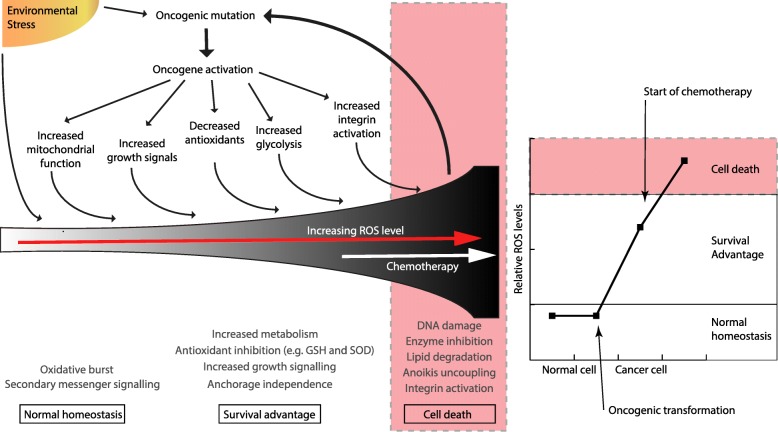
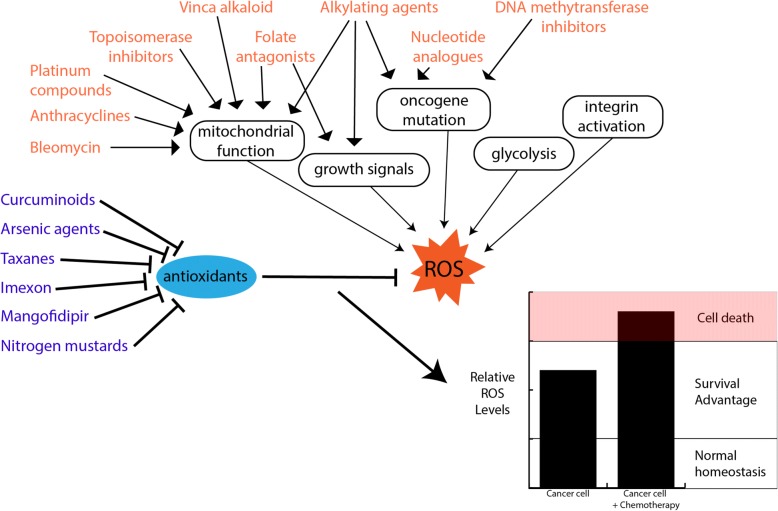
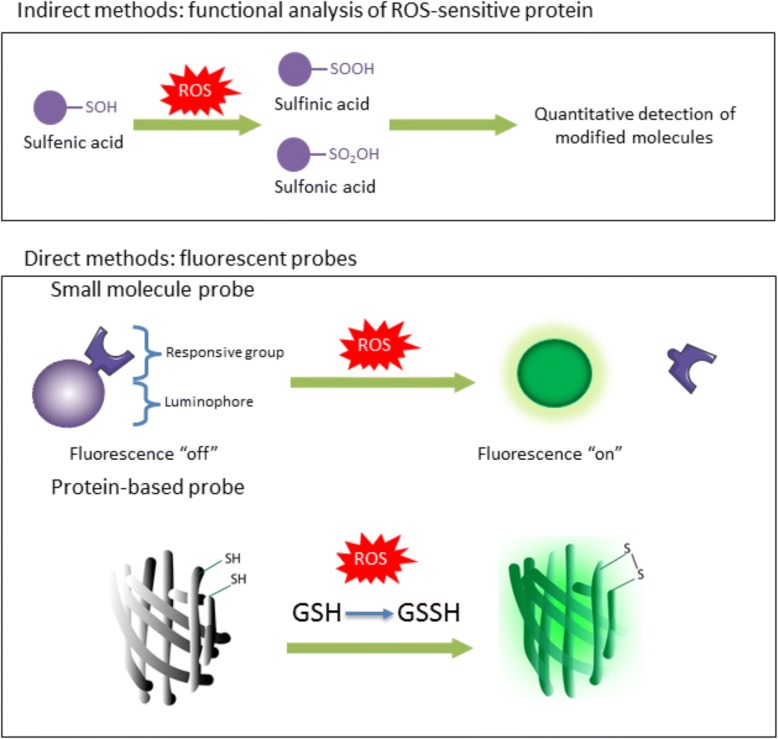
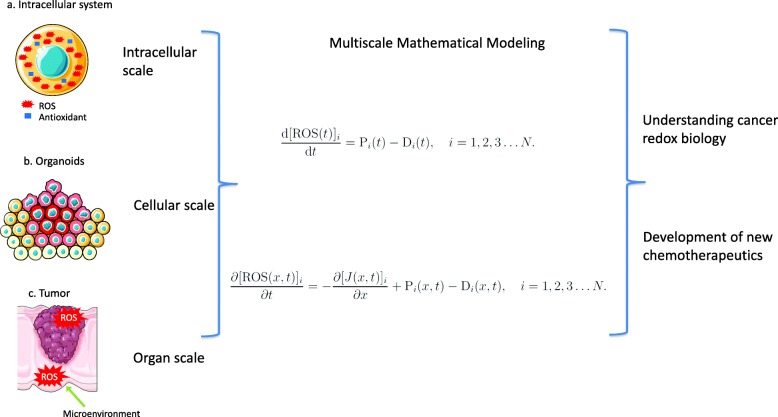
Most chemotherapeutics elevate intracellular levels of reactive oxygen species (ROS), and many can alter redox-homeostasis of cancer cells. It is widely accepted that the anticancer effect of these chemotherapeutics is due to the induction of oxidative stress and ROS-mediated cell injury in cancer. However, various new therapeutic approaches targeting intracellular ROS levels have yielded mixed results. Since it is impossible to quantitatively detect dynamic ROS levels in tumors during and after chemotherapy in clinical settings, it is of increasing interest to apply mathematical modeling techniques to predict ROS levels for understanding complex tumor biology during chemotherapy. This review outlines the current understanding of the role of ROS in cancer cells during carcinogenesis and during chemotherapy, provides a critical analysis of the methods used for quantitative ROS detection and discusses the application of mathematical modeling in predicting treatment responses. Finally, we provide insights on and perspectives for future development of effective therapeutic ROS-inducing anticancer agents or antioxidants for cancer treatment.
Overview
The claims and statistics of this paper haven’t been checked yet.
Free: it reads the open-access text and checks the first 5 claims that cite a source we can check. Create a free account to check every claim.
Integrity signals
Registry
Cites
Statistics
Figures
Verification
Claims the paper makes
The claims and statistics of this paper haven’t been checked yet.
Free: it reads the open-access text and checks the first 5 claims that cite a source we can check. Create a free account to check every claim.
Claims other papers make about this one
Each is checked against this paper’s own text: does it say what the citing paper says it does?
In the citing paper
“Most chemotherapeutic agents produce ROS, and many can alter redox homeostasis in cancer cells.4”
From Reactive Oxygen Species in Cancer: Current Findings and Future Directions (2021) · cites this paper as [4]
Self-check
Percentages, sums and reported differences re-computed from the paper’s own numbers.
The self-check needs the paper’s full text.
Citations
Cites
Ferroptosis: An Iron-Dependent Form of Nonapoptotic Cell Death
Dixon, S. J., Lemberg, K. M., Lamprecht, M. R., Skouta, R., Zaitsev, E. M., Gleason, C. E., Patel, D. N., Bauer, A. J., Cantley, A. M., Yang, W. S., et al. (2012) · Cell · doi:10.1016/j.cell.2012.03.042 · Cited by 18,691
Reactive oxygen species: Metabolism, oxidative stress, and signal transduction
Apel, K., & Hirt, H. (2004) · Annual Review of Plant Biology · doi:10.1146/annurev.arplant.55.031903.141701 · Cited by 11,723
Activation of apoptosis signalling pathways by reactive oxygen species
Redza-Dutordoir, M., & Averill-Bates, D. A. (2016) · Biochimica et Biophysica Acta (BBA) - Molecular Cell Research · doi:10.1016/j.bbamcr.2016.09.012 · Cited by 3,731
Tumour evolution inferred by single-cell sequencing
Navin, N., Kendall, J., Troge, J., Andrews, P., Rodgers, L., McIndoo, J., Cook, K., Stepansky, A., Levy, D., Esposito, D., et al. (2011) · Nature · doi:10.1038/nature09807 · Cited by 2,598
Halliwell, B., & Whiteman, M. (2004) · British Journal of Pharmacology · doi:10.1038/sj.bjp.0705776 · Cited by 2,238
Antioxidants Maintain Cellular Redox Homeostasis by Elimination of Reactive Oxygen Species
He, L., He, T., Farrar, S., Ji, L., Liu, T., & Ma, X. (2017) · Cellular Physiology and Biochemistry · doi:10.1159/000485089 · Cited by 2,127
ROS stress in cancer cells and therapeutic implications
Pelicano, H., Carney, D., & Huang, P. (2004) · Drug Resistance Updates · doi:10.1016/j.drup.2004.01.004 · Cited by 2,006
Mitochondrial metabolism and ROS generation are essential for Kras-mediated tumorigenicity
Weinberg, F., Hamanaka, R., Wheaton, W. W., Weinberg, S., Joseph, J., Lopez, M., Kalyanaraman, B., Mutlu, G. M., Budinger, G. R. S., & Chandel, N. S. (2010) · Proceedings of the National Academy of Sciences · doi:10.1073/pnas.1003428107 · Cited by 1,742
Free-radical chemistry of cigarette smoke and its toxicological implications.
Church, D. F., & Pryor, W. A. (1985) · Environmental Health Perspectives · doi:10.1289/ehp.8564111 · Cited by 1,441
Oxidative stress inhibits distant metastasis by human melanoma cells
Piskounova, E., Agathocleous, M., Murphy, M. M., Hu, Z., Huddlestun, S. E., Zhao, Z., Leitch, A. M., Johnson, T. M., DeBerardinis, R. J., & Morrison, S. J. (2015) · Nature · doi:10.1038/nature15726 · Cited by 1,269
Cited by
Items 701–795 of 795
Association of Oxidative Stress and Mitochondrial Dysfunction to Gynecological Malignancies
Ghosh, D., Chatterjee, P., Mitra, T., & Roy, S. S. (2022) · Springer eBooks · doi:10.1007/978-981-15-9411-3_15
Role of ROS in Combined Radiation Effect in Cancer Therapy
Gautam, A., & Goyal, L. (2022) · Handbook of Oxidative Stress in Cancer: Therapeutic Aspects · doi:10.1007/978-981-16-1247-3_65-1
Impact of ROS on Cancer and Stem Cell Growth and Therapeutics
Bhat, A. Q., Ayaz, M. O., Hossain, M. S., Bhat, A. M., & Dar, M. J. (2022) · Springer eBooks · doi:10.1007/978-981-15-9411-3_188
Sharma, L. (2021) · OSF Preprints (OSF Preprints) · doi:10.31219/osf.io/d49ts
Targeting Reactive Oxygen Species (ROS) for Cancer Therapy
Mohan, H., Vandna, V., Soni, S., & Syed, S. M. (2022) · Handbook of Oxidative Stress in Cancer: Therapeutic Aspects · doi:10.1007/978-981-16-1247-3_273-1 · Cited by 1
Gurung, S. K., Kumari, S., & Mondal, N. (2022) · Handbook of Oxidative Stress in Cancer: Therapeutic Aspects · doi:10.1007/978-981-16-1247-3_259-1
Lisinopril Can Reduce Genotoxicity of L-Asparaginase in Bone Marrow Stem Cells
Maleek, M. I. (2022) · Open Access Macedonian Journal of Medical Sciences · doi:10.3889/oamjms.2022.9726
Oxidative Stress Player in Head and Neck Cancer Therapy Response
Bostan, M., Ion, G., Mihaila, M. A., Roman, V., Constantin, C., & Neagu, M. T. (2022) · Interdisciplinary cancer research · doi:10.1007/16833_2022_39
MicroRNAs: The Master Regulators of the Breast Cancer Tumor Microenvironment
Feser, R., Opperman, R. M., Maiti, S., & Majumder, M. (2022) · Handbook of Oxidative Stress in Cancer: Therapeutic Aspects · doi:10.1007/978-981-16-5422-0_239 · Cited by 2
Targeting Reactive Oxygen Species (ROS) for Cancer Therapy
Mohan, H., Vandna, V., Soni, S., & Syed, S. M. (2022) · Handbook of Oxidative Stress in Cancer: Therapeutic Aspects · doi:10.1007/978-981-16-5422-0_273 · Cited by 2
Epigenetic Regulators of NRF2: Exploring Therapeutic Opportunities in Cancer
Bhattacharjee, S. (2022) · Handbook of Oxidative Stress in Cancer: Therapeutic Aspects · doi:10.1007/978-981-16-5422-0_73
Gurung, S. K., Kumari, S., & Mondal, N. (2022) · Handbook of Oxidative Stress in Cancer: Therapeutic Aspects · doi:10.1007/978-981-16-5422-0_259
Faraj, A. M., Nedzvetsky, V. S., Tykhomyrov, A. A., Baydaş, G., Aslan, A. N., & Ağca, C. A. (2022) · Türk doğa ve fen dergisi :/Türk doğa ve fen dergisi · doi:10.46810/tdfd.1172011
Recent Advances in Metabolomics and Therapeutics for Cancer Cachexia
Lambert, C. P. (2023) · Journal of Cancer Therapy · doi:10.4236/jct.2023.141004
Identification of chemotherapy targets reveals a nucleus-to-mitochondria ROS sensing pathwayPreprint
Zhang, J., Simpson, C. M., Berner, J., Chong, H. B., Fang, J., Ordulu, Z., Weiss‐Sadan, T., Possemato, A. P., Harry, S. A., Takahashi, M., et al. (2023) · bioRxiv (Cold Spring Harbor Laboratory) · doi:10.1101/2023.03.11.532189
Prihastuti, C. C., Widodo, A. H. B., Bagasworo, N. P., Widikusumo, A., Novrial, D., Wahyono, D. J., & Wardana, T. (2023) · Indonesian Journal of Cancer · doi:10.33371/ijoc.v17i1.944
Melanin enhances metastatic melanoma colonization by inhibiting ferroptosisPreprint
Groenewoud, A., Zhao, G., Gelmi, M. C., Yin, J., Lamers, G. E. M., van Doorn, R., Verdijk, R. M., Jager, M. J., Engel, F. B., & Snaar-Jagalska, E. B. (2023) · Research Square · doi:10.1101/2023.04.03.535376
Effect of zinc oxide nanoparticles on cellular stress in Ehrlich ascites carcinoma
Morsy, S., Abd‐Ellatif, R. N., Soliman, N. A., & Ibrahim, W. M. (2022) · Tanta Medical Journal · doi:10.4103/tmj.tmj_112_20
Pascheto, I., Guo, B., Kumar, A., Pritzker, L. B., & Parissenti, A. M. (2023) · Research Square · doi:10.21203/rs.3.rs-2944450/v1 · Cited by 1
Ouerfelli, M. (2021) · UPCommons institutional repository (Universitat Politècnica de Catalunya) · doi:10.5821/dissertation-2117-367332
Wannachote, A. (2019) · Chula Digiverse · doi:10.58837/chula.the.2019.420
Hovhannisyan, A., Hakobyan, N. R., Yavroyan, Z., & Gevorgyan, E. S. (2023) · Proceedings of the YSU B Chemical and Biological Sciences · doi:10.46991/pysu:b/2023.57.2.133
Yavroyan, Z., Hakobyan, N., Hovhannisyan, A., & Gevorgyan, E. (2023) · Preprints.org · doi:10.20944/preprints202310.0348.v1
Stimuli-responsive Compounds as Emerging Anticancer and Cell Imaging Agents
Kirtani, D. U., & Kumbhar, A. A. (2023) · Prayogik Rasayan · doi:10.53023/p.rasayan-p.rasayan-20230606
Li, Q. (2023) · Research Square · doi:10.21203/rs.3.rs-3613604/v1
Alberto, H.-A., Kourani, O., Marcos‐Jiménez, A., Martínez-Núñez, P., Herranz-Martín, E., Fuentes, P., Toribio, M. L., Muñoz‐Calleja, C., Iglesias, T., & Campanero, M. R. (2023) · bioRxiv (Cold Spring Harbor Laboratory) · doi:10.1101/2023.11.22.568023
Perspectives in ROS/Redox Regulation Cancer Therapy
Bansal, M. P. (2023) · Springer eBooks · doi:10.1007/978-981-99-7342-2_10
Zhang, J., Li, S., Lv, Q., Lin, J., Xiao, Y., Liang, J., Zhang, T., Zeng, L., Guo, P., & Ji, H. (2024) · The Natural Products Journal · doi:10.2174/0122103155275580231124052950
SMAC mimetics overcome apoptotic resistance in ovarian cancer through MSLN-TNF alpha axisPreprint
Coelho, R., Seashore-Ludlow, B. A., Schütz, S., Lombardo, F. C., Moussaud-Lamodière, E. L., Casanova, R., Ficek, J., Labrosse, K. B., Hensler, M., Lopez-Nunez, M., et al. (2024) · bioRxiv (Cold Spring Harbor Laboratory) · doi:10.1101/2024.01.24.576987
Reinema, F. V., Sweep, F. C. G. J., Adema, G. J., Peeters, W. J. M., Martens, J. W. M., Bussink, J., & Span, P. N. (2023) · Figshare · doi:10.6084/m9.figshare.22598546
Fluorescence-Enhanced Assessments for Human Breast Cancer Cell Characterizations
Ghezelbash, M., Sajad, B., & Hojatizadeh, S. (2024) · Photonics · doi:10.3390/photonics11080746
Ramsookmohan, S. (2024) · DUT Open Scholar (Durban University of Technology) · doi:10.51415/10321/5450
Shang, L., Wang, J., & Liu, X. (2025) · Indian Journal of Pharmaceutical Education and Research · doi:10.5530/ijper.20250045
Gong, Q., Guangjian, Z., Liu, B., Qiao, D., Zhu, X., Huang, J., Gao, R., Zhang, L., Wang, J., & Huang, Y. (2025) · Research Square · doi:10.21203/rs.3.rs-5702716/v1
Gencheva, R., Coppo, L., Arnér, E. S. J., & Ren, X. (2025) · SSRN Electronic Journal · doi:10.2139/ssrn.5137710
Al-Battawi, S., Ho, Y. B., Latif, M. T., How, V., Hamid, H. H. B. A., Hameed, S., & Thilakavathy, K. (2025) · Environmental Chemistry and Ecotoxicology · doi:10.1016/j.enceco.2025.03.007
Identification of Anticancer ROS Targets by Cysteine Reactivity Protein Profiling
Zhang, J., & Bar‐Peled, L. (2025) · Methods in molecular biology · doi:10.1007/978-1-0716-4502-4_14
Menon, P., Badar, A., Zaheer, S., Akram, M., Philip, K. P., Alam, K., & Arif, Z. (2025) · Journal of Molecular Liquids · doi:10.1016/j.molliq.2025.128042
Parissenti, A. M., Noubir, S., Pritzker, L. B., Kovala, A. T., Lannér, C., Lemon, J. A., Onayemi, T., Pk, S., Thériault, G., Trudeau, M., et al. (2025) · Cancers · doi:10.3390/cancers17172769 · Cited by 1
Synthesis and anti-cancer biological evaluation of a novel protoapigenone analogue, WYC-241
Chu, P., Pan, Y., Hsu, W.-Y., Chuang, D., Yang, J., Chen, G., Jang, Y., & Wu, Y. (2025) · RSC Medicinal Chemistry · doi:10.1039/d5md00349k
Wang, M., Zhang, Y., Lu, J., Liu, X., Yi, J., Zhu, J., & Shi, Y. (2025) · Plant Foods for Human Nutrition · doi:10.1007/s11130-025-01418-4
Falanga, A., Gómez-Rosas, P., & Marchetti, M. (2025) · Springer eBooks · doi:10.1007/978-3-031-96348-3_7
Potential antioxidant and antidiabetic bioactive peptides produced from camel milk
Khakhariya, R., Gawai, K. M., & Hati, S. (2025) · Elsevier eBooks · doi:10.1016/b978-0-443-23561-0.00013-x
Sahu, G., Pandey, A. K., & Goyal, A. K. (2025) · Elsevier eBooks · doi:10.1016/b978-0-443-33459-7.00004-1
Yu, K., Chen, L., Zhong, Y., Wang, Y., Zhu, N., Wang, D.-Z., Yao, W., Bai, H., Yang, L., & Qi, D. (2025) · Cancer Cell International · doi:10.1186/s12935-025-04005-4 · Cited by 1
Reinema, F. V., Sweep, F. C. G. J., Adema, G. J., Peeters, W. J. M., Martens, J. W. M., Bussink, J., & Span, P. N. (2023) · Figshare · doi:10.6084/m9.figshare.22598555
Reinema, F. V., Sweep, F. C. G. J., Adema, G. J., Peeters, W. J. M., Martens, J. W. M., Bussink, J., & Span, P. N. (2023) · Figshare · doi:10.6084/m9.figshare.22598549
Raouf, N., Darwish, Z. E., Ramadan, O. R., Barakat, H. S., Elbanna, S. A., & Essawy, M. M. (2024) · Figshare · doi:10.6084/m9.figshare.27116155
Reinema, F. V., Sweep, F. C. G. J., Adema, G. J., Peeters, W. J. M., Martens, J. W. M., Bussink, J., & Span, P. N. (2023) · Figshare · doi:10.6084/m9.figshare.22598558
Gao, Q., Chen, N., Li, B., Zu, M., Ma, Y., Xu, H., Zhu, Z., Reis, R. L., Kundu, S. C., & Xiao, B. (2024) · Figshare · doi:10.6084/m9.figshare.24934337
Yang, M., Liu, X., Luo, Q., Xu, L., & Chen, F. (2020) · Figshare · doi:10.6084/m9.figshare.12679906
Reinema, F. V., Sweep, F. C. G. J., Adema, G. J., Peeters, W. J. M., Martens, J. W. M., Bussink, J., & Span, P. N. (2023) · Figshare · doi:10.6084/m9.figshare.22598552
Cycloastragenol suppresses the abnormal proliferation of breast cancer cells in vitro
Surya, S., Sivasankaran, S. M., Pethanasamy, M., Azhamuthu, T., & Kowsalya, R. (2025) · Journal of Biodiversity and Environmental Sciences (JBES) · doi:10.12692/jbes/27.6.20-29
Ursini, C. L., Gennaro, G. D., Buresti, G., Maiello, R., Fresegna, A. M., Ciervo, A., Gentile, M., Basilio, V. D., Beltramini, S., Gaggero, D., et al. (2026) · Journal of Xenobiotics · doi:10.3390/jox16010012 · Cited by 2
Aggarwal, N., Kumar, P., Kharra, P., Dhingra, K., Saini, N., Choudhury, S., Kumar, A., Panda, H. S., Venkataramani, S., Kailasam, K., et al. (2026) · Small · doi:10.1002/smll.202508544
Shu, H., Sia, C. S., Tiang, S. S. L., Goh, B.-H., Low, Y. J., Tey, B. T., & Low, L. E. (2026) · Journal of Drug Delivery Science and Technology · doi:10.1016/j.jddst.2026.108211
de Abreu, J. S. S., Castelo-Branco, M. T. L., & Fernandes, J. (2026) · Biochimica et Biophysica Acta (BBA) - General Subjects · doi:10.1016/j.bbagen.2026.130930
Hou, Y., Zhan, H., Zhang, M., Li, X., & Wang, Y. (2026) · Journal of Physical Organic Chemistry · doi:10.1002/poc.70072
Suppression of pre-B cell colony formation by catecholamine oxidation
Roberts, N. T., Daneshmandi, S., Choi, J. E., & Repasky, E. A. (2026) · The Journal of Immunology · doi:10.1093/jimmun/vkag012
Bontemps, I. (2021) · theses.fr (ABES) · doi:10.70675/c72dd118z542fz4248z9a3bz463278ff33dc
Innovative therapeutic approaches
Sharma, V., Saini, S., Minocha, N., & Pandey, P. (2026) · Elsevier eBooks · doi:10.1016/b978-0-443-44041-0.00022-2
Arbitration of Adriamycin - induced Apoptosis and Cellular Injury In Vero cells by DL-α-lipoic acid
Malarkodi, K. P., & Sivaprasad, T. R. (2026) · Research Journal of Pharmacy and Technology · doi:10.52711/0974-360x.2026.00154
Zhou, L., Che, H., Jiang, H., Yin, L., Jiang, Y., Zhang, Y., Liang, H., Yu, R., Zhang, X., & Liu, X. (2026) · PLoS Genetics · doi:10.1371/journal.pgen.1012120
Korkmaz, O. (2026) · Journal of Medical Topics and Updates · doi:10.58651/jomtu.1895674
Loecher, N., Russell, K. B., Ram, B. M., Brinkman, T. M., Jones, A. M., Hudson, M. M., Krull, K. R., & Webster, R. T. (2026) · Journal of Cancer Survivorship · doi:10.1007/s11764-026-02025-1
Luo, X., Yang, C., Chen, X., Lan, T., Wang, C., Huang, M., Chen, M., Deng, L., Chen, S., Liu, N., et al. (2026) · Biochemical Pharmacology · doi:10.1016/j.bcp.2026.118059 · Cited by 1
Ferrocene-Based Hybrids as Anticancer Agents: Recent Advances and Structure–Activity Insights
Sharma, A., & Saraswat, A. (2026) · Russian Journal of General Chemistry · doi:10.1134/s1070363225607069
Udoisoh, M. G., Paul‐Worika, P. N., Ahuchaogu, A. A., Nwachukwu, J., Emmanuel, N. C., & Nzerem, M. C. (2026) · Research Square · doi:10.21203/rs.3.rs-9928614/v1
Maity, P., Yadav, P., Chatterjee, J., Katiyar, M. K., Navik, U., & Kumar, R. (2026) · RSC Medicinal Chemistry · doi:10.1039/d5md01148e
Cheng, Z., Zou, Z., Xin, M., Wu, S., Lu, G., Du, Z., Chen, X., Chen, G., Cai, Y., & Zou, Y. (2026) · European Journal of Medicinal Chemistry · doi:10.1016/j.ejmech.2026.119109
Chakraborty, S., Shenoy, P. S., Nath, S., Panda, T. R., Bhat, A., Sakpal, A., Mehrotra, M., Singh, P., Patra, M., & Ray, P. (2026) · Medical Oncology · doi:10.1007/s12032-026-03348-w
Yavroyan, Z. V., Hakobyan, N. R., Grigoryan, A. V., Hovhannisyan, A., Abgaryan, T., Gevorgyan, E. S., Karapetyan, A. F., & Asatryan, A. (2026) · Regulatory Mechanisms in Biosystems · doi:10.15421/0226097
Huang, Y., Li, J., lu, Y., Cao, J., Wang, X., Wu, H., Shen, M., & Yu, H. (2026) · Toxicology and Applied Pharmacology · doi:10.1016/j.taap.2026.117970
Carmicheal, J., Fritson, C., Seas, A. A., Vieira, H. M., & Batra, S. K. (2026) · Cancer Medicine · doi:10.1002/cam4.72146
Cai, L., Jendrossek, V., Matschke, J., & Vega-Rubín-de-Celis, S. (2026) · International review of cytology · doi:10.1016/bs.ircmb.2026.07.005
Synergistic Effect of Digoxin and Cisplatin on Redox Imbalance in HeLa Cells
Pereira, D. G., Garcia, I. J. P., Maia, G. A. S., Valadares, J. M. M., Ramos, A. C. P., Santos, H. D. L., Campos, S. G. P., Villar, J. A. F. P., Barbosa, L. A., & Cortes, V. F. (2026) · Cell Biochemistry and Function · doi:10.1002/cbf.70273
Design, synthesis, and antitumor evaluation of celastrol derivatives targeting PRDX3
Zhao, Y., Cai, H., Zuo, L., Xu, T., Chen, M., Dong, K., Li, X., Chen, H., Liu, Y., Liu, C., et al. (2026) · European Journal of Medicinal Chemistry · doi:10.1016/j.ejmech.2026.119220
Li, Y., Tang, L., Gao, P., Li, J., Sun, X., & Fang, J. (2026) · Microorganisms · doi:10.3390/microorganisms14081822
Combining chemotherapy and cold atmospheric plasma treatment: Empirical and theoretical insights
Živanić, M., Matušů, P., Ginebra, M., & Canal, C. (2026) · Cell Reports Physical Science · doi:10.1016/j.xcrp.2026.103508
Shaposhnikov, N. O., Korotkova, S. V., Komlyagina, V. I., Bakaev⧫, I. V., Ulantikov, A. A., Klimina, K. V., Yakovlev, I. A., Kuratieva, N. V., Kompankov, N. B., Fomenko, I. S., et al. (2026) · Inorganic Chemistry · doi:10.1021/acs.inorgchem.6c02443 · Cited by 1
Manahelohe, G. M., Li, C.-S., Shi, C.-X., Chen, X., Li, F., Wang, Y., Hao, G., & Zhang, M. (2026) · Advanced Agrochem · doi:10.1016/j.aac.2026.09.003
NRF2 signaling drives chemoresistance in NSCLC and glioblastoma
de Souza, I., Monteiro, L. K. S., Teixeira, A. B. D. S., Guedes, C. B., Lima, K. A., Filho, C. H. D. D. S., de Andrade, I. A. M., Ramalho, M. C. C., de Oliveira, B. S., Lazarini, M., et al. (2026) · Molecular and Cellular Biochemistry · doi:10.1007/s11010-026-05747-z
Abdullah, T., Kabir, S. R., Islam, T., & Alam, M. T. (2026) · Research Square · doi:10.21203/rs.3.rs-10637150/v1
Lee, H., Jeon, C. H., Kim, D., Lee, M., Kwon, M. K., & Song, J. M. (2026) · Advanced Science · doi:10.1002/advs.78150
Park, H., Jung, S., Lee, J., Park, M. S., Ha, J., Jeon, H., Oh, C., Bae, W. K., Yoo, K. H., & Hong, S. (2026) · Angewandte Chemie · doi:10.1002/ange.3481625
Feng, C., Wu, J., Chen, Z., Deng, X., & Yan, L. (2026) · Biomacromolecules · doi:10.1021/acs.biomac.6c01236
Park, H., Jung, S., Lee, J., Park, M. S., Ha, J., Jeon, H., Oh, C., Bae, W. K., Yoo, K. H., & Hong, S. (2026) · Angewandte Chemie International Edition · doi:10.1002/anie.3481625
Rudbari, H. A., Kazemi, Z., Nicosia, A., Mineo, P., Riera, C., Rossi, A., Montesi, M., Panseri, S., Pietro, M. L. D., Iraci, N., et al. (2026) · Inorganic Chemistry Communications · doi:10.1016/j.inoche.2026.117734
Pawłowska, M., Mila-Kierzenkowska, C., Jóźwiak, M., & Nuszkiewicz, J. (2026) · Antioxidants · doi:10.3390/antiox15101341
Singh, M., Chiou, H., Toussaint, A., Jia, D., Gilleran, J., Roberge, J. Y., Herranz, D., & Langenfeld, J. E. (2026) · Research Square · doi:10.21203/rs.3.rs-10486044/v1
The immunological landscape of antibody-drug conjugates: from target to payload biology
Waight, J. D., Speranza, M. C., Hopson, C. B., & Hance, K. W. (2026) · Frontiers in Immunology · doi:10.3389/fimmu.2026.1964101
Metadata
- Authors
- Yang, H., Villani, R. M., Wang, H., Simpson, M. J., Roberts, M. S., Tang, M., & Liang, X.
- Affiliations
- Translational Research Institute (AU)
- Queensland University of Technology (AU)
- Shanghai Jiao Tong University (CN)
- Corresponding author
- Liang, Xiaowen
- ORCID
- Venue
- Journal of Experimental & Clinical Cancer Research
- Published
- 2018-11-01
- Volume
- 37
- Issue
- 1
- Pages
- 266-266
- ISSN
- 0392-9078 (ISSN-L)
- 1756-9966
- PMC
- PMC6211502
- OpenAlex
- W2898994124
- Cited by
- 794
- References
- 75
- Citations by year
- 2026: 59 · 2025: 89 · 2024: 111 · 2023: 103 · 2022: 130 · 2021: 145 · 2020: 110 · 2019: 45
- FWCI
- 7.32
- Type
- journal article
- Language
- en
- Open access
- gold
- doi.org
- Licence
- cc-by
- creativecommons.org/licenses/by/4.0/ (tdm)
- Locations
- Journal of Experimental & Clinical Cancer Research (publishedVersion, cc-by)
- Europe PMC (PubMed Central) (publishedVersion, cc-by)
- PubMed Central (publishedVersion, cc-by)
- PubMed (publishedVersion)
- DOAJ (DOAJ: Directory of Open Access Journals) (submittedVersion, cc-by-sa)
- QUT ePrints (Queensland University of Technology) (submittedVersion, cc-by)
- Funders
- Medical Research Council
- Australian Research Council (DP170100474)
- National Health and Medical Research Council (1125794)
- Topics
- Life Sciences › Biochemistry, Genetics and Molecular Biology › Molecular Biology › Redox biology and oxidative stress
- Life Sciences › Biochemistry, Genetics and Molecular Biology › Molecular Biology › Cancer and biochemical research
- Life Sciences › Pharmacology, Toxicology and Pharmaceutics › Toxicology › Bioactive Compounds and Antitumor Agents
- Keywords
- reactive oxygen species, cancer chemotherapy, oxidative stress, redox homeostasis, treatment response prediction, antioxidants, carcinogenesis
- MeSH terms
- Humans, Neoplasms, Reactive Oxygen Species, Oxidative Stress
About these checks
Registry, retraction, Cites and statistics results are computed, not judged, with one exception: a printed reference that no index lists is read once by a model before it counts as a citation error. Claims are extracted by a model and kept only when their quote appears verbatim in the text; each cited source is then checked, with a model’s help, for whether it says what the claim relies on. Those verdicts can be wrong — read the claim’s quote and the cited source before relying on one.
Statistics and arithmetic are recomputed, not judged.
Confidence bands are shown only for fields calibrated on our annotated test set. None is calibrated yet, so no band is shown.
What counts as a claim ›How we measure confidence ›How we check this ›
Are you an author, or do you see a problem with this page? Request a review
Data sources
Bibliographic data: Semantic Scholar, OpenAlex, Crossref.
Contains information from the Semantic Scholar Academic Graph Datasets, made available under the ODC Attribution License (ODC-BY 1.0).
Semantic Scholar’s data is described in: Kinney, R., et al. (2023). The Semantic Scholar Open Data Platform. arXiv:2301.10140.
